Introducing Tsukuba Psychiatric Clinic, an example of Architect / Design office facility architecture in 4-6-3 Kenkyu Gakuen, Tsukuba City, Ibaraki Prefecture, Japan by KICHI ARCHITECTURAL DESIGN.
Tsukuba Psychiatric Clinic
Learn More
The Tsukuba Psychosomatic Medicine Clinic is an architectural project that situates the medical clinic on the first floor and a social rehabilitation support facility on the second floor. Unlike other medical departments, the psychosomatic medicine clinic does not house large-scale medical equipment. What exists there are solely "people" and "space." For this reason, the design was centered on the theme that "the space itself heals the patient's illness."
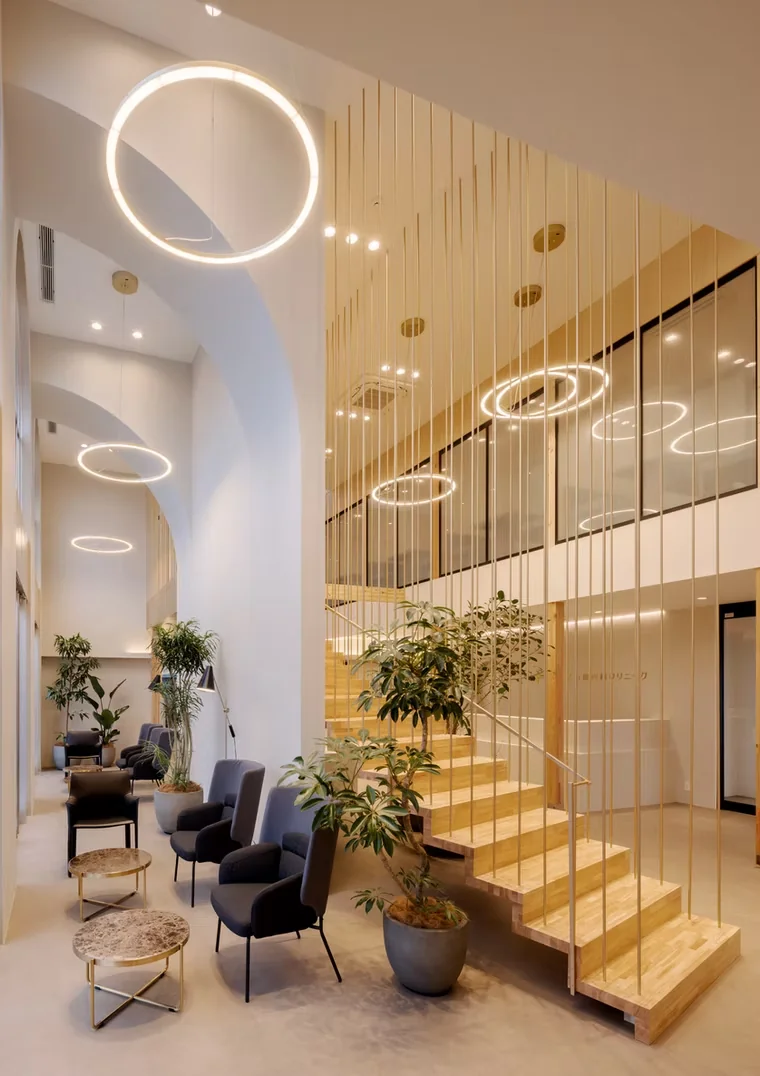
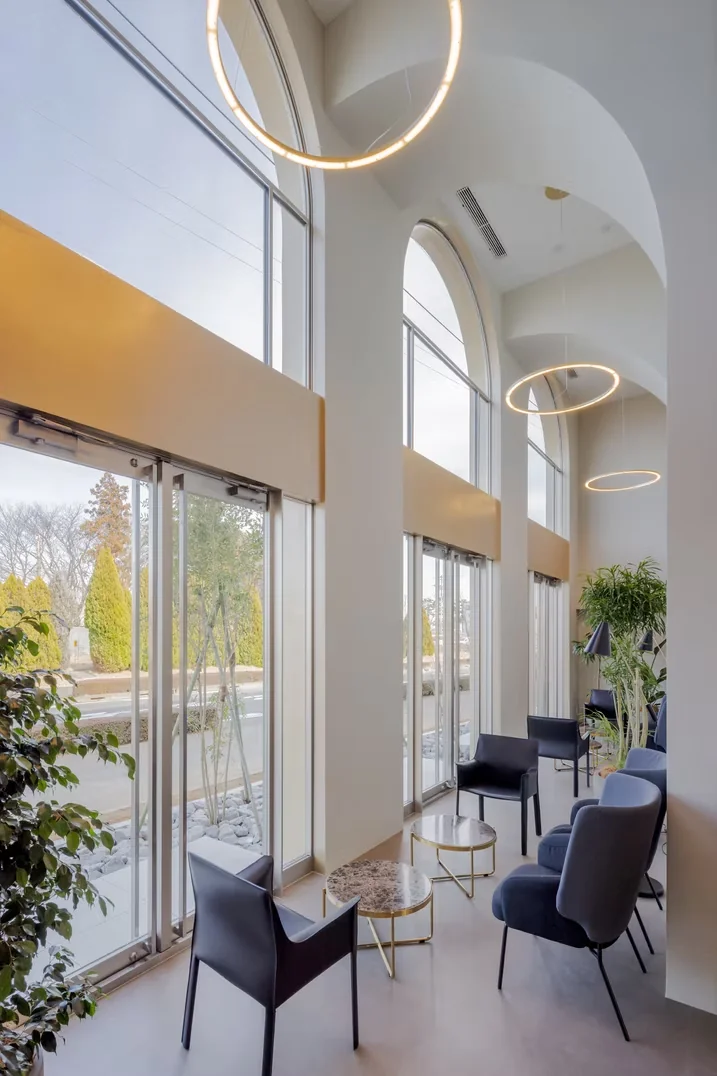
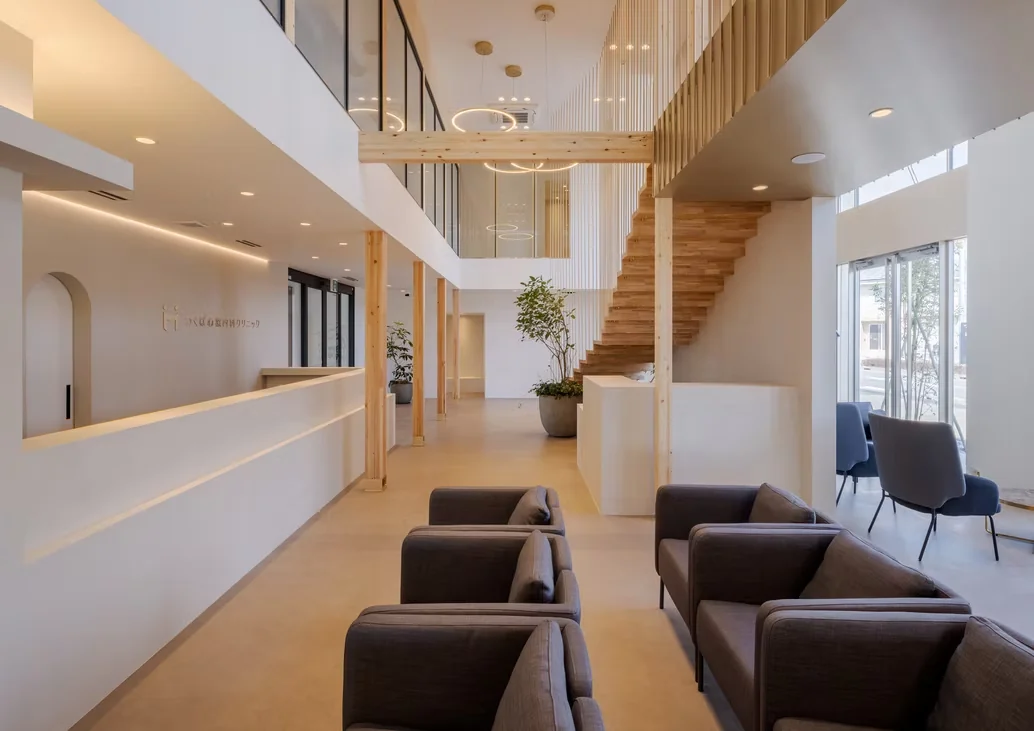
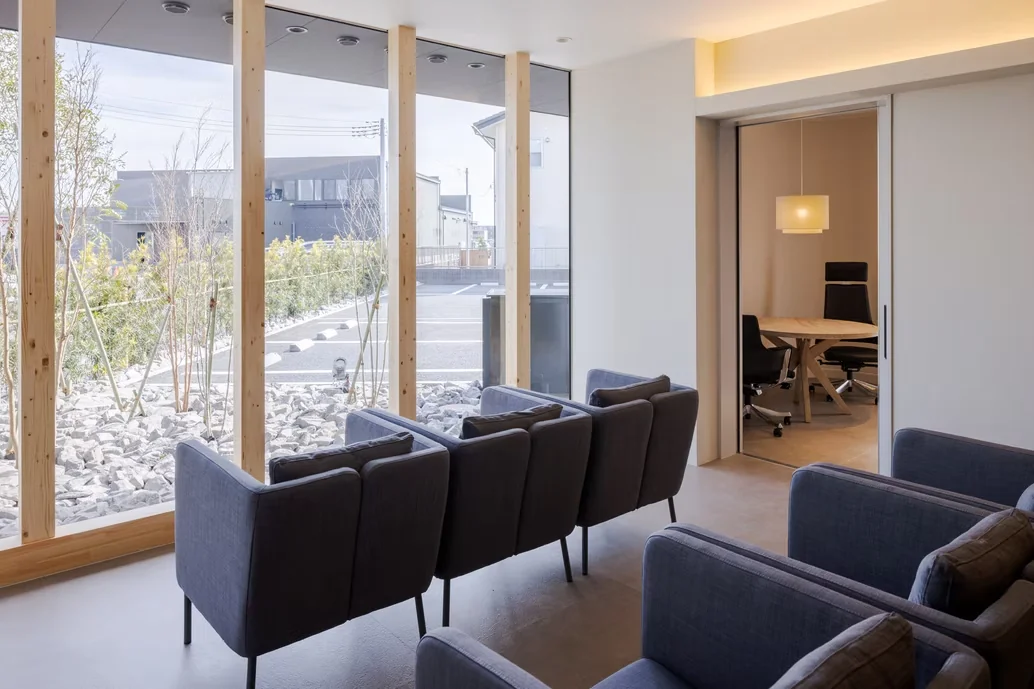
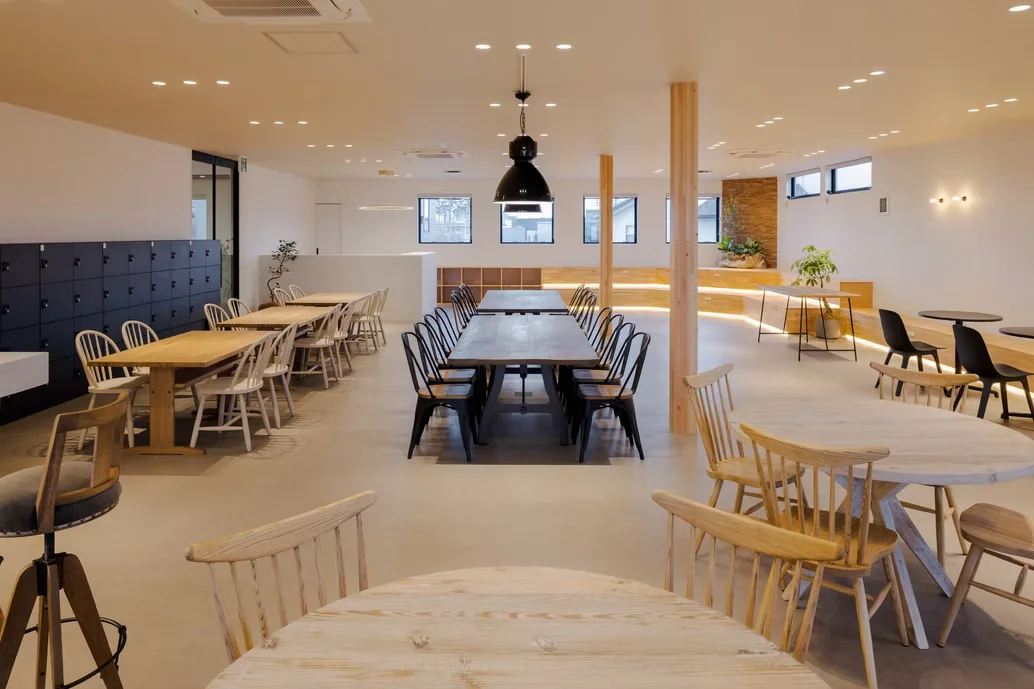
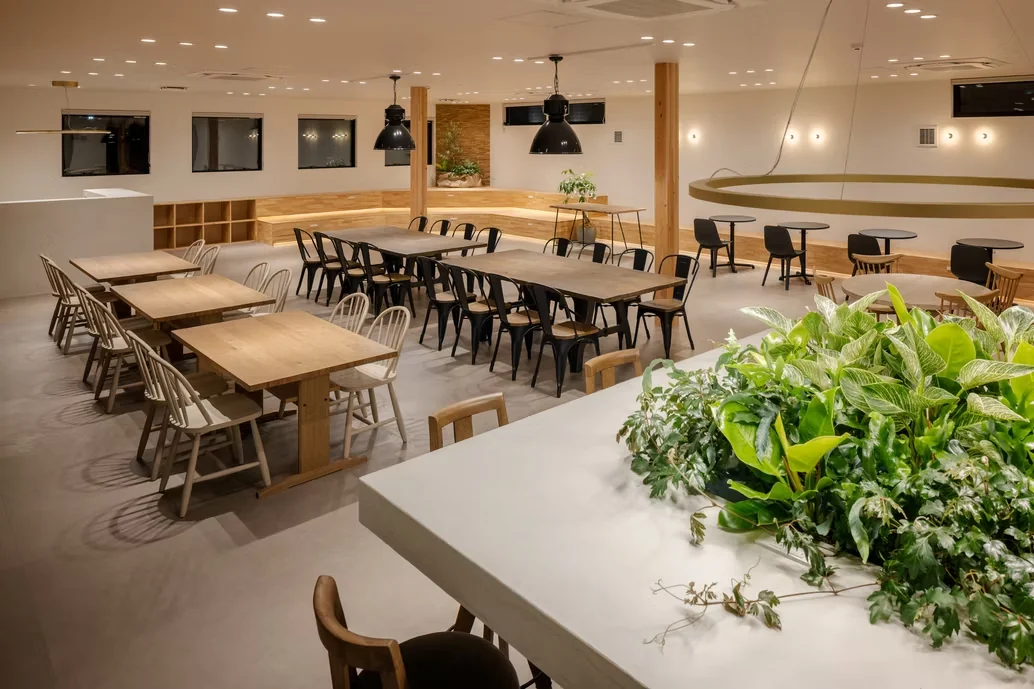
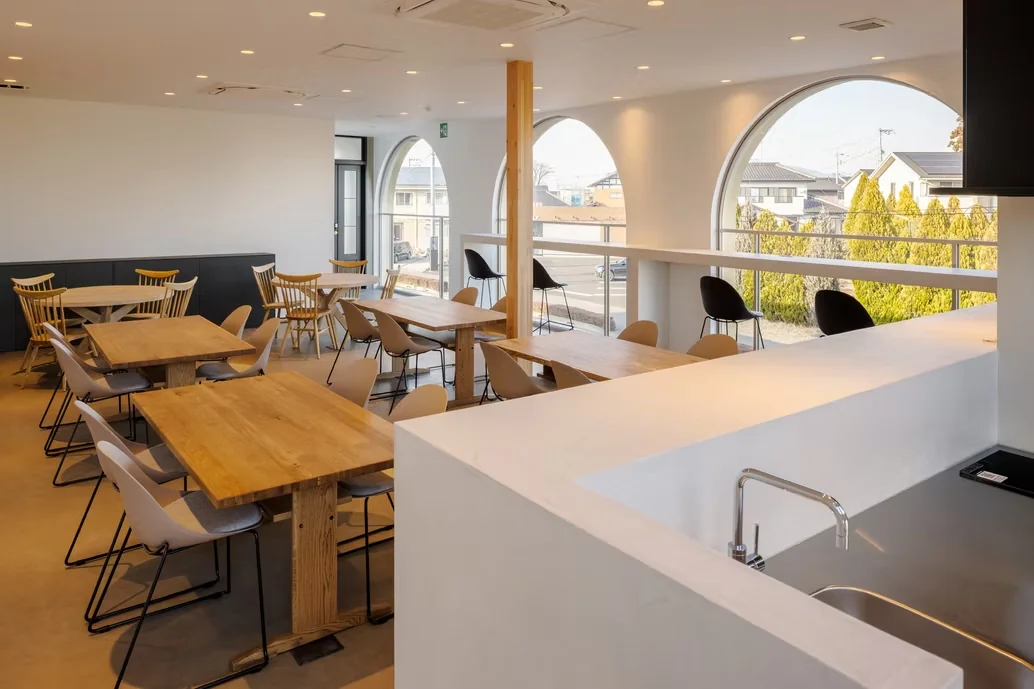
The goal was to create "a clinic that does not feel like a typical clinic." The entrance and lobby are designed with the ambiance of a hotel, the consultation rooms evoke the comfort of a home dining room, and the rehabilitation area on the second floor is styled with the atmosphere of a café. The intention was to create a place where patients would want to visit even when not strictly necessary.
The client’s requests were clear: "Space has the power to heal people," and "there are cases where patients who previously could not speak become able to do so when the environment changes." These statements formed the core of the design concept. Additionally, there was a desire to create a "third place" where patients could visit freely and without hesitation.
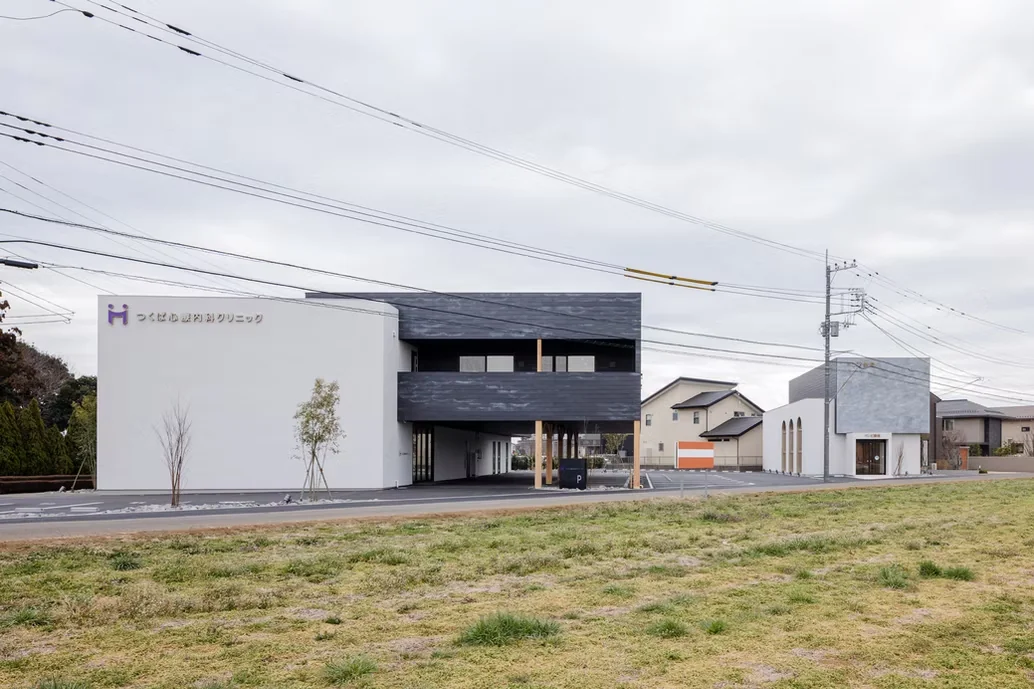
To address this, the entrance was positioned at the rear of the building to allow discreet access, while stepping inside reveals a bright and open spatial composition.
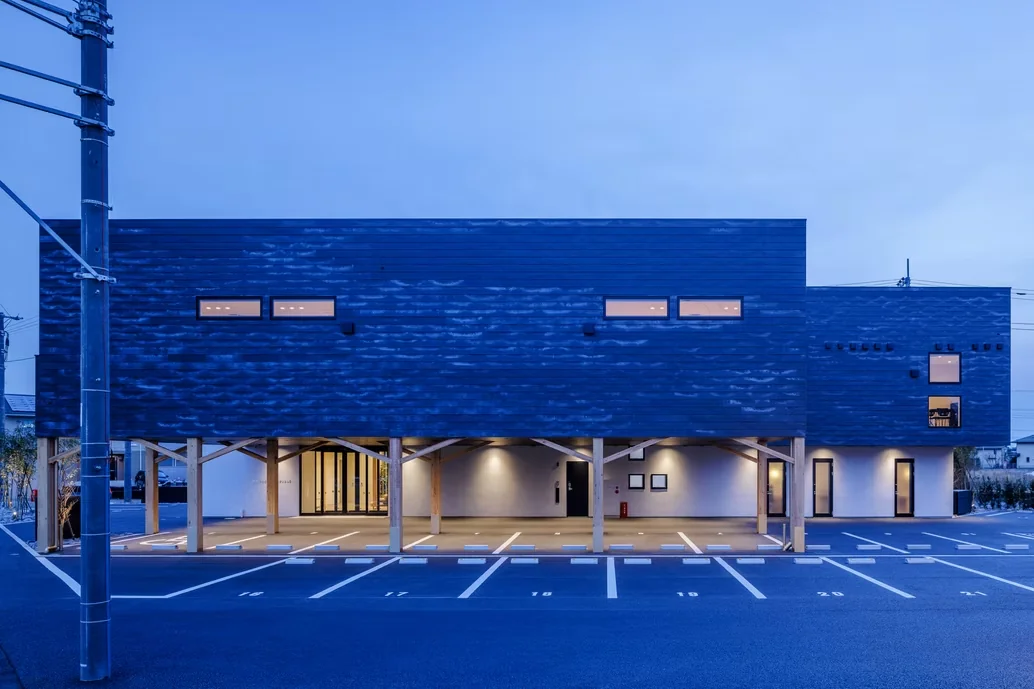
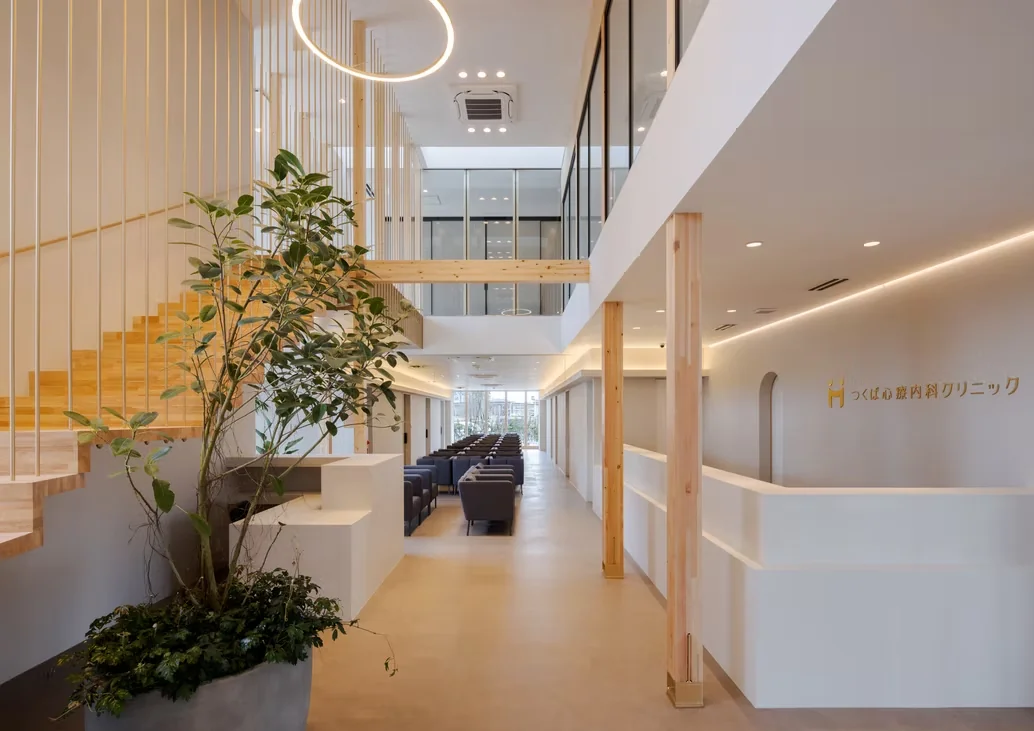
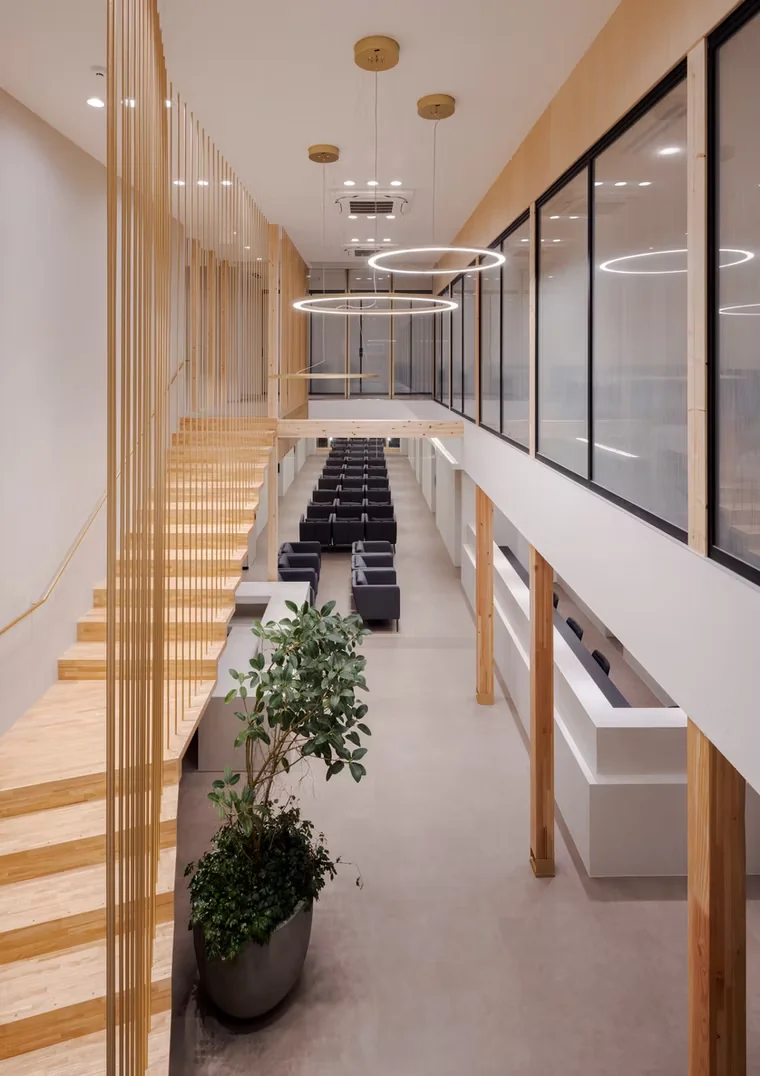
Given the limited site area, creative solutions were required to accommodate the requested functions. The entrance and lobby were designed with depth and a large atrium was introduced to enhance spatial expansiveness. The structure is timber-framed. Securing such a large span and depth with wood was technically challenging, but was resolved by employing robust 240mm-square columns. Furthermore, the floor plan was carefully arranged so that the functions on the upper and lower floors do not overlap, preventing noise from the second floor from disturbing the consultation rooms below. These constraints and solutions ultimately resulted in a dynamic and almost ethereal structural beauty.
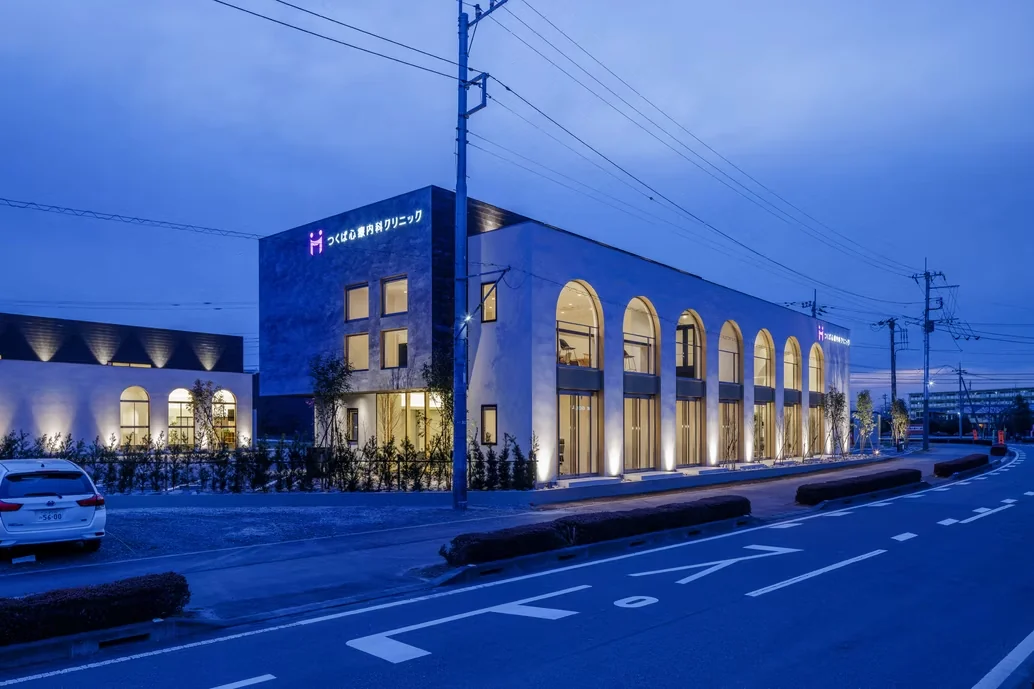
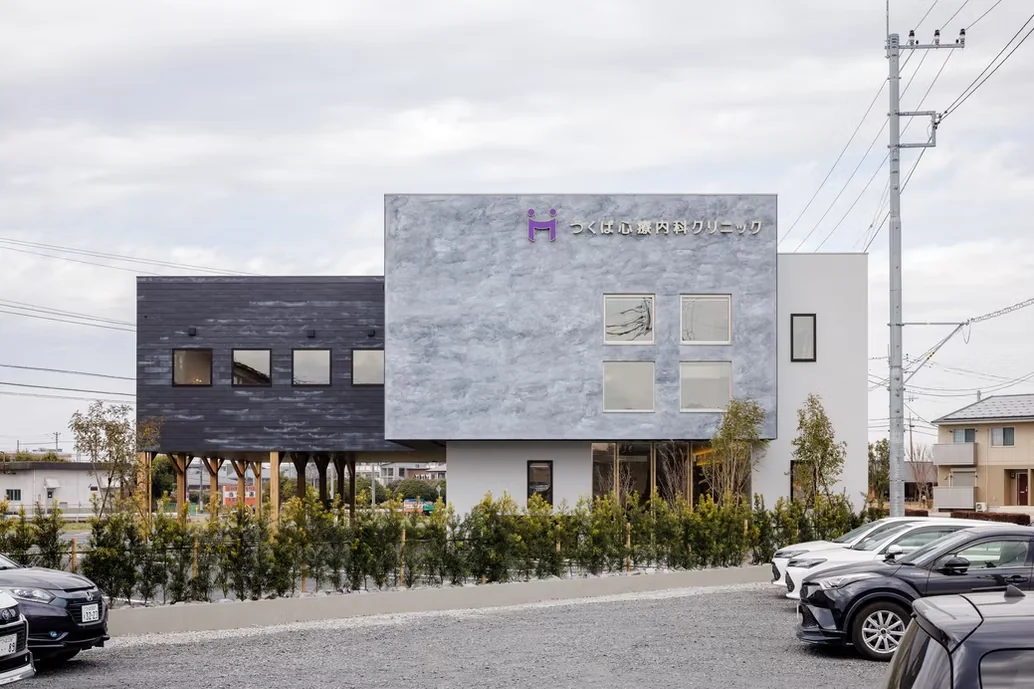
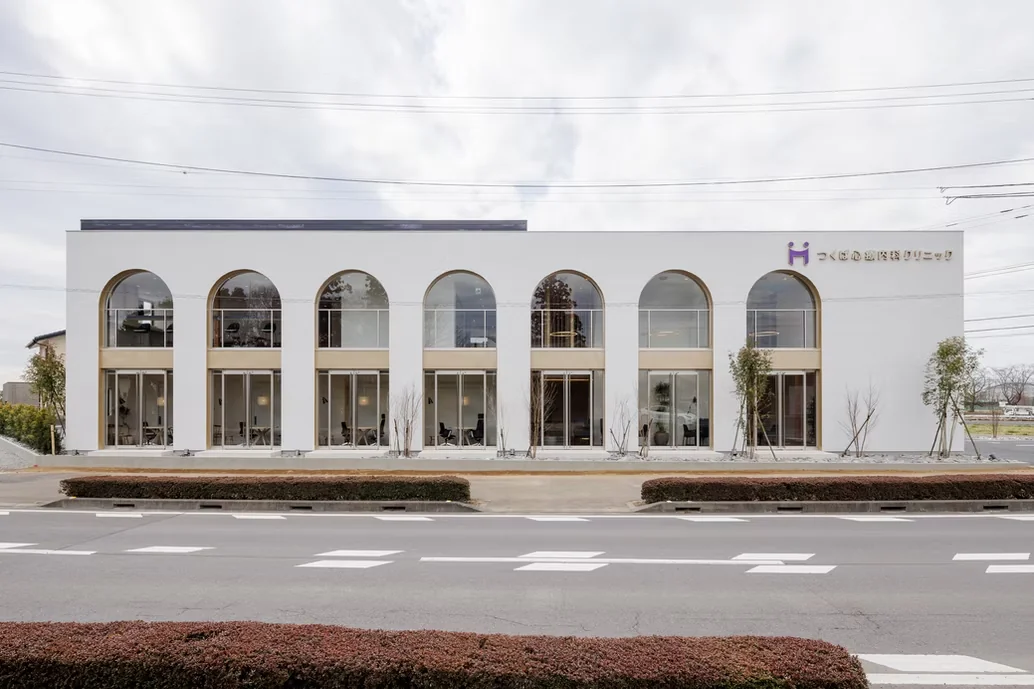
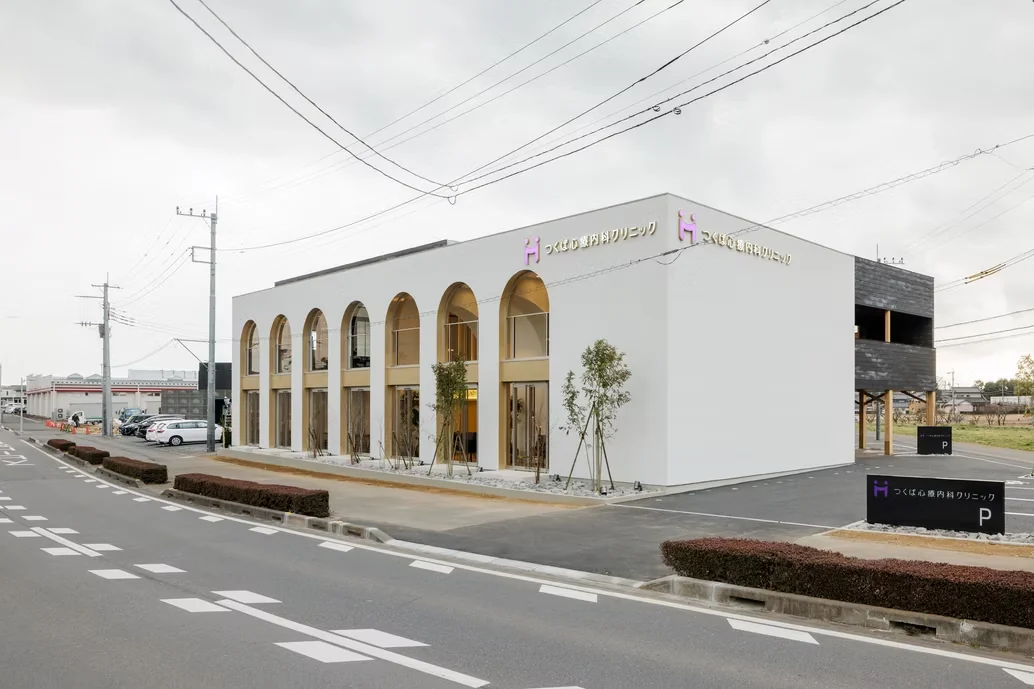
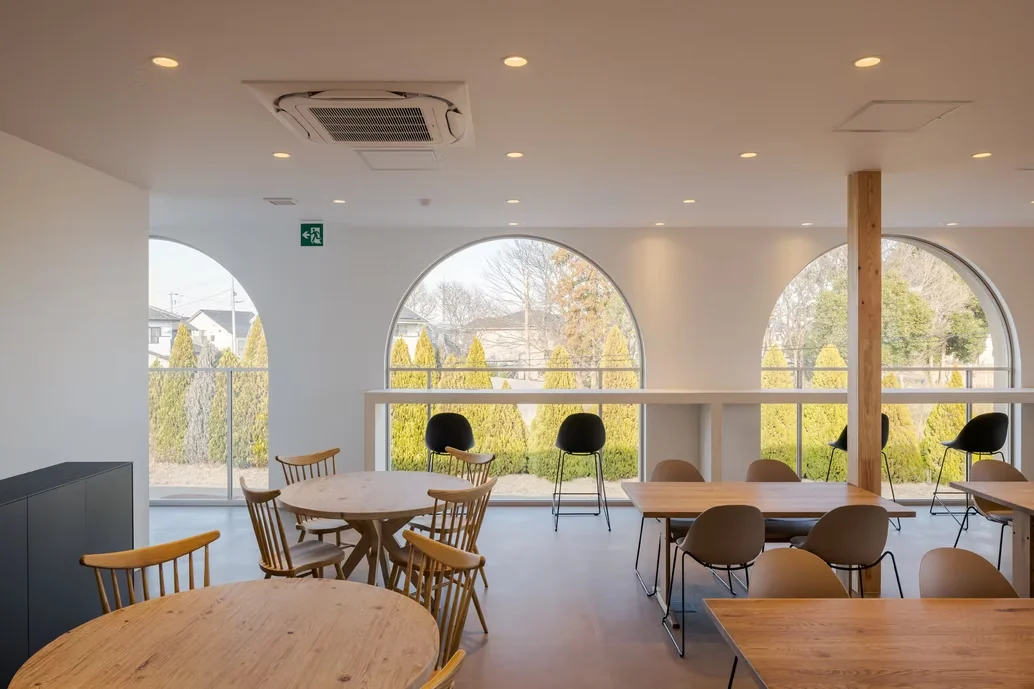
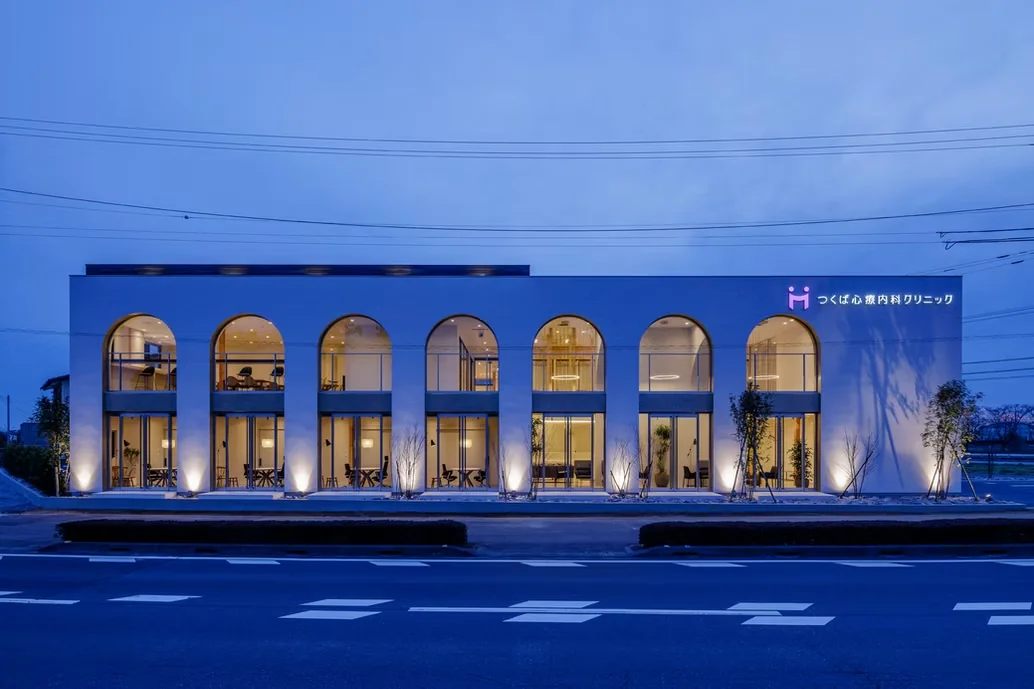
The exterior presents contrasting expressions between the first and second floors. The first-floor façade features a series of wide arched windows, imparting a calm and gentle impression. In contrast, the second-floor exterior is finished with a black iron-like material, expressing strength.
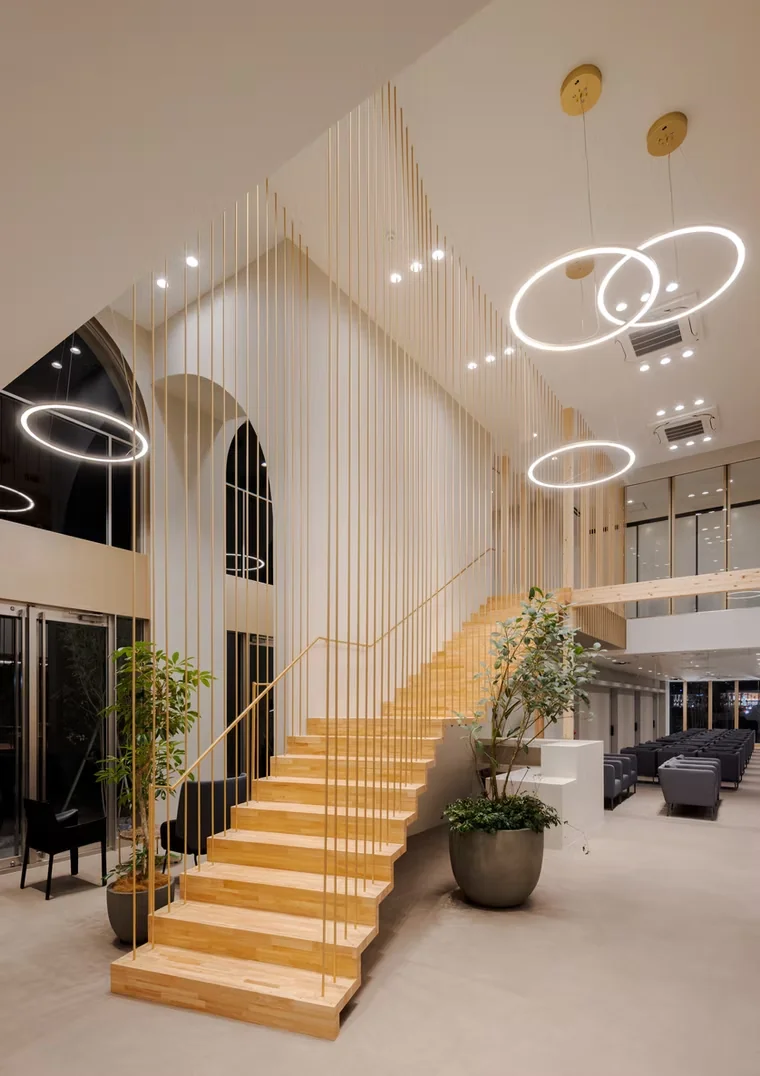
The interior incorporates touches of gold to convey "strength" within the overall sense of "relaxation." For example, in the lobby, beige floor tiles and wooden columns provide comfort, while gold louvers add a dignified sense of resilience.
Hospitals are traditionally places people are reluctant to visit. However, this clinic aspires to be a "third place" within the community—a location patients want to visit even without urgent need, and where people beyond the patient population can gather.
From the perspective of the Sustainable Development Goals (SDGs), the design also emphasizes a "return to the origins of mind and community." Operationally, the facility has implemented complete cashless and paperless systems to minimize waste, thereby reducing the carbon footprint during both construction and operation phases. Additionally, photovoltaic panels have been installed to create an ecosystem where all electricity used within the facility is self-generated.

The goal was to create "a clinic that does not feel like a typical clinic." The entrance and lobby are designed with the ambiance of a hotel, the consultation rooms evoke the comfort of a home dining room, and the rehabilitation area on the second floor is styled with the atmosphere of a café. The intention was to create a place where patients would want to visit even when not strictly necessary.
The client’s requests were clear: "Space has the power to heal people," and "there are cases where patients who previously could not speak become able to do so when the environment changes." These statements formed the core of the design concept. Additionally, there was a desire to create a "third place" where patients could visit freely and without hesitation.
To address this, the entrance was positioned at the rear of the building to allow discreet access, while stepping inside reveals a bright and open spatial composition.
Given the limited site area, creative solutions were required to accommodate the requested functions. The entrance and lobby were designed with depth and a large atrium was introduced to enhance spatial expansiveness. The structure is timber-framed. Securing such a large span and depth with wood was technically challenging, but was resolved by employing robust 240mm-square columns. Furthermore, the floor plan was carefully arranged so that the functions on the upper and lower floors do not overlap, preventing noise from the second floor from disturbing the consultation rooms below. These constraints and solutions ultimately resulted in a dynamic and almost ethereal structural beauty.
The exterior presents contrasting expressions between the first and second floors. The first-floor façade features a series of wide arched windows, imparting a calm and gentle impression. In contrast, the second-floor exterior is finished with a black iron-like material, expressing strength.
The interior incorporates touches of gold to convey "strength" within the overall sense of "relaxation." For example, in the lobby, beige floor tiles and wooden columns provide comfort, while gold louvers add a dignified sense of resilience.
Hospitals are traditionally places people are reluctant to visit. However, this clinic aspires to be a "third place" within the community—a location patients want to visit even without urgent need, and where people beyond the patient population can gather.
From the perspective of the Sustainable Development Goals (SDGs), the design also emphasizes a "return to the origins of mind and community." Operationally, the facility has implemented complete cashless and paperless systems to minimize waste, thereby reducing the carbon footprint during both construction and operation phases. Additionally, photovoltaic panels have been installed to create an ecosystem where all electricity used within the facility is self-generated.
- Copyright(C)Qurasuki.All Rights Reserved.