Introducing United Church of Christ in Japan Mihama Church, an example of Architect / Design office facility architecture in 2-19-19 Nakane, Meguro-ku, Tokyo by JYU ARCHITECT.

United Church of Christ in Japan Mihama Church
Learn More
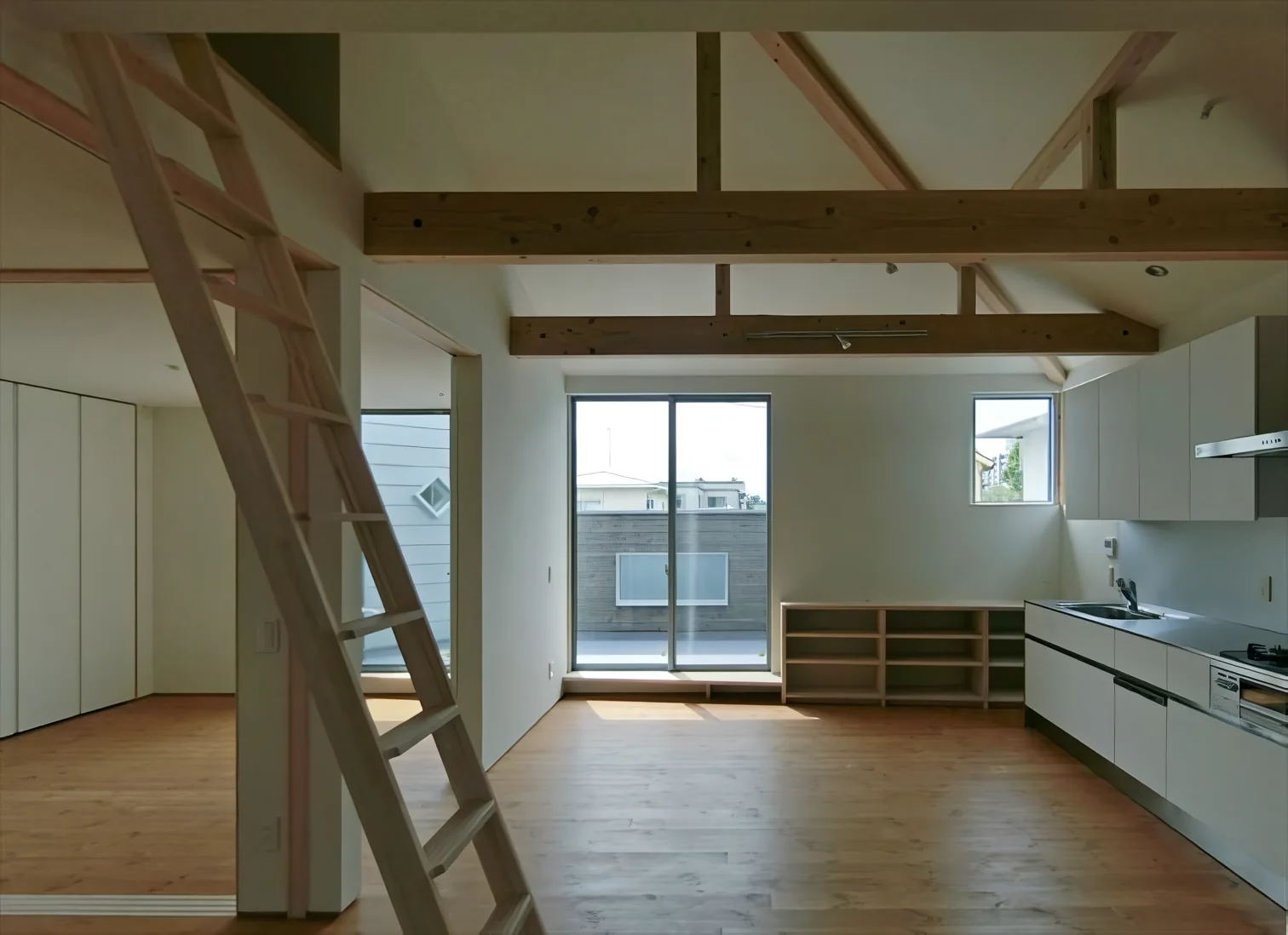
This church began in 1979 as the “Chiba Coastal Mission” in a room of an apartment. The pre-reconstruction buildings consisted of a secondhand house purchased in 1993 converted into the pastor’s residence, and a prefabricated warehouse remodeled into the chapel, both carefully maintained over the years. The old pastor’s residence, now 43 years old, and the prefabricated chapel, 24 years old, fortunately escaped damage from liquefaction caused by the Great East Japan Earthquake. However, the floors began to tilt, and the prefabricated warehouse chapel experienced floor deformation and roof leaks.
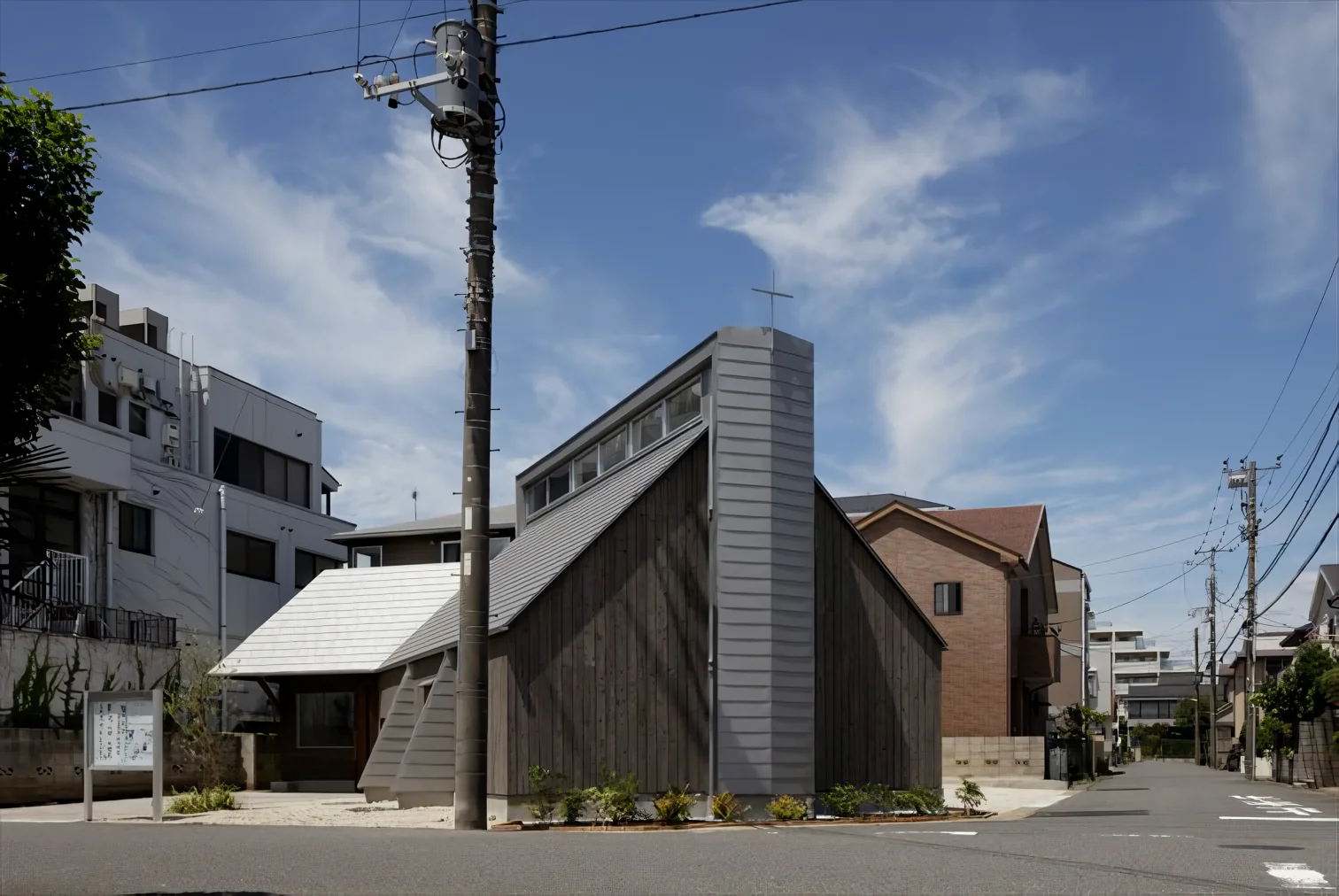
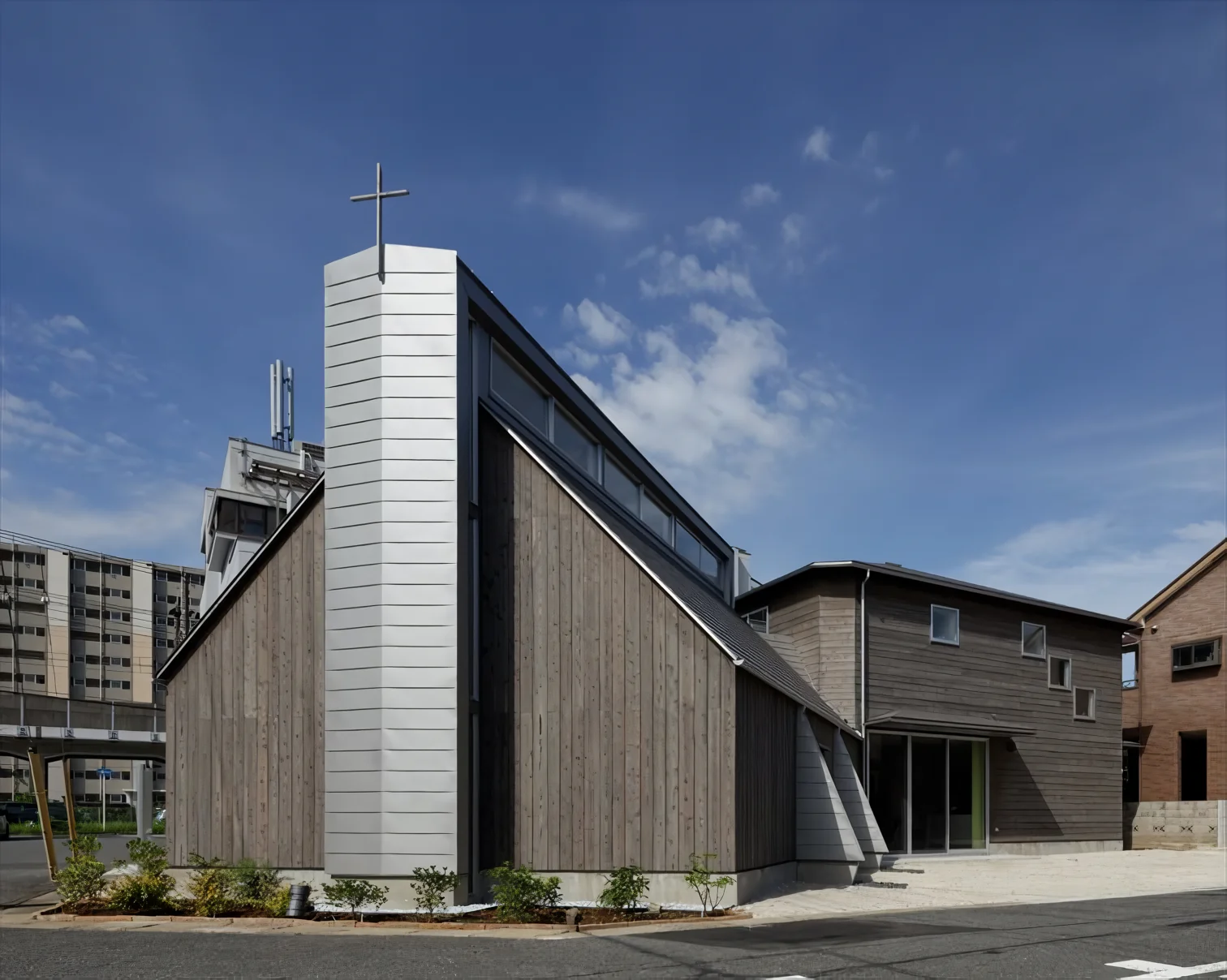
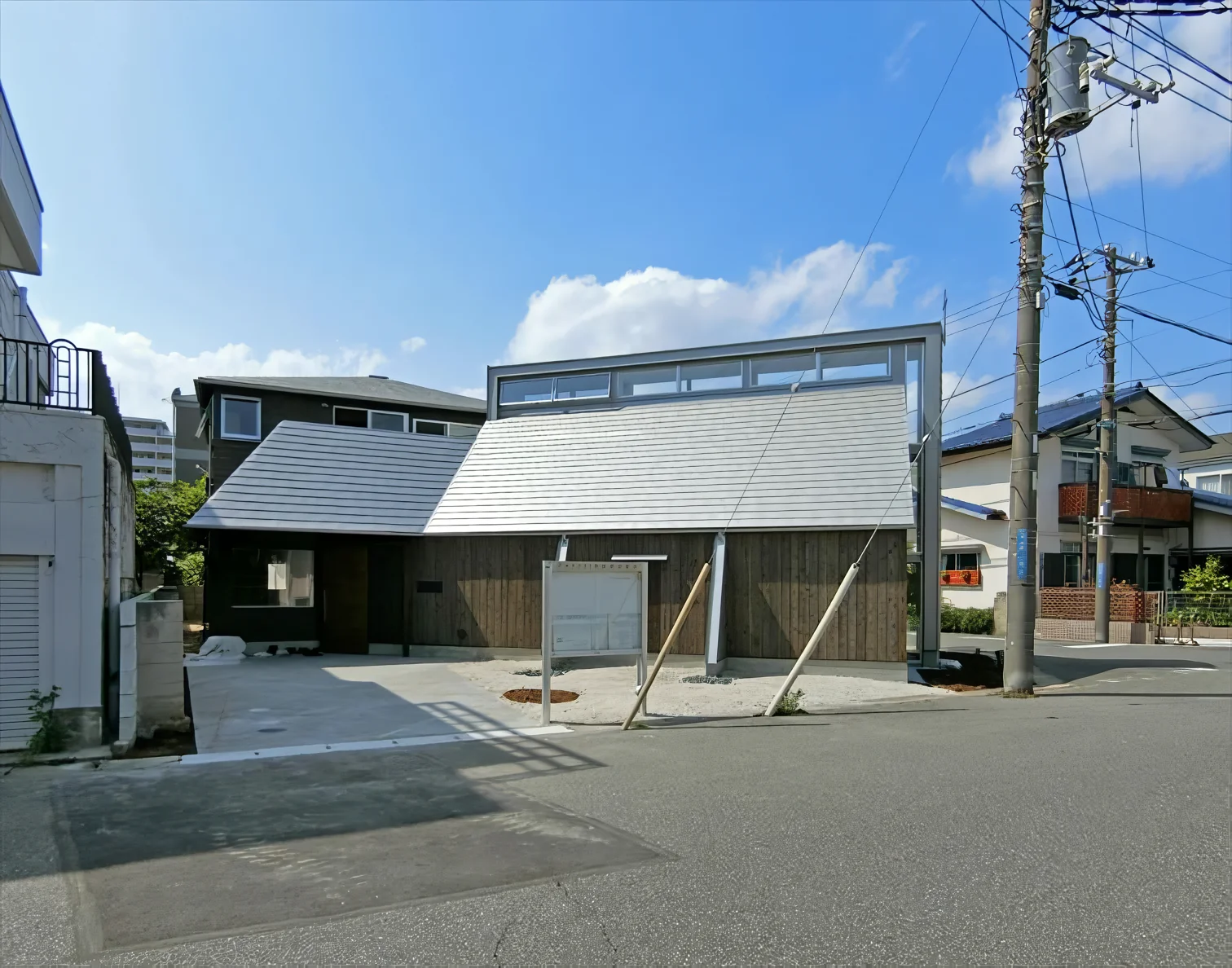
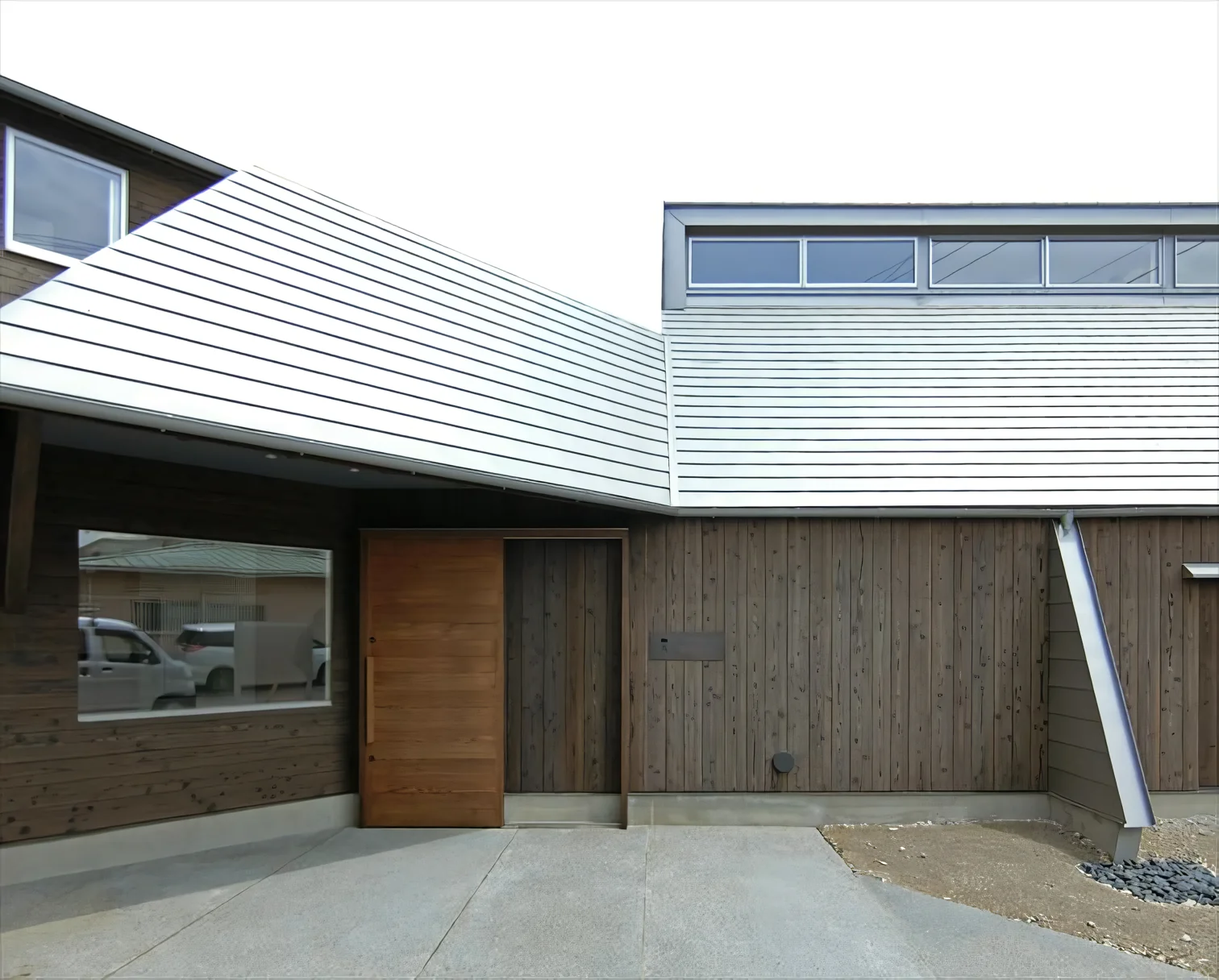
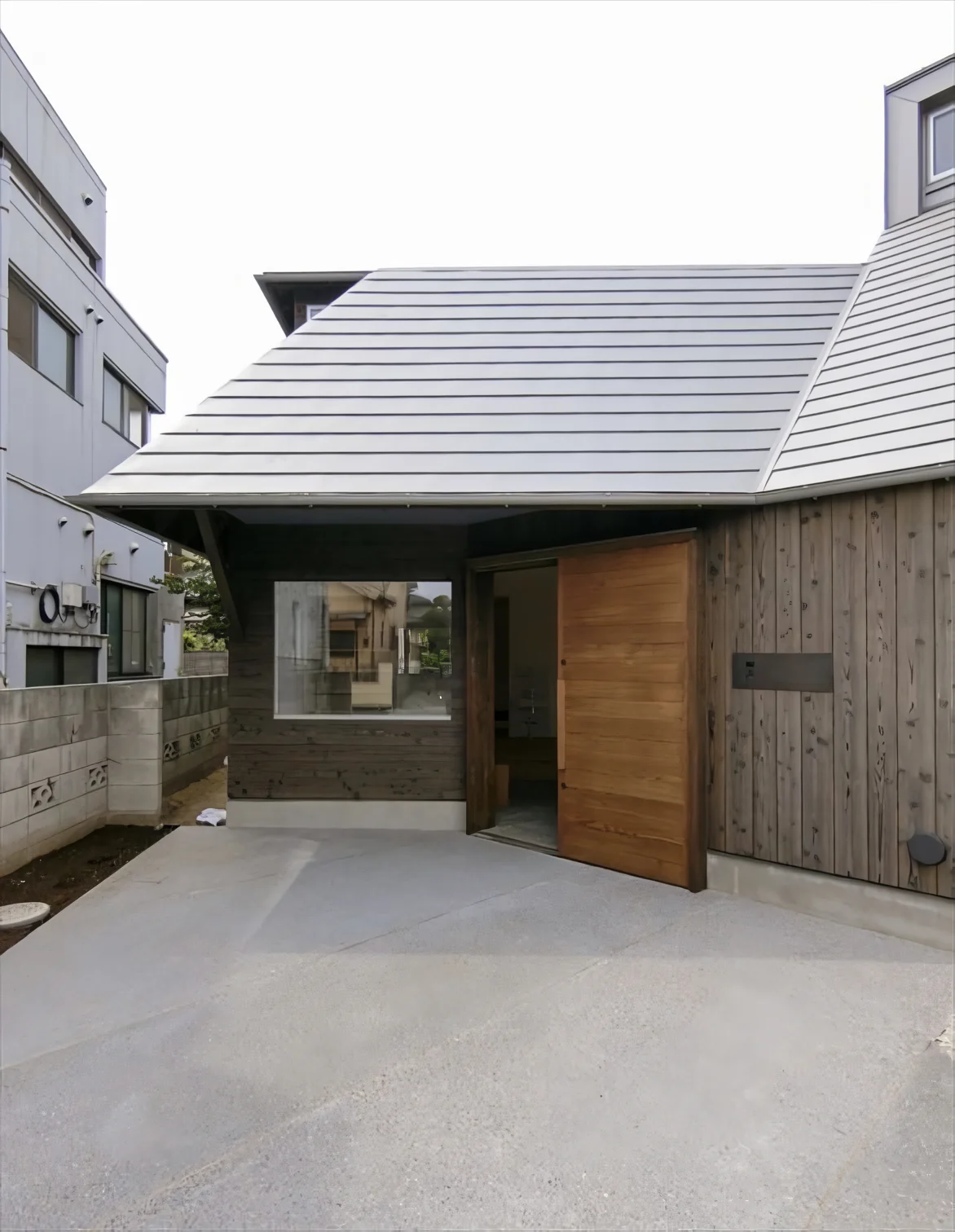
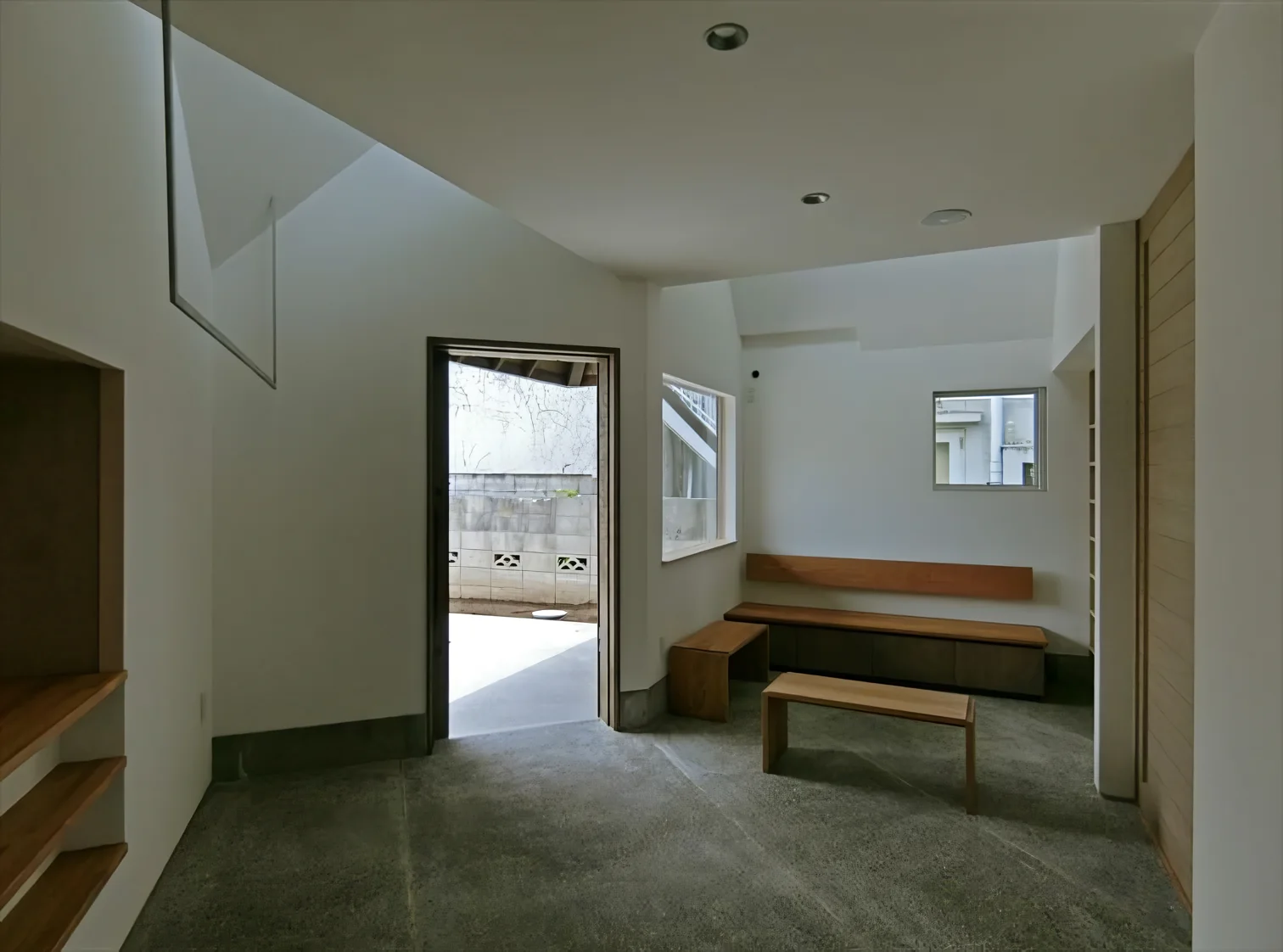
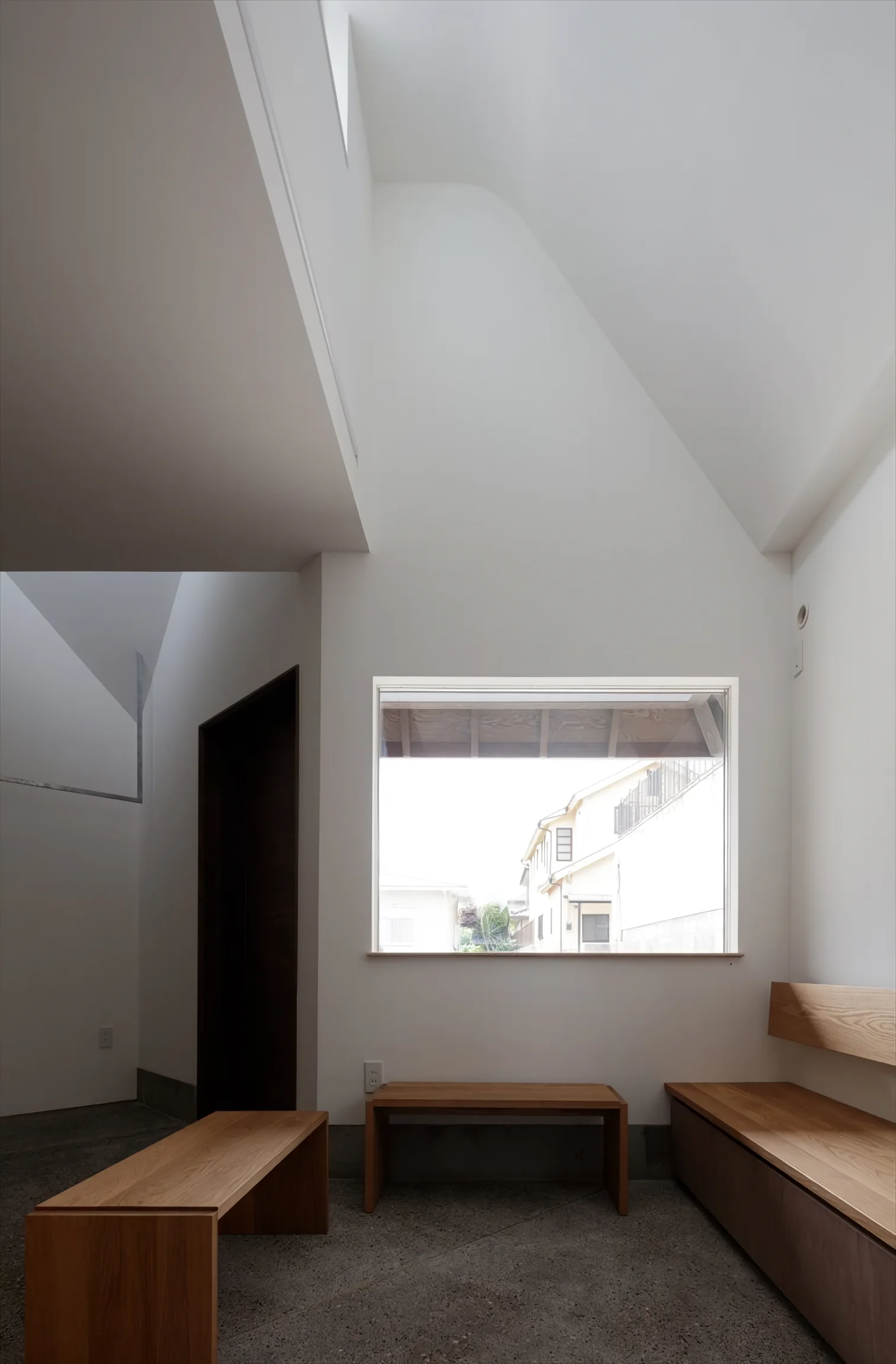
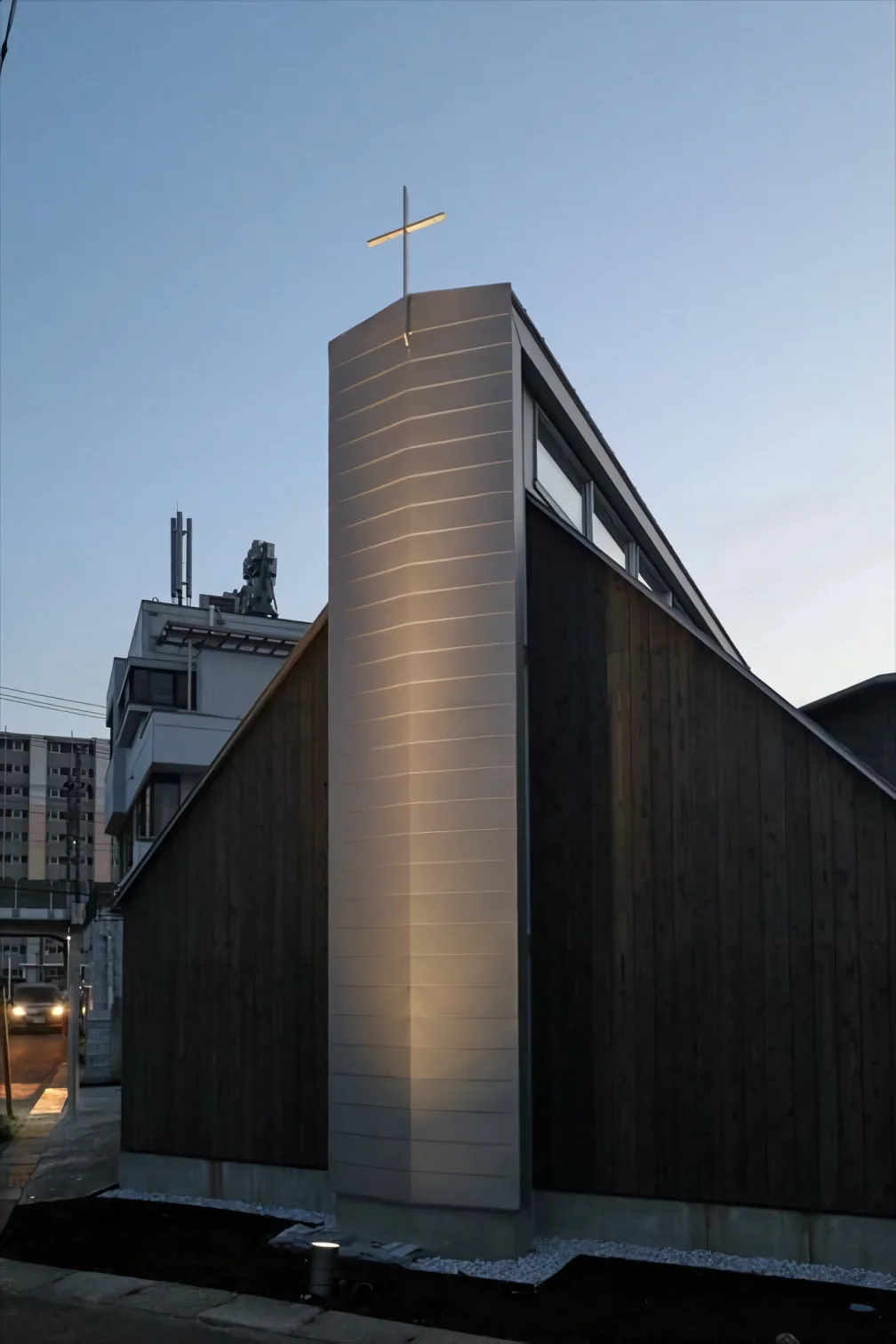
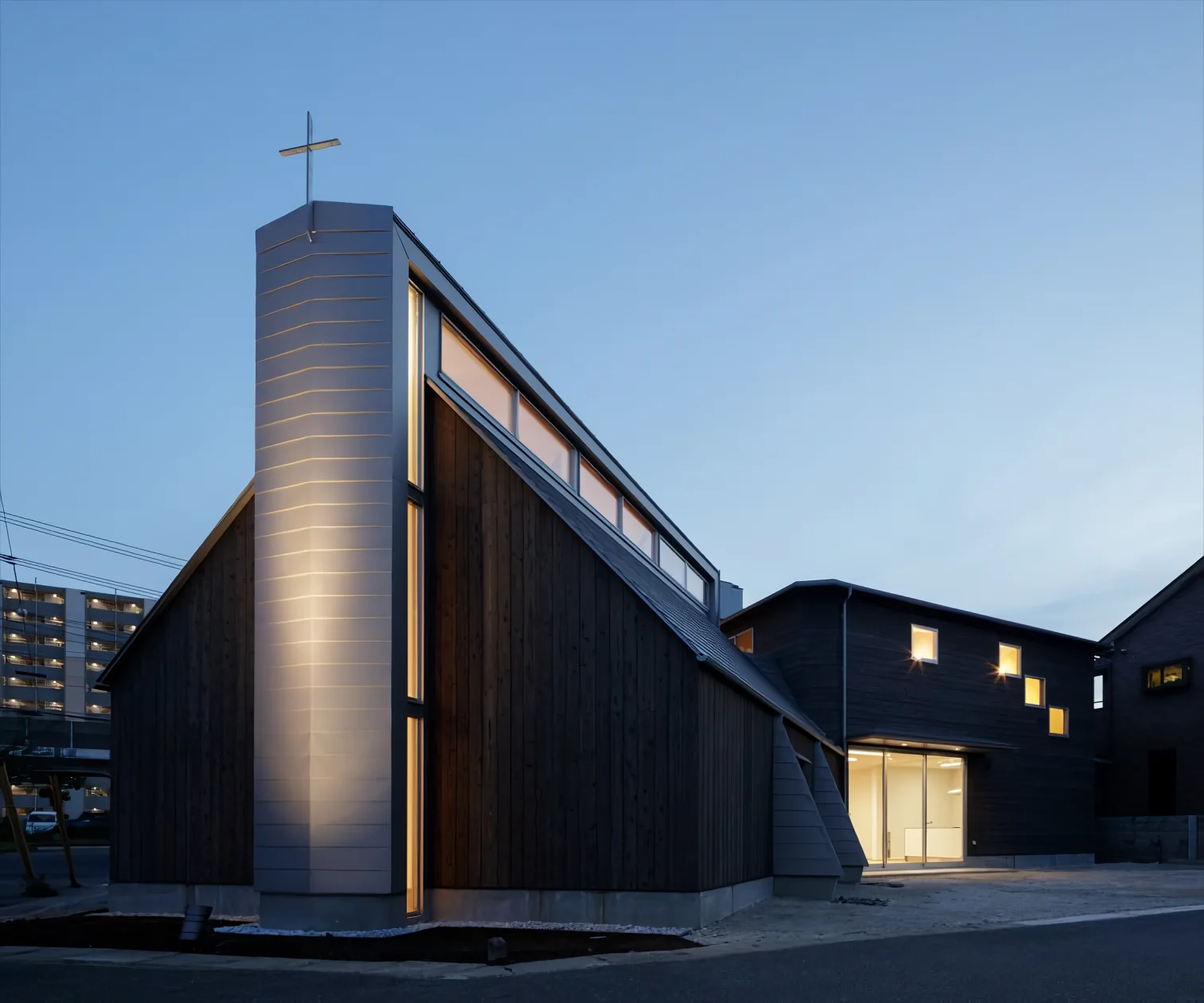
Rebuilding was undertaken with limited funds, but by situating the chapel at the corner of the site, the design contributes to the streetscape as a community church, opening itself to the neighborhood and aiming to be rooted in the local community. The large openings of the assembly room face the front plaza (parking area), connecting with the community during events such as bazaars and Christmas celebrations.
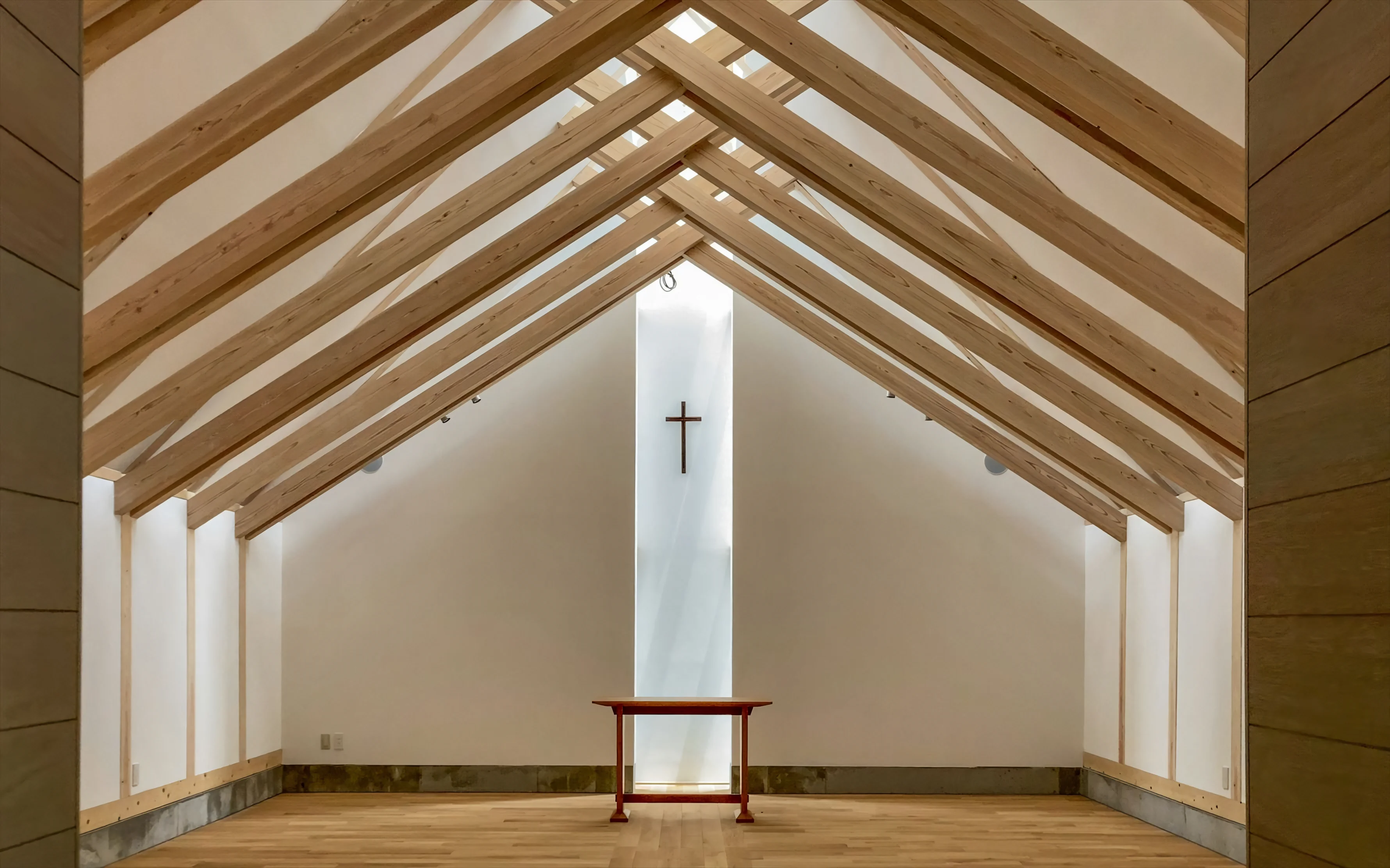
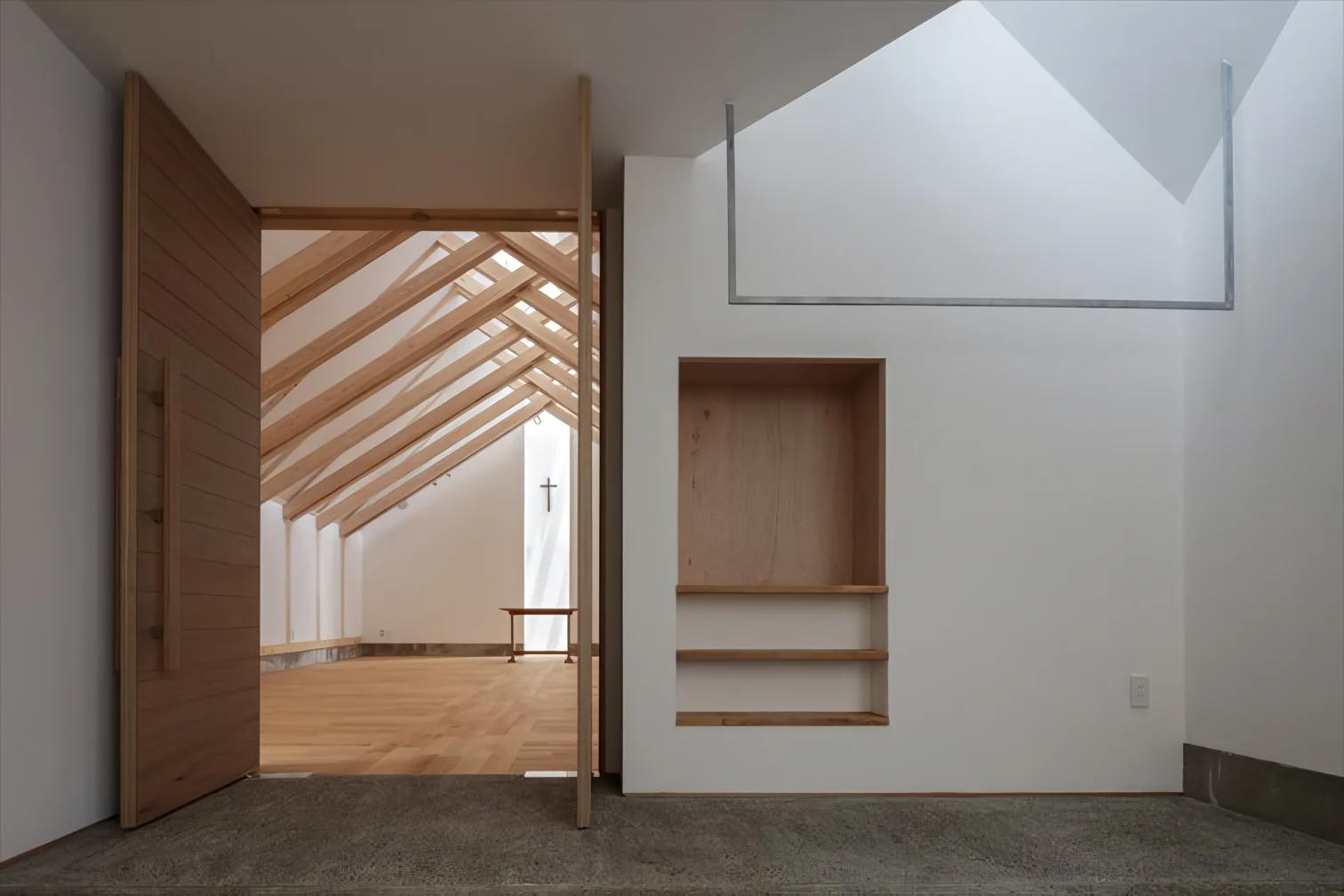
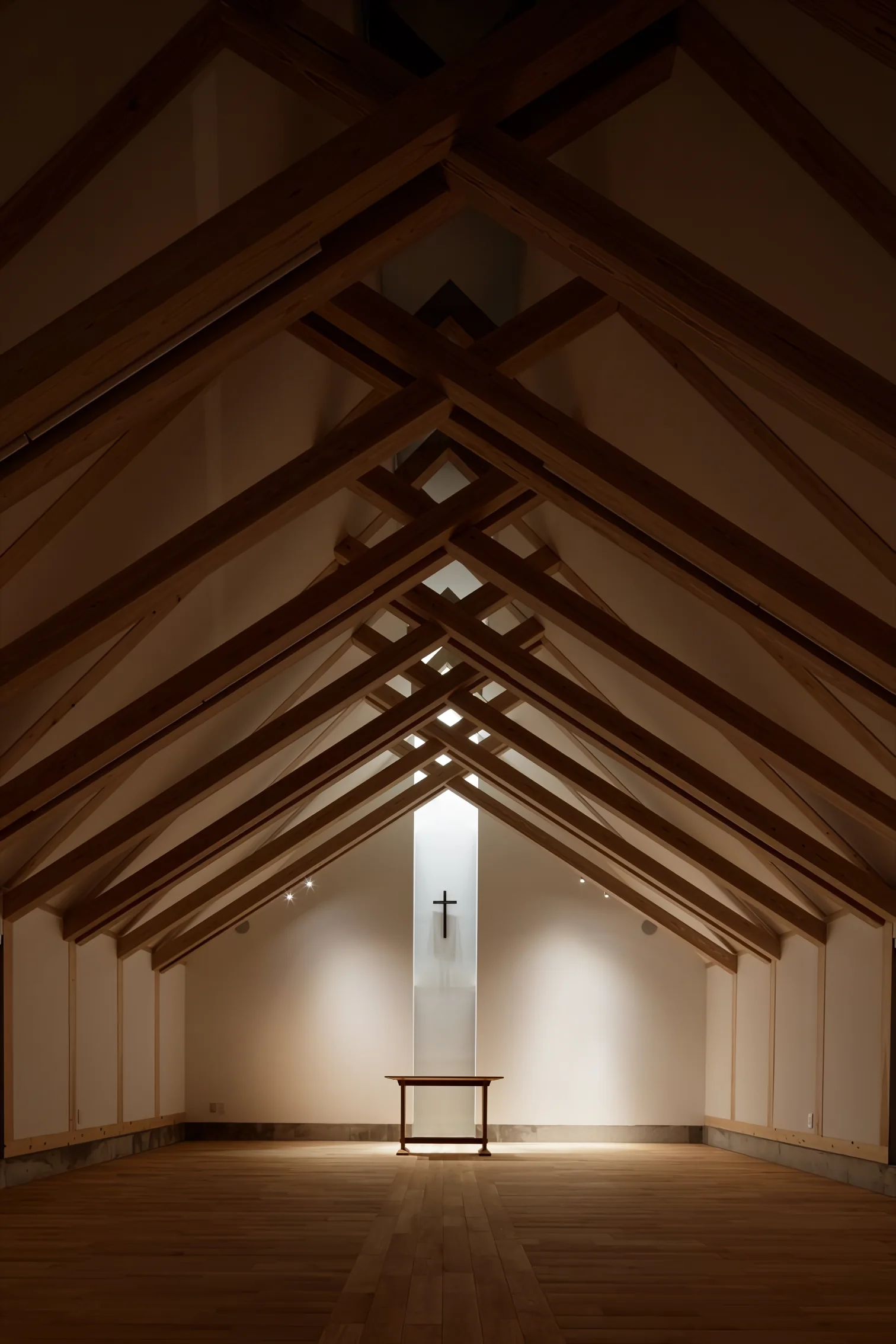
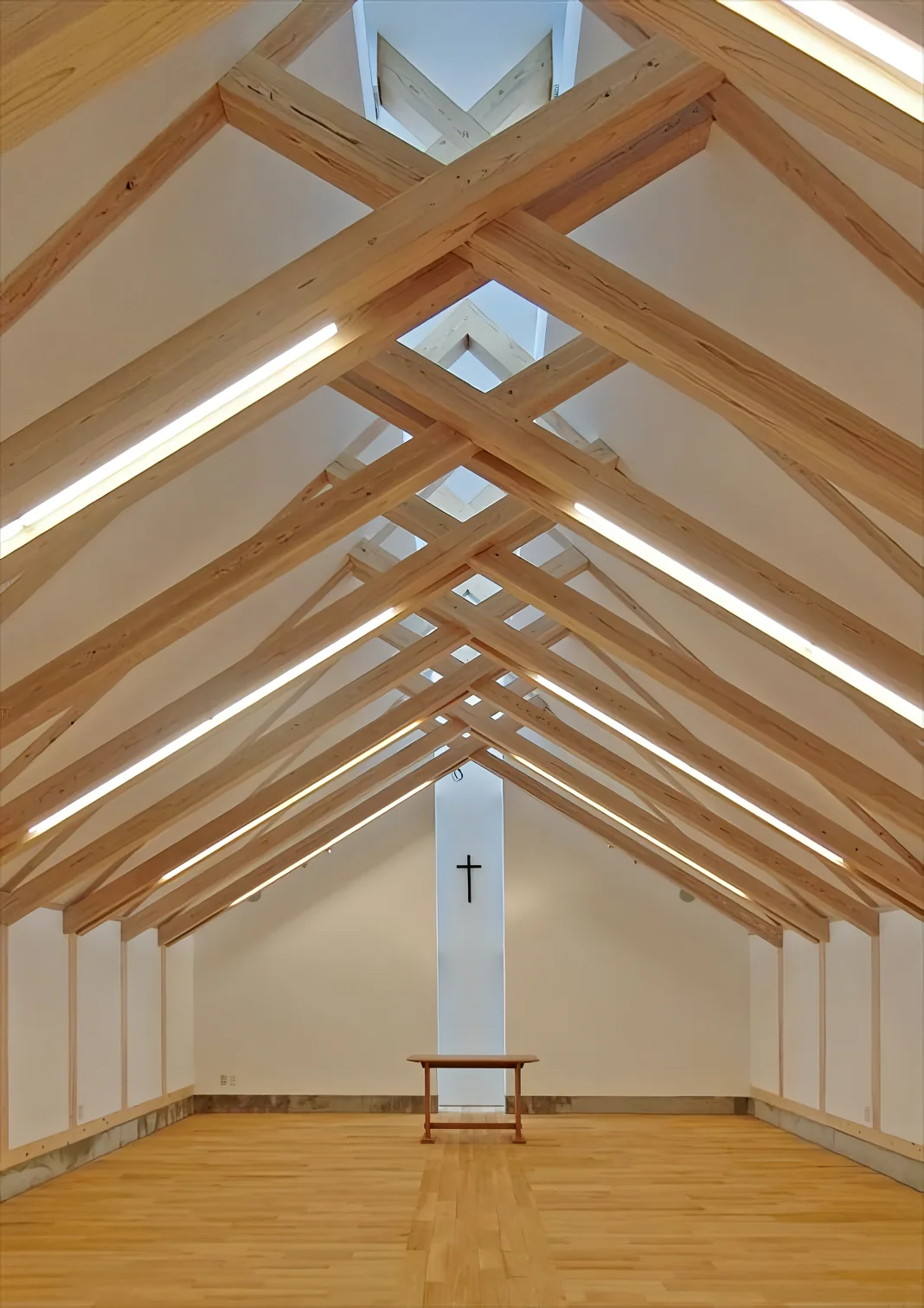
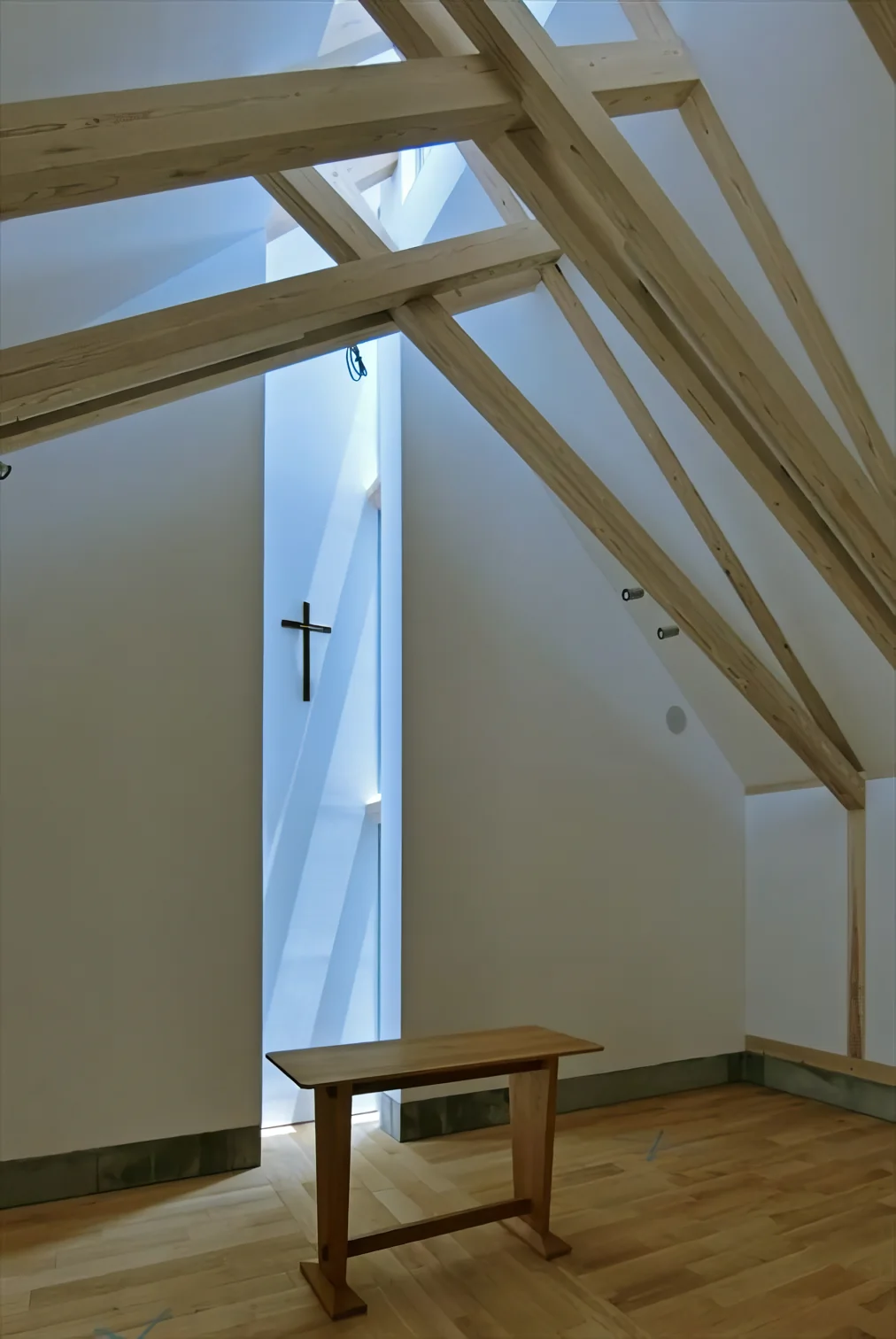
The chapel’s large roof is constructed without using any laminated timber; instead, solid, commercially available lumber is employed to create a distinctive suspended roof truss system that evokes the shape of hands folded in prayer. The interior is filled with light pouring through the top lights above the truss, creating a serene space of prayer.
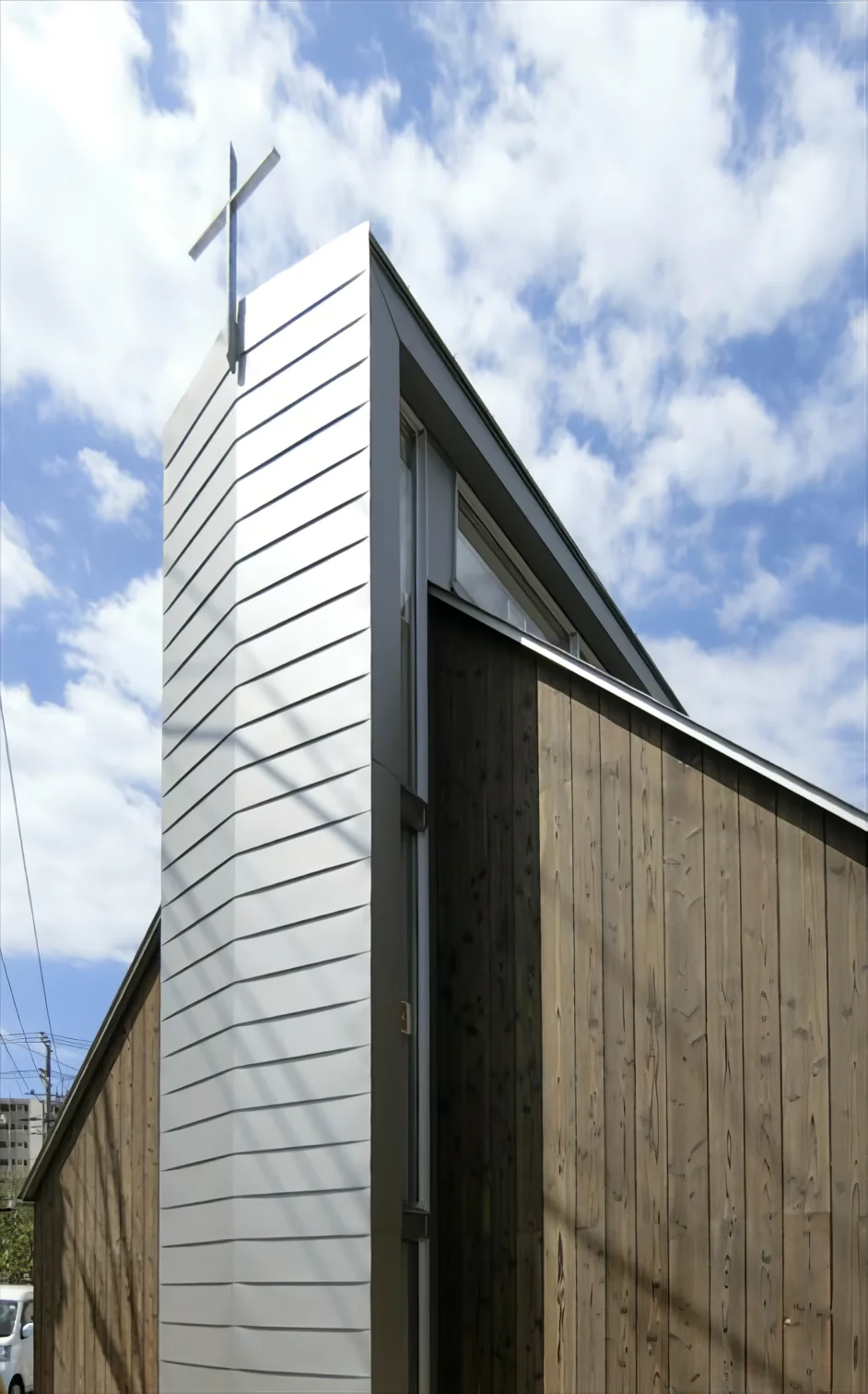
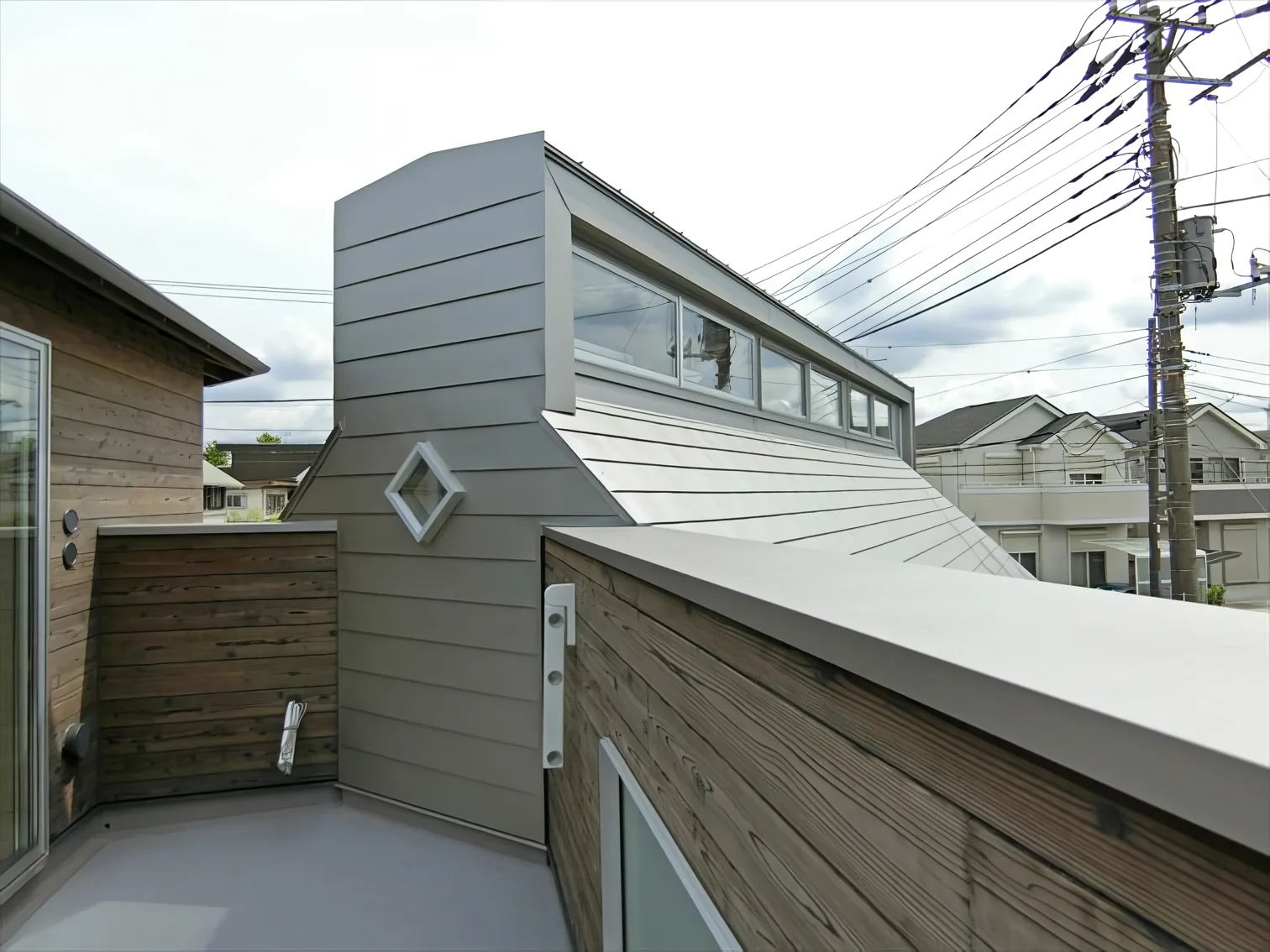
Rainwater collected by the chapel is channeled visibly along the sides of four structural buttress walls, which also serve as gutters, returning water to the ground in a tangible manner. The building incorporates sufficient thermal insulation and a seismic damping structure to withstand repeated major earthquakes. In consideration of possible flooding due to liquefaction, the first-floor underfloor space is designed without any voids to facilitate easy cleaning.
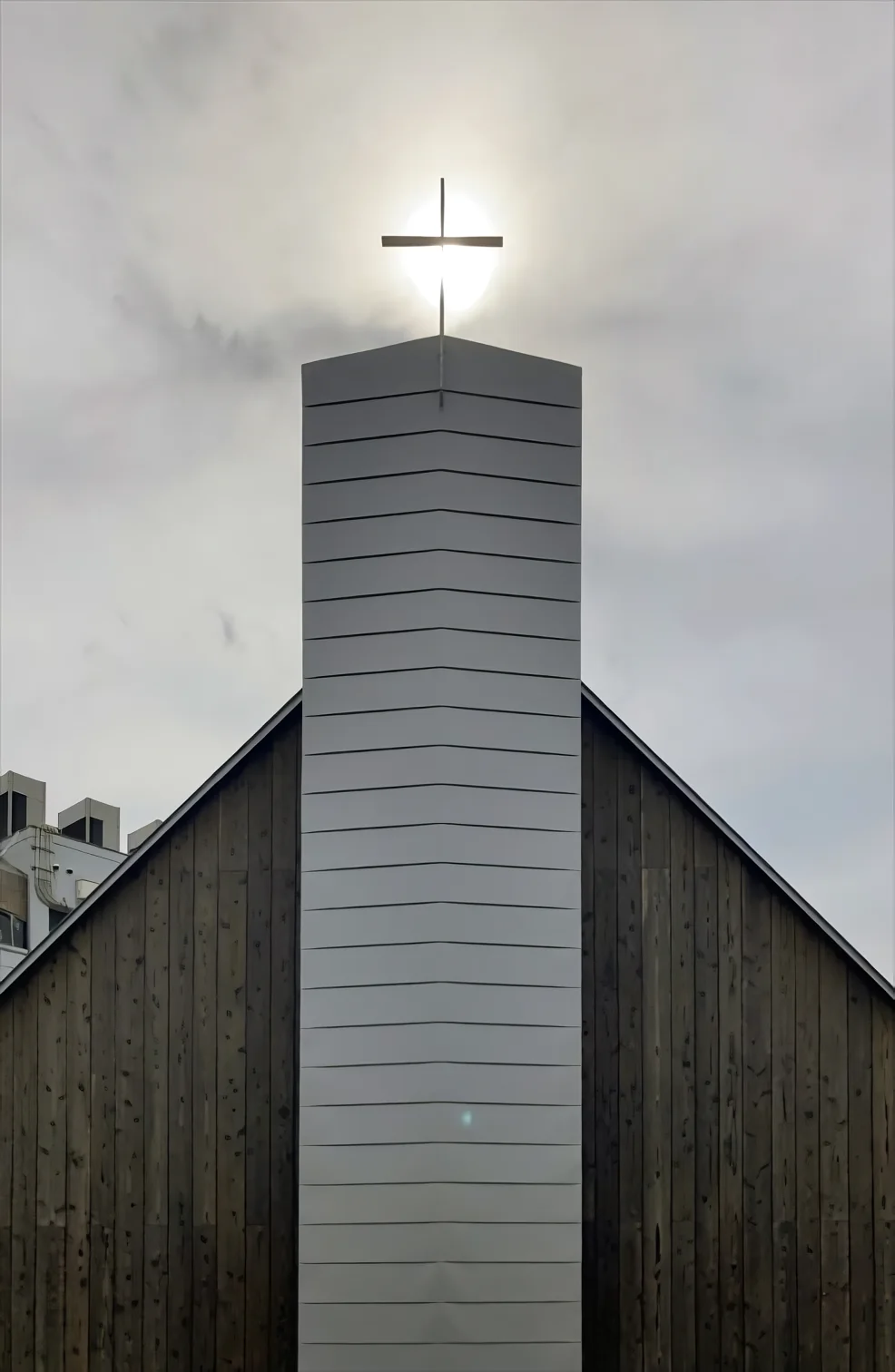
The exterior walls are clad with charred cedar wood sourced from Tokushima Prefecture, treated with weather-resistant coatings specially formulated to harmonize with the local environment. The building ages gracefully, sharing the passage of time as a memory of the town. It is hoped that this church will become a modest symbol of the community and be cherished by the neighborhood.
The building is equipped with a seismic damping structure to endure repeated major earthquakes.
This project was awarded the Excellence Prize in the Architectural Culture Division of the 2021 Chiba City Urban Culture Awards, hosted by the Chiba City Comprehensive Landscape Council. Site area: 336.57 m² (101.81 tsubo)
Total floor area: 217.86 m² (65.9 tsubo)
Contractor: Sakuma Construction Co., Ltd.
Rebuilding was undertaken with limited funds, but by situating the chapel at the corner of the site, the design contributes to the streetscape as a community church, opening itself to the neighborhood and aiming to be rooted in the local community. The large openings of the assembly room face the front plaza (parking area), connecting with the community during events such as bazaars and Christmas celebrations.
The chapel’s large roof is constructed without using any laminated timber; instead, solid, commercially available lumber is employed to create a distinctive suspended roof truss system that evokes the shape of hands folded in prayer. The interior is filled with light pouring through the top lights above the truss, creating a serene space of prayer.
Rainwater collected by the chapel is channeled visibly along the sides of four structural buttress walls, which also serve as gutters, returning water to the ground in a tangible manner. The building incorporates sufficient thermal insulation and a seismic damping structure to withstand repeated major earthquakes. In consideration of possible flooding due to liquefaction, the first-floor underfloor space is designed without any voids to facilitate easy cleaning.
The exterior walls are clad with charred cedar wood sourced from Tokushima Prefecture, treated with weather-resistant coatings specially formulated to harmonize with the local environment. The building ages gracefully, sharing the passage of time as a memory of the town. It is hoped that this church will become a modest symbol of the community and be cherished by the neighborhood.
The building is equipped with a seismic damping structure to endure repeated major earthquakes.
This project was awarded the Excellence Prize in the Architectural Culture Division of the 2021 Chiba City Urban Culture Awards, hosted by the Chiba City Comprehensive Landscape Council. Site area: 336.57 m² (101.81 tsubo)
Total floor area: 217.86 m² (65.9 tsubo)
Contractor: Sakuma Construction Co., Ltd.