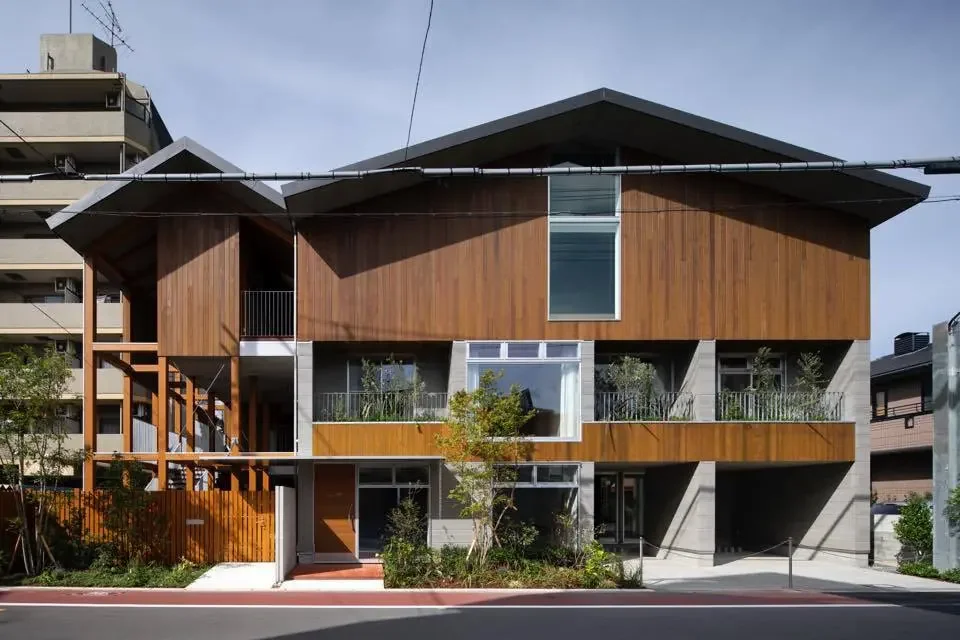
Introducing Suisei Welfare Association Suisen (Corporate Headquarters + After-School Childcare and Development Program), an example of Architect / Design office facility architecture in 2-6-15 Kuwazu, Higashisumiyoshi-ku, Osaka City, Osaka Prefecture by Kumi Inoue Architects.

Suisei Welfare Association Suisen (Corporate Headquarters + After-School Childcare and Development Program)
Learn More
This is the new headquarters office of a social welfare corporation that has long conducted pioneering and innovative welfare activities for a wide range of users, including children, persons with disabilities, and the elderly, primarily in northern Osaka City. The activities, developed from a user-centered perspective, maintain close ties with the local community, making the theme of this new headquarters how it can contribute to the region.
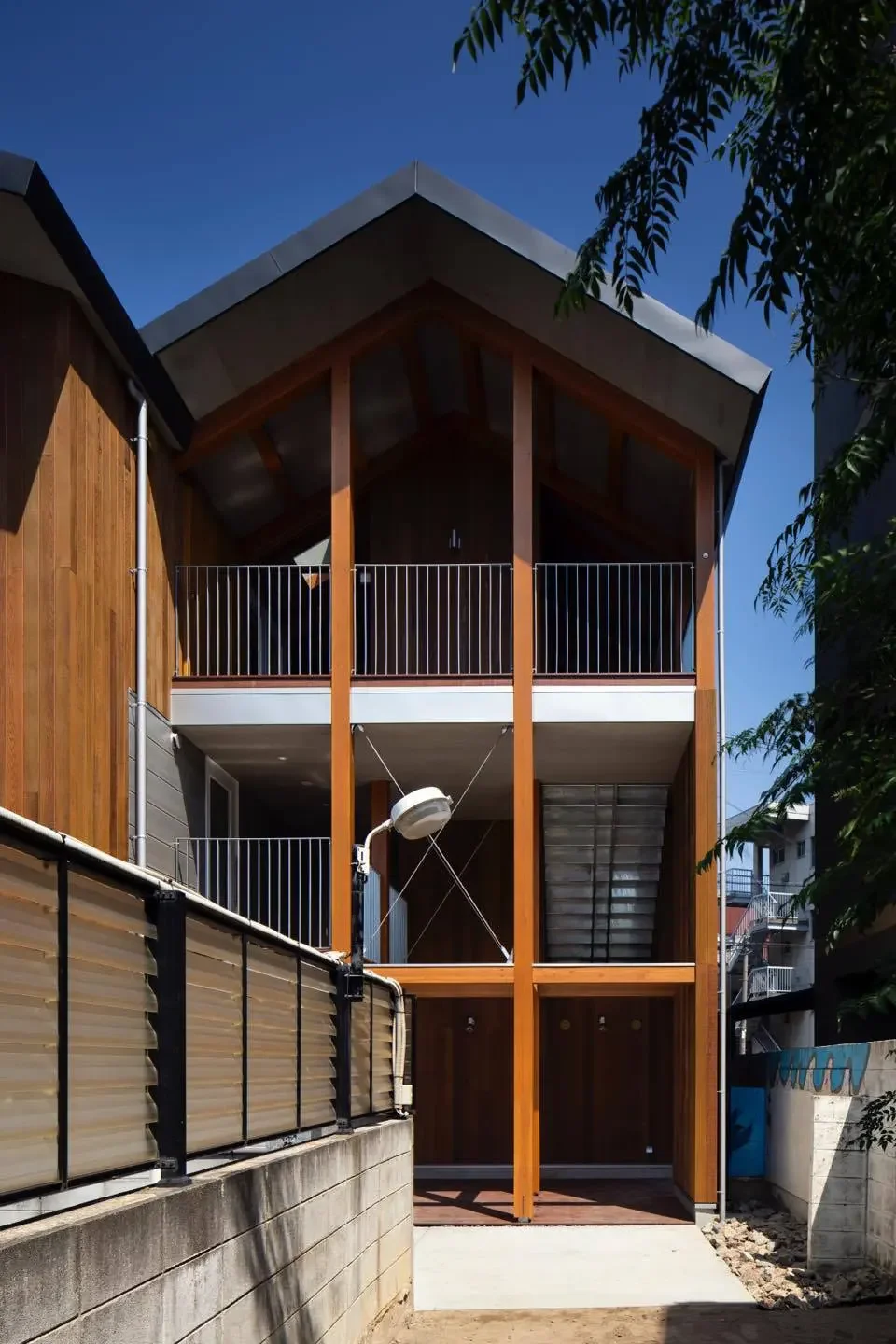
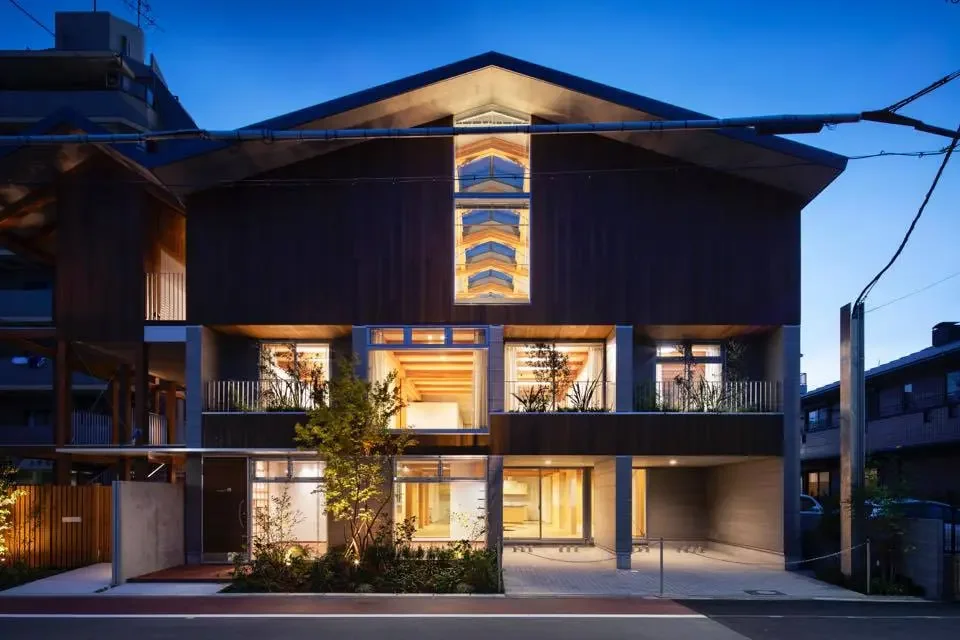
The site is the former location of "Kazeno Ko Nursery School," which was the first activity base established by the Suisei Welfare Association in 1956 (Showa 31). Due to seismic concerns, the nursery was relocated to a different site, and the old building was demolished to construct this new facility. The building is organized with the first floor housing after-school childcare and day services for children with intellectual disabilities; the second floor containing the headquarters office; and the third floor dedicated to a large conference room for facility staff.
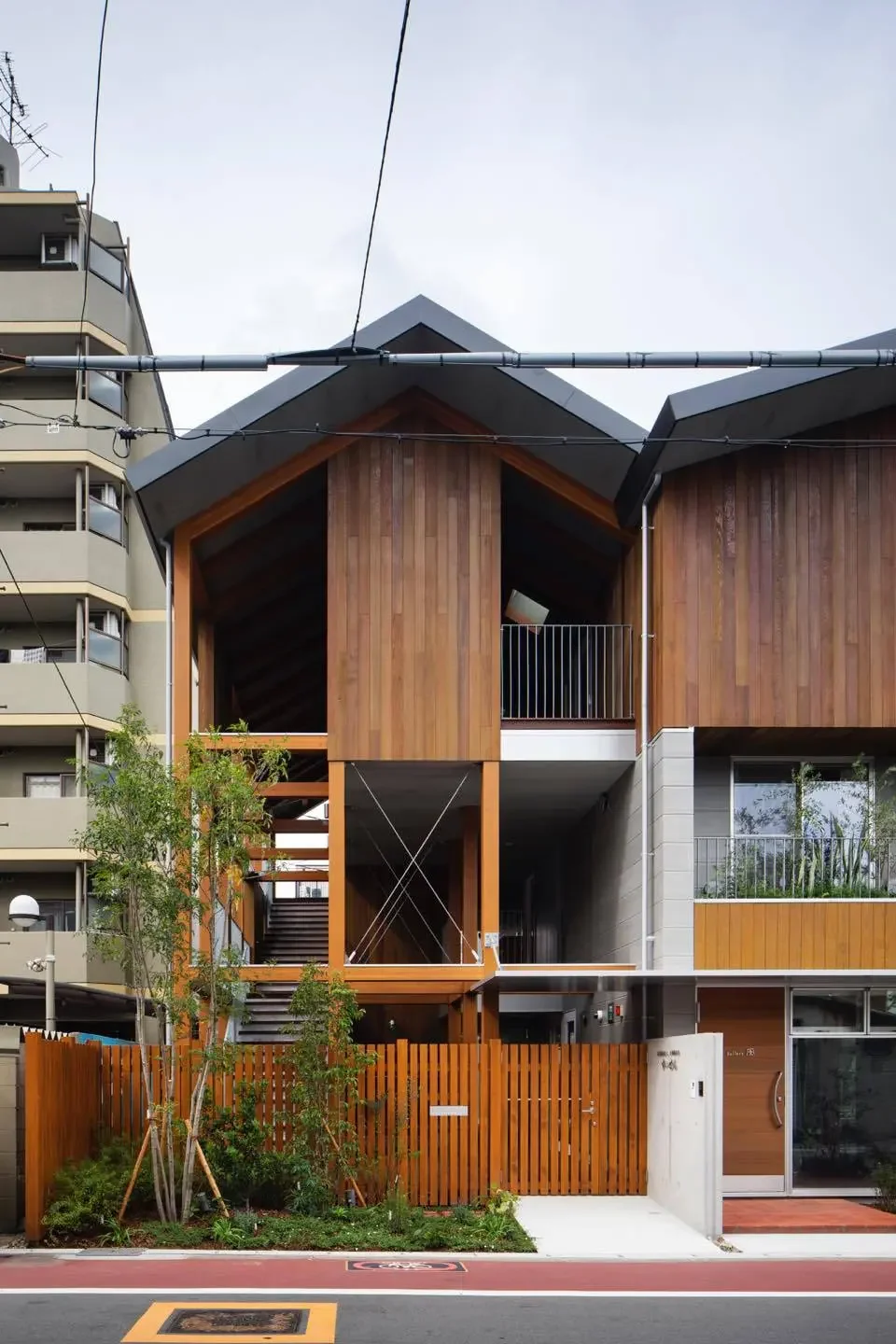
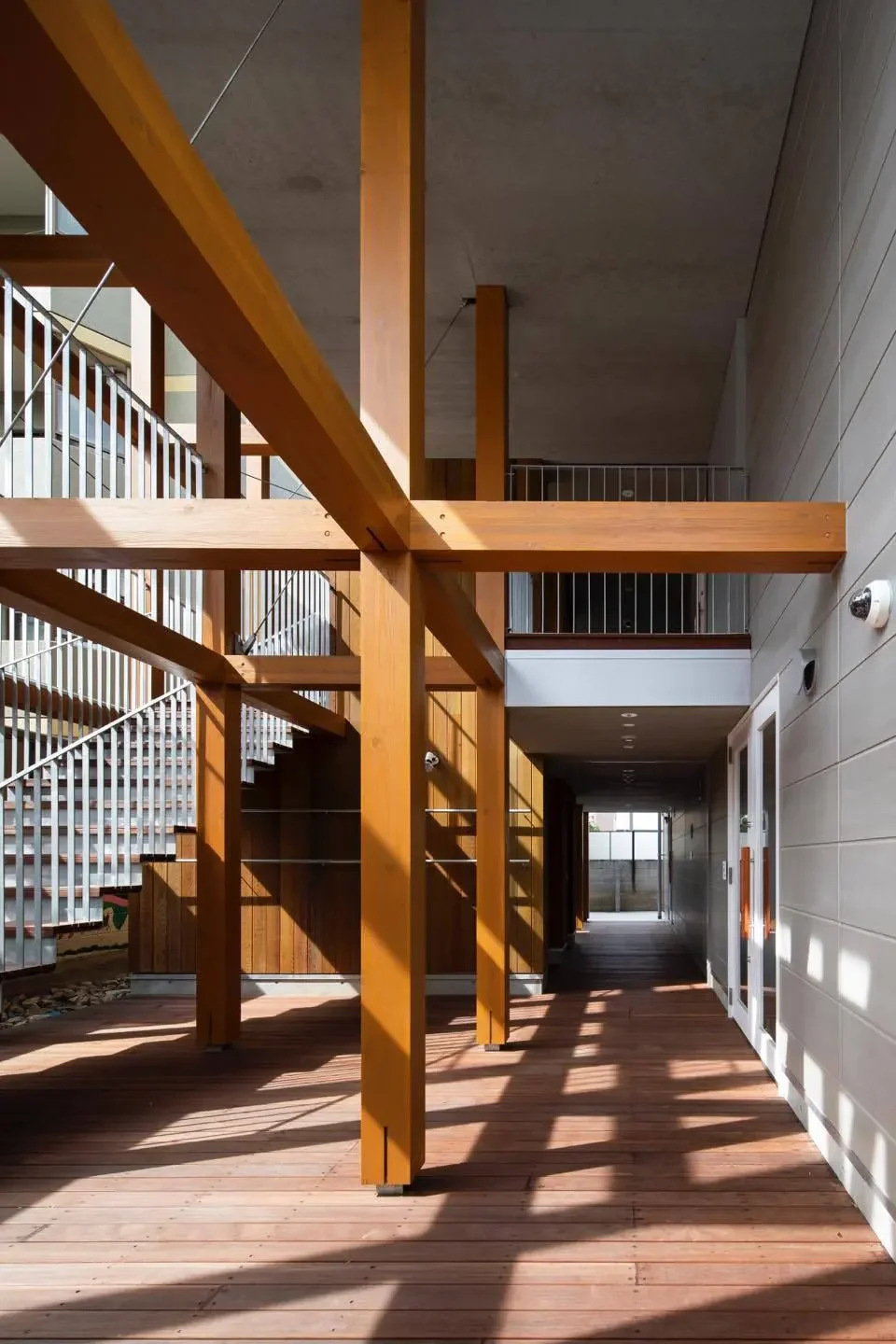
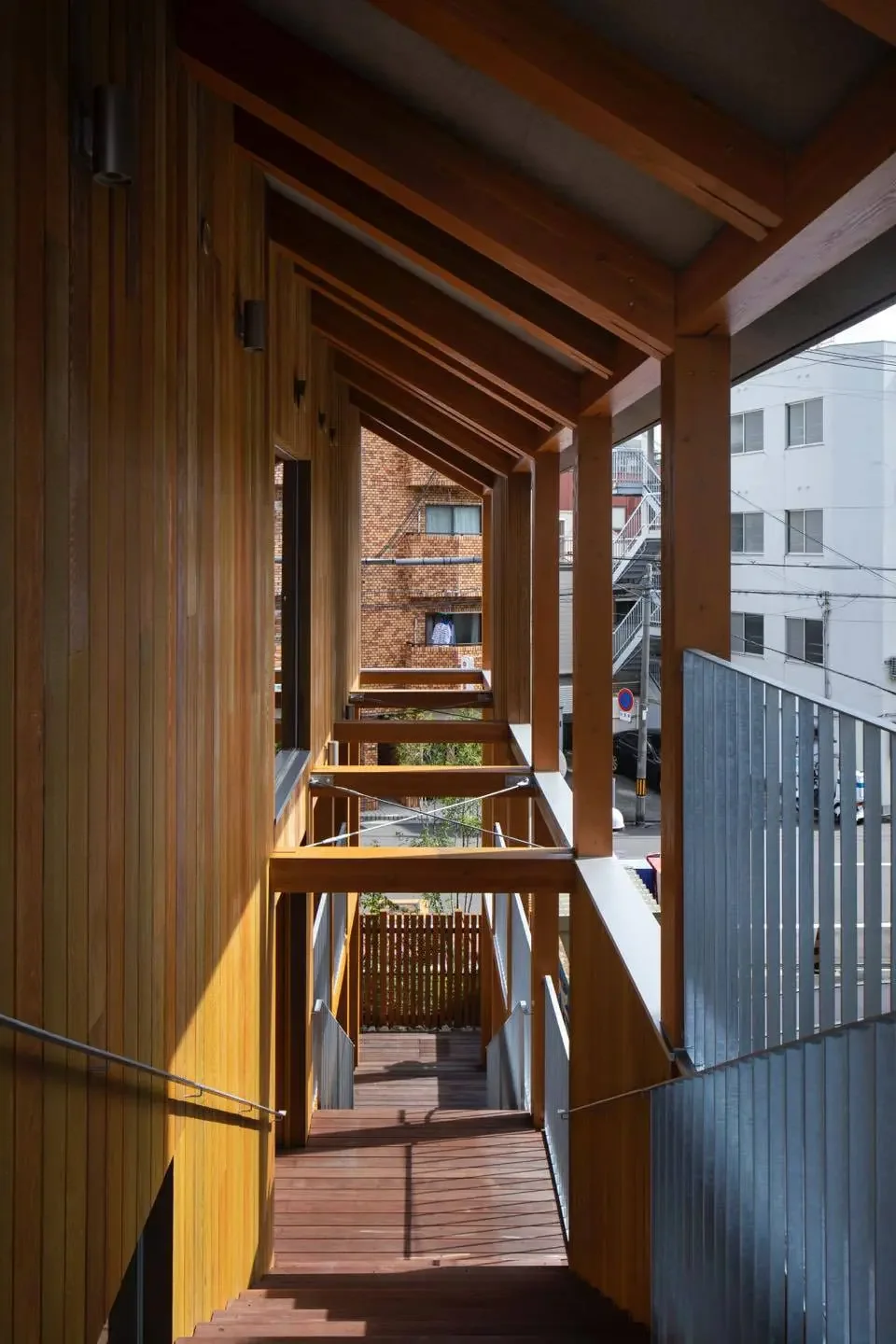
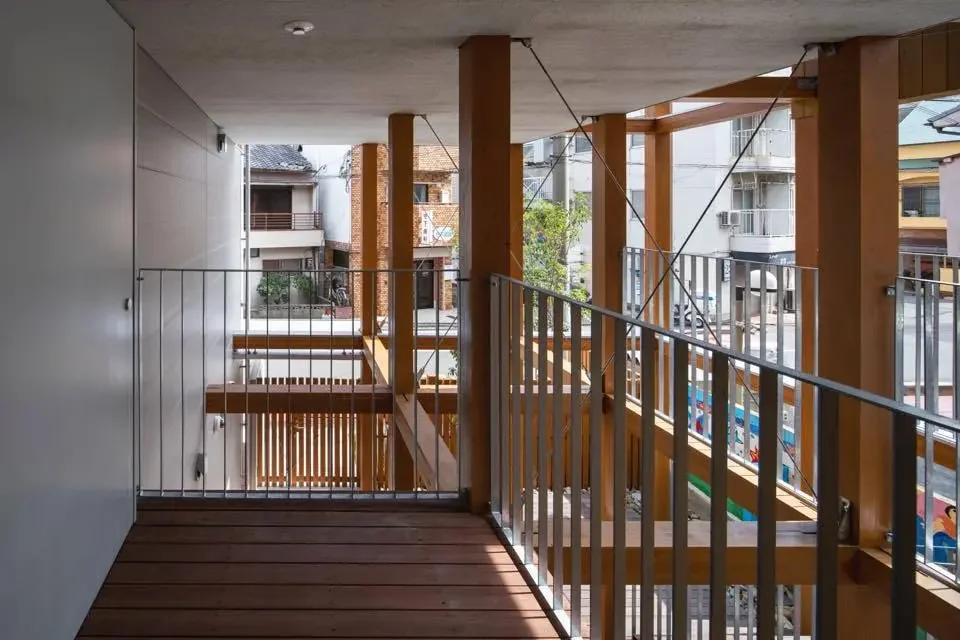
Given the nature of a headquarters office, which tends to be closed off from the community, the design deliberately places staircases connecting each floor on the exterior. This arrangement allows the movement of facility users and staff to be visible, symbolizing the facility’s activities to the community. These stairs also serve as a play area for children.
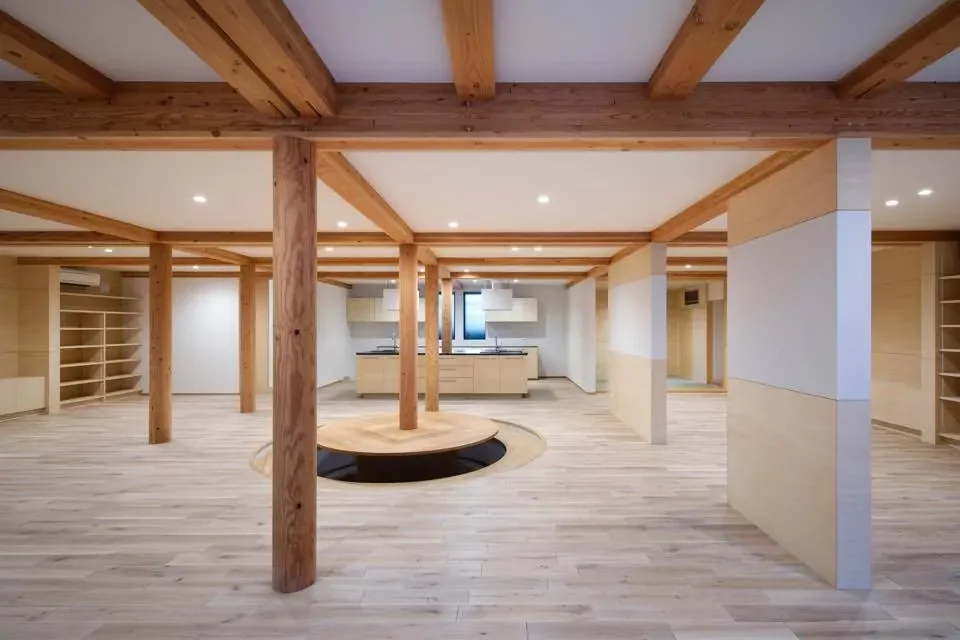
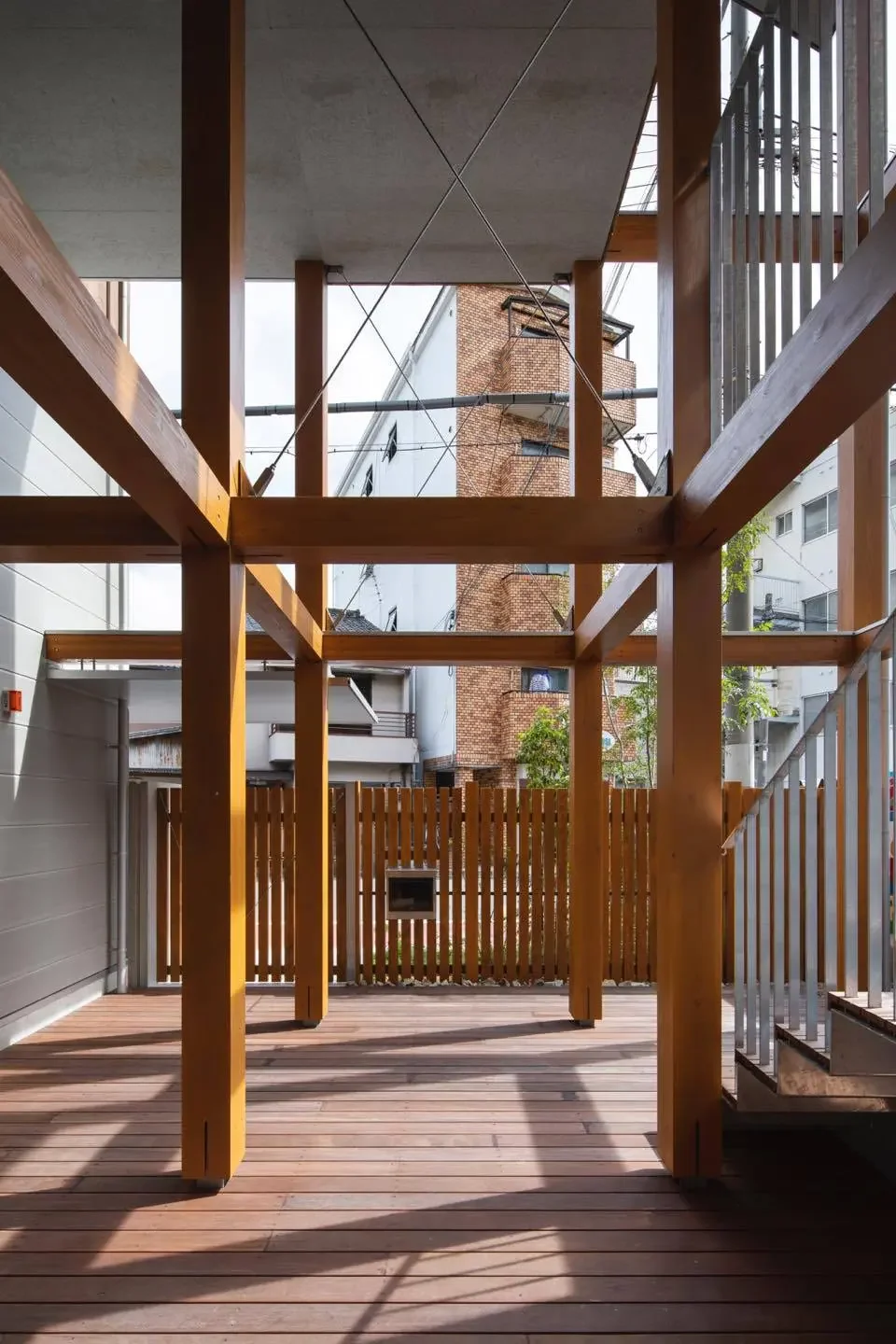
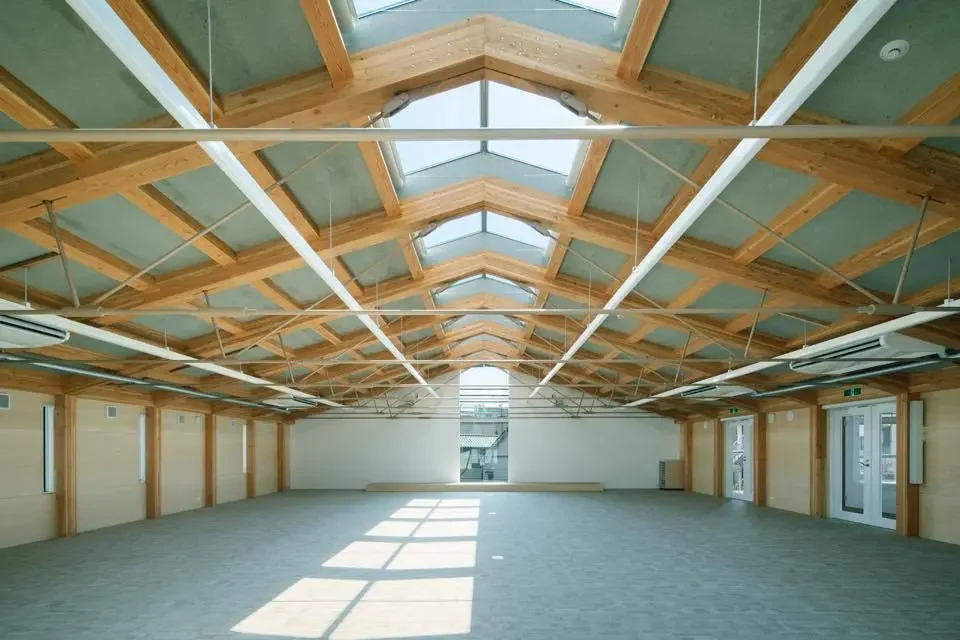
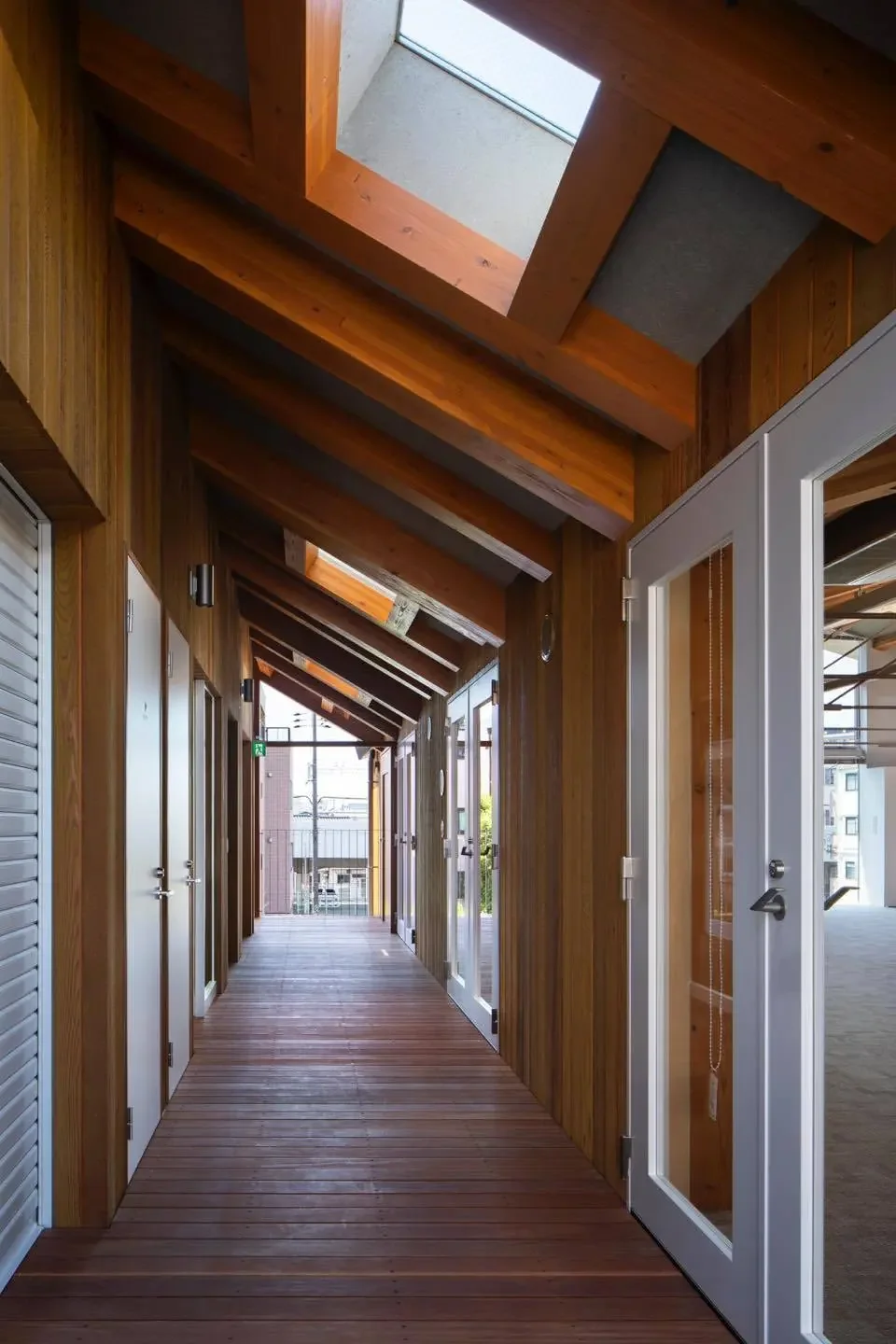
To express a human scale and homely character, the structure is timber-framed, employing a charring design method for fire resistance, resulting in a three-story quasi-fireproof building. The large open space of the third-floor conference room is supported by timber truss beams, while the second-floor office and first-floor children’s facilities are arranged on a 1820 mm grid. The interiors resemble a small forest, harmonizing with the scale of children’s bodies and activities, creating a space where wood is tangibly felt.
By expressing the wooden framework externally and incorporating planted greenery above, this facility, with the warmth emitted by natural materials, aspires to become a place of repose for the local community.
The site is the former location of "Kazeno Ko Nursery School," which was the first activity base established by the Suisei Welfare Association in 1956 (Showa 31). Due to seismic concerns, the nursery was relocated to a different site, and the old building was demolished to construct this new facility. The building is organized with the first floor housing after-school childcare and day services for children with intellectual disabilities; the second floor containing the headquarters office; and the third floor dedicated to a large conference room for facility staff.
Given the nature of a headquarters office, which tends to be closed off from the community, the design deliberately places staircases connecting each floor on the exterior. This arrangement allows the movement of facility users and staff to be visible, symbolizing the facility’s activities to the community. These stairs also serve as a play area for children.
To express a human scale and homely character, the structure is timber-framed, employing a charring design method for fire resistance, resulting in a three-story quasi-fireproof building. The large open space of the third-floor conference room is supported by timber truss beams, while the second-floor office and first-floor children’s facilities are arranged on a 1820 mm grid. The interiors resemble a small forest, harmonizing with the scale of children’s bodies and activities, creating a space where wood is tangibly felt.
By expressing the wooden framework externally and incorporating planted greenery above, this facility, with the warmth emitted by natural materials, aspires to become a place of repose for the local community.
- Copyright(C)Qurasuki.All Rights Reserved.