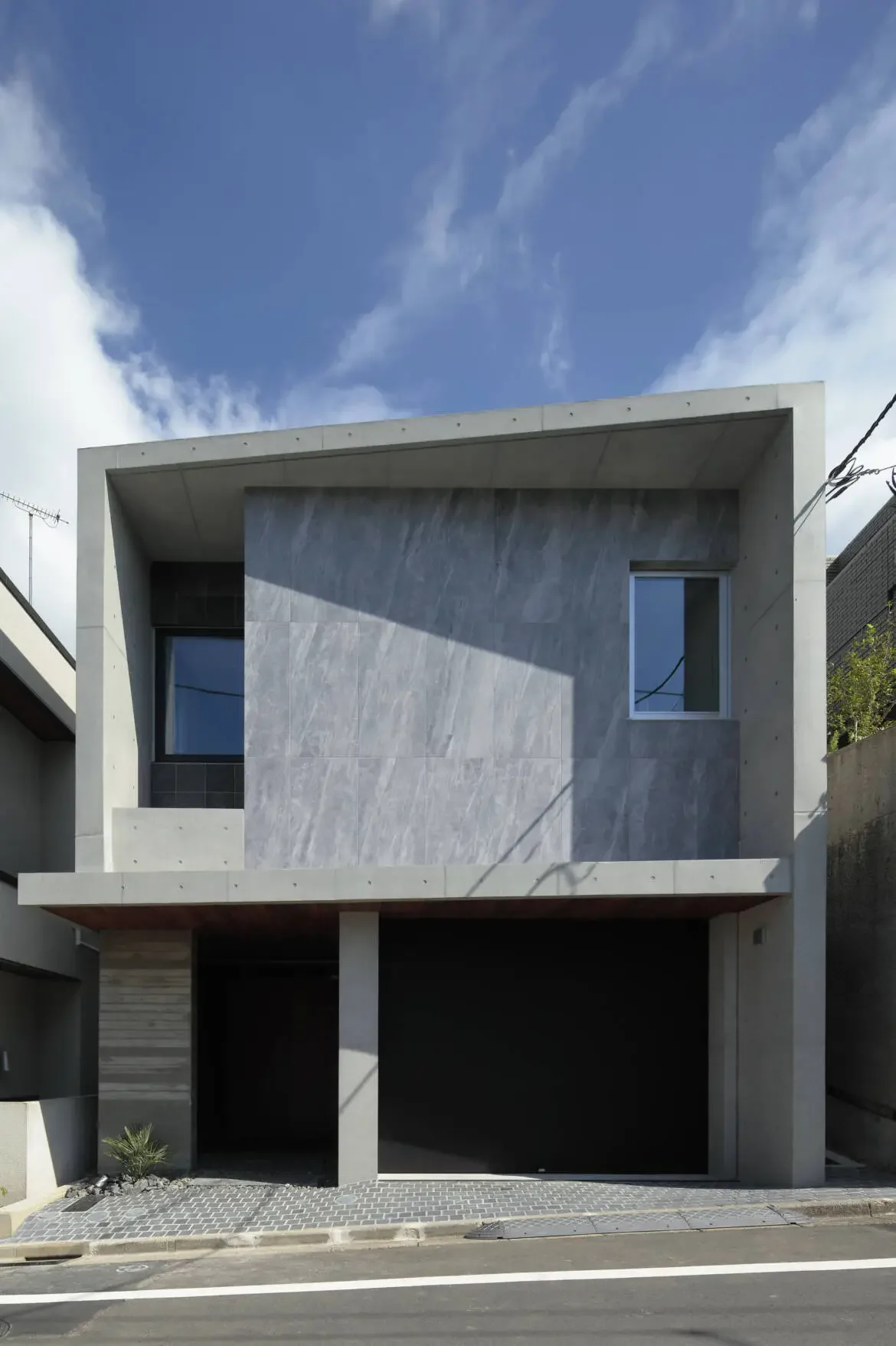
Introducing The Sunken Retreat, a custom-built home example by Far East Design Lab., a Architect / Design office in Cercle Akasaka 1F, 4-2-25 Akasaka, Minato-ku, Tokyo
The Sunken Retreat
The Sunken Retreat
The Sunken Retreat
The Sunken Retreat
The Sunken Retreat
The Sunken Retreat
The Sunken Retreat
The Sunken Retreat
The Sunken Retreat
The Sunken Retreat
The Sunken Retreat
The Sunken Retreat
The Sunken Retreat
Koichi Torimura
Learn More
-Project Background
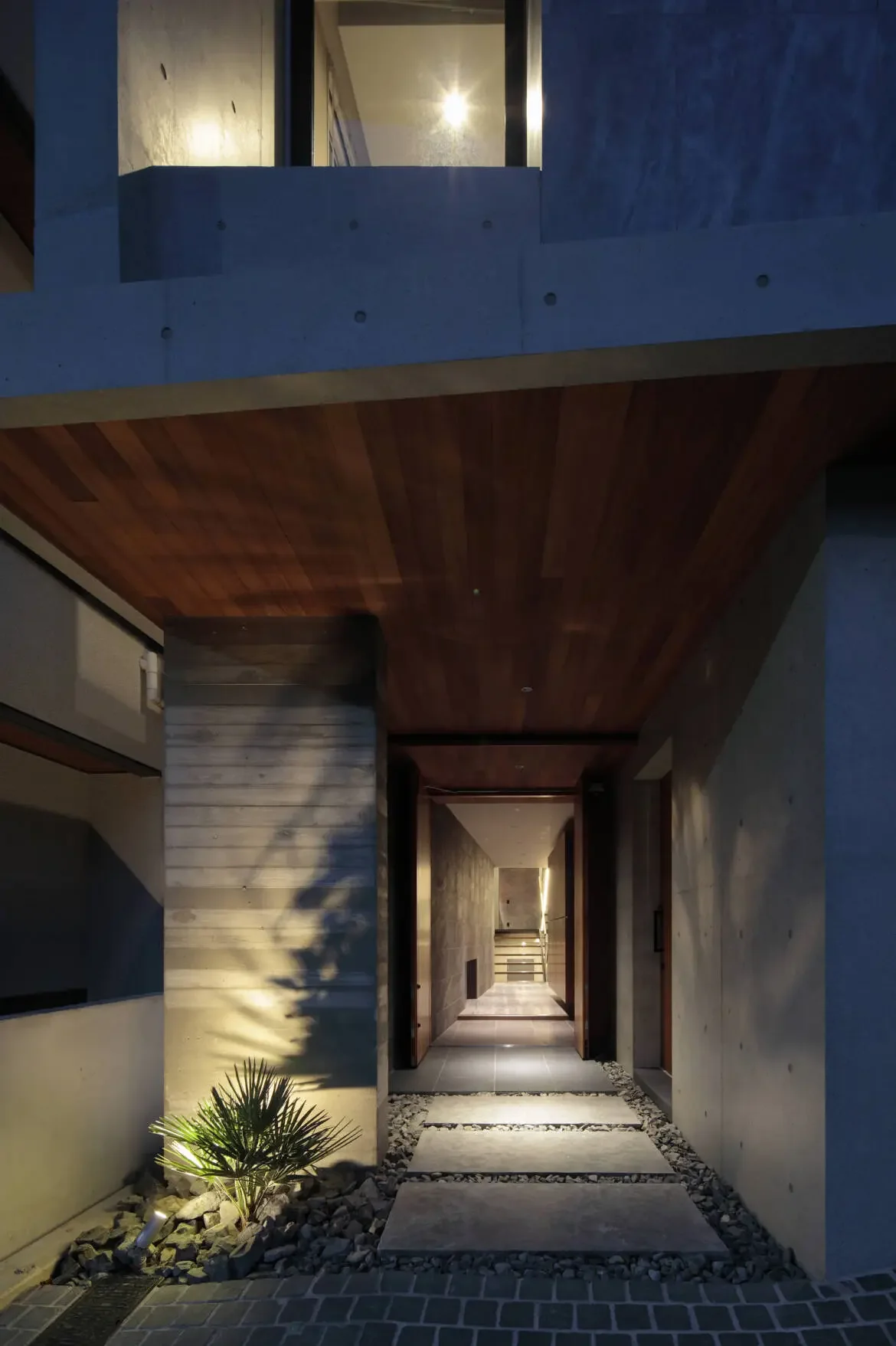
The site is located in a quiet residential neighborhood in the city center, characterized by a narrow, elongated plot that ascends from the north-facing street toward the south and slopes downward to the east, with a maximum elevation difference of 5 meters. The southern boundary is overlooked by an apartment building, while the western adjacent boundary is tightly lined with a retaining wall of a multi-unit residential complex built right up to the property line.
Although the client’s requests were few, the project faced strict constraints including complex setback regulations and average ground level restrictions. Amid these challenges, fulfilling a strong desire for maximizing floor area was imperative.
- Client Requirements:
・A bright, open, and comfortable residence with minimal sense of enclosure.
・Parking space for two vehicles despite a narrow street frontage.
・Maximize usable floor area as much as possible.
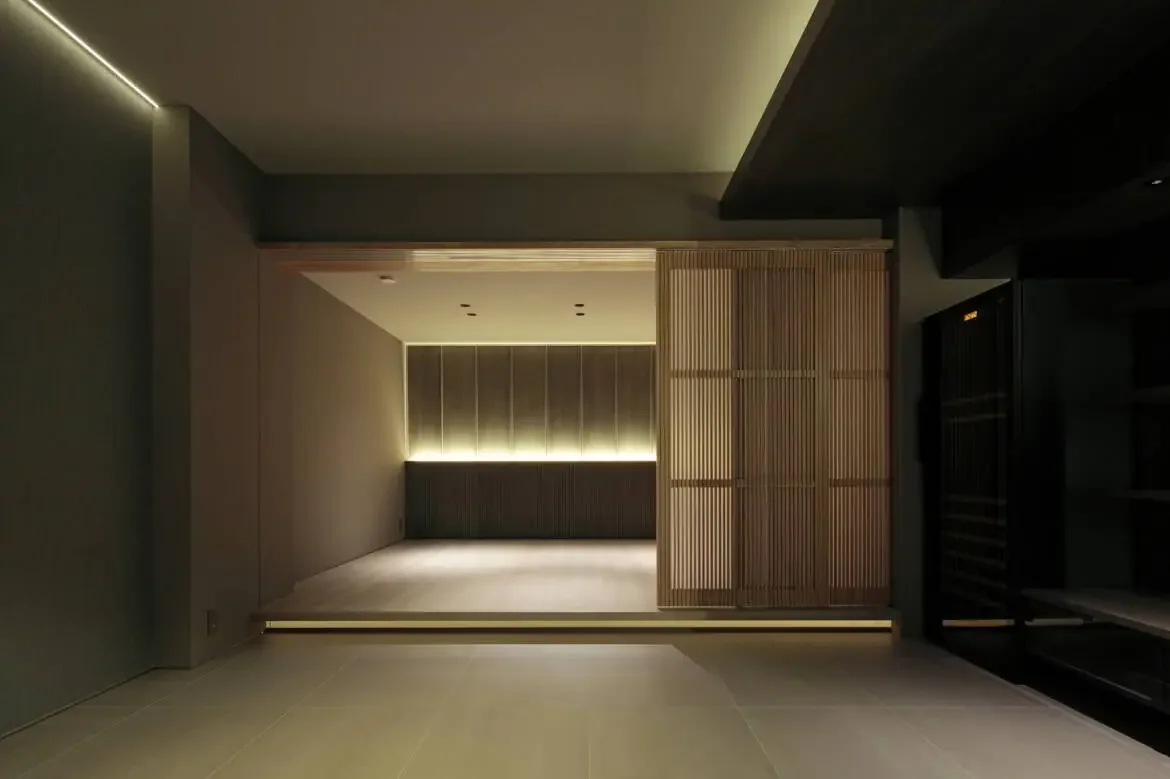
・A tranquil space for enjoying music.
- Design Approach
To maximize floor area, a basement was introduced, causing all living spaces except the top-floor second level to be partially submerged underground. Instead of perceiving the basement negatively, the design draws inspiration from natural valleys, creating a poetic arrangement where serene natural light gently filters down into the subterranean spaces.
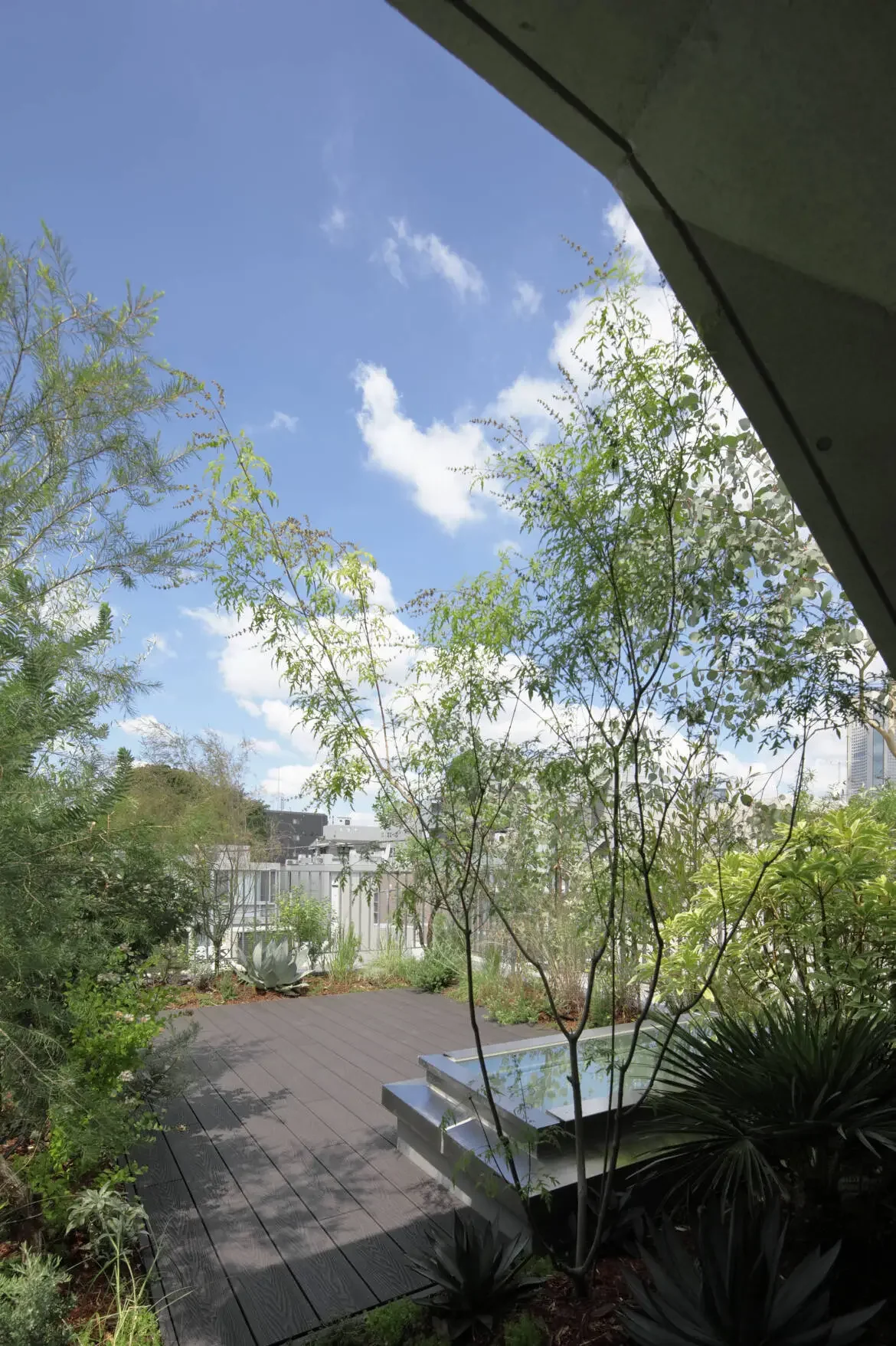
Conversely, the top-floor second level features a thoughtfully angled roof to ensure privacy, incorporating both clerestory and skylight openings. This level is adorned with a garden to the south and a rooftop garden to the north, providing abundant natural light, ventilation, and unobstructed views. The resulting atmosphere evokes the openness of a treehouse surrounded by nature, establishing a dynamic contrast in elevation reminiscent of a natural valley between the upper floor and the subterranean spaces.
◎ Valley-Inspired Stairwell
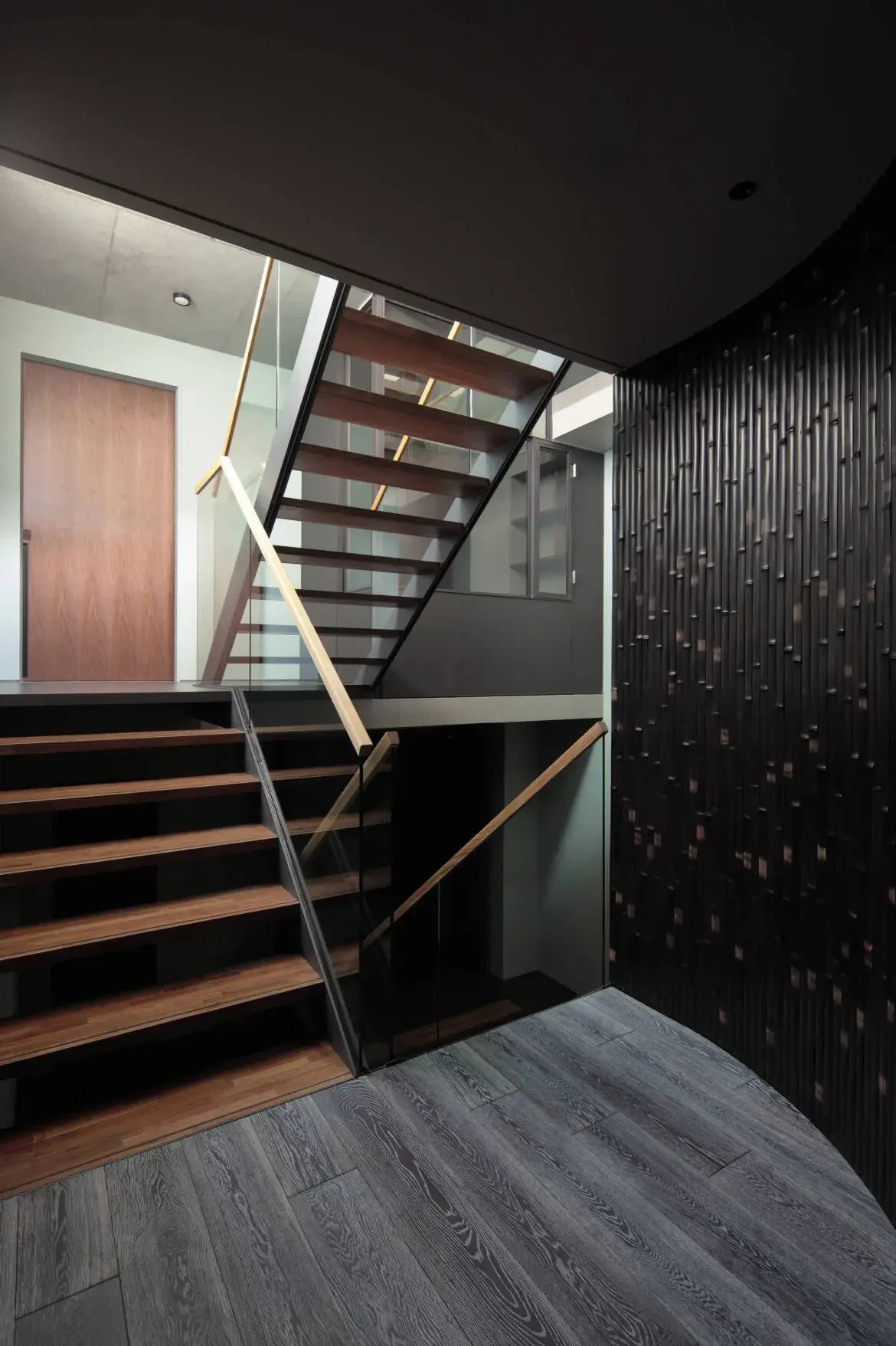
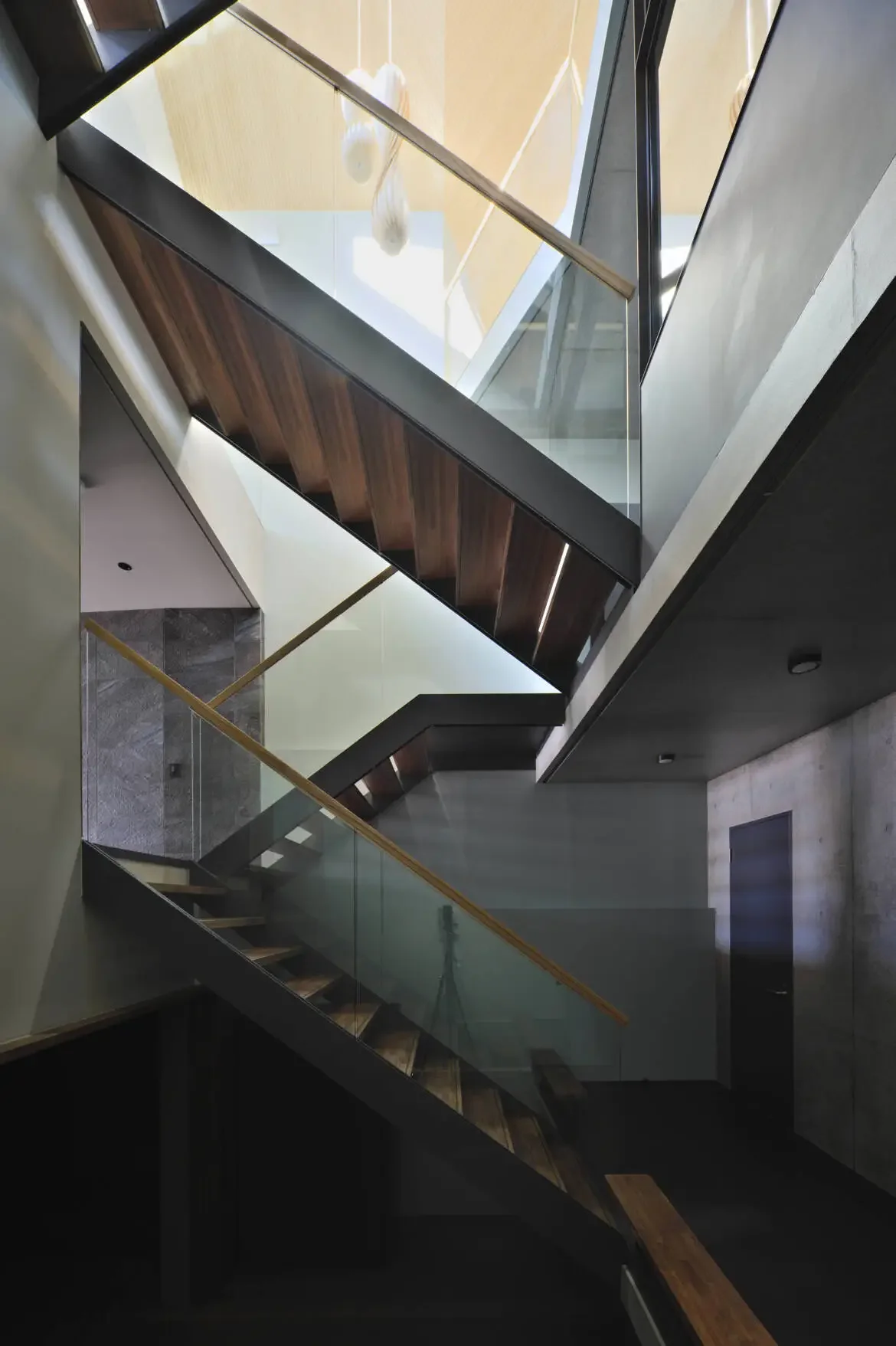
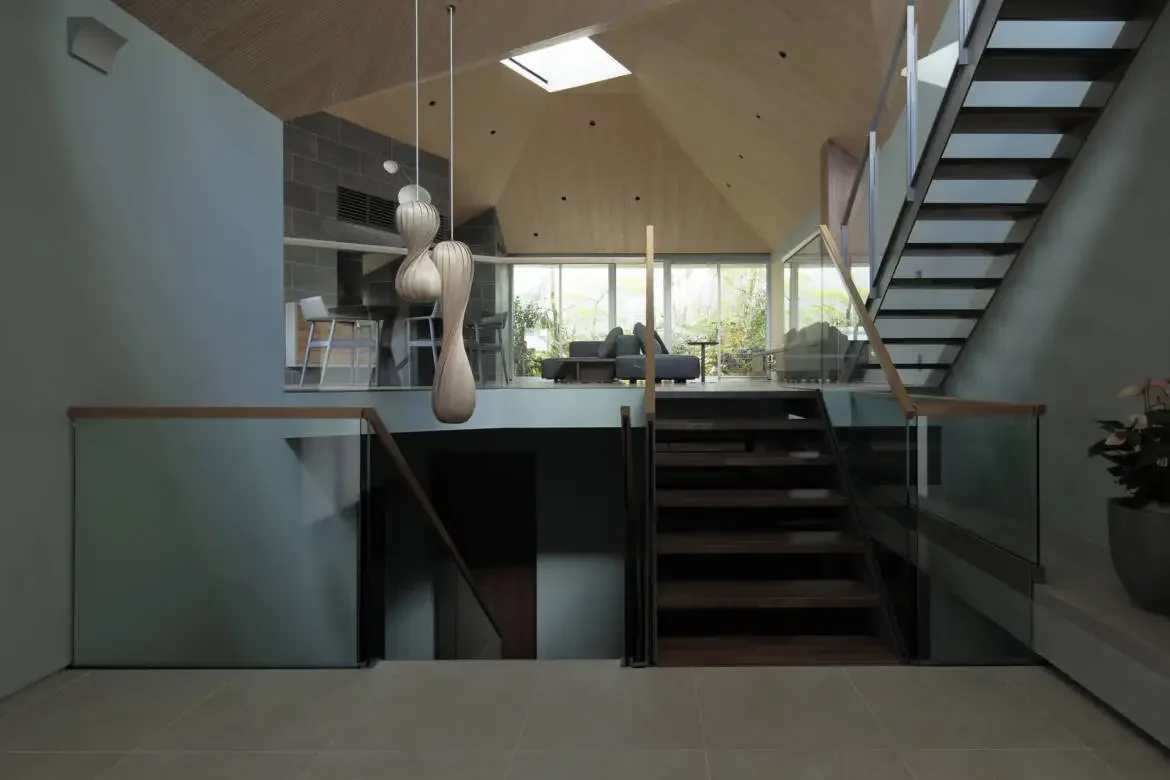
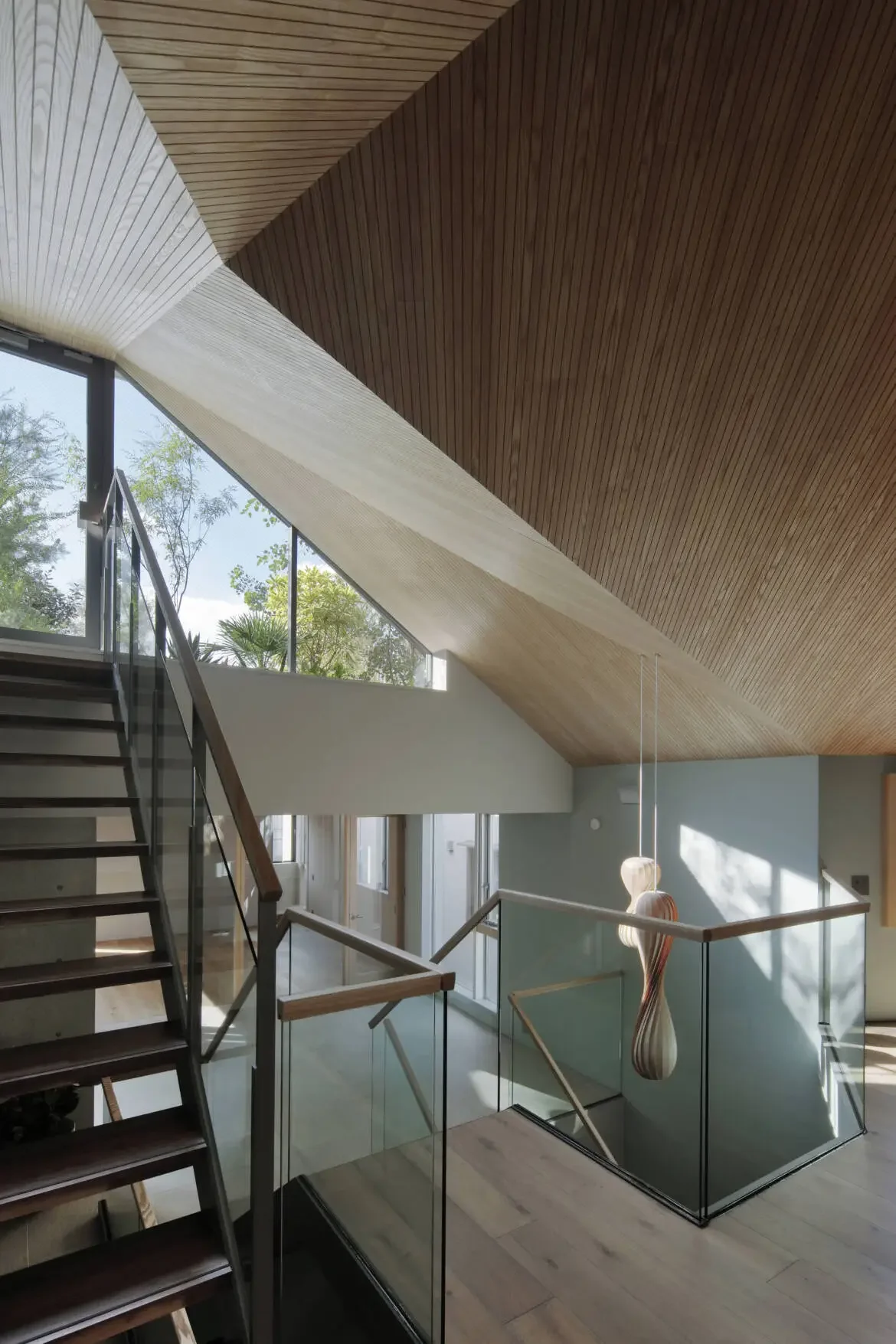
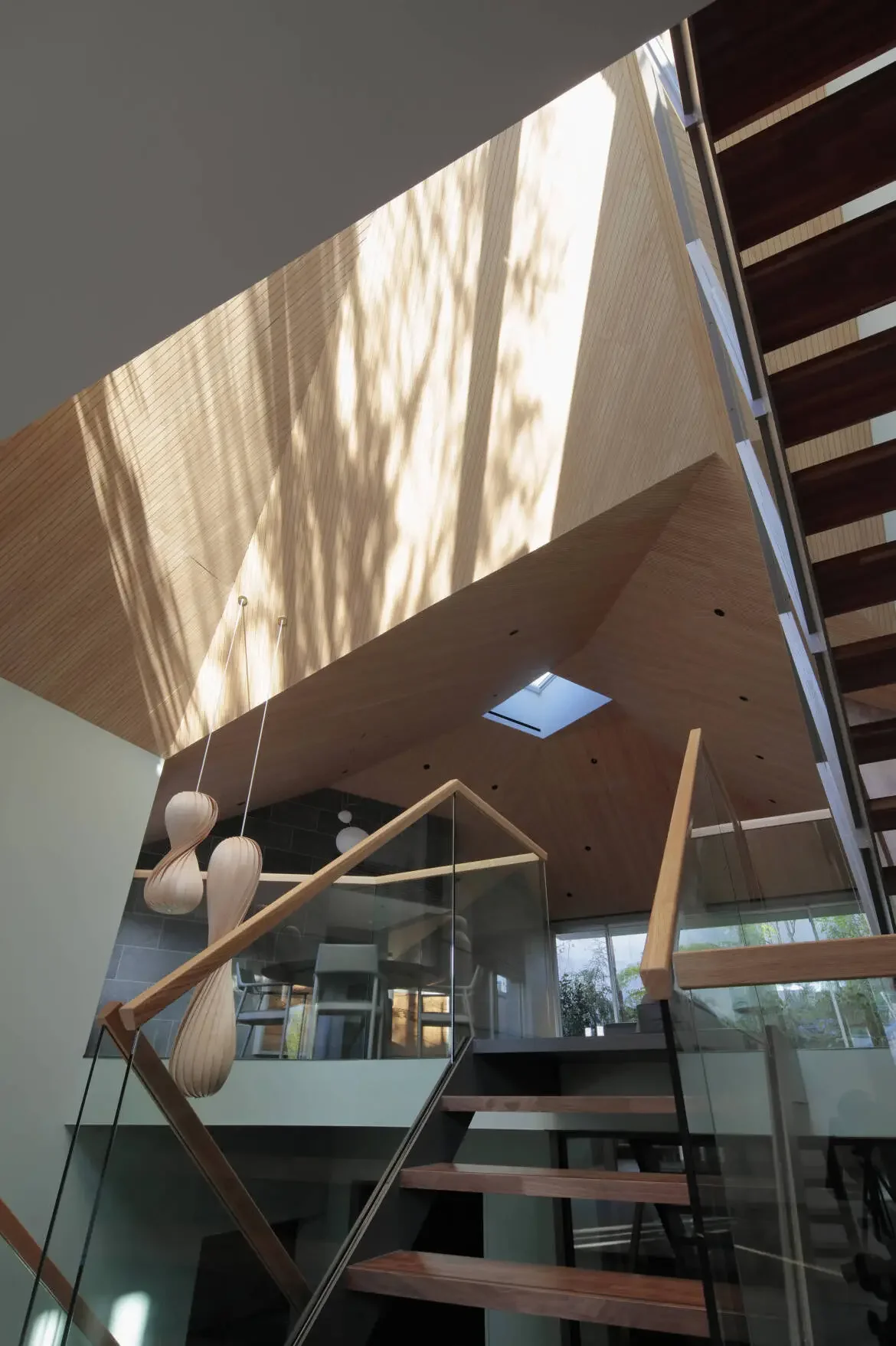
The stairwell is designed as a continuous, multi-level space that follows the site’s slope with a series of six staggered split-level rooms connected seamlessly. This configuration minimizes soil excavation volumes required for the basement, facilitating construction efficiency. A 10-meter-high vertical atrium penetrates these levels, channeling natural light from the skylights and clerestory windows on the second floor deep into the basement, creating a subtle gradient of illumination.
◎ Treehouse-Like Openness
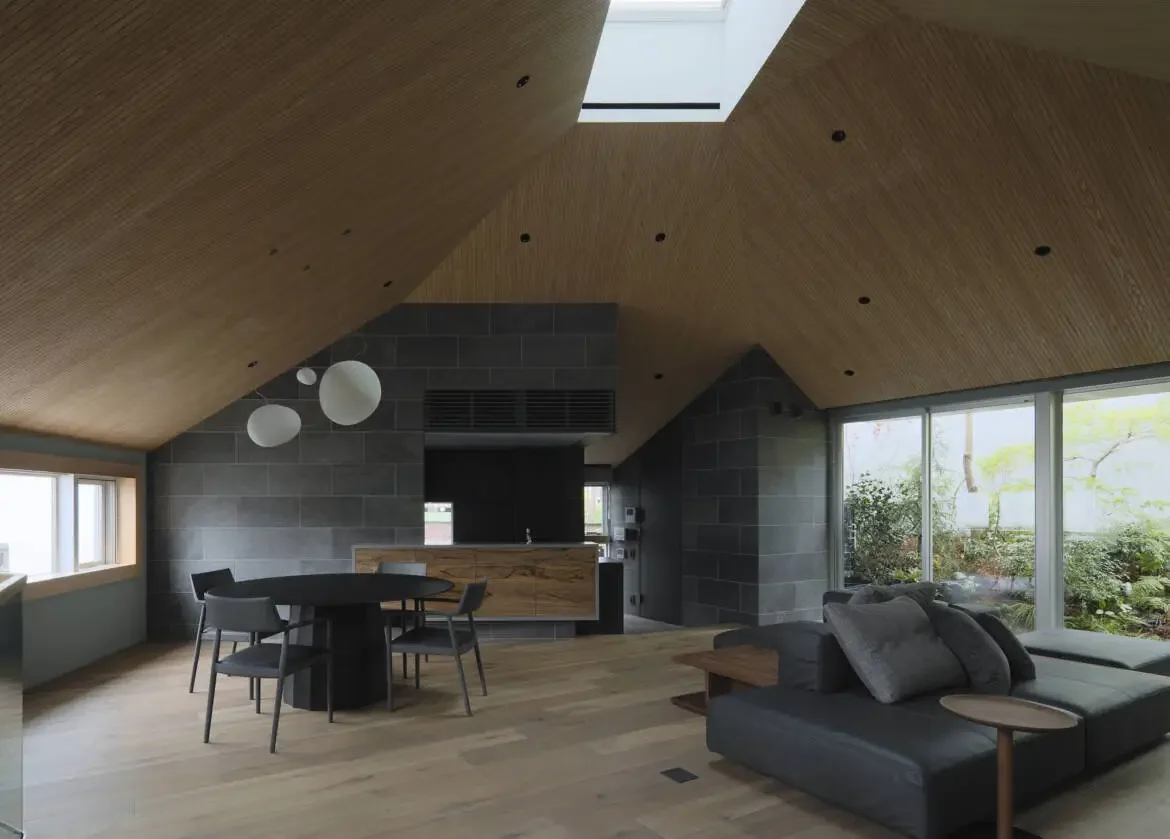
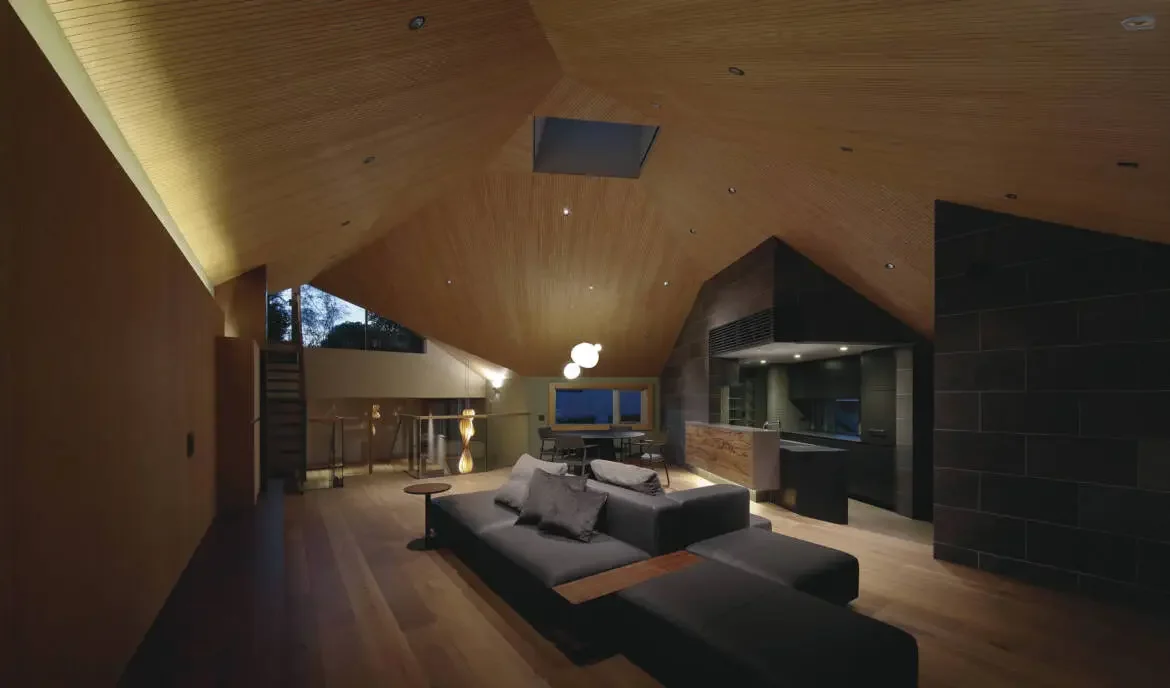
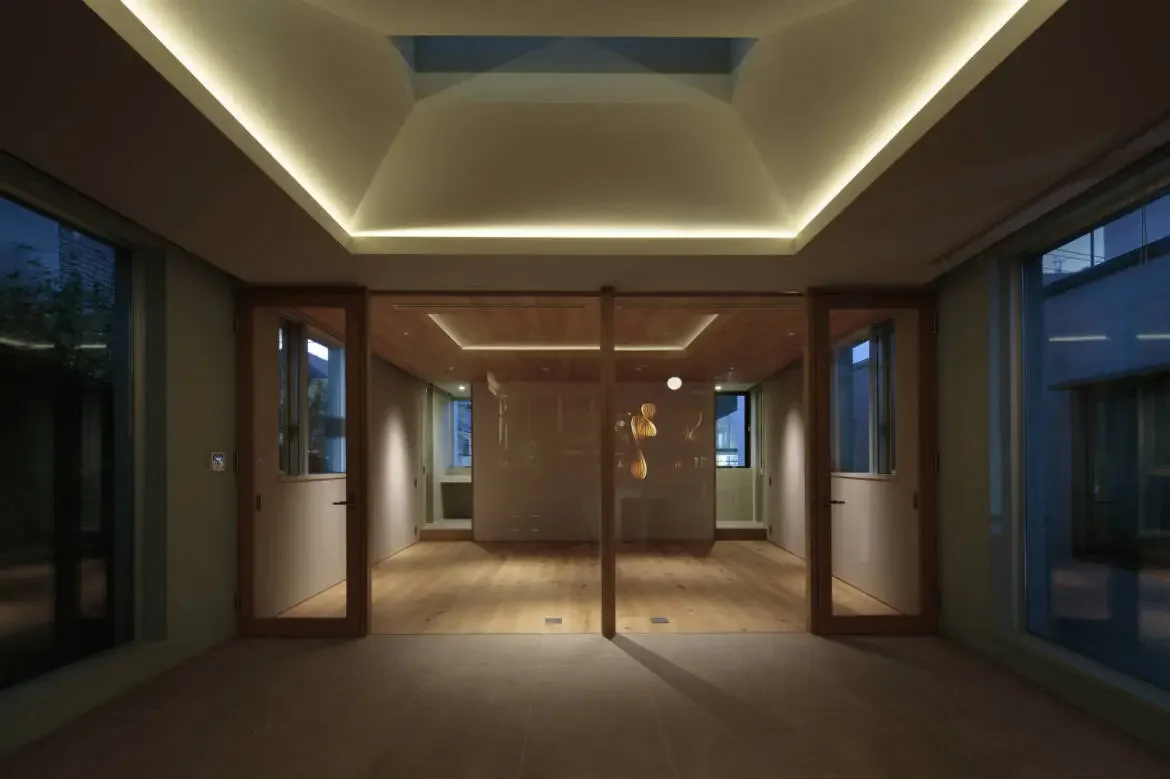
A central skylight crowns the dome-shaped ceiling of the living and dining area, not only introducing daylight but also aiding thermal regulation across the interconnected spaces. The ceiling’s slope ascends toward the northern rooftop, aligning with setback lines and culminating in clerestory windows that reflect and diffuse light intricately.
Given the southern rear of the site faces overlooking apartments and condominiums, privacy was paramount. To achieve openness without exposure, the southern garden is preserved as a sloped embankment with a low eave, maintaining the natural terrain as a landscaped slope garden. The top floor is largely a single open-plan space with minimal glass partitions, allowing uninterrupted sightlines along the longitudinal axis and fostering a sense of spaciousness.
- Environmental Strategy
With half of the building’s three-story volume embedded underground, the design actively harnesses and manages the environmental gradients from basement to rooftop. A ventilation system circulates air through the continuous atrium connecting all levels, mechanically drawing air from an intake near the dome skylight on the second floor and the lowest basement stairwell step. This system reverses airflow seasonally to provide both fresh air intake and exhaust, generating a comfortable thermal environment year-round.
Additionally, radiant floor heating embedded within the basement’s concrete slab stores thermal energy, mitigating humidity issues and cold drafts typical of subterranean spaces. This integrated approach softens local environmental fluctuations often experienced in large continuous volumes.
Contrary to common perceptions of underground spaces as undesirable, the basement here offers a cool and stable environment, especially beneficial during recent increasingly severe summer heatwaves. Viewing the dappled sunlight filtering from the upper windows from below evokes a tranquil sensation akin to resting at the bottom of a valley.
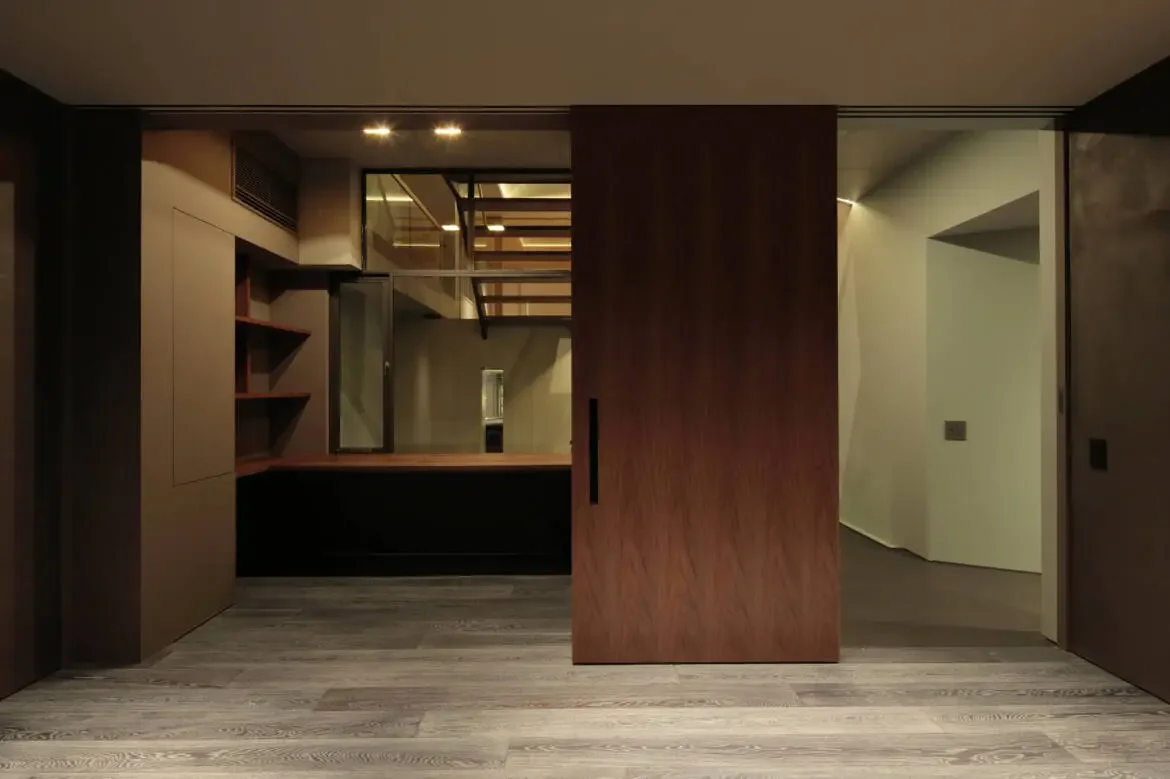
Rather than relying on bright artificial lighting, the basement maintains a subdued, naturally glowing ambiance, with a carefully curated color and material palette that transitions from darker tones below to lighter hues above, reinforcing a deliberate interplay of shadow and light. This gradation enhances the distinct yet complementary atmospheres of subterranean and upper floors, ensuring every space feels inviting.
Overall, the residence successfully balances privacy, openness, and a strong connection to nature, creating a unique living environment that harmonizes contrasting spatial qualities across vertical zones.

The site is located in a quiet residential neighborhood in the city center, characterized by a narrow, elongated plot that ascends from the north-facing street toward the south and slopes downward to the east, with a maximum elevation difference of 5 meters. The southern boundary is overlooked by an apartment building, while the western adjacent boundary is tightly lined with a retaining wall of a multi-unit residential complex built right up to the property line.
Although the client’s requests were few, the project faced strict constraints including complex setback regulations and average ground level restrictions. Amid these challenges, fulfilling a strong desire for maximizing floor area was imperative.
- Client Requirements:
・A bright, open, and comfortable residence with minimal sense of enclosure.
・Parking space for two vehicles despite a narrow street frontage.
・Maximize usable floor area as much as possible.
・A tranquil space for enjoying music.
- Design Approach
To maximize floor area, a basement was introduced, causing all living spaces except the top-floor second level to be partially submerged underground. Instead of perceiving the basement negatively, the design draws inspiration from natural valleys, creating a poetic arrangement where serene natural light gently filters down into the subterranean spaces.
Conversely, the top-floor second level features a thoughtfully angled roof to ensure privacy, incorporating both clerestory and skylight openings. This level is adorned with a garden to the south and a rooftop garden to the north, providing abundant natural light, ventilation, and unobstructed views. The resulting atmosphere evokes the openness of a treehouse surrounded by nature, establishing a dynamic contrast in elevation reminiscent of a natural valley between the upper floor and the subterranean spaces.
◎ Valley-Inspired Stairwell
The stairwell is designed as a continuous, multi-level space that follows the site’s slope with a series of six staggered split-level rooms connected seamlessly. This configuration minimizes soil excavation volumes required for the basement, facilitating construction efficiency. A 10-meter-high vertical atrium penetrates these levels, channeling natural light from the skylights and clerestory windows on the second floor deep into the basement, creating a subtle gradient of illumination.
◎ Treehouse-Like Openness
A central skylight crowns the dome-shaped ceiling of the living and dining area, not only introducing daylight but also aiding thermal regulation across the interconnected spaces. The ceiling’s slope ascends toward the northern rooftop, aligning with setback lines and culminating in clerestory windows that reflect and diffuse light intricately.
Given the southern rear of the site faces overlooking apartments and condominiums, privacy was paramount. To achieve openness without exposure, the southern garden is preserved as a sloped embankment with a low eave, maintaining the natural terrain as a landscaped slope garden. The top floor is largely a single open-plan space with minimal glass partitions, allowing uninterrupted sightlines along the longitudinal axis and fostering a sense of spaciousness.
- Environmental Strategy
With half of the building’s three-story volume embedded underground, the design actively harnesses and manages the environmental gradients from basement to rooftop. A ventilation system circulates air through the continuous atrium connecting all levels, mechanically drawing air from an intake near the dome skylight on the second floor and the lowest basement stairwell step. This system reverses airflow seasonally to provide both fresh air intake and exhaust, generating a comfortable thermal environment year-round.
Additionally, radiant floor heating embedded within the basement’s concrete slab stores thermal energy, mitigating humidity issues and cold drafts typical of subterranean spaces. This integrated approach softens local environmental fluctuations often experienced in large continuous volumes.
Contrary to common perceptions of underground spaces as undesirable, the basement here offers a cool and stable environment, especially beneficial during recent increasingly severe summer heatwaves. Viewing the dappled sunlight filtering from the upper windows from below evokes a tranquil sensation akin to resting at the bottom of a valley.
Rather than relying on bright artificial lighting, the basement maintains a subdued, naturally glowing ambiance, with a carefully curated color and material palette that transitions from darker tones below to lighter hues above, reinforcing a deliberate interplay of shadow and light. This gradation enhances the distinct yet complementary atmospheres of subterranean and upper floors, ensuring every space feels inviting.
Overall, the residence successfully balances privacy, openness, and a strong connection to nature, creating a unique living environment that harmonizes contrasting spatial qualities across vertical zones.
- Copyright(C)Qurasuki.All Rights Reserved.