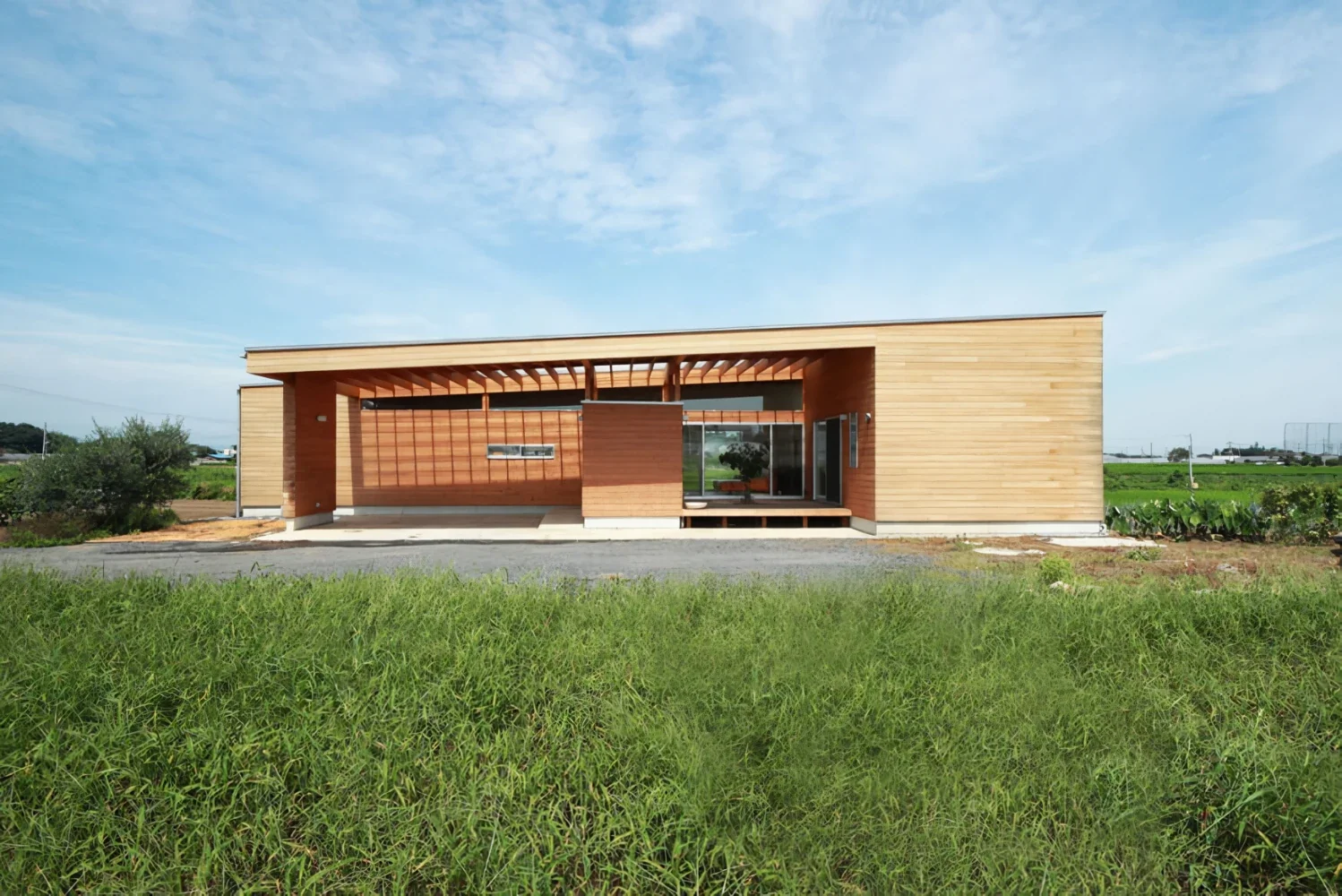
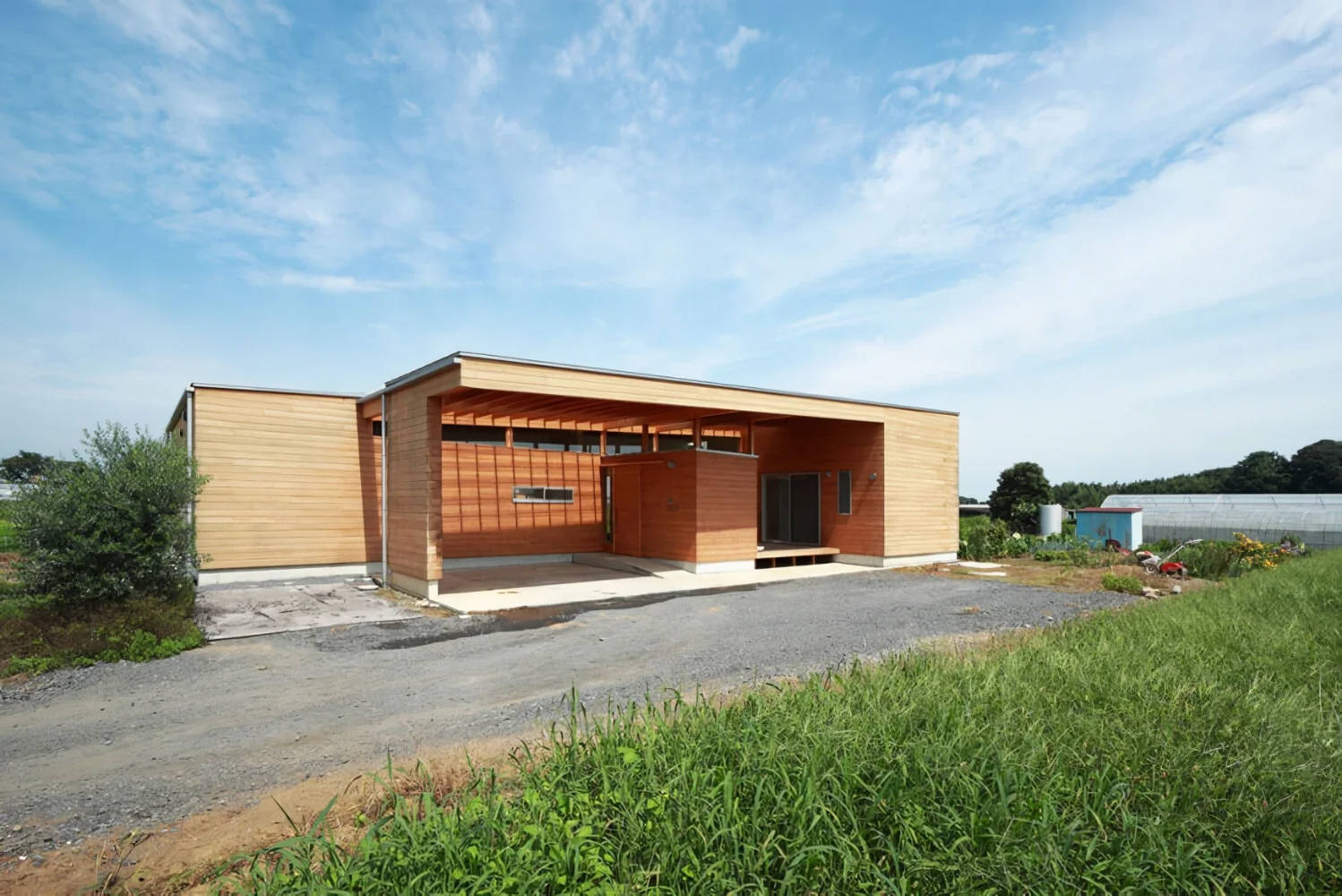
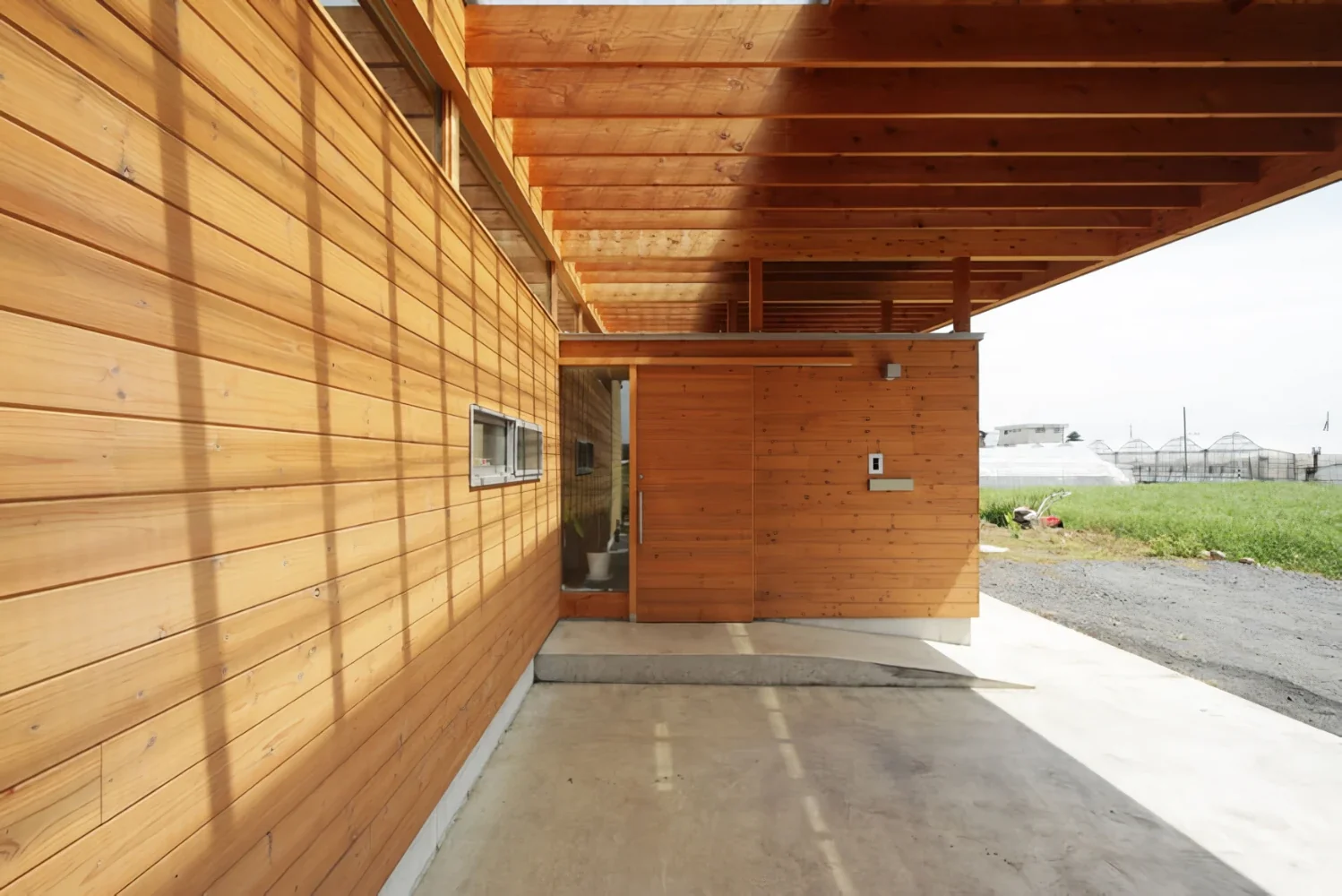
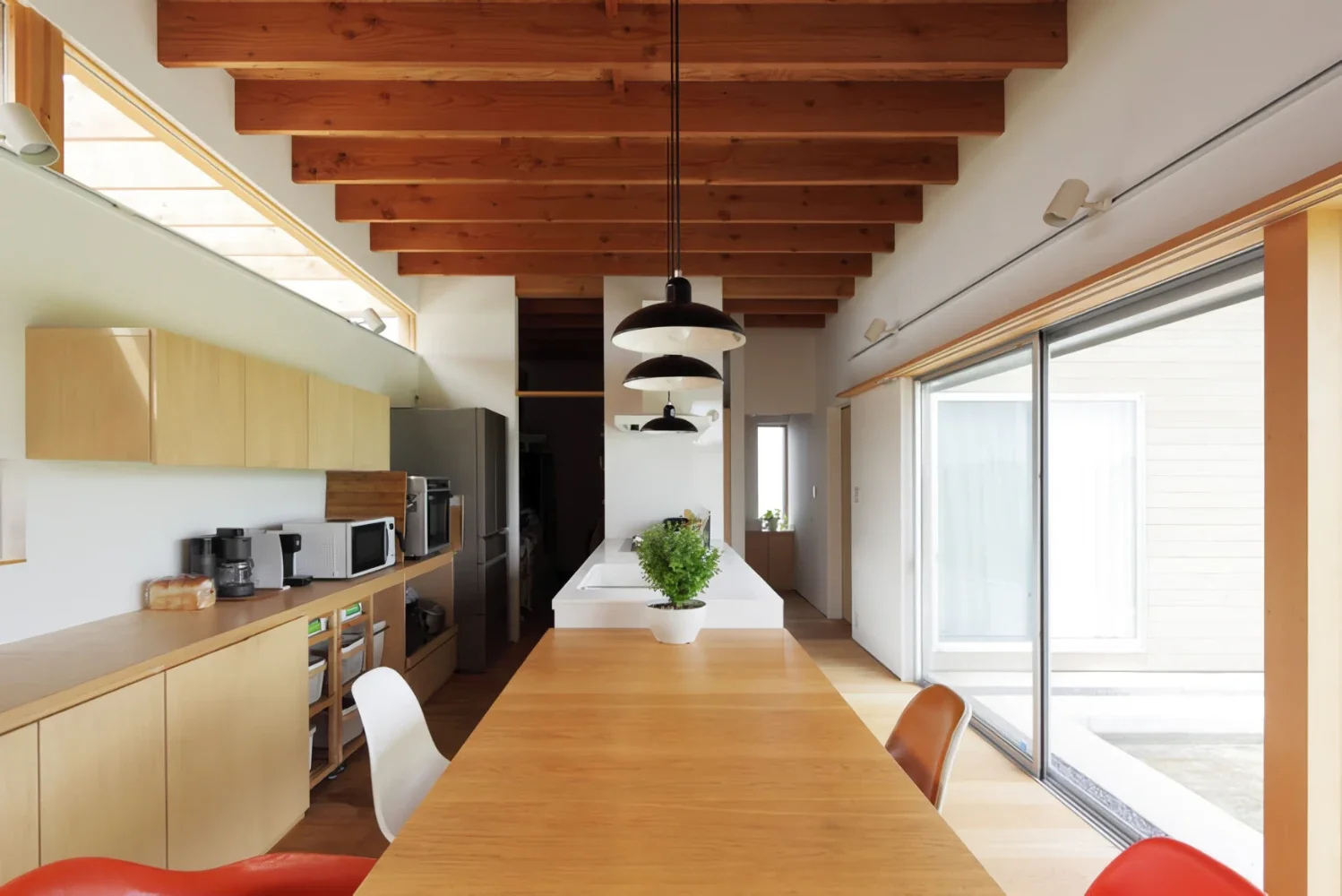
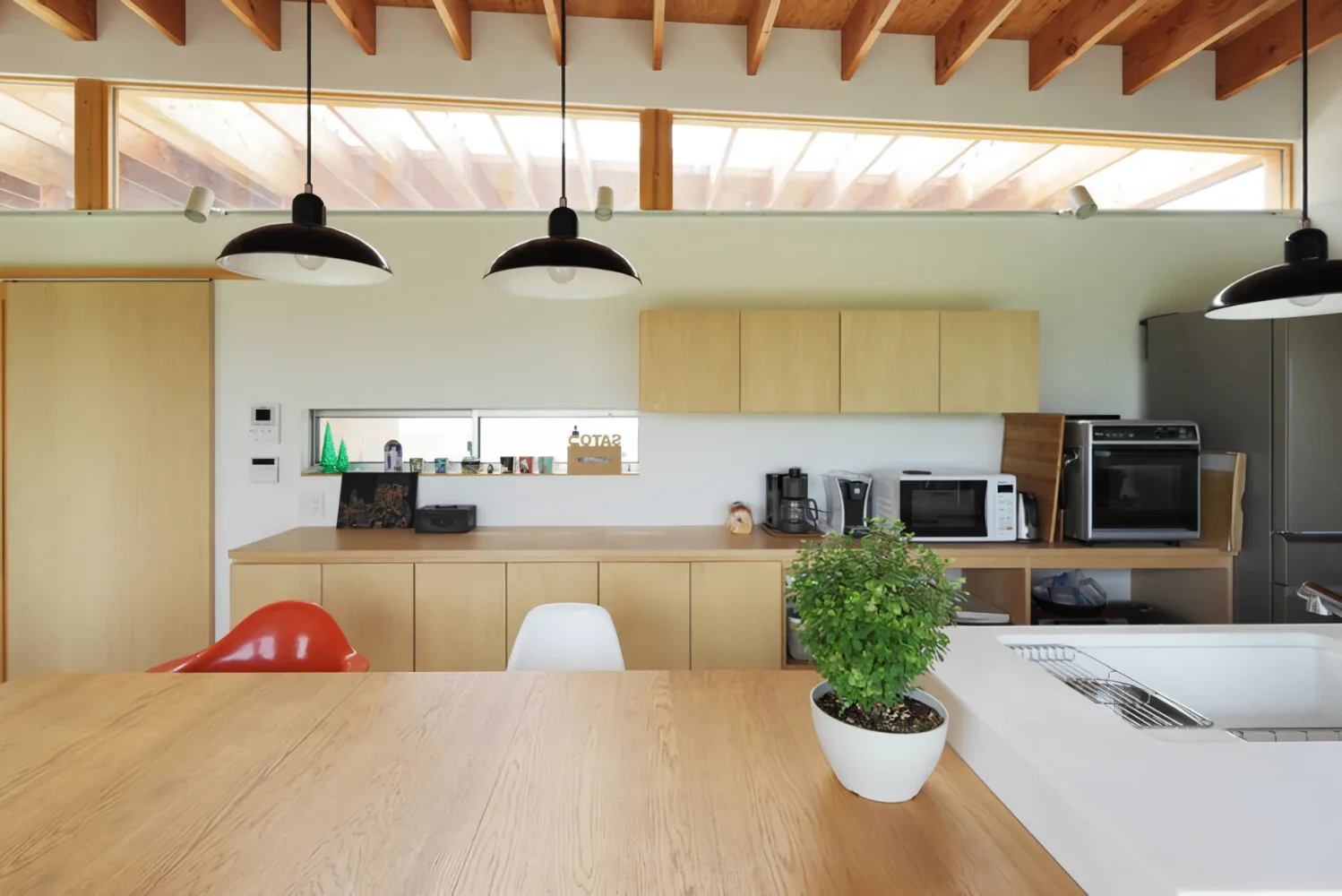
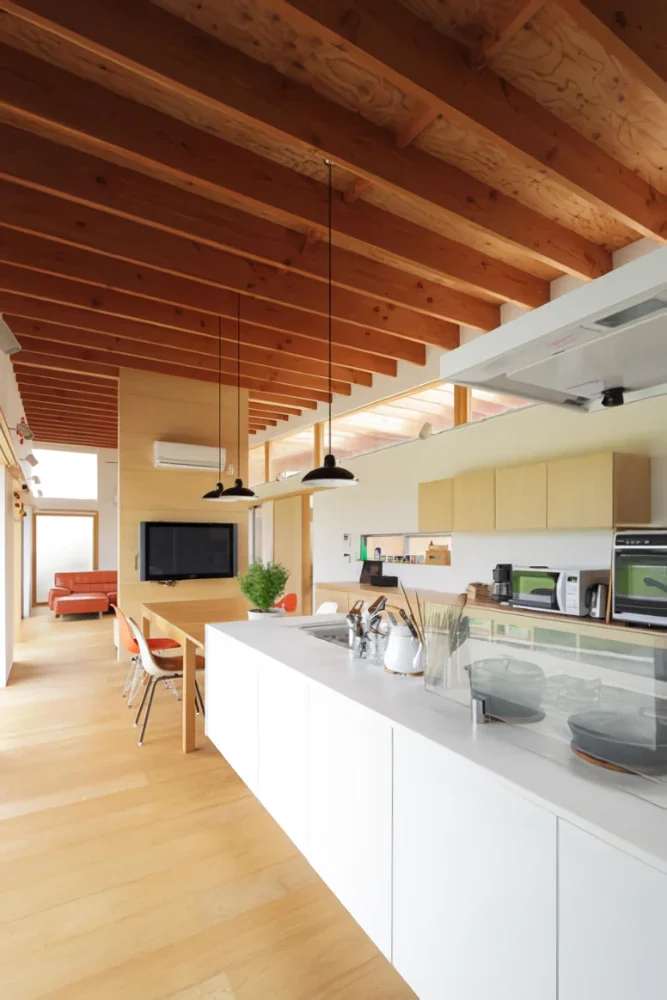
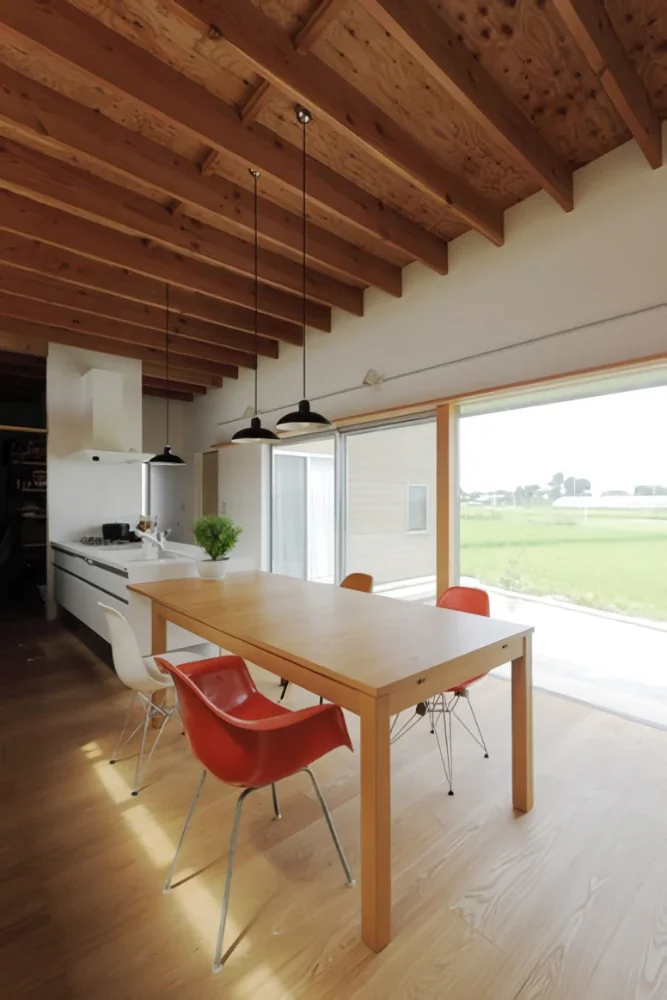
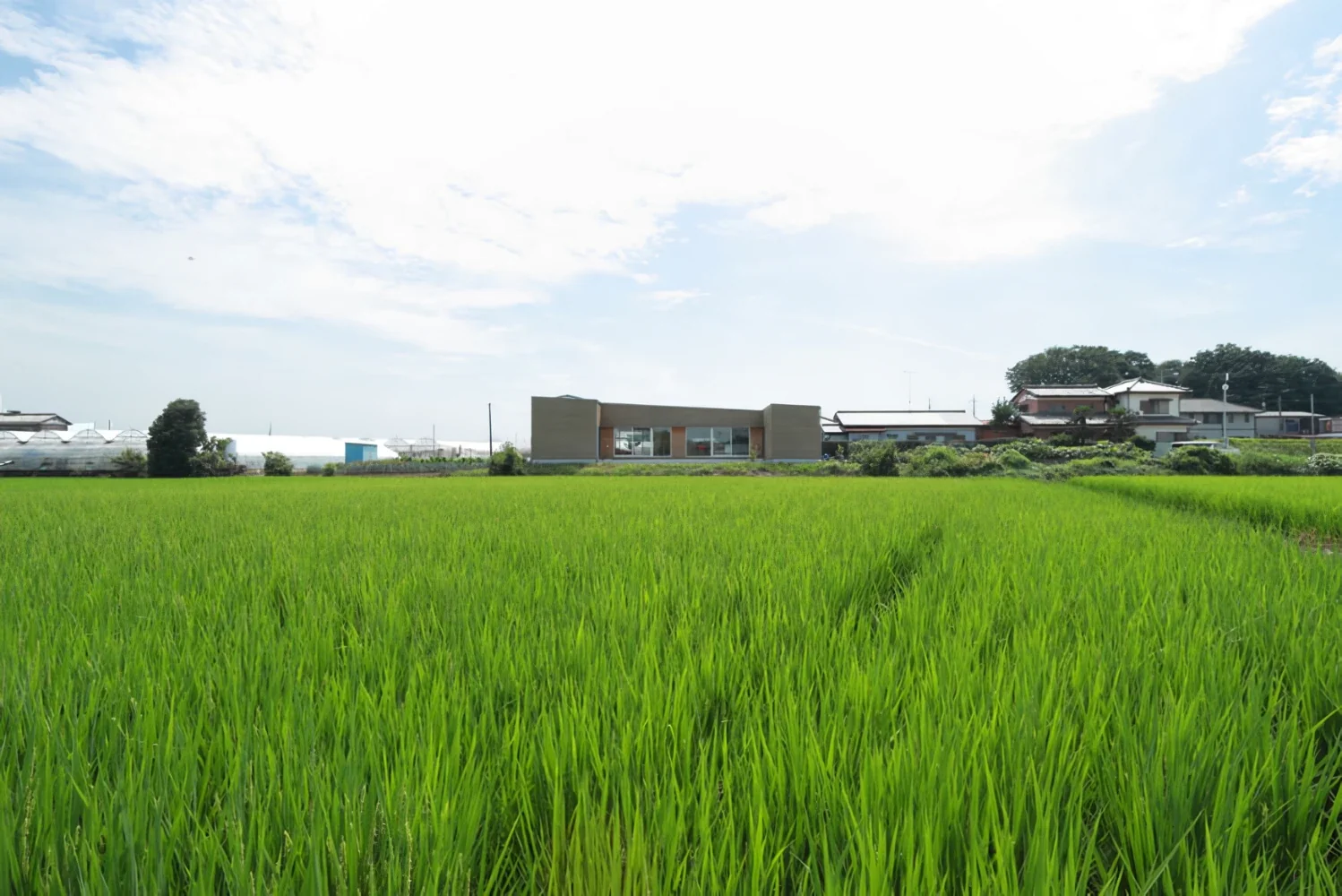
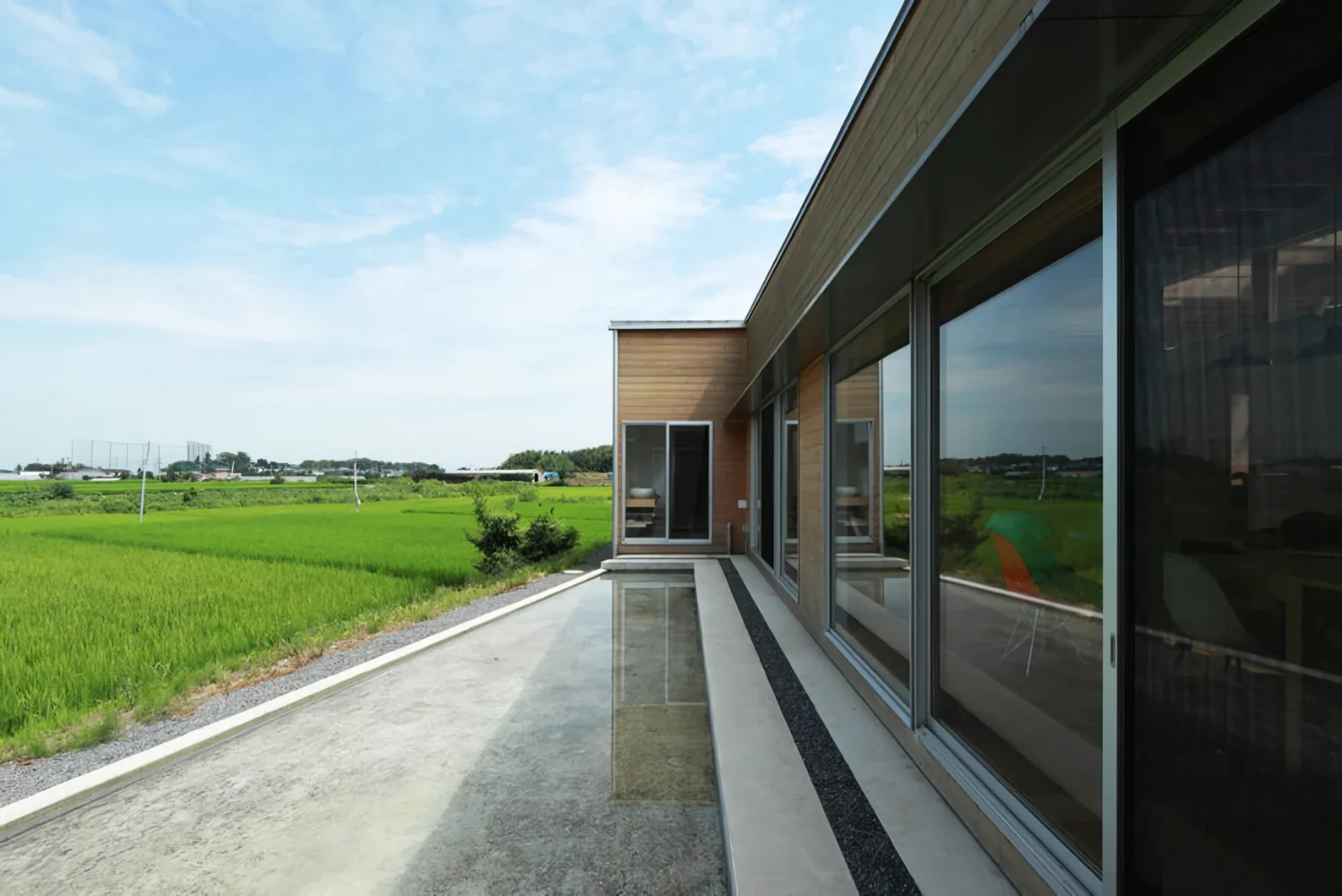
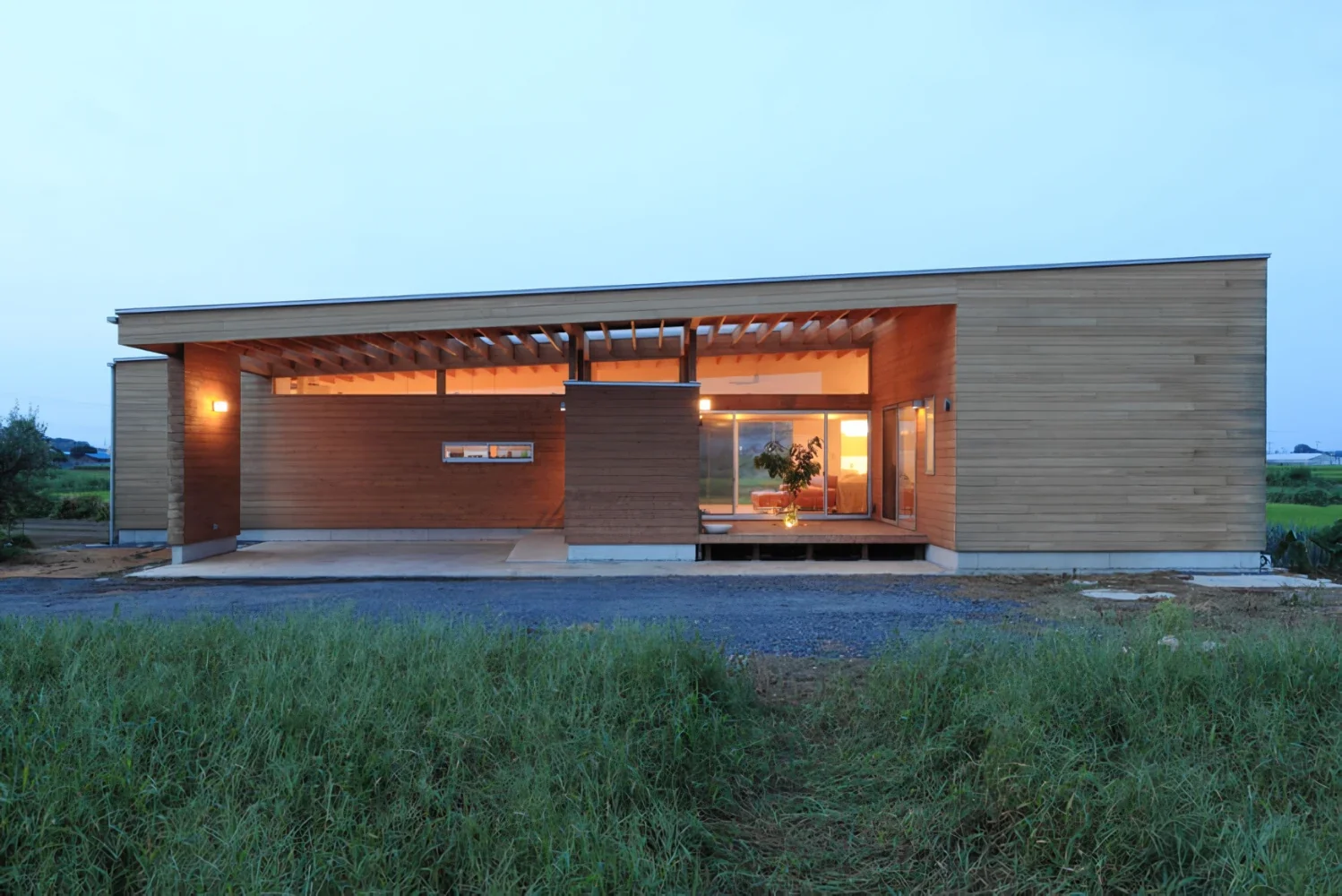
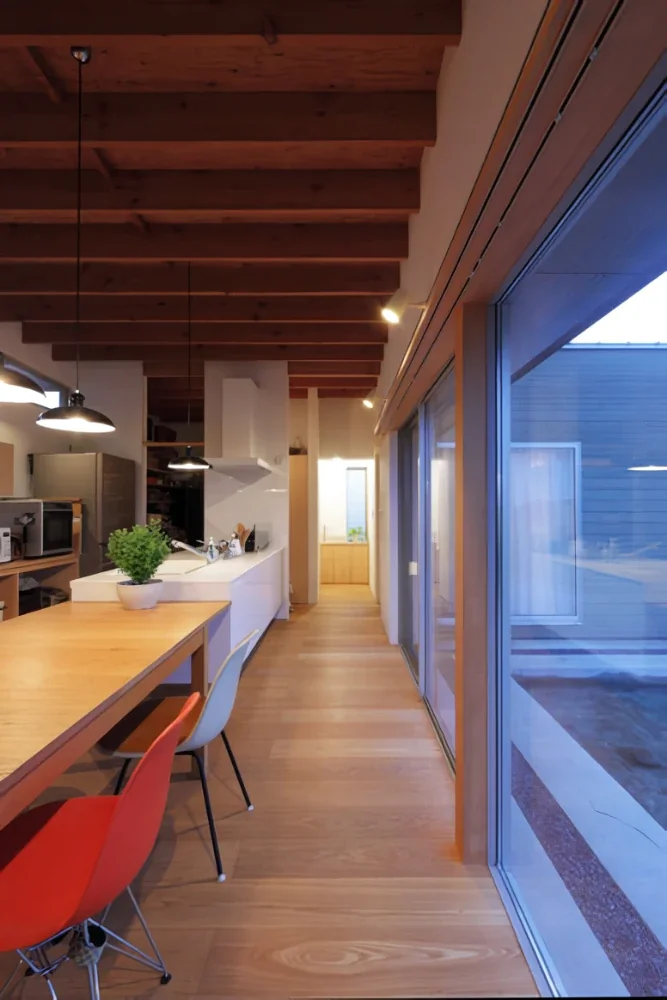
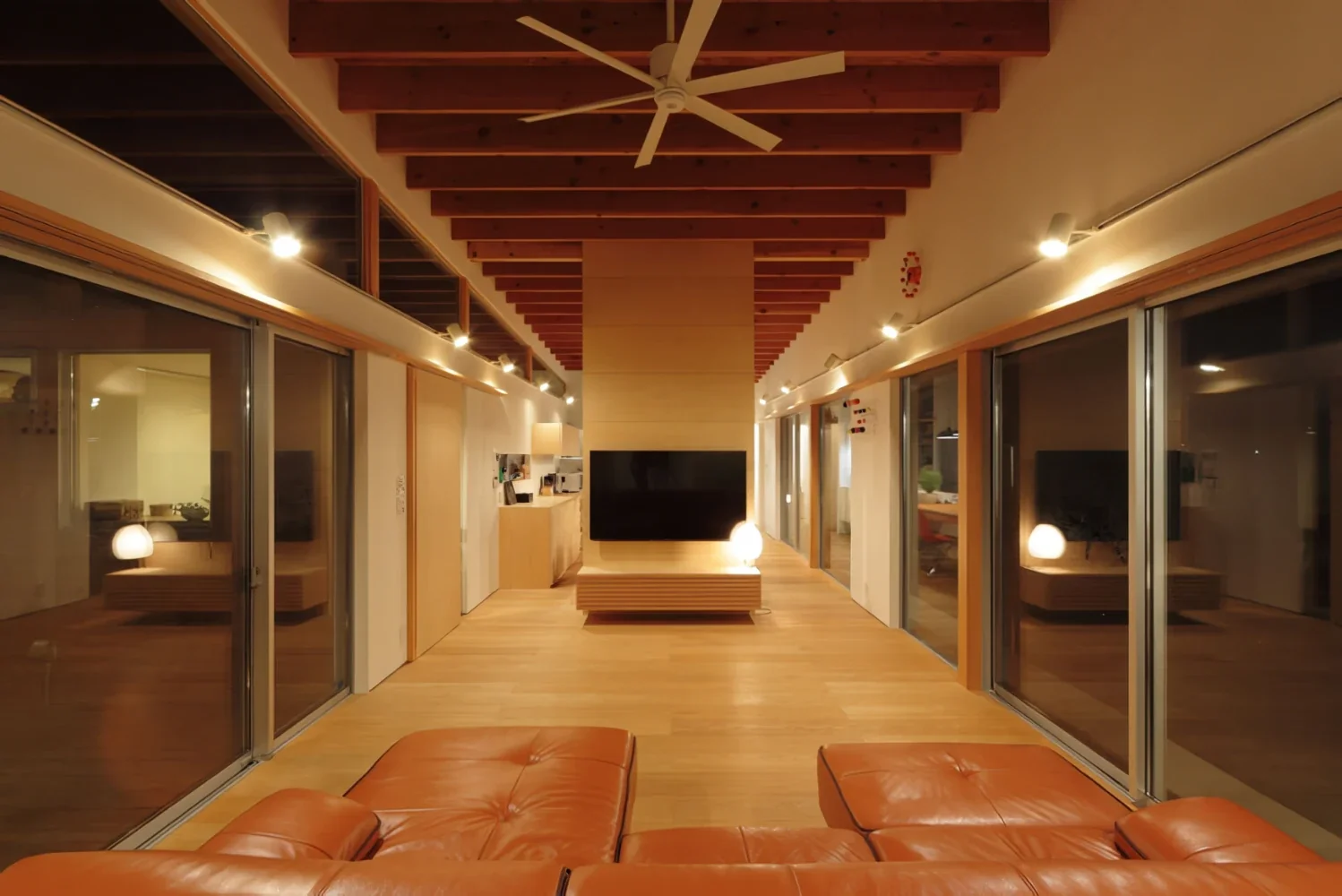
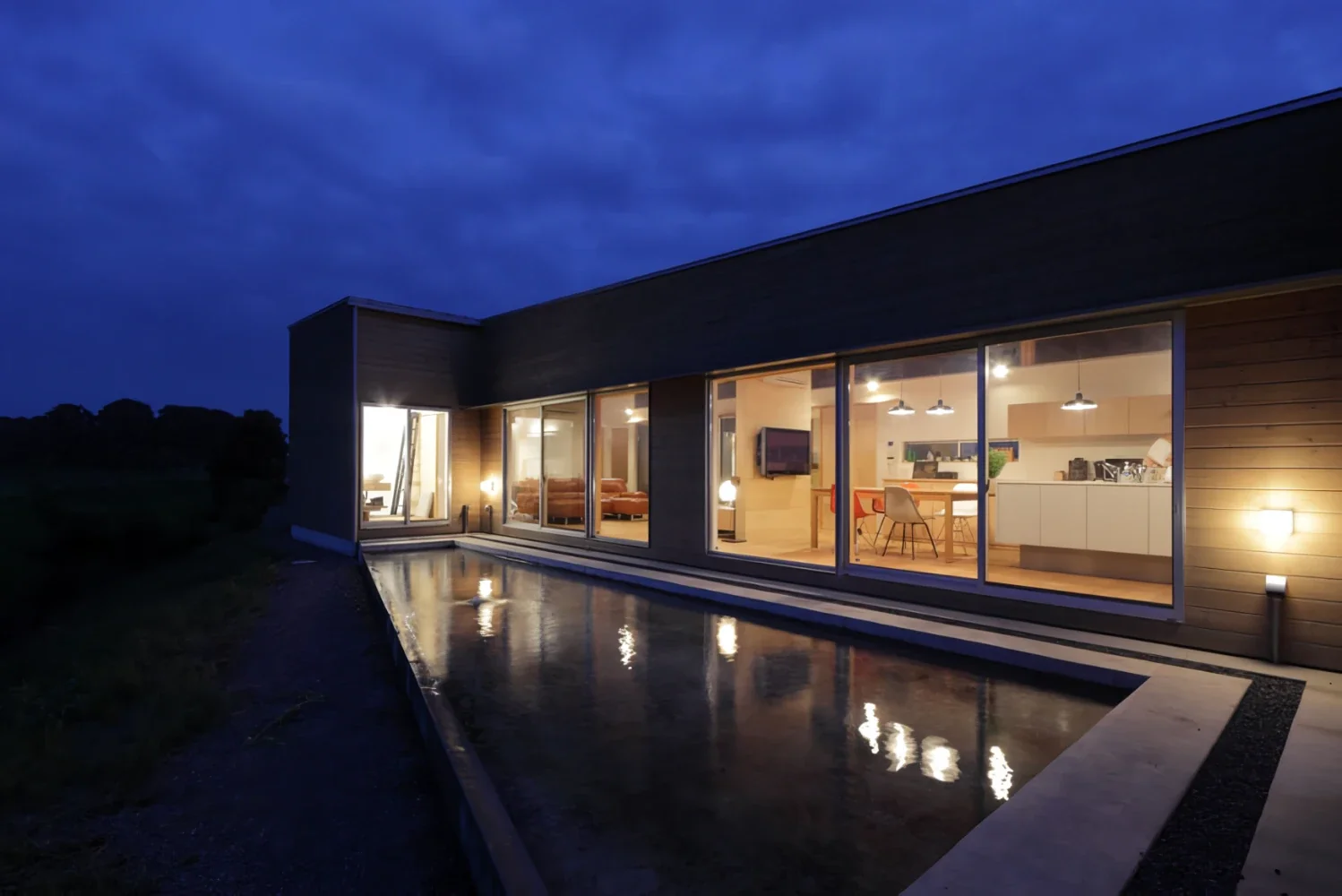
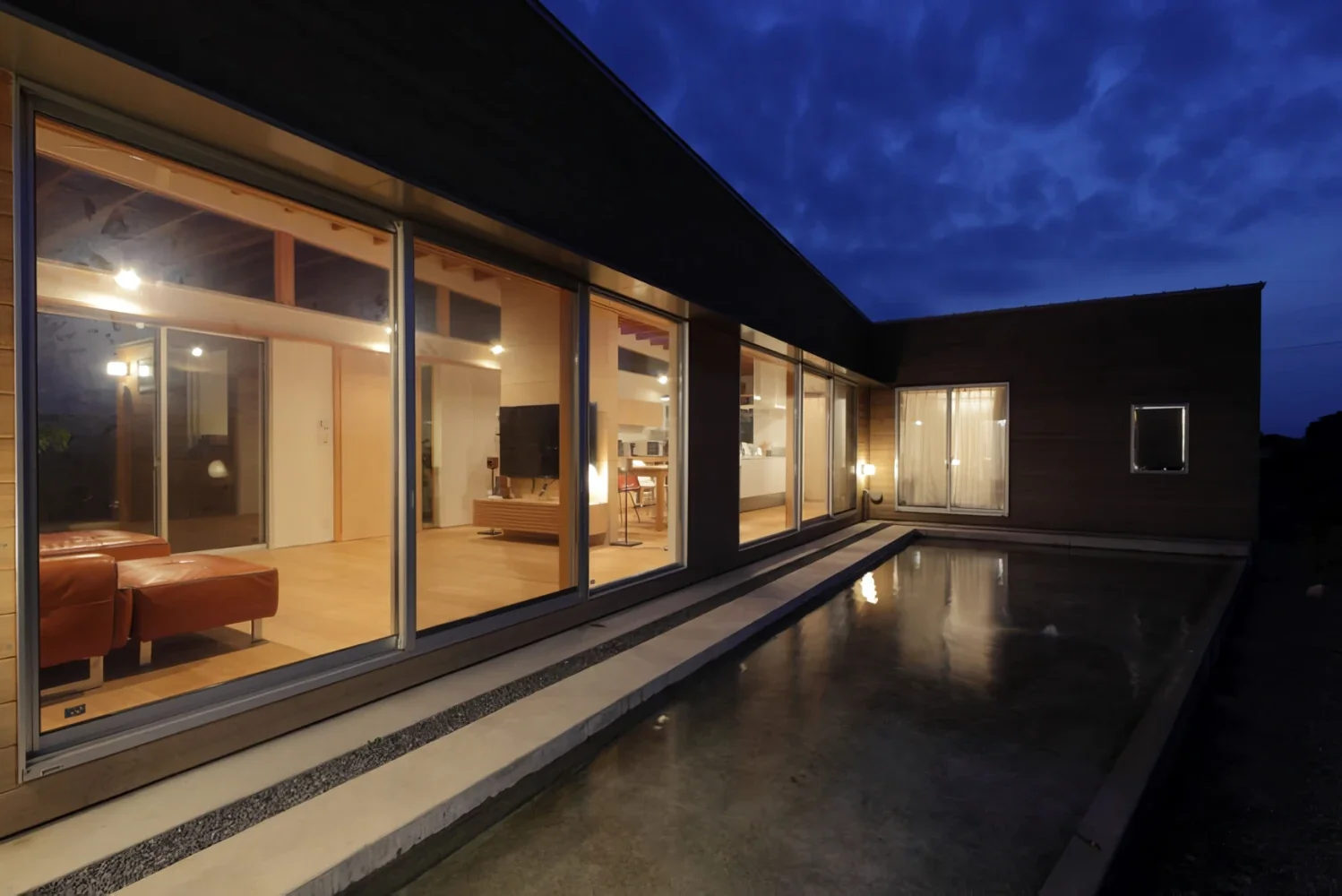
A home for a family of five. The site is a flag lot with a long access strip, exposed to its predominantly agricultural surroundings, with a terraced-rice-field-like rural landscape spreading out to the north. Taking into account the site’s 500-square-meter area, the design was developed as a single-story house, incorporating abstract requests—such as a museum by the water or one set within a forest—as the basis for the design, along with additional, more detailed requirements.
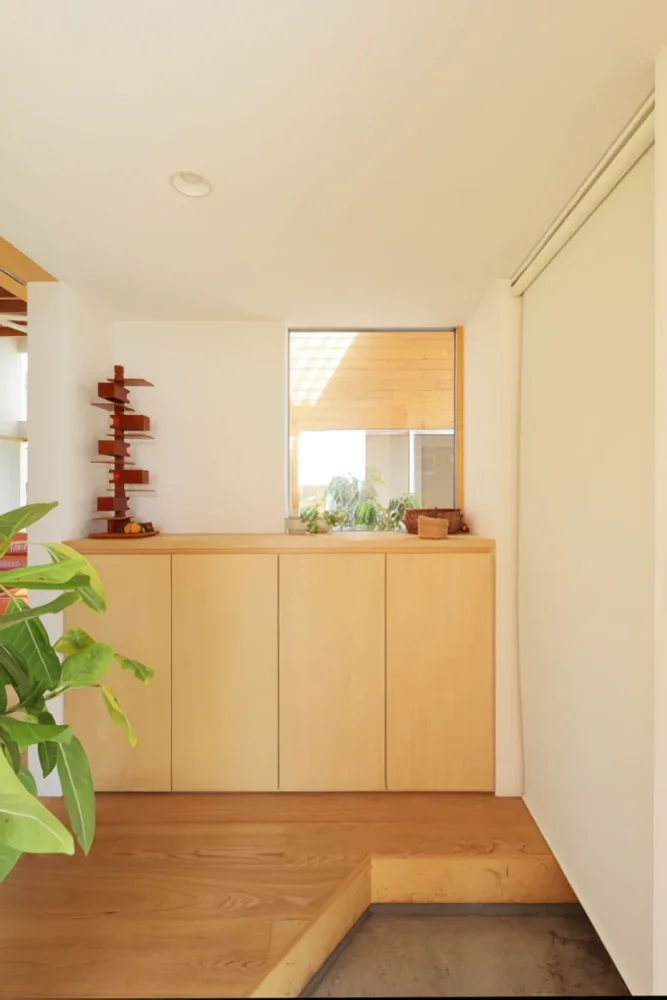
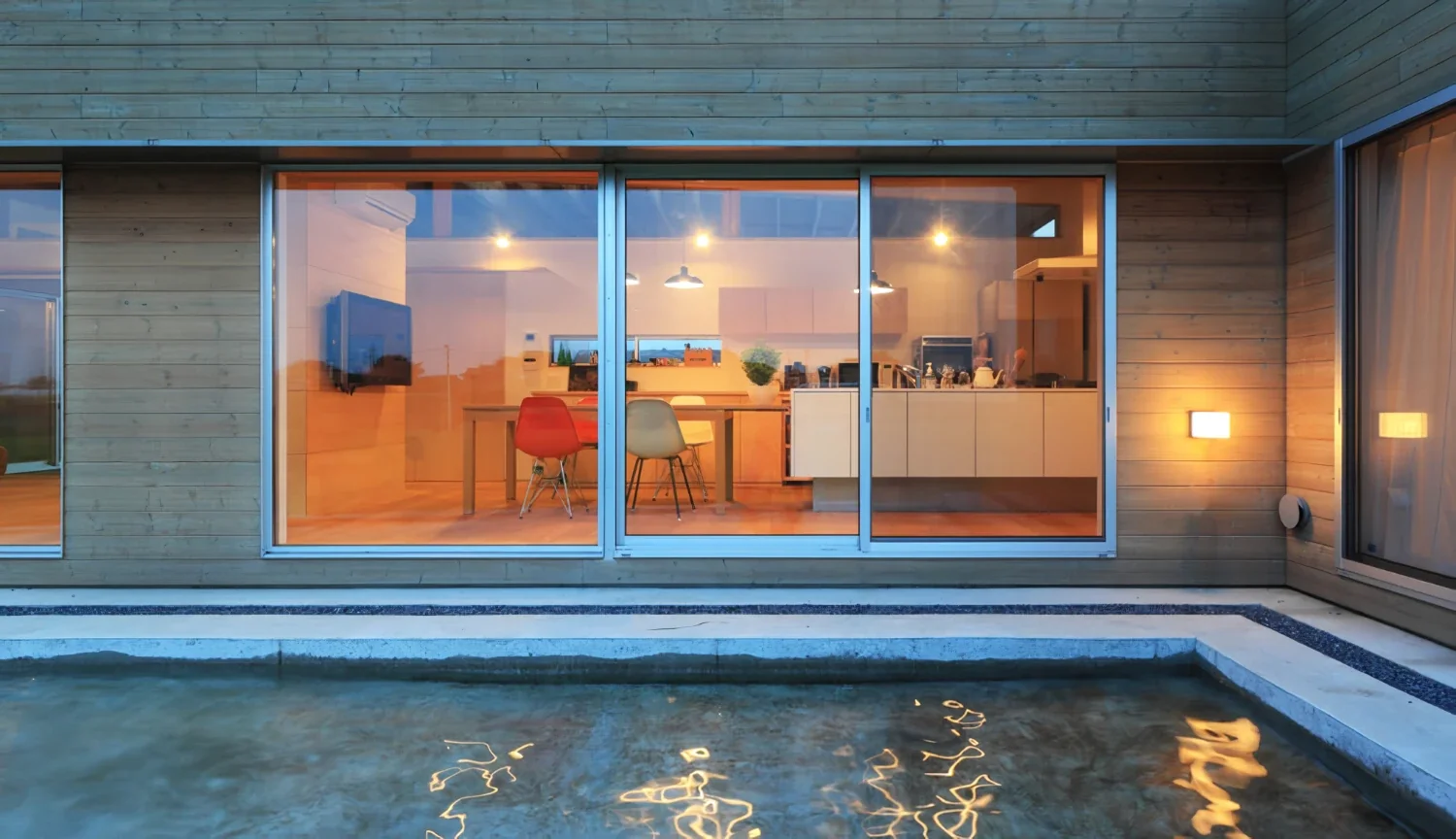
The abstract themes were expressed not only through the exterior appearance, but also through a reflecting pool and landscapes that could be experienced both inside and outside. A volume extending across the full width of the site from east to west blocks the view from the entrance. The moment the door is opened, the scene suddenly unfolds before one’s eyes, creating an extraordinary visual experience.
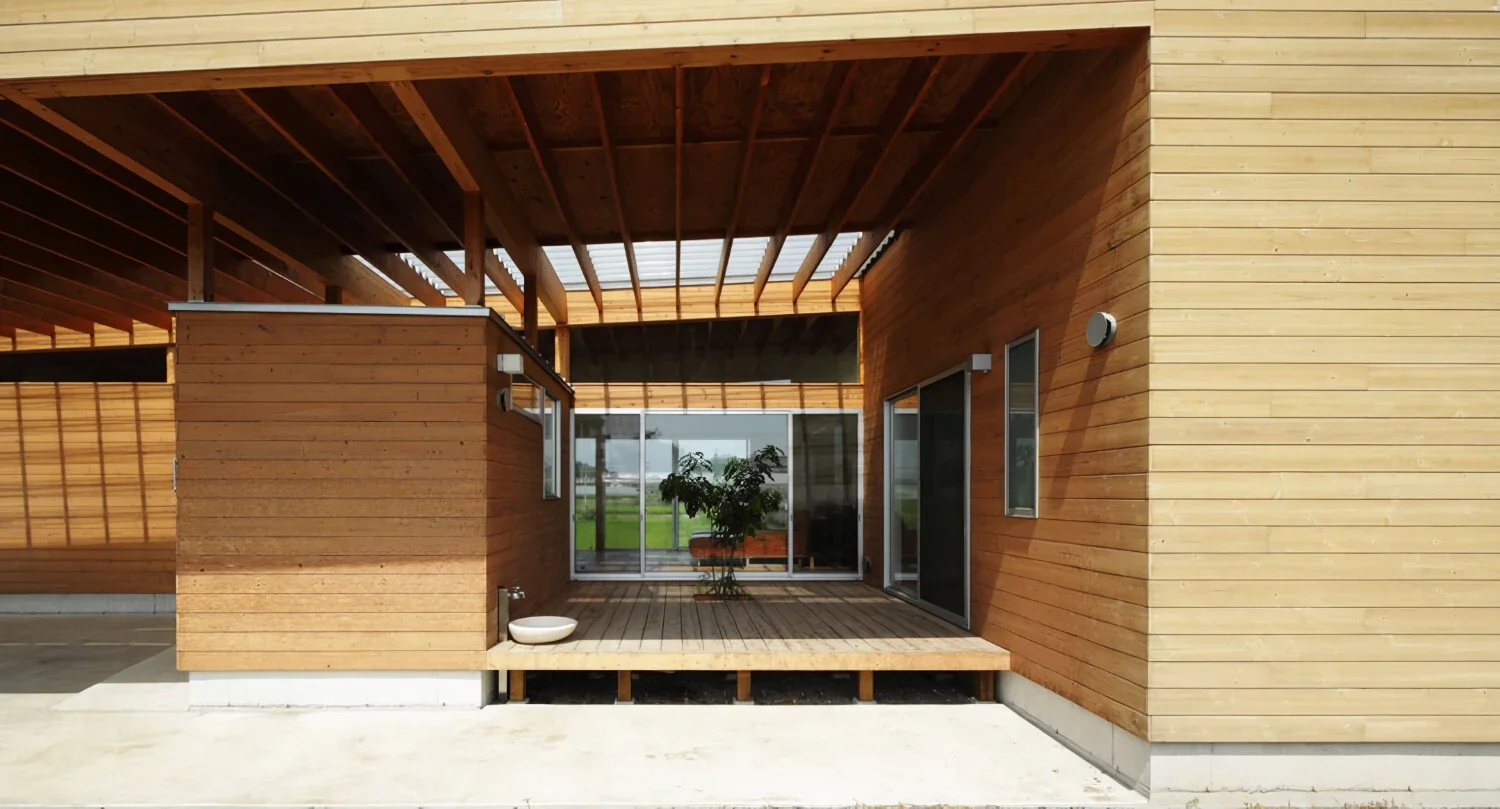
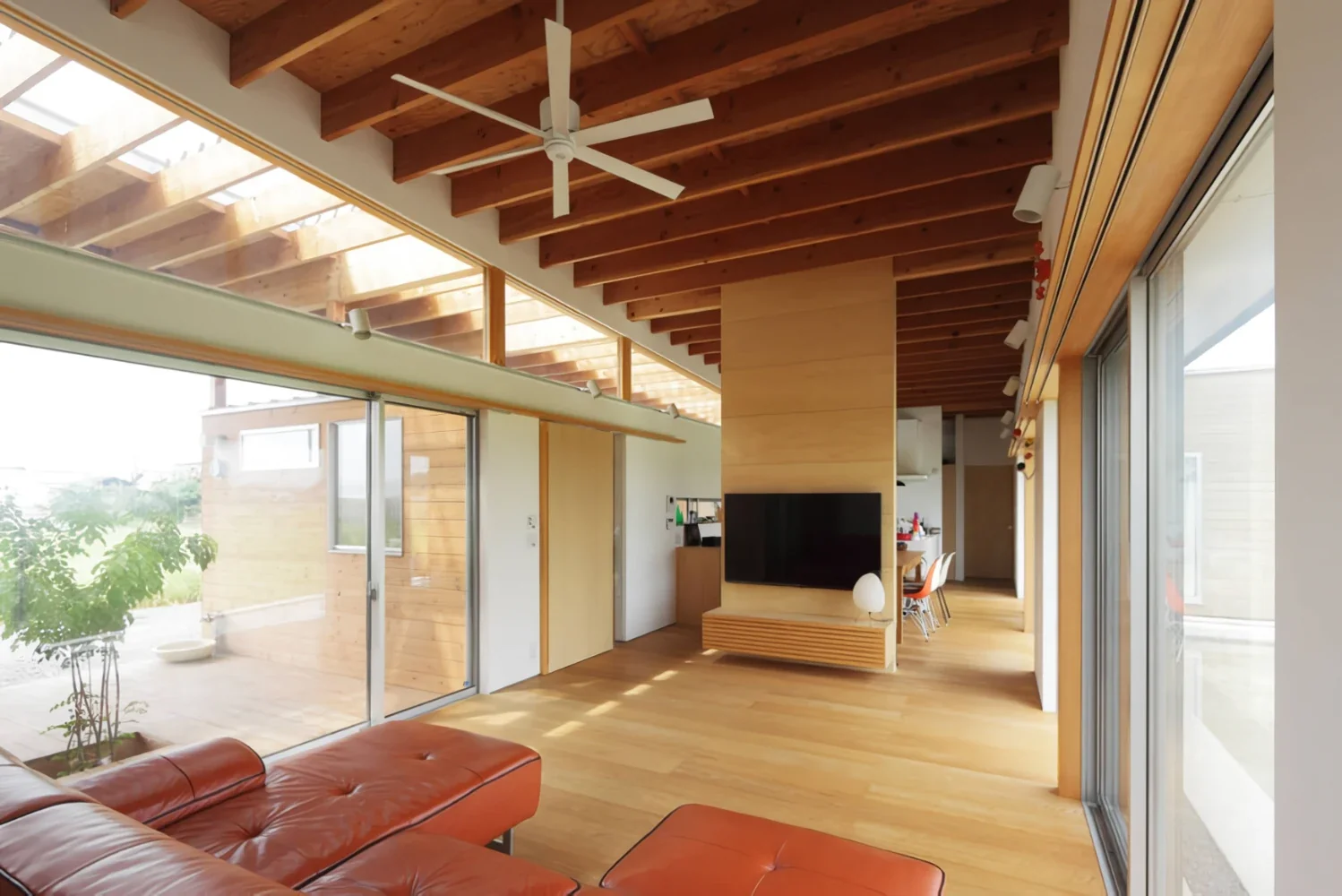
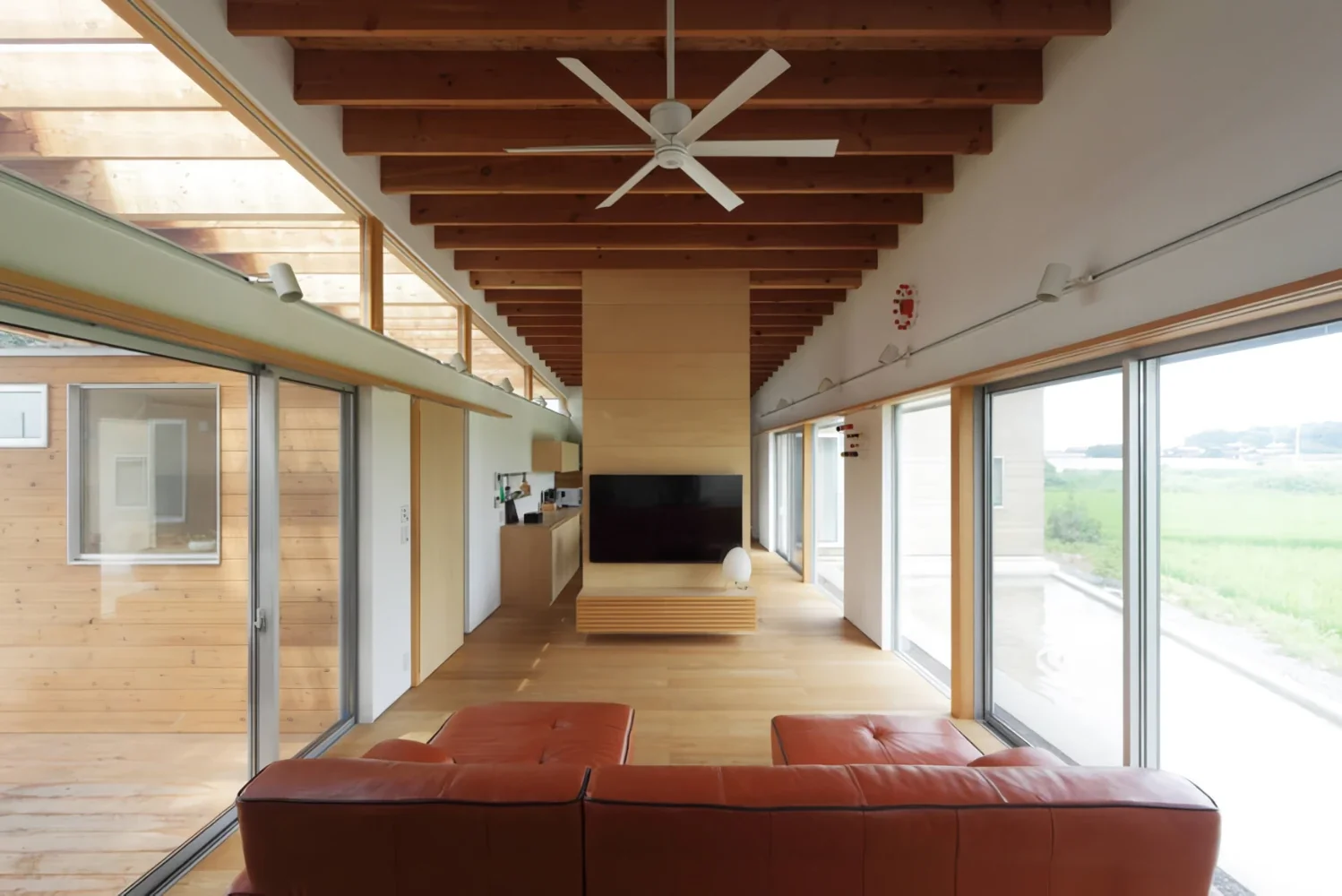
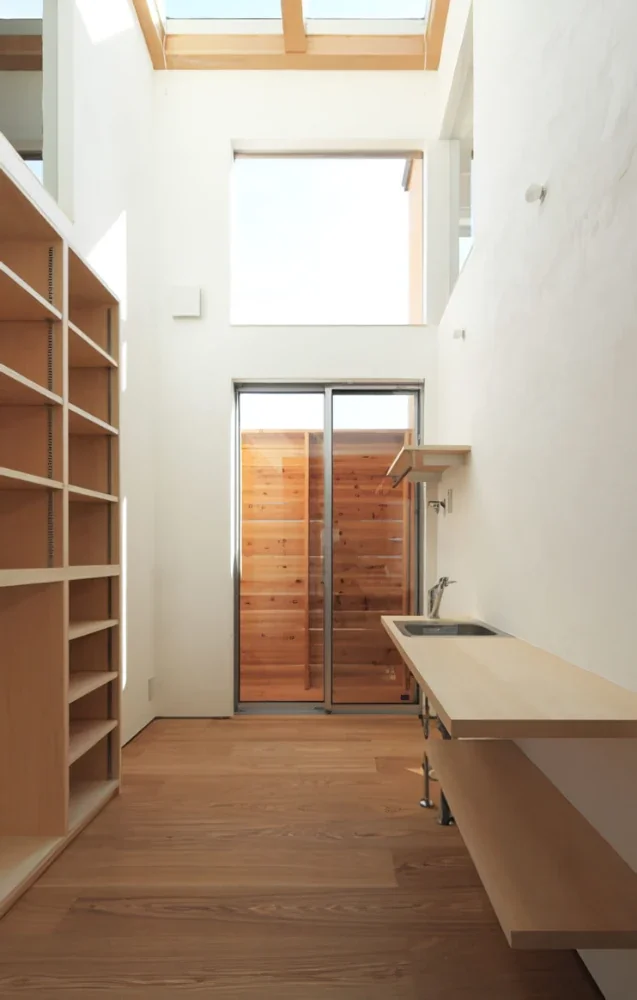
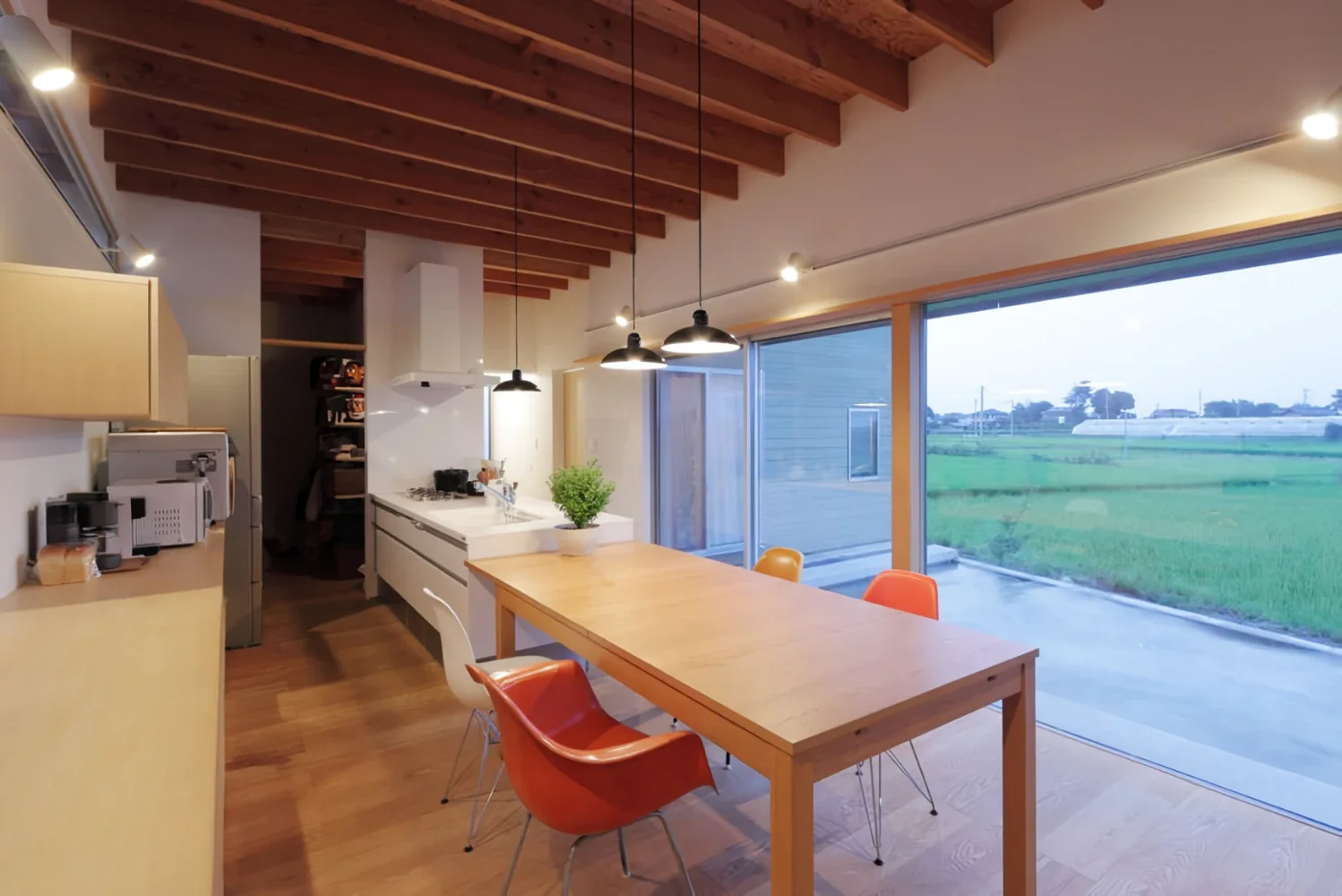
The plan is organized so that the bedrooms and wet areas project north and south from the centrally positioned LDK space, carefully arranged so that foreground views—the landscapes closest at hand—can be enjoyed from anywhere in the house, before the distant vistas beyond. An eave projecting approximately five meters to the south completely covers the parking area and courtyard, providing shelter from Gunma Prefecture’s severe summer climate. In winter, part of the eave is fitted with a transparent polycarbonate roof to bring light into the interior.
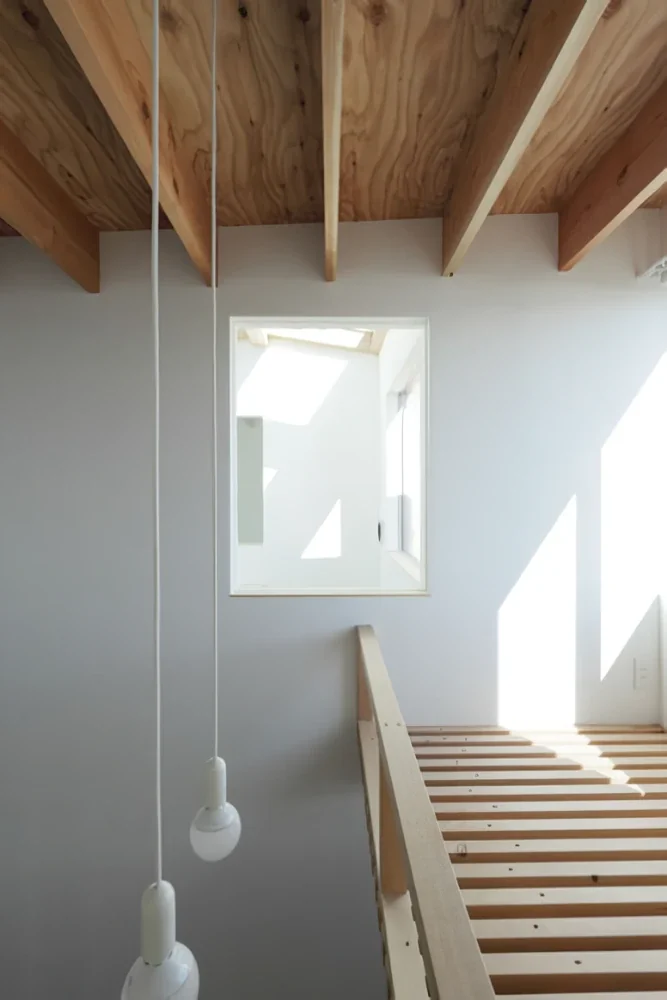
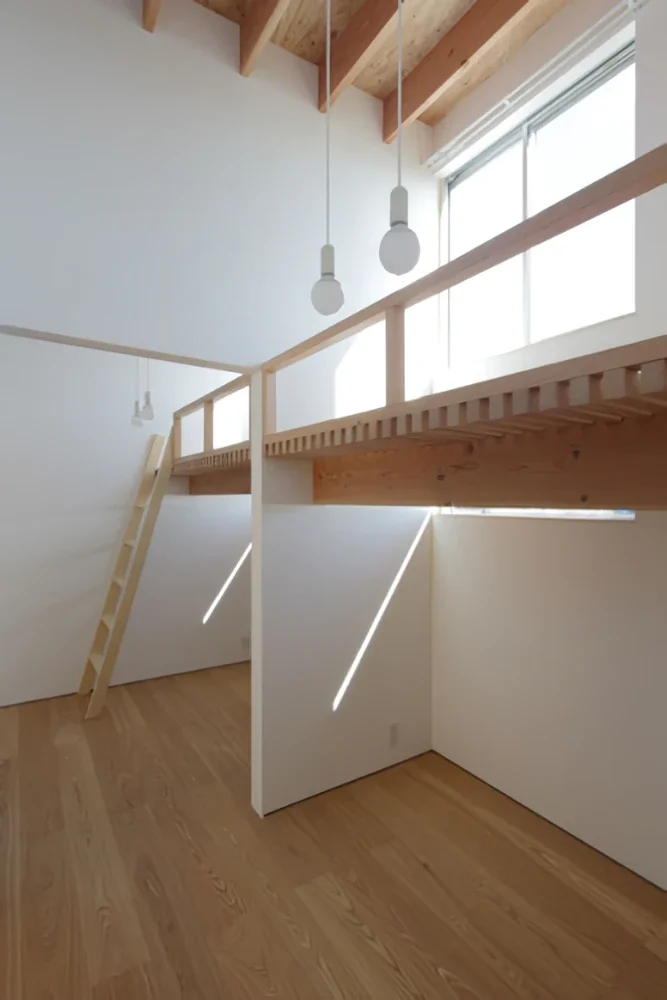
The exposed structural ceiling, together with beams that continue seamlessly from the exterior to the interior, borrows reflected light from the ground to bring warmth to both inside and out, remaining naturally close to the surrounding environment at all times and in every place. We hope that, through the accumulation of such MOMENTS, the family’s days will also accumulate, allowing them to experience a rich way of life through all five senses.
Building type and scale: Private residence, wooden single-story construction
Site area: 500.00 m²
Construction area: 160.44 m²
Contractor: Ishikawa Komuten | Akito Ishikawa