Introducing A House Living in Harmony with Wood, a custom-built home example by Ringo Studio, a Architect / Design office in Saitama City, Saitama Prefecture
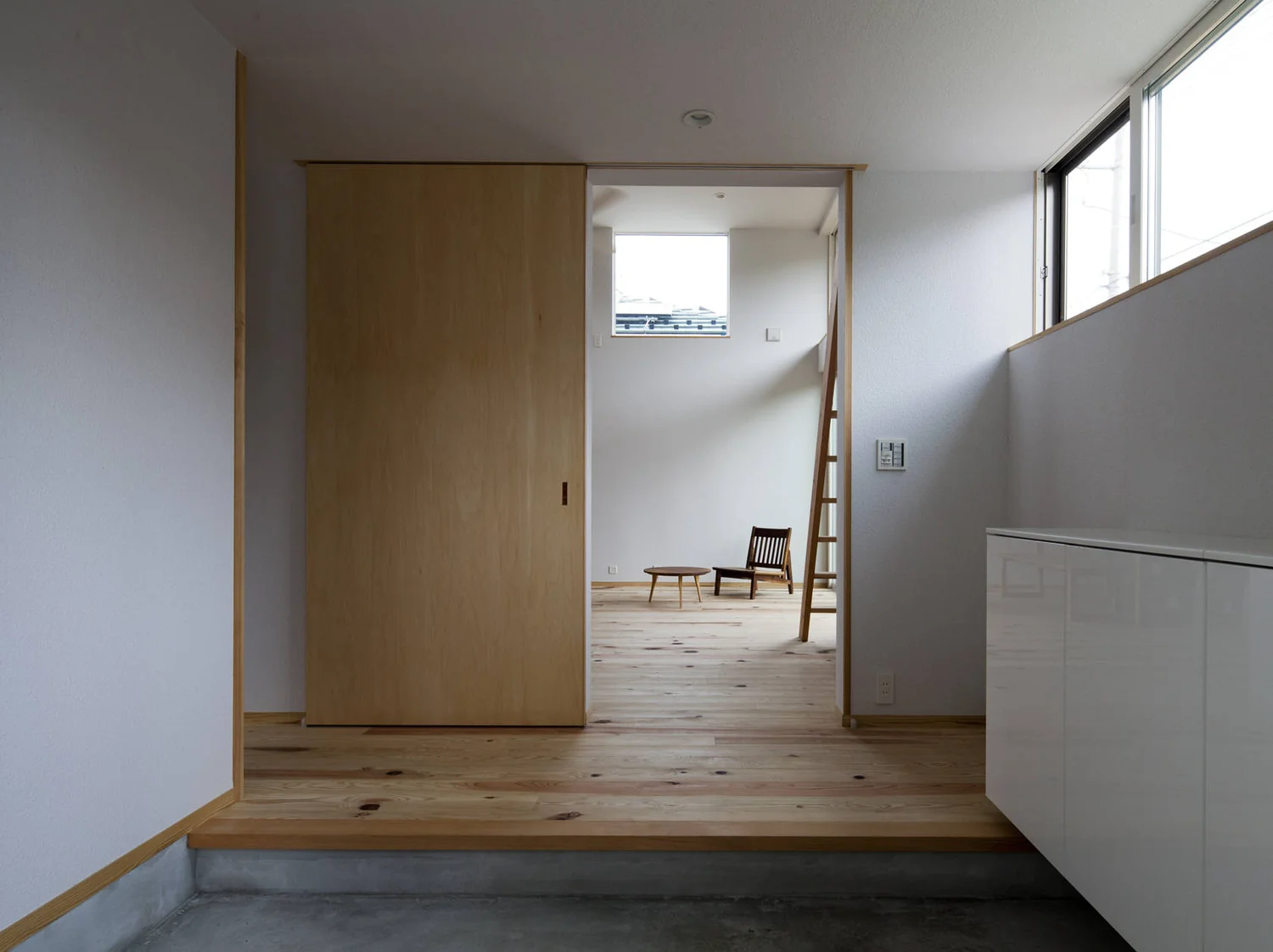
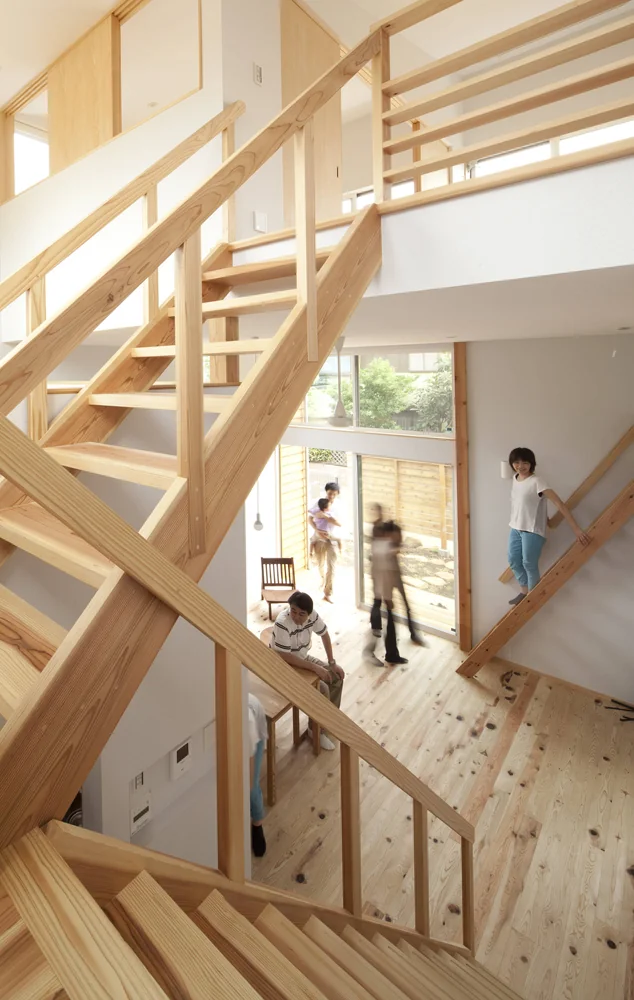
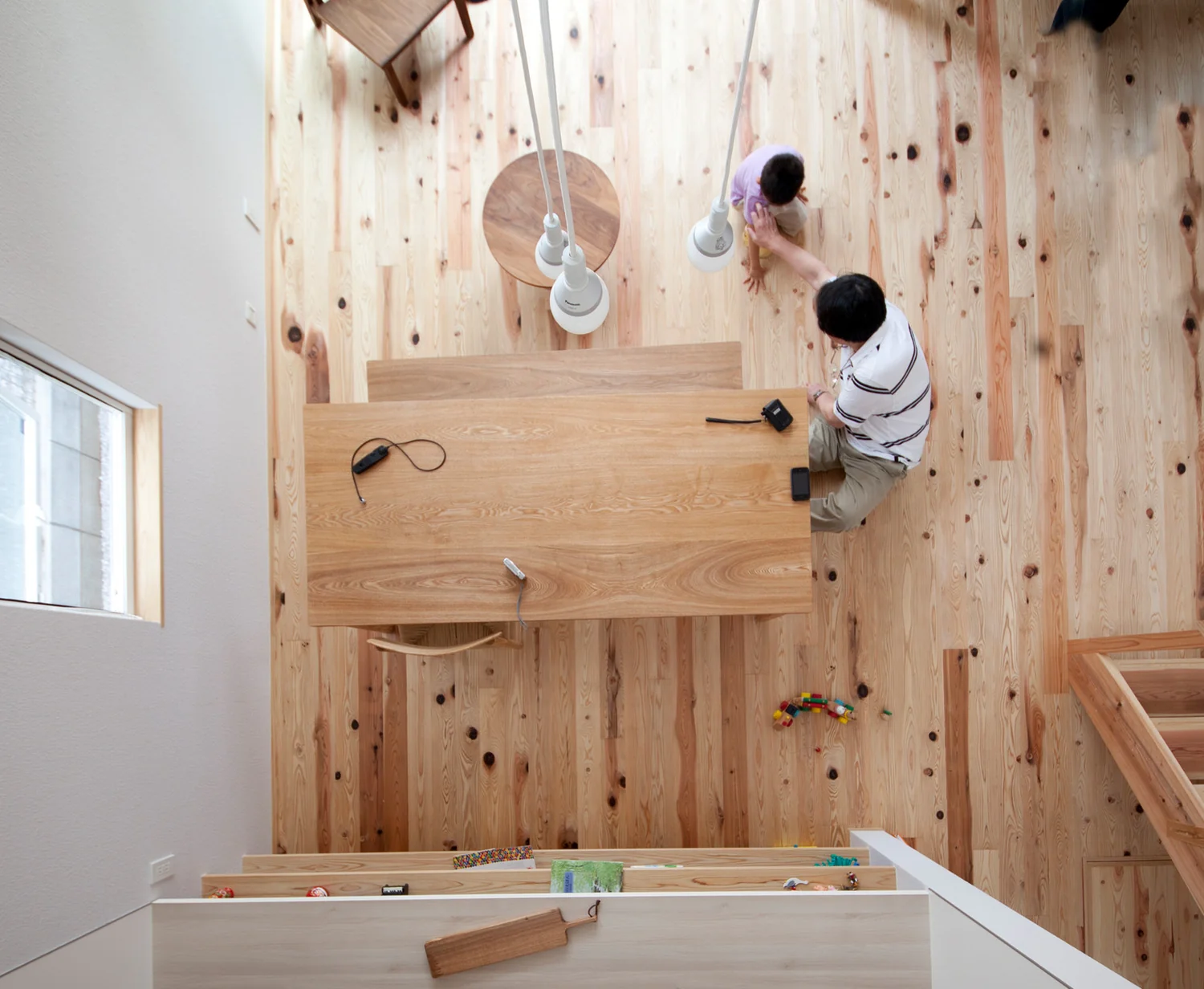
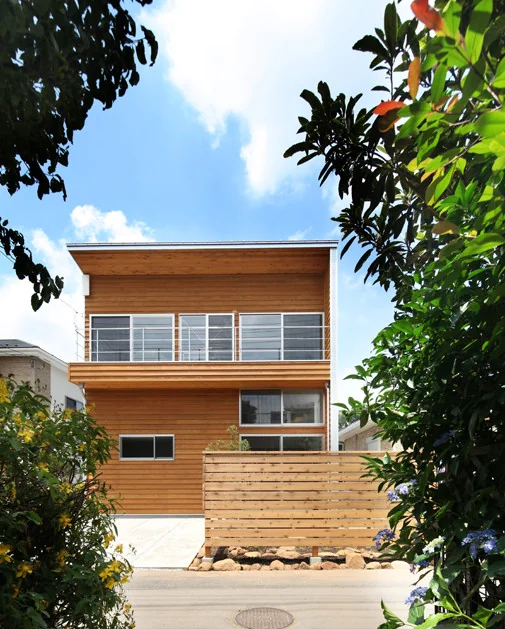
Utilizing locally sourced Nishikawa cedar to highlight the gentle texture and grain of the wood
A House Living in Harmony with Wood
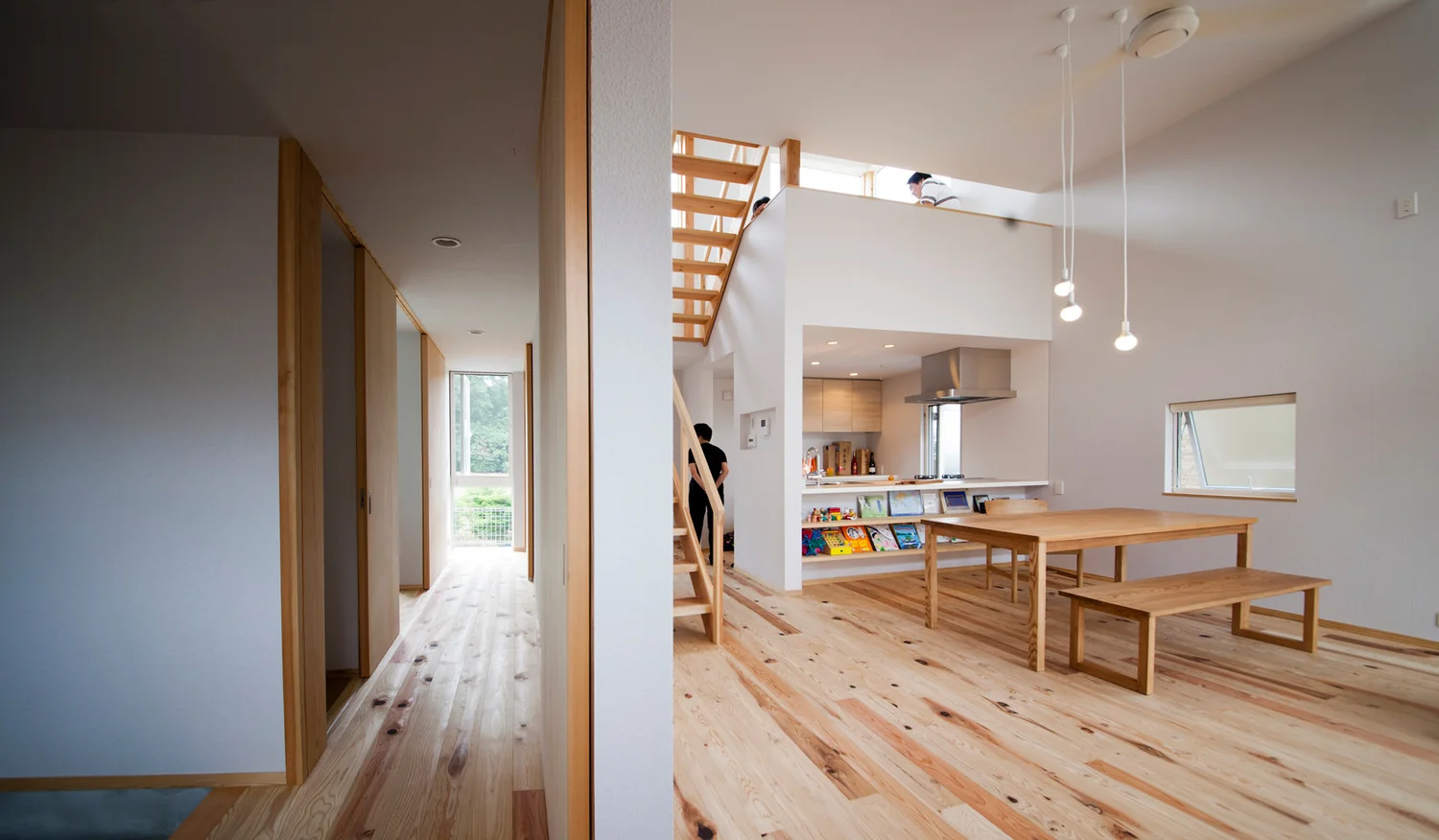
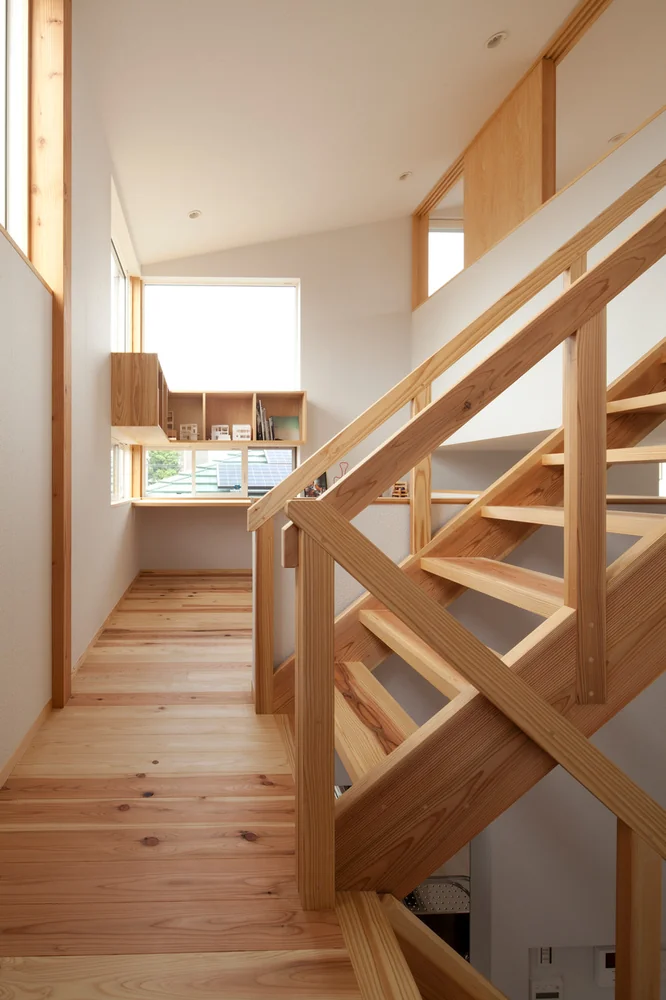
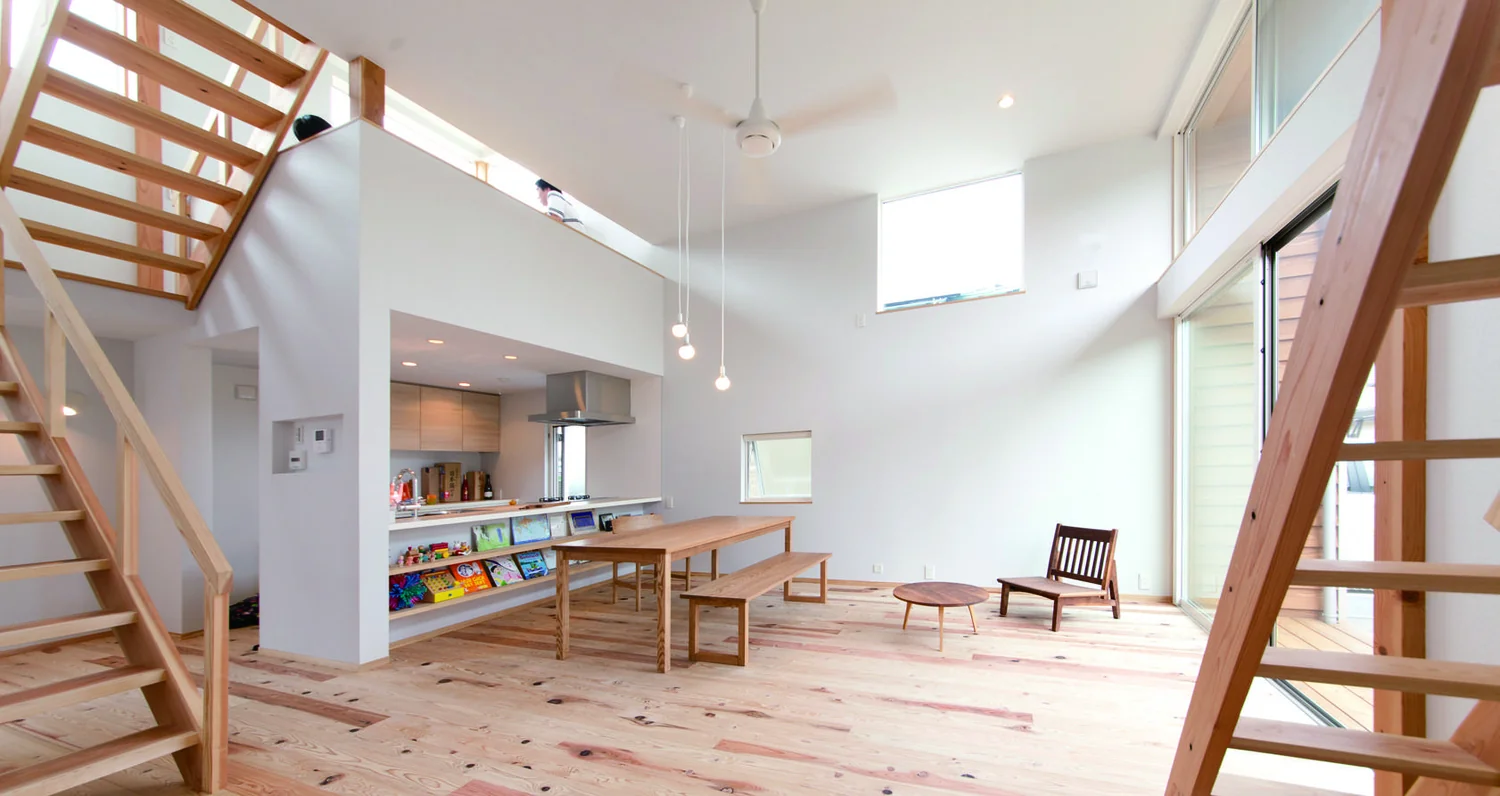
The staircase and skip floor serve as pathways for light from the high side windows
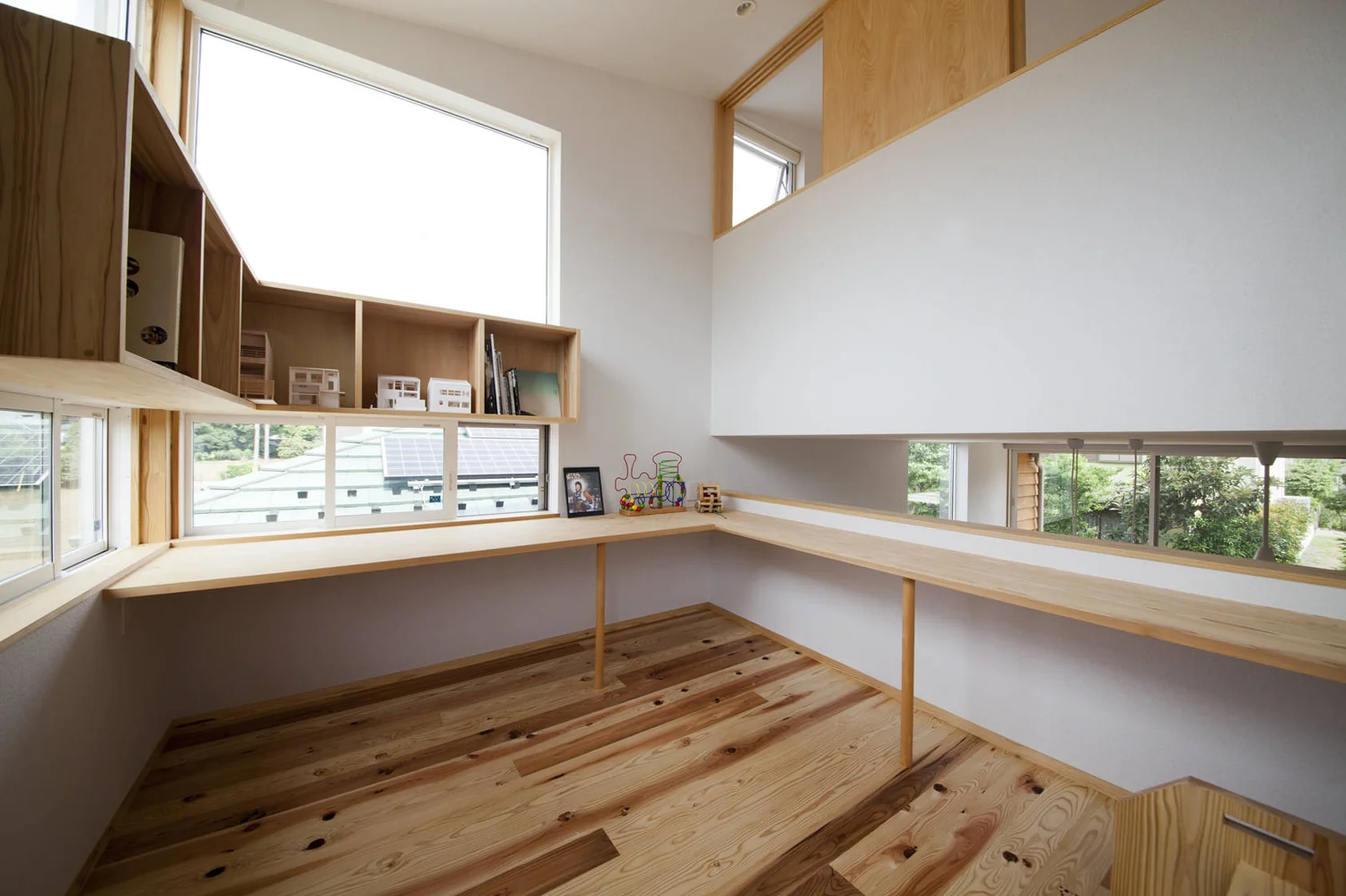
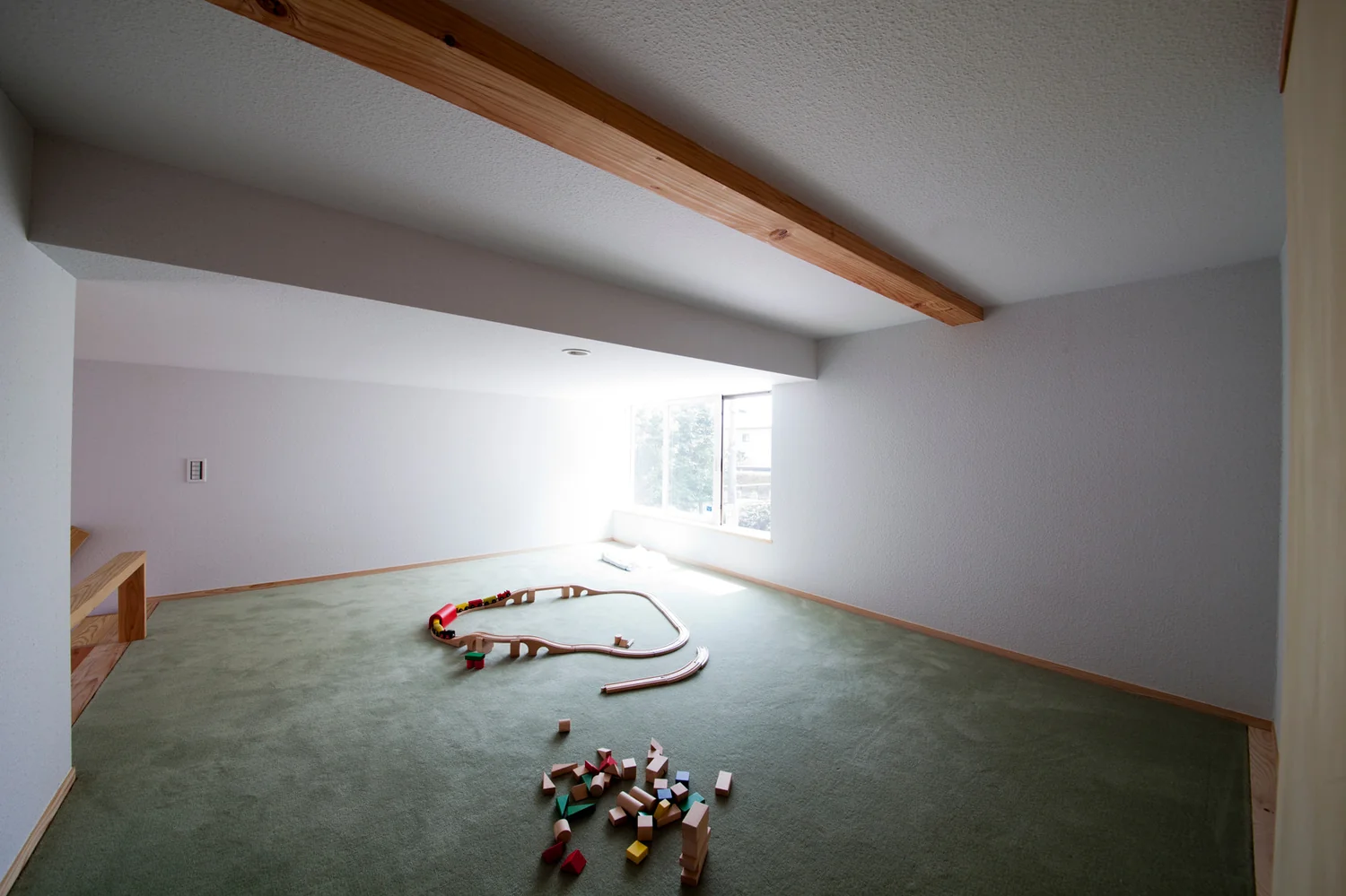
Expanded staircase landing creates an open workspace and loft
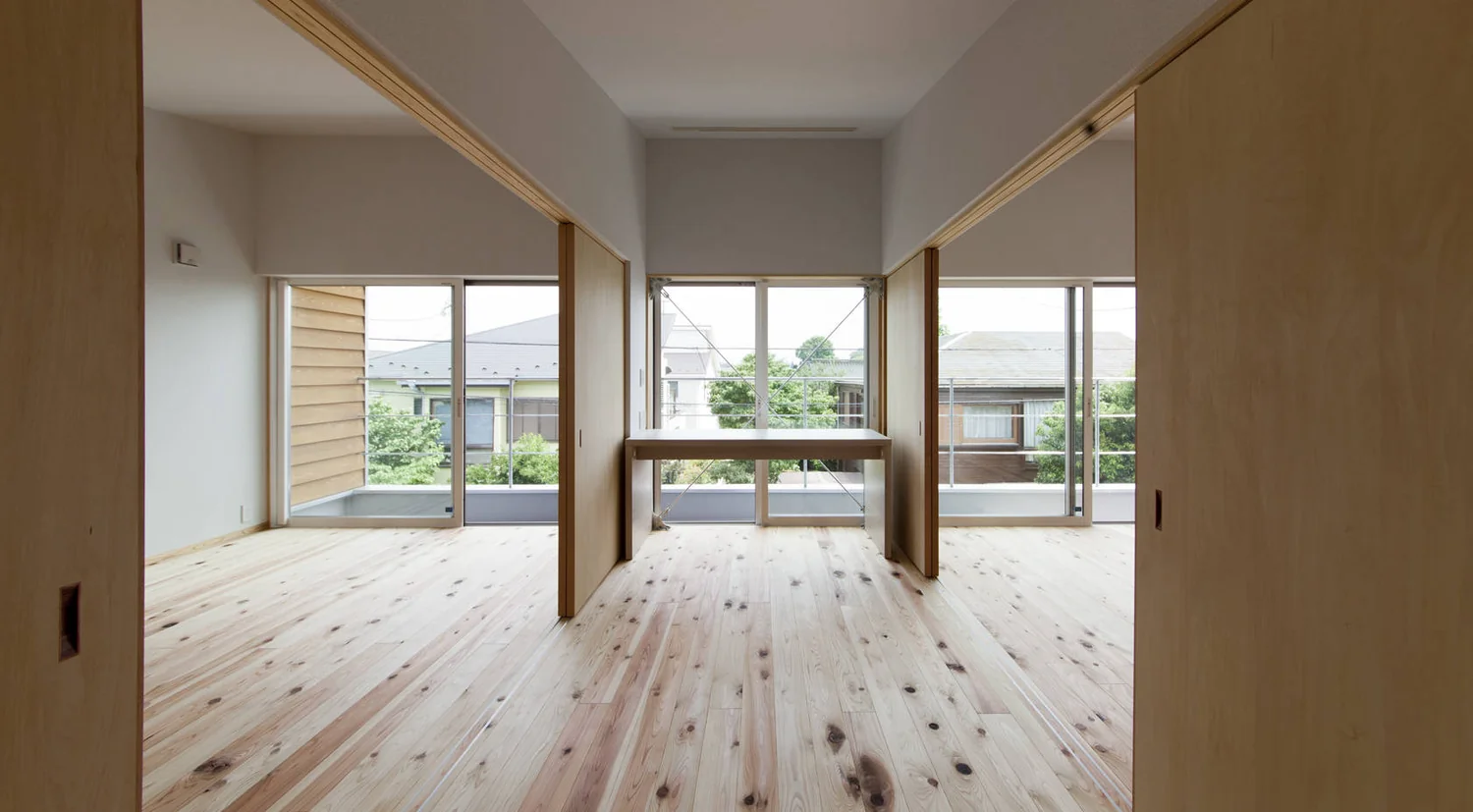
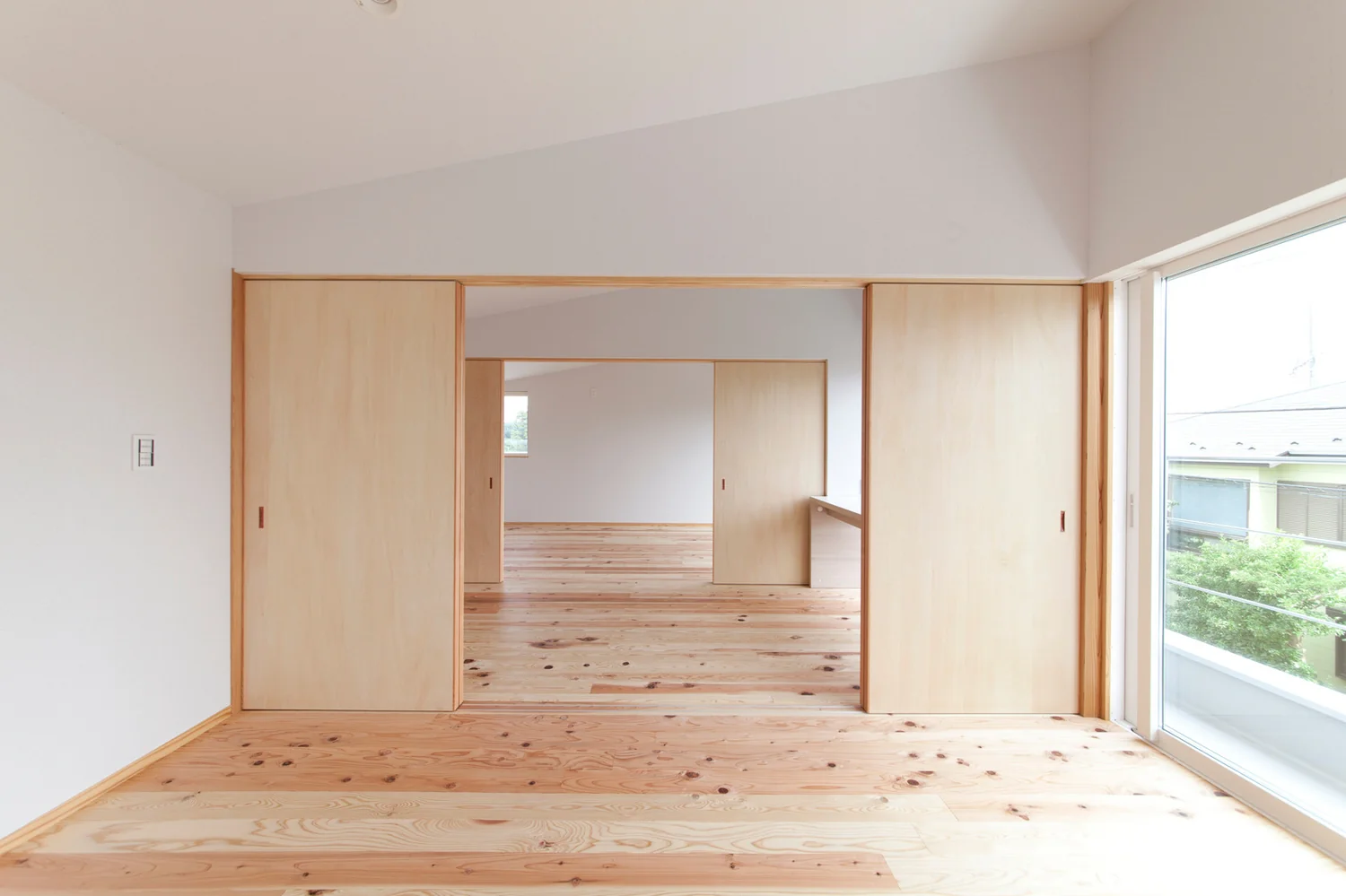
Widened corridor to second-floor private rooms forms an open space
A House Living in Harmony with Wood
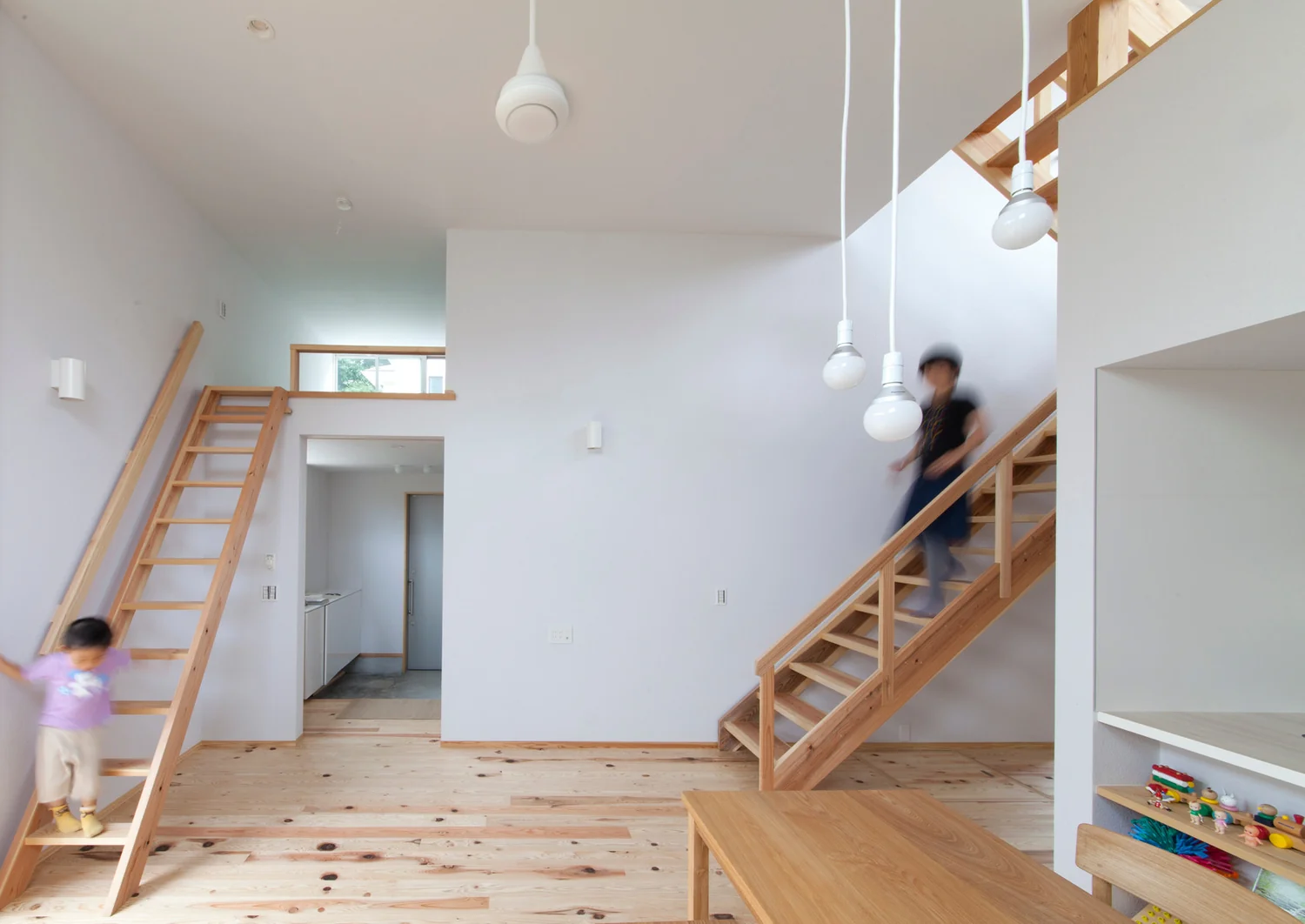
Six varying ceiling heights generate diverse spatial experiences and rhythm
A House Living in Harmony with Wood
Passive Design
Local Timber
Wooden House
Borrowed Scenery
Skip Floor
WoodenHouse
SkipFloor
PassiveDesign
BorrowedScenery
PrefecturalTimber
Tōtoku Noda
Learn More
The site is located approximately 2 kilometers from Ōmiya Station, within a first-class low-rise residential zone. The terrain is flat and well-leveled, facing a road to the south and adjoining farmland to the north. On the east and west sides, there are rows of speculative houses. Designated as a scenic control district within the broader Ōmiya Park area, the site falls under a conservation zoning regulation that limits the building coverage ratio to 40% and requires that 10% of the site area be dedicated to greenery. The surrounding environment is dotted with a variety of garden trees, offering distant views of the designated historic site “Ōwada’s Muku Tree” and preserved green spaces.
Despite the tranquil atmosphere, the building’s footprint was somewhat modest for a family of four. Key challenges included the arrangement of the garden and devising spatial strategies to evoke a sense of generous openness. The site planning approach prioritized not shutting off the exterior but rather skillfully integrating external conditions. The southern road serves as a popular pedestrian route adjacent to the park, with frequent foot traffic but a traffic volume insufficient to warrant heavy screening.
Opposite the southern road, there is a 1.4-meter-wide private road terminating at the site. By extending the garden along this private road’s axis and positioning large windows facing the garden, prevailing breezes passing through gaps between neighboring buildings could be drawn into the house. Simultaneously, abundant natural light floods through the windows, while the neighboring ginkgo tree is incorporated as borrowed scenery. The house adopts a simple square plan without protrusions, sited as far north as possible to allocate a coherent and spacious garden, an approach path, and parking area on the south side.
To address spatial expansiveness, a mezzanine level was inserted between the first and second floors, creating a skip-floor that compensates for floor area. The spatial composition was carefully considered: the living and dining areas facing the garden form the main volume with a high ceiling spanning the skip level, while ancillary volumes with lower ceilings—housing the staircase, kitchen, entrance, workroom, and loft—are connected openly to maximize spatial continuity.
Structural framing and wall placement were meticulously planned to enable this configuration. This design strategy produces a continuous, interconnected space both horizontally and vertically, while achieving passive comfort through optimized natural light and ventilation. The use of locally-sourced Nishikawa cedar extended beyond structural applications to various finish materials, preserving spatial openness and unity without compartmentalization. Furthermore, the relationship between the windows and external greenery and sky was thoughtfully refined to evoke a sensation of being outdoors while indoors.
Though the enhanced comfort owes in part to increased insulation thickness necessary for the cedar-clad exterior and the adoption of highly insulating, airtight window sashes to accommodate numerous openings, the house ultimately achieves understated comfort through a careful layering of classical architectural methods inspired by traditional Japanese houses and modernist precedents, resulting in a refined yet simple living environment.

Despite the tranquil atmosphere, the building’s footprint was somewhat modest for a family of four. Key challenges included the arrangement of the garden and devising spatial strategies to evoke a sense of generous openness. The site planning approach prioritized not shutting off the exterior but rather skillfully integrating external conditions. The southern road serves as a popular pedestrian route adjacent to the park, with frequent foot traffic but a traffic volume insufficient to warrant heavy screening.
Opposite the southern road, there is a 1.4-meter-wide private road terminating at the site. By extending the garden along this private road’s axis and positioning large windows facing the garden, prevailing breezes passing through gaps between neighboring buildings could be drawn into the house. Simultaneously, abundant natural light floods through the windows, while the neighboring ginkgo tree is incorporated as borrowed scenery. The house adopts a simple square plan without protrusions, sited as far north as possible to allocate a coherent and spacious garden, an approach path, and parking area on the south side.
To address spatial expansiveness, a mezzanine level was inserted between the first and second floors, creating a skip-floor that compensates for floor area. The spatial composition was carefully considered: the living and dining areas facing the garden form the main volume with a high ceiling spanning the skip level, while ancillary volumes with lower ceilings—housing the staircase, kitchen, entrance, workroom, and loft—are connected openly to maximize spatial continuity.
Structural framing and wall placement were meticulously planned to enable this configuration. This design strategy produces a continuous, interconnected space both horizontally and vertically, while achieving passive comfort through optimized natural light and ventilation. The use of locally-sourced Nishikawa cedar extended beyond structural applications to various finish materials, preserving spatial openness and unity without compartmentalization. Furthermore, the relationship between the windows and external greenery and sky was thoughtfully refined to evoke a sensation of being outdoors while indoors.
Though the enhanced comfort owes in part to increased insulation thickness necessary for the cedar-clad exterior and the adoption of highly insulating, airtight window sashes to accommodate numerous openings, the house ultimately achieves understated comfort through a careful layering of classical architectural methods inspired by traditional Japanese houses and modernist precedents, resulting in a refined yet simple living environment.
- Copyright(C)Qurasuki.All Rights Reserved.