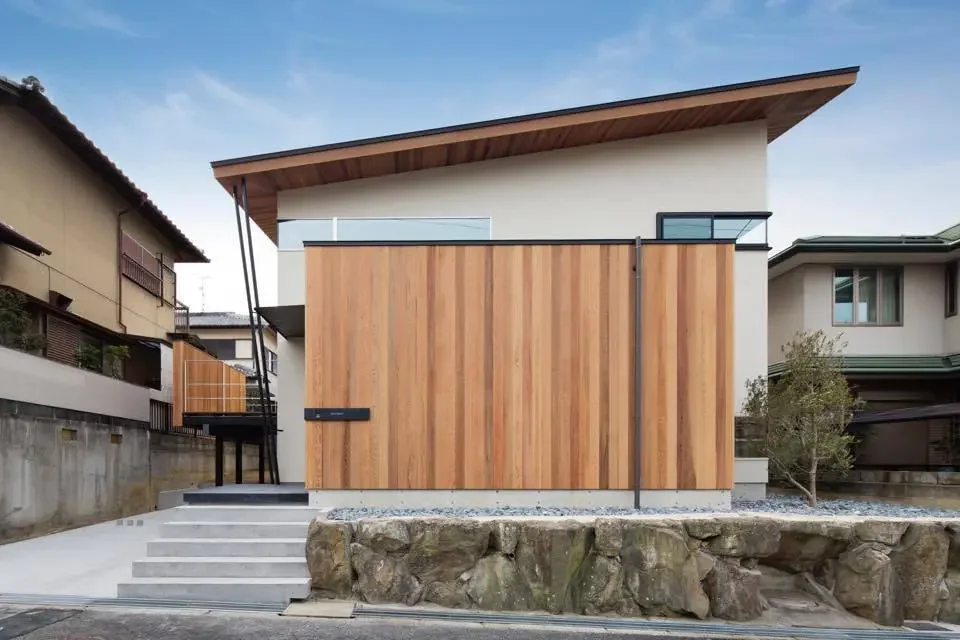
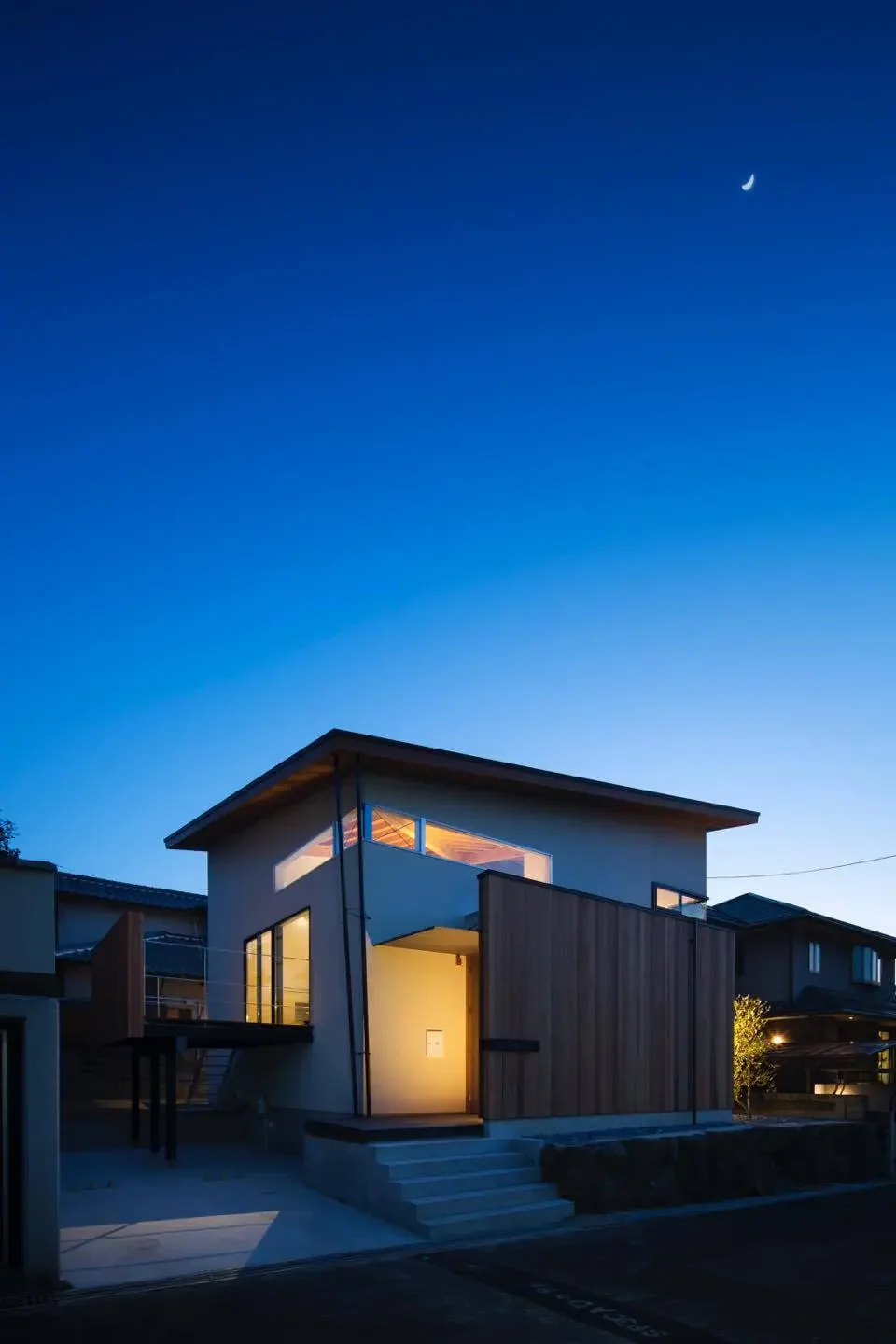
The site, enclosed on three sides by adjacent properties, is square in plan; as a result of maintaining a prescribed setback, the building form likewise became square. It was determined that a mode of living centered on interior spaces, rather than active engagement with the exterior, would be most appropriate.
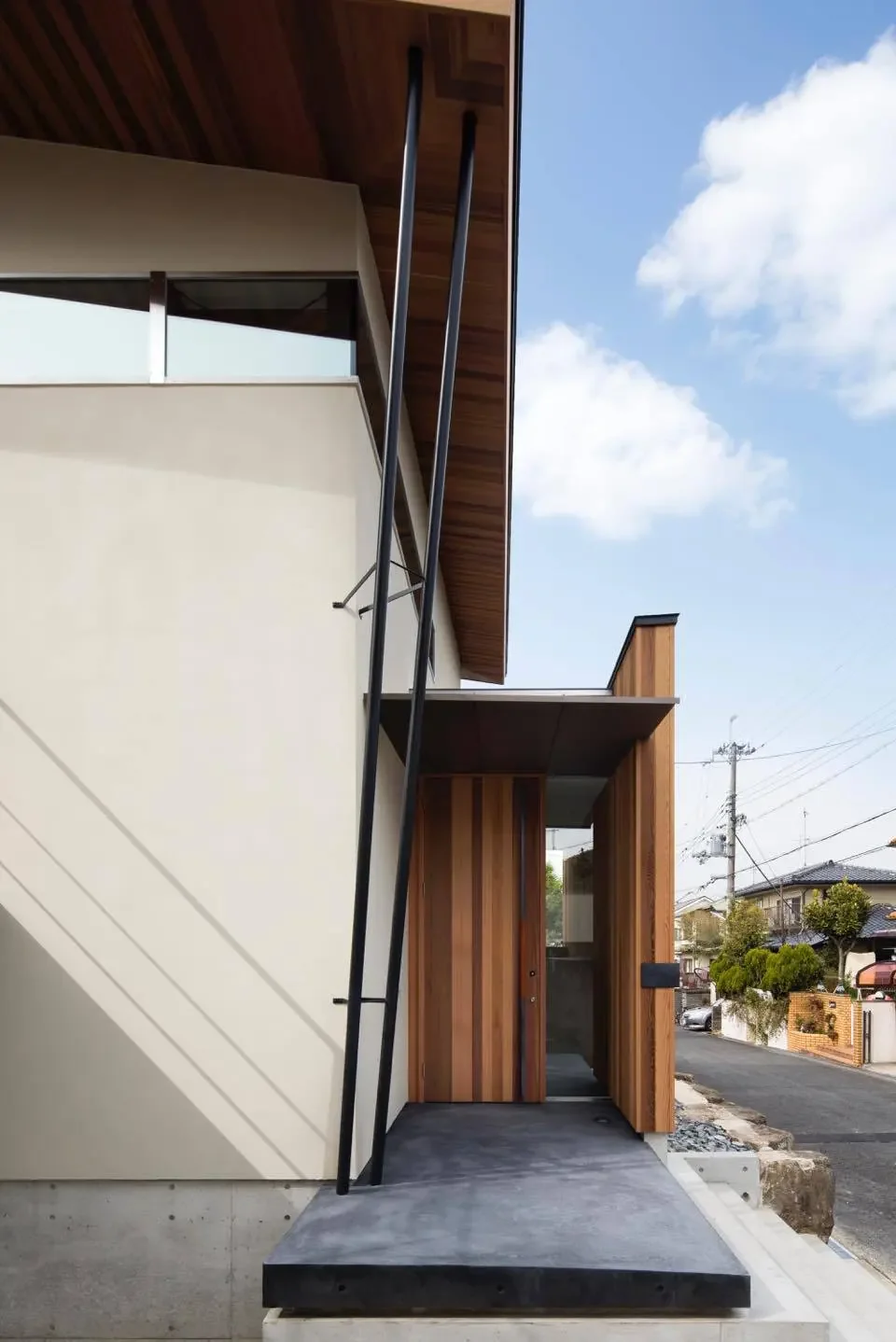
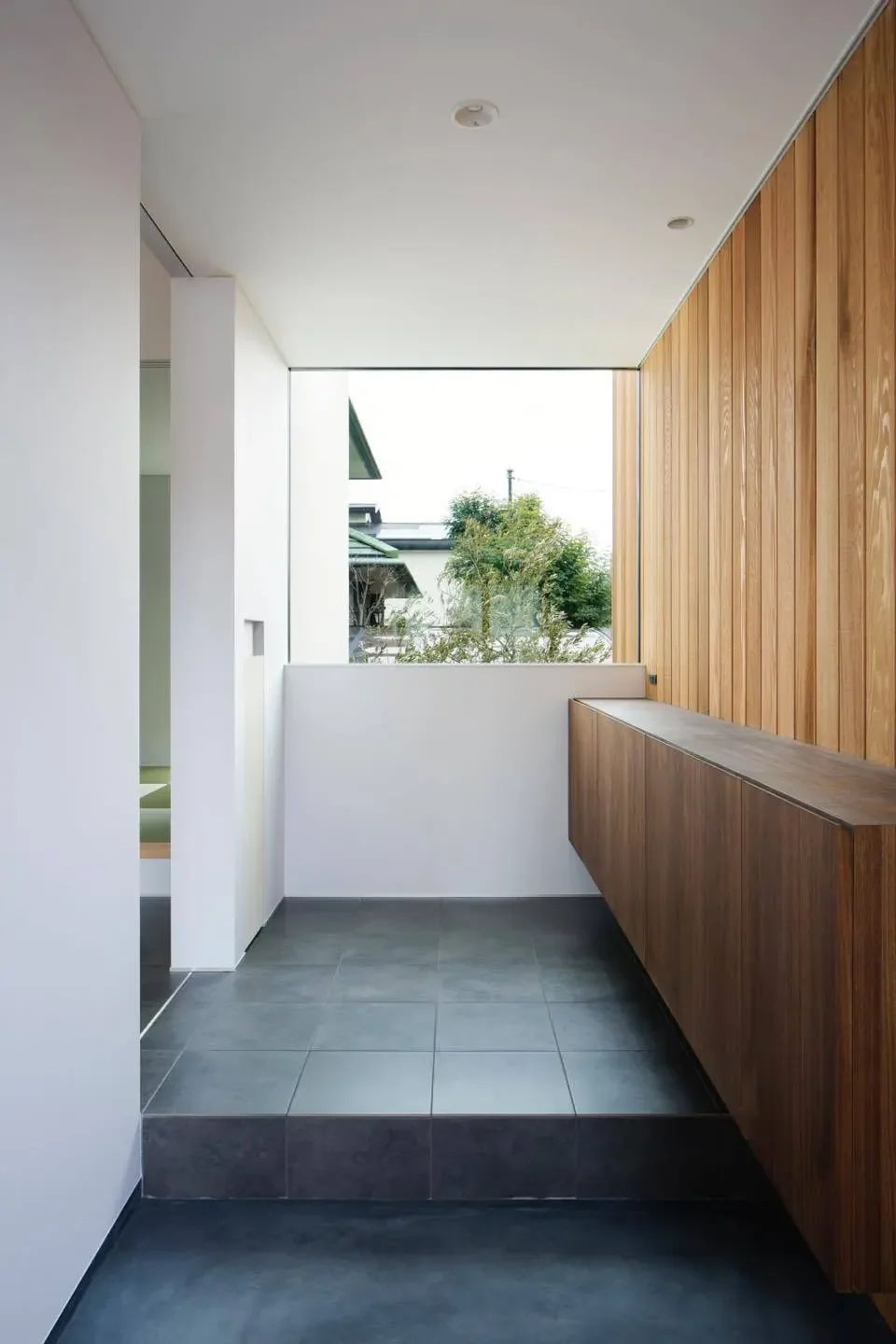
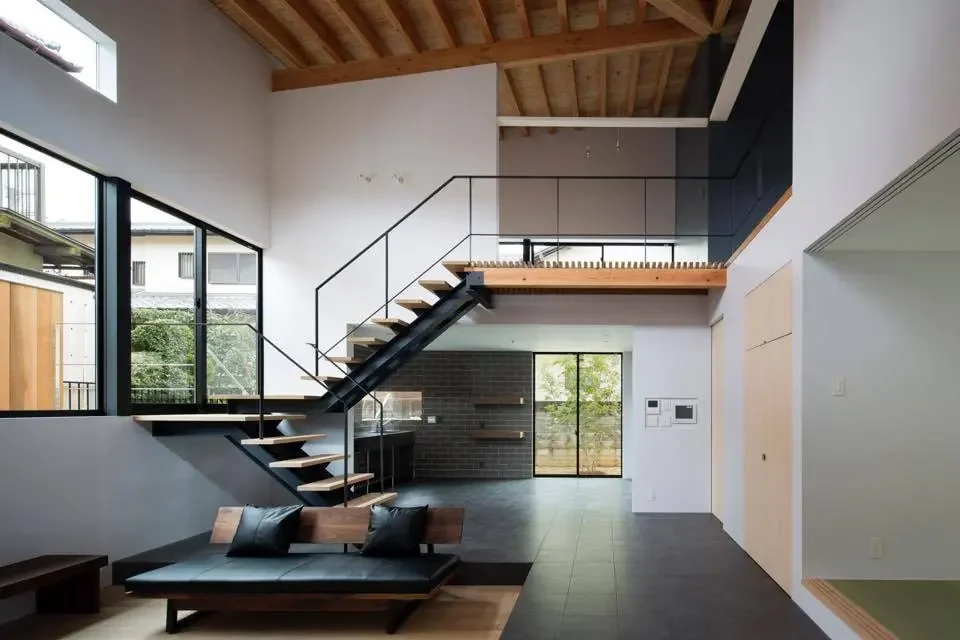
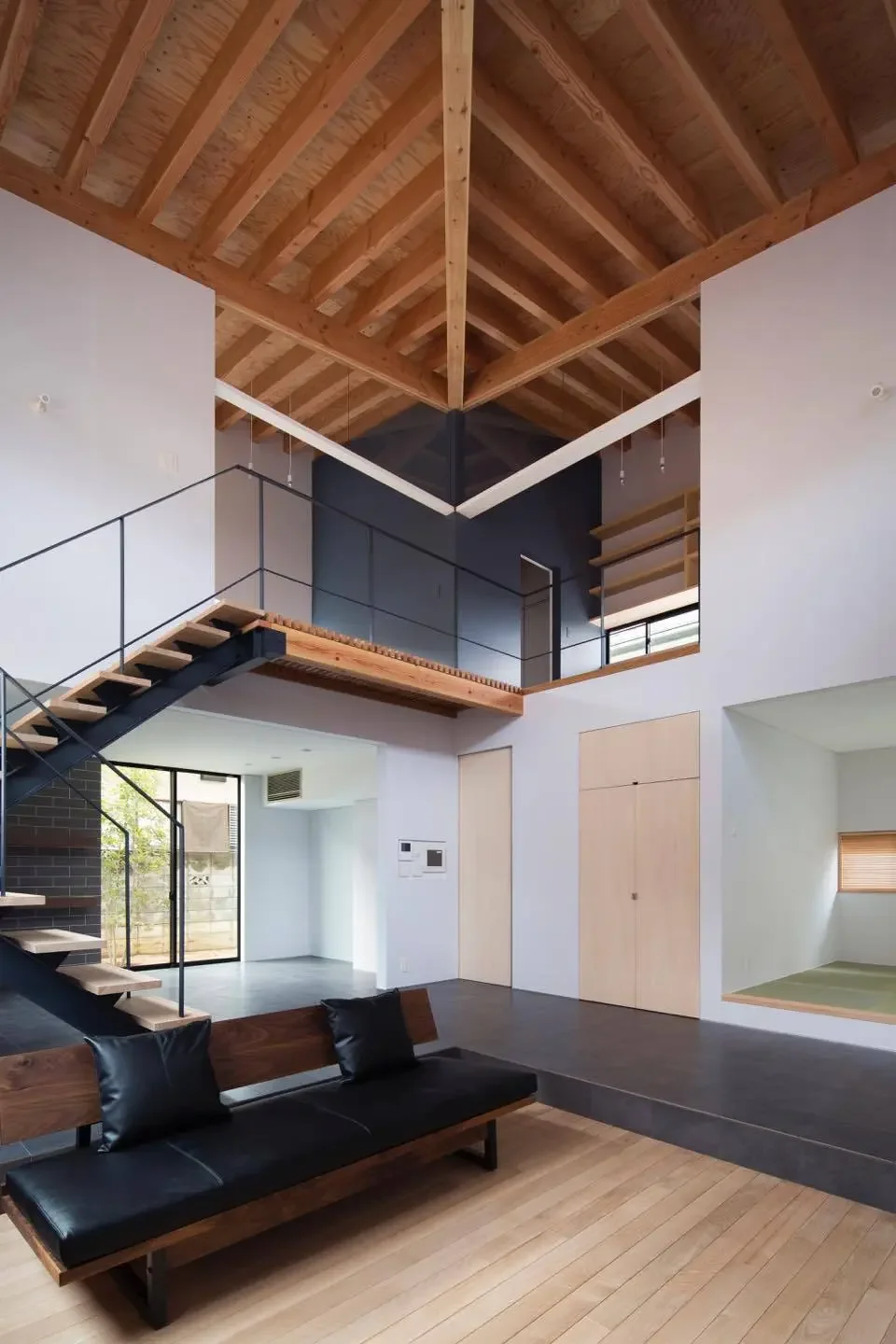
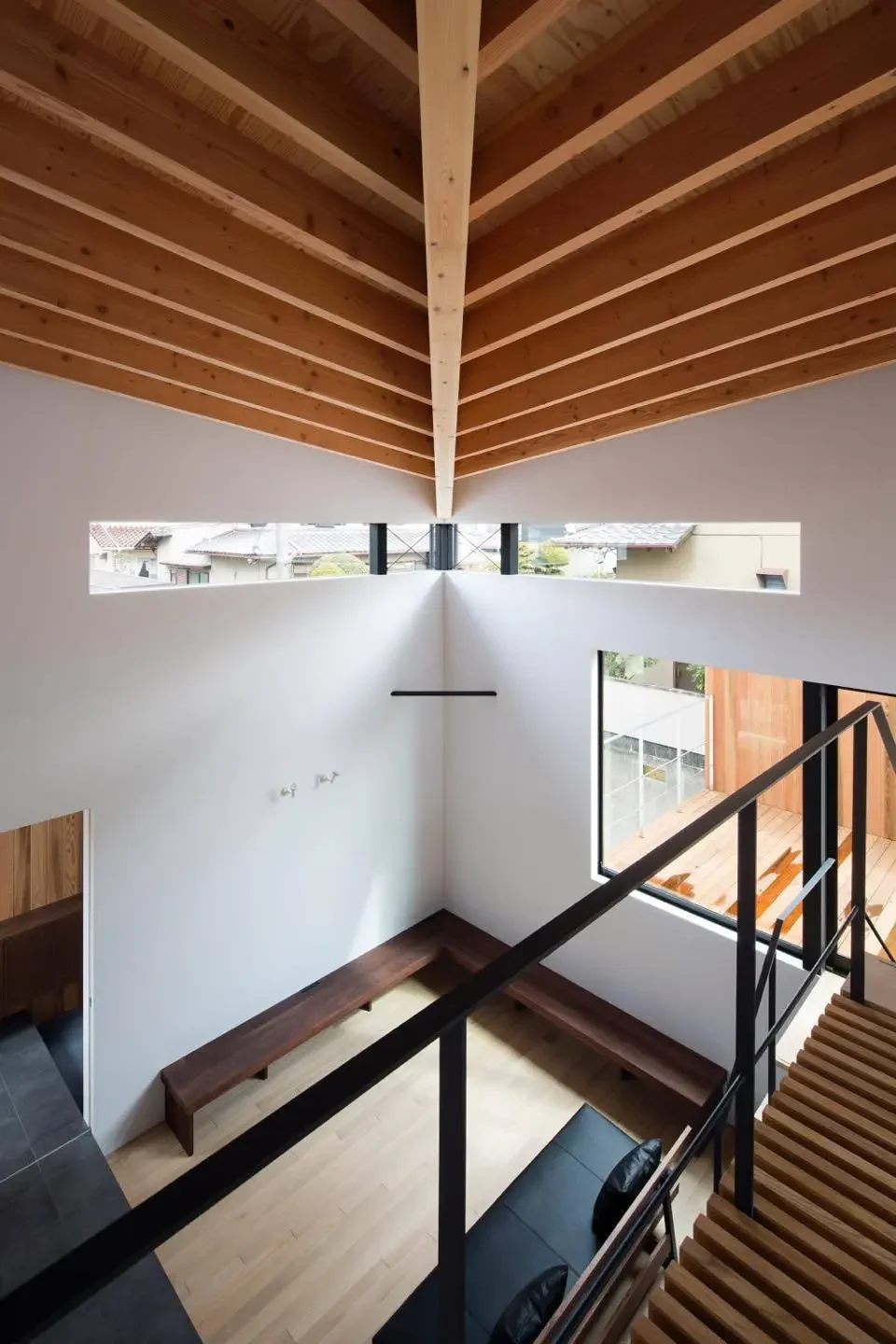
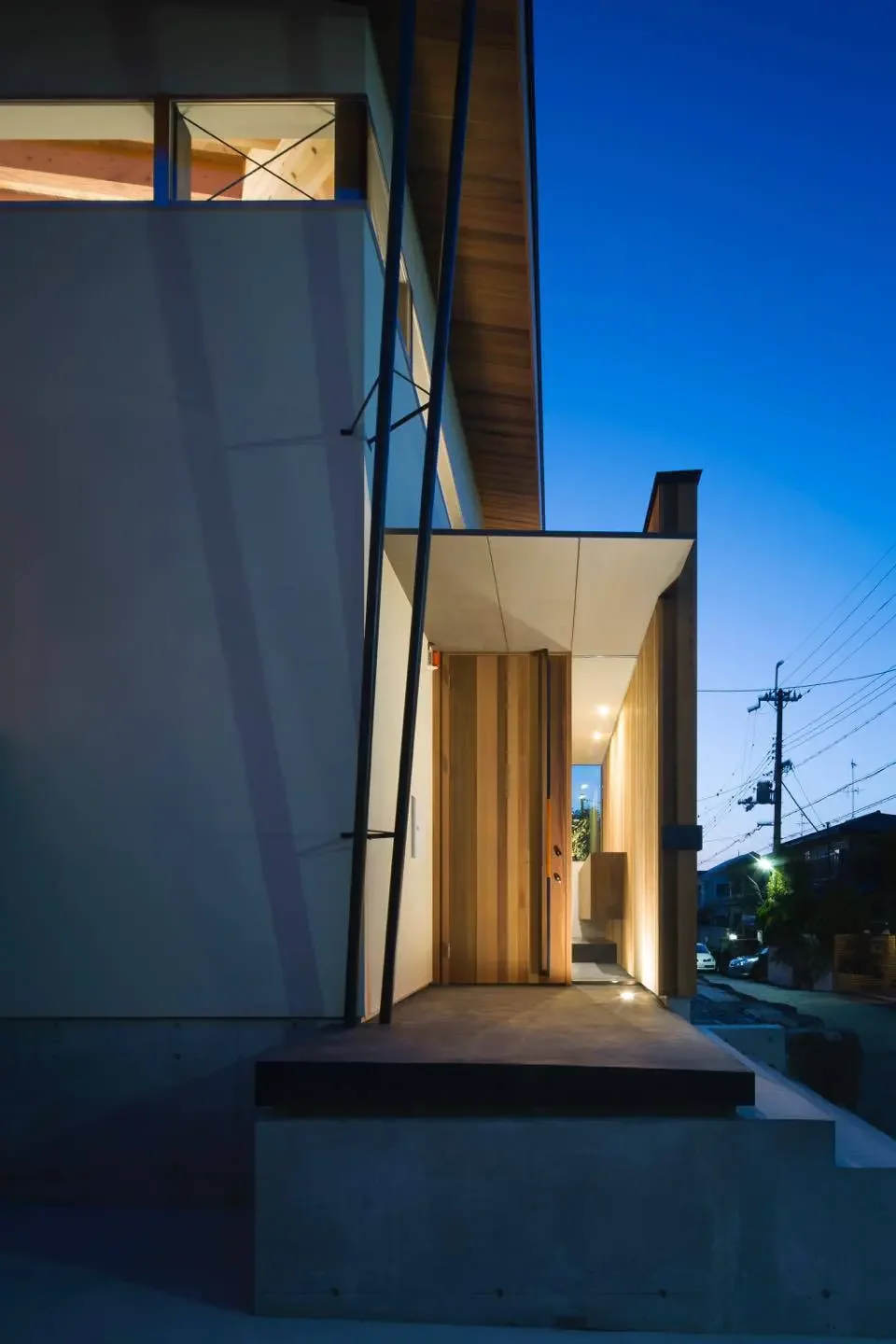
Using 2,730 mm (one-and-a-half ken) as the basic module and a 4.5‑tatami area as the smallest planning unit, the layout was established. The composition extends inward and outward around a double-height living room occupying a 2×2 module area within a 3×3 module grid. Private rooms and wet-area functions are arranged in the L-shaped, two-storey interior adjacent to the void, while the projecting, elevated terrace and entrance volumes that cantilever outward serve to connect interior and exterior.
The ceiling, articulated by rafter-like beams converging toward a mono-pitched ridge that runs along the roof diagonal, provides a restrained discipline and subtle rhythm to the simple composition of the building.