Introducing Uchi no Uchi, a custom-built home example by Mitsuhiro Kojima Architects, a Architect / Design office in 426-1-101 Higashisin-machi, Ota City, Gunma Prefecture
Uchi no Uchi
Uchi no Uchi
Uchi no Uchi
Uchi no Uchi
Uchi no Uchi
Uchi no Uchi
Uchi no Uchi
Uchi no Uchi
Uchi no Uchi
Uchi no Uchi
Uchi no Uchi
Uchi no Uchi
Uchi no Uchi
Uchi no Uchi
Uchi no Uchi
Entrance Doma
High Ceiling
Doma Living
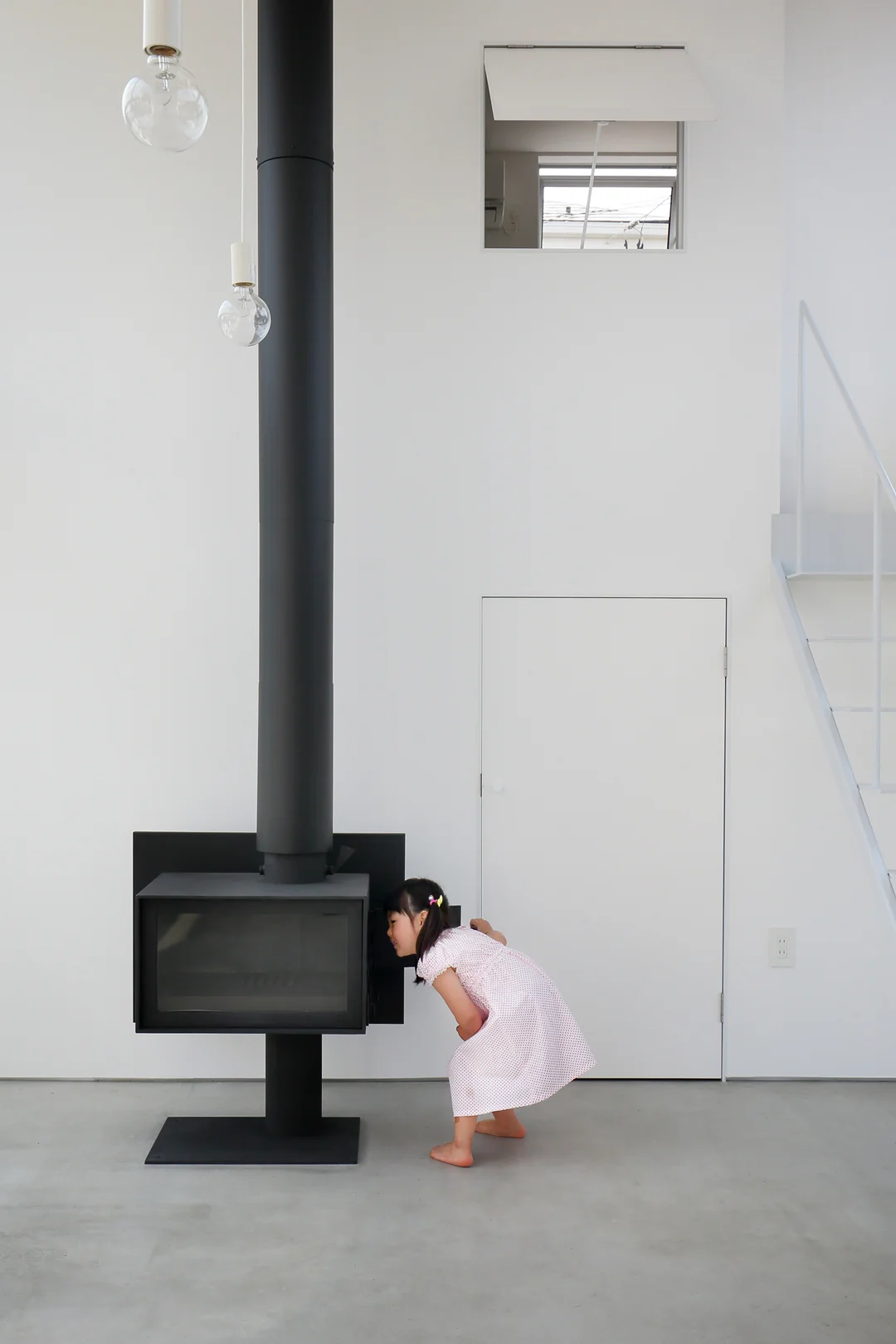
Wood-Burning Stove
WoodBurningStove
EarthenFloorLivingRoom
EntranceEarthenFloor
HighCeiling
Kai Nakamura
Learn More
Passing through a narrow alleyway within a densely built residential area, one suddenly emerges into a bright, open space where only the sky seems to stretch above. This was a dead-end vacant lot, a residual void left within the housing district. Despite being outdoors, the site exuded a comforting sense of being indoors. We sought to embody this comfort as a form of richness for the family and to preserve it as an asset for the community.
○ Family’s Requirements
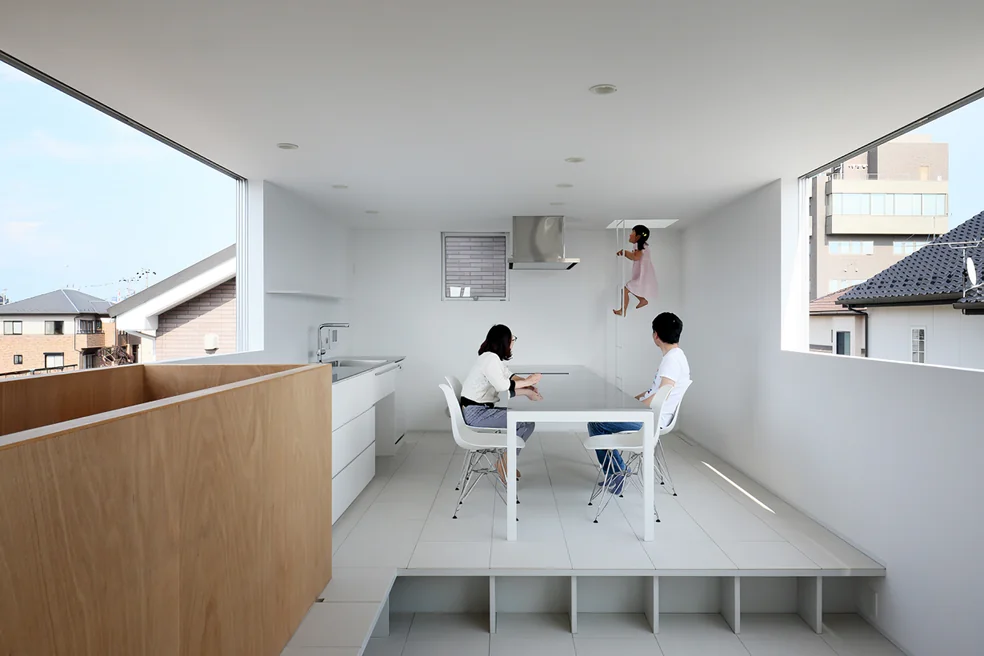
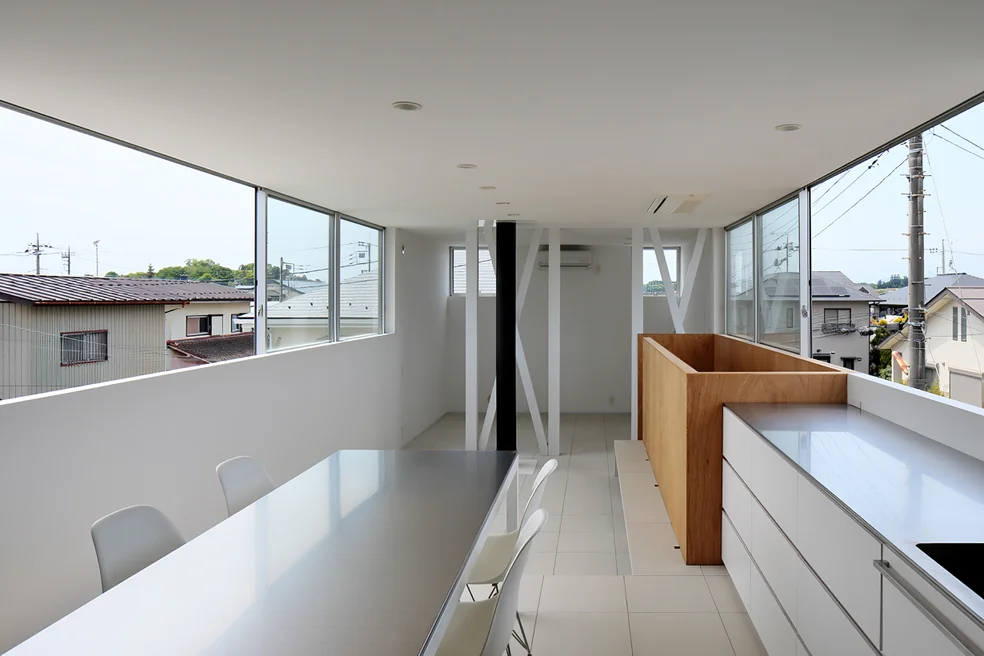
The residence is inhabited by a sociable couple who enjoy outdoor activities, along with their three children. Their primary request was a home where each family member could engage in separate activities while still sensing the presence of one another and maintaining a connection to the outside environment.
○ The Residual Voids of the Neighborhood and the Site
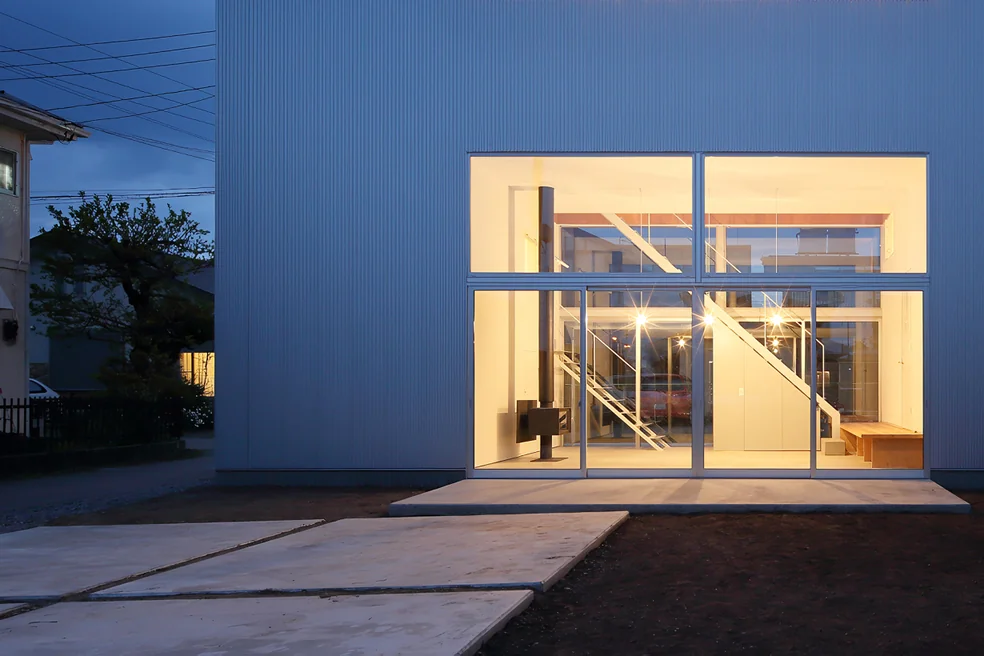
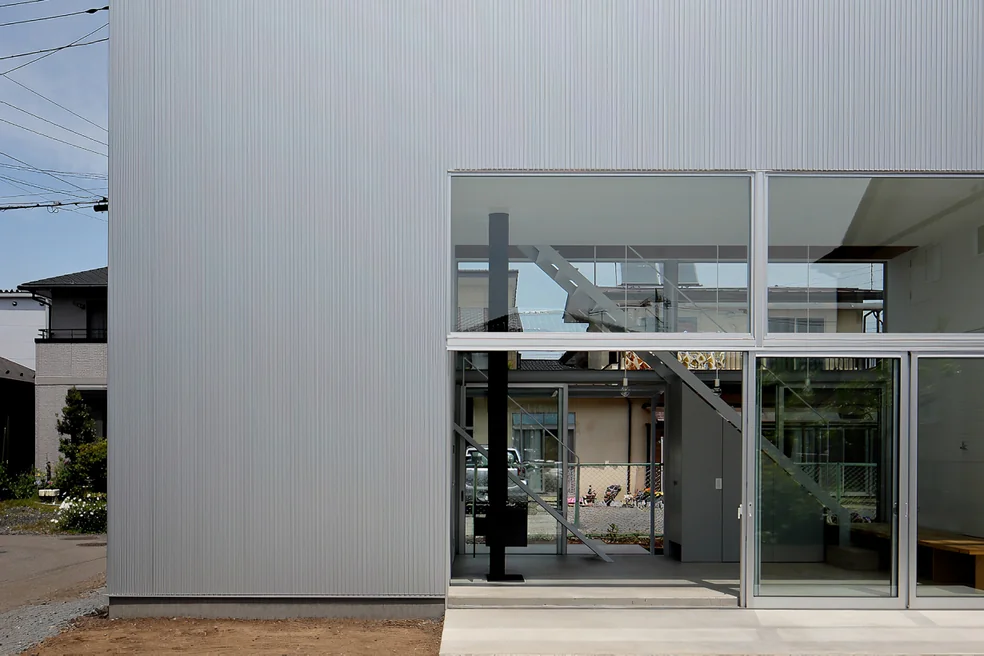
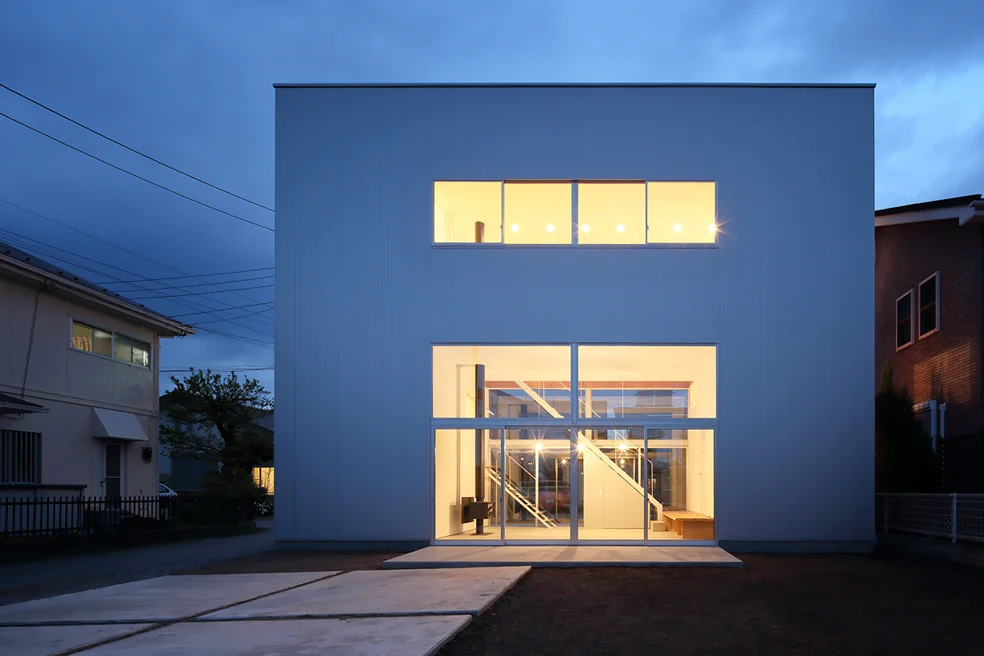
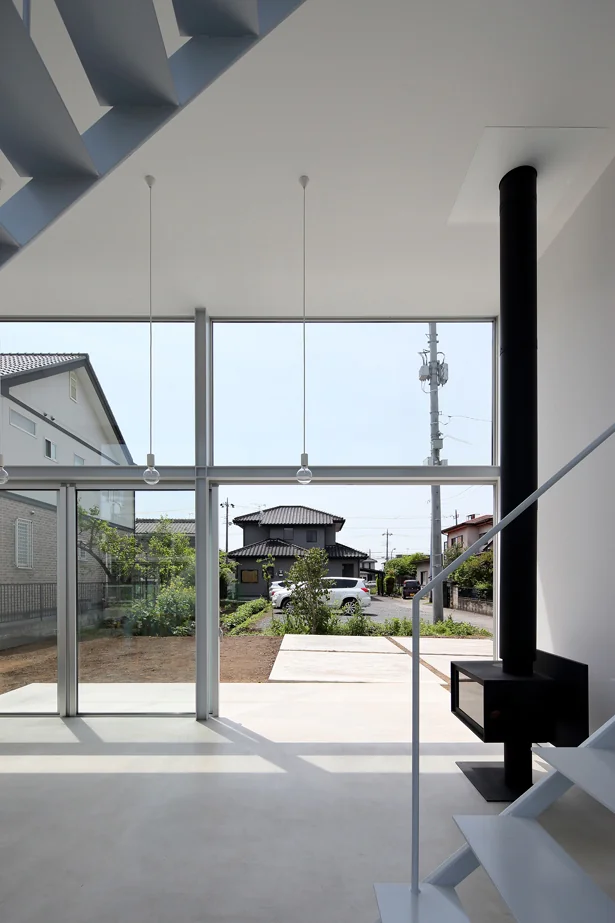
We regarded the interior area delineated by the eaves of neighboring buildings—the “leftover contour”—as a void within the residential fabric, and aimed to incorporate this richness into the house. This approach also meant opening the residence to the community. Consequently, we created a residual void within the site itself. To maximize this spatial openness, spacious gardens were placed to the north and south of the building. The building’s narrow ends were kept thin to allow unobstructed sightlines. Furthermore, the long elevations were designed with half of their surfaces as openings, permitting views to penetrate fully through the structure. The long facade with large windows was oriented perpendicular to the street, consolidating structural shear walls into a box that maintains a respectful distance from the road and neighboring houses, thereby achieving an openness balanced with appropriate spatial separation.
○ The Void Within the House
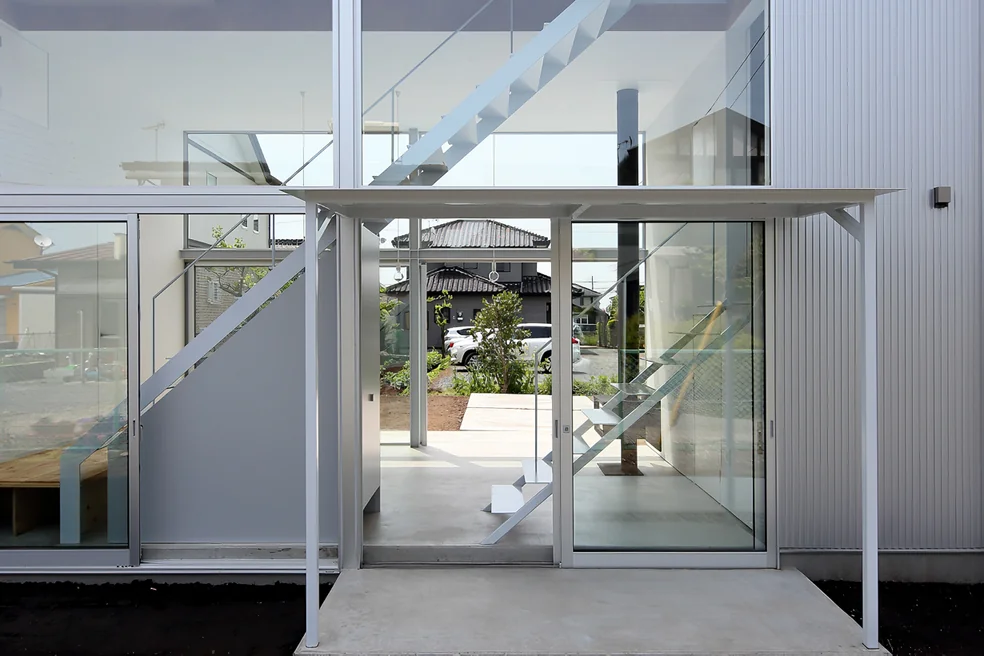
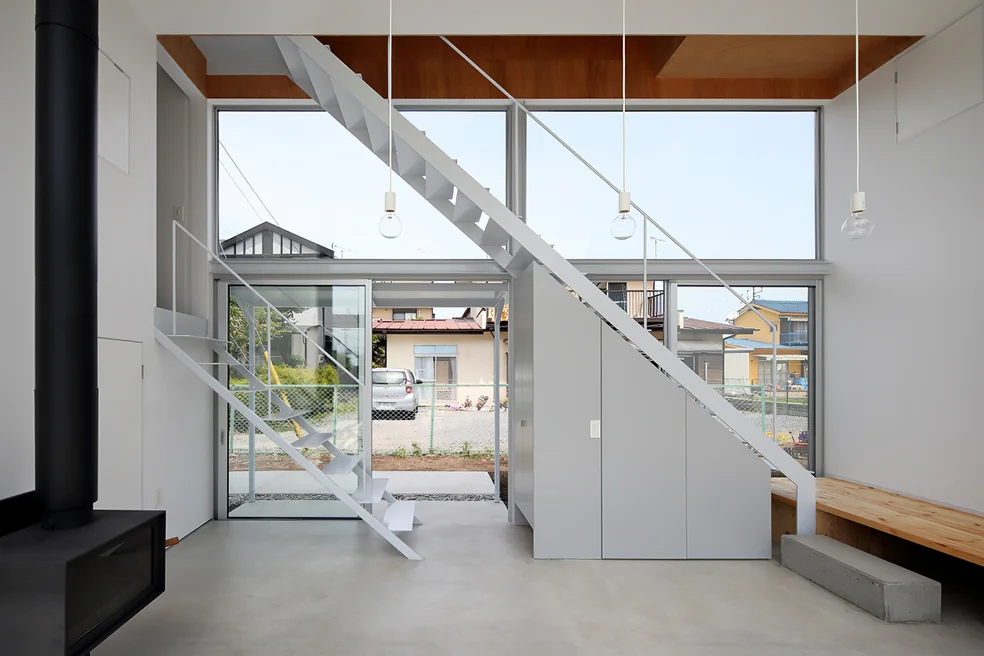
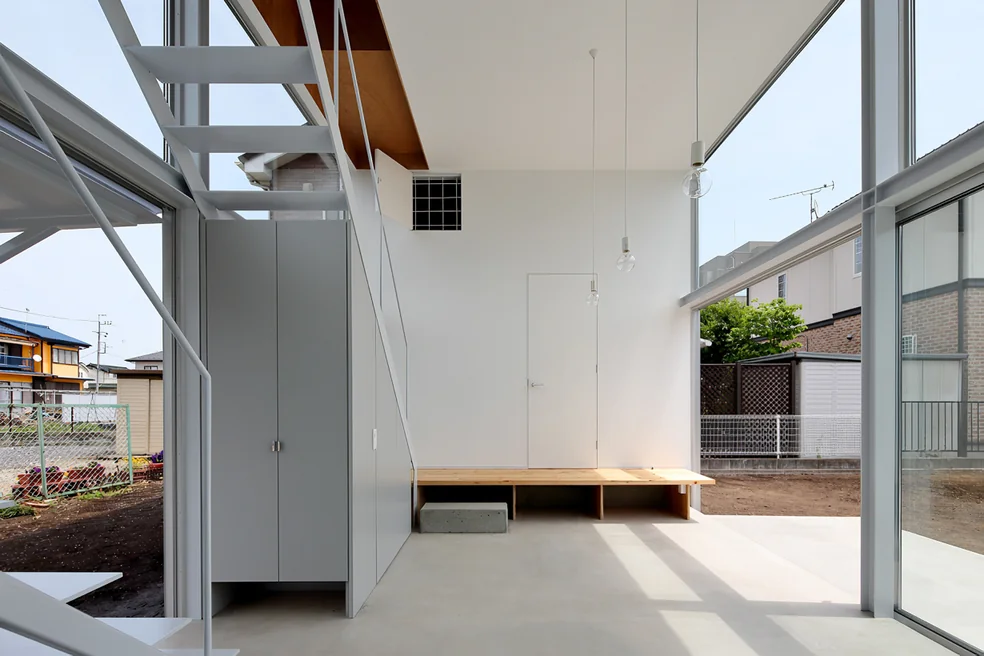
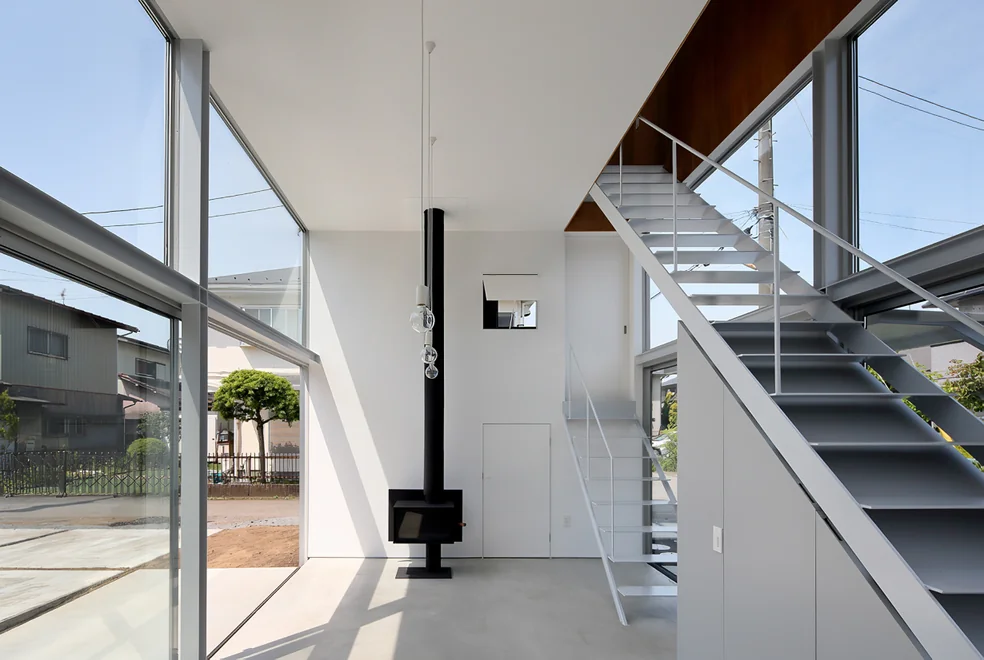
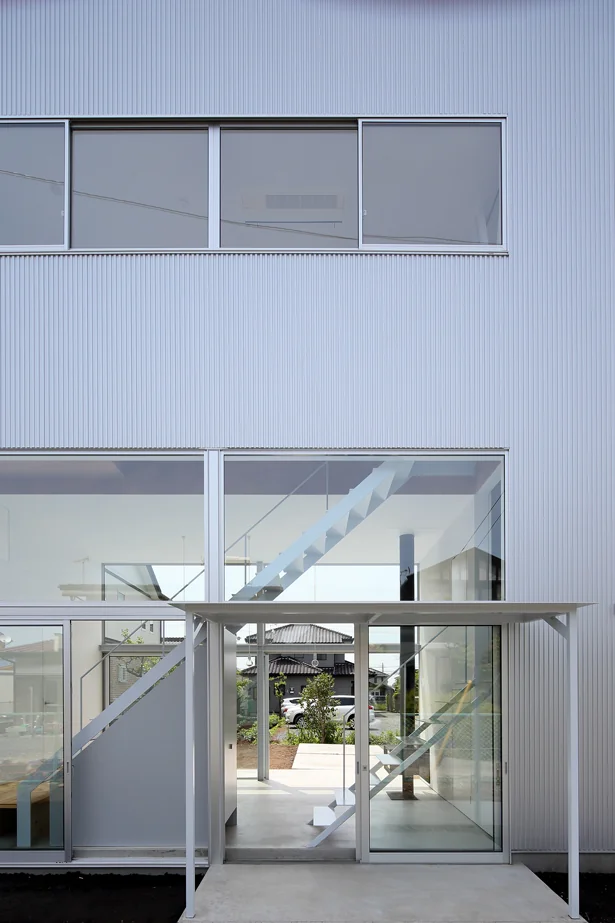
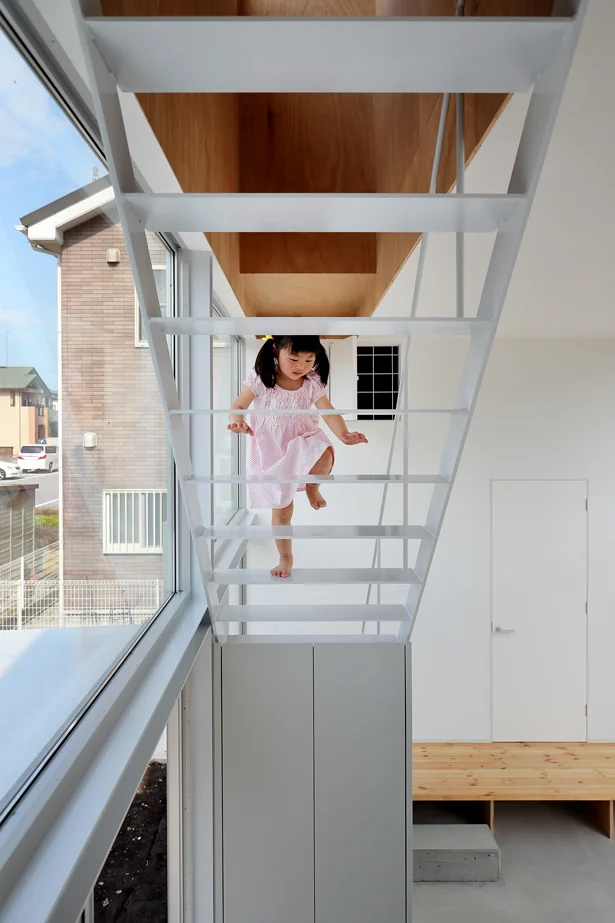
A doma (earthen-floored) space was created by intentionally leaving a large opening in the building’s facade, framed entirely by glass panels of equal size on the north and south sides. This area was not dedicated to any specific function but served as a flexible, residual space within the home. The glazing was subdivided into smaller panels to facilitate easy ventilation and access. This space connects directly to both gardens and the adjacent rooms. The ceiling height and depth were proportioned 1:1 to bring the sky visually closer than the ceiling height, thereby enhancing continuity with the outdoors. Although the doma space is set back from the street, the gardens extend without fences, connecting seamlessly at ground level to the street, fostering interaction with the surrounding neighborhood. This design encourages encounters and conversations between the family and local residents as part of everyday life.
○ Reflections Post-Completion
The doma space, characterized by a ceiling height exceeding its depth, feels simultaneously exterior yet provides a distinct sense of security different from typical interiors, becoming a cherished gathering place for the family. Voices and presences from individual rooms converge here. The preserved residual void of the neighborhood has transformed into a lively place where neighbors frequently meet and converse, filling the area with joyful sounds. In this way, the project succeeded in opening the residence to the community while reclaiming the richness of the site and the family’s warmth. It is gratifying to see the family making joyful and effective use of these spatial qualities.

○ Family’s Requirements
The residence is inhabited by a sociable couple who enjoy outdoor activities, along with their three children. Their primary request was a home where each family member could engage in separate activities while still sensing the presence of one another and maintaining a connection to the outside environment.
○ The Residual Voids of the Neighborhood and the Site
We regarded the interior area delineated by the eaves of neighboring buildings—the “leftover contour”—as a void within the residential fabric, and aimed to incorporate this richness into the house. This approach also meant opening the residence to the community. Consequently, we created a residual void within the site itself. To maximize this spatial openness, spacious gardens were placed to the north and south of the building. The building’s narrow ends were kept thin to allow unobstructed sightlines. Furthermore, the long elevations were designed with half of their surfaces as openings, permitting views to penetrate fully through the structure. The long facade with large windows was oriented perpendicular to the street, consolidating structural shear walls into a box that maintains a respectful distance from the road and neighboring houses, thereby achieving an openness balanced with appropriate spatial separation.
○ The Void Within the House
A doma (earthen-floored) space was created by intentionally leaving a large opening in the building’s facade, framed entirely by glass panels of equal size on the north and south sides. This area was not dedicated to any specific function but served as a flexible, residual space within the home. The glazing was subdivided into smaller panels to facilitate easy ventilation and access. This space connects directly to both gardens and the adjacent rooms. The ceiling height and depth were proportioned 1:1 to bring the sky visually closer than the ceiling height, thereby enhancing continuity with the outdoors. Although the doma space is set back from the street, the gardens extend without fences, connecting seamlessly at ground level to the street, fostering interaction with the surrounding neighborhood. This design encourages encounters and conversations between the family and local residents as part of everyday life.
○ Reflections Post-Completion
The doma space, characterized by a ceiling height exceeding its depth, feels simultaneously exterior yet provides a distinct sense of security different from typical interiors, becoming a cherished gathering place for the family. Voices and presences from individual rooms converge here. The preserved residual void of the neighborhood has transformed into a lively place where neighbors frequently meet and converse, filling the area with joyful sounds. In this way, the project succeeded in opening the residence to the community while reclaiming the richness of the site and the family’s warmth. It is gratifying to see the family making joyful and effective use of these spatial qualities.
- Copyright(C)Qurasuki.All Rights Reserved.