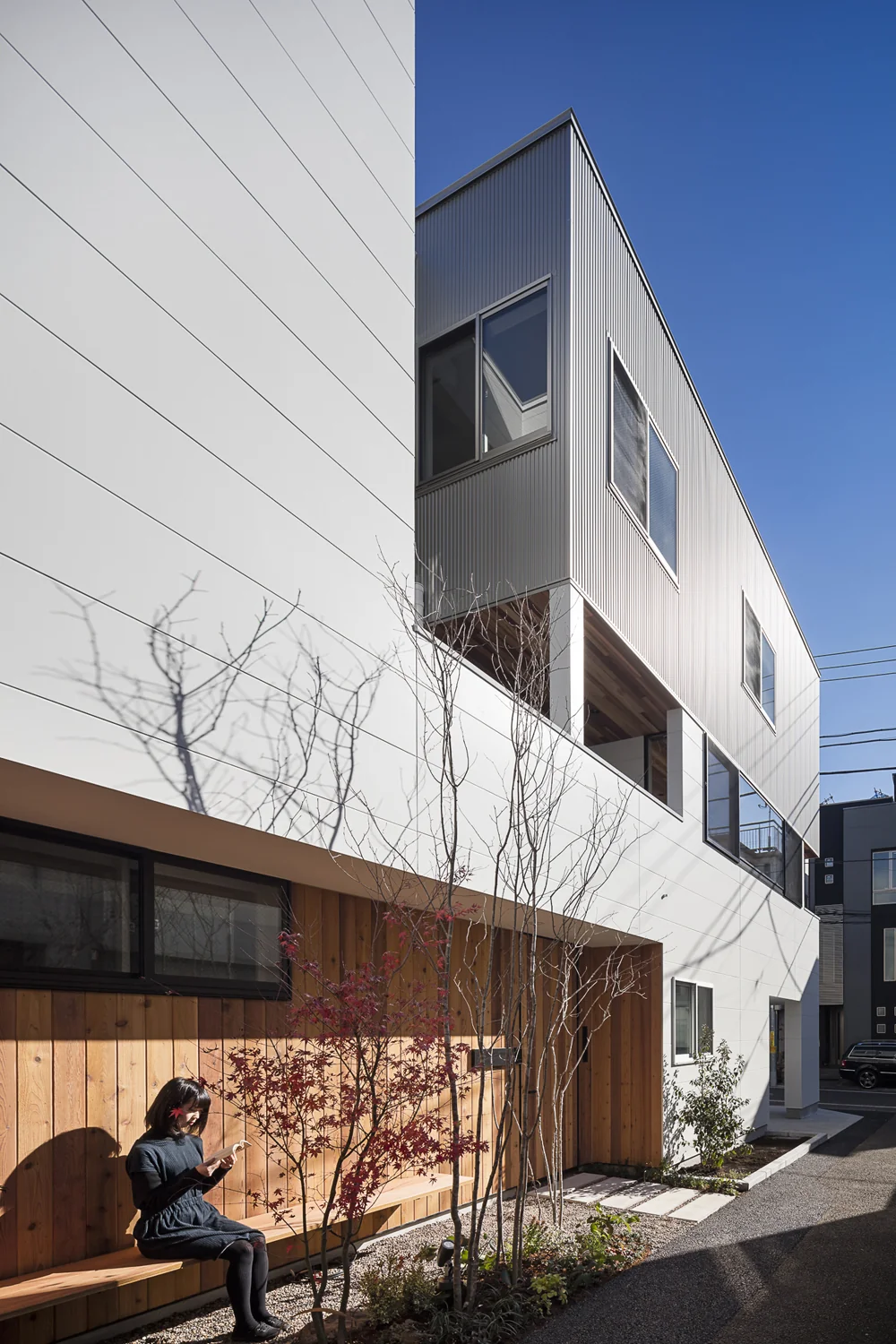
Introducing A Residence Uniting Two Independent Households, a custom-built home example by Archiplace, a Architect / Design office in 502 Palm House Hatsudai, 1-20-2 Honmachi, Shibuya-ku, Tokyo
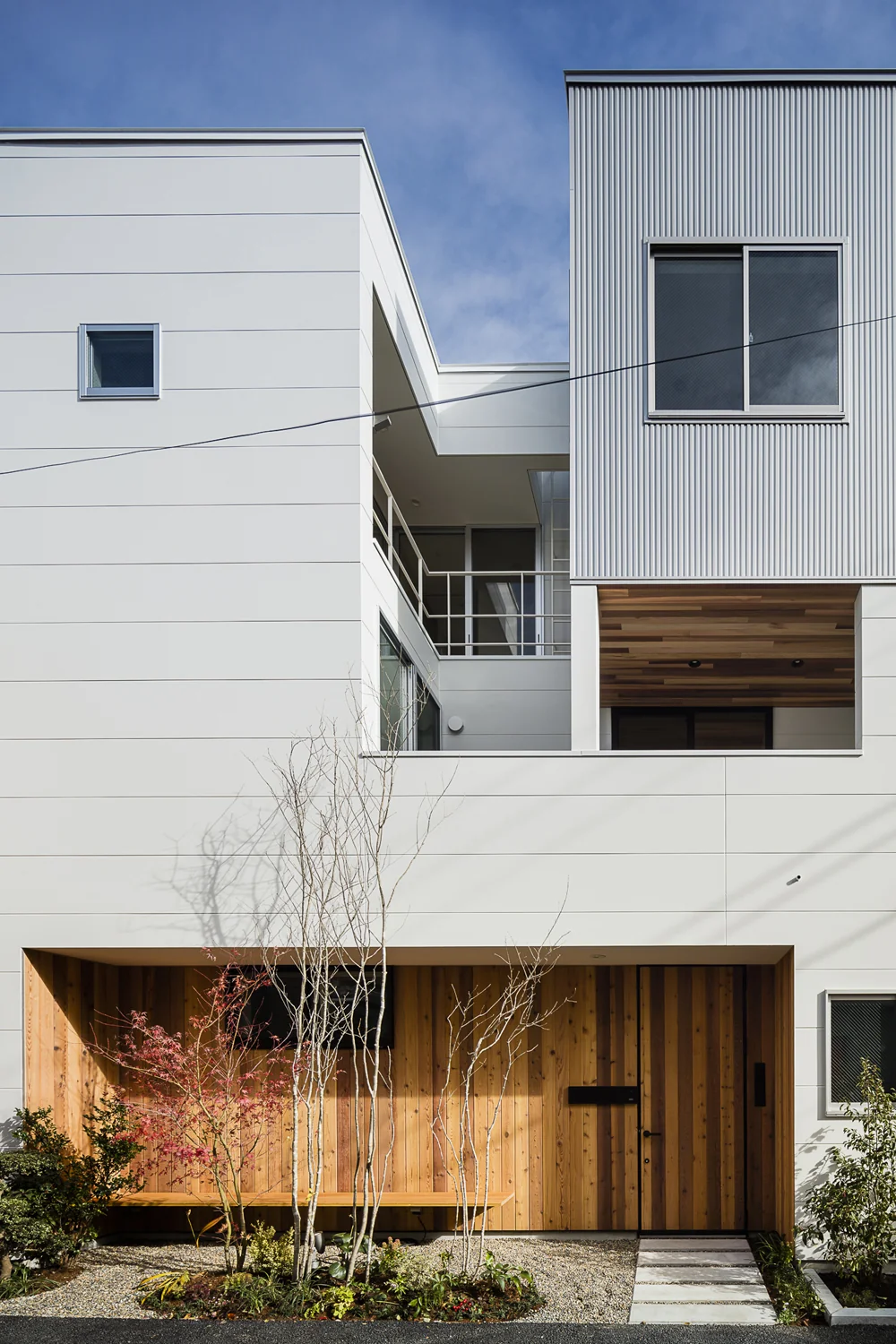
A small garden at the entrance features a bench, enabling the parents to continue socializing with neighbors as they have in the past.
A tranquil space created by planting trees and ground cover that cast shade against a wooden paneled wall, complemented by a built-in wooden bench.
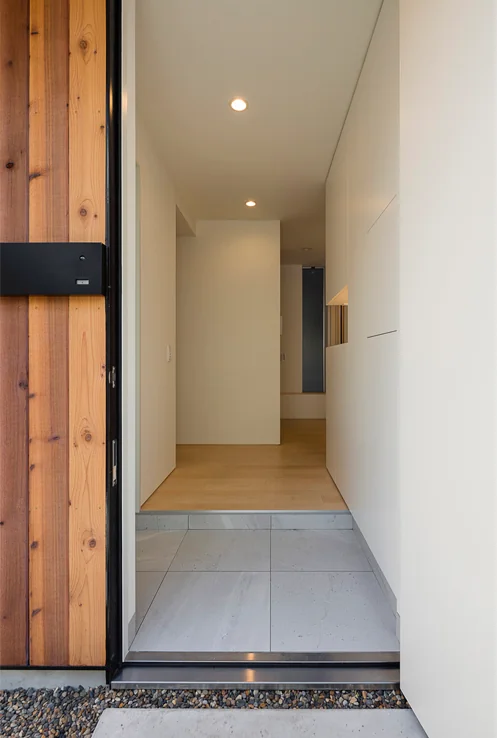
The shoe storage area includes a walk-in shoe closet and shoe cabinet, beyond which lie the home elevator and staircase.
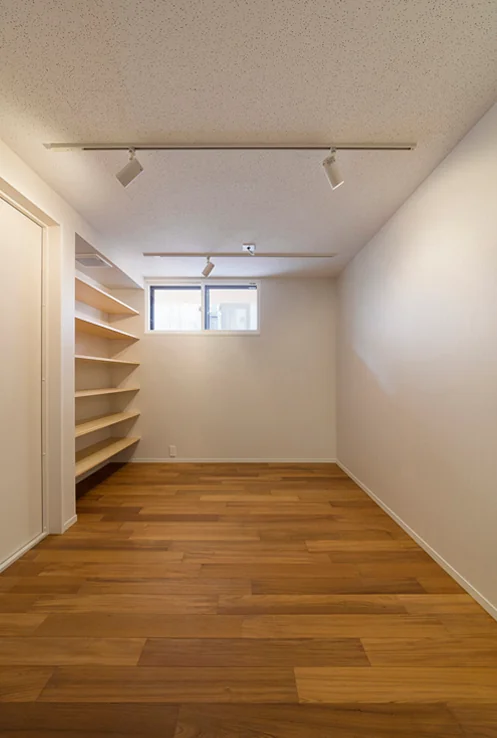
A soundproof room for the couple’s saxophone hobby, featuring double-glazed windows and custom-built shelving for musical instruments.
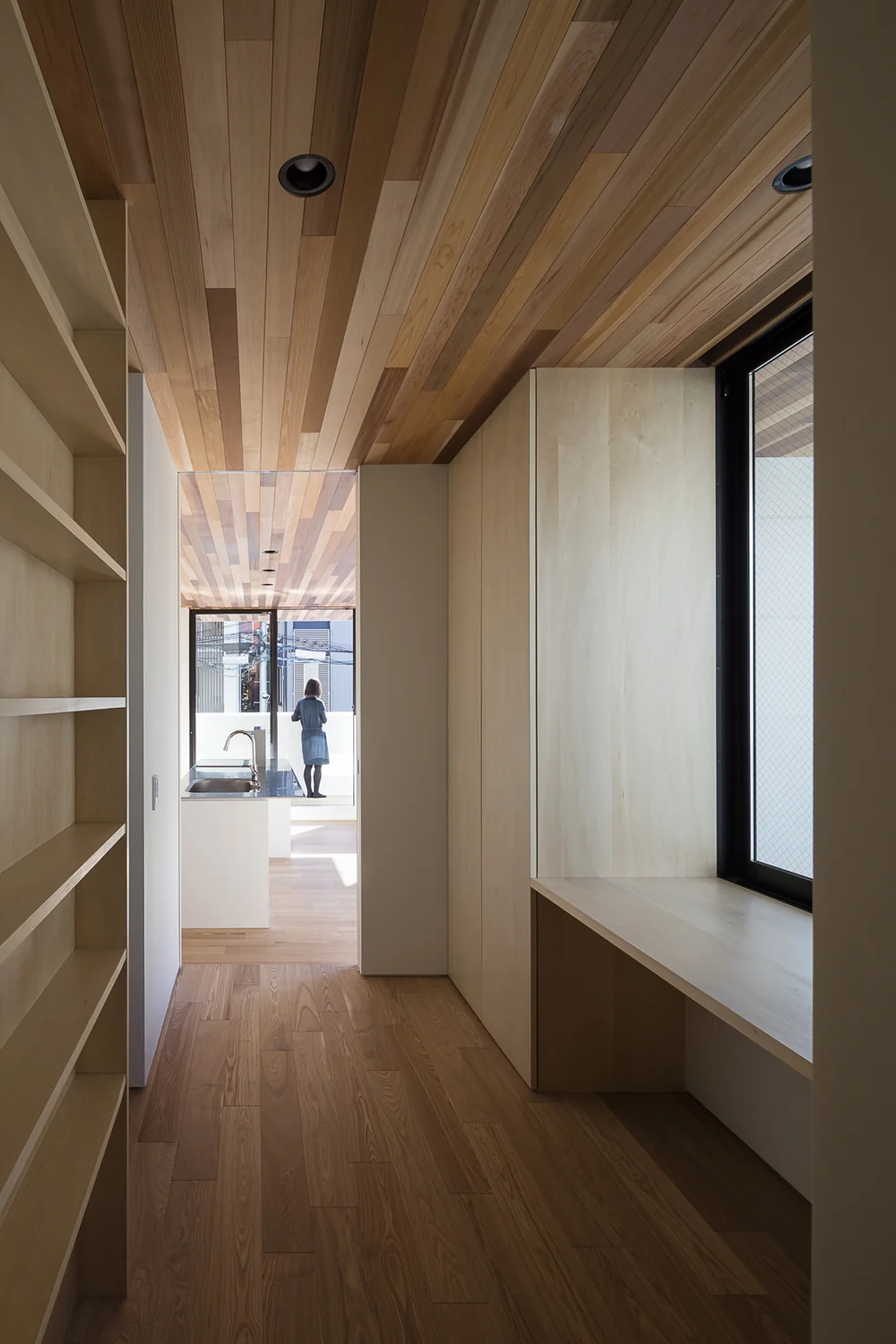
A study nook located in the second-floor corridor, with a continuous wooden paneled ceiling enhancing spatial continuity.
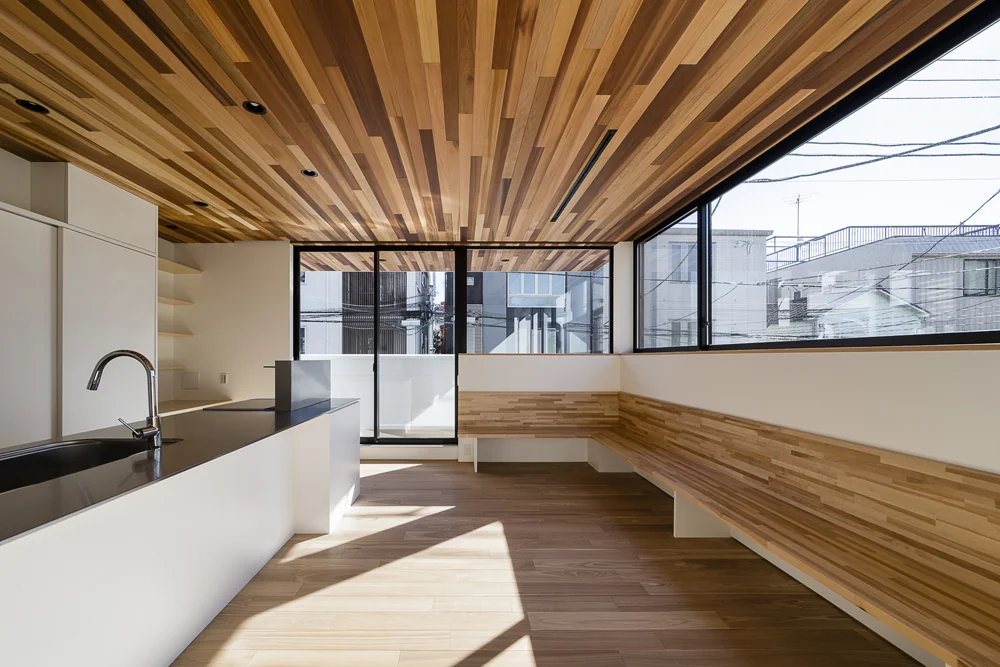
Utilizing the structural advantages of the SE construction method, large southwest-facing windows create a sense of openness.
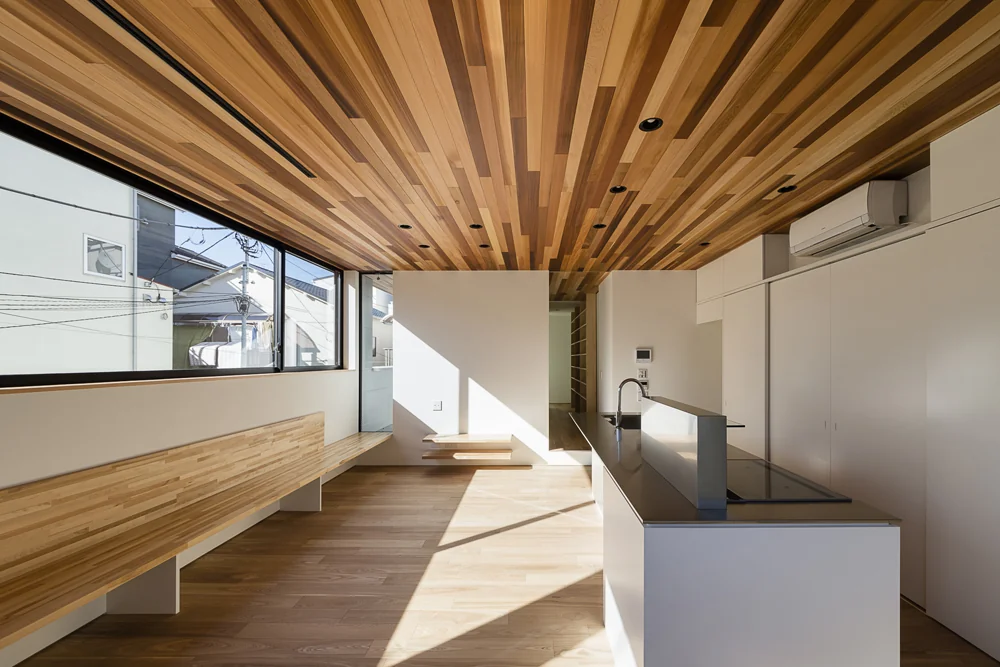
The second-floor living, dining, and kitchen area of the children’s household includes a custom-built bench along the window, allowing meals to be shared comfortably with the parents.
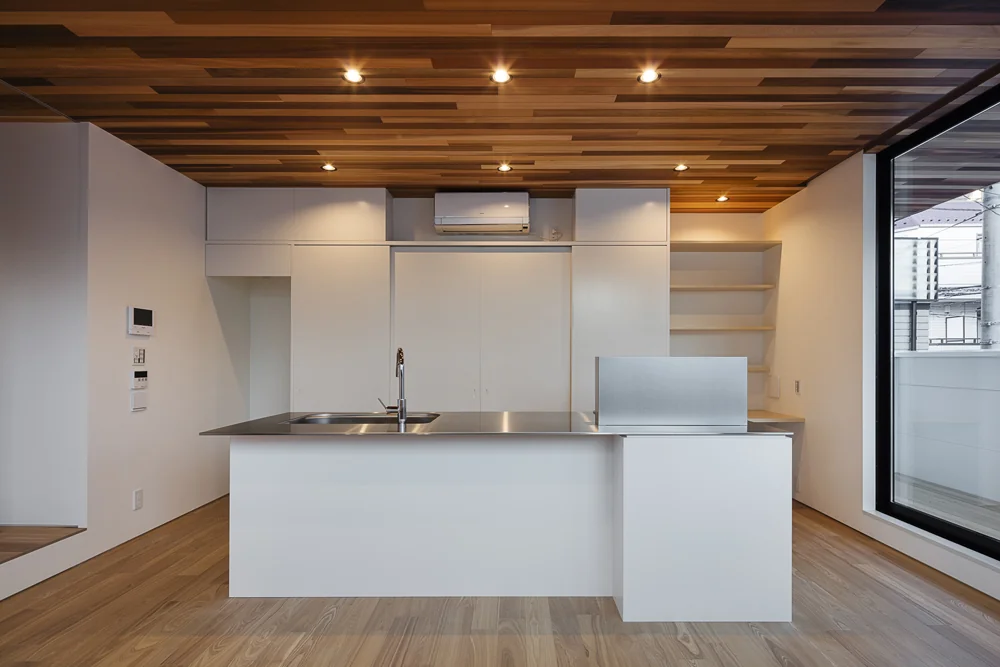
Behind the kitchen, sliding doors conceal storage for appliances and tableware, alongside a built-in desk forming a practical household workspace.
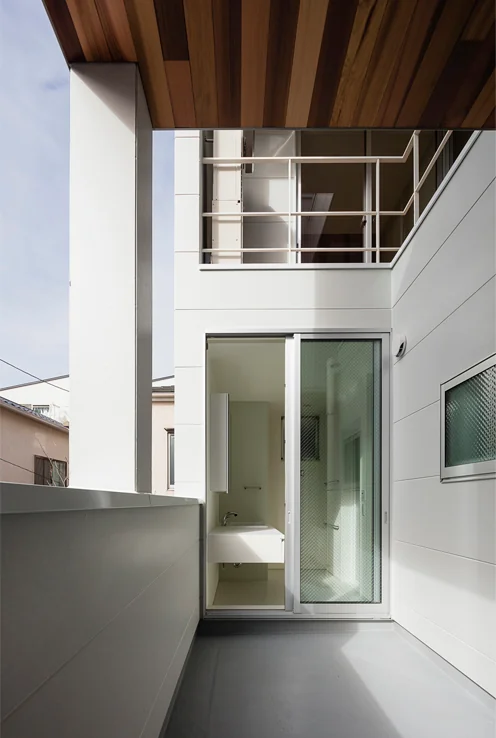
A covered drying terrace connected to the washroom protects laundry from rain.
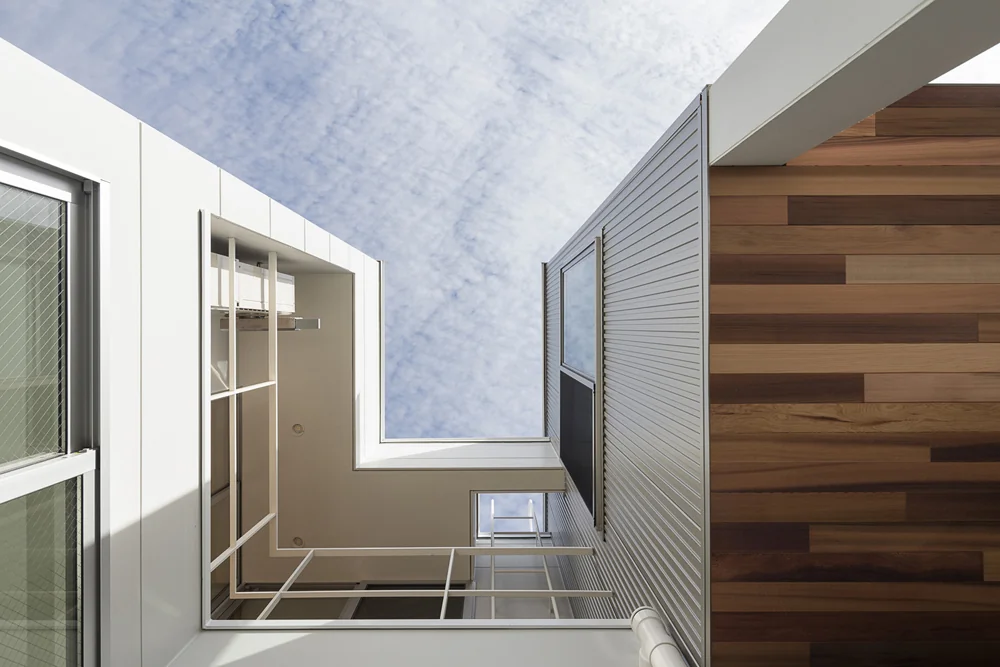
The void above the drying terrace serves as a spatial link, subtly connecting the two households.
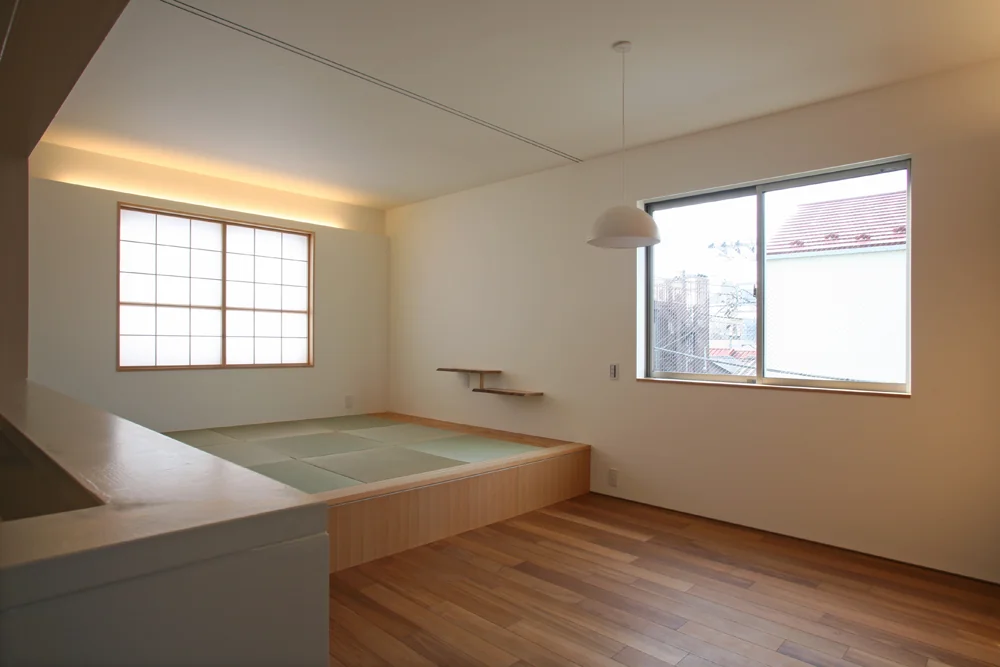
The third-floor dining kitchen for the parents includes a raised tatami area with storage beneath, doubling as seating.
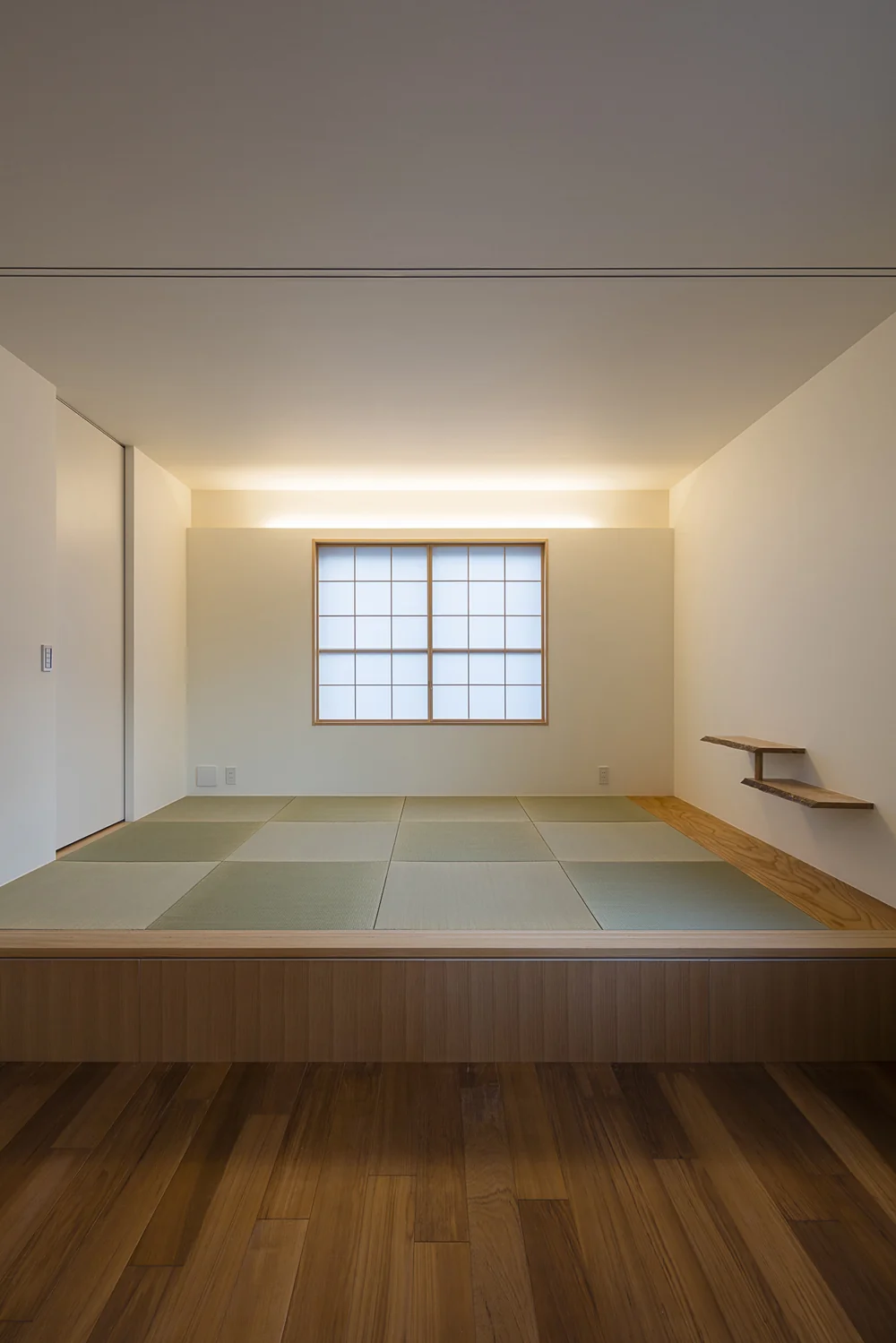
The tatami space can be closed off with sliding doors; to the left is a closet for storing bedding for overnight guests.
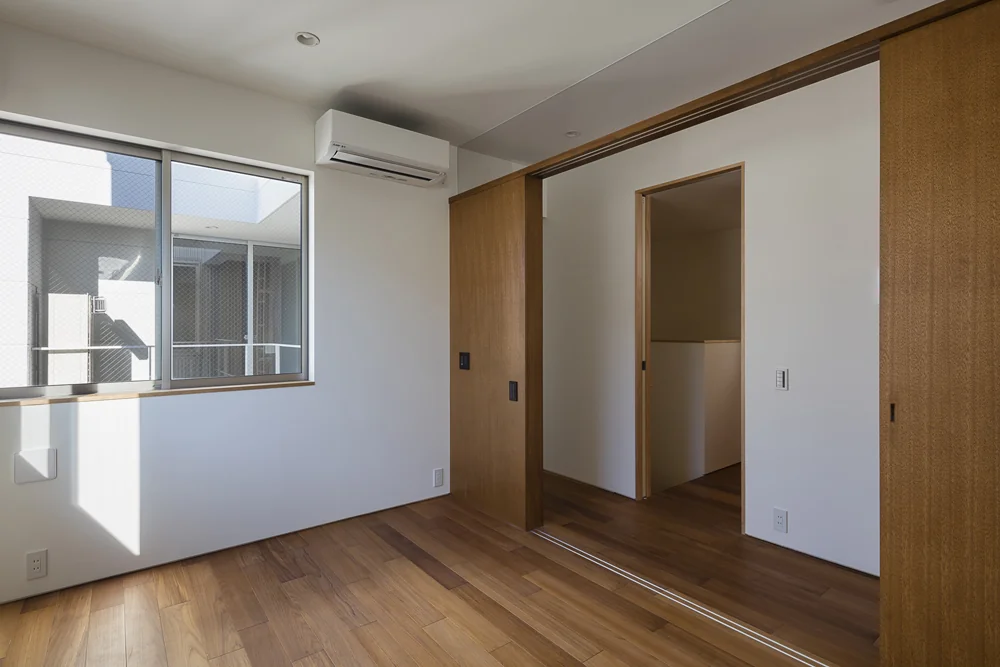
The parents’ bedroom is separated by sliding doors that integrate seamlessly with the corridor, adjacent to the hall housing the elevator and staircase.
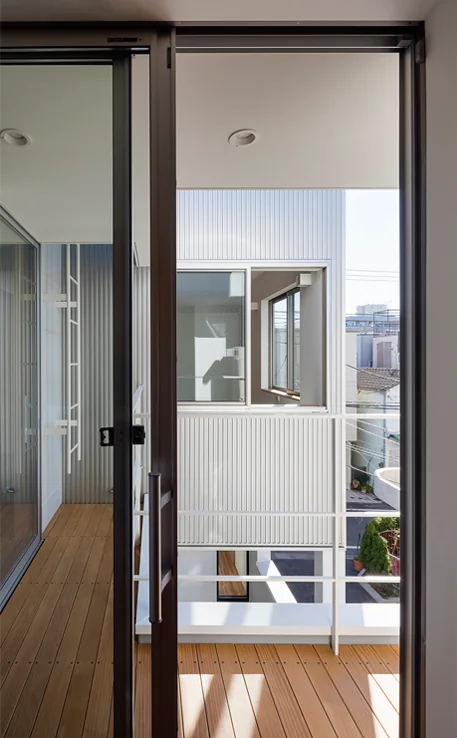
A workshop is located in a detached position, accessible without steps via the drying terrace.
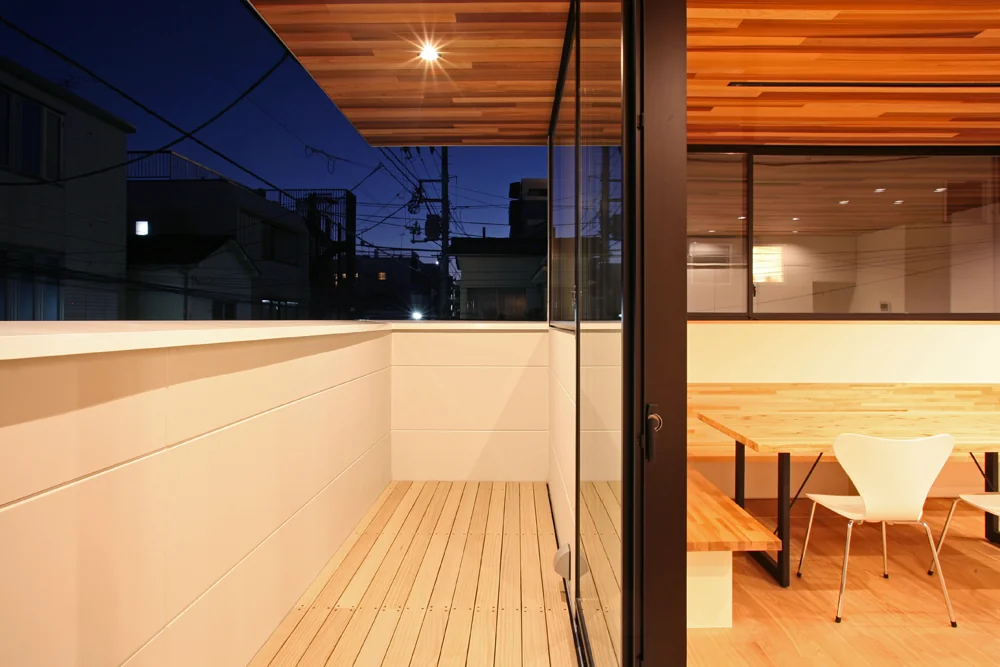
Night view of the second-floor living, dining, kitchen area and terrace.
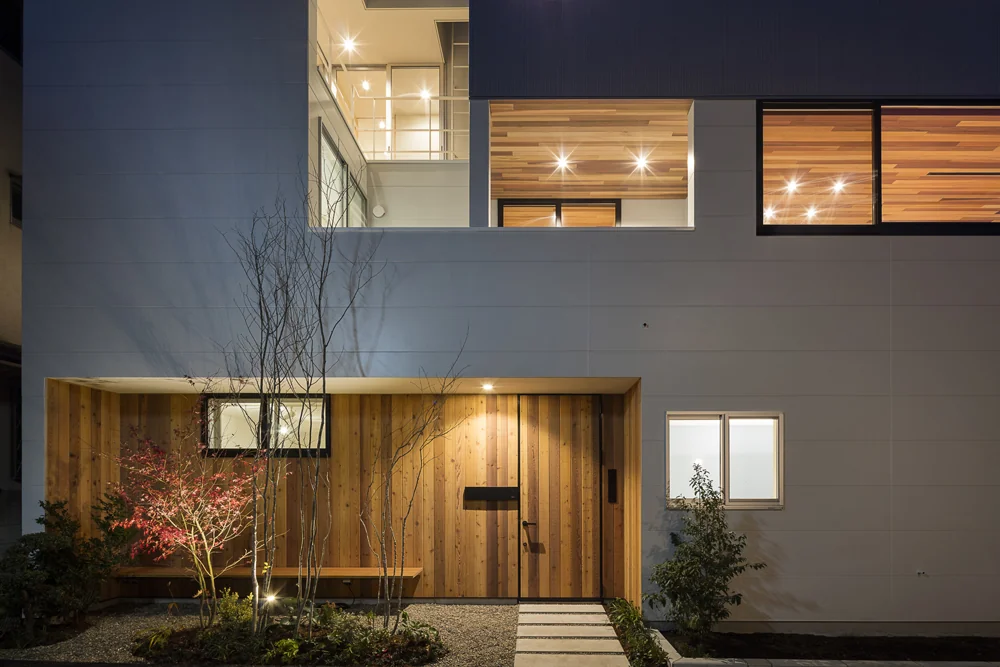
A natural modern small garden welcomes visitors with wooden paneled walls, trees, ground cover, and concrete pavers.
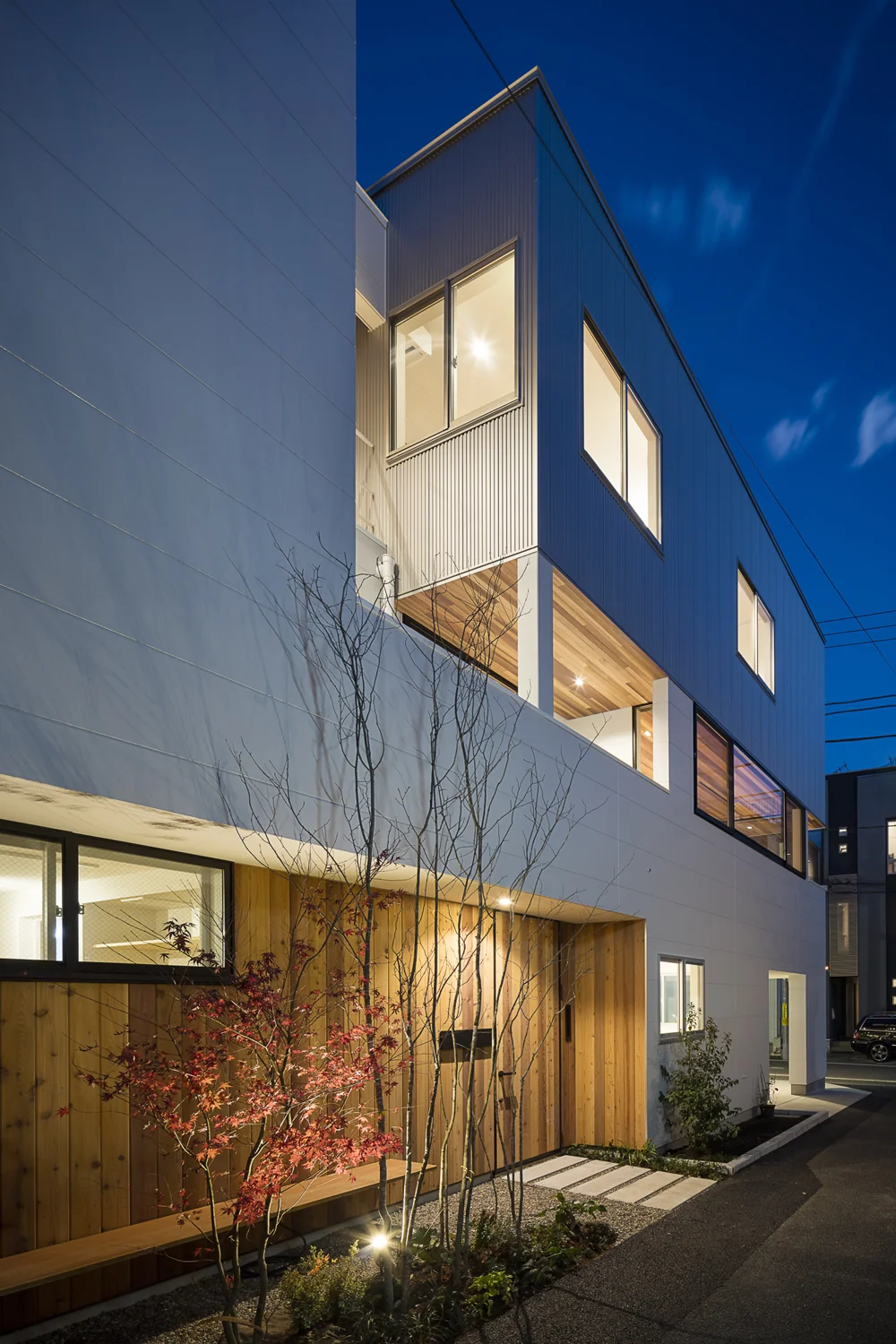
The cutout in the second-floor drying balcony fosters a sense of connection between the two households while preserving their individual presence.
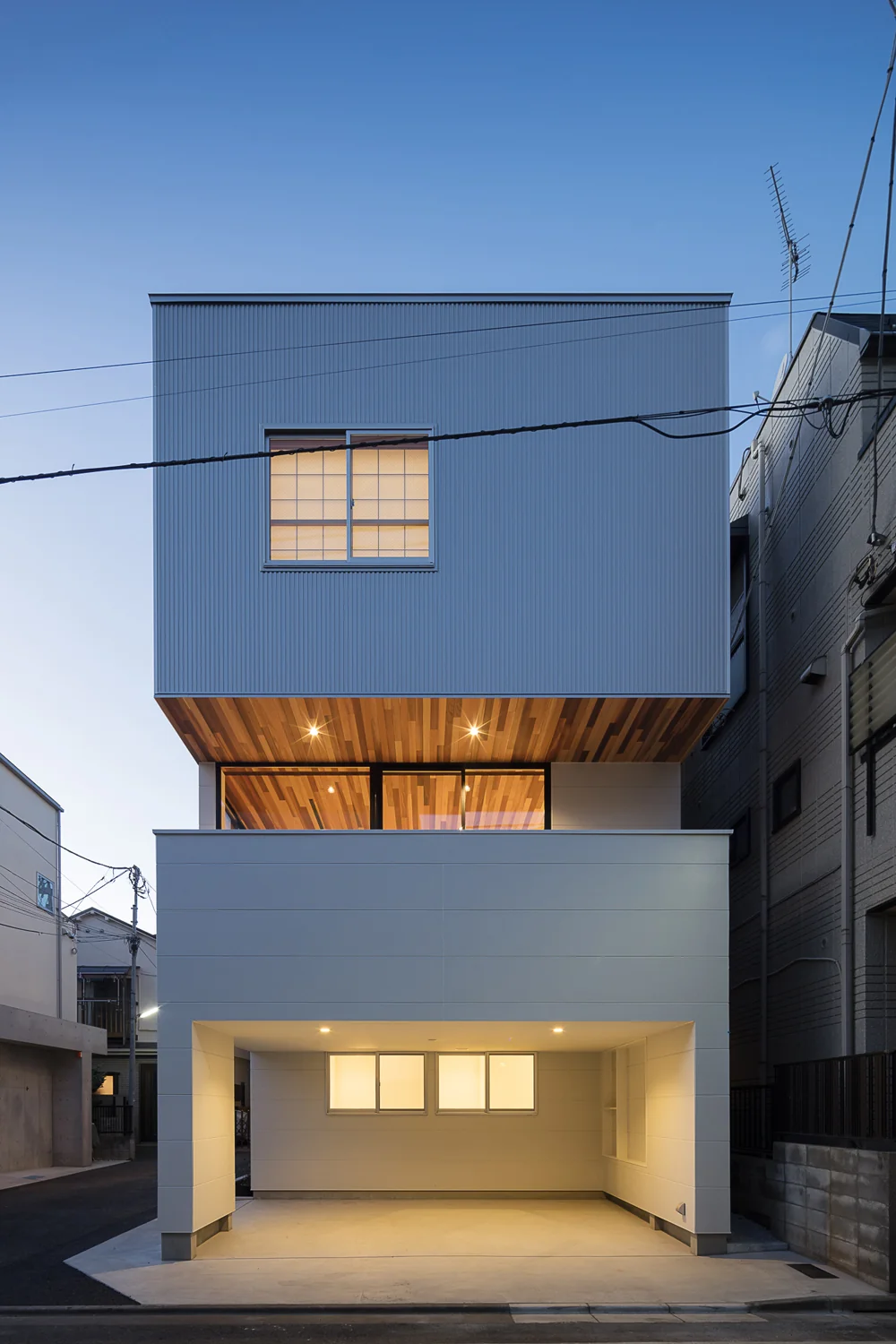
The third-floor box-like form, enabled by the SE structural system, appears to float above the building.
Two-Family House
Terrace
Soundproof Room
Inner Garage
TwoFamilyHouse
Terrace
SoundproofRoom
IndoorGarage
Seiichi Osawa, 15:Archiplace
Learn More
This two-family residence is thoughtfully designed to respect the privacy of each household while providing a serene living environment.
Equipped with a home elevator, the parents’ household is situated on the third floor, while the working couple’s household occupies the first and second floors. Each family’s living, dining, and kitchen areas are positioned at the south-facing corner to maximize year-round sunlight and offer expansive views.
The design incorporates outdoor spaces with distinct functions, allowing each household to maintain an appropriate distance for comfortable living while fostering interaction with neighbors. Location: Kita Ward, Tokyo, Japan
Family composition: Younger household — married couple with one child; Parental household — parents
Completion: November 2015
Structure and scale: 3-storey timber structure (SE Construction Method)
Site area: 114.73 m² (34.70 tsubo)
Building footprint (building coverage): 74.53 m² (22.54 tsubo)
Total floor area: 196.39 m² (59.40 tsubo)
Architectural design and supervision: Archiplace Design Office
Structural engineer: NDN (N.D.N.)
Contractor: NEAT Co., Ltd.
Landscaping: TOKUZOU
Notes: Hydronic (hot-water) underfloor heating (TES); residential elevator.
Equipped with a home elevator, the parents’ household is situated on the third floor, while the working couple’s household occupies the first and second floors. Each family’s living, dining, and kitchen areas are positioned at the south-facing corner to maximize year-round sunlight and offer expansive views.
The design incorporates outdoor spaces with distinct functions, allowing each household to maintain an appropriate distance for comfortable living while fostering interaction with neighbors. Location: Kita Ward, Tokyo, Japan
Family composition: Younger household — married couple with one child; Parental household — parents
Completion: November 2015
Structure and scale: 3-storey timber structure (SE Construction Method)
Site area: 114.73 m² (34.70 tsubo)
Building footprint (building coverage): 74.53 m² (22.54 tsubo)
Total floor area: 196.39 m² (59.40 tsubo)
Architectural design and supervision: Archiplace Design Office
Structural engineer: NDN (N.D.N.)
Contractor: NEAT Co., Ltd.
Landscaping: TOKUZOU
Notes: Hydronic (hot-water) underfloor heating (TES); residential elevator.
- Copyright(C)Qurasuki.All Rights Reserved.