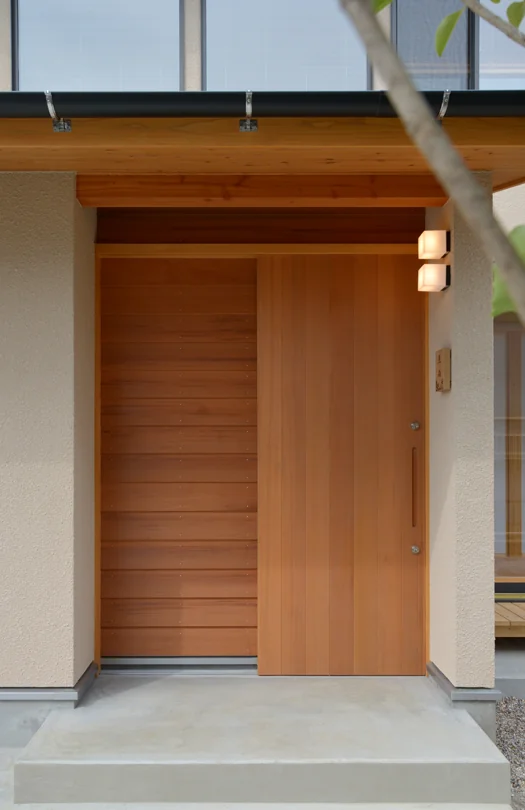
Introducing House on a Flagpole Lot, a custom-built home example by 12mm Architects, a Architect / Design office in 1-1564 Shikenya, Moriyama-ku, Nagoya City, Aichi Prefecture

House on a Flagpole Lot
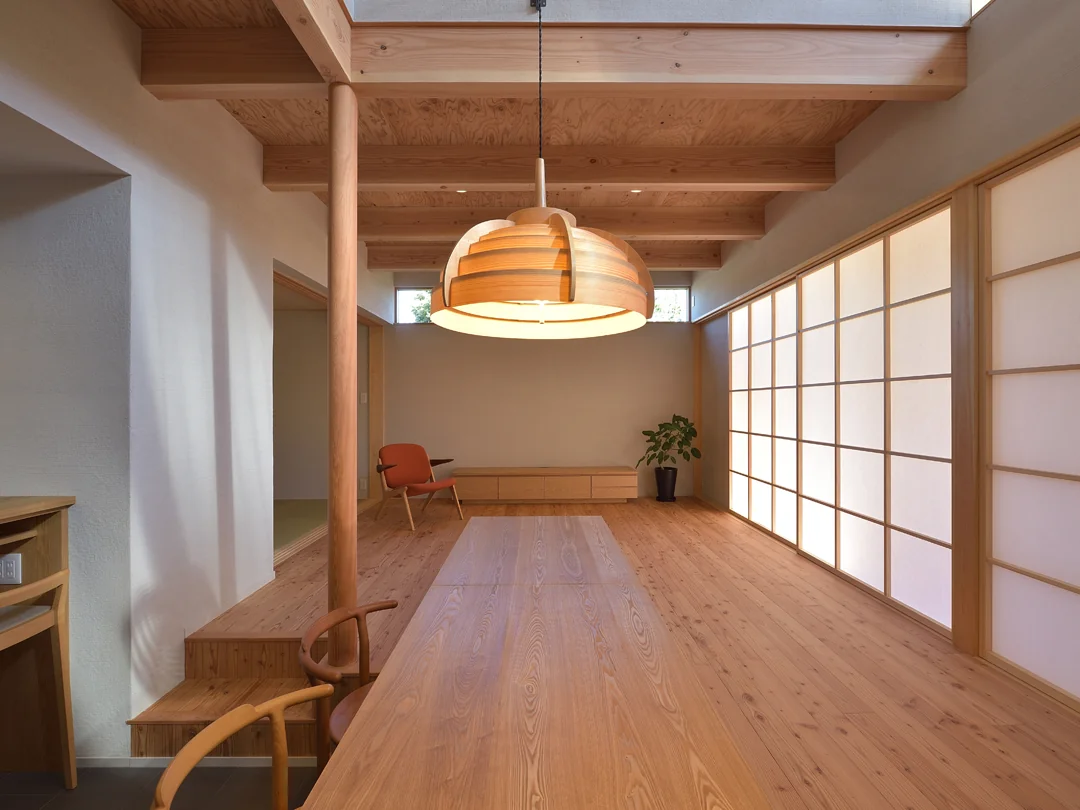
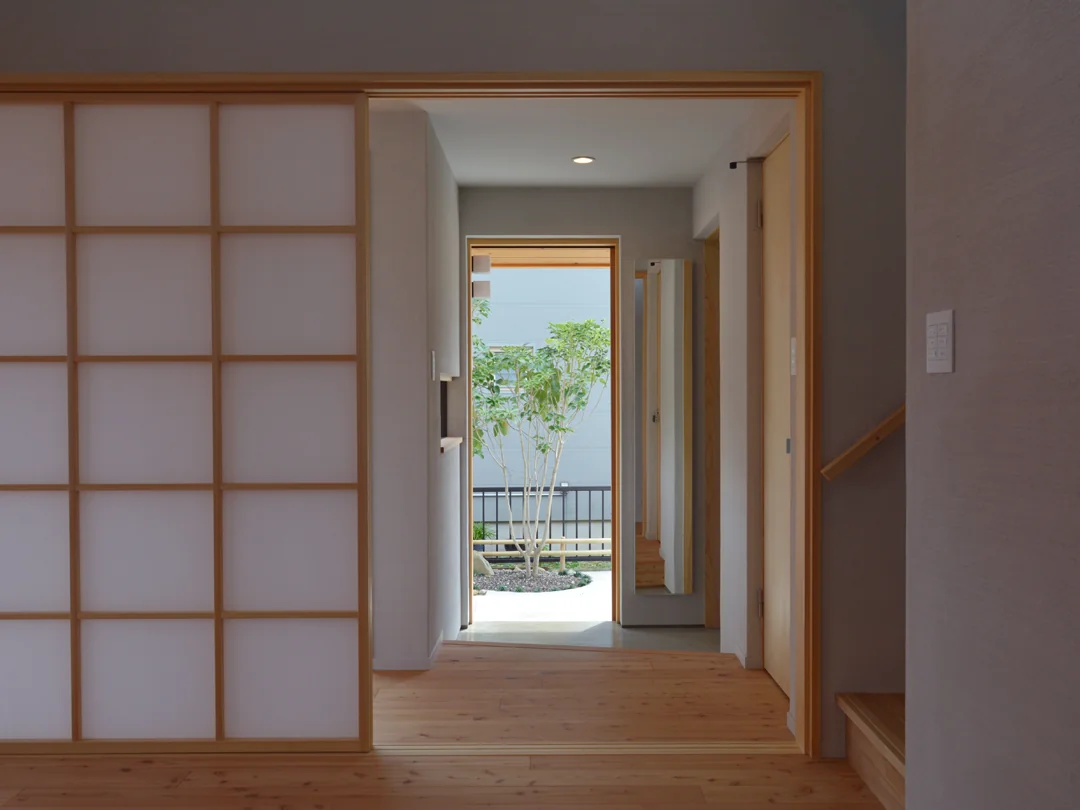
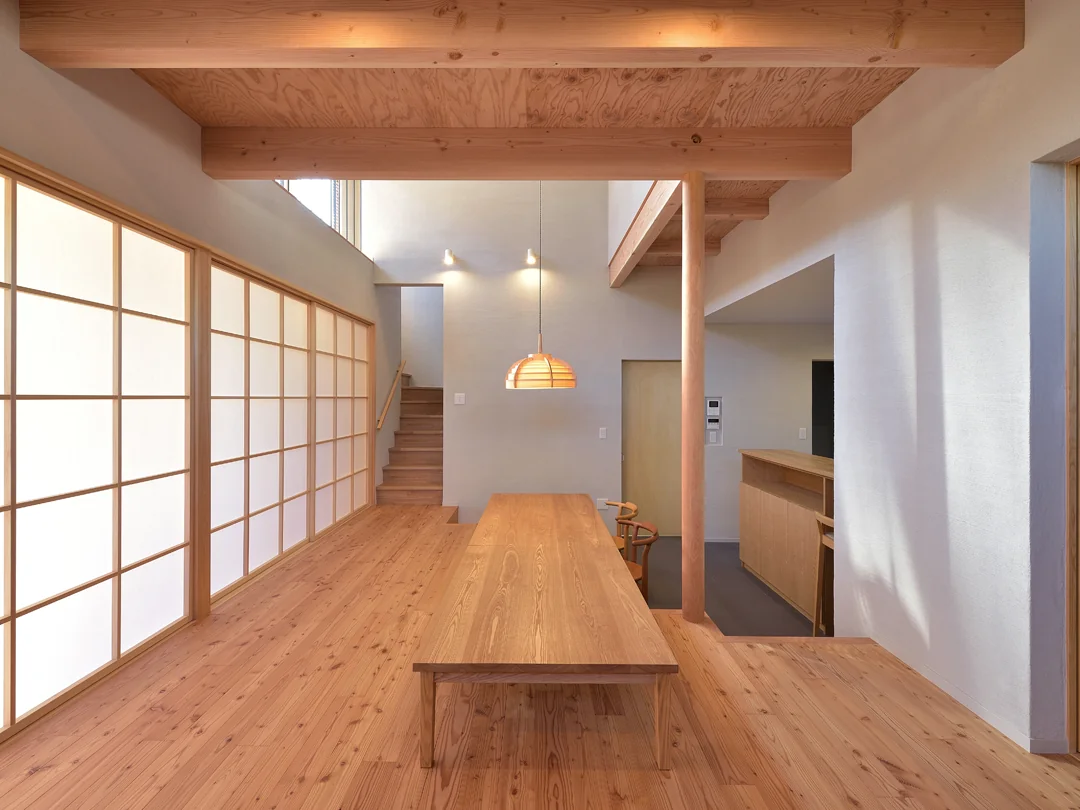
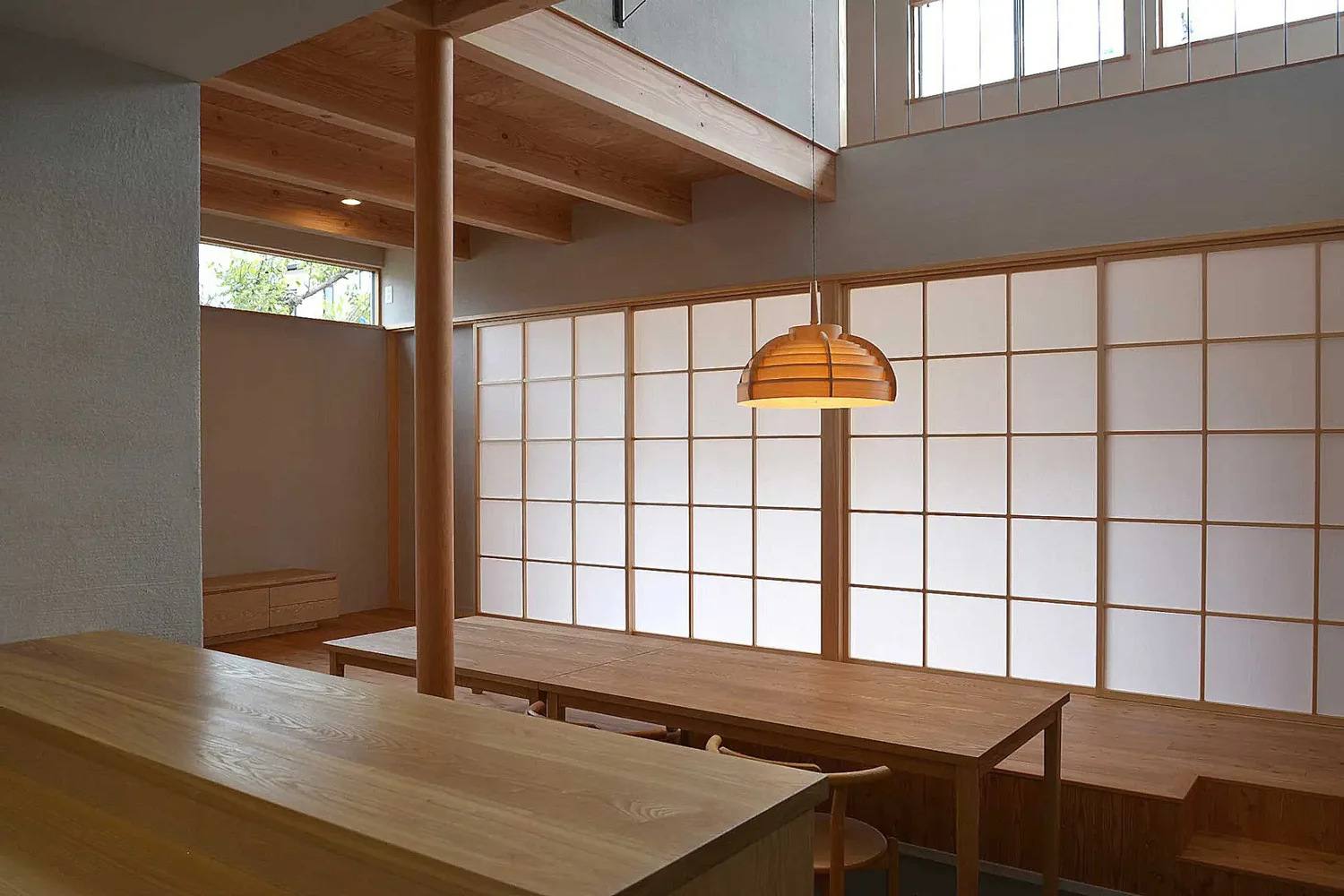
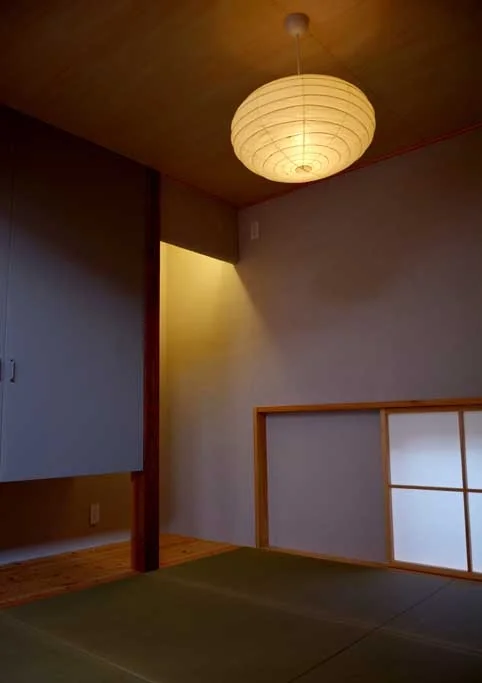
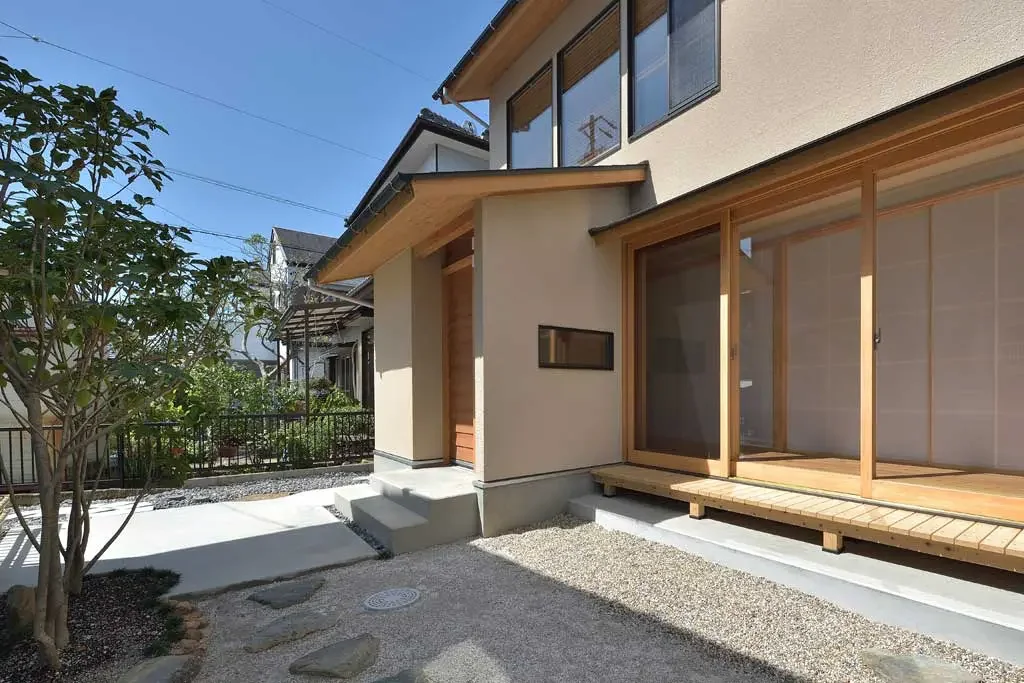
Shoji screens modulate the spatial relationship with the exterior, casting soft shadows within the interior.
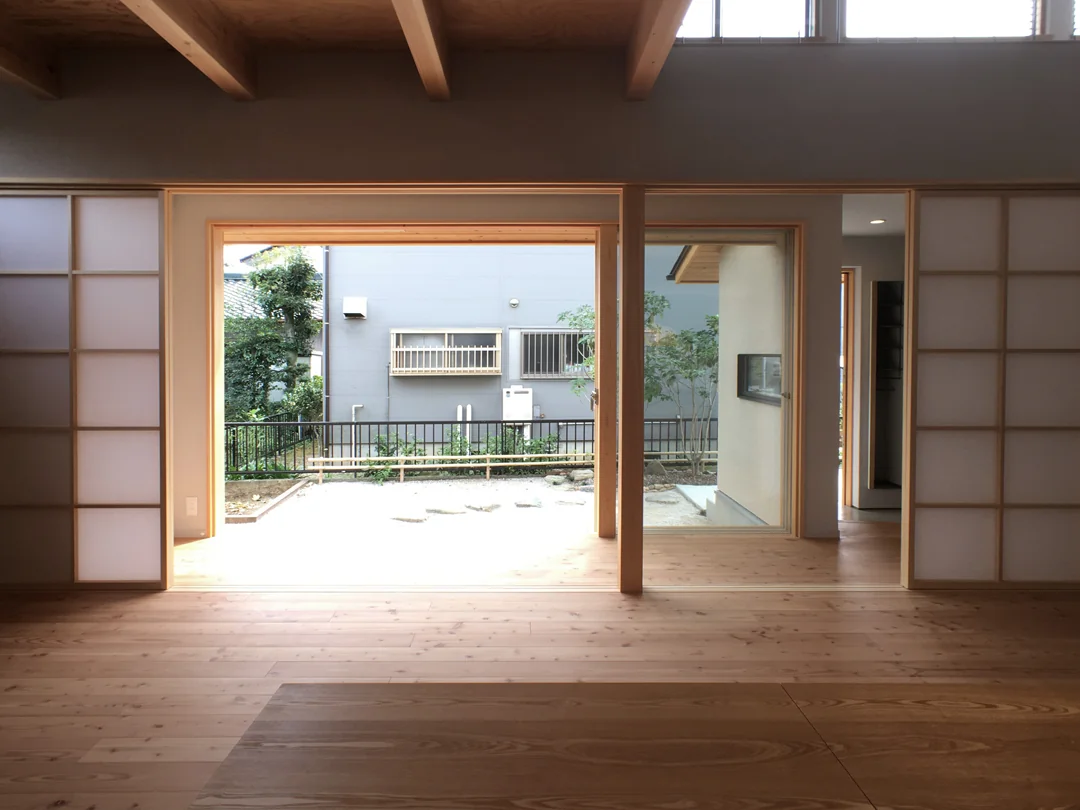
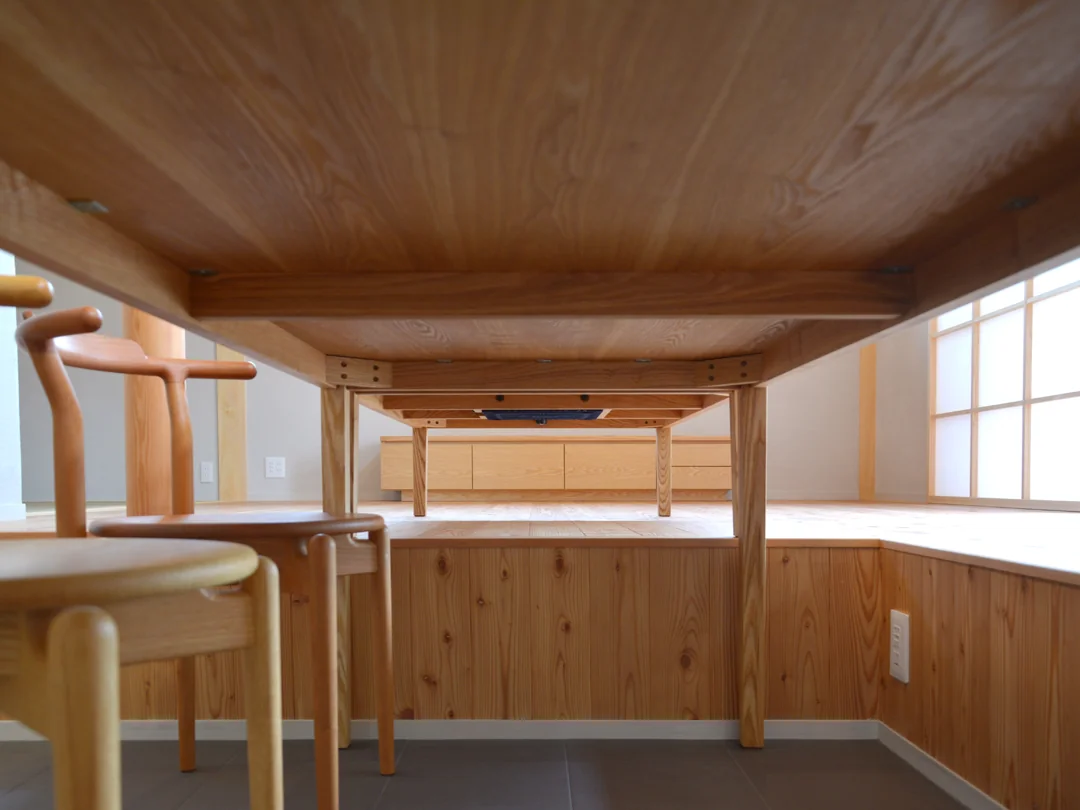
The continuity of living room, dining area, engawa veranda, and exterior wooden deck guides the gaze outward.
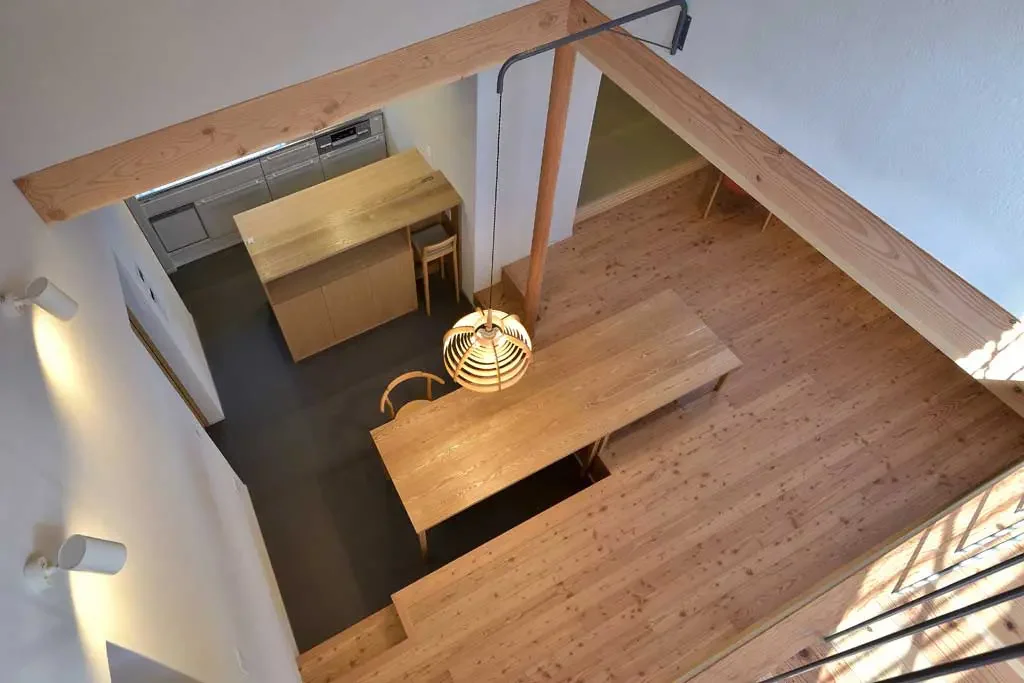
House on a Flagpole Lot
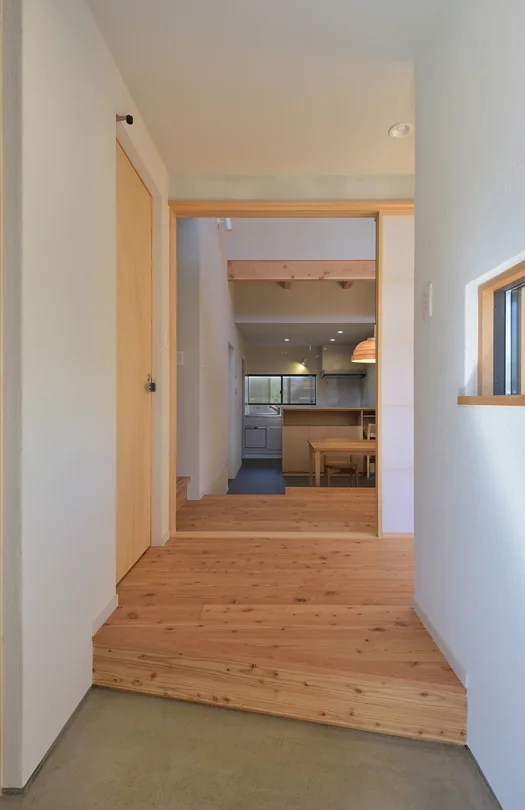
Engawa
Entrance Doma
Shoji
Void
Traditional Japanese House
atrium
shoji
engawa
JapaneseHouse
genkanDoma
Learn More
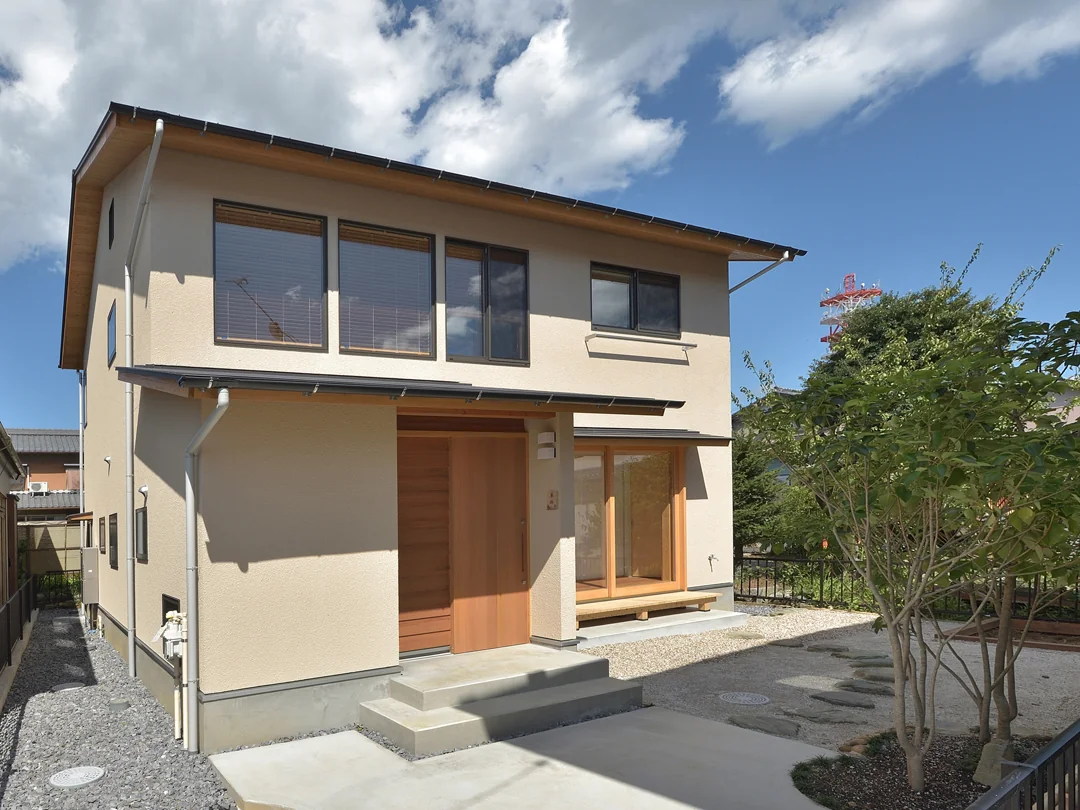
The site is one of five residential plots created 40 to 50 years ago through designation along a specified road, characterized as a flagpole lot—enclosed on all sides by neighboring properties. Inspired by the concept of “a truly luxurious space where openness and privacy coexist,” the project’s central theme was to create a bright, open yet well-protected and comfortable environment. The client family expressed a clear desire for a home embodying the qualities of traditional Japanese living, one that embraces the virtues of Japanese residential architecture.
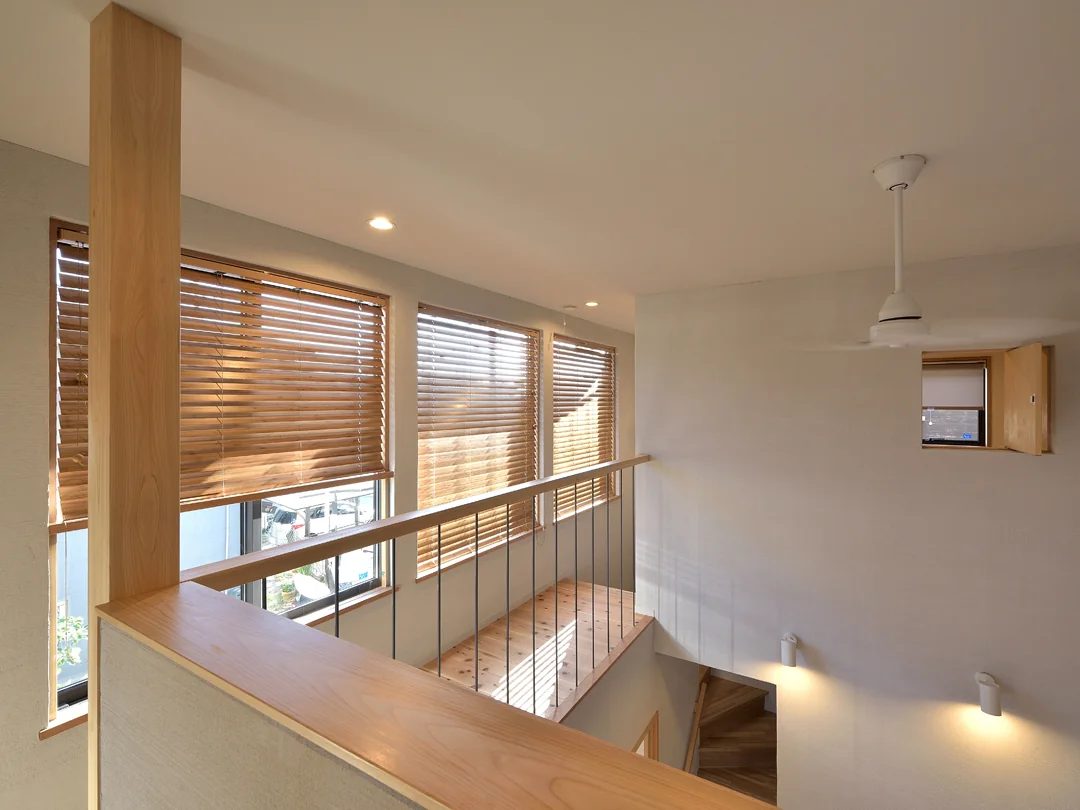
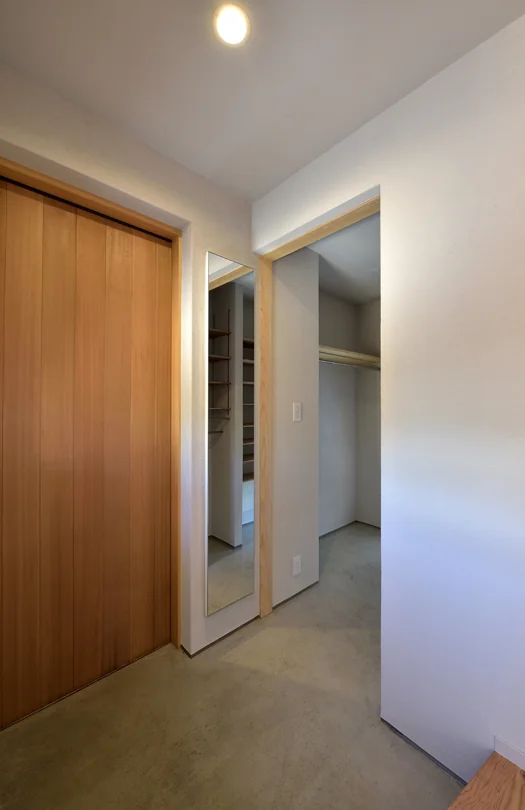
Accordingly, the ground floor is organized around a central dining space where the family gathers. Surrounding this core are the kitchen, tatami room, living room, engawa veranda, entrance, staircase, wet areas, and pantry. The dining and living areas are designed with spatial buffers such as the engawa, shoji screens, and tatami room, allowing modulation of the visual and physical relationship with the exterior. Additionally, a double-height void above the dining area introduces natural light from the second floor, ensuring the space remains bright and expansive even when enclosed.
Adjusting the balance between openness and privacy according to the occupants’ preferences is a customary aspect of Japanese domestic life. This daily modulation fosters subtle changes within the home’s atmosphere, enriching everyday living through nuanced spatial experiences. Location: Toyota City, Aichi Prefecture
Type: Private residence
Structure: Timber construction
Floors: 2 above ground
Floor area: 116.78 m²
Accordingly, the ground floor is organized around a central dining space where the family gathers. Surrounding this core are the kitchen, tatami room, living room, engawa veranda, entrance, staircase, wet areas, and pantry. The dining and living areas are designed with spatial buffers such as the engawa, shoji screens, and tatami room, allowing modulation of the visual and physical relationship with the exterior. Additionally, a double-height void above the dining area introduces natural light from the second floor, ensuring the space remains bright and expansive even when enclosed.
Adjusting the balance between openness and privacy according to the occupants’ preferences is a customary aspect of Japanese domestic life. This daily modulation fosters subtle changes within the home’s atmosphere, enriching everyday living through nuanced spatial experiences. Location: Toyota City, Aichi Prefecture
Type: Private residence
Structure: Timber construction
Floors: 2 above ground
Floor area: 116.78 m²
- Copyright(C)Qurasuki.All Rights Reserved.