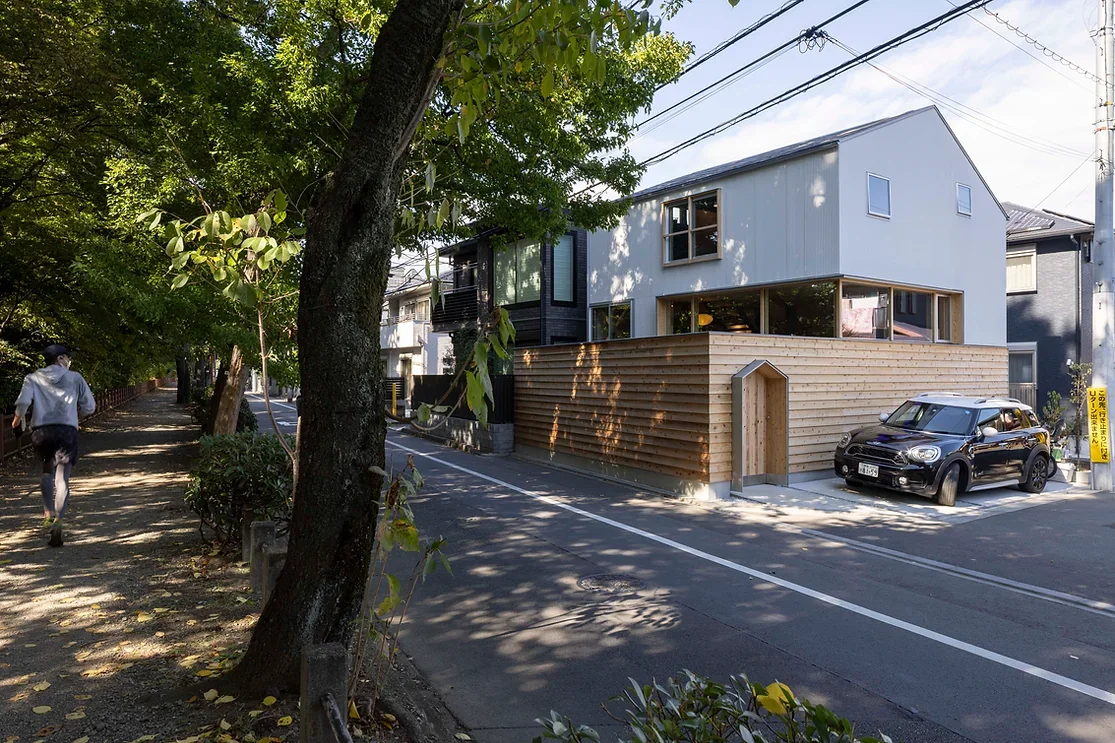
Introducing House Along the Jōsui Canal, a custom-built home example by Atelier Cotocoto, a Architect / Design office in 4 Sekimachiminami, Nerima-ku, Tokyo
House Along the Jōsui Canal
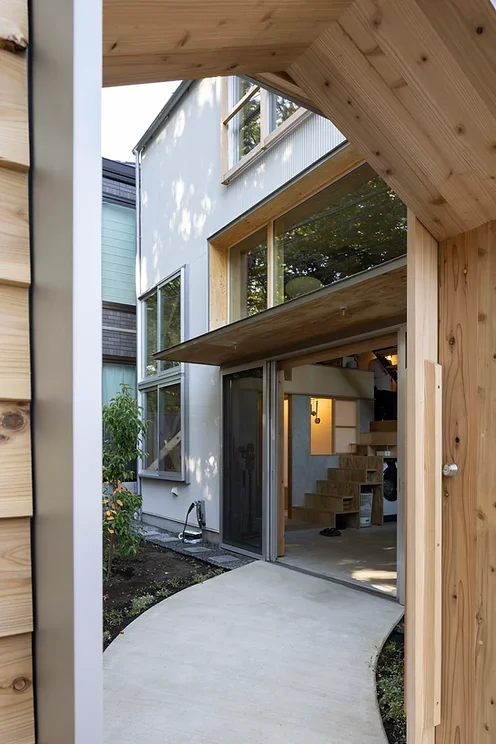
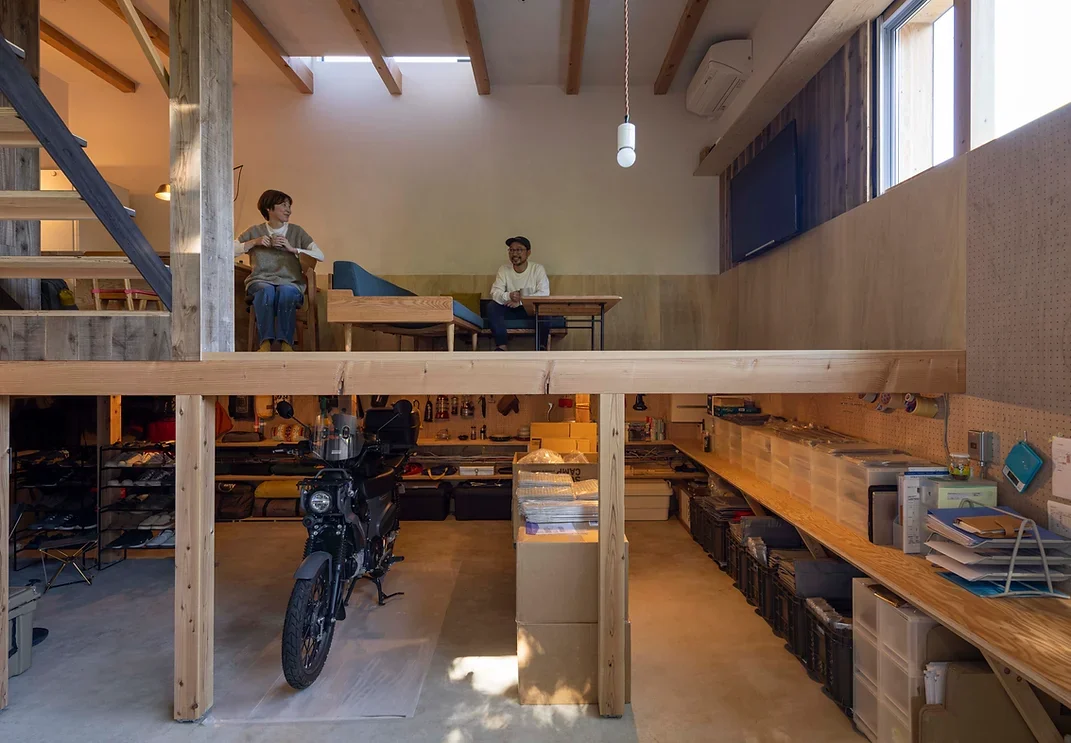
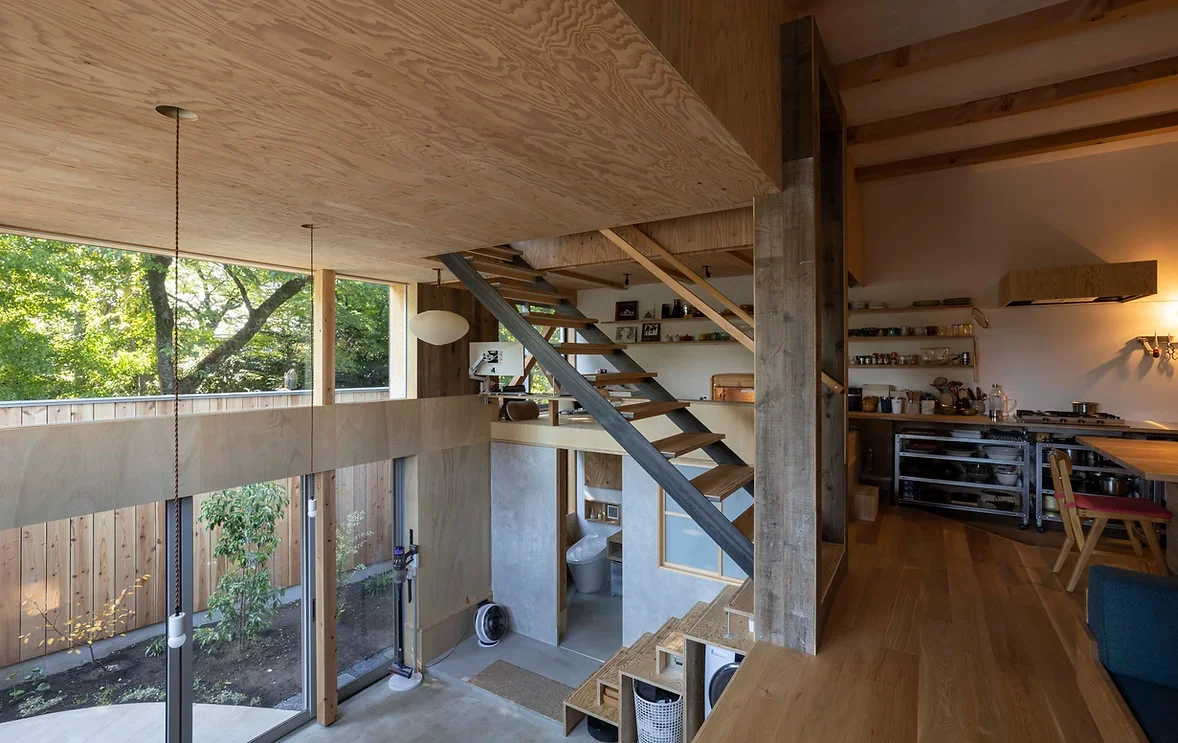
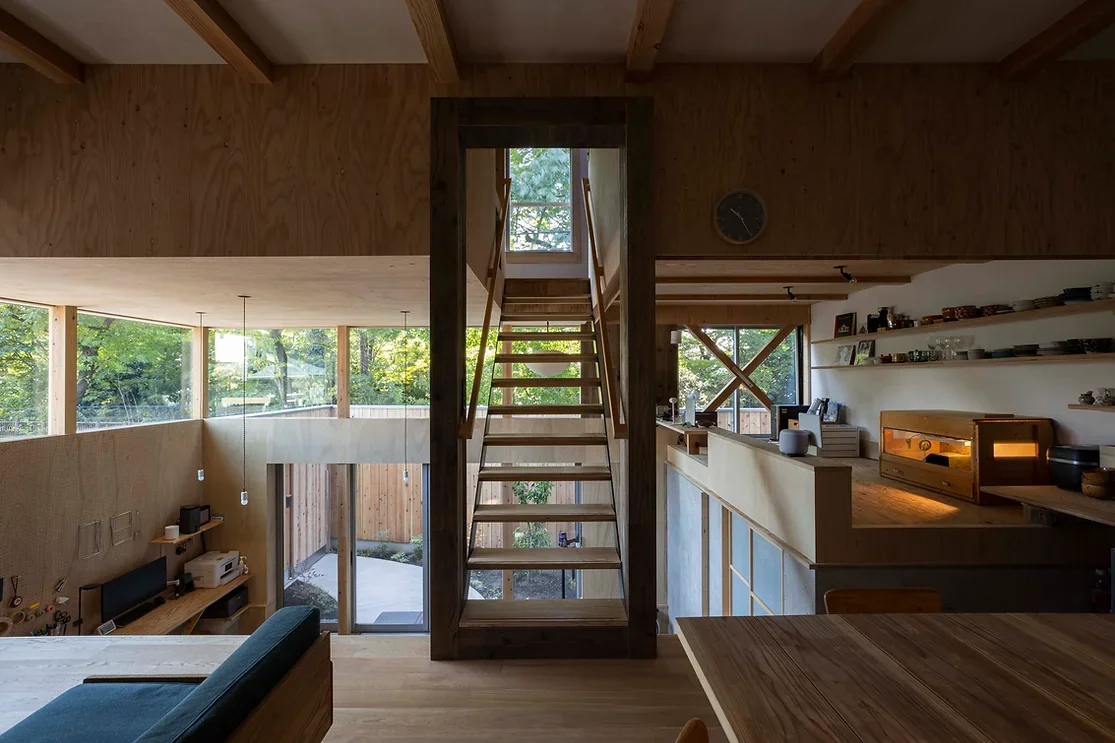
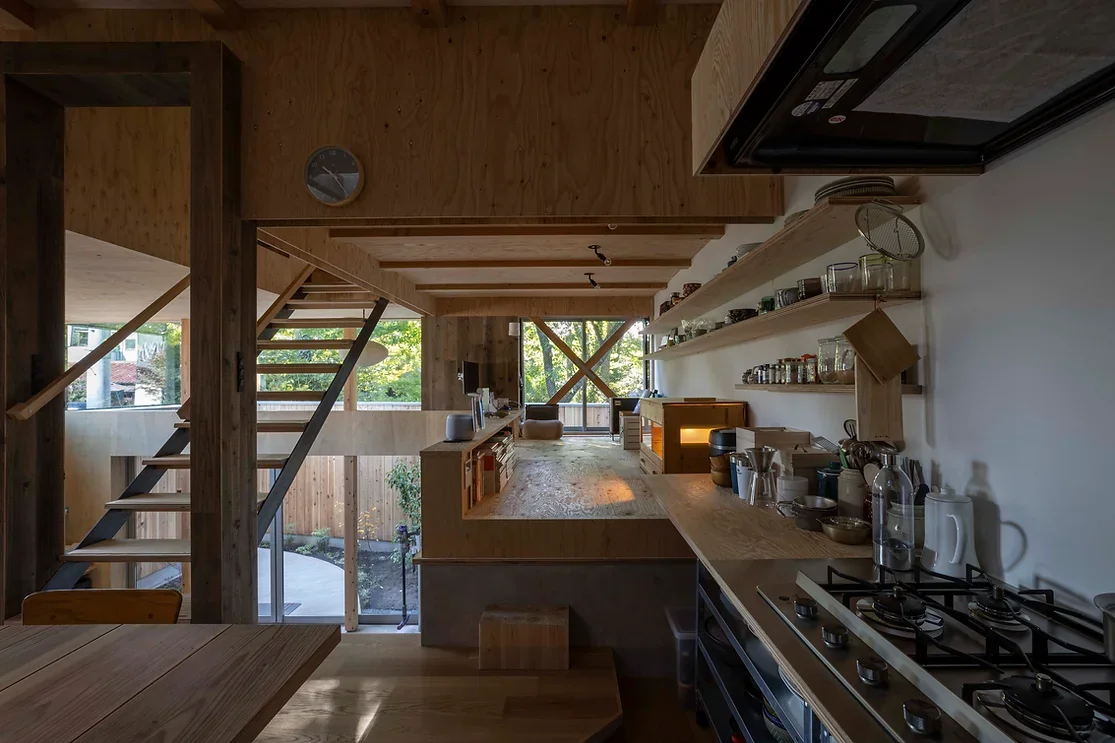
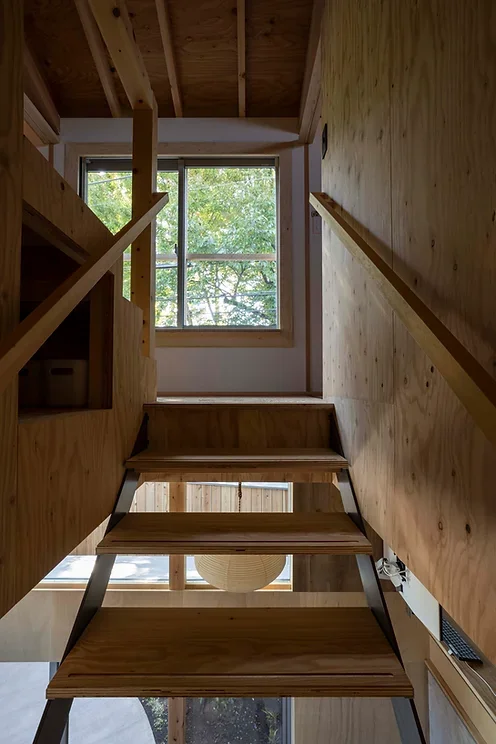
The skip-floor configuration naturally separates workspaces and private areas.
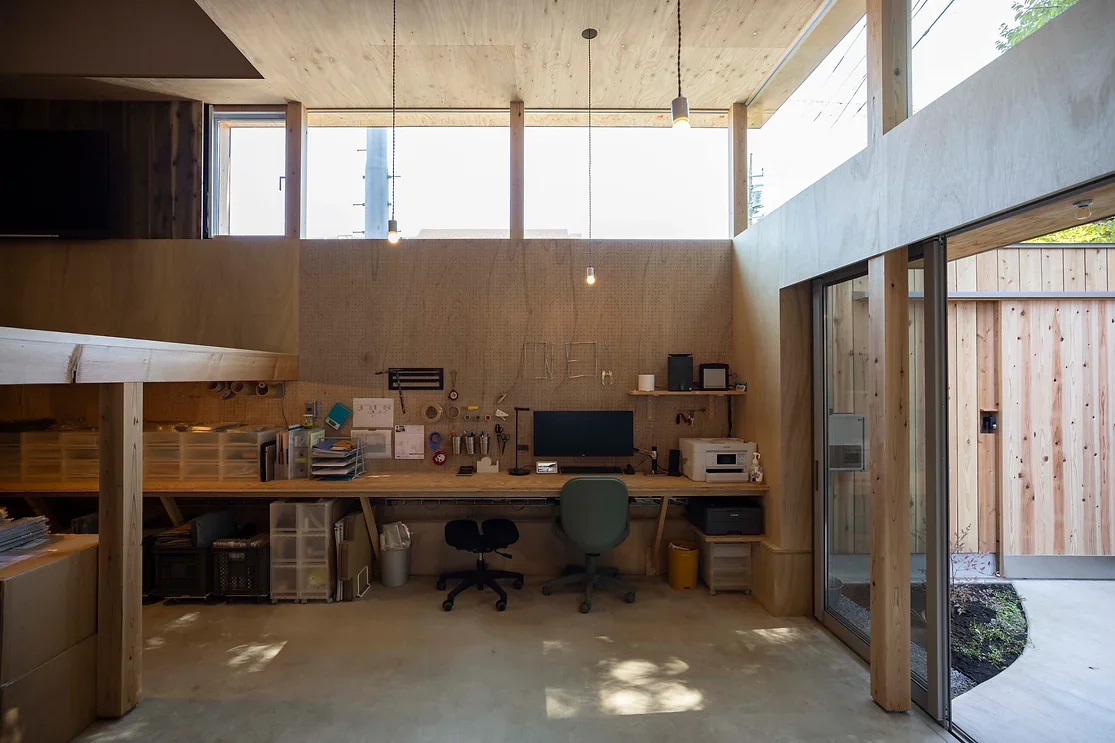
House Along the Jōsui Canal
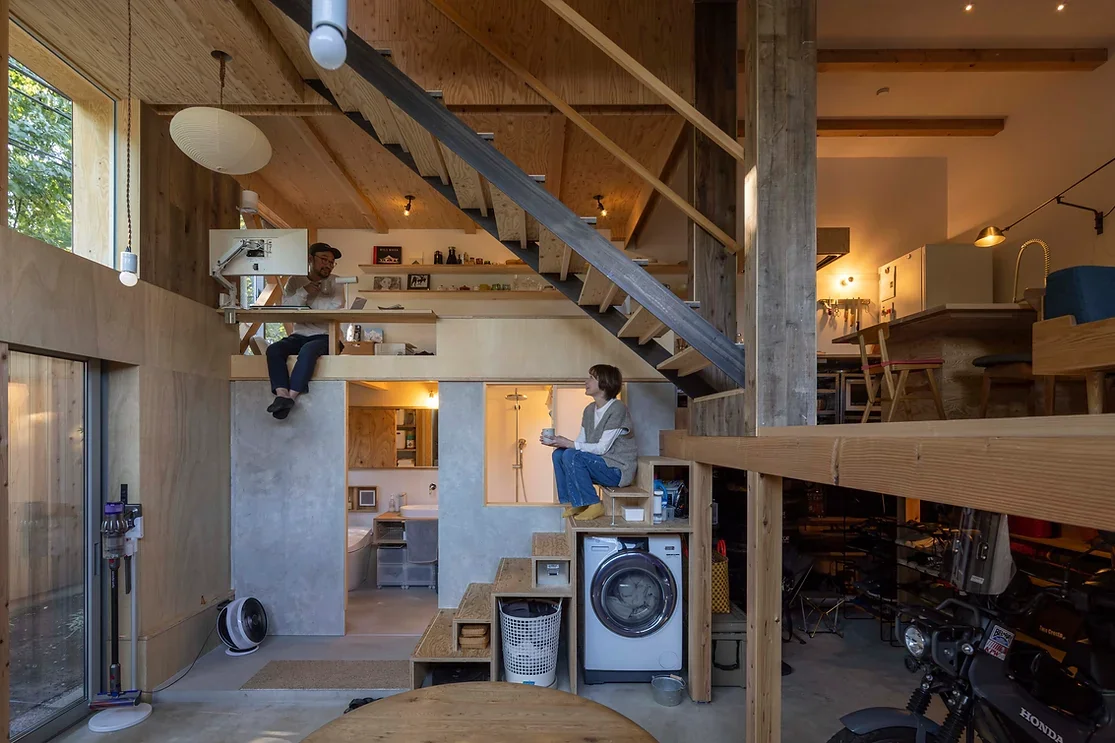
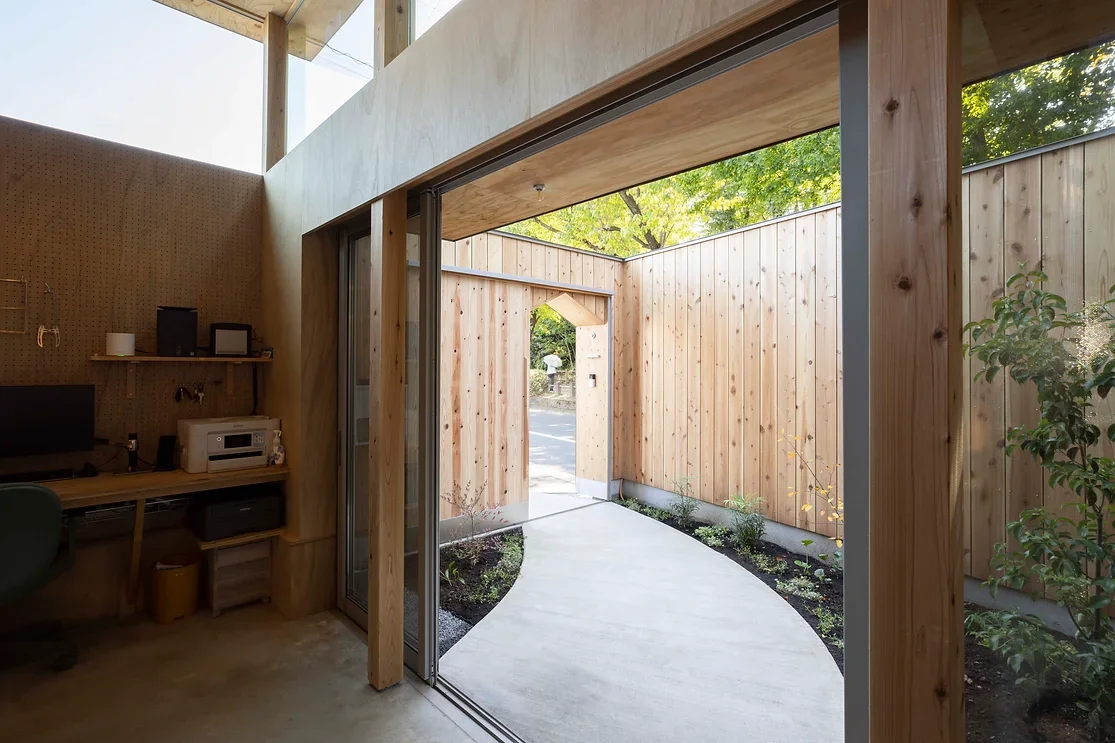
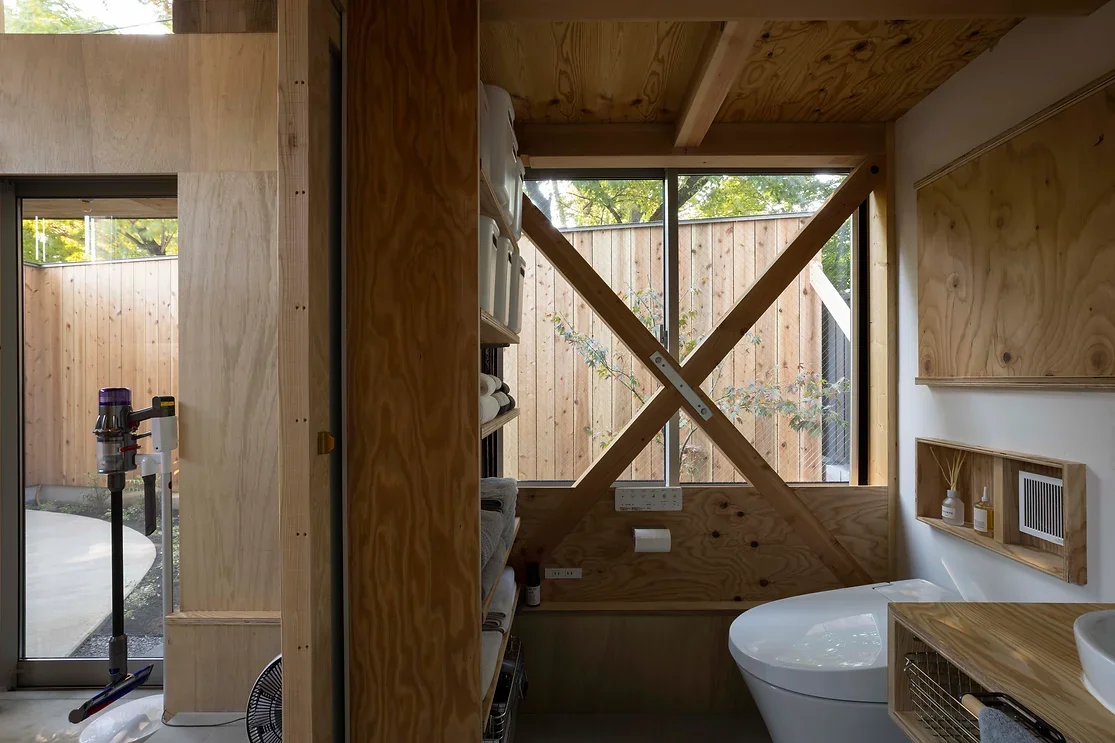
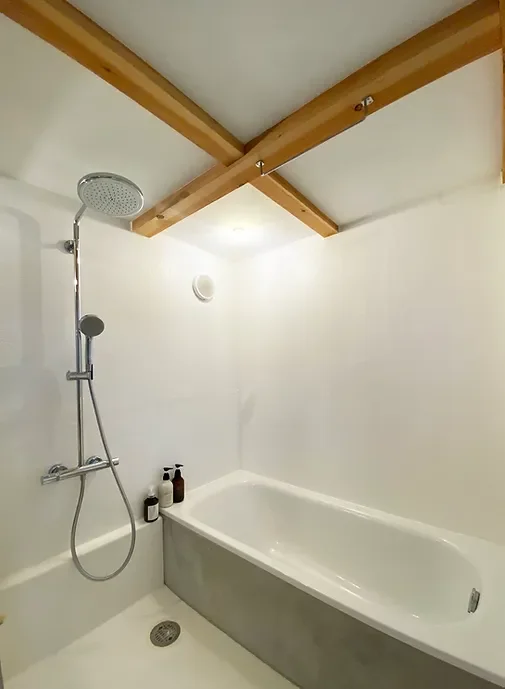
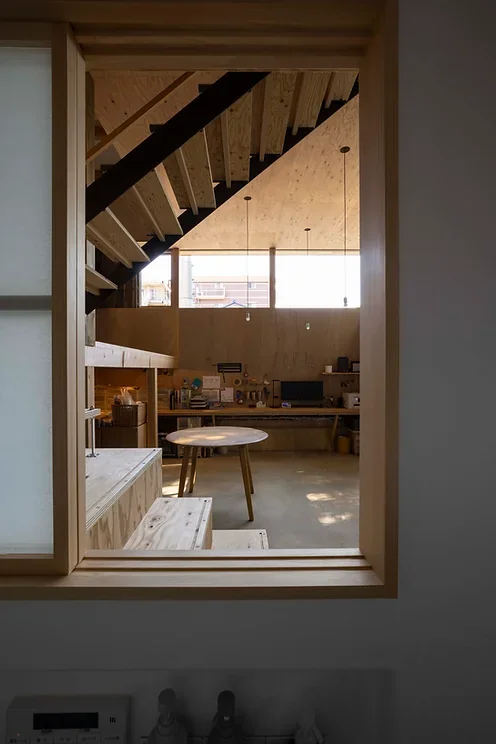
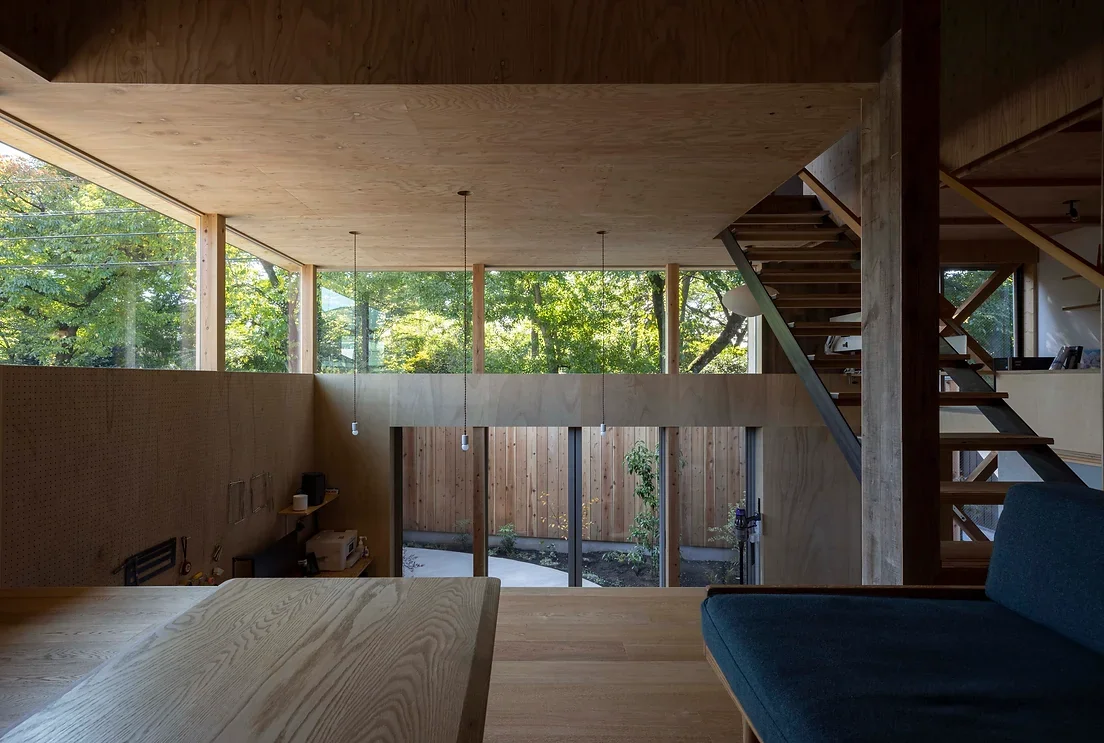
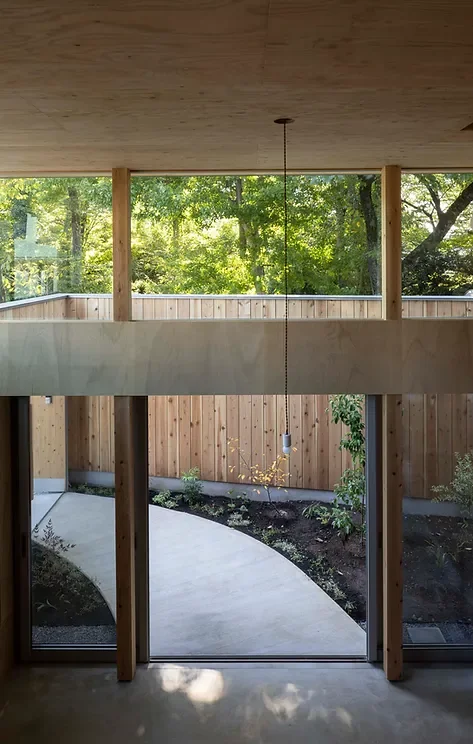
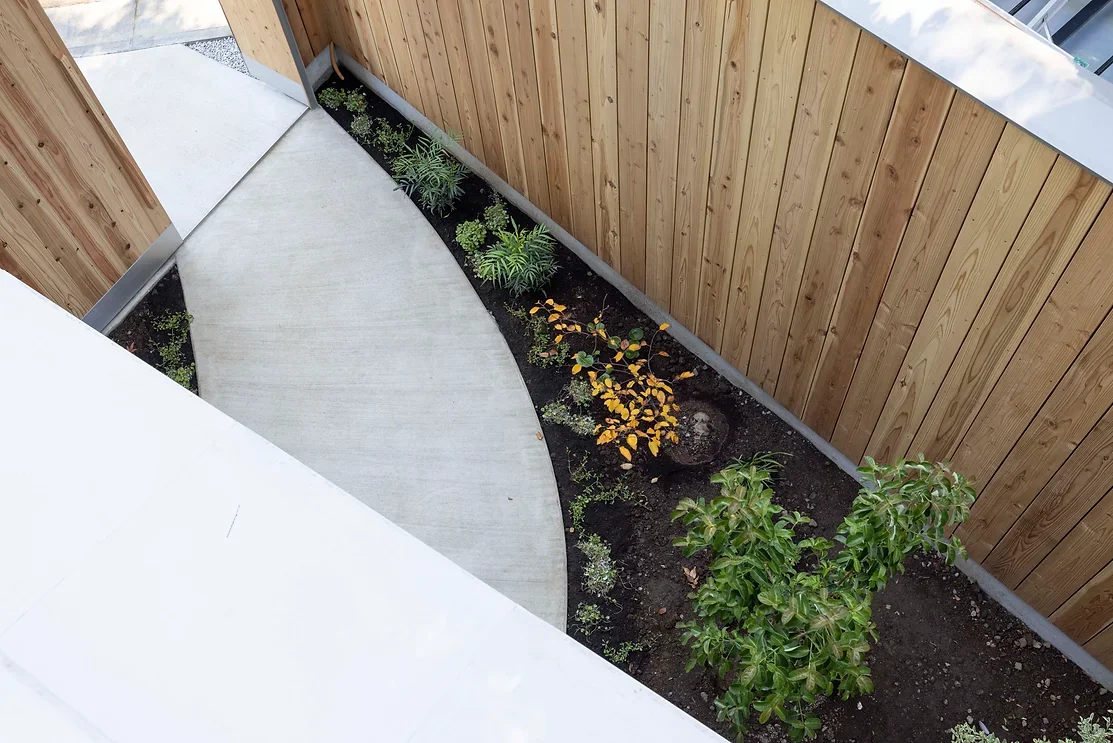
The LDK, elevated half a floor above the earthen level, directs views toward the inner courtyard and the natural scenery along the Jōsui Canal.
House Along the Jōsui Canal
Visual Control
Borrowed Scenery
Skip Floor
Workspace
Natural Modern
Gardening
Live-Work Integration
Continuous Window
House with Doma
Akinobu Kawabe
Learn More
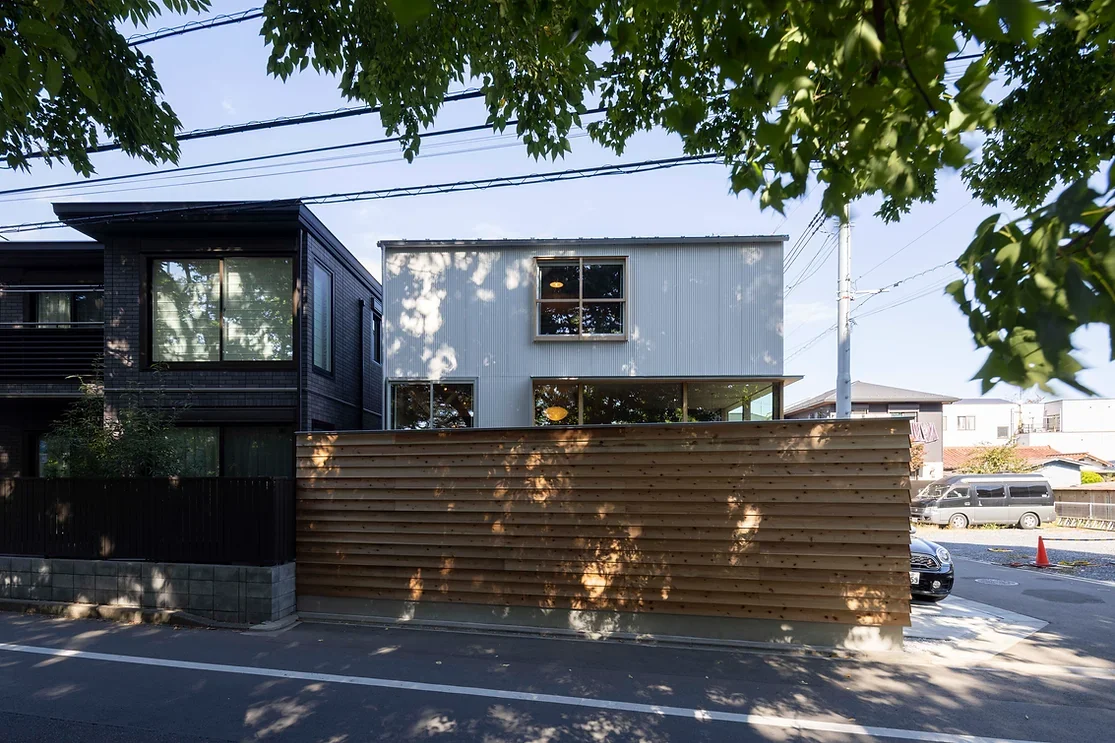
This compact live-work residence is situated along the verdant banks of the Tamagawa Jōsui Canal, an area abundant in natural environment. The design addresses the dual, conflicting requirements of shielding the interiors from the heavy pedestrian traffic along the canal’s greenway—popular for strolling and running throughout the day—while simultaneously fostering a serene interior atmosphere deeply connected to the surrounding nature. Striking a balance between openness and privacy is a perennial challenge in residential design within dense urban contexts.
Moreover, the site is located within a scenic district, subject to regulations mandating setback from property lines and a minimum percentage of green coverage. When factoring in necessary parking spaces and other functional requirements, the resulting building footprint was insufficient to accommodate all essential rooms for this live-work plan, which demands separate workspaces for both spouses.
To resolve this, the design employs a high-ceilinged, open-plan interior subdivided vertically into three staggered floor levels—comprising an earthen floor with underfloor storage, the main living-dining-kitchen (LDK) area, and a raised tatami platform—arranged as a series of skip floors. This spatial configuration creates subtle, invisible boundaries between the spouses’ respective work zones and private areas. The interconnectedness with a slight degree of separation fosters an ideal spatial relationship.
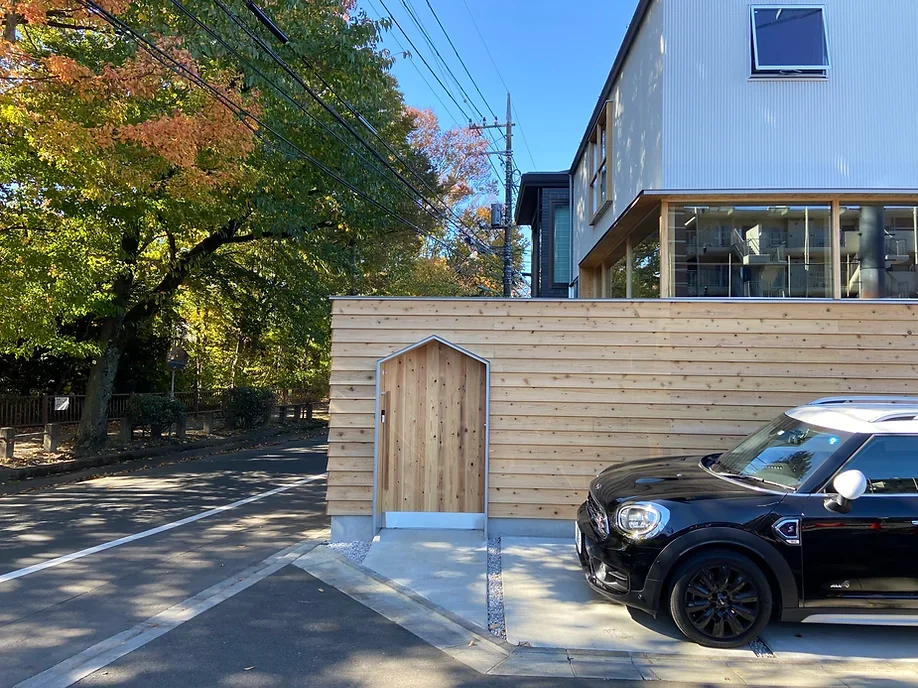
From the LDK, which is elevated half a floor above the earthen space, one can overlook a secluded inner courtyard enclosed by wooden fences. This arrangement effectively screens views from the exterior while preserving unobstructed sightlines toward the natural greenery along the canal, free from visual intrusion by utility wires or other artificial elements.
By carefully interpreting and selectively engaging with the surrounding environment, and by proactively opening the architecture outward, the project secures a generous and rich living space despite a modest building footprint of merely 45 square meters (approximately 13.6 tsubo). This spatial generosity transcends what can be measured numerically.
In an era marked by dramatically increased time spent at home due to the COVID-19 pandemic, and with shifting demands on residential environments, this house exemplifies the potential of small urban dwellings to meet contemporary lifestyle needs.
Moreover, the site is located within a scenic district, subject to regulations mandating setback from property lines and a minimum percentage of green coverage. When factoring in necessary parking spaces and other functional requirements, the resulting building footprint was insufficient to accommodate all essential rooms for this live-work plan, which demands separate workspaces for both spouses.
To resolve this, the design employs a high-ceilinged, open-plan interior subdivided vertically into three staggered floor levels—comprising an earthen floor with underfloor storage, the main living-dining-kitchen (LDK) area, and a raised tatami platform—arranged as a series of skip floors. This spatial configuration creates subtle, invisible boundaries between the spouses’ respective work zones and private areas. The interconnectedness with a slight degree of separation fosters an ideal spatial relationship.
From the LDK, which is elevated half a floor above the earthen space, one can overlook a secluded inner courtyard enclosed by wooden fences. This arrangement effectively screens views from the exterior while preserving unobstructed sightlines toward the natural greenery along the canal, free from visual intrusion by utility wires or other artificial elements.
By carefully interpreting and selectively engaging with the surrounding environment, and by proactively opening the architecture outward, the project secures a generous and rich living space despite a modest building footprint of merely 45 square meters (approximately 13.6 tsubo). This spatial generosity transcends what can be measured numerically.
In an era marked by dramatically increased time spent at home due to the COVID-19 pandemic, and with shifting demands on residential environments, this house exemplifies the potential of small urban dwellings to meet contemporary lifestyle needs.
- Copyright(C)Qurasuki.All Rights Reserved.