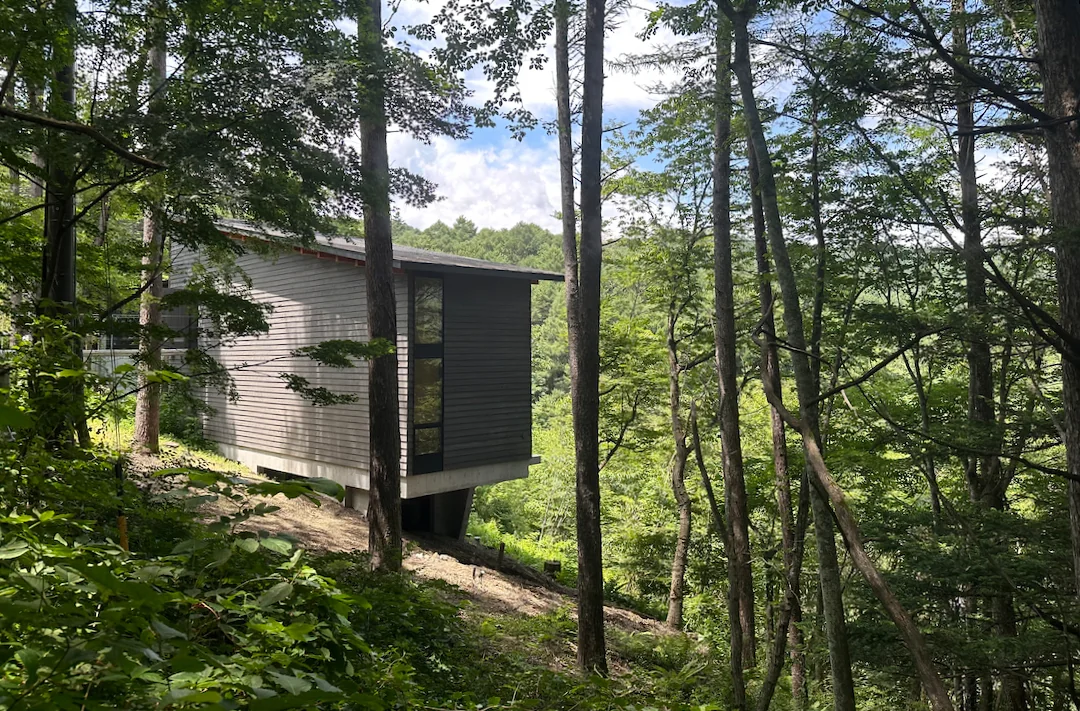
Introducing Karuizawa Terrace, a custom-built home example by Mitsuhiro Kojima Architects, a Architect / Design office in 426-1-101 Higashisin-machi, Ota City, Gunma Prefecture

Interior and exterior walls clad in boards treated with gray persimmon tannin to harmonize with surrounding trees
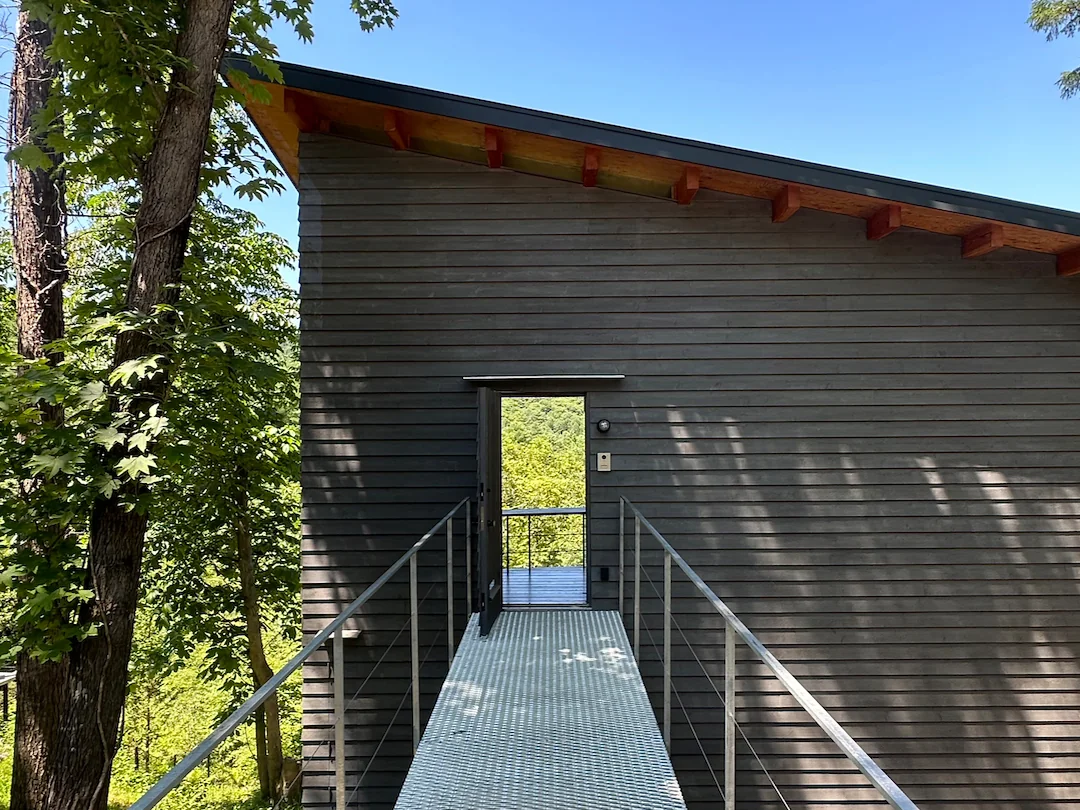
Approach-side exterior walls feature horizontal siding, delineating a clear boundary from everyday life
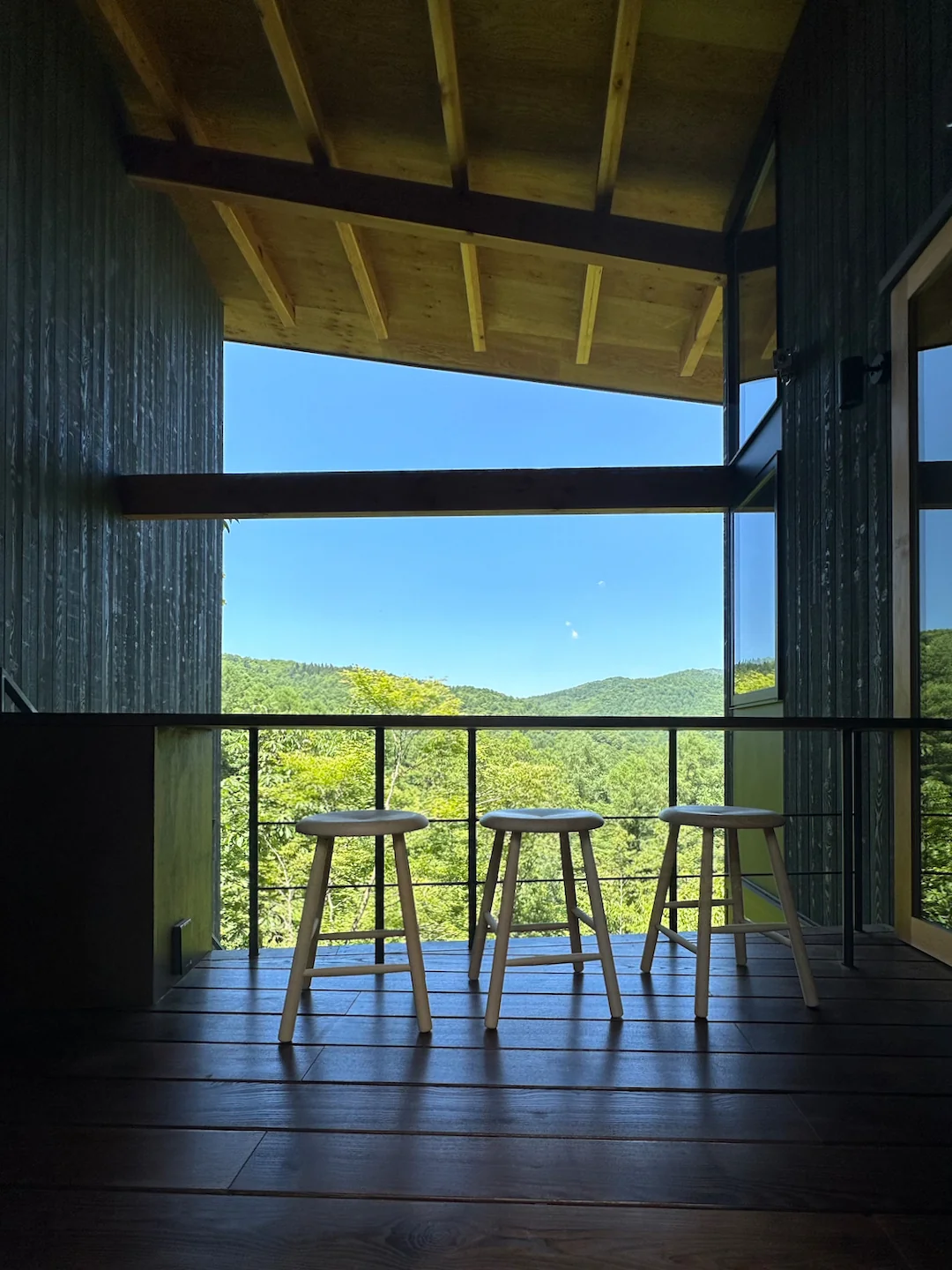
Opening the entrance door leads not to an interior space, but to an open-air atrium oriented toward nature
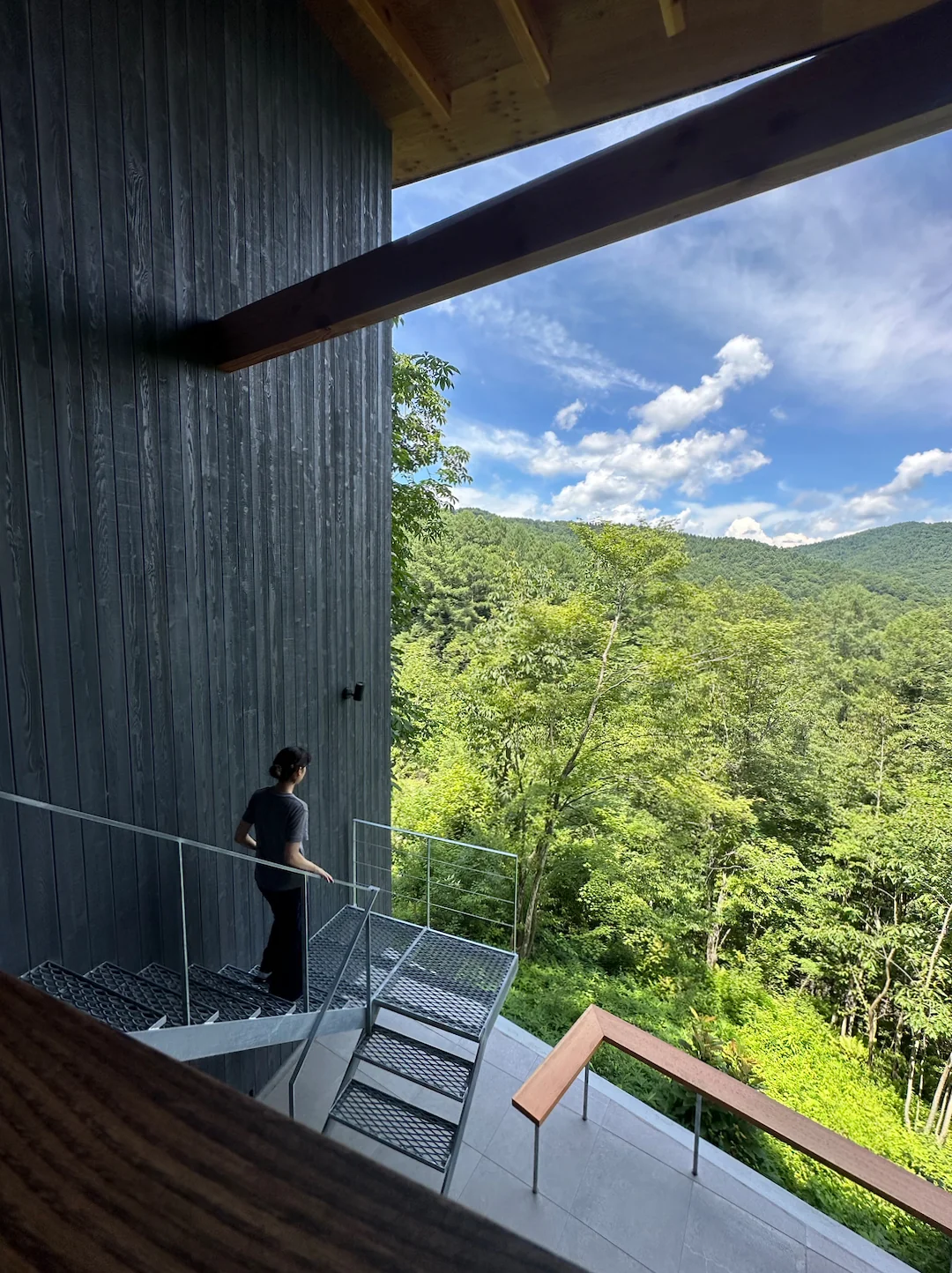
Staircase descending along the slope; the landing provides panoramic views of the landscape and an overview of the entire building
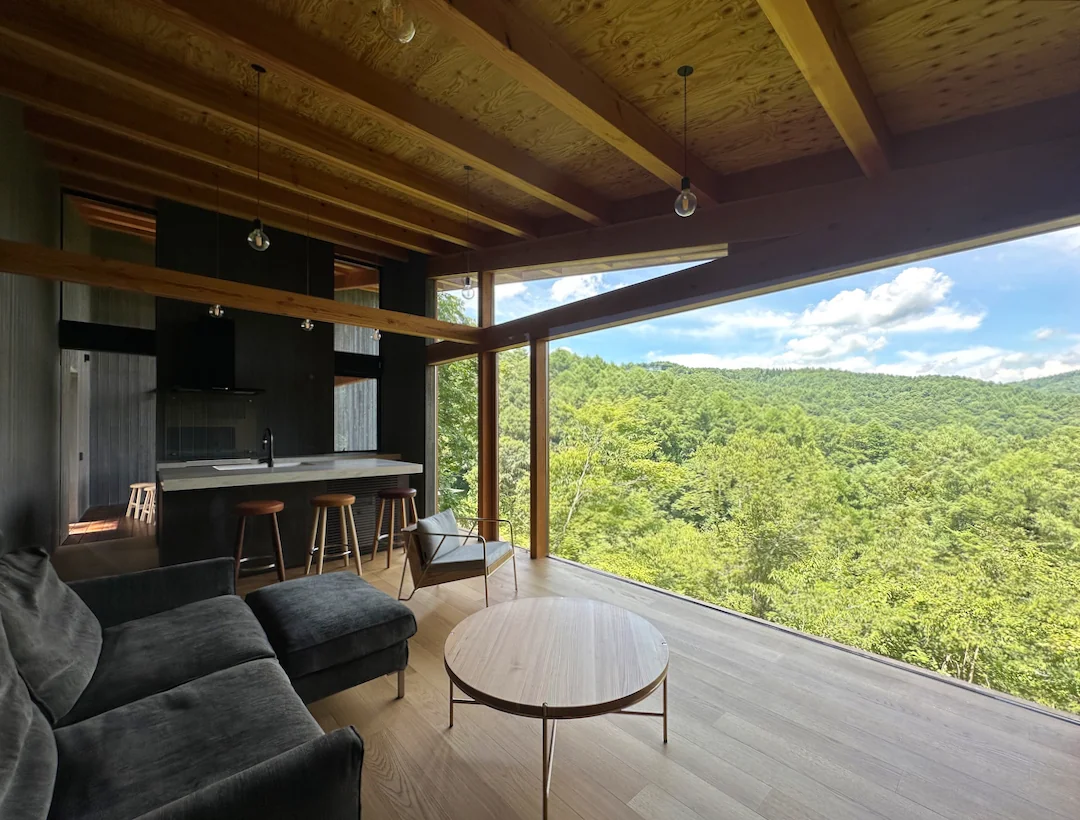
Standing on the valley side evokes a sensation of floating on a terrace without railings
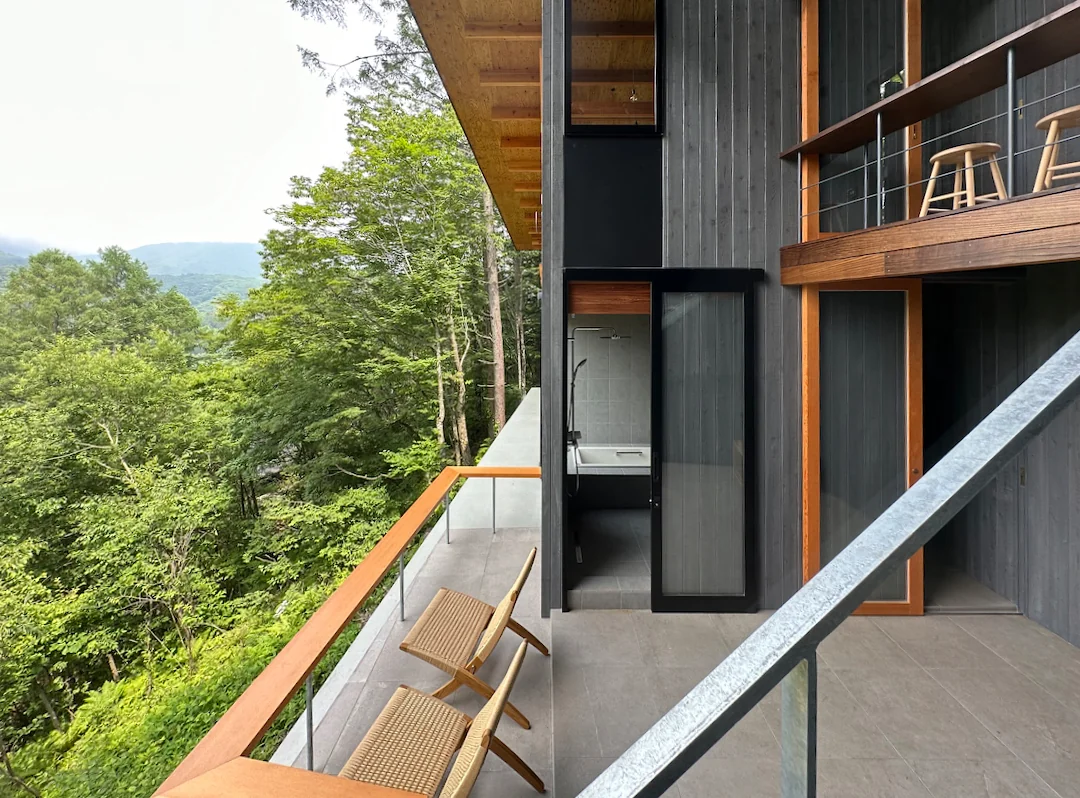
Three terraces vary in orientation, floor height, depth, and ceiling height, each offering a distinct experiential quality
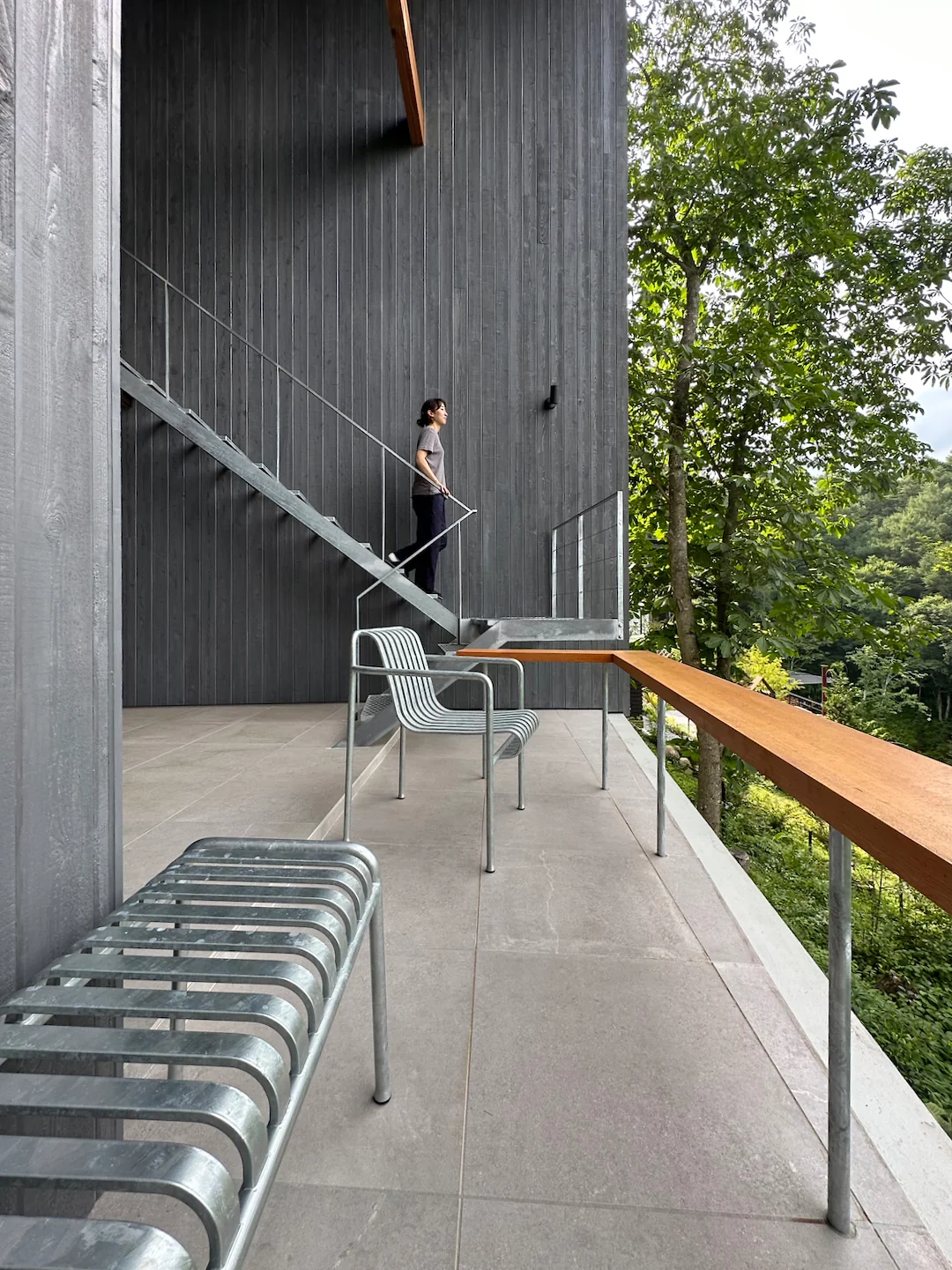
At the counter, one can enjoy wine while gazing at the ridge bathed in sunset light or read while feeling the breeze
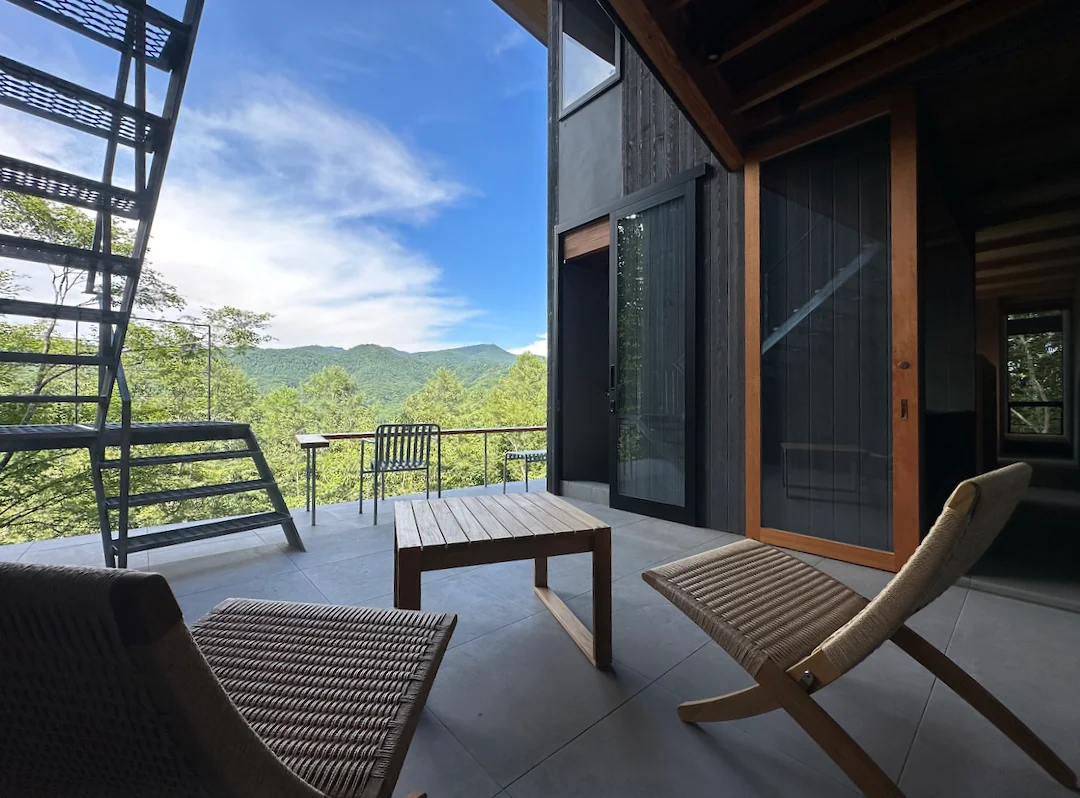
The proximity to the view on the valley side evokes suspension, while the recessed position fosters a sense of security—two sensations expressed through room depth
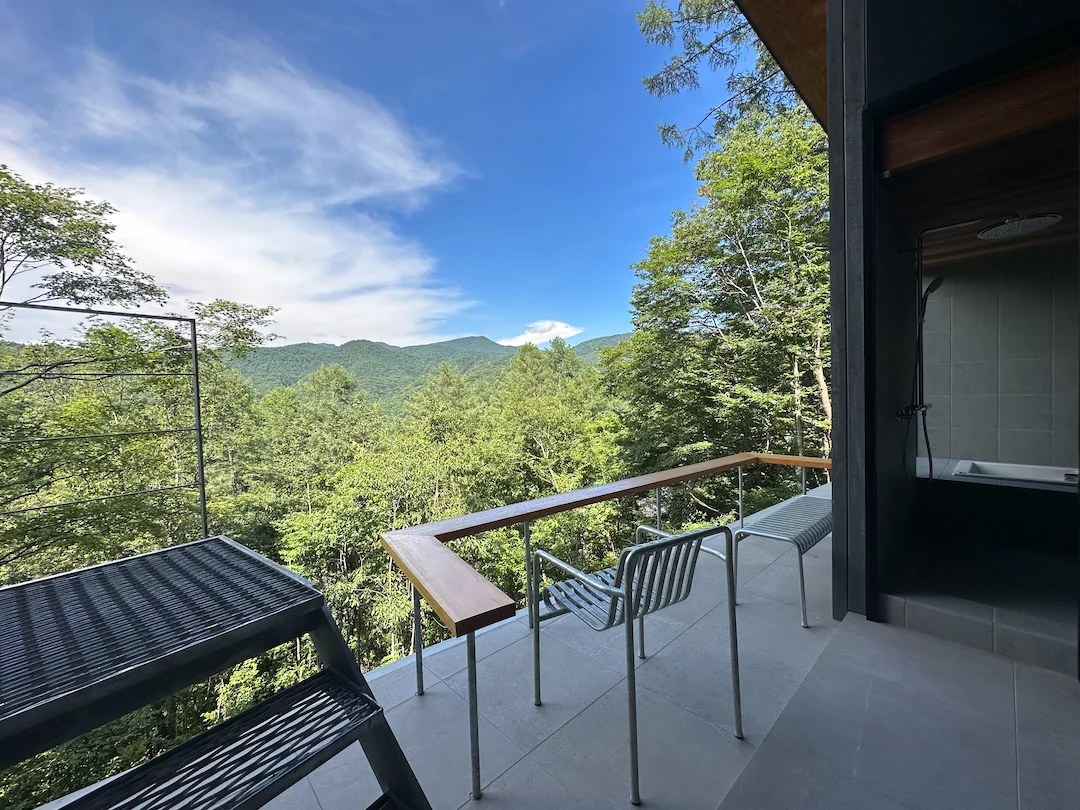
Terrace on the valley side, closest to the scenic vista
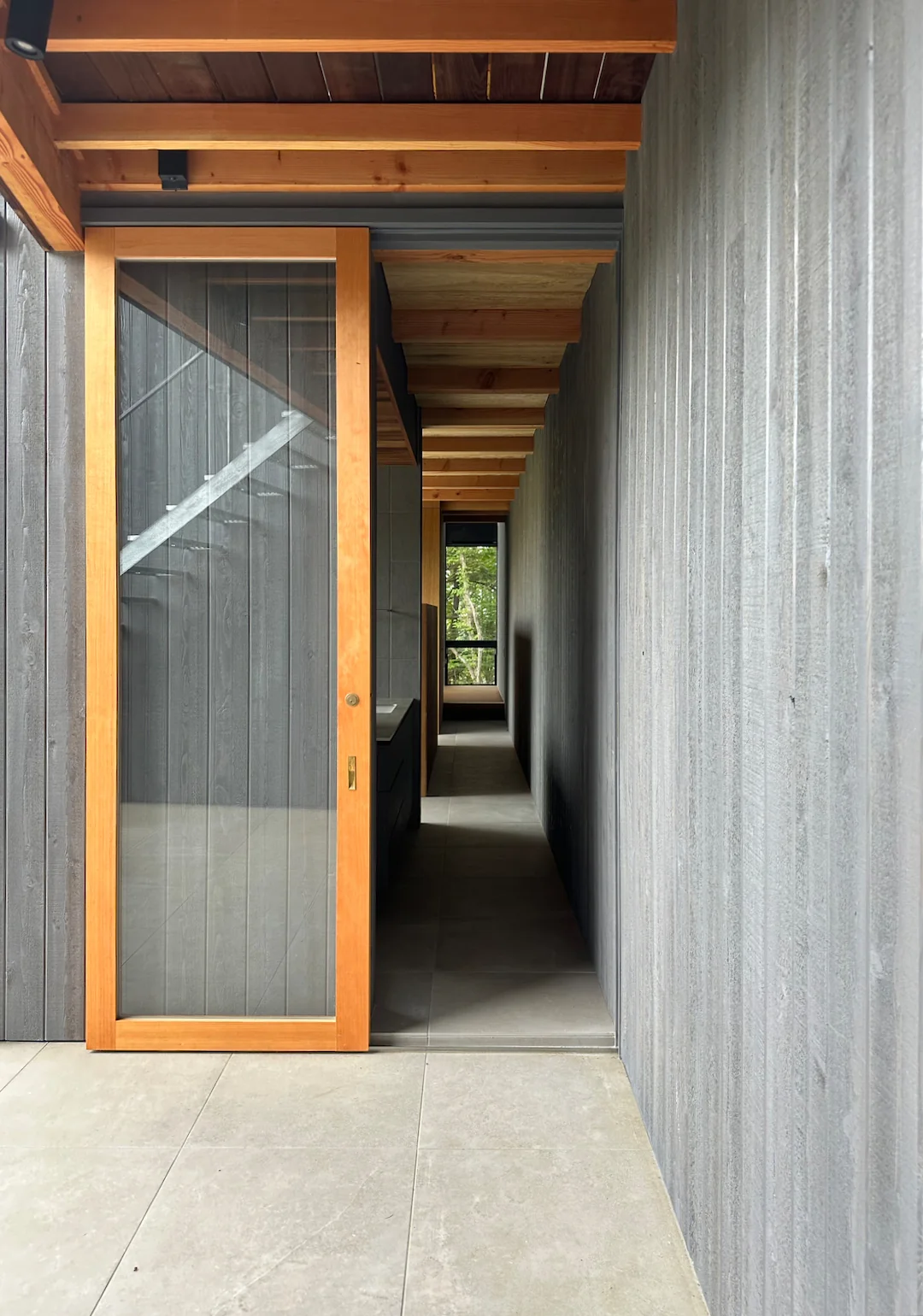
Absence of walls between corridors and rooms allows the scenery to shift continuously as one passes display walls dividing each room
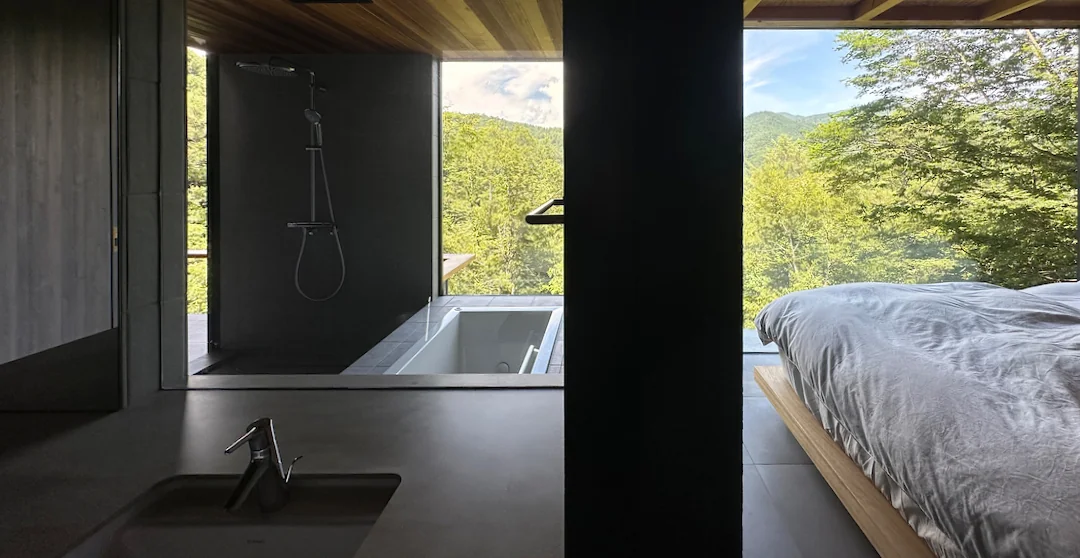
Views transform with every partition wall passed; window aspect ratios and ceiling heights vary room by room
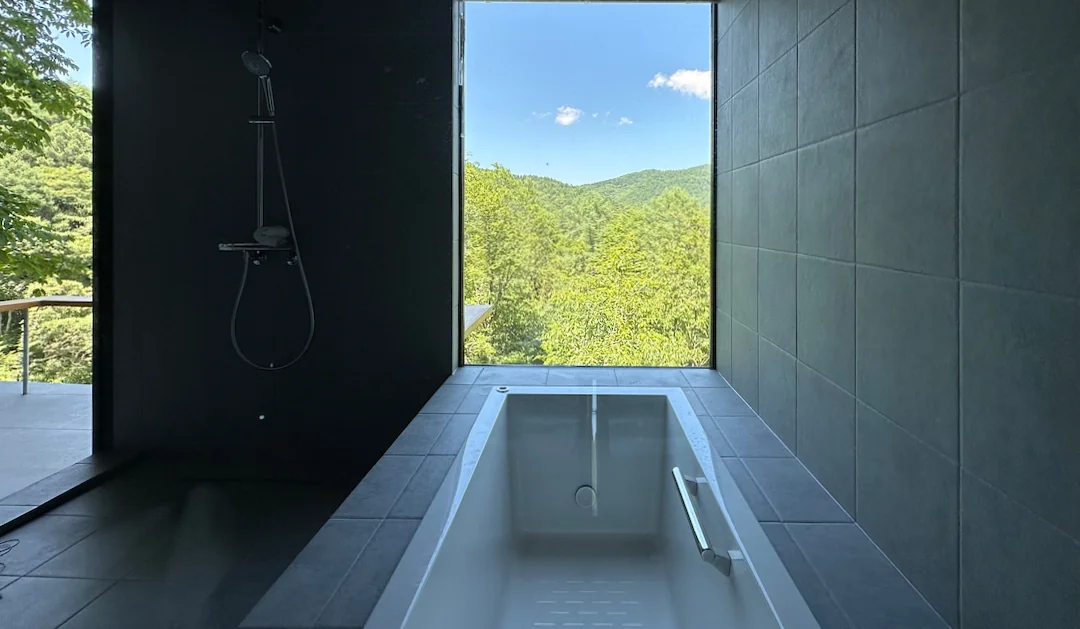
Bathroom with vertically elongated windows designed to expand the sky view when immersed in the bathtub
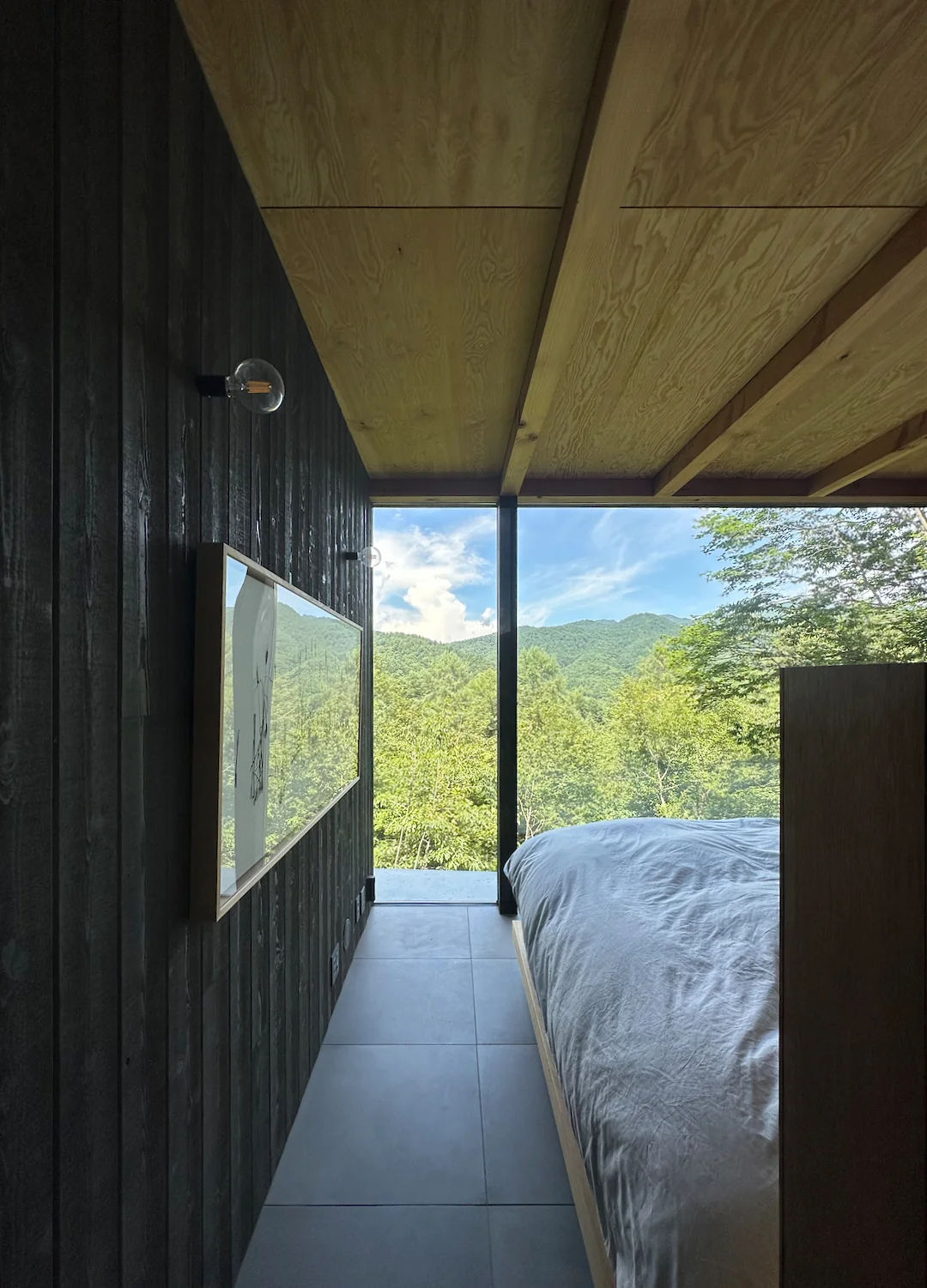
Walking along the corridor and passing display walls directs attention beyond to the next room’s landscape
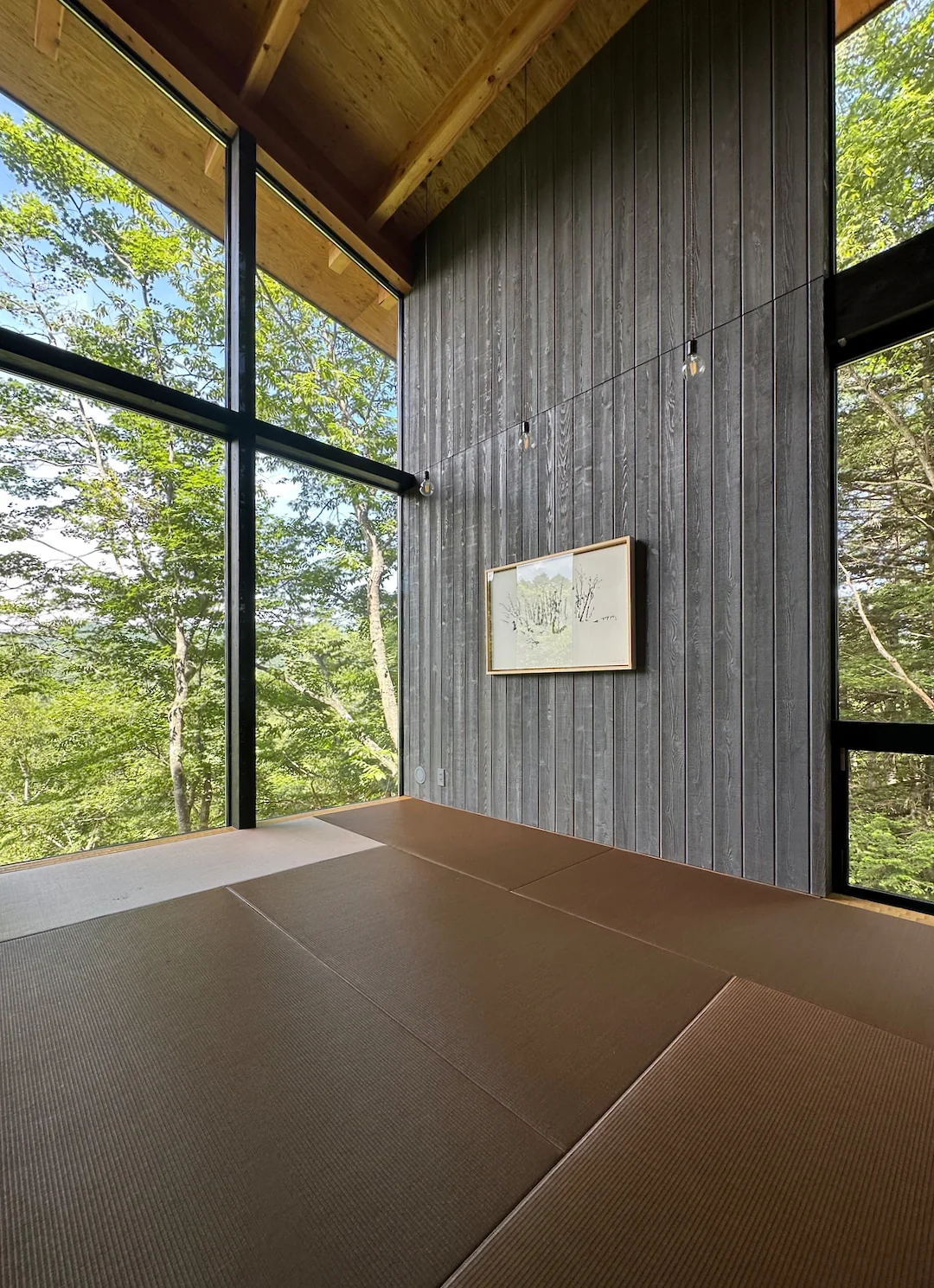
Structural walls serving as display panels are clad in wood boards, allowing flexible positioning according to artwork size and mood
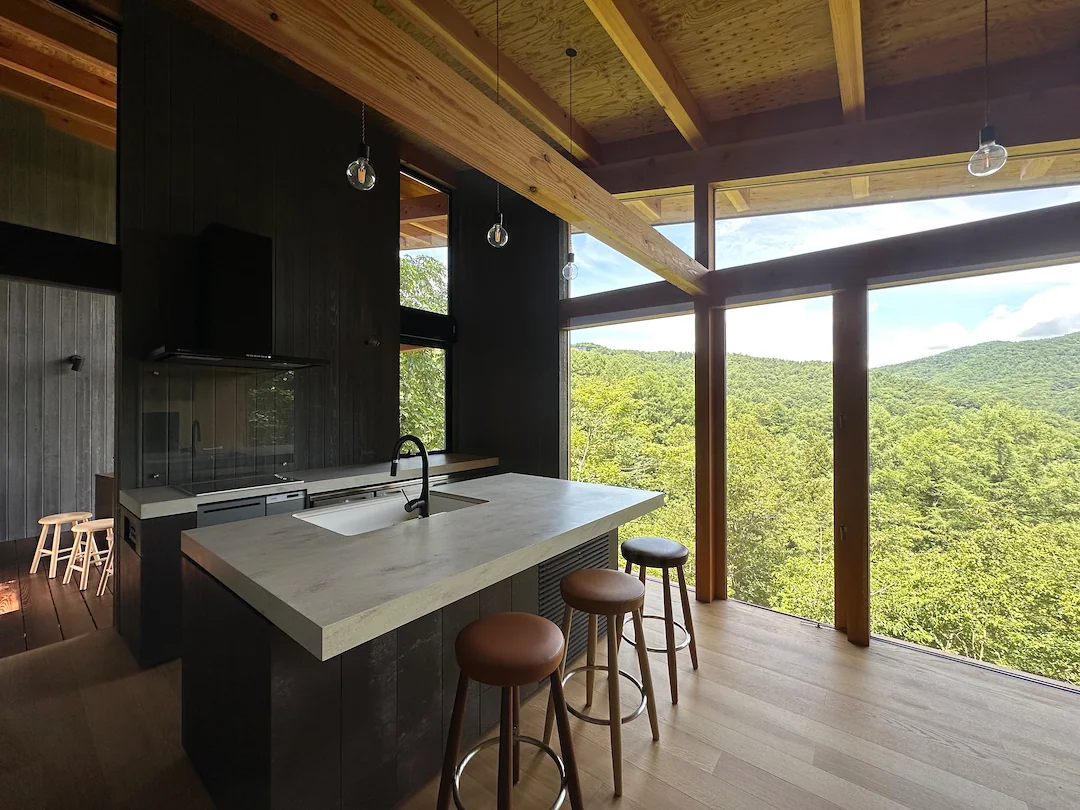
Layout enables casual dining indoors or outdoors, adapting easily to changing moods
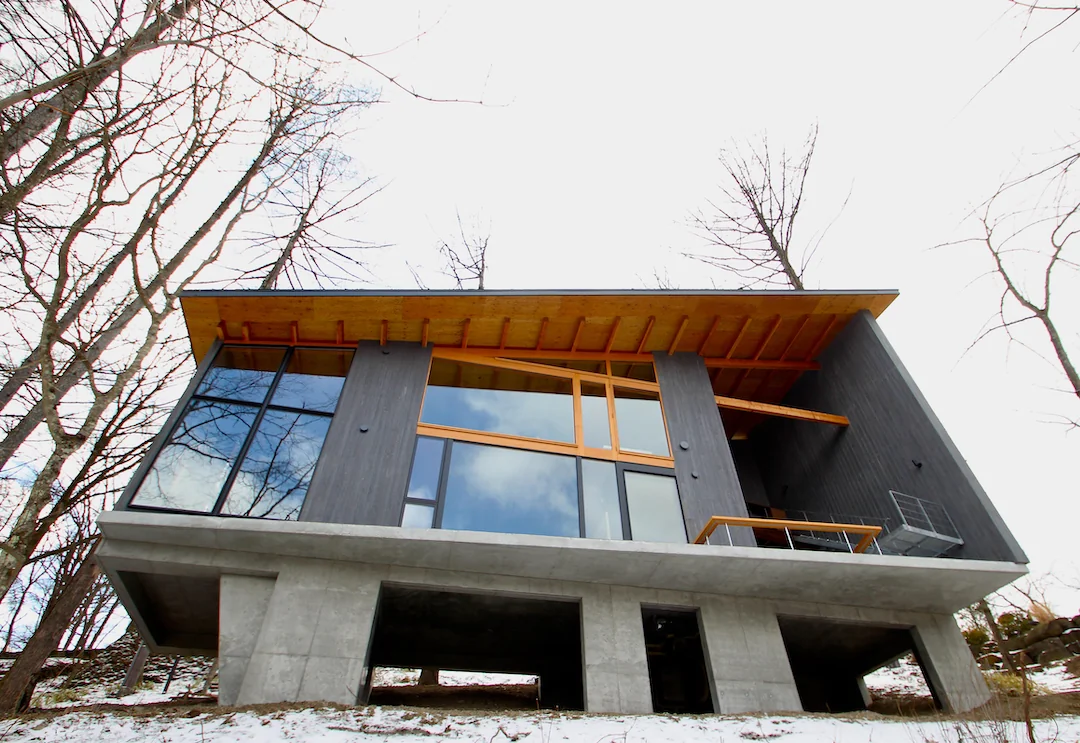
Foundation shaped to preserve the naturally vegetated ground and divert rainwater flowing down the slope
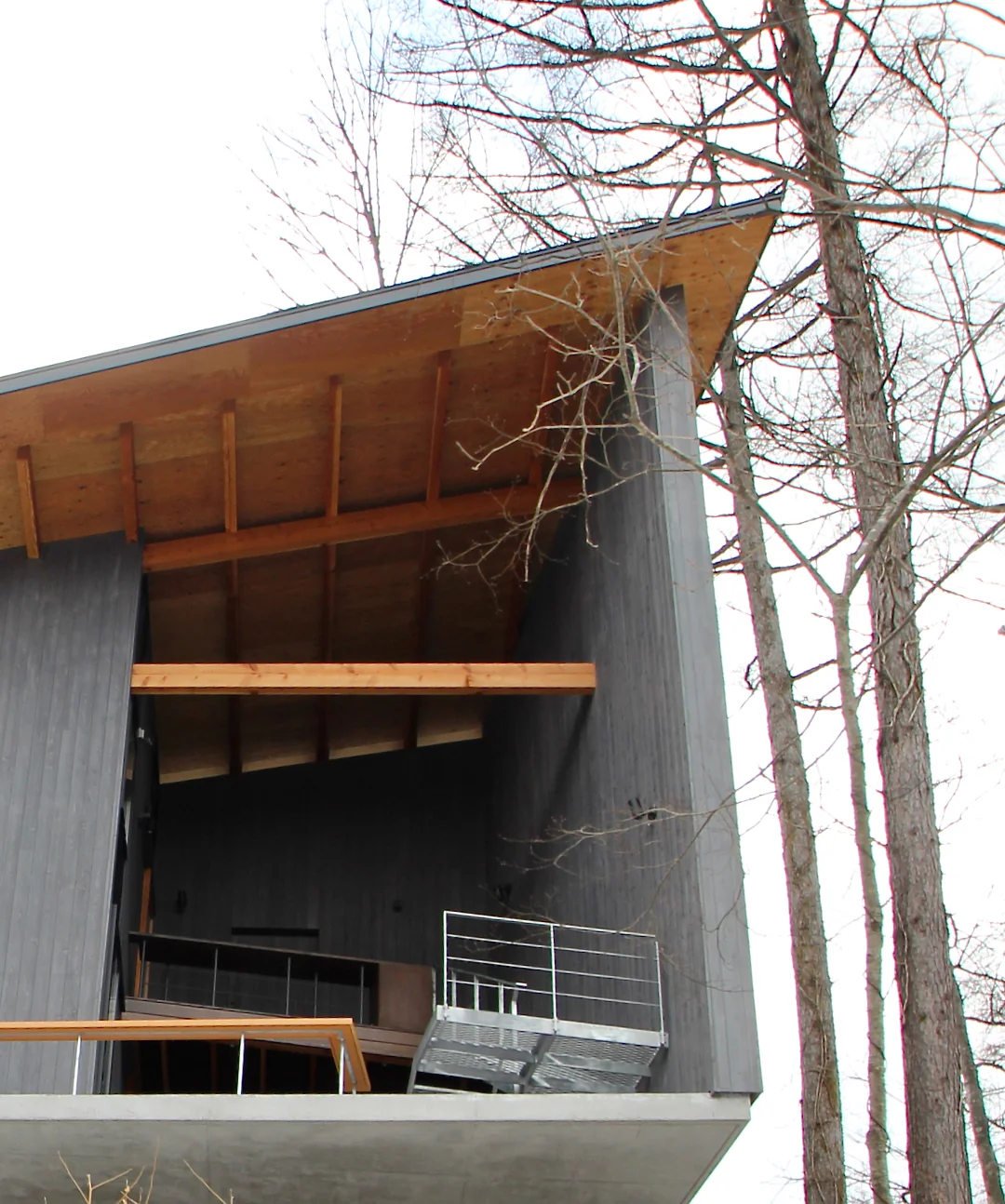
The first and second floors are connected through an intervening exterior space
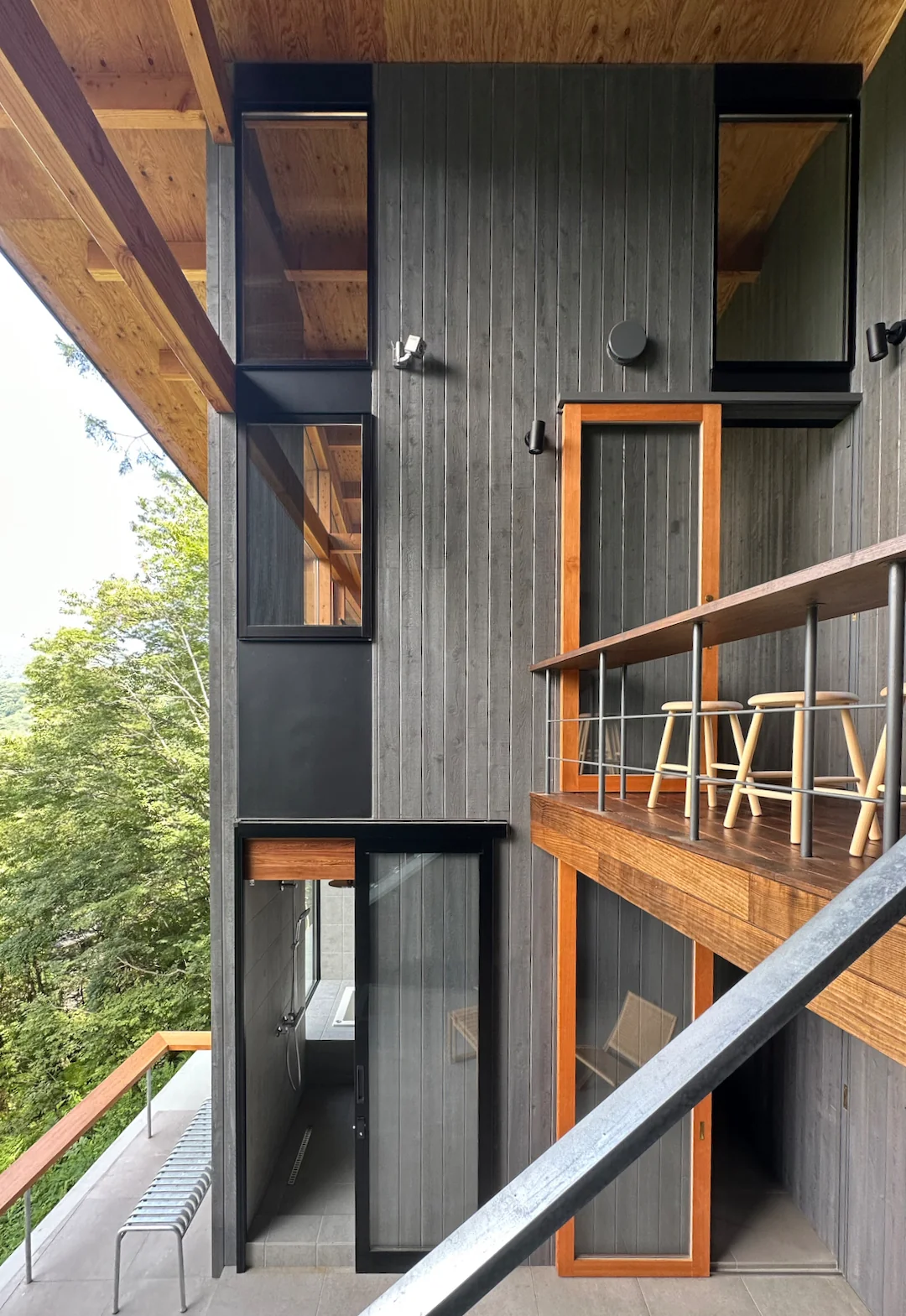
The valley-side, central living area features vertically clad exterior walls designed to blend seamlessly with the surrounding trees
Gallery Wall
Terrace
Scenic View
Living with Nature
LivingWithNature
ScenicViews
Terrace
GalleryWall
Learn More
Experiencing Nature as a Tangible Sensation
The client, an art collector, sought a place to engage intimately with nature on a north-facing sloped site that offers sunlit vistas. This villa was designed so that each room frames a unique view, creating a dynamic experience as one moves through the space, where the scenery shifts accordingly. The sole staircase connecting the first and second floors is located in an exterior room, intentionally planned so that residents must pass through this outdoor space in their daily routine.
The building’s composition consists of a series of rooms linked like beads on a string, arranged as a two-story structure folded in three-dimensional space. Each room is defined by display walls for art installations, while the corridors connecting the rooms are positioned on the south side—away from the northern vistas—and are left open without walls separating them from the rooms.
By this design, every time one passes through a display wall dividing the rooms, the gaze is naturally drawn beyond to the next room’s view, fostering a consciousness of the surrounding landscape. While all windows face the same general direction, variations in their aspect ratios and shapes create distinct spatial experiences, ensuring that each room serves as a primary focal point.
Furthermore, the depth of each room is carefully calibrated to evoke two simultaneous sensations depending on one’s position: a feeling of suspension when standing on the valley side and a sense of security on the mountain side. This minimal depth enhances awareness of these contrasting spatial experiences.
Although people tend to acclimate to their surroundings, positioning an exterior space at the heart of circulation invites unexpected sensory encounters that awaken perception. Before rainfall, one can feel the moist humidity on the skin, hear the rustling of small birds, see the contrast between interior and exterior light, and sense the density of the air through smell. These sensations vary moment by moment.
This residence offers the pleasures of both interior and exterior experiences. By repeatedly engaging with these sensations in daily life, one can cultivate a deeper connection to nature that transcends mere observation. The project aims to manifest the ever-changing natural environment and establish a place to confront a "nature shaped by sensorial contrasts."
It is a space where each individual can continuously connect with their own evolving relationship to the natural world.
The client, an art collector, sought a place to engage intimately with nature on a north-facing sloped site that offers sunlit vistas. This villa was designed so that each room frames a unique view, creating a dynamic experience as one moves through the space, where the scenery shifts accordingly. The sole staircase connecting the first and second floors is located in an exterior room, intentionally planned so that residents must pass through this outdoor space in their daily routine.
The building’s composition consists of a series of rooms linked like beads on a string, arranged as a two-story structure folded in three-dimensional space. Each room is defined by display walls for art installations, while the corridors connecting the rooms are positioned on the south side—away from the northern vistas—and are left open without walls separating them from the rooms.
By this design, every time one passes through a display wall dividing the rooms, the gaze is naturally drawn beyond to the next room’s view, fostering a consciousness of the surrounding landscape. While all windows face the same general direction, variations in their aspect ratios and shapes create distinct spatial experiences, ensuring that each room serves as a primary focal point.
Furthermore, the depth of each room is carefully calibrated to evoke two simultaneous sensations depending on one’s position: a feeling of suspension when standing on the valley side and a sense of security on the mountain side. This minimal depth enhances awareness of these contrasting spatial experiences.
Although people tend to acclimate to their surroundings, positioning an exterior space at the heart of circulation invites unexpected sensory encounters that awaken perception. Before rainfall, one can feel the moist humidity on the skin, hear the rustling of small birds, see the contrast between interior and exterior light, and sense the density of the air through smell. These sensations vary moment by moment.
This residence offers the pleasures of both interior and exterior experiences. By repeatedly engaging with these sensations in daily life, one can cultivate a deeper connection to nature that transcends mere observation. The project aims to manifest the ever-changing natural environment and establish a place to confront a "nature shaped by sensorial contrasts."
It is a space where each individual can continuously connect with their own evolving relationship to the natural world.
- Copyright(C)Qurasuki.All Rights Reserved.