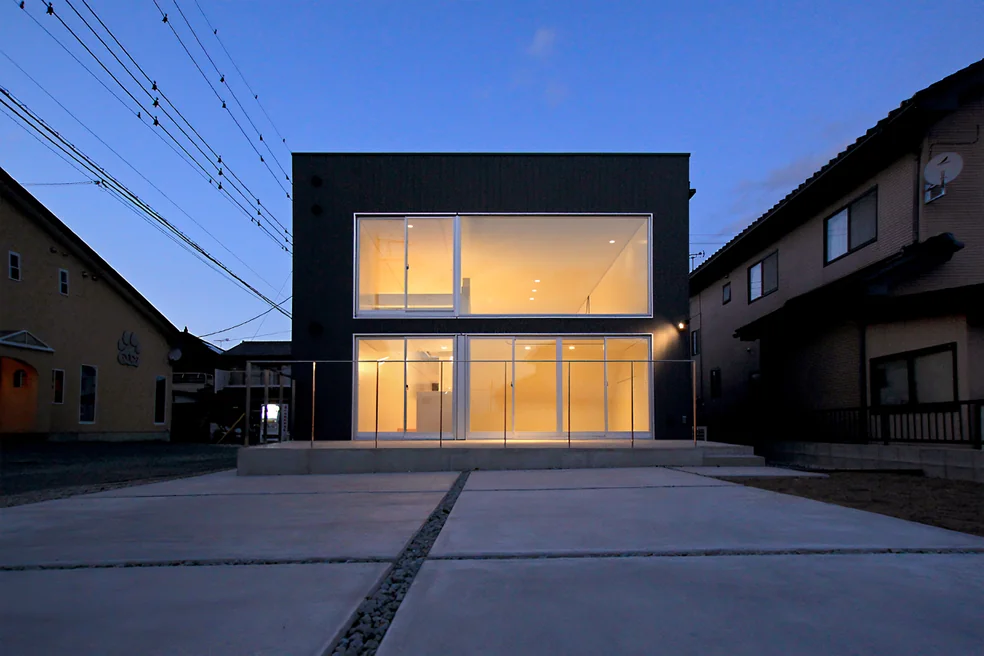
The site is located on a corner lot within a densely packed residential area characterized by narrow roads, with a large adjacent field extending along the southern boundary. Conversely, the eastern side is tightly bordered by neighboring houses, while a dance studio situated across the street to the west generates a unique environmental condition: during lesson times, more than ten cars simultaneously occupy the street-front parking area.
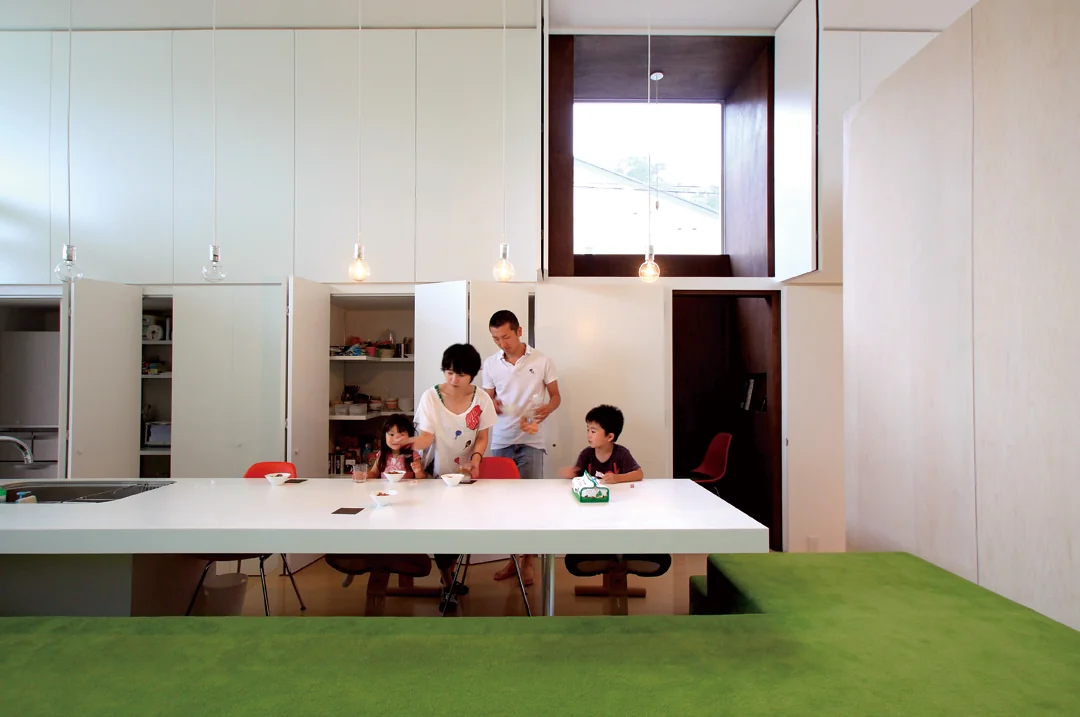
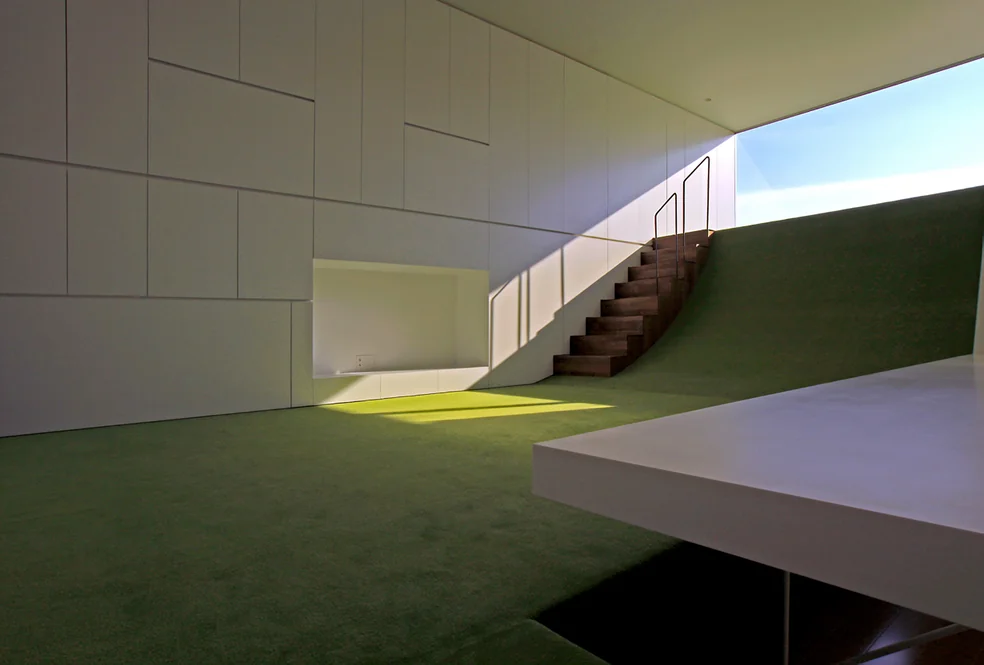
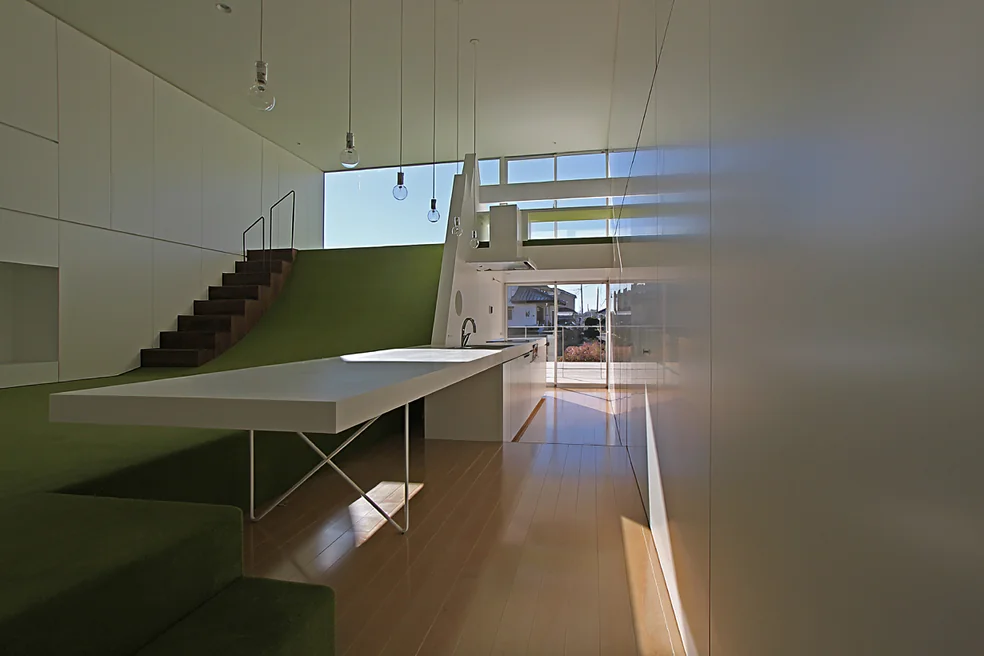
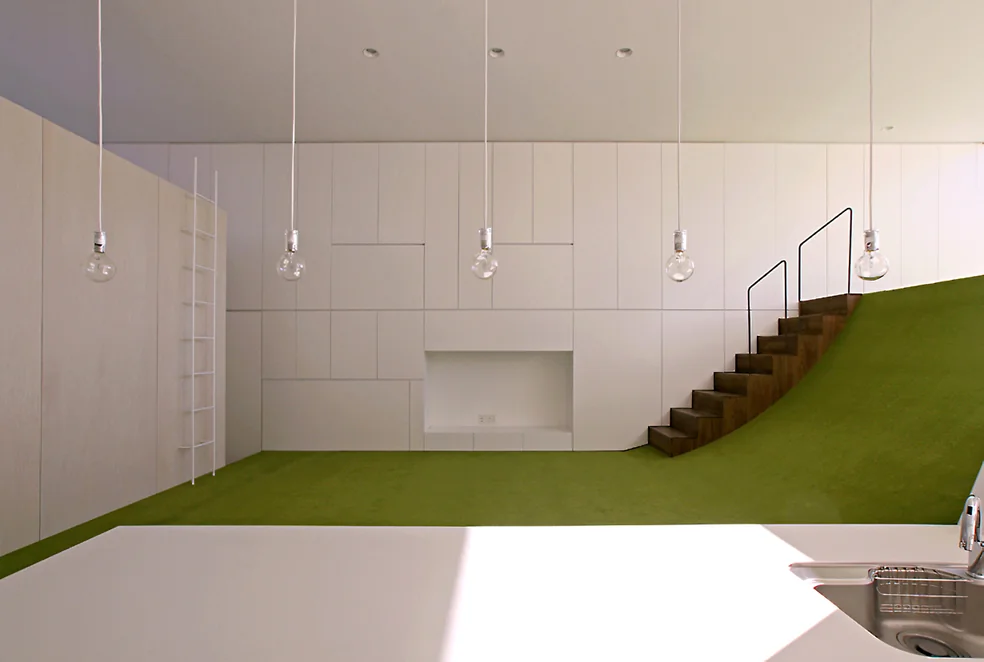
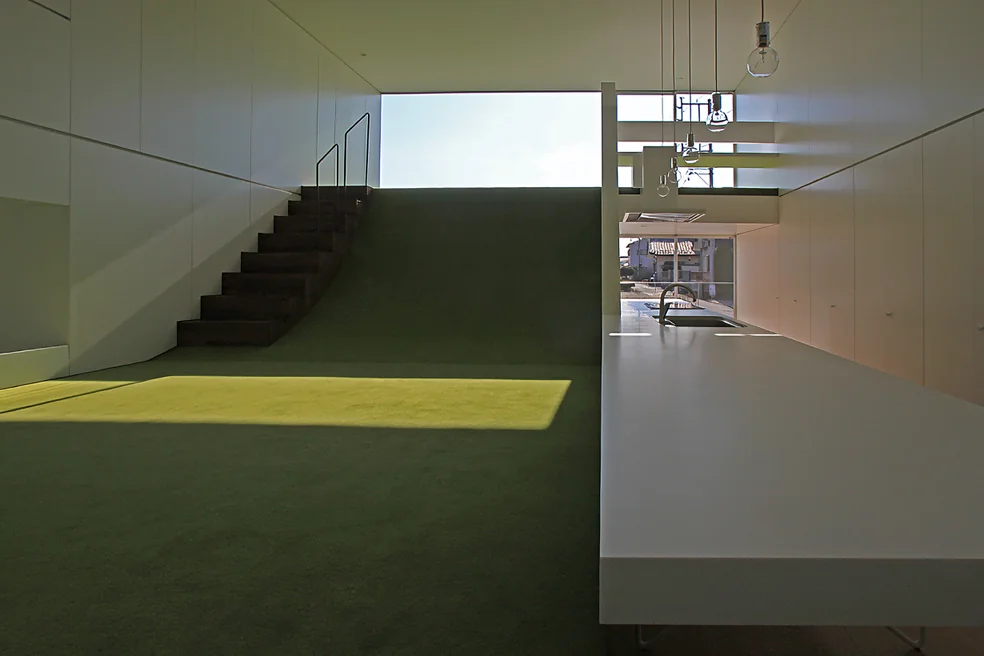
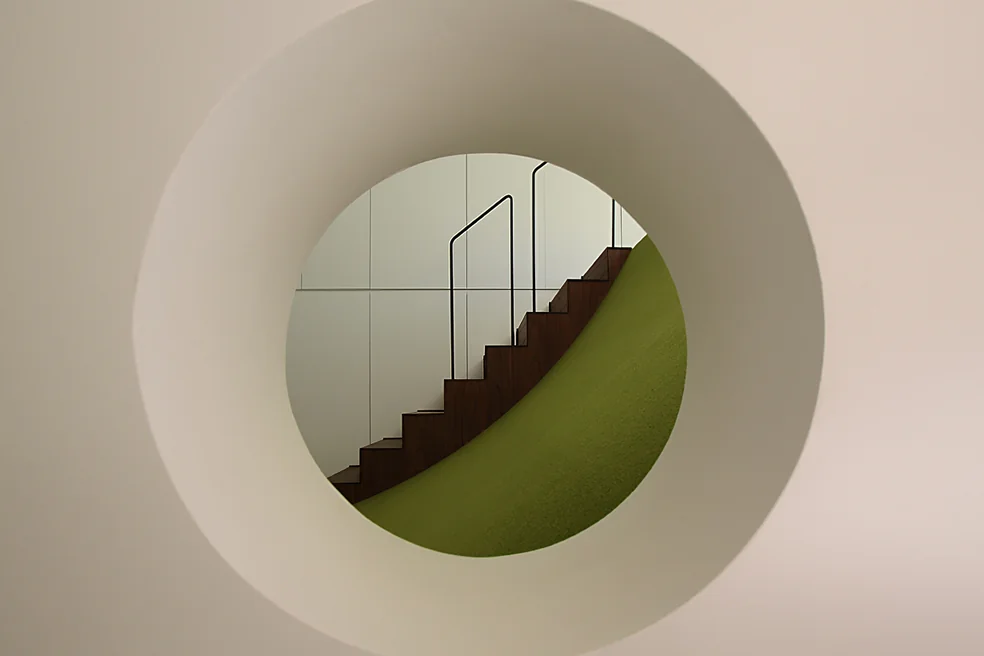
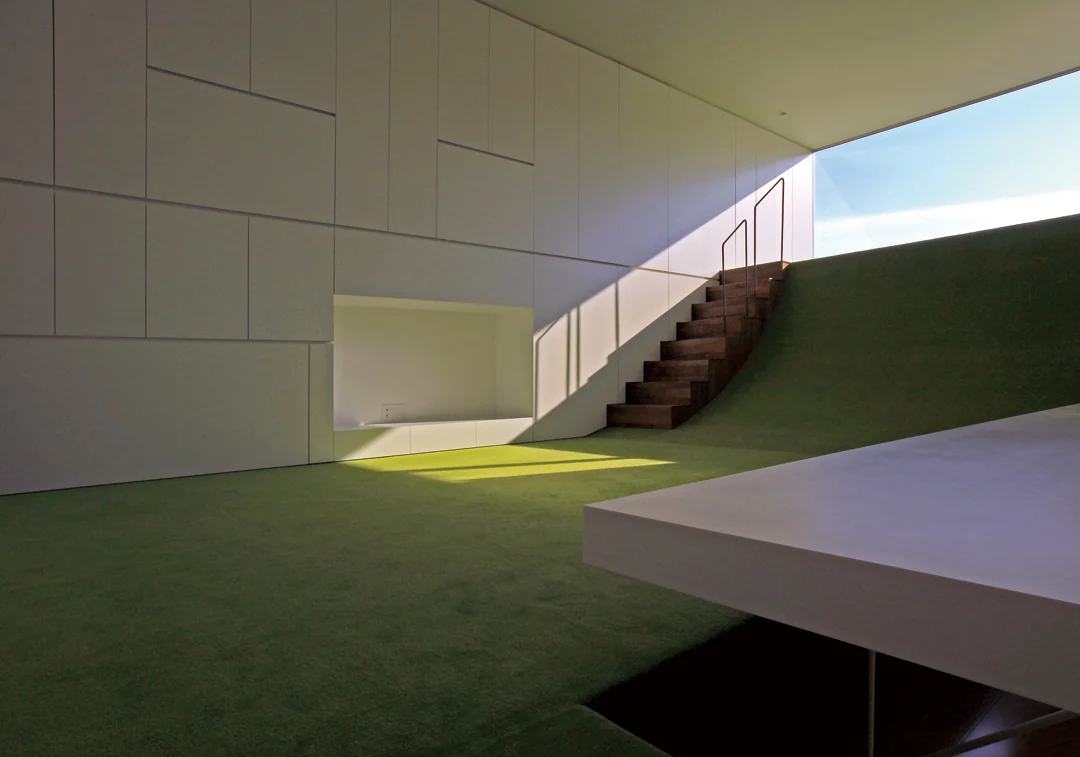
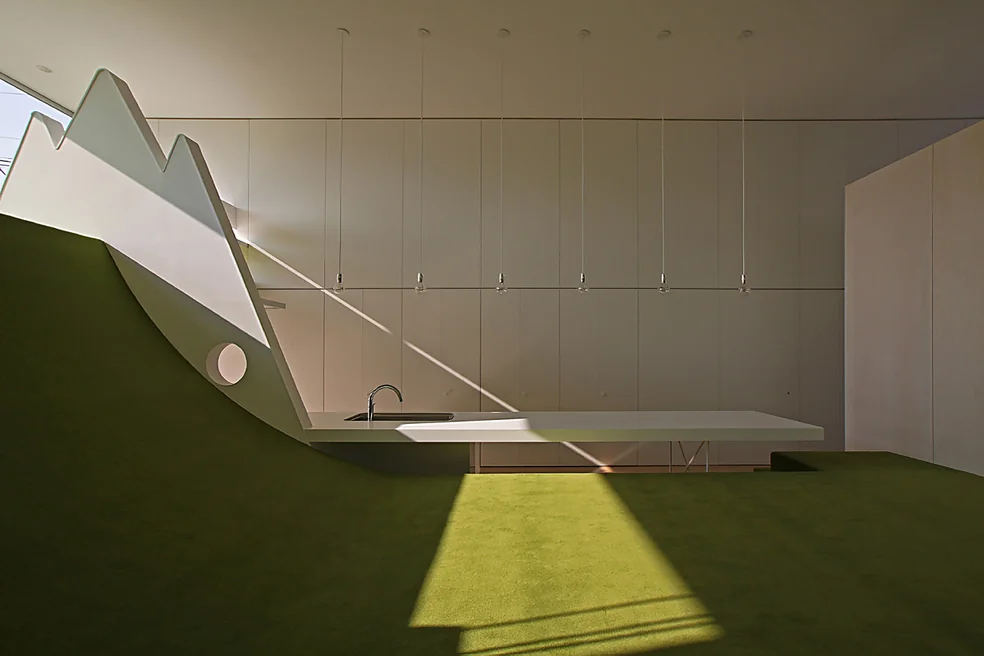
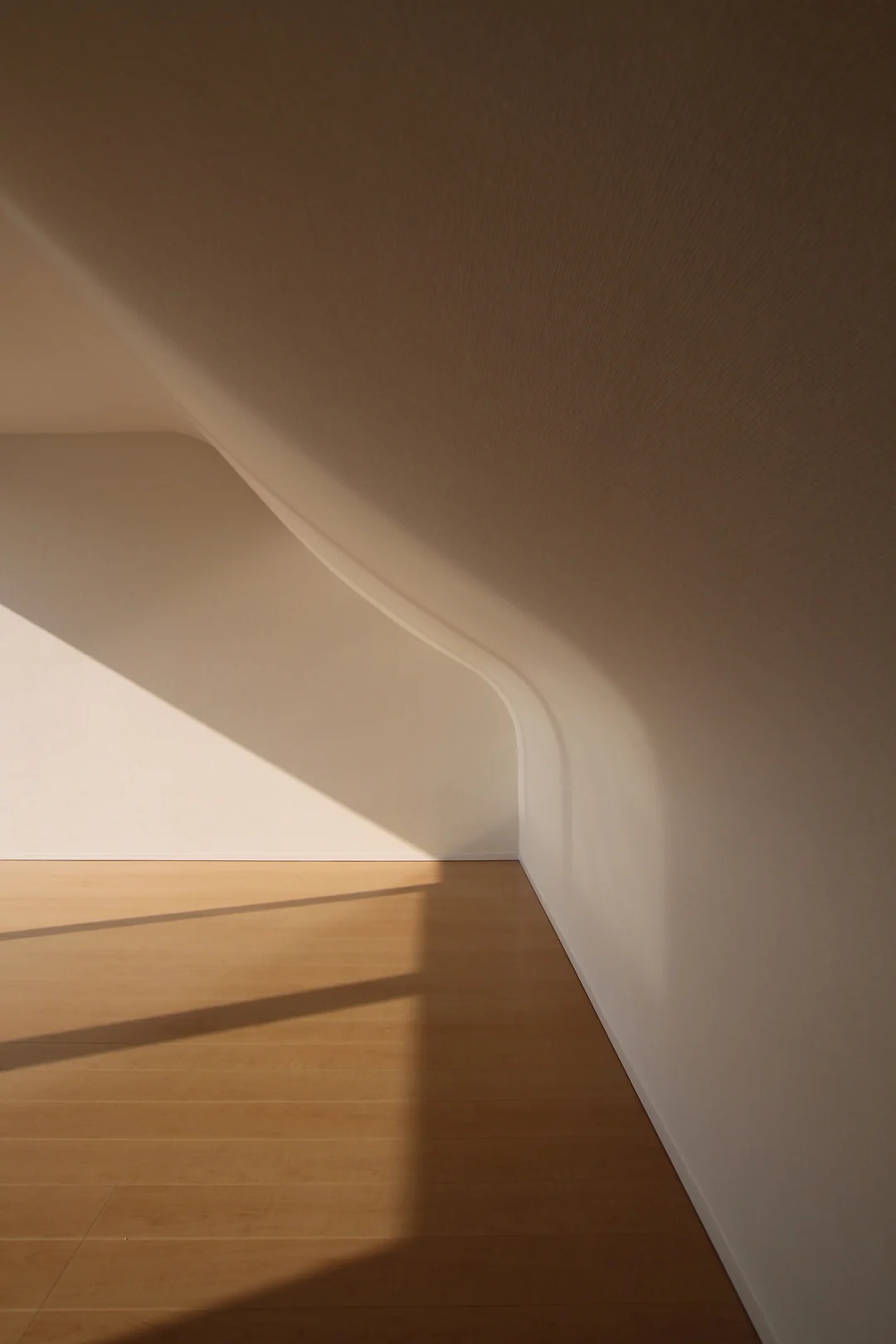
To create a spatial buffer from the east and west, the design allocates the entire east and west façades to storage, framing a central family space between them. The family room is conceived as a single, open space oriented north-south to facilitate natural cross-ventilation. Floor levels are carefully arranged to secure privacy from the exterior while promoting a sense of openness. The integration of light, views, and spatial distances was meticulously considered. To connect the differing floor levels within the family space, ladders, stairs, and ramps are employed, introducing varied modes of horizontal, vertical, and diagonal movement that enrich the spatial experience and unify the interior.
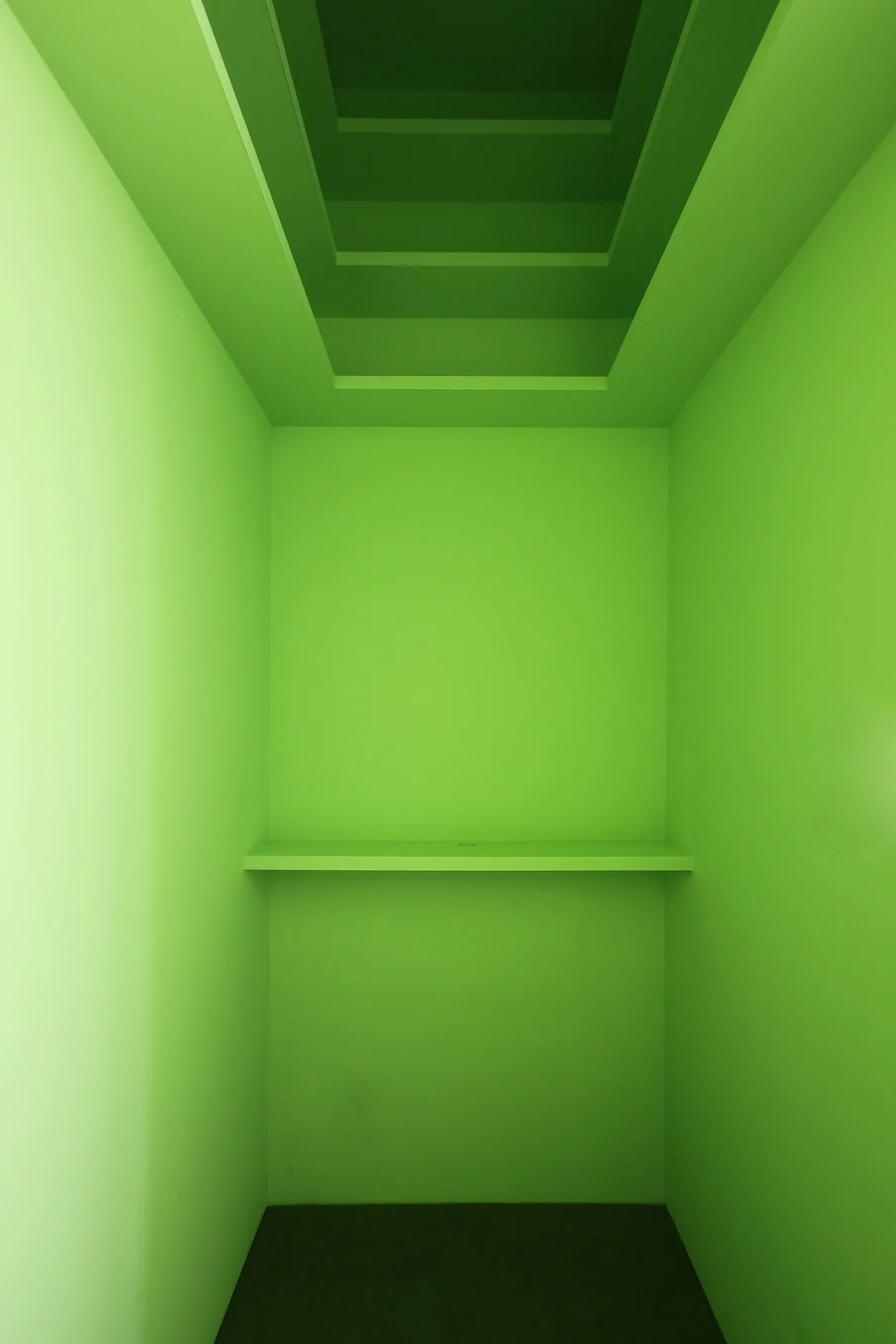
For the family room flooring, a combination of carpet and tile was selected, responding to thermal comfort and illumination needs. This tactile diversity—ranging from sun-warmed softness to cool hardness—invites users to freely choose places to engage, rest, or interact. Load-bearing walls along the short axis are embedded within the storage zones, designed based on the volumetric demands of abundant clothing and futon storage. These walls also accommodate functional spaces such as a PC room and toilets, adding spatial depth.
Private rooms and the kitchen, being largely devoid of distinct elements due to the extensive storage, open outward and are complemented by a terrace designed for barbecues. This terrace also serves as an everyday extension, functioning as a place for household chores like laundry and breaks from gardening, fostering an open environment integrated with the outdoor space.
Contemporary residential trends often favor opening family rooms to the exterior while enclosing private rooms; this project inverts that relationship. By distancing the family room from society and controlling information flow, the inhabitants cultivate stronger intimacy among themselves. Meanwhile, private rooms connected to the terrace open socially, encouraging interaction with neighbors strolling nearby or working in adjacent fields, thereby harmonizing with the longstanding community fabric.
Reflecting on family life through the lens of society reveals that being with family is less a public act and more a state of relaxed privacy, where one lets down their guard. Conversely, private rooms—though temporarily more private—can be simply sealed off, and when their individual identity is diminished, they assume a more public character. This is not merely a unique outcome of this particular family dynamic but suggests a general principle: opening private rooms can strengthen connections both within the family and with the wider community.