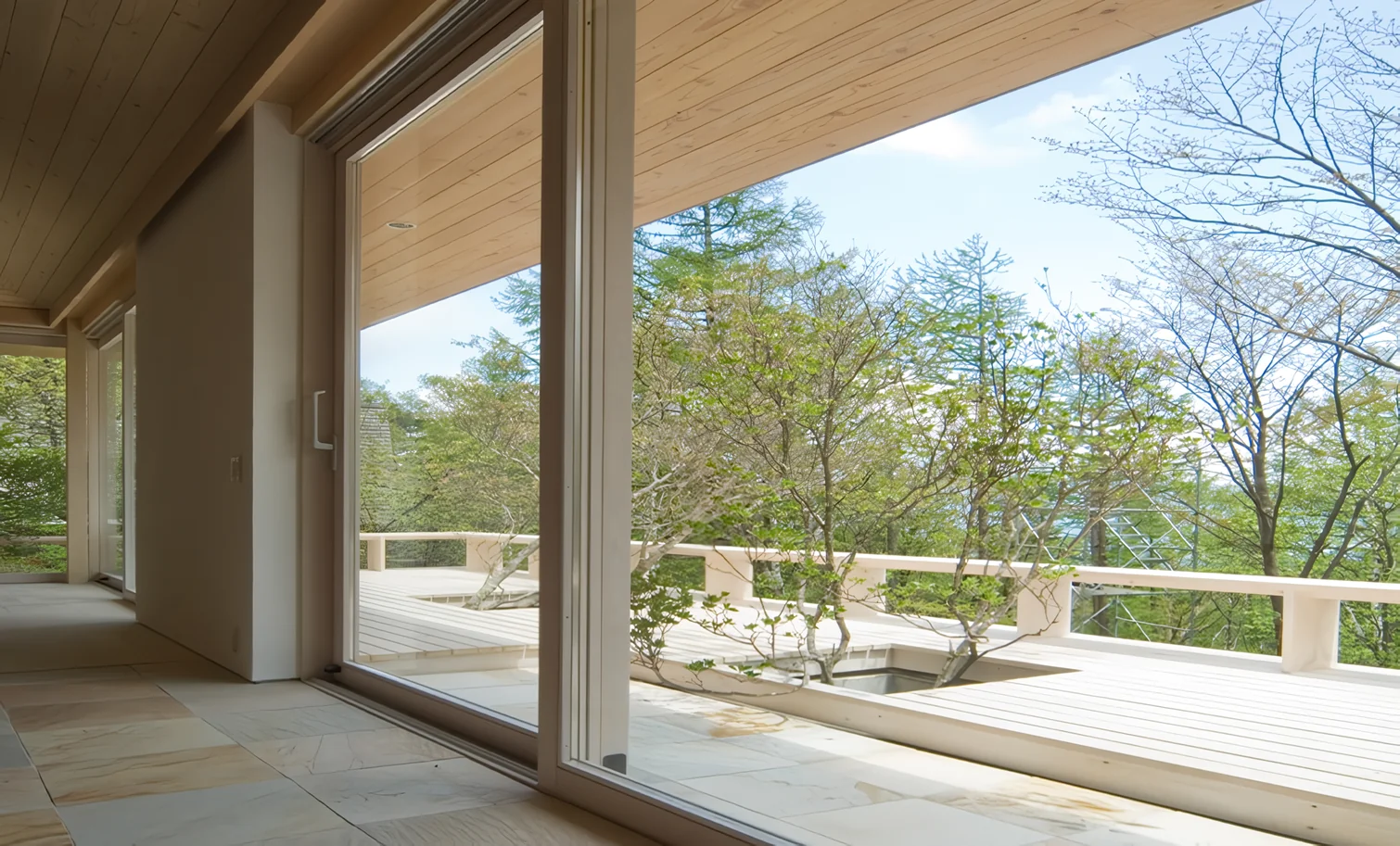
Introducing A Second Home in Yatsugatake, a custom-built home example by Tatsumi Negishi Architectural Studio, a Architect / Design office in 532-5 Nakazawa, Hidaka City, Saitama Prefecture, Japan
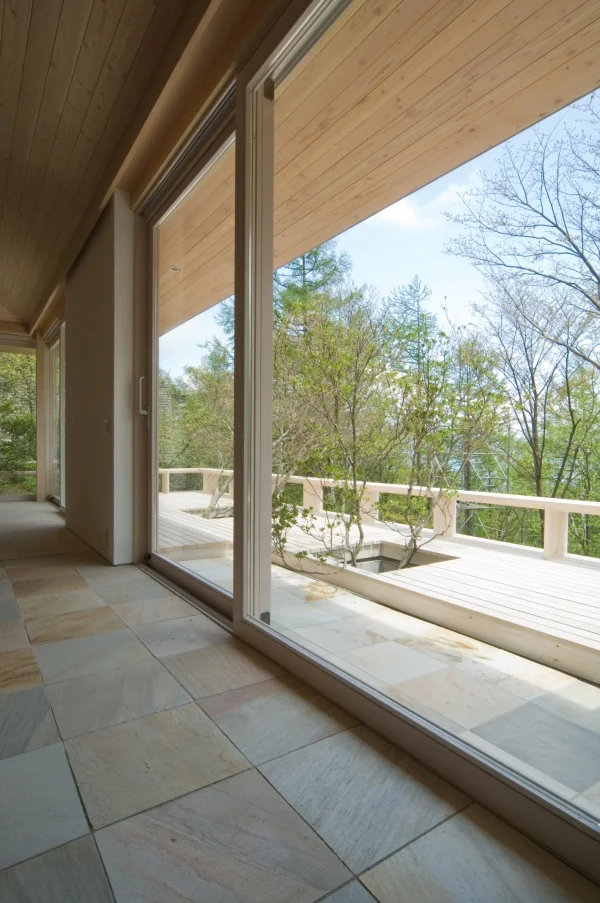
Beyond the oversized wooden sash windows with superior thermal insulation performance, a terrace emerges amidst the existing mature trees
A Second Home in Yatsugatake
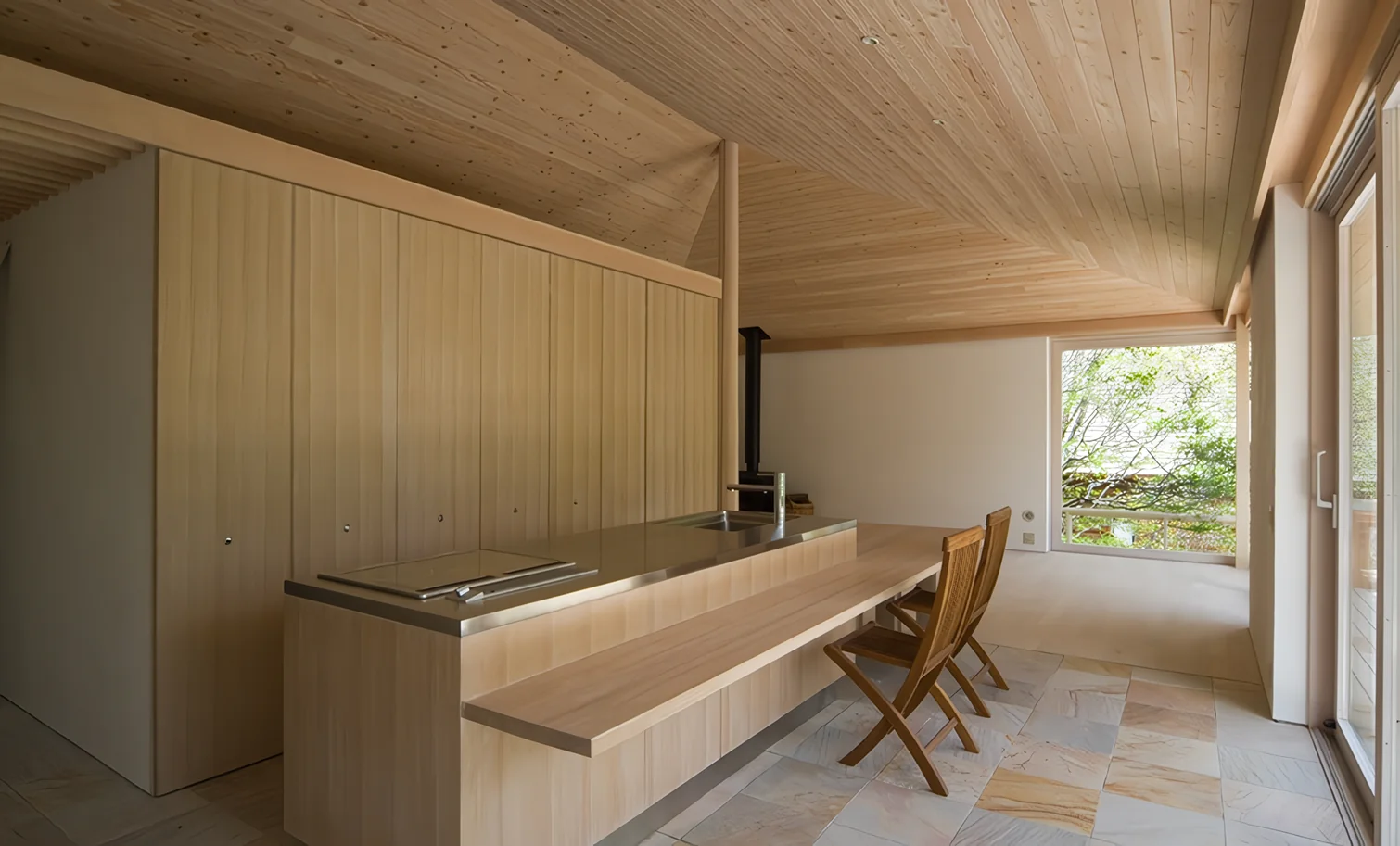
An island kitchen that allows household chores to be performed while enjoying views of the outdoors
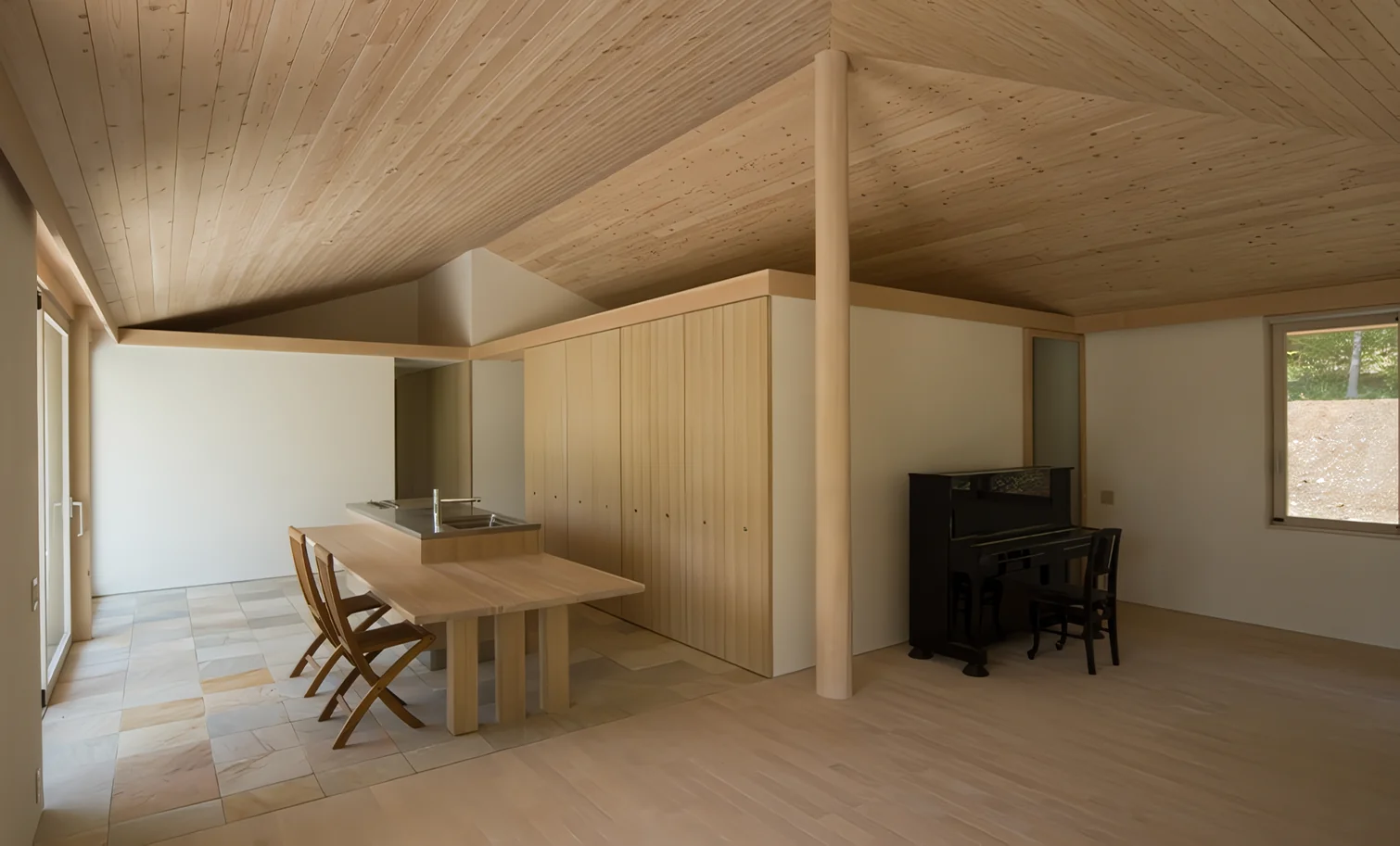
Behind the kitchen: laundry and pantry spaces
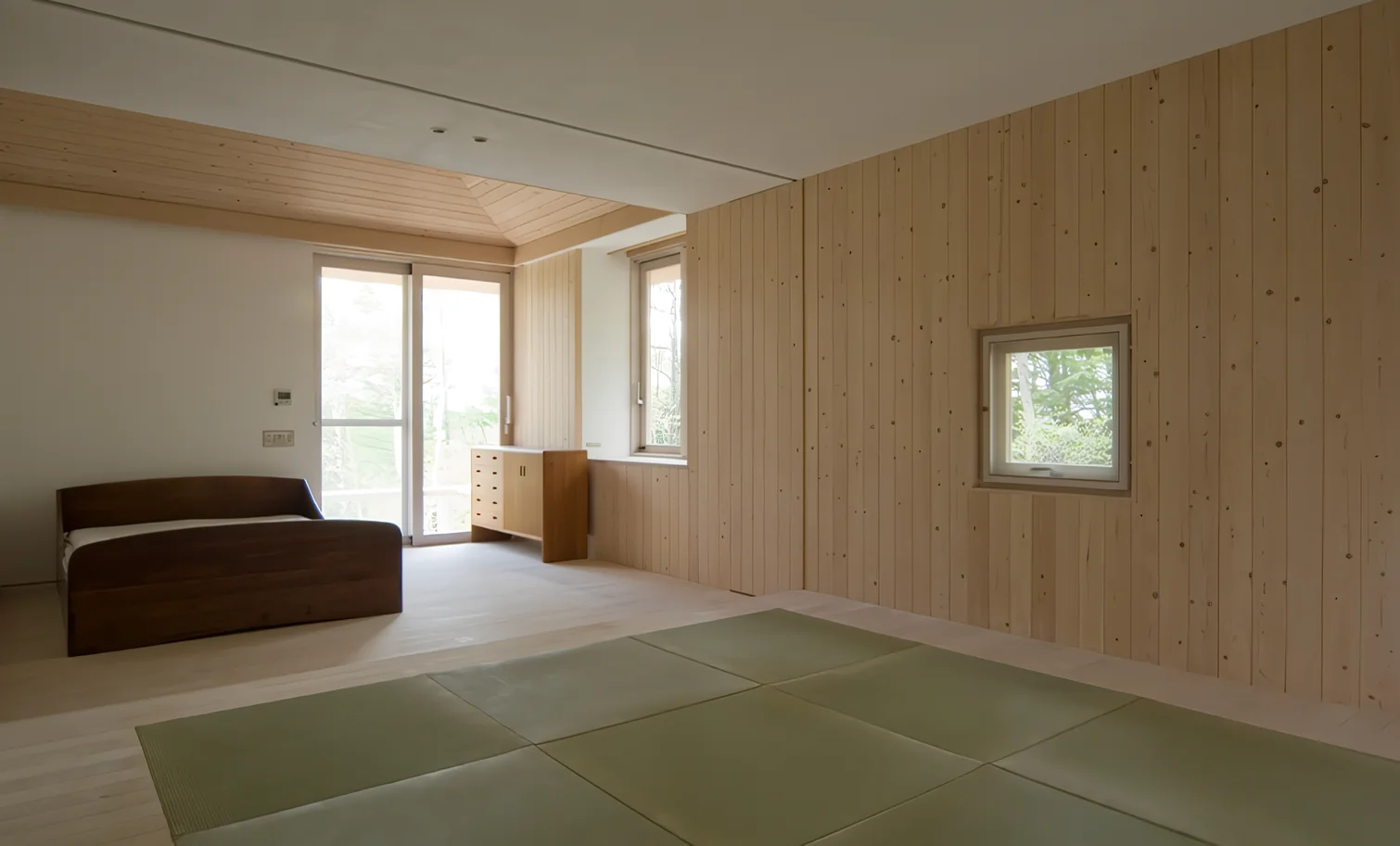
Stored partitions allow the space to be divided into two rooms
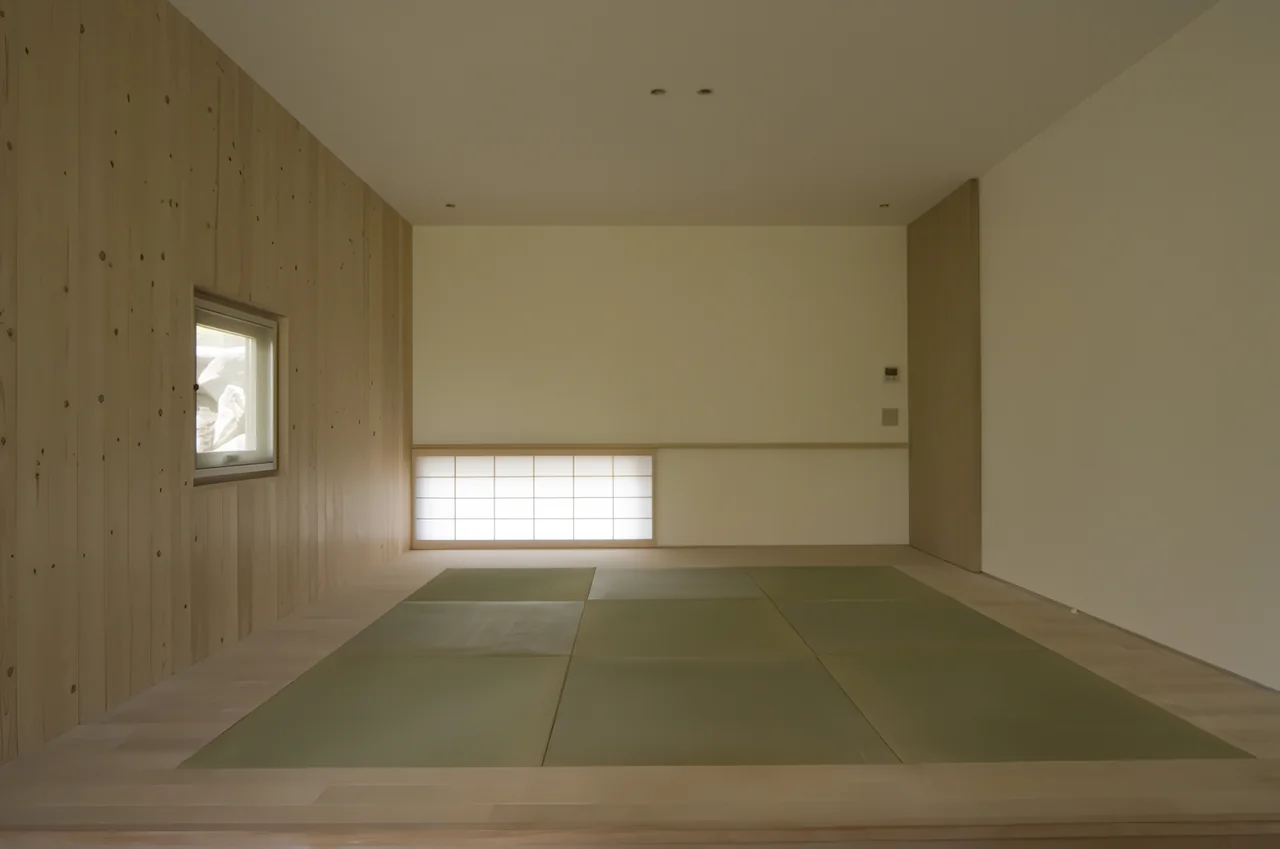
A Second Home in Yatsugatake
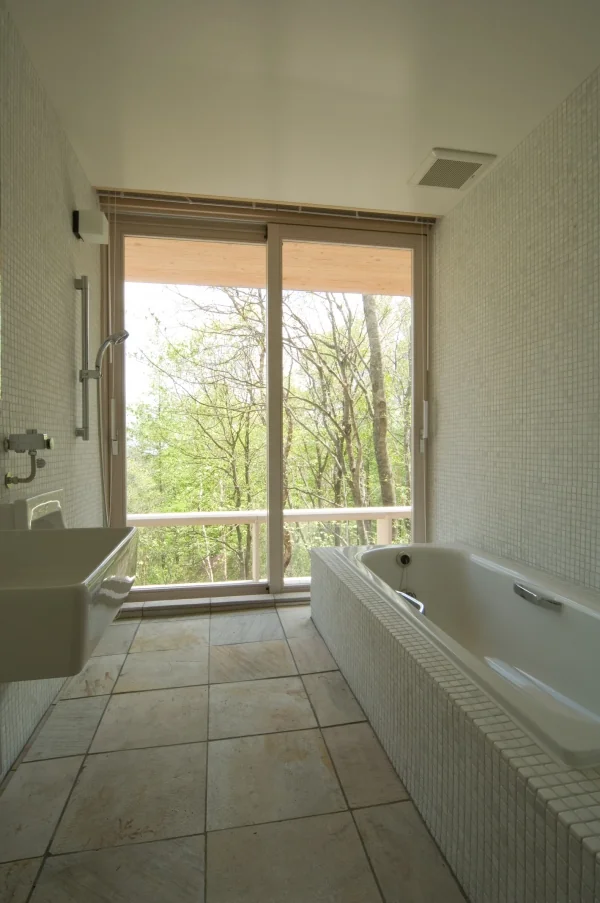
Bathing while overlooking the scenic landscape
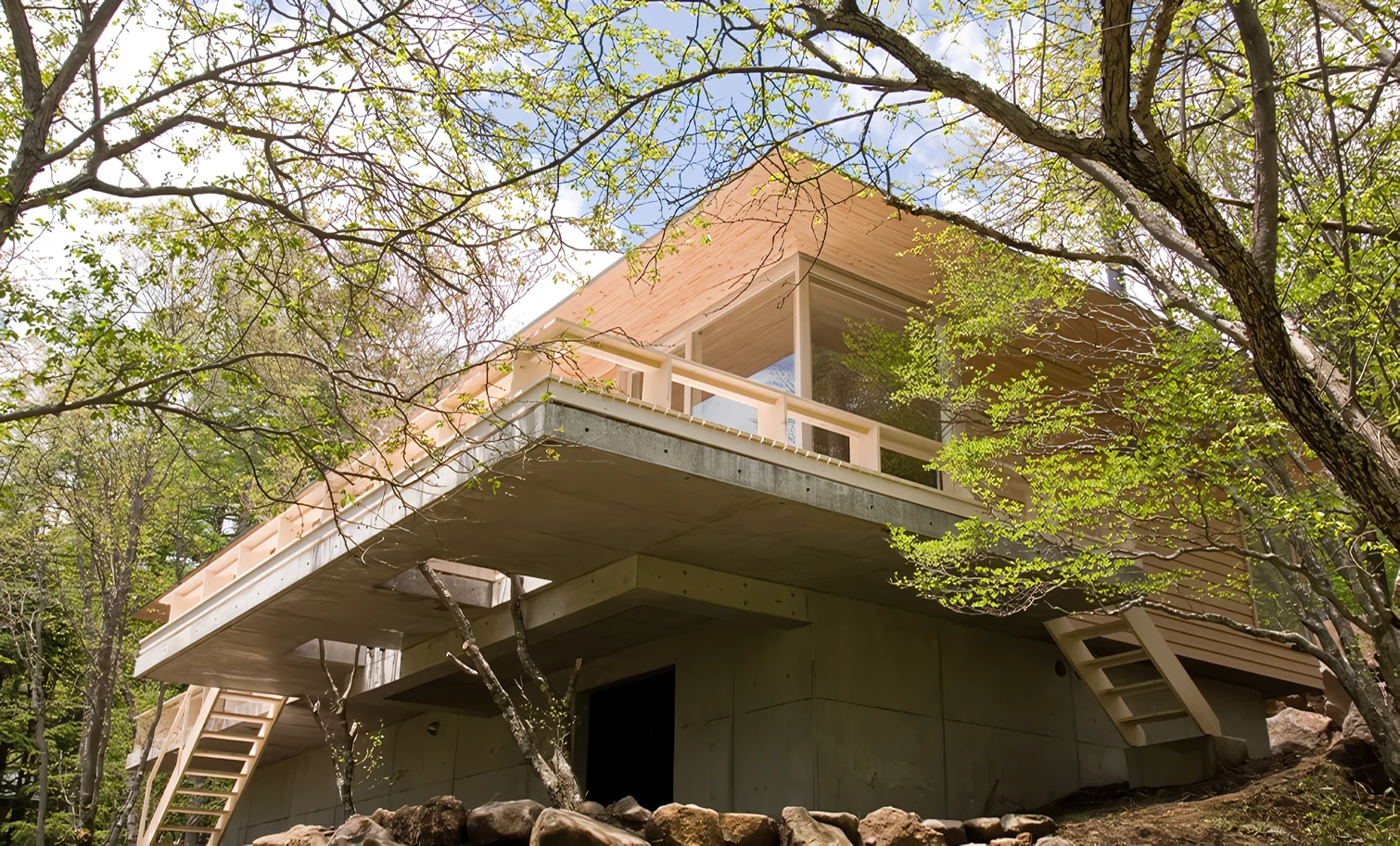
Terrace cantilevered over the sloped terrain with deep eaves
Circulation Flow
Scenic View
Second House
Wood-Burning Stove
Japanese Modern
ScenicViews
CirculationFlow
WoodBurningStove
SecondHome
JapaneseModern
Learn More
Located at an elevation of 1,600 meters in the Yatsugatake Mountains, this site is characterized by a harsh climate where winter temperatures can drop to minus 20 degrees Celsius, which in turn fosters a remarkably pristine natural environment. The client, deeply enamored with the surrounding landscape and eager to immerse themselves in nature, envisioned this villa as a retreat to support their creative work in Tokyo. To protect the building from these severe climatic conditions while harmonizing with the sublime setting, a hipped roof structure with deep eaves was selected, enabling the architecture to integrate seamlessly into the environment.
Given the lifestyle immersed in nature, the design needed to accommodate frequent exposure to dirt and moisture, as well as the regular movement of equipment and tools. The client requested a plan that facilitates such activities with ease. Recognizing that tasks such as washing, drying, and storing or retrieving items vary across seasons and involve multiple patterns, the design evolved into a circulation-centric layout organized around a core of storage spaces. This arrangement optimizes functional flow, seamlessly supporting diverse seasonal workflows. Furthermore, operable partitions within this circulation zone enable flexible spatial configurations—for instance, transforming the area into a windbreak vestibule during winter or establishing a dedicated circulation path exclusively for visitors.
- Copyright(C)Qurasuki.All Rights Reserved.