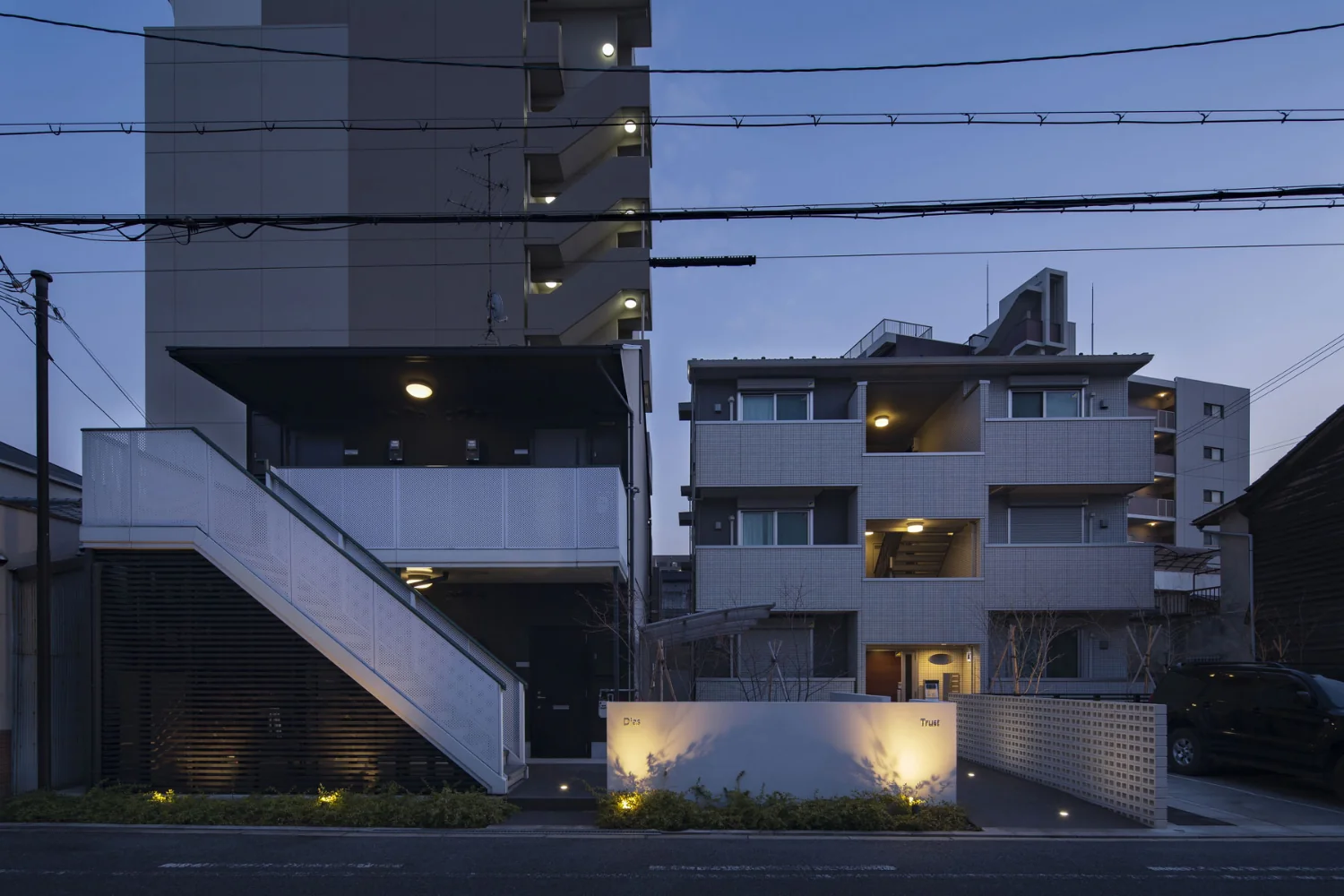
Introducing Integrated Exterior Solution for Two Adjacent Rental Apartment Buildings | D and T Apartments, an example of Architect / Design office facility architecture in 302, Zeniya Honpo Main Building, 14-6 Ishigatsujichō, Tennōji-ku, Osaka by Yoshihiro Yamamoto Architects Associates.
Consolidating the shared functions of the two adjacent apartment buildings in a central area, resolving the issues both buildings faced at once.
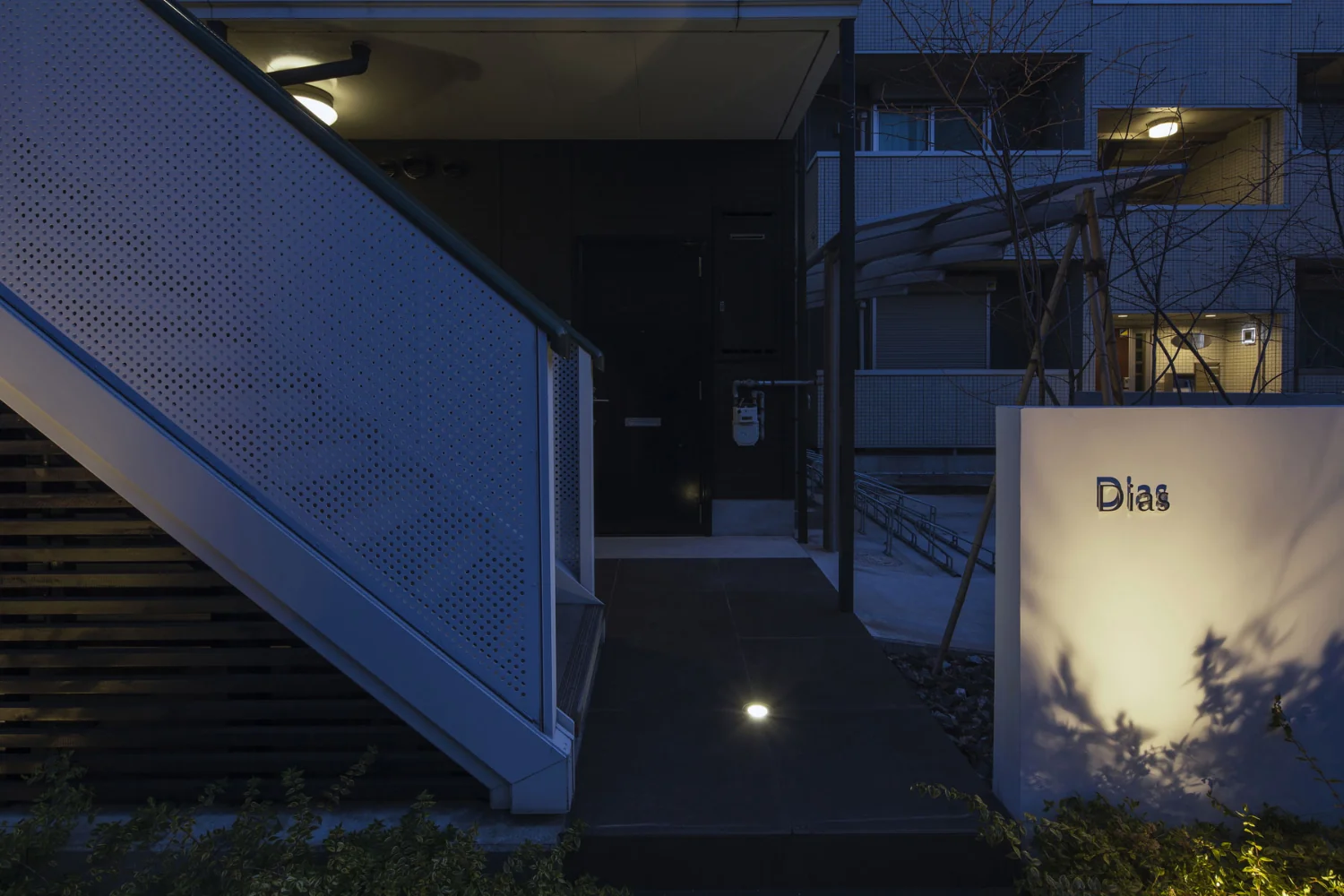
East side: approach to the D Apartment. The route is also planned to be accessible by ramp from the west.
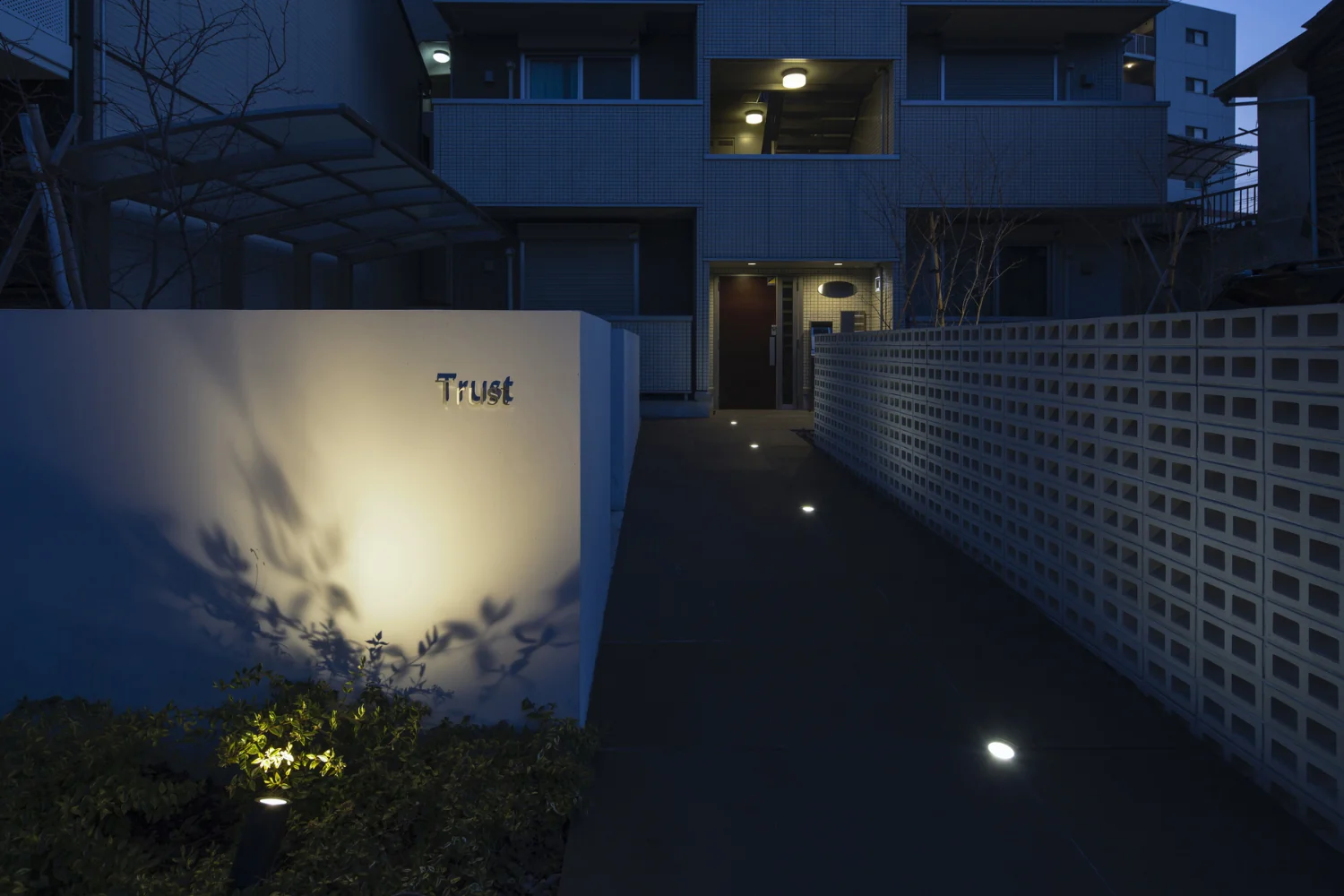
West side: approach to the T Apartment. The long corridor is made functional and articulated with uplighting.
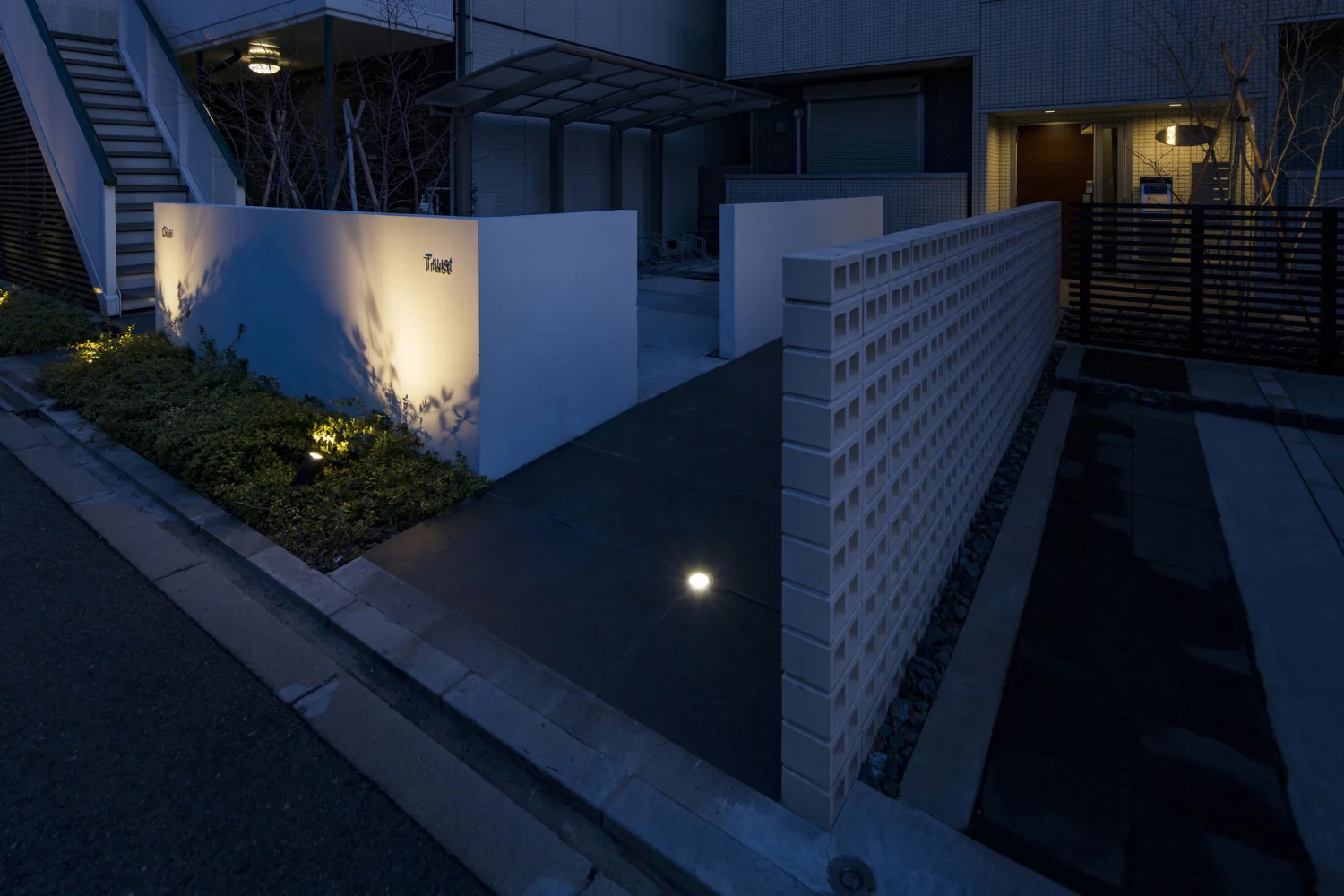
From the right foreground: parking area, T Apartment entrance, bicycle parking, D Apartment entrance.
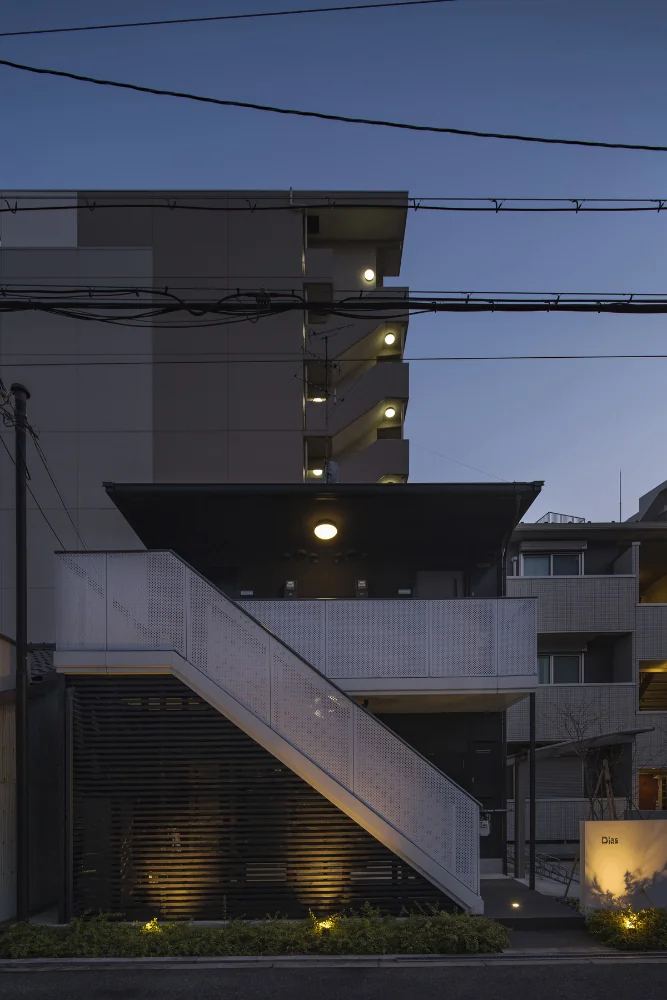
D Apartment façade. The color scheme was renewed in monochrome tones.
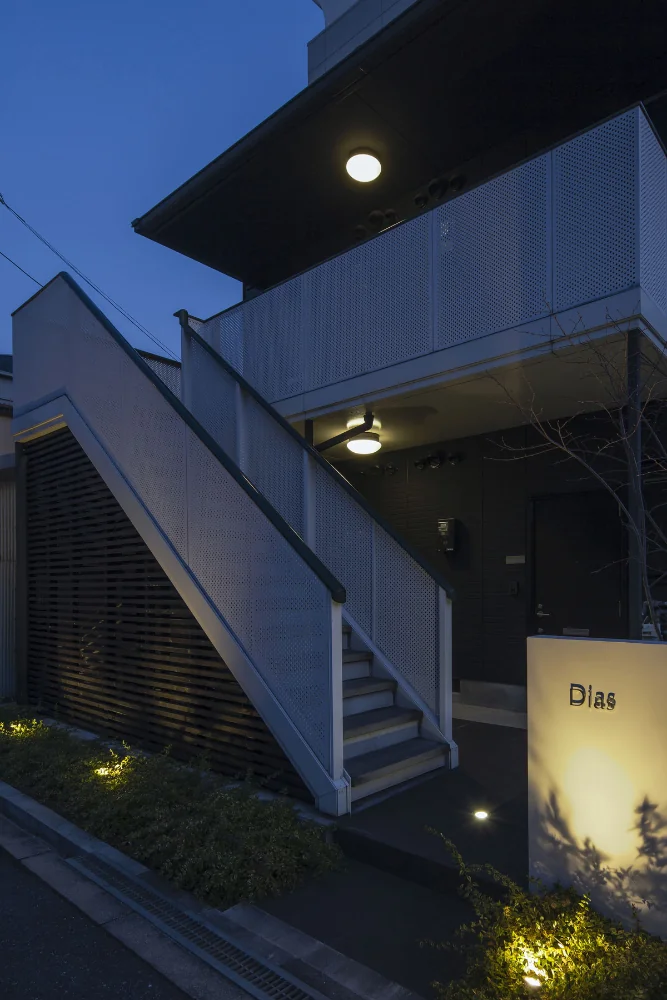
The area beneath the stairs is screened with wooden louvers to conceal cleaning-tool storage and various utility meters.
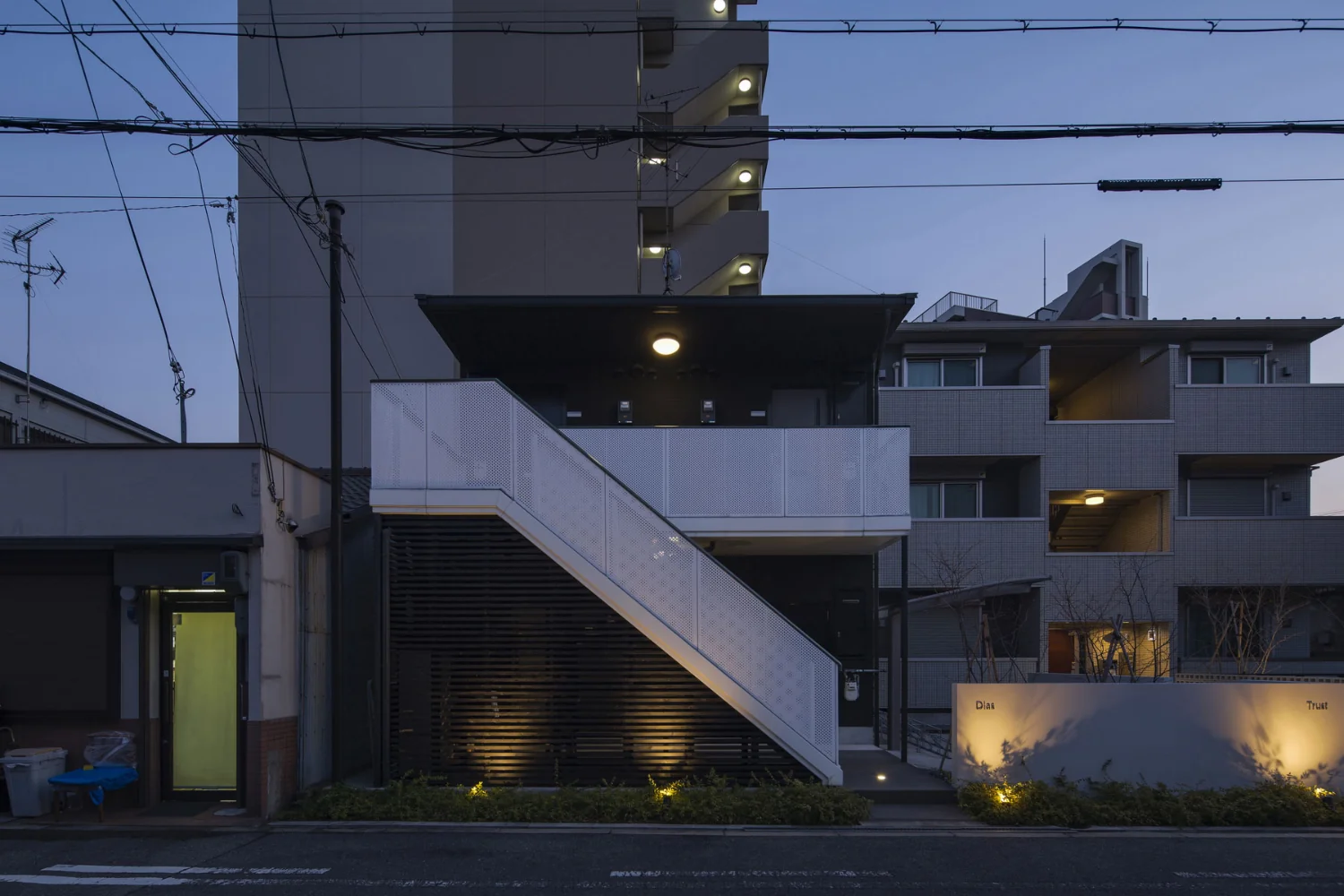
Integrated Exterior Solution for Two Adjacent Rental Apartment Buildings | D and T Apartments
Keishiro Yamada
Learn More
A two-story lightweight steel-frame rental apartment building typical of many found throughout Japan. The building owner was concerned about the deteriorating exterior appearance and the worsening aesthetics, hygiene, and security caused by an insufficient bicycle parking area and refuse storage. Even if a façade refurbishment were possible, the absolute lack of space made meaningful intervention difficult. When informed of this limitation, the owner revealed that they also owned another rental apartment adjacent to the first. That neighboring building had a fully open frontal area with considerable wasted space and an unattractive approach.
We therefore proposed consolidating the shared functions of the two adjacent apartment buildings in a central zone, and arranging circulation so that the approaches to each building frame that central core. This layout simultaneously resolved the problems afflicting both buildings. As a result of the works, the decline in rents and occupancy was arrested, and residents’ behaviour and maintenance standards improved significantly.
Small-scale rental apartments built by volume homebuilders often force standardized packages onto sites of varying shapes, producing residual, underused spaces. Ideally, exterior design should reclaim and activate those spaces; however, homebuilders generally lack a system that allows designers to tailor solutions to each site, and designers are often not present on site. Driven by a desire to reduce visible total construction costs, exterior works are frequently left entirely to the building owner. Re-designing such exteriors—reshaping them into their rightful, functional form—falls squarely within our professional remit. Project period: 2014–2015; Location: Higashisumiyoshi-ku, Osaka, Japan; Use: Multi-family residential; Design and supervision: Yoshihiro Yamamoto [YYAA]; Contractor: Yamamoto An Construction Co.
We therefore proposed consolidating the shared functions of the two adjacent apartment buildings in a central zone, and arranging circulation so that the approaches to each building frame that central core. This layout simultaneously resolved the problems afflicting both buildings. As a result of the works, the decline in rents and occupancy was arrested, and residents’ behaviour and maintenance standards improved significantly.
Small-scale rental apartments built by volume homebuilders often force standardized packages onto sites of varying shapes, producing residual, underused spaces. Ideally, exterior design should reclaim and activate those spaces; however, homebuilders generally lack a system that allows designers to tailor solutions to each site, and designers are often not present on site. Driven by a desire to reduce visible total construction costs, exterior works are frequently left entirely to the building owner. Re-designing such exteriors—reshaping them into their rightful, functional form—falls squarely within our professional remit. Project period: 2014–2015; Location: Higashisumiyoshi-ku, Osaka, Japan; Use: Multi-family residential; Design and supervision: Yoshihiro Yamamoto [YYAA]; Contractor: Yamamoto An Construction Co.