Introducing Share House and Guesthouse — Adaptive Reuse of a Derelict Building | Kyobate Kururi, an example of Architect / Design office facility architecture in 302, Zeniya Honpo Main Building, 14-6 Ishigatsujichō, Tennōji-ku, Osaka by Yoshihiro Yamamoto Architects Associates.

Share house + guest house rehabilitated from a derelict building
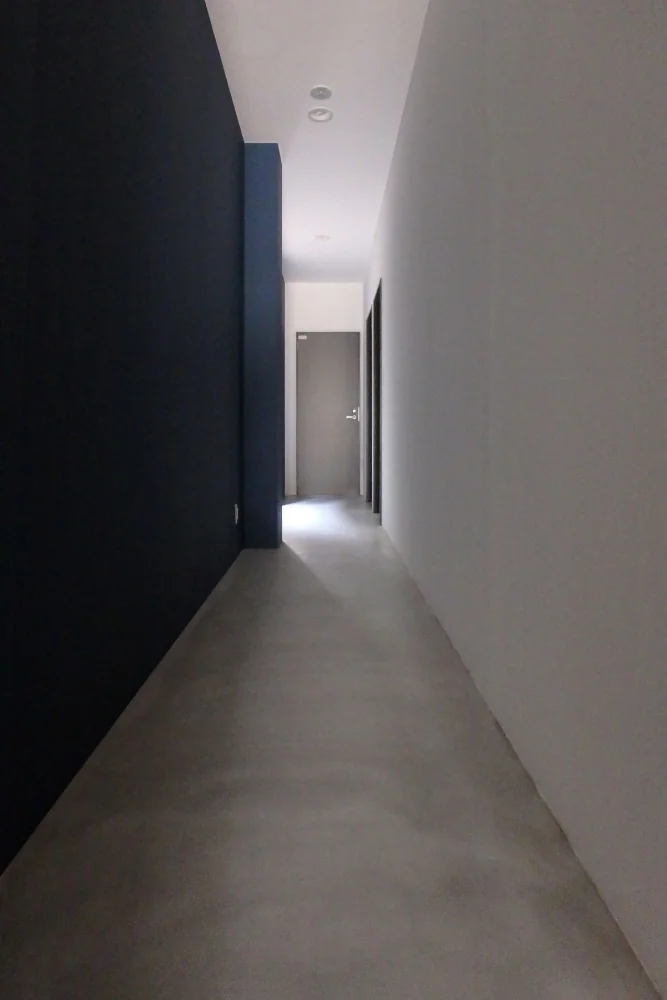
Guest-house corridor. The first-floor slab is finished in mortar for both the corridor and the guestrooms.
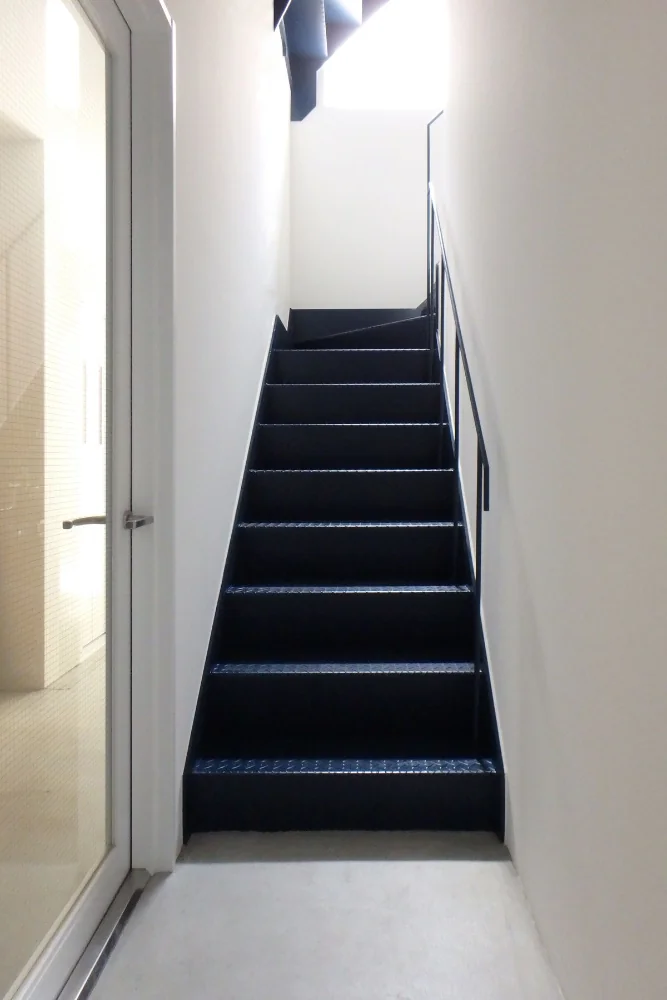
First-floor stair. The share-house entrance is on the left.
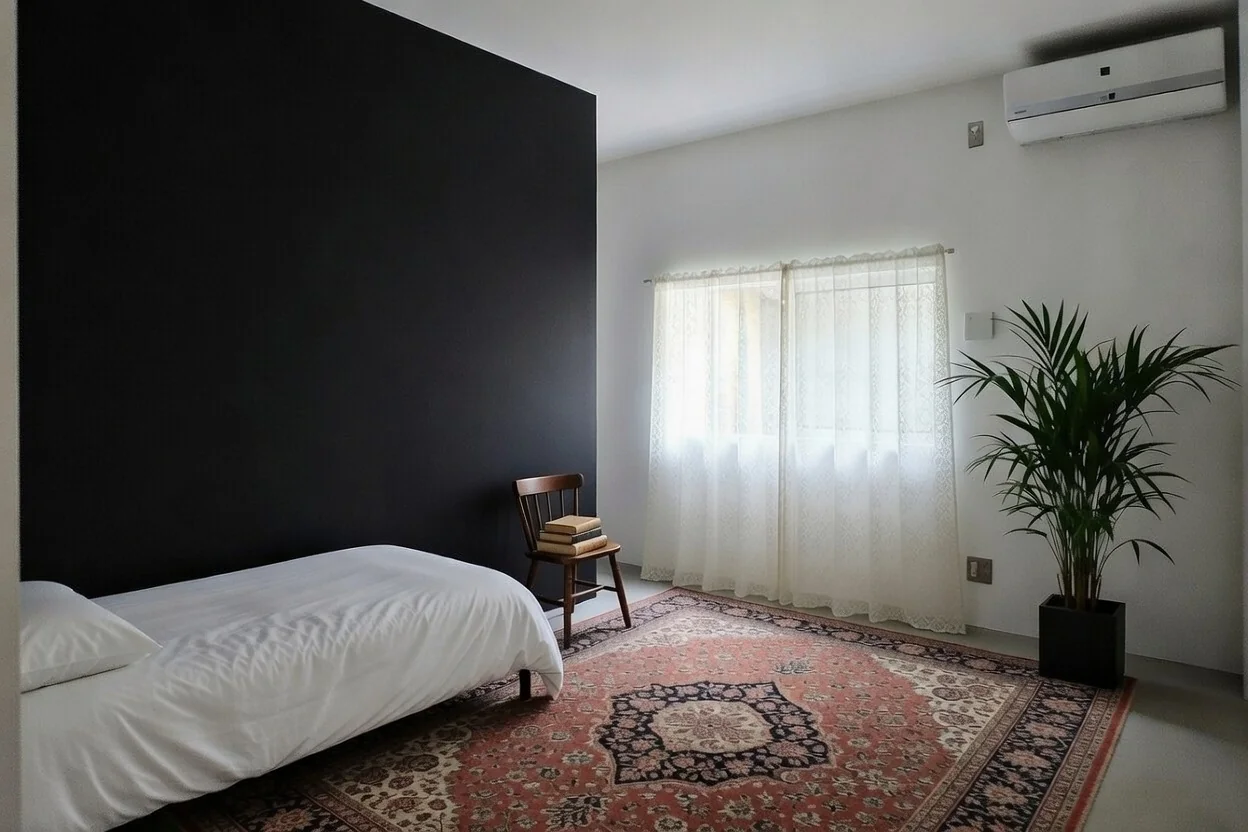
Guest room accent colour is purple.
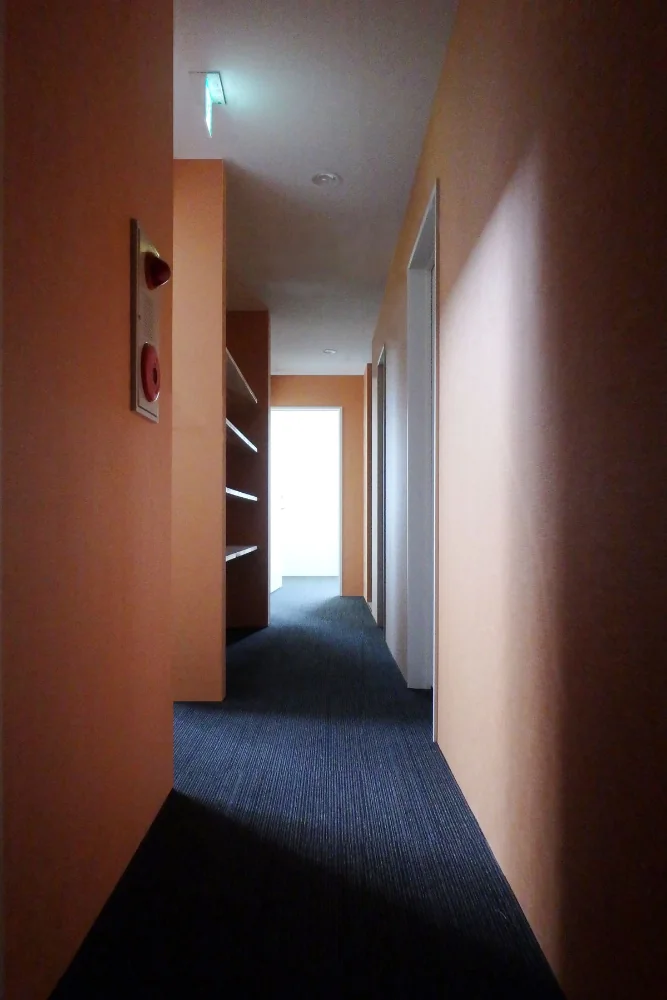
Second-floor internal corridor. Combination of orange walls and blue flooring.
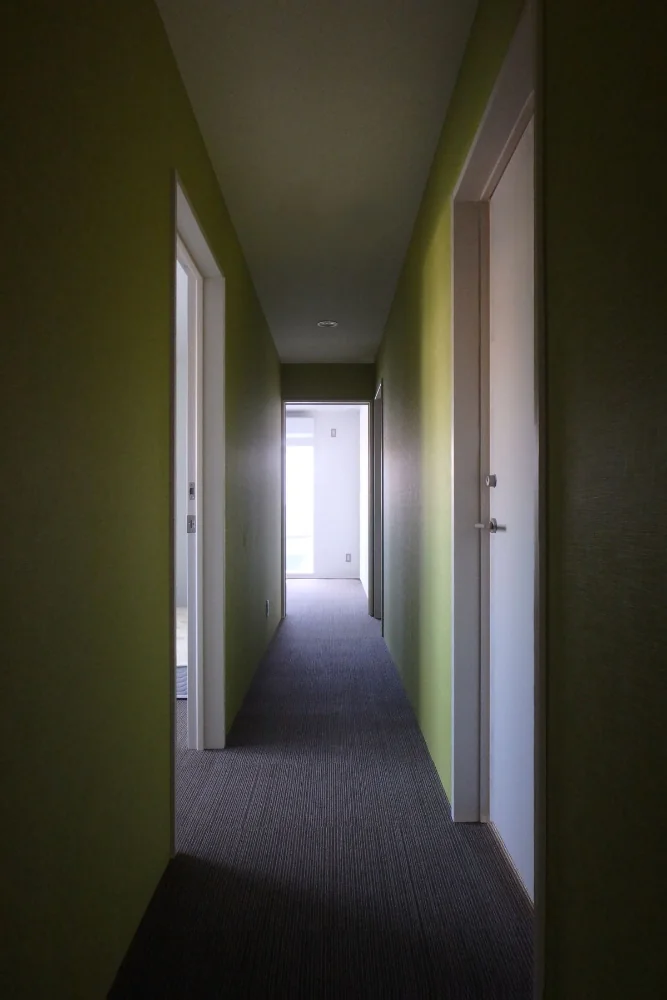
Third-floor internal corridor. Green walls and brown flooring.
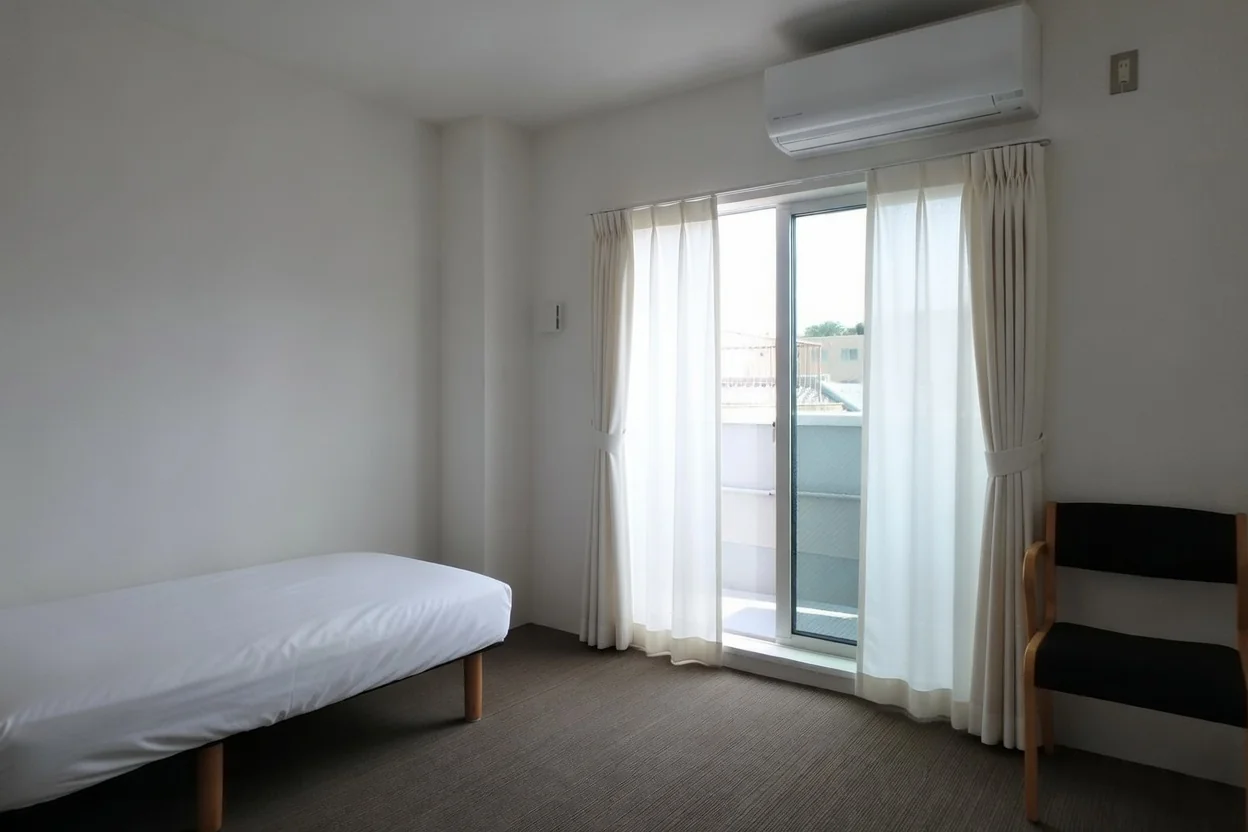
Third-floor share-house room. A south-facing unit.
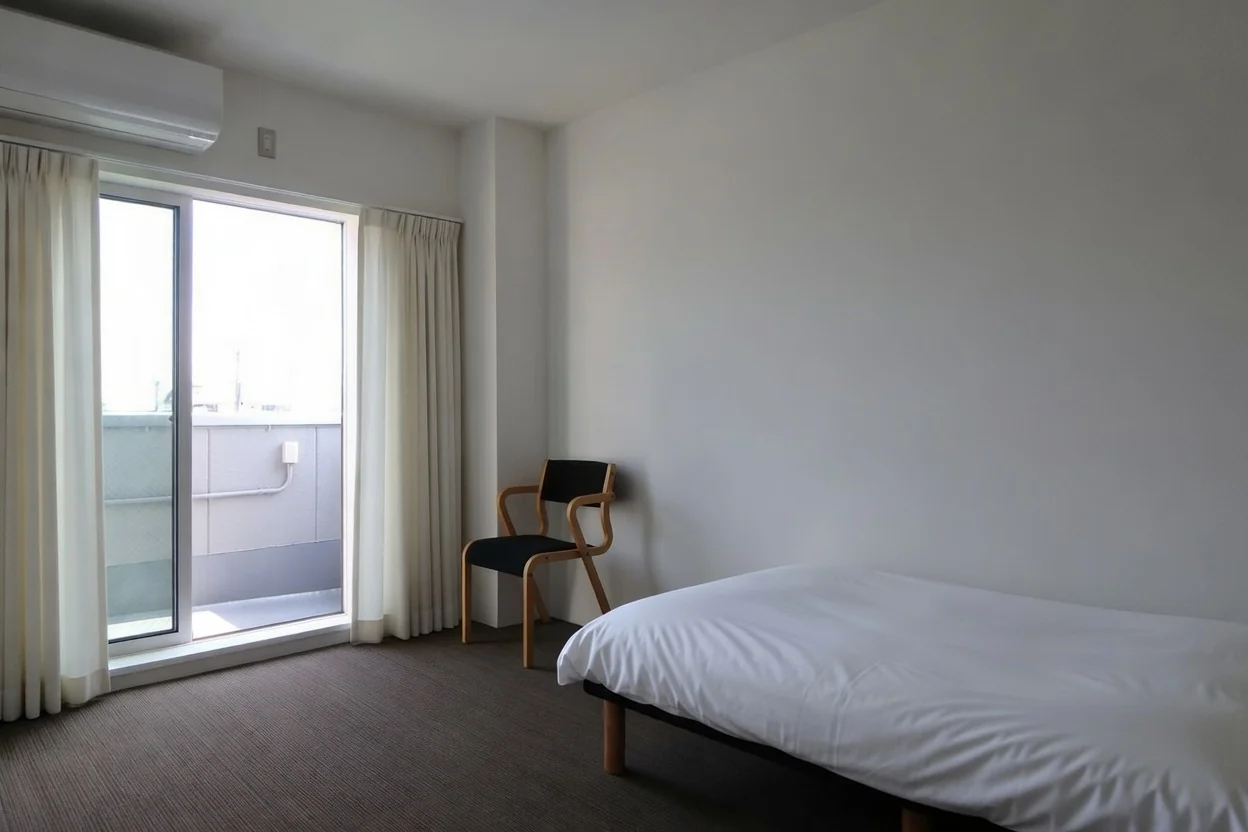
New insulation added to floors, walls and ceilings; openings upgraded to high-performance resin frames.
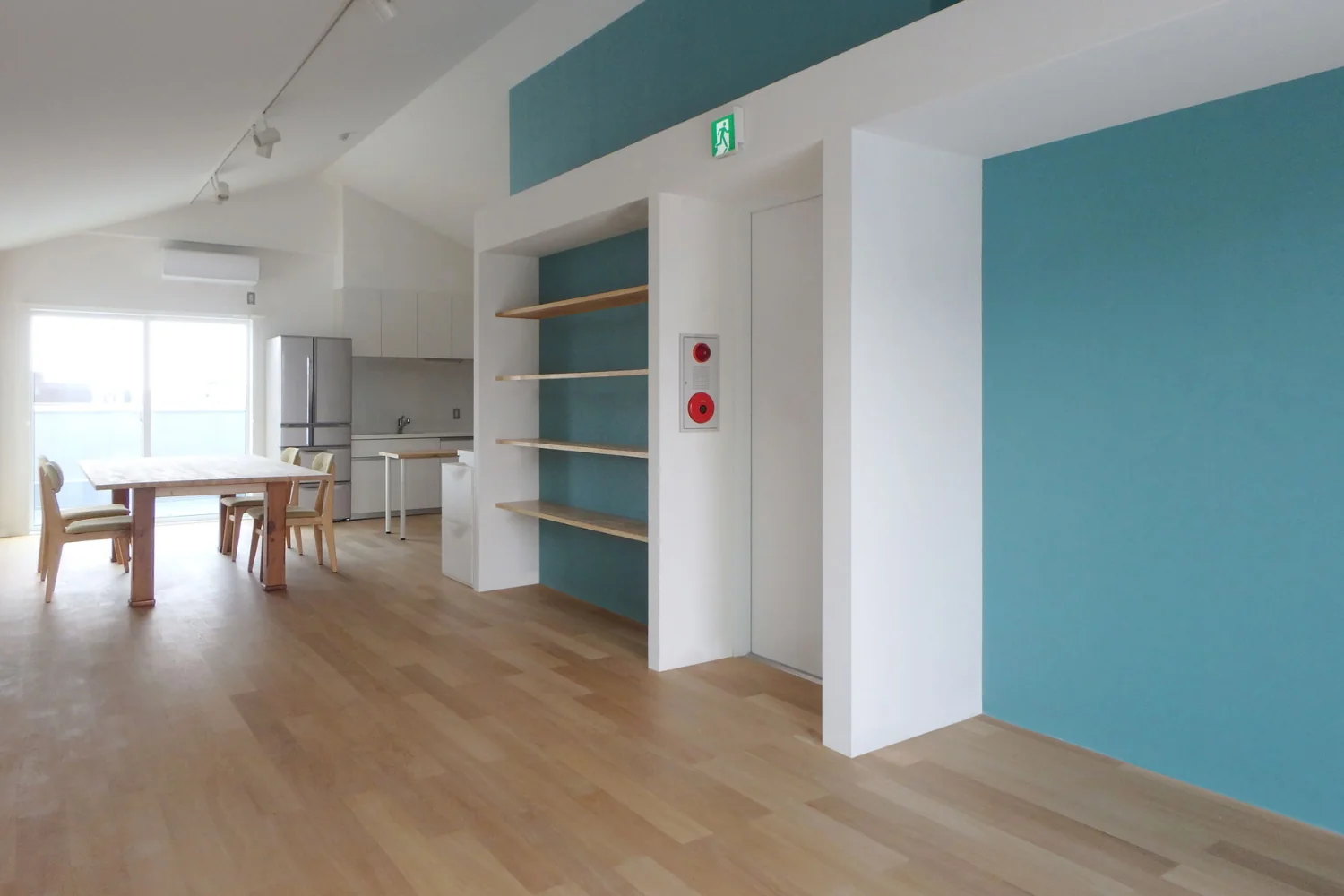
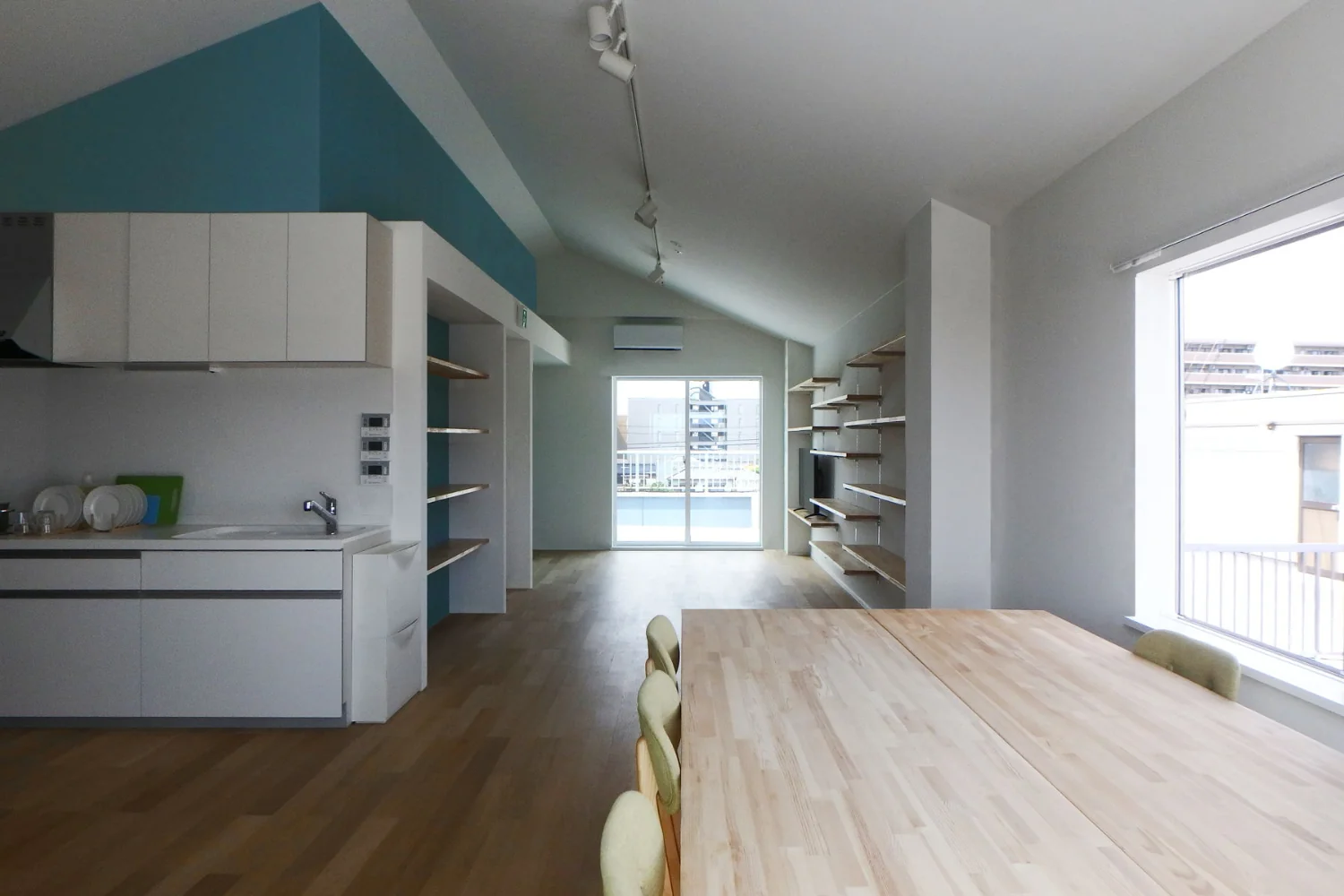
Originally there were terraces to the north and south; the top-floor (4F), with views toward Wakakusa-yama, was converted into the communal living room.
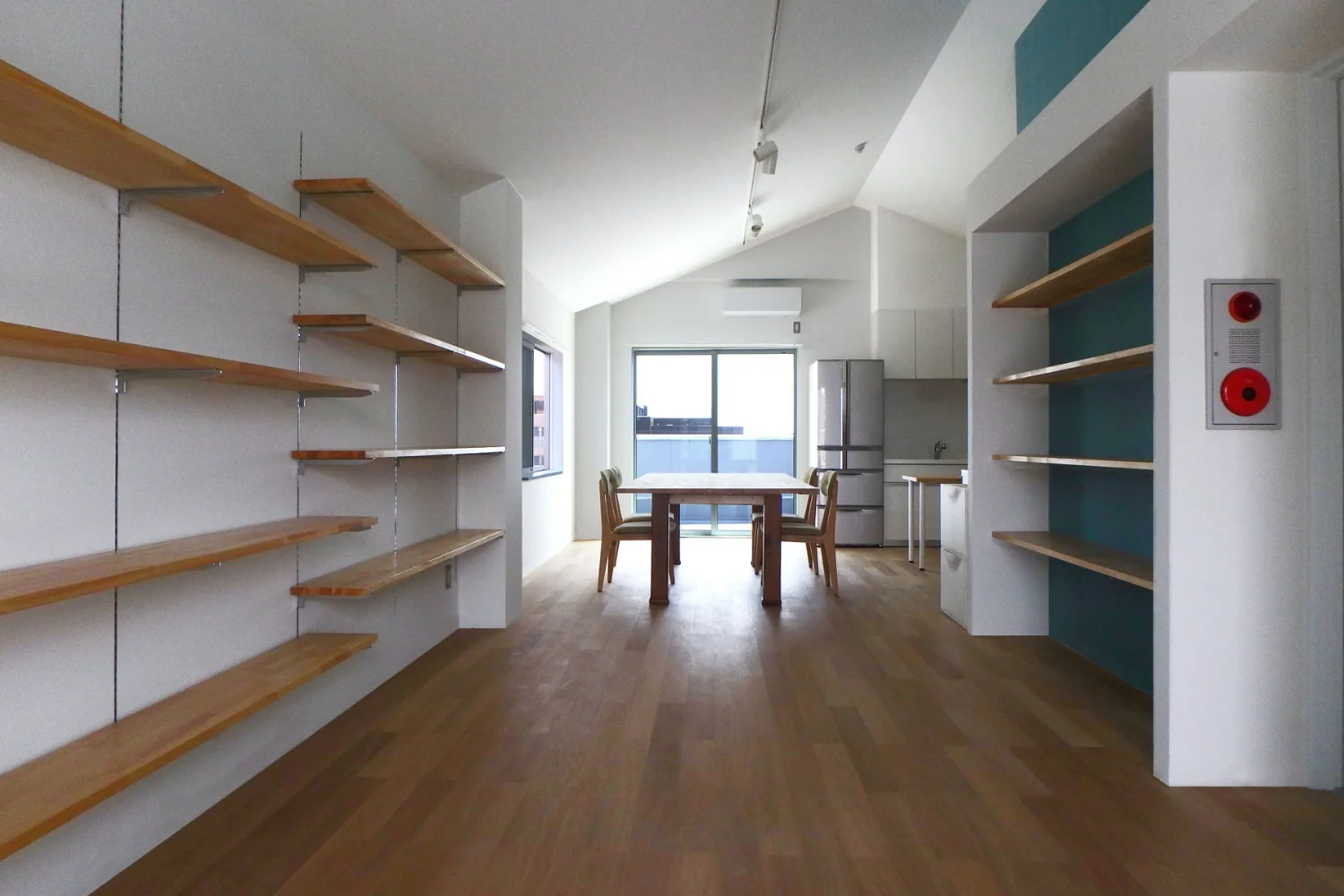
The top floor serves as the share-house communal living room — a high-ceilinged space that takes advantage of the gabled roof.
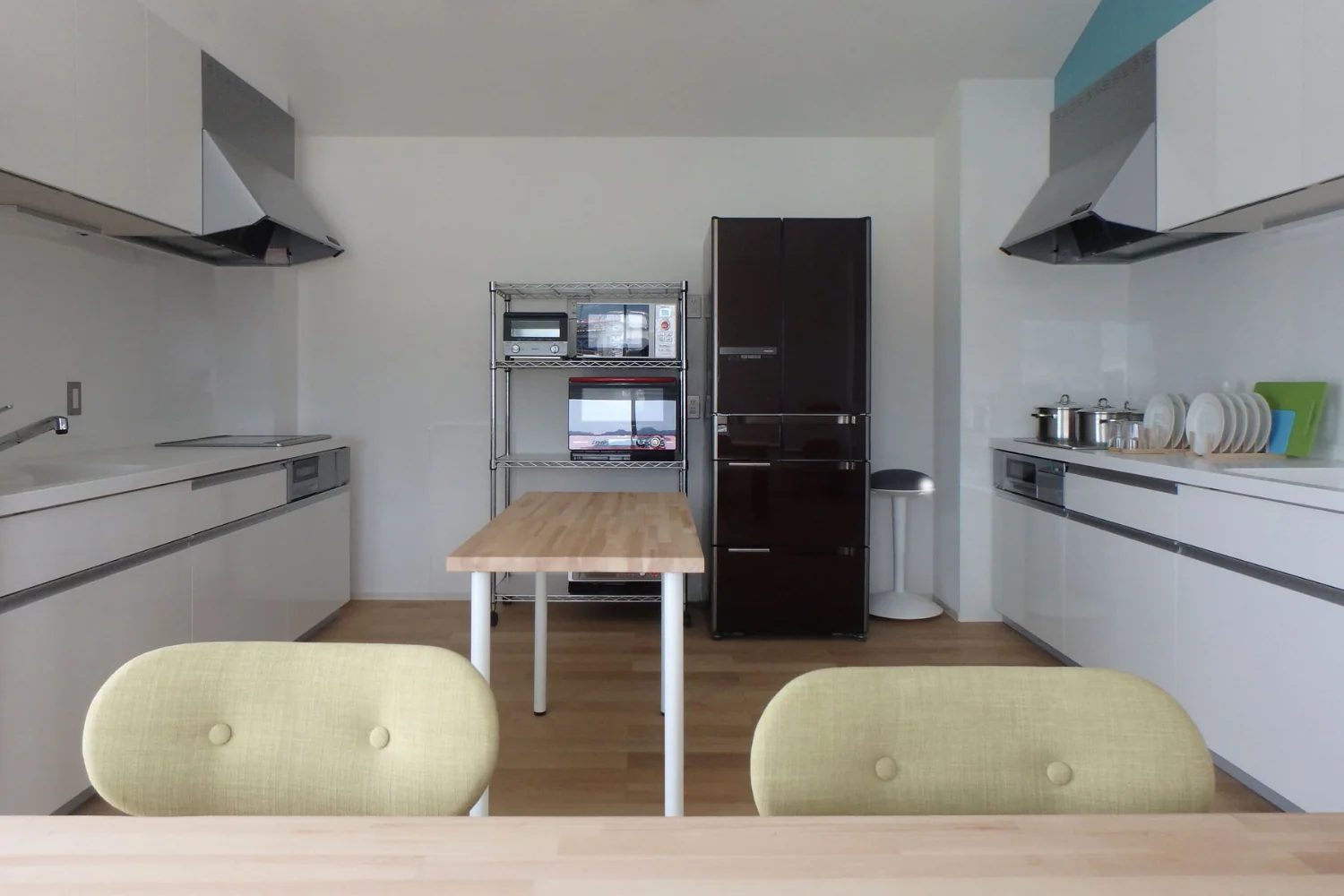
The cooking and dining areas were designed to accommodate simultaneous use by multiple occupants, ensuring ample space.
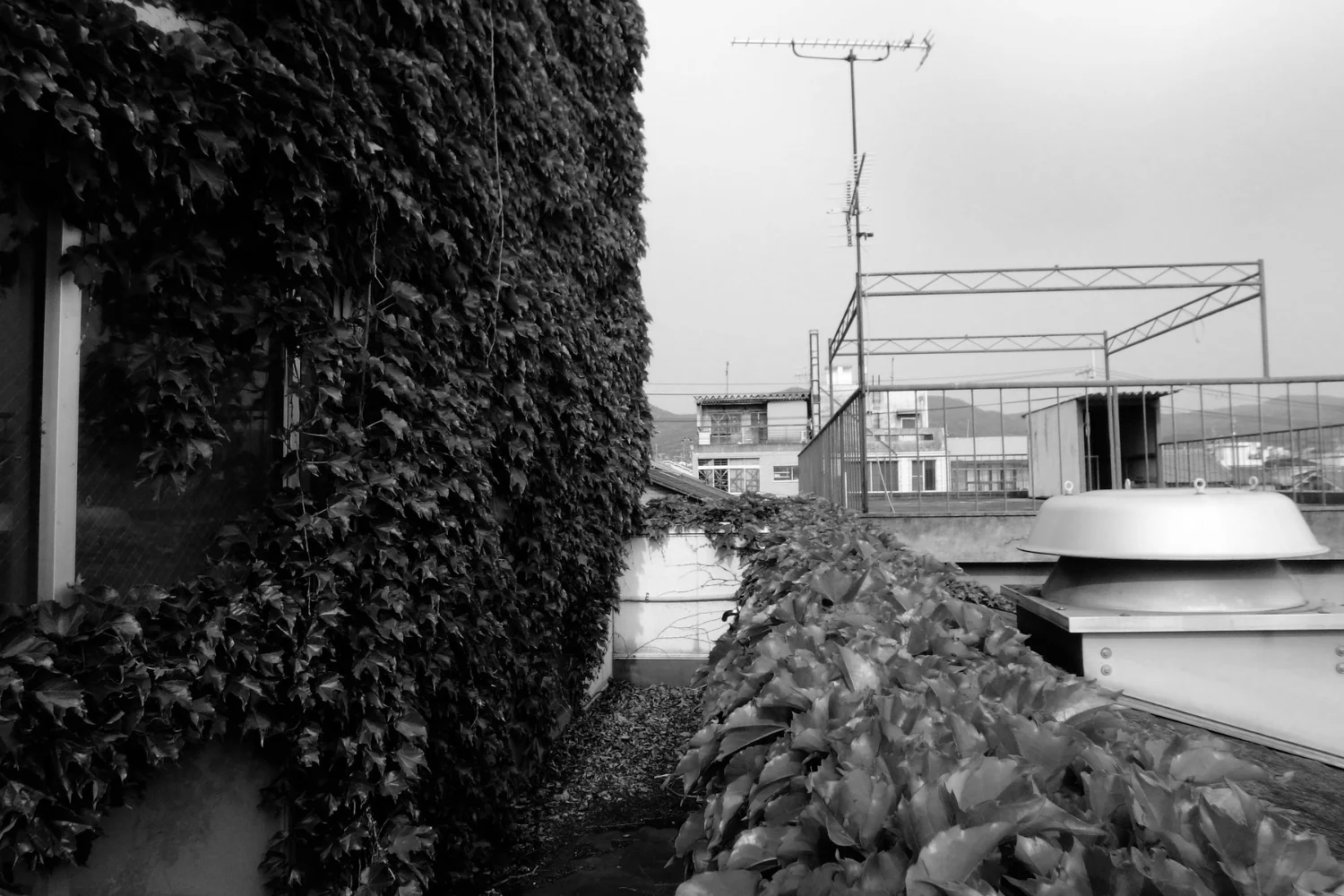
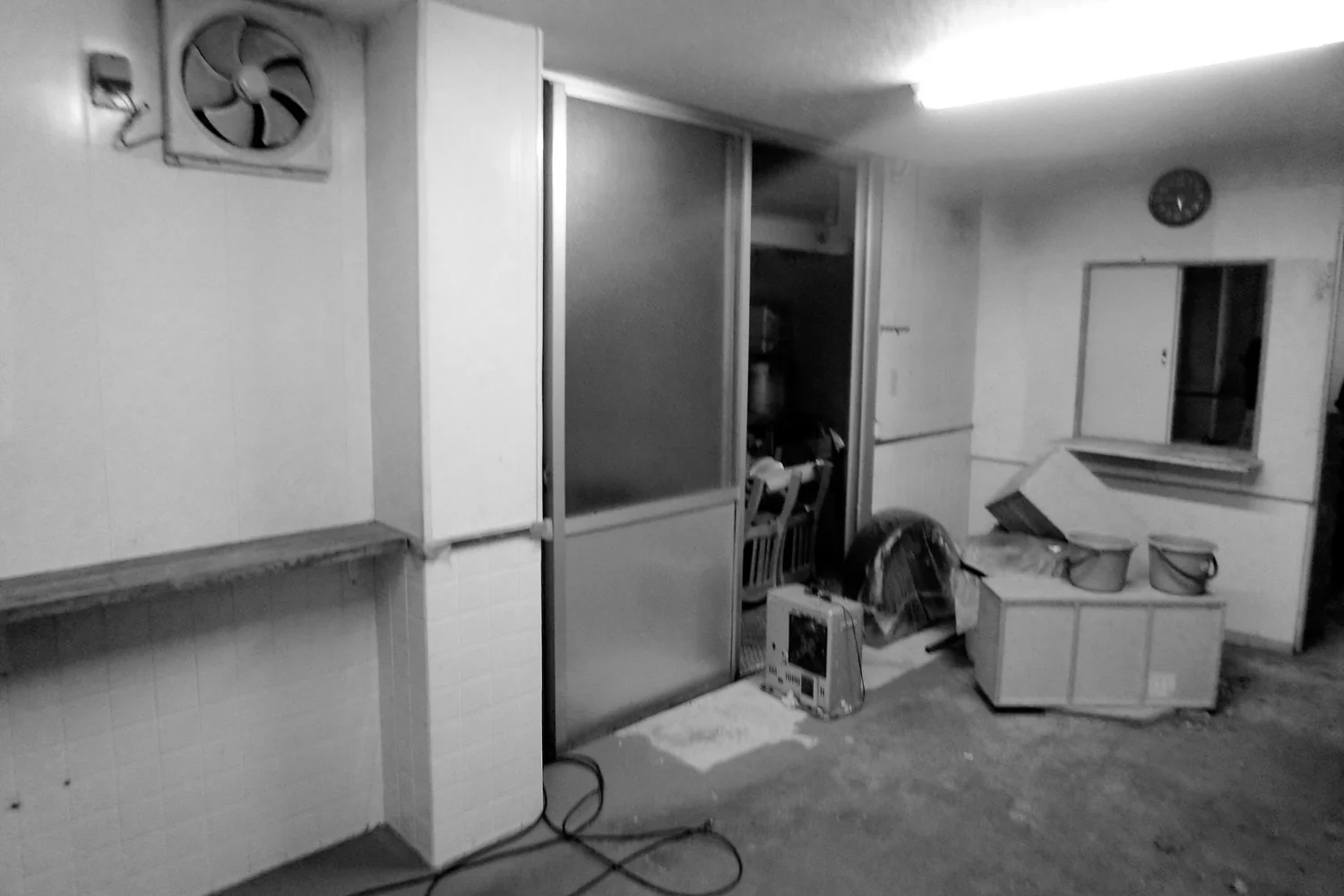
Condition before renovation
YYAA
Learn More
Kyōbate, Nara City. This project involved the rehabilitation of a circa-25-year-old existing building purchased by the client, converting it into a residential facility. The building was originally constructed as a confectionery factory and warehouse and, after a series of incremental, patchwork renovations, had been used as offices and employee accommodation. As a result, the passenger/freight elevator was unnecessarily large and the internal partitions were in a hazardous condition from the perspective of fire protection and means of egress, making them unsuitable for reuse. After verifying that the project could satisfy current provisions of the Building Standards Act, Fire Service Act and the Inns and Hotels Act while remaining commercially viable, the scheme was reconfigured as a mixed facility combining a female-only share house for single occupants and a guest house. By retaining the existing structural frame we avoided retroactive structural recalculations associated with the change of use. The oversized elevator was removed and replaced with a domestic elevator designed to comply with vertical-shaft compartmentation, and the guest-house and share-house circulation paths were separated but planned efficiently. By installing high-performance insulation, thermally efficient resin window frames and a BEMS, the project obtained a ZEB (Net Zero Energy Building) subsidy from SII (Environmental Innovation Initiative), improving residential performance while substantially reducing operational costs.
Location | Nara City
Use | Dormitory (share house) & Inn (guest house)
Structure / Scale | Steel frame, 4 floors
Site area | 68 tsubo [226 m2]
Area used for unit-cost calculation | 150 tsubo [495 m2]
Design & supervision | Yoshihiro Yamamoto [YYAA]
Structural design collaboration | [Yamaguchi Architectural Design Office]
Construction | [Kameyasu Construction]
Share-house leasing | [Hitsuji Real Estate]
Net Zero Energy Building demonstration project | [SII (Environmental Innovation Initiative)]
Use | Dormitory (share house) & Inn (guest house)
Structure / Scale | Steel frame, 4 floors
Site area | 68 tsubo [226 m2]
Area used for unit-cost calculation | 150 tsubo [495 m2]
Design & supervision | Yoshihiro Yamamoto [YYAA]
Structural design collaboration | [Yamaguchi Architectural Design Office]
Construction | [Kameyasu Construction]
Share-house leasing | [Hitsuji Real Estate]
Net Zero Energy Building demonstration project | [SII (Environmental Innovation Initiative)]
- Copyright(C)Qurasuki.All Rights Reserved.