Introducing Hanger1 Aircraft Exhibition Hall, an example of Architect / Design office facility architecture in Cercle Akasaka 1F, 4-2-25 Akasaka, Minato-ku, Tokyo by Far East Design Lab..
Hanger1 Aircraft Exhibition Hall
Learn More
Episode
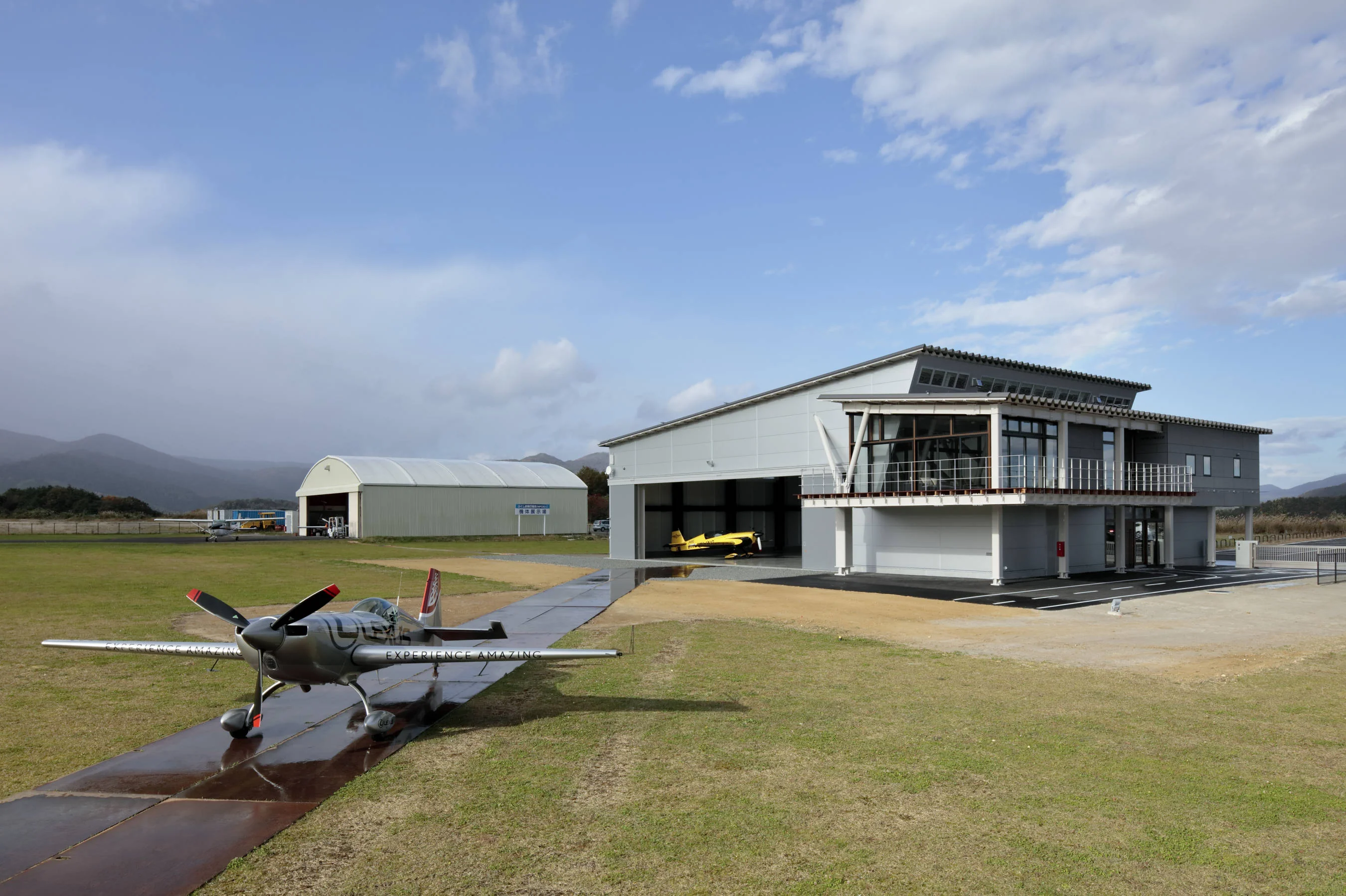
The site of "HANGAR 1" is located within Fukushima Prefecture's "Fukushima Sky Park." It serves not only as a permanent exhibition space for aerobatic aircraft but also as the base for the owner's participation in air races. Additionally, it offers unique programs such as "Sky Lab," an aviation education initiative aimed at children, which can only be experienced here. During events, it functions as a central facility that transforms the entire park into a festive plaza. Surrounded by the beautiful natural scenery of Fukushima, including the Azuma mountain range, it broadcasts unique activities nationwide and serves as a symbol of reconstruction, creating a future following the Great East Japan Earthquake. While the core philosophy centers on "people, sky, and aviation," the scope of activities and outreach is broad, thus the building’s functions are expected to be diverse.
Expressing the trajectory of the owner’s global challenges in air racing and serving as a place to pass on that mindset to the next generation, the building was conceived to resonate with the simple yet meticulously refined charm of small aircraft crafted by artisans and engineers. It was deemed appropriate for the building to stand generously within nature.
–
Planning
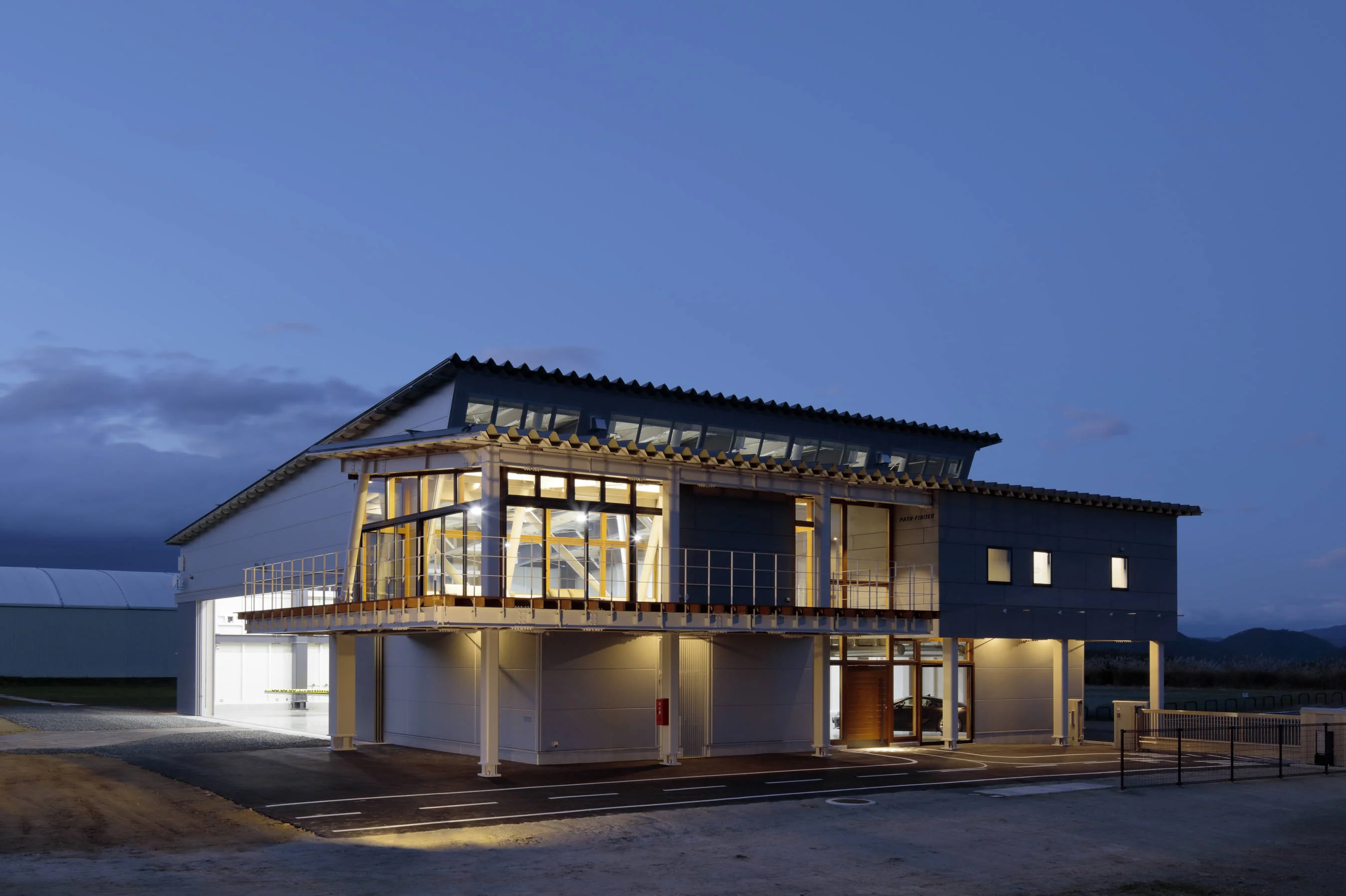
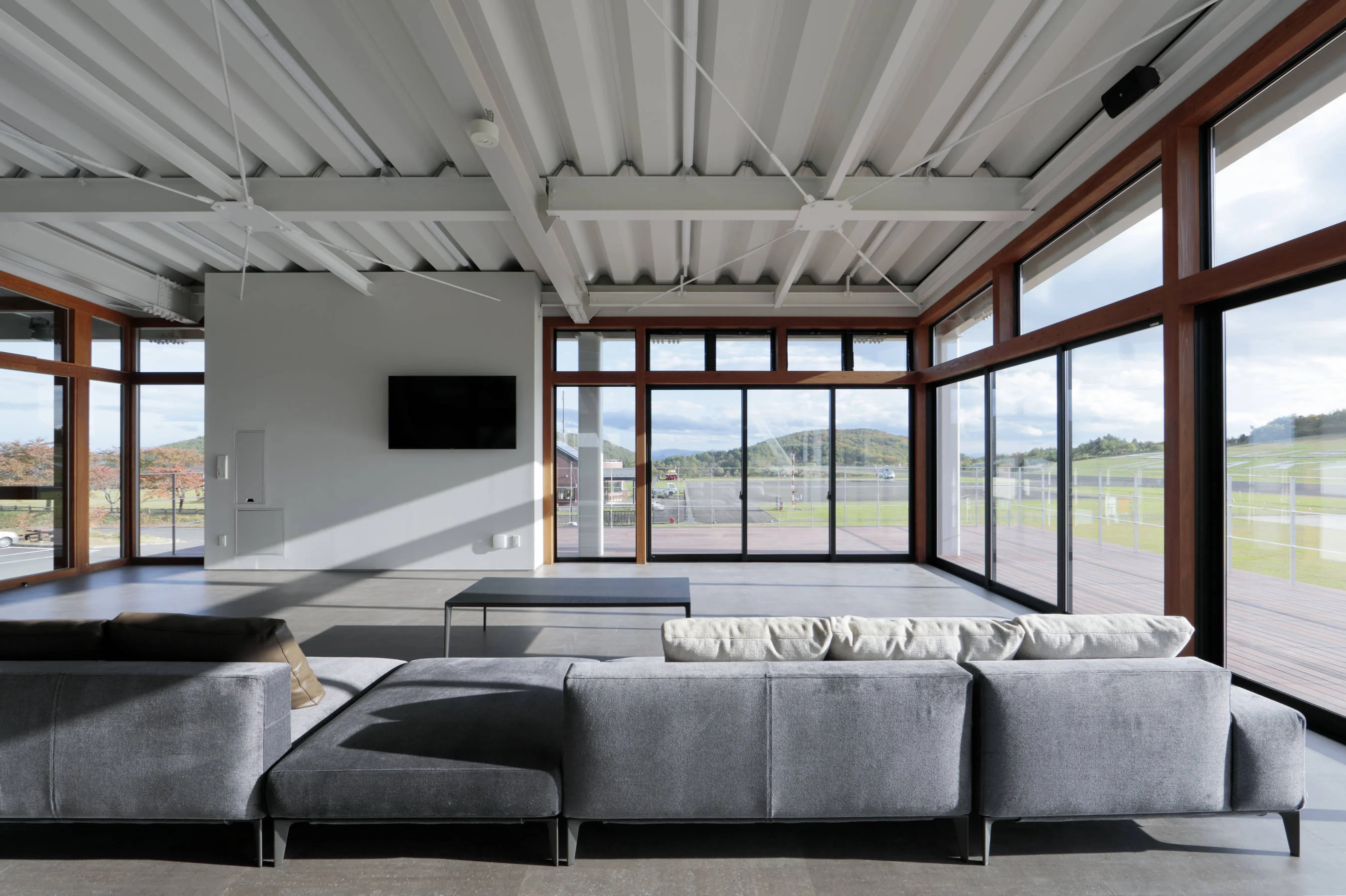
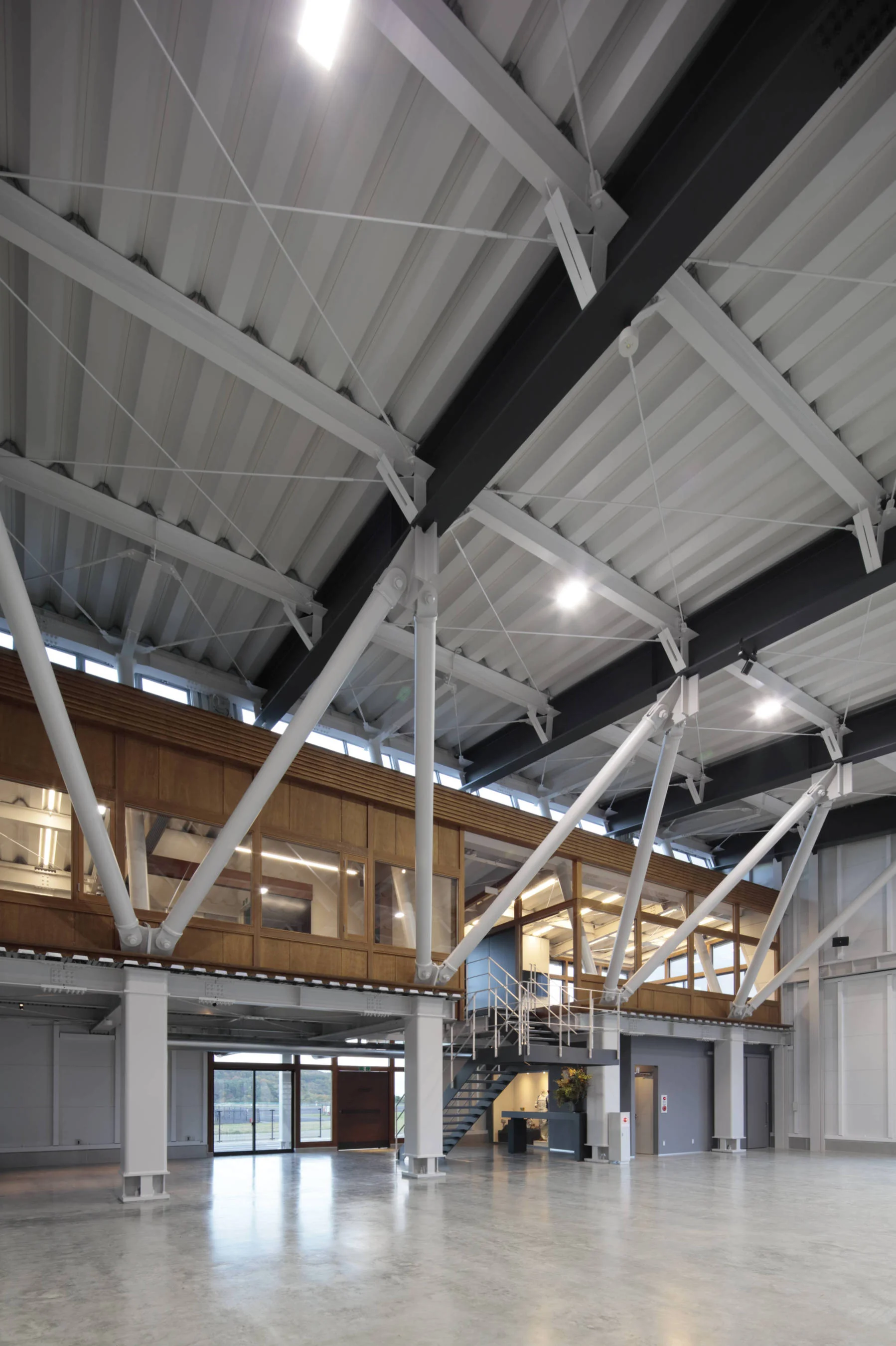
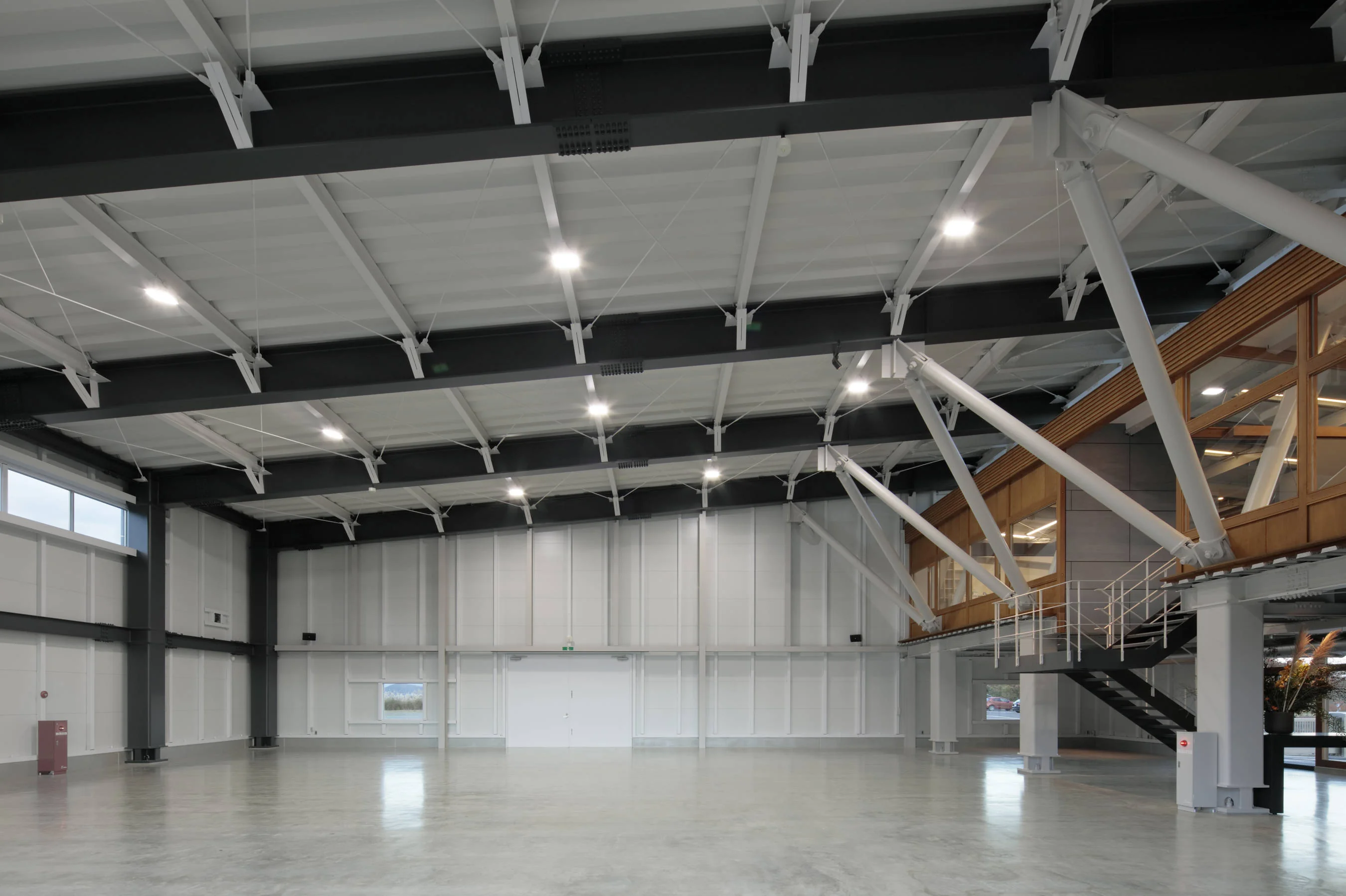
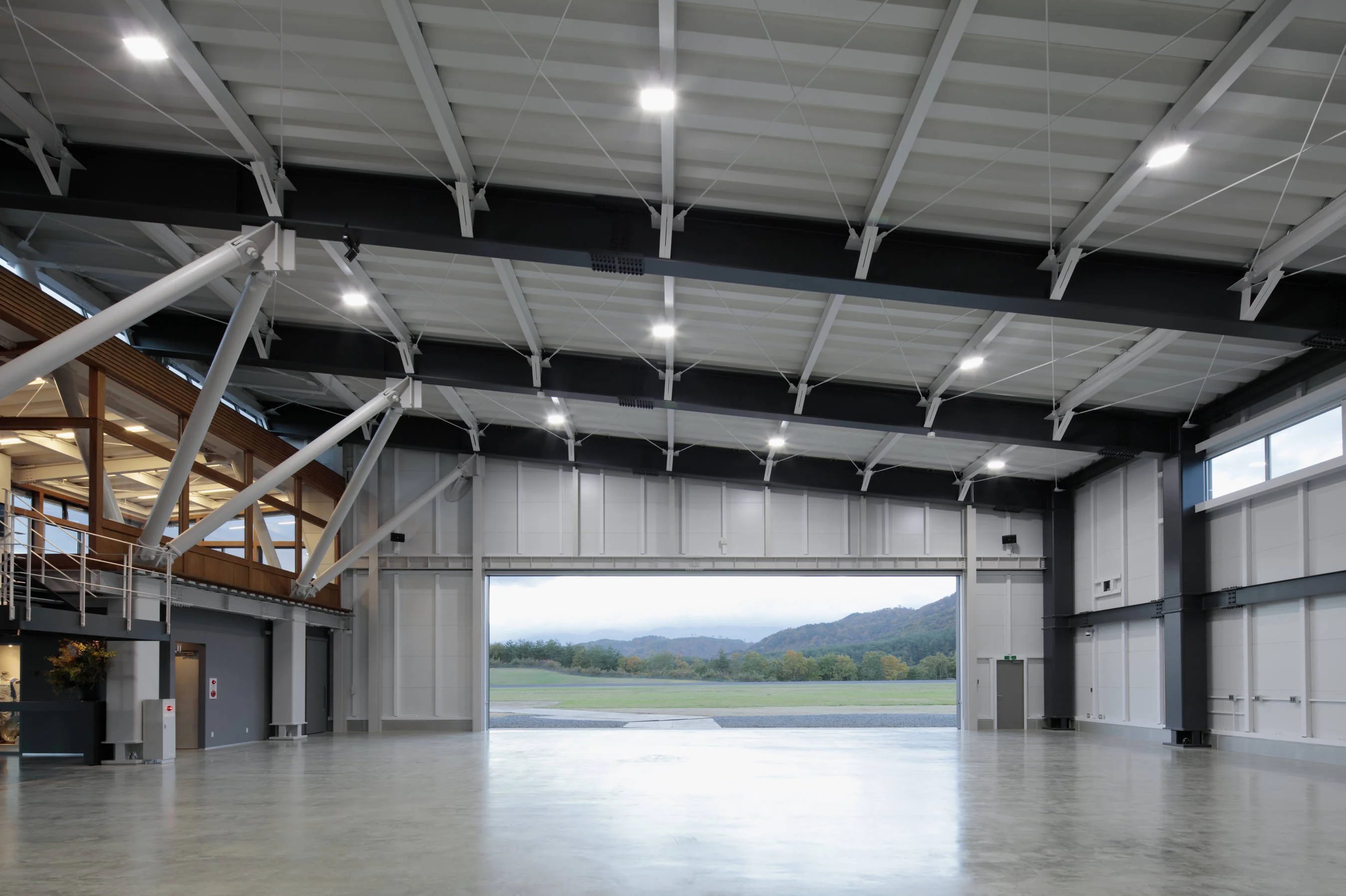
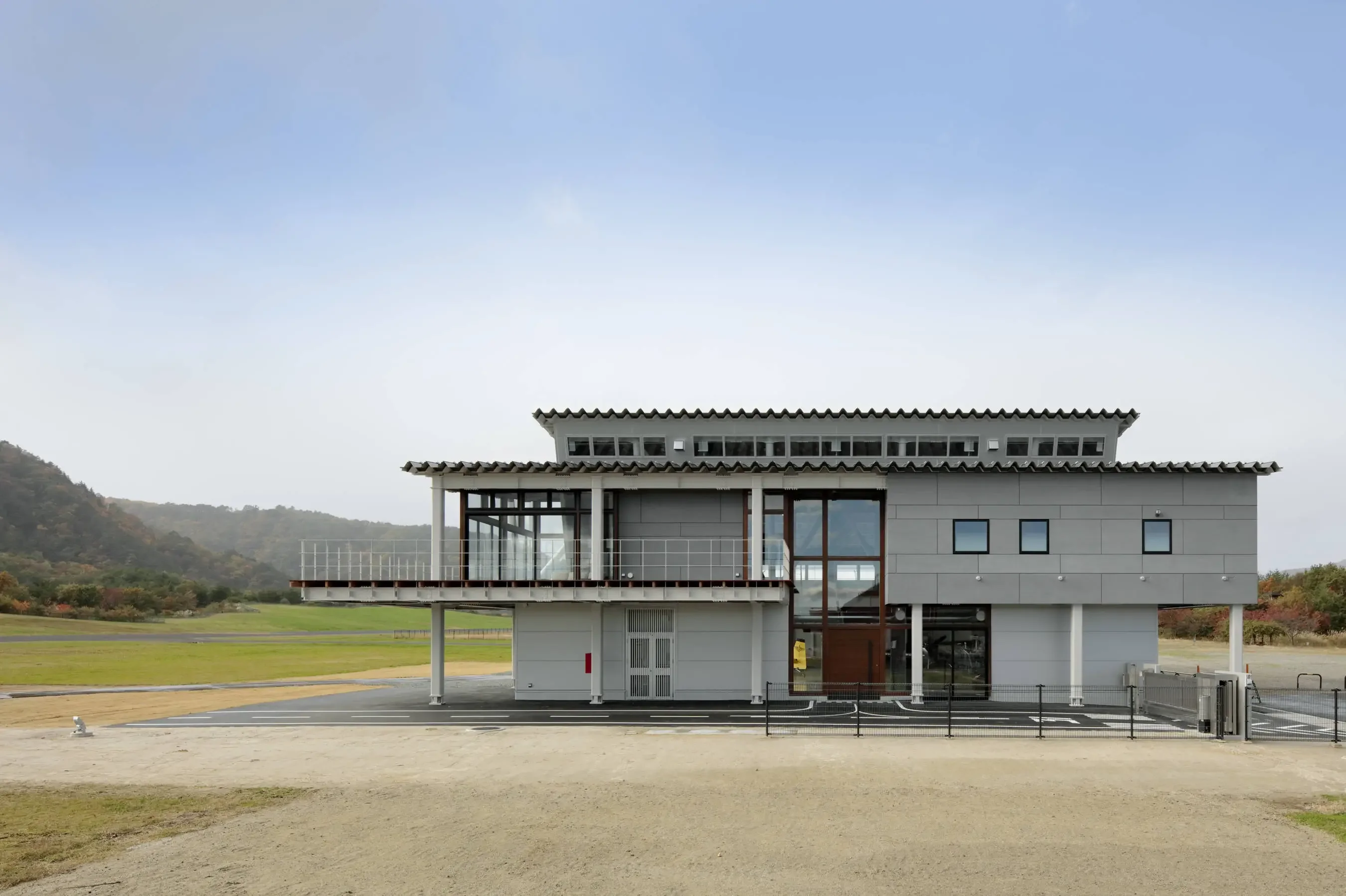
The building features a simple composition: a large steel-framed space used as an exhibition area and hangar, with a human-scale wooden-framed lounge inserted above, housing the management office and a gathering space.
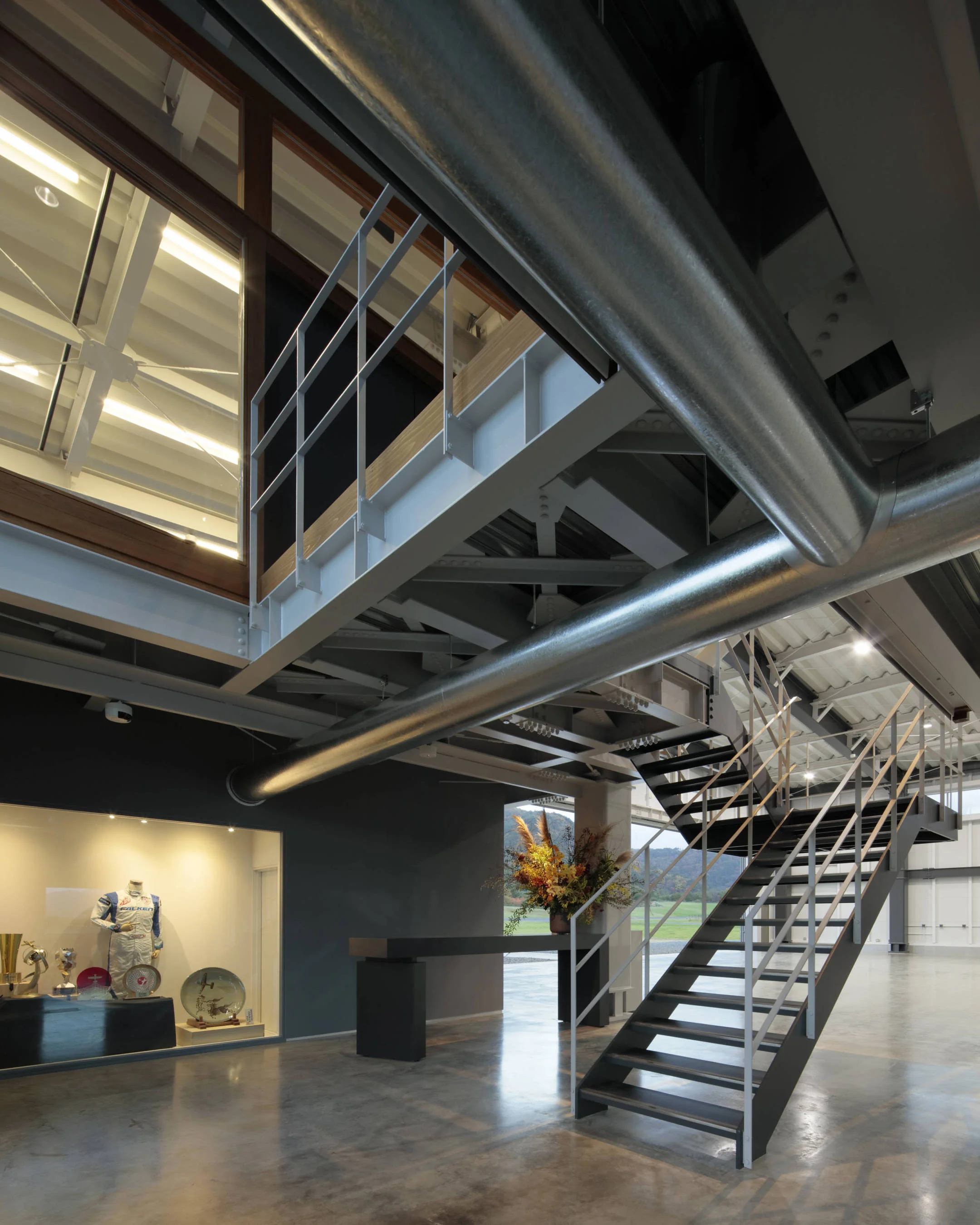
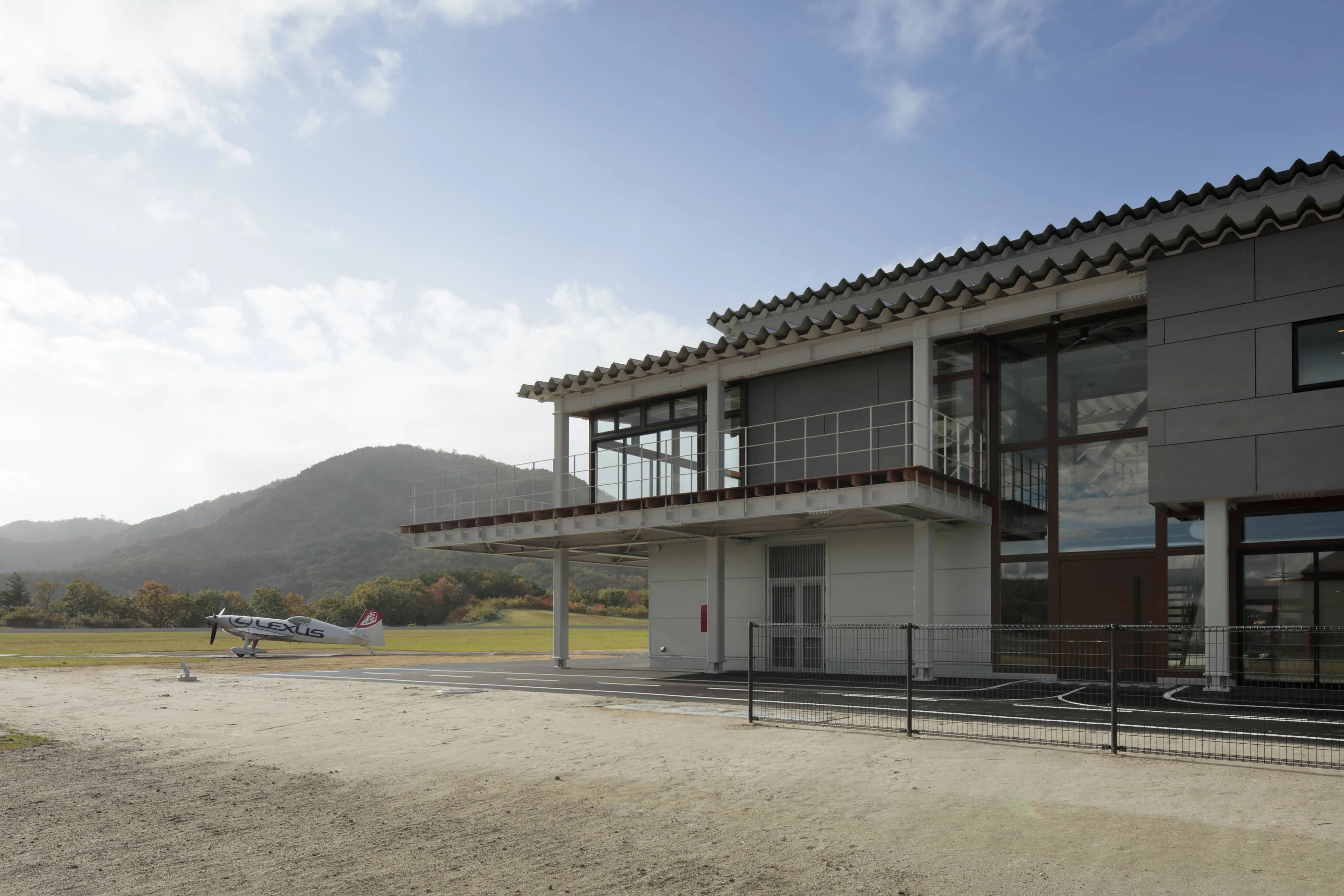
The lounge includes a balcony projecting approximately 2.5 meters toward the runway, providing simultaneous views of the runway and exhibition space. This area accommodates a range of activities from relatively small seminars to large-scale events.
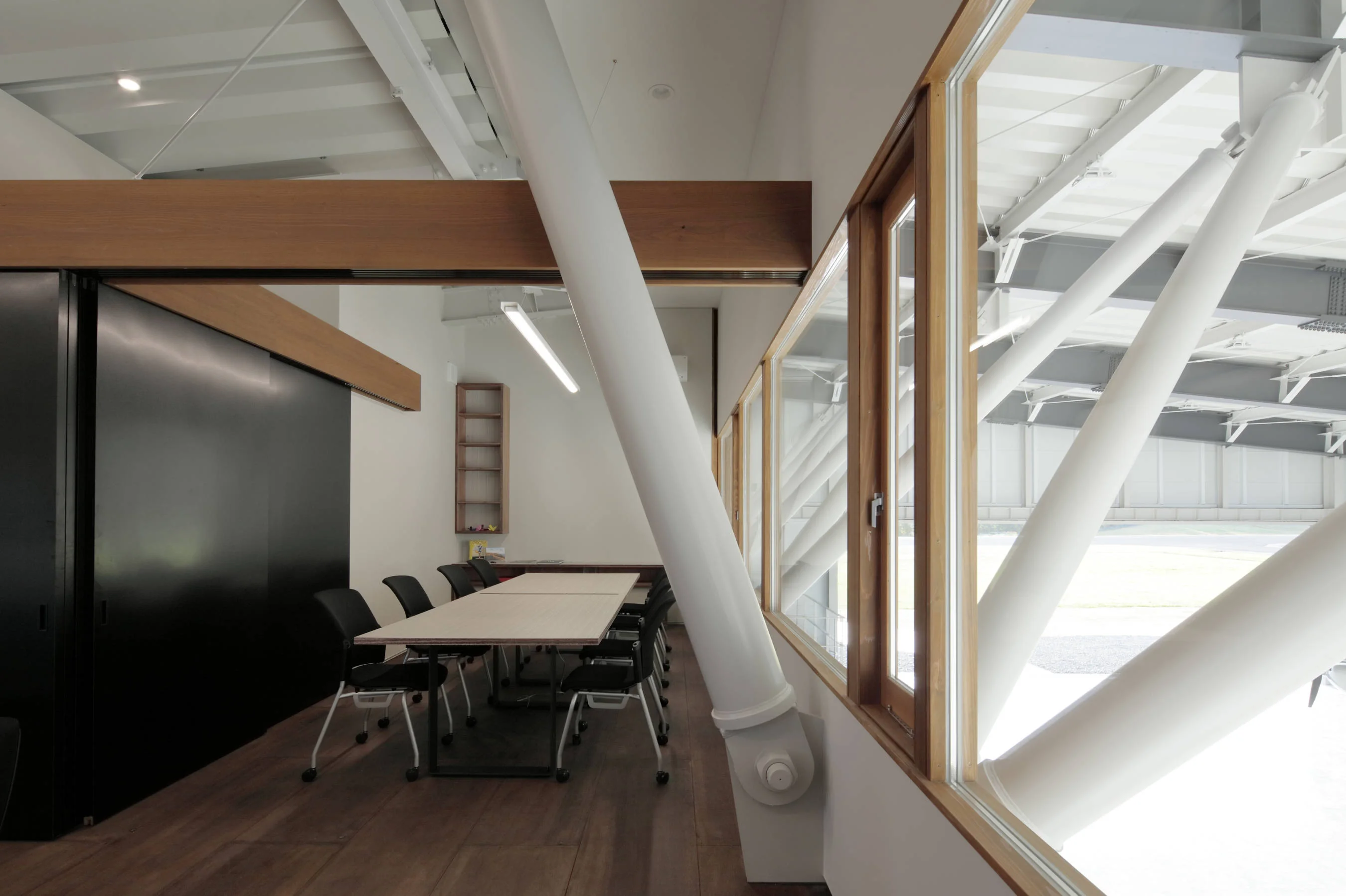
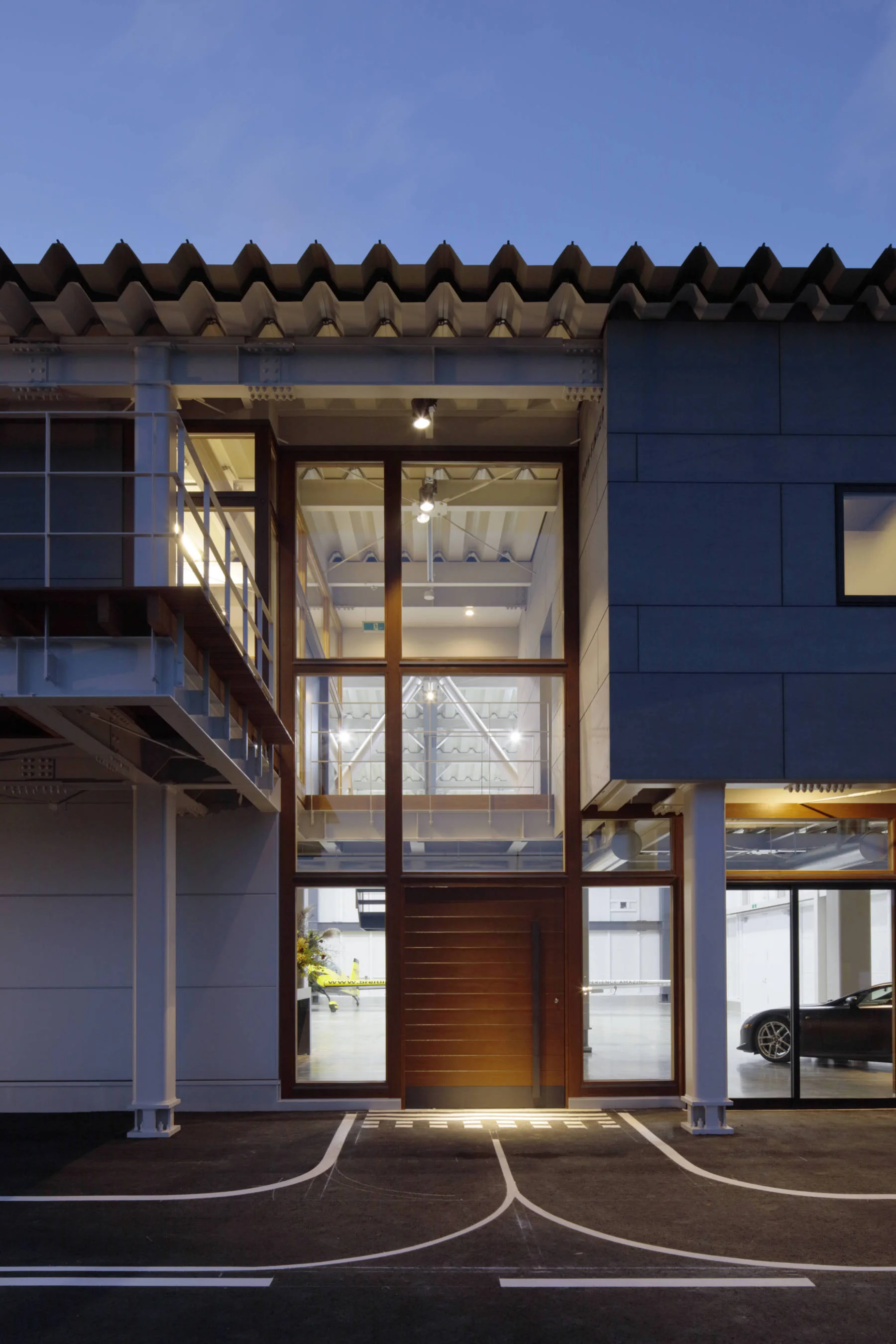
Structurally, it was essential to realize a column-free space capable of supporting snow loads exceeding 2 meters while displaying multiple aircraft. The design intentionally exposes the relationships between structural steel connections, cross-sections of materials, and building systems, addressing functional and programmatic requirements transparently.
This approach reflects the aerodynamic design of the exhibited aircraft, which have been refined to eliminate all unnecessary elements for racing and aerobatics. The building aims to inspire children gathered here to appreciate the fascination of craftsmanship, materials, and mechanisms. Therefore, all joints are left exposed as much as possible, with careful coordination to reveal the ends of secondary members and overlaps of finishing materials, avoiding concealment of the relationships between elements while maintaining a refined appearance.
The exterior emphasizes a simple horizontal line inspired by the wings of small aircraft. The building’s presence harmonizes with the surrounding nature without resistance, presenting itself as a coherent and straightforward form.

The site of "HANGAR 1" is located within Fukushima Prefecture's "Fukushima Sky Park." It serves not only as a permanent exhibition space for aerobatic aircraft but also as the base for the owner's participation in air races. Additionally, it offers unique programs such as "Sky Lab," an aviation education initiative aimed at children, which can only be experienced here. During events, it functions as a central facility that transforms the entire park into a festive plaza. Surrounded by the beautiful natural scenery of Fukushima, including the Azuma mountain range, it broadcasts unique activities nationwide and serves as a symbol of reconstruction, creating a future following the Great East Japan Earthquake. While the core philosophy centers on "people, sky, and aviation," the scope of activities and outreach is broad, thus the building’s functions are expected to be diverse.
Expressing the trajectory of the owner’s global challenges in air racing and serving as a place to pass on that mindset to the next generation, the building was conceived to resonate with the simple yet meticulously refined charm of small aircraft crafted by artisans and engineers. It was deemed appropriate for the building to stand generously within nature.
–
Planning
The building features a simple composition: a large steel-framed space used as an exhibition area and hangar, with a human-scale wooden-framed lounge inserted above, housing the management office and a gathering space.
The lounge includes a balcony projecting approximately 2.5 meters toward the runway, providing simultaneous views of the runway and exhibition space. This area accommodates a range of activities from relatively small seminars to large-scale events.
Structurally, it was essential to realize a column-free space capable of supporting snow loads exceeding 2 meters while displaying multiple aircraft. The design intentionally exposes the relationships between structural steel connections, cross-sections of materials, and building systems, addressing functional and programmatic requirements transparently.
This approach reflects the aerodynamic design of the exhibited aircraft, which have been refined to eliminate all unnecessary elements for racing and aerobatics. The building aims to inspire children gathered here to appreciate the fascination of craftsmanship, materials, and mechanisms. Therefore, all joints are left exposed as much as possible, with careful coordination to reveal the ends of secondary members and overlaps of finishing materials, avoiding concealment of the relationships between elements while maintaining a refined appearance.
The exterior emphasizes a simple horizontal line inspired by the wings of small aircraft. The building’s presence harmonizes with the surrounding nature without resistance, presenting itself as a coherent and straightforward form.
- Copyright(C)Qurasuki.All Rights Reserved.