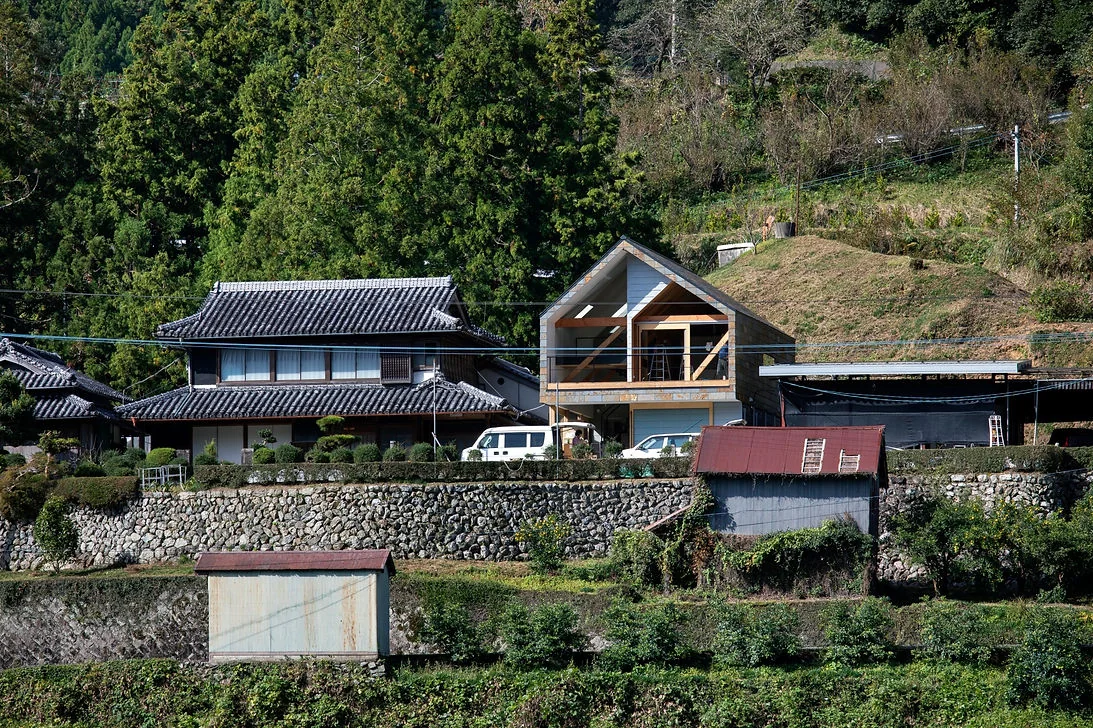
Introducing YAMANARI — House Embracing the Mountain Ridge, a custom-built home example by YIA Ishiue Yoshihiro Architectural Design Office, a Architect / Design office in 1572 Amagawataki-cho, Kishiwada, Osaka Prefecture, Japan

YAMANARI — House Embracing the Mountain Ridge
Eiji Tomita
Learn More
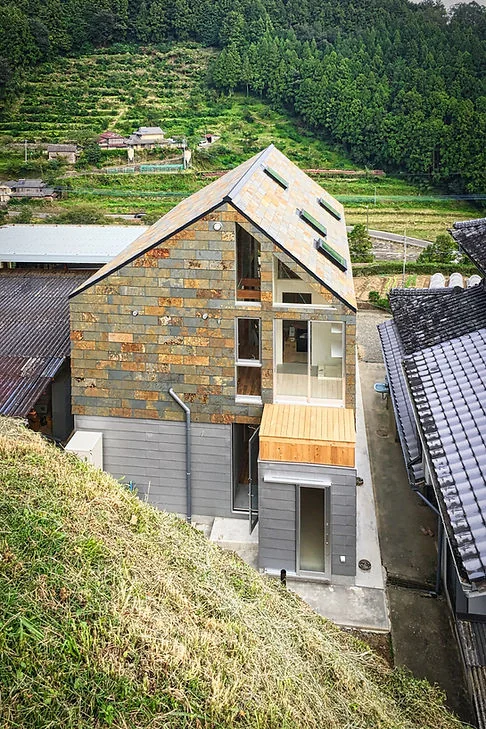
Located in a mountainous area approximately one hour by car from central Tokushima, the site revealed an almost overhanging expanse of verdure that left a strong impression; the surrounding natural environment is richly endowed. Yet in day-to-day life it can be difficult to fully appreciate such majestic beauty. The design intent was to integrate as much of the deep, green, and forested mountain environment as possible while creating moments—without imposing on daily life—where the residents become aware of that beauty. The clients, a young couple engaged in sudachi cultivation, requested three principal requirements: a hobby room for the husband, bright and open living spaces, and a spatial relationship with the main house that is neither fully separate nor entirely contiguous.
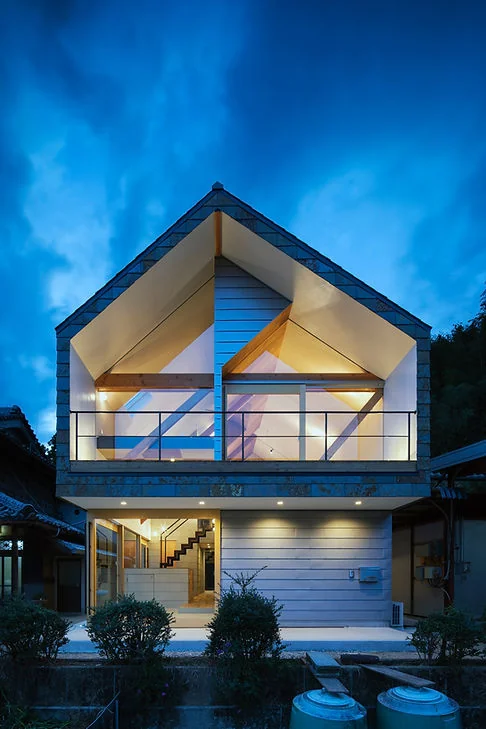
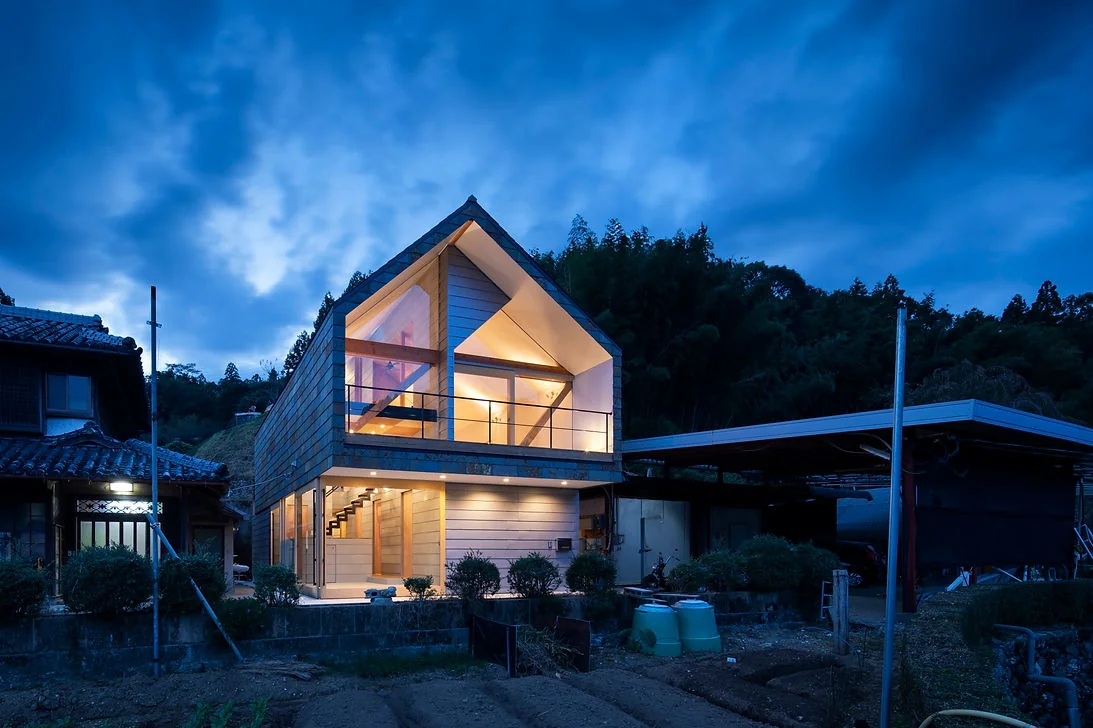
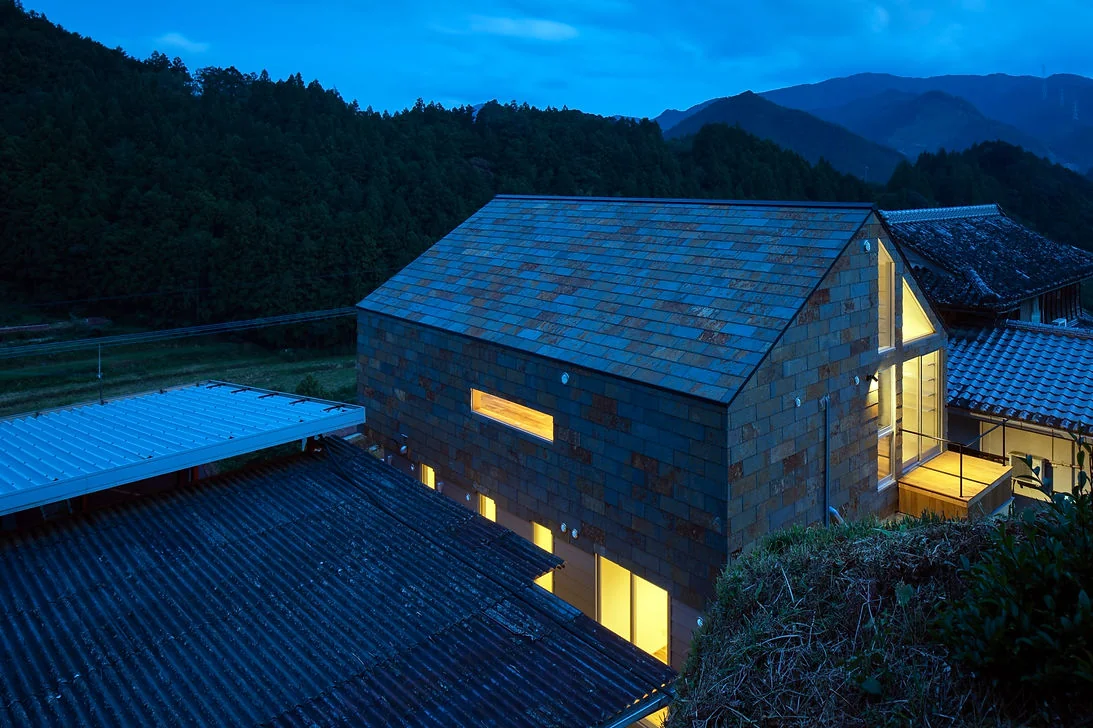
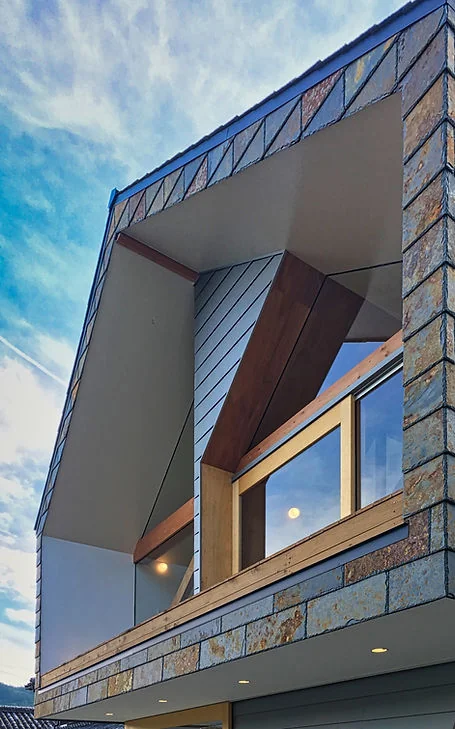
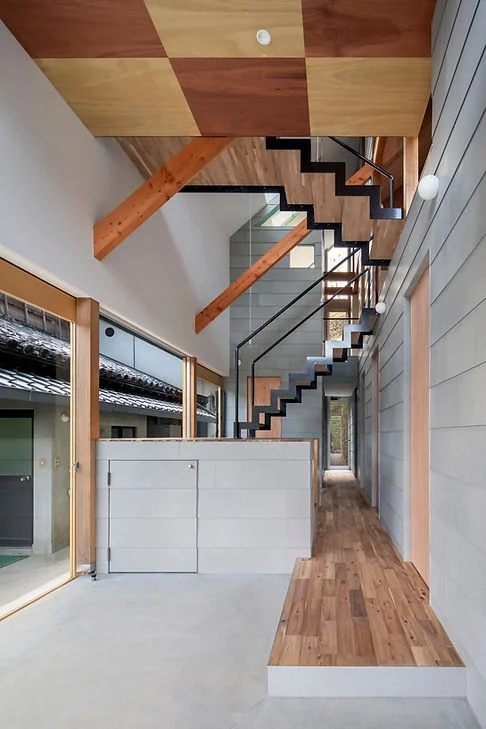
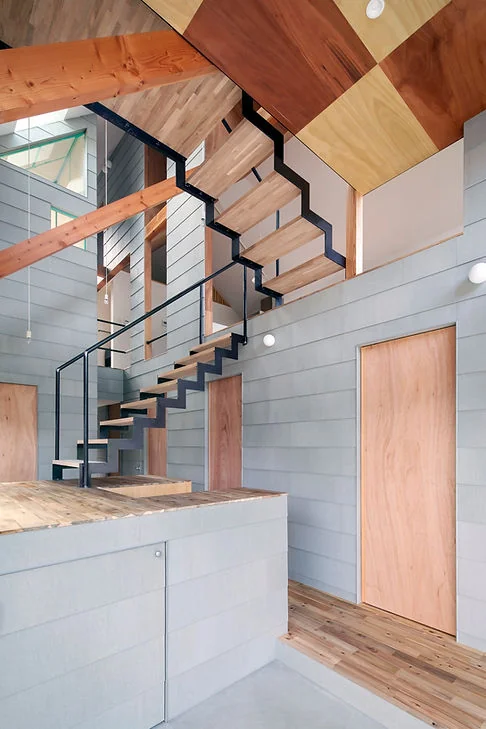
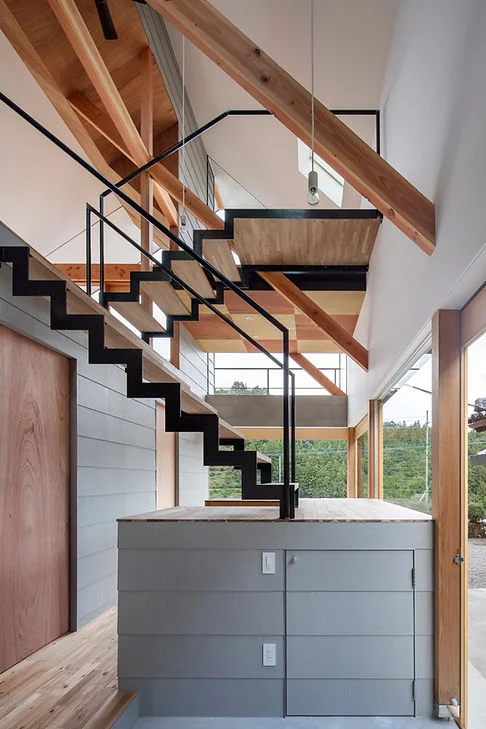
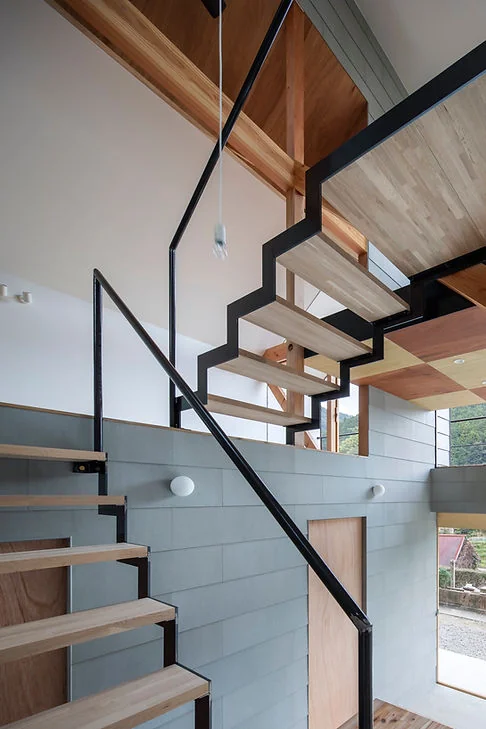
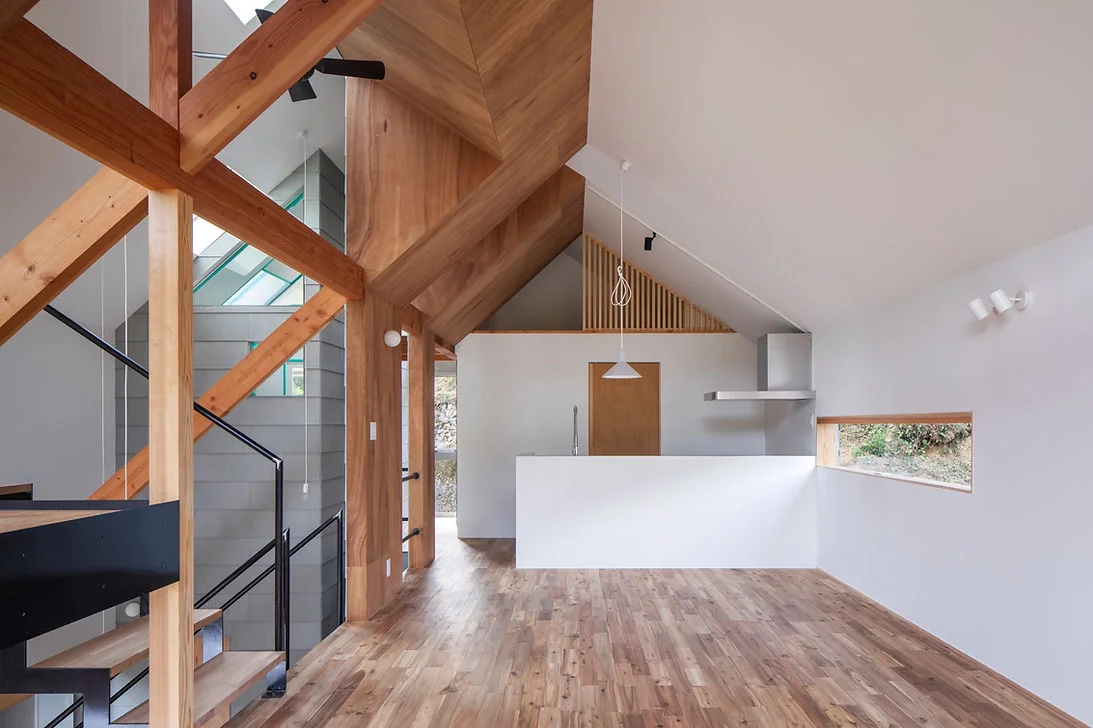
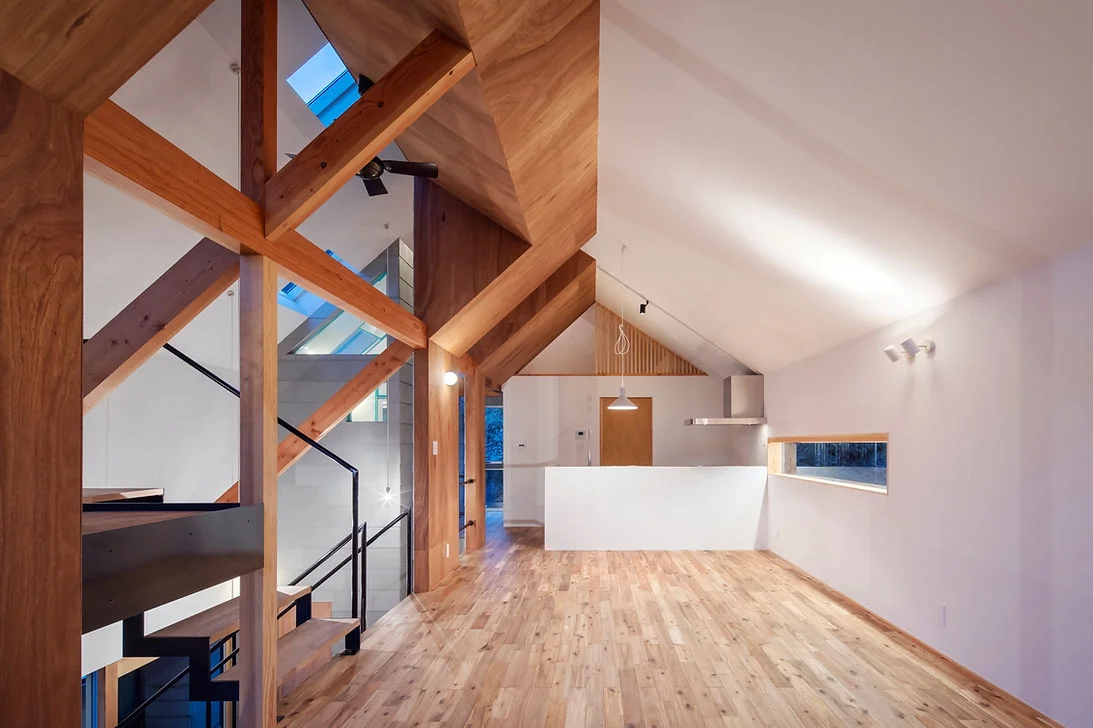
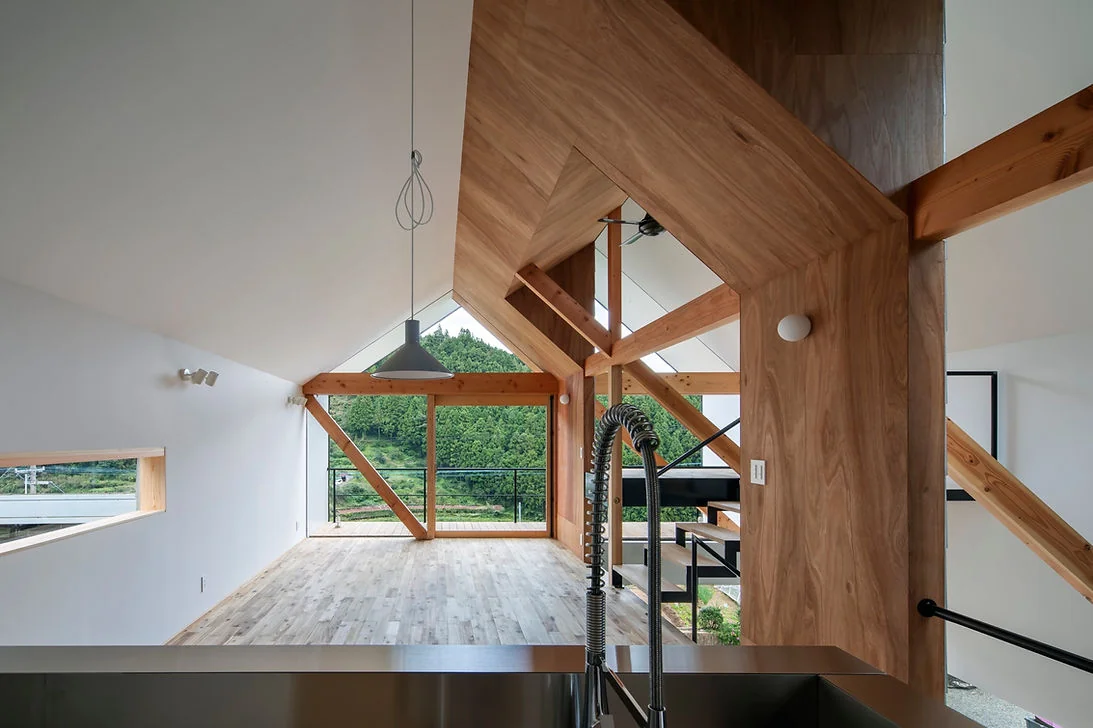
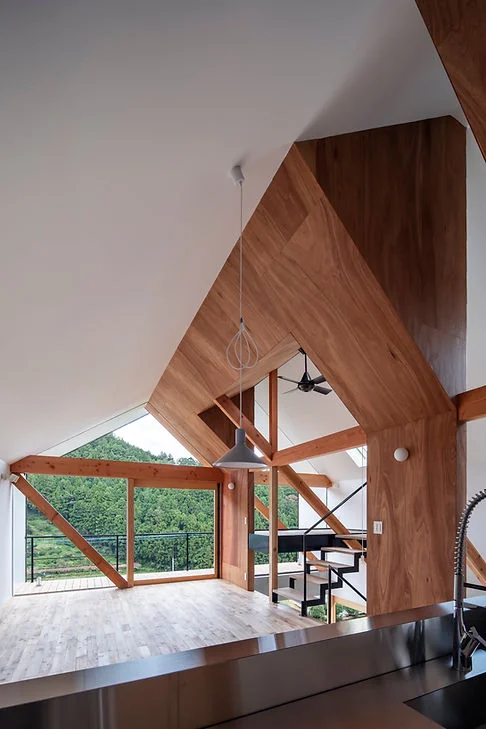
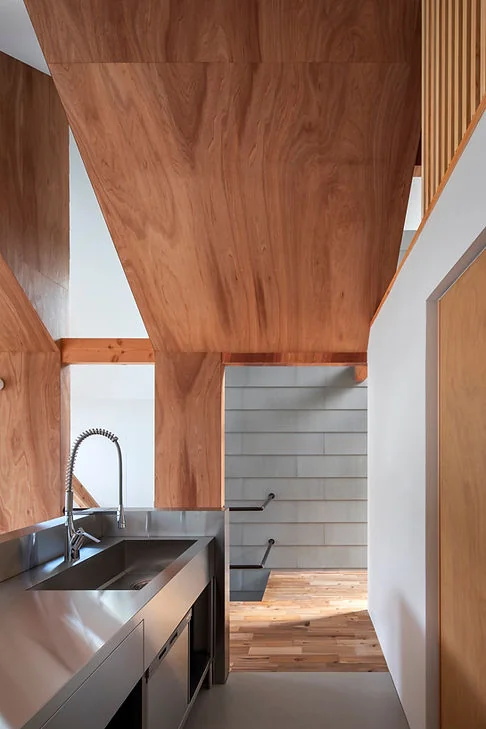
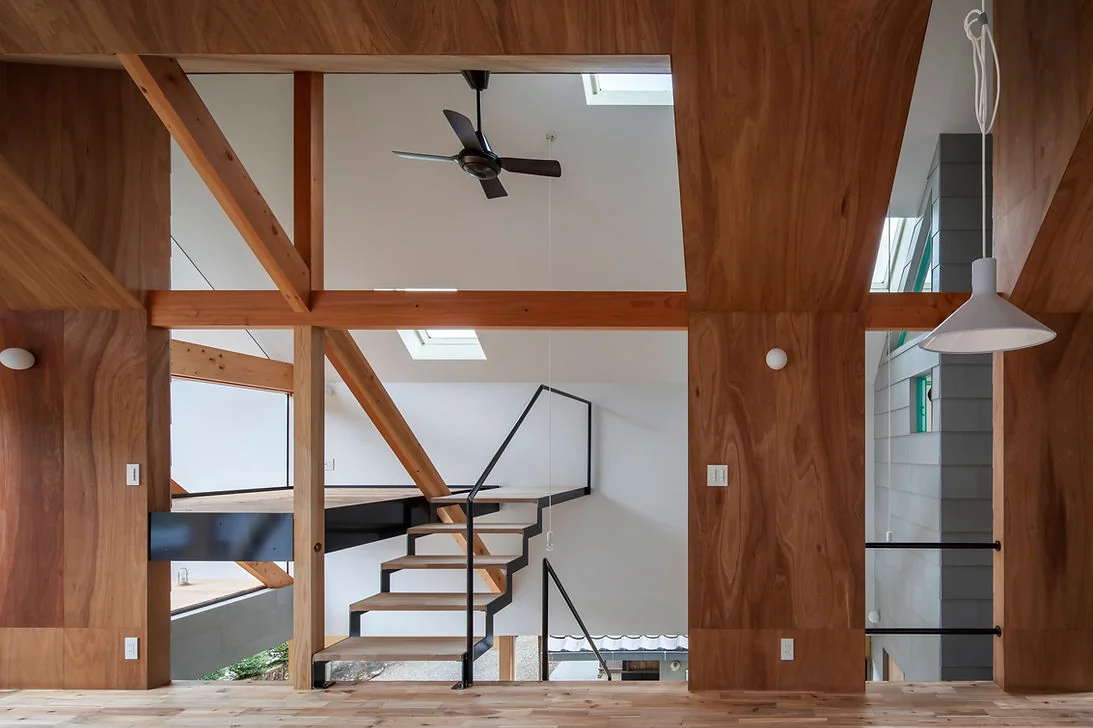
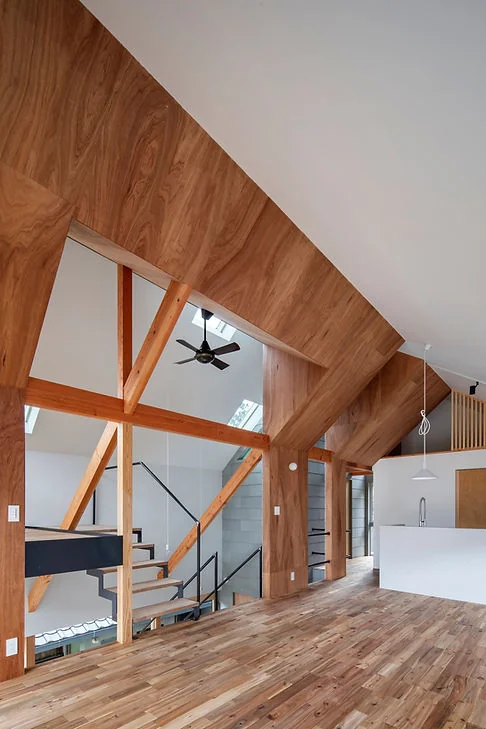
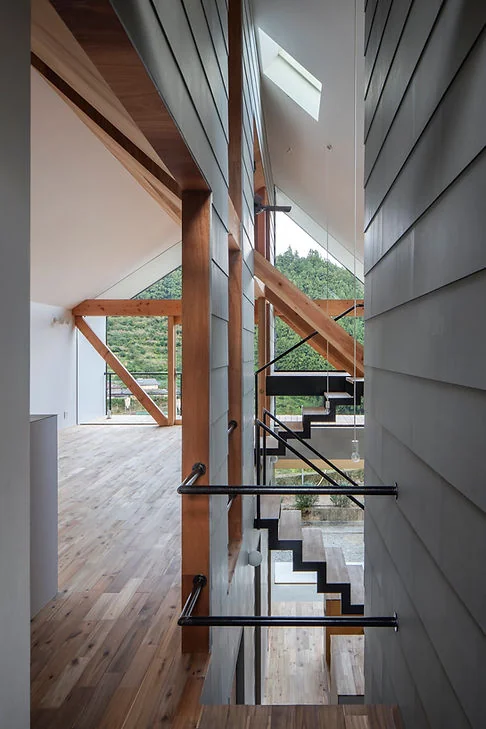
Sited on a high terrace and fortunate in having no intrusive views from neighboring properties, the house opens freely toward the valley. The living room is placed on the second floor, and a tatami corner is set a half-storey higher to provide a different vantage point; large east-facing openings admit the green of the mountains. To establish a gentle relationship with the adjacent main house, a generous doma (earthen-floored) area with ambiguous boundaries between inside and outside, together with a stairwell open to the double-height volume, were introduced. The double-height south void facing the main house intentionally omits windows to maintain an appropriate degree of separation; daylight is admitted instead via skylights, producing a bright interior suffused with dappled light. The ground-floor doma can be opened to the main house by sliding doors to allow continuous use when desired.
Interiors employ natural materials to create a seamless connection with the exterior environment. Luan plywood is used on the walls defining the interface with the double-height space. In the doma and double-height void, flexible board is applied in exterior-style cladding patterns—resembling shutter boarding and clapboard—to reinforce a sense of connection to the outdoors. Flooring throughout is solid acacia planks. Principal use: Residential
Location: Kamikatsu Town, Tokushima Prefecture
Structure: Timber, 2-storey
Site area: 1,554.72 m²
Total floor area: 129.56 m²
Construction: Takumi Kobo Co., Ltd.
Structural design: Kataoka Structural
Furniture: wood-furniture+1
Sited on a high terrace and fortunate in having no intrusive views from neighboring properties, the house opens freely toward the valley. The living room is placed on the second floor, and a tatami corner is set a half-storey higher to provide a different vantage point; large east-facing openings admit the green of the mountains. To establish a gentle relationship with the adjacent main house, a generous doma (earthen-floored) area with ambiguous boundaries between inside and outside, together with a stairwell open to the double-height volume, were introduced. The double-height south void facing the main house intentionally omits windows to maintain an appropriate degree of separation; daylight is admitted instead via skylights, producing a bright interior suffused with dappled light. The ground-floor doma can be opened to the main house by sliding doors to allow continuous use when desired.
Interiors employ natural materials to create a seamless connection with the exterior environment. Luan plywood is used on the walls defining the interface with the double-height space. In the doma and double-height void, flexible board is applied in exterior-style cladding patterns—resembling shutter boarding and clapboard—to reinforce a sense of connection to the outdoors. Flooring throughout is solid acacia planks. Principal use: Residential
Location: Kamikatsu Town, Tokushima Prefecture
Structure: Timber, 2-storey
Site area: 1,554.72 m²
Total floor area: 129.56 m²
Construction: Takumi Kobo Co., Ltd.
Structural design: Kataoka Structural
Furniture: wood-furniture+1
- Copyright(C)Qurasuki.All Rights Reserved.