Introducing House of Woven Light, a custom-built home example by an Archi-Lab. First-Class Architect Office, a Architect / Design office in Heights S&A 2F, 4-20-31 Awaji, Higashiyodogawa-ku, Osaka City, Osaka Prefecture
House of Woven Light
Nook
Nook
House of Woven Light
Visual Control
Renovation
Flexible Partition
Exposed Beam
Capturing Light
Home with Margins
Breezy House
Nook
Passage Doma
Natural Modern
architect
atelier
builtinfurniture
naturalmaterials
Eiji Tomita Photography Office
Learn More
This project is a full renovation of a house aged over many years, intended for a mother and her two children to move into. The client, who works long hours day and night, asked that the time they spend at home be rich and comfortable; for the spatial vessel that would contain that life they requested two principal qualities.
The first was that light and wind penetrate the house. The site condition allowed daylight primarily from the road to the south, and for that reason the client ideally wanted sunlight to reach the first floor, where much of their time would be spent. They also envisaged a lifestyle in which windows would generally remain open, allowing wind to pass through the whole house while maintaining necessary privacy.
The second requirement was an open-plan, one-room-like spatial configuration. They wanted a large, open room that could be partitioned with doors or curtains only when necessary. The primary motivation was to live comfortably and unhurriedly in a broad space filled with light and breeze, while also anticipating near-future lifestyle changes such as the children becoming independent or the cohabitation of an elderly parent.
In response to these requests, we proposed a generous residence that accommodates the occupants’ present and future: a home to be inhabited by editing both use and incoming light through gentle partitions according to needs, circumstances, and mood.
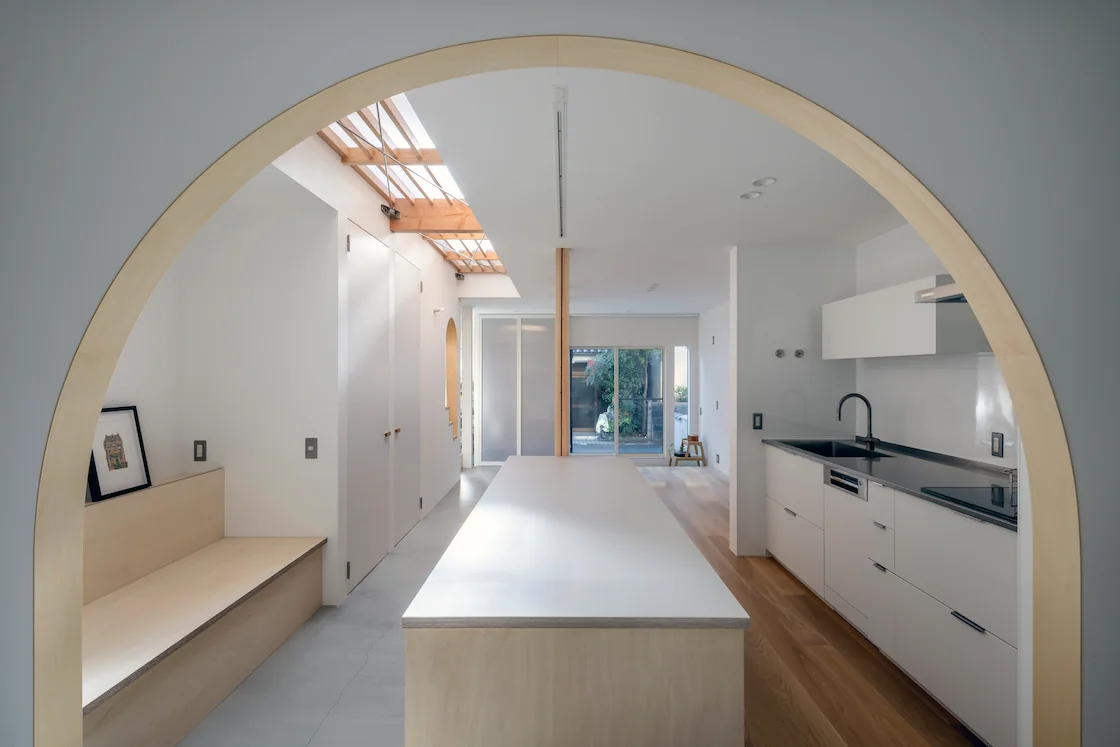
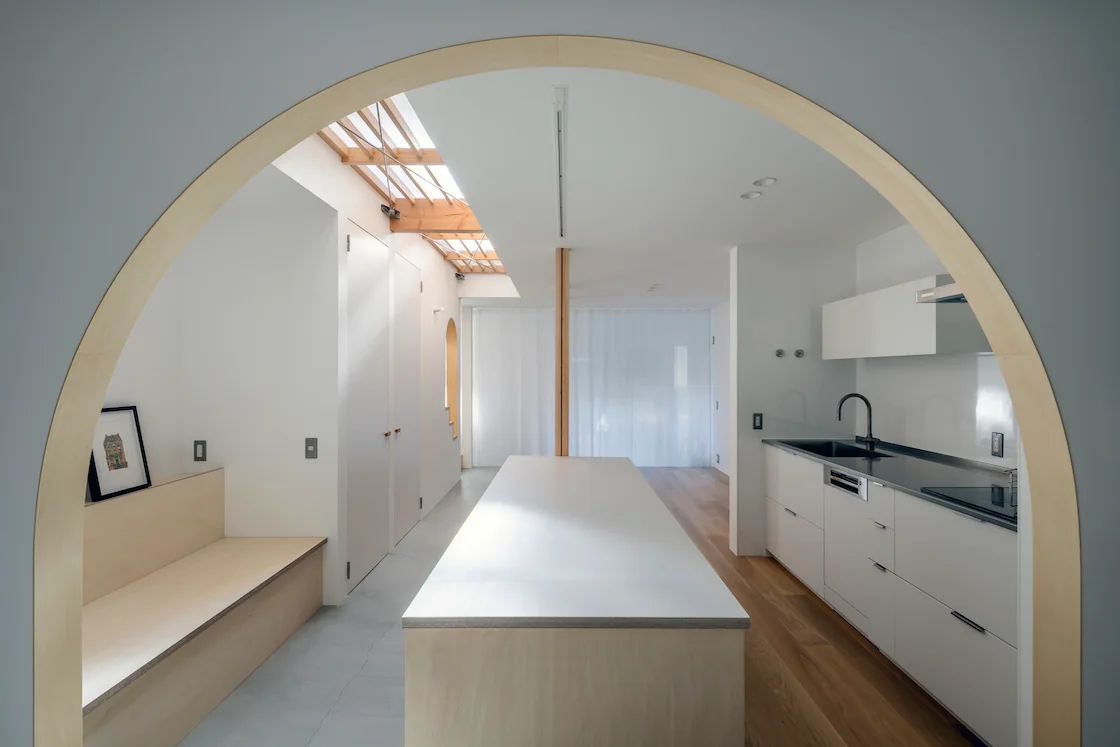
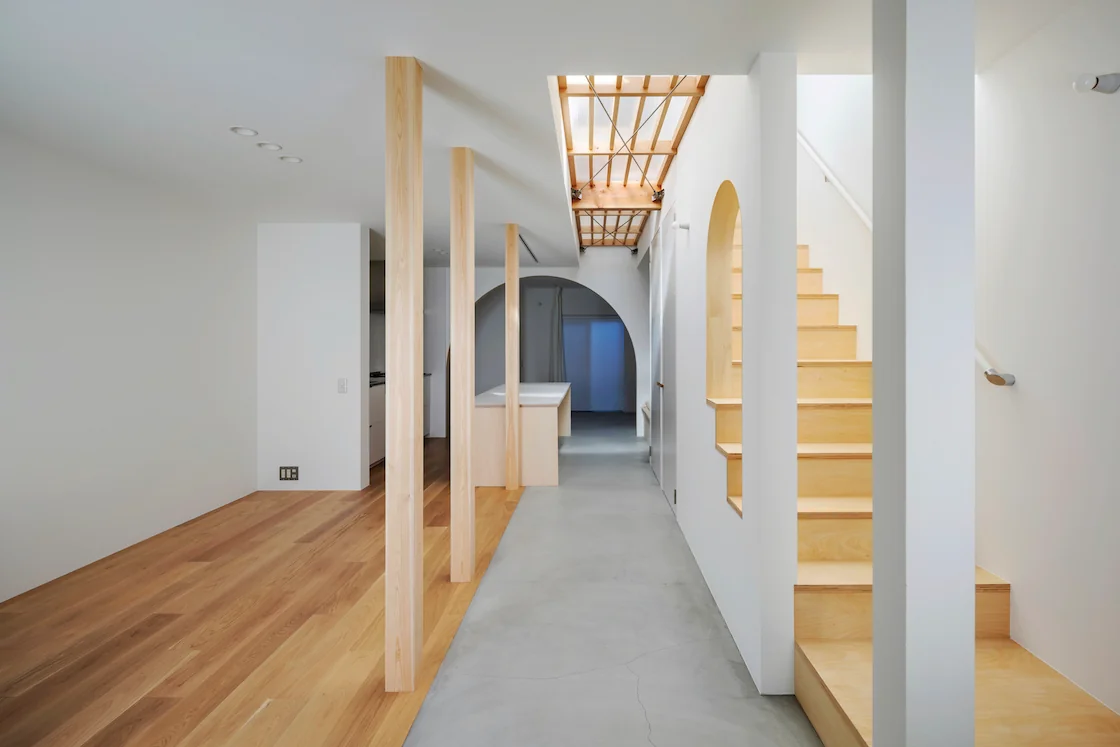
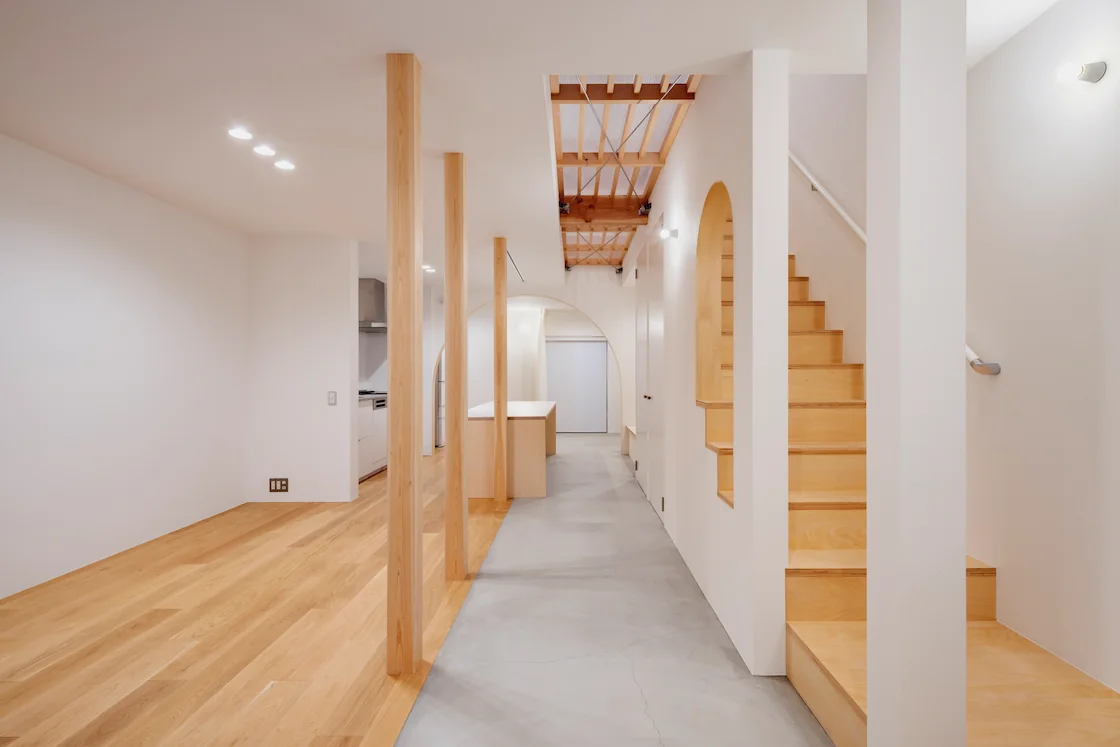
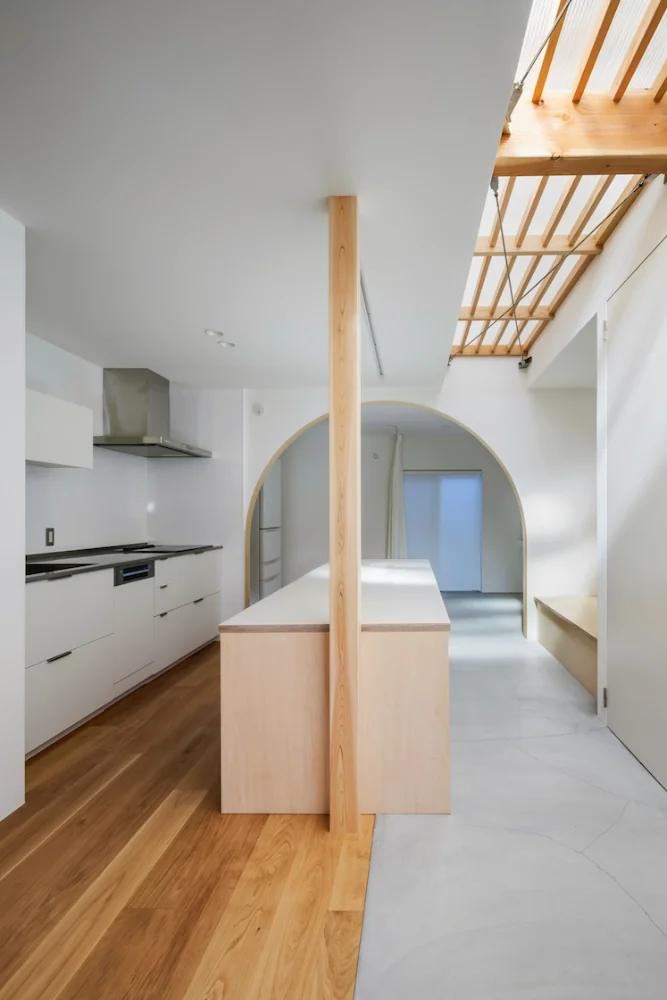
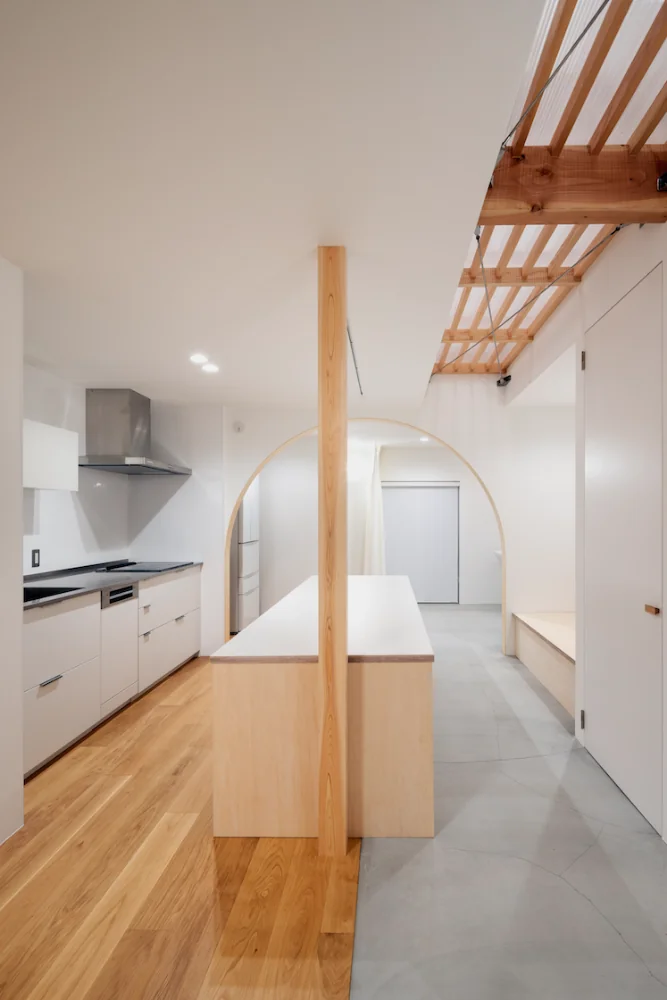
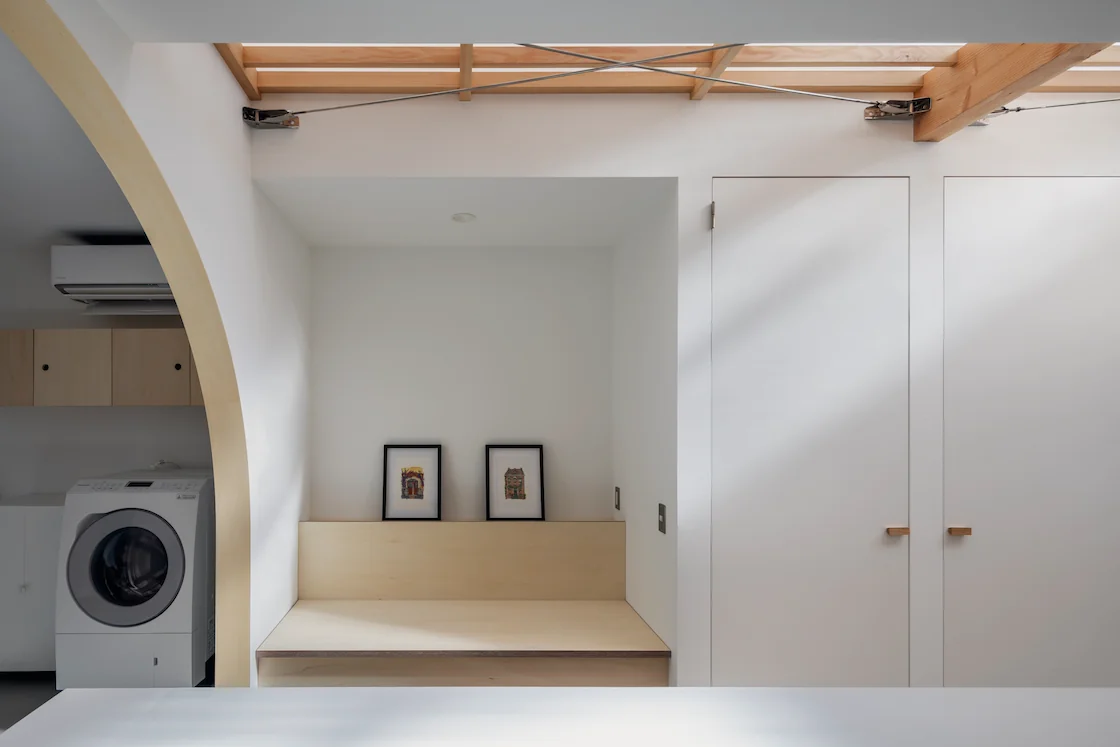
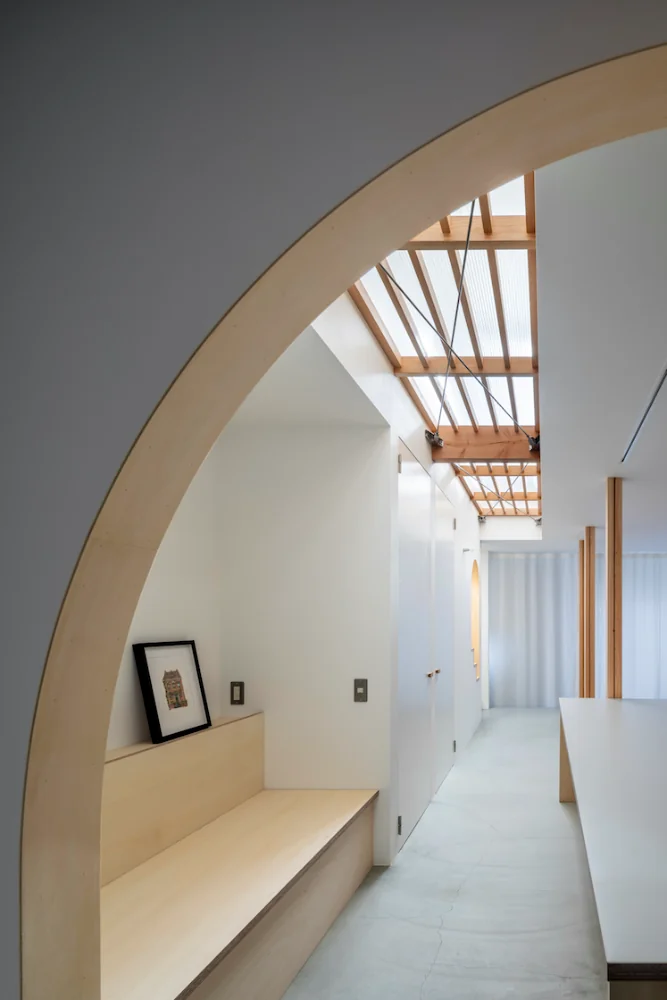
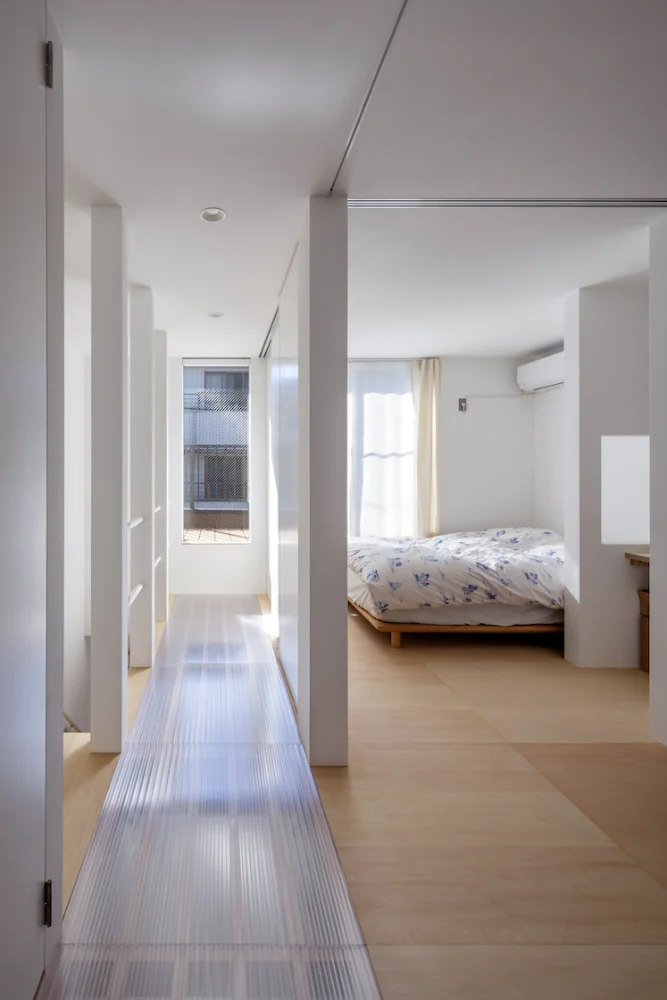
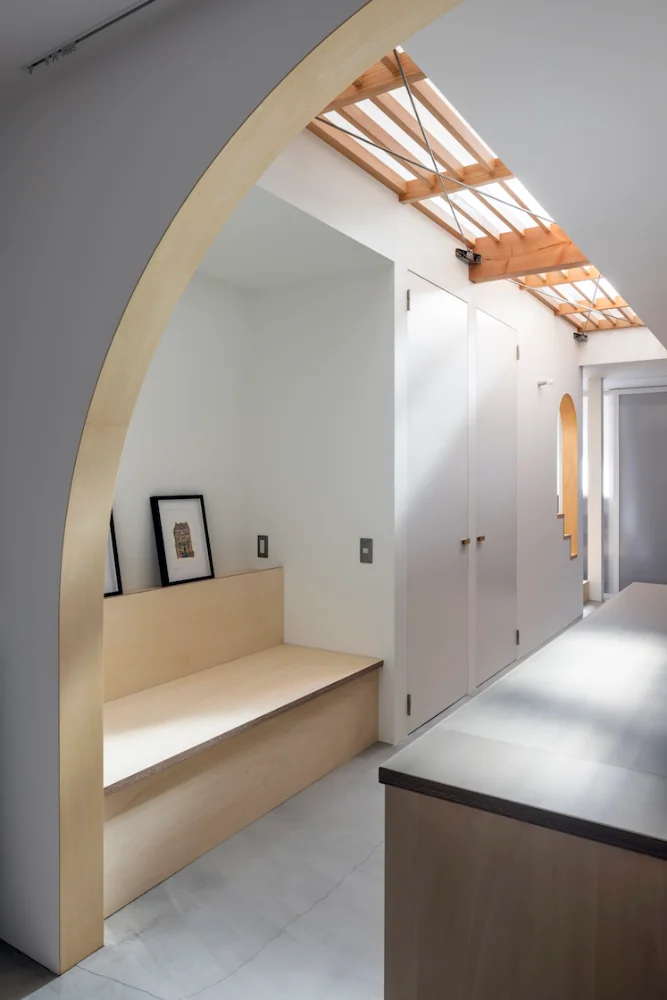
To ensure light from the second-floor south-facing window reaches the first floor, the corridor floor on the second floor was replaced with a translucent material, securing daylight that descends from above to the ground level. Although the first floor has a large south-facing window onto the road, privacy considerations required some distance between the window and the main living area. We therefore inserted an engawa-like, earthen-floored intermediate space between the window and the living room and installed curtains on both the living-room side and the window side. This arrangement allows not only the modulation of light and sightlines but also the flexible designation of the space as a veranda, part of the living room, an extension of the entrance, or other uses as required.
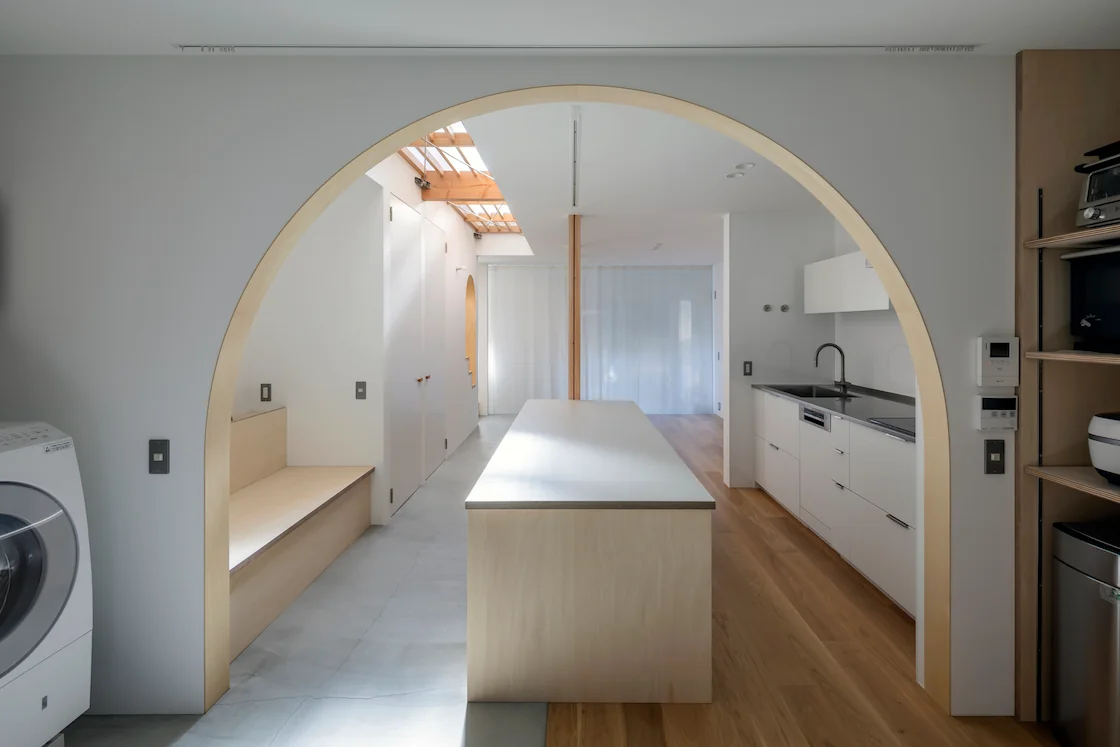
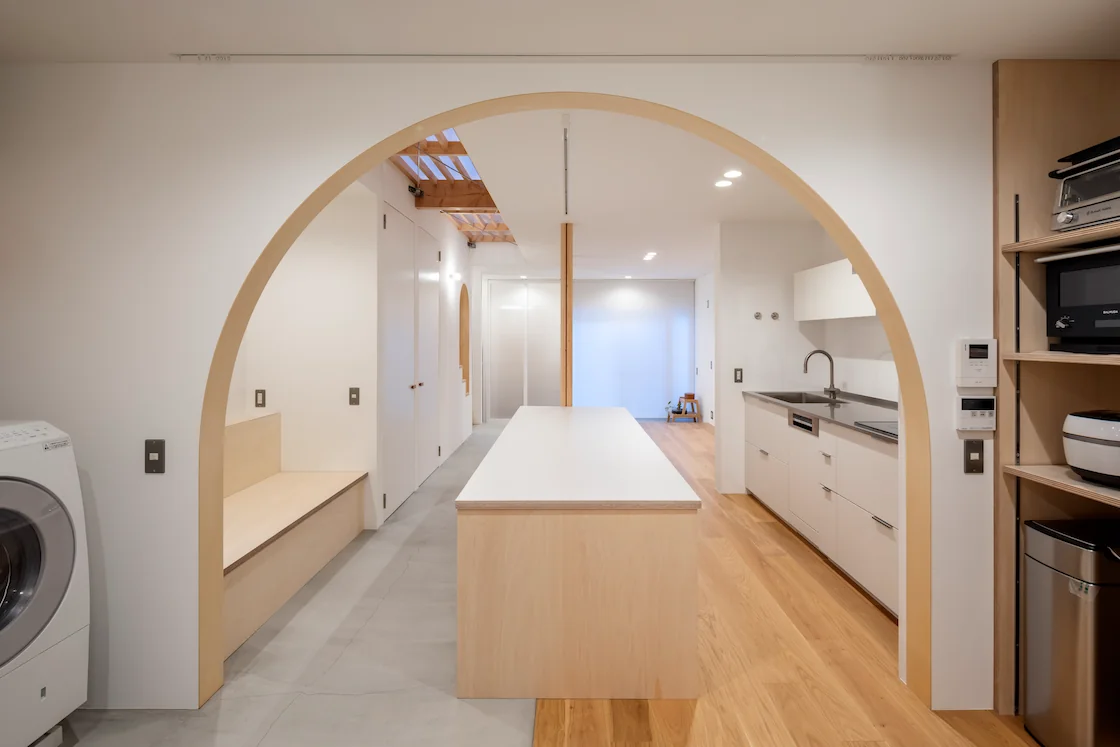
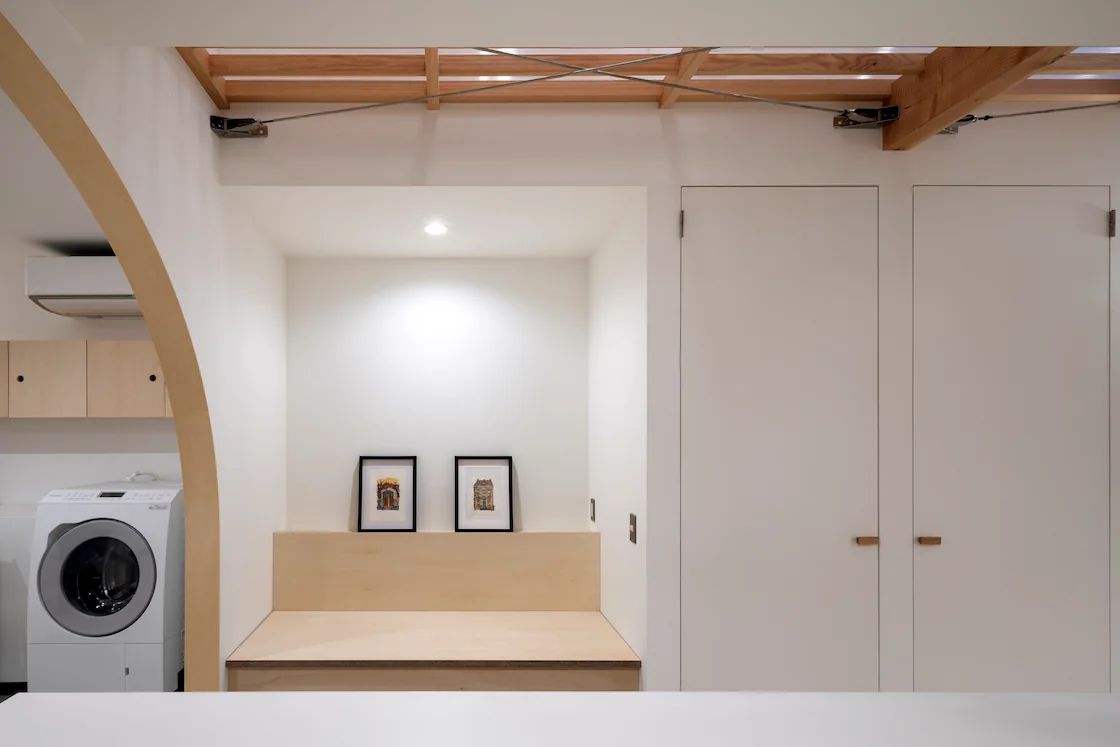
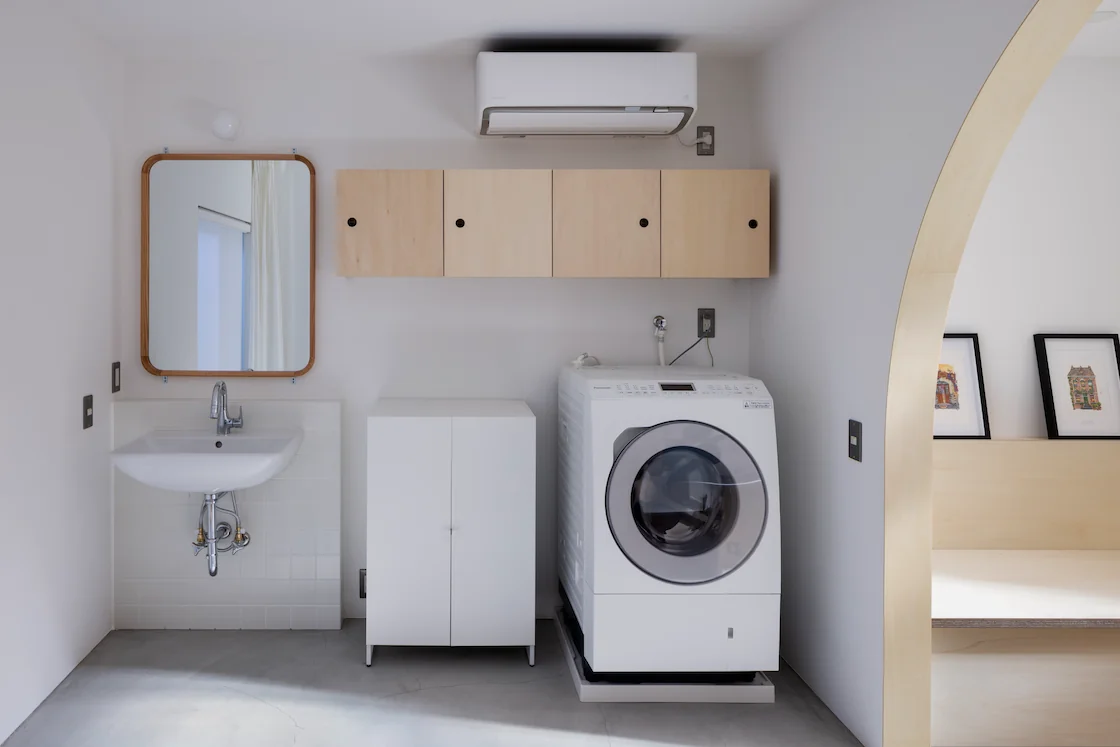
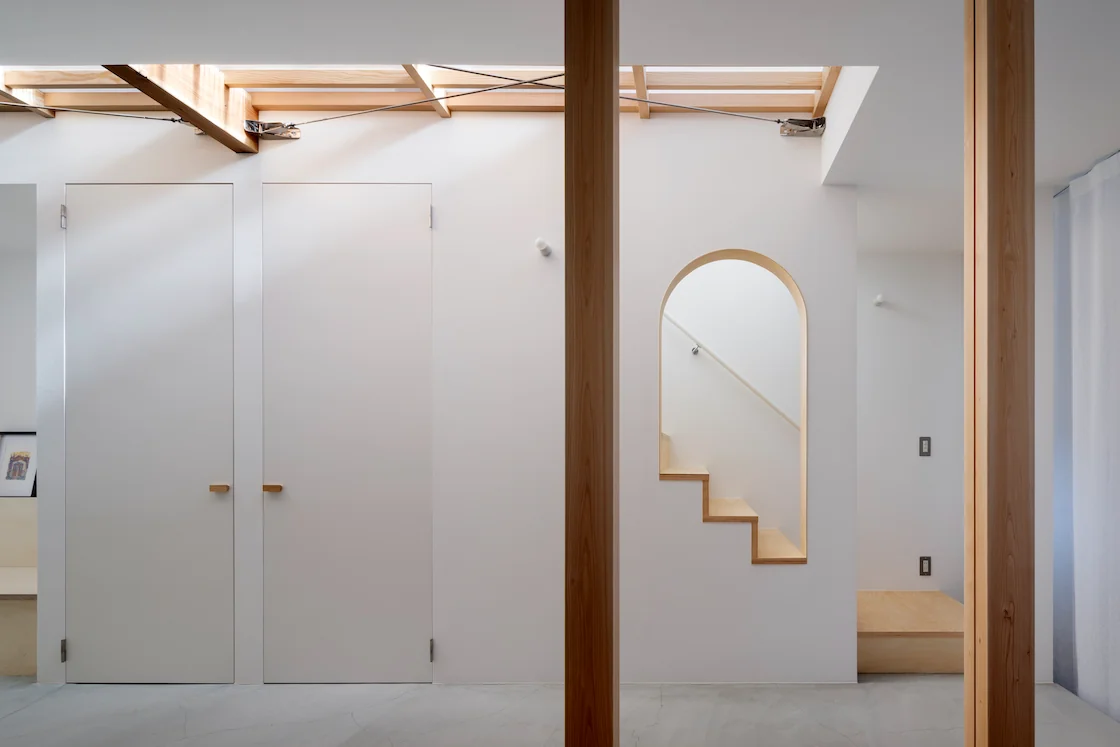
The open-plan first floor was carefully composed to avoid a monotonous or elongated impression: gentle zoning is achieved by curved partition walls and changes in surface finishes, while scattering functions and places to occupy provides a series of anchors within the larger room.
The result is a tolerant, layered dwelling — a house that weaves light — in which residents can inhabit and continually edit the luminous, breezy, anchored one-room space according to daily and occasional activities. Such a capacious home was realized.

The first was that light and wind penetrate the house. The site condition allowed daylight primarily from the road to the south, and for that reason the client ideally wanted sunlight to reach the first floor, where much of their time would be spent. They also envisaged a lifestyle in which windows would generally remain open, allowing wind to pass through the whole house while maintaining necessary privacy.
The second requirement was an open-plan, one-room-like spatial configuration. They wanted a large, open room that could be partitioned with doors or curtains only when necessary. The primary motivation was to live comfortably and unhurriedly in a broad space filled with light and breeze, while also anticipating near-future lifestyle changes such as the children becoming independent or the cohabitation of an elderly parent.
In response to these requests, we proposed a generous residence that accommodates the occupants’ present and future: a home to be inhabited by editing both use and incoming light through gentle partitions according to needs, circumstances, and mood.
To ensure light from the second-floor south-facing window reaches the first floor, the corridor floor on the second floor was replaced with a translucent material, securing daylight that descends from above to the ground level. Although the first floor has a large south-facing window onto the road, privacy considerations required some distance between the window and the main living area. We therefore inserted an engawa-like, earthen-floored intermediate space between the window and the living room and installed curtains on both the living-room side and the window side. This arrangement allows not only the modulation of light and sightlines but also the flexible designation of the space as a veranda, part of the living room, an extension of the entrance, or other uses as required.
The open-plan first floor was carefully composed to avoid a monotonous or elongated impression: gentle zoning is achieved by curved partition walls and changes in surface finishes, while scattering functions and places to occupy provides a series of anchors within the larger room.
The result is a tolerant, layered dwelling — a house that weaves light — in which residents can inhabit and continually edit the luminous, breezy, anchored one-room space according to daily and occasional activities. Such a capacious home was realized.
- Copyright(C)Qurasuki.All Rights Reserved.