Introducing House in Hikone, a custom-built home example by Kumi Inoue Architects, a Architect / Design office in 2-6-15 Kuwazu, Higashisumiyoshi-ku, Osaka City, Osaka Prefecture

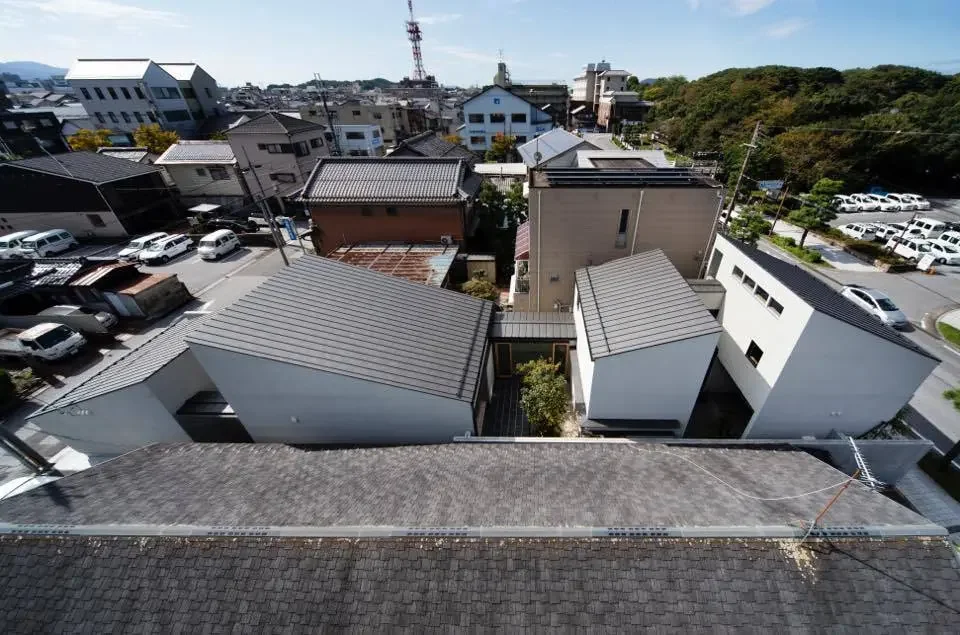
Four courtyards and building volumes are alternately arranged along the narrow site.
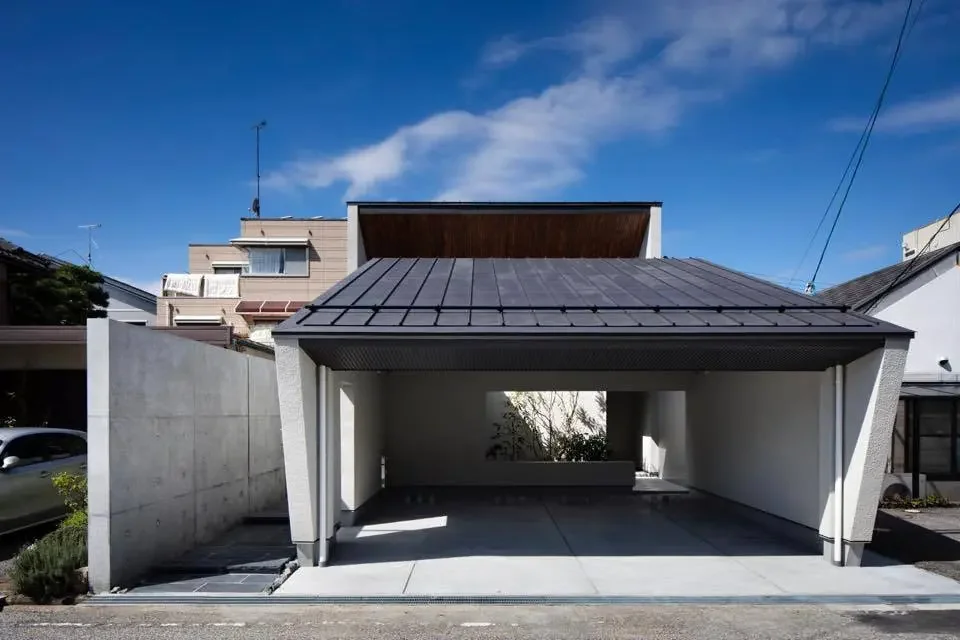
An open parking area accommodates two vehicles; the first courtyard is visible from the street.
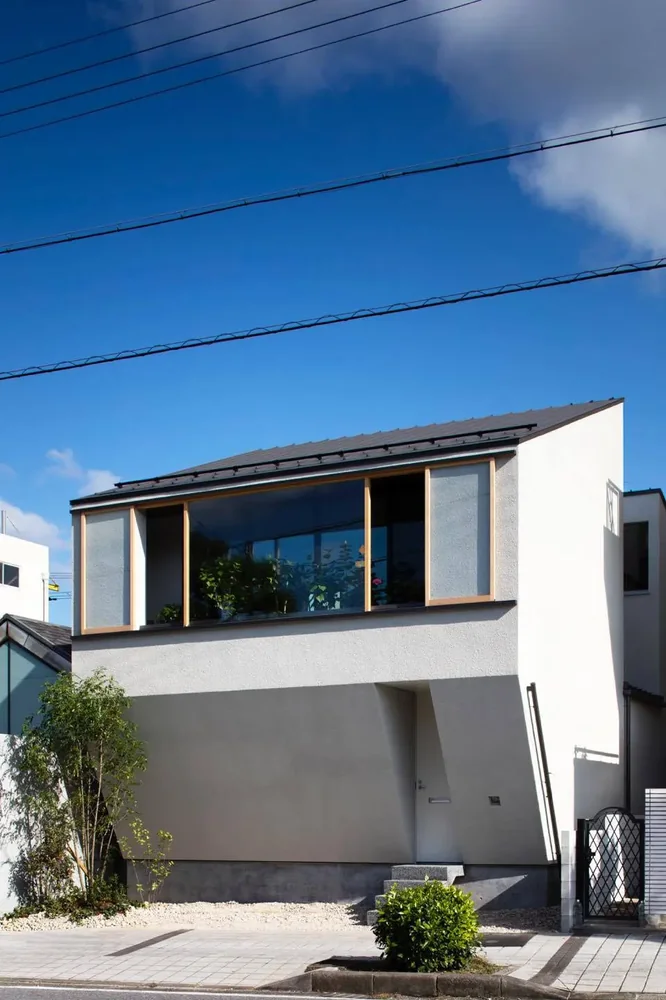
House in Hikone
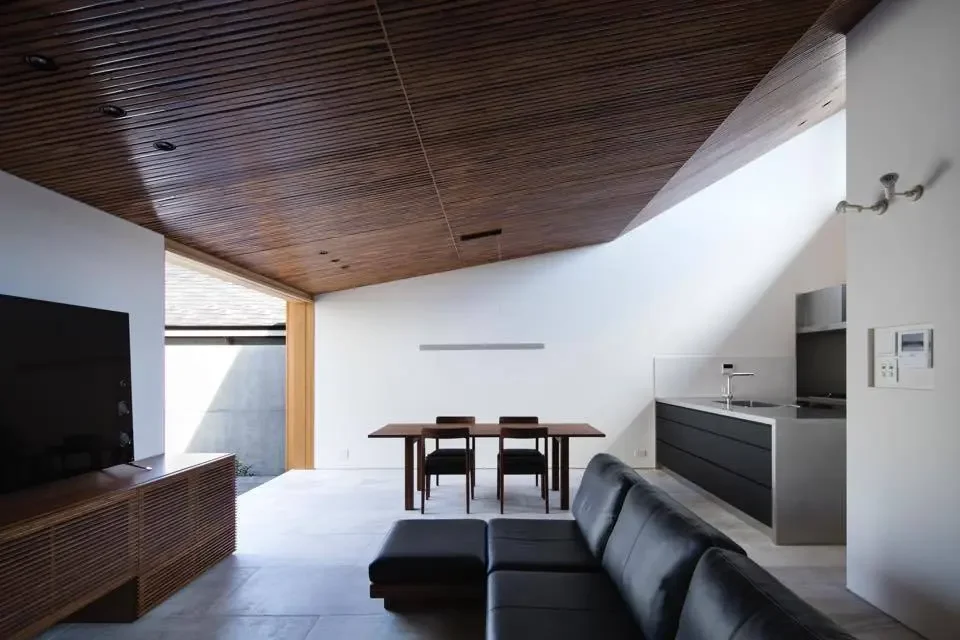
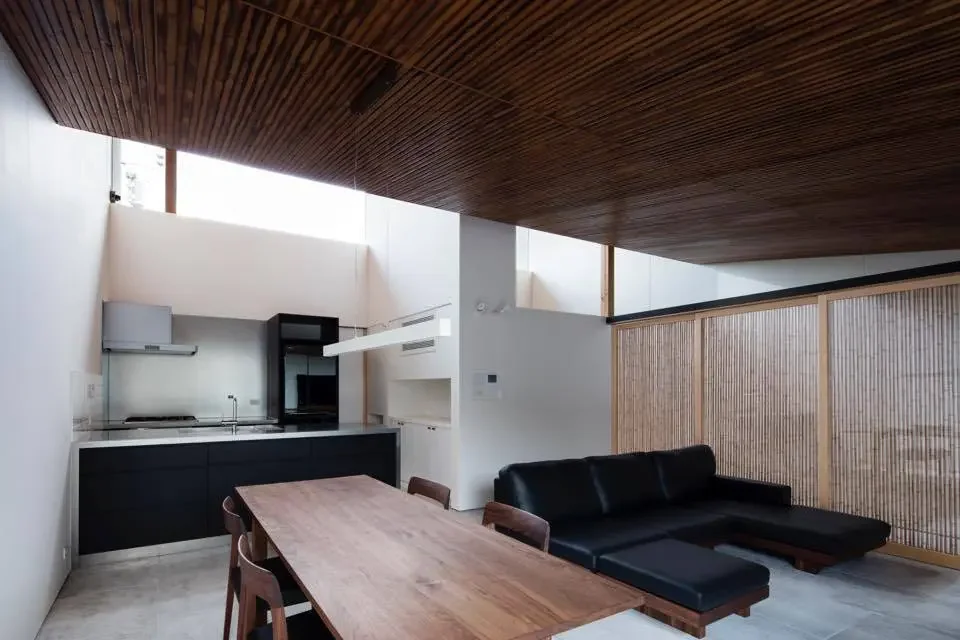
The bamboo sloped ceilings evoke the continuous series of mono-pitched roofs from within the interior.
House in Hikone
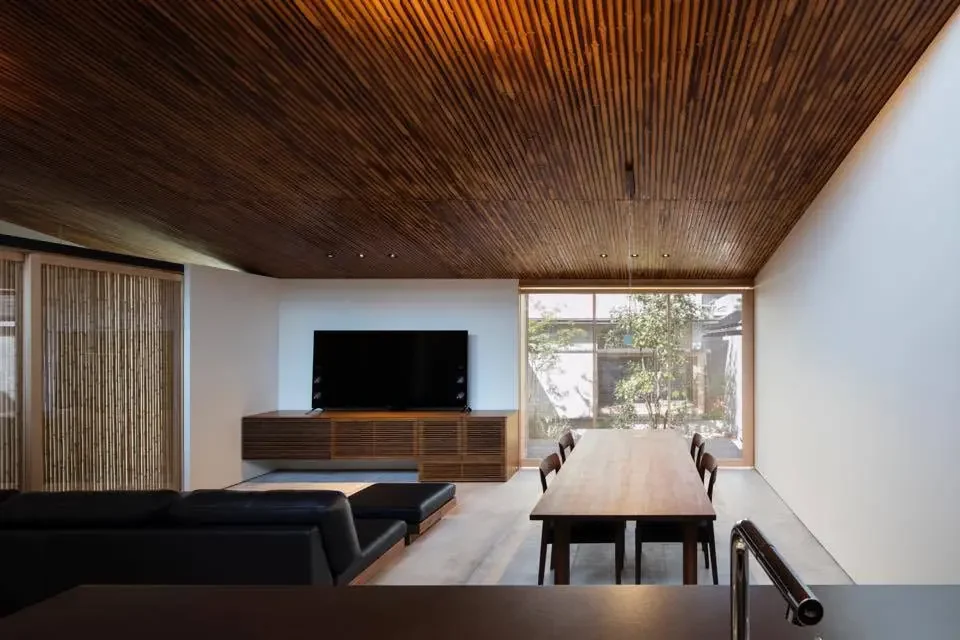
A layered spatial experience emerges through the interplay of the building, courtyards, and the parallel alleyway.
House in Hikone
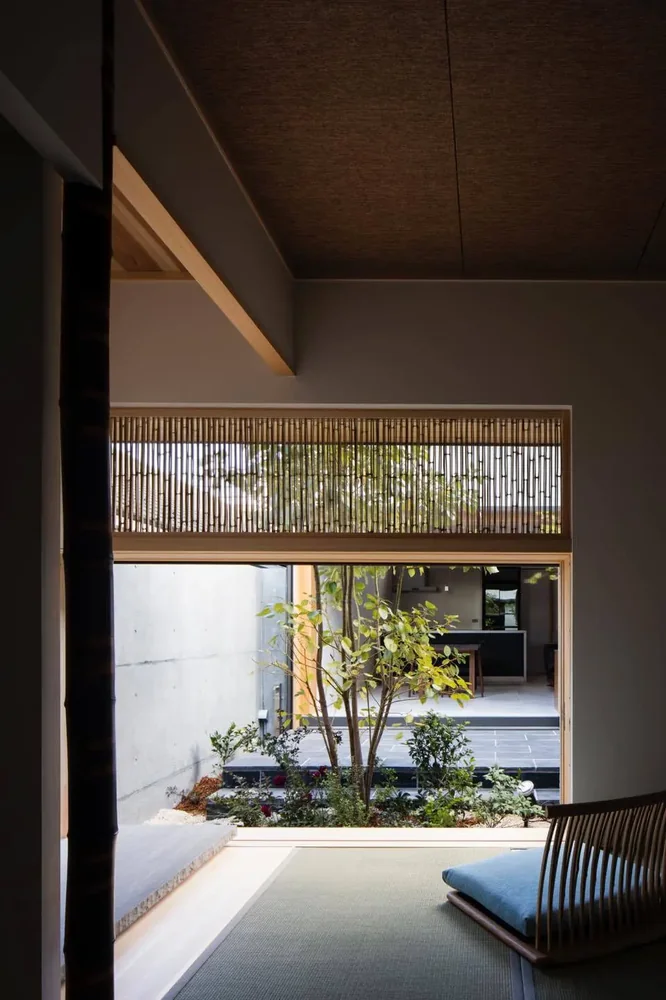
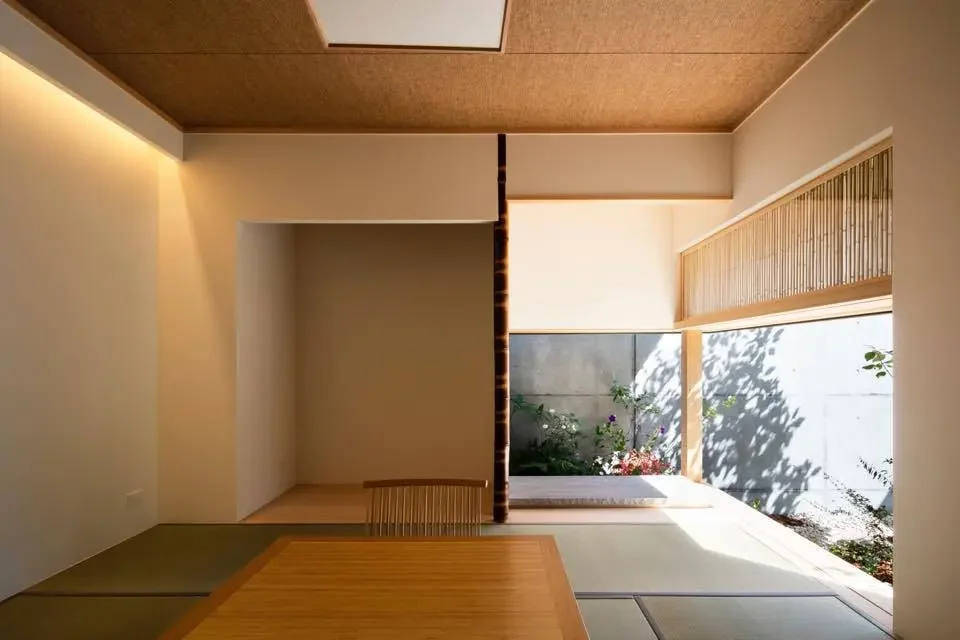
Bamboo quarter-sawn strips are used in the transom of the Japanese-style room, softly integrating the courtyard’s trees into the interior.
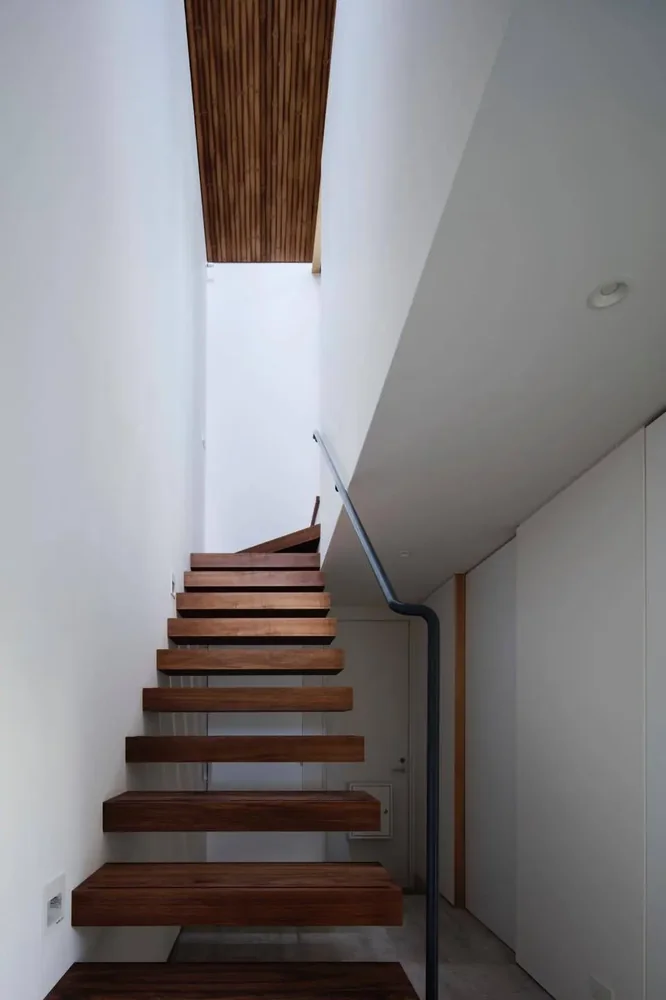
The long corridor features a folded ceiling that follows the roof’s profile, creating a continuous spatial flow.
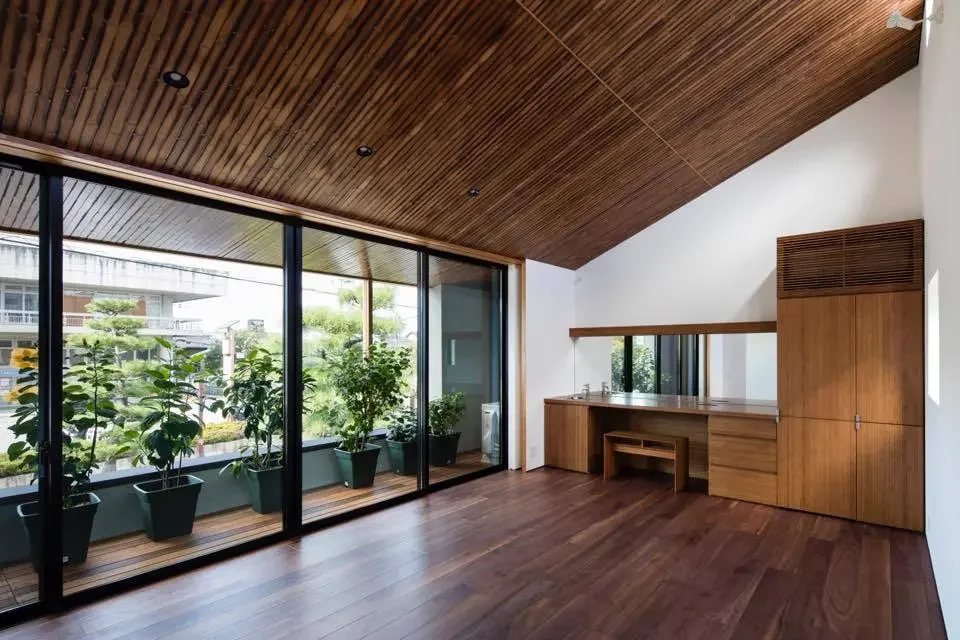
Through a hibiscus sunroom, the corridor connects to the busy vehicular road outside.
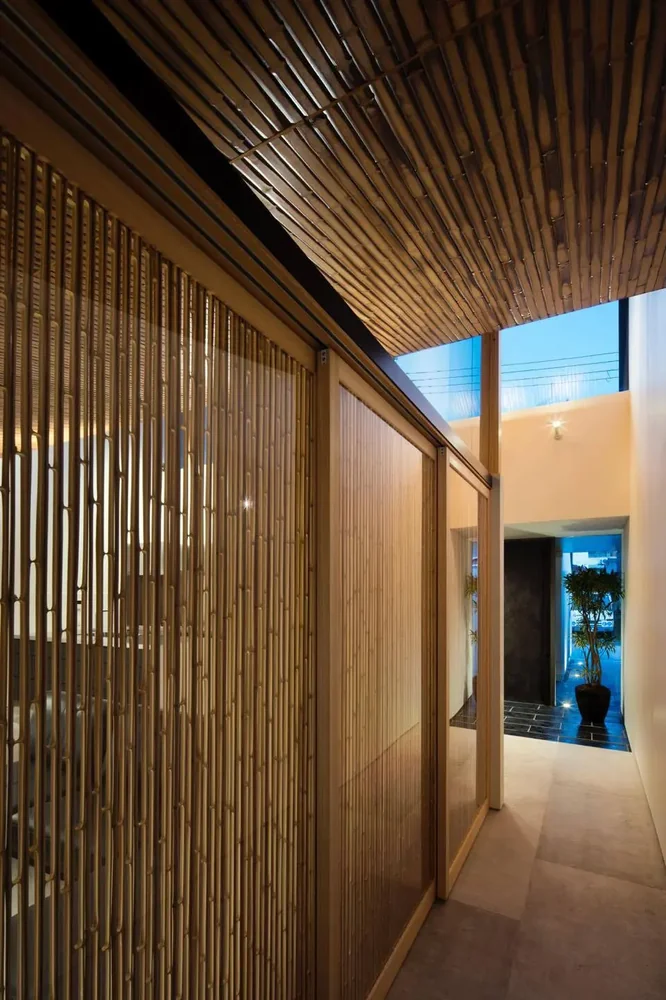
Bamboo quarter-sawn strips incorporated into the fittings visually and spatially link the corridor with the living-dining-kitchen area.
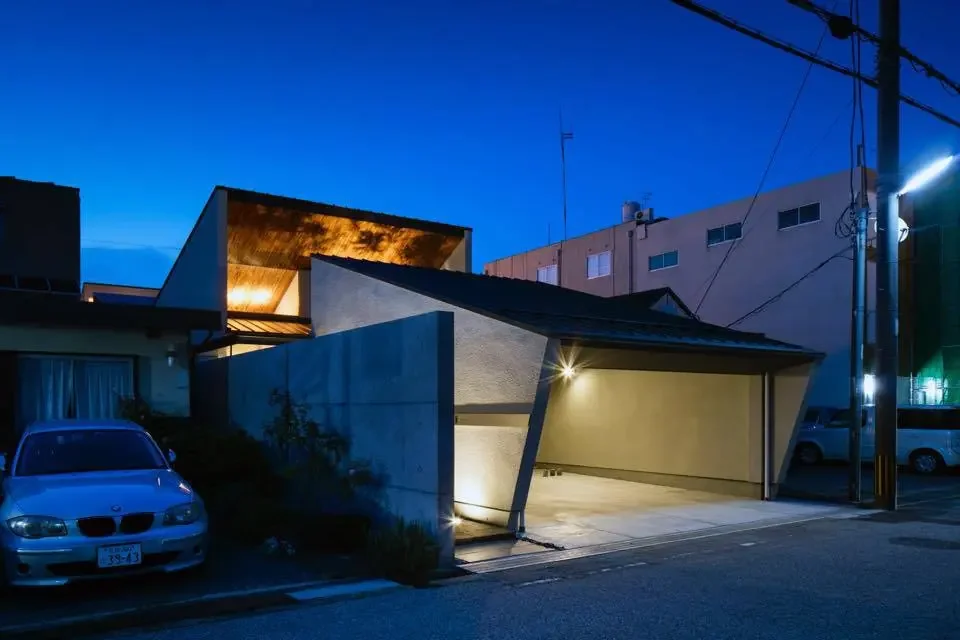
House in Hikone
Closed to Outside, Open to Inside
Courtyard
Gardening
Inner Garage
InnerGarage
Courtyard
Gardening
ClosedToOutsideOpenToInside
Learn More
Overlooking the Gokoku Shrine southeast of Hikone Castle, this elongated site abuts a busy prefectural road and a quiet municipal street on its shorter sides, where a demand for a "quiet lifestyle" was paramount. In a densely built environment with neighboring structures closely packed, the exterior walls are aligned along the property boundaries, creating an alternating spatial composition of building volumes—both large and small—and courtyards within the interior.
The longitudinal "alley" that penetrates through these spaces functions not merely as a passageway but as an experiential spatial element. At times, it merges seamlessly with the living room to expand the spatial volume; at others, it broadens to deepen its relationship with the adjacent courtyard. This dynamic interplay transcends a simple circulation path, offering a nuanced spatial experience.
The bidirectional visual and spatial dialogue between the building and the courtyards, coupled with the expansive experience of the parallel alley space, is intended to cultivate a sense of tranquility alongside richness.
Furthermore, by incorporating bamboo sloped ceilings within each segmented volume, the continuity of the mono-pitched roofs is perceptible from the interior, while the gentle texture of bamboo imparts a warm, tactile quality to the interior environment.
The longitudinal "alley" that penetrates through these spaces functions not merely as a passageway but as an experiential spatial element. At times, it merges seamlessly with the living room to expand the spatial volume; at others, it broadens to deepen its relationship with the adjacent courtyard. This dynamic interplay transcends a simple circulation path, offering a nuanced spatial experience.
The bidirectional visual and spatial dialogue between the building and the courtyards, coupled with the expansive experience of the parallel alley space, is intended to cultivate a sense of tranquility alongside richness.
Furthermore, by incorporating bamboo sloped ceilings within each segmented volume, the continuity of the mono-pitched roofs is perceptible from the interior, while the gentle texture of bamboo imparts a warm, tactile quality to the interior environment.
- Copyright(C)Qurasuki.All Rights Reserved.