Introducing Nested-Structure Renovation of a Traditional Kominka: House of Interstices, a custom-built home example by Yoshihiro Yamamoto Architects Associates, a Architect / Design office in 302, Zeniya Honpo Main Building, 14-6 Ishigatsujichō, Tennōji-ku, Osaka

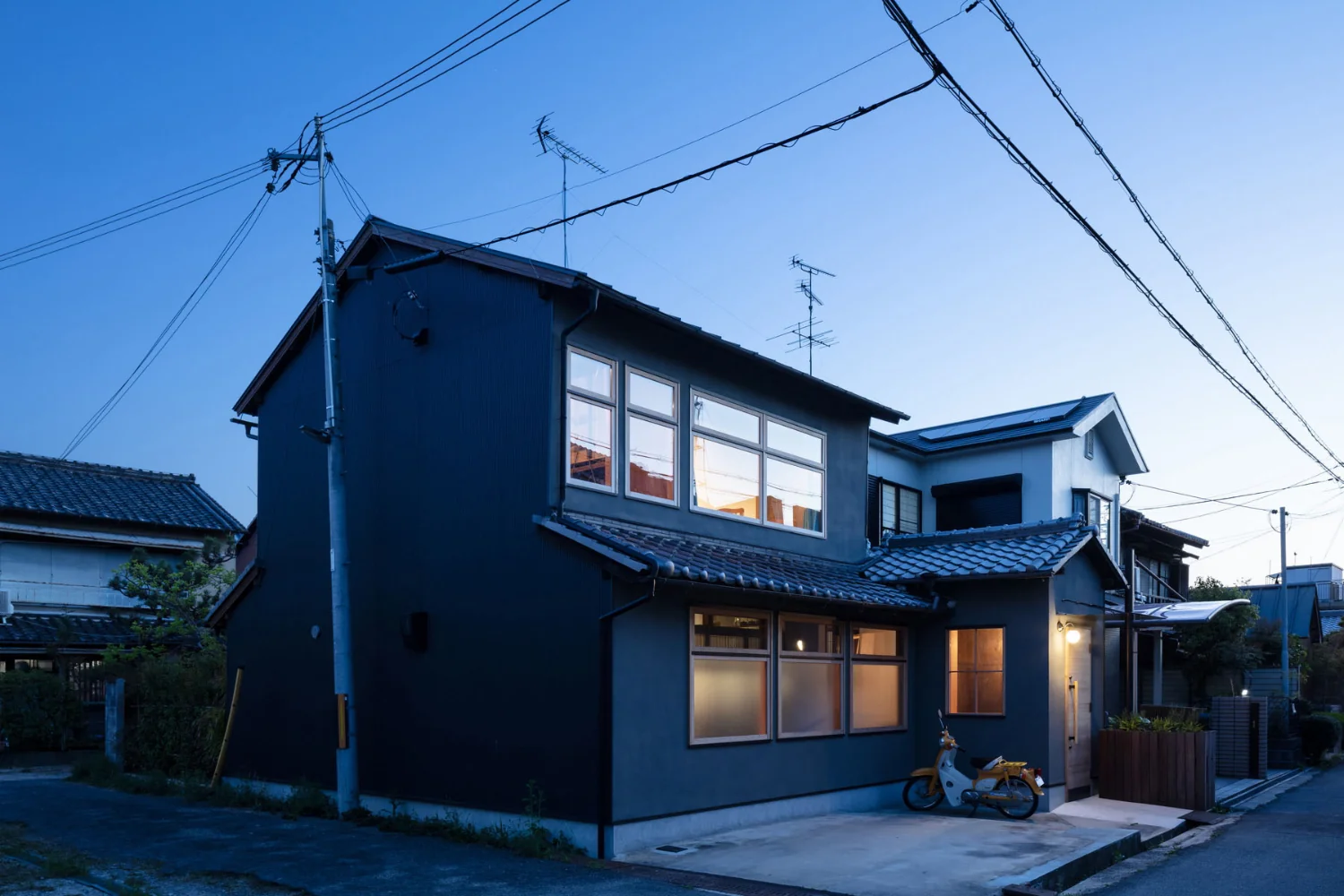
Exterior at dusk. The aluminum fence and carport were removed to create an open exterior composition.
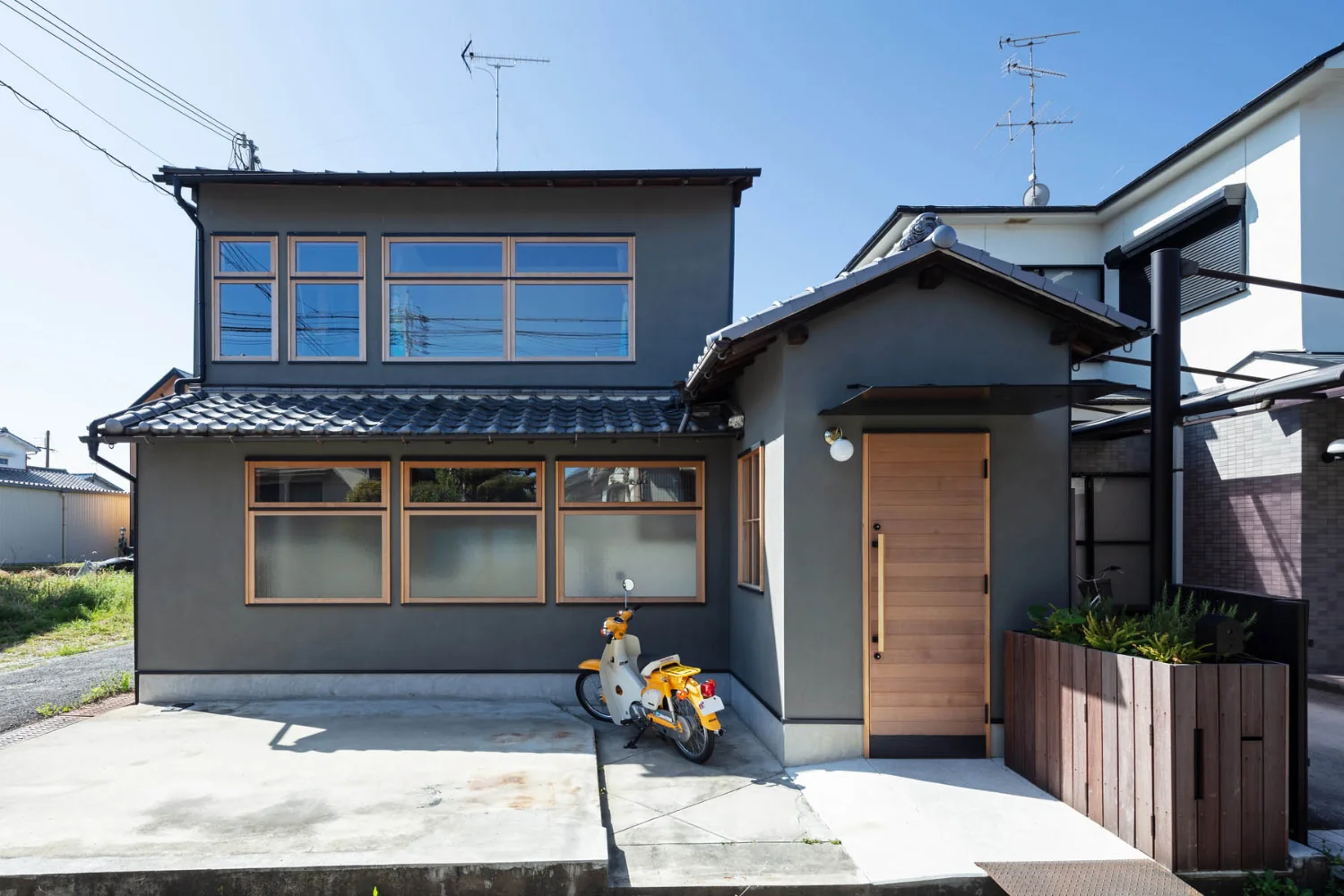
Front elevation. Aluminum sashes and the carport were removed and all openings were replaced with timber joinery.
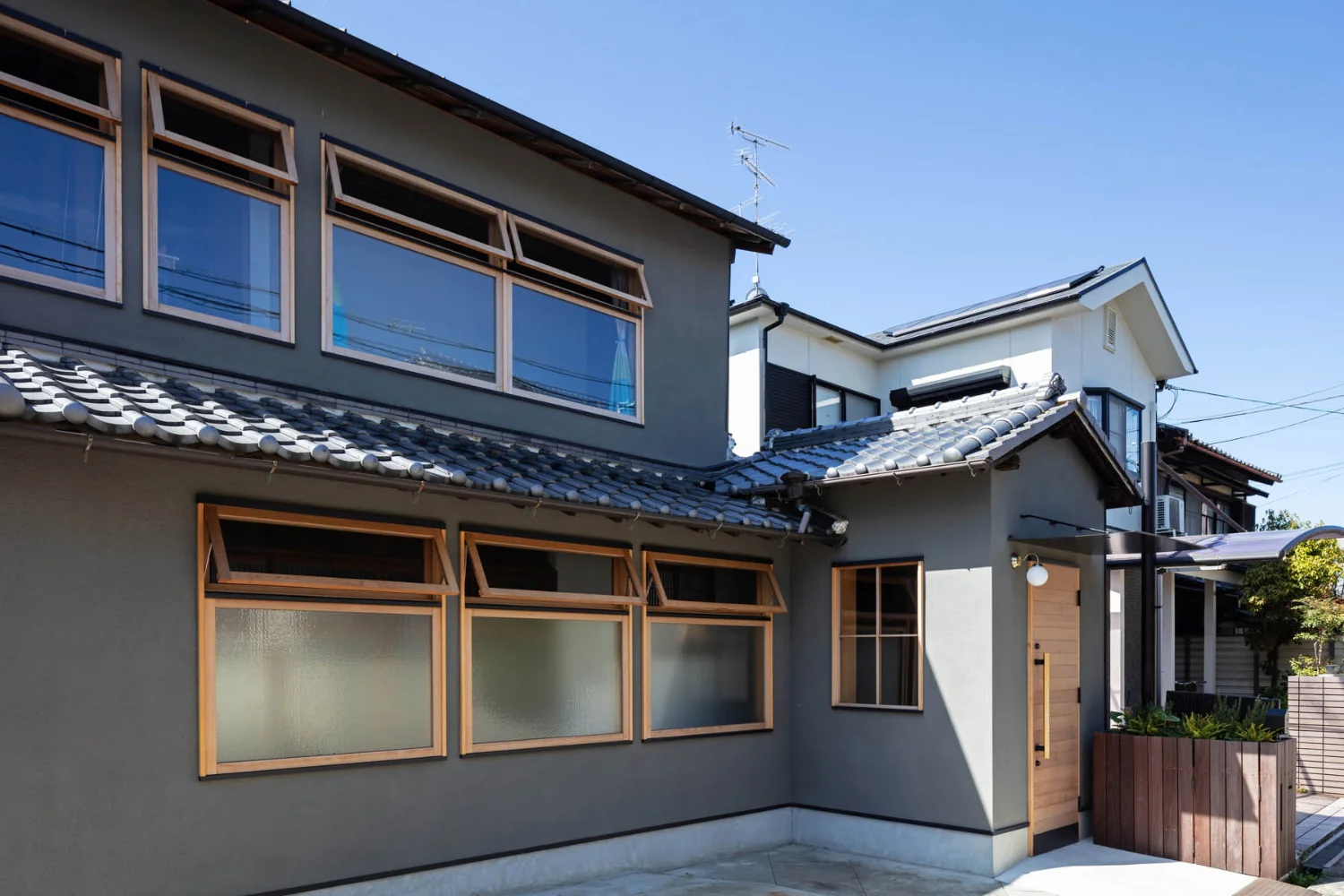
The projecting volume that had functioned as a reception room was converted into the entrance.
The inner core was given a new cast concrete foundation and tied to the sills to ensure seismic performance.
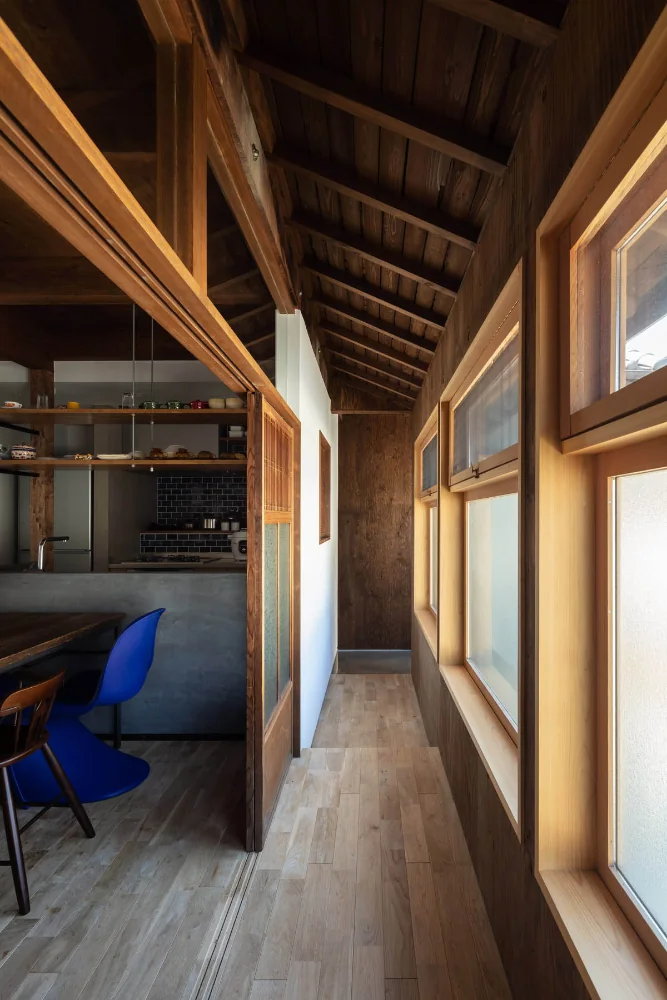
View from the stairs back toward the entry. Flooring is oak solid-plank used unfinished.
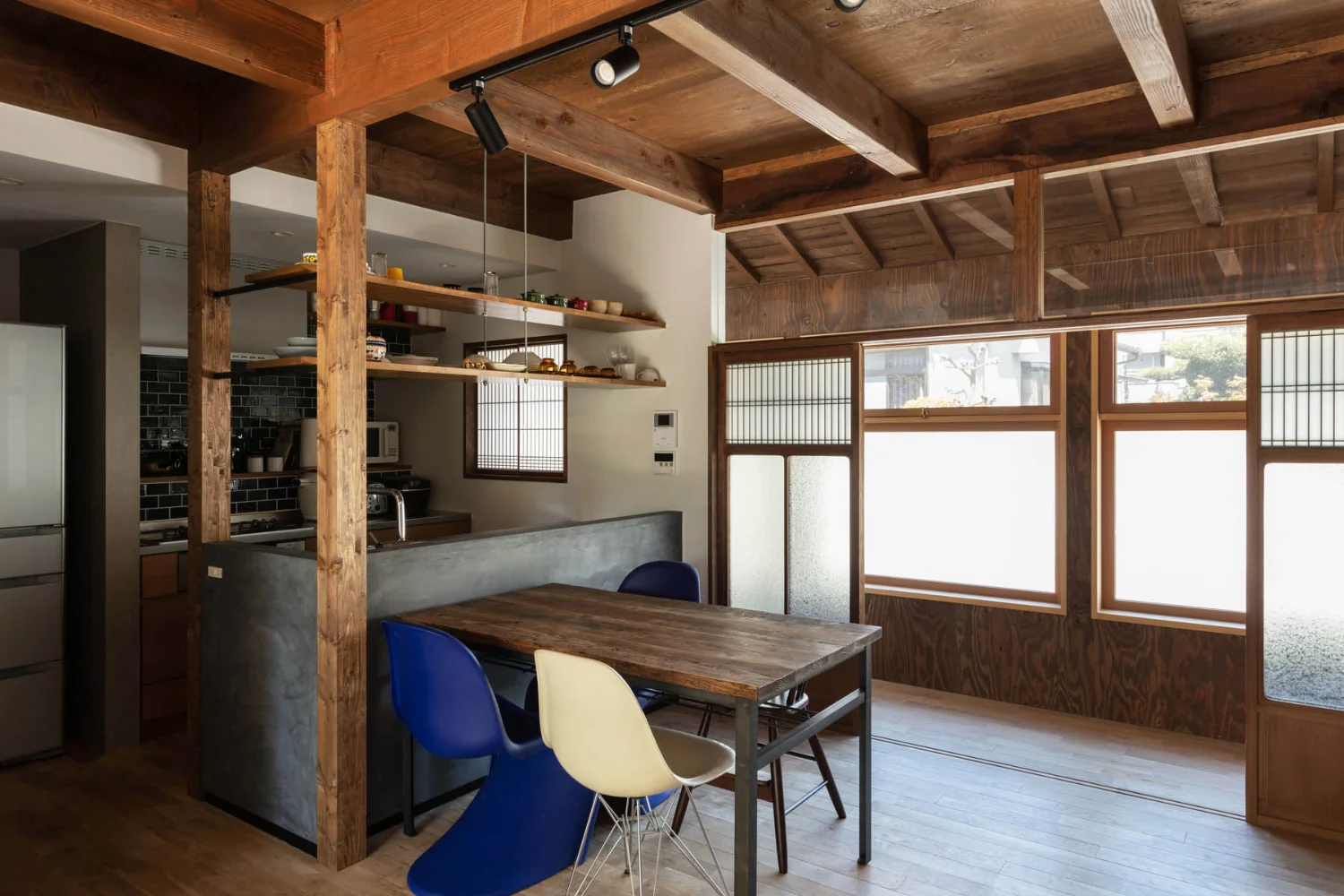
Custom-made kitchen with a mortar-finished counter.
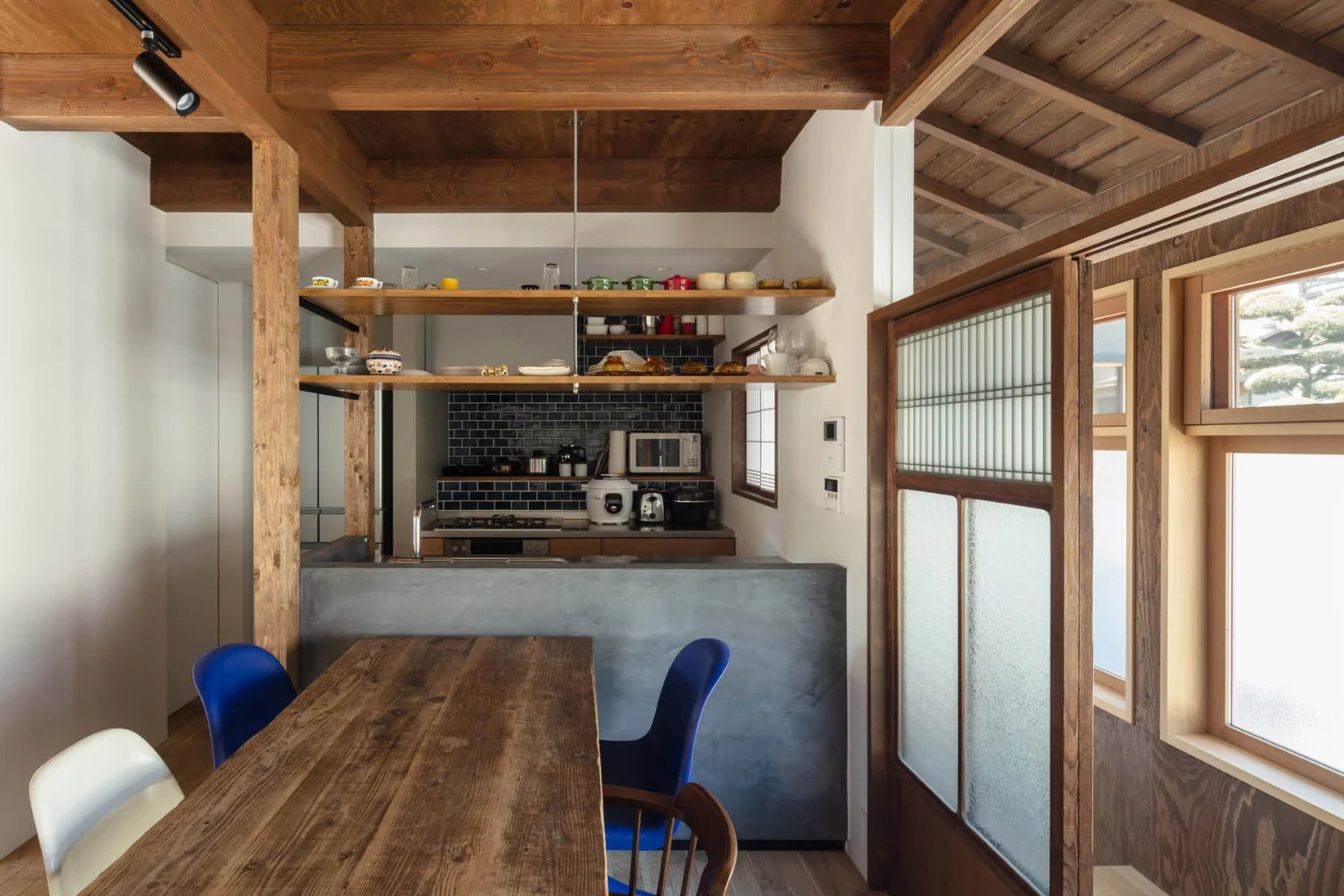
Front of the kitchen. The backsplash tiles are the client’s preferred blue.
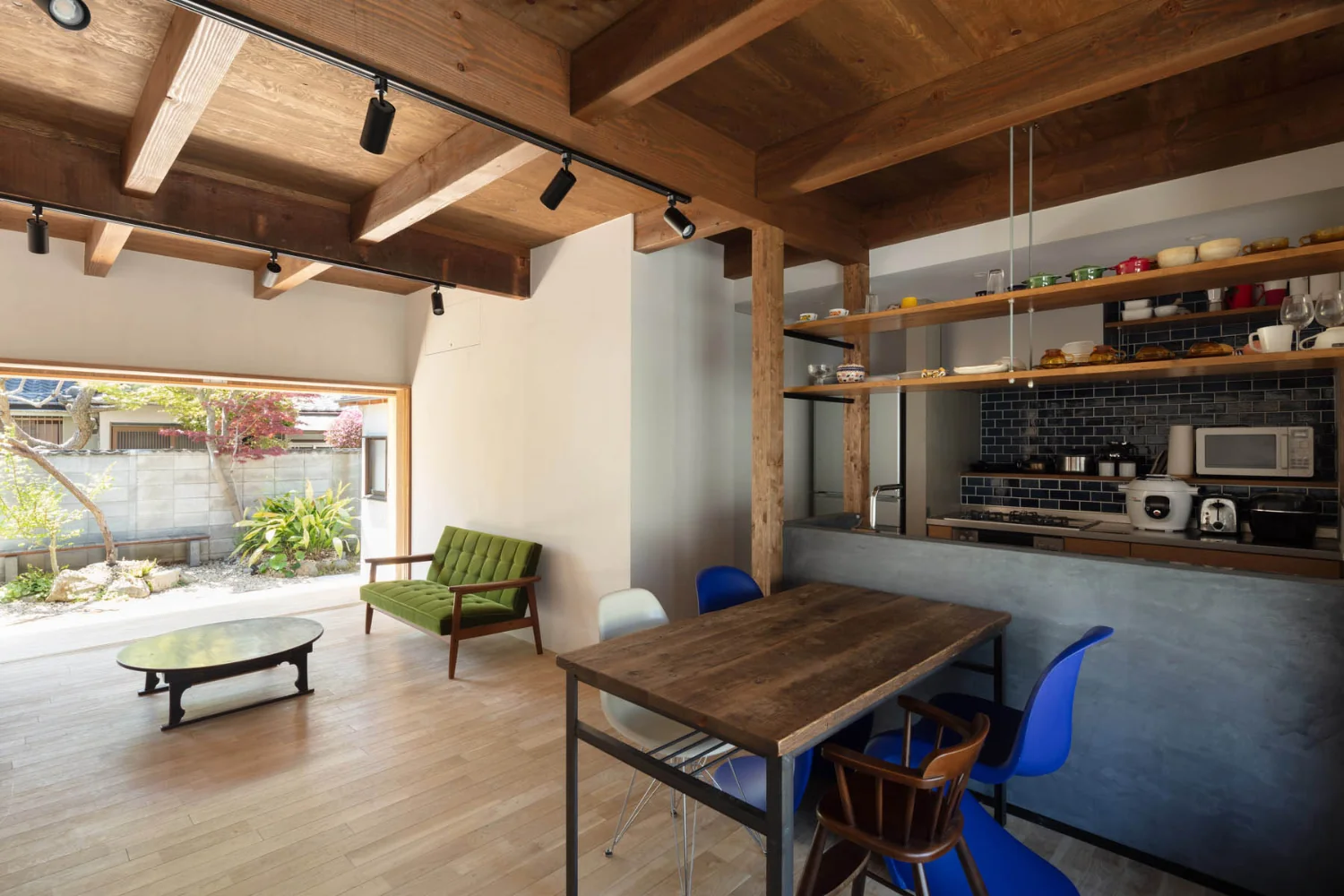
With the joinery fully open, interior and exterior become integrated.
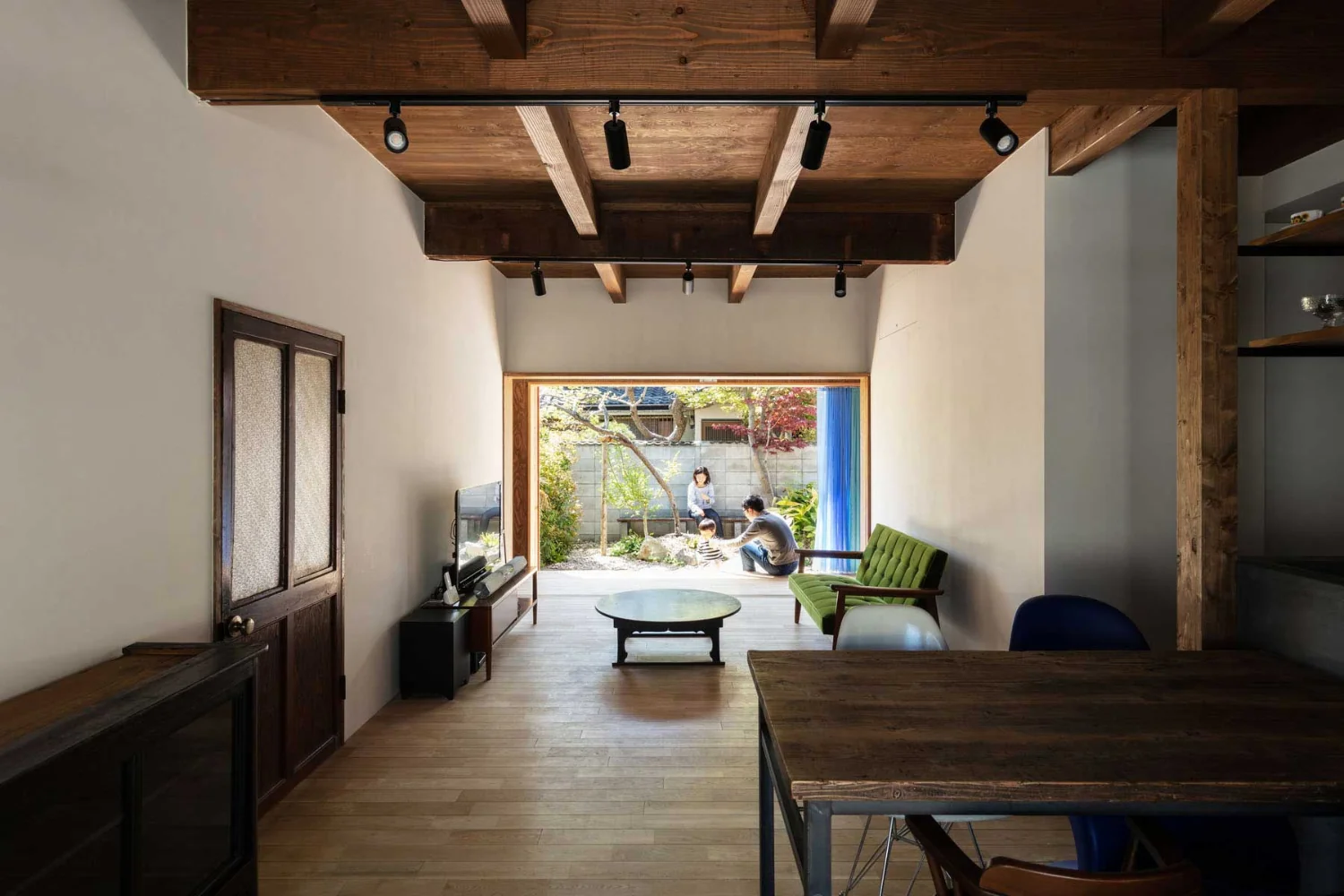
View of the garden from the dining area. Reclaimed joinery can be stored within a wall cavity.
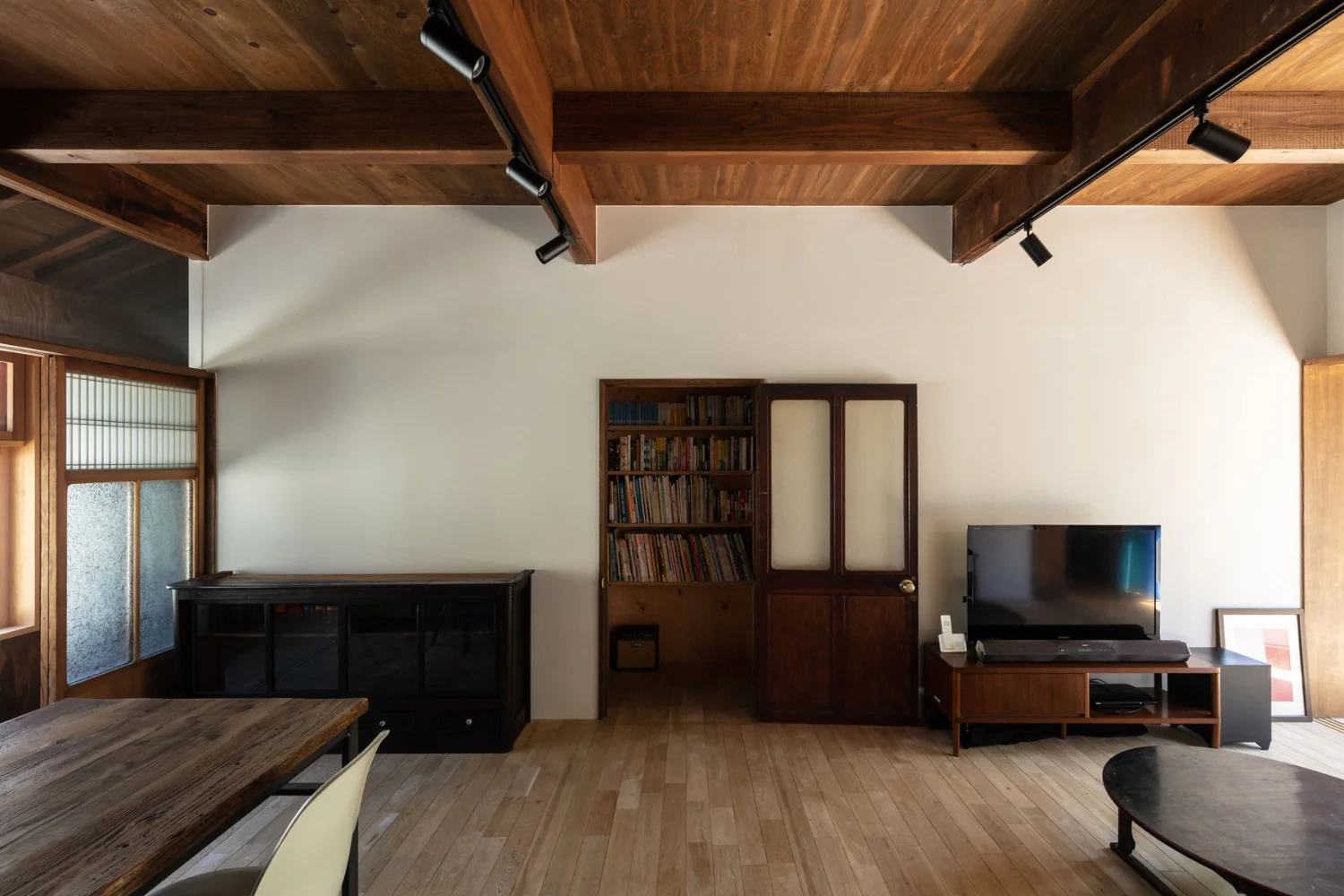
The eastern interstice houses the staircase and library. The door is the original one from the former reception room.
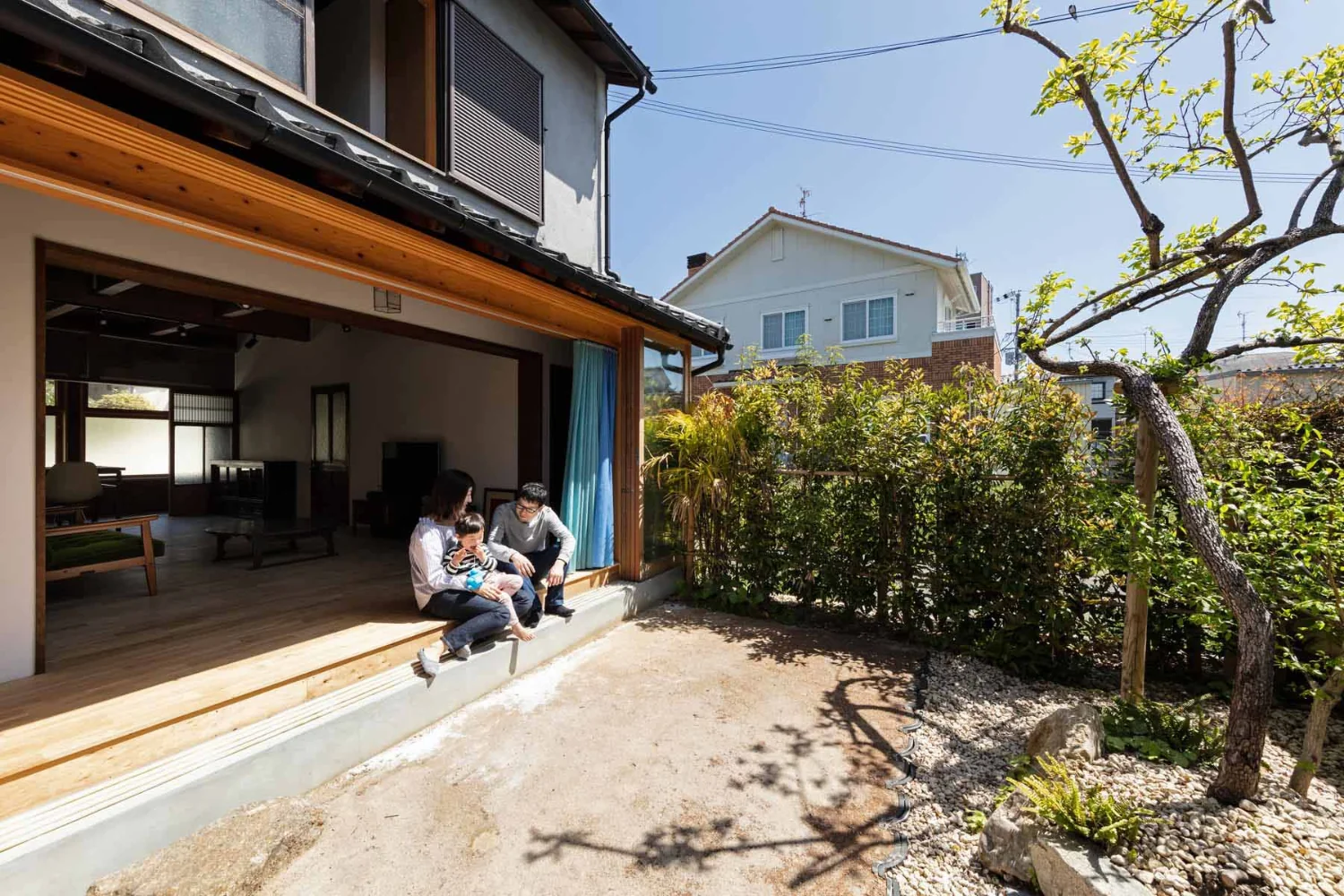
The garden and engawa (verandah) were revived by reducing the footprint of the old bath and toilet. On the east side the block wall was removed and replaced by a hedge.
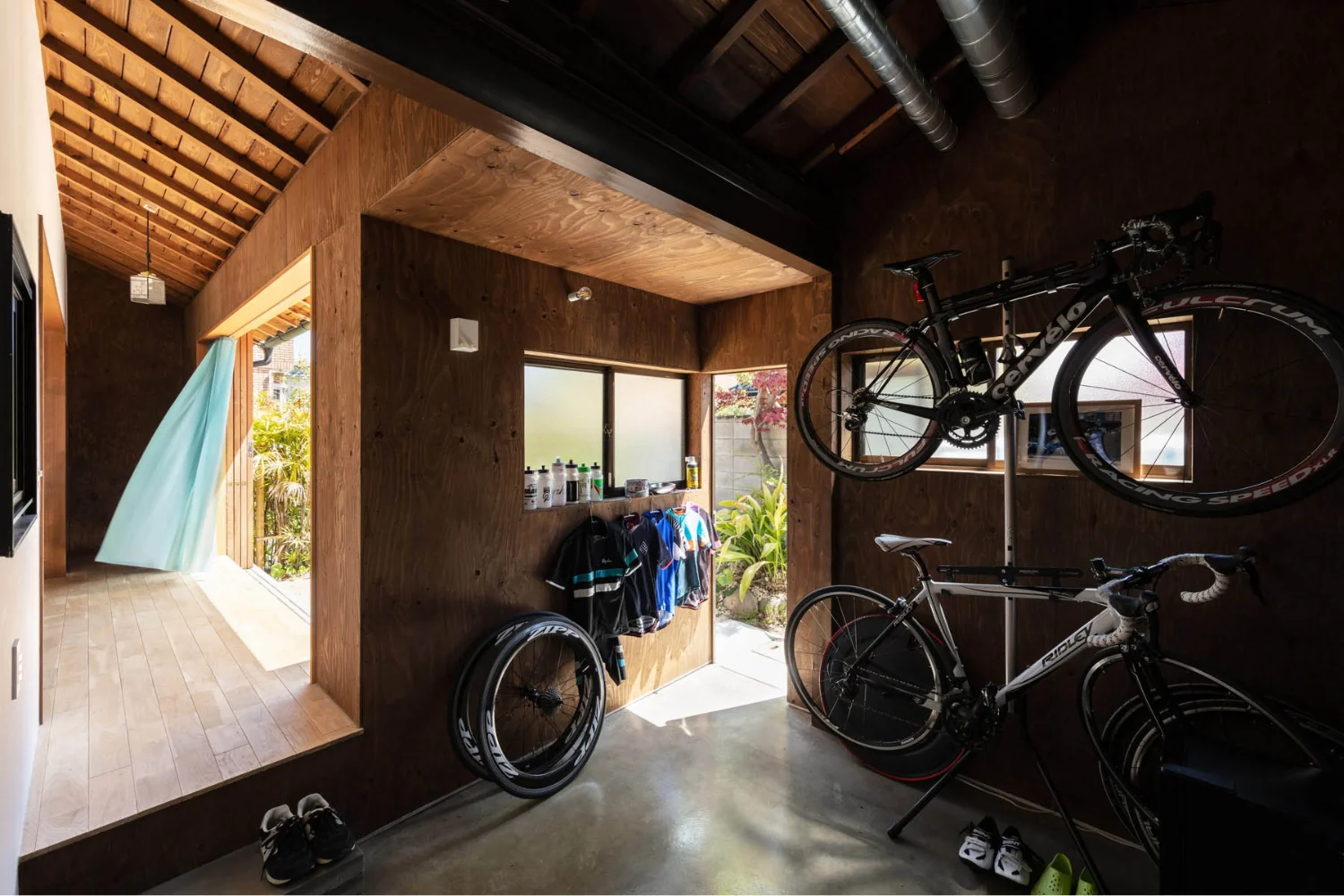
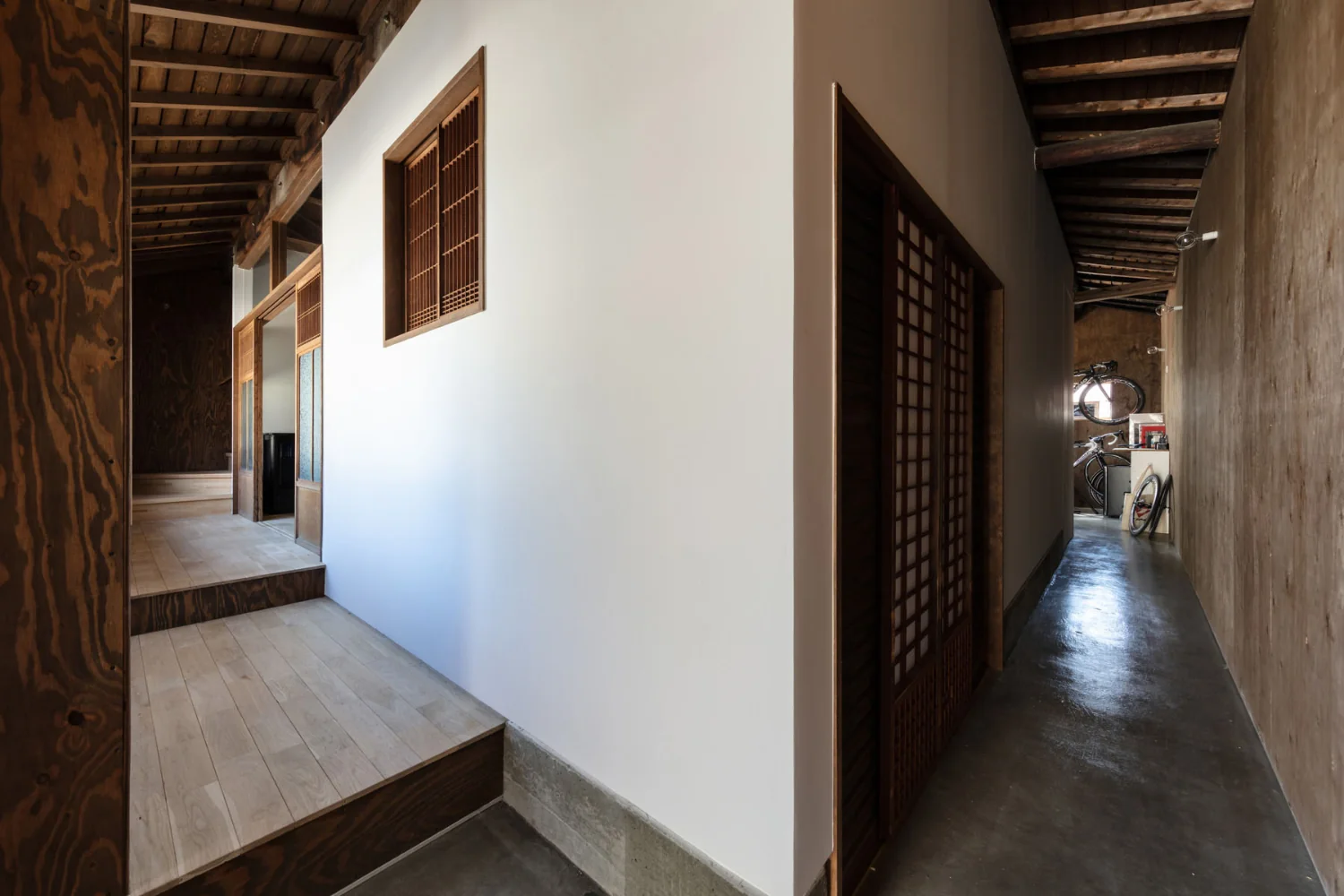
The doma garage, accessible directly from the entry with shoes on, serves as a multipurpose hobby space for bicycle maintenance and similar activities.
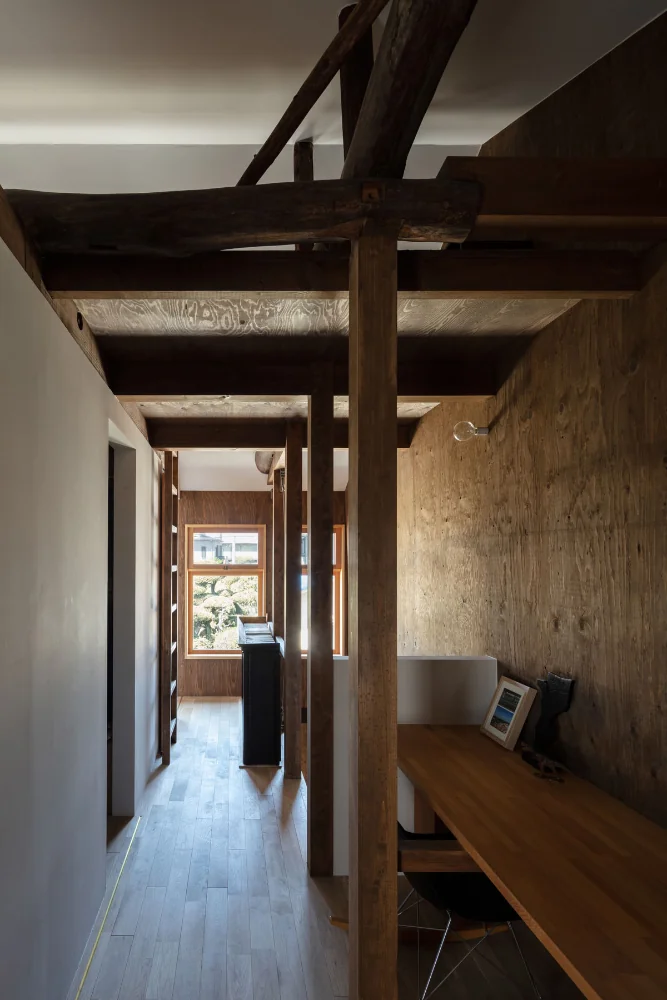
View south from the library. A ladder at center leads up to the loft.
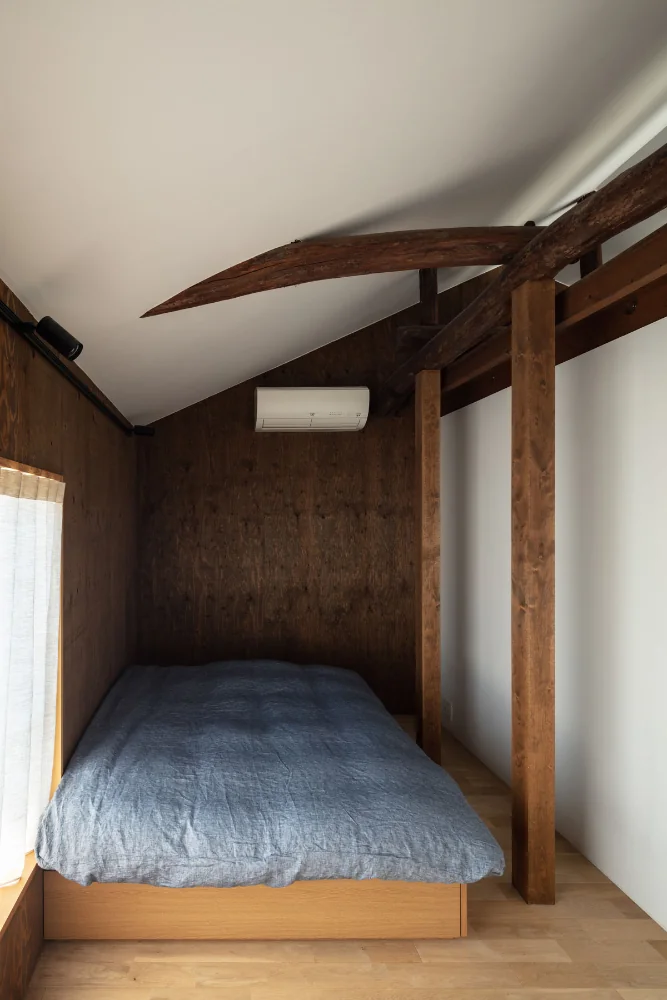
Master bedroom. The roof was thermally upgraded and the ceiling reshaped to a boat-hull profile.
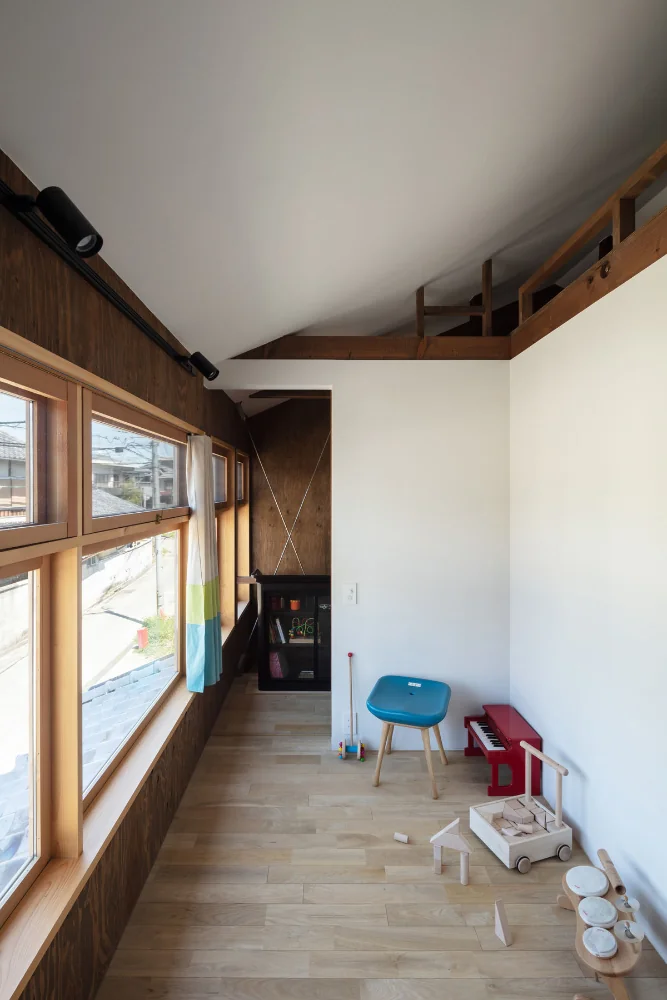
Children’s room. Seismic reinforcement provided by steel bracing.
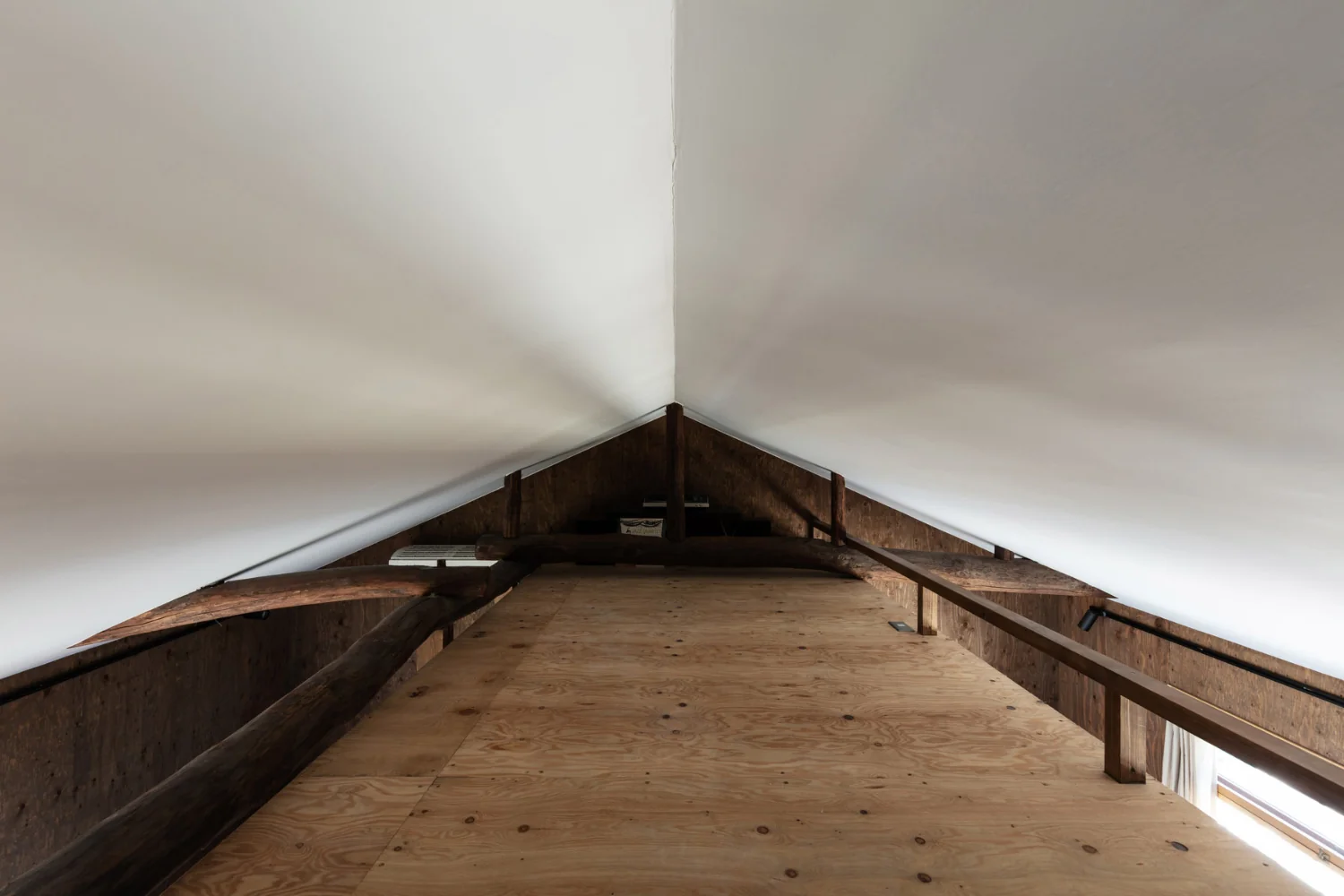
Loft taking advantage of the space above the walk-in closet. The loft forms a continuous spatial sequence with the master and children’s bedrooms.
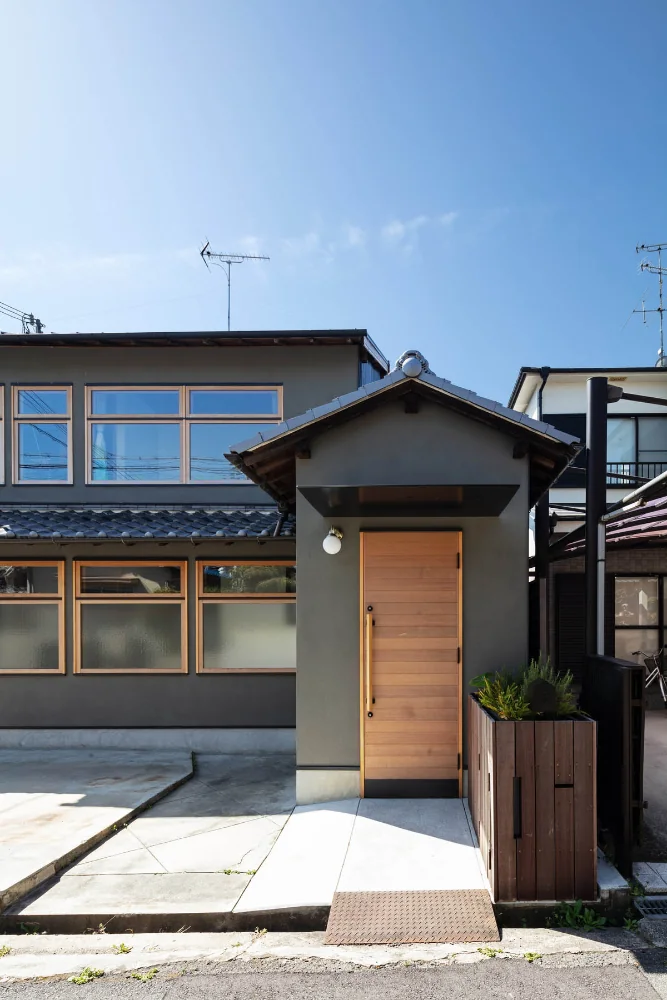
Adjacent to the entrance is a consolidated 'green pot' housing the mailbox, gas meter and intercom.
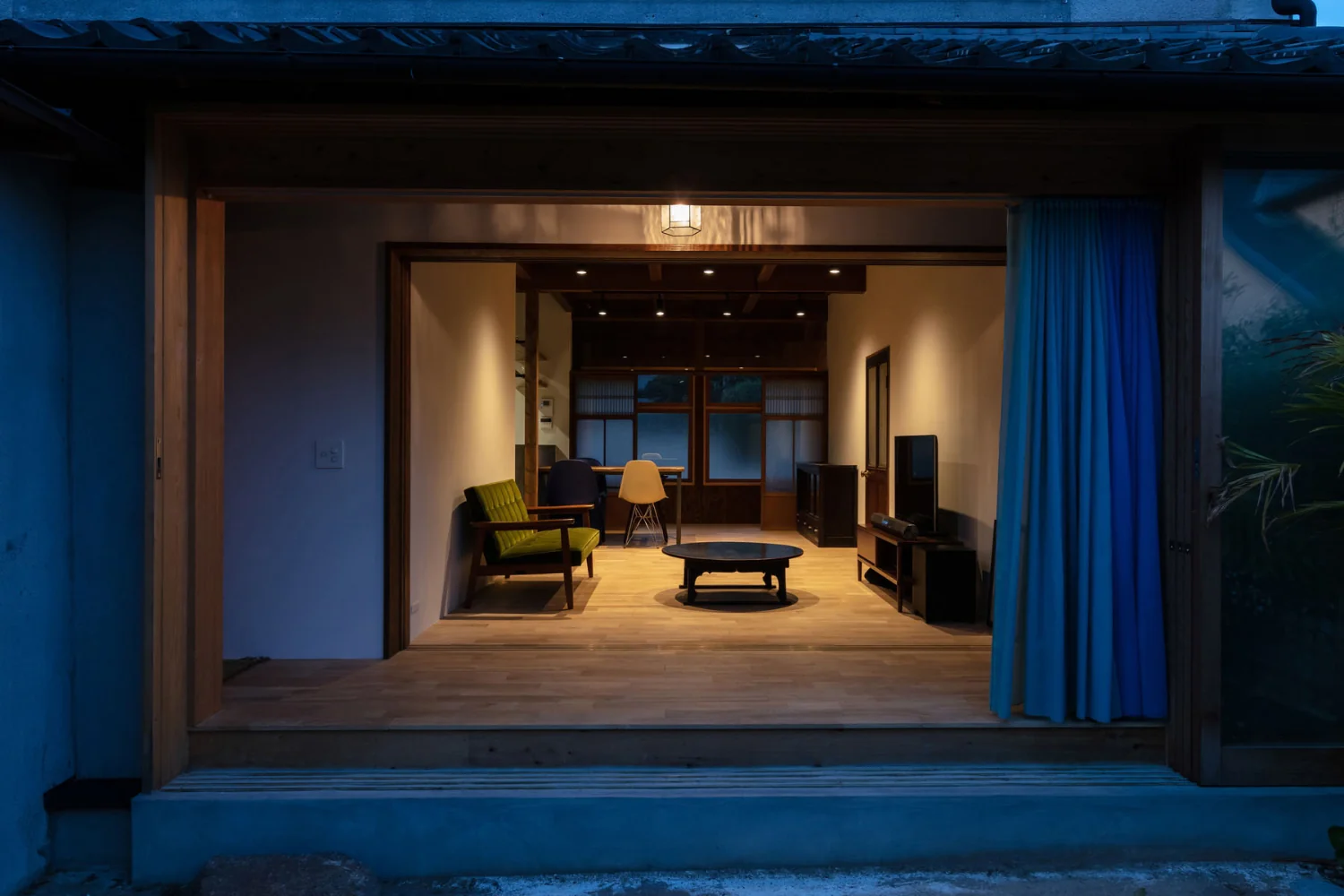
Evening view from the garden. An interior where old and new elements resonate.
Engawa
Kominka Restoration
Circulation Flow
Renovation
Traditional Japanese House
Sustainable Renovation
Entrance Doma
Family with Children
Exposed Beam
Skeleton Remodeling
traditional-Japanese-townhouse
antique-joinery
loft
inverted-boat-hull-ceiling
antique
Yohei Sasakura
Learn More
Renovation of a residence in Nara City originally constructed in the Taishō period. The building had been used primarily as rental housing, underwent several additions and alterations, and was eventually left vacant. Roof leaks and termite damage had severely affected columns, beams and earthen walls, and the site had become overgrown and sombre because of an extended wet area added in the garden and unchecked tree growth. Demolition and rebuild were considered, but setback requirements on three road frontages prevented construction of a building of the same scale, and the client had a strong desire to live in a machiya-like house; consequently renovation was selected.
Reinforcing earthen walls for seismic performance and repairing them using traditional construction methods would have required greater time and cost than a new build. Likewise, applying comprehensive thermal insulation and high airtightness to the whole house would have destroyed the subtle relationship between interior and exterior that characterises a machiya. Therefore we positioned a compact living room at the heart of the plan and carried out seismic strengthening and thermal upgrades using contemporary construction techniques. Around this core we arranged a nested plan of semi-outdoor interstices—entrance, storage, garage, engawa (verandah), toilet, library and staircase—so that indoor, semi-indoor and outdoor realms overlap and resonate while controlling cost, thereby inheriting the atmosphere of a traditional townhouse. Household composition | Married couple and one child Structure and scale | Timber-framed two-story building Use | Detached single-family house Site area | 40 tsubo [130 m²] Gross floor area | 30 tsubo [100 m²] Construction area | 30 tsubo [110 m²] Design supervision | Yoshihiro Yamamoto & Kaori Mitsuhashi [yyaa] Structural collaboration | Ippei Yasue [Workshop] Construction | [Aoyama Construction Co.] Kitchen | [KANWORKS] Joinery hardware | [Tsumugi Trading Co.] Reclaimed joinery | [Terakawa Shop] Nameplate fittings | [Kamite Workshop] Curtains | [fabricscape] Exterior landscaping | Takeo Matsushita [soji]
- Copyright(C)Qurasuki.All Rights Reserved.