Introducing House of Four Pavilions and an Alley | Four-Corner House, a custom-built home example by Yoshihiro Yamamoto Architects Associates, a Architect / Design office in 302, Zeniya Honpo Main Building, 14-6 Ishigatsujichō, Tennōji-ku, Osaka

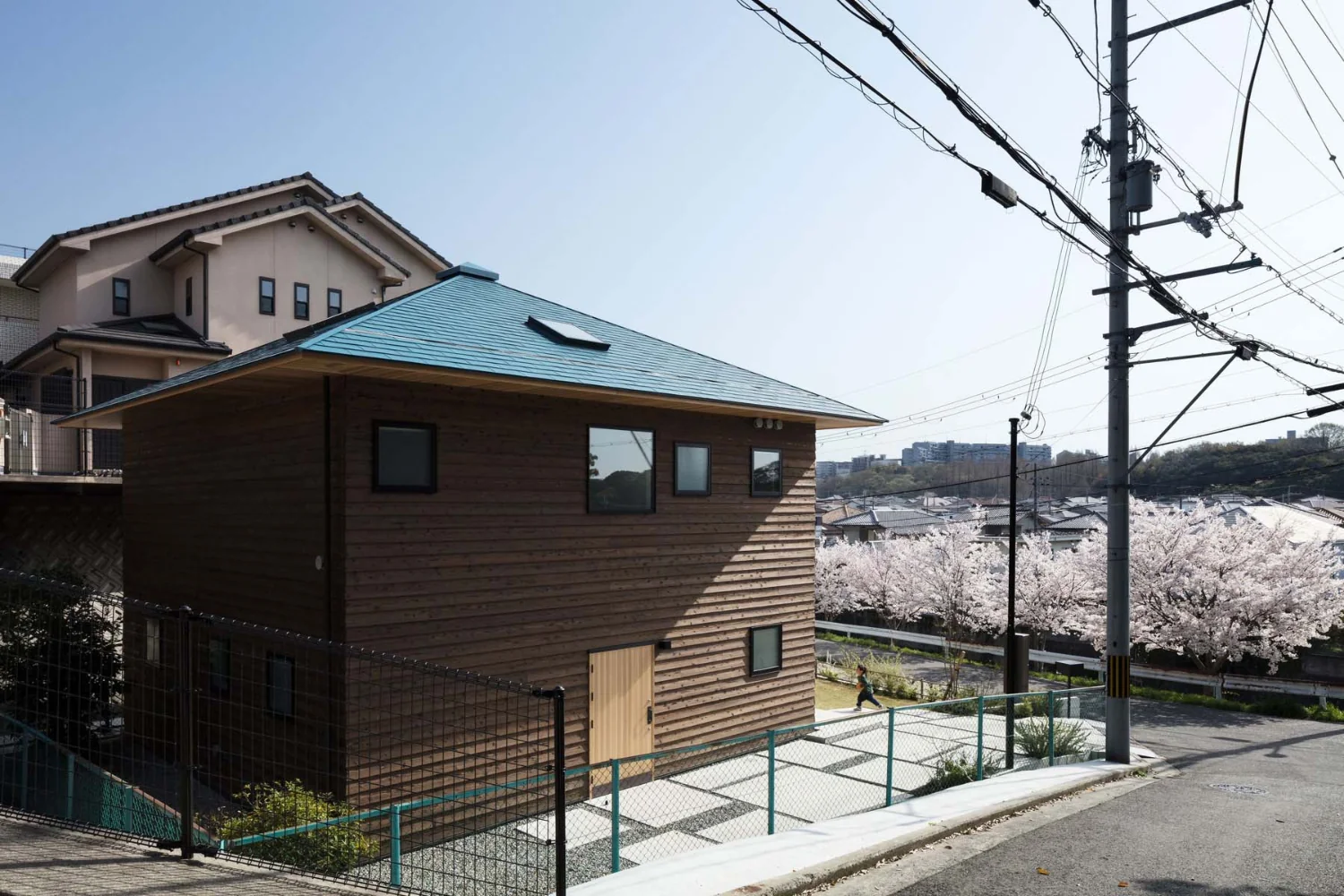
The approach is a square concrete entry court that echoes the form of the building.
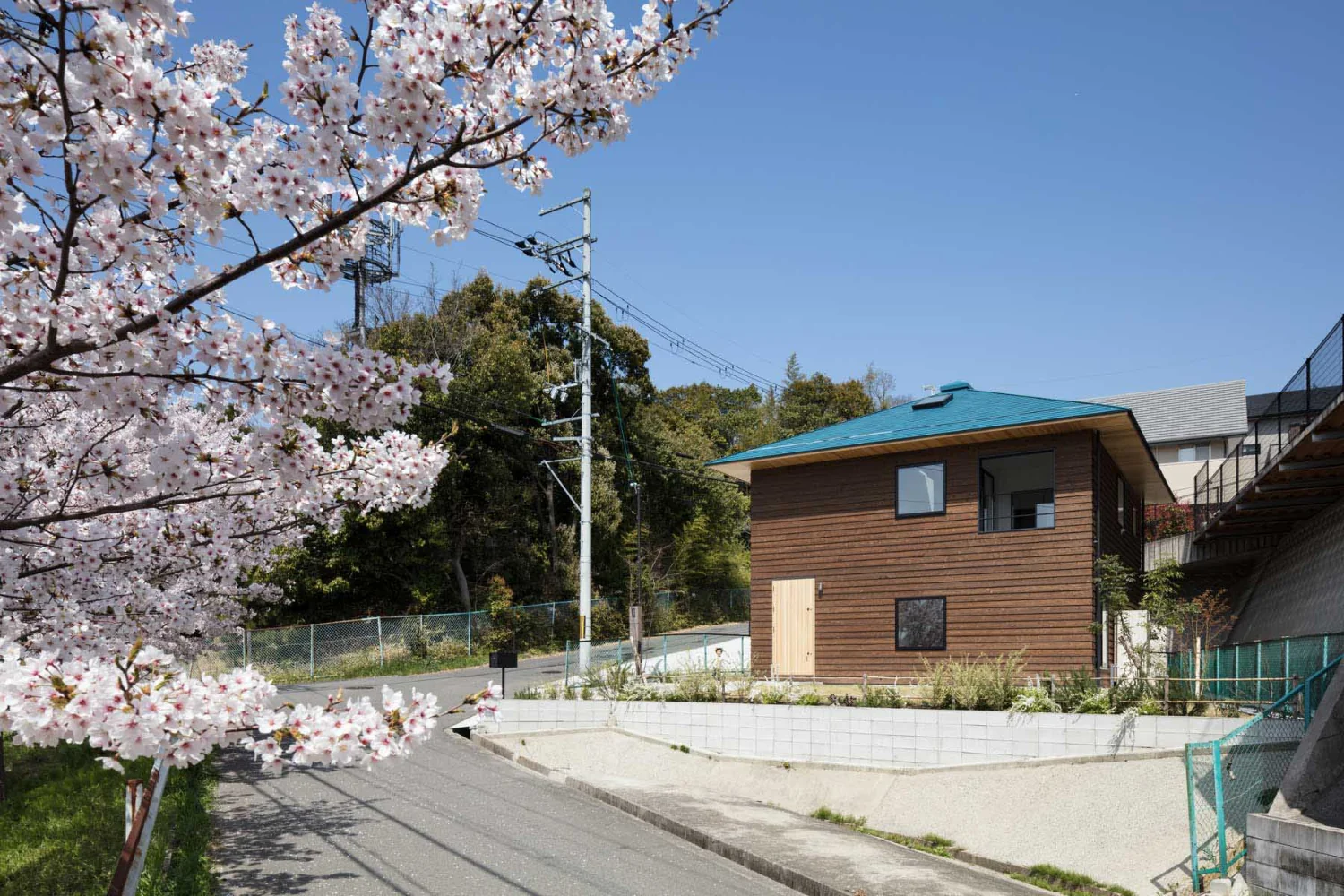
A simple house form: a true 8.1 m × 8.1 m square plan under a pyramidal hip roof.
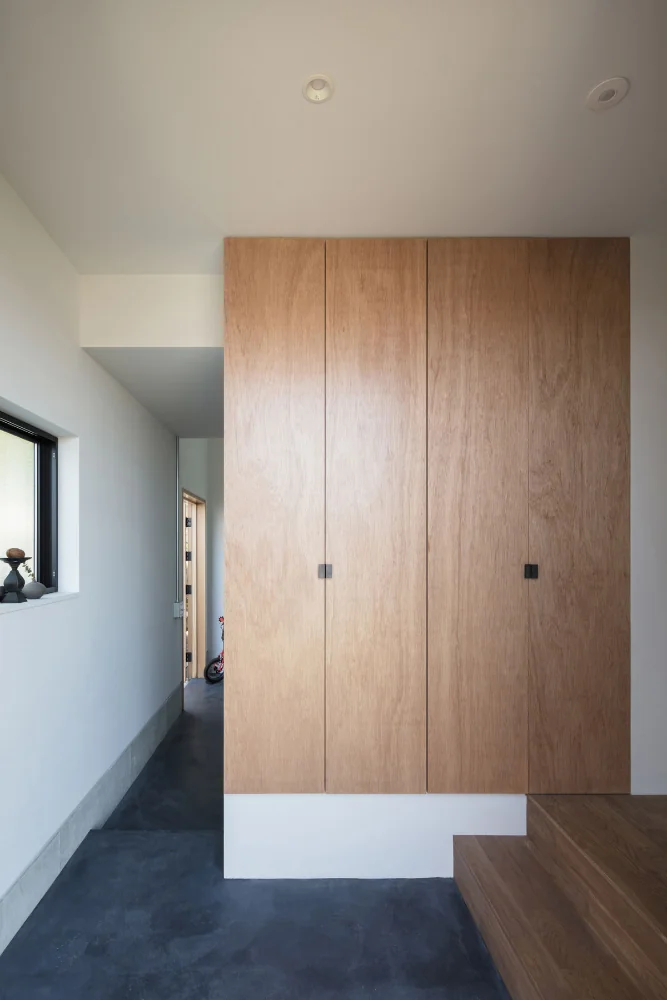
Entrance leading to the doma; the floor is mortar tinted with sumi ink.
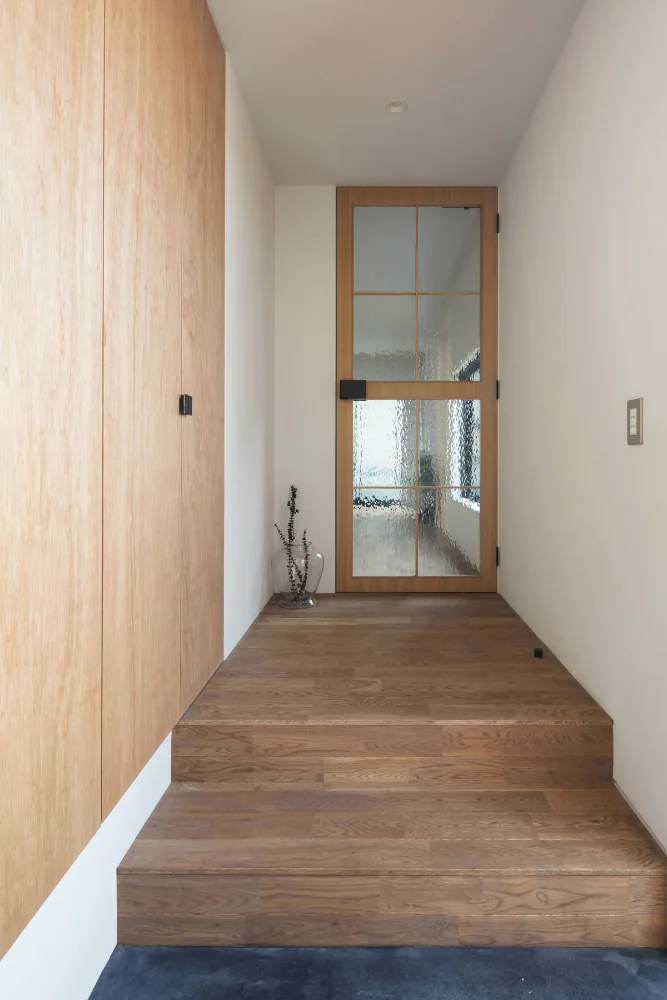
A door fitted with antique glass panels serves as the entrance to the living room.
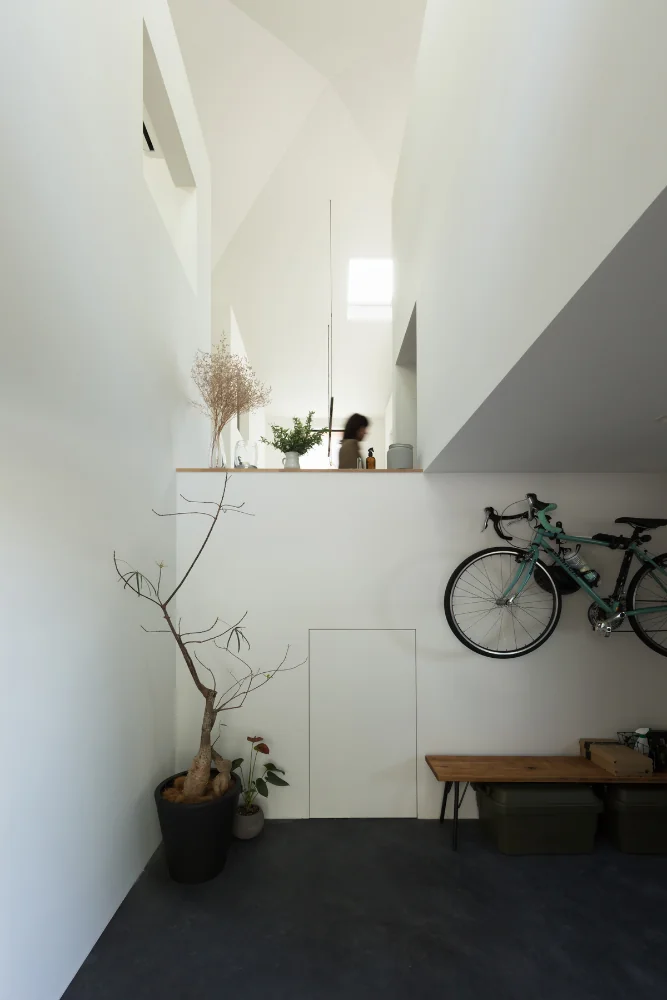
Doma-style garage. Beneath the mezzanine is a secret hideout.
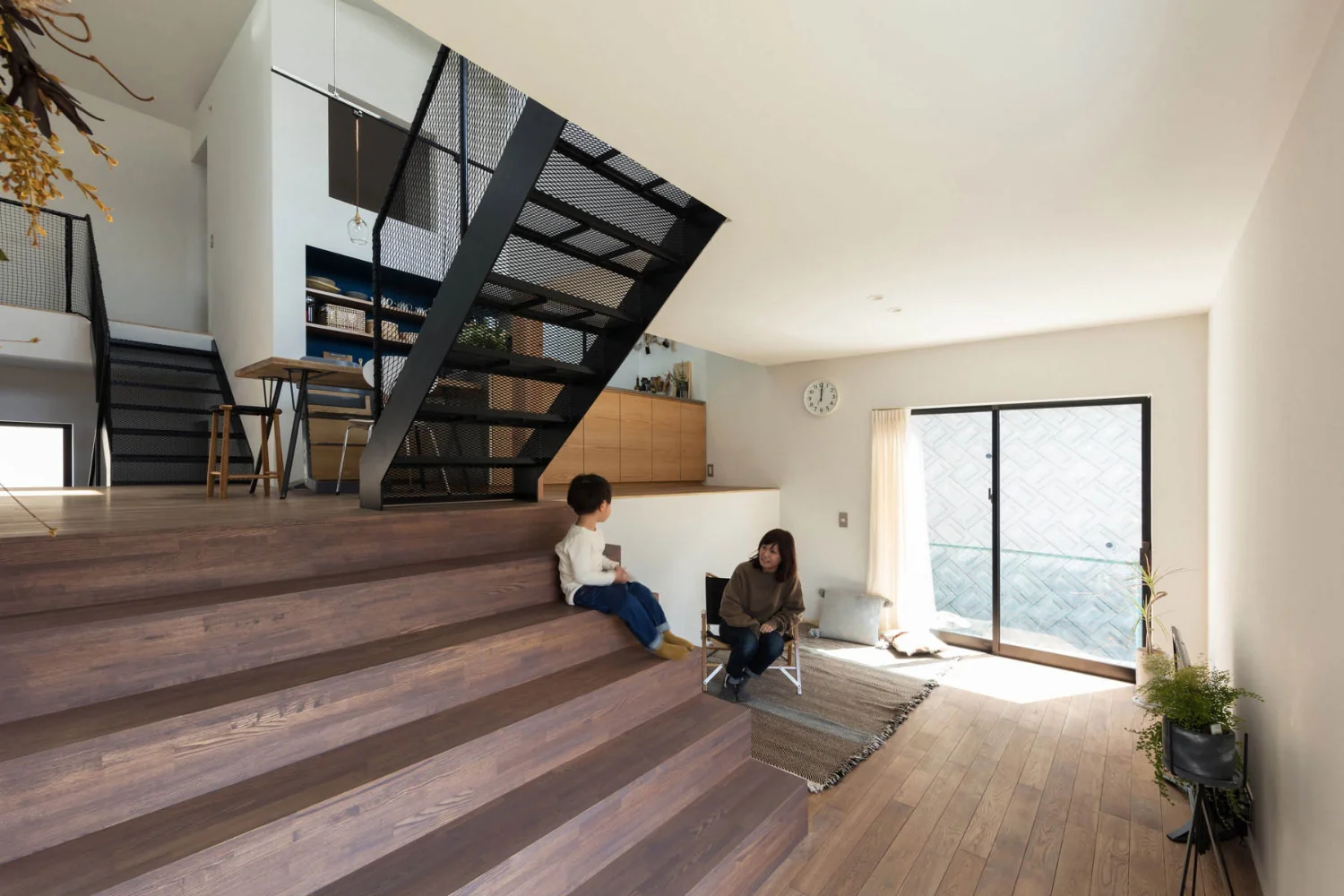
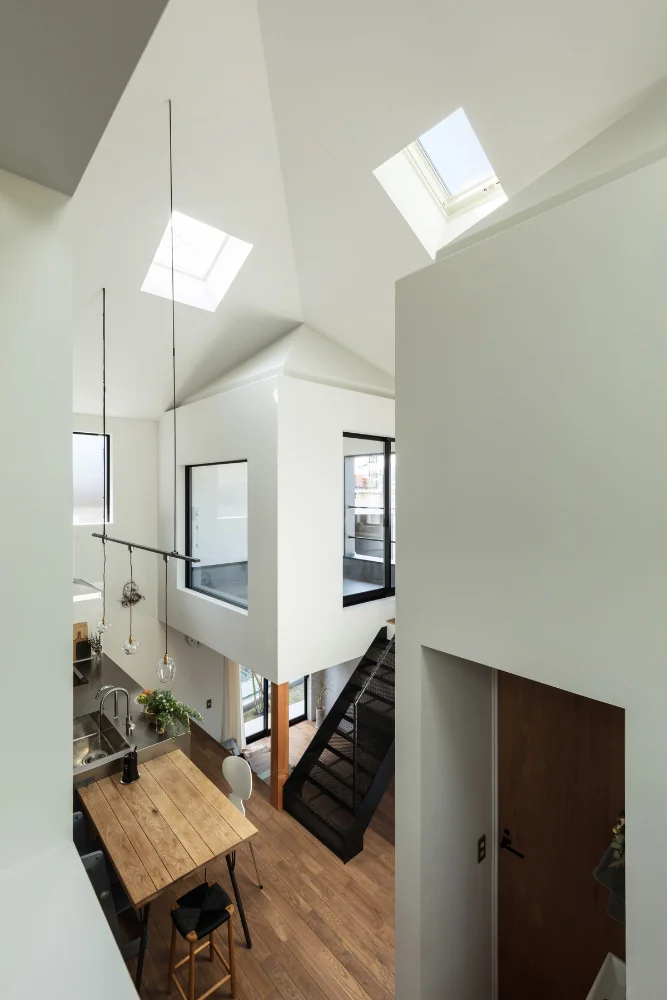
Living room featuring a large staircase. At a half level above, the four‑corner space contains the dining kitchen.
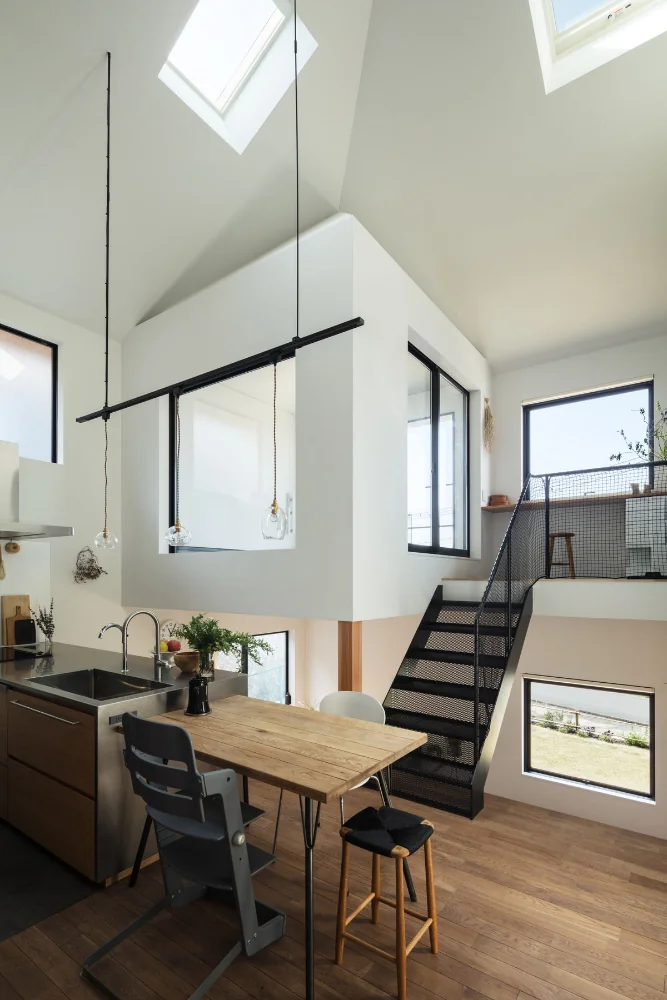
Above the living room is a small pavilion containing a terrace—an exterior space experienced as an interior.
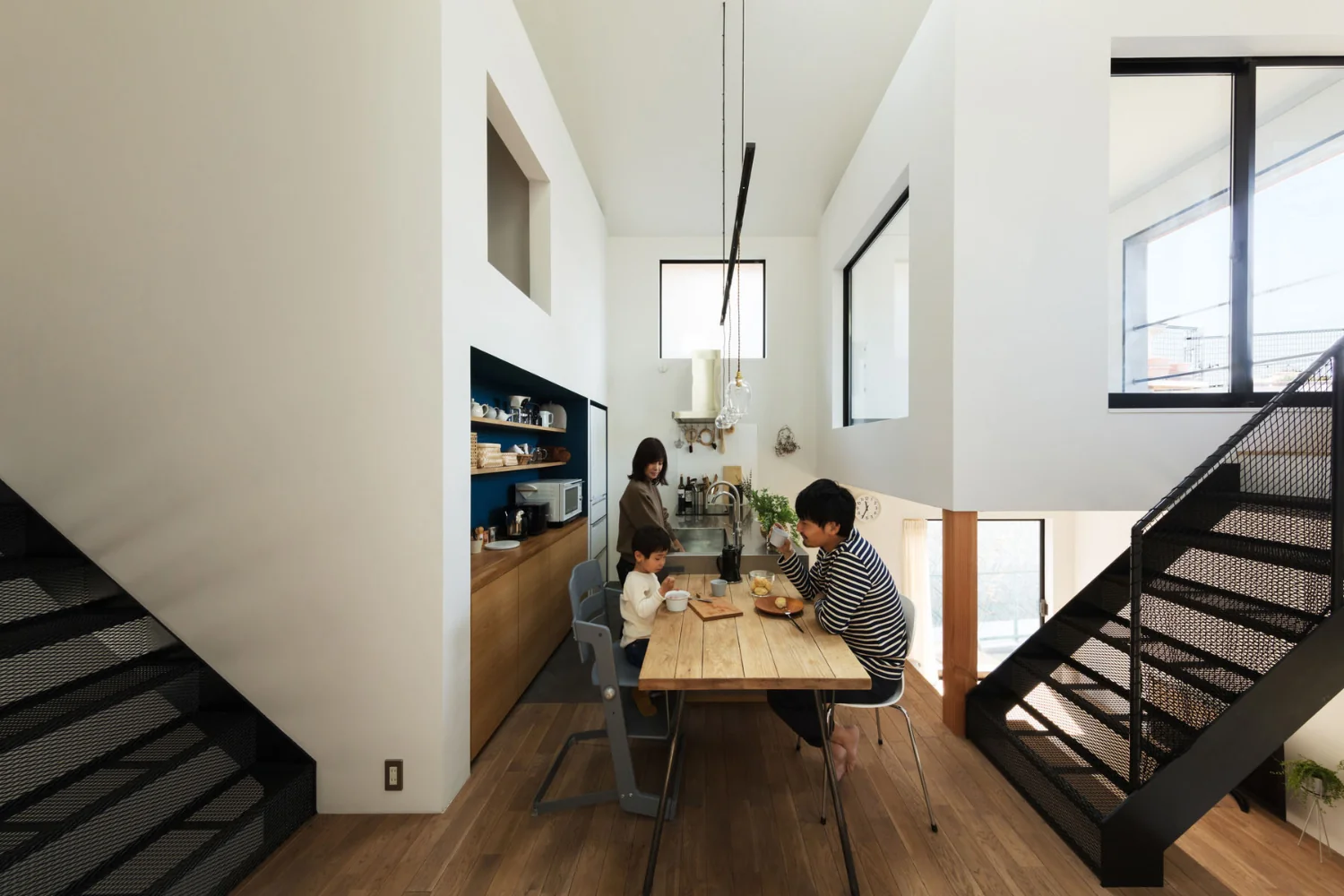
House of Four Pavilions and an Alley | Four-Corner House
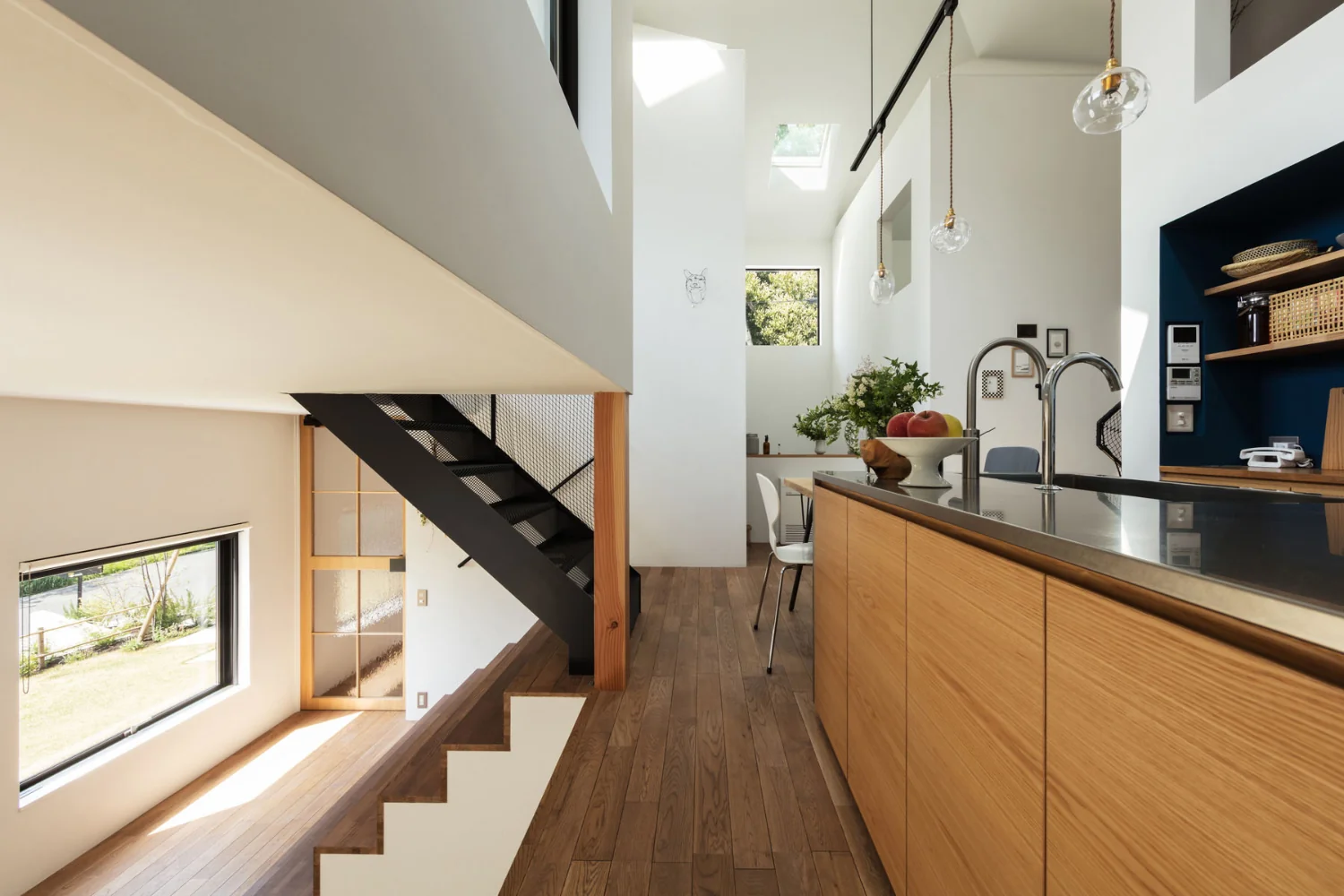
View toward the four‑corner space from the kitchen. The kitchen countertop is stainless steel with a vibratory finish.
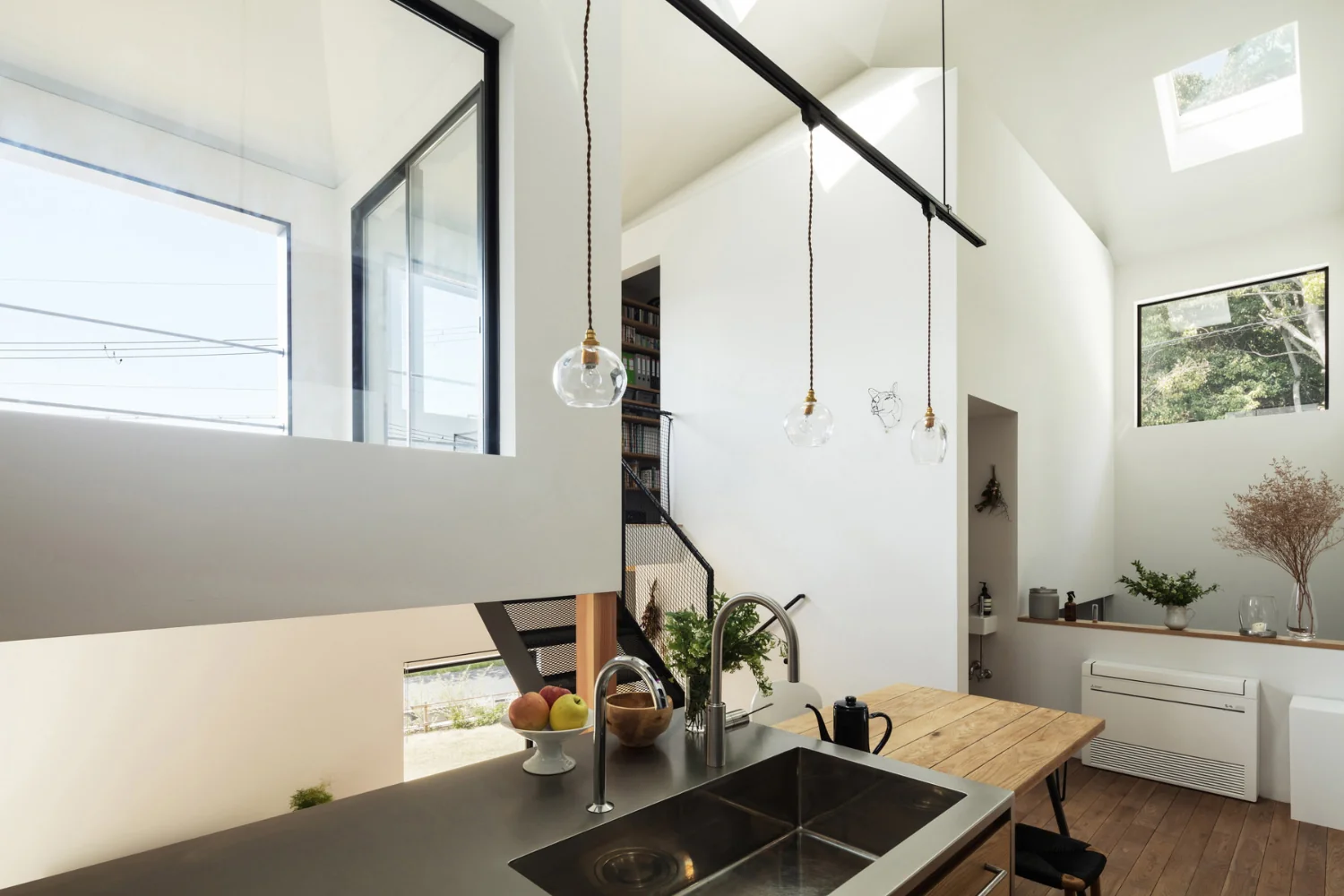
Garden, the greenery of the woodland, sky… a view framed by the window.
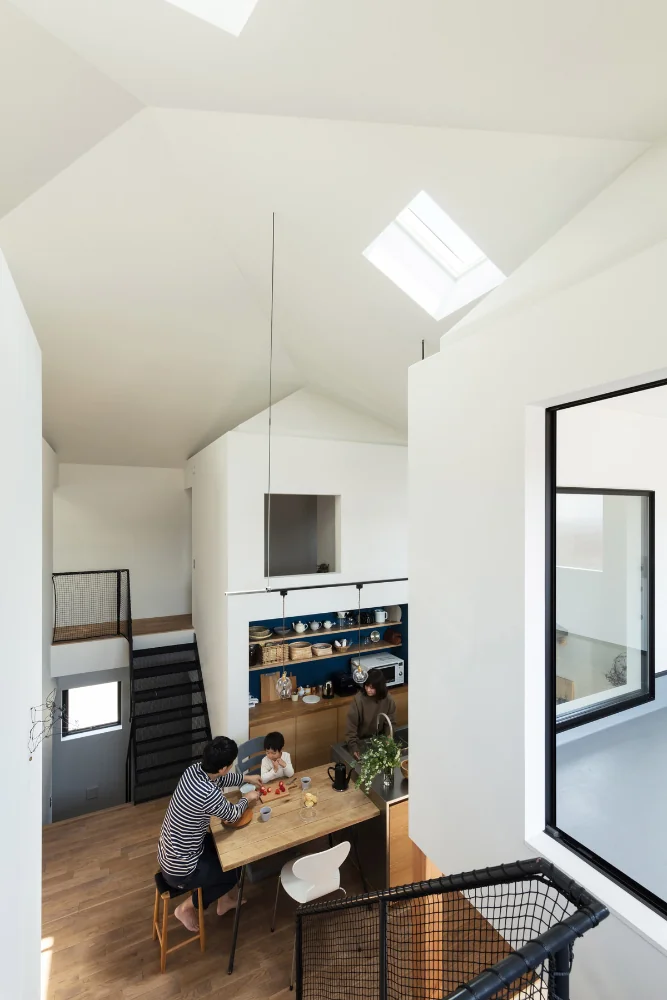
View toward the four‑corner space from the study. The staircase is constructed of expanded metal.
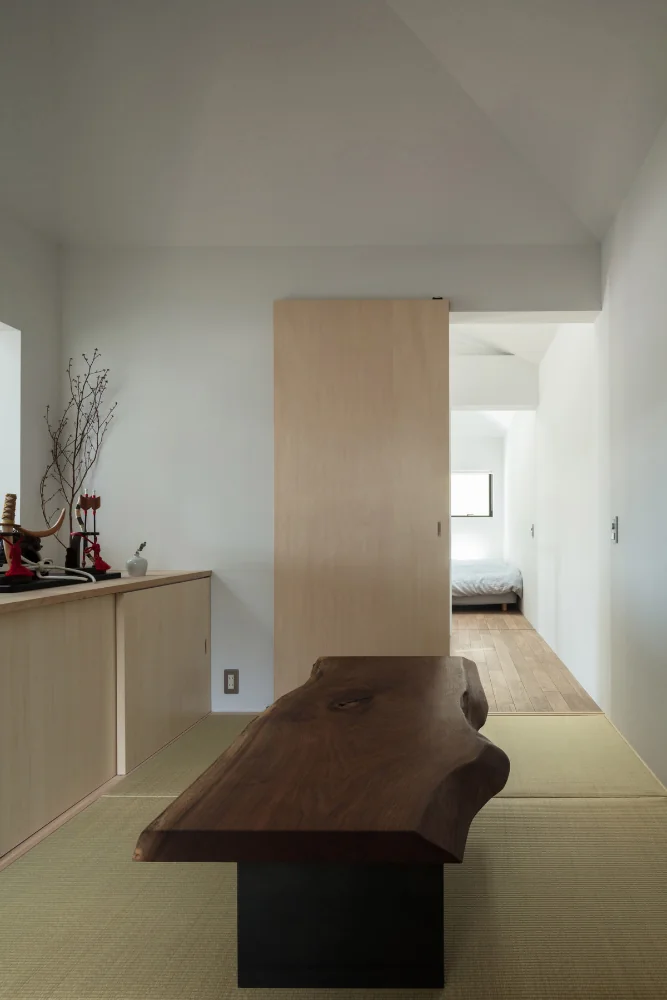
Japanese-style room. Iron legs were custom-designed to complement the client's black-walnut tabletop.
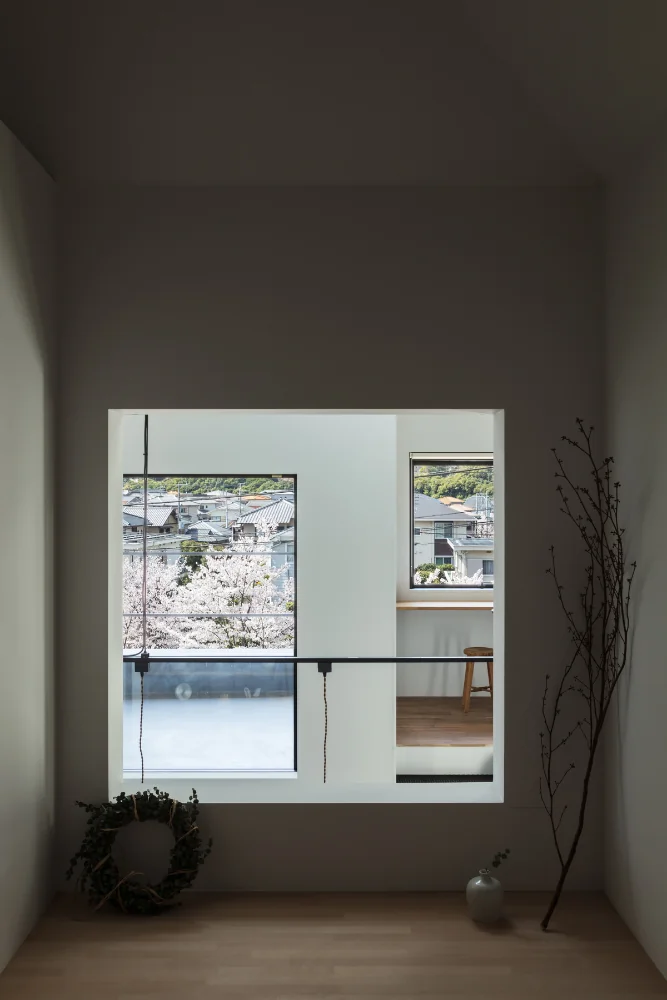
From the Japanese room's window one can see the main house, the terrace, and the avenue of cherry trees.
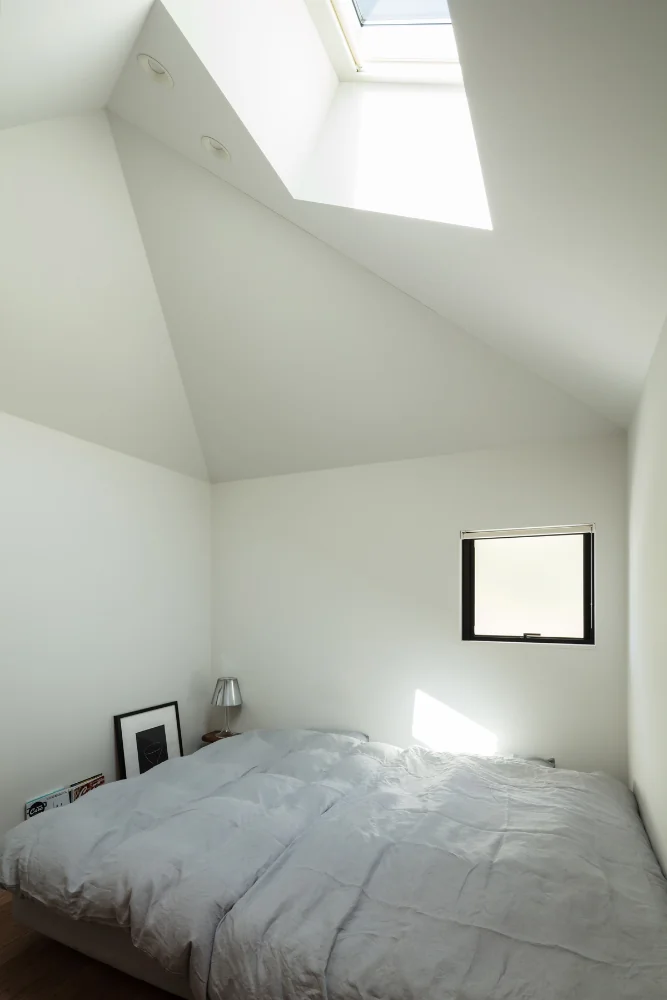
Inside the small house—daylight pours in through the skylight.
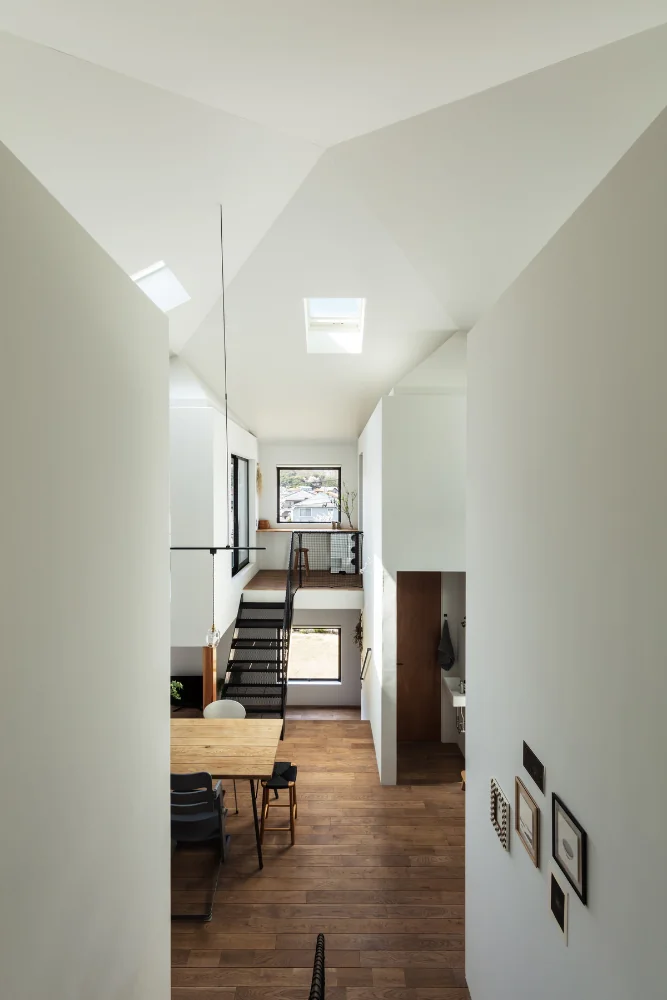
Different spaces are connected through the windows.
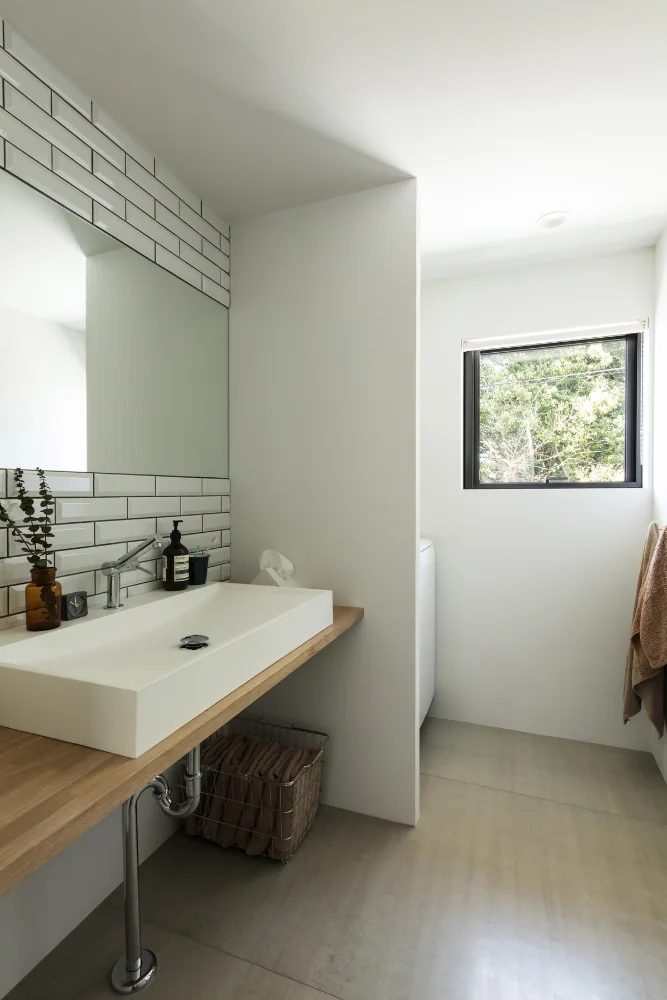
Washroom and bath that enjoy views of the woodland; walls are finished with subway tile.
A plan in which small houses nestle at the four corners of a larger house.
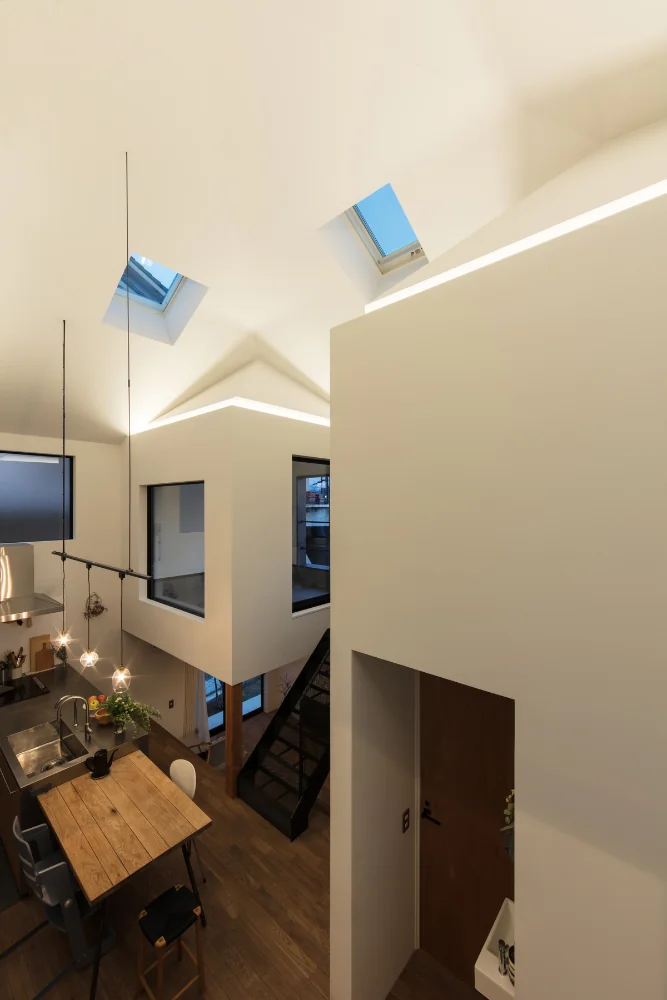
Lighting concept in which four small houses glow to illuminate the four‑corner space.
Peninsula Kitchen
Toplight
Void
Skip Floor
High Ceiling
Natural Materials
Closed to Outside, Open to Inside
Sky-Framing Window
Picture Window
Sloped Ceiling
subway-tile
shiplap-cladding
shou-sugi-ban
secret-hideout
child-rearing
Yohei Sasakura
Learn More
Sakai City, Osaka Prefecture. A residence sited on the mid-slope of a gentle hill left behind by new‑town development. We established a single, large house‑shaped volume with a square plan measuring 8.1 m on each side, and by inserting four small houses that emanate from each corner within it a cruciform void is produced between the small houses. Because each small house assumes a different internal volume according to its functional requirements, the gaps become not clean intersections but distorted spaces akin to the four corners of a back alley. The small houses and these corner spaces are connected by incised apertures; they invert and, alternately opening and closing, nurture the inhabitants' daily life. The exterior is conceived as an abstract house‑shaped icon clad in the tactile texture of yakisugi (charred cedar), while the interior, despite a complex skip‑floor spatial arrangement, is composed as a simple white cube. By balancing these opposing conditions, we conceived a dwelling appropriate to this site where the new town and the old village press against one another and age together, approaching a certain equilibrium.
Two‑story timber construction. Design area: 45 tsubo (148 m²). Architectural and building‑services design supervision: Yoshihiro Yamamoto and Kaori Mitsuhashi (YYAA). Structural design supervision: Ippei Yasue (Workshop). Construction (contractor): Masaki Construction. Kitchen: KANWORKS. Lighting design: Shingo Ishido (DAIKO Osaka TACT). Fabrics: fabricscape. Landscape and external works: Takeo Matsushita (soji).
- Copyright(C)Qurasuki.All Rights Reserved.