Introducing Unuma House, a custom-built home example by Kota Goto Architectural Studio, a Architect / Design office in 1-17-1 Unuma-Haba-chō, Kakamigahara City, Gifu Prefecture, Japan
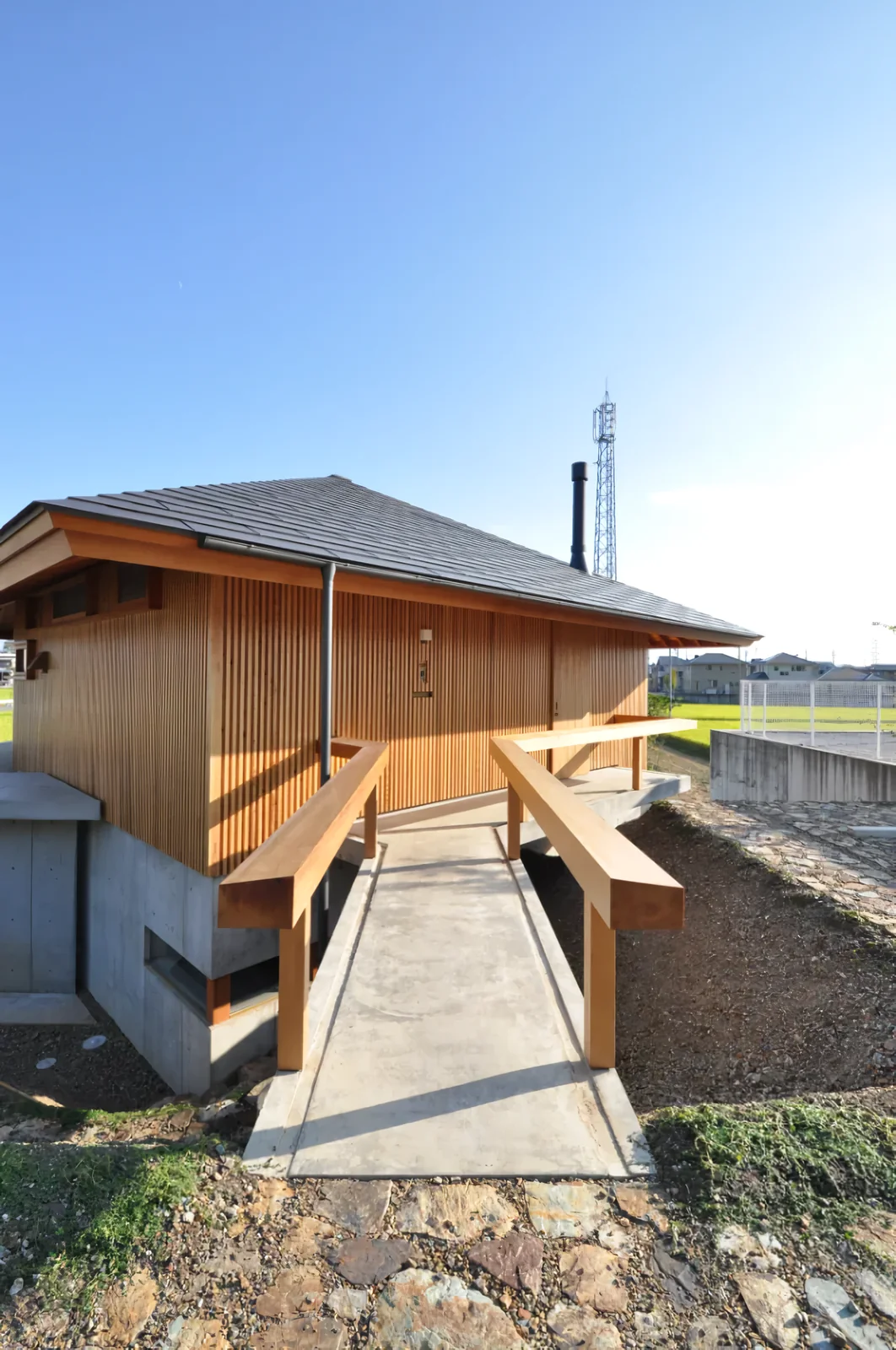
North elevation
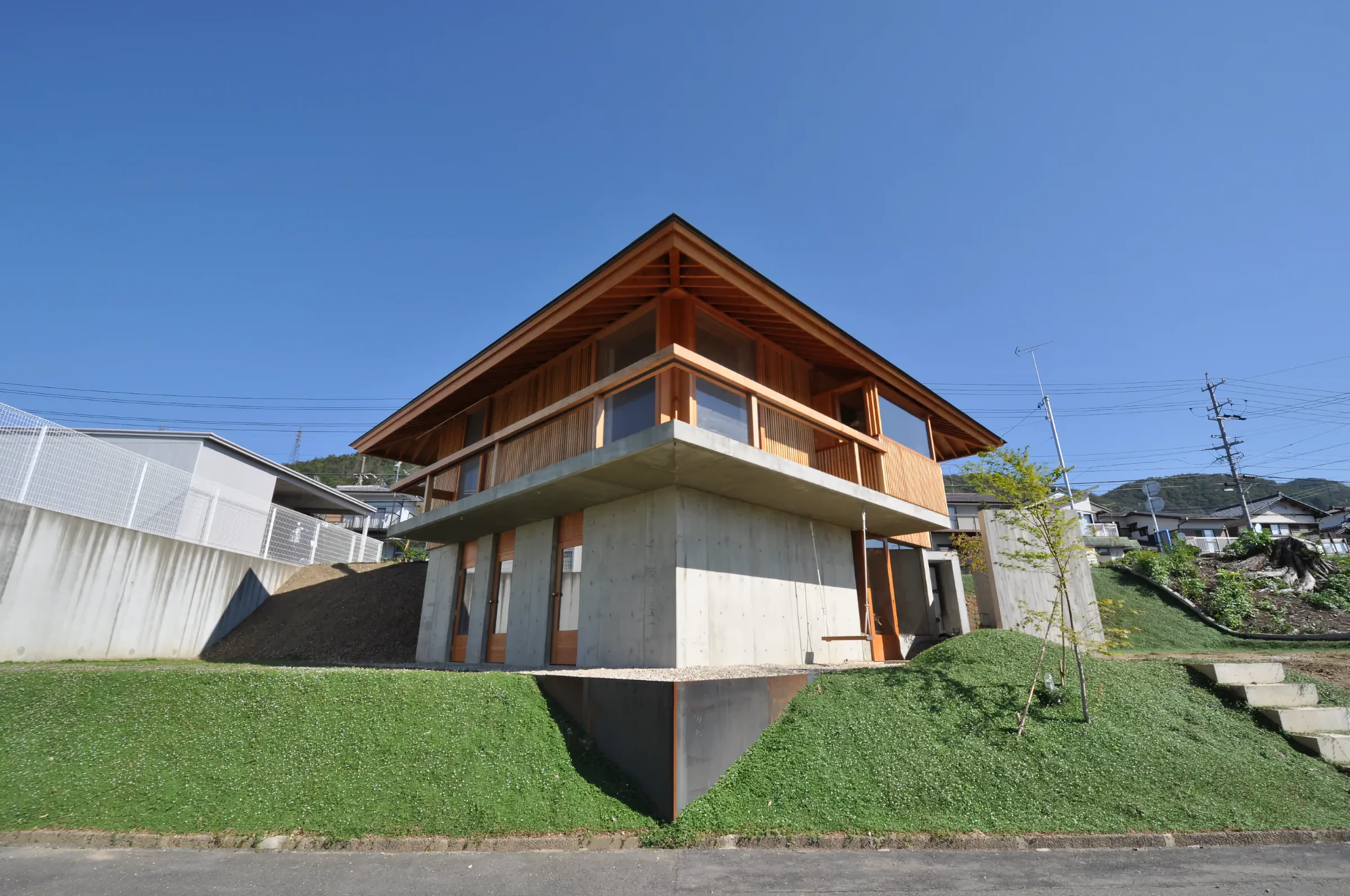
South elevation
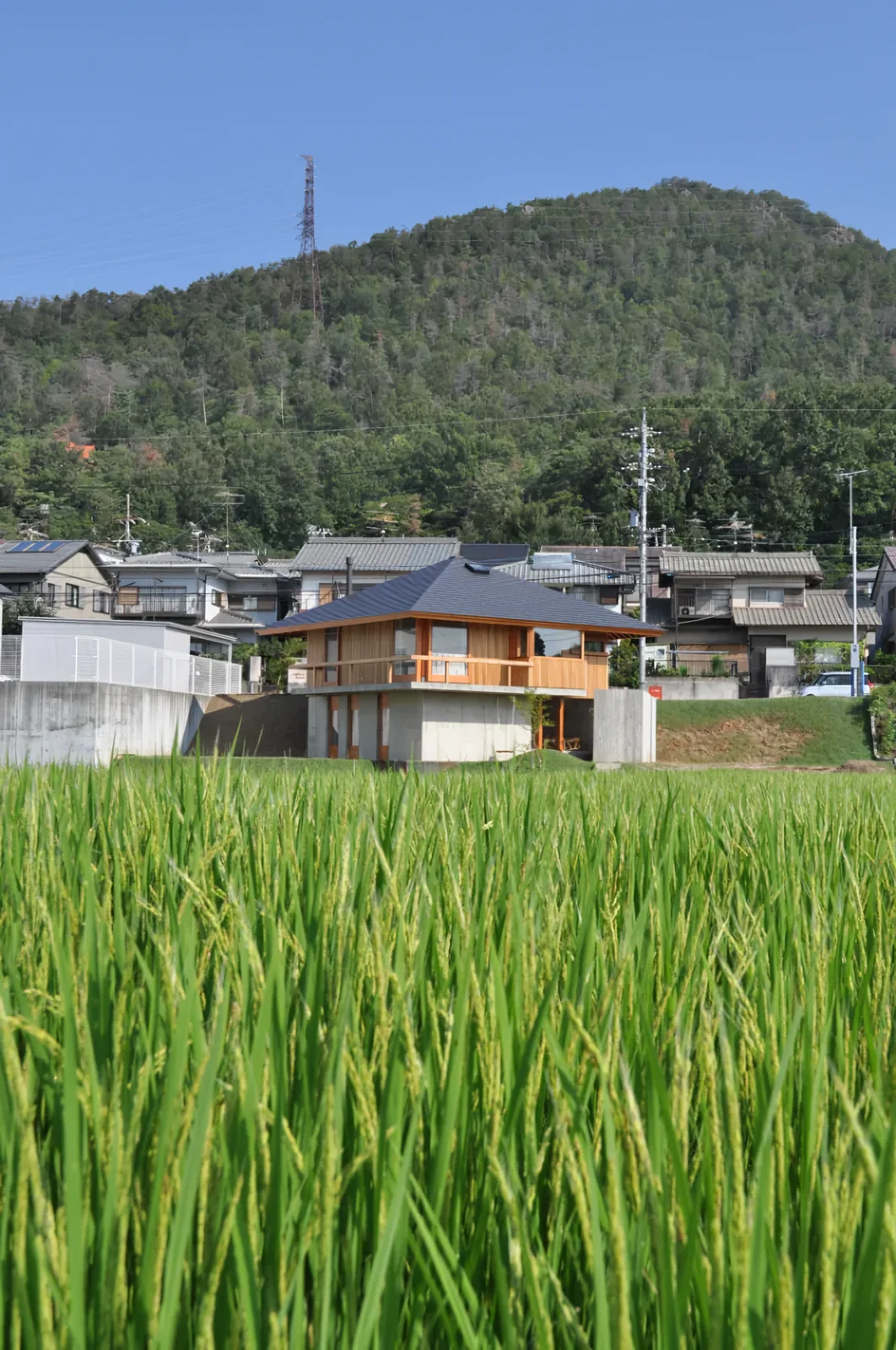
Distant southern view
Unuma House
Unuma House
Unuma House
Unuma House
Unuma House
Unuma House
Unuma House
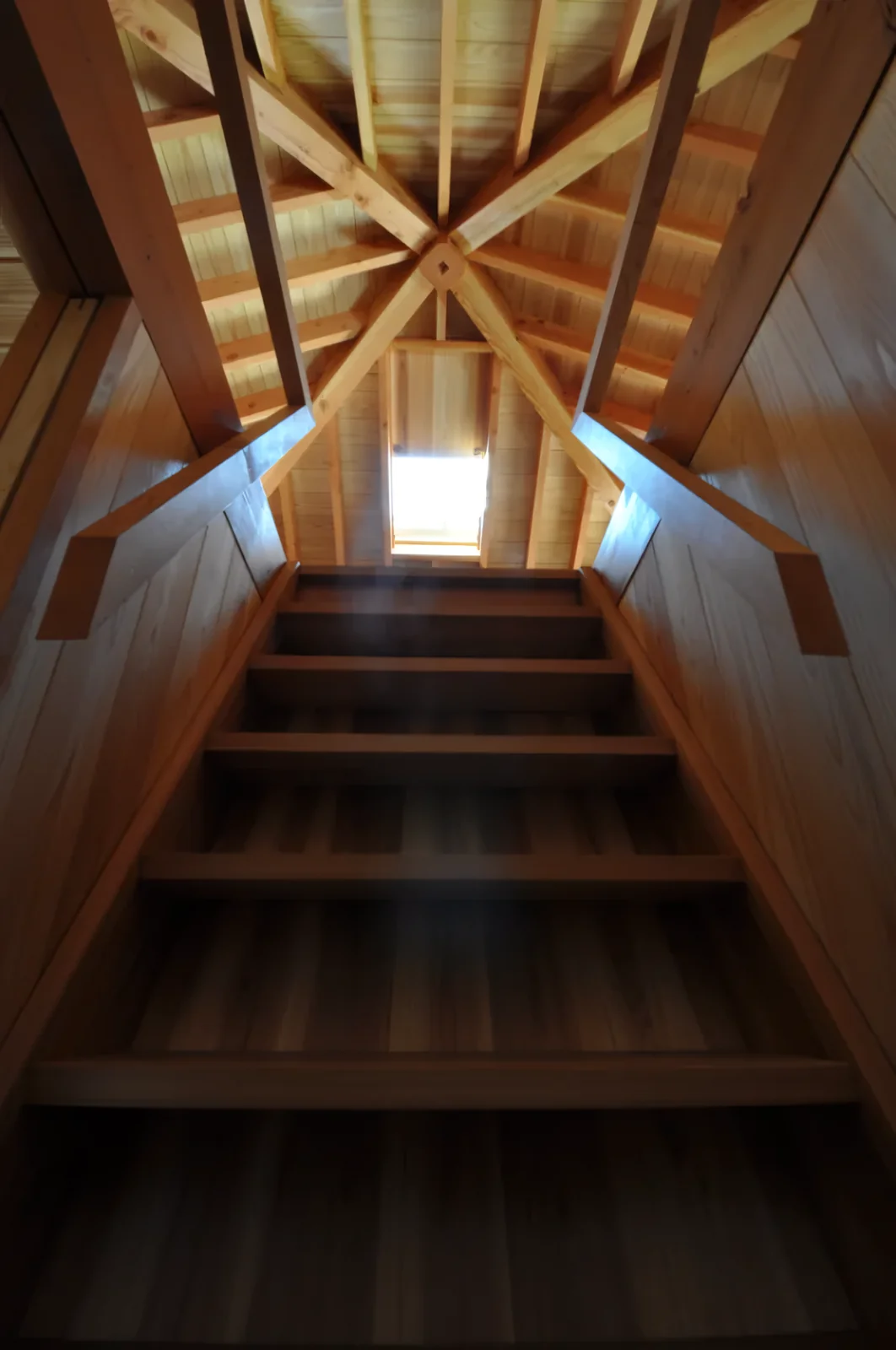
Attic staircase
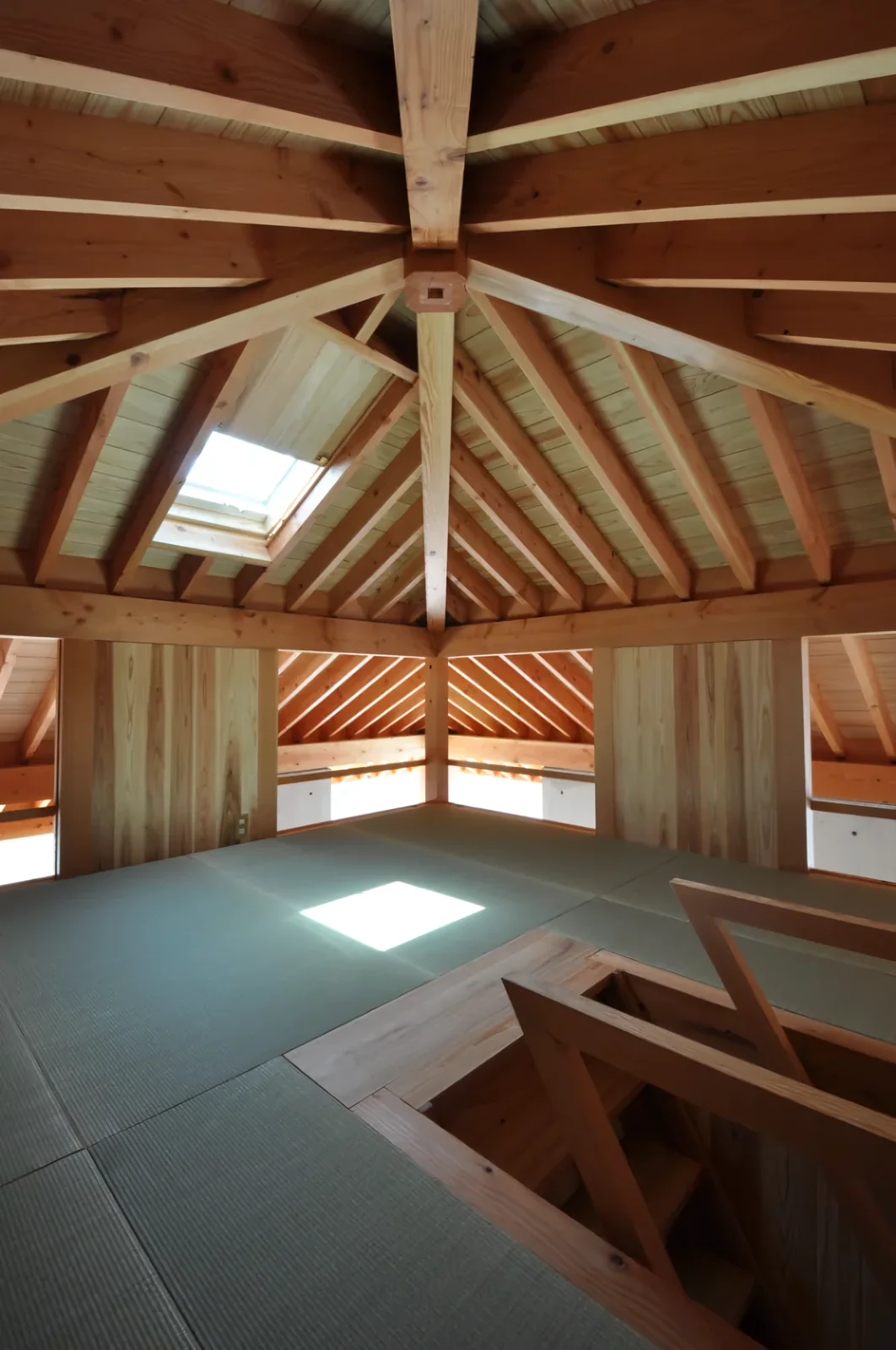
Attic room
Unuma House
Unuma House
Wood-burning stove
Unuma House
Swing
Unuma House
Privacy
Atelier-House
Circulation Flow
Architect's Own House
Aging Gracefully
Material Texture
2FLDK
Proportion
hybrid_construction
Kota Goto Architectural Studio
Learn More
The Unuma House is the architect's own residence. It is situated at the northern edge of the Nōbi Plain on a site with a change in elevation where the plain transitions into upland terrain.
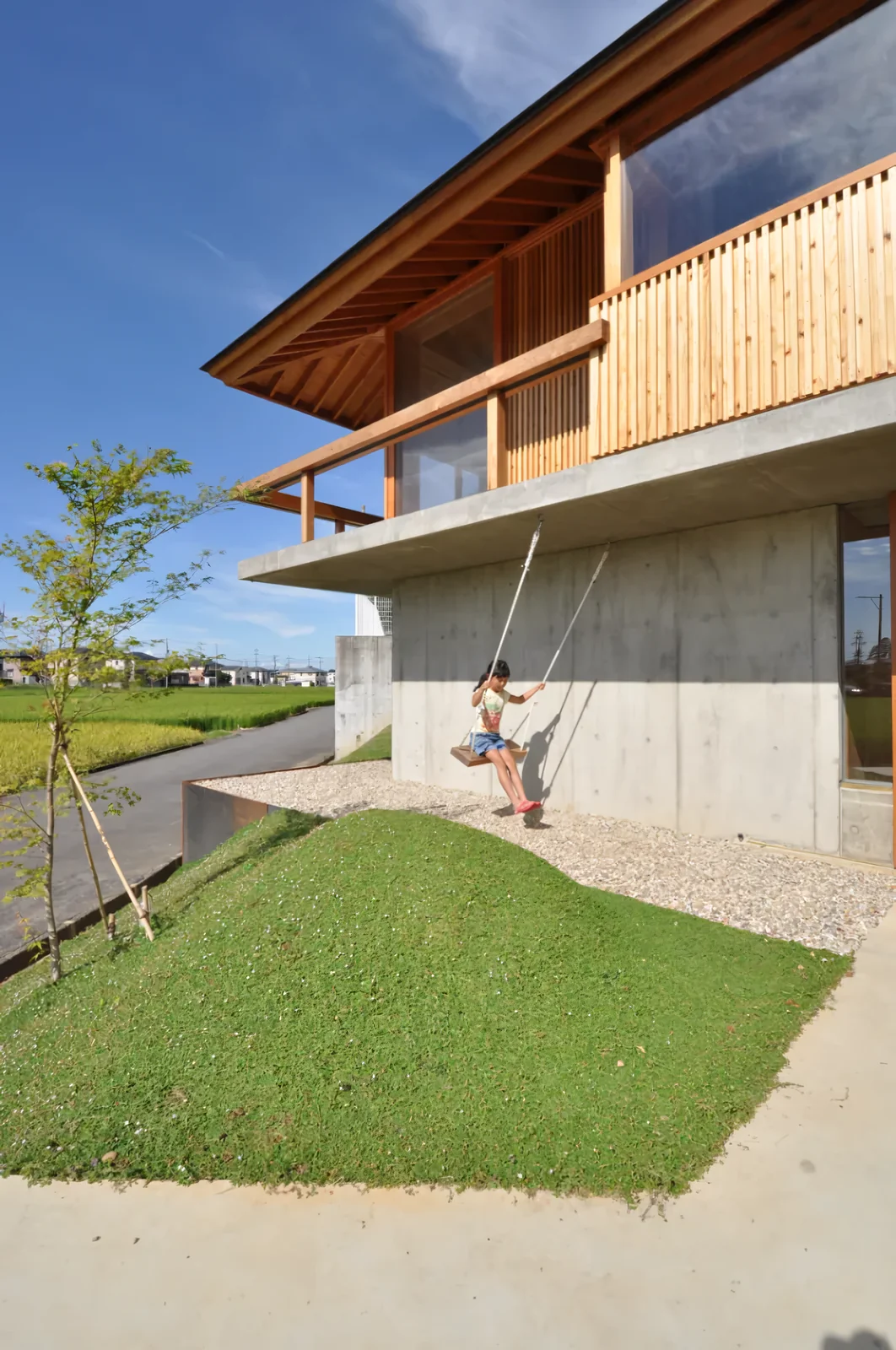
The lot is bounded by a road to the north (the main road) and another to the south, with an elevation difference of approximately 3.4 m. The site drops about 2.4 m from the north road, and that level was adopted as the finished ground level for the building.
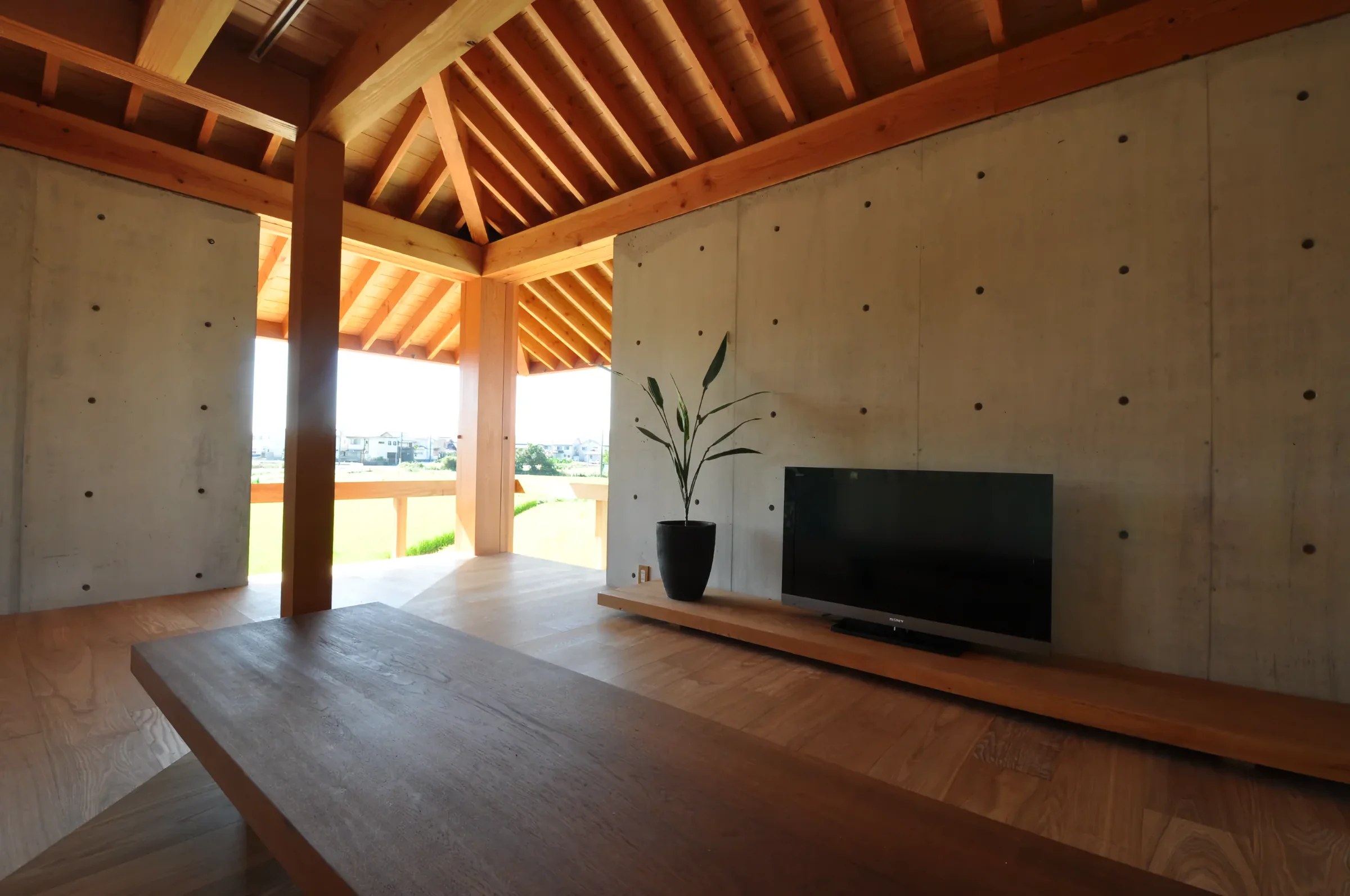
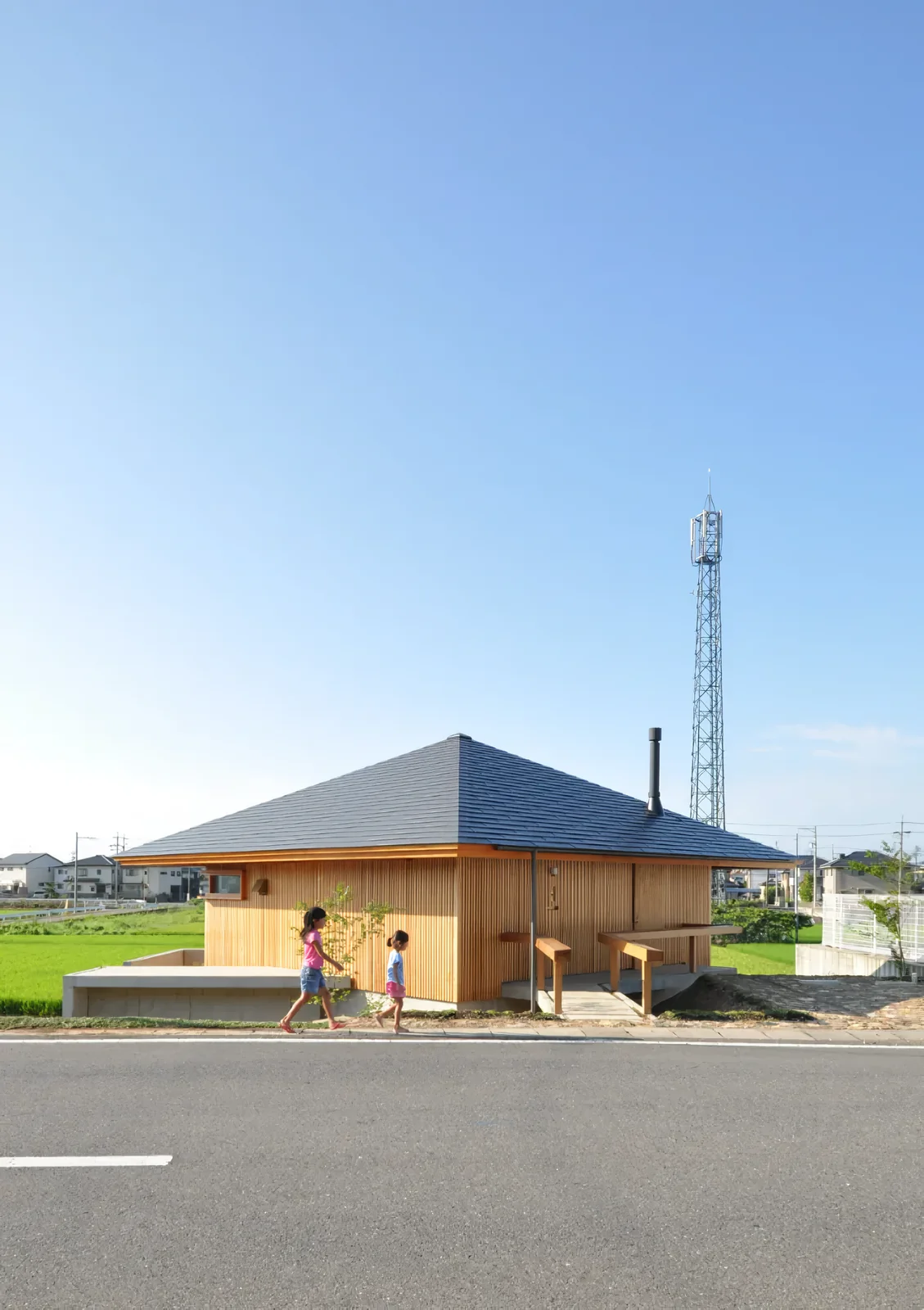
The plan is a square, rotated 45° relative to the site. A primary rationale for this rotation was to create two façades that are not directly visible from the main road. The rotation also yields several advantages: the eaves project more when viewed head‑on, the approach can be taken at an oblique angle relative to the building, corners open to produce a sense of spatial generosity, and sightlines from neighbouring houses can be avoided.
Exploiting the site's level change, the main approach is taken from the second floor. By presenting the building as a single storey from the main road, the proportions are tightened; making the approach a bridge was intended to impart a sense of tension for visitors and to make the walk to the entrance feel longer. Allowing direct access to the second floor without internal stairs also eliminates the inconvenience of repeated stair circulation.
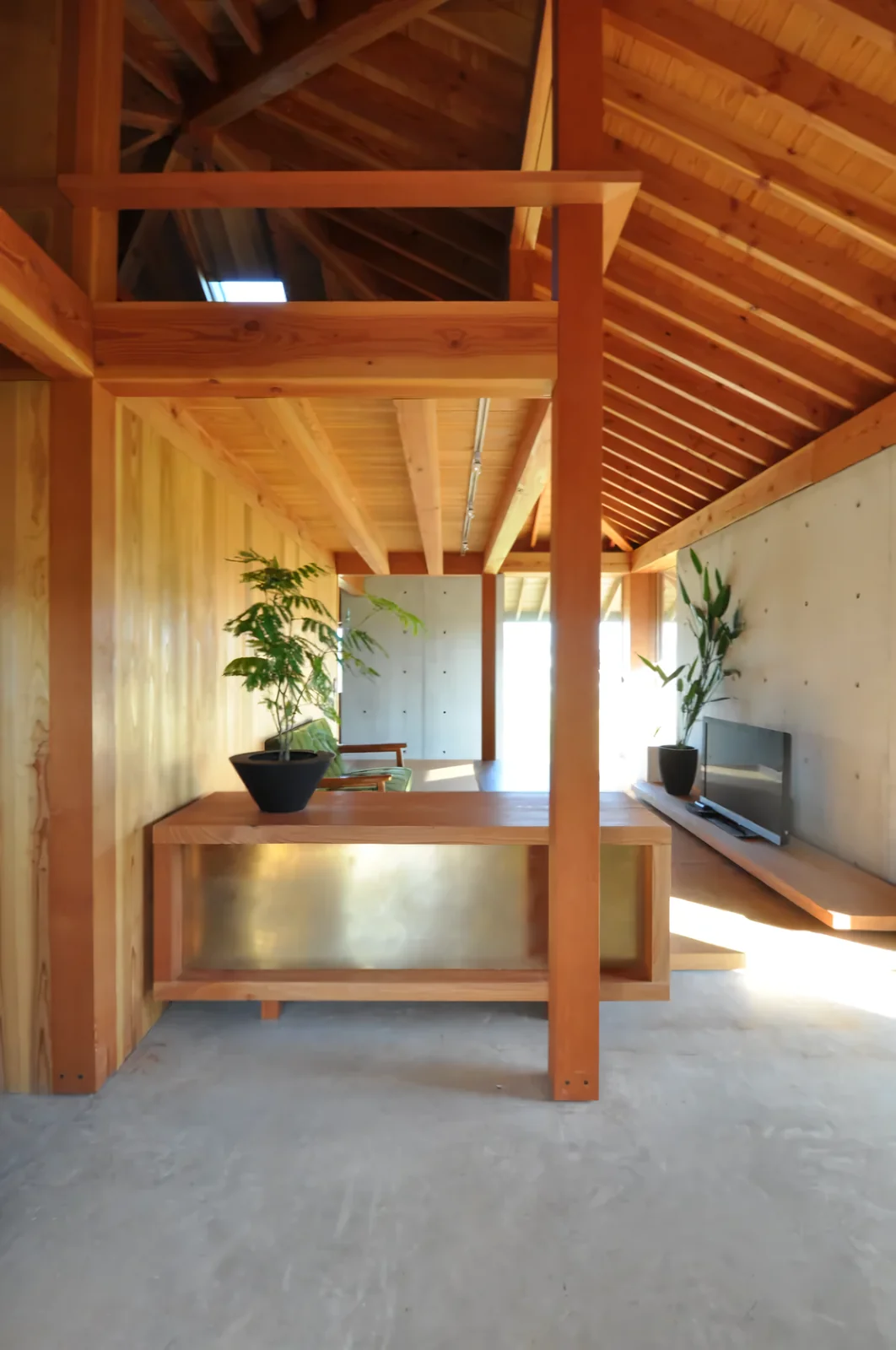
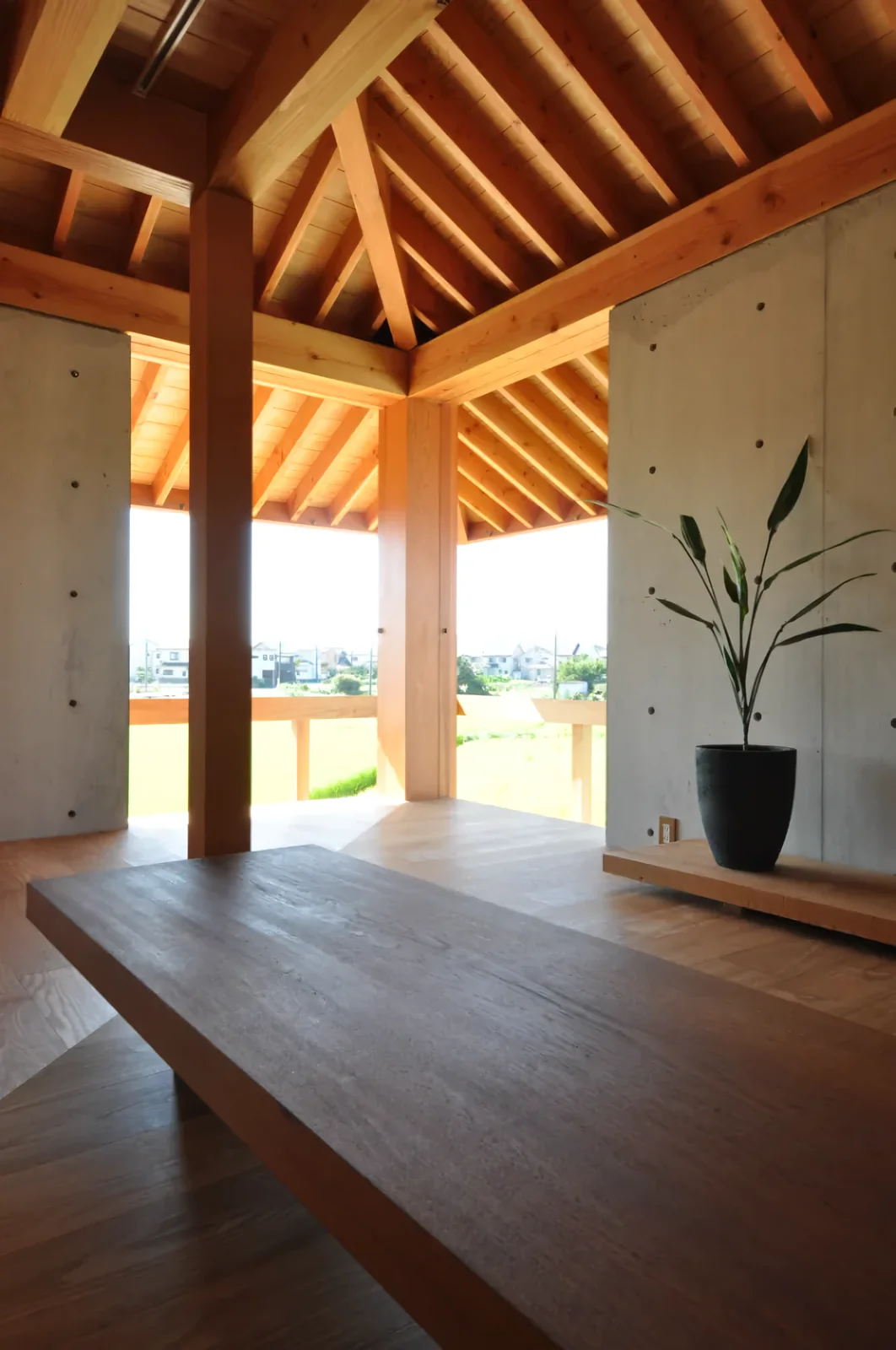
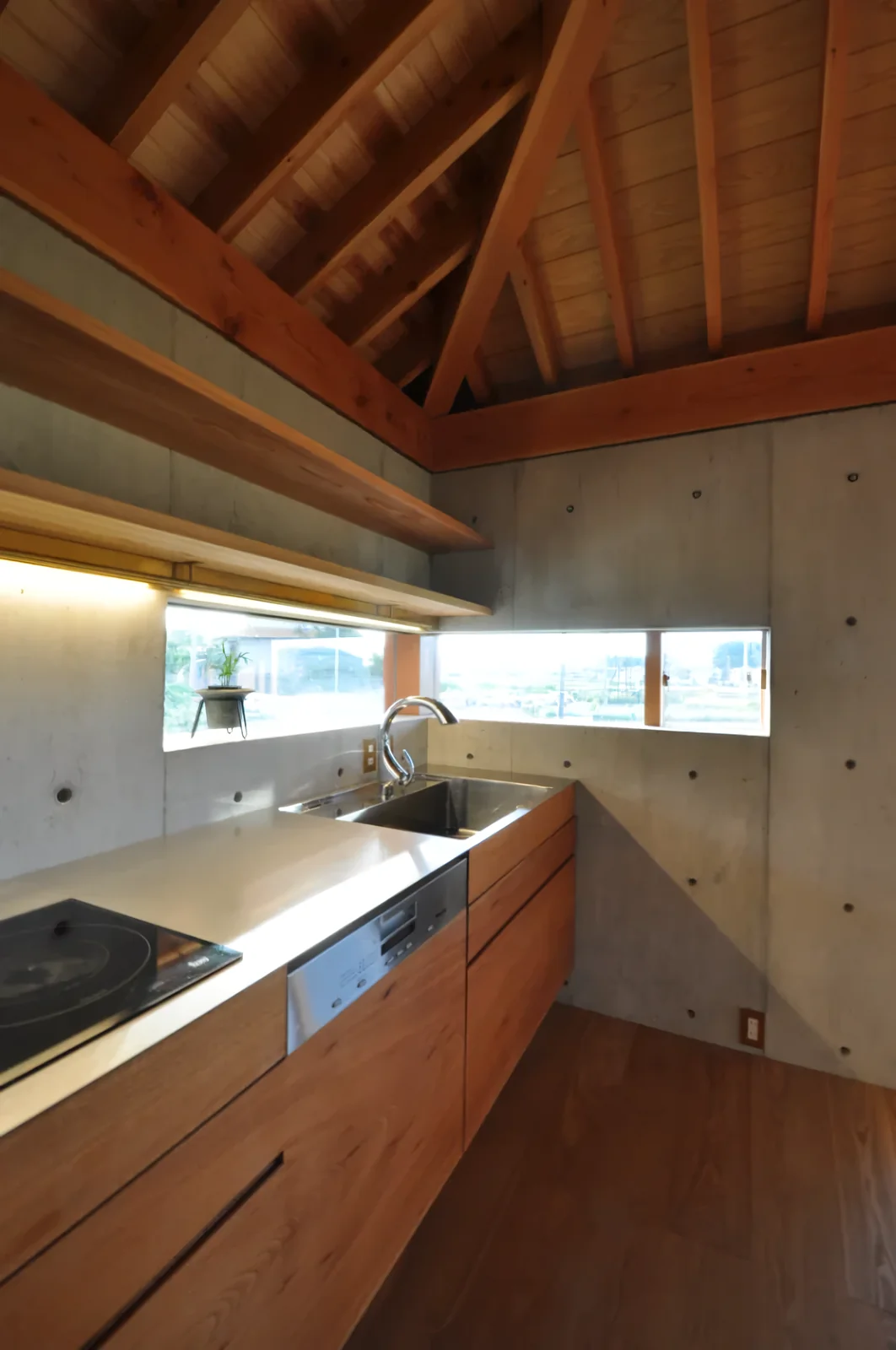
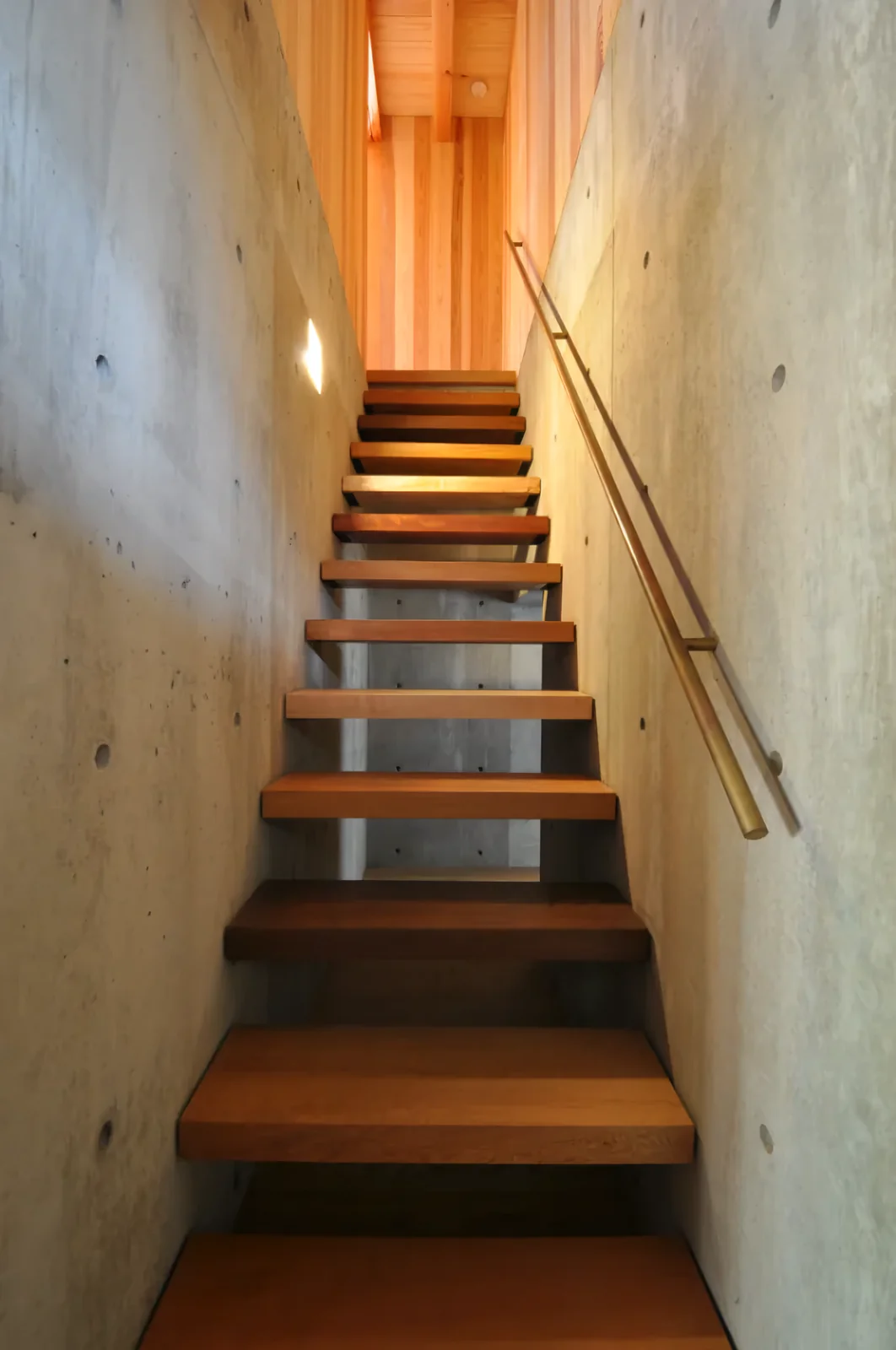
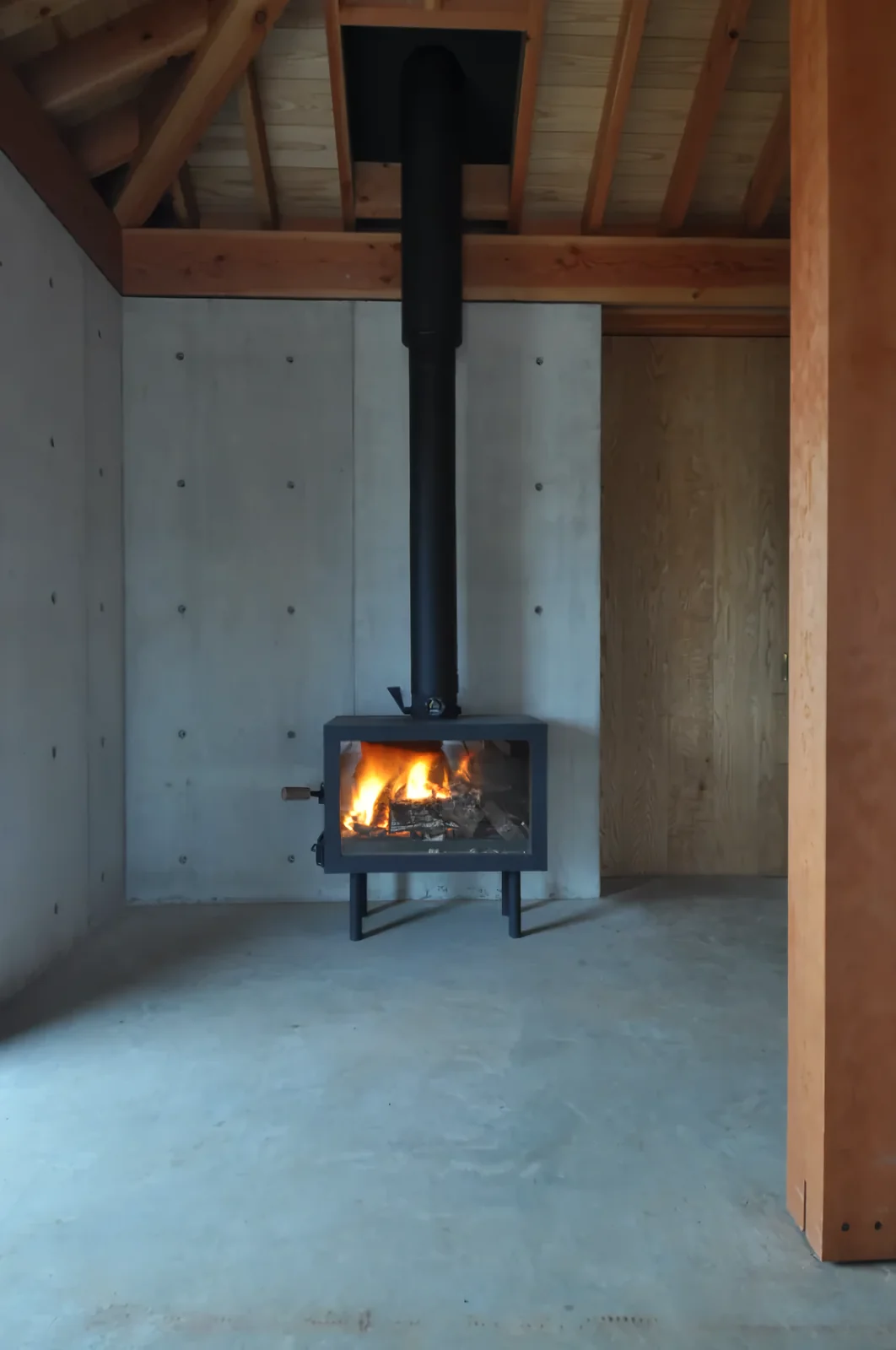
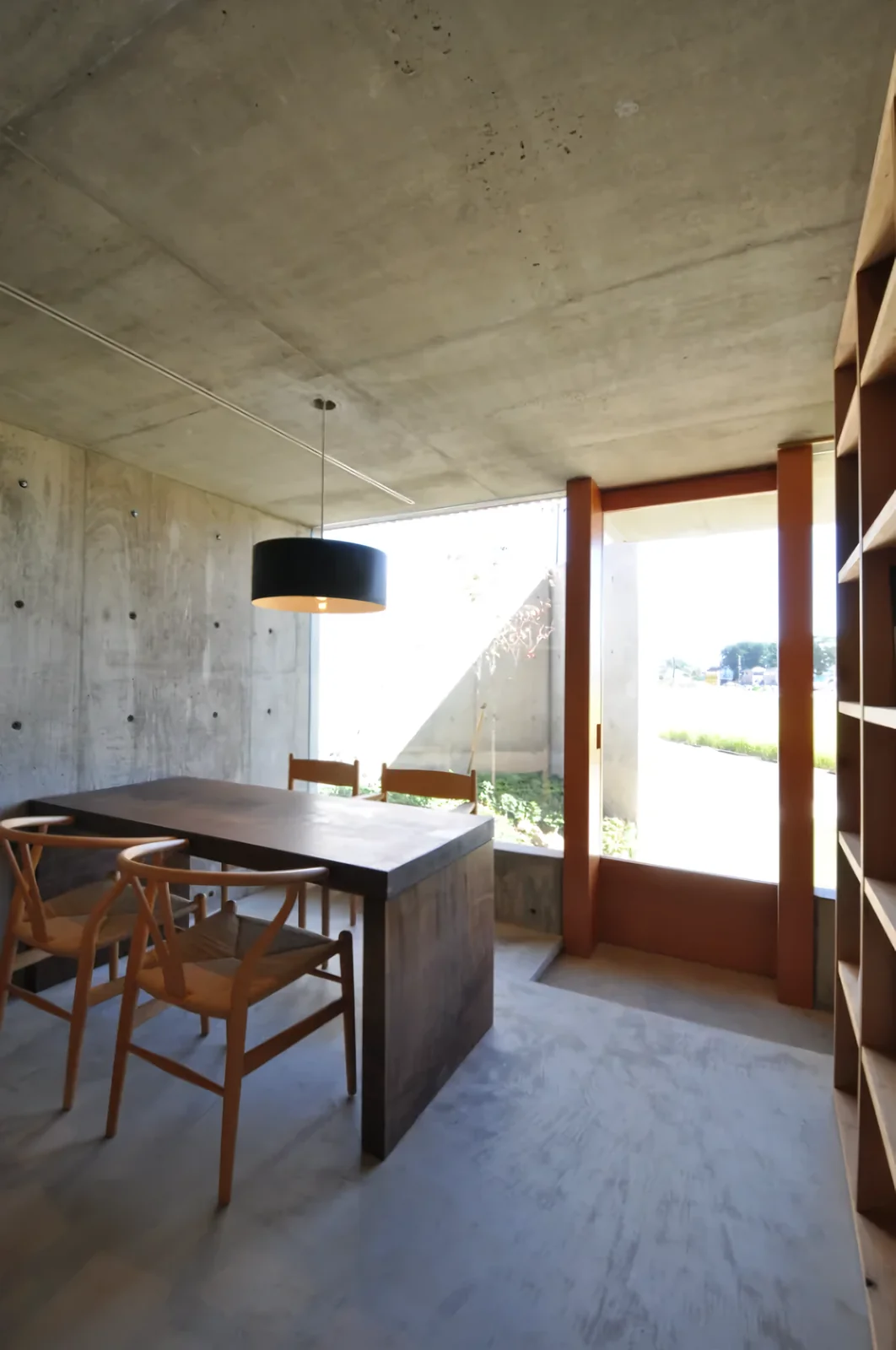
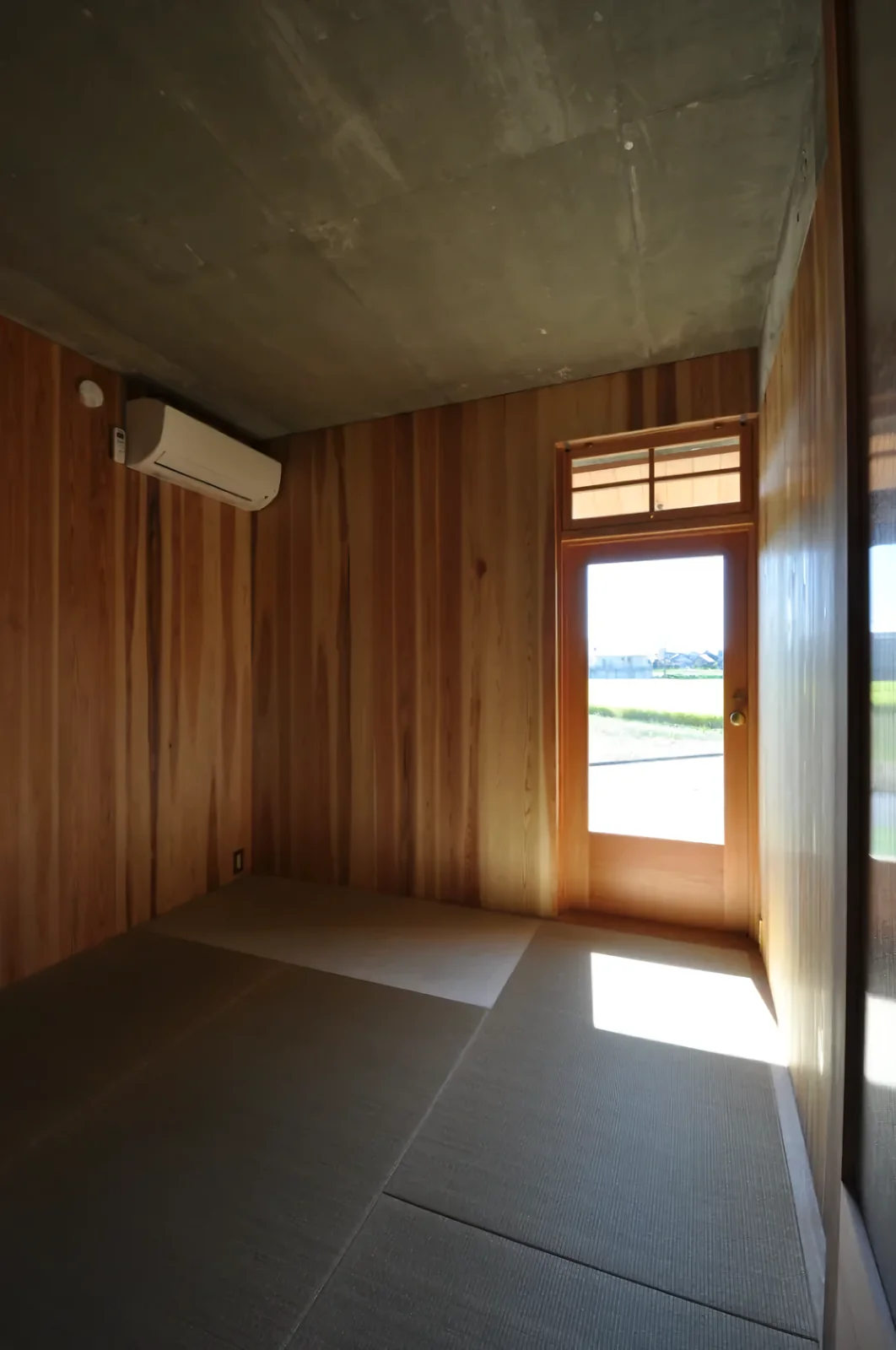
The structure is a hybrid of reinforced concrete and timber. The structural materials are left exposed and used as the finished surfaces — concrete and wood are not covered with additional finishes — so that the inherent solidity of the building is legible.
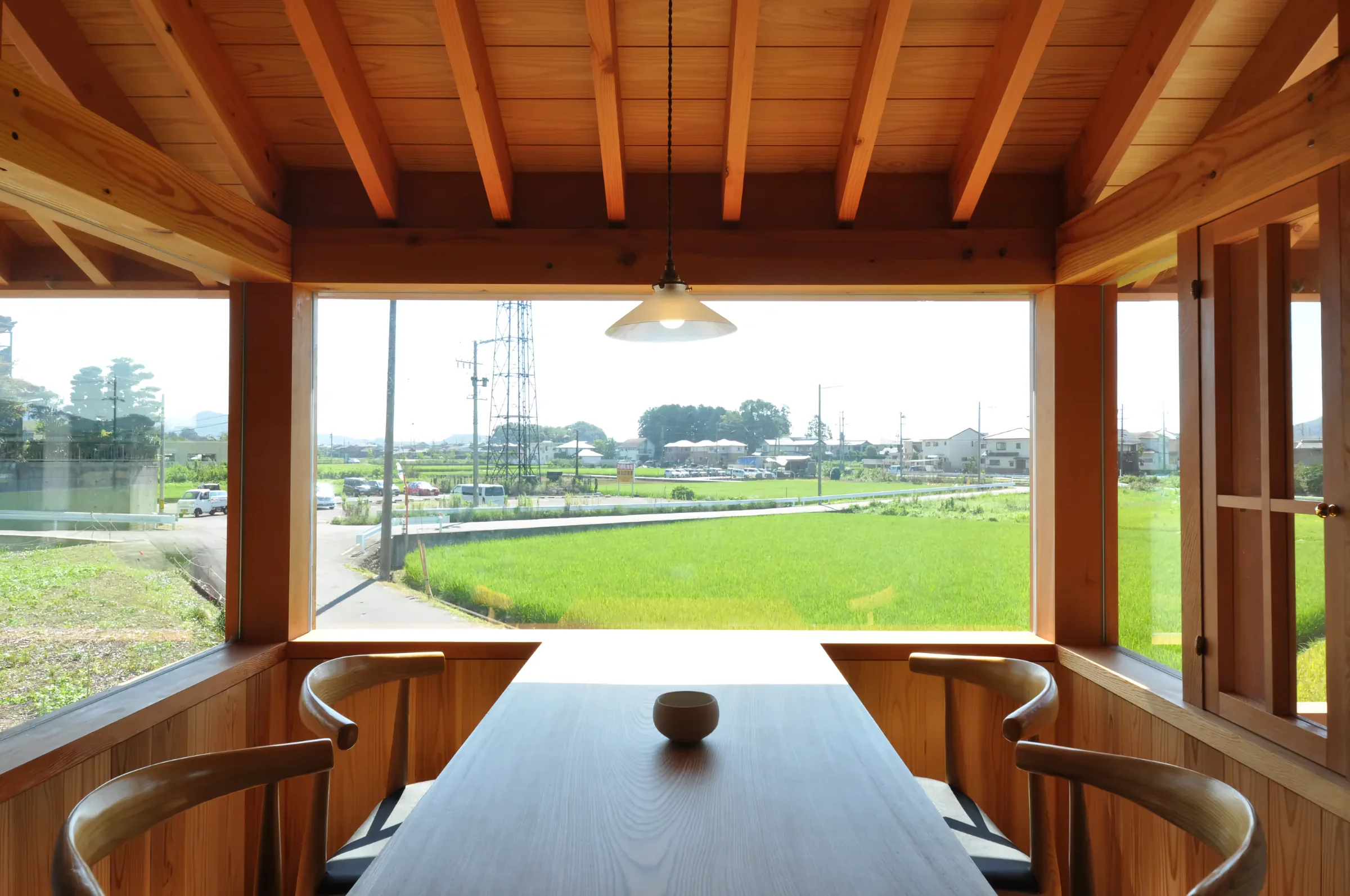
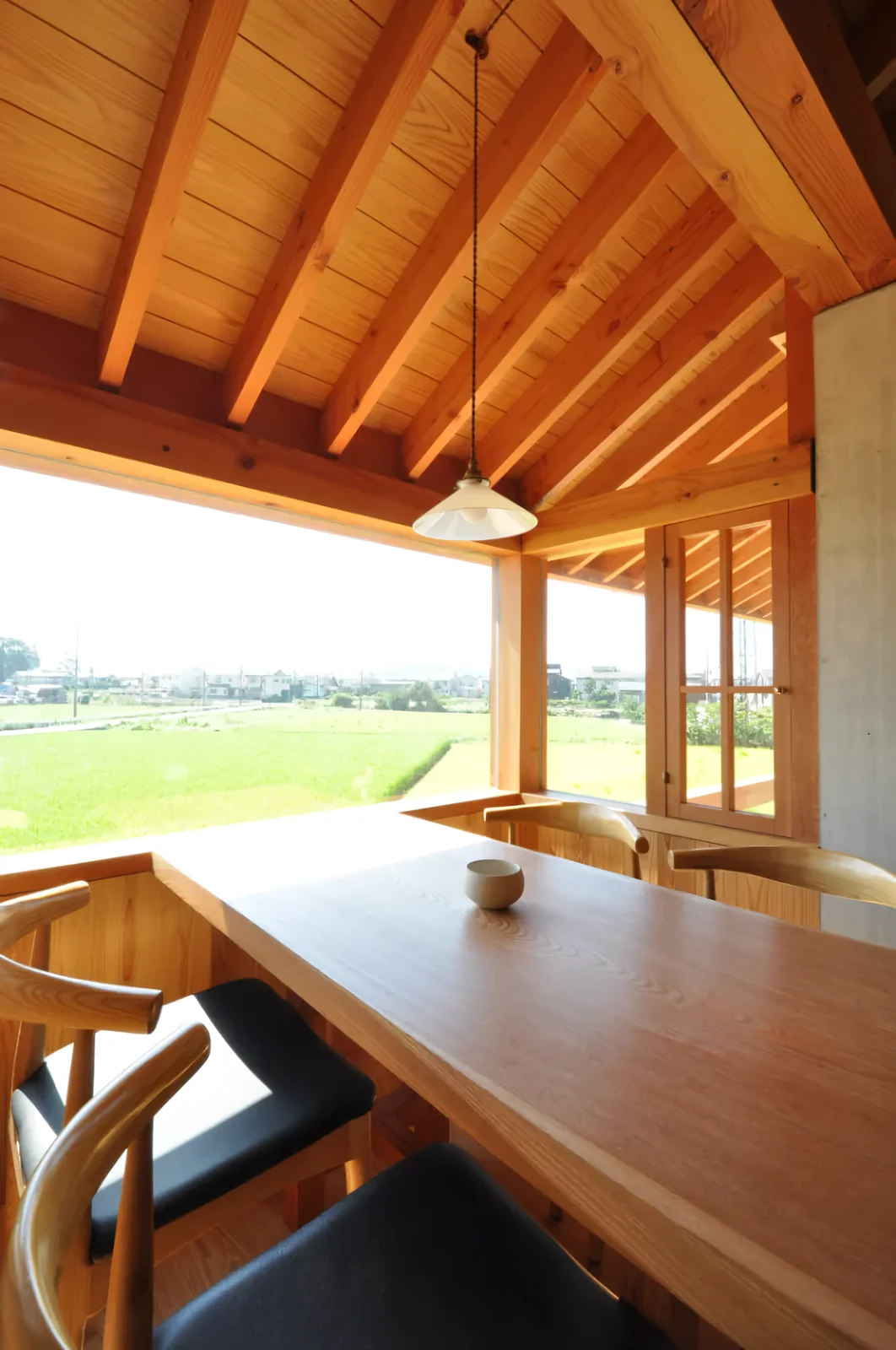
The plan dimensions were established with cost and the minimum area required for a family of four plus a studio in mind, setting the length of each side of the square at 7.2 m. Once the most agreeable location was assigned to the dining area, the arrangement of the remaining spaces followed straightforwardly. The plan provides continuous circulation, and it was organized so that, aside from sleeping, all daily activities can be carried out on the second floor.
Materials that accept ageing were employed extensively: concrete, solid timber, brass, and stone — materials that gain character over time. Located facing the agricultural landscape that extends to the south, the house was designed not to disrupt that view and to age into a presence that feels as if it has always belonged to the place. Structure: Hybrid construction (reinforced concrete + timber), two-storey
Primary use: Detached house
Site area: 419.47 m² (127.1 tsubo)
Total floor area: 106.20 m² (32.2 tsubo)
First-floor area: 51.84 m² (15.7 tsubo)
Second-floor area: 54.36 m² (16.5 tsubo)
Building footprint: 73.44 m² (22.3 tsubo)

The lot is bounded by a road to the north (the main road) and another to the south, with an elevation difference of approximately 3.4 m. The site drops about 2.4 m from the north road, and that level was adopted as the finished ground level for the building.
The plan is a square, rotated 45° relative to the site. A primary rationale for this rotation was to create two façades that are not directly visible from the main road. The rotation also yields several advantages: the eaves project more when viewed head‑on, the approach can be taken at an oblique angle relative to the building, corners open to produce a sense of spatial generosity, and sightlines from neighbouring houses can be avoided.
Exploiting the site's level change, the main approach is taken from the second floor. By presenting the building as a single storey from the main road, the proportions are tightened; making the approach a bridge was intended to impart a sense of tension for visitors and to make the walk to the entrance feel longer. Allowing direct access to the second floor without internal stairs also eliminates the inconvenience of repeated stair circulation.
The structure is a hybrid of reinforced concrete and timber. The structural materials are left exposed and used as the finished surfaces — concrete and wood are not covered with additional finishes — so that the inherent solidity of the building is legible.
The plan dimensions were established with cost and the minimum area required for a family of four plus a studio in mind, setting the length of each side of the square at 7.2 m. Once the most agreeable location was assigned to the dining area, the arrangement of the remaining spaces followed straightforwardly. The plan provides continuous circulation, and it was organized so that, aside from sleeping, all daily activities can be carried out on the second floor.
Materials that accept ageing were employed extensively: concrete, solid timber, brass, and stone — materials that gain character over time. Located facing the agricultural landscape that extends to the south, the house was designed not to disrupt that view and to age into a presence that feels as if it has always belonged to the place. Structure: Hybrid construction (reinforced concrete + timber), two-storey
Primary use: Detached house
Site area: 419.47 m² (127.1 tsubo)
Total floor area: 106.20 m² (32.2 tsubo)
First-floor area: 51.84 m² (15.7 tsubo)
Second-floor area: 54.36 m² (16.5 tsubo)
Building footprint: 73.44 m² (22.3 tsubo)
- Copyright(C)Qurasuki.All Rights Reserved.