Introducing Revitalization of Prewar Rental Kyoto Townhouses | Row Houses on Showa Alley, a custom-built home example by Yoshihiro Yamamoto Architects Associates, a Architect / Design office in 302, Zeniya Honpo Main Building, 14-6 Ishigatsujichō, Tennōji-ku, Osaka

Maximized use of Kyoto City subsidy programs to reduce initial costs.
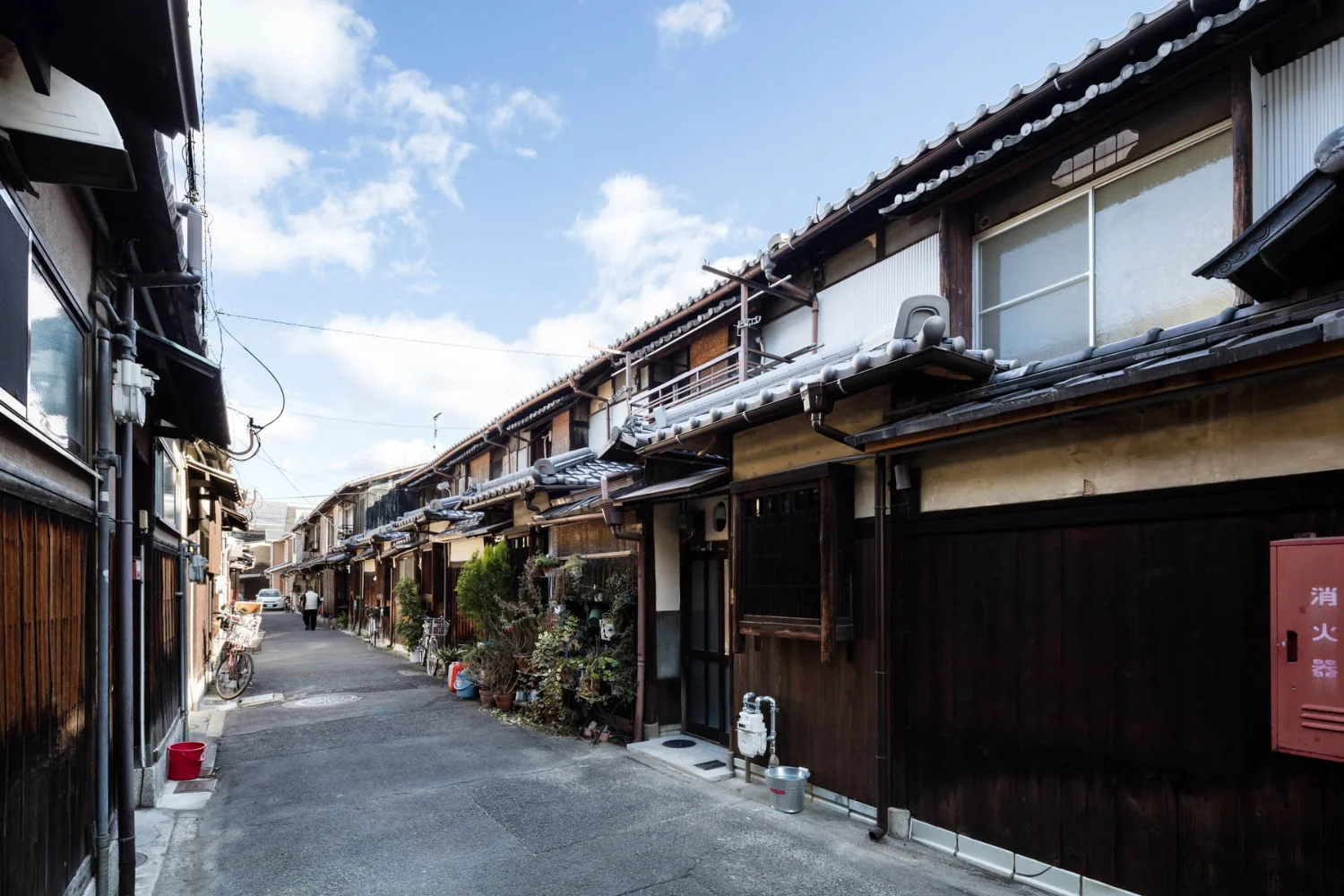
Eaves with ceramic tile roofs line both sides of the narrow street—an urban fabric that dates back to the prewar period.
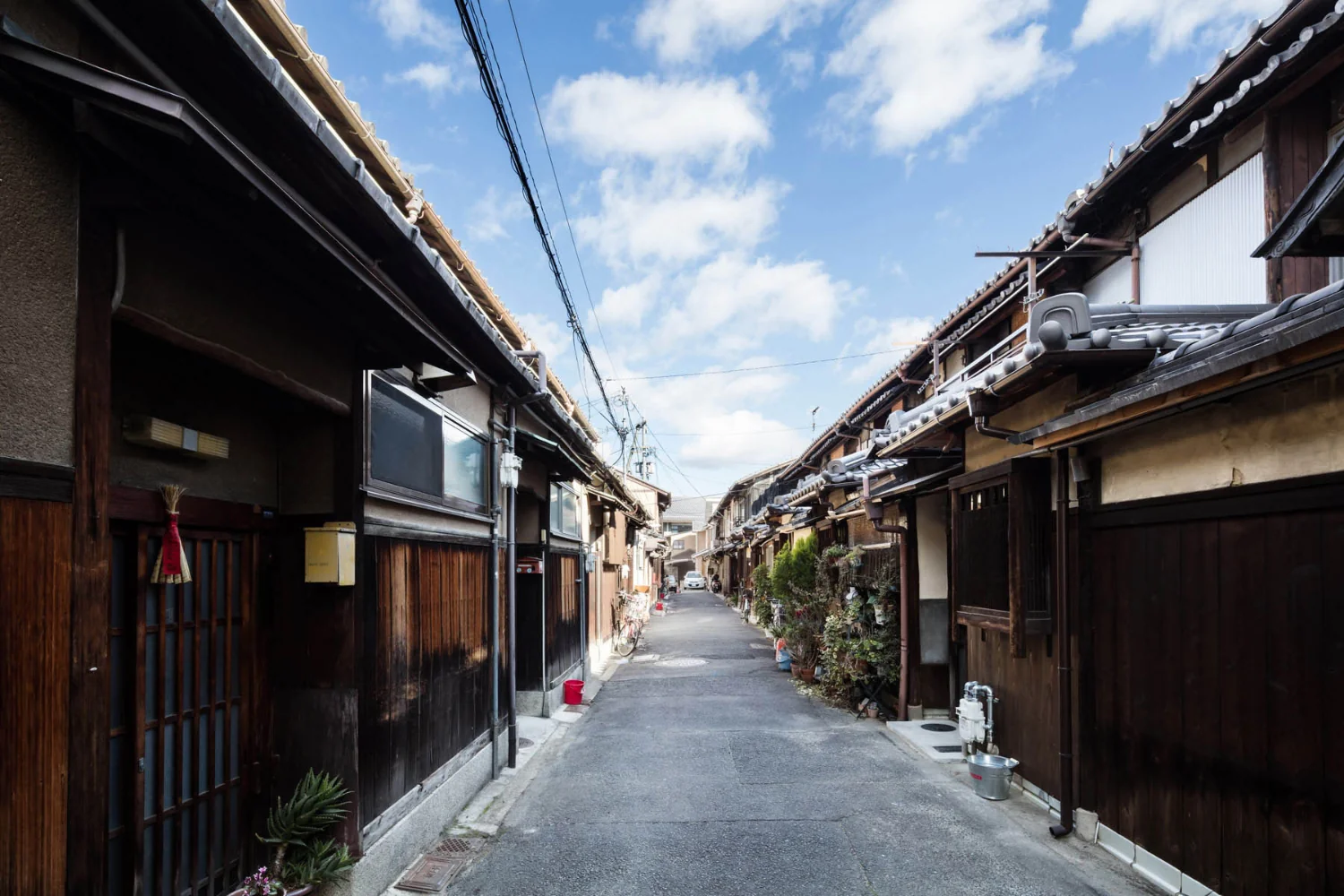
Each unit displays subtle variations in design reflecting successive additions and the tastes of past occupants.
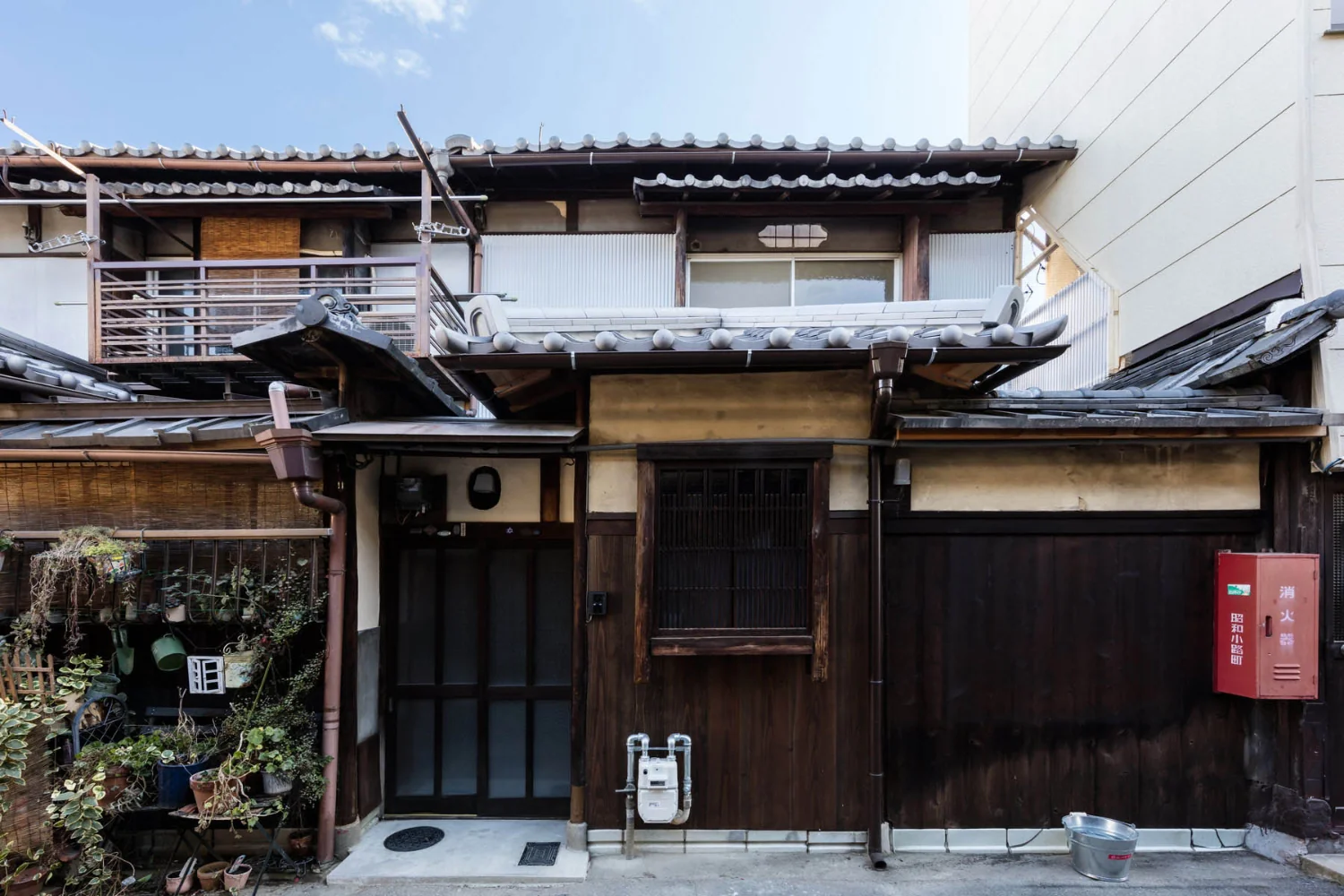
Exposed service piping and meters are left visible in accordance with local practice rather than concealed.
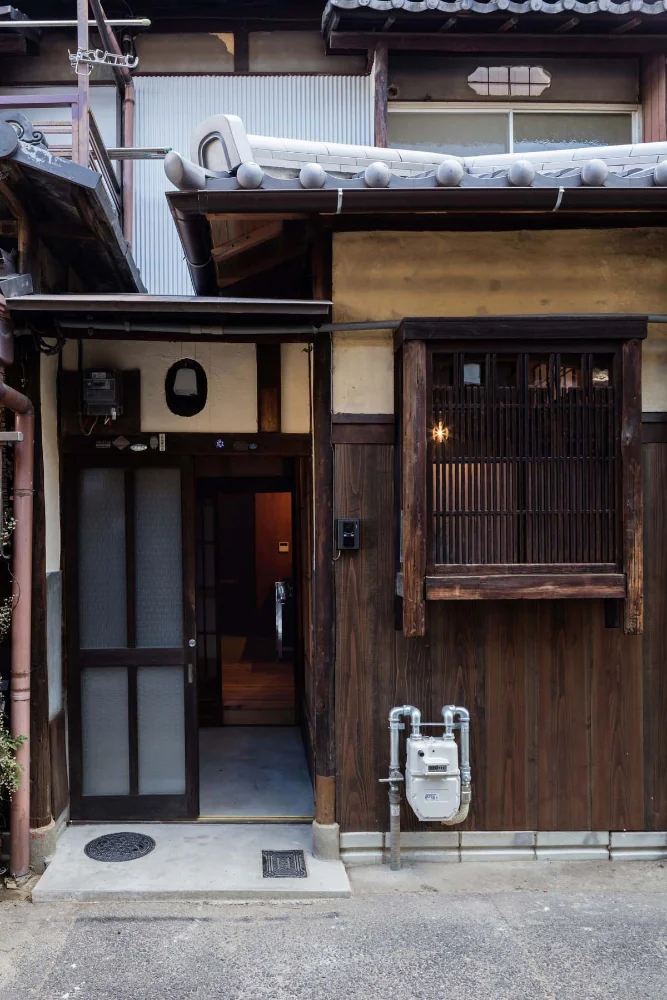
Entrance detail. A rare solid lauan framed door was repaired and reused.
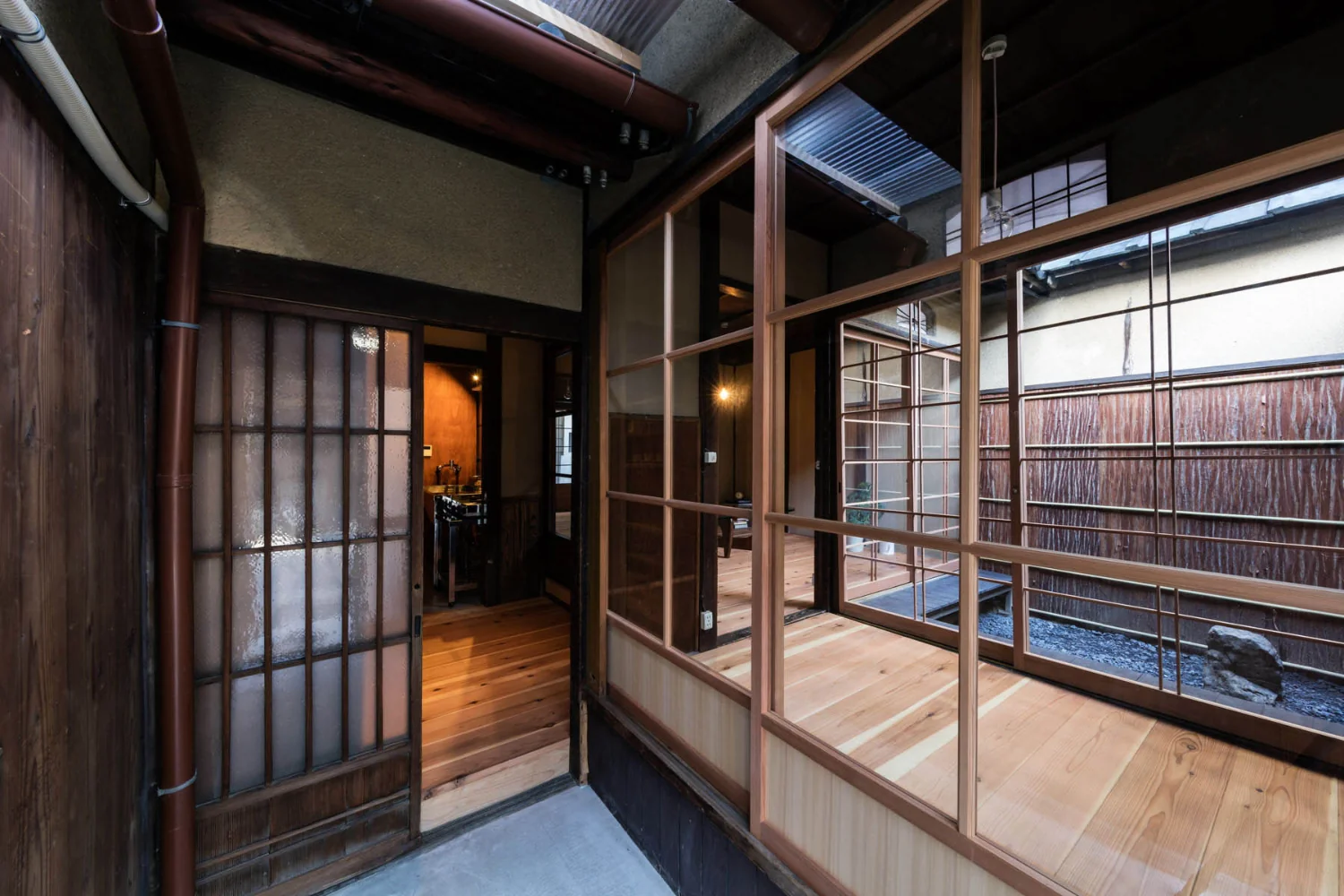
Layout suitable for mixed uses such as ateliers or small shops, enabling live-work arrangements.
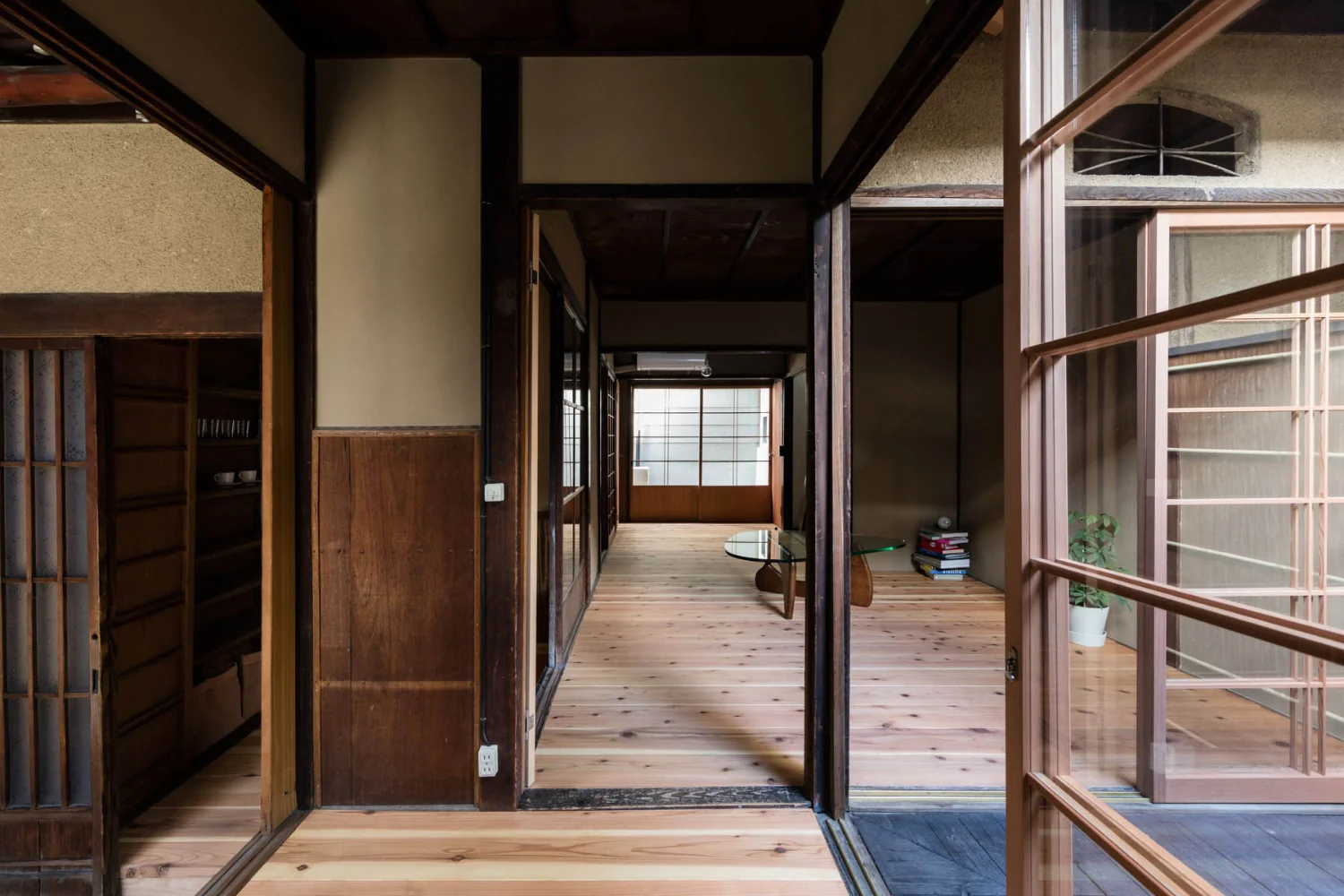
View of the living room from the mise-no-ma (shop-facing room).
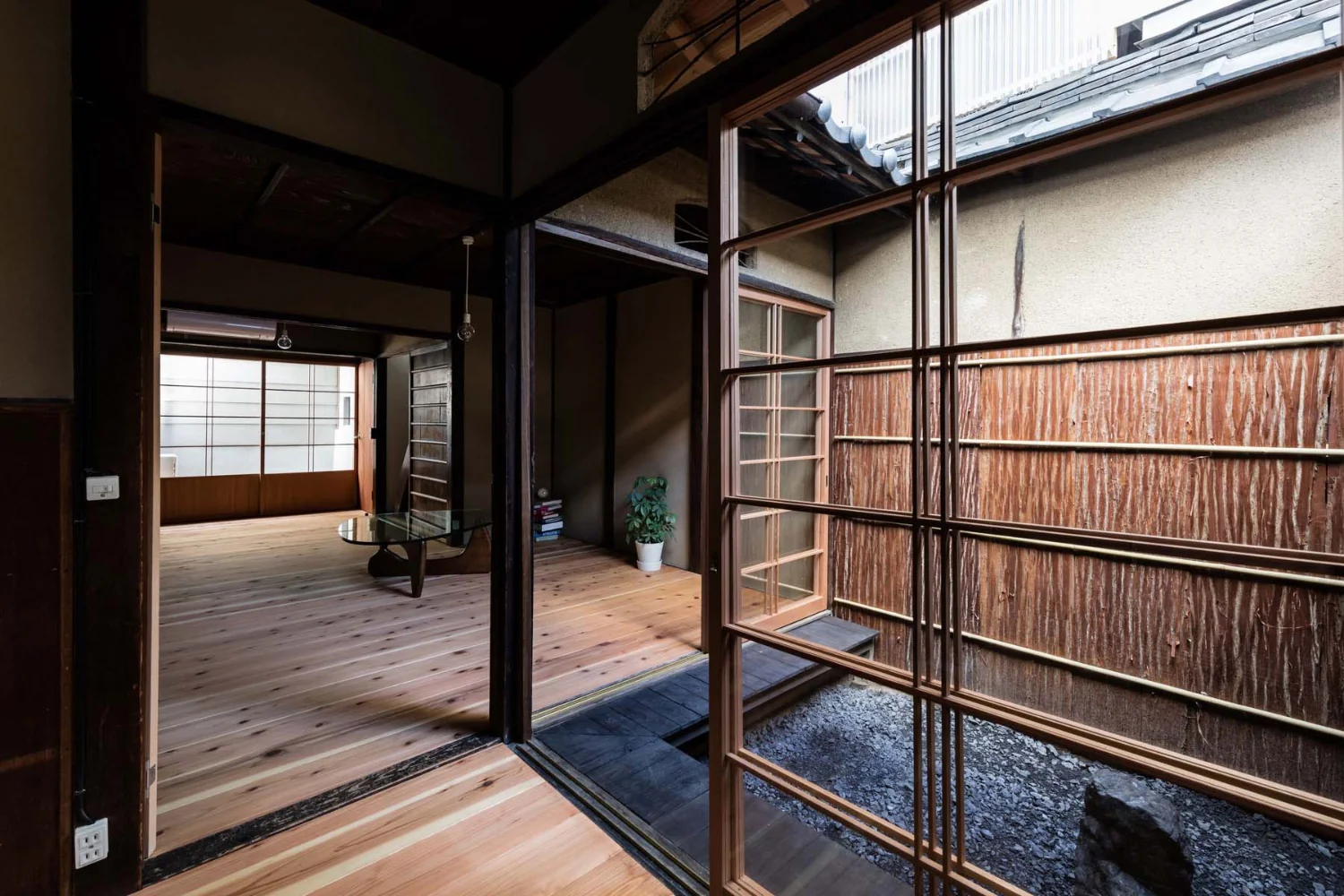
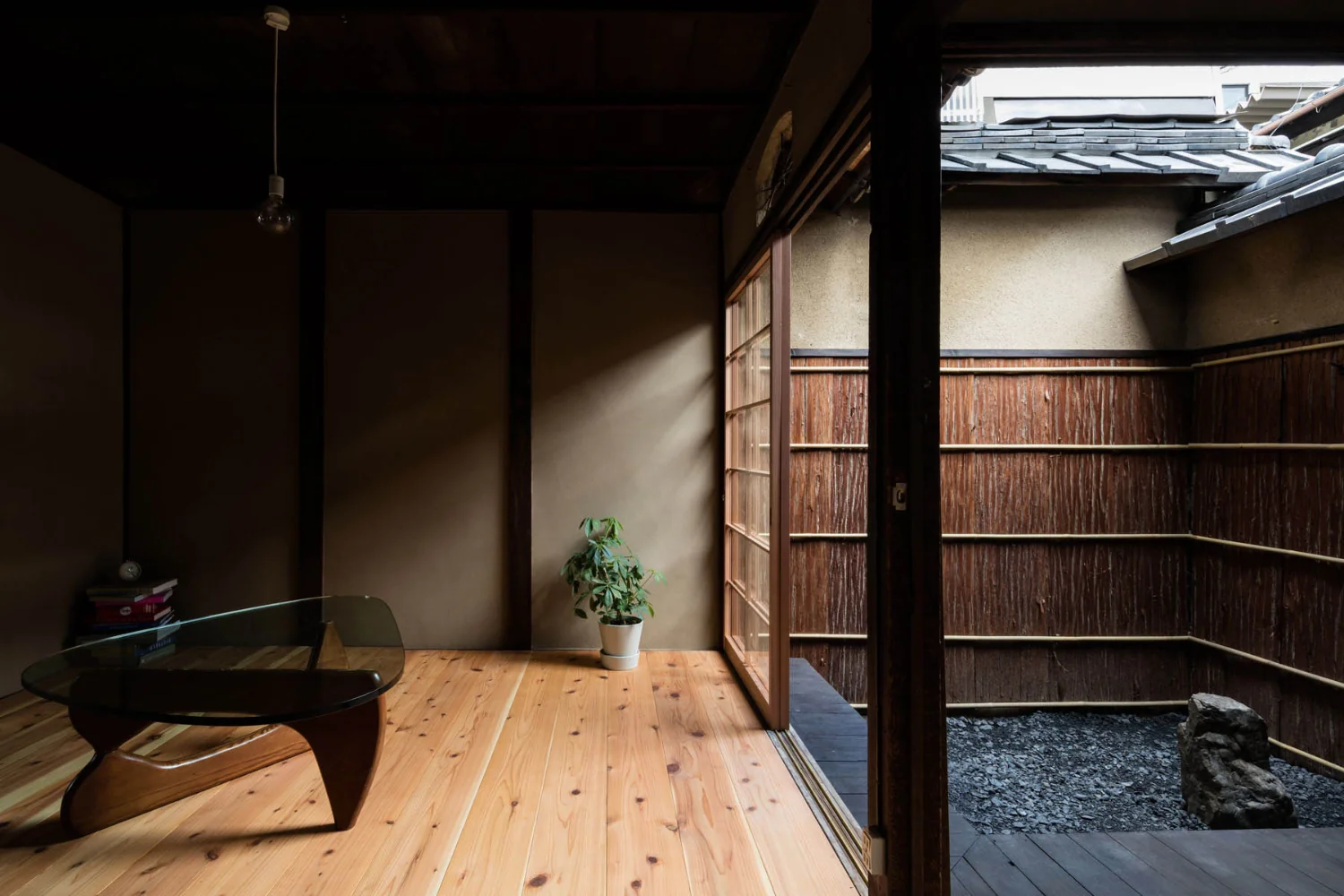
We cleared weeds and debris to restore the tsubo-niwa; aluminum sashes were removed and replaced with wooden fittings.
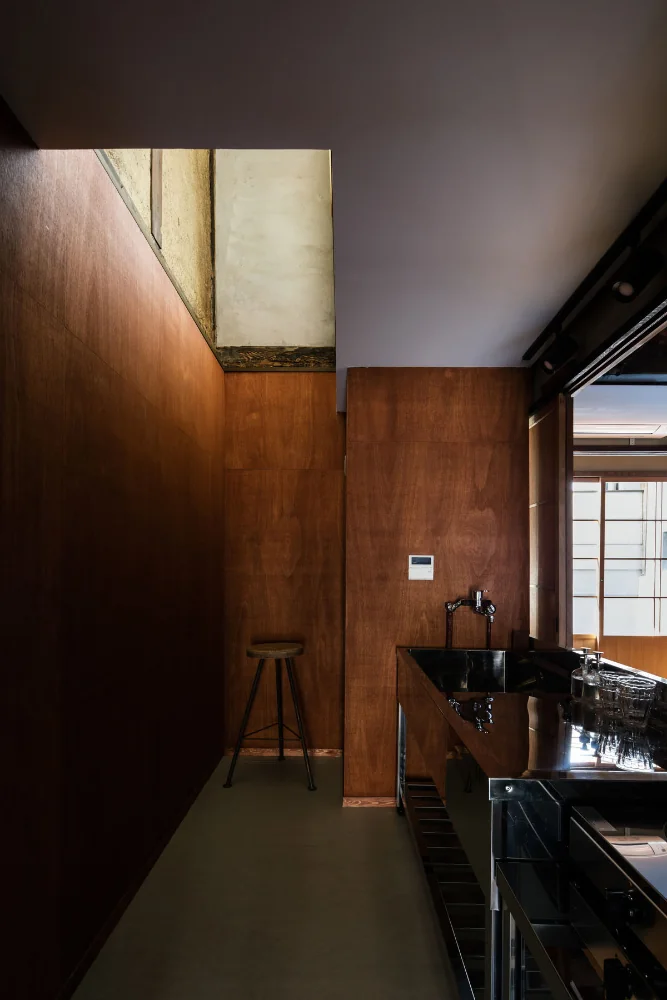
Existing ceiling removed to restore the hibukuro (smoke chamber). The resulting void connects the second-floor rooms via a double-height space.
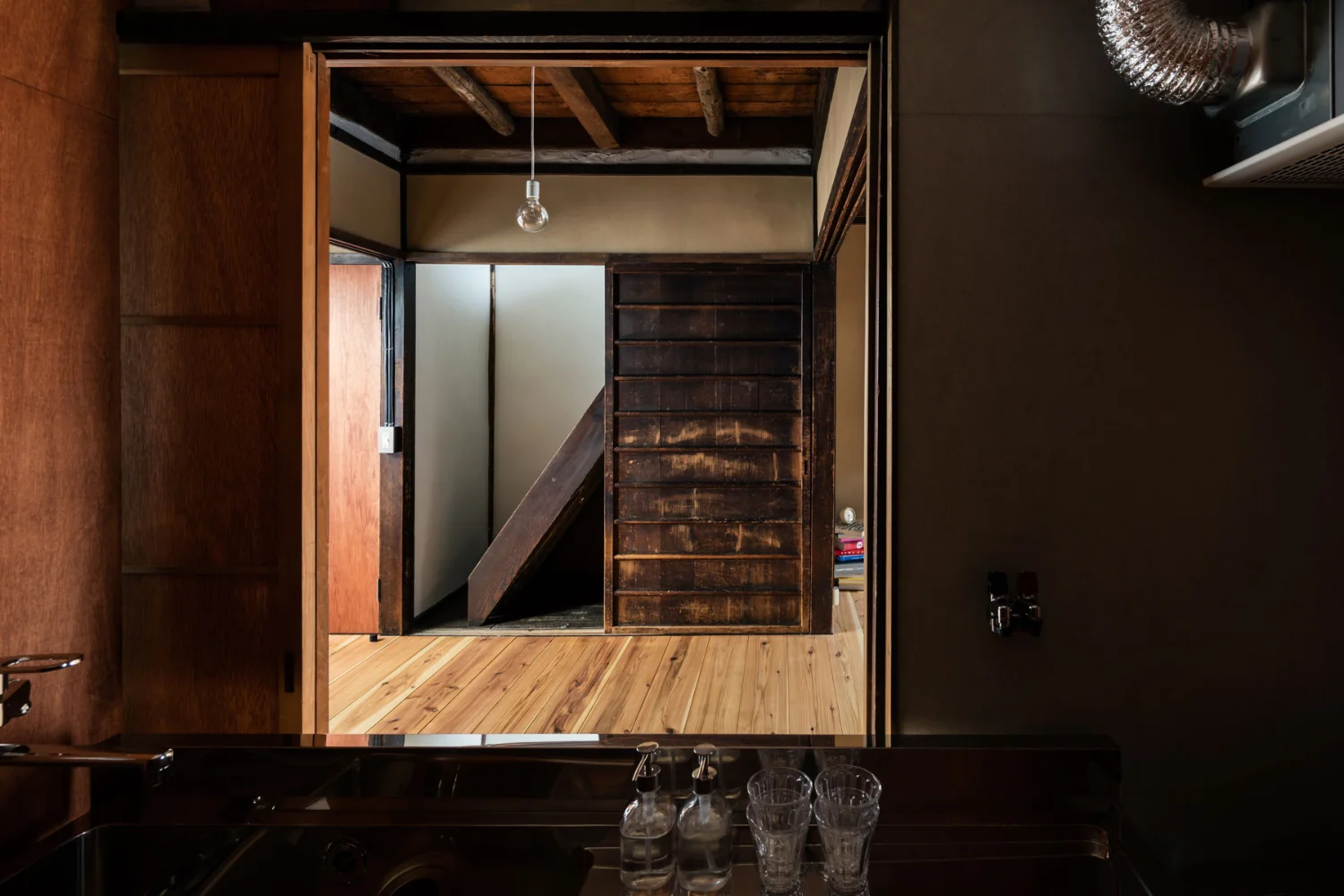
The kitchen is oriented toward the living room; opening the sliding doors allows it to function as a face-to-face kitchen.
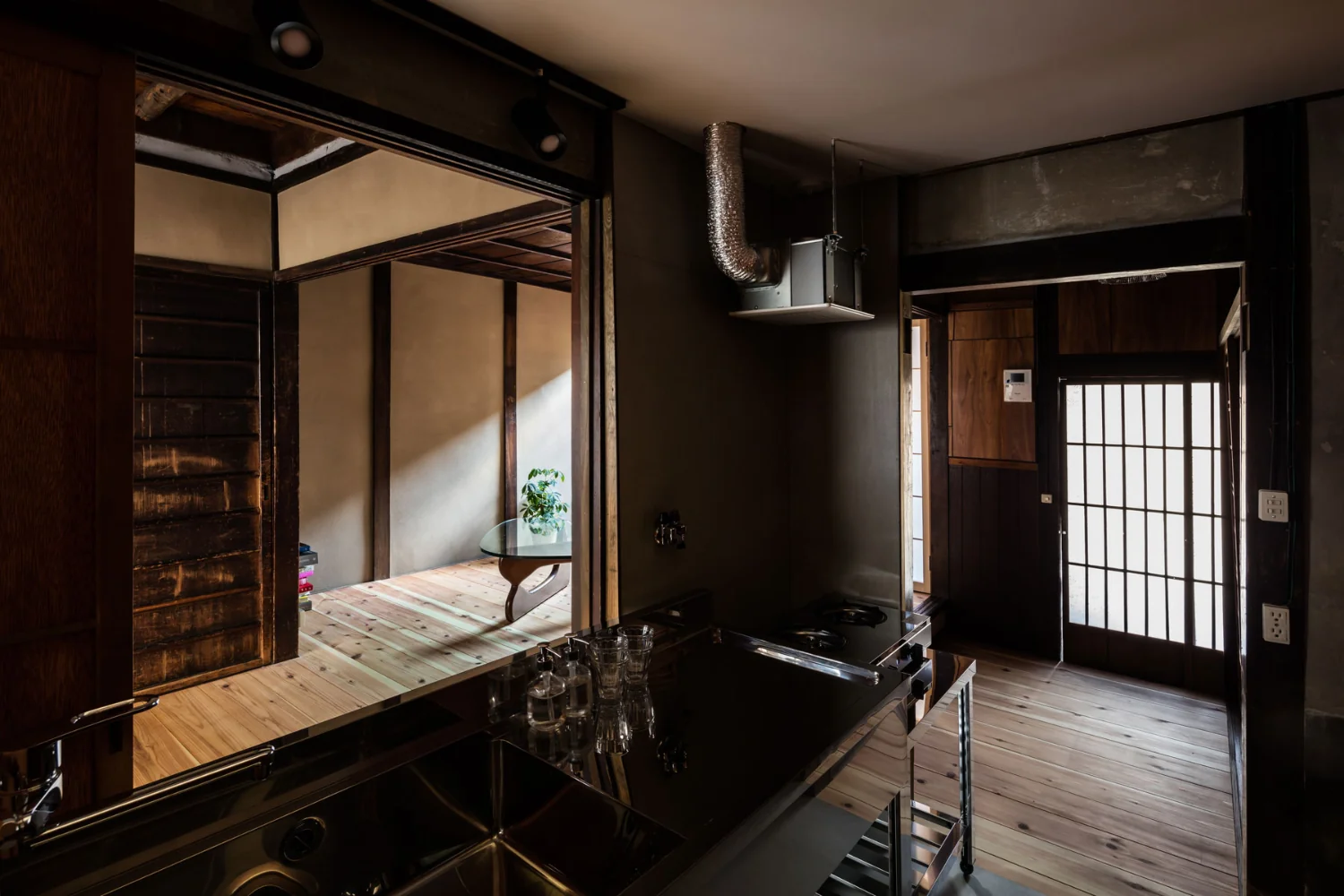
A simple kitchen composed of stainless commercial kitchen units.
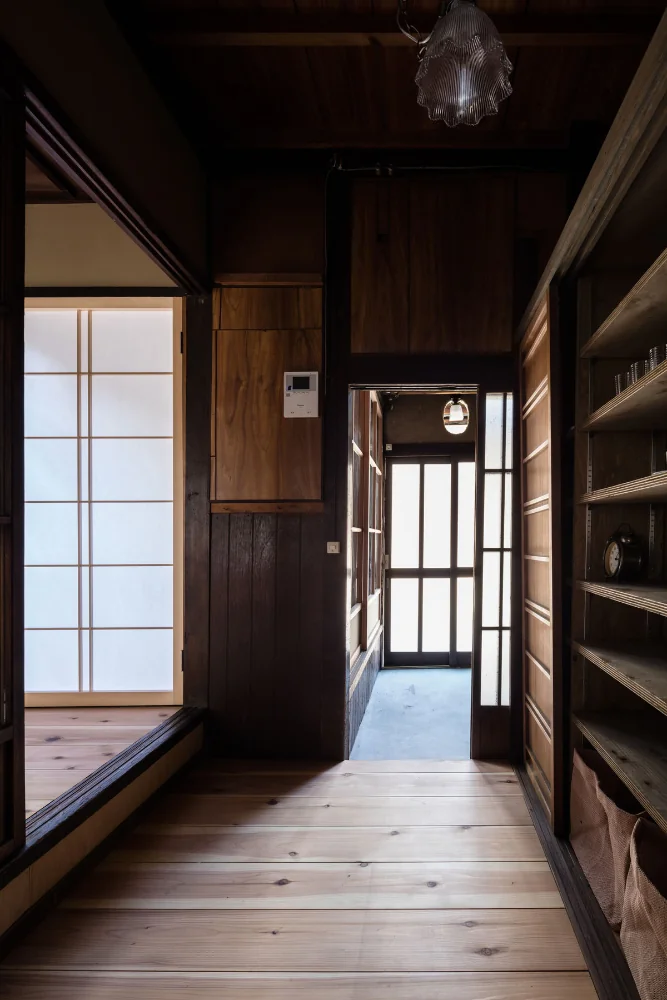
The entrance floor level is set between the external earthen floor (doma) and the living floor to reduce step height.
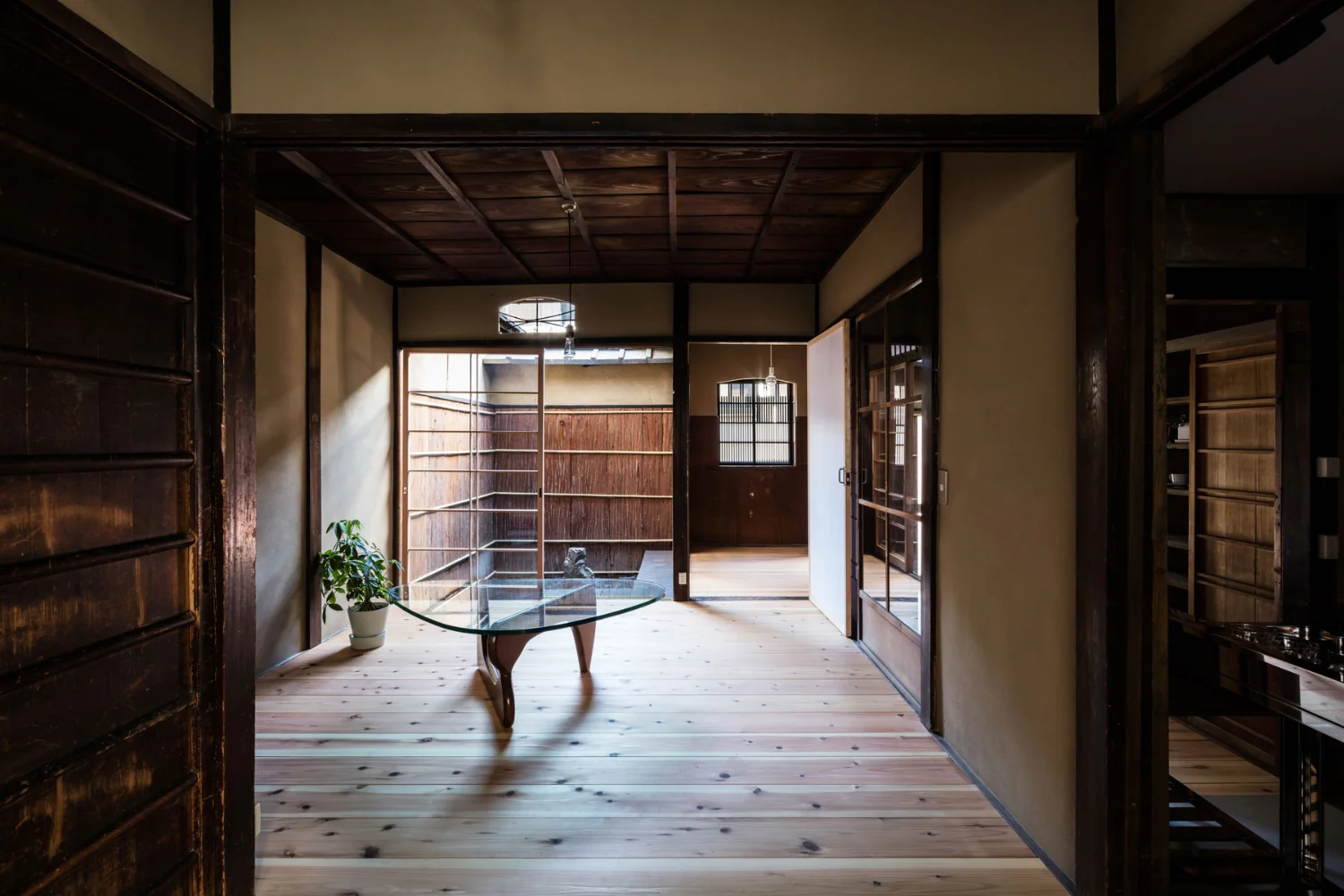
The living room is bright and well ventilated, situated between east and west tsubo-niwa.
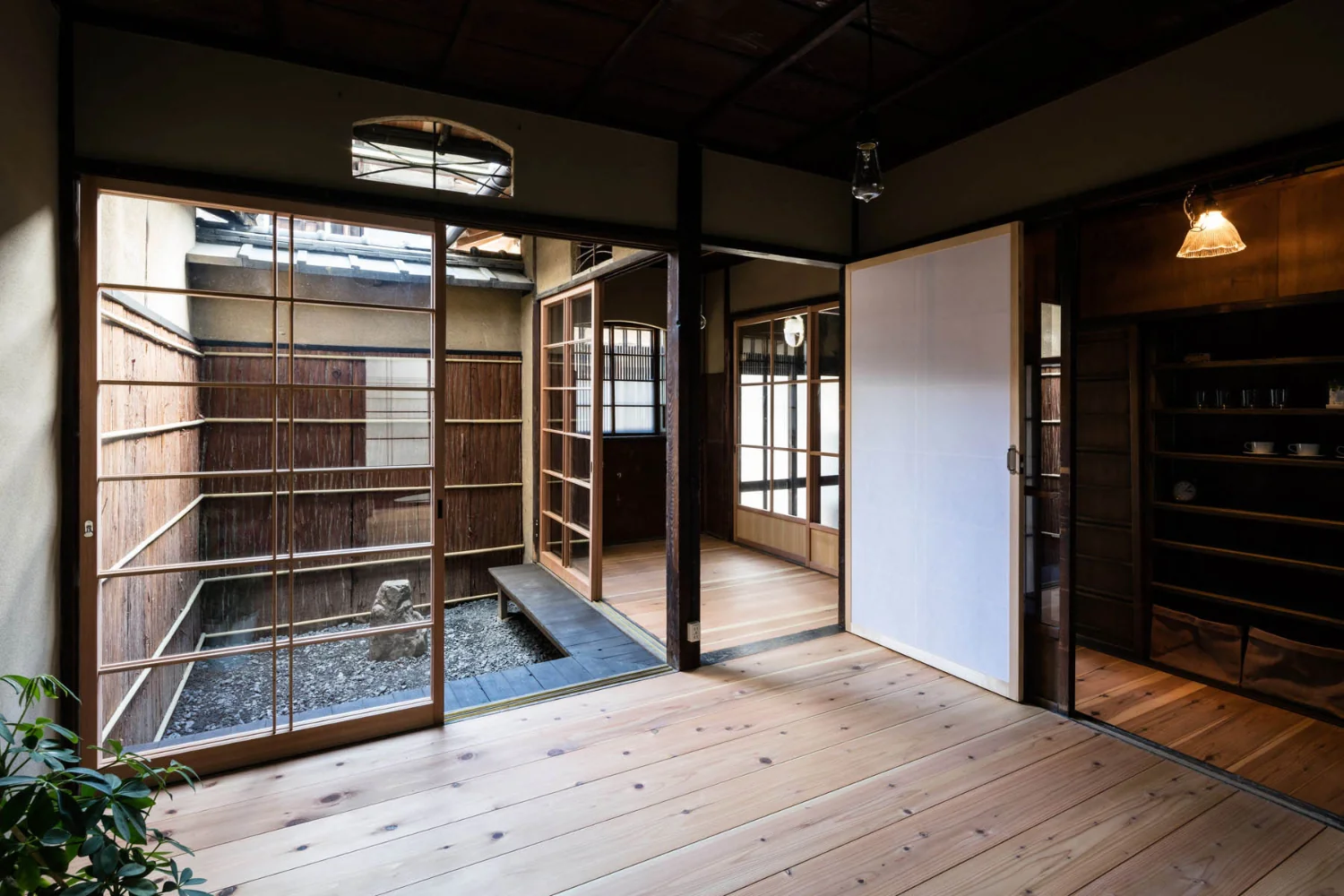
A typical machiya sequence in which living room, nure-en (exterior veranda), and tsubo-niwa connect continuously. The cedar-bark siding on the fence was replaced.
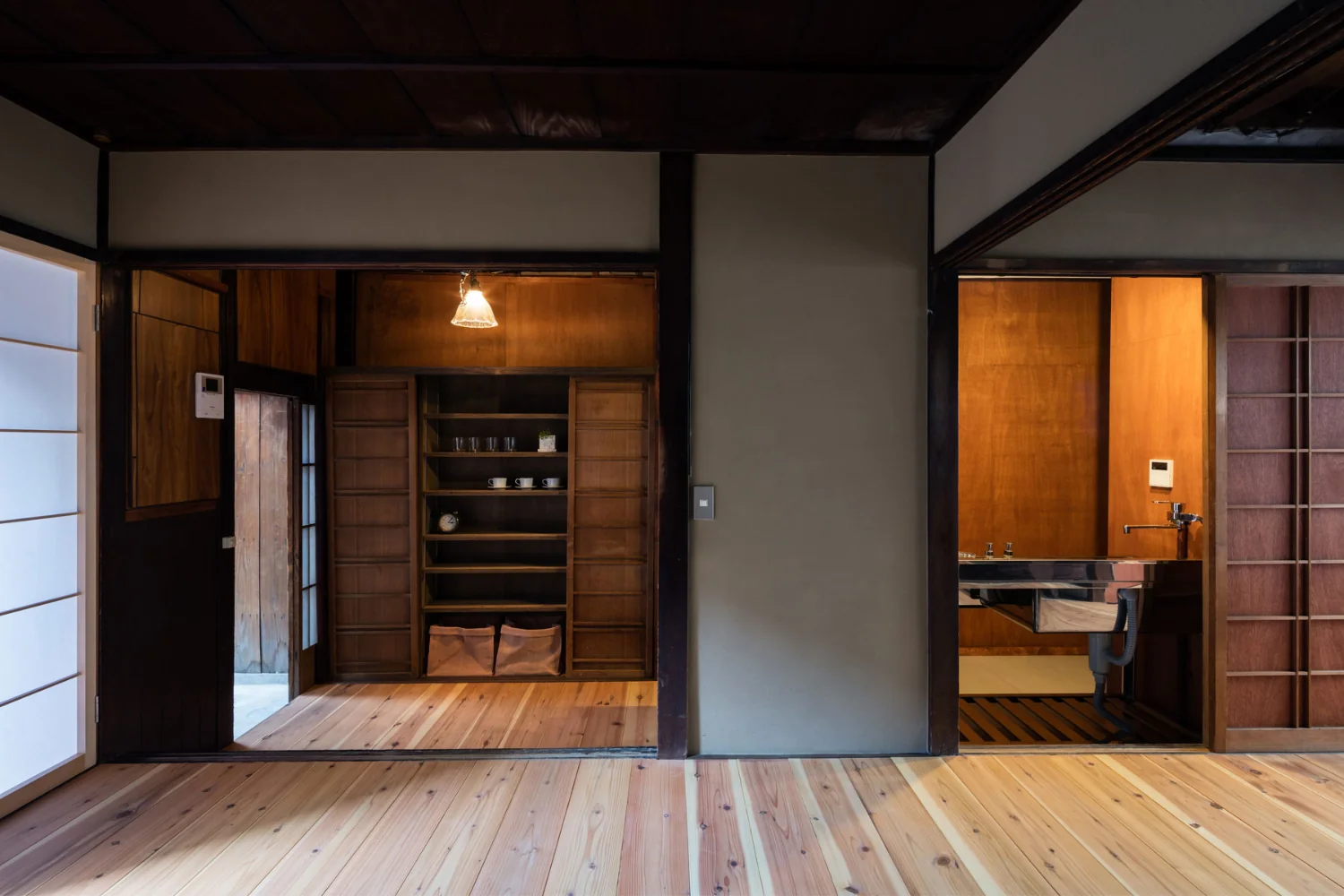
Small redundant fittings were repurposed to create a new entrance storage unit.
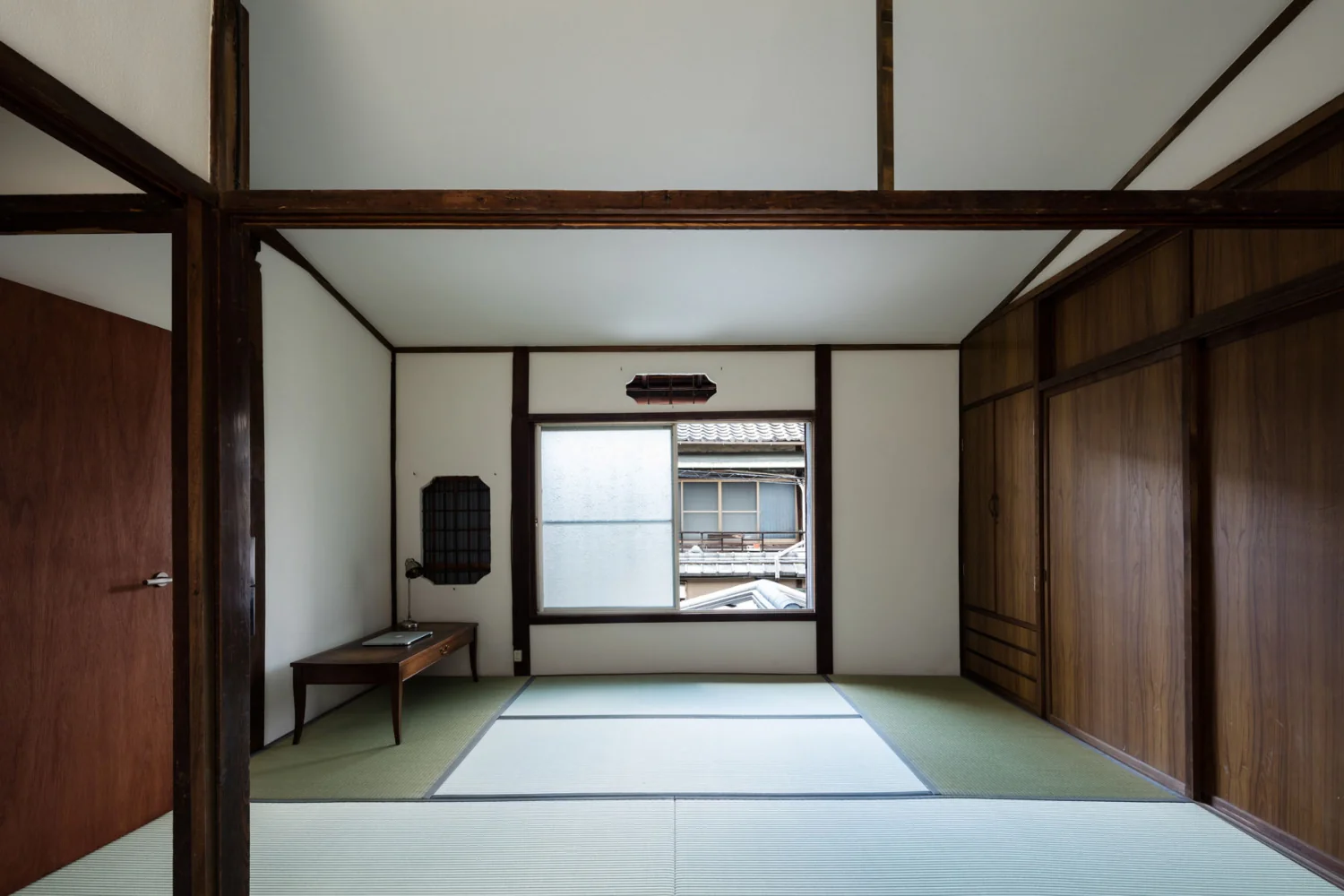
A wall opening discovered during demolition proved to be an original secondary window; it is normally protected from wind and rain with a hanging shoji screen.
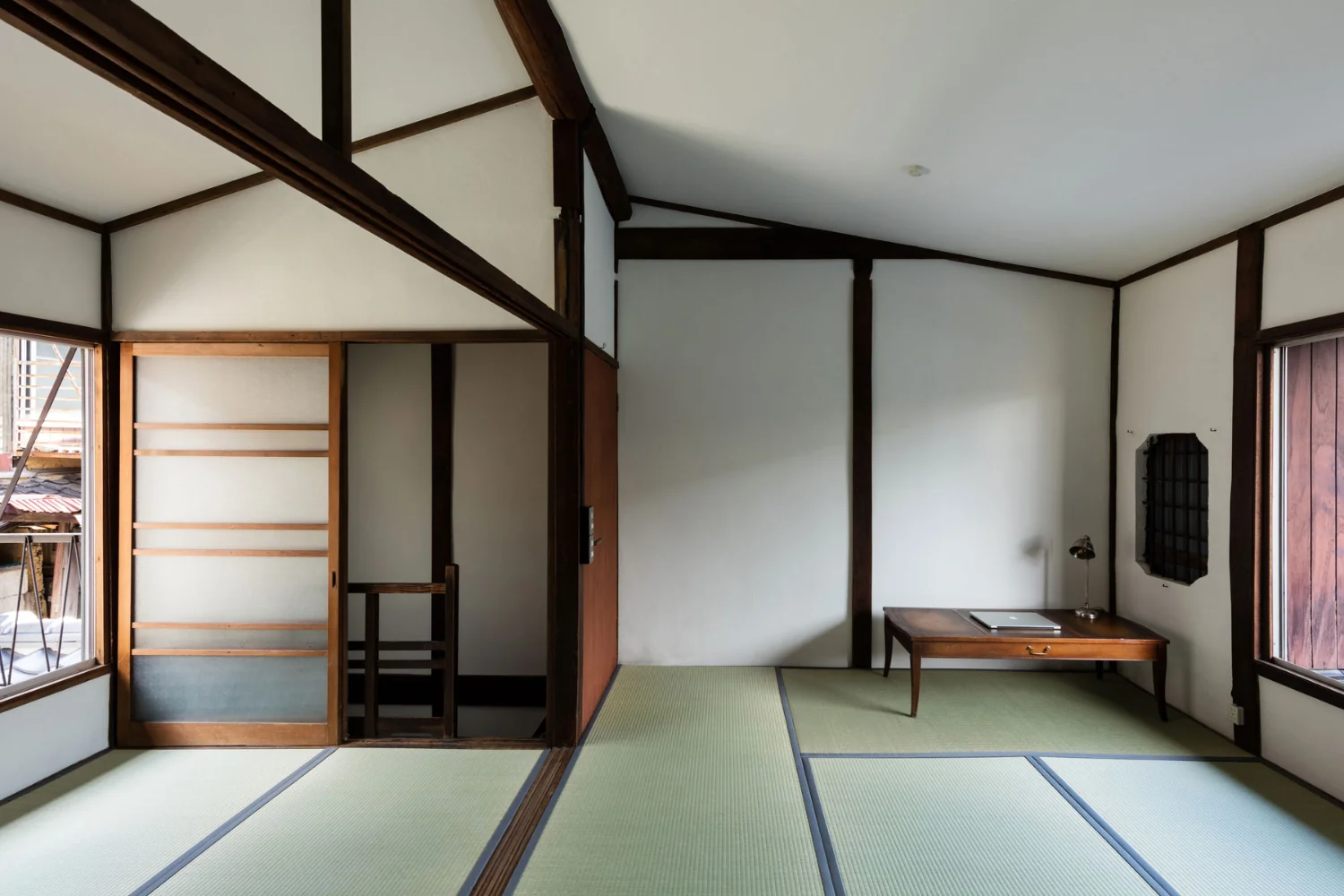
Second floor: existing ceiling boards were removed and replaced with a boat-bottom (cove) ceiling.
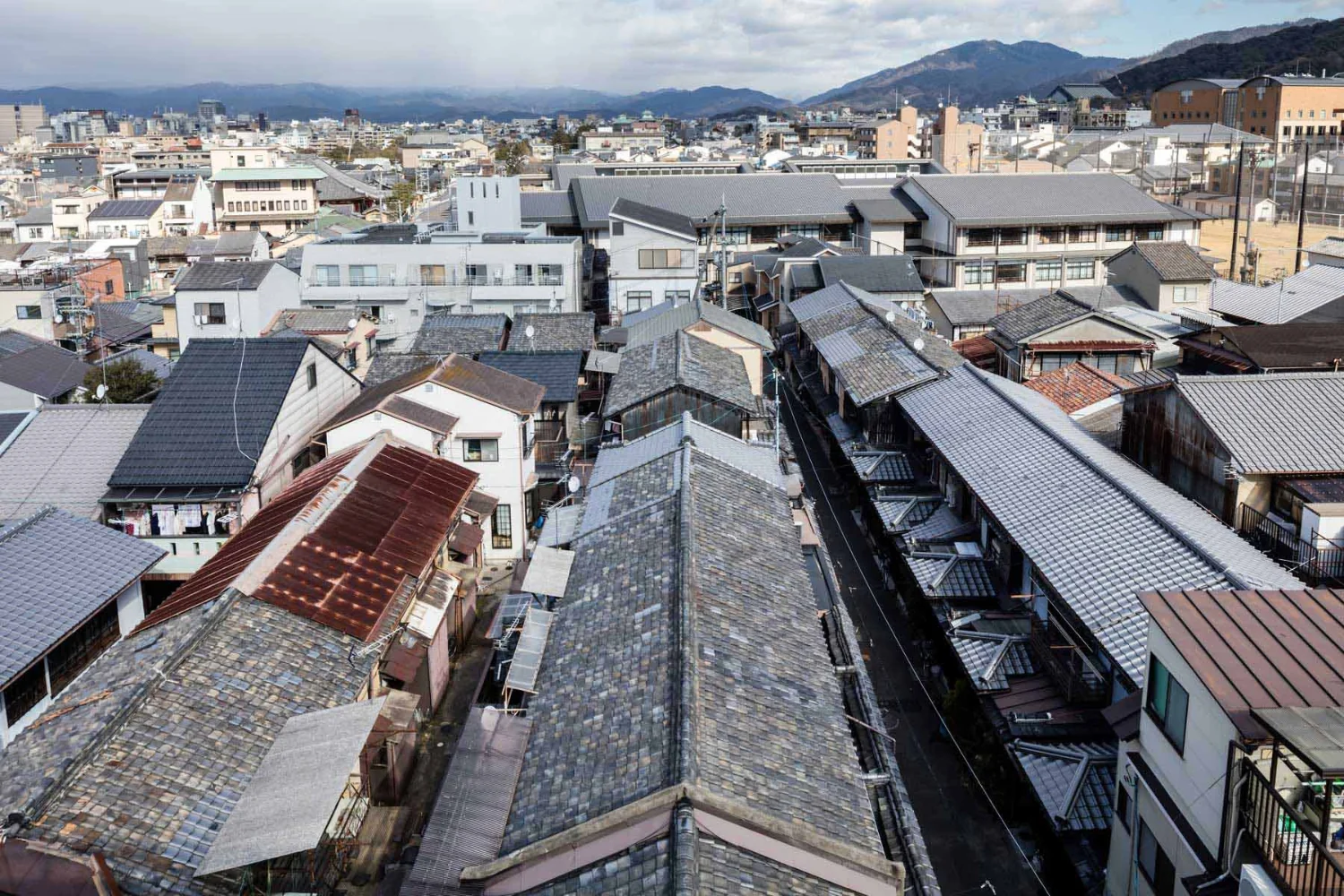
A streetscape where modern buildings and old tiled roofs coexist. Nagaya units are renewed sequentially as tenants move in and out.
Income Property
Renovation
Japanese House
Narrow House
Japanese Modern
Tsubo Garden
Kominka Restoration
Exposed Beam
Professional Equipment
Reclaimed Beam
Kyomachiya
SeismicReinforcement
SeismicAssessment
Nagaya
Yohei Sasakura
Learn More
Higashiyama-ku, Kyoto City. A narrow lane one block off National Route 1 contains a dense cluster of prewar nagaya (traditional row houses). While retaining the nostalgic traces of Showa-era alleys, these houses face contemporary challenges such as vacancy, structural deterioration, privacy intrusions from tourism, and conversion to short-term rentals or guest houses. At the request of the landlord, one corner of this row was renovated into rental housing targeted at families with children and elderly tenants. Although the building suffered significant damage after several years of neglect, removal of piecemeal interventions—vinyl wallpaper, aluminum sashes, and a system kitchen—revealed the delicate structural details, refined ornamentation, and the pleasant continuity between exterior and interior characteristic of Kyoto machiya. The ground floor was reconfigured around a living room created by connecting two former tatami rooms, allowing integrated use with a mise-no-ma (shop-facing room) surrounding a tsubo-niwa (small courtyard) and with the kitchen across via sliding fittings. The layout also accommodates a bathroom, washroom, laundry machine and refrigerator within the limited footprint. Flooring is 30 mm thick cedar planks, a low-cost choice that improves insulation; walls were repaired with plaster and plywood; ceilings were stripped of deteriorated finishes and left with the rough boards of the second-floor decking. The kitchen is a simple composition of stainless commercial kitchen units. The second floor received no plan changes but underwent targeted repairs; ceilings were converted to a cove (boat-bottom) profile after adding diaphragm reinforcement and insulation. By leveraging the existing grid plan, most joinery was relocated and reused as needed to minimize newly fabricated pieces. The renovation maximized use of Kyoto City subsidy programs to reduce initial costs.
Use: Nagaya (traditional row house)
Structure/Scale: Timber, 2-storey
Site area: 14 tsubo (45 m²)
Area used for unit-price calculation: 19 tsubo (63 m²)
Design supervision: Yoshihiro Yamamoto [YYAA]
Construction: Jonan-gumi
Real estate consulting: Kyoto R Real Estate
Photography: Yohei Sasakura [Sasa no Kurasha]
Kyoto-style seismic retrofit support program utilizing local craftsmen's expertise [City of Kyoto]
Subsidy for vacant-house utilization and circulation support [City of Kyoto]
Excellence Award, Housing Division, 36th Housing Renovation Competition
Structure/Scale: Timber, 2-storey
Site area: 14 tsubo (45 m²)
Area used for unit-price calculation: 19 tsubo (63 m²)
Design supervision: Yoshihiro Yamamoto [YYAA]
Construction: Jonan-gumi
Real estate consulting: Kyoto R Real Estate
Photography: Yohei Sasakura [Sasa no Kurasha]
Kyoto-style seismic retrofit support program utilizing local craftsmen's expertise [City of Kyoto]
Subsidy for vacant-house utilization and circulation support [City of Kyoto]
Excellence Award, Housing Division, 36th Housing Renovation Competition
- Copyright(C)Qurasuki.All Rights Reserved.