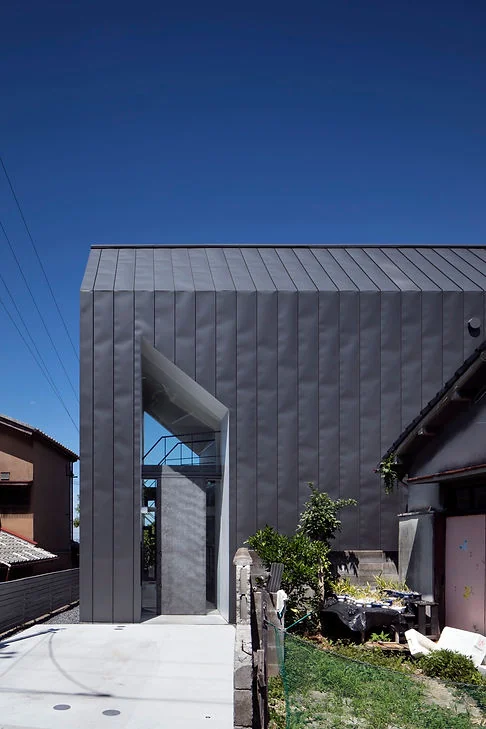
Introducing HE10 — AICA Project Example Contest, Excellence Award, a custom-built home example by YIA Ishiue Yoshihiro Architectural Design Office, a Architect / Design office in 1572 Amagawataki-cho, Kishiwada, Osaka Prefecture, Japan

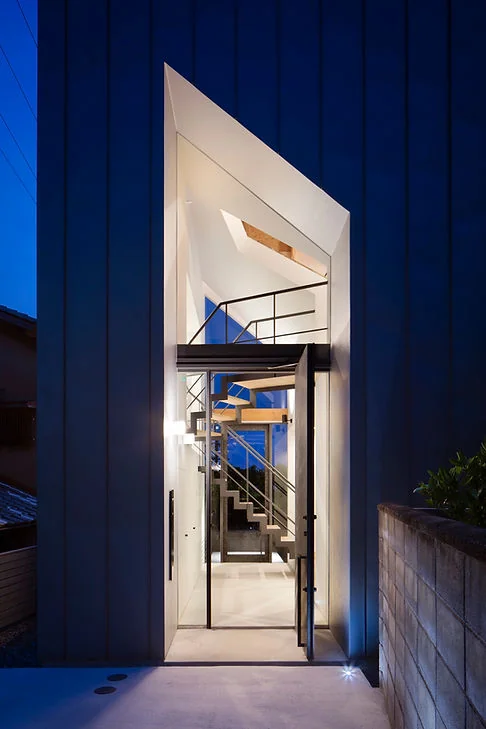
The approach frames a striking facade
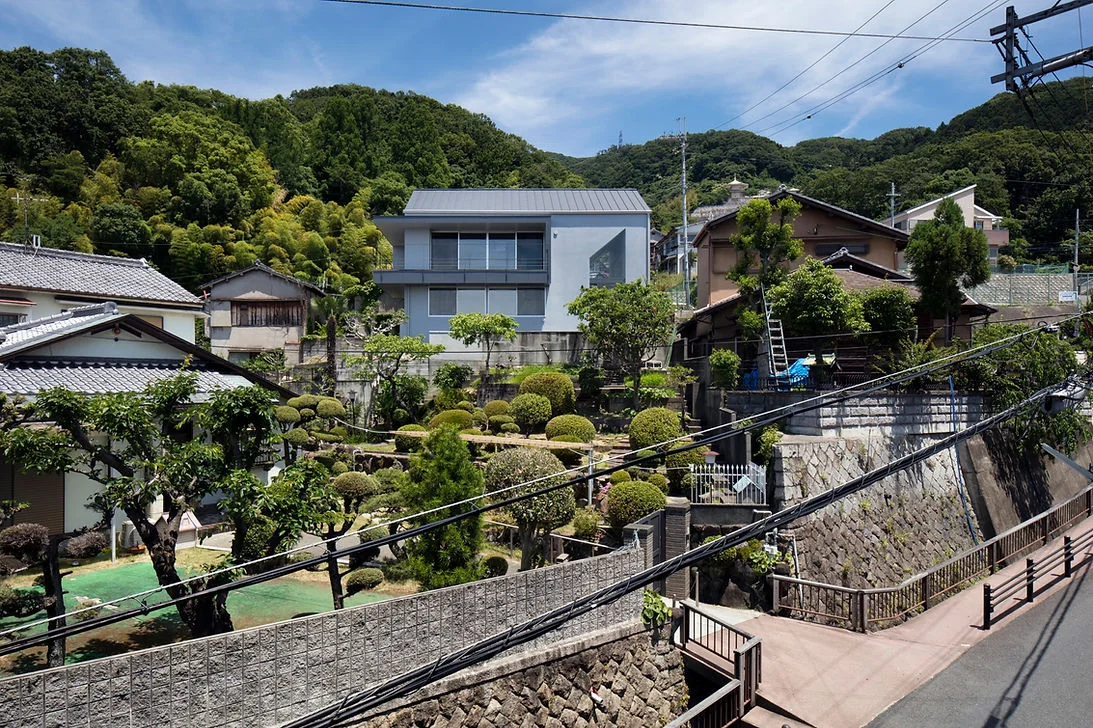
A house situated on a hillside
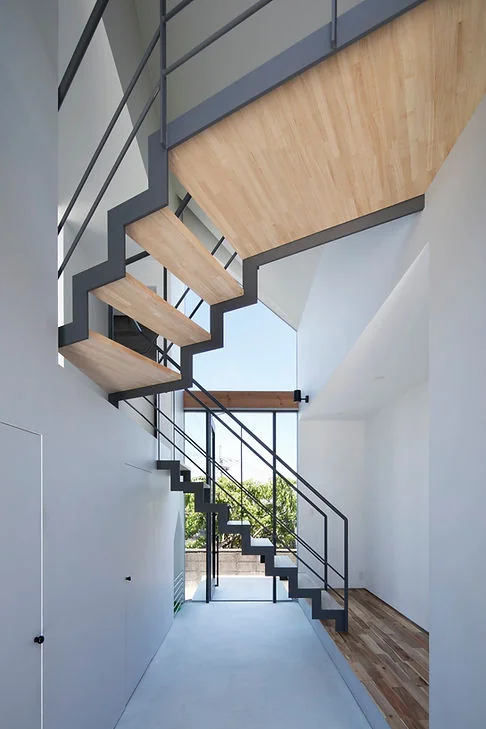
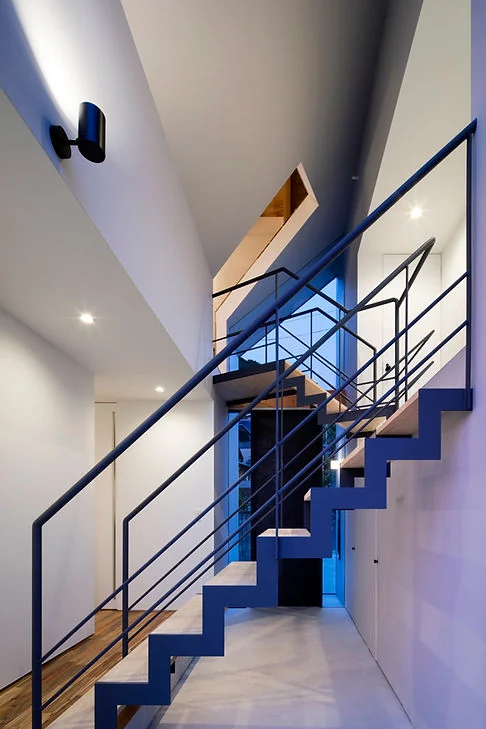
At the entrance level, the stair to the second floor greets visitors like a three‑dimensional intersection
HE10 — AICA Project Example Contest, Excellence Award
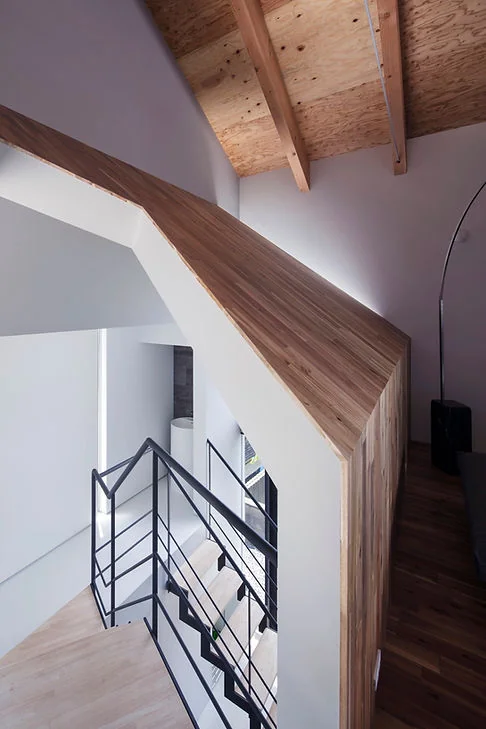
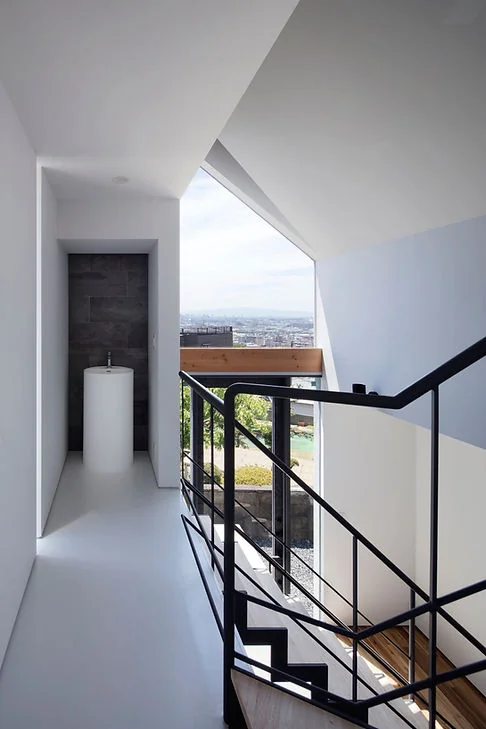
A corridor‑like stair and the mezzanine landing
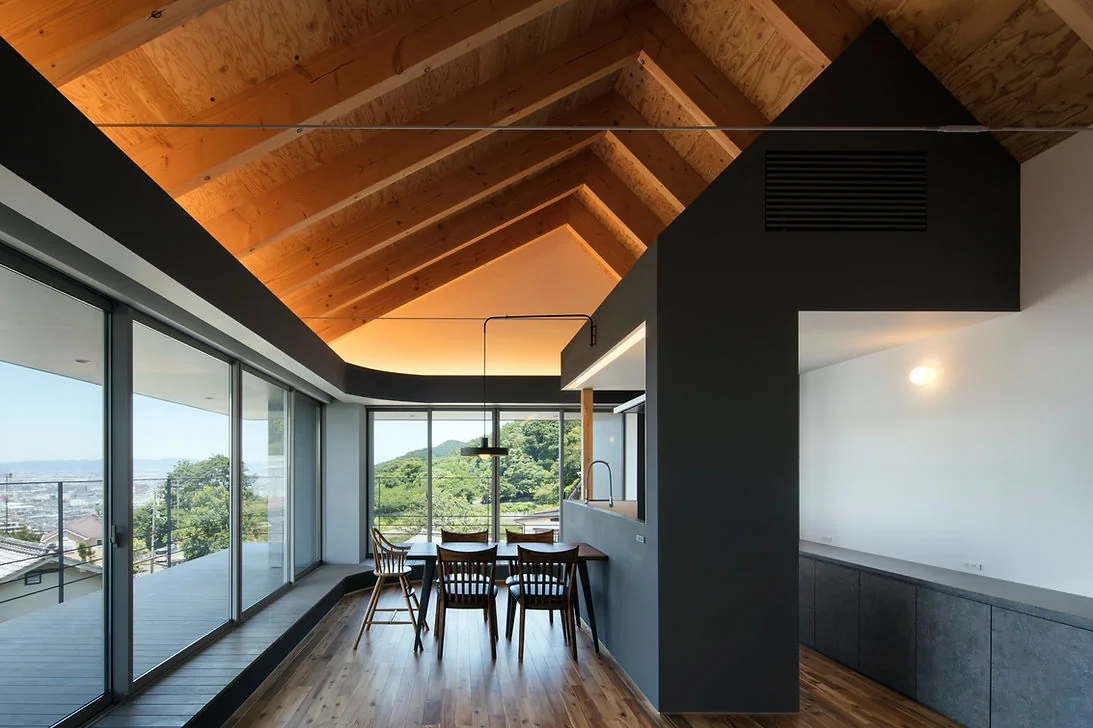
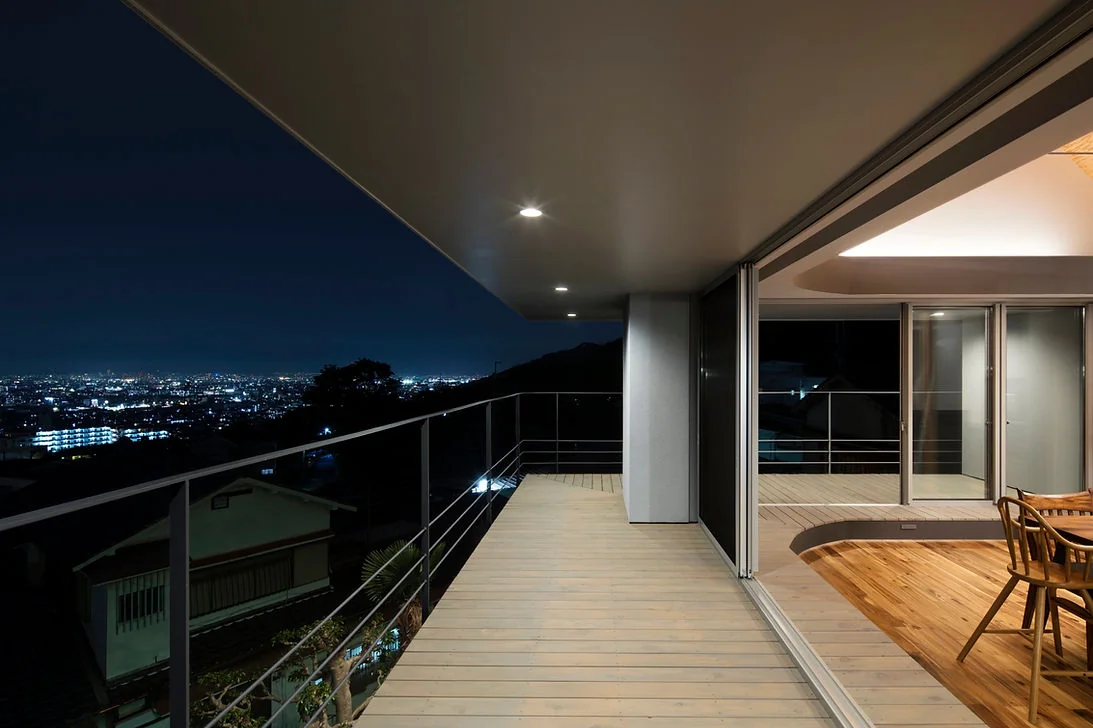
A simple architectural composition that embraces the exterior view in a powerful, natural way
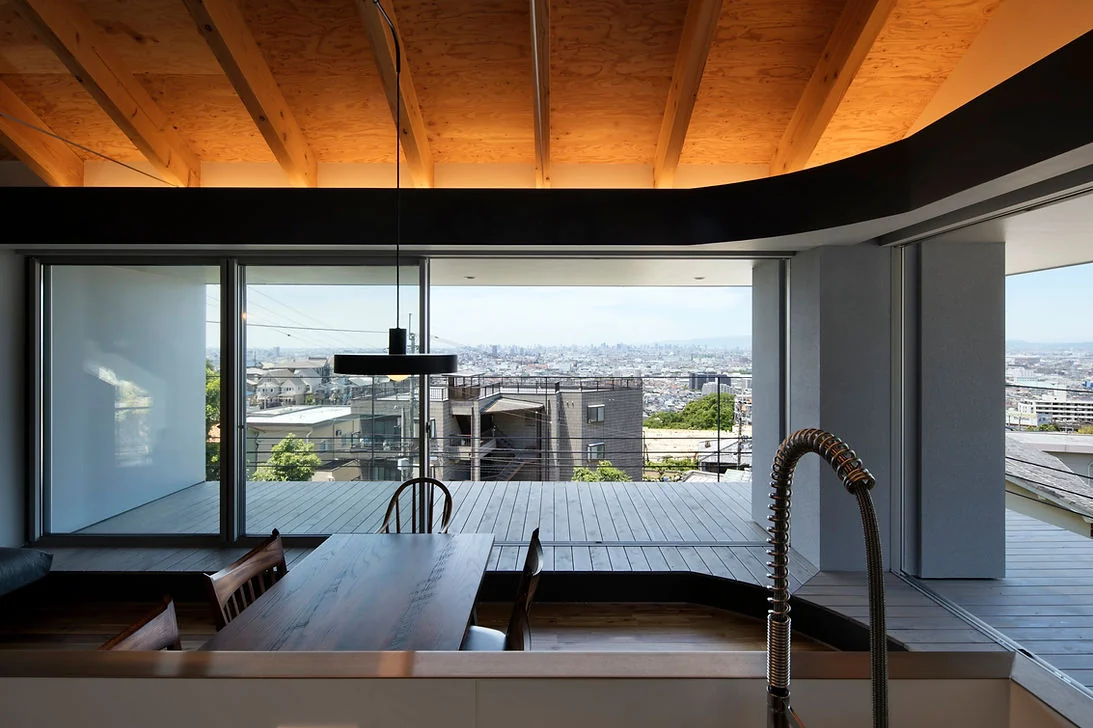
A kitchen counter that commands exclusive views over Osaka city
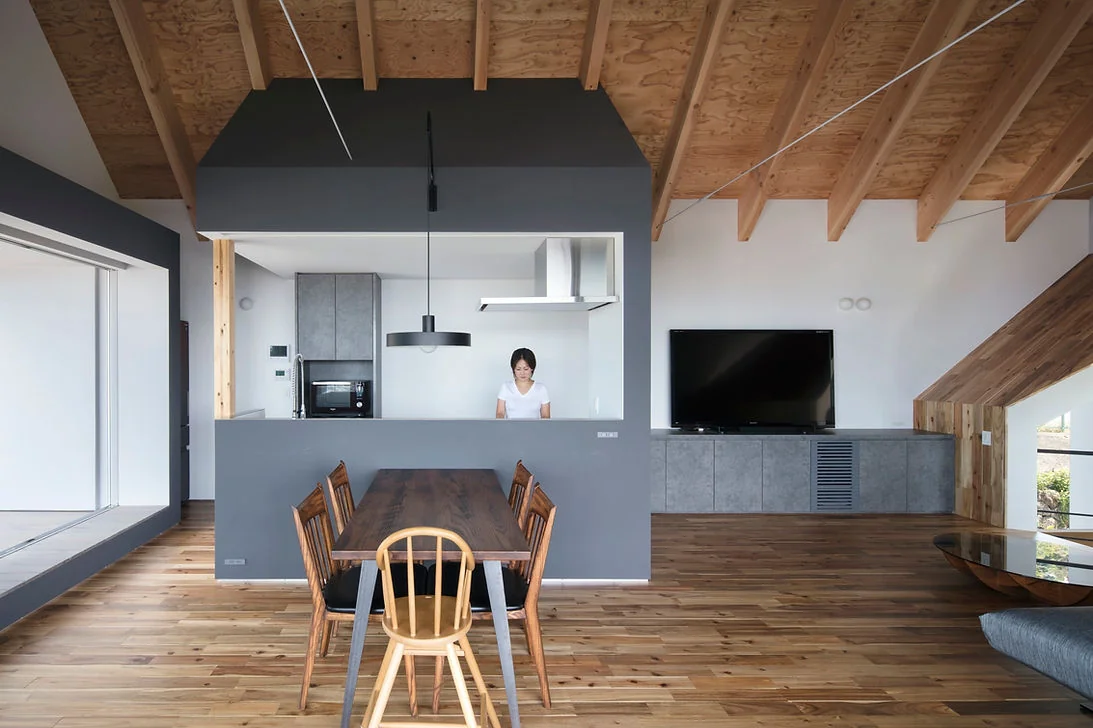
A lowered ceiling creates a calm dining space for focused cooking
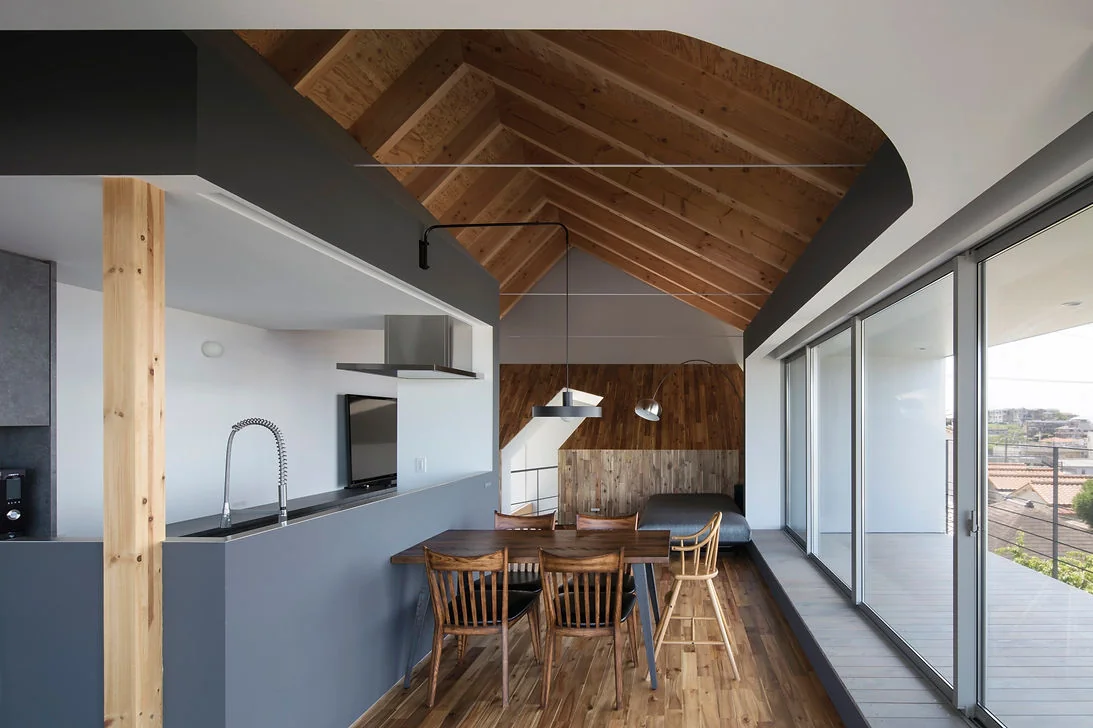
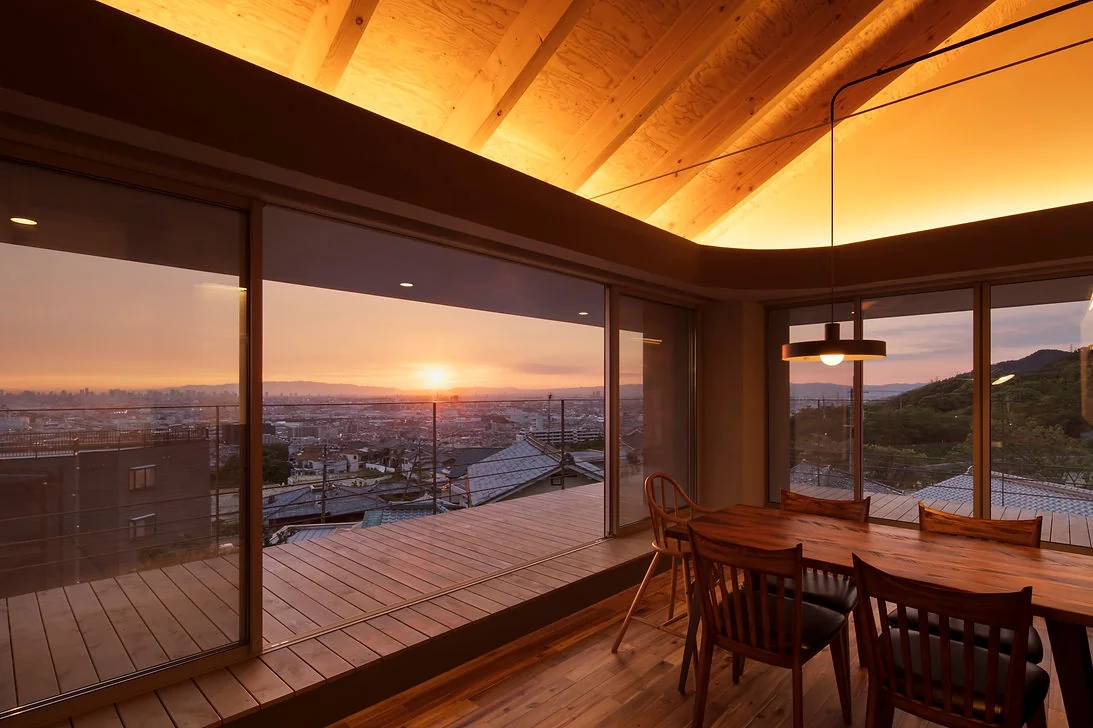
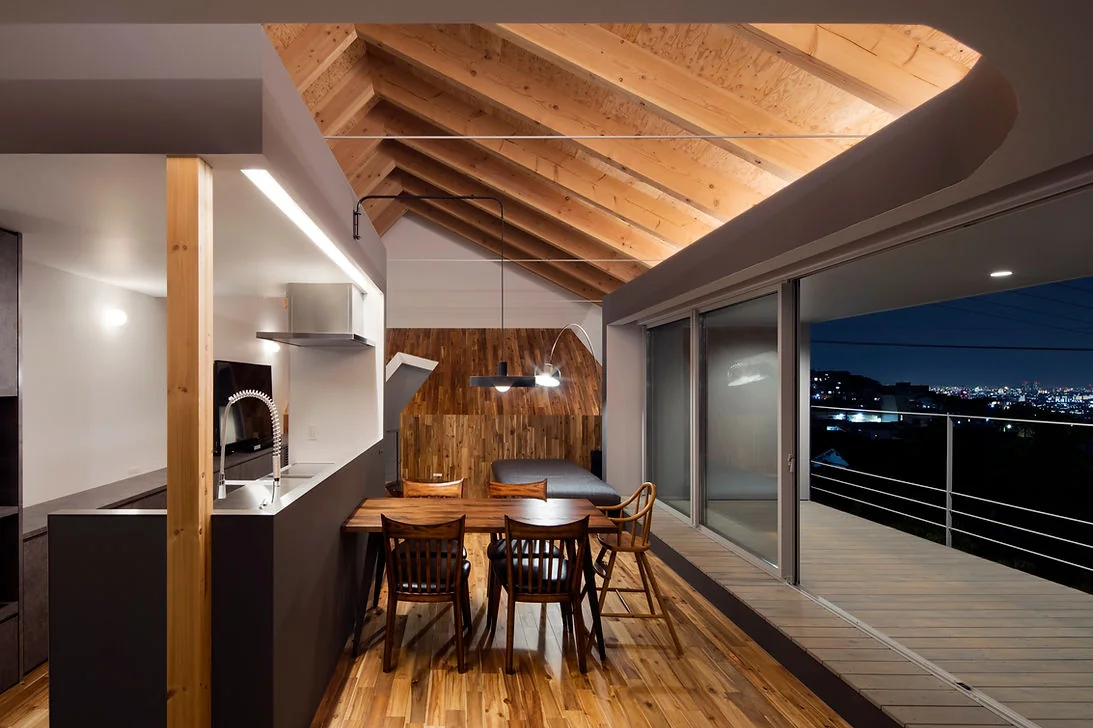
Dining space with beautifully expressed ascending rafters
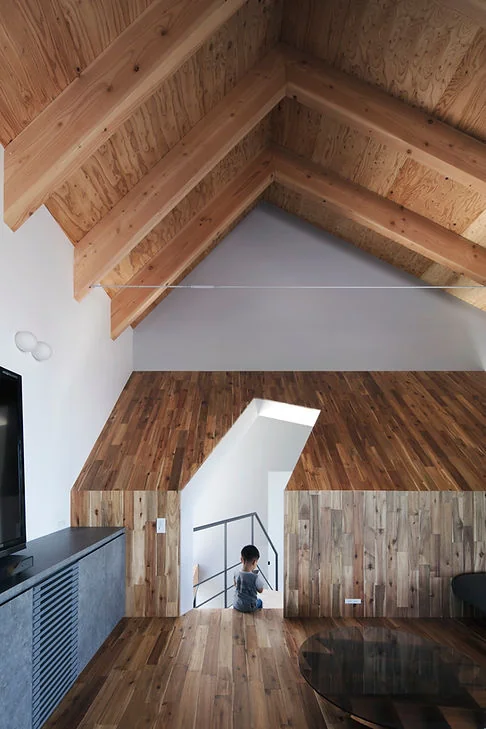
A living space where everyday moments become picture‑worthy
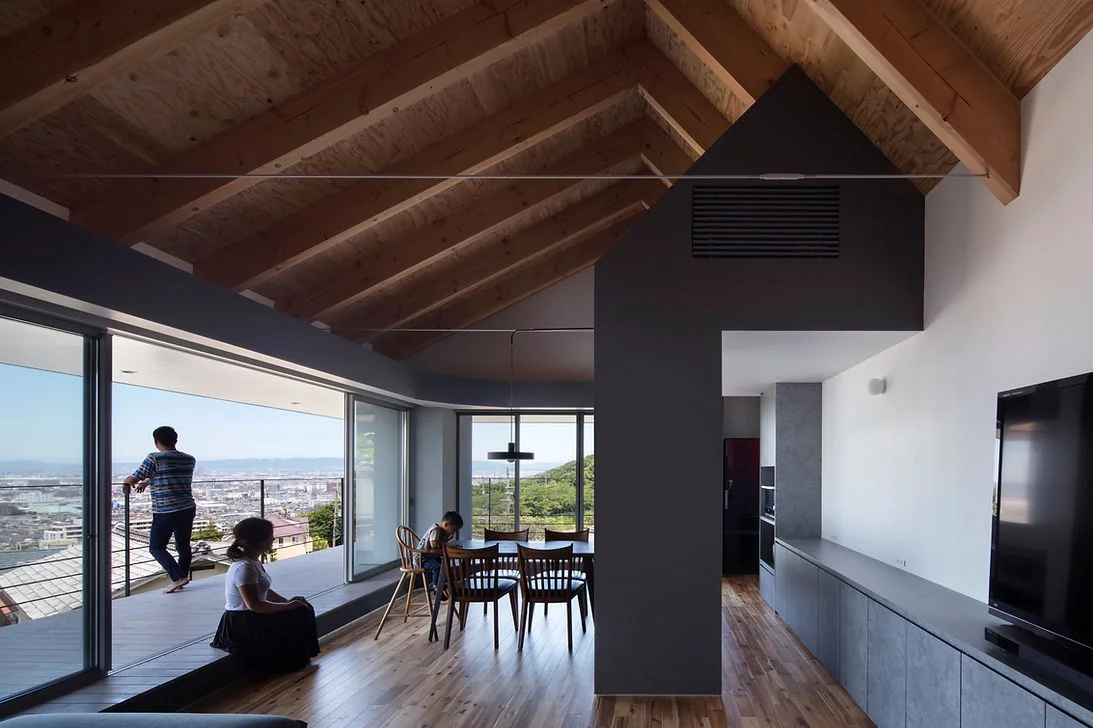
HE10 — AICA Project Example Contest, Excellence Award
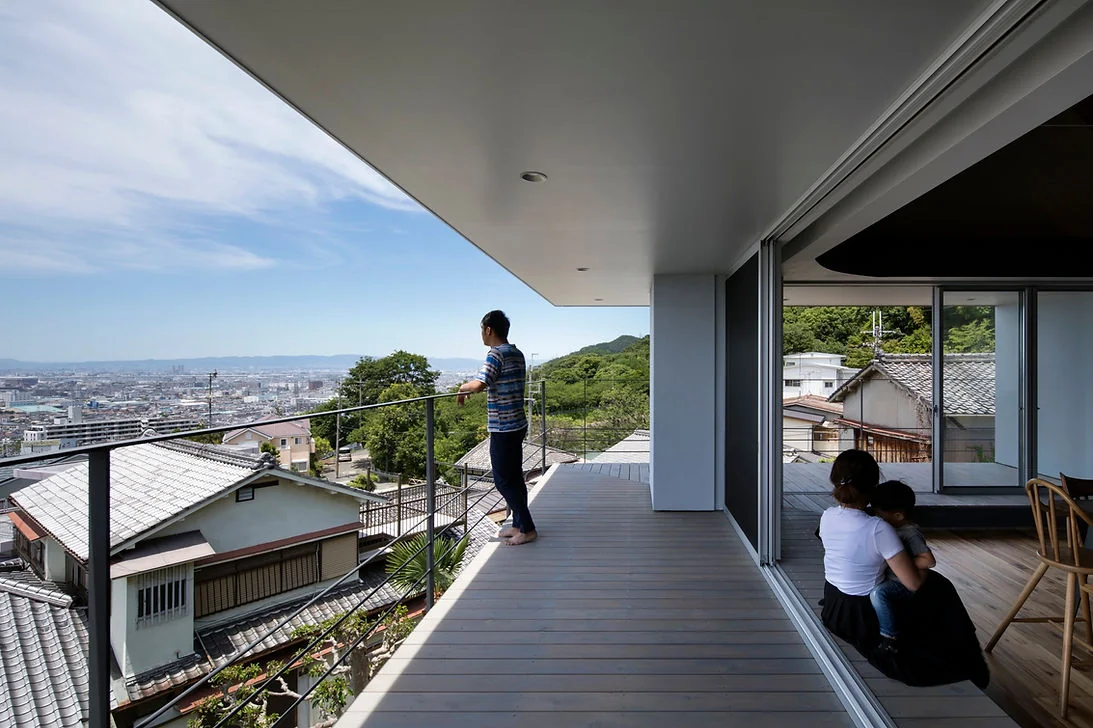
The shimmering view imparts a sense of passing moments to daily life
HE10 — AICA Project Example Contest, Excellence Award
Exposed Beam
Second-Floor Living
High Ceiling
Steel Staircase
Large Opening
Continuous Window
balcony
Eiji Tomita
Learn More
The site is located on the mid‑slope of Mount Ikoma. It is a flag lot accessed from the east; the west side, however, affords views across Osaka Bay and, on clear days, the Akashi Kaikyō Bridge and the Rokko mountain range, while a massing of cherry trees can be seen below to the north in spring. The client, who lived in the city center, purchased this elevated site for that view. They wanted to be able to enjoy the panorama from the living room and also longed for a high‑ceilinged living space after many years in an apartment. The primary design theme was how to effectively integrate this view into daily life.
The living, dining and kitchen (LDK) are located on the second floor to secure elevation and to better accommodate future changes in the surroundings and vistas. The entrance hall is positioned in the narrow access strip of the flag lot facing the L‑shaped public road. This hall is designed with a sense of transparency so sightlines from the road can pass through. The vertically framed view is crossed by the staircase, guiding changes in sightlines and functioning as a device that builds anticipation for the LDK view. Ascending the stairs, one connects to the LDK through cutouts in the ceiling and wall. A deep, L‑shaped balcony with a framed opening creates a volumetric aperture that effectively captures and draws the view into the interior. By organizing the balcony depth from the inner edge to the outer edge—a relationship rooted in traditional Japanese spatial order—a gentle continuity from interior to exterior is established. The ceiling is a modified gable form finished with exposed ascending rafters.
The natural flow of the gaze toward the exterior is strongly influenced by the direction of the structural beams; for that reason, the design intentionally omits ridge beams and purlins of differing orientations. Finally, faced with an overwhelming view, the team concluded that a straightforward strategy for embracing the scenery and a clear, legible narrative are more appropriate than a complex architectural composition, and pursued as simple a configuration as possible. As a result, the exterior panorama has been integrated in a powerful yet natural manner. The fluctuating, shimmering view will, it is hoped, make the moments of daily life feel transient and vivid. Principal use: Residential
Location: Higashiosaka, Osaka Prefecture
Structure: Two‑storey timber construction
Site area: 208.05 m²
Total floor area: 105.11 m²
Construction: Iwatsuru Construction Co., Ltd.
Structural design: Kataoka Structural Design
The living, dining and kitchen (LDK) are located on the second floor to secure elevation and to better accommodate future changes in the surroundings and vistas. The entrance hall is positioned in the narrow access strip of the flag lot facing the L‑shaped public road. This hall is designed with a sense of transparency so sightlines from the road can pass through. The vertically framed view is crossed by the staircase, guiding changes in sightlines and functioning as a device that builds anticipation for the LDK view. Ascending the stairs, one connects to the LDK through cutouts in the ceiling and wall. A deep, L‑shaped balcony with a framed opening creates a volumetric aperture that effectively captures and draws the view into the interior. By organizing the balcony depth from the inner edge to the outer edge—a relationship rooted in traditional Japanese spatial order—a gentle continuity from interior to exterior is established. The ceiling is a modified gable form finished with exposed ascending rafters.
The natural flow of the gaze toward the exterior is strongly influenced by the direction of the structural beams; for that reason, the design intentionally omits ridge beams and purlins of differing orientations. Finally, faced with an overwhelming view, the team concluded that a straightforward strategy for embracing the scenery and a clear, legible narrative are more appropriate than a complex architectural composition, and pursued as simple a configuration as possible. As a result, the exterior panorama has been integrated in a powerful yet natural manner. The fluctuating, shimmering view will, it is hoped, make the moments of daily life feel transient and vivid. Principal use: Residential
Location: Higashiosaka, Osaka Prefecture
Structure: Two‑storey timber construction
Site area: 208.05 m²
Total floor area: 105.11 m²
Construction: Iwatsuru Construction Co., Ltd.
Structural design: Kataoka Structural Design
- Copyright(C)Qurasuki.All Rights Reserved.