Introducing House Behind the School Building, a custom-built home example by an Archi-Lab. First-Class Architect Office, a Architect / Design office in Heights S&A 2F, 4-20-31 Awaji, Higashiyodogawa-ku, Osaka City, Osaka Prefecture
House Behind the School Building
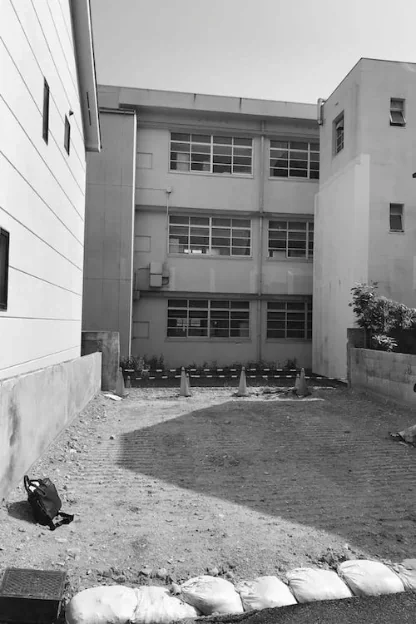
Site overview – A compact lot with the elementary school building looming directly to the south
House Behind the School Building
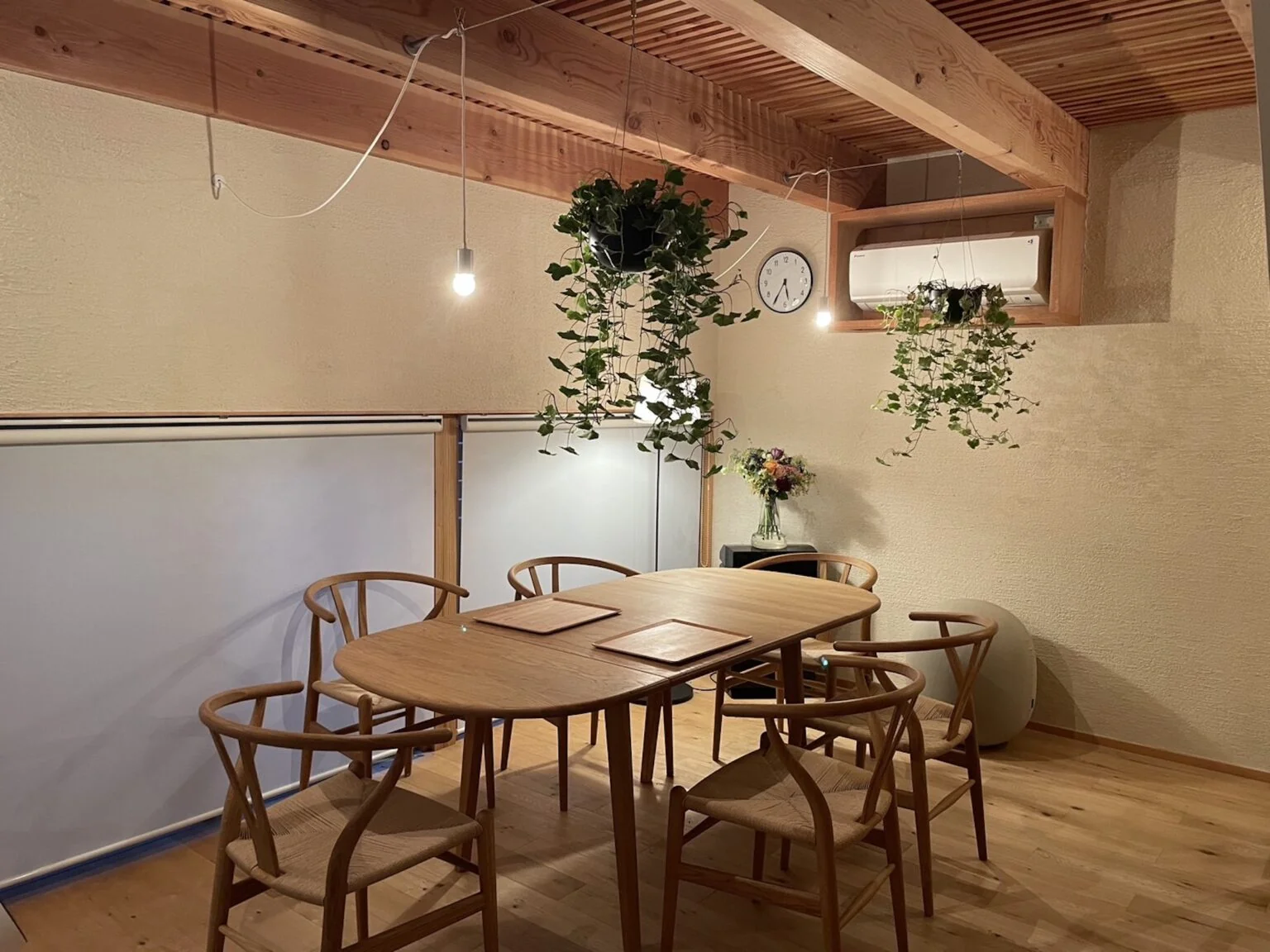
Living scenes (two years after handover)
Narrow House
Passage Doma
Japanese Modern
Plaster Wall
Wet-Engawa
Cafe Style
Mindful Living
Forever Home
Steel Staircase
Exposed Beam
Eiji Tomita Photography Studio
Learn More
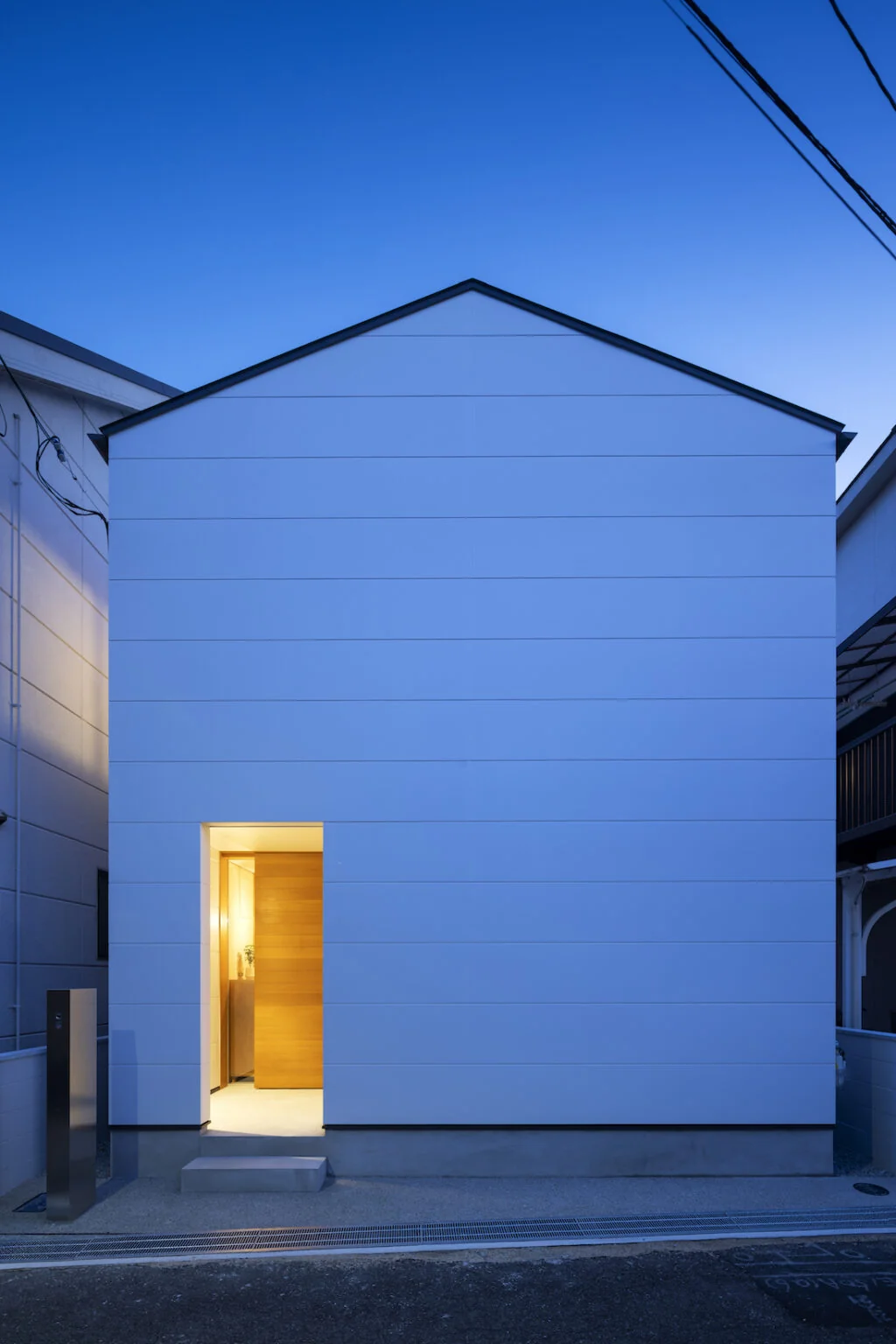
This project is a reconstruction plan for a long-inhabited family home, intended for a mother and daughter, both adults. The site is located in a relatively old residential neighborhood undergoing intermittent redevelopment. The plot itself is compact, measuring 6.5 meters in frontage, 9.5 meters in depth, with a total area of 19 tsubo (approximately 62.8 sqm). It borders a 4-meter-wide road to the north, set back slightly, with neighboring houses to the east and west, and a three-story elementary school building looming immediately to the south.
The clients’ paramount request was for a "bright house."
The southern school building casts a shadow over the entire house throughout the winter days. The neighboring houses are densely constructed, and the previous home, which had been repeatedly extended to fill the entire plot, suffered from poor ventilation and was mostly shaded. Given the close proximity of surrounding structures, curtains were often drawn, resulting in a dim, oppressive living environment with limited air circulation.
This project faced greater constraints than typical compact sites due to its adjacency to the school building. The challenge was to realize a high-quality residential environment that ensures appropriate natural lighting, ventilation, and privacy—conditions that are fundamental to a healthy living environment—while supporting a rich and fulfilling lifestyle.
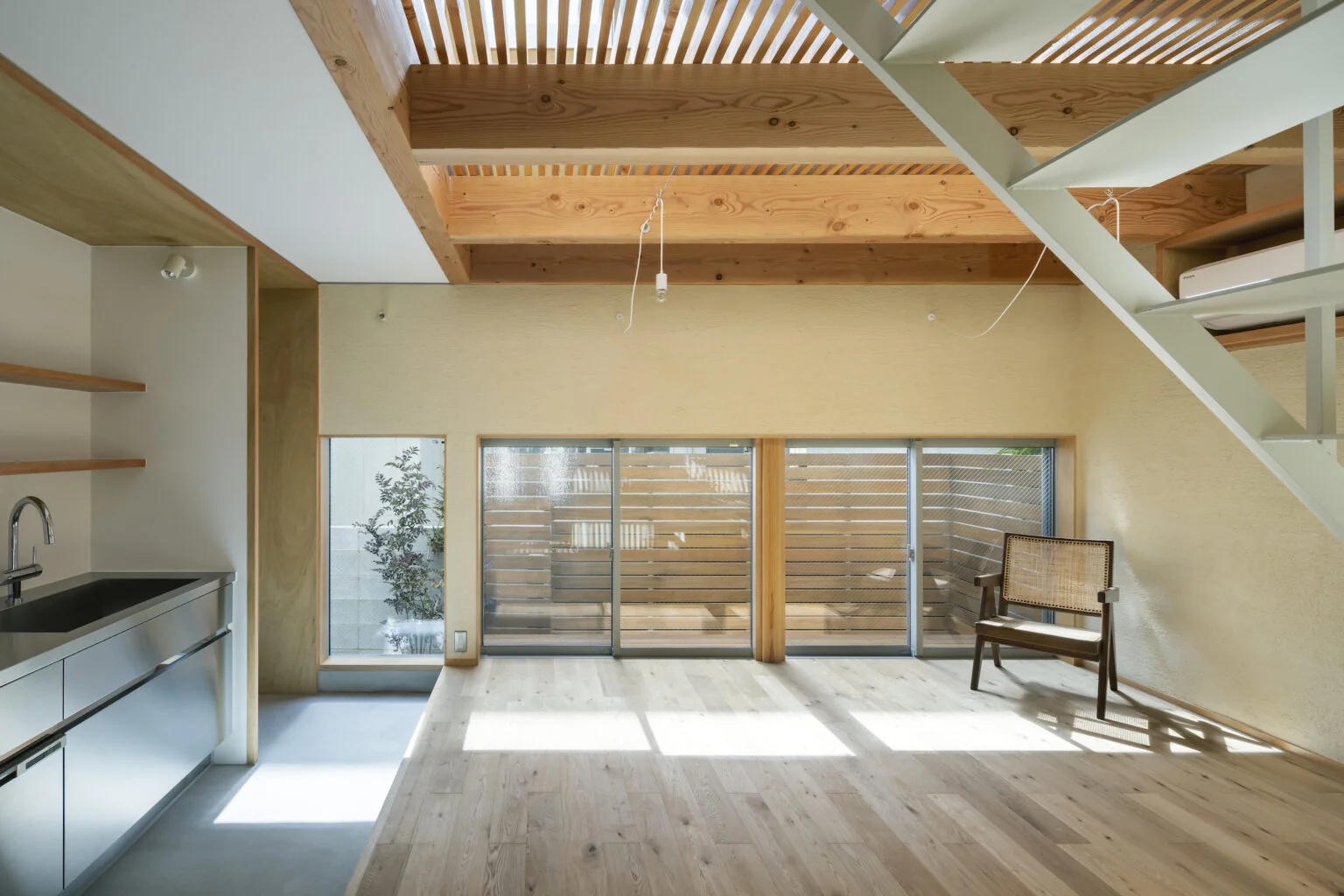
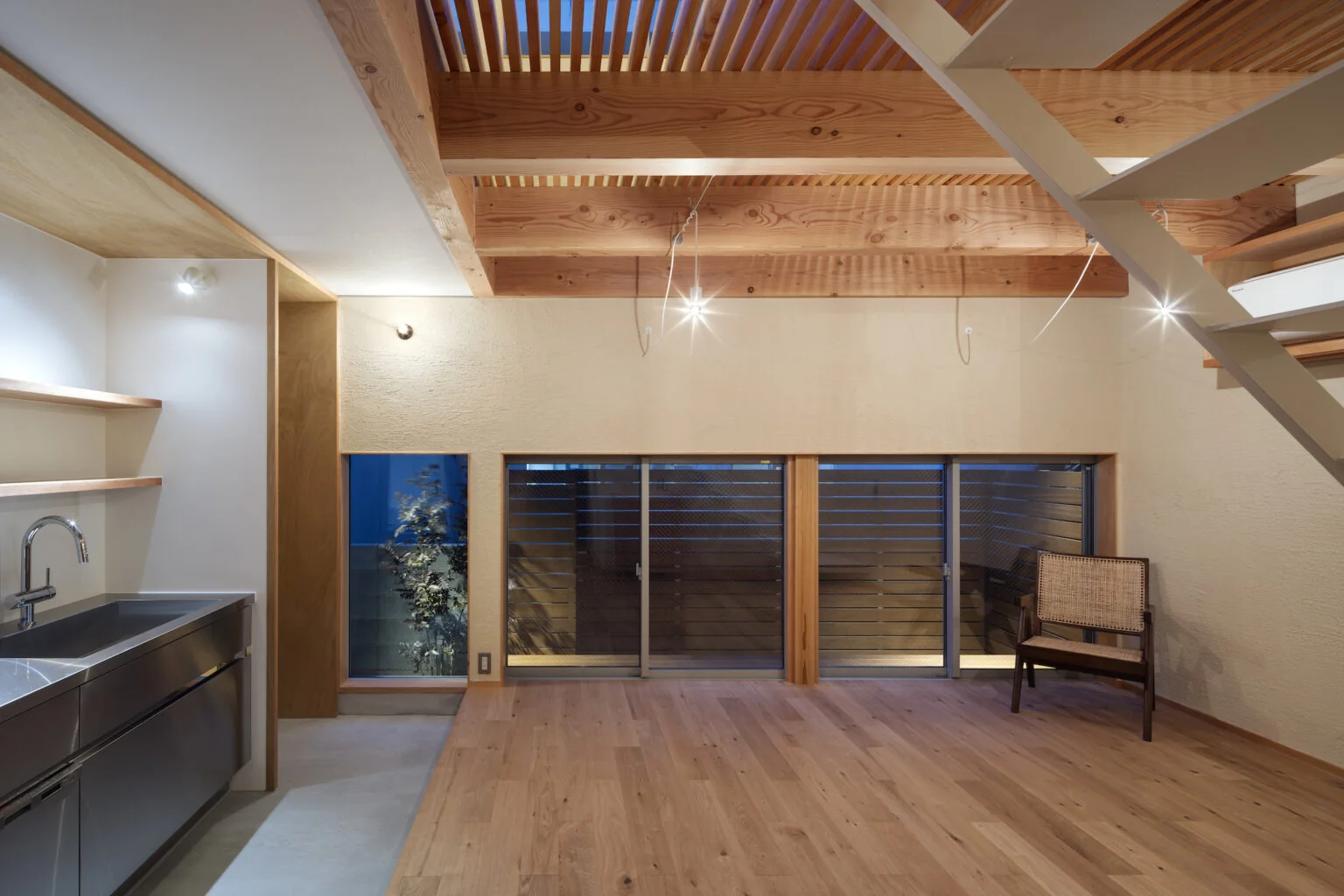
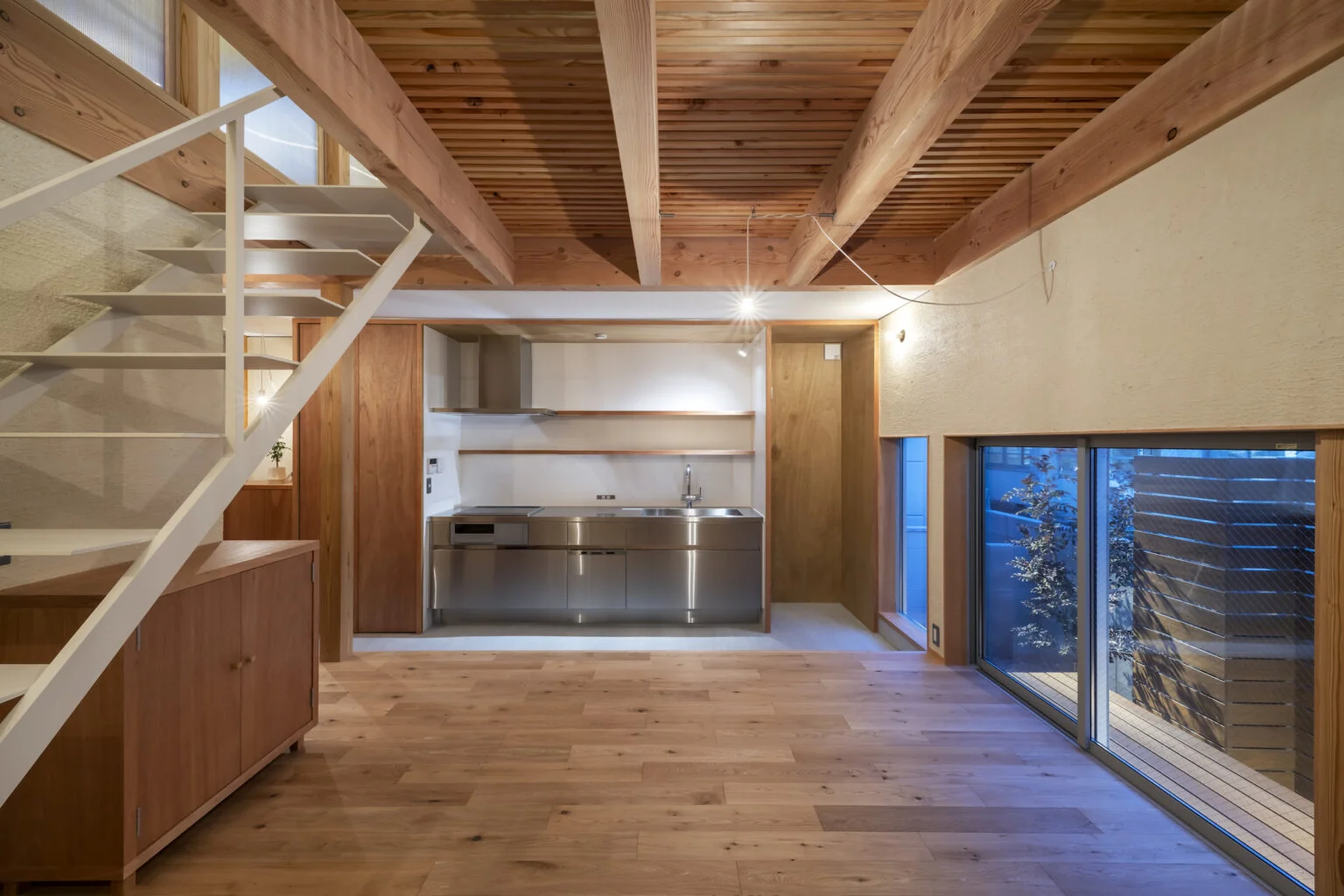
As a buffer space from the school, a generous margin was retained along the southern edge of the site, enclosed as a veranda and small garden. This space is connected to the interior through openings set at a height between a floor-level window and a full-height sliding door, akin to a crawl-through window. This design both softens the presence of the school building and creates a sense of openness and depth towards the exterior.
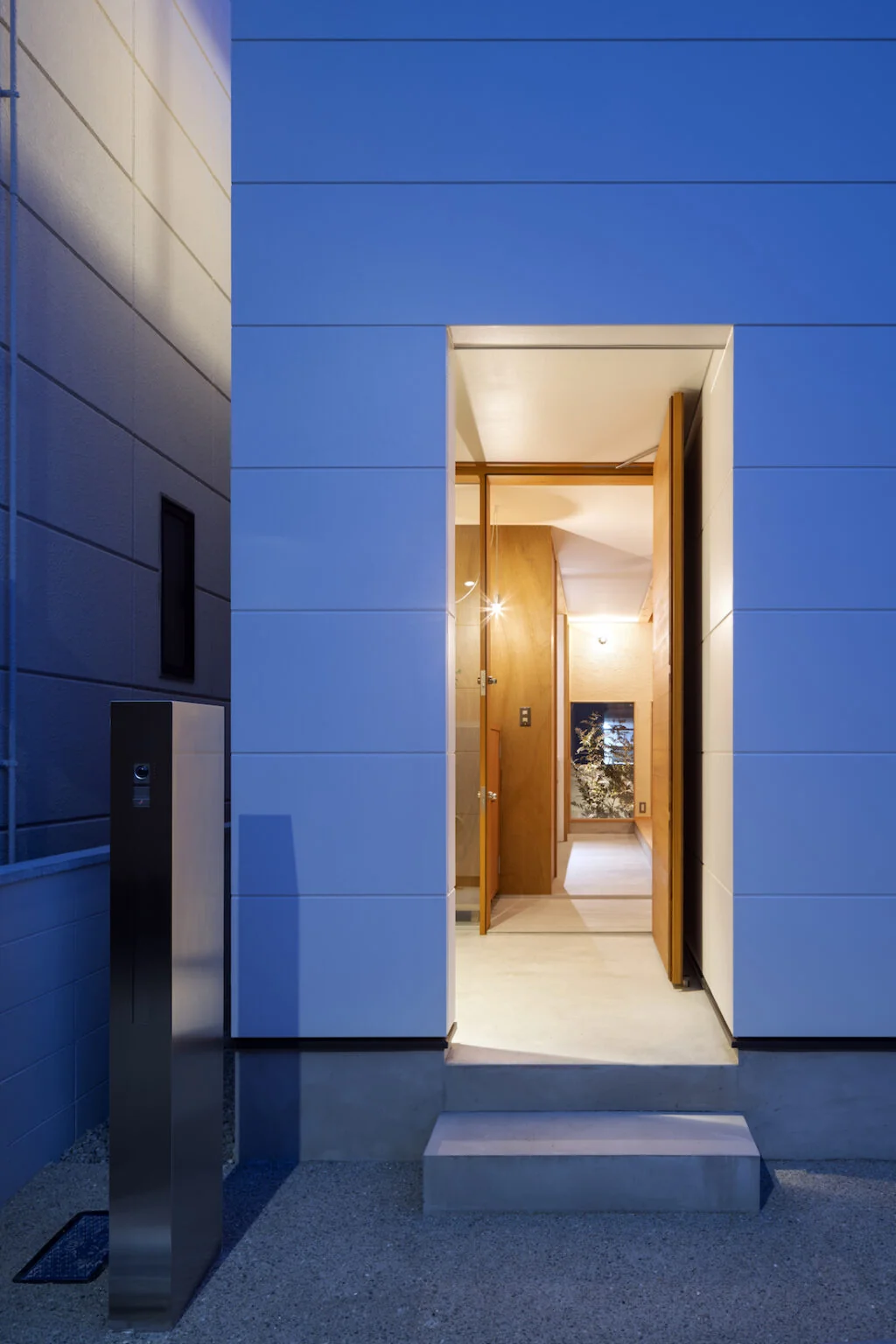
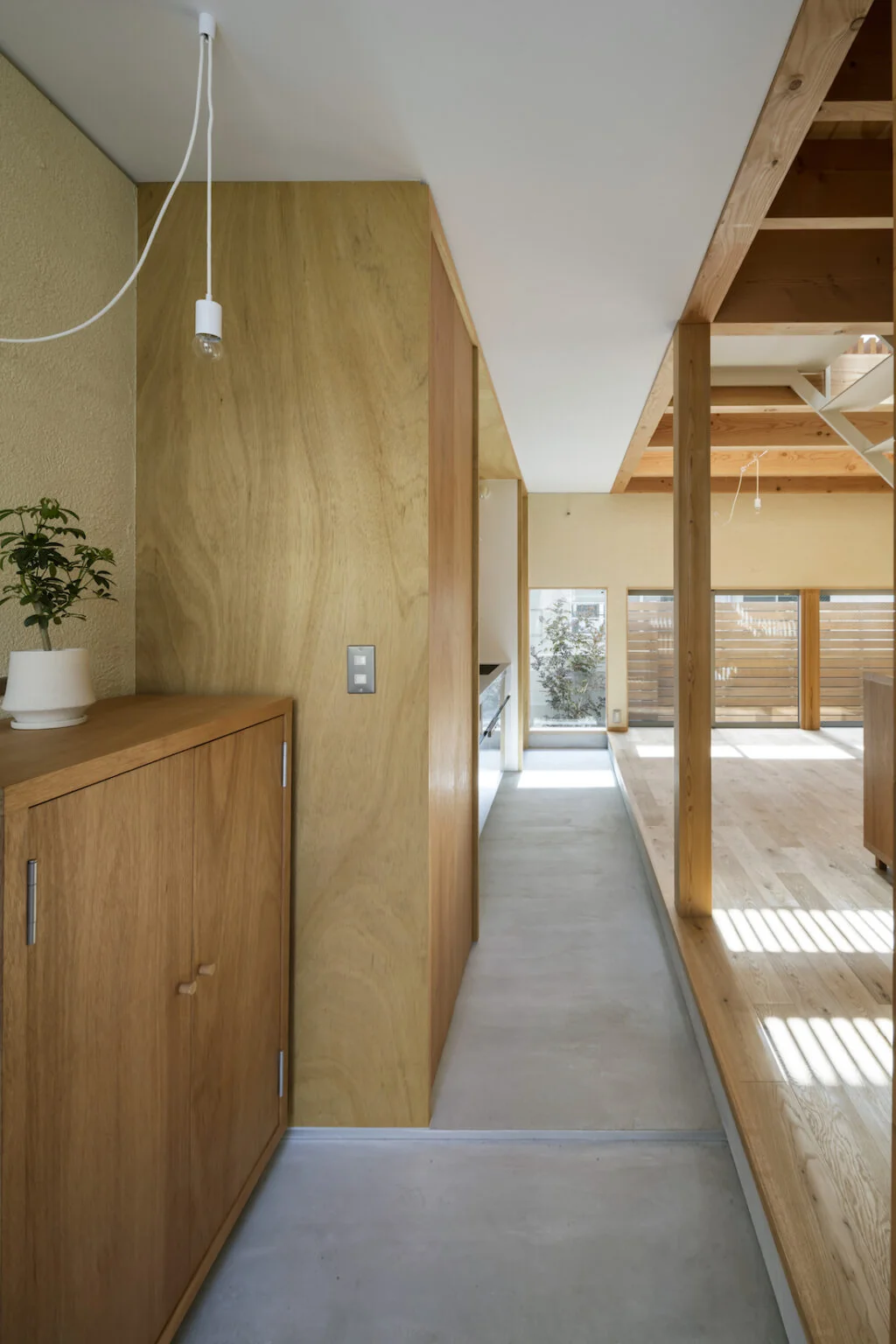
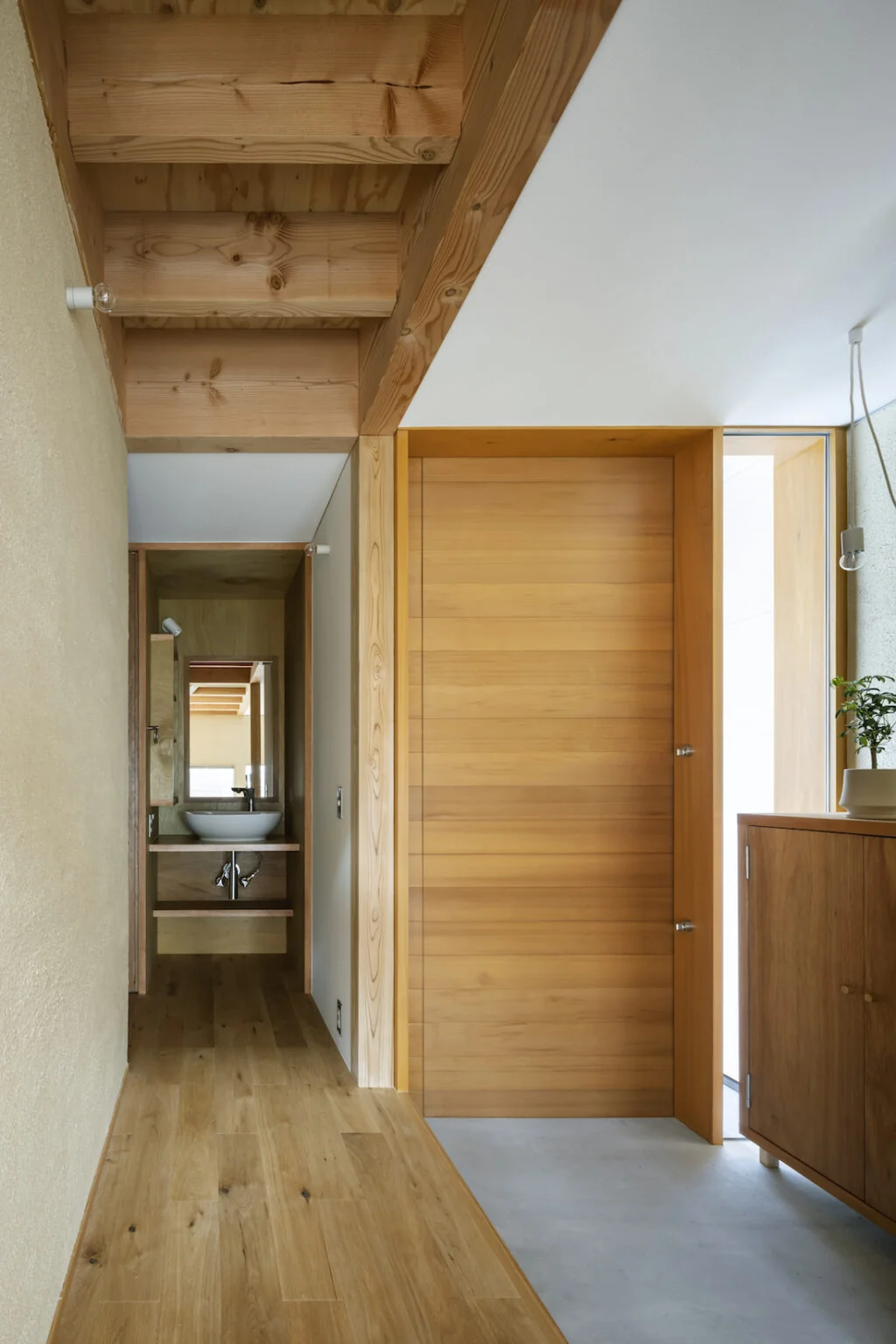
Due to the proximity of the building to the road, a transitional space was created in front of the entrance. This area serves multiple functions: a casual spot for neighborly conversations, a place where lighting expresses the presence of the inhabitants, and a fire safety barrier that allows the entrance door to be positioned outside the fire spread line, thereby serving as a fire wall that supports economical design. Expressing the site’s character further, a continuous earthen floor extends from the entrance through this transitional zone to the small garden, creating a visual and spatial connection that effectively draws the alleyway into the site’s interior.
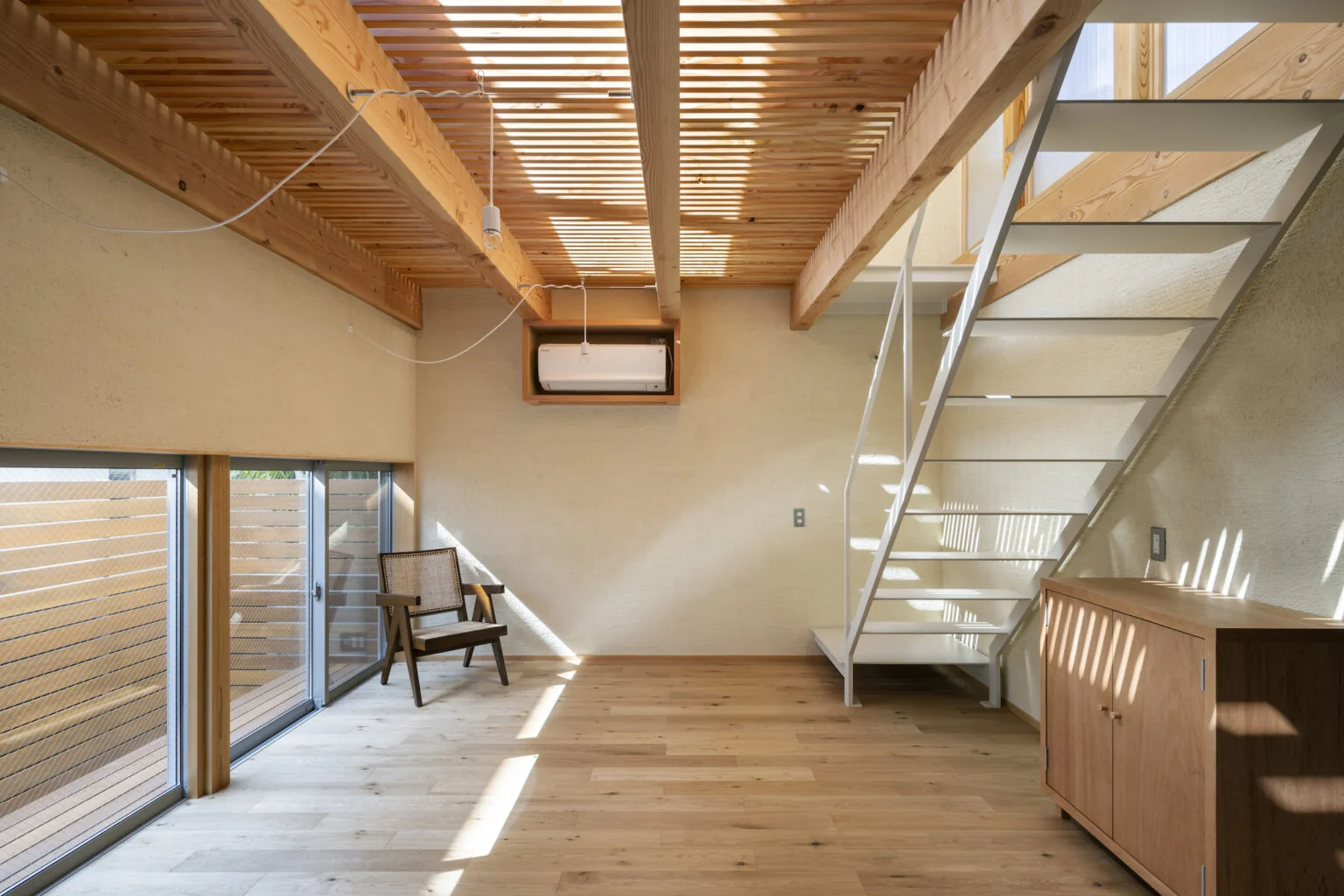
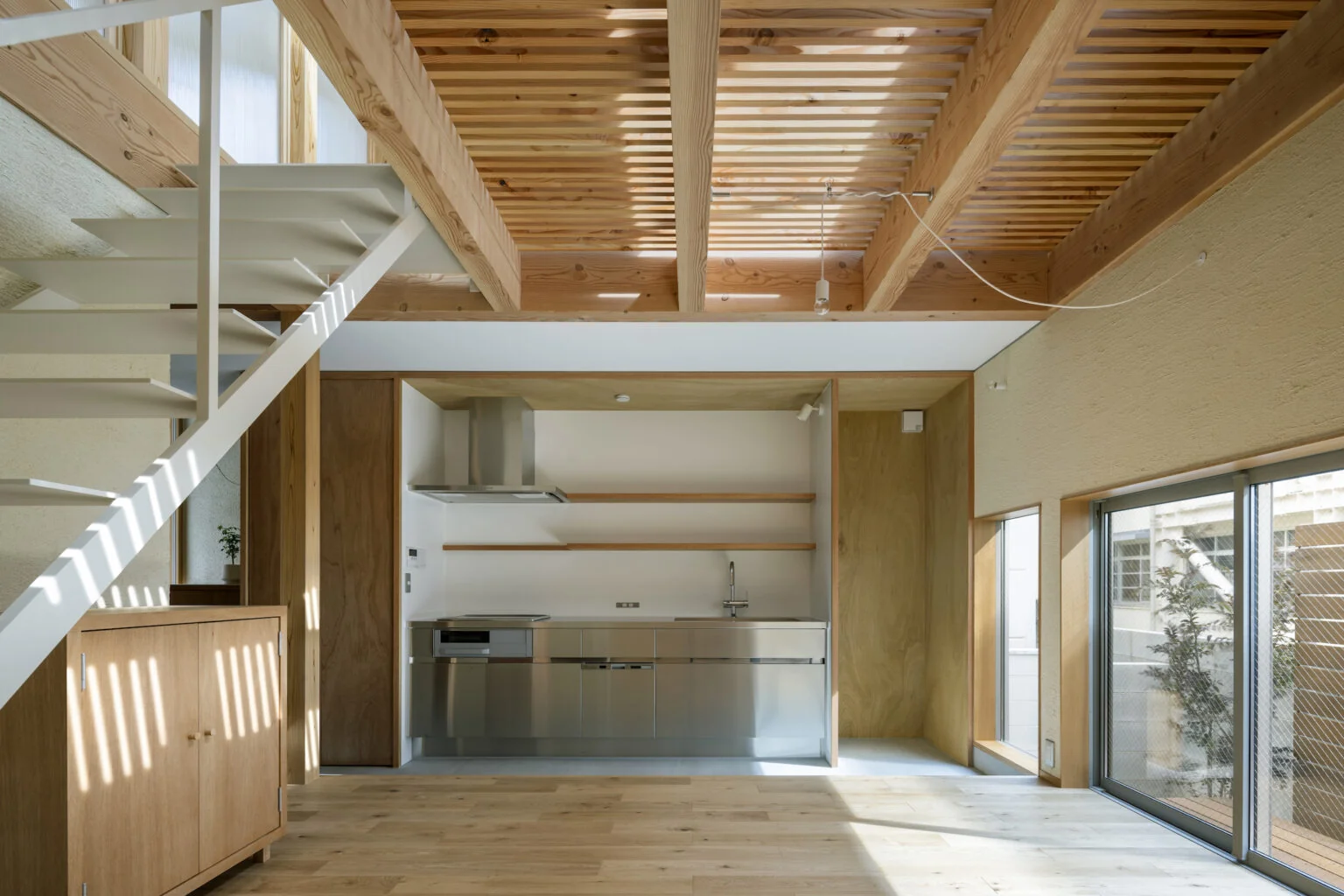
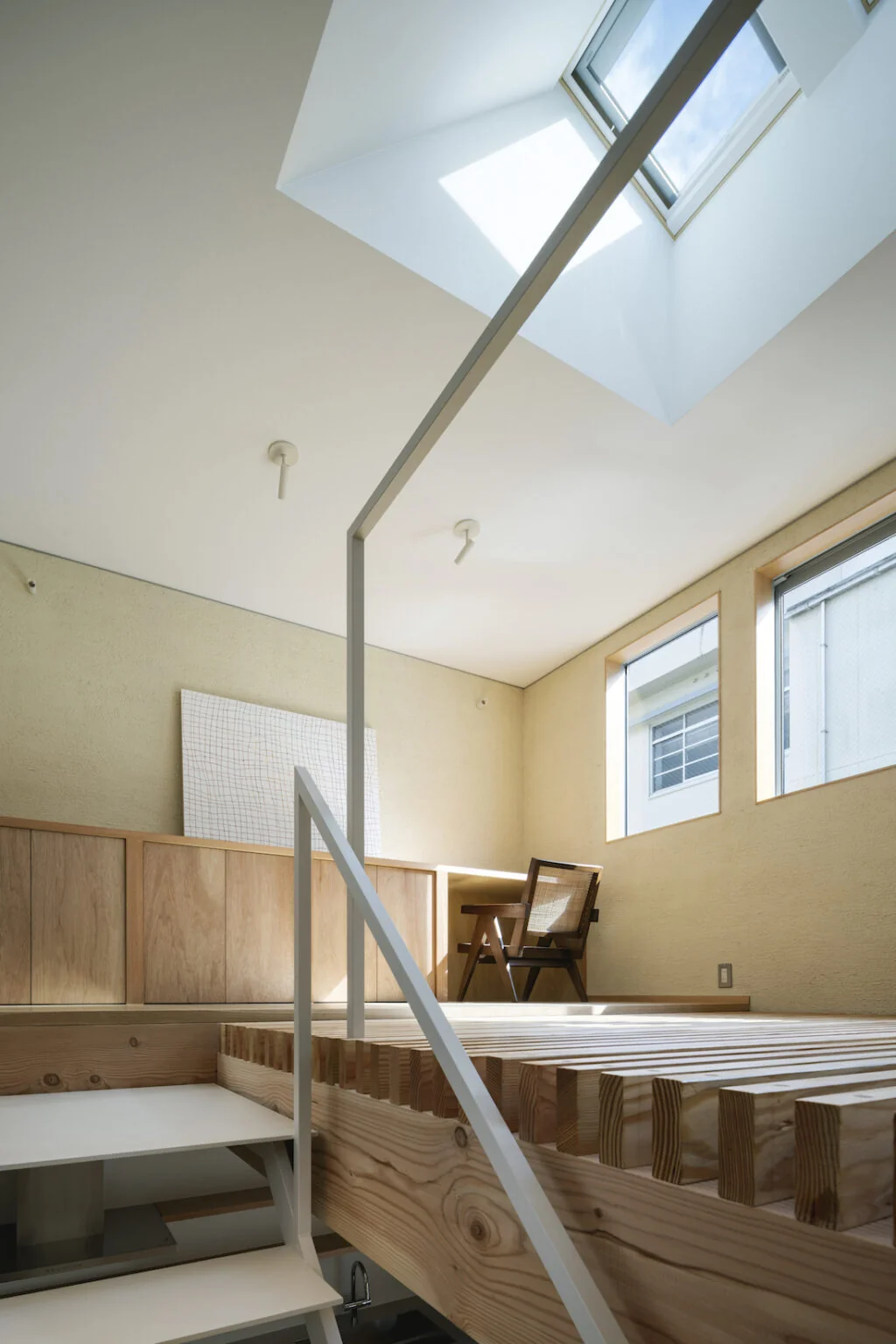
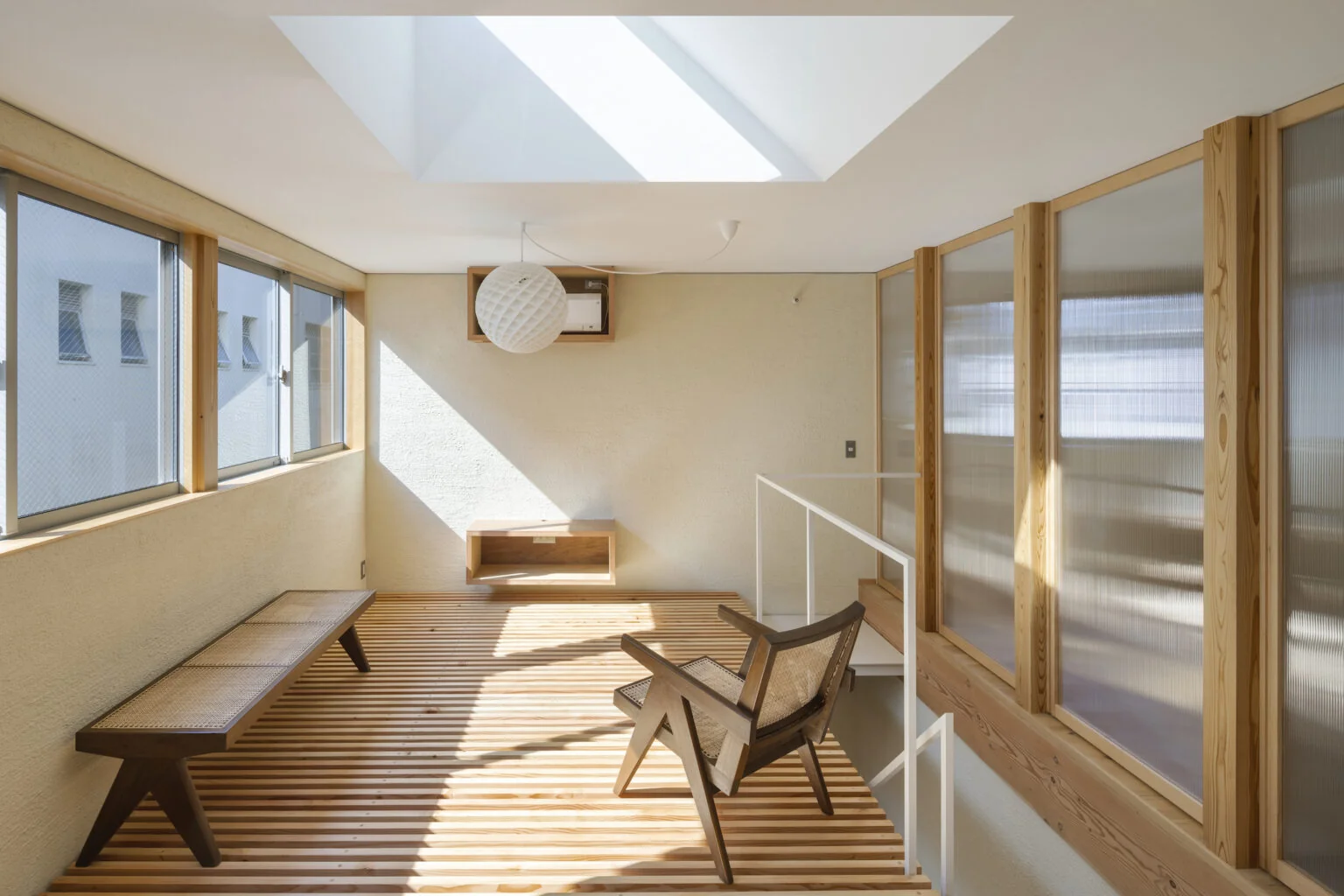
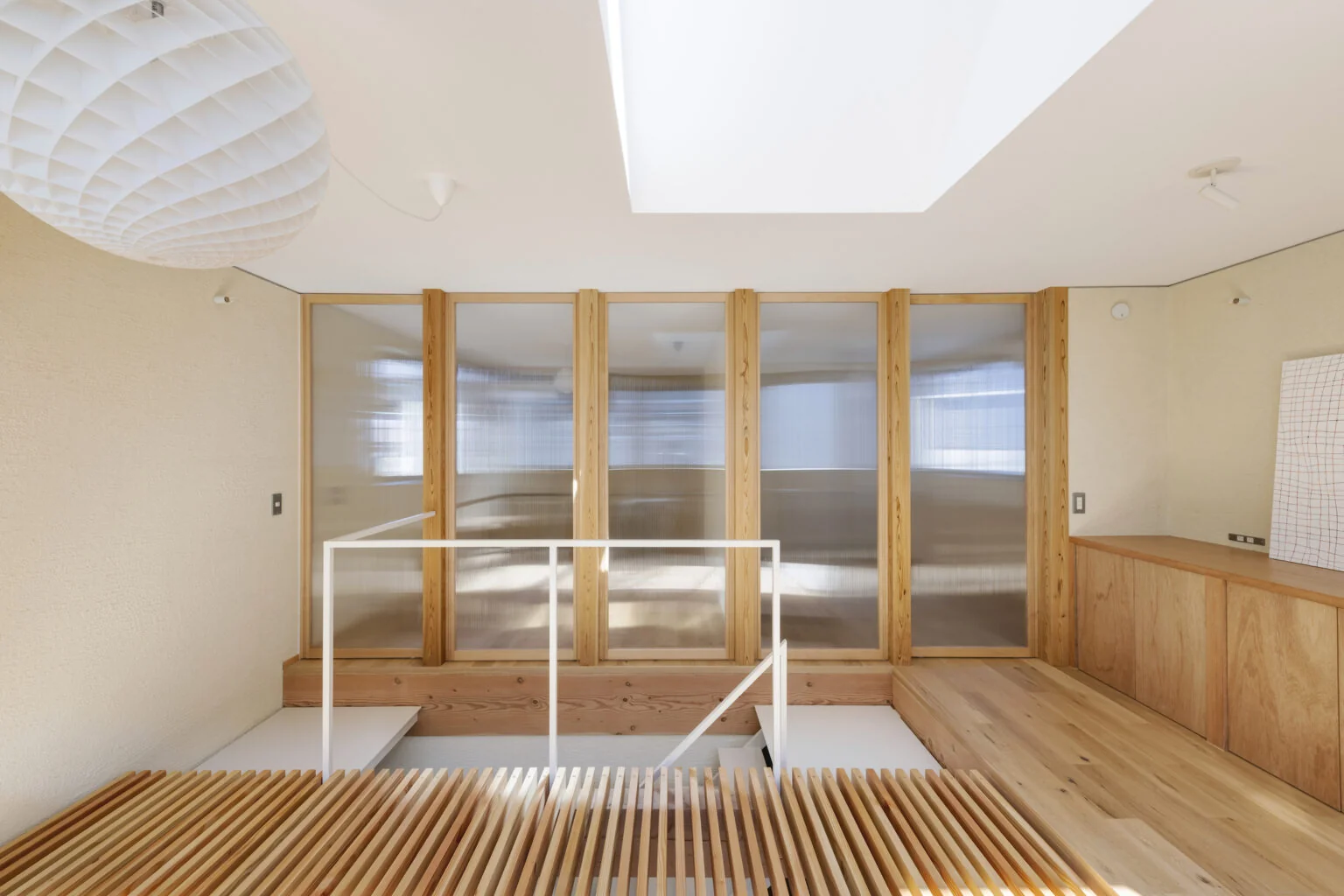
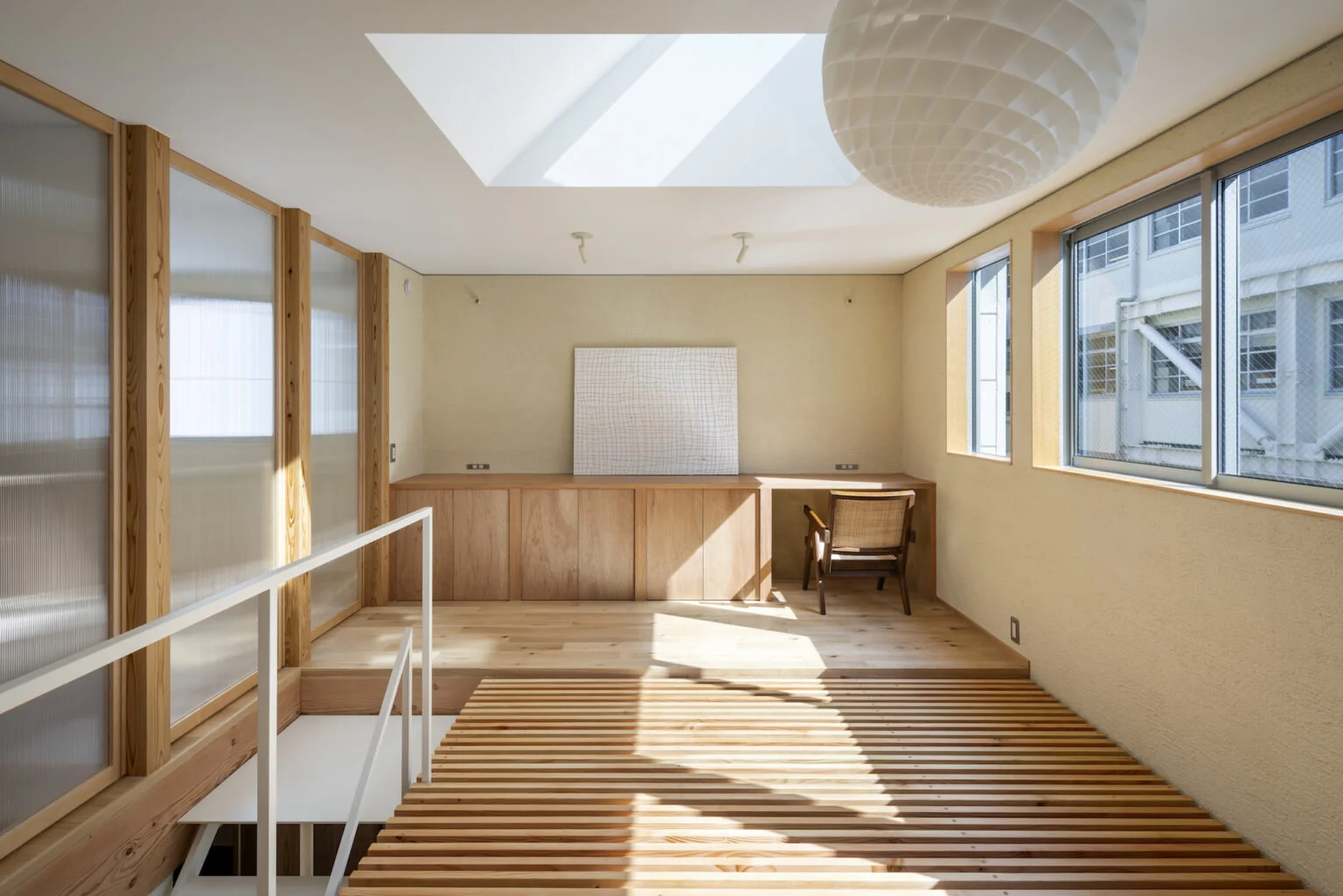
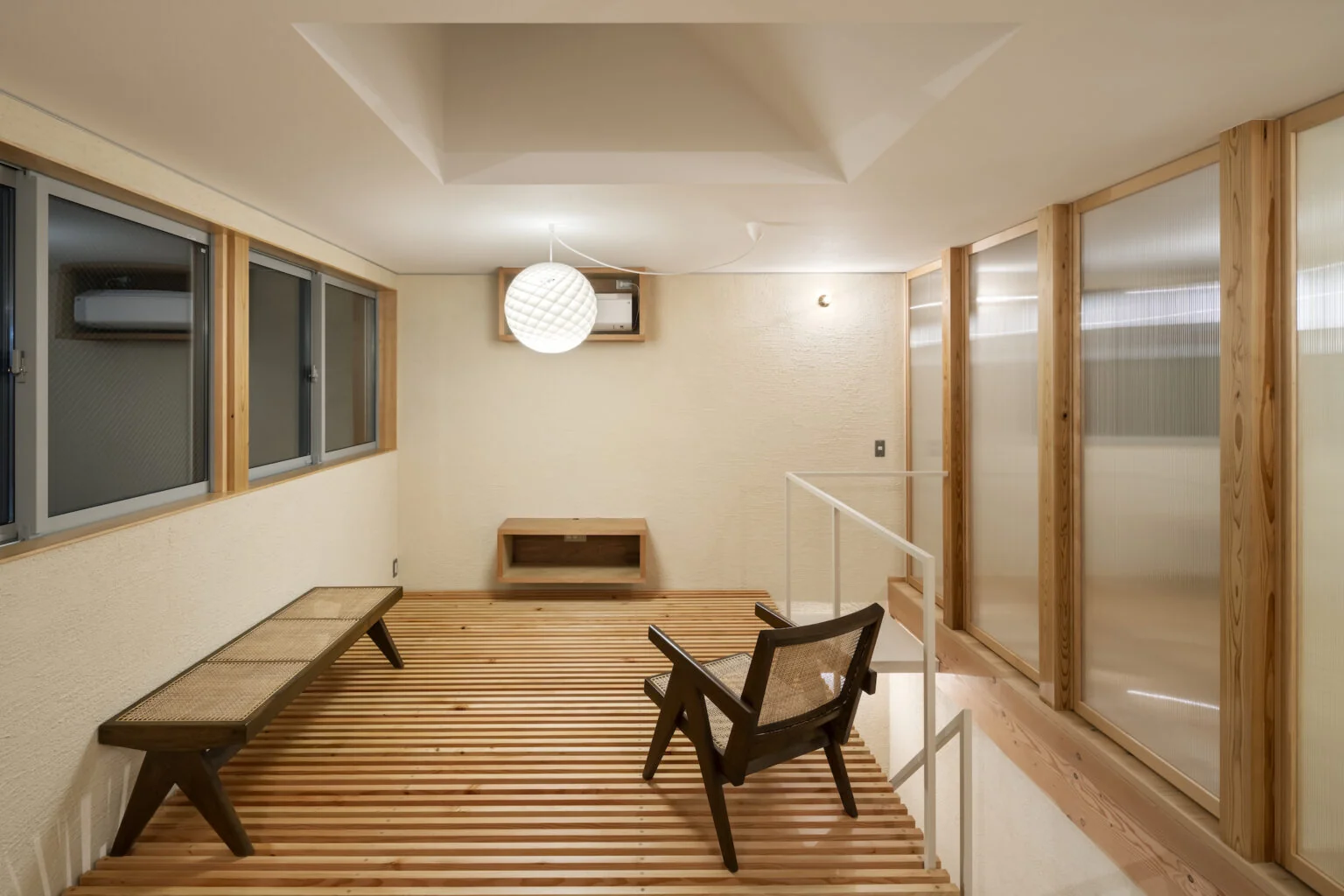
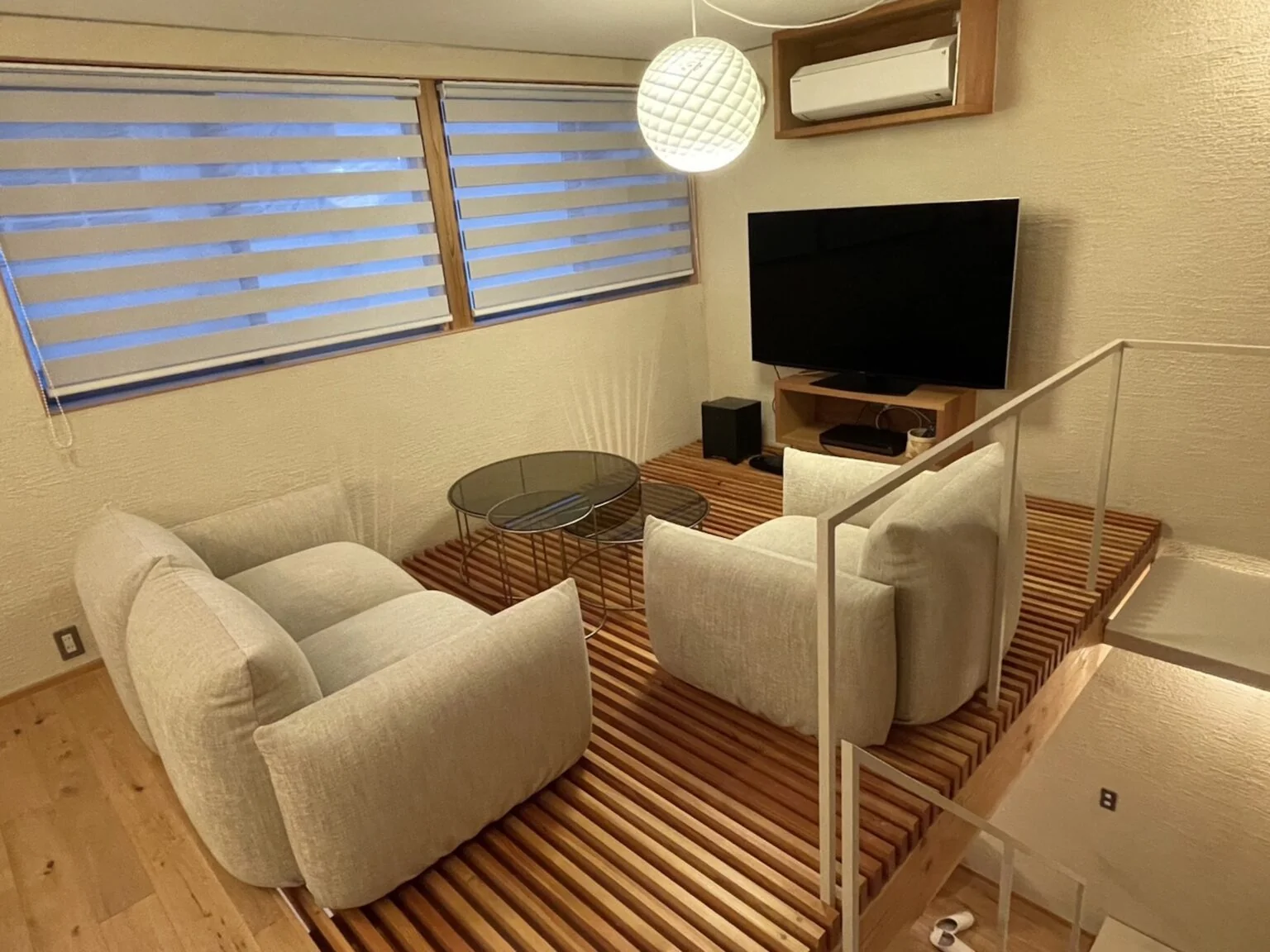
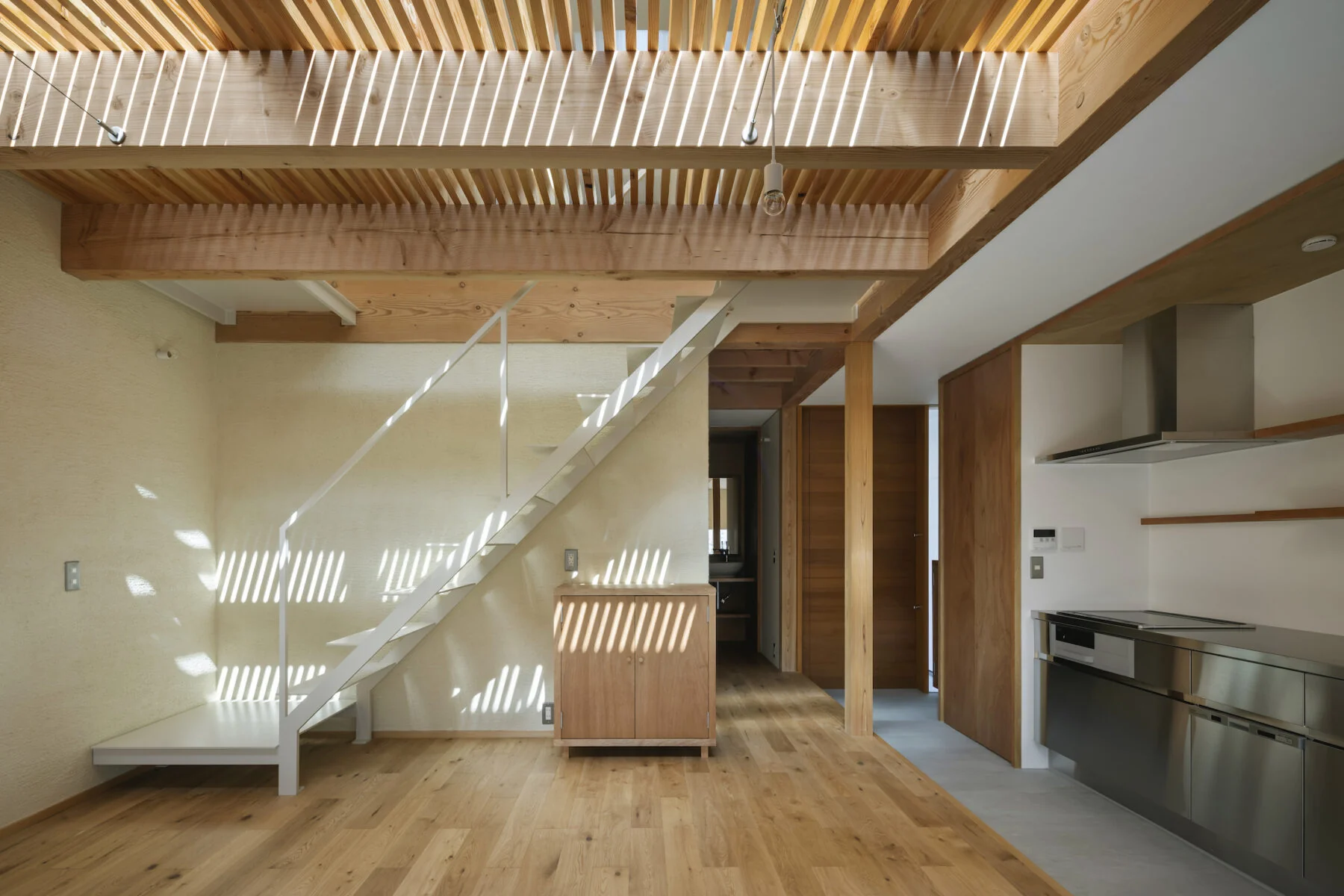
The house features four rooms with varying degrees of privacy and openness to accommodate different modes of living: individual bedrooms designed for retreat; a slightly enclosed living room that considers sightlines from the school; and a second living room that is the brightest and most open. Additionally, the living rooms are arranged over two levels, with the upper floor designed as a "light well." The floor is composed of louvered slats, allowing natural light to penetrate downwards while promoting passive ventilation.
The clients expressed their satisfaction with the comment, "It used to be a house where we only came home to sleep, but now it’s a home we want to return to quickly." Although the site environment was far from ideal, by embracing its unique conditions and striving for a healthy living environment, the project succeeded in creating a rich and comfortable home that, while not large, contains multiple distinct and welcoming living spaces. Location: Hyōgo Prefecture, Japan
Primary use: Residential
Structure: Wood-framed, two-storey
Builder: Hamauchi Construction
Furniture: ARTS & CRAFTS

The clients’ paramount request was for a "bright house."
The southern school building casts a shadow over the entire house throughout the winter days. The neighboring houses are densely constructed, and the previous home, which had been repeatedly extended to fill the entire plot, suffered from poor ventilation and was mostly shaded. Given the close proximity of surrounding structures, curtains were often drawn, resulting in a dim, oppressive living environment with limited air circulation.
This project faced greater constraints than typical compact sites due to its adjacency to the school building. The challenge was to realize a high-quality residential environment that ensures appropriate natural lighting, ventilation, and privacy—conditions that are fundamental to a healthy living environment—while supporting a rich and fulfilling lifestyle.
As a buffer space from the school, a generous margin was retained along the southern edge of the site, enclosed as a veranda and small garden. This space is connected to the interior through openings set at a height between a floor-level window and a full-height sliding door, akin to a crawl-through window. This design both softens the presence of the school building and creates a sense of openness and depth towards the exterior.
Due to the proximity of the building to the road, a transitional space was created in front of the entrance. This area serves multiple functions: a casual spot for neighborly conversations, a place where lighting expresses the presence of the inhabitants, and a fire safety barrier that allows the entrance door to be positioned outside the fire spread line, thereby serving as a fire wall that supports economical design. Expressing the site’s character further, a continuous earthen floor extends from the entrance through this transitional zone to the small garden, creating a visual and spatial connection that effectively draws the alleyway into the site’s interior.
The house features four rooms with varying degrees of privacy and openness to accommodate different modes of living: individual bedrooms designed for retreat; a slightly enclosed living room that considers sightlines from the school; and a second living room that is the brightest and most open. Additionally, the living rooms are arranged over two levels, with the upper floor designed as a "light well." The floor is composed of louvered slats, allowing natural light to penetrate downwards while promoting passive ventilation.
The clients expressed their satisfaction with the comment, "It used to be a house where we only came home to sleep, but now it’s a home we want to return to quickly." Although the site environment was far from ideal, by embracing its unique conditions and striving for a healthy living environment, the project succeeded in creating a rich and comfortable home that, while not large, contains multiple distinct and welcoming living spaces. Location: Hyōgo Prefecture, Japan
Primary use: Residential
Structure: Wood-framed, two-storey
Builder: Hamauchi Construction
Furniture: ARTS & CRAFTS
- Copyright(C)Qurasuki.All Rights Reserved.