Introducing A Small House for Open Living in the Gap Between Buildings | Kigawa Row House, a custom-built home example by Yoshihiro Yamamoto Architects Associates, a Architect / Design office in 302, Zeniya Honpo Main Building, 14-6 Ishigatsujichō, Tennōji-ku, Osaka

A small house offering open living amid the gaps between buildings.
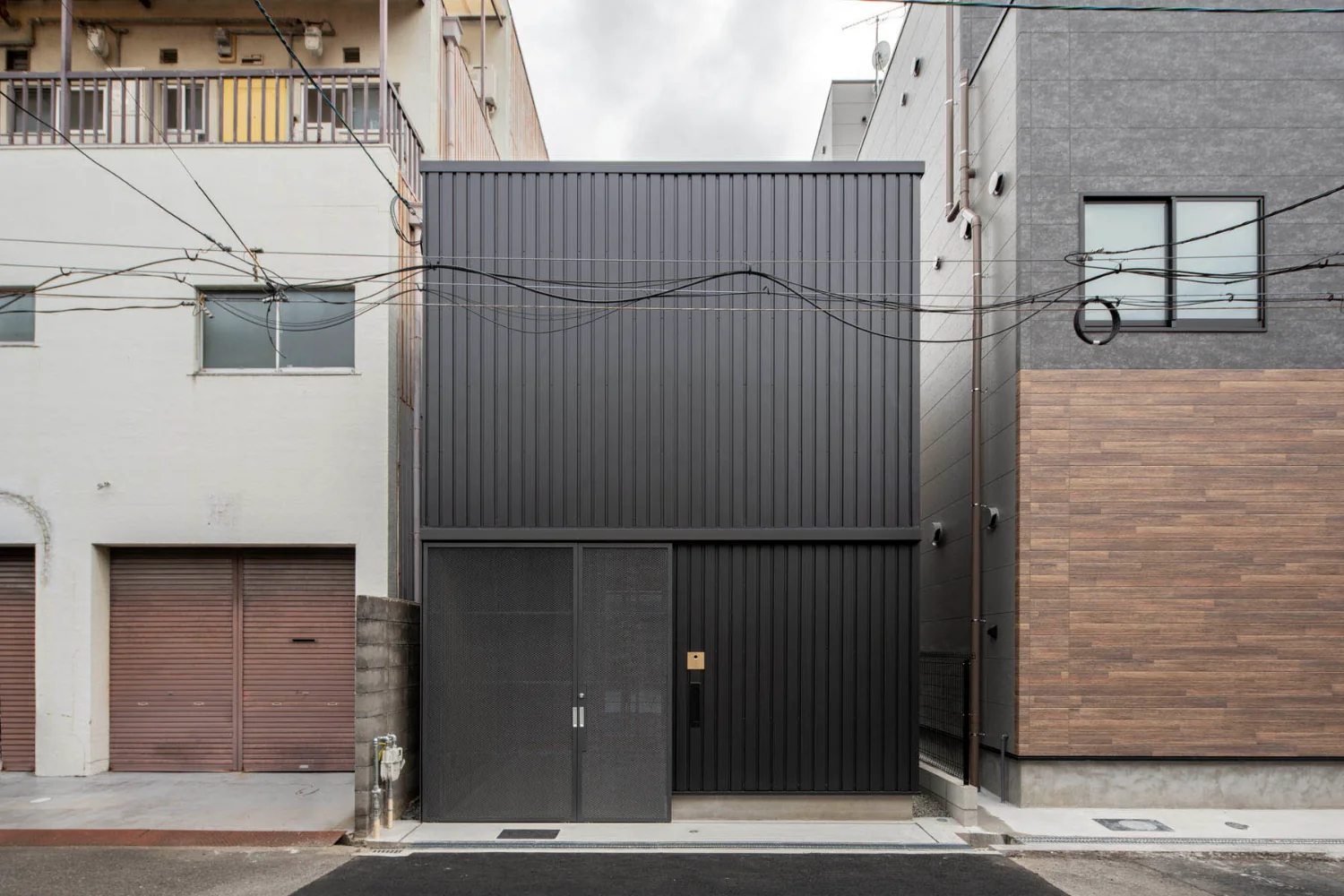
A plan to demolish and rebuild the single dwelling that remained in the gap between larger buildings.
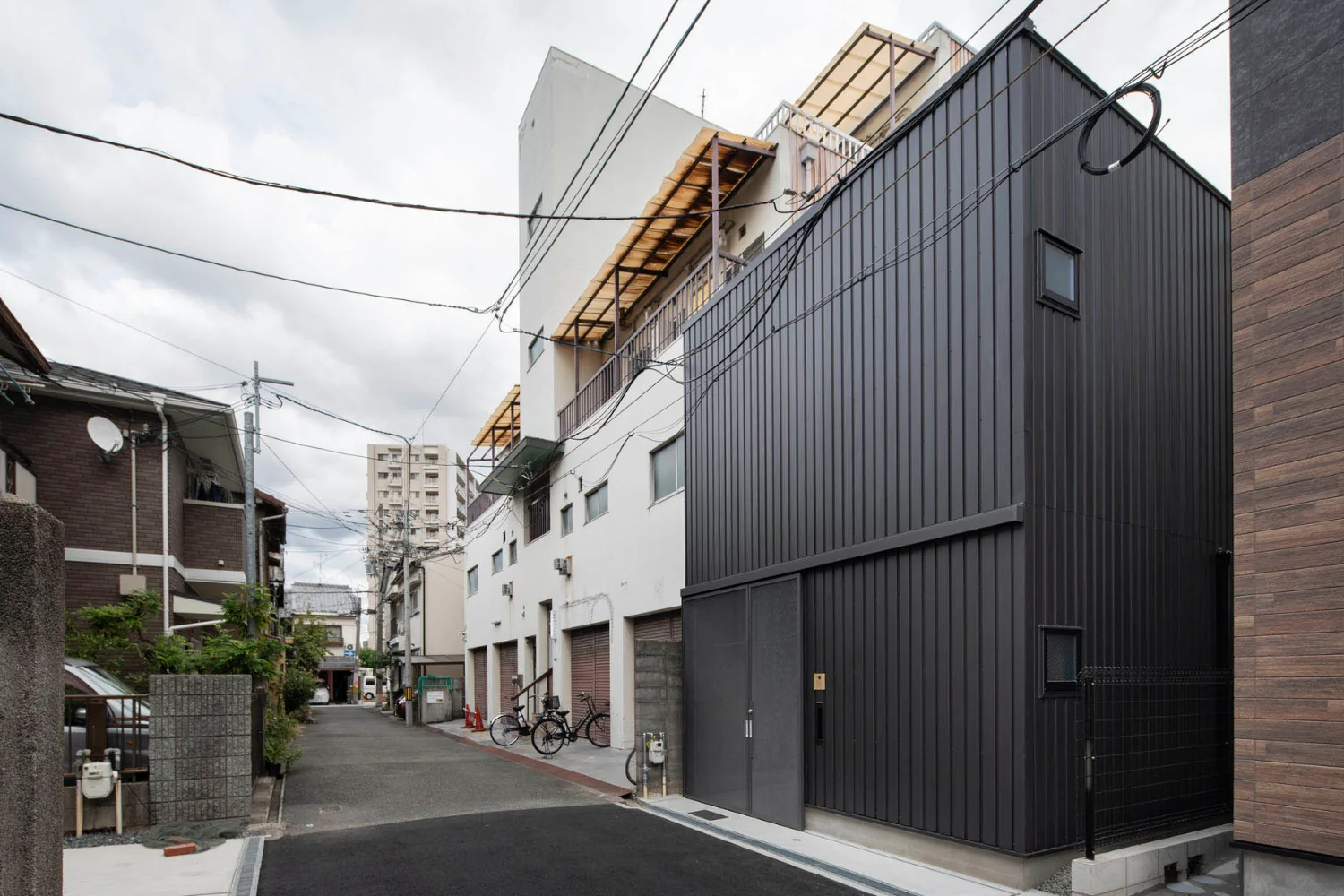
Exterior walls are clad in ribbed Galvalume steel, referencing materials and construction methods commonly found in the neighborhood.
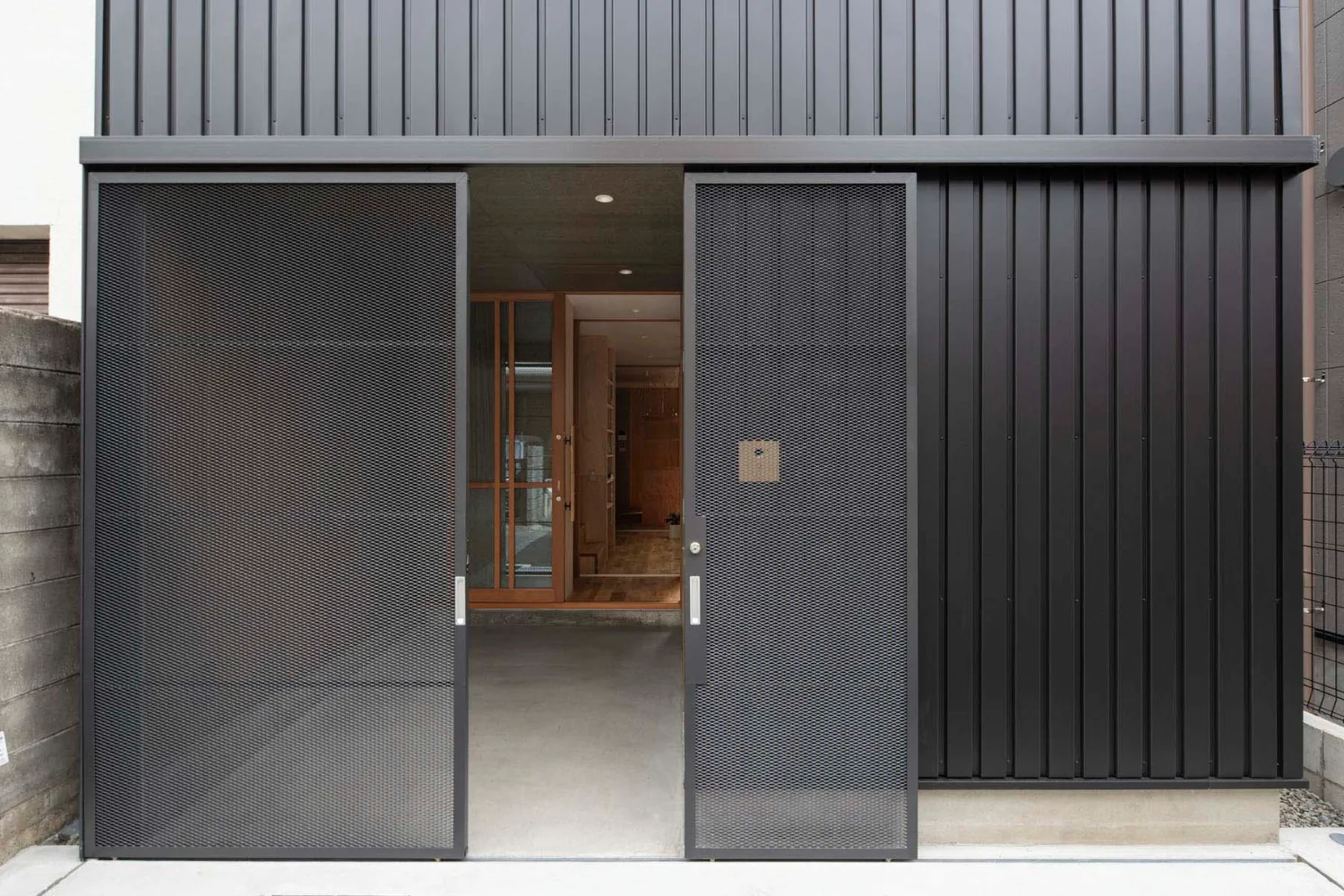
Slim expanded-metal paired suspended doors.
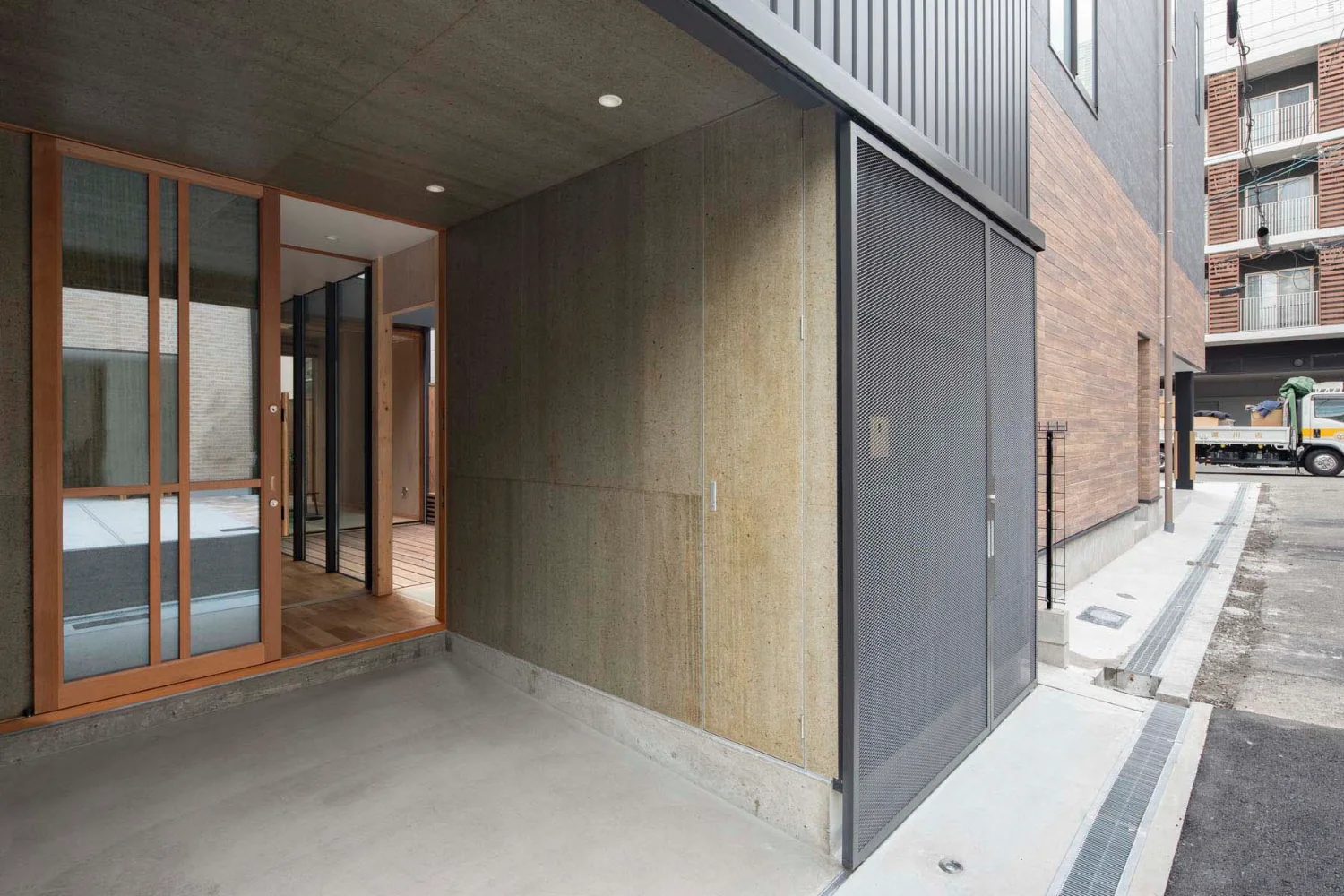
Suspended doors fully opened.
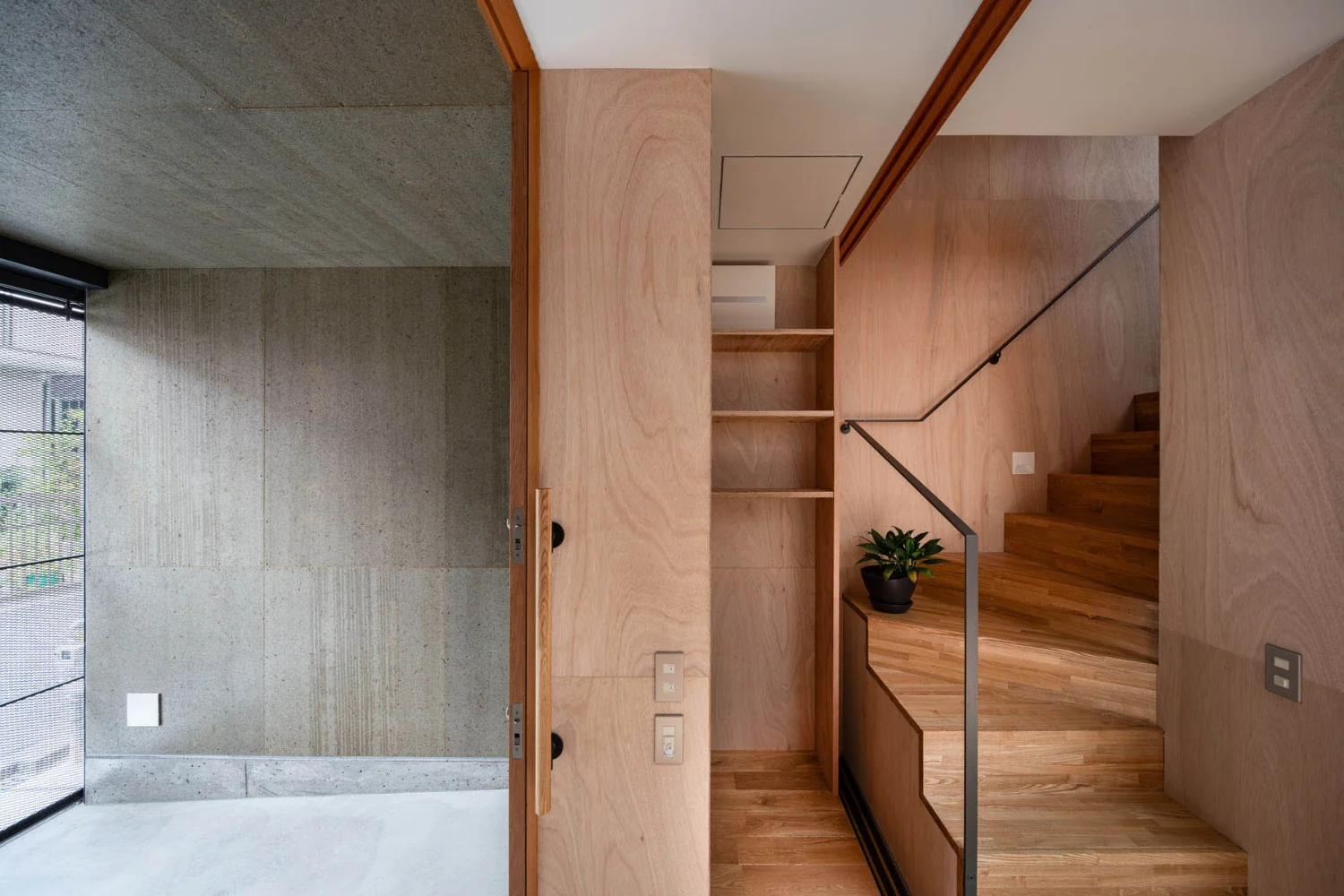
The doma's walls and ceiling are clear-coated cement board.
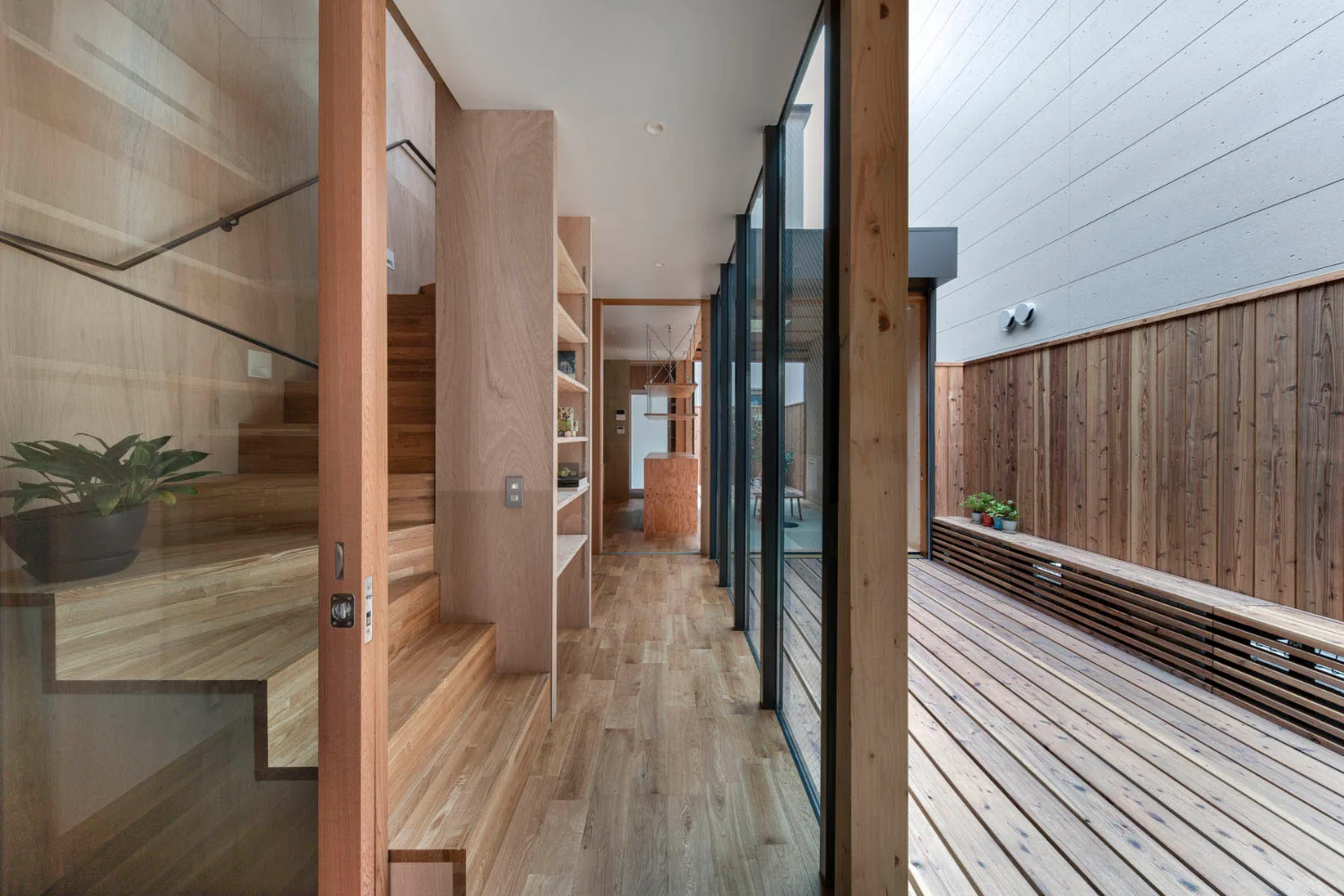
The engawa bench also serves as an enclosure for the air-conditioning outdoor unit.
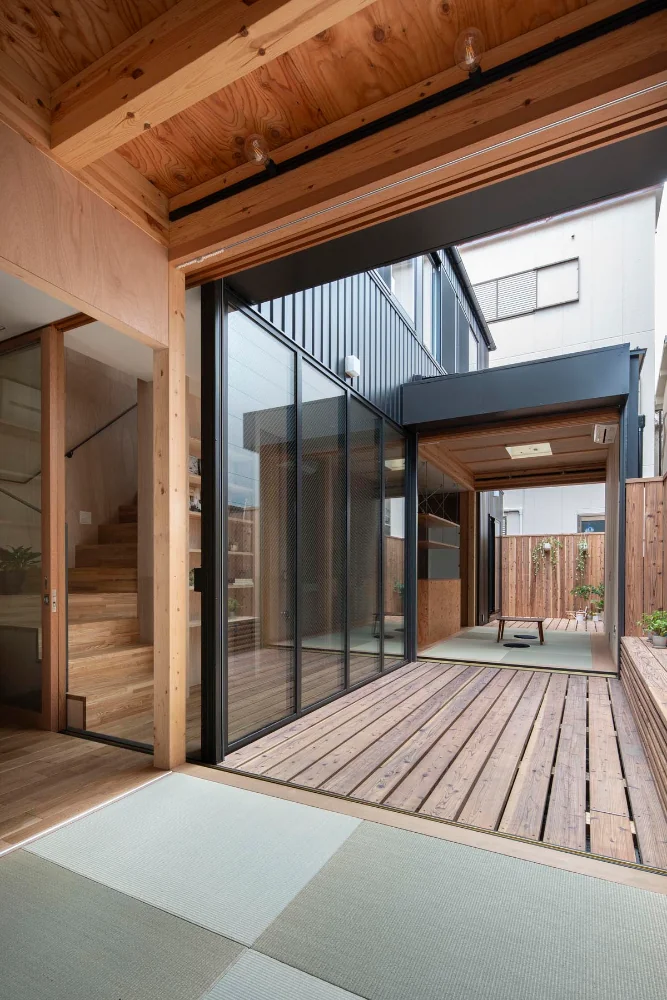
The spatial sequence connecting the mother's bedroom, Engawa 1, the living room, and Engawa 2.
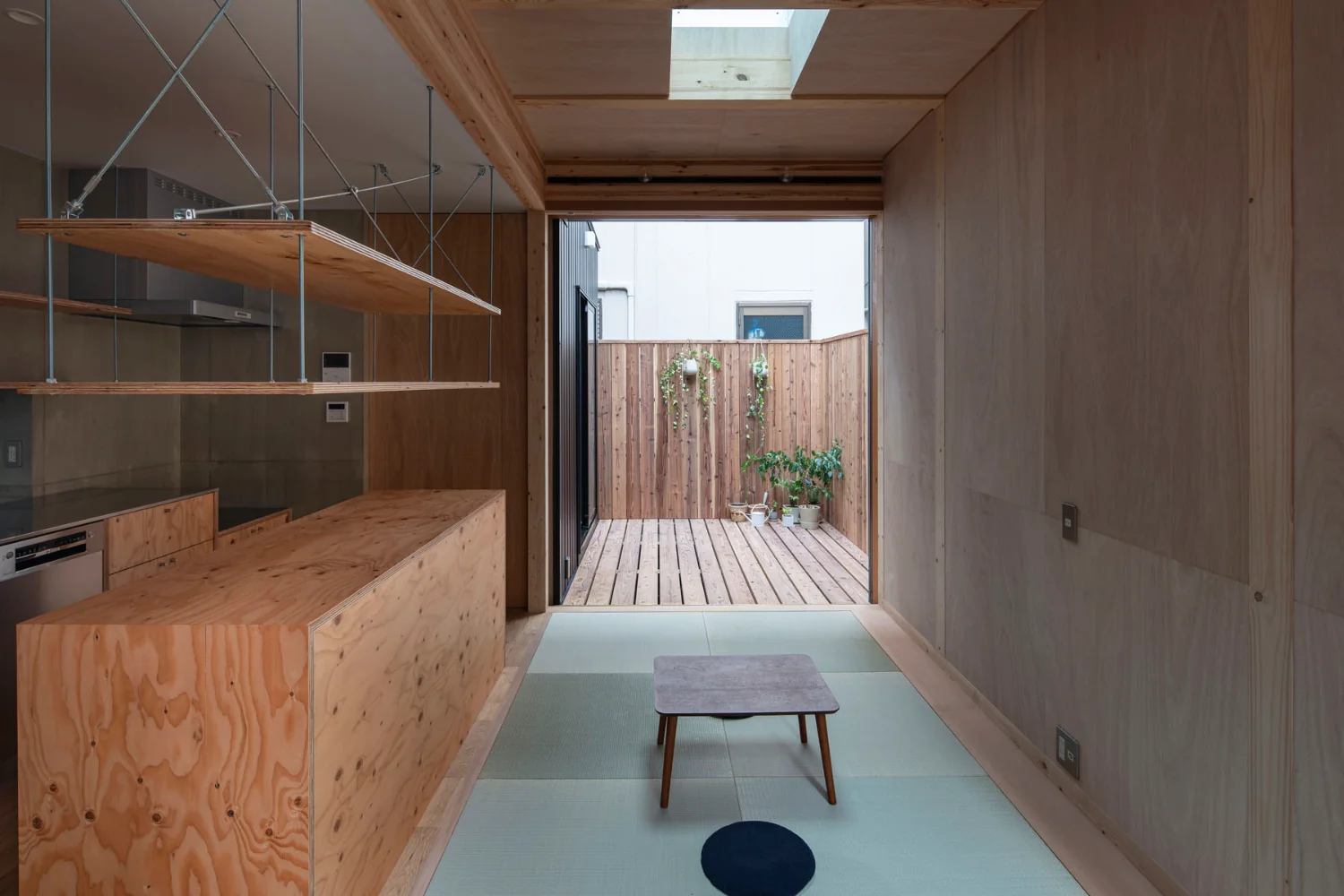
The compact living room has an increased ceiling height and a skylight to prevent a cramped feeling.
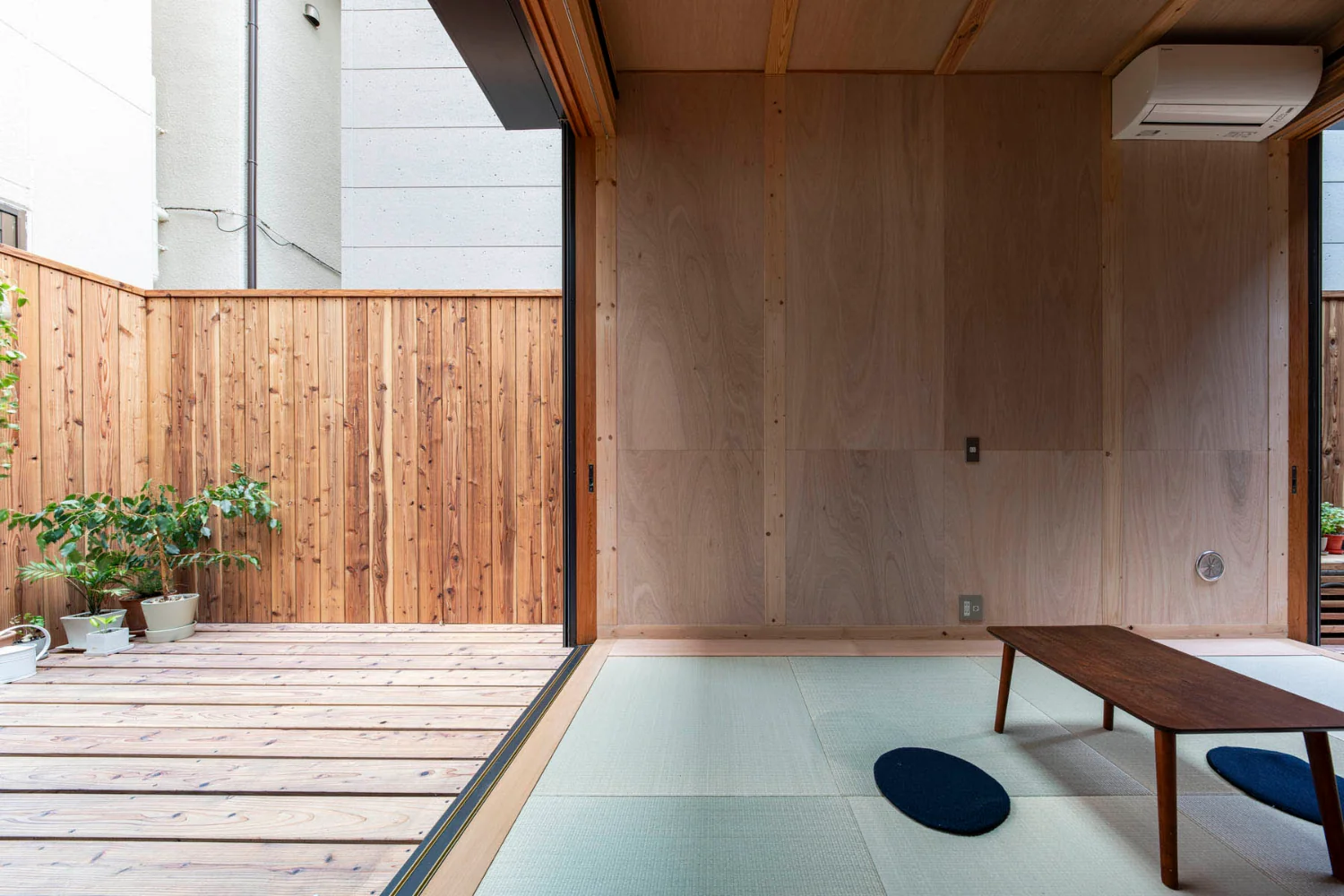
The living room and engawa connect almost flush, on nearly the same level.
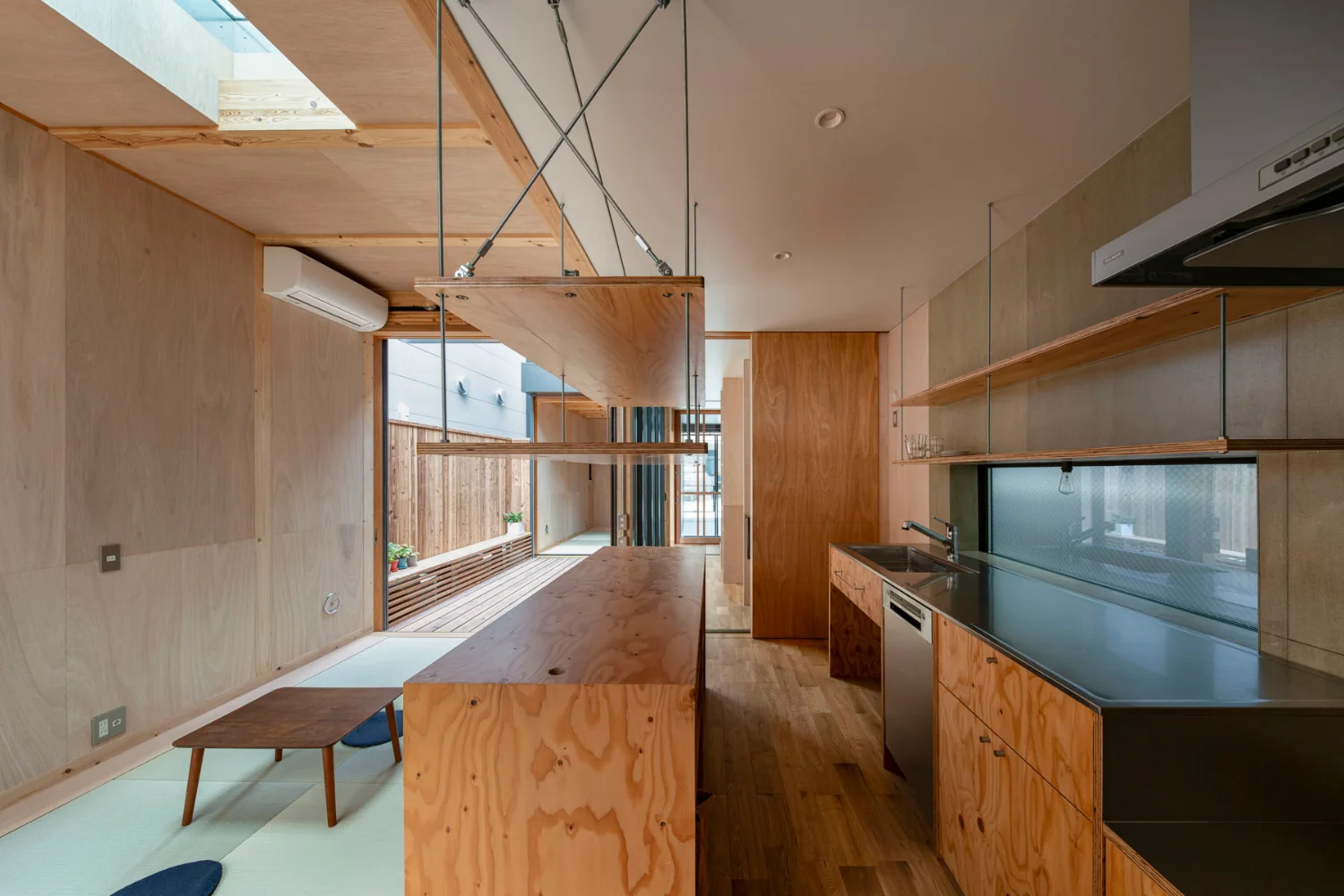
An interior reduced to only what is truly necessary for the occupants.
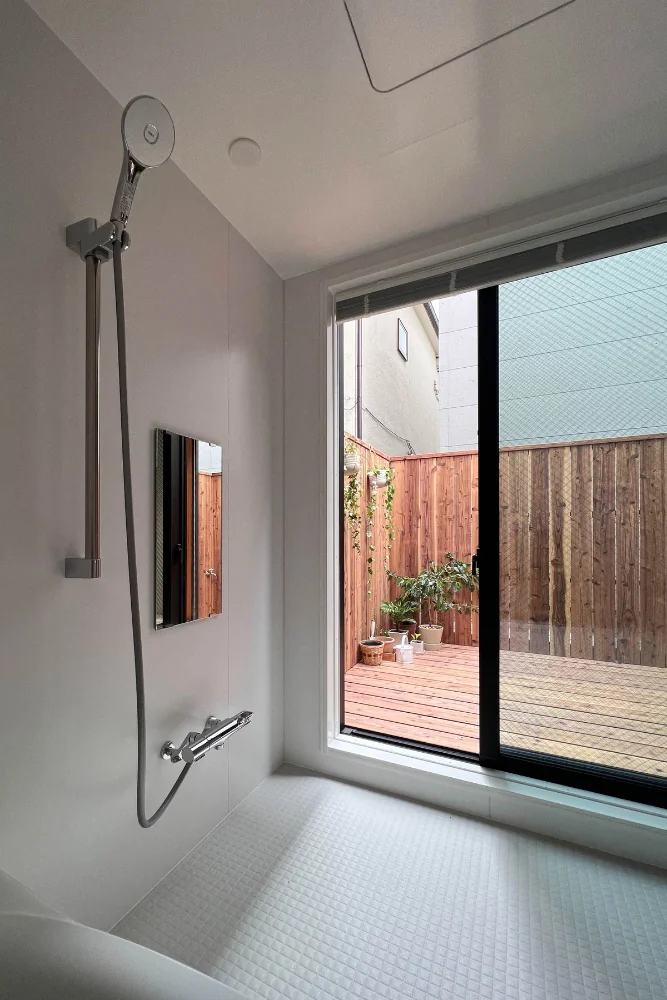
The bathroom is a generous 1620 size (approximately 1.6 × 2.0 m) and links to the engawa via a full-height sliding window.
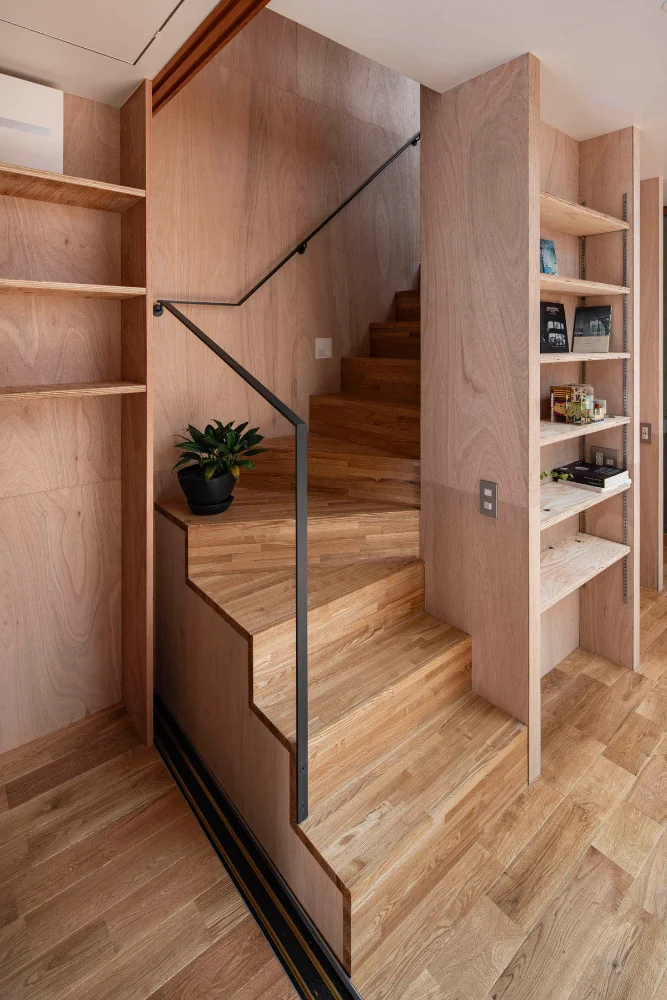
A compact winding staircase. The handrail is a slender steel flat bar.
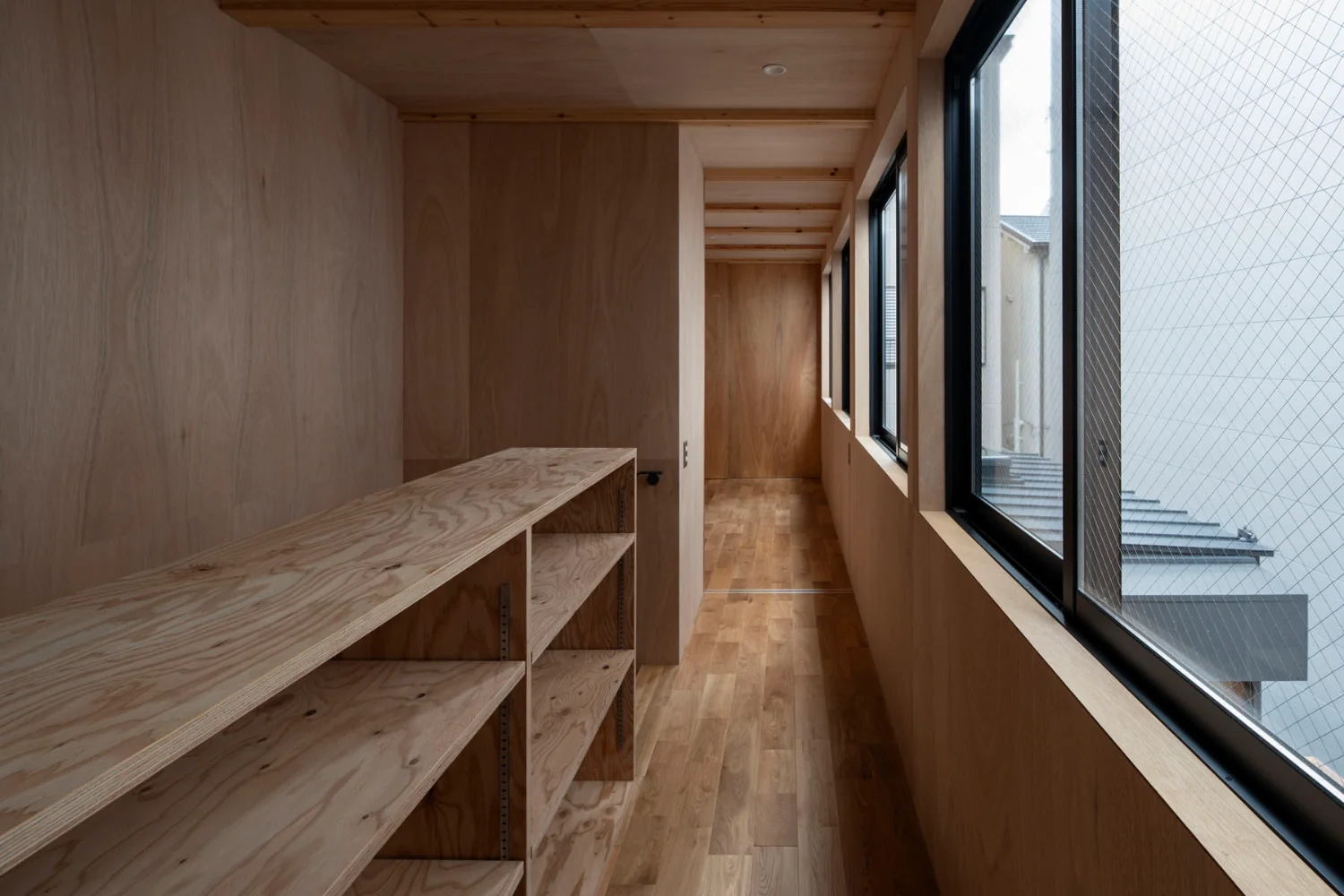
The second floor accommodates the son's room, a guest room, and storage within a minimal volume.
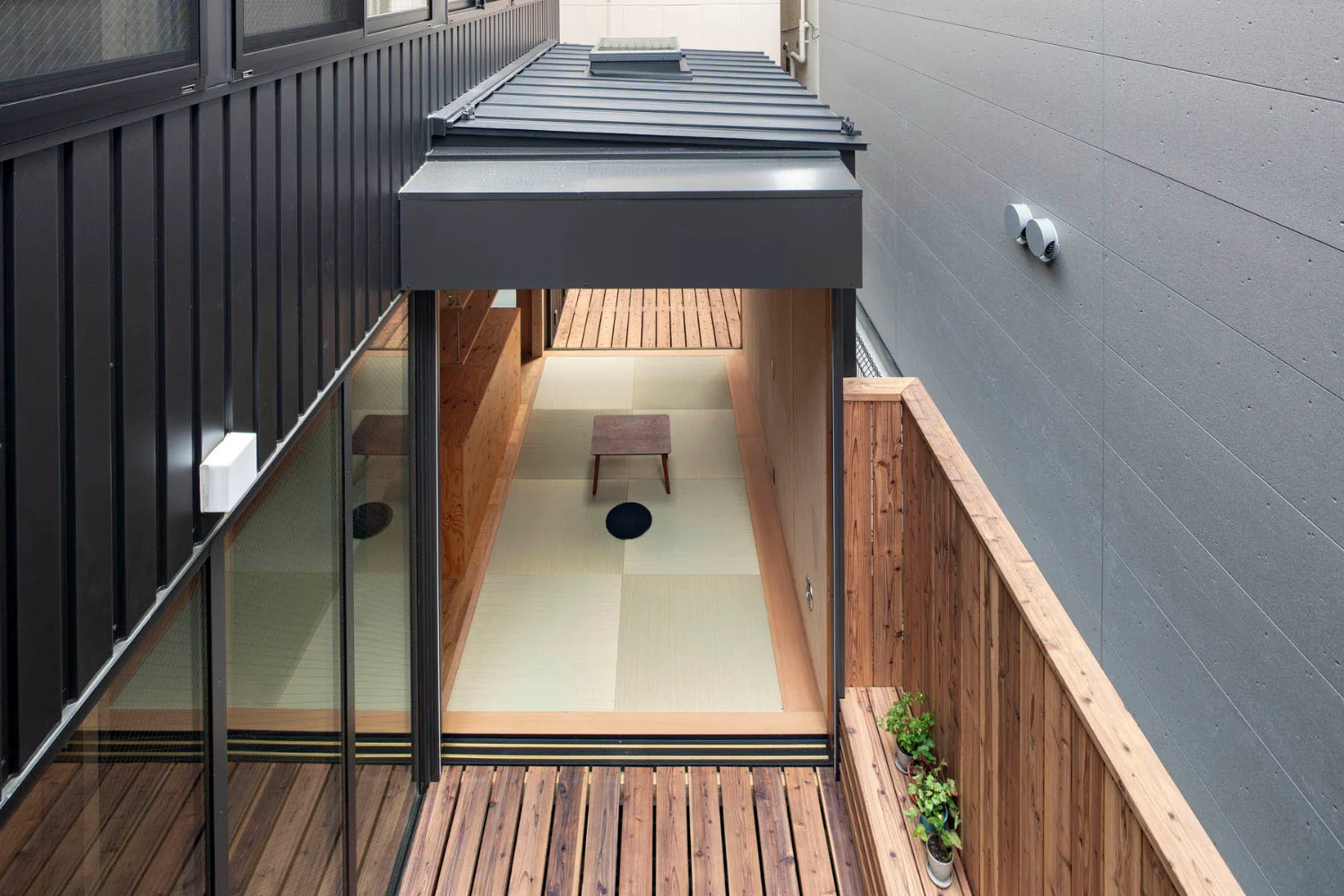
View looking down from the son's room. With the living room opened up, it takes on a pavilion-like character.
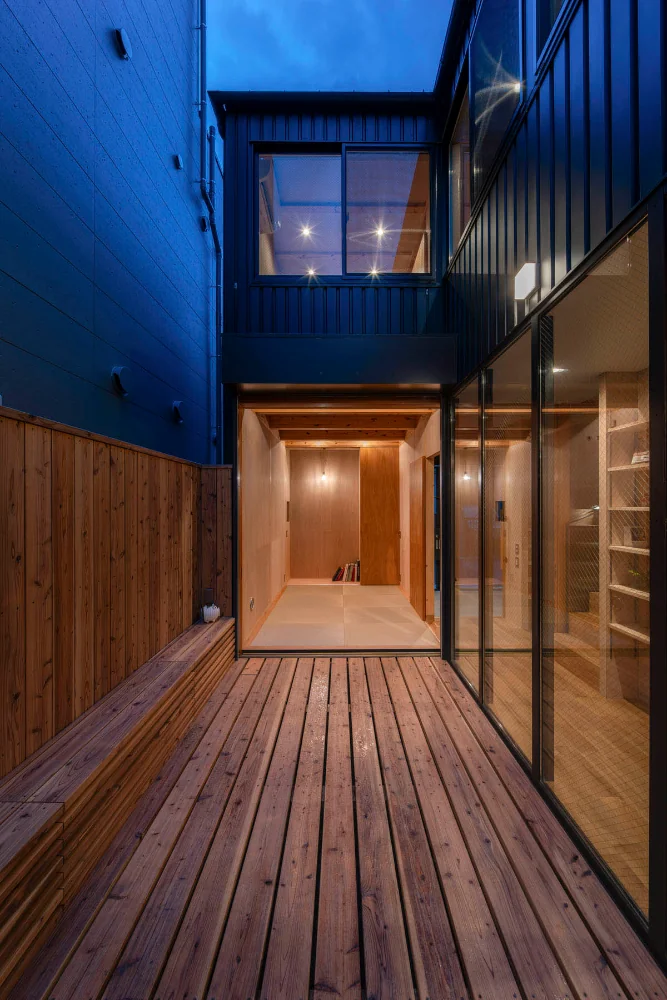
A tarp is planned to be installed above the engawa in the future.
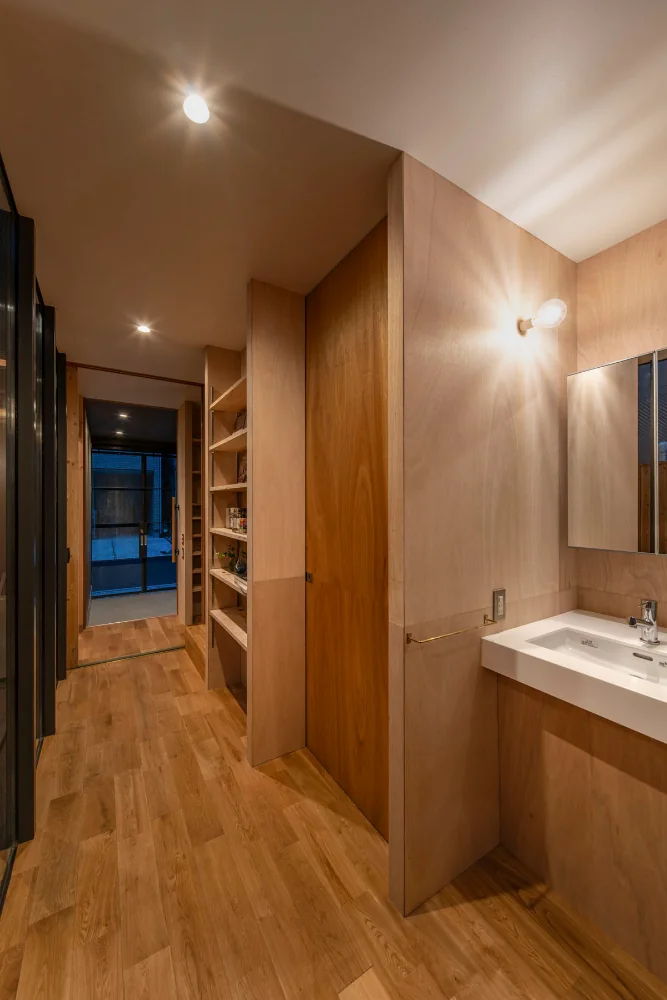
The washbasin and toilet are compactly consolidated under the stairs.
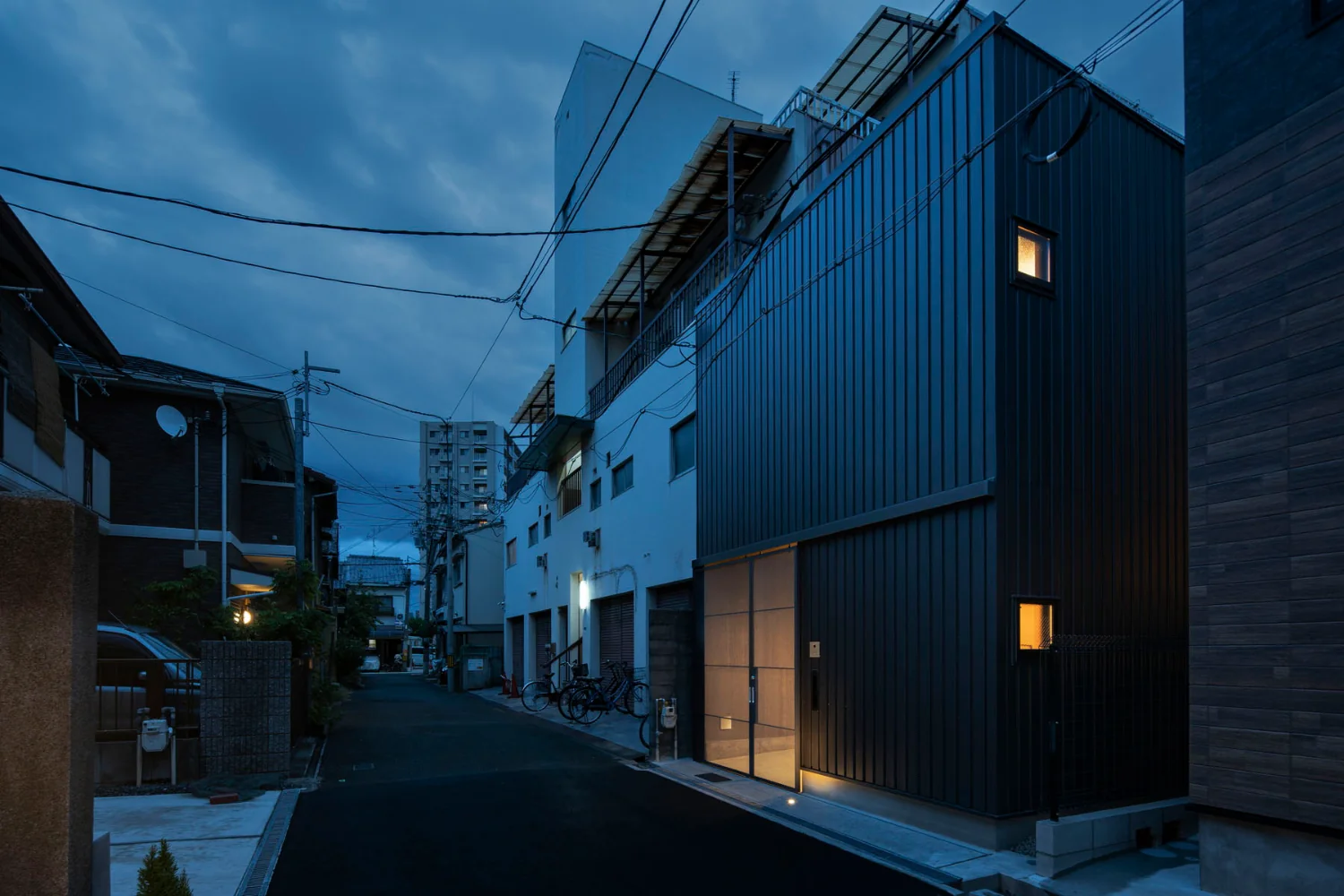
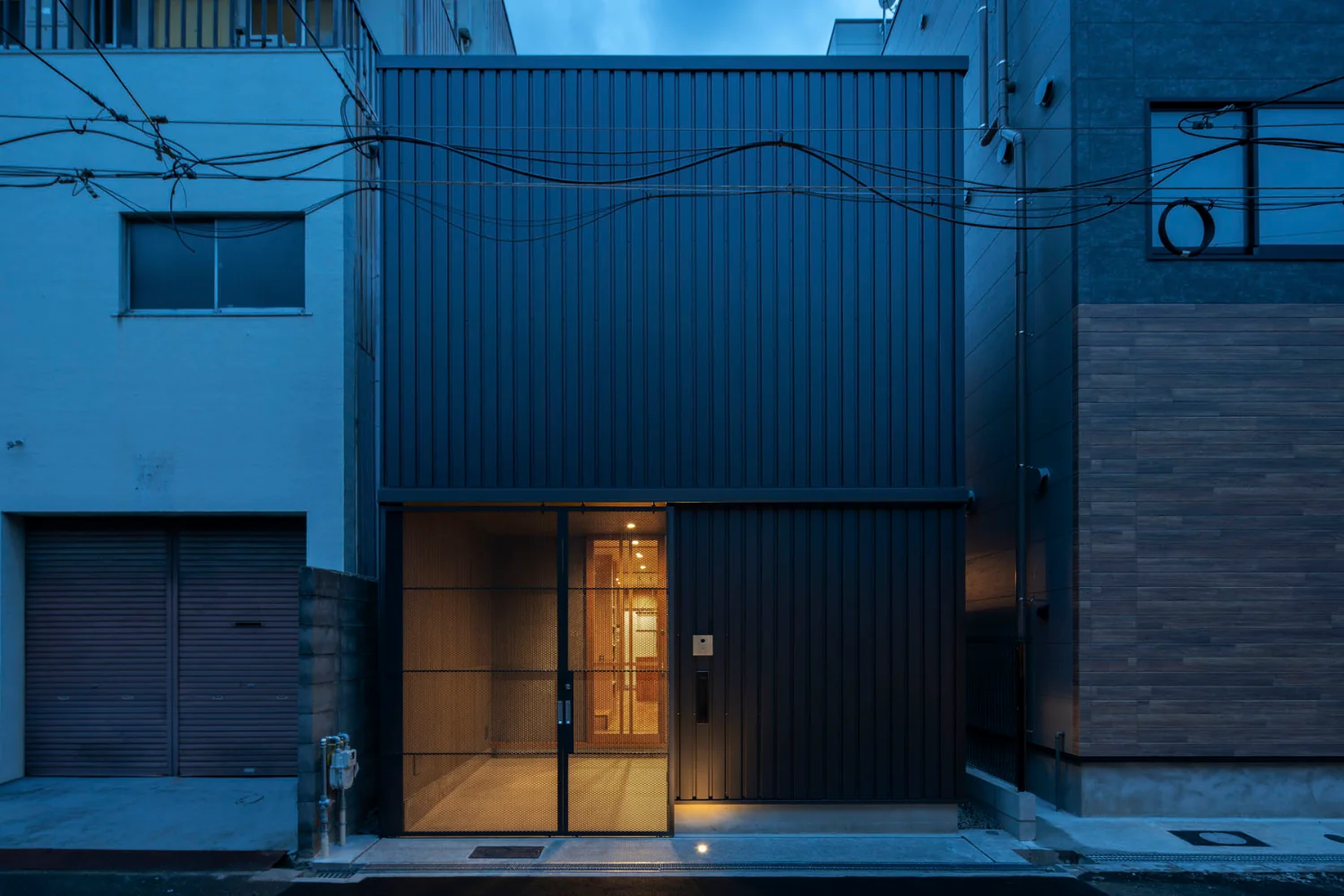
Exterior at dusk. Because suspended doors run along the façade, the entry light is specified as an uplight.
Wood Deck
Iron Details
Exposed Beam
Engawa
Bike Garage
Toplight
Industrial
Simple Life
Wood Texture
Large Opening
Urban housing
Interior-exterior integration
Galvalume steel cladding
Tatami mats
Softwood plywood
Keishiro Yamada
Learn More
Yodogawa Ward, Osaka. Amid an urban fabric of large condominium and office buildings alongside small-to-medium detached houses and shops—an environment convenient for transport yet challenging for securing daylight and privacy—a single dwelling that remained from a prewar row-house block stood in the gap between larger buildings. The project replaces that house with a complete rebuild. The long, narrow rectangular site was divided into a 2 × 4 grid—eight units in total—each roughly the size of 4.5 tatami mats. Program elements were allocated as three principal 'spaces'—a doma (entry/garage room), the mother's bedroom, and the parent-child living room—together with two broad engawa (veranda-like circulation spaces), a kitchen, a bathroom, and a sanitary area. These were arranged with attention to efficient circulation, cross-ventilation, daylighting, and privacy. The spaces are connected or separated by the opening and closing of doors (referred to as 'mado' or room-doors) tailored to each frontage; these 'mado' support daily life by acting as discrete thresholds that switch on or off the spatial relationships the moment a certain limit is crossed, avoiding ambiguous intermediate buffer zones.
Household composition: One male occupant and his mother. Structural system/scale: Two-story timber construction. Use: Detached single-family residence. Site area: 22 tsubo (73 m²). Gross floor area: 23 tsubo (81 m²). Construction floor area: 25 tsubo (110 m²). Design and supervision: Yoshihiro Yamamoto and Minami Ohtake [yyaa]. Construction: [Sunfield Architectural Workshop]. Steel door: [Tokuzawa Ironworks]. Nameplate hardware: [bowlpond].
- Copyright(C)Qurasuki.All Rights Reserved.