Introducing Layering a Studio Apartment and a Traditional Kyoto Townhouse — Row House III on Showa Lane, a custom-built home example by Yoshihiro Yamamoto Architects Associates, a Architect / Design office in 302, Zeniya Honpo Main Building, 14-6 Ishigatsujichō, Tennōji-ku, Osaka
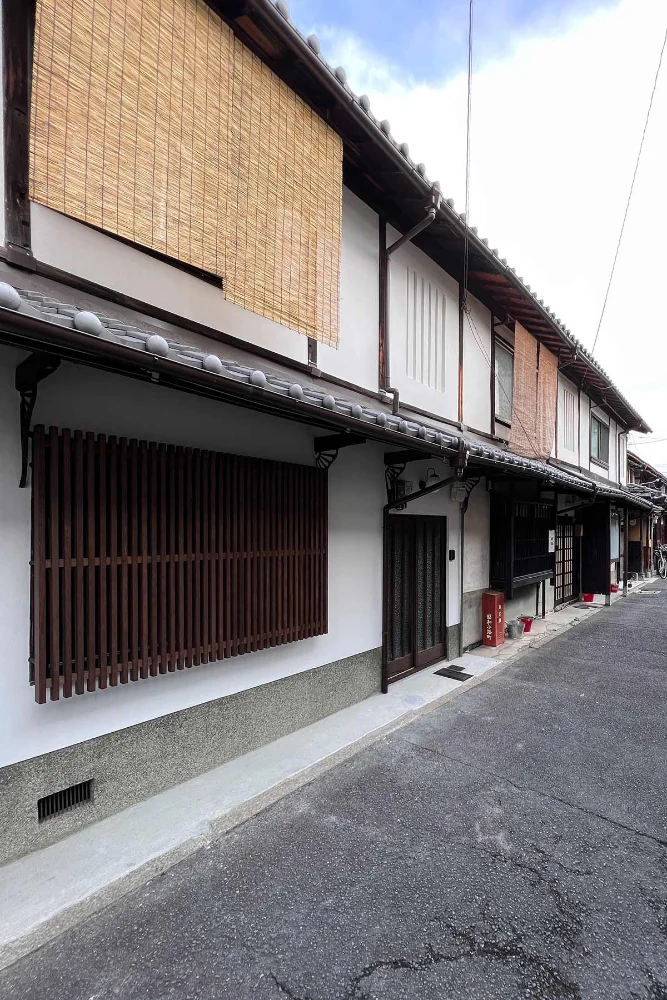
Exterior. Incremental renovations to individual units have produced a restrained sense of cohesion across the walls and roofs.
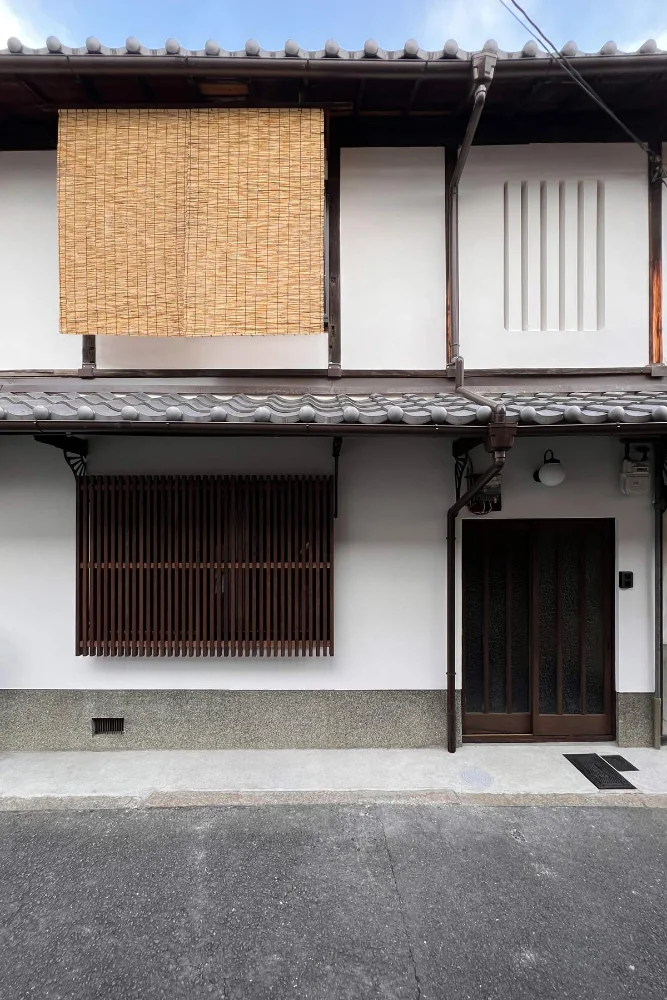
Butterfly-shaped cantilever brackets were repainted and reused.
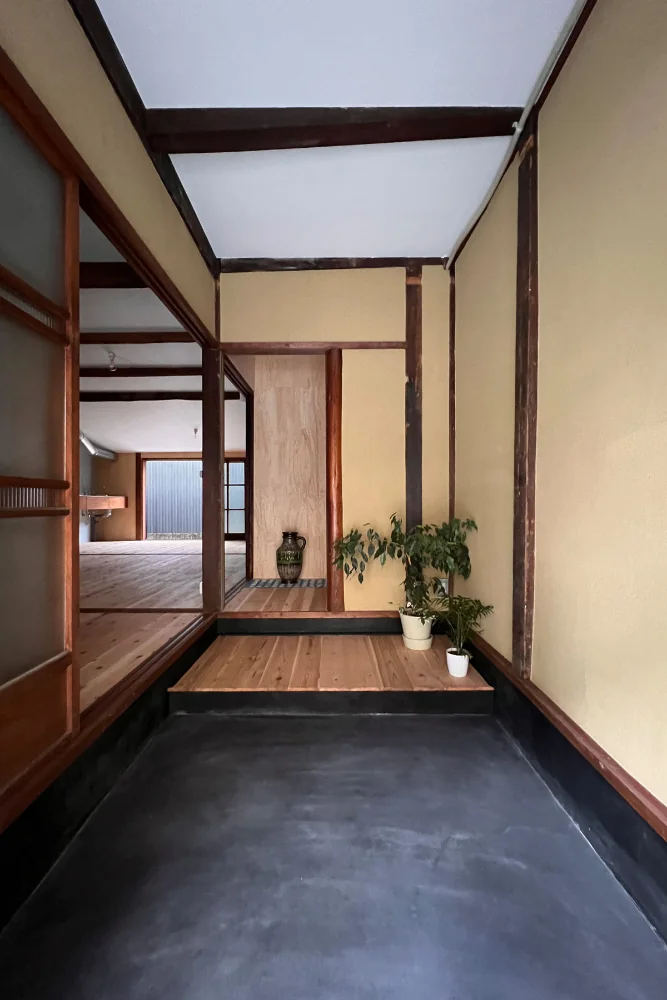
The existing tokobashira (alcove pillar) was relocated to face the entrance; the closet niche is composed as a tokonoma-like feature.
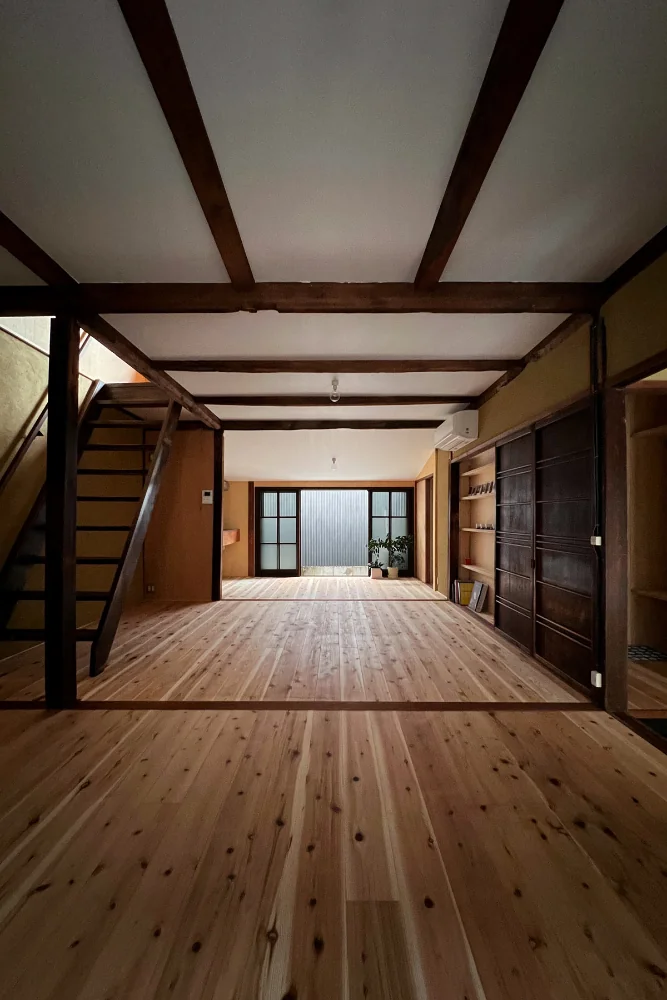
An old prefabricated unit bath was removed to reinstate a tsuboniwa (small courtyard garden), introducing daylight into the previously dim interior.
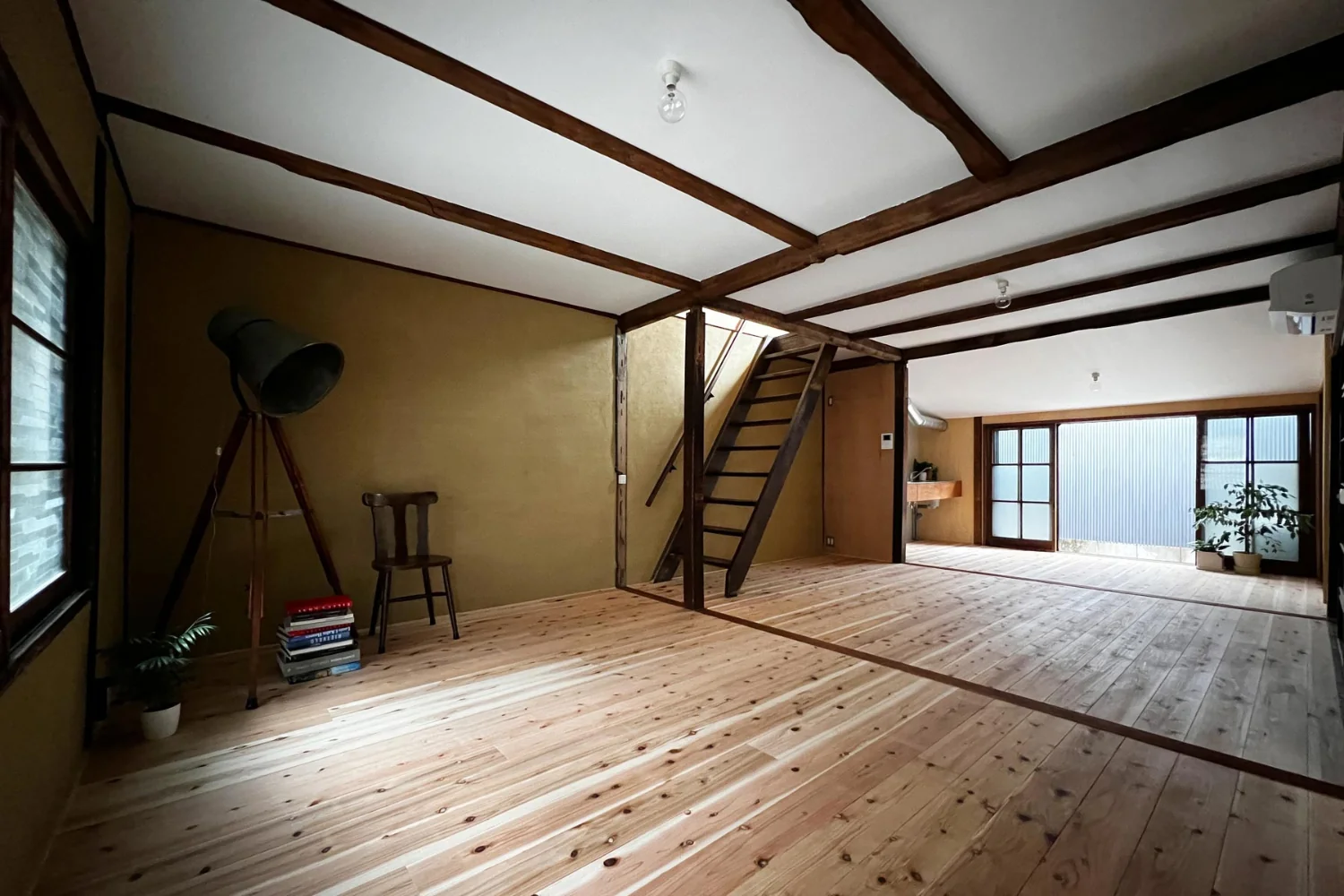
A staircase that had been located within an oshiire (closet) was skeletonized by removing walls, joinery, and baseboards, fitted with a handrail, and reused.
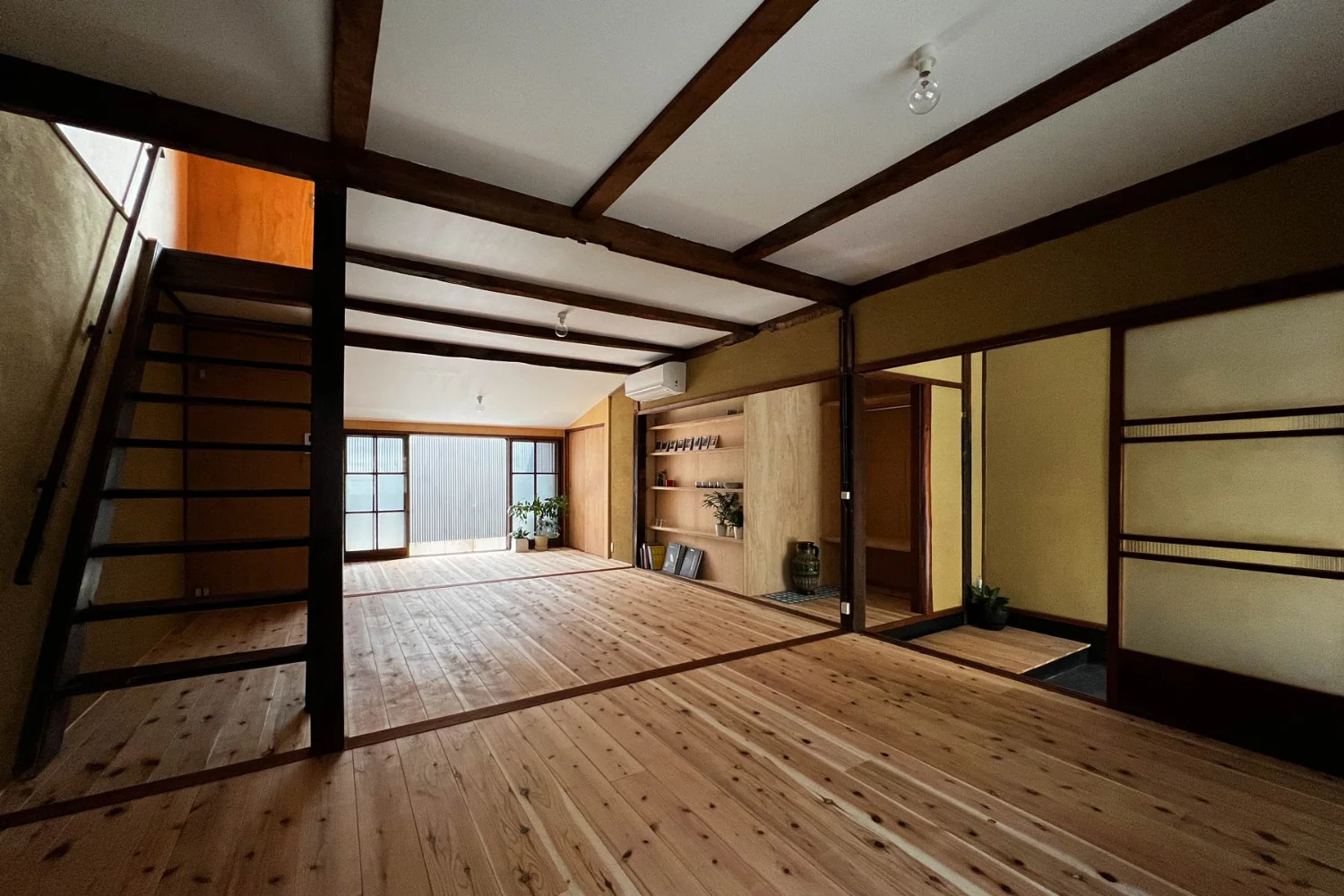
By retaining the frame of the existing plan, the spatial sensibilities of a contemporary studio and an old machiya coexist.
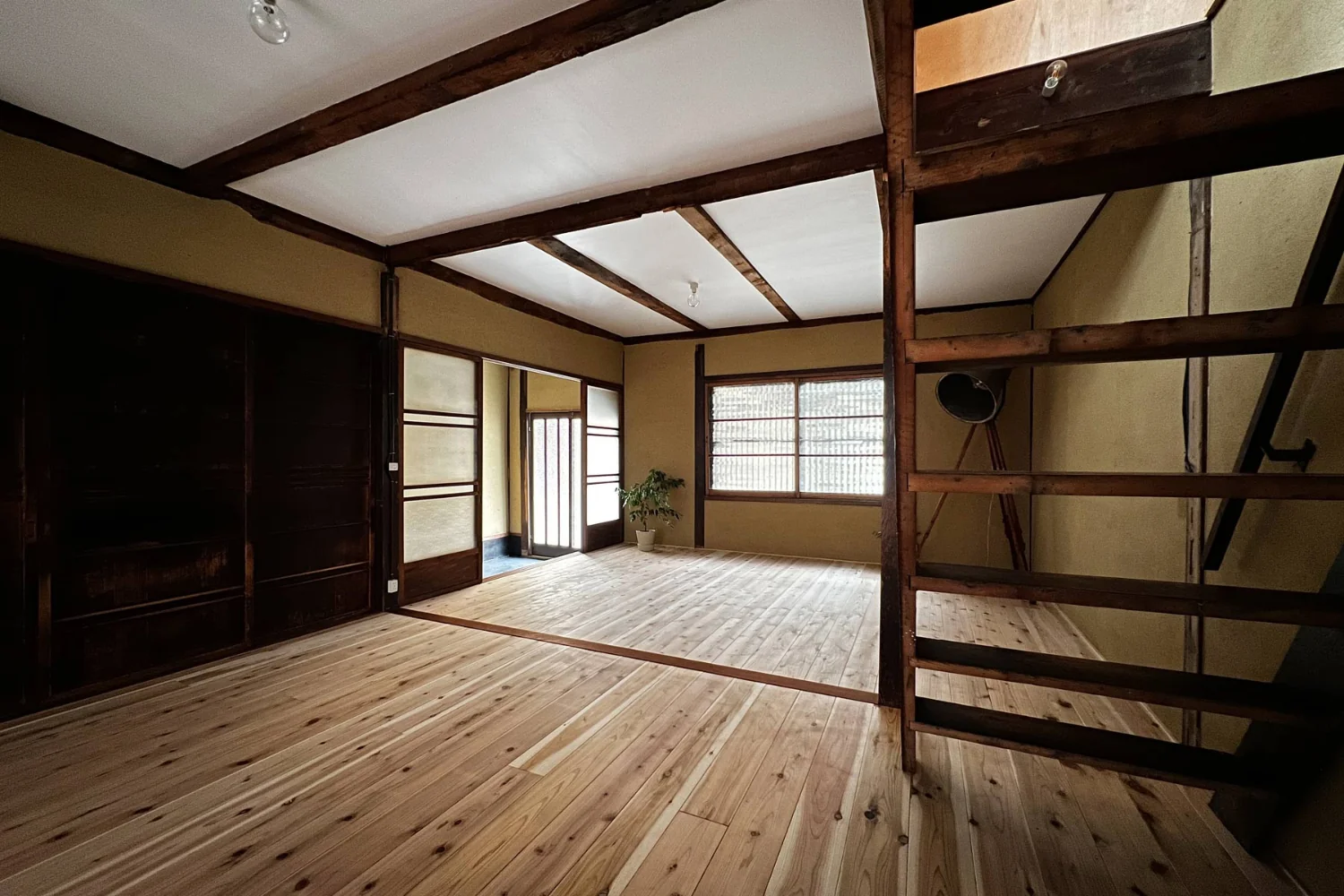
Floors: cedar flooring. Walls: lime-plaster intermediate coat finish. Ceiling: painted with exposed beams.
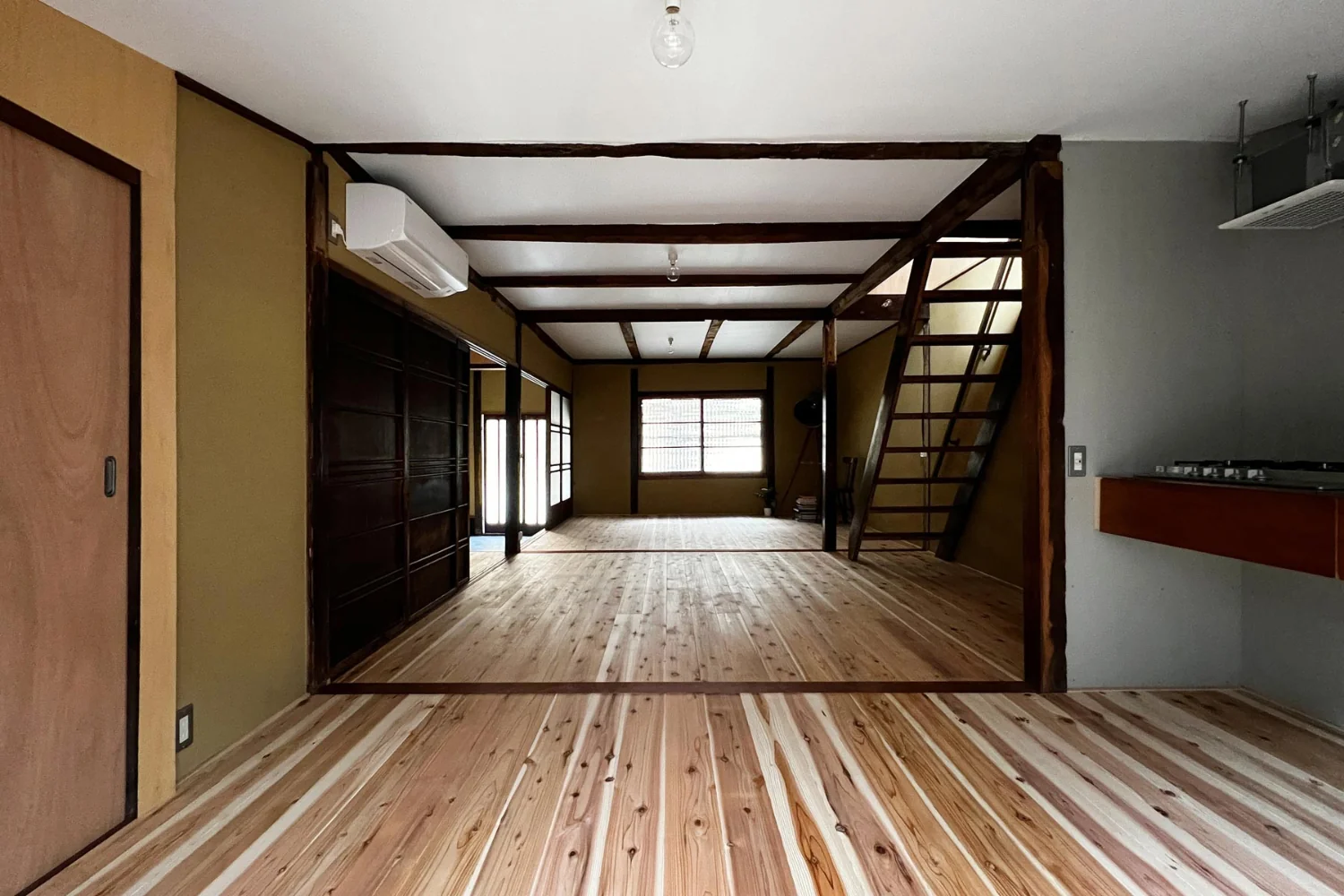
View from the east to the west of the living room. In the near left is the washbasin and bathroom.
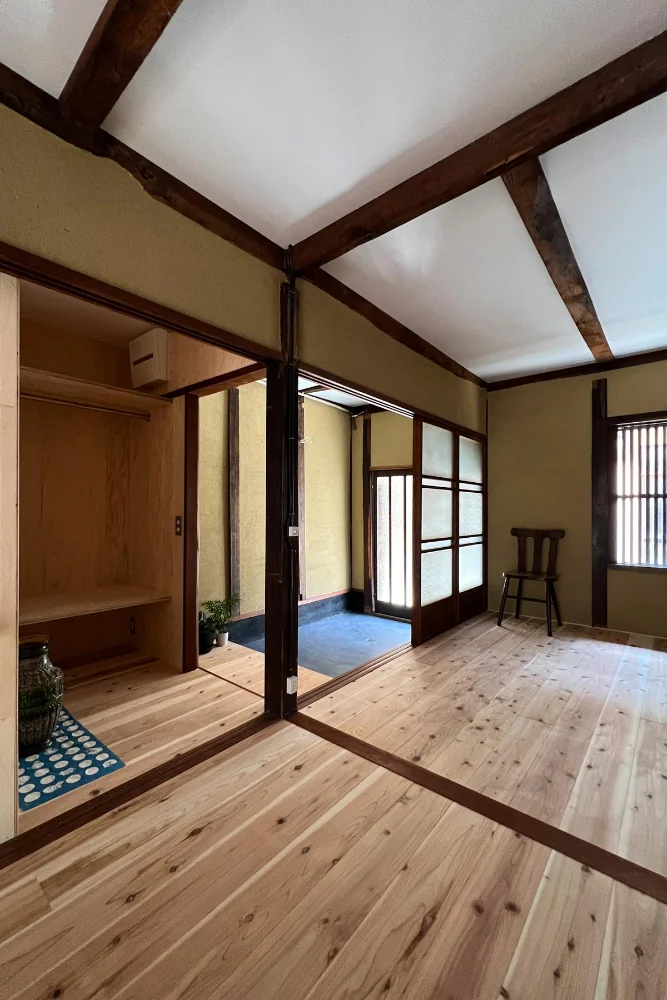
Entrance area revisited. Different combinations of fittings increase circulation options, creating modest internal permeability.
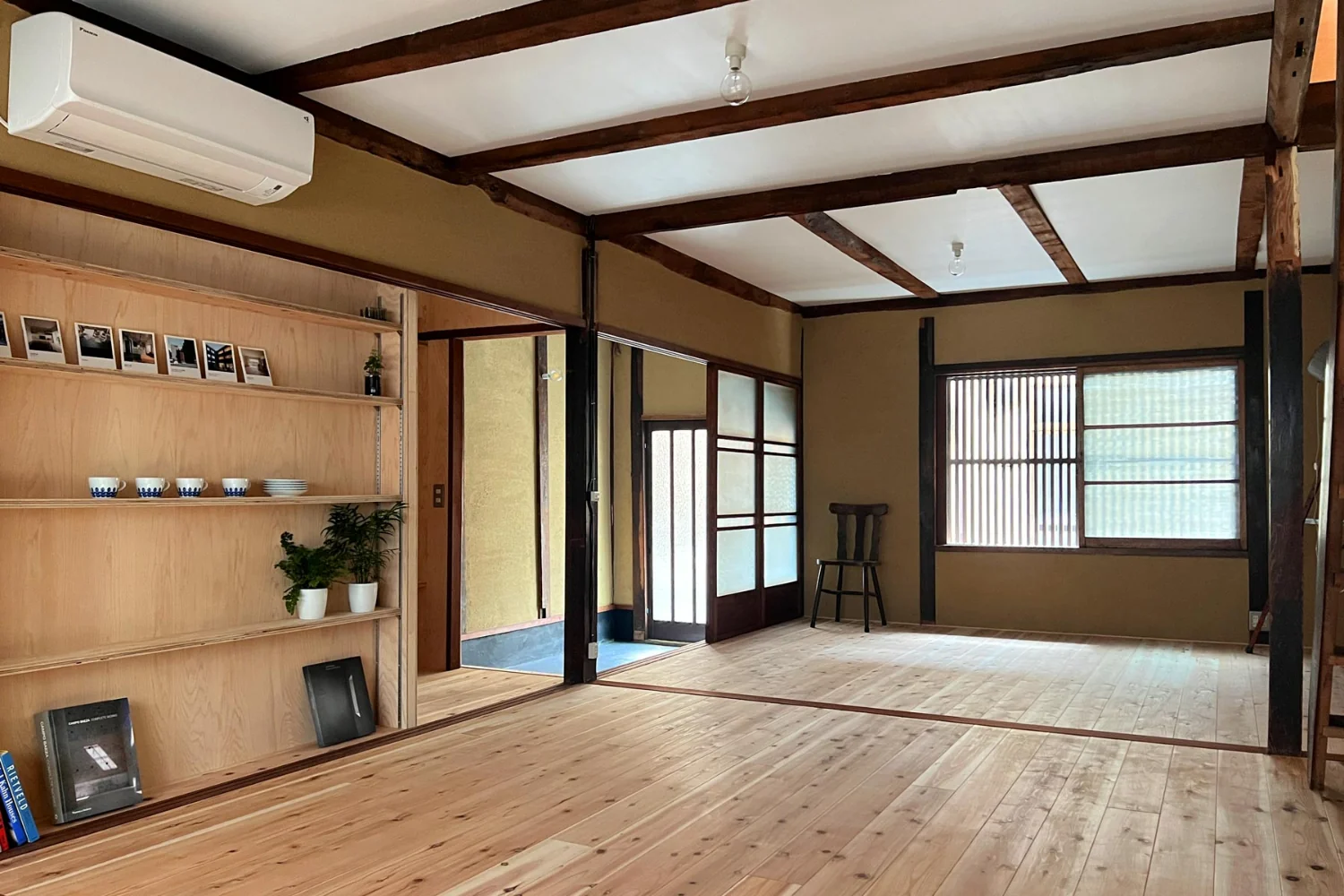
Configured for a live/work lifestyle with small-scale retail in mind: partitions were removed to maximize use as an open studio.
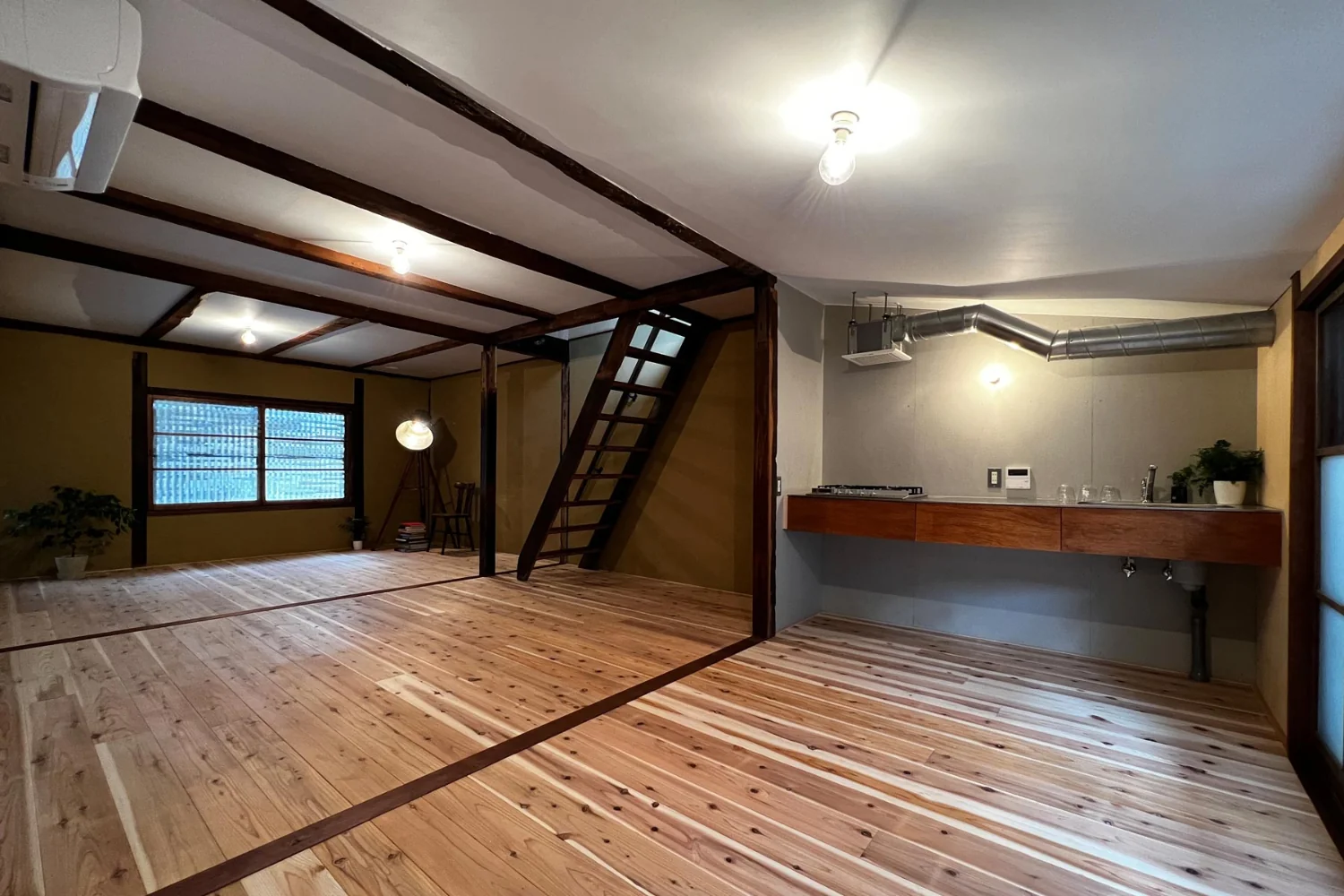
Compact kitchen. Because the existing roof is low, the exhaust fan ducting is exposed.
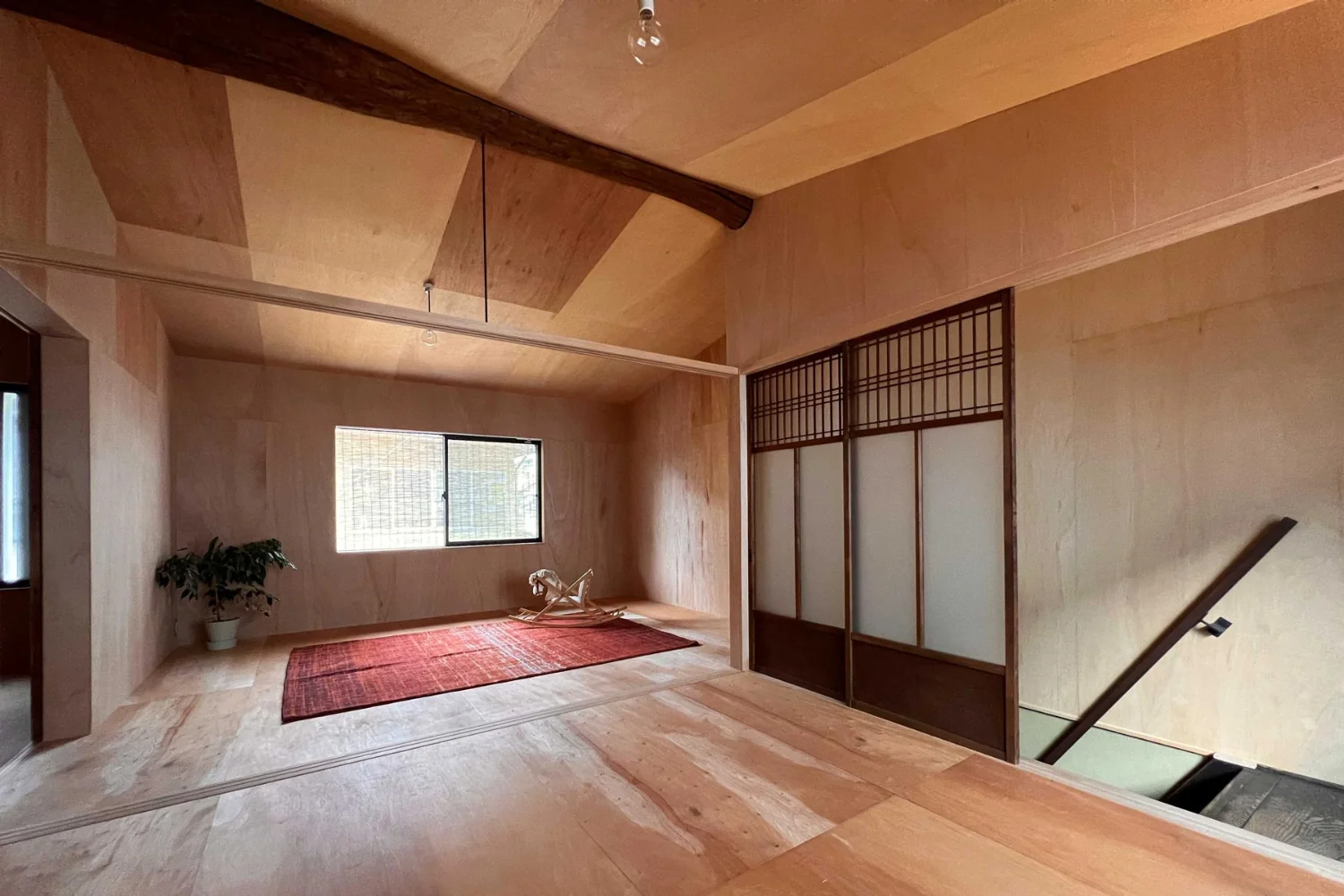
While the first floor emphasizes wet finishes such as paint and plaster, the second floor is finished with plywood and dry-system treatments.
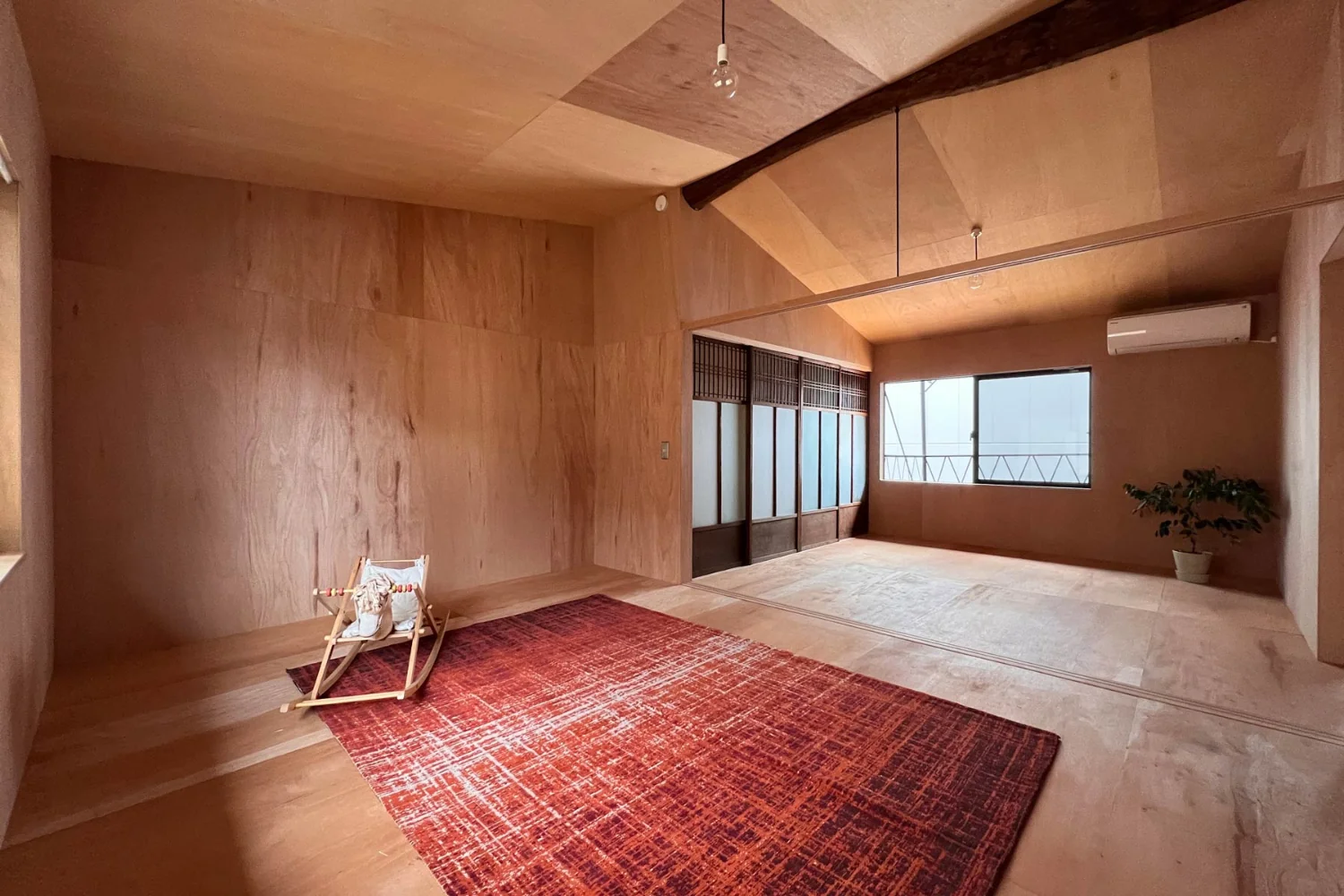
After installing insulation, the ceiling was reworked to follow the roof geometry.
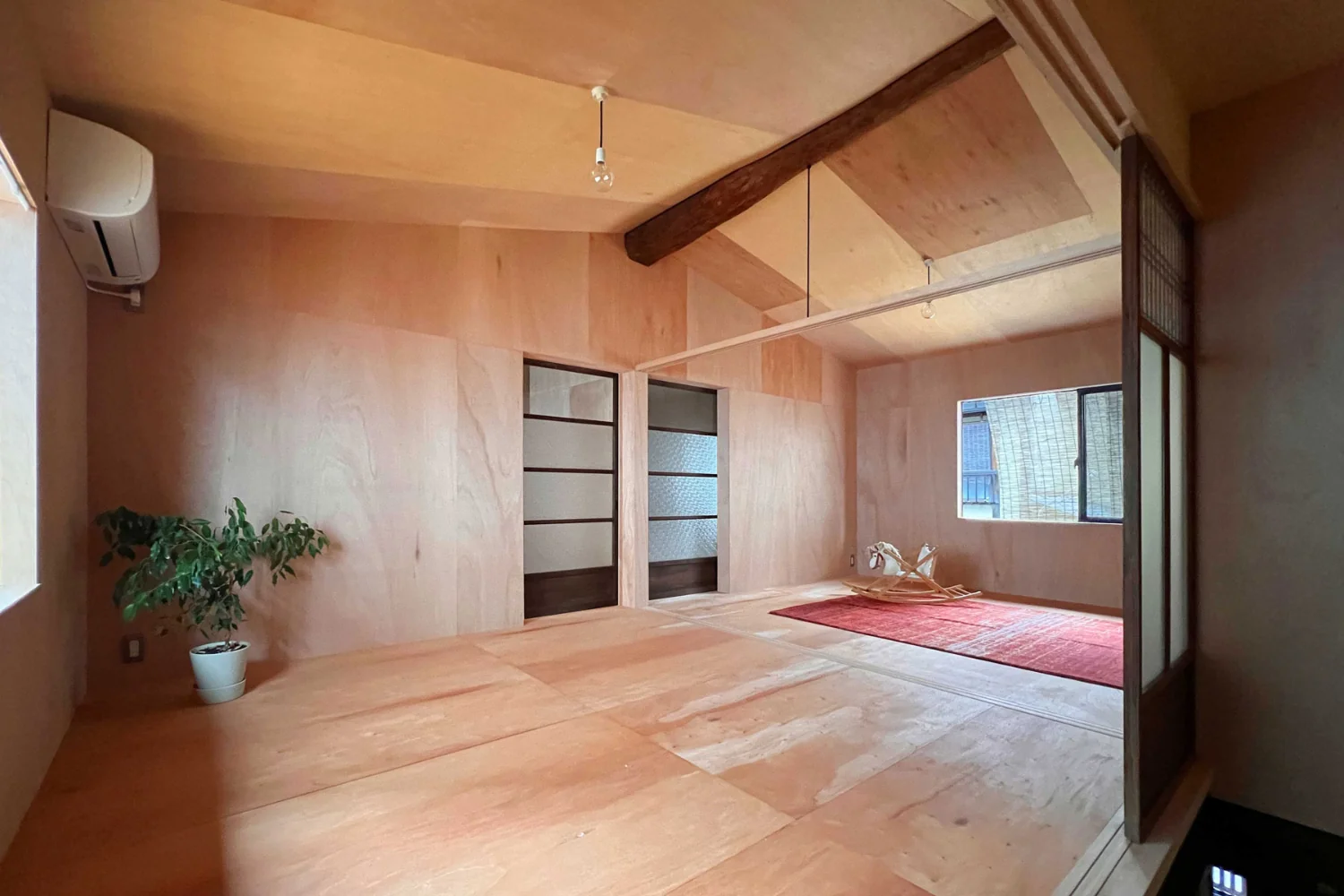
Two small ancillary rooms flank the larger living space; they can serve as bedrooms, closets, or other flexible uses.
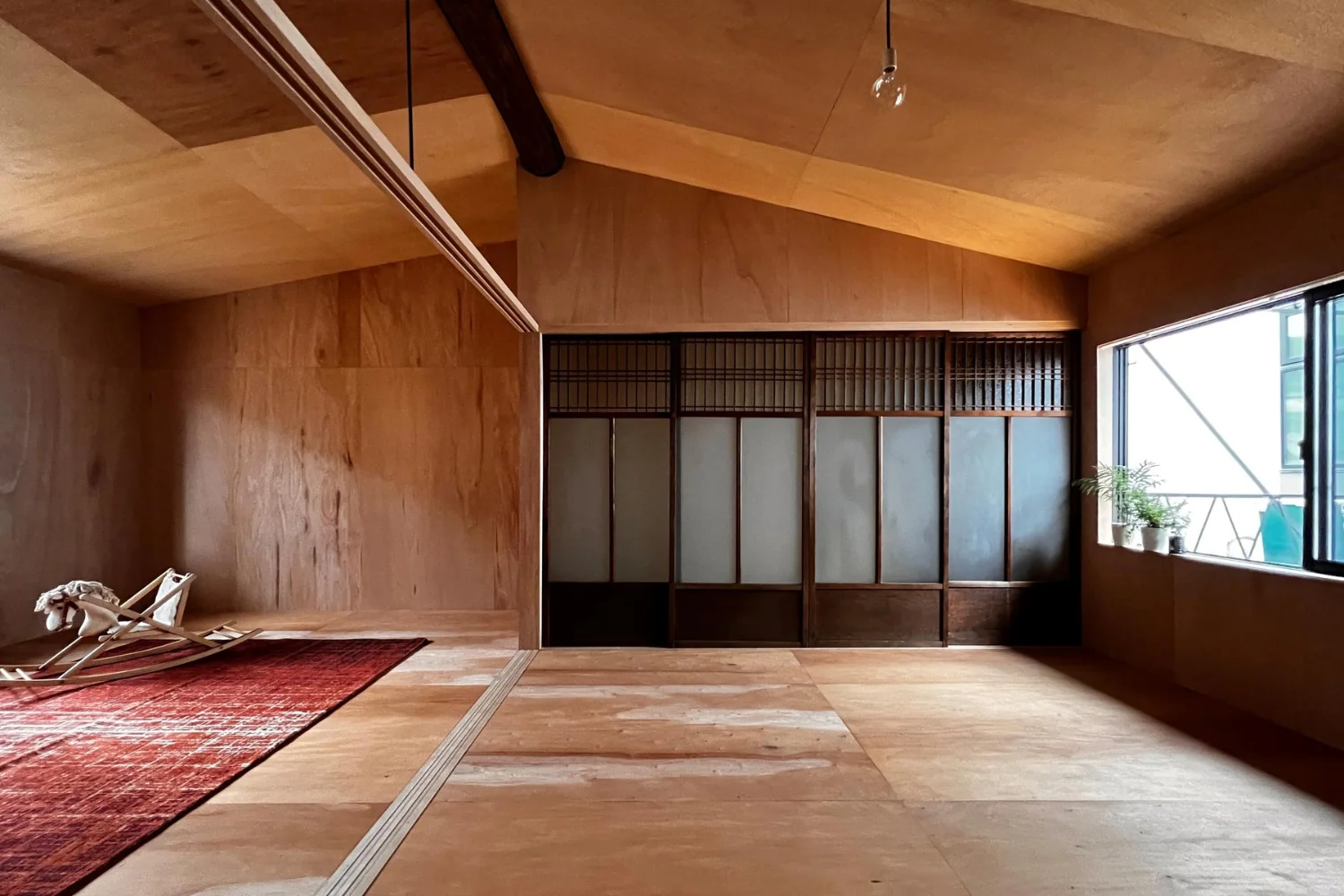
On the second floor, light and breezes enter through east- and west-facing openings.
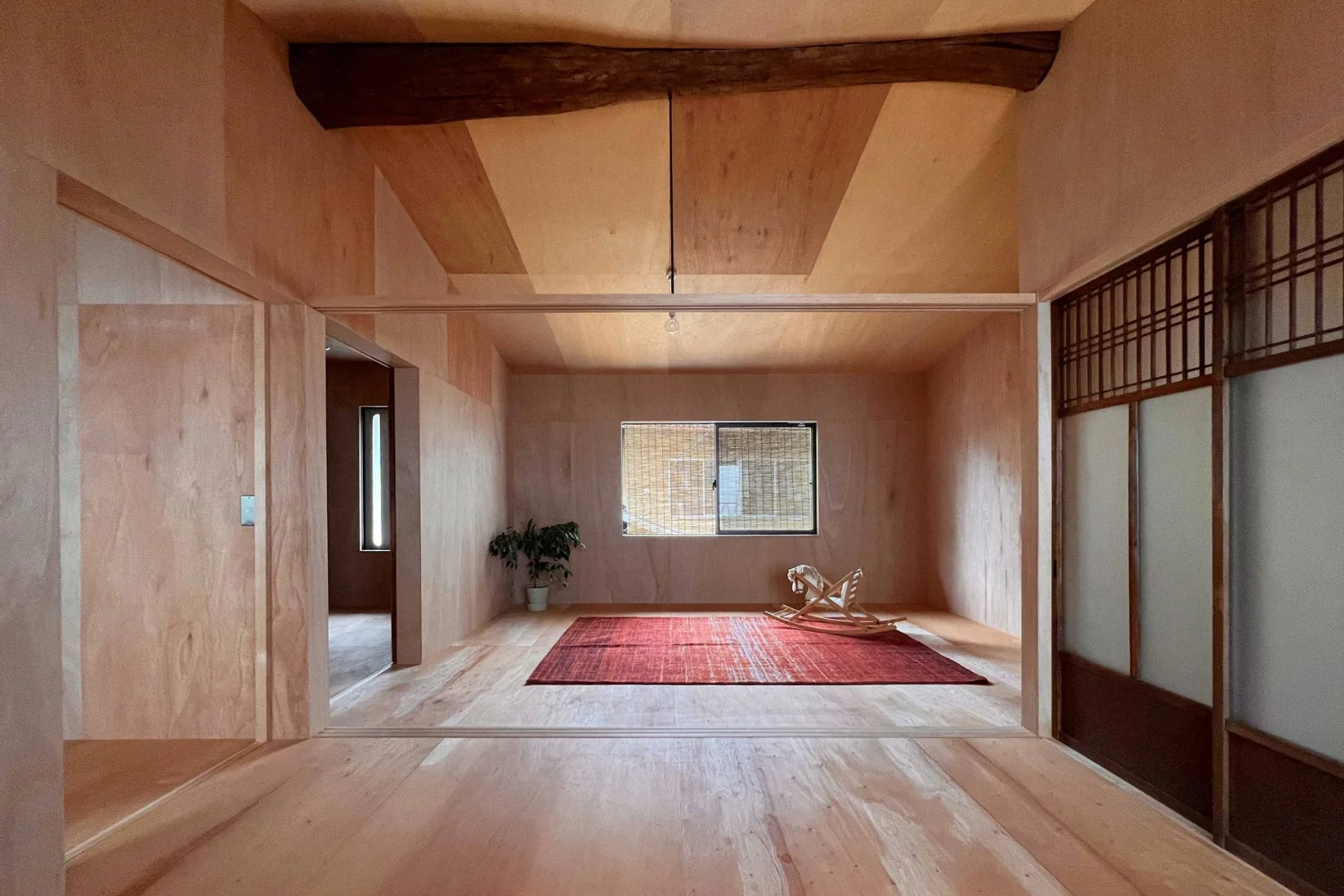
Utilizing the machiya module, fittings can be moved according to functional needs to optimize usability.
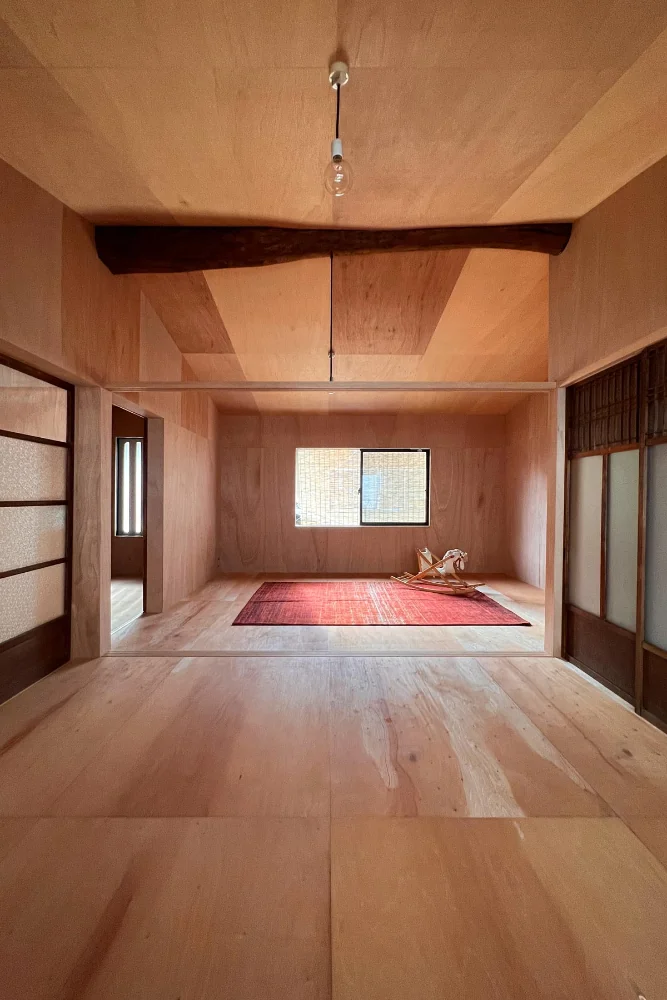
A large round ridge beam is left exposed and the kamoi (lintel) is suspended from it by bolts.
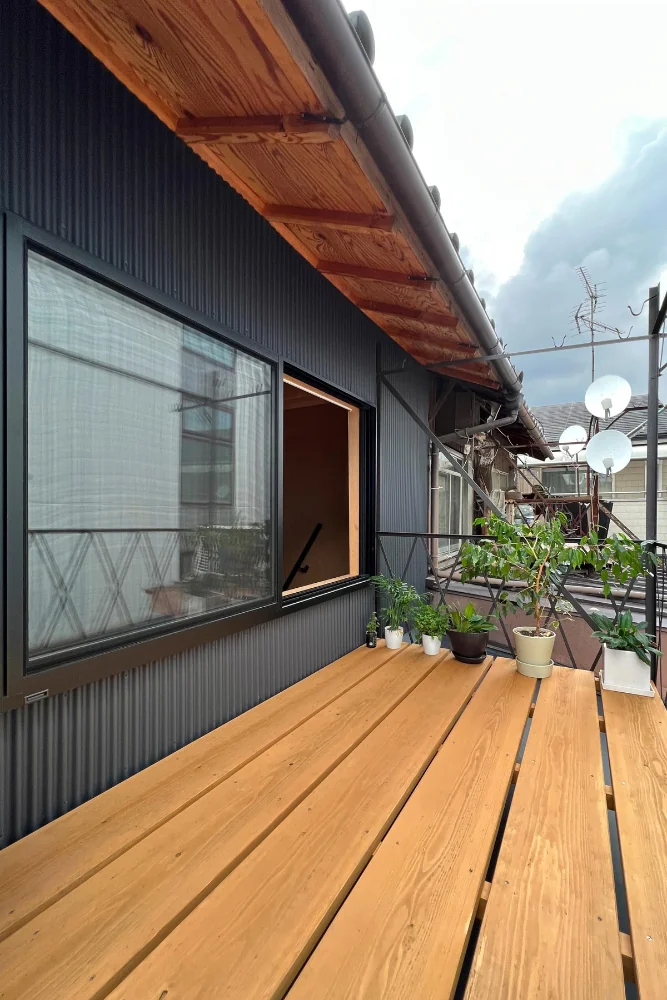
The existing iron clothes-drying rack was repainted and cedar scaffold boards were applied to form a wood deck.