Introducing House with Extended Eaves, a custom-built home example by an Archi-Lab. First-Class Architect Office, a Architect / Design office in Heights S&A 2F, 4-20-31 Awaji, Higashiyodogawa-ku, Osaka City, Osaka Prefecture
House with Extended Eaves
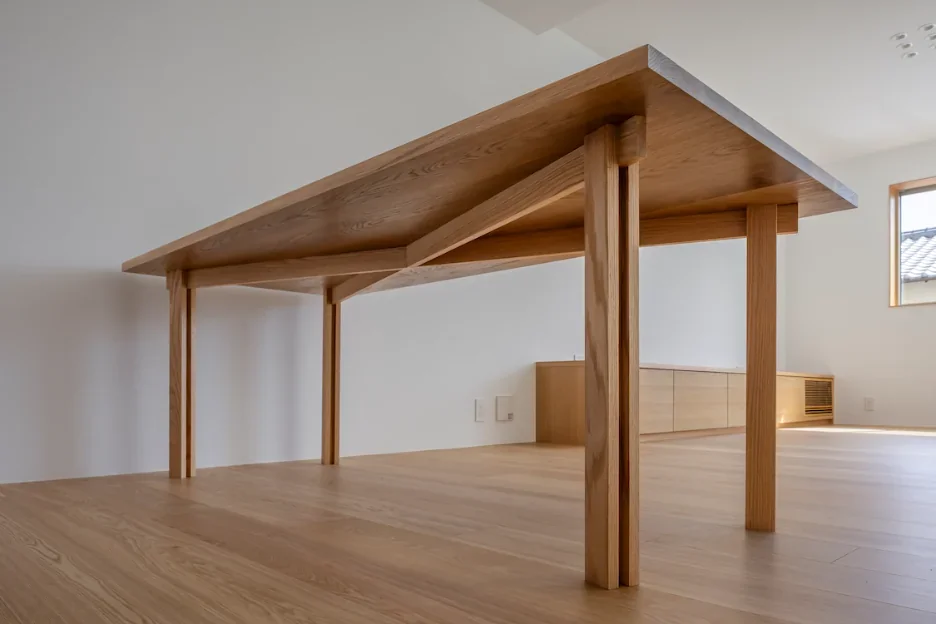
Custom-made dining table
Built-in Garage
Natural Modern
Void
Custom Kitchen
Built-in Furniture
Capturing Light
Urban House
Family with Children
Home with Margins
Steel Staircase
Eiji Tomita Photography Studio
Learn More
This newly constructed residence is designed for a busy young couple both working and raising two children. The site is the last remaining parcel from a large estate that has been subdivided and sold off incrementally over several years. Although the lot size falls below the minimum area stipulated by local ordinances, the land value in this area remains high, and recent surges in land prices have resulted in a substantial portion of the project budget being allocated to land acquisition.
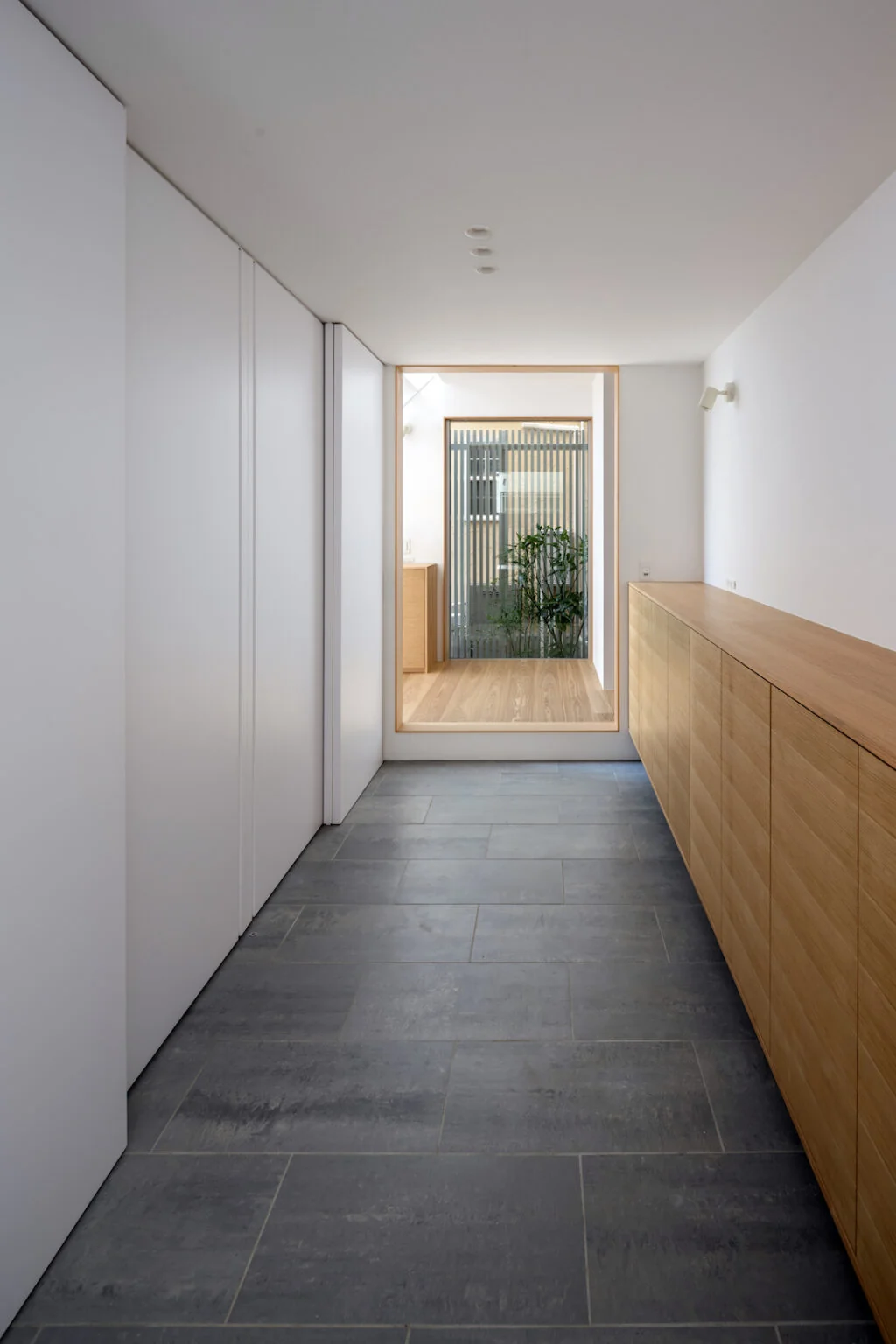
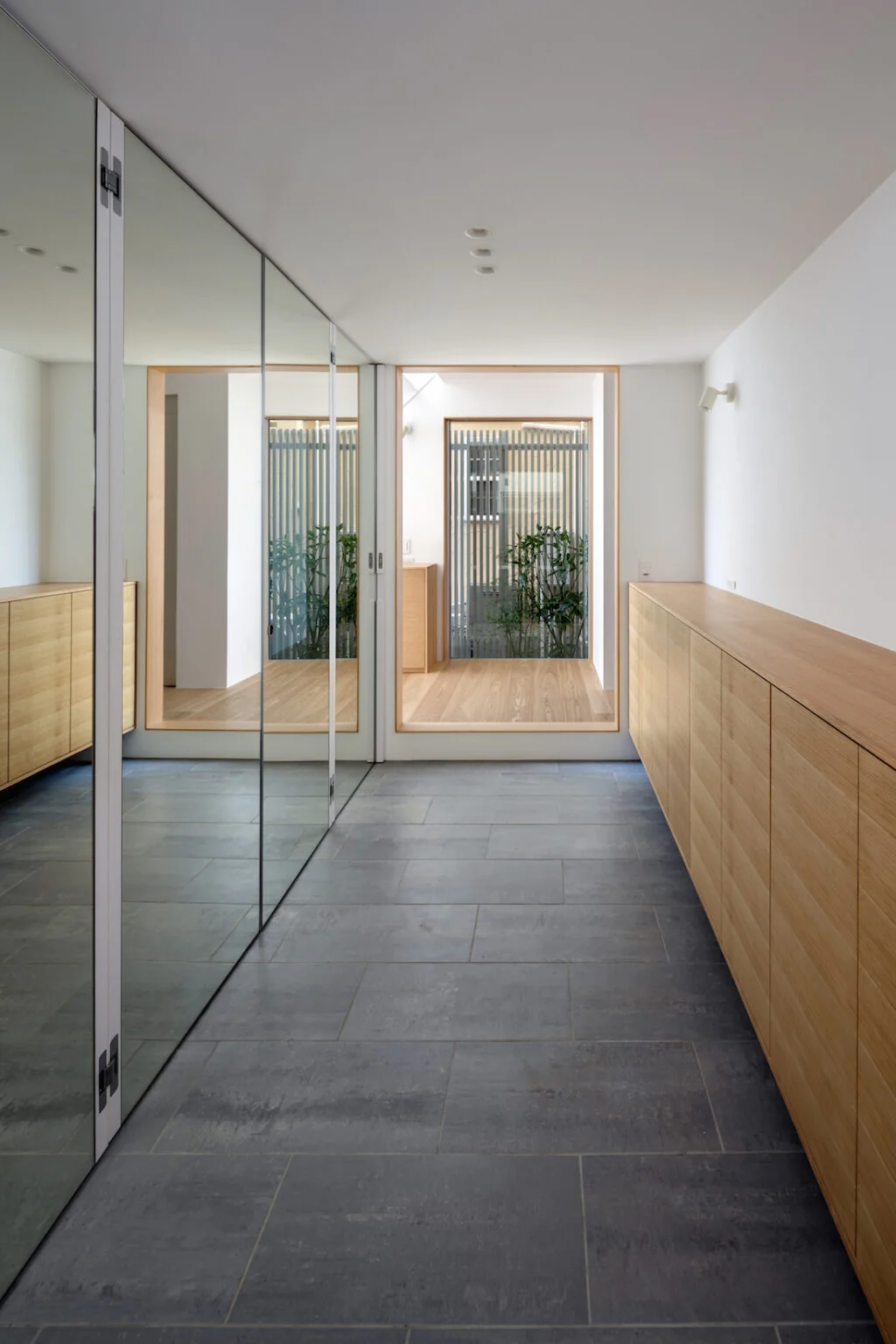
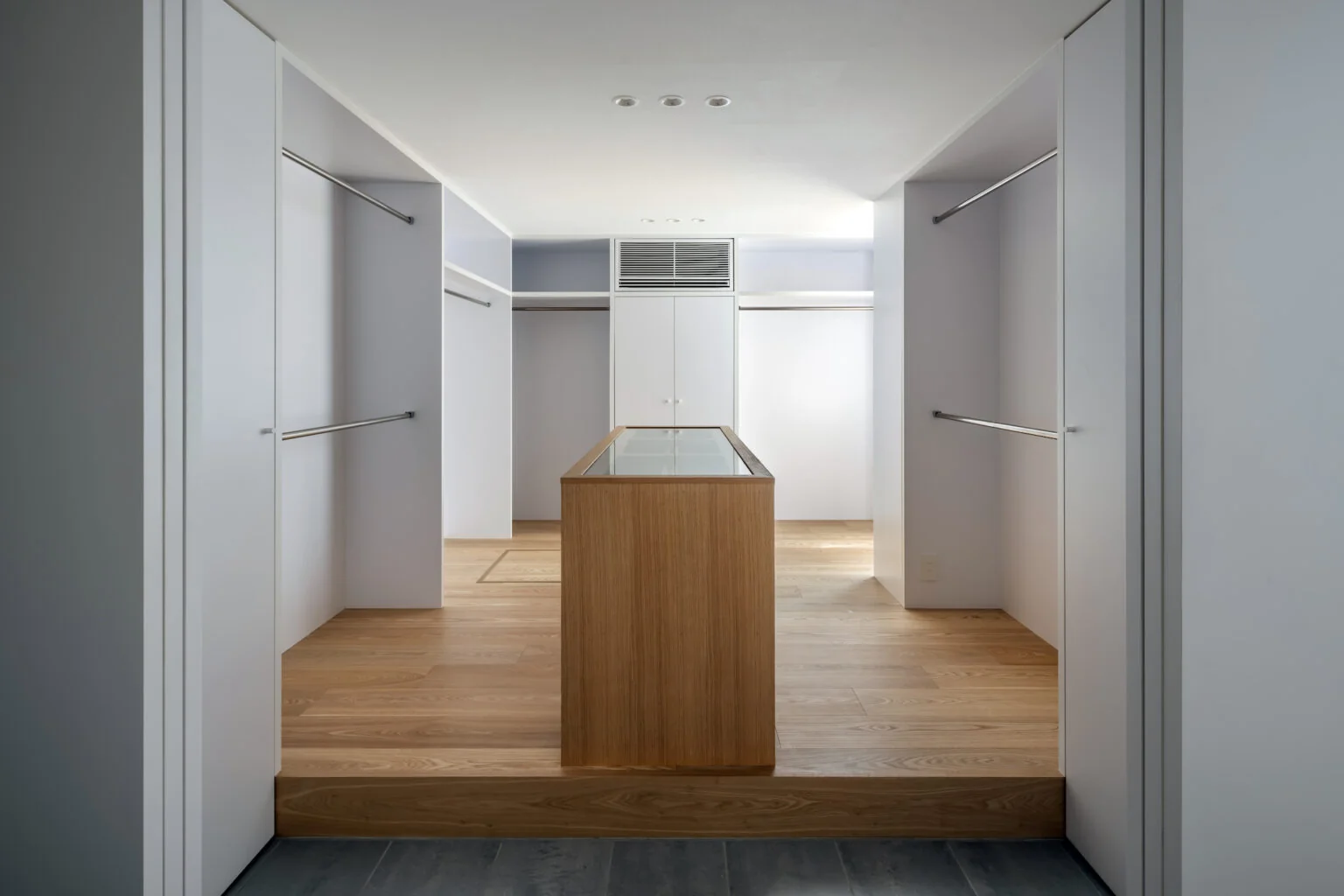
Given these circumstances and the possibility of future changes in the family structure, the clients desired a spacious and highly specified home that makes full use of the limited site area. The program called for five rooms, ample custom storage, a garage, and an elevator, all integrated within a high-density design.
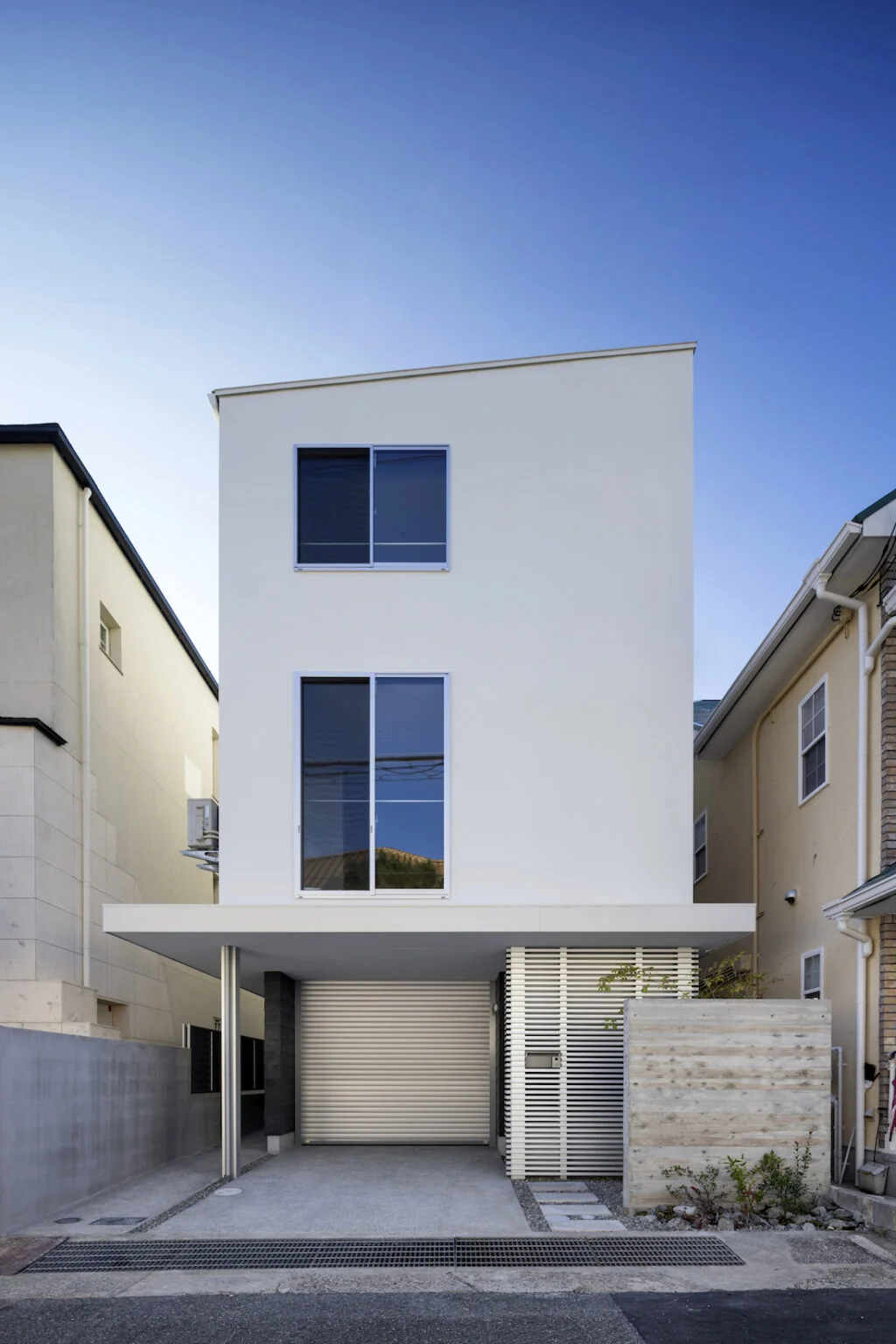
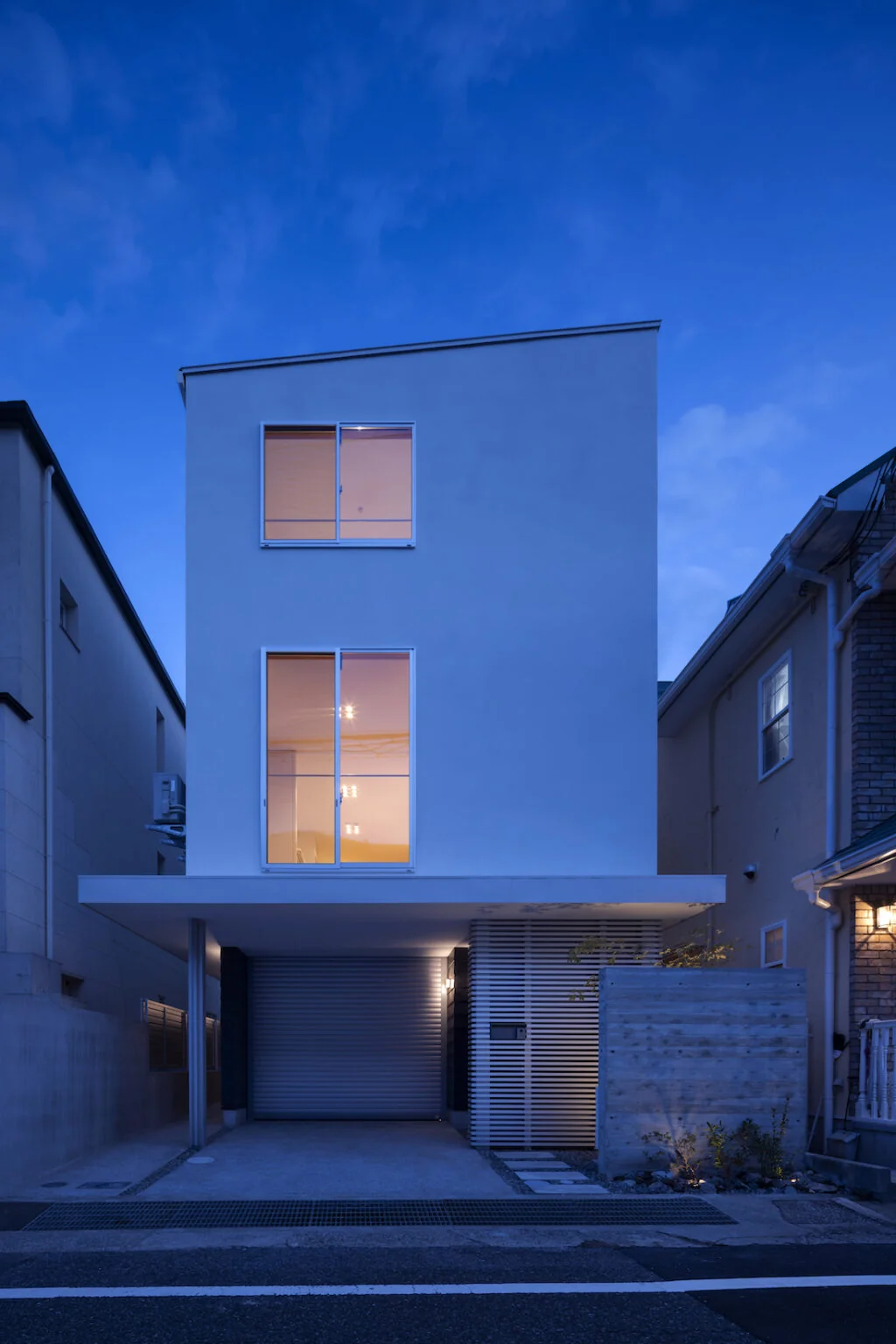
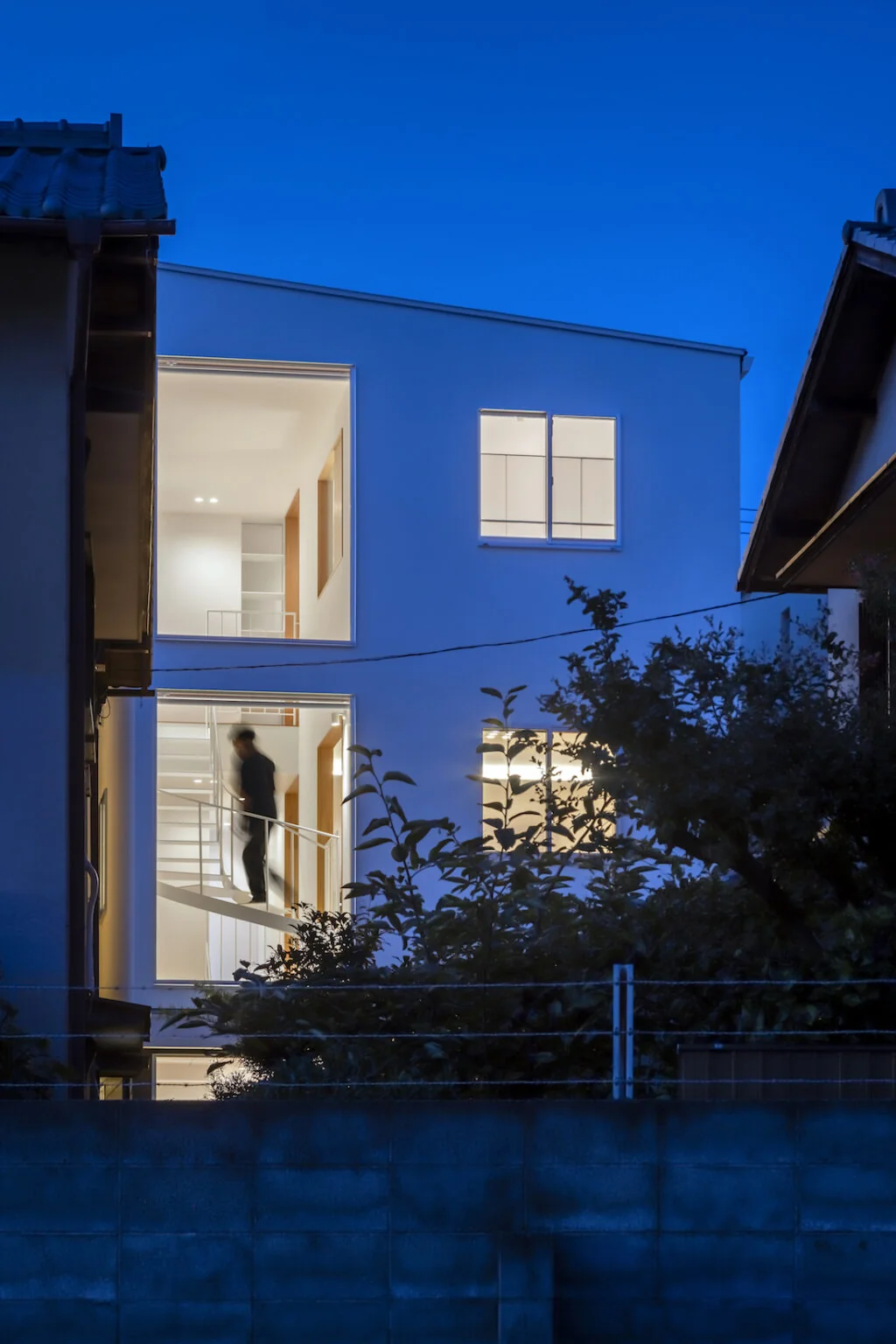
In response, we proposed a distinctive three-story residence characterized by extended eaves (hisashi) that stretch along the entire site, achieving a harmonious balance between functionality and spatial quality through carefully planned voids within the constrained footprint.
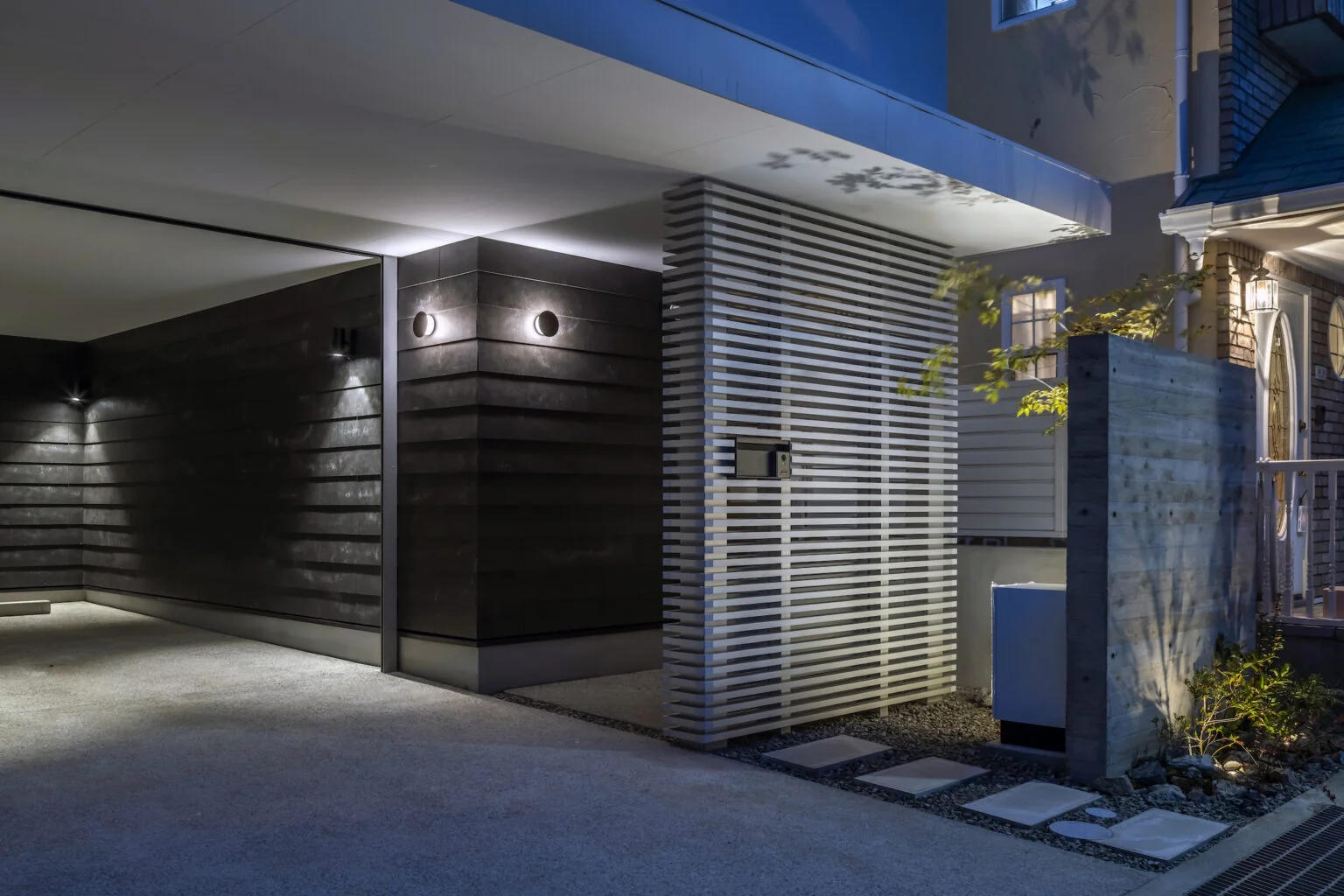
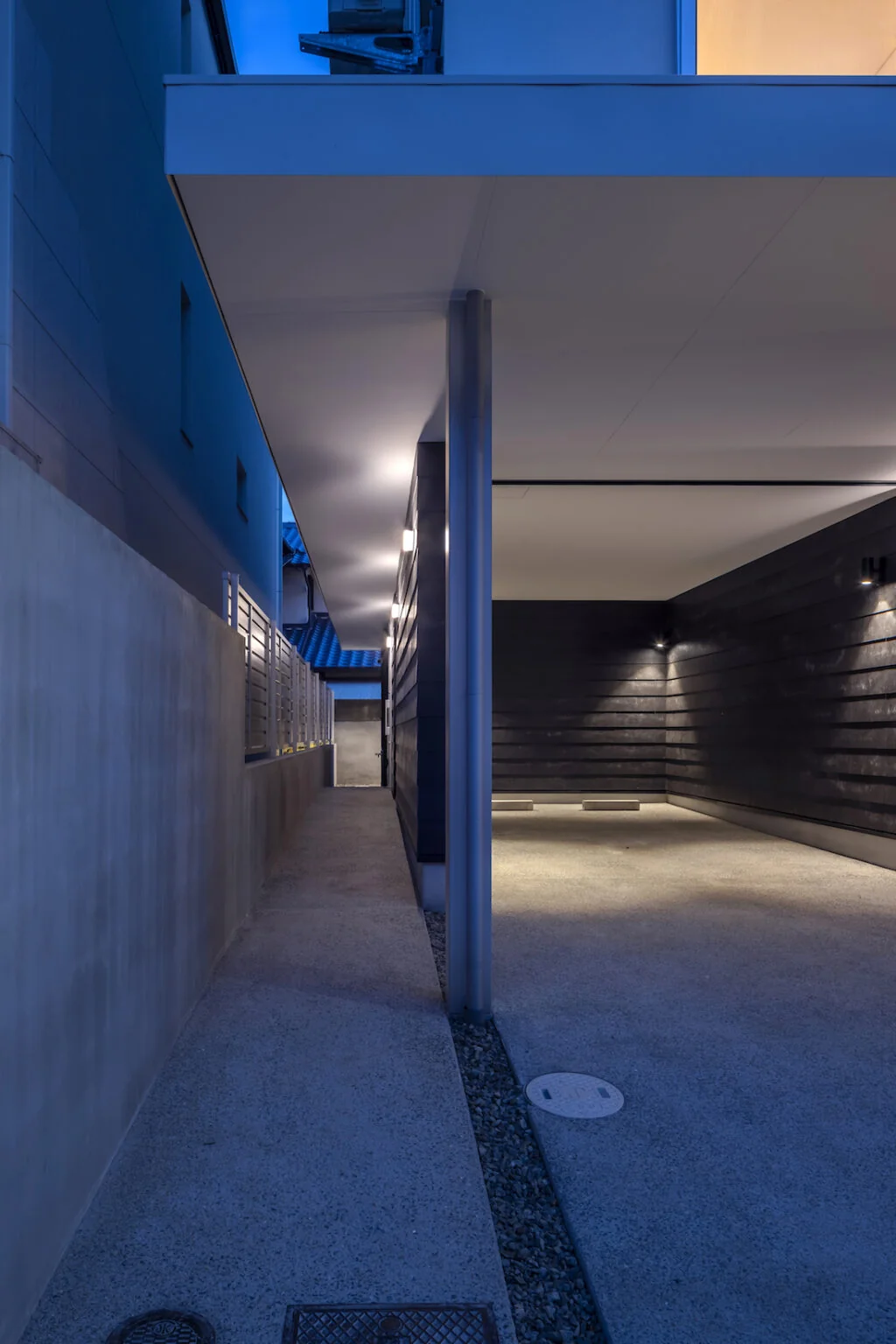
The building volume is articulated to comply with the diagonal plane regulation by lifting the mass above the full-site footprint, while retaining eaves that are exempt from the setback regulations, creating intentional cutouts in the building form. Outdoor mechanical equipment, typically placed on the ground floor, was relocated to the upper floors to free the ground beneath the extended eaves around the perimeter, allowing for open, accessible areas.
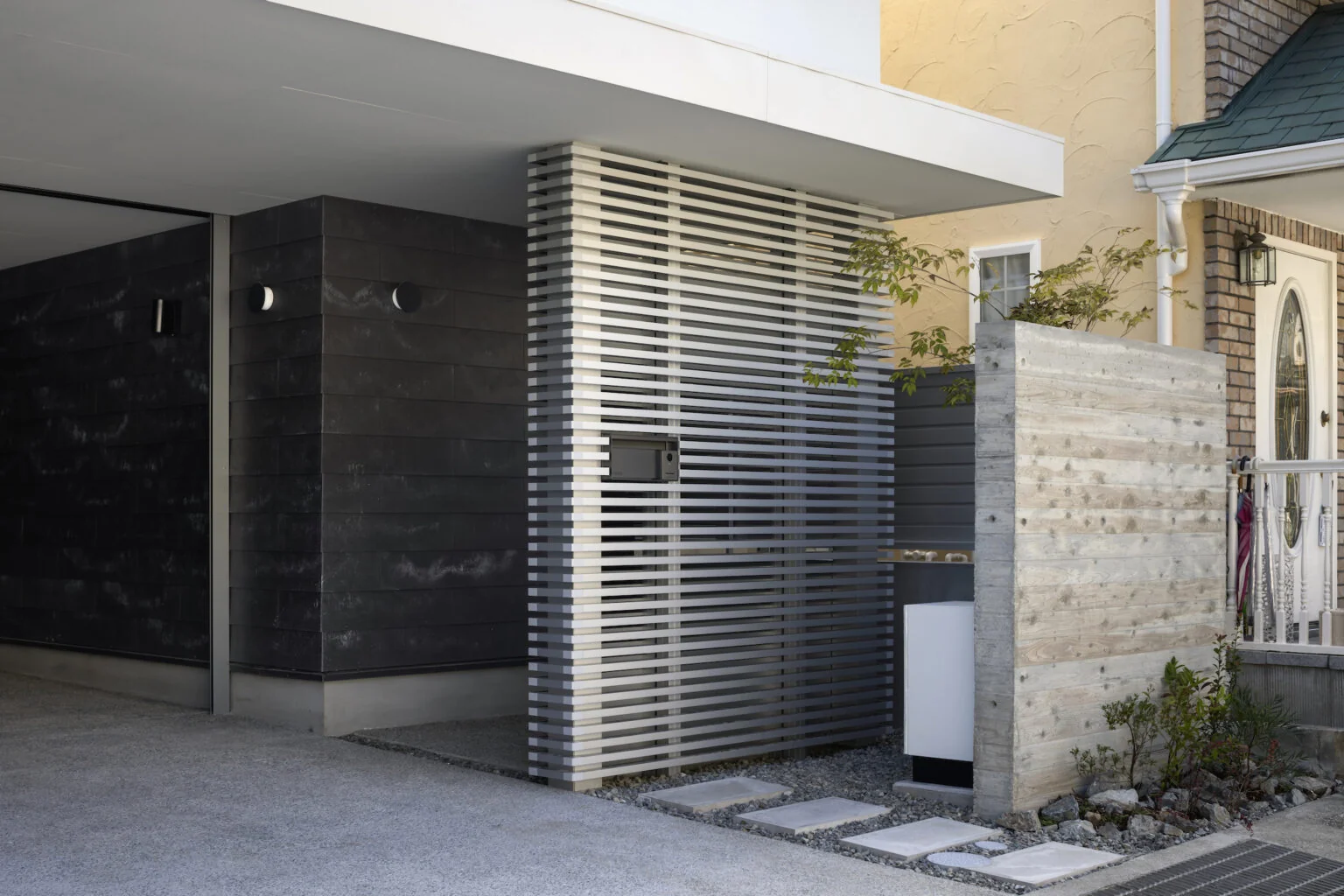
These under-eave spaces accommodate the entrance approach, front garden, pathways, a courtyard, bicycle parking, and the built-in garage, optimizing site utilization. The voids carved out on the second and third floors create spatial gaps with the surroundings, reducing a sense of enclosure and enhancing ventilation.
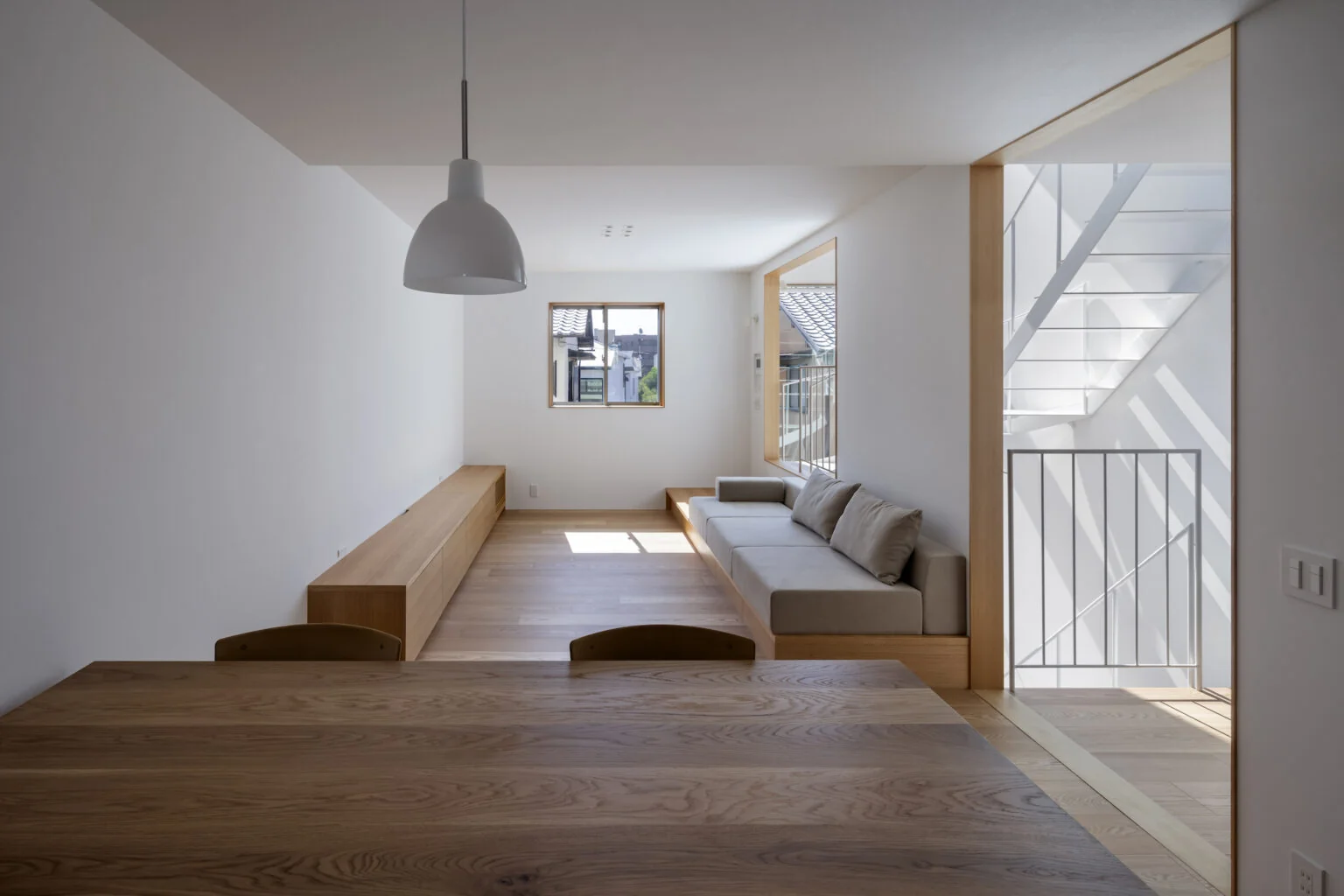
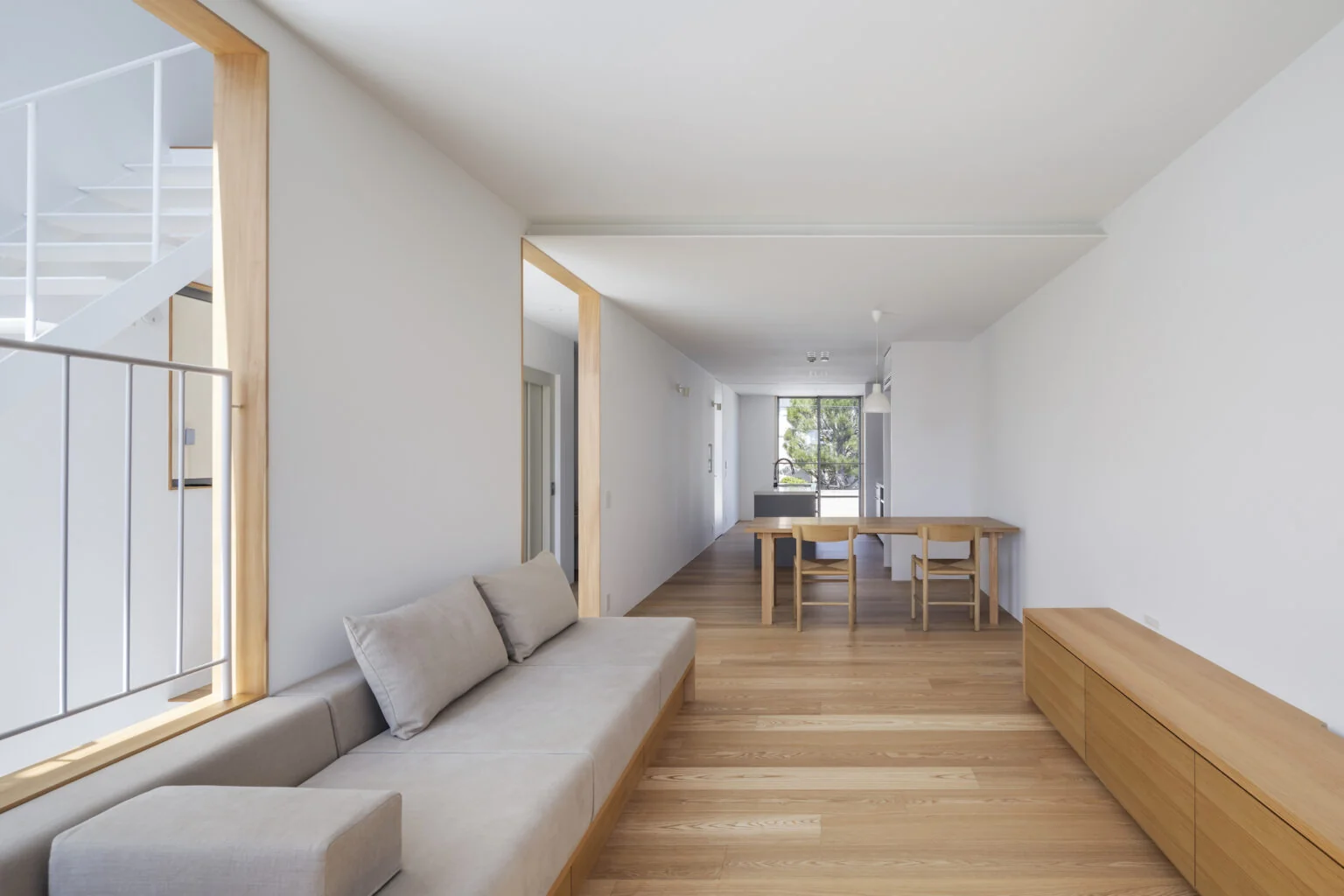
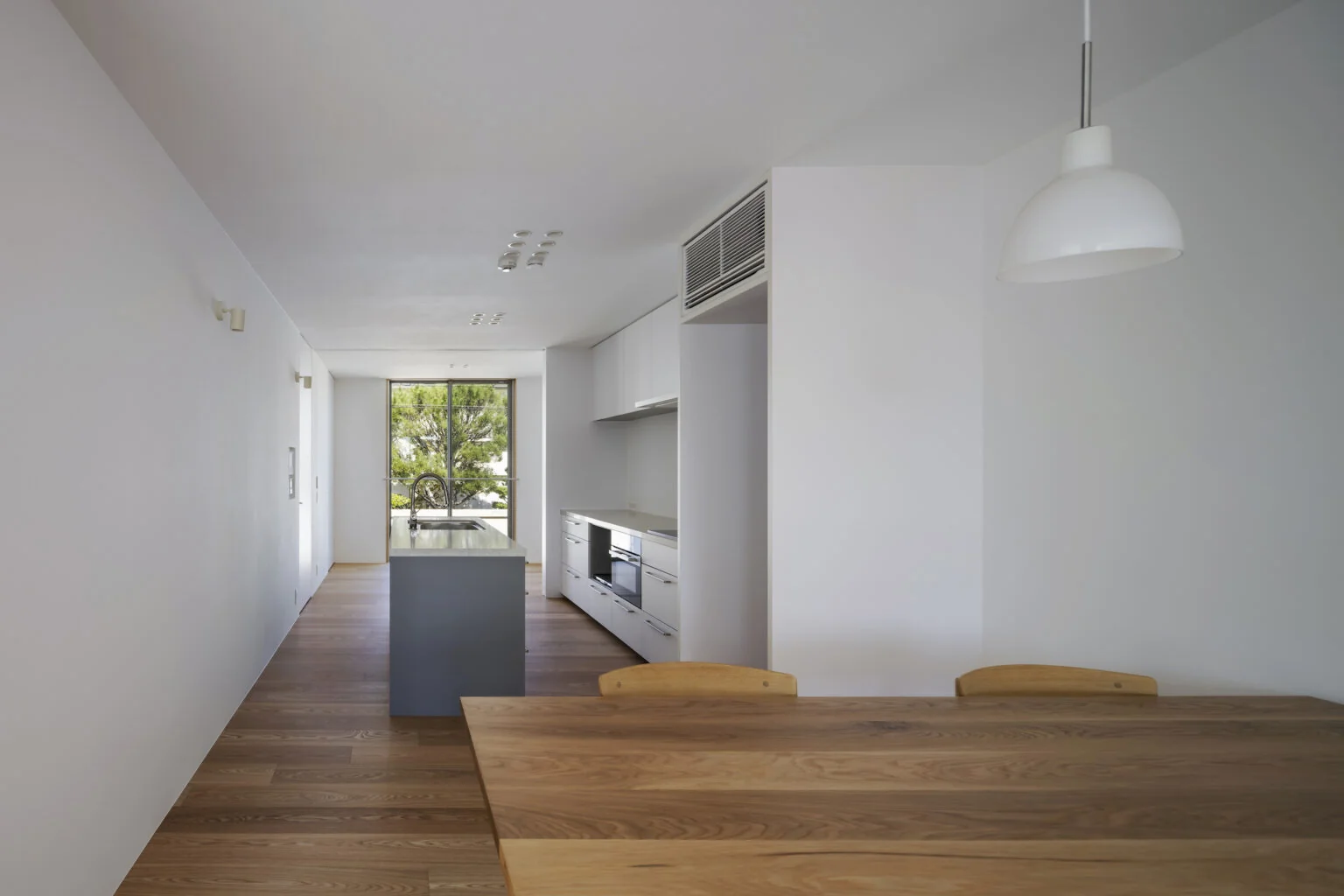
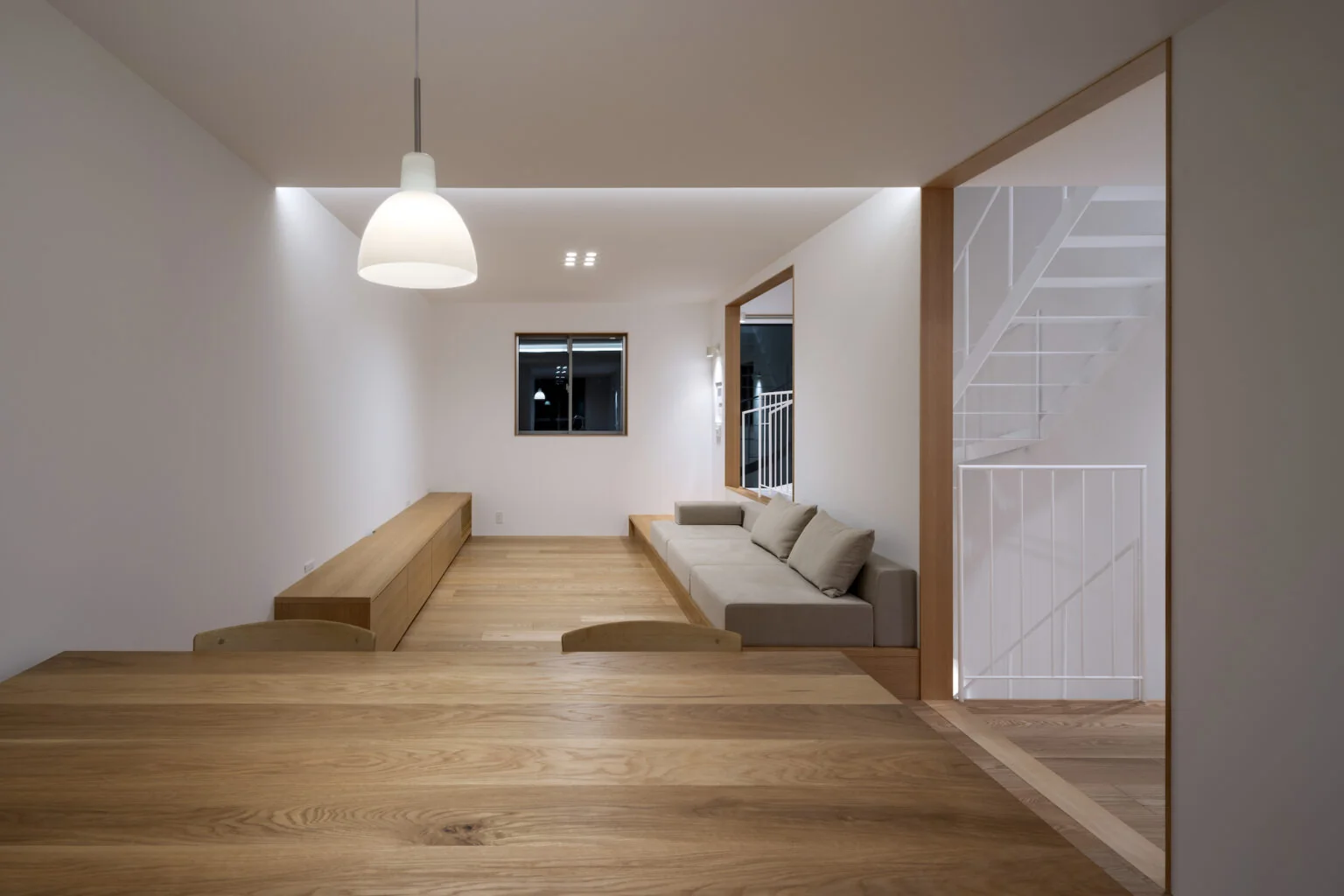
The southern adjacent land is approximately one meter lower in elevation, and due to the northern diagonal plane restriction, the southern upper airspace above the site remains unobstructed indefinitely. Additionally, the northern boundary faces a 6-meter-wide road, allowing for a clear north-south axis through the site. The living, dining, and kitchen areas are arranged longitudinally along this axis, embodying the site’s spatial characteristics.
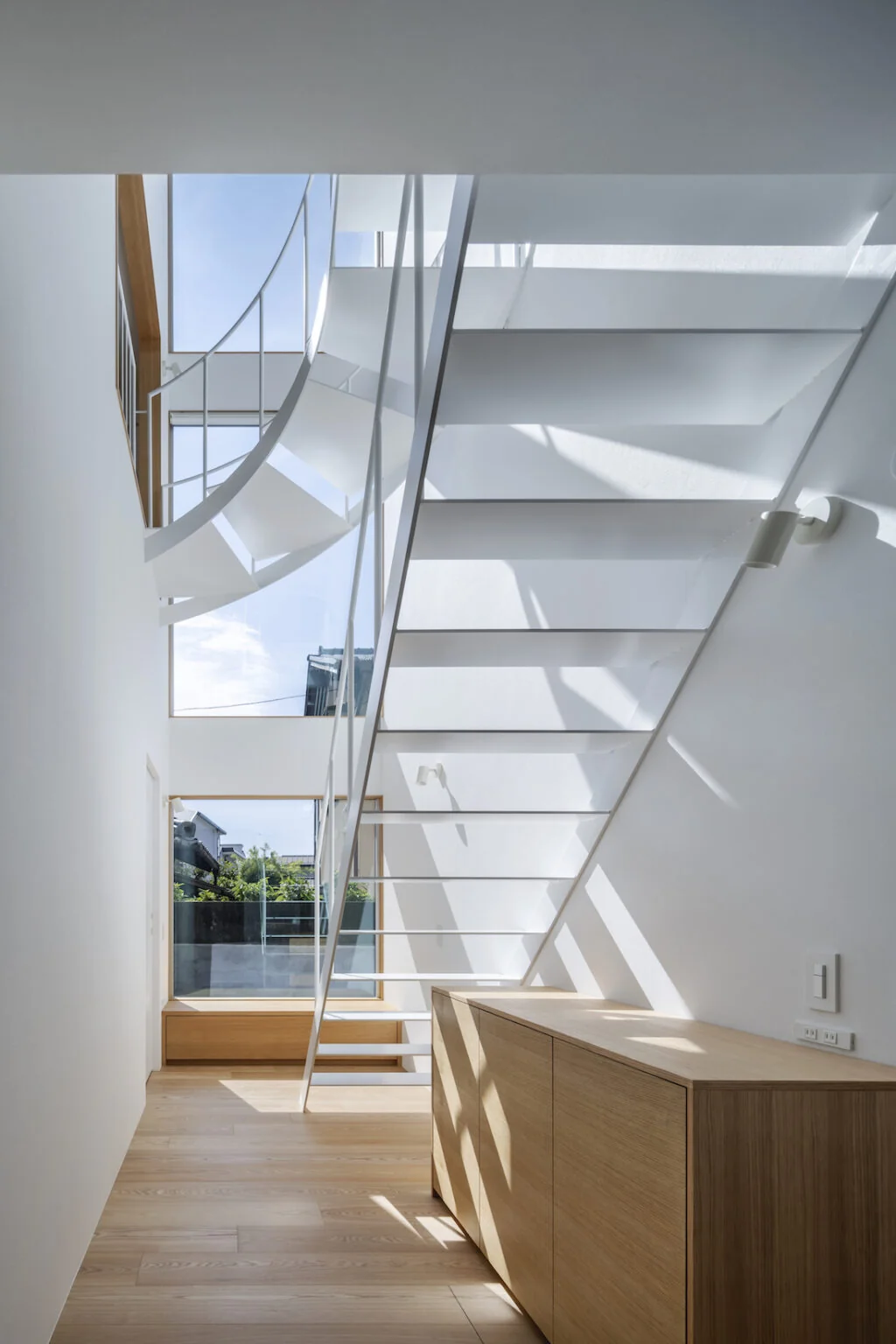
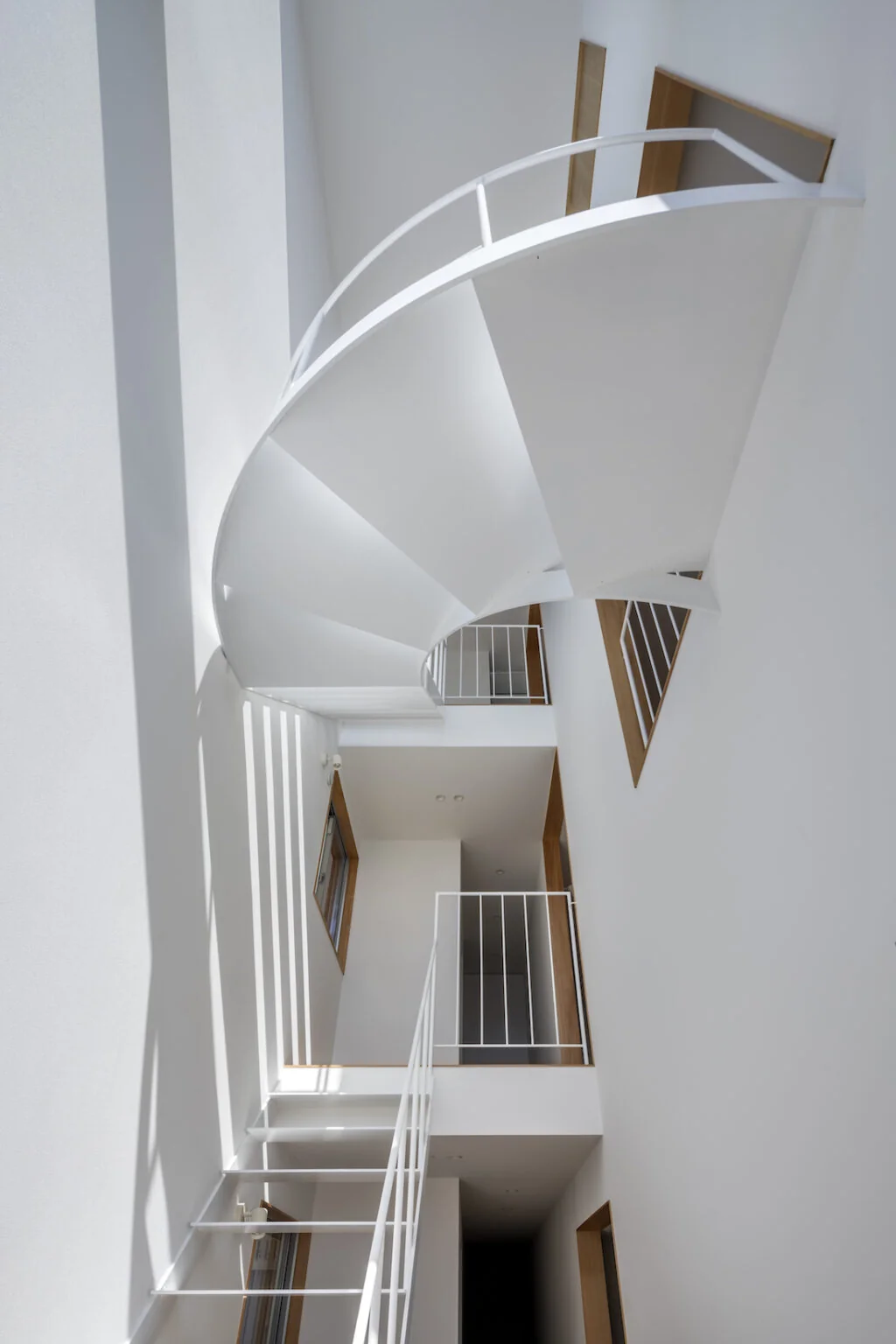
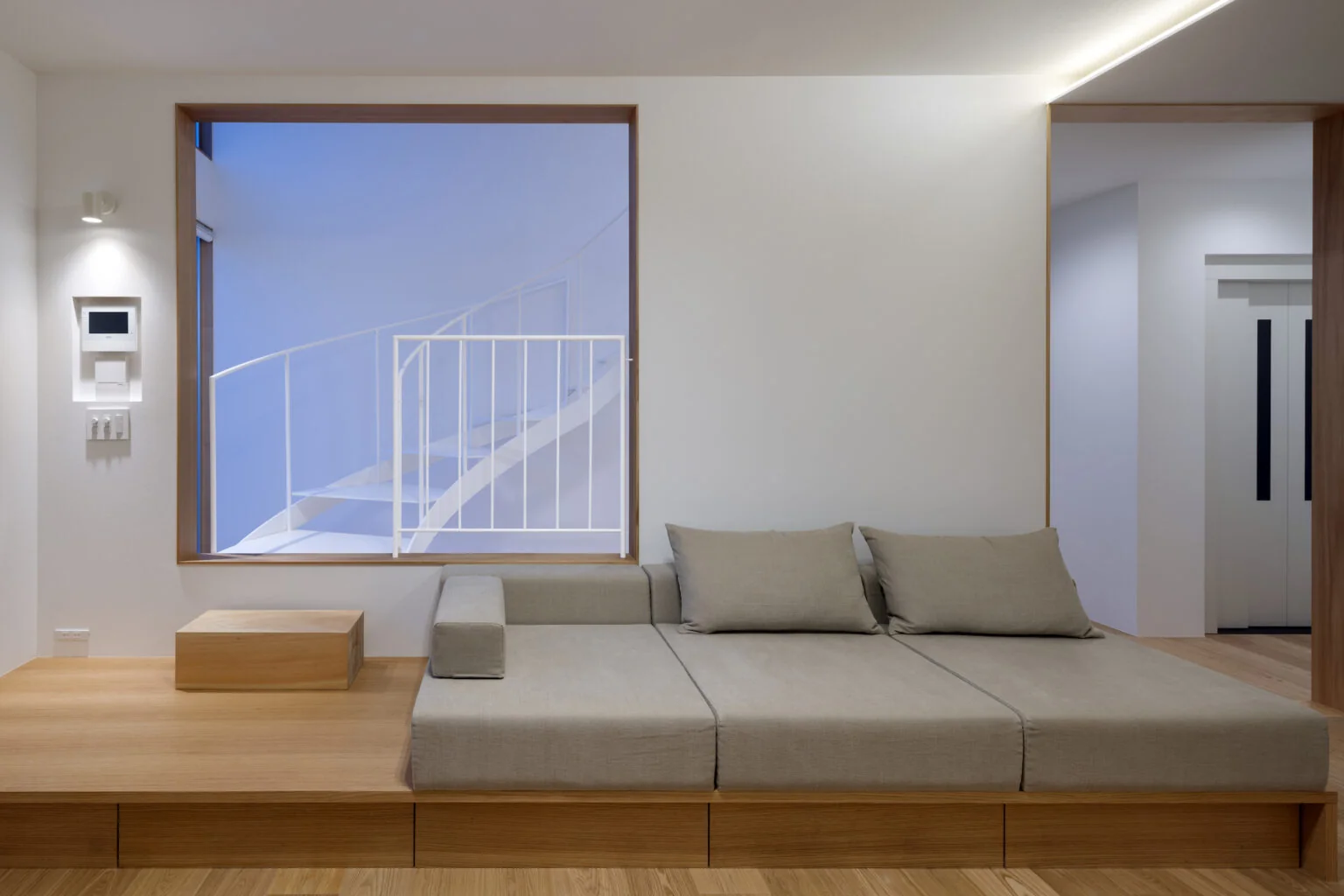
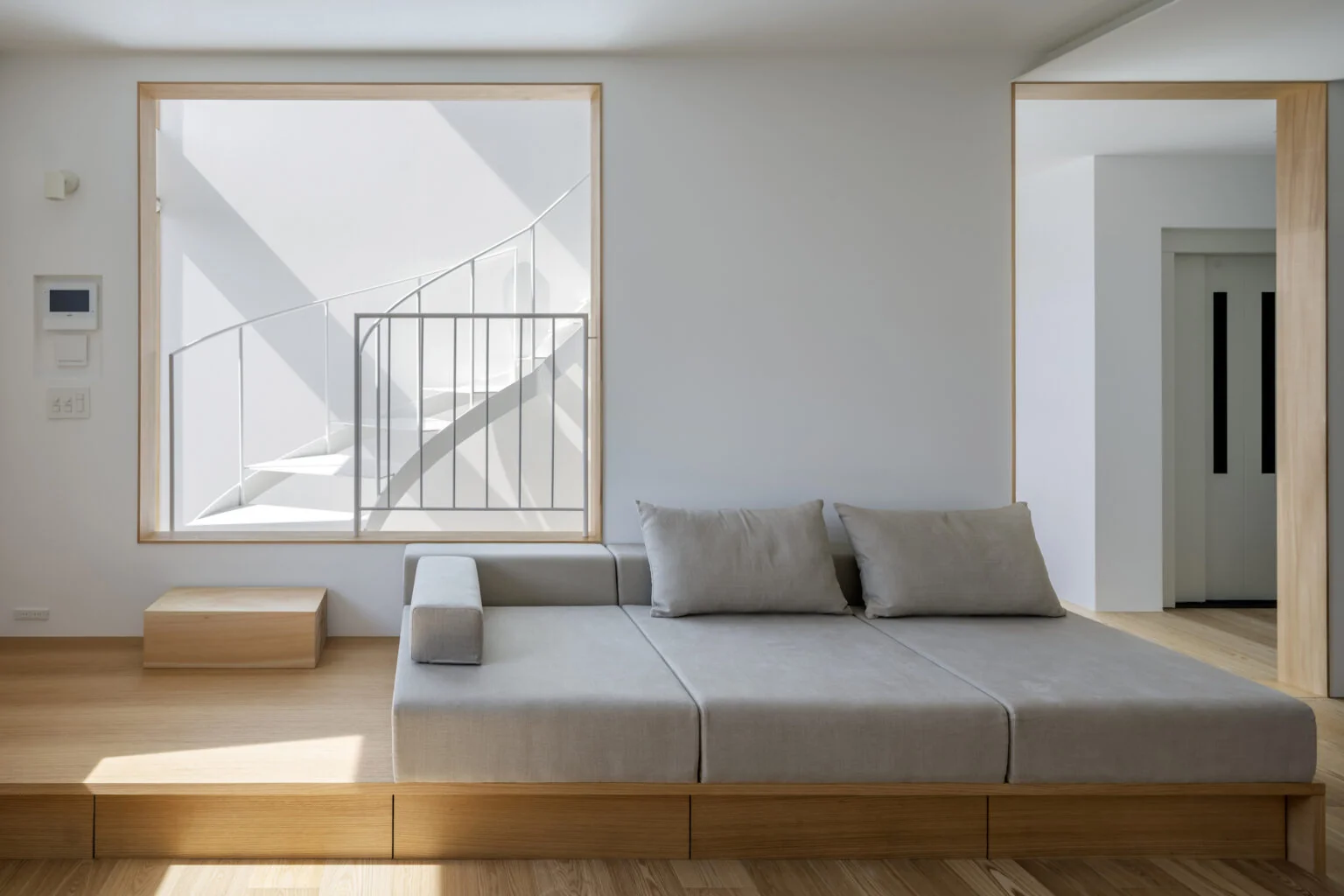
A three-story atrium stairwell, which serves as a luminous core and a focal architectural element symbolizing the family’s attachment to their home, is positioned on the southern side. The staircase itself was custom-designed to function as an iconic centerpiece.
This residence exemplifies an urban housing typology that carefully organizes required specifications with sufficient provision while thoughtfully responding to site-specific conditions and regulatory frameworks. By incorporating meaningful spatial recesses and avoiding mere densification, the design achieves a richness and quality of living that transcends simple maximization of program. Location: Hyogo Prefecture; Main use: Residential; Structure: Timber-framed, three‑storey; Construction: Ikemasa Co., Ltd.; Landscaping: Plant Office COCA-Z

Given these circumstances and the possibility of future changes in the family structure, the clients desired a spacious and highly specified home that makes full use of the limited site area. The program called for five rooms, ample custom storage, a garage, and an elevator, all integrated within a high-density design.
In response, we proposed a distinctive three-story residence characterized by extended eaves (hisashi) that stretch along the entire site, achieving a harmonious balance between functionality and spatial quality through carefully planned voids within the constrained footprint.
The building volume is articulated to comply with the diagonal plane regulation by lifting the mass above the full-site footprint, while retaining eaves that are exempt from the setback regulations, creating intentional cutouts in the building form. Outdoor mechanical equipment, typically placed on the ground floor, was relocated to the upper floors to free the ground beneath the extended eaves around the perimeter, allowing for open, accessible areas.
These under-eave spaces accommodate the entrance approach, front garden, pathways, a courtyard, bicycle parking, and the built-in garage, optimizing site utilization. The voids carved out on the second and third floors create spatial gaps with the surroundings, reducing a sense of enclosure and enhancing ventilation.
The southern adjacent land is approximately one meter lower in elevation, and due to the northern diagonal plane restriction, the southern upper airspace above the site remains unobstructed indefinitely. Additionally, the northern boundary faces a 6-meter-wide road, allowing for a clear north-south axis through the site. The living, dining, and kitchen areas are arranged longitudinally along this axis, embodying the site’s spatial characteristics.
A three-story atrium stairwell, which serves as a luminous core and a focal architectural element symbolizing the family’s attachment to their home, is positioned on the southern side. The staircase itself was custom-designed to function as an iconic centerpiece.
This residence exemplifies an urban housing typology that carefully organizes required specifications with sufficient provision while thoughtfully responding to site-specific conditions and regulatory frameworks. By incorporating meaningful spatial recesses and avoiding mere densification, the design achieves a richness and quality of living that transcends simple maximization of program. Location: Hyogo Prefecture; Main use: Residential; Structure: Timber-framed, three‑storey; Construction: Ikemasa Co., Ltd.; Landscaping: Plant Office COCA-Z
- Copyright(C)Qurasuki.All Rights Reserved.