Choose architectural examples of The Simple House and Stylish Japanese-Style Rooms for your Personal Diagnosis,
A home-building support tool to meet design offices and builders who resonate with your sensibilities.
The Simple House|Stylish Japanese-Style Rooms|How To
Simplicity in Form, Richness in Quality.
A simple house is by no means inexpensive. On the contrary, by eliminating unnecessary ornamentation, the quality of materials and the beauty of detailing are accentuated. Through careful attention to each element—solid wood flooring, high-quality plaster walls, meticulously finished joinery—a simple yet richly expressive space is created.
Roof Shapes Unified in Simplicity.
Complex roof shapes increase the risk of leaks and raise maintenance costs. By selecting simple roof forms such as gable or single-pitch roofs, the structure becomes both rational and aesthetically pleasing. Careful consideration of eave projections and the detailing of the eaves allows for a richly expressive appearance even with a simple form.
Creating Rhythm in Window Arrangement.
To achieve a simple exterior, it is essential to organize the size and placement of windows. Rather than arranging windows randomly, aligning their heights and widths or spacing them evenly introduces order to the façade. Plan a rhythmic window arrangement that balances the interior functionality with the aesthetic appeal of the exterior.
Create Cohesion by Limiting the Color Palette.
By restricting the colors used for exterior walls, roofs, and window frames to two or three, a harmonious facade is achieved. Basic colors such as white, gray, black, and beige are timeless and blend seamlessly with the surrounding environment. The subtraction of colors imparts elegance and tranquility. A home that remains appealing over time begins with thoughtful color selection.
Organizing Space with Built-in Furniture.
Instead of placing commercially available furniture afterward, planning built-in wall storage and custom shelves allows for maintaining a neat and orderly space. Finishing these elements in the same color and material as the walls effectively conceals the presence of storage, preserving a simple and clean aesthetic. Storage integrated with the architecture not only enhances visual appeal but also improves spatial efficiency.
Doors Designed to Blend Seamlessly into Walls.
By finishing doors and sliding doors with the same surface treatment as the walls or employing frameless installations, the presence of the doors is minimized, resulting in a more cohesive spatial experience. Selecting simple handles or using pocket doors that recess into the wall further reduces visual clutter, creating a clean and streamlined appearance. Spaces where doors effectively disappear represent the pinnacle of simplicity.
Instead of extensively using pendant lights or chandeliers, securing the necessary brightness through downlights and indirect lighting keeps the ceiling plane clean and uncluttered. By carefully planning the lighting design, it is possible to reduce the number of fixtures while creating a comfortable luminous environment. Light is present, but the fixtures remain unseen. This represents the ideal of simple lighting.
Uniform Flooring Throughout
Instead of changing flooring materials for each room, unifying them with the same material as much as possible creates a sense of visual expansiveness and tranquility. Selecting materials such as solid wood that develop character over time results in a space that is both simple and richly textured. The continuity of materials supports a serene living environment.
Applying Subtractive Design to the Garden as Well.
A simple house is complemented by a simple garden. Rather than overcrowding with a wide variety of plants, selecting and arranging a limited number of tree species creates a refined landscape. Materials such as gravel, turf, and concrete are also kept minimal. The garden, too, achieves beauty through the aesthetics of subtraction.
Storage Planning to Conceal Everyday Clutter
To maintain a simple and clean space, it is essential to devise ways to keep everyday miscellaneous items out of sight. Enhancing dedicated storage areas such as pantries, shoe closets, and family closets allows for consolidated organization, helping to keep public spaces like the living room neat and orderly. Establishing a clear distinction between 'concealed storage' and 'display areas' is crucial.
Seamlessly Finishing Material Joints with Elegance.
In minimalist designs, the beauty of material joints and detailing becomes particularly prominent. Meticulous finishing of junctions such as floor-to-wall connections, door frame installations, and ceiling-to-wall transitions enhances the overall quality. These areas also test the craftsmanship of artisans, making the selection of contractors crucial. The accumulation of attention to detail creates a refined simplicity.
Maintain Beauty with a Design that Facilitates Cleaning.
Since simple spaces tend to show dirt more easily, it is advisable to consider ease of cleaning from the design stage. By minimizing level changes, adopting forms that are less prone to dust accumulation, and selecting materials that are easy to wipe down, the aesthetic quality can be more effectively preserved. Ease of maintenance is also a fundamental condition for a simple lifestyle.
Types of Tatami and Selection of Edging
Tatami mats vary in size standards depending on the region, such as Kyoma and Edoma. Recently, Ryukyu tatami and edging-less tatami have also gained popularity. Tatami with edging offers a traditional and serene aesthetic, while edging-less tatami provides a modern and clean appearance. The materials for tatami surface coverings have expanded from natural rush grass to include washi paper and resin options, allowing for a broader range of choices. It is advisable to consider maintenance requirements and intended usage when selecting the appropriate tatami type.
The Relationship Between Ceiling Height and Sense of Calm.
Compared to Western-style rooms, Japanese-style rooms feature slightly lower ceilings, which create a tranquil atmosphere. Assuming a lifestyle centered around sitting on the floor, a ceiling height of approximately 2.1 to 2.3 meters does not induce a sense of confinement; rather, it provides a comfortable, enveloping feeling. However, when incorporating a sunken kotatsu or anticipating the use of chairs, it is necessary to consider ceiling heights appropriate to these functions.
Selection and Operation of Joinery
Traditional joinery such as shoji screens and fusuma sliding doors are crucial elements that define the ambiance of a Japanese-style room. Shoji screens diffuse soft light into the interior, imparting a sense of depth to the space. Utilizing sliding doors allows for wider openings, fostering a seamless connection with adjacent areas. Attention to the design of the joinery's stiles and rails further enhances a refined and sophisticated impression.
A Contemporary Interpretation of the Tokonoma.
While incorporating a traditional tokonoma is commendable, it can also be simply reinterpreted to suit modern living. Creating a niche approximately 15 cm deep within the wall to display flowers or hanging scrolls, or fabricating a low decorative shelf, allows for a functional space that preserves the spiritual essence of the tokonoma.
Creating Shadows and Highlights through Lighting Design.
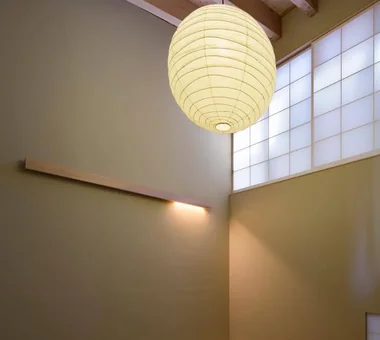
The charm of a Japanese-style room lies in the beauty of soft light and shadows. By effectively utilizing indirect lighting and selecting lantern-style fixtures, a calm and serene atmosphere can be achieved. Recessed downlights installed in the ceiling, equipped with dimming functions, allow for brightness adjustments tailored to various uses. Subtle, gentle illumination rather than overly bright light complements the traditional Japanese space.
Texture of Wall Finishes.
Plaster finishes such as Juraku plaster and diatomaceous earth plaster impart depth and texture to Japanese-style rooms. These materials are breathable and offer moisture-regulating effects. Even when opting for wallpaper finishes, selecting ones with Japanese paper or woven fabric textures allows for a finish that preserves the traditional Japanese ambiance. Colors in subdued tones such as white, beige, or gray tend to harmonize well.
Continuity with Other Spaces.
When adjoining the living room or dining area, a design that allows the openings to be fully opened for integrated use is convenient. Aligning the floor levels or intentionally raising one level alters the spatial impression. Introducing a step creates variation within the space and allows adjustment of the eye level when seated. However, if prioritizing barrier-free accessibility, consider a flat floor finish.
Window Placement and Framing of Views
The windows in the Japanese-style room serve the purpose of framing the external scenery like a painting. By effectively utilizing low-set windows, one can enjoy the greenery of the courtyard garden. Additionally, the soft light filtered through the shoji screens further enhances the ambiance of the Japanese-style room. The placement of windows should be determined with consideration for both the interior views and the exterior appearance.
The Choice of a Raised Japanese-Style Room.
Incorporating a raised Japanese-style room in a corner of the living area creates a distinct spatial articulation. The stepped platform can also be utilized as storage, offering functional advantages. A height of approximately 30 to 40 cm is typical, providing an ideal dimension for seating. However, when small children or elderly individuals are present, careful consideration of safety measures is essential.
Incorporation of Tokobashira and Nageshi
In traditional Japanese-style rooms with an exposed post-and-beam structure, visible pillars impart a sense of formality to the space. Using fine timber for the tokobashira (alcove pillar) or creating visual lines with nageshi (horizontal wooden rails) evokes an authentic Japanese aesthetic. However, in contemporary residences, finished walls without exposed framing are common, and simpler, more modern Japanese-style rooms are also popular. Selection should be made according to the desired atmosphere.
Incorporate Versatility in Usage.
The Japanese-style room serves not only as a guest room but also as a multifunctional space for family relaxation, a children's play area, and a place for folding laundry. Planning the arrangement of storage, lighting, and electrical outlets with the potential future use as a bedroom in mind allows the space to adapt to changes in life stages.
Maintenance and Aging.
Tatami mats require flipping or replacement approximately every 5 to 10 years, and shoji paper also needs periodic reapplication. Although this maintenance demands effort, it is precisely through these processes that the space can be kept fresh, which is a distinctive appeal of Japanese-style rooms. By carefully tending to the natural aging of materials such as the scent of igusa rush and other natural elements, the space becomes one that fosters a deep sense of attachment.
Q&A
The Simple House|Stylish Japanese-Style Rooms|Q&A
What are the essential elements to prioritize in a simple house?
It is important to embrace the 'aesthetics of subtraction.' Avoid unnecessary ornamentation and complex forms, focusing instead on enhancing the inherent beauty of materials and the quality of the space. By balancing functionality and beauty, you can create a home that will be cherished for a long time.
Are there ways to create a sense of warmth even in a simple residence?
We recommend effectively incorporating natural materials such as solid wood, stone, and plaster. Additionally, thoughtful lighting design and the placement of plants can create a space that is simple yet imbued with human warmth. Selecting materials with tactile qualities is key to achieving a warm atmosphere.
What are the key points to consider when designing an efficient floor plan?
The fundamental principle is to avoid overlapping circulation paths and to clearly define the function of each room. Minimize corridors and consider layouts that emphasize continuity between rooms. Additionally, creating flexible spaces that can adapt to future lifestyle changes is an important factor.
How should a color planning process be carried out?
It is recommended to set the base colors to white or beige tones and limit the accent colors to one or two. By leveraging the natural hues of materials, a warm and simple aesthetic is achieved. Additionally, it is possible to vary the color palette through accessories according to the season or mood.
Please share tips for making storage appear neat and organized.
It is important to strategically differentiate between "display storage" and "concealed storage." For wall-mounted storage units, use uniform doors and select handles that are unobtrusive. Additionally, regularly reassess the quantity of stored items and retain only what is truly necessary to maintain an aesthetically pleasing space.
Are there any key points to maintaining simplicity in lighting design?
Selecting fixtures that remain unobtrusive, such as downlights and linear lighting, is effective. By placing appropriate light levels in necessary areas and utilizing indirect lighting, the space gains depth and warmth. Incorporating dimming functions also enables spatial ambiance to be adjusted according to the time of day.
What design strategies can be employed to make a Japanese-style room versatile for multiple uses?
The use of movable partitions and stowable low tables is effective. Under normal circumstances, the space can remain open and airy, while during guest visits it can be separated into an independent reception room. Planning the locations of electrical outlets and lighting switches with various usage scenarios in mind also enhances convenience.
Are there any key points to consider when choosing the color of tatami mats?
In addition to the traditional igusa grass color, there is now a wide variety of color options available. For example, tatami mats in shades such as sumi black, gray, or flax provide a modern and calm impression, and tend to harmonize well with flooring and contemporary furniture. Considering the balance with the flooring materials and joinery colors of adjacent spaces such as living-dining-kitchen areas and corridors will result in a cohesive and aesthetically pleasing environment.
What type of window is suitable for a Japanese-style room?
A combination with shoji screens is both aesthetically pleasing and functional. If using a floor-to-ceiling sliding window, it can also serve as an engawa-like space. It is advisable to consider the window height relative to the seated eye level. Incorporating lattice or louvers can help maintain privacy while ensuring adequate ventilation.
What type of lighting should be chosen for a Japanese-style room to create a sophisticated atmosphere?
Instead of installing a single light fixture in the center of the ceiling, it is elegant to combine multiple light sources. For example, use recessed downlights to keep the ceiling looking clean as the primary lighting, and add indirect lighting to illuminate the tokonoma alcove or walls. Placing a floor lamp made of washi paper at a low position lowers the visual weight, creating a calm and refined light-filled space.
Is a tokonoma (alcove) necessary in contemporary residential architecture?
While not essential, a tokonoma enhances the elegance of a Japanese-style room. In cases where space is limited, a compact display shelf or a recessed wall niche can serve as an effective simplified tokonoma. By exhibiting seasonal flowers or calligraphy, it integrates traditional Japanese aesthetics into everyday living.
Are there any design strategies to make a compact Japanese-style room appear more spacious?
Setting the ceiling lower than that of the living room and incorporating a horizontally oriented 'ground-level window' (chimado) are effective techniques. By directing the lower line of sight outward, these features create a sense of expansiveness and tranquility that exceeds the actual floor area. Additionally, the technique of 'wall integration,' where storage doors are finished in the same color and material as the surrounding walls, helps to streamline the space visually and enhance the perception of openness.
Home building starts with what you love. A place to visualize your sensibilities and achieve a lifestyle that is uniquely yours.
Pick architectural photos to automatically analyze your sensibilities. Visualize your unspoken 'likes' and find professionals who share your values.
Shape your ideal home with intuitive operations. How to enjoy Qurasuki even if it's your first time.
No special knowledge required. Just browse photos and pick what moves you to reveal your style and meet experts who can fulfill your dreams.
Save Photos You Love
Just tap '♡'. Whether you know your style or are just starting, begin by freely collecting the seeds of your ideal home.
'Auto-Analysis' to Decode Your Sensibility
Analyzes preferences from your saved photos. Uncover your 'true ideal' by visualizing the tastes you couldn't put into words.
Discover Professionals through Diagnosis
Find experts who match your sensibilities. Explore their philosophies and projects to find a partner who shares your values.
Experience Your Ideal through Events
Join open houses or events hosted by experts you like. Deepen your trust and peace of mind by experiencing actual spaces.