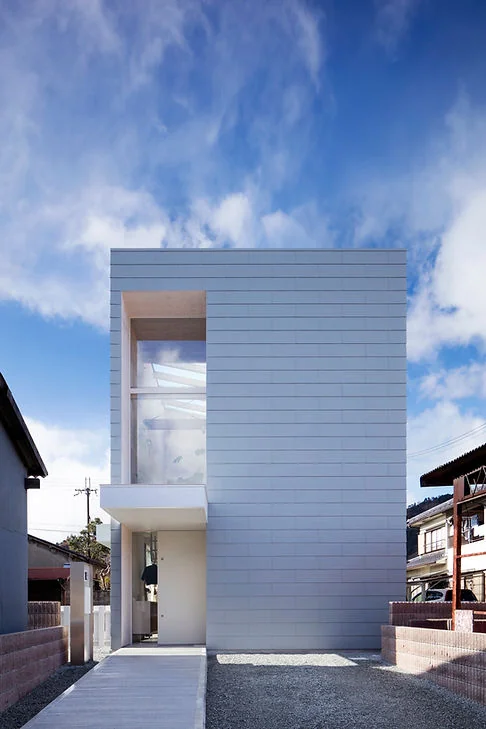
Introducing POCCO — Excellence Award, Residential Interior Coordination Contest, a custom-built home example by YIA Ishiue Yoshihiro Architectural Design Office, a Architect / Design office in 1572 Amagawataki-cho, Kishiwada, Osaka Prefecture, Japan

POCCO — Excellence Award, Residential Interior Coordination Contest
Eiji Tomita
Learn More
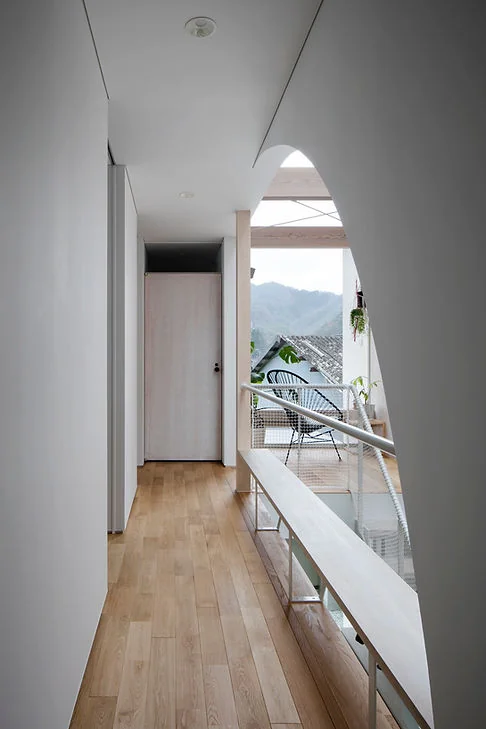
I am interested in spaces with fixed programs — corridors, stairways and other spaces with clearly defined uses. Fundamentally, a corridor is for walking and a stair is for ascending. Yet as individual lifestyles diversify, private rooms increasingly lack a single fixed purpose and are often required to be closed off as neutral, inorganic 'spaces' without a clearly defined program. I sometimes suspect that this is being demanded of contemporary housing.
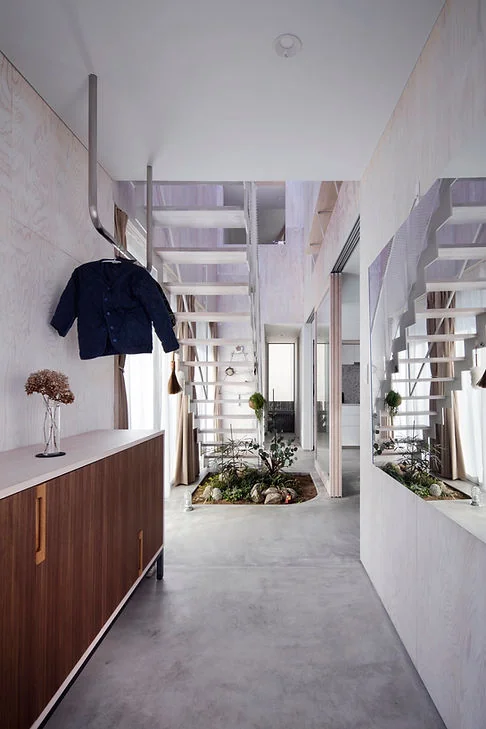
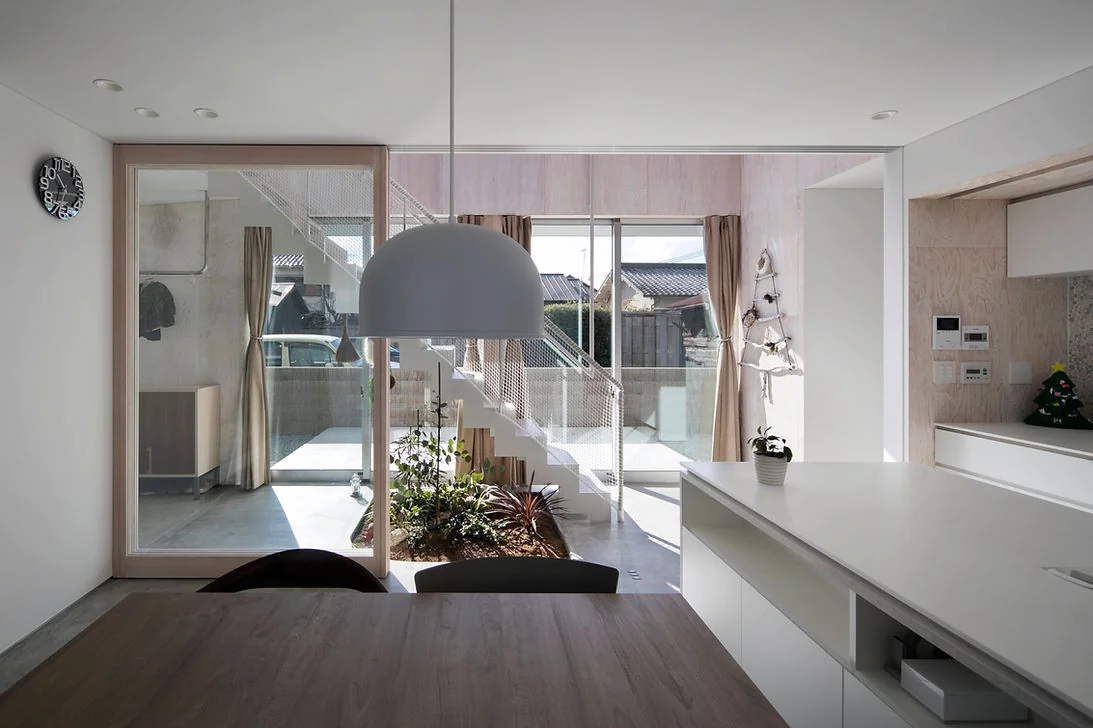
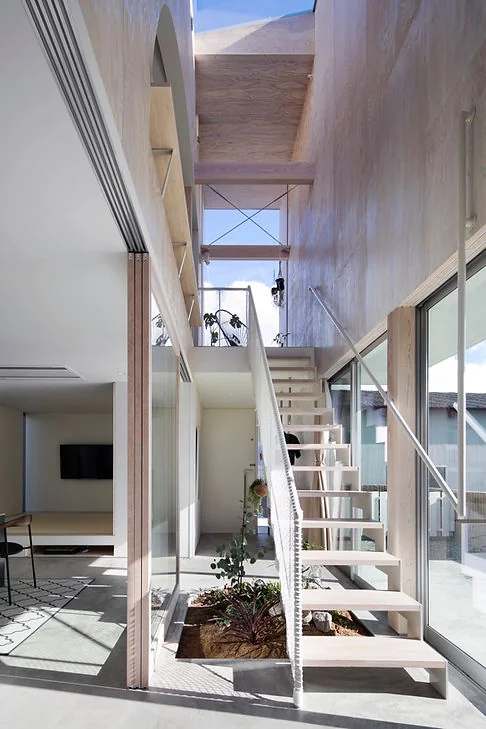
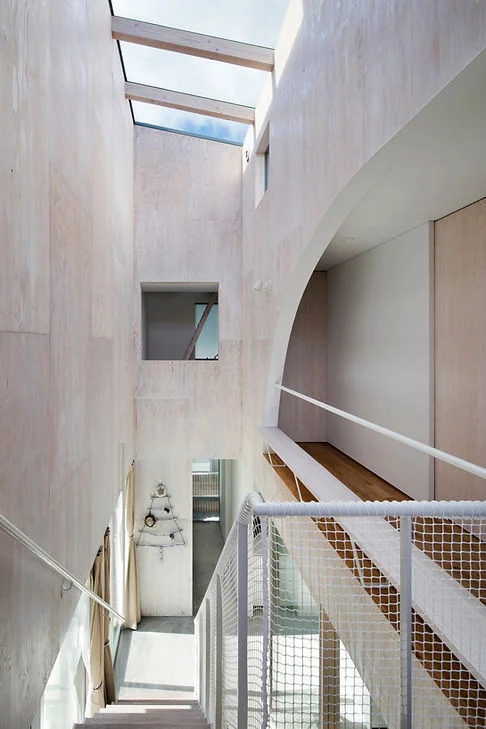
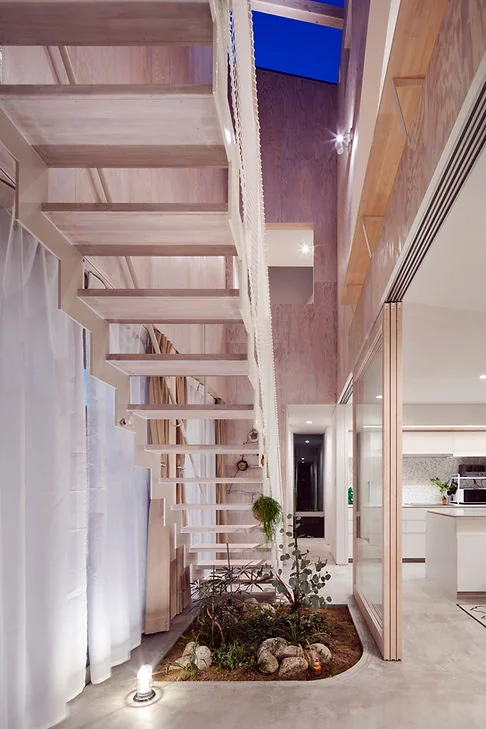
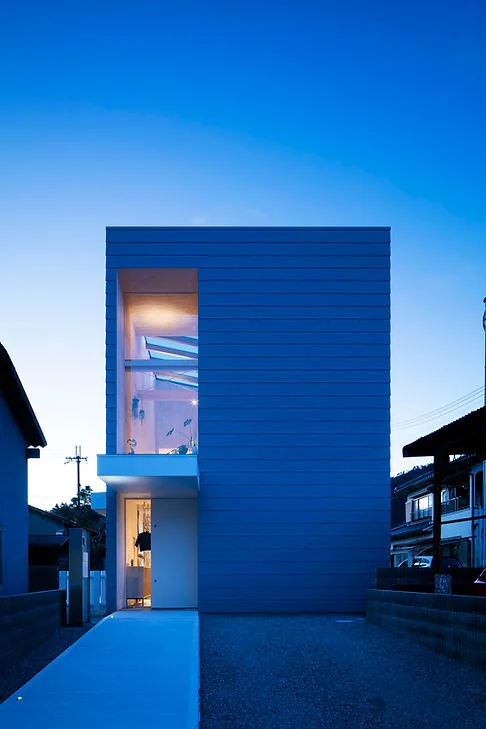
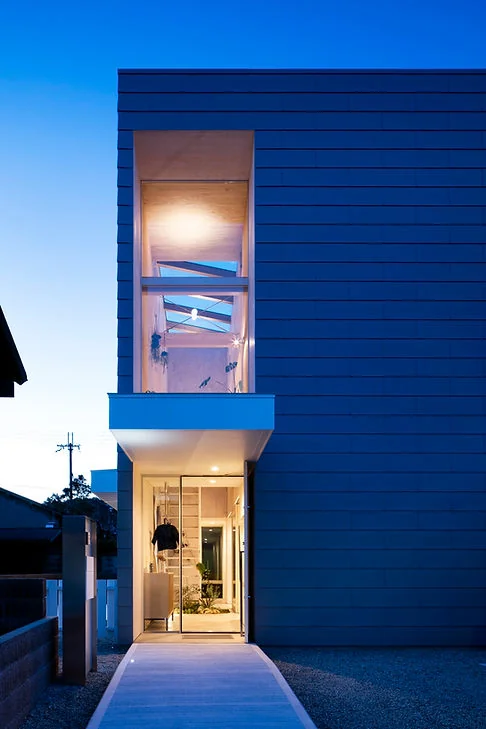
At the same time, corridors and staircases are widely regarded as wasted space, and there is a tendency to justify minimizing their proportion within a dwelling. By re-examining these spaces and increasing their weight within the house, I believe it is possible to create engaging homes that gently reconnect otherwise segregated private rooms. In this project, the corridor, stair and entrance together occupy nearly half of the building volume. Lush, vivid greenery — like a garden — makes it momentarily unclear whether that planting is inside or outside.
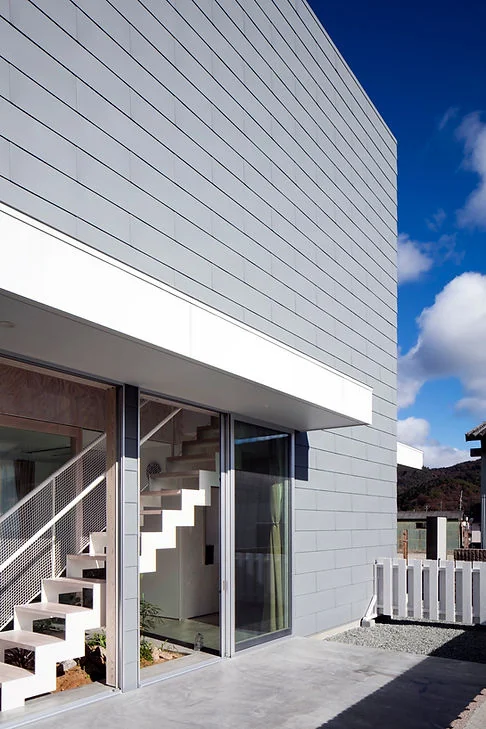
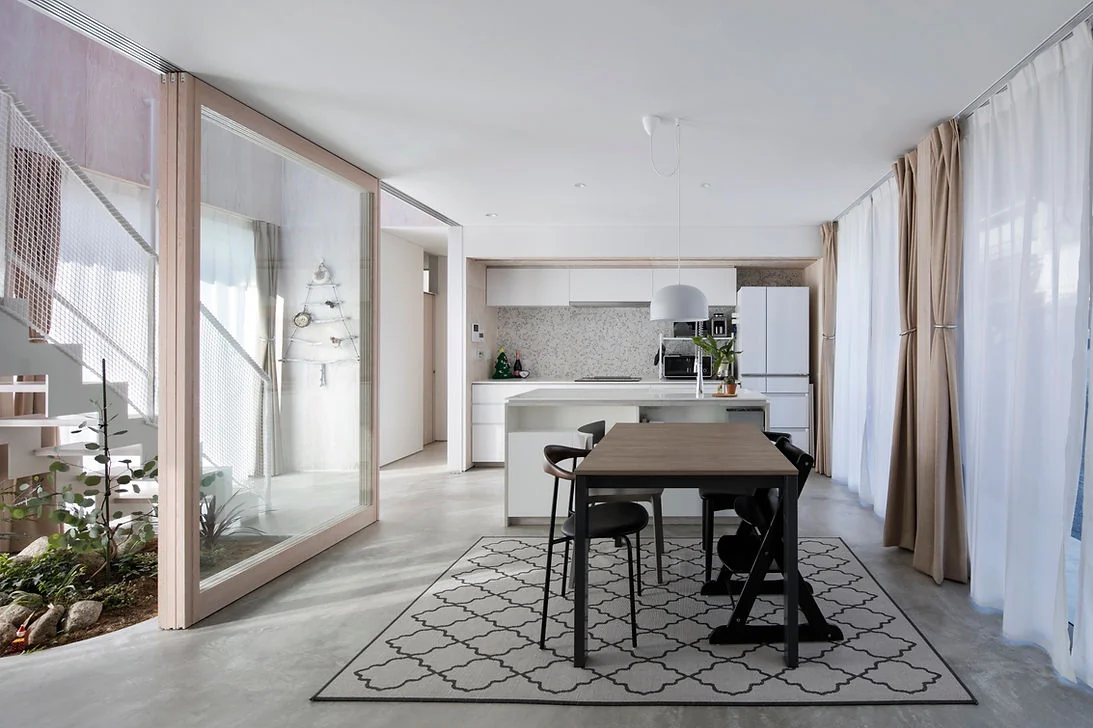
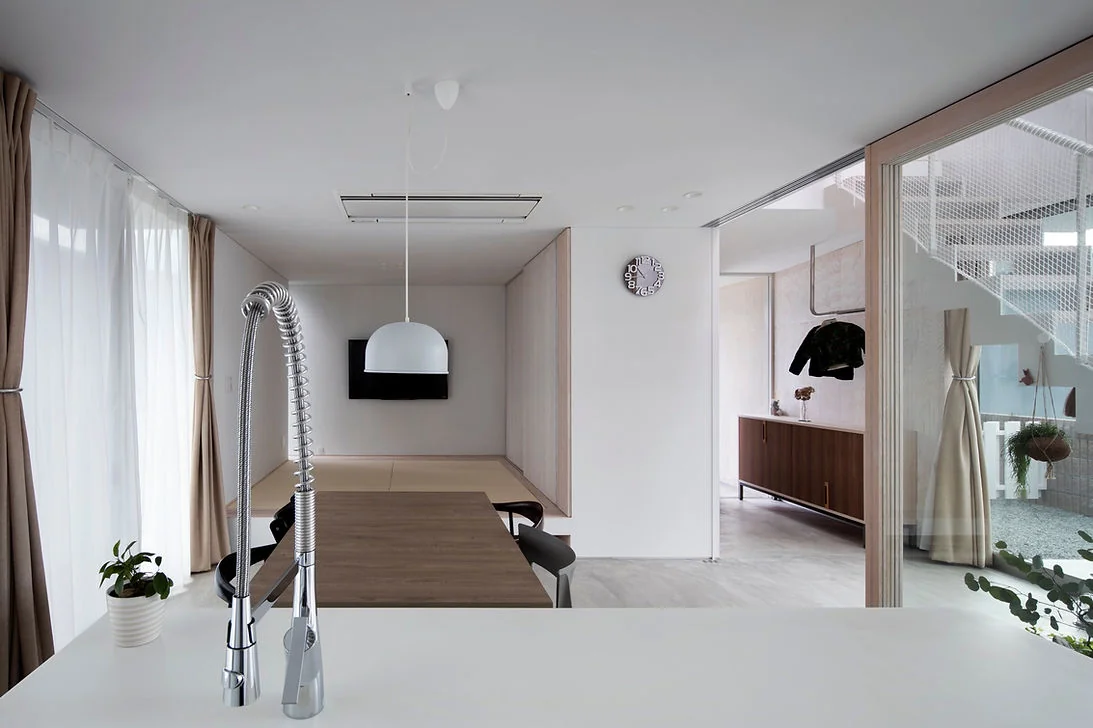
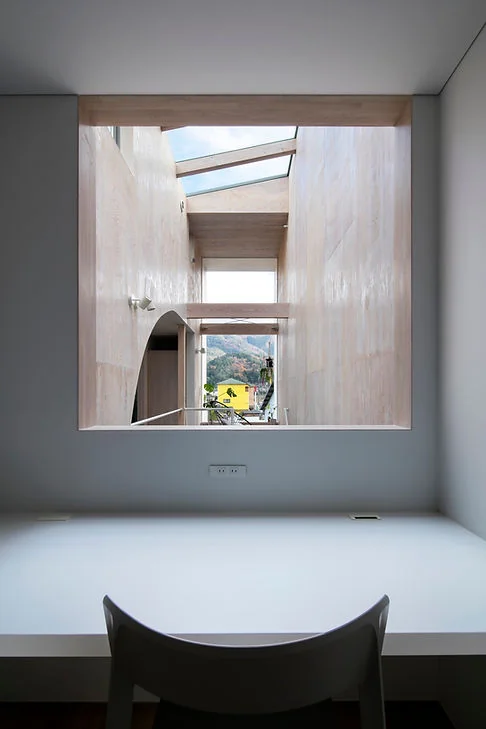
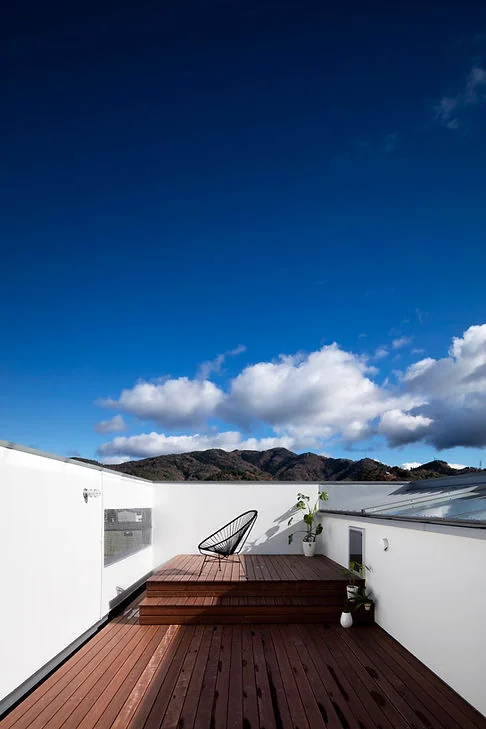
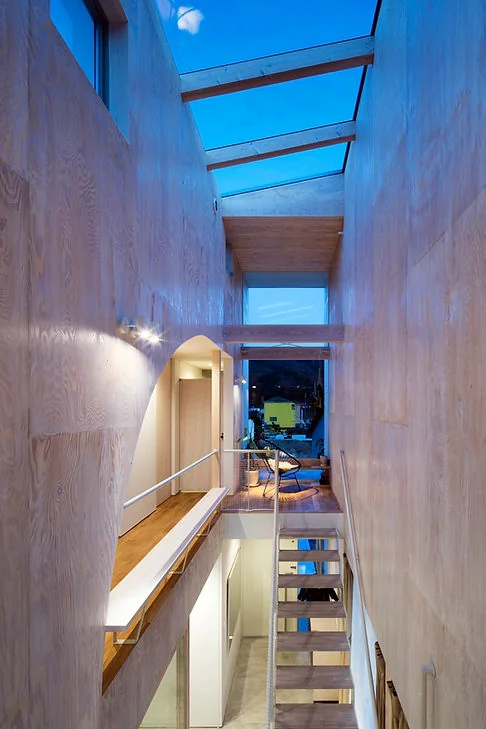
The aim was to create a living environment that allows residents to feel connected to nature. At the center of the house we introduced an "uchi-niwa" (inner garden) — an atrium beneath a full-width top light that functions as both entrance hall and stair. The uchi-niwa contains an excavated area in the floor where real plants can be grown. During the day the atrium is flooded with natural light from the top light, creating conditions in which the vegetation can thrive.
On the ground floor, a continuous concrete finish ties the approach and the exterior garden to the interior, strengthening the connection with the outdoors and softening the boundary between inside and outside. To make the uchi-niwa feel visually distinct from the other rooms, the finishes are stained softwood plywood so that the texture of the substrate remains legible. The plywood is laid in a brick-like bond. To avoid conveying a sense of stratification, horizontal joints are deliberately not continued; the detailing is executed so that the void reads as a single, cohesive volume. Principal use: Residence
Location: Yamasaki Town, Hyogo Prefecture
Structure: Wood-frame, 2 storeys
Site area: 191.16 m²
Total floor area: 106.75 m²
Construction: Shigenobu Architecture
Structural design: Kataoka Structural Engineering
Landscape: Green Workshop Inazawa
Furniture: YIA Original
Kitchen: FREE STYLE
At the same time, corridors and staircases are widely regarded as wasted space, and there is a tendency to justify minimizing their proportion within a dwelling. By re-examining these spaces and increasing their weight within the house, I believe it is possible to create engaging homes that gently reconnect otherwise segregated private rooms. In this project, the corridor, stair and entrance together occupy nearly half of the building volume. Lush, vivid greenery — like a garden — makes it momentarily unclear whether that planting is inside or outside.
The aim was to create a living environment that allows residents to feel connected to nature. At the center of the house we introduced an "uchi-niwa" (inner garden) — an atrium beneath a full-width top light that functions as both entrance hall and stair. The uchi-niwa contains an excavated area in the floor where real plants can be grown. During the day the atrium is flooded with natural light from the top light, creating conditions in which the vegetation can thrive.
On the ground floor, a continuous concrete finish ties the approach and the exterior garden to the interior, strengthening the connection with the outdoors and softening the boundary between inside and outside. To make the uchi-niwa feel visually distinct from the other rooms, the finishes are stained softwood plywood so that the texture of the substrate remains legible. The plywood is laid in a brick-like bond. To avoid conveying a sense of stratification, horizontal joints are deliberately not continued; the detailing is executed so that the void reads as a single, cohesive volume. Principal use: Residence
Location: Yamasaki Town, Hyogo Prefecture
Structure: Wood-frame, 2 storeys
Site area: 191.16 m²
Total floor area: 106.75 m²
Construction: Shigenobu Architecture
Structural design: Kataoka Structural Engineering
Landscape: Green Workshop Inazawa
Furniture: YIA Original
Kitchen: FREE STYLE
- Copyright(C)Qurasuki.All Rights Reserved.