Choose architectural examples of Homes Designed for Living with Dogs and Stylish Storage Solutions for your Personal Diagnosis,
A home-building support tool to meet design offices and builders who resonate with your sensibilities.
Homes Designed for Living with Dogs|Stylish Storage Solutions|How To
Dedicated Entrance for Dogs Allowing Unrestricted Access.
Installing a pet door that enables free access to the garden or terrace significantly reduces stress for dogs. Various product types are available, including those integrated into human doors and those installed directly in walls. For security considerations, selecting models with locks or sensor-based mechanisms provides peace of mind. This design solution balances the dog's freedom with the family's safety.
Protecting Joints with Non-Slip Flooring Materials.
Floors that are slippery for dogs place significant strain on their joints and lower back. In the case of hardwood flooring, applying an anti-slip coating or selecting cork tiles or cushioned flooring can help safeguard the health of dogs. Choosing flooring that protects a dog's body forms the foundation for a long and healthy life.
Selection of Materials Resistant to Stains and Easy to Clean.
Living with dogs inevitably involves dealing with mud stains, shedding, and odors. Applying tile cladding to the lower sections of walls or choosing vinyl wallpaper that is easy to wipe clean helps maintain hygiene more effectively. Selecting flooring materials that can be cleaned with a damp cloth also facilitates daily maintenance.
Playing in the Garden and Dog Run.
Having a garden where dogs can run freely greatly contributes to their physical and mental well-being. Securing a safe space enclosed by fencing and incorporating areas of lawn and soil creates an environment where dogs can play to their heart's content. For large breeds in particular, it is ideal to ensure ample space.
Keep the Entrance Clean with a Foot Washing Station.
Having a foot washing station at the main entrance or service entrance is convenient when returning from a walk. By installing a sink or an external faucet, muddy feet can be washed before entering the interior. The availability of hot water further enhances comfort. This setup streamlines the post-return routine for both dogs and people, while maintaining indoor cleanliness.
Provide Multiple Resting Areas for Dogs.
Dogs tend to change their preferred resting spots depending on the season and their mood. By offering multiple locations—such as a corner of the living room, a sunlit window nook, or a cool entrance vestibule—you can ensure your dog’s comfort. When planning spaces for crates or beds, consider placing them in areas that do not disrupt circulation paths.
Odor Control and Ventilation Planning.
When living with dogs, odor control is essential. Utilizing wall materials with deodorizing properties, such as Eco-Carat, and enhancing ventilation systems can maintain clean indoor air quality. It is also effective to locate the dog's toilet area in a well-ventilated space. The quality of air is the key to ensuring comfort for both humans and dogs.
Storage Space for Dog Supplies.
Dog supplies, including food, treats, toys, leashes, harnesses, and care products, can accumulate unexpectedly. By providing dedicated storage near the entrance or in a corner of the living room, these items can be accessed quickly and efficiently. This approach also maintains a clean and organized appearance, ensuring a composed environment when guests arrive.
Considerations for Safety.
It is essential to ensure that gaps in stair railings and fences are narrow enough to prevent small dogs from passing through, and to store small items that pose a risk of accidental ingestion out of the dogs' reach. Planning for the installation of gates in potentially hazardous areas such as kitchens and balconies provides additional peace of mind.
Spaciousness Designed for Multiple Dogs.
Anticipating the possibility of an increase in the number of dogs in the future, it is advisable to secure a slightly larger space for peace of mind. Depending on the compatibility and temperament of each dog, individual areas may be required. A flexible spatial design accommodates changes in living arrangements with dogs.
Living Room Layout Designed for Spending Time with Dogs.
Dogs are animals that want to be close to their family. By creating a designated space for dogs in the living room, the time spent together with family increases. The key is to secure a comfortable spot for the dog to relax, such as near the sofa or by the window, while ensuring that the human circulation paths are not obstructed.
Barrier-Free Design for Aging Dogs
As dogs age, steps and stairs become challenging for them. By anticipating the future and minimizing level changes or installing ramps, it is possible to ensure a safe and comfortable living environment for elderly dogs. Forward-looking design is essential to maintain a long-lasting companionship.
Accurate Estimation of Storage Capacity
When planning storage capacity for a new residence, it is essential to consider not only the current volume of belongings but also anticipated future increases. Generally, it is advisable to allocate approximately 10 to 15% of the total floor area for storage spaces; however, the required amount varies depending on lifestyle. We recommend concretely visualizing what items will be stored and where to optimize storage planning.
Locate Near the Point of Use.
Storage should fundamentally be provided close to the area where items are used. For example, shoes and outdoor accessories near the entrance, food and cooking utensils in the kitchen, and clothing in the bedroom. Arranging storage with consideration to circulation paths enhances efficiency. Especially for frequently used items, plan during the design phase to ensure they can be stored in positions that are easy to access and return to.
Differentiation of Depth Usage.
It is essential to adjust the shelf depth according to the items to be stored. For clothing, a depth of approximately 60 cm is appropriate; for books, around 30 cm; and for cleaning tools, about 45 cm. By setting the appropriate depth, dead space is minimized, enabling efficient storage. Care should be taken to avoid excessively deep storage, as it makes retrieving items at the back difficult.
Enhancing Flexibility with Adjustable Shelves.
By opting for adjustable shelves instead of fixed ones, you can accommodate changes in the items being stored. Adjustable shelving is particularly useful in areas such as bookshelves, pantries, and closets, where items of various sizes need to be stored. The ability to modify shelf heights allows for efficient use of space and facilitates adaptation to changes in life stages.
Differentiating Between Display Storage and Concealed Storage.
It is not necessary to conceal everything; by using display storage for aesthetically pleasing items and those frequently used, the space becomes both functional and an integral part of the interior design. Conversely, items that evoke a sense of everyday life can be hidden behind doors, maintaining a clean and uncluttered environment. This strategic differentiation is key to a refined storage plan.
Planning of Walk-In Closets
A walk-in closet adjacent to the bedroom provides convenient storage by consolidating clothing in one location. A minimum area of approximately 3.3 square meters (2 tatami mats) is recommended, with around 5 square meters (3 tatami mats) preferred for greater ease of use. By carefully considering the height and placement of hanging rods and the arrangement of shelves, it is possible to maximize clothing storage even within a limited space.
Effective Utilization of the Pantry.
Having a pantry adjacent to the kitchen allows for centralized storage of food supplies, cooking appliances, and tableware. Even a space of approximately 1 to 2 tatami mats can provide ample storage capacity by incorporating adjustable shelving. Additionally, connecting the pantry to a service entrance facilitates a smooth workflow after grocery shopping.
Utilization of Space Under Stairs and Attic.
The space under the stairs is suitable for storing cleaning tools and similar items. Due to its irregular shape, custom-built shelving is an efficient solution. Additionally, attic storage serves as an effective place for keeping seasonal appliances and memorabilia that are not used regularly; however, attention must be paid to temperature increases during the summer months.
Enhanced Entrance Storage.
By incorporating a shoes-in cloakroom, it is possible to store not only footwear but also coats, umbrellas, strollers, and outdoor equipment. Storage areas contiguous to the dirt floor are convenient for directly storing items used outdoors. Maintaining a tidy entrance improves the overall impression of the residence.
Custom-Built Furniture Tailored to the Space.
Wall-mounted storage and custom shelving are precisely fitted to the dimensions of the space, eliminating wasted areas. Even in locations with beams or columns, these elements are designed to maximize storage capacity by skillfully navigating around structural obstacles. Additionally, the specifications of doors, drawers, and internal partitions can be meticulously designed to suit specific functional requirements, offering a high degree of customization.
Moisture Control and Ventilation.
Enclosed storage spaces such as closets and pantries tend to retain moisture, making adequate ventilation essential. Installing louvered doors or using wall materials with humidity-regulating properties can prevent mold growth.
Designing with Future Changes in Mind.
As family composition and lifestyles evolve, the utilization of storage spaces also changes. While toy storage is necessary when children are young, it becomes redundant as they grow. Employing adjustable shelves and removable partitions allows for flexible storage solutions. It is essential to consider systems that can accommodate change from a long-term perspective.
Q&A
Homes Designed for Living with Dogs|Stylish Storage Solutions|Q&A
What are the key elements in designing a home that ensures comfort for dogs?
Temperature control and flooring selection are crucial. Since dogs live closer to the floor than humans, maintaining a comfortable temperature from the ground up through underfloor heating and appropriate insulation is essential. Additionally, choosing materials that are slip-resistant and do not catch on claws helps protect the dog's joints.
Are there architectural measures that can be taken to address dog odors?
A combination of a 24-hour ventilation system and interior materials with deodorizing properties is effective. Natural materials such as diatomaceous earth and plaster offer moisture regulation and odor absorption benefits. Additionally, incorporating a dedicated dog foot-washing station near the entrance can prevent outdoor dirt from being brought indoors.
What are the key points for designing a safe exterior space when allowing dogs to play in the garden?
The fundamental approach is to fully enclose the area with fences at least 1.5 meters high to prevent escapes by jumping over or digging under. The gate should have a double-door system, and plant selections must exclude species toxic to dogs. Additionally, incorporating shade-providing trees or a gazebo ensures that dogs can play comfortably even on hot days.
Where should facilities for dog bathing and grooming be installed to ensure ease of use?
It is practical to install them near the entrance wash area or close to the back door. Equip the space with a sink positioned lower than standard human sinks and provide hot water facilities. The surrounding walls should be made of materials resistant to water splashes. Having towel racks for drying and storage for dog supplies nearby will also help streamline the grooming process.
Are there any points to consider in the floor plan when keeping multiple dogs?
To reduce stress between dogs, it is important to secure individual spaces where each dog can feel at ease. This can be achieved by creating multiple crate areas in a corner of the living room or by widening hallway widths to facilitate easy passing between dogs. Spatial arrangements should be thoughtfully planned according to the family composition.
What are the key considerations in residential design for elderly dogs?
It is important to apply the concept of barrier-free design to dogs as well, minimizing level differences as much as possible. Reinforcing the substrate in areas prone to slipping to facilitate the placement of rugs is advisable. Additionally, planning a dedicated space for the dog close to human circulation paths ensures long-term convenience and safety when caregiving becomes necessary.
What are the key points for an efficient storage planning?
The fundamental principle is zoning based on frequency of use and type of items. Frequently used items should be placed at easily reachable heights, while seasonal goods are effectively stored in upper areas. Additionally, tailored storage solutions appropriate to the function of each room enhance the overall functionality of the residence.
What is the appropriate depth for storage?
The appropriate depth varies depending on the intended use; however, a general storage depth of approximately 45 to 60 cm is considered practical. For clothing, around 55 cm is recommended, while bedding typically requires about 75 cm. Excessive depth can make accessing items at the back difficult, so it is advisable to design storage dimensions tailored to the specific items to be stored.
What are the key points for effectively balancing "visible storage" and "concealed storage"?
A good rule of thumb is to aim for an 80/20 balance—concealing 80% and displaying 20%. Items that are frequently used and tend to reveal everyday life should be stored behind doors to keep them out of sight. Conversely, favorite tableware, books, artworks, and other items that enhance the ambiance of the space should be showcased on open shelves or within niches (recessed wall spaces). This contrast creates a refined and sophisticated environment.
Are there design methods for storage doors that make a space appear larger and more streamlined?
Selecting full-height doors that extend up to the ceiling, known as "hidden doors," emphasizes vertical lines, creating the illusion of higher ceilings and a more streamlined space. Additionally, matching the door color to the wall color allows the doors to blend seamlessly into the wall, minimizing the visual presence of the storage. Handleless push-to-open doors are also effective in imparting a minimalistic and refined aesthetic.
What precautions should be taken inside storage spaces to prevent moisture issues?
Ensuring proper ventilation and humidity control is essential. Installing shelves slightly away from the walls or using slatted bases can facilitate air circulation. Incorporating diatomaceous earth or humidity-regulating building materials in the interior finishes is also effective. Additionally, using dehumidifying agents and regularly opening doors to ventilate the space help prevent mold growth and odors.
Are there any ideas for achieving efficient and stylish storage in narrow residences?
The key is to effectively utilize dead spaces, such as custom-built storage units that reach up to the ceiling and making use of the area beneath staircases. Additionally, finishing storage doors with a mirror surface or incorporating indirect lighting can transform storage from a mere functional element into an interior feature that visually expands the space.
Home building starts with what you love. A place to visualize your sensibilities and achieve a lifestyle that is uniquely yours.
Pick architectural photos to automatically analyze your sensibilities. Visualize your unspoken 'likes' and find professionals who share your values.
Shape your ideal home with intuitive operations. How to enjoy Qurasuki even if it's your first time.
No special knowledge required. Just browse photos and pick what moves you to reveal your style and meet experts who can fulfill your dreams.
Save Photos You Love
Just tap '♡'. Whether you know your style or are just starting, begin by freely collecting the seeds of your ideal home.
'Auto-Analysis' to Decode Your Sensibility
Analyzes preferences from your saved photos. Uncover your 'true ideal' by visualizing the tastes you couldn't put into words.
Discover Professionals through Diagnosis
Find experts who match your sensibilities. Explore their philosophies and projects to find a partner who shares your values.
Experience Your Ideal through Events
Join open houses or events hosted by experts you like. Deepen your trust and peace of mind by experiencing actual spaces.
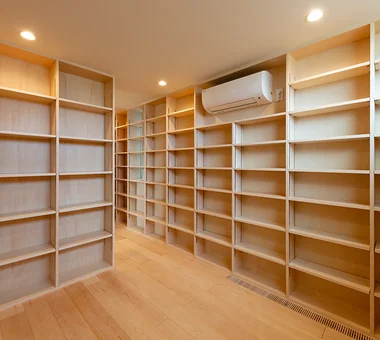
Built-in bookshelves span the entire wall, providing ample storage for hobby books and manga collections.