Choose architectural examples of Modern Residences and Stylish Living-Dining-Kitchen Space for your Personal Diagnosis,
A home-building support tool to meet design offices and builders who resonate with your sensibilities.
Modern Residences|Stylish Living-Dining-Kitchen Space|How To
Composition Emphasizing Horizontal Lines.
A defining characteristic of modern architecture is the elegant, horizontally extending lines. Features such as extended eaves, continuous windows, and flat roofs create a serene yet powerful presence reminiscent of the horizon. By emphasizing the horizontal plane, a sense of stability and expansiveness is simultaneously achieved, culminating in a contemporary aesthetic. The pursuit of horizontality integrated with the structural system forms the foundation of modern architectural design.
Connecting Interior and Exterior with Large Openings.
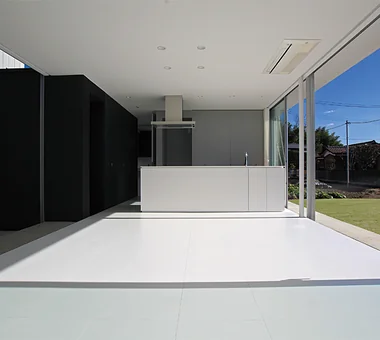
Expansive glass surfaces integrate the interior with the garden seamlessly. Techniques such as minimizing the visible frame of the sash and connecting windows at the corners create a more open and inviting space. However, selecting glass and sash systems with high thermal insulation performance is a prerequisite for maintaining comfort. Strive to maximize openness while balancing structural safety and aesthetic quality.
Defining Space with the Contrast of White and Black.
In modern design, the contrast of brightness—such as white walls paired with black window frames, and white ceilings contrasted with dark floors—is highly effective. This contrast imparts a sense of tension within the space and clearly delineates the contours of each element. By eliminating intermediate tones, a more contemporary and sharp impression is achieved. The boldness of the color scheme decisively characterizes the modern interior.
Urban Expression with a Flat Roof.
The flat roof is an iconic element of modern architecture. Its simple box-shaped silhouette imparts an urban and sophisticated impression. While thorough waterproofing and drainage planning are prerequisites, there is also the advantage of utilizing the rooftop space. The flat roof creates a contemporary residence that opens up toward the sky.
Creating Expression Through the Combination of Different Materials.
In modern design, combining different materials such as concrete and wood, or glass and steel, generates a rich expression. By clearly defining the boundaries between materials and accentuating their individual characteristics, the contrast between materials adds depth to the space. The selection of materials and the method of combining them determine the quality of the design.
Creating Fluid Spaces with an Open Plan.
Rather than dividing the space with numerous walls, creating a large, open-plan room allows light and air to flow freely throughout the residence. The living, dining, and kitchen areas are visually connected, enabling occupants to remain aware of family presence while engaging in different activities. Flexibility is maintained by gently partitioning the space as needed using movable partitions or furniture.
Integrating Lighting into Architecture.
In modern spaces, lighting fixtures are designed to avoid asserting themselves as distinct objects. Through lighting strategies integrated with the architecture—such as downlights, indirect lighting, and linear lighting—the design focuses on the light itself. Maintaining a flat ceiling plane enhances the abstraction of the space. The seamless integration of lighting critically determines the refinement of modern design.
Composed of Geometric Forms.
Modern architecture is composed of clear geometric forms. The volumetric composition combining rectangular and cubic shapes, as well as the use of pure forms such as circles and triangles, brings order and beauty to the architecture. Avoiding complex shapes and structuring spaces with simple geometry is a fundamental principle of modern design.
Lightness Achieved Through Cantilevers.
By employing cantilevered structures for balconies, eaves, and staircases, a sense of suspension and lightness is created. Although this requires advanced structural calculations, the visual impact is significant, producing an expression characteristic of modern architecture. This is the essence of modern design, where structural beauty and aesthetic appeal converge.
Controlling Light and Airflow through the Courtyard.
Even in densely built urban sites with challenging conditions, incorporating a courtyard allows for the introduction of natural light and ventilation. A design that is closed to the exterior yet open to the interior achieves a balance between privacy and an expansive living environment. The circulation path centered around the courtyard also enriches the spatial experience in a modern residence.
Integration with the Space through Custom-Made Furniture.
Custom-made furniture, designed integrally with the architecture rather than using commercially available pieces, completes the modern space. Counters and shelves constructed to flow continuously from the walls are perceived as part of the architecture, enhancing the spatial unity. Blurring the boundaries between furniture and architecture is a hallmark of modern design.
The Aesthetics of Exposed Structure.
By exposing structural elements such as steel columns and beams, as well as concrete frameworks, a modern sense of robustness is achieved. The structure itself becomes a design feature, and the beauty born from necessity dominates the space. The coexistence of structure and design enables the realization of modern architecture.
Clarify the Spatial Zoning.
By gently separating the living, dining, and kitchen areas, each function is enhanced to create a user-friendly space. Visual distinctions through changes in flooring materials, ceiling heights, and furniture arrangement achieve a well-defined LDK (living-dining-kitchen) area while maintaining a sense of spaciousness. The key is to softly divide the zones without completely partitioning them, preserving a sense of unity.
Pursuing Efficiency in Circulation Paths.
It is essential to plan layouts that consider daily movements, such as the serving route from the kitchen to the dining area and the circulation path to the living room. Particularly, streamlining the circulation centered around the kitchen significantly enhances household task efficiency. It is advisable to design the floor plan while concretely envisioning the family's lifestyle patterns.
Creating Spatial Variation Through Ceiling Height.
Instead of maintaining a uniform ceiling height throughout the entire living, dining, and kitchen area, varying the height in specific sections introduces character to the space. Raising the ceiling in the living room enhances a sense of openness, while lowering the ceiling in the dining area fosters a more intimate atmosphere. Tailoring ceiling design according to function elevates the overall quality of the space.
Innovative Approaches to Incorporating Natural Light
While the fundamental strategy involves capturing light through large windows, combining them with clerestory windows and skylights can create a more abundant and dynamic lighting environment. Considering the variations in light throughout different times of the day results in a comfortable living, dining, and kitchen area (LDK) all day long. However, it is essential to also plan for solar shading measures during the summer to prevent overheating.
Selection and Differentiation of Flooring Materials.
The texture of flooring materials such as solid wood flooring, tiles, and stone significantly influences the overall impression of a space. Using a uniform material throughout the entire living, dining, and kitchen (LDK) area creates a cohesive look; however, selectively changing materials—such as installing tiles only in the kitchen area—can balance functionality and aesthetic appeal. It is also important to consider maintenance requirements when making your selection.
Enhancing Storage Planning.
In the living room, having storage suitable for daily necessities and remote controls, and in the dining area, storage for tableware and serving utensils, helps maintain a clean and organized space. By designing custom-built furniture from the planning stage, it is possible to achieve beautiful storage solutions that fit perfectly within the space. Balancing between display storage and concealed storage is also essential.
Creating Atmosphere Through Lighting Design.
By combining downlights, pendant lights, and indirect lighting, it is possible to create a lighting environment tailored to different scenes. Pendant lights above the dining table also serve as spatial accents. Having dimming and color temperature adjustment functions is convenient, allowing for versatile use according to time of day and purpose.
Design Based on Furniture Layout.
It is essential to plan the locations of electrical outlets, switches, and windows with consideration for the placement of sofas and dining tables. When the furniture is predetermined, spatial design can be tailored to their dimensions. Additionally, anticipating future furniture replacements and ensuring a flexible layout provides reassurance and adaptability.
Be Mindful of Sightlines.
Arranging the layout so that sightlines extend to the far end of the living, dining, and kitchen (LDK) area creates a sense of spaciousness beyond the actual floor area. Designing the kitchen with clear views into the living room and ensuring that exterior views through windows can be enjoyed from multiple vantage points fosters an open and airy atmosphere. However, it is also essential to balance this openness with considerations for privacy.
Creating a Cohesive Finish Material Palette.
By harmonizing the color tones and textures of the walls, ceiling, and floor, the living, dining, and kitchen area (LDK) achieves a refined and sophisticated atmosphere. One approach is to unify all surfaces in white for a minimalist aesthetic, while another appealing option is to emphasize the warmth of wood as the primary material. Alternatively, incorporating accent colors or textures in select areas can effectively express individuality.
Establishing the Relationship with the Kitchen.
The overall atmosphere of the living, dining, and kitchen (LDK) area varies depending on the kitchen style, such as open-plan kitchens, enclosed kitchens, or island kitchens. If prioritizing communication with family, open-plan or island kitchens are suitable, whereas enclosed kitchens are an option for those who prefer to focus on cooking. Choose a layout that aligns with your lifestyle.
Connection with External Spaces.
By creating continuity between terraces, decks, gardens, and the living-dining-kitchen (LDK) area, a more expansive spatial experience is achieved. Incorporating large openings to foster a sense of integration between interior and exterior, or arranging spaces to face a courtyard, enables a residence that intimately connects with nature. It is also essential to ensure the thermal insulation performance of these openings.
Q&A
Modern Residences|Stylish Living-Dining-Kitchen Space|Q&A
What specific design characteristics define a modern house?
Generally, it refers to a rational and functional design that eliminates ornate decoration and is composed of geometric forms such as straight lines and rectangles. It utilizes modern materials like steel, glass, and concrete, embodying a timeless beauty that transcends trends.
What are the key considerations in planning windows for a modern house?
It is essential to strategically position large openings to create a seamless connection with the exterior. Utilizing elements such as picture windows and corner glazing to frame views—known as the "framing effect"—allows the landscape to be visually captured, resulting in an enriched interior environment that fosters a strong sense of nature while indoors.
Please explain the color planning suitable for modern style.
By using a monochromatic base with vivid accent colors effectively, a sophisticated modern space can be achieved. Utilizing gradations of gray or applying bold colors to a single surface creates a dynamic color scheme that expresses contemporary elegance.
How can privacy be ensured in a modern house?
Privacy can be secured by effectively incorporating elements such as lattices, louvers, and landscaping while taking advantage of large openings. It is important to balance maintaining visual permeability with ensuring comfort in daily living. Additionally, incorporating flexible interior features like movable partitions can enhance adaptability.
I admire cantilevered staircases that appear to be floating. Is it possible to realize such a design?
Yes, it is possible. By firmly embedding steel support members within the wall, it is feasible to create a lightweight staircase composed solely of treads without stringers (the boards on the sides of the stairs). This results in an iconic element where the structural beauty directly informs the design.
Is modern architecture suitable for Japan's climate and natural environment?
While the principles of modern design are universal, simply applying them directly to Japan's hot and humid climate is not ideal. Incorporating traditional Japanese wisdom—such as extending deep eaves to control sunlight and enhancing natural ventilation—is essential to achieving comfortable living conditions.
What are the key spatial composition points to achieve a sophisticated living, dining, and kitchen (LDK) area?
It is important to clearly delineate the functions of each zone while maintaining visual continuity. Gradual zoning can be achieved through variations in flooring materials and ceiling heights, with furniture arrangements organizing circulation paths. Additionally, a well-planned storage system that conceals everyday items helps maintain a clean and uncluttered space, thereby creating a refined atmosphere.
What are the key points to avoid mistakes in lighting planning for the LDK (Living, Dining, Kitchen) area?
Instead of relying on a single light source to illuminate the entire space—a method known as "one-room, one-light"—it is recommended to adopt a "multi-light dispersion" approach by combining multiple lighting fixtures. By tailoring the lighting to different living scenes—such as pendant lights over the dining table to enhance meal times, floor lamps for relaxing on the sofa, and spotlights to highlight wall art—you create spatial depth and a rich, dynamic atmosphere.
Are there methods to improve heating and cooling efficiency in an open-plan living, dining, and kitchen (LDK) area?
The fundamental approach is selecting HVAC equipment with appropriate capacity corresponding to the size of the space. Installing ceiling fans to promote air circulation and adopting underfloor heating to ensure comfort from the floor level are also effective measures. Additionally, implementing high thermal insulation specifications can create an energy-efficient and comfortable environment.
What considerations are necessary for acoustic planning in the LDK (Living, Dining, Kitchen) area?
A balanced approach between sound absorption and reflection is essential. Soft furnishings such as curtains and sofas should be utilized to absorb sound, ensuring that audio from televisions and sound systems remains clear and intelligible. In open kitchen layouts, it is also important to consider the spatial arrangement to minimize noise from ventilation fans and dishwashers. Designing with an awareness of sound propagation is highly recommended.
What are the design tips for making storage look attractive in an LDK (Living, Dining, Kitchen) space?
It is important to strategically use both open and concealed storage. In the living area, custom shelving can be used to display books and decorative items; in the kitchen, a pantry effectively hides everyday clutter; and in the dining area, storage designed to showcase tableware beautifully enhances the space. Planning that leverages the unique characteristics of each area is most effective.
Are there any design considerations when connecting the LDK (Living, Dining, Kitchen) area with other rooms?
Managing level differences and designing openings are key points. In relation to the Japanese-style room, it is possible to balance functionality and aesthetics by incorporating features such as seating spaces utilizing the step difference and creating an open connection through large sliding doors.
Home building starts with what you love. A place to visualize your sensibilities and achieve a lifestyle that is uniquely yours.
Pick architectural photos to automatically analyze your sensibilities. Visualize your unspoken 'likes' and find professionals who share your values.
Shape your ideal home with intuitive operations. How to enjoy Qurasuki even if it's your first time.
No special knowledge required. Just browse photos and pick what moves you to reveal your style and meet experts who can fulfill your dreams.
Save Photos You Love
Just tap '♡'. Whether you know your style or are just starting, begin by freely collecting the seeds of your ideal home.
'Auto-Analysis' to Decode Your Sensibility
Analyzes preferences from your saved photos. Uncover your 'true ideal' by visualizing the tastes you couldn't put into words.
Discover Professionals through Diagnosis
Find experts who match your sensibilities. Explore their philosophies and projects to find a partner who shares your values.
Experience Your Ideal through Events
Join open houses or events hosted by experts you like. Deepen your trust and peace of mind by experiencing actual spaces.
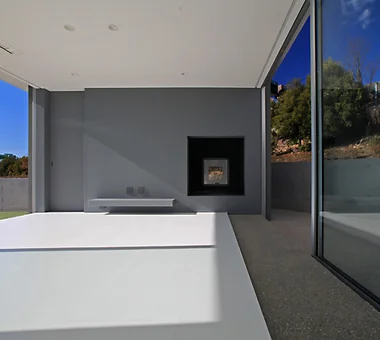
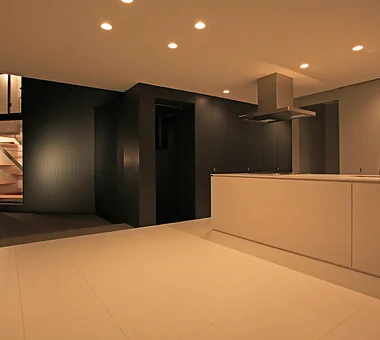
The simple, modern living and dining area features large openings that connect seamlessly with the outdoors, creating a spacious and open atmosphere.