Choose architectural examples of Single-Story Houses and Stylish Entrances for your Personal Diagnosis,
A home-building support tool to meet design offices and builders who resonate with your sensibilities.
The greatest appeal of a single-story house is that all daily activities are contained on one floor. Without the need to ascend or descend stairs, it provides a safe living environment even in advanced age. The short and efficient household workflow enables a streamlined lifestyle. As a barrier-free home designed with the future in mind, a single-story residence is an ideal choice.
A Sense of Openness Enhanced by Ceiling Height.
Since a single-story house lacks a second floor, it allows for higher ceilings or vaulted ceilings, creating an open and spacious environment. There is no need for atriums, resulting in a structurally simpler design. The elevated ceiling height imparts a sense of expansiveness that exceeds the actual floor area.
Integration with the Garden.
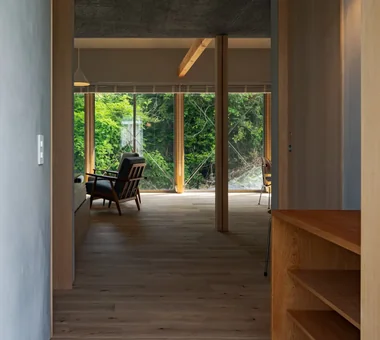
A single-story house positions all rooms close to the ground, enhancing the connection with the garden. By incorporating large sliding doors and glass panels facing the garden, a seamless indoor-outdoor living experience is achieved. The garden functions as an extension of the living space, allowing residents to intimately experience the changing seasons.
Structural Stability.
Single-story buildings have a structural advantage against earthquakes and typhoons due to their low height. With a low center of gravity and strong resistance to lateral forces, they exhibit high seismic performance. As a highly safe residential option, single-story homes are an excellent choice.
Ease of Maintenance.
Maintenance of the roof and exterior walls can sometimes be performed without the need for scaffolding. Reduced high-altitude work lowers costs. Considering long-term upkeep, single-story buildings also offer economic advantages.
Site Planning That Maximizes a Spacious Lot.
Since single-story houses extend horizontally, a certain amount of site area is required. When the site is ample, arranging the building in an L-shape or U-shape allows for the creation of a courtyard and facilitates the delivery of natural light and ventilation to each room. A site plan that leverages the characteristics of the lot enhances the value of a single-story residence.
Ensuring Privacy.
Single-story houses have windows close to the ground, which can raise concerns about visibility from outside. Privacy can be maintained while living in an open and airy environment by controlling sightlines with fences, landscaping, or curtains, or by adopting a courtyard-style layout. A design approach that closes off the exterior while opening up the interior is effective.
Introducing Spatial Variation with a Sloped Ceiling.
By expressing the roof's slope directly in the ceiling, a sense of height variation and spatial dynamism is created. For example, elevating the ceiling in the living room while lowering it in the bedroom adds contrast, enriching the typically monotonous single-story interior with depth and interest.
A Floor Plan That Senses the Presence of Family.
A single-story house allows family members to spend time on the same floor, making it easier to sense each other's presence. By arranging each room around the living area, family communication naturally emerges. This layout maintains an appropriate sense of distance while fostering a feeling of connection.
Roof Shapes and Exterior Design.
The appearance of a single-story house is greatly influenced by the shape of its roof. Options such as gable, hip, shed, and flat roofs can be selected according to design preferences and site conditions. The simple and elegant presence of a single-story home seamlessly integrates with the surrounding landscape.
Circulation Planning Unique to Single-Story Homes.
The strength of single-story homes lies in their short and efficient circulation paths. By connecting the kitchen, washing machine, drying area, and storage in a straight line, the workflow for household chores is streamlined, reducing daily burdens. This results in a compact yet highly functional circulation plan that enhances livability.
Creating Spatial Depth with a Loft.
Even in a single-story house, incorporating a loft in the attic space allows for versatile use as storage or a study. It can accommodate seasonal items or hobby equipment, and serve as a secluded retreat, offering diverse functionality. The loft adds a three-dimensional richness to the single-story dwelling.
Ensuring Appropriate Spatial Dimensions.
The size of the entrance varies depending on the number of family members and the frequency of visitors. Generally, an area of about 3 tatami mats provides ample space for multiple people to put on and take off shoes simultaneously. The balance in depth between the dirt floor area and the hall area is also important; securing sufficient space in each ensures a functional and comfortable entrance.
Storage Capacity Planning.
In addition to accommodating the shoes of all family members, it is essential to provide space for storing umbrellas, coats, keys, and small accessories. Enhancing the shoe closet allows the entrance area to remain neat and organized. By incorporating adjustable shelves, the storage can accommodate footwear of varying heights, such as boots and sneakers. Including a dirt-floor storage area further enhances functionality.
Selection and Texture of Flooring Materials.
The entrance floor should be selected with materials that combine durability, ease of maintenance, and aesthetic appeal. Options such as tiles, natural stone, and mortar finishes each have distinct characteristics. Slip resistance is also a critical factor, especially to ensure safety on rainy days. The material of the threshold step is another important element that significantly influences the overall ambiance.
Design and Performance of Entrance Doors
The entrance door serves as the face of a residence. When selecting a door, it is important to consider not only its aesthetic design but also its thermal insulation performance, security features, and natural lighting capabilities. The usability varies depending on the door type, such as double doors, single swing doors, or sliding doors. It is recommended to choose the door’s color and material in harmony with the building’s exterior appearance.
Creating Atmosphere Through Lighting Design.
Entrance lighting requires both practical brightness and a welcoming warmth for guests. By combining downlights, wall-mounted bracket lights, and footlights, a space with beautiful shadows and depth is achieved. Incorporating motion sensor lighting enhances convenience during arrival and nighttime use.
Considerations for Ventilation and Air Circulation.
The entrance area is prone to accumulating moisture and odors. By incorporating windows to enable natural ventilation and appropriately positioning the supply and exhaust vents of a 24-hour ventilation system, a consistently fresh environment can be maintained. Ventilation of the shoe closet is particularly important as a measure against odors.
Optimization of Circulation Flow.
By streamlining the circulation paths from the entrance to each room, daily living becomes more comfortable. Determine the layout by anticipating the family’s lifestyle patterns, such as circulation routes to the living room and the washroom. Additionally, a "shoe cloakroom" that allows passage through the mudroom into the interior is popular as an efficient circulation solution.
Design Quality of Wall Surfaces.
The entrance wall surfaces can be enhanced with accent wallpaper, tiles, or eco-friendly ceramic tiles to create visual interest. Additionally, incorporating niches to display seasonal flowers or decorative items can add vibrancy to the entryway. However, excessive ornamentation may result in a cluttered appearance, so maintaining a balance with simplicity is essential.
Placement and Effects of Mirrors.
Installing a full-length mirror in the entrance area allows for last-minute appearance checks before going out. Additionally, mirrors have the effect of visually expanding the space. By embedding them into the wall surface or using mirrored doors for the shoe closet, a clean and streamlined appearance can be achieved. The location should be chosen so that the mirror is not visible from outside when the entrance door is opened.
Installation of Benches and Seating.
Having benches or seating in the entrance area facilitates putting on and taking off shoes, creating a user-friendly design for elderly individuals and pregnant women. When custom-built benches are installed, the space underneath can also be utilized for storage. Additionally, it serves as a convenient place for guests to set down their belongings.
Considerations for Security.
The entrance is the key point of a home's security. Consider adopting features such as dimple keys, electronic locks, and double locking mechanisms. Additionally, having an intercom with recording capabilities allows for monitoring visitors even when absent, providing peace of mind. Installation of security cameras can also be planned as needed.
Connection with the Entire House.
By arranging the layout so that the line of sight extends from the entrance toward the depths of the house, the space can be perceived as larger than its actual size. Positioning the entrance to allow views of a courtyard or inner garden, or to sense the presence of the living room, contributes to a feeling of security upon returning home. Maintaining privacy while providing an appropriate sense of openness is a key element in creating a sophisticated entrance.
Q&A
Single-Story Houses|Stylish Entrances|Q&A
What are the key points to consider in the floor plan of a single-story house?
It is important to design short circulation paths from the central living and dining areas to each room, enabling family members to remain connected. To ensure adequate daylighting and ventilation throughout all rooms, the incorporation of courtyards and high-side windows is recommended. Anticipating future wheelchair use, corridor widths should be at least 78 cm, and sliding doors should be used extensively. These strategies contribute to creating a residence that supports long-term, comfortable living.
I have heard that single-story houses are more expensive to build than two-story houses. Is this true?
For the same total floor area, single-story houses tend to have higher unit costs per tsubo compared to two-story houses because the foundation and roof areas, which form the building’s base, are larger. However, an advantage is that, since no stair space is required, the floor area can be utilized more efficiently.
What are the effective strategies for mitigating heat in single-story houses?
The fundamental approach involves shading summer sunlight with deep eaves and overhangs, combined with thorough insulation of the roof and ceiling. Selecting roofing materials with high solar reflectance and ensuring proper attic ventilation are also crucial. Designing window placements to facilitate natural airflow and incorporating courtyards to capture cool breezes are effective strategies. Additionally, green curtains and lawns serve as natural cooling systems that help reduce perceived temperatures.
Wouldn't the lack of a second floor result in insufficient storage space?
A common approach to ensuring adequate storage capacity in single-story homes is to effectively utilize the attic space by incorporating "attic storage." This solution is particularly convenient for storing seasonal items and belongings that are not frequently used. Additionally, enhancing storage under the stairs and along corridor walls can further optimize available storage areas.
What aspects make single-story homes particularly livable for elderly people?
The absence of stairs significantly reduces the risk of falls. All rooms can be unified on a single floor, making cleaning and movement easier. Even if wheelchair use becomes necessary, it can be accommodated without extensive renovations. Access to the garden is also convenient, facilitating daily activities such as gardening and hanging laundry, thereby supporting an active senior lifestyle.
Are there any important considerations for the exterior design of a single-story house?
Since the building extends horizontally, it is essential to create visual interest by differentiating the roof forms and the use of exterior wall materials. Introducing variations through projecting elements such as the entrance porch or courtyard, as well as adjusting the eaves’ overhangs, helps to avoid monotony. Landscaping should be planned integrally with the building, and by designing a garden that reflects seasonal changes, the architecture is beautifully complemented, resulting in an elegant single-story residence.
What design strategies can be employed to create a spacious and open feeling the moment one enters the entrance?
It is essential to create visual 'lines of sight' that extend through the space. For example, installing fixed windows beyond the entrance to showcase a courtyard garden or greenery, or using glass doors that connect to the living room. Additionally, incorporating a double-height ceiling can be highly effective. Placing a large mirror on a wall also helps by reflecting the space, thereby visually enhancing the sense of depth.
What are the key points to consider when selecting flooring materials for the entrance?
Durability, aesthetics, and ease of cleaning are important factors. Natural stone, tiles, and exposed concrete each have their own characteristics. It is also advisable to consider slip resistance and the material's ability to conceal dirt, selecting a material that suits your household's usage style.
I want to keep the entrance area neat and tidy. What should I consider when planning a shoes-in closet?
It is important to first make a list of not only shoes but also items used outdoors such as umbrellas, strollers, and outdoor gear that you intend to store. Additionally, to prevent moisture and odors from accumulating, consider incorporating ventilation fans or windows, and using wall materials with humidity control and deodorizing properties. Designing the closet with a pass-through circulation path will further enhance convenience.
Is a handwashing station necessary at the entrance?
Considering contemporary lifestyles, it is a convenient feature to have. Even a compact handwashing basin is effective for hygiene management upon returning home and for accommodating guests. Due to constraints related to plumbing and drainage systems, it is recommended to consider this at the initial design stage.
What are the benefits of placing a bench in the entrance, and what are some tips to make it look stylish?
Having a bench in the entrance is not only convenient for sitting while putting on boots or shoes, but it also serves as a handy spot to temporarily place shopping bags or other items. It creates a sense of spaciousness within the area. A built-in, simple bench that appears to extend from the wall with wooden elements offers a minimalistic and refined aesthetic. Coordinating the bench material with the flooring, for example, enhances a cohesive and unified look.
Please explain the appeal of an entrance with an extended earthen floor area, known as a 'doma genkan,' and share ideas for its utilization.
The doma genkan offers the advantage of a semi-outdoor space where one can enter with shoes on, allowing for versatile use. For example, it provides a convenient area to store bicycles or strollers without concern, and serves as a practical space for maintaining outdoor hobby equipment. Additionally, it can be enjoyed as a reception area for guests, enabling relaxed conversation without formality—enhancing the overall living experience.
Home building starts with what you love. A place to visualize your sensibilities and achieve a lifestyle that is uniquely yours.
Pick architectural photos to automatically analyze your sensibilities. Visualize your unspoken 'likes' and find professionals who share your values.
Shape your ideal home with intuitive operations. How to enjoy Qurasuki even if it's your first time.
No special knowledge required. Just browse photos and pick what moves you to reveal your style and meet experts who can fulfill your dreams.
Save Photos You Love
Just tap '♡'. Whether you know your style or are just starting, begin by freely collecting the seeds of your ideal home.
'Auto-Analysis' to Decode Your Sensibility
Analyzes preferences from your saved photos. Uncover your 'true ideal' by visualizing the tastes you couldn't put into words.
Discover Professionals through Diagnosis
Find experts who match your sensibilities. Explore their philosophies and projects to find a partner who shares your values.
Experience Your Ideal through Events
Join open houses or events hosted by experts you like. Deepen your trust and peace of mind by experiencing actual spaces.
A Small Single-Story House on a Sloped Site|Entrance hall