Choose architectural examples of Homes Designed for Living with Pets and Stylish Living-Dining-Kitchen Space for your Personal Diagnosis,
A home-building support tool to meet design offices and builders who resonate with your sensibilities.
Homes Designed for Living with Pets|Stylish Living-Dining-Kitchen Space|How To
Floor Plan Designed with Pet Circulation in Mind
It is essential to design a floor plan that consciously considers circulation paths to allow pets to move freely within the home. Incorporating dedicated pet entrances (pet doors) and minimizing level changes can help pets navigate the space without stress. For cats, it is also beneficial to include vertical movement options such as catwalks and cat steps. Designing spaces from the pet's perspective is the first step toward harmonious coexistence.
Selecting Flooring That Is Slip-Resistant and Scratch-Resistant
For dogs and cats, slippery flooring places stress on their joints. In the case of hardwood floors, applying anti-slip coatings or choosing cork tiles or cushioned flooring can create a pet-friendly surface. Additionally, selecting materials that are resistant to scratches and stains simplifies maintenance.
Walls Resistant to Stains and Easy to Clean.
When pets are present, the lower portions of walls tend to become dirty more easily. Installing wainscoting with wooden paneling or selecting vinyl wallpaper that is easy to wipe clean helps maintain hygiene. Additionally, there are wall materials that are resistant to scratch damage and possess deodorizing properties. Choosing materials with stain resistance in mind contributes to a stress-free living environment.
Planning a Dedicated Entrance for Pets.
Incorporating pet doors that allow free access to gardens or terraces can significantly reduce stress for pets. There are various product types available, including those integrated into doors and those installed directly into walls. However, it is essential to consider security aspects; therefore, selecting appropriate installation locations and models equipped with locking mechanisms is crucial.
Odor Control and Ventilation Planning.
When living with pets, odor control is essential. Utilizing wall materials with deodorizing properties and enhancing ventilation fans helps maintain clean indoor air quality. Additionally, locating toilet spaces in areas that facilitate effective ventilation is also beneficial. An environment with regular air exchange is key to ensuring comfort for both humans and pets.
Ensuring and Arranging Toilet Spaces.
Pet toilets should be located slightly away from human traffic paths to allow both pets and people to coexist without disturbance. Ideal locations include adjacent to the washroom or a corner of the dirt floor area, where cleaning is convenient and ventilation is possible. In the case of cats, since they prefer quiet areas that ensure privacy, careful consideration is required in their placement.
Outdoor Play in Gardens and Terraces.
For dogs, having an environment where they can play in the garden or on the terrace is a great source of joy. By securing a safe space enclosed with fencing, they can run freely without a leash. Cats also benefit from sunbathing on terraces equipped with escape-prevention nets, which helps alleviate stress. Designing spaces that allow pets to safely enjoy the outdoors supports a healthy lifestyle.
Foot Washing Station and Simple Shower.
Having a foot washing station near the entrance or service door is convenient when returning from a walk. By installing an external faucet and sink, mud and dirt can be rinsed off before entering the interior. The availability of warm water enhances comfort. This setup facilitates a smooth routine for both pets and people upon returning home.
Storage Space for Pet Supplies.
Pet supplies such as food, treats, toys, leashes, and harnesses can accumulate unexpectedly. By providing dedicated storage near the entrance or in a corner of the living room, you can easily access the items you need. Consider planning the storage to harmonize with the interior design, whether by using open display shelving or concealed cabinets.
Installation of Scratching Posts and Play Areas.
Cats require designated areas for scratching and climbing. By affixing scratching materials to portions of the wall or allocating space for a cat tower, their natural instincts can be fulfilled. For dogs, having a space to play with toys helps alleviate lack of exercise and reduces stress.
Providing Multiple Spaces for Pets.
Pets tend to desire their own secure and comfortable spaces within the home. By offering multiple locations—such as a corner of the living room, under a closet, or by a window—they can choose according to their mood or the season. Planning dedicated areas for pet beds or cushions ensures they can enjoy a comfortable environment.
Ensuring Safety and Eliminating Hazards.
It is essential to eliminate elements hazardous to pets from the architectural design stage. Narrowing the gaps in stair railings, increasing the height of balcony balustrades, and installing gates to restrict access to the kitchen can prevent accidents. Additionally, it is necessary to arrange cords and small objects at heights inaccessible to pets.
Clarify the Spatial Zoning.
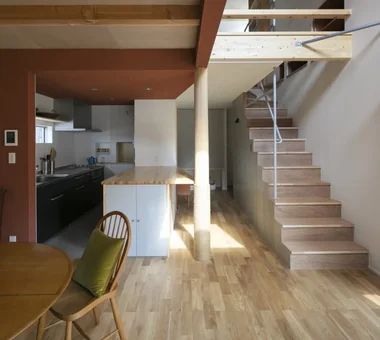
By gently separating the living, dining, and kitchen areas, each function is enhanced to create a user-friendly space. Visual distinctions through changes in flooring materials, ceiling heights, and furniture arrangement achieve a well-defined LDK (living-dining-kitchen) area while maintaining a sense of spaciousness. The key is to softly divide the zones without completely partitioning them, preserving a sense of unity.
Pursuing Efficiency in Circulation Paths.
It is essential to plan layouts that consider daily movements, such as the serving route from the kitchen to the dining area and the circulation path to the living room. Particularly, streamlining the circulation centered around the kitchen significantly enhances household task efficiency. It is advisable to design the floor plan while concretely envisioning the family's lifestyle patterns.
Creating Spatial Variation Through Ceiling Height.
Instead of maintaining a uniform ceiling height throughout the entire living, dining, and kitchen area, varying the height in specific sections introduces character to the space. Raising the ceiling in the living room enhances a sense of openness, while lowering the ceiling in the dining area fosters a more intimate atmosphere. Tailoring ceiling design according to function elevates the overall quality of the space.
Innovative Approaches to Incorporating Natural Light
While the fundamental strategy involves capturing light through large windows, combining them with clerestory windows and skylights can create a more abundant and dynamic lighting environment. Considering the variations in light throughout different times of the day results in a comfortable living, dining, and kitchen area (LDK) all day long. However, it is essential to also plan for solar shading measures during the summer to prevent overheating.
Selection and Differentiation of Flooring Materials.
The texture of flooring materials such as solid wood flooring, tiles, and stone significantly influences the overall impression of a space. Using a uniform material throughout the entire living, dining, and kitchen (LDK) area creates a cohesive look; however, selectively changing materials—such as installing tiles only in the kitchen area—can balance functionality and aesthetic appeal. It is also important to consider maintenance requirements when making your selection.
Enhancing Storage Planning.
In the living room, having storage suitable for daily necessities and remote controls, and in the dining area, storage for tableware and serving utensils, helps maintain a clean and organized space. By designing custom-built furniture from the planning stage, it is possible to achieve beautiful storage solutions that fit perfectly within the space. Balancing between display storage and concealed storage is also essential.
Creating Atmosphere Through Lighting Design.
By combining downlights, pendant lights, and indirect lighting, it is possible to create a lighting environment tailored to different scenes. Pendant lights above the dining table also serve as spatial accents. Having dimming and color temperature adjustment functions is convenient, allowing for versatile use according to time of day and purpose.
Design Based on Furniture Layout.
It is essential to plan the locations of electrical outlets, switches, and windows with consideration for the placement of sofas and dining tables. When the furniture is predetermined, spatial design can be tailored to their dimensions. Additionally, anticipating future furniture replacements and ensuring a flexible layout provides reassurance and adaptability.
Be Mindful of Sightlines.
Arranging the layout so that sightlines extend to the far end of the living, dining, and kitchen (LDK) area creates a sense of spaciousness beyond the actual floor area. Designing the kitchen with clear views into the living room and ensuring that exterior views through windows can be enjoyed from multiple vantage points fosters an open and airy atmosphere. However, it is also essential to balance this openness with considerations for privacy.
Creating a Cohesive Finish Material Palette.
By harmonizing the color tones and textures of the walls, ceiling, and floor, the living, dining, and kitchen area (LDK) achieves a refined and sophisticated atmosphere. One approach is to unify all surfaces in white for a minimalist aesthetic, while another appealing option is to emphasize the warmth of wood as the primary material. Alternatively, incorporating accent colors or textures in select areas can effectively express individuality.
Establishing the Relationship with the Kitchen.
The overall atmosphere of the living, dining, and kitchen (LDK) area varies depending on the kitchen style, such as open-plan kitchens, enclosed kitchens, or island kitchens. If prioritizing communication with family, open-plan or island kitchens are suitable, whereas enclosed kitchens are an option for those who prefer to focus on cooking. Choose a layout that aligns with your lifestyle.
Connection with External Spaces.
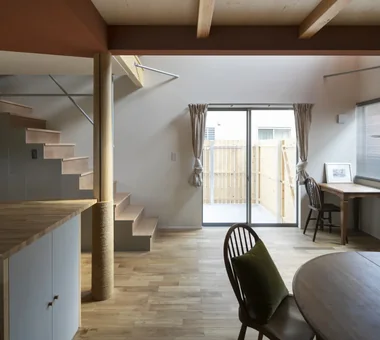
By creating continuity between terraces, decks, gardens, and the living-dining-kitchen (LDK) area, a more expansive spatial experience is achieved. Incorporating large openings to foster a sense of integration between interior and exterior, or arranging spaces to face a courtyard, enables a residence that intimately connects with nature. It is also essential to ensure the thermal insulation performance of these openings.
Q&A
Homes Designed for Living with Pets|Stylish Living-Dining-Kitchen Space|Q&A
What considerations should be taken into account when designing a home for living with dogs?
Prioritizing the safety and comfort of the dog is essential. Installing pet gates at staircases and selecting flooring materials with slip-resistant properties are recommended. Additionally, providing a designated area near the entrance for washing paws and grooming after walks helps maintain cleanliness within the interior.
Please explain the key considerations when designing a living environment for cats.
Since cats prefer vertical movement, it is recommended to incorporate catwalks and steps within the space. Additionally, to address scratching behavior, using specialized materials on certain wall sections or thoughtfully arranging furniture can help protect your favorite pieces. It is also important to provide a sunlit area near windows where cats can comfortably bask.
Are there any design considerations to ensure pets remain comfortable while home alone?
It is important to provide designated spaces for automatic feeders and water dispensers, as well as to implement HVAC planning for temperature control. Additionally, establishing a reliable Wi-Fi environment to enable monitoring via pet cameras reflects a contemporary approach. Creating a dedicated relaxation area for pets with a view of the outdoors through windows is also recommended.
What are the considerations for the living environment when keeping multiple pets?
It is important to secure individual spaces where each pet can feel secure. For dogs, this involves providing separate housing areas, while for cats, planning multiple resting places with varying heights is advisable. Additionally, establishing multiple feeding and watering stations is recommended to create a low-stress environment.
What facilities should be incorporated during the design phase for pet accommodations?
Typical facilities include a pet washing area, a grooming station, and pet shower equipment. Additionally, it is advisable to consider leash hooks, storage for pet supplies, and designated spaces for food storage during the planning stage. Plumbing for water supply and drainage is particularly important to address upfront, as retrofitting these systems later can be challenging.
Are there any architectural design considerations for accommodating pets when guests visit?
It is advisable to plan a room where pets can be temporarily isolated, as well as a circulation route from the entrance to the living area that does not pass through the pet space. Additionally, considering guests with allergies, selecting materials that are resistant to pet hair adhesion and enhancing air purification systems are important considerations.
What are the key spatial composition points to achieve a sophisticated living, dining, and kitchen (LDK) area?
It is important to clearly delineate the functions of each zone while maintaining visual continuity. Gradual zoning can be achieved through variations in flooring materials and ceiling heights, with furniture arrangements organizing circulation paths. Additionally, a well-planned storage system that conceals everyday items helps maintain a clean and uncluttered space, thereby creating a refined atmosphere.
What are the key points to avoid mistakes in lighting planning for the LDK (Living, Dining, Kitchen) area?
Instead of relying on a single light source to illuminate the entire space—a method known as "one-room, one-light"—it is recommended to adopt a "multi-light dispersion" approach by combining multiple lighting fixtures. By tailoring the lighting to different living scenes—such as pendant lights over the dining table to enhance meal times, floor lamps for relaxing on the sofa, and spotlights to highlight wall art—you create spatial depth and a rich, dynamic atmosphere.
Are there methods to improve heating and cooling efficiency in an open-plan living, dining, and kitchen (LDK) area?
The fundamental approach is selecting HVAC equipment with appropriate capacity corresponding to the size of the space. Installing ceiling fans to promote air circulation and adopting underfloor heating to ensure comfort from the floor level are also effective measures. Additionally, implementing high thermal insulation specifications can create an energy-efficient and comfortable environment.
What considerations are necessary for acoustic planning in the LDK (Living, Dining, Kitchen) area?
A balanced approach between sound absorption and reflection is essential. Soft furnishings such as curtains and sofas should be utilized to absorb sound, ensuring that audio from televisions and sound systems remains clear and intelligible. In open kitchen layouts, it is also important to consider the spatial arrangement to minimize noise from ventilation fans and dishwashers. Designing with an awareness of sound propagation is highly recommended.
What are the design tips for making storage look attractive in an LDK (Living, Dining, Kitchen) space?
It is important to strategically use both open and concealed storage. In the living area, custom shelving can be used to display books and decorative items; in the kitchen, a pantry effectively hides everyday clutter; and in the dining area, storage designed to showcase tableware beautifully enhances the space. Planning that leverages the unique characteristics of each area is most effective.
Are there any design considerations when connecting the LDK (Living, Dining, Kitchen) area with other rooms?
Managing level differences and designing openings are key points. In relation to the Japanese-style room, it is possible to balance functionality and aesthetics by incorporating features such as seating spaces utilizing the step difference and creating an open connection through large sliding doors.
Home building starts with what you love. A place to visualize your sensibilities and achieve a lifestyle that is uniquely yours.
Pick architectural photos to automatically analyze your sensibilities. Visualize your unspoken 'likes' and find professionals who share your values.
Shape your ideal home with intuitive operations. How to enjoy Qurasuki even if it's your first time.
No special knowledge required. Just browse photos and pick what moves you to reveal your style and meet experts who can fulfill your dreams.
Save Photos You Love
Just tap '♡'. Whether you know your style or are just starting, begin by freely collecting the seeds of your ideal home.
'Auto-Analysis' to Decode Your Sensibility
Analyzes preferences from your saved photos. Uncover your 'true ideal' by visualizing the tastes you couldn't put into words.
Discover Professionals through Diagnosis
Find experts who match your sensibilities. Explore their philosophies and projects to find a partner who shares your values.
Experience Your Ideal through Events
Join open houses or events hosted by experts you like. Deepen your trust and peace of mind by experiencing actual spaces.