Introducing House of Trajectories, a custom-built home example by Far East Design Lab., a Architect / Design office in Cercle Akasaka 1F, 4-2-25 Akasaka, Minato-ku, Tokyo
House of Trajectories
Terrace
Outdoor Living
Garage House
Living with Nature
Wooden Sash
Authentic Garden
GarageHouse
OutdoorLiving
Terrace
WoodenSashes
Hideki Ookura
Learn More
- Episode
The clients are a German-Japanese couple. After working in several countries and completing their assignment in Tokyo, they chose to begin a new chapter in life upon retirement. They selected a portion of the wife’s family’s expansive property, located away from the city center, to enjoy their second life. The husband, an enthusiast of classic BMWs, wished for a garage to restore these vehicles, while they desired a home where family and friends could gather and enjoy the changing seasons in the spacious garden.
Situated about an hour from central Tokyo, the site lies on the urban fringe in a developing residential area, yet it is surrounded by natural elements such as woodlands and farmland that vividly express the seasons. Considering the wife’s active lifestyle, which includes volunteer work and community engagement, and their elderly parents living nearby within close reach, the design aimed to create a cheerful and open home that would become a hub for social activity and invite visitors with ease.
- Planning
Creating the Landscape
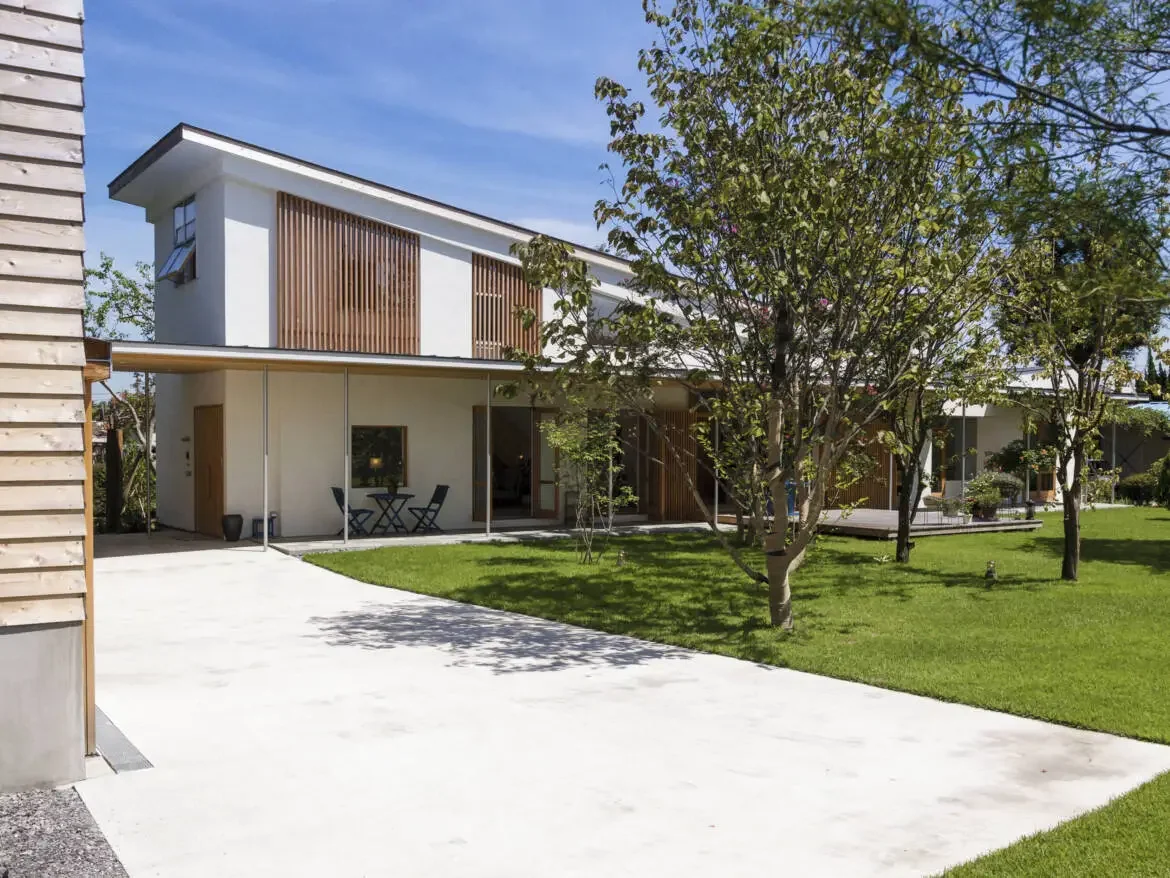
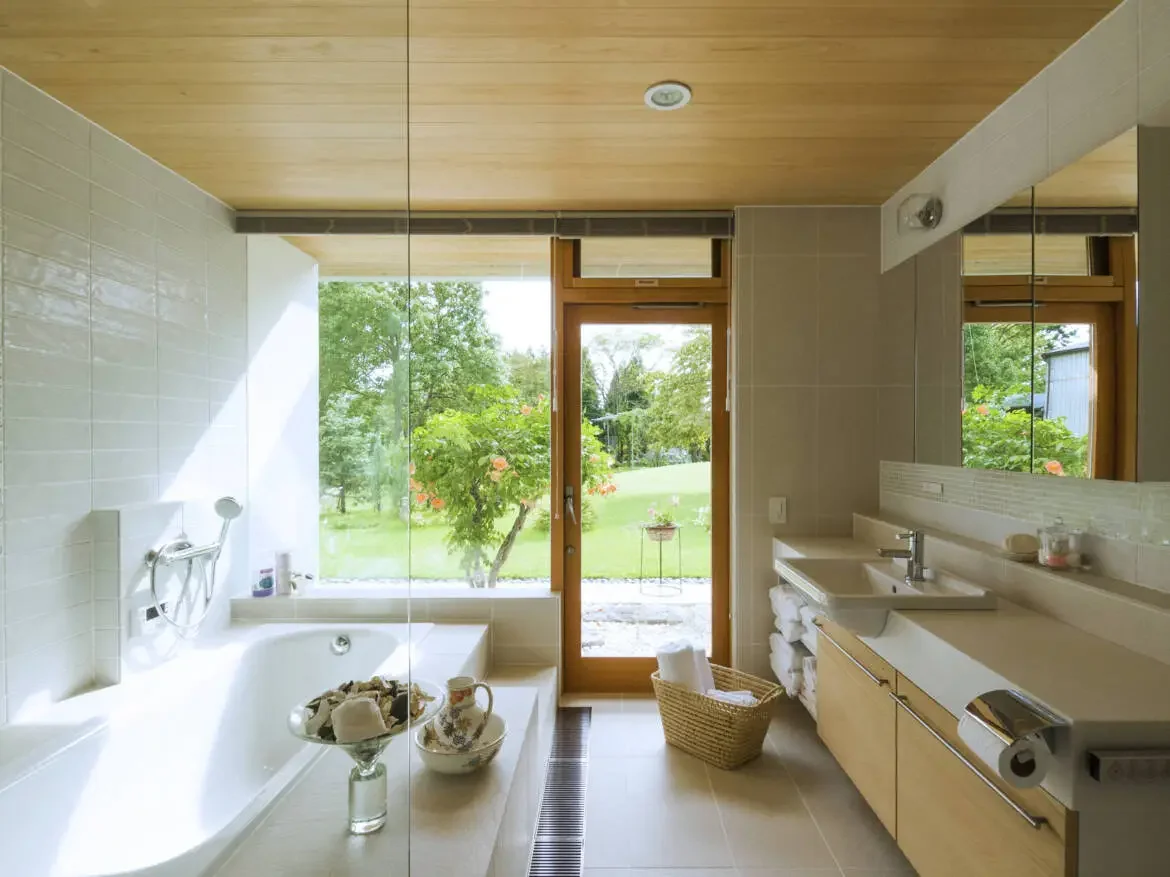
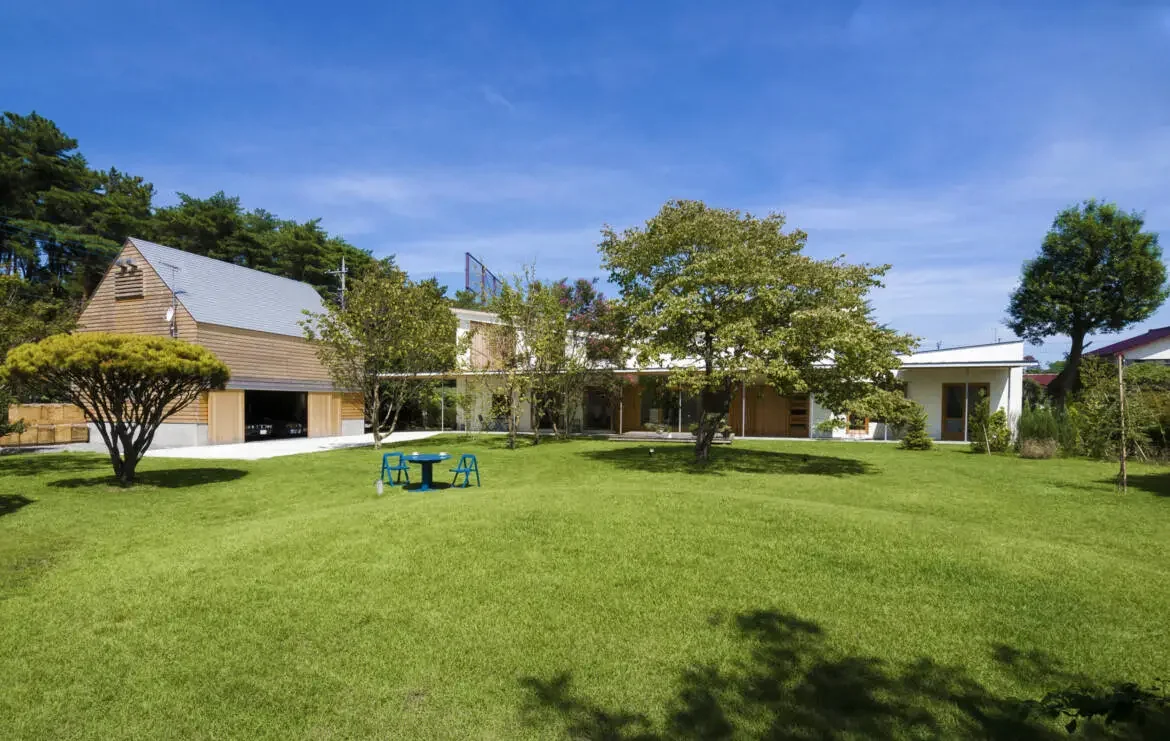
The site spans approximately 1,650 square meters (500 tsubo), allowing simultaneous planning of the house and garden. Diverse trees had been gradually planted over 30 years by the wife’s parents, resulting in a natural, somewhat unplanned woodland appearance. While the presence of mature trees was advantageous in avoiding planting from scratch, careful assessment of tree health and longevity enabled a large-scale transplantation to harmonize the landscape with the architecture. The windows of rooms facing the garden were arranged to capture distinct views. Excavated earth from the foundation was shaped into gentle mounds, introducing topographical variation to the expansive lawn and avoiding monotony.
Crafting Views Through Simple Architectural and Landscape Design
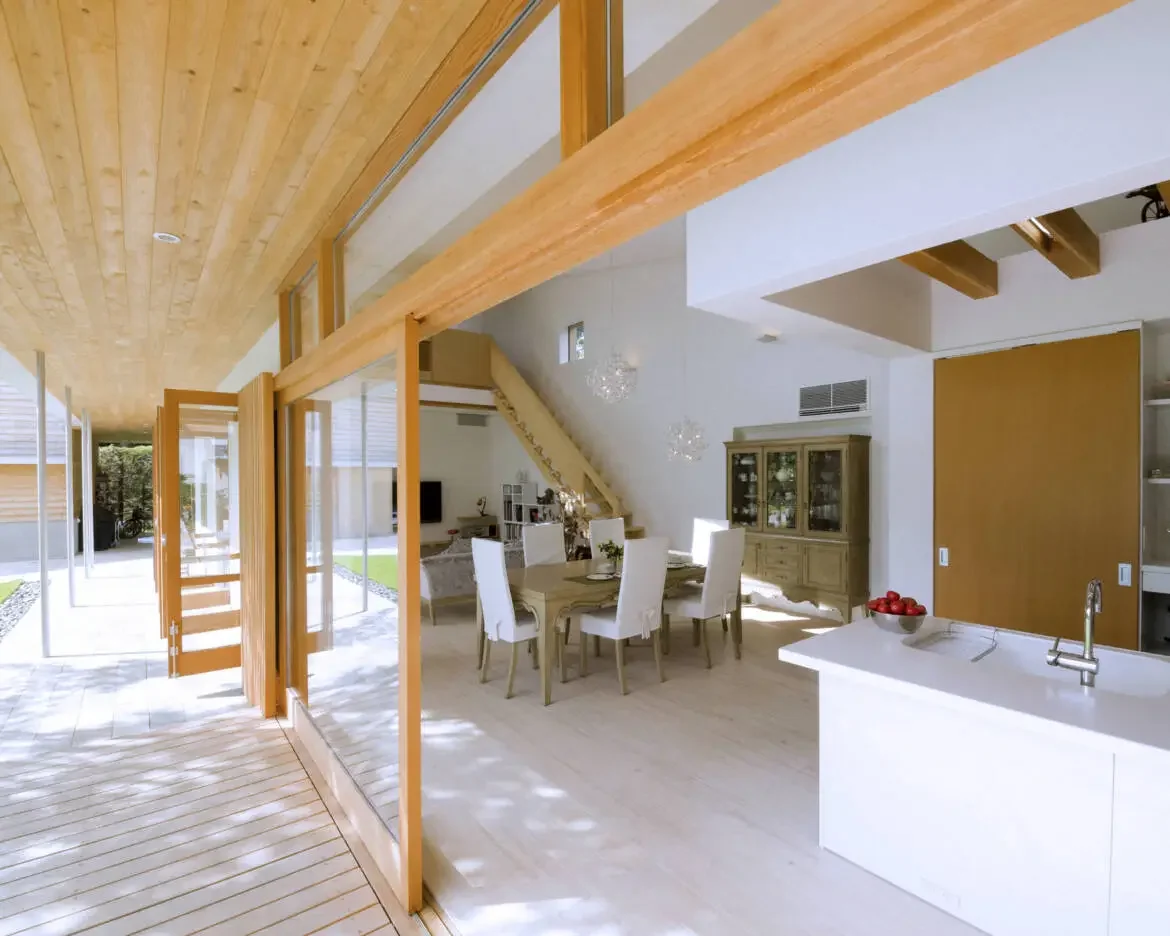
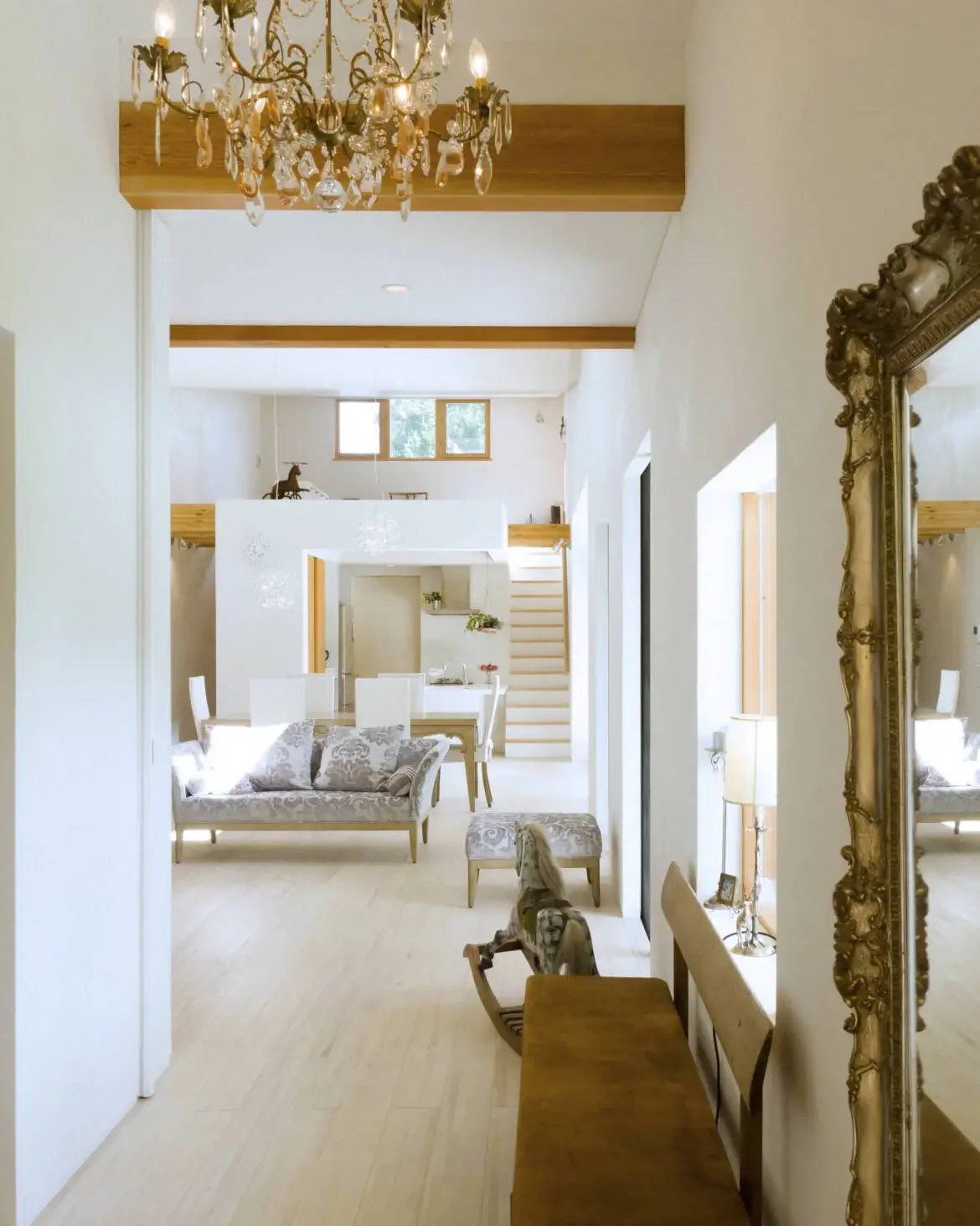
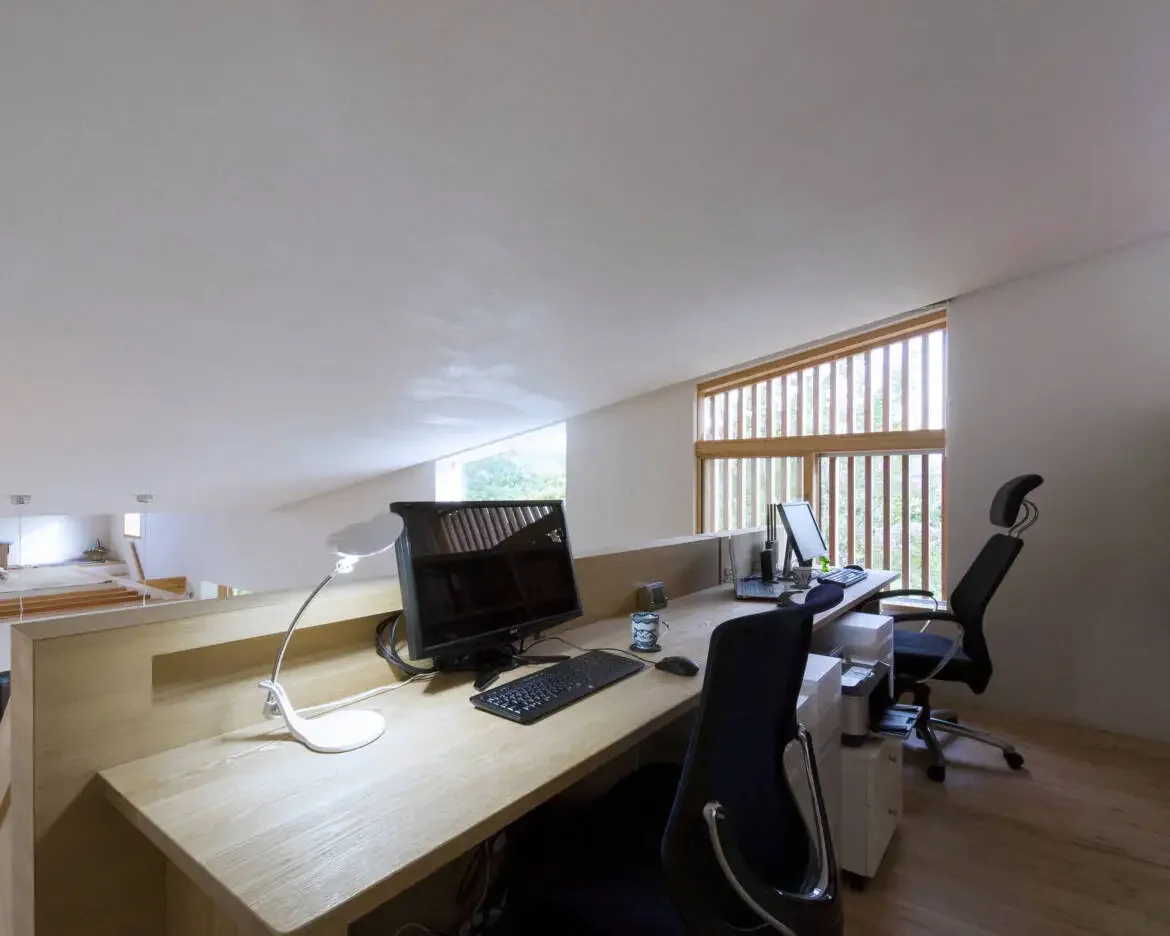
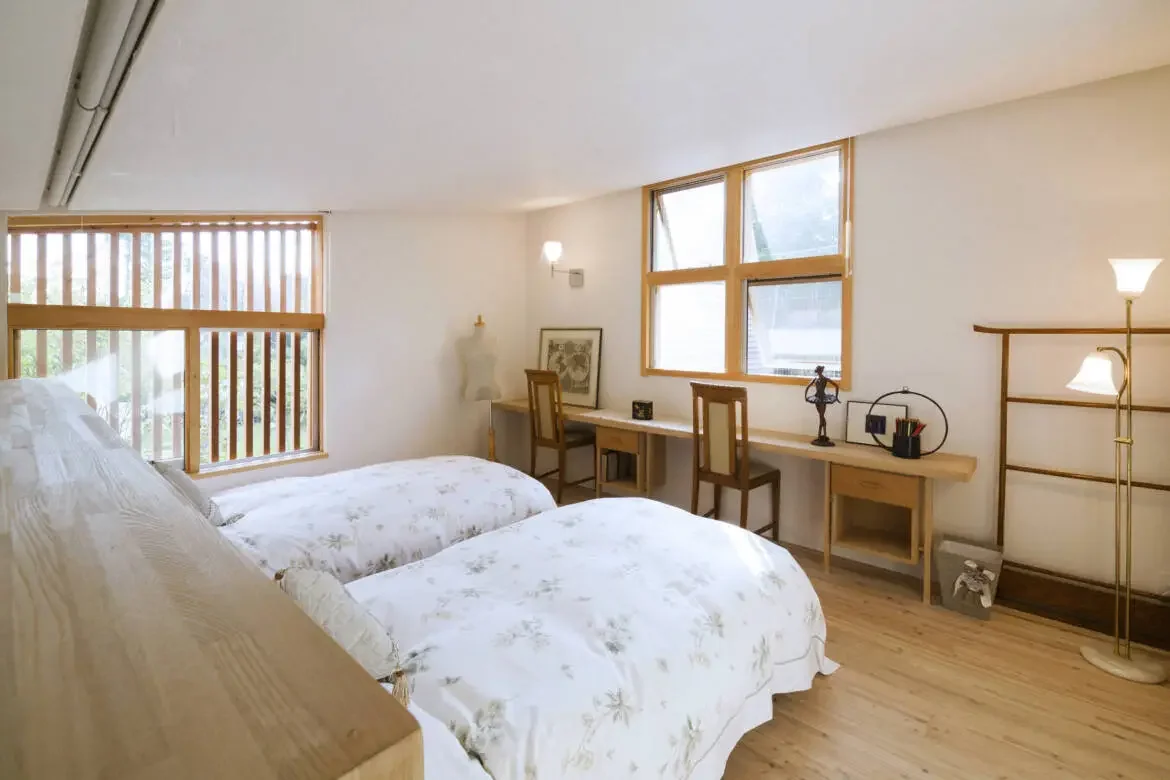
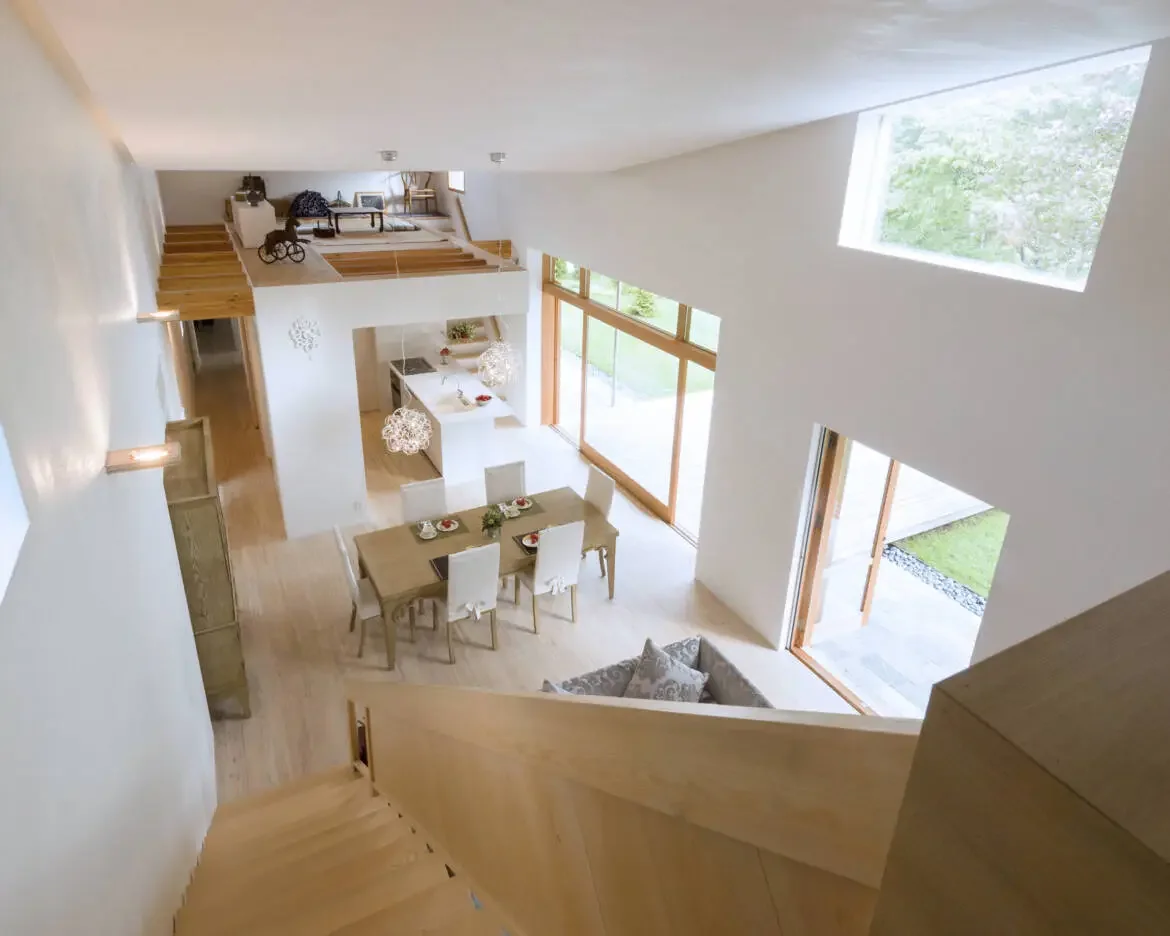
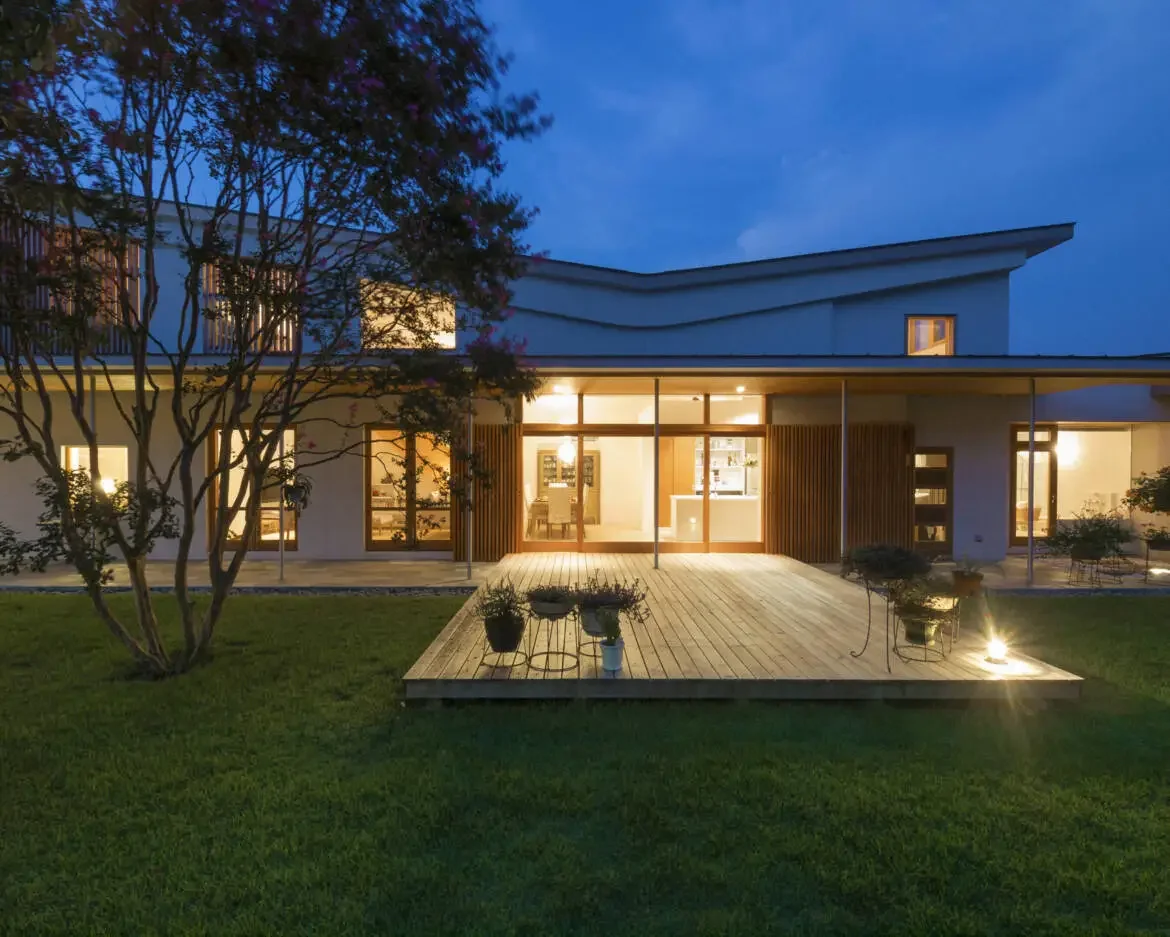
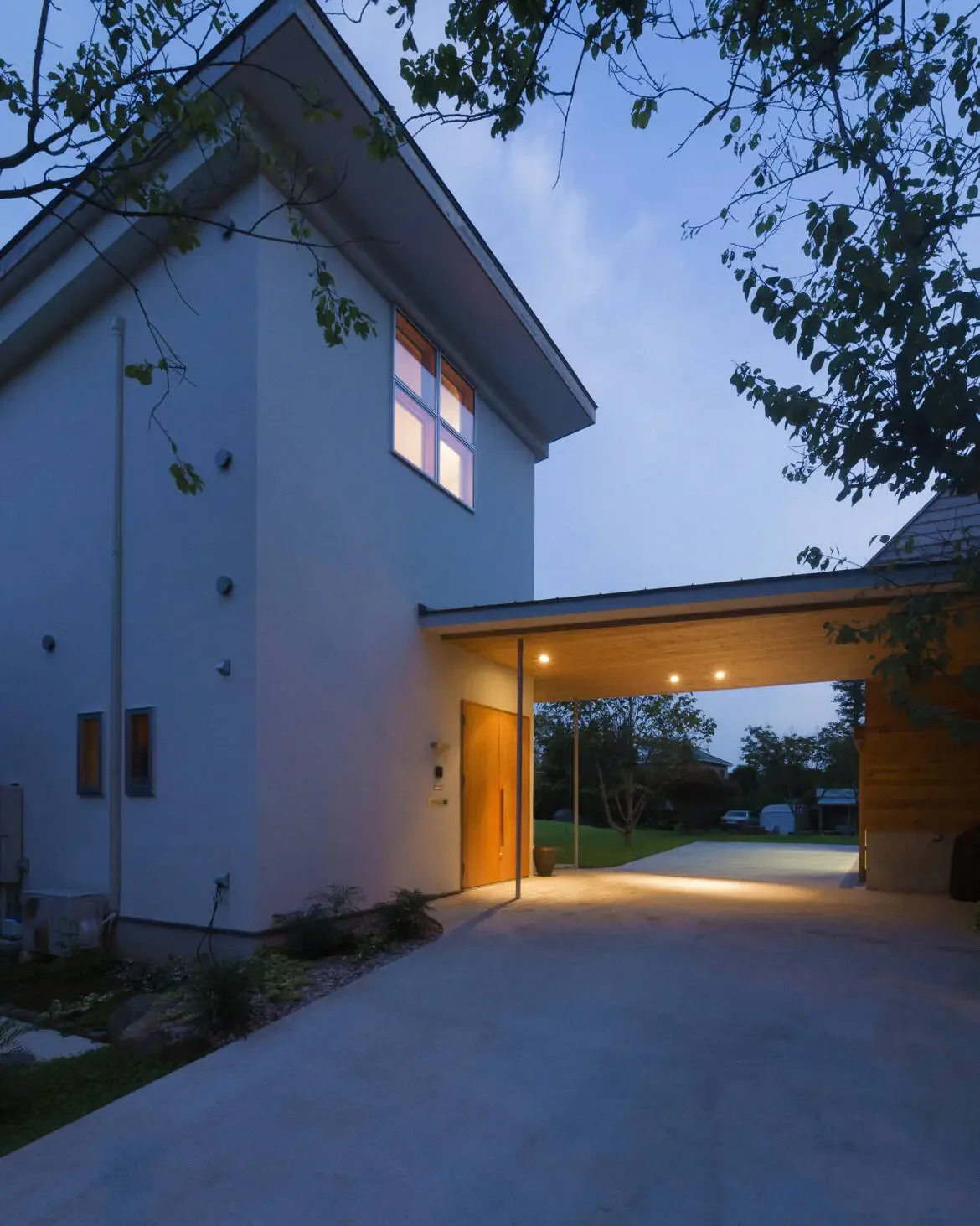
The main house has a rectangular plan elongated east to west, with ceiling heights increasing toward the ends to encourage airflow and sightlines to traverse upward toward the sky. Except for the bedrooms and bathrooms, the interior connects almost as a single open space, with generously sized openings facing the southern garden, reflecting a straightforward spatial composition.
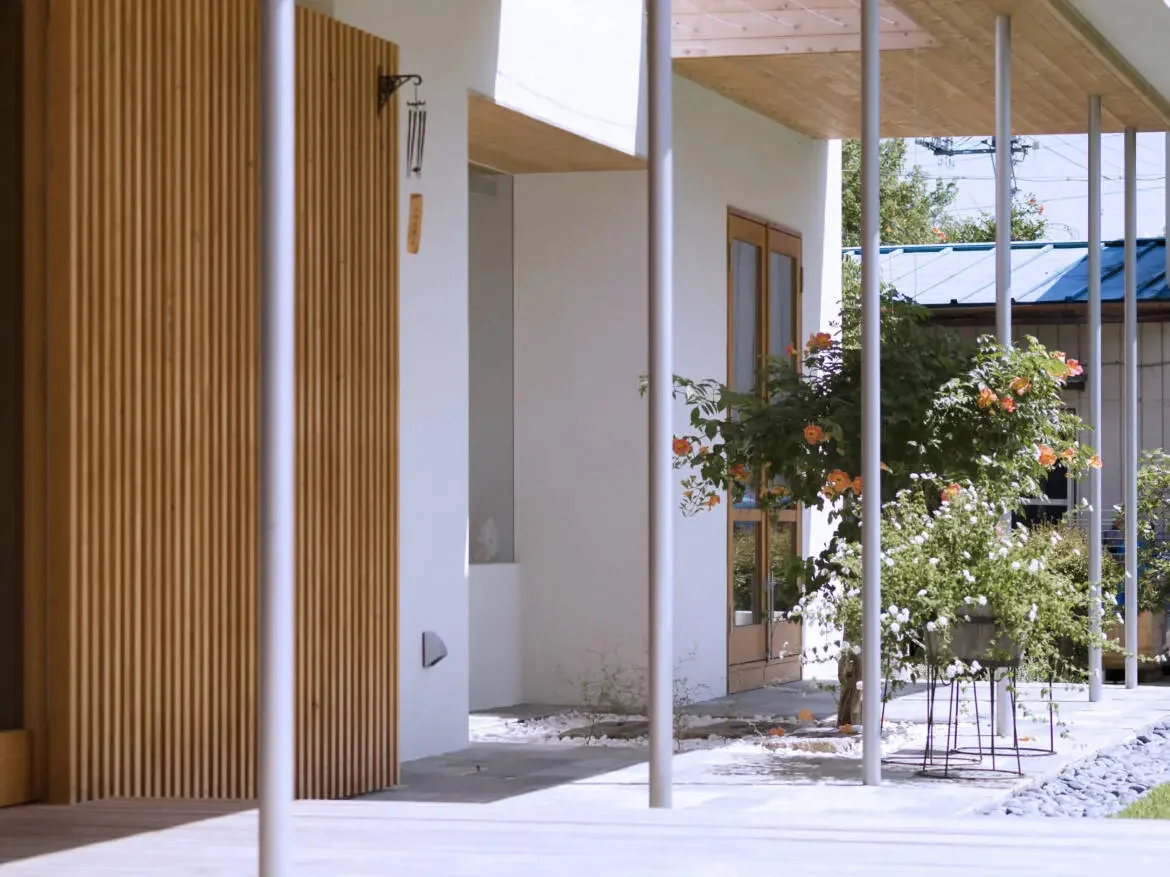
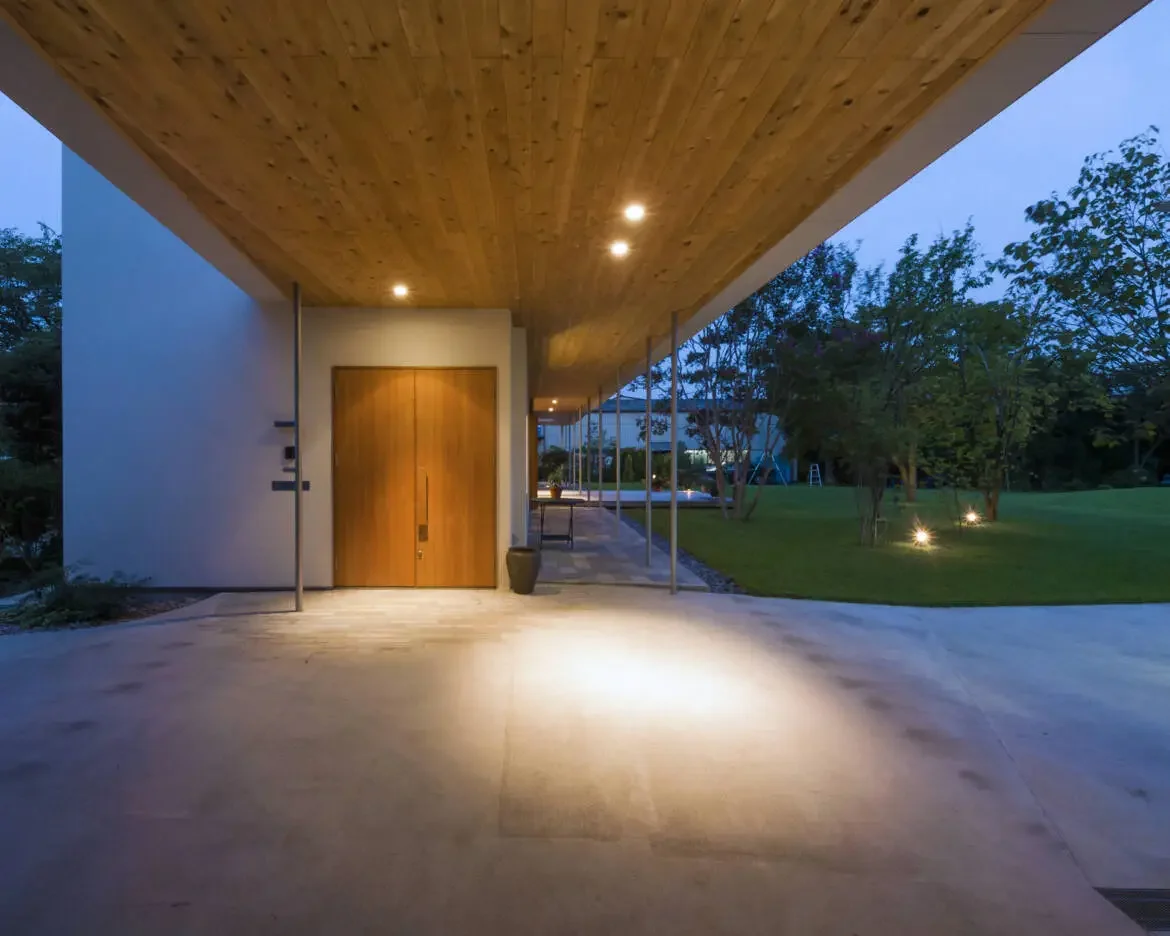
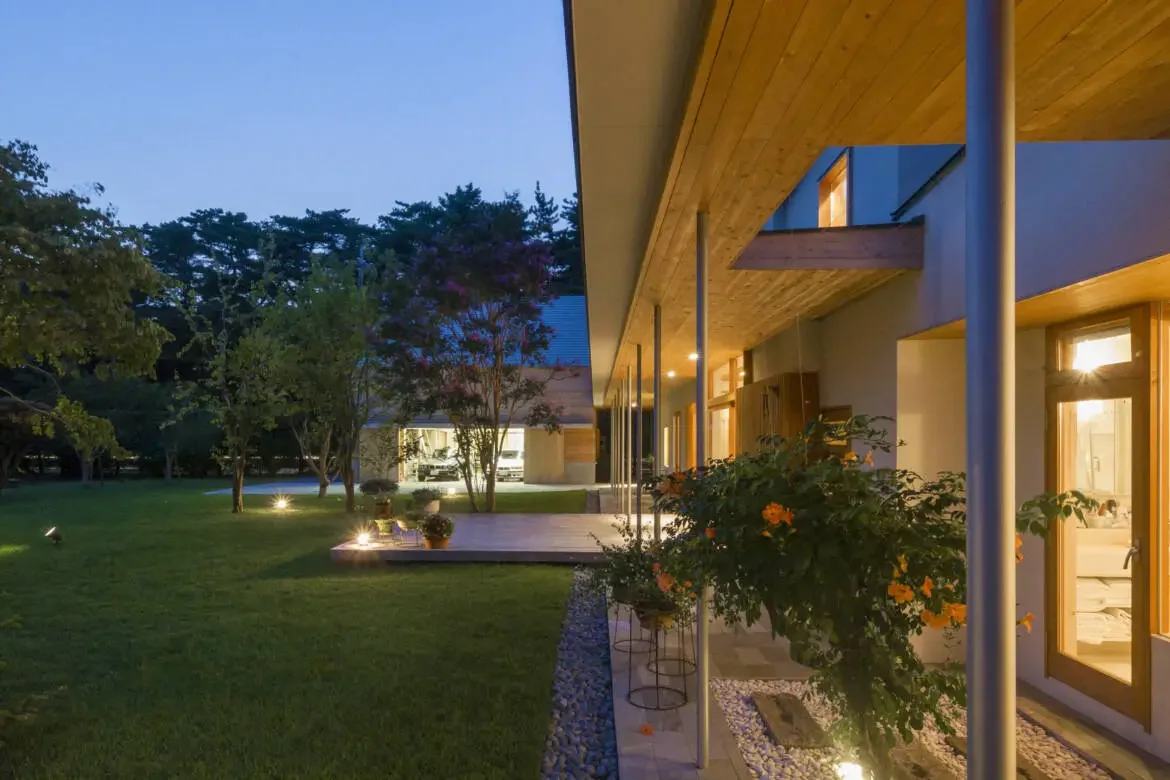
Given the large site and the clients’ preference for a relatively spacious home despite being a two-person household, the design balanced future maintenance considerations by keeping the building compact in depth. Deep eaves and a terrace facing the garden were introduced to visually extend the living space.
These eaves and terraces act as transitional zones mediating sunlight, rain, wind, and snow, functioning as outdoor living spaces in pleasant seasons. The eaves were set slightly higher to avoid visually truncating garden views and sky from indoors, ensuring the overhangs’ presence remains subtle and unobtrusive.
Garage Life
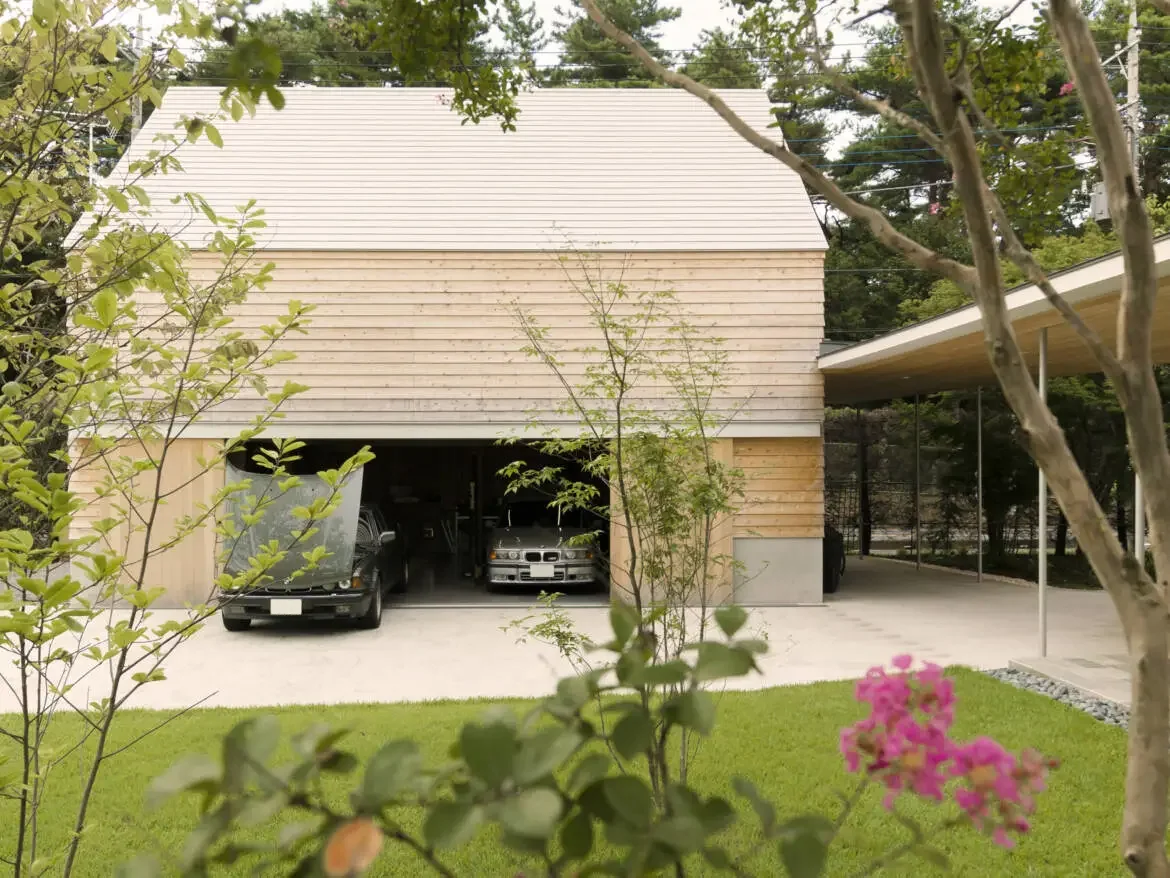
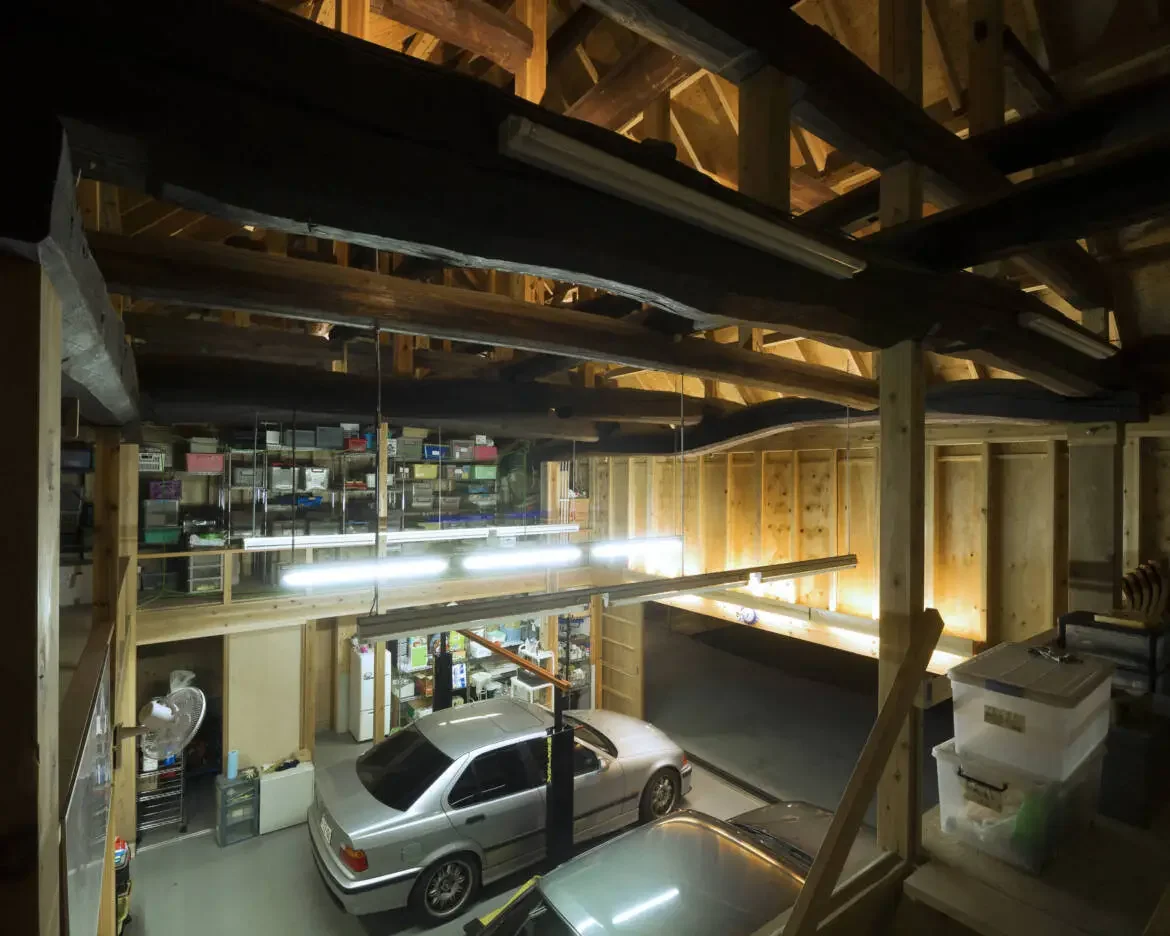
The two-car garage includes a pit and workshop, as well as a loft space serving as storage for parts that may become impossible to source in the future during restoration of classic BMWs. The roof structure incorporates reclaimed timber sourced from dismantled local traditional houses, assembled using the region’s customary decorative carpentry techniques. The synergy between the classic car restoration activities and the aged timber roof structure epitomizes the husband’s distinct “garage life” lifestyle, which he also shares internationally via his online presence.
Structure and Systems
The construction primarily employs traditional post-and-beam timber framing, with structural plywood sheathing serving as seismic bracing. Due to the elongated floor plan, seismic walls are concentrated at both short ends. To ensure rigidity and support the large openings facing the garden, eight timber rigid frame units—each comprising 120 × 270 mm columns and 120 × 360 mm beams—are installed in the nearly double-height central living and dining space.
The garage’s robust reclaimed timber roof is supported internally by 210 mm square posts carrying the purlins, while the exterior shear walls resist lateral forces. Given the abundance of pine needles falling from neighboring golf course pine trees, roof drainage was designed with a centrally recessed roof to collect rainwater, channeling it through a single downspout for easier maintenance.

The clients are a German-Japanese couple. After working in several countries and completing their assignment in Tokyo, they chose to begin a new chapter in life upon retirement. They selected a portion of the wife’s family’s expansive property, located away from the city center, to enjoy their second life. The husband, an enthusiast of classic BMWs, wished for a garage to restore these vehicles, while they desired a home where family and friends could gather and enjoy the changing seasons in the spacious garden.
Situated about an hour from central Tokyo, the site lies on the urban fringe in a developing residential area, yet it is surrounded by natural elements such as woodlands and farmland that vividly express the seasons. Considering the wife’s active lifestyle, which includes volunteer work and community engagement, and their elderly parents living nearby within close reach, the design aimed to create a cheerful and open home that would become a hub for social activity and invite visitors with ease.
- Planning
Creating the Landscape
The site spans approximately 1,650 square meters (500 tsubo), allowing simultaneous planning of the house and garden. Diverse trees had been gradually planted over 30 years by the wife’s parents, resulting in a natural, somewhat unplanned woodland appearance. While the presence of mature trees was advantageous in avoiding planting from scratch, careful assessment of tree health and longevity enabled a large-scale transplantation to harmonize the landscape with the architecture. The windows of rooms facing the garden were arranged to capture distinct views. Excavated earth from the foundation was shaped into gentle mounds, introducing topographical variation to the expansive lawn and avoiding monotony.
Crafting Views Through Simple Architectural and Landscape Design
The main house has a rectangular plan elongated east to west, with ceiling heights increasing toward the ends to encourage airflow and sightlines to traverse upward toward the sky. Except for the bedrooms and bathrooms, the interior connects almost as a single open space, with generously sized openings facing the southern garden, reflecting a straightforward spatial composition.
Given the large site and the clients’ preference for a relatively spacious home despite being a two-person household, the design balanced future maintenance considerations by keeping the building compact in depth. Deep eaves and a terrace facing the garden were introduced to visually extend the living space.
These eaves and terraces act as transitional zones mediating sunlight, rain, wind, and snow, functioning as outdoor living spaces in pleasant seasons. The eaves were set slightly higher to avoid visually truncating garden views and sky from indoors, ensuring the overhangs’ presence remains subtle and unobtrusive.
Garage Life
The two-car garage includes a pit and workshop, as well as a loft space serving as storage for parts that may become impossible to source in the future during restoration of classic BMWs. The roof structure incorporates reclaimed timber sourced from dismantled local traditional houses, assembled using the region’s customary decorative carpentry techniques. The synergy between the classic car restoration activities and the aged timber roof structure epitomizes the husband’s distinct “garage life” lifestyle, which he also shares internationally via his online presence.
Structure and Systems
The construction primarily employs traditional post-and-beam timber framing, with structural plywood sheathing serving as seismic bracing. Due to the elongated floor plan, seismic walls are concentrated at both short ends. To ensure rigidity and support the large openings facing the garden, eight timber rigid frame units—each comprising 120 × 270 mm columns and 120 × 360 mm beams—are installed in the nearly double-height central living and dining space.
The garage’s robust reclaimed timber roof is supported internally by 210 mm square posts carrying the purlins, while the exterior shear walls resist lateral forces. Given the abundance of pine needles falling from neighboring golf course pine trees, roof drainage was designed with a centrally recessed roof to collect rainwater, channeling it through a single downspout for easier maintenance.
- Copyright(C)Qurasuki.All Rights Reserved.