Choose architectural examples of Homes Featuring Dedicated Theater Rooms and Stylish Bathrooms for your Personal Diagnosis,
A home-building support tool to meet design offices and builders who resonate with your sensibilities.
Homes Featuring Dedicated Theater Rooms|Stylish Bathrooms|How To
Immersive Experience in a Dedicated Darkroom.
To fully enjoy films, an ideal space is one that completely blocks out external light. Beyond using blackout curtains or blinds, selecting a room without windows or a basement can create a pitch-black environment akin to a cinema. With only the screen illuminated in the darkness, the sense of immersion in the visuals is significantly enhanced.
Room Shape and Finishes Considered for Acoustics.
An acoustically ideal room is a rectangular space with well-proportioned length-to-width ratios. Square rooms are best avoided as they tend to generate standing waves. Incorporating sound-absorbing materials on portions of the walls and ceiling, along with carpeting the floor, can effectively control sound reflections. While acoustic design is a specialized field, adhering to these fundamental principles can significantly enhance sound quality.
The Relationship Between Screen Size and Viewing Distance.
A larger screen is not necessarily better; the balance with viewing distance is crucial. Generally, a distance of approximately three times the screen height is considered comfortable. By selecting an appropriate screen size according to the room's dimensions, one can prevent eye strain while enjoying immersive visuals.
Securing the Installation Location for the Projector.
Projectors are typically installed on the ceiling. Considering wiring, power supply, and projection distance, planning the installation location during the architectural design phase eliminates the hassle of retrofitting later. Concealing wiring within walls or ceilings maintains a clean and uncluttered space. Planning for these unseen elements significantly influences the overall quality of the finished project.
Surround Speaker Placement Planning.
When implementing surround sound systems such as 5.1ch or 7.1ch configurations, the positioning of speakers is critical. Determining the locations of the front, center, rear, and subwoofer speakers during the architectural design phase facilitates smooth wiring and installation. Routing cables within walls or ceilings also contributes to a clean and unobtrusive appearance.
Theater Seating Arrangement with Tiered Levels.
When viewing with multiple people, raising the rear rows slightly prevents the heads of those in front from obstructing the view. By incorporating stepped flooring or elevating the rear seats, all viewers can enjoy a comfortable viewing experience. This tiered design, reminiscent of a cinema, creates an authentic theater experience.
Enjoy Without Time Constraints Thanks to Soundproofing Performance.
The powerful acoustics of movies require consideration for family members and neighbors. By incorporating soundproofing materials into walls, ceilings, and floors, and by adopting soundproof doors, it is possible to enjoy high volume without concern for the time of day. Ensuring the performance of the soundproof room creates a stress-free viewing environment.
Lighting with Dimming Function to Create Ambiance.
The lighting in the theater room is designed to be completely switchable off during movie viewing, which is essential, yet necessary during breaks and entry or exit. By installing indirect lighting with dimming capabilities and floor-level lights, a minimal brightness can be maintained without disrupting the cinematic atmosphere. Control of light enhances the quality of the theater experience.
Comfort with Sofas and Reclining Seats.
For extended movie viewing, comfortable seating is essential. By incorporating theater seats with reclining functions and spacious sofas, viewers can relax and fully immerse themselves in the experience. Drink holders and side tables further enhance the theater environment.
Walls and Ceilings Unified in Dark Colors.
During movie viewing, reflected light from walls and ceilings reduces screen visibility. Finishing surfaces in dark colors such as black, dark gray, or navy enhances the contrast of the projected image. Applying dark tones to the ceiling as well causes the entire space to visually recede, allowing the screen alone to stand out prominently.
Exhibition of Movie Posters and Merchandise.
By displaying posters, figurines, pamphlets, and other memorabilia of your favorite films, the theater room transforms into a personalized cinema. Creating a gallery-like environment that immerses occupants in the world of cinema from the moment they enter is one of the pleasures of this design. The collection itself narrates a deep passion for film.
Creating a Comfortable Environment through Ventilation and Air Conditioning.
In highly sealed theater rooms, ventilation and air conditioning are essential. It is important to equip ventilation fans and HVAC systems to prevent air stagnation during extended viewing periods. Selecting products with high sound insulation to minimize operational noise is also a key consideration.
Appropriate Size and Spaciousness Settings.
The typical bathroom size is 1 tsubo (1616 dimension), but if a more spacious bathing experience is desired or caregiving is anticipated, sizes of 1.25 tsubo or 1.5 tsubo can also be considered. Decide based on the bathtub dimensions, the size of the washing area, and potential future uses. Excessive size may reduce heat retention, so maintaining a balanced proportion is essential.
Selection of Bathtub Shapes and Materials.
Bathtubs come in various shapes, including straight bathtubs, wide bathtubs, and corner bathtubs. The appropriate shape depends on whether you wish to fully immerse yourself up to the shoulders for relaxation or prefer to enjoy a half-body bath. Materials include FRP (fiberglass reinforced plastic), cultured marble, and enamel-coated steel, each differing in thermal retention, tactile quality, and maintenance requirements. It is recommended to physically inspect and touch the materials to make an informed decision.
Window Placement and Incorporation of Views
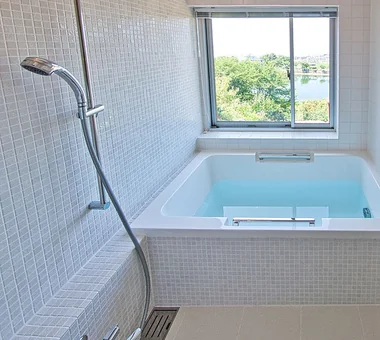
Incorporating windows in the bathroom allows natural light to enter, creating an open and airy space. Positioning the windows to face a courtyard or a small garden enables bathing while enjoying views of greenery. However, careful consideration must be given to privacy and security concerns. Privacy can be ensured through the use of frosted or patterned glass, as well as lattice screens.
Creating a Relaxing Atmosphere through Lighting Design.
Bathroom lighting should prioritize not only brightness but also ambiance creation. In addition to ceiling downlights, incorporating indirect lighting allows for relaxation under soft illumination. With dimming and color temperature adjustment functions, one can switch between crisp light in the morning and soothing light at night.
Enhanced Ventilation and Drying Functions.
The bathroom is the area most prone to moisture accumulation. It is essential to select an exhaust fan with adequate capacity and equip it with a bathroom dryer function to suppress mold growth and accommodate indoor drying of laundry. While natural ventilation by opening windows is effective, combining it with mechanical ventilation ensures a more comfortable environment.
Selection of Wall and Floor Materials
Bathroom wall materials include tile, panels, stone, and natural wood. Tiles offer a sense of luxury and a wide variety of colors and patterns, but require maintenance of grout joints. Panels feature minimal seams and are easy to clean. For flooring, it is crucial to select materials that are slip-resistant and have good drainage to ensure safety.
Ensuring Thermal Insulation and Heat Retention.
For a comfortable bathing experience, maintaining the overall thermal insulation of the bathroom is essential. Incorporating insulation materials into the walls, ceiling, and floor of the bathroom creates a warm environment even during winter. The heat retention performance of the bathtub itself has also improved, with an increasing number of products designed to minimize heat loss. Adequate insulation performance is indispensable as a countermeasure against heat shock.
Unit Bath or Conventional Construction Method?
Unit baths are characterized by shorter construction periods, high waterproof performance, and ease of maintenance. Conventional construction methods allow for flexible design of size and shape, as well as a wider range of material options. Selection should be made considering budget, desired spatial quality, and cleaning requirements. Recently, hybrid units combining the advantages of both methods have also become available.
Consideration for Acoustic Environment.
The sound of water supply and drainage in bathrooms can resonate in adjacent rooms. To mitigate acoustic impact, it is advisable to avoid placing bathrooms next to bedrooms or to position storage spaces or closets in between. Additionally, using soundproof drainage pipes is an effective measure. Special attention is required when bathing frequently during late-night hours.
Safety and Barrier-Free Design.
Bathrooms present a high risk of falls. It is recommended to select flooring materials with slip-resistant properties and to incorporate substrates that allow for the installation of handrails. The bathtub’s threshold height can be lowered with future accessibility needs in mind. Eliminating level differences between the bathroom and the dressing room also contributes to enhanced safety.
Ease of Cleaning
Bathrooms are prone to high humidity and mold growth, making ease of cleaning a critical consideration. Selecting materials with minimal joints, applying coatings that resist dirt adherence, and designing for efficient water drainage all contribute to simplifying daily maintenance. Thorough ventilation is also fundamental to maintaining cleanliness.
A Sensory Experience for the Five Senses.
The bathroom is a space where one can relax through the five senses, including sight, touch, and smell. By incorporating elements such as an aroma diffuser, waterproof speakers for enjoying music, and adjustable lighting colors, it becomes a special environment that soothes the fatigue of daily life. Discovering your own methods of relaxation and transforming the bathroom into a comfortable retreat is also one of the pleasures of home design.
Q&A
Homes Featuring Dedicated Theater Rooms|Stylish Bathrooms|Q&A
What are the ideal conditions for a room suitable for a home theater?
An ideal room for a home theater is one that can completely block out external light and has high soundproofing performance. A rectangular room with a ceiling height of at least 2.7 meters enhances acoustic effects. Choosing a room without windows or a basement space can create an immersive environment similar to that of a cinema.
Could you advise on the optimal placement of projectors and screens?
An ideal viewing distance is approximately 1.5 to 2 times the width of the screen. Projectors are typically ceiling-mounted, and planning for concealed ceiling wiring is essential to maintain a clean installation. The screen should be installed on the front wall, with consideration for adequate lateral clearance to ensure a comfortable viewing environment.
What are the key points in acoustic design for home theaters?
Effective placement of 5.1 or 7.1 channel surround sound systems and the appropriate use of sound-absorbing and reflective materials are essential. Installing fabric panels on walls and carpeting the floor helps control reverberation. Adjusting the position and angle of speakers creates an immersive acoustic environment.
What should be considered in the lighting design of a theater room?
It is essential to base the lighting plan on indirect lighting that does not interfere with the screen, and to select fixtures equipped with dimming functions. By incorporating low-level guide lights near the floor and subtle illumination around the seating areas, the design ensures safety while creating an environment conducive to focused movie viewing. A warm white color temperature is recommended as it is gentle on the eyes.
I don't have enough space to dedicate a private room; is it inevitable that I have to give up?
There is an approach called a "living theater," where one wall of the living room serves as a screen, and a motorized screen and projector are concealed in the ceiling. This allows you to seamlessly switch between everyday living and extraordinary experiences in a smart and enjoyable way.
Are there any design strategies to utilize the theater room for multiple purposes?
The design incorporates movable screens and mobile projectors, enabling the space to function as a living room under normal circumstances. This adaptable spatial configuration allows for versatile use as a gaming area, music listening room, or telework space, thereby creating a multifunctional multimedia room.
Which is recommended for a stylish bathroom: traditional construction methods or unit baths?
Traditional construction methods allow for the use of a wide range of materials such as natural stone and tiles, enabling highly original and customized designs. On the other hand, the latest unit baths offer a variety of high-quality materials and sophisticated designs. It is important to consider factors such as maintenance and thermal insulation performance, and to select the option that aligns with the overall concept of the residence.
What materials can be used for bathroom walls and floors to create a sense of luxury and relaxation?
Large-format porcelain tiles that replicate the texture of natural stone, or natural stone itself, with minimal grout lines, create a solid, hotel-like atmosphere. Additionally, walls made of highly water-resistant woods such as Japanese cypress (Hinoki) or Hiba add warmth and fragrance, evoking a relaxing ambiance reminiscent of a traditional hot spring inn. The tactile quality of the materials significantly influences the overall bathing experience.
I would like to install a large window in the bathroom, but I am concerned about thermal insulation and privacy.
The fundamental approach is to use high-performance insulated double glazing for the window glass. Regarding privacy, it is ideal to position the window facing an internal courtyard or light well that is not visible from outside. If this is not feasible, selecting a high-level clerestory window or a window equipped with adjustable louvers can effectively admit natural light and ventilation while obstructing external views.
What are the key strategies to balance comfort and energy efficiency in bathroom ventilation and drying functions?
Installing a bathroom ventilation, drying, and heating unit enables effective moisture control after bathing and facilitates indoor drying of laundry. Additionally, designing operable windows to utilize natural ventilation and enhancing thermal insulation performance help reduce energy consumption while maintaining a comfortable bathroom environment throughout the year.
How should one approach the color scheme planning for bathrooms?
It is recommended to prioritize a relaxing effect by selecting calm and subdued tones. Whites and light beige hues convey a sense of cleanliness, while darker colors can create a luxurious, hotel-like ambiance. It is advisable to comprehensively consider factors such as compatibility with lighting and ease of maintenance when making your decisions.
Does the choice of bathtub affect its design and comfort?
Absolutely. There are various options, such as those with sufficient depth to comfortably immerse up to the shoulders, and shapes that allow you to relax in a reclining posture. Materials also vary, including smooth artificial marble and substantial cast iron enamel. Freestanding bathtubs placed on the floor offer high design appeal and often become the focal point of the bathroom.
Home building starts with what you love. A place to visualize your sensibilities and achieve a lifestyle that is uniquely yours.
Pick architectural photos to automatically analyze your sensibilities. Visualize your unspoken 'likes' and find professionals who share your values.
Shape your ideal home with intuitive operations. How to enjoy Qurasuki even if it's your first time.
No special knowledge required. Just browse photos and pick what moves you to reveal your style and meet experts who can fulfill your dreams.
Save Photos You Love
Just tap '♡'. Whether you know your style or are just starting, begin by freely collecting the seeds of your ideal home.
'Auto-Analysis' to Decode Your Sensibility
Analyzes preferences from your saved photos. Uncover your 'true ideal' by visualizing the tastes you couldn't put into words.
Discover Professionals through Diagnosis
Find experts who match your sensibilities. Explore their philosophies and projects to find a partner who shares your values.
Experience Your Ideal through Events
Join open houses or events hosted by experts you like. Deepen your trust and peace of mind by experiencing actual spaces.
+UMI — Renovation Design Contest Jury Special Prize / TDY Remodel Smile Works Contest (TOTO) Excellence Award|Bathroom