Mochizuki Architectural Atelier
Single-Story Houses|Key Points for Home Building|Realizing a Stair-Free Lifestyle and Efficient Spatial Layout
Author: Qurasuki Editorial Department
A stair-free living environment reduces physical strain and facilitates smoother family interaction. Single-story homes offer practical advantages such as efficient use of the site and ease of maintenance. However, on constrained plots, limitations on floor area make creative spatial planning essential. Securing daylight and natural ventilation from multiple directions and balancing privacy with communal spaces are primary challenges. Roof form, the relationship to the garden, and sensitivity to the surrounding context are also important considerations in single-story design. Clear, simple circulation enables a fulfilling single-story lifestyle with long-term maintainability in mind.
A Lifestyle Completed on a Single Floor.
The greatest appeal of a single-story house is that all daily activities are contained on one floor. Without the need to ascend or descend stairs, it provides a safe living environment even in advanced age. The short and efficient household workflow enables a streamlined lifestyle. As a barrier-free home designed with the future in mind, a single-story residence is an ideal choice.
A Sense of Openness Enhanced by Ceiling Height.
Since a single-story house lacks a second floor, it allows for higher ceilings or vaulted ceilings, creating an open and spacious environment. There is no need for atriums, resulting in a structurally simpler design. The elevated ceiling height imparts a sense of expansiveness that exceeds the actual floor area.
Integration with the Garden.
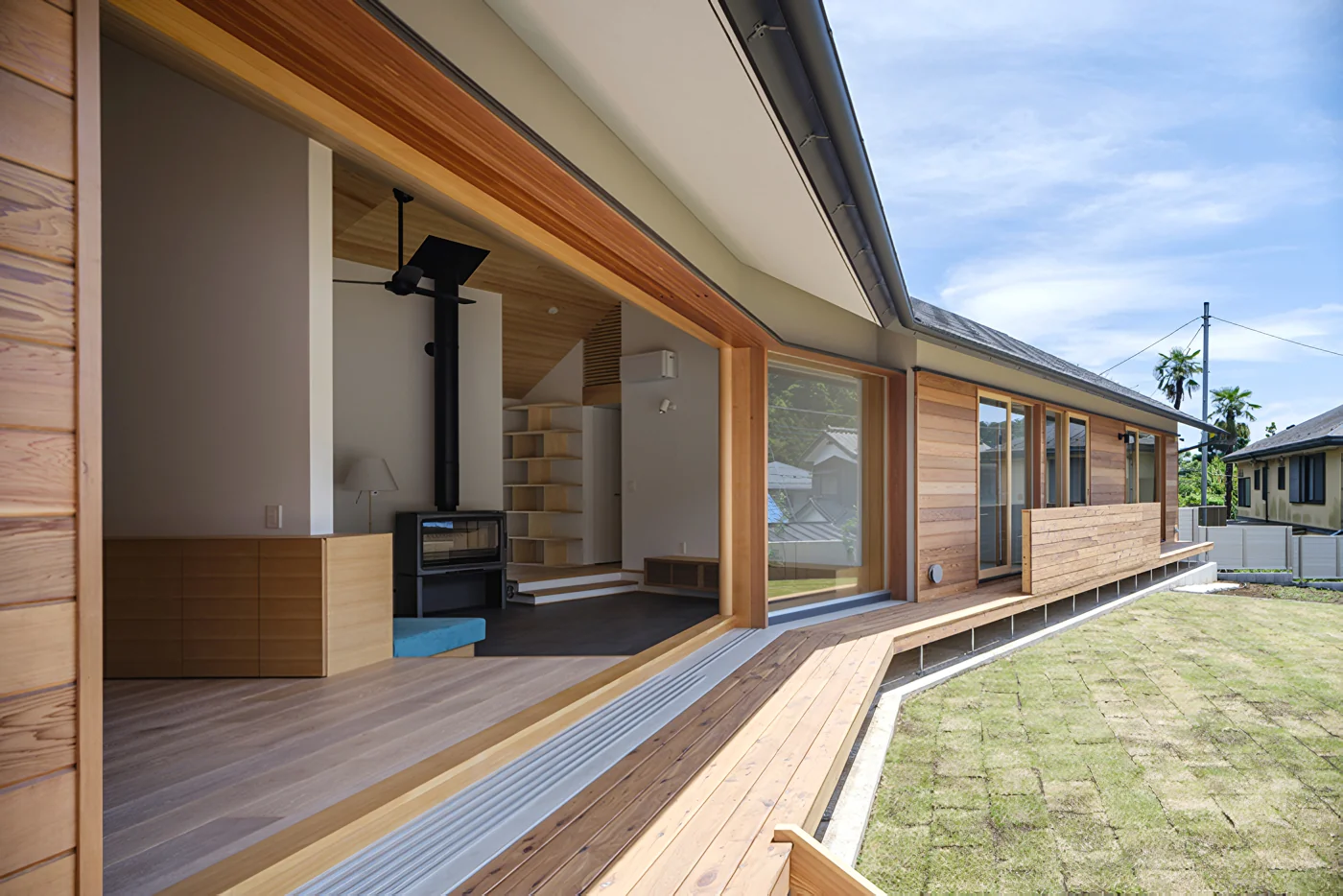
A single-story house positions all rooms close to the ground, enhancing the connection with the garden. By incorporating large sliding doors and glass panels facing the garden, a seamless indoor-outdoor living experience is achieved. The garden functions as an extension of the living space, allowing residents to intimately experience the changing seasons.
Structural Stability.
Single-story buildings have a structural advantage against earthquakes and typhoons due to their low height. With a low center of gravity and strong resistance to lateral forces, they exhibit high seismic performance. As a highly safe residential option, single-story homes are an excellent choice.
Ease of Maintenance.
Maintenance of the roof and exterior walls can sometimes be performed without the need for scaffolding. Reduced high-altitude work lowers costs. Considering long-term upkeep, single-story buildings also offer economic advantages.
Site Planning That Maximizes a Spacious Lot.
Since single-story houses extend horizontally, a certain amount of site area is required. When the site is ample, arranging the building in an L-shape or U-shape allows for the creation of a courtyard and facilitates the delivery of natural light and ventilation to each room. A site plan that leverages the characteristics of the lot enhances the value of a single-story residence.
Ensuring Privacy.
Single-story houses have windows close to the ground, which can raise concerns about visibility from outside. Privacy can be maintained while living in an open and airy environment by controlling sightlines with fences, landscaping, or curtains, or by adopting a courtyard-style layout. A design approach that closes off the exterior while opening up the interior is effective.
Introducing Spatial Variation with a Sloped Ceiling.
By expressing the roof's slope directly in the ceiling, a sense of height variation and spatial dynamism is created. For example, elevating the ceiling in the living room while lowering it in the bedroom adds contrast, enriching the typically monotonous single-story interior with depth and interest.
A Floor Plan That Senses the Presence of Family.
A single-story house allows family members to spend time on the same floor, making it easier to sense each other's presence. By arranging each room around the living area, family communication naturally emerges. This layout maintains an appropriate sense of distance while fostering a feeling of connection.
Roof Shapes and Exterior Design.
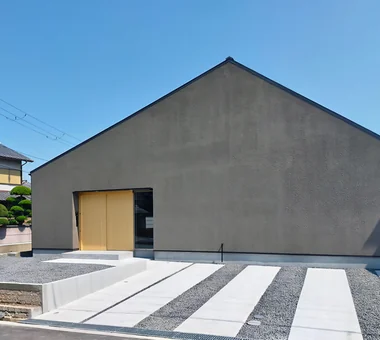
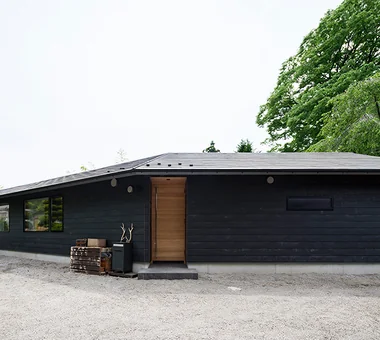
The appearance of a single-story house is greatly influenced by the shape of its roof. Options such as gable, hip, shed, and flat roofs can be selected according to design preferences and site conditions. The simple and elegant presence of a single-story home seamlessly integrates with the surrounding landscape.
Circulation Planning Unique to Single-Story Homes.
The strength of single-story homes lies in their short and efficient circulation paths. By connecting the kitchen, washing machine, drying area, and storage in a straight line, the workflow for household chores is streamlined, reducing daily burdens. This results in a compact yet highly functional circulation plan that enhances livability.
Creating Spatial Depth with a Loft.
Even in a single-story house, incorporating a loft in the attic space allows for versatile use as storage or a study. It can accommodate seasonal items or hobby equipment, and serve as a secluded retreat, offering diverse functionality. The loft adds a three-dimensional richness to the single-story dwelling.



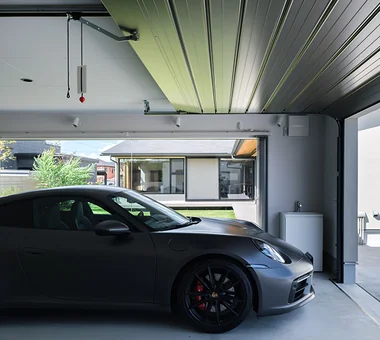 Garage Houses|Custom Home Examples by Architectural Offices|A Home for Living with Your Beloved Car
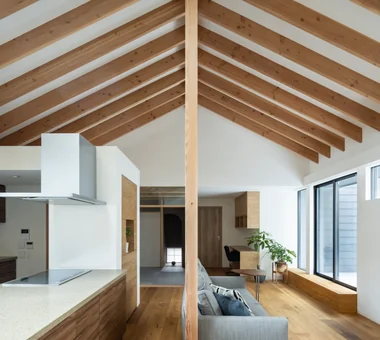 House of Wood|Key Points for Home Building|Spatial Design Embracing Material Warmth and the Patina of Aging
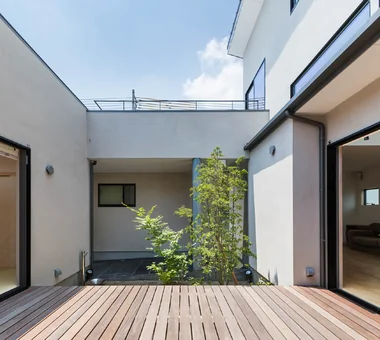 Homes Featuring Courtyards|Key Points for Home Building|Practical Design of Inner Courtyards Combining Privacy and Daylighting
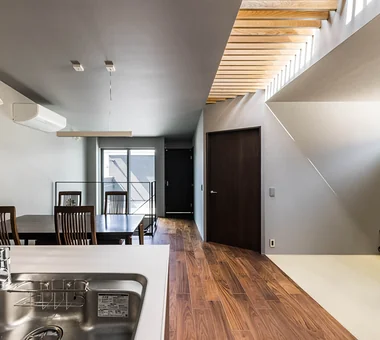 Homes Embracing Natural Light|Key Points for Home Building|Daylighting Strategy and Response to Seasonal Variations in Light
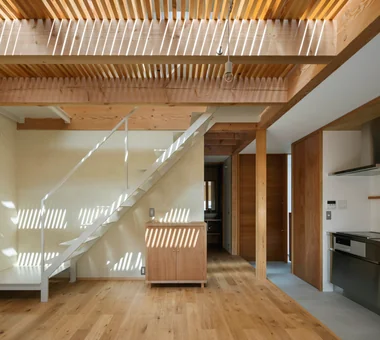 House with a Doma|Introduction to Examples by Floor Plan & Room Type|Expanding the Scope of Living: A Space in the Home that Gently Connects Inside and Out
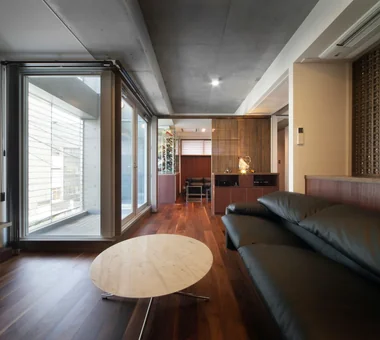 Concrete Houses|Introduction to Examples by Floor Plan & Room Type|The Intrinsic Strength of Materials and Geometric Sculptural Beauty