「ha」 hosaka hironobu architect associate
Minimalist Design Residences|Key Points for Home Building|Spatial Design Pursuing Purity by Emphasizing Materiality
Author: Qurasuki Editorial Department
The philosophy of minimalism is not merely about reducing possessions; it emerges from a process of re-evaluating the elements essential to daily life. In architecture, this approach is characterized by maximizing the expression of the textures of fundamental elements—walls, floors, and ceilings—while rigorously eliminating ornamentation. Achieving this goes beyond visual simplicity and demands a deliberate design ethos: careful material selection, a rational logic of spatial arrangement, and precise control of light and shadow. Storage planning is also crucial; only by appropriately concealing the objects required for everyday living can a truly minimal space be realized. The ideal is a residence that embodies an uncompromising aesthetic of restraint that endures over time.
Beauty Born from Subtraction.
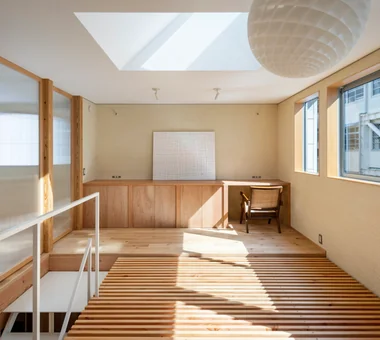
Minimalist design pursues the essential beauty that emerges after eliminating all ornamentation. By meticulously refining the junctions where walls, floors, and ceilings meet and employing techniques to conceal door and window frames, the space reveals a serene expression akin to a singular sculpture. In an environment where the texture of materials themselves and the interplay of light and shadow take center stage, any superfluity is impermissible.
Refining Materials to Enhance Purity.
By carefully selecting only two to three types of materials, the spatial purity is elevated. For example, a space composed solely of white walls, concrete flooring, and a single type of wood achieves a quiet harmony without the materials competing for attention. Considering "what not to use" from the material selection stage is the starting point of minimal design.
All Storage Concealed Within the Walls.
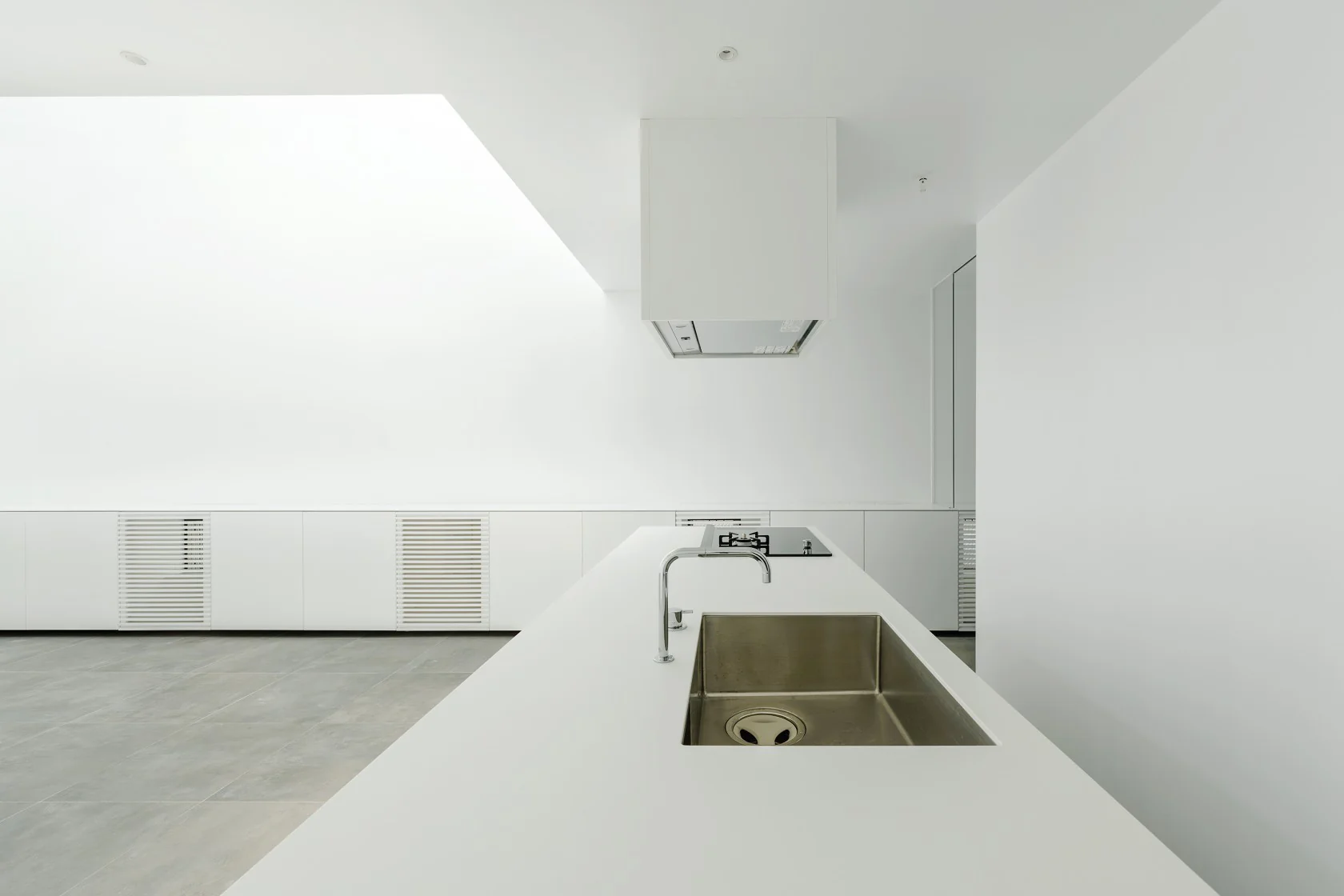
To maintain a minimalistic space, it is essential to have a storage plan that completely hides everyday items from view. By dedicating an entire wall to storage and finishing the doors to match the wall surface, or by eliminating handles and using push-to-open mechanisms, the presence of storage can be entirely erased. In living and dining areas, the courage to conceal everything preserves the beauty of minimalism.
Expressing Space Through the Design of Openings.
The position, size, and proportions of windows determine the character of a minimalist space. How openings are arranged relative to the wall surfaces and how window frames are presented alter the spatial tension. Ideally, the view framed by the window becomes a singular, living artwork. The design of openings is truly where the craftsmanship of minimalist architecture is showcased.
Understanding the Diversity of White.
Minimalist design frequently employs white; however, white encompasses a myriad of expressions. Pure white paint, off-white plaster, grayish white, and warm ivory each reveal different characteristics depending on how light interacts with them. The process of repeatedly examining samples and selecting the white most appropriate for the space critically influences the refinement of minimalism.
Integrating Lighting Fixtures into Architecture.
Pendant lights and floor lamps exist as physical objects within a space and are often avoided in minimalist design. Through lighting plans that are integrated with the architecture—such as downlights, indirect lighting, and slit lighting—only light fills the space. By making the fixtures disappear, the purity of the space is further enhanced.
Designing the Kitchen as an Integral Part of the Architecture.
The kitchen is typically the area where a sense of everyday life is most apparent; however, in minimal design, its presence is erased by integrating it seamlessly with the architecture. The doors are finished identically to the walls, handles are eliminated, and appliances are concealed within cabinetry. By crafting the countertop as if it emerges directly from the wall, it exists not as furniture but as an inherent part of the architectural composition.
Negative Space Is the Ultimate Luxury.
In minimal design, the value lies in "empty space." A living room without furniture, a corridor devoid of decoration, walls filled with ample negative space—these are not desolate but rather stages for perceiving the invisible elements such as light, breeze, and the passage of time. The essence of minimalism is the courage to embrace and intentionally create negative space without fear.
Creating Spaciousness Through Floor Continuity.
By unifying the flooring across all rooms using the same material and installation direction, a visual sense of spaciousness and tranquility is achieved. The absence of boundaries allows the space to be perceived as a single, expansive vessel, completing a minimalist aesthetic. The choice of flooring material is a crucial factor that influences the overall cohesion of the space.
Integrate Joinery Seamlessly into the Wall.
By finishing doors and sliding panels with the same material and color as the wall, they visually disappear when closed, becoming part of the wall itself. Omitting visible frames and employing full-height doors that extend from floor to ceiling minimizes the presence of the openings. This seamless integration of joinery into the architecture maintains the spatial purity.
The Exterior Reflects the Same Philosophy as the Interior.
Minimalist design demands a consistent aesthetic on the exterior as well. By eliminating superfluous ornamentation and employing a clear volumetric composition with minimal openings, a serene presence is created. Exterior wall materials are unified using a single material, and elements such as rain gutters and outdoor air conditioning units are carefully planned to remain inconspicuous. The alignment of interior and exterior design philosophies enhances the overall architectural integrity.
Selecting Materials That Embrace the Passage of Time.
In minimal design, choosing materials that evolve over time adds depth to the space. Solid wood deepens in color, plaster gains character, and concrete develops texture. Selecting materials with consideration not only for their initial beauty but also for their appearance 10 or 20 years later creates a home that is cherished for the long term.



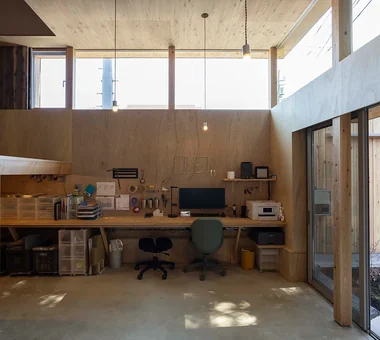 Homes with Atelier Spaces|Custom Home Examples by Architectural Offices|A Residence Where Creative Workspaces Are Integrated into Everyday Life
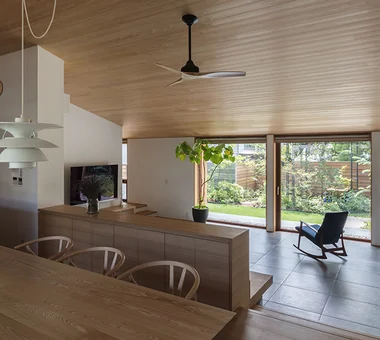 House with a Doma|Custom Home Examples by Architectural Offices|A Living Space Bridging Interior and Exterior
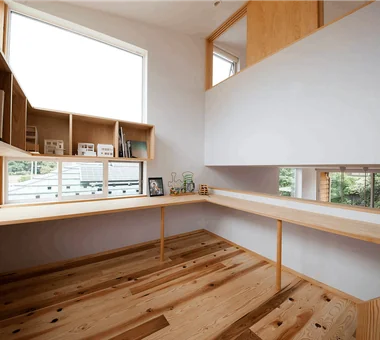 Stylish Home Studies|Key Points for Home Building|Design Strategies for an Environment that Supports Concentration
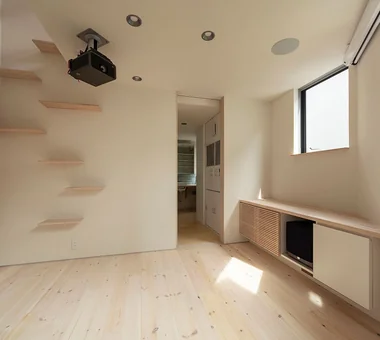 Homes Designed for Living with Cats|Custom Home Examples by Architectural Offices|A Comfortable Environment for Cats and People
 Narrow Lot House|Custom Home Examples by Architectural Offices|Abundant Living Within a Compact Site
 Glass-Enclosed Residences|Introduction to Examples by Floor Plan & Room Type|Balancing Comfort with High-Performance Glazing and Structural Design