Archiplace
Two-Family House|Pros and Cons|Designing for Appropriate Interpersonal Distances
Author: Qurasuki Editorial Department
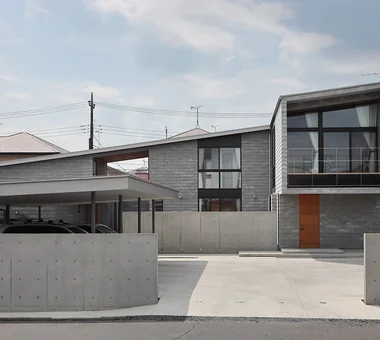
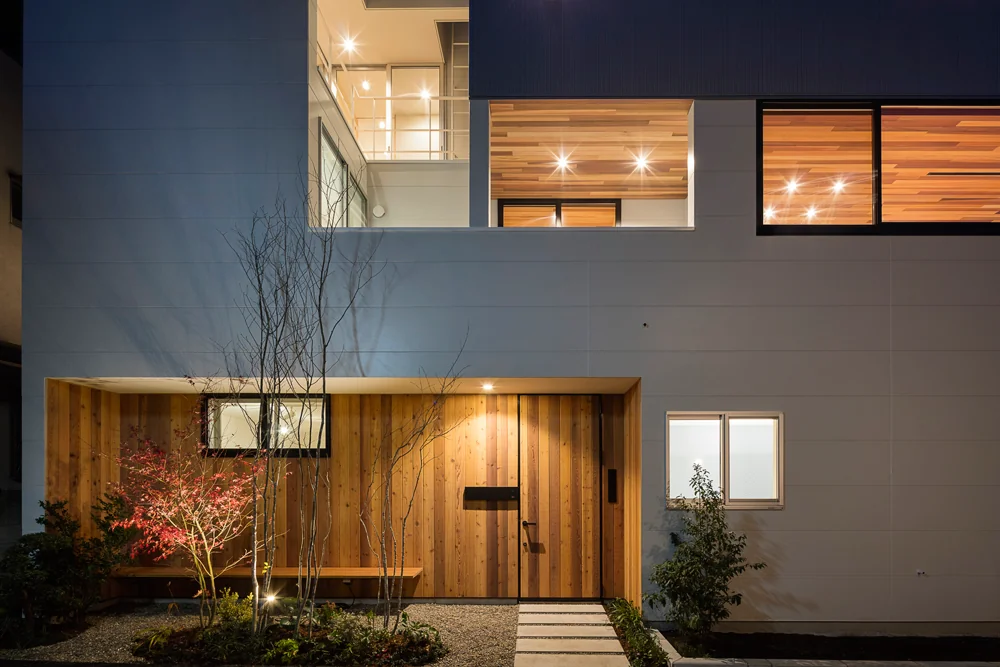
A two-generation house refers to a residential building or site shared by two family units, typically the parental generation and their children’s generation. Generally, these houses are categorized into three typologies: “completely separated,” “partially shared,” and “fully cohabiting.” The configuration varies significantly depending on family relationships, lifestyle preferences, and site conditions.
The completely separated type features fully independent entrances, kitchens, bathrooms, and toilets for each household. This arrangement offers a high degree of autonomy similar to condominium living, allowing families with differing daily rhythms to coexist without mutual disturbance.
The partially shared type involves sharing certain spaces such as the entrance or bathroom, while living rooms and kitchens remain private to each household. This typology strikes a balanced approach, fostering family interaction while maintaining a reasonable degree of privacy.
The fully cohabiting type entails nearly all spaces, including wet areas, being shared. This model is cost-effective and well-suited for families wishing to provide mutual support in household chores, childcare, and eldercare.

The completely separated type features fully independent entrances, kitchens, bathrooms, and toilets for each household. This arrangement offers a high degree of autonomy similar to condominium living, allowing families with differing daily rhythms to coexist without mutual disturbance.
The partially shared type involves sharing certain spaces such as the entrance or bathroom, while living rooms and kitchens remain private to each household. This typology strikes a balanced approach, fostering family interaction while maintaining a reasonable degree of privacy.
The fully cohabiting type entails nearly all spaces, including wet areas, being shared. This model is cost-effective and well-suited for families wishing to provide mutual support in household chores, childcare, and eldercare.
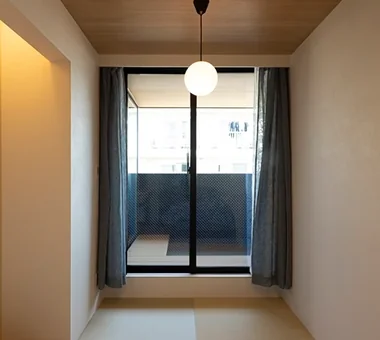
A Home Facilitating Mutual Support in Childcare, Supervision, and Housework through Efficient Shared Facilities
Two-Family House|Advantages
The greatest appeal of two-generation housing lies in its natural integration of familial “mutual support” into daily life. Responsibilities such as childcare, elder supervision, daily shopping, and parcel receipt can be shared, enhancing efficiency and providing greater peace of mind.
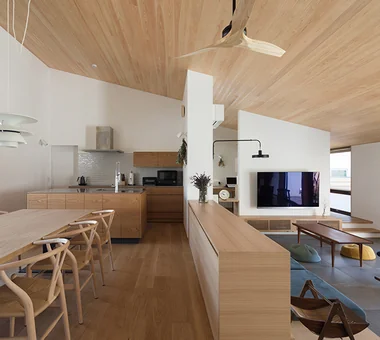
By planning shared household workflows, it is possible to consolidate laundry areas, pantries, and storage spaces, thereby reducing duplication of appliances and storage, which contributes to savings in utility costs and household labor time. Furthermore, designing hot water heaters, heating, and ventilation systems in alignment with the family’s lifestyle patterns achieves a harmonious balance between comfort and energy efficiency.
Incorporating flexible wiring and plumbing layouts that allow for future modifications, as well as designing with potential separation or rental conversion in mind, enables adaptability to evolving lifestyles. Appropriately situating shared spaces and securing private areas for each household with doors or movable partitions helps respect differing daily rhythms despite physical proximity.
Thoughtful placement of storage, sound insulation, and a unified approach to lighting and interior finishes enhance overall comfort and harmony throughout the home. Financially, sharing utility expenses and household tasks among family members realizes a more efficient lifestyle.
Additionally, two-generation houses offer flexibility for future life plans. Should the younger generation become independent or if eldercare becomes necessary, designs that maintain a degree of autonomy facilitate changes in living arrangements or conversion to rental use.
Everyday Frictions Arising from Noise, Odors, and Discrepancies in Living Schedules within Ambiguous Shared Zones
Two-Family House|Disadvantages
Many common issues in two-generation housing stem from differences in lifestyle rhythms, conflicting values, and insufficient capacity planning of building systems. A primary challenge arises from mismatched daily schedules: variations in morning and evening activities, cooking, and bathing times can cause footstep noise and appliance sounds to interfere with rest or relaxation. This is especially pronounced in two-story houses, where impact noise from upper floors easily transmits downward, becoming a source of daily stress if not properly addressed.
Open atriums or stairwells may facilitate the spread of kitchen and bathroom odors throughout the home, compromising comfort. Ambiguous boundaries between storage or shared spaces often lead to mixing of personal belongings, increasing organizational burdens and interpersonal friction.
Adequate equipment capacity is also critical. Underestimating the capacity of water heaters or electrical distribution boards can result in insufficient hot water supply or circuit breaker trips during simultaneous use of showers and kitchens, disrupting daily routines.
Unclear divisions of utility expenses, household chores, visitor management, and cleaning responsibilities can exacerbate conflicts among family members. Psychologically, insufficiently maintained interpersonal distance can accumulate stress.
To harmonize comfort and security, the design process must clearly delineate the independence and shared use of spaces for each household, incorporating noise, odor, light, and equipment considerations.
Technical Strategies for Soundproofing, Ventilation, Electrical, and Hot Water Systems to Maintain Appropriate Distances
Two-Family House|Countermeasures for Disadvantages
Effective responses to two-generation housing challenges converge on three approaches during design: spatial demarcation, technical interventions, and clear usage protocols. Spatially, private and shared areas are classified as “exclusive,” “shared,” or “shared by reservation,” with clear definitions of circulation paths, entrances, and wet area locations established in the plans. Separating entrances and stairways reduces daily contact and minimizes disturbances from noise and visitor interactions.
For soundproofing, combining double-layered ceilings and floors with sound-absorbing materials effectively reduces both impact and airborne noise transmission. Plumbing such as drainage and water supply pipes should be insulated or boxed-in to maintain distance from bedrooms and living areas.
Ventilation systems are ideally separated per household or utilize total heat exchange ventilators to suppress the recirculation of temperature, humidity, and odors. Electrical systems benefit from separate distribution panels or sub-meters per household, ensuring capacity margins to accommodate simultaneous usage and equitable cost allocation. Hot water supply can be managed with dedicated units per family or a large-capacity unit with priority control to absorb peak demand.
On the operational side, pre-established agreements on utility cost sharing, waste disposal, cleaning, and visitor protocols help reduce interpersonal friction.
-
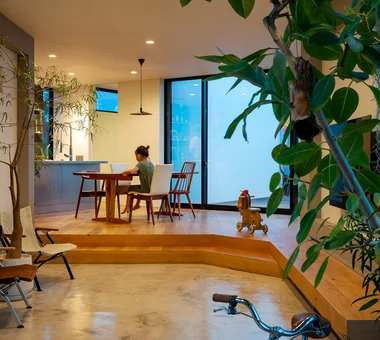
Modern Japanese-Style Residence|Custom-built homes by architecture firms|A Residence Where Japanese Aesthetics Meet Contemporary Living2026-05-11|Qurasuki Editorial Department -
Homes Featuring Wood-Burning Stoves|Introduction to Architecture Firms|The Richness of Life with Fire2026-05-11|Qurasuki Editorial Department -
Homes Featuring Courtyards|Introduction to Architecture Firms|The Enclosed Sky Garden2026-05-11|Qurasuki Editorial Department -
Stylish Atriums|Key Points for Home Building|Strategies for Balancing Openness and Comfort2025-10-20|Qurasuki Editorial Department -
Narrow House|Custom-built homes by architecture firms|Abundant Living Within a Compact Site2026-05-11|Qurasuki Editorial Department -
House of Wood|Case Studies|The Expression of Wood Weaves a Life: A Deeper Connection with Wood Over Time2025-10-13|Qurasuki Editorial Department