Abax Architects
The Simple House|Custom-built homes by architecture firms9Picks|The Richness of Negative Space
Author: Qurasuki Editorial Department
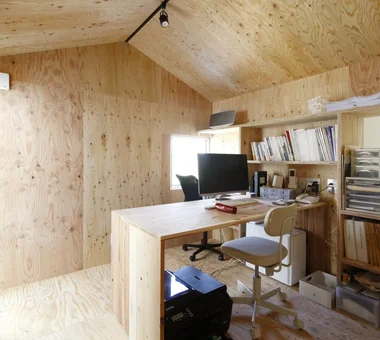
A "simple house" is not merely an empty space; it is a residence in which requisite elements are precisely arranged and materials, light, and spatial relationships are in quiet harmony. By removing unnecessary ornamentation, toning down the palette, and clarifying circulation, a sense of calm and comfort is generated in everyday life. In pursuing simplicity, the design office engages in thorough and meticulous examination of details—such as material textures, the proportions of openings, and the balance of ceiling heights. Beneath the apparent visual restraint resides a rich design intention. Here we introduce an example of a refined, simple dwelling where family life can unfold serenely.

House in Oimazato
Kumi Inoue Architects
Situated on a corner lot fronting roads on three sides, this residence is designed for elderly occupants. A broad roof and enclosing walls shield the living spaces from external noise, while a daylighting strategy employing a courtyard, terraces and stepped roof planes creates an interior that is simultaneously sheltered and spacious. Clerestory windows and glass block panels admit soft natural light, preserve privacy from the street and ensure a bright, comfortable indoor environment. Sloped ceilings connect the corridor and rooms in a gentle sequence, allowing light and directed sightlines to pass through, resulting in a home that combines a sense of security with spatial richness.
House Living with the Sky
Archiplace
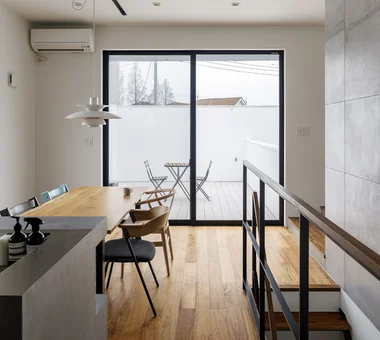
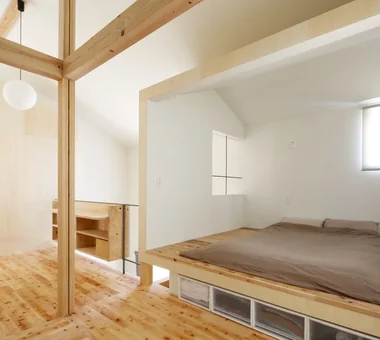
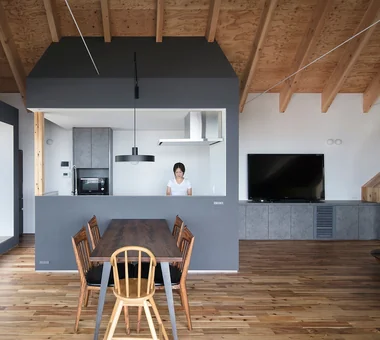
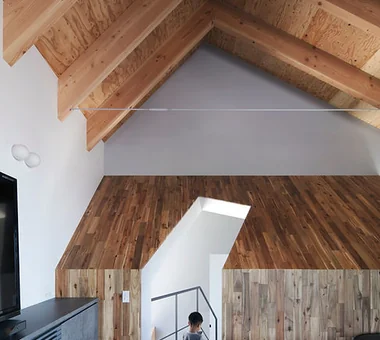
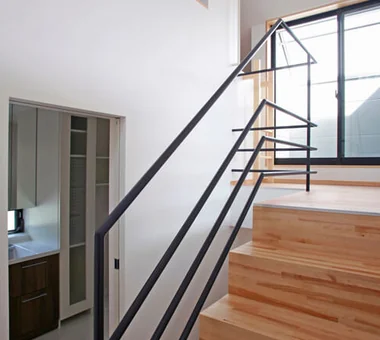
This dwelling, designed for a couple in their thirties and their child, adopts a simple, modern and natural aesthetic. To comply with strict area and height regulations, part of the volume is sunk as a semi‑basement, above which a two‑storey timber structure is arranged. A split‑level configuration from the semi‑basement up to the loft produces a sense of spatial expansiveness and an efficient domestic circulation. On the south side a walled deck terrace provides an outdoor space that integrates with the living‑dining‑kitchen, admitting light and ventilation so occupants can feel connected to nature despite the urban location.
HE10 — AICA Project Example Contest, Excellence Award
YIA Ishiue Yoshihiro Architectural Design Office
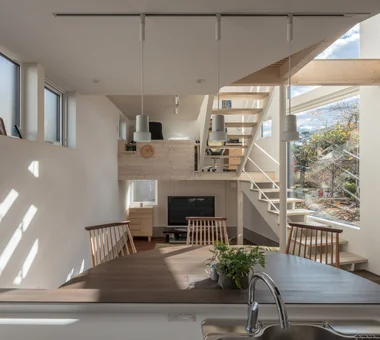
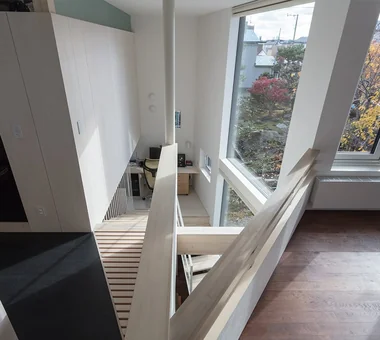
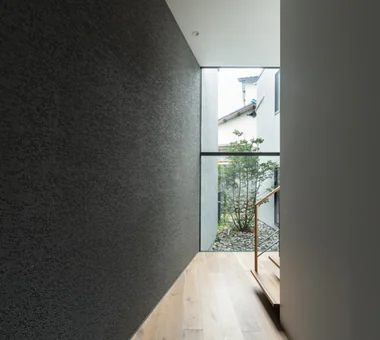
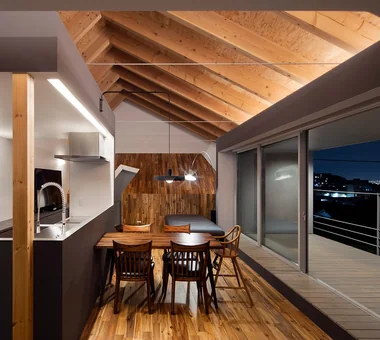
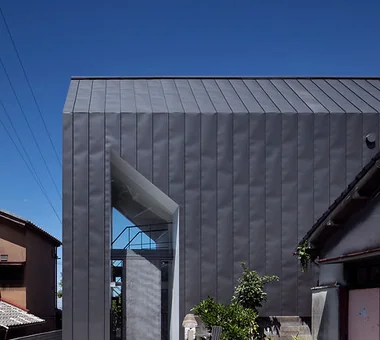
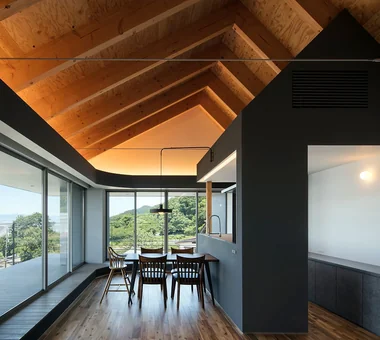
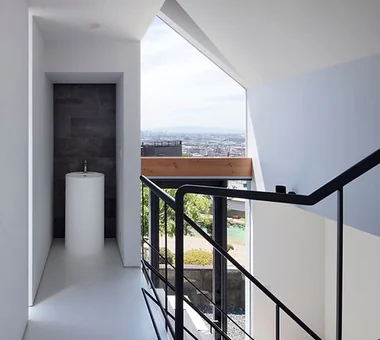
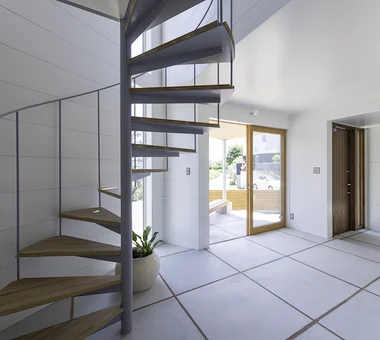
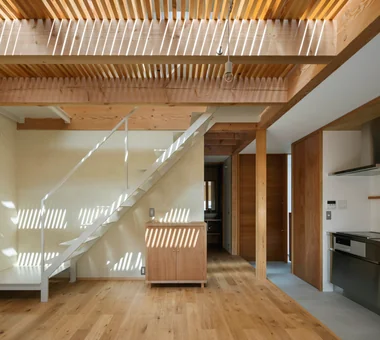
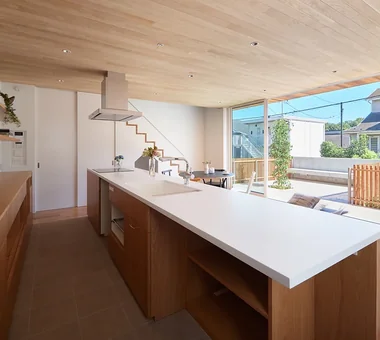
The site is located on the mid‑slope of Mount Ikoma. It is a flag lot with access from the east; to the west are views of Osaka Bay, the Akashi Kaikyō Bridge and the Rokko mountains, and to the north a cluster of cherry trees. The LDK is placed on the second floor to secure elevation and incorporate changing surroundings and vistas. A transparent entrance hall is located in the flagpole access strip, and intersecting stairs guide sightlines, connecting to the LDK through cuts in the ceiling and wall. A deep, L‑shaped, frame‑like balcony establishes continuity from interior to exterior. The ceiling is a modified gable form with exposed ascending rafters.
House on Midori Hill
Abax Architects
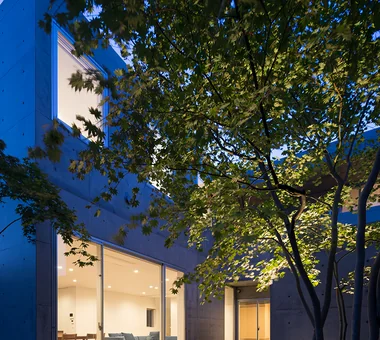
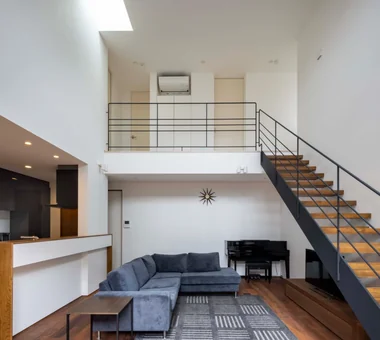
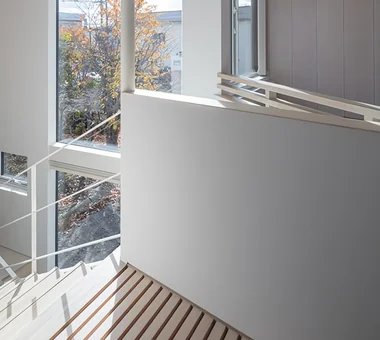
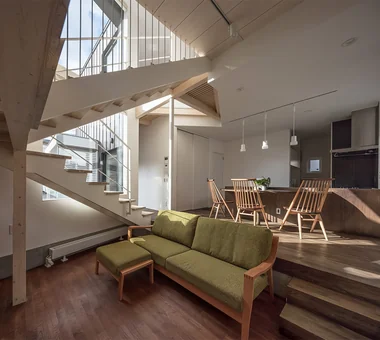
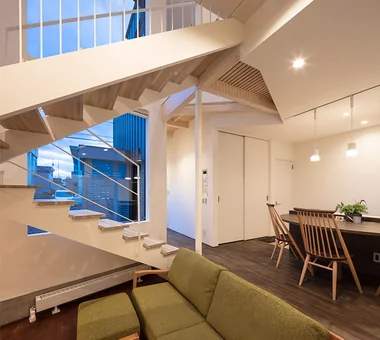
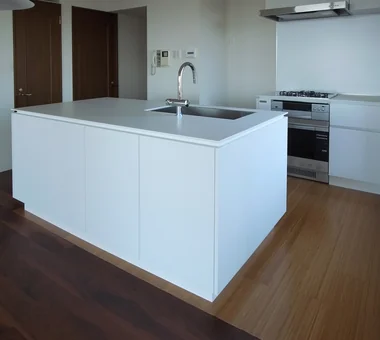
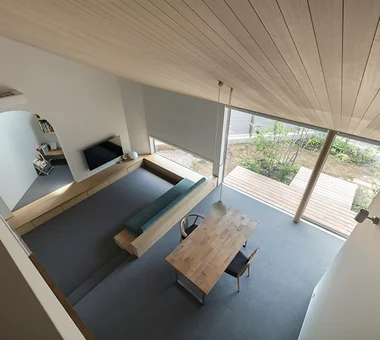
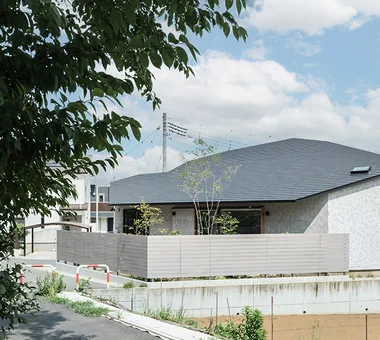
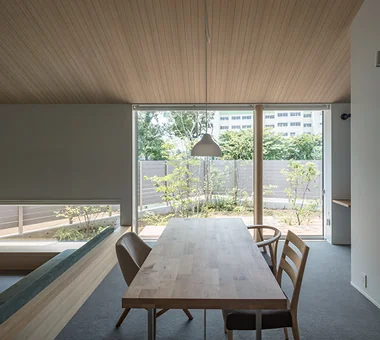
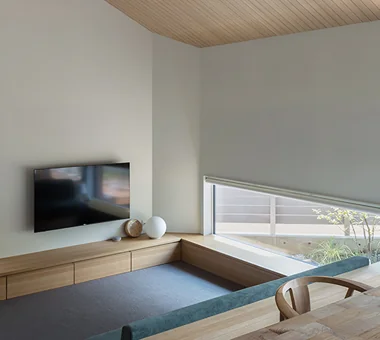
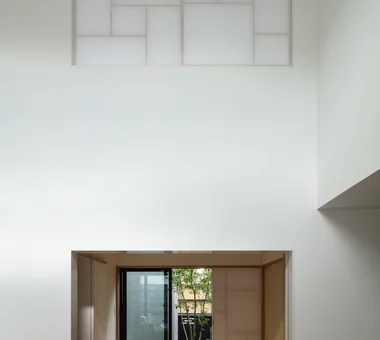
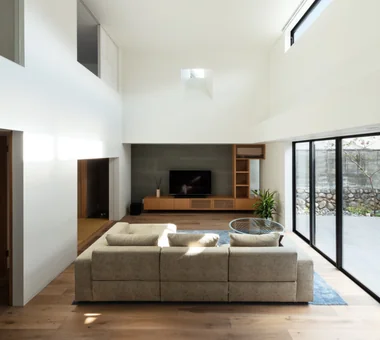
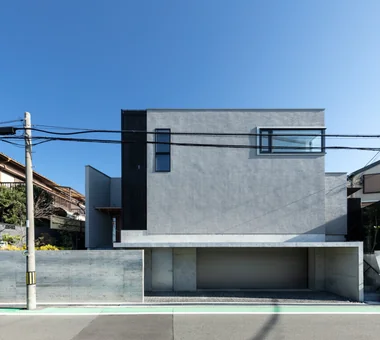
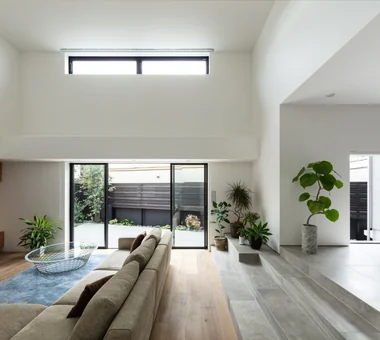
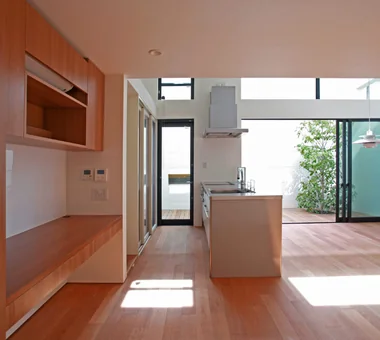
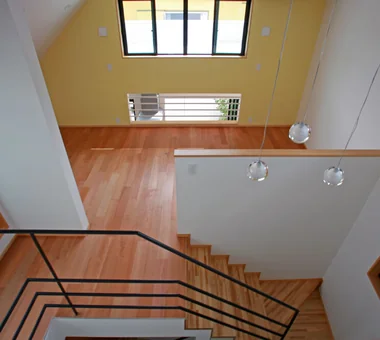
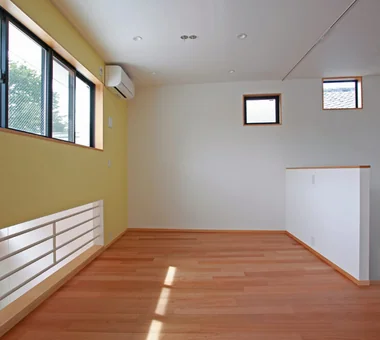
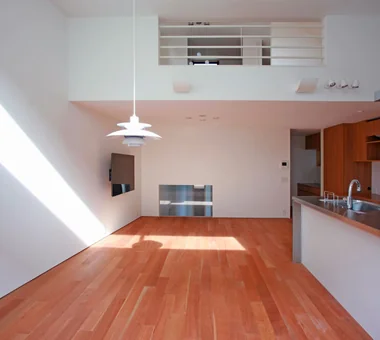
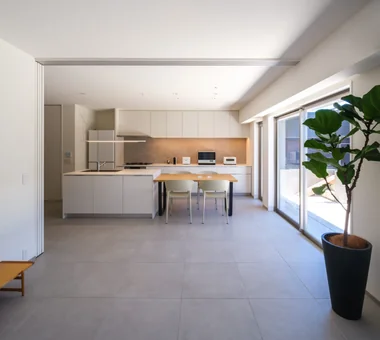
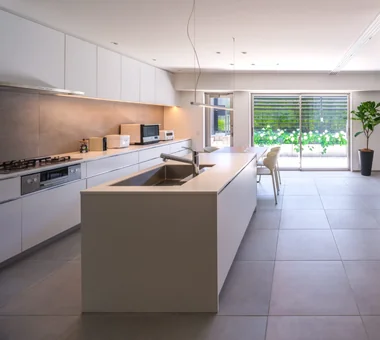
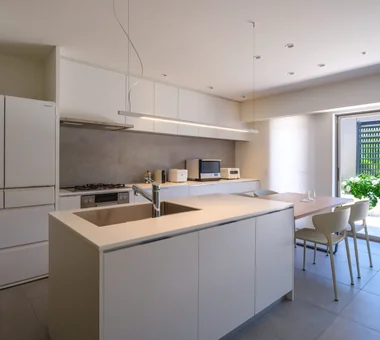
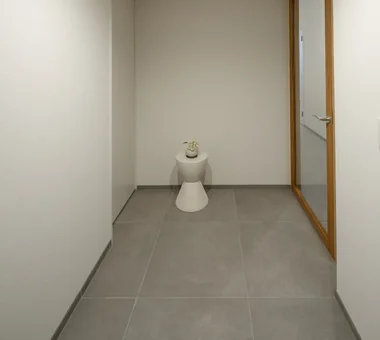
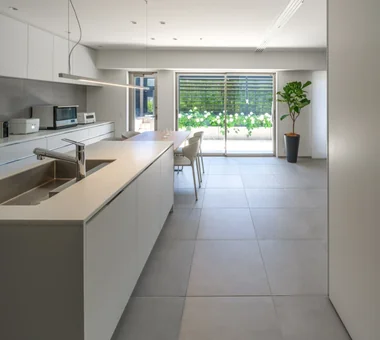
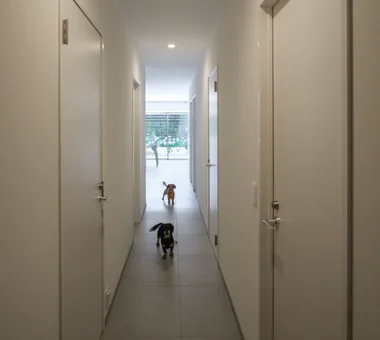
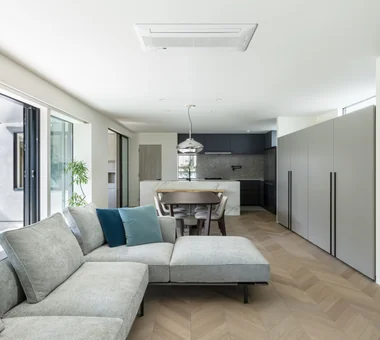
A two-storey residence located in an upscale residential area of Toyonaka City, Osaka Prefecture, executed as a mixed structure with a reinforced-concrete basement and timber-framed construction. The living room, arranged as a double-height space, faces a large garden to the south. The exterior is simple and restrained, and the interior is resolved with a clean, minimalist aesthetic.
KAN
JYU ARCHITECT
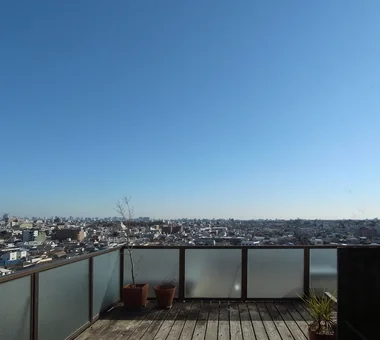
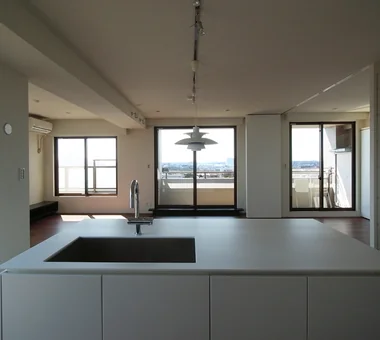
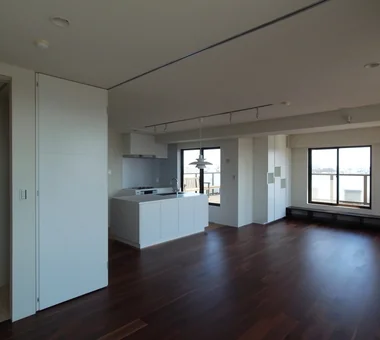
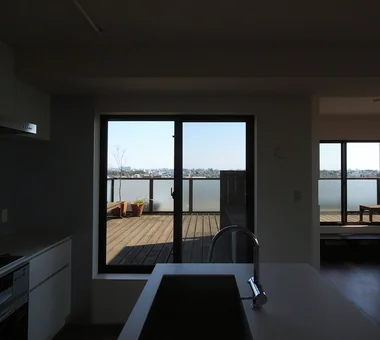
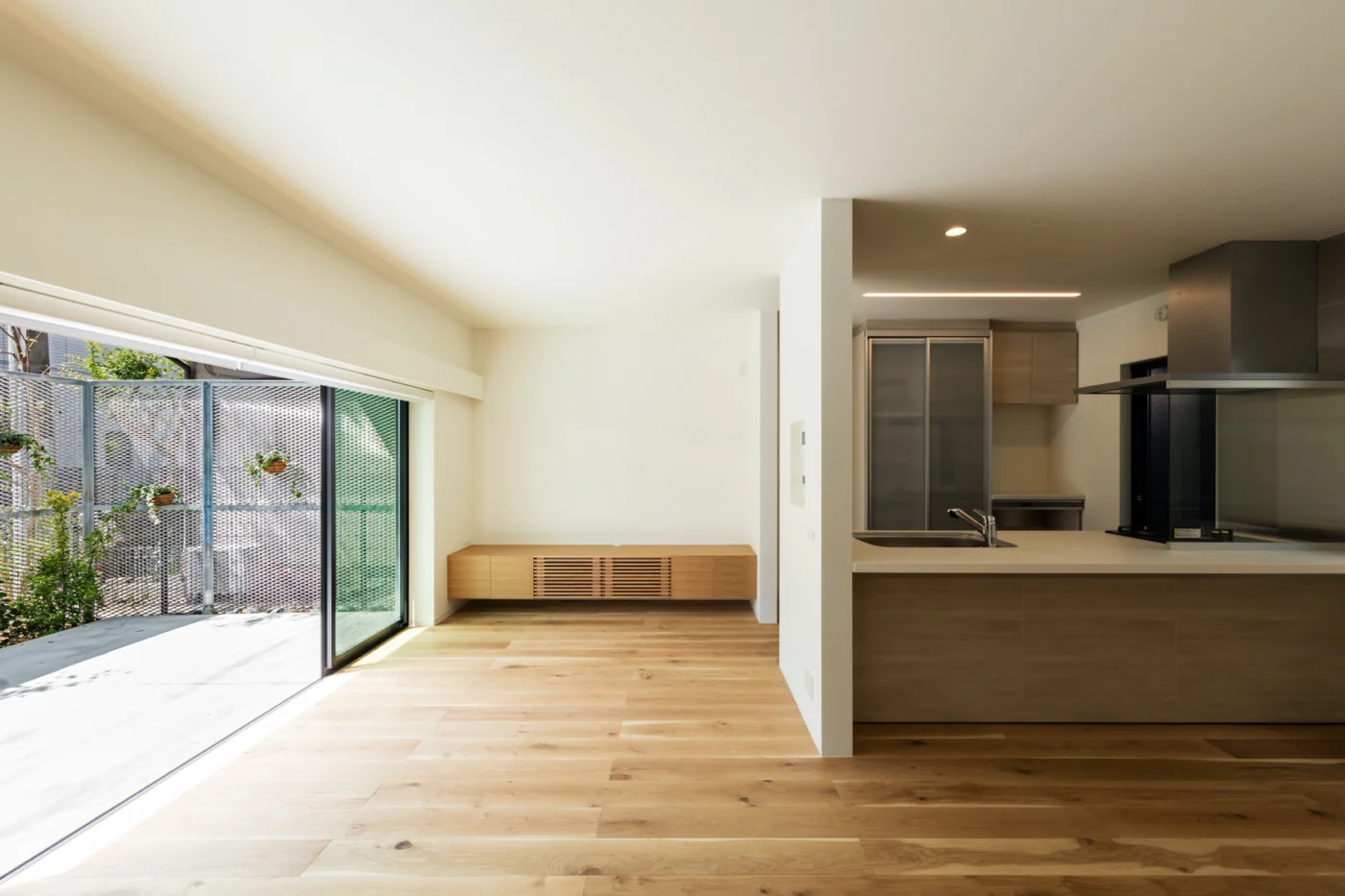
This apartment renovation maximizes the views from the 10th floor. Situated on a site blessed with city views to the east and Mount Fuji to the southwest, the layout of private rooms and the kitchen was reorganized so that the landscape can be enjoyed in everyday life. The shared space opens widely toward the views, the previously underutilized east deck was regenerated as an outdoor room connected to the kitchen, and movable partitions were introduced to reconcile openness with flexible use, creating a living environment that balances spaciousness and adaptability.
House in Hamura
Mochizuki Architectural Atelier
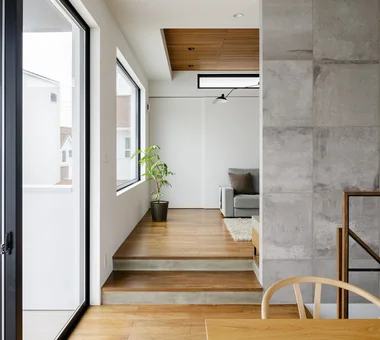
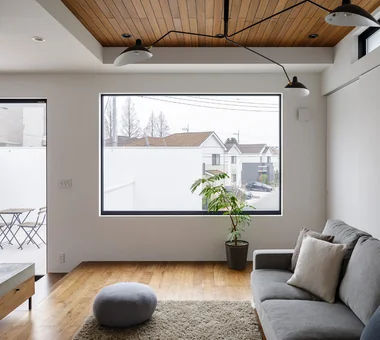
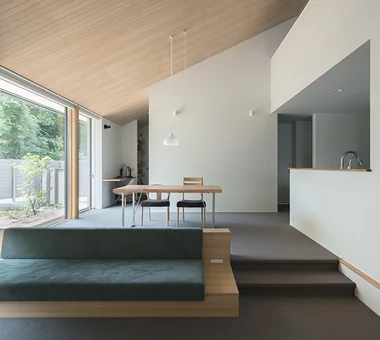
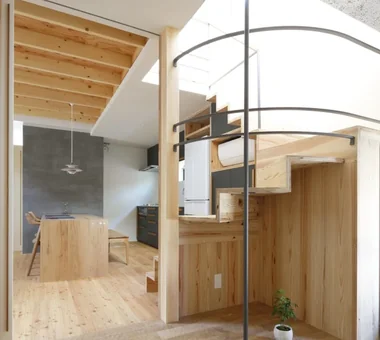
The site is a corner lot in a suburban residential neighborhood, with a park resembling a copse extending to the east. The primary living spaces are located on the second floor; continuous openings from the kitchen through the dining to the living area capture borrowed views, while ceiling heights are varied. The living area is set one step higher and incorporates a built-in sofa and a study corner with expansive views. The exterior is characterized by a mono-pitched roof and horizontal windows, with a change in cladding between the upper and lower sections. The interior is unified in a calm, restrained palette.
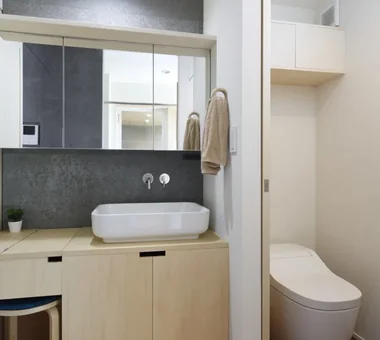
Studio Apartment with Private Garden and Large Desk | D#102
Yoshihiro Yamamoto Architects Associates
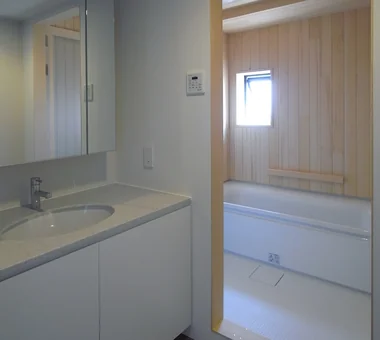
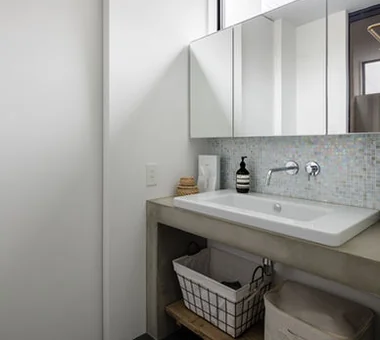
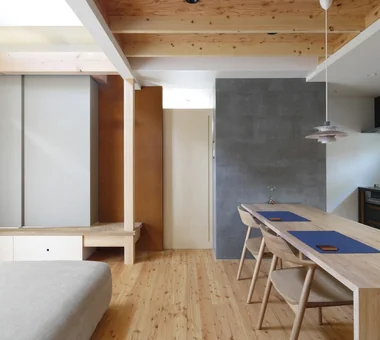
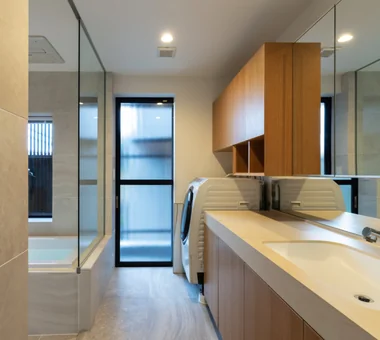
This project is a comprehensive renovation of a 20-year-old, developer-built rental property. The studio unit was reconfigured into a simple, more spacious layout, with a long table—serving as kitchen, dining and desk—acting as the spatial focal point. The modular bathroom that previously faced the corridor was reworked during the equipment upgrade to provide a dedicated washbasin and dressing/laundry room. Finishes include solid oak plank flooring, a wood deck, mortar-finished floors, and site-fabricated timber joinery.
Circle House
KICHI ARCHITECTURAL DESIGN
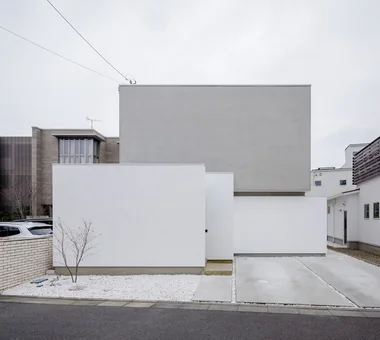
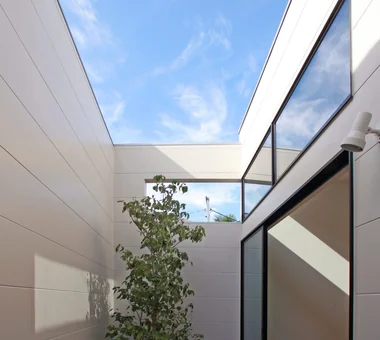
Circle House, located in Tsukuba City, Ibaraki Prefecture, is a two‑storey residence that, through a three‑layer composition of tall white exterior walls encircling the site, screens views from the street while abundantly admitting natural light. The lowermost wall creates an exterior space around the first floor; the second layer gently envelops the second‑floor balcony; and the uppermost layer is simply resolved with a flat roof. On the entrance side, black‑painted red cedar is applied as an accent, and the interior is composed of oak flooring, a lounge laid out with tatami in a lattice pattern, and a kitchen with a timber frame finished in mortar.
House Beside the Park
Yu Architectural Design Studio
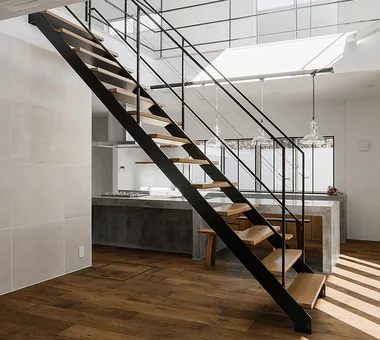
This is the architect’s own residence overlooking a park. Although compact at 28 tsubo (approximately 92.4 m²) including the office, the floor plan layers functions and connects spaces to allow flexible, expansive use. Window locations and dimensions were calibrated to control solar gain and natural ventilation, so the dwelling remains cool in summer and warm in winter. A variety of materials—timber, steel, mortar, and washi paper—are combined internally and externally, producing a harmonious spatial design that also incorporates showroom-like elements.
-
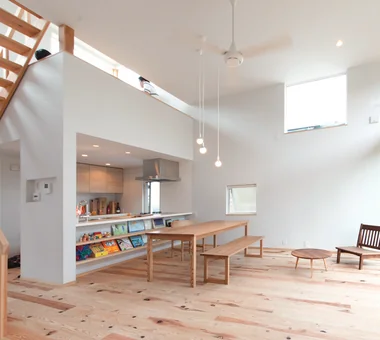
Soundproof Rooms|Key Points for Home Building|Planning Spaces that Balance Hobbies and Family Time2025-10-20|Qurasuki Editorial Department -
Homes with Atelier Spaces|Key Points for Home Building|An Optimal Atelier Environment for Creative Practice: Daylighting, Ventilation, and Exhibition2026-03-02|Qurasuki Editorial Department -
Homes with Gardens|Custom-built homes by architecture firms|A Home That Grows with Greenery2026-05-11|Qurasuki Editorial Department -
House of Wood|Introduction to Architecture Firms|Living Enveloped in the Warmth of Wood2026-05-11|Qurasuki Editorial Department -
Homes in Harmony with Nature|Case Studies|A way of living that enjoys daily life in harmony with nature, feeling the seasons and embracing the wind and light2025-10-13|Qurasuki Editorial Department -
Homes with Atelier Spaces|Introduction to Architecture Firms|A Home Where Making Becomes Everyday Life2026-05-11|Qurasuki Editorial Department