Mochizuki Architectural Atelier
House with a Doma|Custom-built homes by architecture firms9Picks|A Living Space Bridging Interior and Exterior
Author: Qurasuki Editorial Department
The doma, once widely found in traditional Japanese houses, is being reappraised in contemporary dwellings for a variety of uses. Functioning as an intermediate zone between outdoors and indoors, the doma can fulfill many roles depending on lifestyle: storage for outdoor gear, parking for bicycles and motorcycles, a workspace for agricultural tasks or carpentry, a play area for children, or a semi-exterior reception space for welcoming guests. Designing a doma involves reconciling usability and comfort—providing connections to the interior suitable for barefoot use, selecting floor finishes that are easy to clean, and ensuring adequate daylighting and natural ventilation. This text introduces doma spaces that suit modern living while organizing their uses and household circulation.

Nested-Structure Renovation of a Traditional Kominka: House of Interstices
Yoshihiro Yamamoto Architects Associates
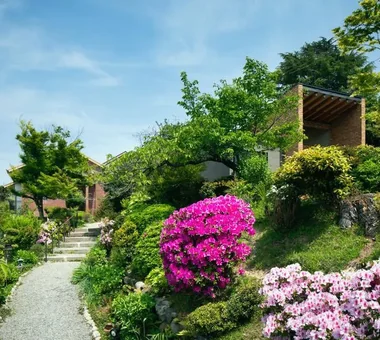
This renovation restores a Taishō-period residence in Nara City. Faced with damage from water ingress and termite infestation, and given conditions that made rebuilding infeasible along with a desire to retain the machiya character, refurbishment was chosen. A compact living room is placed at the center, while seismic resistance and thermal insulation have been upgraded to contemporary standards. The plan adopts a nested configuration in which the core is wrapped by semi-outdoor spaces—such as the entrance, engawa (veranda), and a book repository—thereby preserving the machiya-like spatial quality in which interior and exterior are gently connected.

Kamakura Plus
Far East Design Lab.
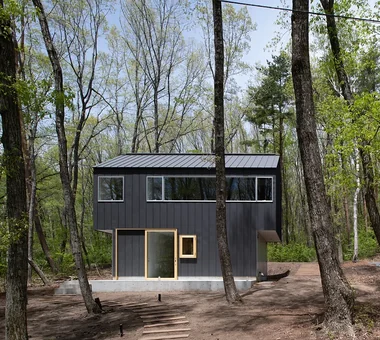
This residence is situated within Kamakura’s verdant surroundings. The site lies at the end of a narrow lane in a tranquil location with mountain views extending to the north and south. To capture these natural vistas, large two‑story‑high windows are provided on the north and south elevations, allowing views of the garden and surrounding greenery from the first‑floor living/dining/kitchen (LDK) and the second‑floor bedroom connected via a double‑height void. On the street side, wooden lattice doors are installed and curtains provided internally, enabling layered control of privacy through the modulation of sightlines and daylight.
House Behind the School Building
an Archi-Lab. First-Class Architect Office
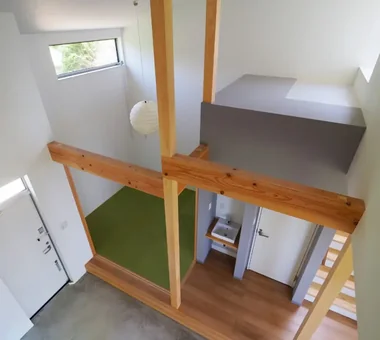
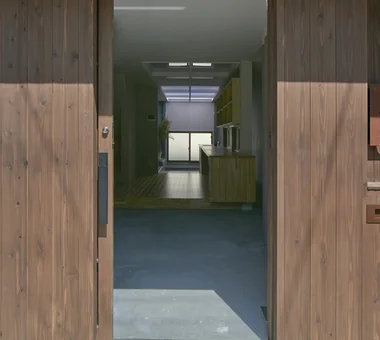
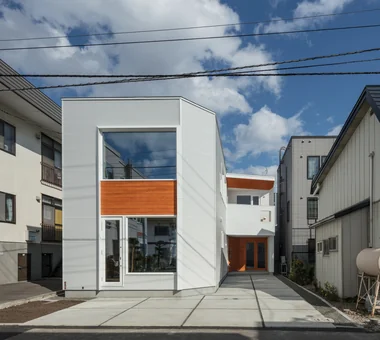
A compact lot with a 6.5 m frontage and 9.5 m depth, totaling 19 tsubo (approximately 63 m²). The site faces a 4.0 m‑wide road to the north, is flanked by neighboring houses to the east and west, and is tightly bordered to the south by a three‑storey school building. In response to the client's request for a 'bright house', the design provides a sheltered veranda and a small garden margin on the south side, and links interior and exterior with a low, tea‑house‑like crawl‑in opening. A small forecourt and an earthen‑floored doma in front of the entrance establish a route from the alley to the courtyard, and the entrance door is positioned outside the fire‑wall line. Privacy is graduated across four rooms; the second‑floor living room functions as a pool of light, while a louvered, slatted floor conveys daylight and natural ventilation to the lower level.
House in Takao
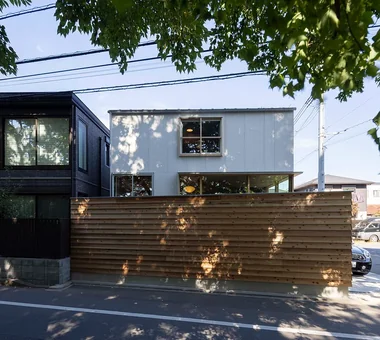
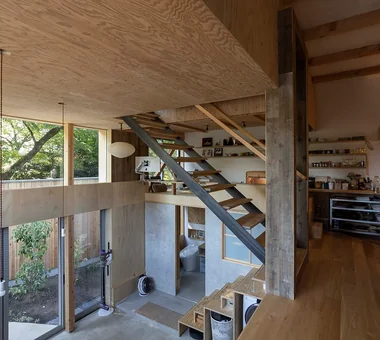
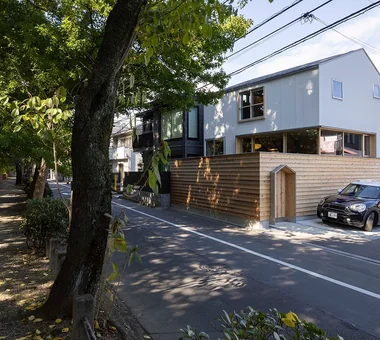
Mochizuki Architectural Atelier
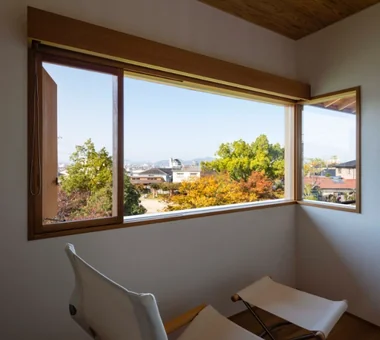
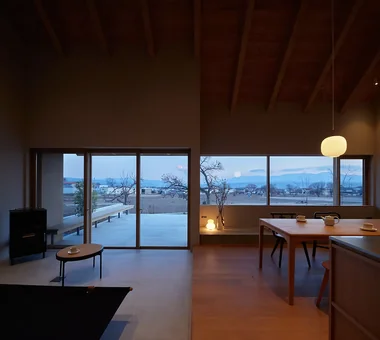
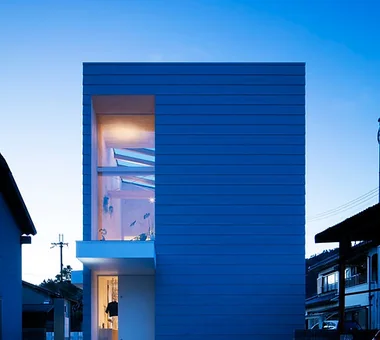
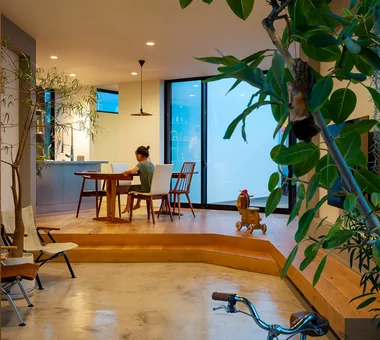
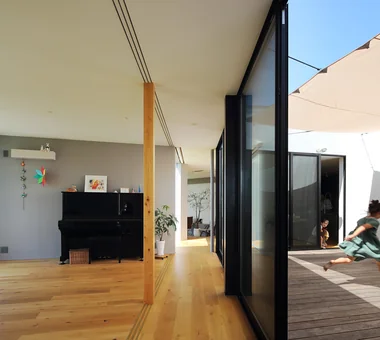
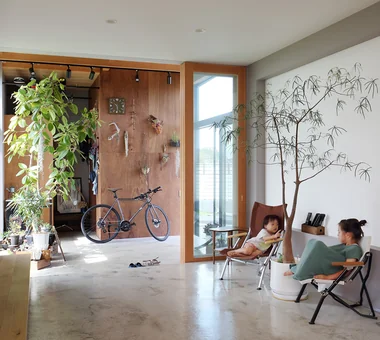
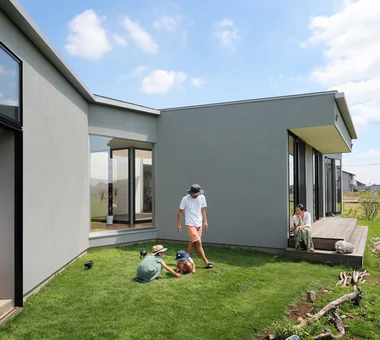
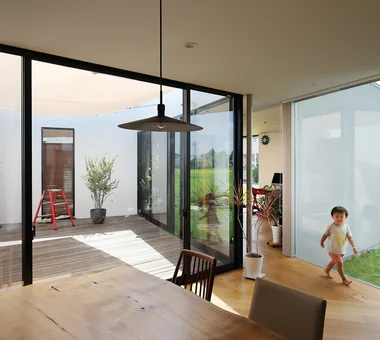
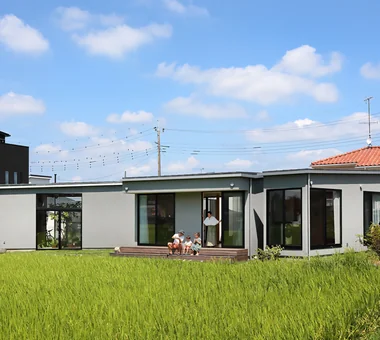
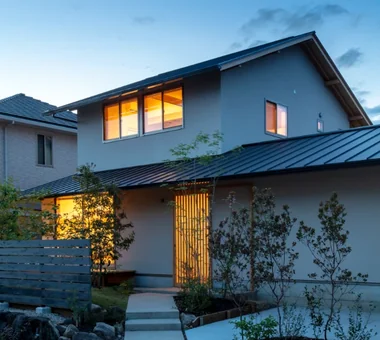
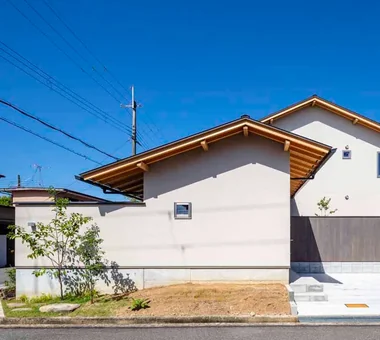
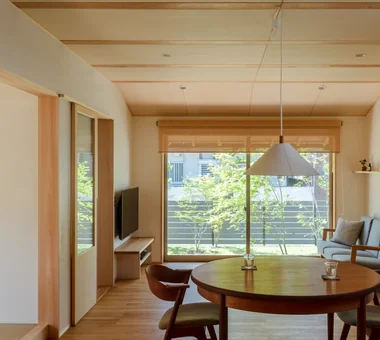
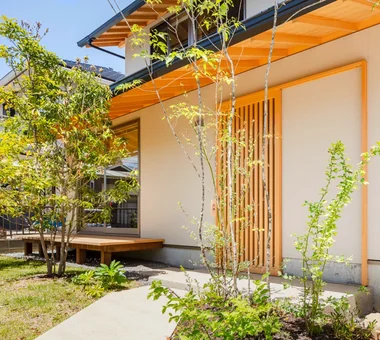
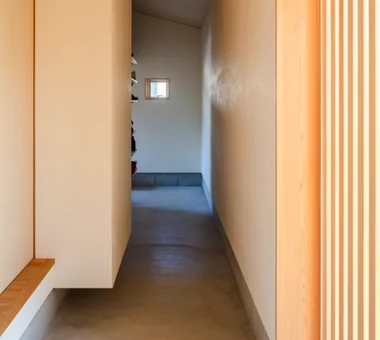
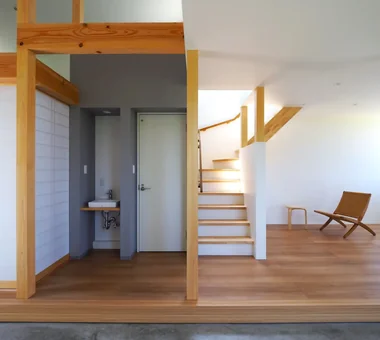
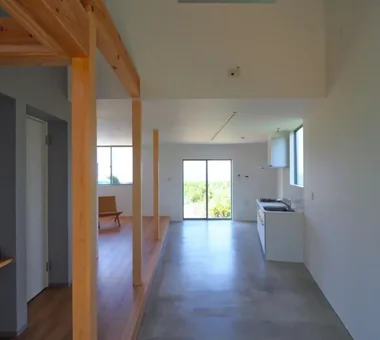
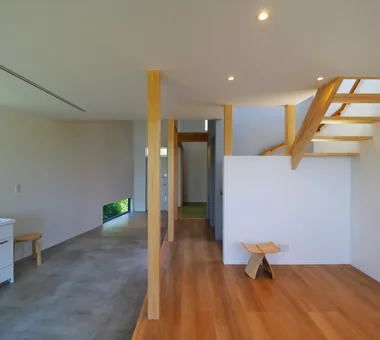
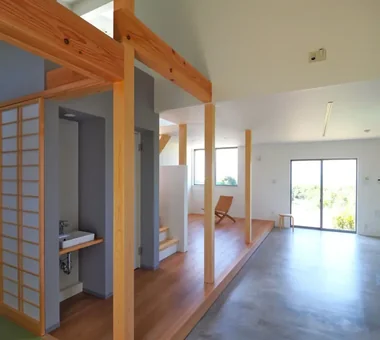
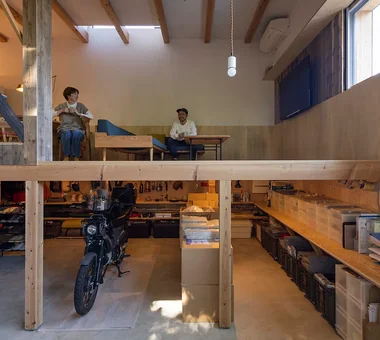
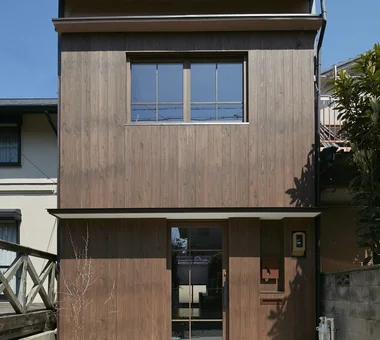
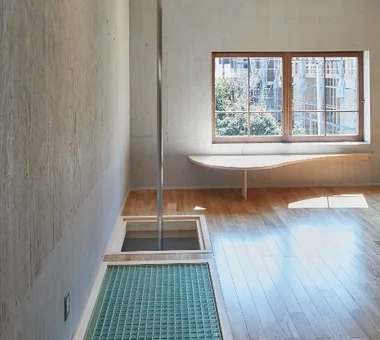
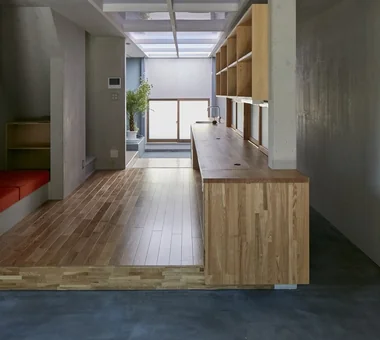
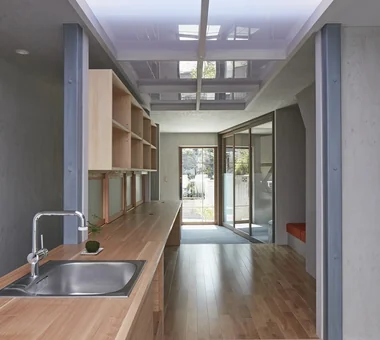
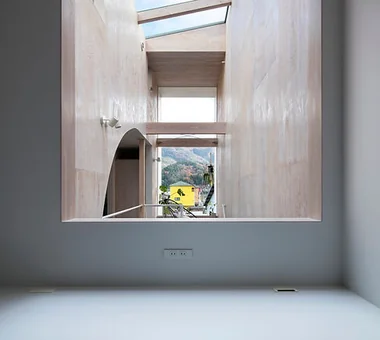
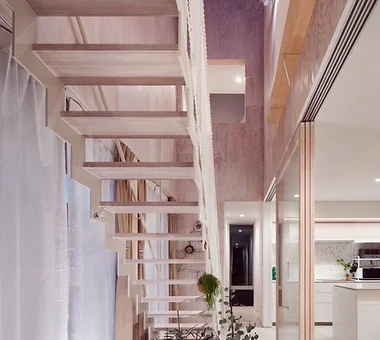
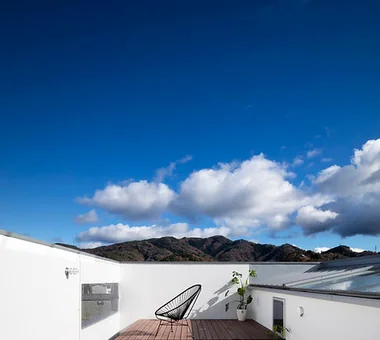
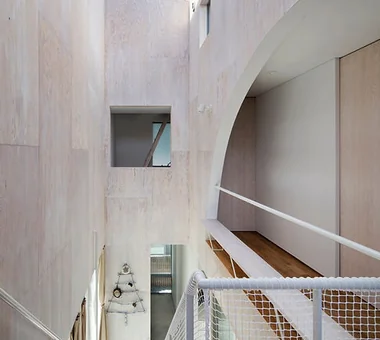
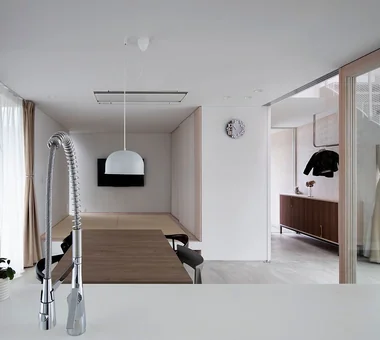
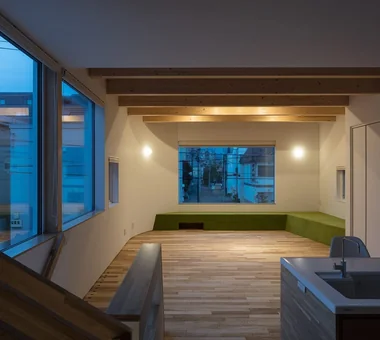
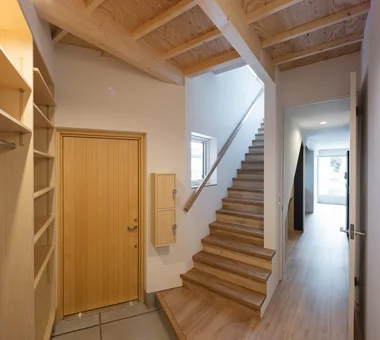
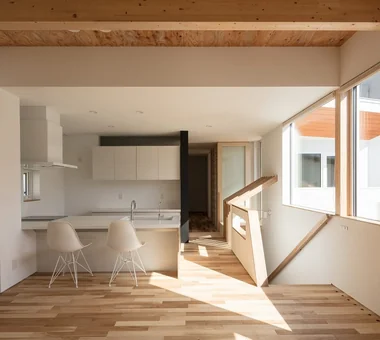
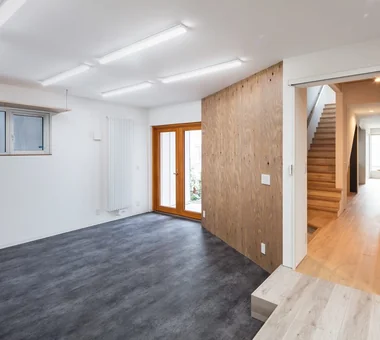
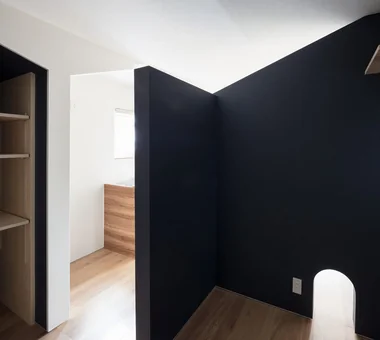
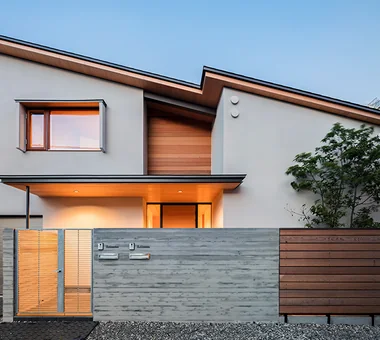
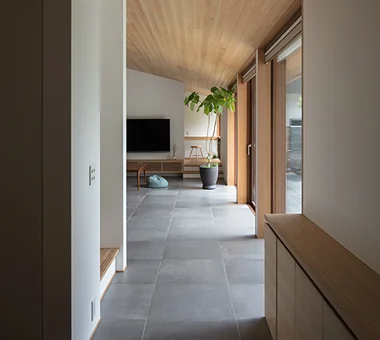
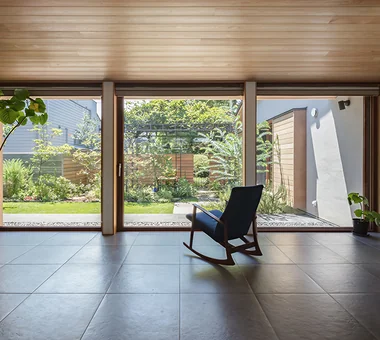
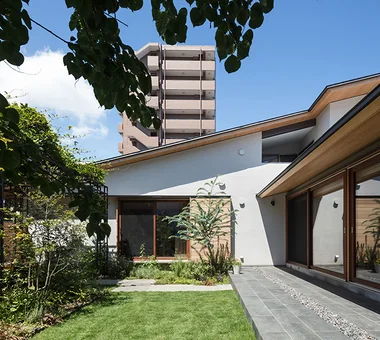
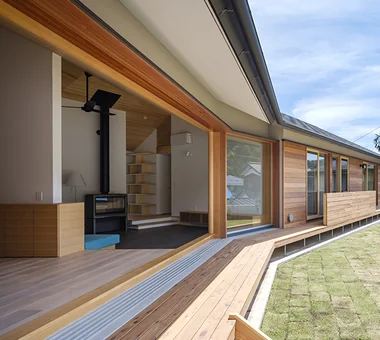
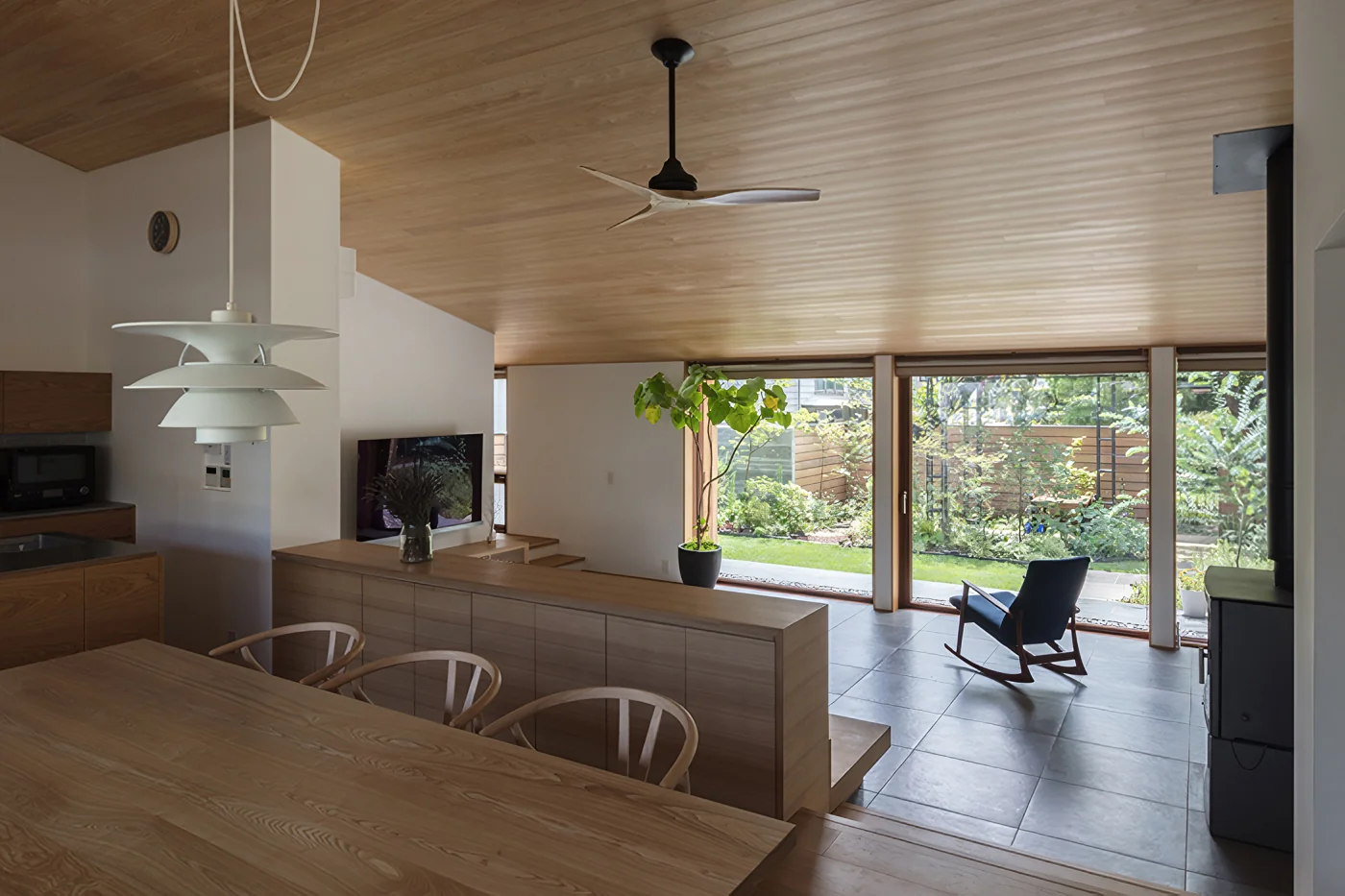
The site is situated on the mountainside alongside a clear stream flowing from Mount Takao, configured as a parcel extended from the road that runs along the river. Access to the site requires ascending approximately 30 steps; the position offers views of the Takao mountain range to the south and a shrine and bamboo grove to the north. The building plan is kinked in an elbow-shaped configuration to respond to the regulated area on the north side: the living room is located at the plan’s centroid, from which the dining area, kitchen, and private rooms are arranged. The section adopts a pitched roof aligned with the southward slope; spaces are articulated by a continuous ceiling formed by LVL (laminated veneer lumber) rafters and by changes in floor levels, creating a comfortable domestic environment. Because the approach ascends from below, resulting in views that look up at the house, particular attention was paid to the termination and soffit detailing of the eaves.
Urban Folk House
Tatsumi Negishi Architectural Studio
At the client’s request, the design is conceived to balance vernacular (minka) elements using reclaimed timber with a contemporary exposed cast-in-place reinforced concrete (RC) exterior. The entrance is articulated in modern exposed concrete; opening a large reclaimed timber kura door reveals a double-height earthen-floored atrium finished with tamped Arakida clay. Reclaimed beams procured in Nagano, cedar plank flooring, and doors finished with a plant-derived natural oil are employed as the primary finishes.
Uchi no Uchi
Mitsuhiro Kojima Architects
House of Earthen Floor and Cloister
12mm Architects
House of Hope
Tada Architectural Design Office
Park Street House
KICHI ARCHITECTURAL DESIGN
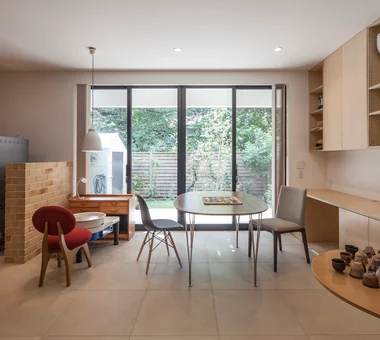
This residence, sited adjacent to a park in the city center, articulates a distinctive spatial composition through a triangular floor plan. It gently screens external sightlines while maintaining an open spatial character. An integrated rental space reconciles the need for privacy with a calibrated openness to the public realm. Internally, the program is compact and efficiently arranged, with streamlined circulation that connects the spaces without wasted movement.
-
Single-Story Houses|Custom-built homes by architecture firms|A Grounded, Enriched Lifestyle2026-05-11|Qurasuki Editorial Department -
Stylish Garage|Key Points for Home Building|Planning a Garage that Combines Functionality and Aesthetics2025-10-20|Qurasuki Editorial Department -
Single-Story Houses|Introduction to Architecture Firms|The richness of a home contained entirely on one level2026-05-11|Qurasuki Editorial Department -
Homes with Atelier Spaces|Custom-built homes by architecture firms|A Residence Where Creative Workspaces Are Integrated into Everyday Life2026-05-11|Qurasuki Editorial Department -
Garage Houses|Introduction to Architecture Firms|A Home for Living with Your Beloved Car2026-05-11|Qurasuki Editorial Department -
Homes with Atelier Spaces|Case Studies|Fusing spatial design that sparks creativity with a comfortable living space2025-10-13|Qurasuki Editorial Department