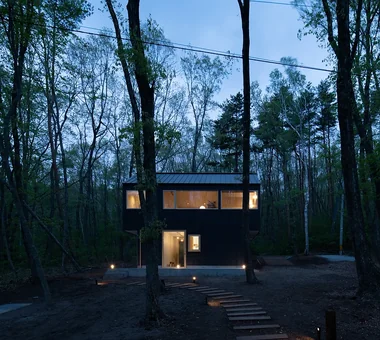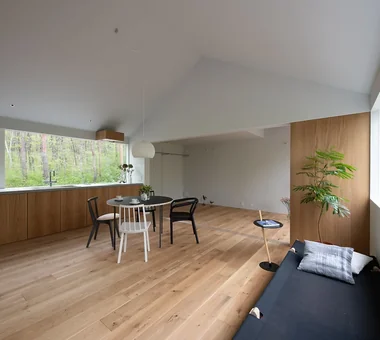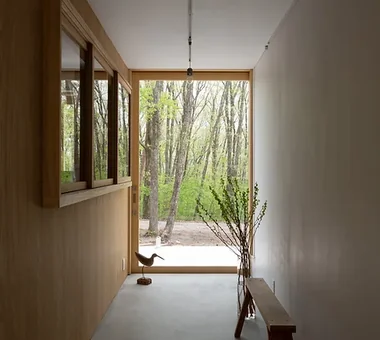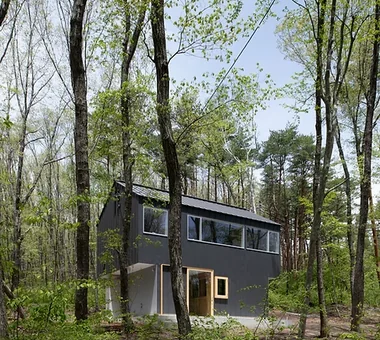
KASA ARCHITECTS
Homes in Harmony with Nature|Custom-built homes by architecture firms8Picks|Dwelling Amidst Greenery, Earth, and Wind
Author: Qurasuki Editorial Department
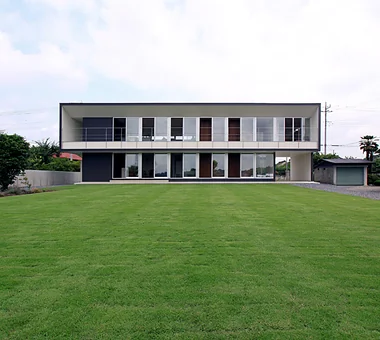
The desire to live in harmony with nature is one of the fundamental motivations behind creating a home. The green of the trees, the changing qualities of light and breeze through the seasons, the tactile presence of the earth beneath one's feet — to draw this richness of the natural environment into the interior requires a design perspective that carefully reads the site's topography, vegetation, sun exposure, and prevailing winds. By thoughtfully arranging building massing and orienting openings, architects can promote natural ventilation and create interiors in which seasonal change is perceptible. The practice designs homes that maximize the site's inherent natural conditions, harmonize with the surrounding landscape, and enable a long-term dialogue with nature. Here we present examples that harness the intrinsic qualities of the land.

Sakura House on Awaji Island
Kumi Inoue Architects
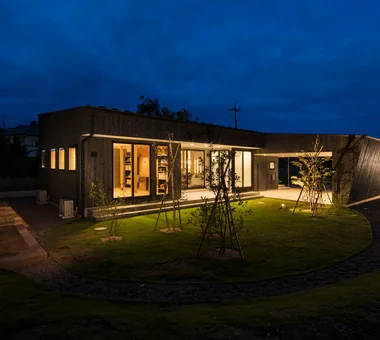
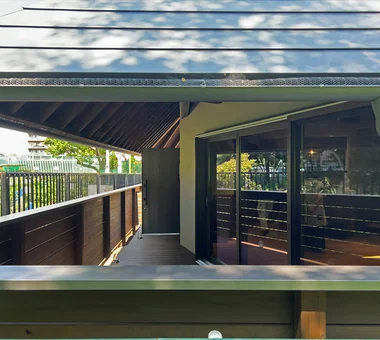
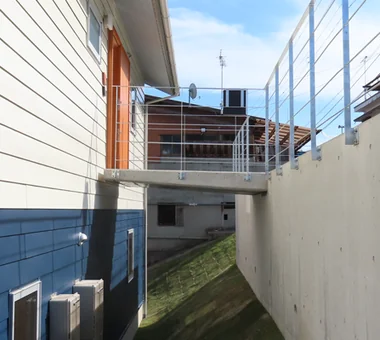
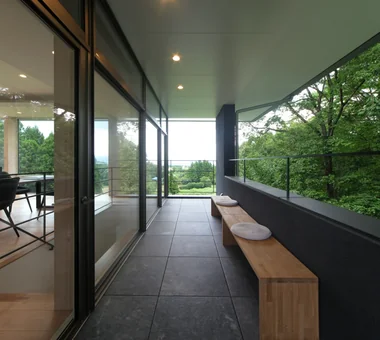
A combined clinic and residence for a sports medicine physician, planned beyond a steep slope near Iho Fishing Port on the east coast of Awaji Island. The site overlooks Osaka Bay to the south and densely wooded mountains to the north; three volumes of differing heights—residence, clinic, and bathing—are linked by a linear engawa (veranda) that runs between them. The engawa is conceived not merely as a circulation path connecting the volumes but as a 'room' in which to experience nature. A movable wire mesh is applied to the exterior face of the engawa, functioning as a mosquito net while simultaneously providing insect protection, natural ventilation, and unobstructed views.
Karuizawa Terrace
Mitsuhiro Kojima Architects
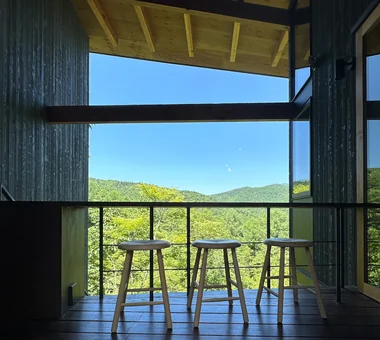
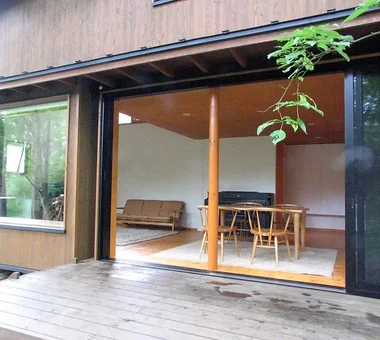
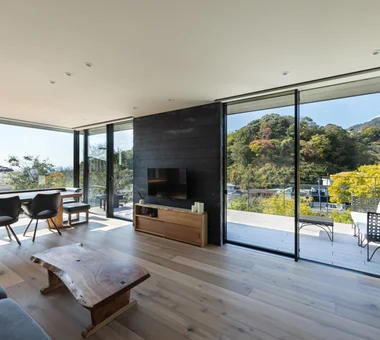
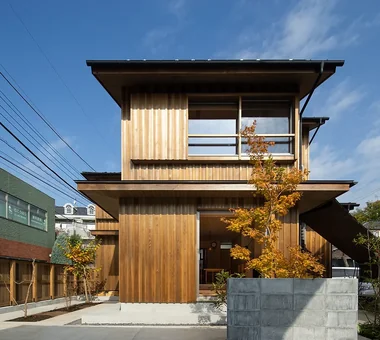
This is a villa sited on a north‑facing slope. The architect’s brief was to have occupants “experience” rather than merely “observe” nature, creating distinct landscape experiences in each room. Spaces are linked like a string of beads and gently divided by display walls; by varying window shapes and proportions each room is given a unique framed view. The only stairwell connecting the first and second floors is treated as an exterior space, ensuring that everyday circulation invariably encounters nature. Residents sense environmental changes—light, breeze, humidity, sound—through their bodies and meet different aspects of the natural surroundings with every movement. Through an ongoing relationship with the continuously changing landscape, the house cultivates a rich, contemplative engagement with nature.
YAMANARI — House Embracing the Mountain Ridge
YIA Ishiue Yoshihiro Architectural Design Office
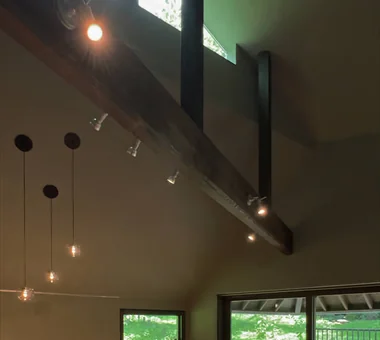
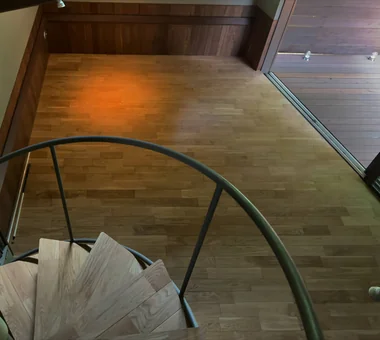
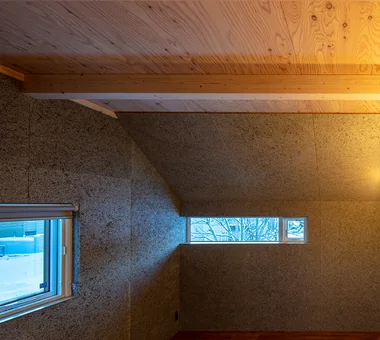
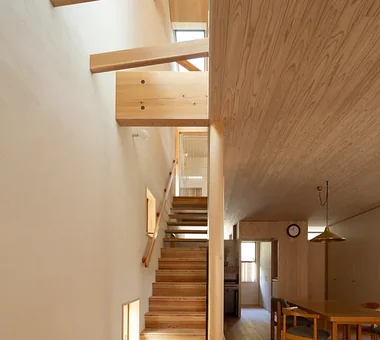
A residence for a young couple who farm sudachi, located on a high terrace in a mountainous area about one hour from Tokushima city. The design opens the valley with large east-facing openings: a second-floor living room, a tatami corner set a half-storey higher, and a large doma and double-height stairwell that create an ambiguous boundary with the adjacent main house. The south-facing double-height space facing the main house has no windows and is lit by skylights; interiors use luan plywood, flexible-board exterior-style cladding, and solid acacia flooring.
House in Karuizawa
Kurashi no Jōzōsho
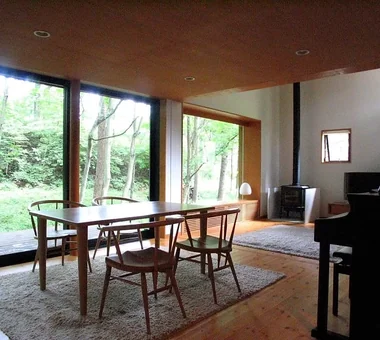
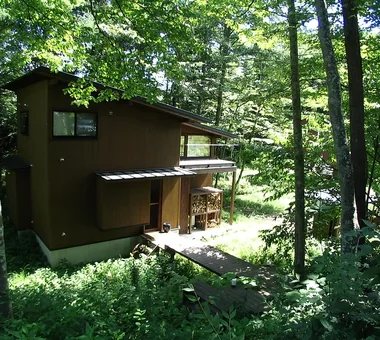
Set within a quiet villa enclave in Karuizawa, this residence was conceived for a retired couple and their cherished cat. Sited to embrace a richly natural environment—where the murmur of a stream and the whisper of trees are integral—the architecture is deliberately restrained in scale and expression so as not to dominate the landscape. The approach, which crosses a bridge en route to the entrance, functions as an intentional sequence of evolving views. Seasonal vistas framed by the windows and the subtle interplay of light and shadow impart a calm, poignant quality to daily life.
Waterside House
Mochizuki Architectural Atelier
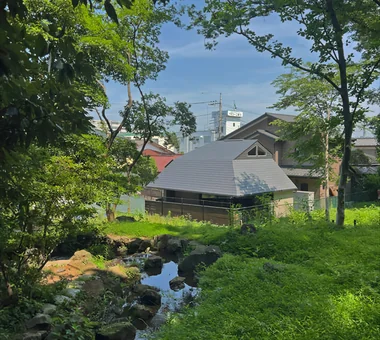
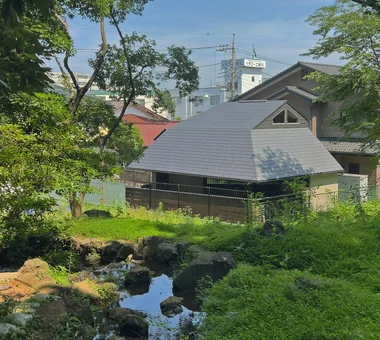
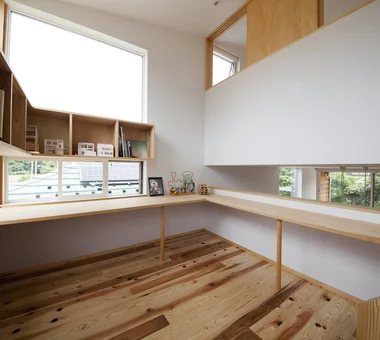
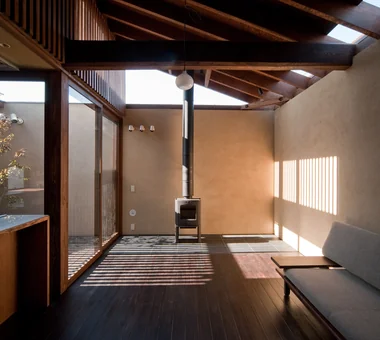
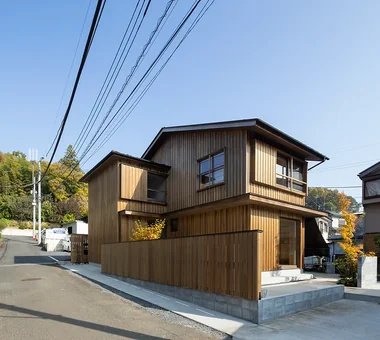
This project is a single‑story residence of 28 tsubo (approximately 92.4 m²) overlooking a clear stream below. The building is arranged in a dog‑leg configuration following the curvature of the river. The concept is the integration of this exceptional site with the architecture: occupants can listen to the gentle murmur of the stream, enjoy cherry blossoms and fireflies in spring, and admire autumnal foliage. Within the living room a compact, house‑like library space is provided within a gabled roof volume. The exterior reinterprets traditional satoyama vernacular houses as a contemporary residence.
A House Living in Harmony with Wood
Ringo Studio
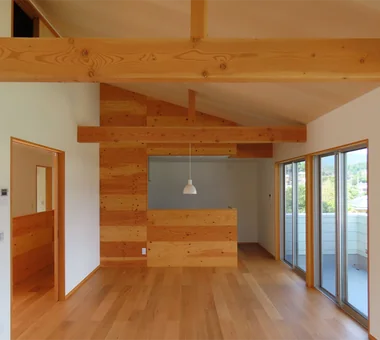
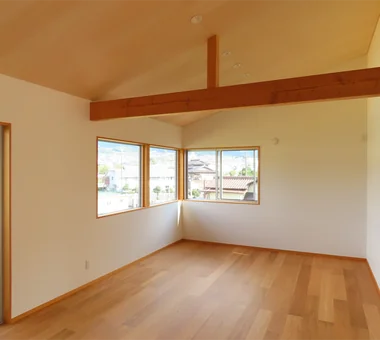
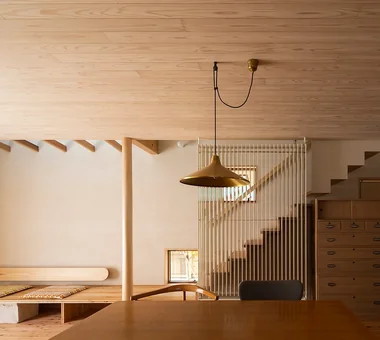
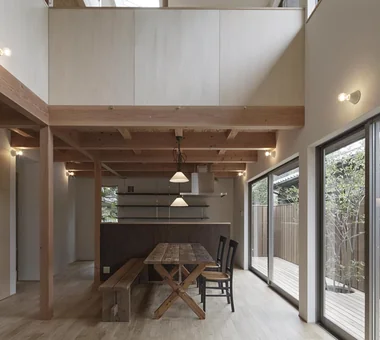
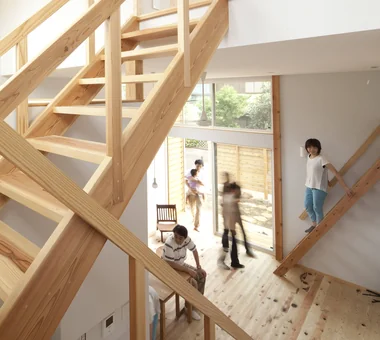
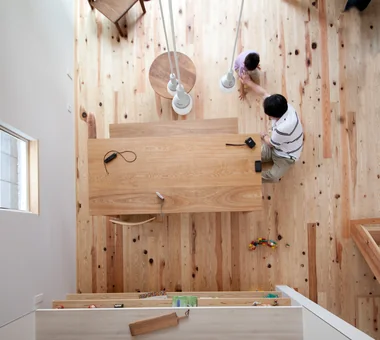
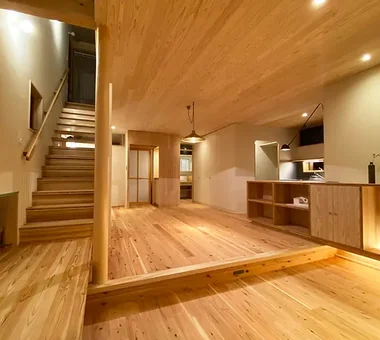
The site is located approximately 2 km from Ōmiya Station in a Category I Low‑Rise Residential Zone. Because the area around Ōmiya Park is designated as a scenic guidance district within a protected landscape, the project was planned under conditions of a 40% building coverage ratio and reserving 10% of the site as green space. The square plan is shifted to the north, providing a garden and large openings to the south; the garden, positioned along the extension of the private access road, admits wind and light and incorporates the neighbouring property’s ginkgo as a borrowed view. A split‑level (skip‑floor) arrangement supplements usable floor area and connects a main volume with generous ceiling heights to a subordinate low‑ceiling volume in an open, integrated manner. By employing prefecture‑sourced Nishikawa cedar as both structural timber and finish material, the interior is kept free of excessive subdivision, preserving a sense of spatial continuity and a coherent material expression.
House of a Potter
Tatsumi Negishi Architectural Studio
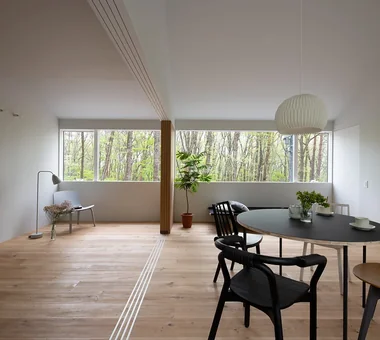
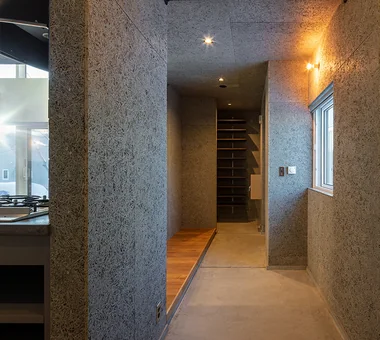
A residence for a family of four adjacent to a beautiful forest on the foothills of Mount Fuji in Shizuoka Prefecture. The design is intended to incorporate the woodland: the living room is conceived as a double‑height space with openings oriented toward the forest. The floor is treated as a black earthen surface, continued into the forest’s black scoria to blur the boundary between interior and exterior. The exterior massing is kept low in height so the building nestles gently alongside the forest.
A Music Pavilion Nestled in Greenery
JYU ARCHITECT
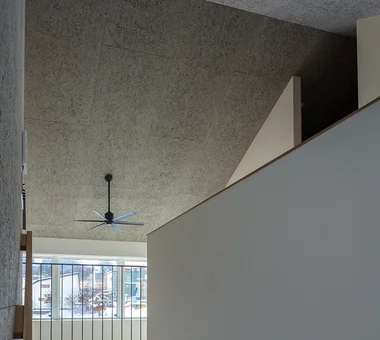
A satellite pavilion for performing intimate music, from solo recitals to small ensembles. Approximately two-thirds of the building is defined by a sloped ceiling with a generous double‑height volume, while the overall composition remains close to a single‑storey to keep the height restrained. The roof pitch was thoroughly studied to create an architecture that sits harmoniously within its environment. The roof geometry is expressed internally, with the aim of achieving a space in which the sound of the grand piano, other instruments and the human voice diffuse evenly and occupants are enveloped by a comfortable, well‑balanced reverberation.
-
Minimalist Design Residences|Key Points for Home Building|Spatial Design Pursuing Purity by Emphasizing Materiality2026-03-02|Qurasuki Editorial Department -
Stylish Terrace|Key Points for Home Building|Strategies and Concepts for Integrating Outdoor Spaces into Daily Living2025-10-20|Qurasuki Editorial Department -
Homes in Harmony with Nature|Case Studies|A way of living that enjoys daily life in harmony with nature, feeling the seasons and embracing the wind and light2025-10-13|Qurasuki Editorial Department -
Stylish Hallways|Key Points for Home Building|Key Strategies for Harmonizing Circulation and Spatial Design2025-10-20|Qurasuki Editorial Department -
Stylish Staircases|Key Points for Home Building|Design Innovations for Vertical Spaces Combining Safety and Aesthetics2025-10-20|Qurasuki Editorial Department -
Stylish Children's Rooms|Key Points for Home Building|Flexible Spaces Adaptable to Growth2026-03-02|Qurasuki Editorial Department