JYU ARCHITECT
Skip Floor|Pros and Cons|Three-Dimensional Living Spaces
Author: Qurasuki Editorial Department
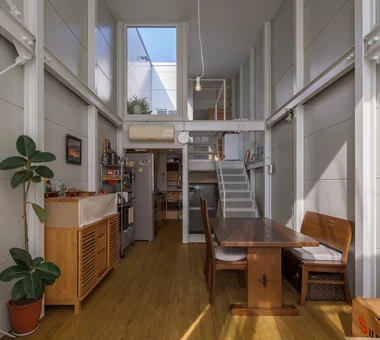
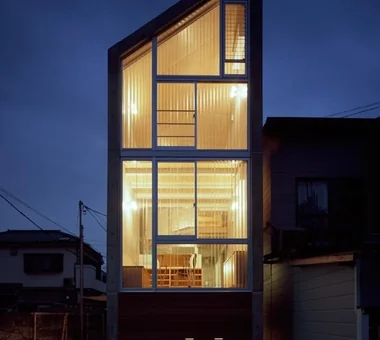
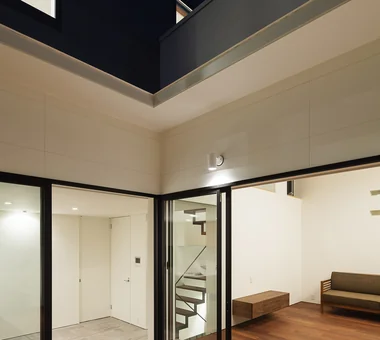
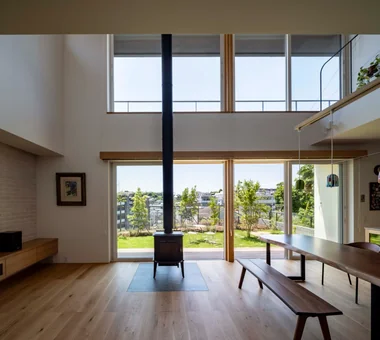
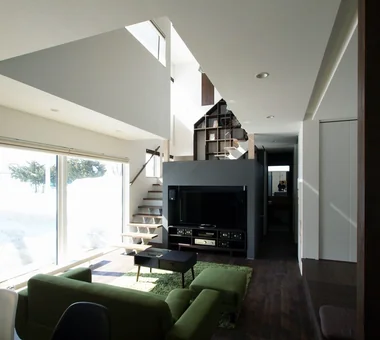
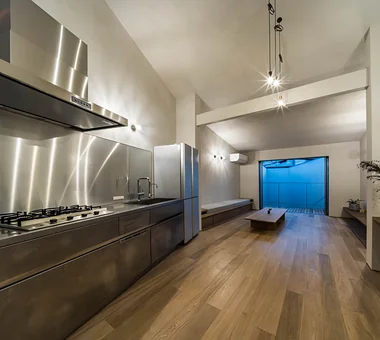
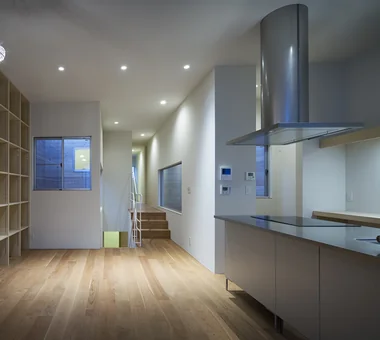
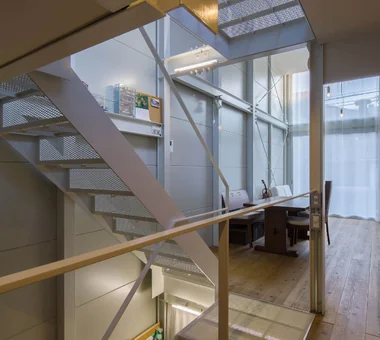
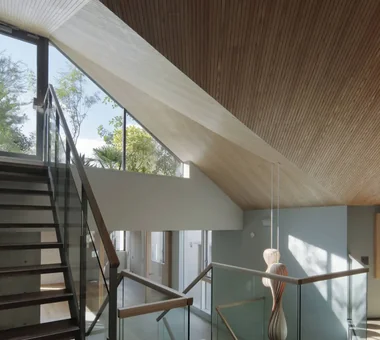
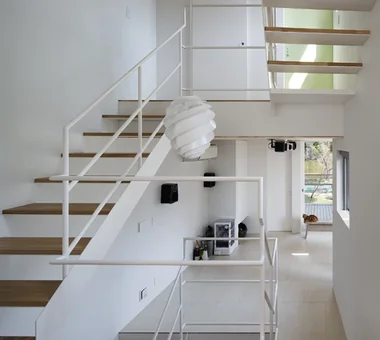
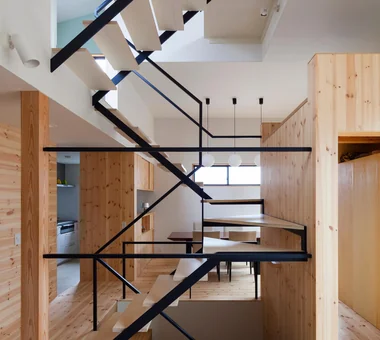
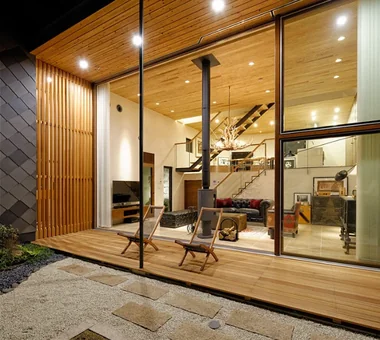
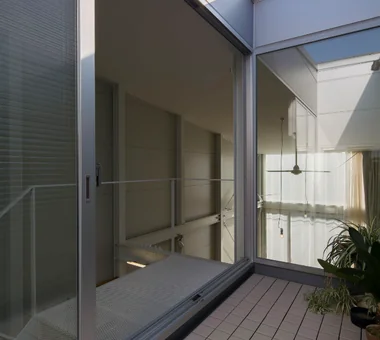
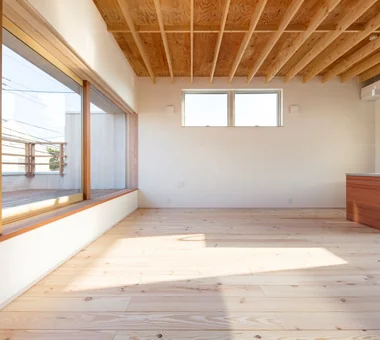
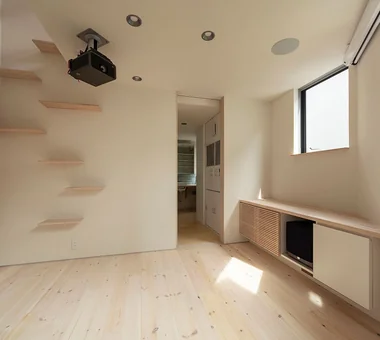
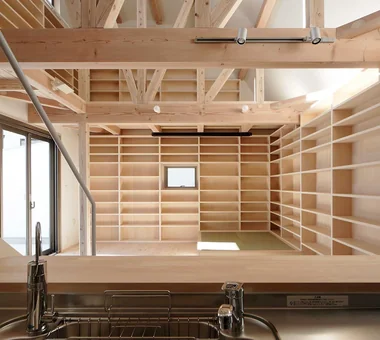
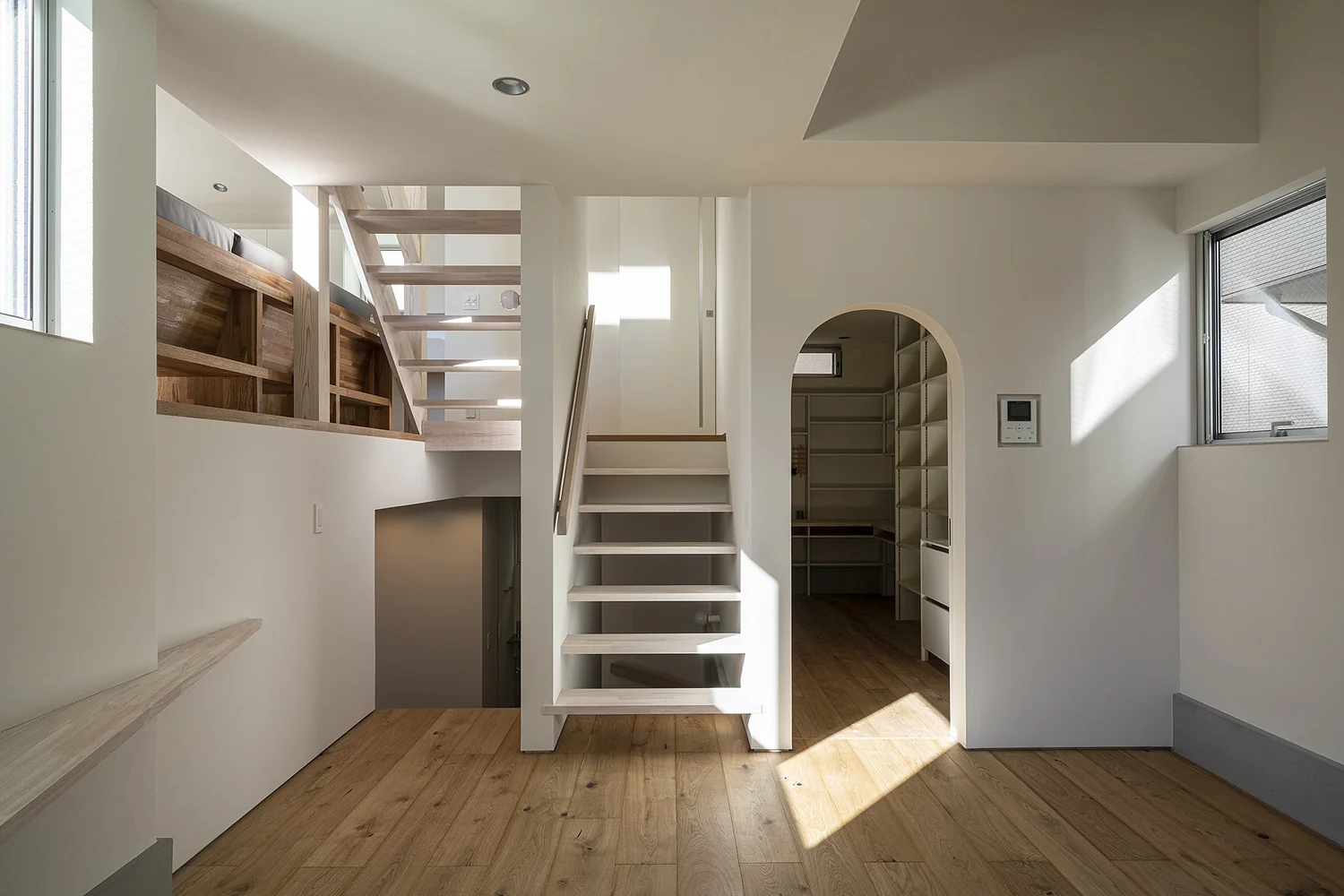
A skip floor is a design technique in which floor levels within a building are staggered incrementally to create several intermediate levels. Rather than fully partitioning spaces with walls, this method uses small changes in floor height or raised platforms to divide areas, preserving sightlines more effectively than conventional planar room divisions. This approach fosters a sense of spatial continuity and expansiveness, making a residence feel larger even within the same floor area. The hallmark of skip floors lies in their ability to simultaneously achieve spatial differentiation and continuity. For example, a slight step within a living room can subtly separate dining or work areas, or an intermediate level between the first and second floors can create a study or children’s nook. The space beneath these steps can be utilized for pull-out storage, hobby rooms, or mechanical piping, maximizing the functional density of the floor’s three-dimensional volume. Skip floors also harmonize well with daylighting strategies; installing skylights or clerestory windows above facilitates the penetration of natural light to the lower levels. Ventilation efficiency can be enhanced by creating vertical airflows between the split levels. However, as with atriums, care must be taken regarding temperature stratification between upper and lower zones.

Daylighting, Ventilation, and Storage Efficiency: Three-Dimensional Living Spaces Created by Floor Level Changes
Skip Floor|Advantages
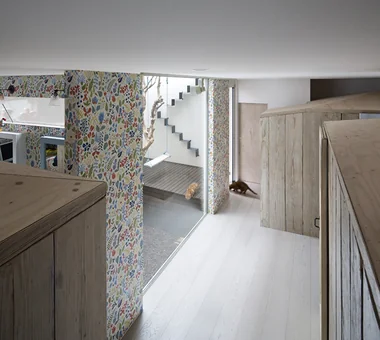
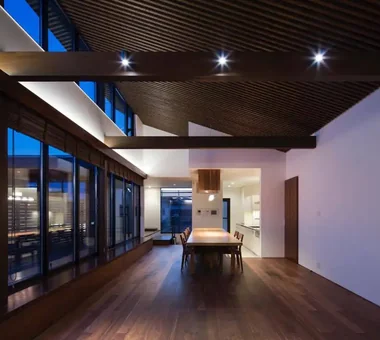
The appeal of skip floors lies in the ability to spatially differentiate “living zones” in three dimensions through changes in floor height. By avoiding full-height partitions, visual openness is maintained, allowing occupants to perceive a sense of spaciousness and freedom beyond the actual floor area. For instance, separating living and dining areas by a step creates distinct atmospheres within the same open plan, enabling family members to engage in different activities while still sensing each other’s presence. The under-stair spaces can be effectively utilized as storage or a study, adding functional value. The design also facilitates daylighting and natural ventilation: variations in ceiling height combined with high-level windows enable sunlight to reach lower levels efficiently, while planned vertical airflow enhances natural ventilation performance. Nonetheless, temperature differences between levels require rigorous insulation and HVAC strategies. From an interior perspective, changing floor finishes at each level clearly defines spatial character, enriching the materiality and identity of each zone. This approach is especially effective on constrained or irregular sites, where reducing corridors and allocating floor area directly to living spaces optimizes usability. Consequently, skip floors have become a favored solution in dense urban contexts for creating comfortable, versatile living environments.
Safety, Circulation, Thermal Comfort, and Acoustics: Challenges and Burdens Arising from Floor Level Changes
Skip Floor|Disadvantages
While skip floors offer many spatial advantages, several practical issues must be considered. Foremost is the challenge of safety and circulation: increased steps and level changes raise the risk of falls and increase physical exertion, posing difficulties for children, elderly residents, or those with limited mobility. Critical circulation routes should avoid abrupt level changes, and the placement of steps must be meticulously planned to minimize hazards. Additionally, housework efficiency can be impacted, as moving vacuum cleaners or laundry across steps becomes more cumbersome. Thermal comfort is another concern; vertical spatial layouts encourage warm air to rise and accumulate on upper levels, potentially causing uneven temperature distribution and reducing HVAC efficiency. Without careful insulation, airtightness, and ventilation design, comfort and energy consumption can suffer, especially in regions with significant seasonal temperature fluctuations. Acoustic and odor transmission are also notable issues: open, interconnected volumes facilitate the spread of noise and cooking smells, potentially disturbing quiet zones such as studies or bedrooms. Effective sound attenuation and ventilation strategies are therefore essential. Structurally, the segmentation of floor levels complicates load paths and horizontal force distribution, necessitating thorough seismic performance evaluation to prevent adverse building movement during earthquakes.
Comprehensive Design Strategies Addressing Safety, Thermal Performance, Acoustics, and Structural Integrity for Long-Term Viability
Skip Floor|Countermeasures for Disadvantages
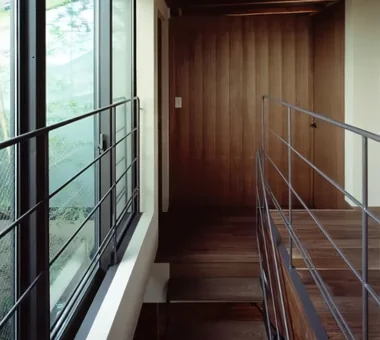
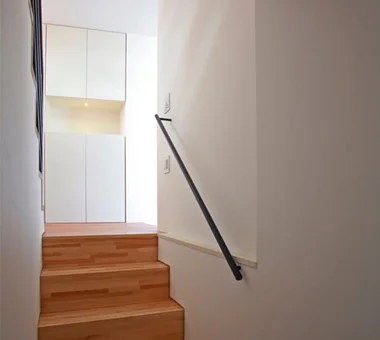
Mitigating the downsides of skip floors requires integrated consideration of safety, thermal performance, acoustics, and maintenance from the earliest design stages. Safety measures include dimensioning and locating steps to ensure smooth daily circulation without undue strain. Major passageways should avoid level changes or incorporate landings and handrails where steps are unavoidable. Nighttime safety can be enhanced through strategically placed floor-level or indirect lighting, and slip-resistant floor finishes are recommended. Anticipating future accessibility needs, structural provisions for retrofit handrails can be pre-installed. Thermal strategies prioritize high-performance insulation and airtightness combined with carefully designed HVAC systems. Employing whole-house air conditioning with zoned controls, appropriately positioned supply and return vents, and supplemental ceiling fans or ventilation devices can promote balanced air mixing and reduce temperature stratification. Passive design elements controlling solar gain and heat loss further optimize energy efficiency. Acoustic performance is improved through floor constructions incorporating soundproofing layers and resilient subfloors to minimize impact noise, alongside the use of absorptive materials and strategic furniture placement to dampen sound reflections. Odor control benefits from enhanced localized ventilation and shortened airflow paths, with considerations such as aligning bedrooms and wet areas on the same level to restrict odor migration. Designing storage for mobile ramps or gentle slopes facilitates future accessibility upgrades, reducing renovation burdens. Collectively, these comprehensive interventions ensure that skip floor designs remain comfortable, safe, and sustainable over time.
-
Garage Houses|Custom-built homes by architecture firms|A Home for Living with Your Beloved Car2026-05-11|Qurasuki Editorial Department -
Homes Featuring Soundproof Rooms|Custom-built homes by architecture firms|A Home for Free Musical Expression2026-05-11|Qurasuki Editorial Department -
Stylish Living Rooms|Key Points for Home Building|Practical Approaches to Enhancing the Quality of Relaxation Environments2025-10-20|Qurasuki Editorial Department -
Wooden Sash|Custom-built homes by architecture firms|Warm Materiality2026-05-13|Qurasuki Editorial Department -
A Home for Culinary Enthusiasts|Key Points for Home Building|Kitchen Planning to Enhance Culinary Efficiency and Creativity2026-03-02|Qurasuki Editorial Department -
Homes Designed for Living with Dogs|Case Studies|From Material Selection to Workflow Planning, a Form of Home that Achieves Comfortable Coexistence2025-10-13|Qurasuki Editorial Department