「ha」 hosaka hironobu architect associate
Stylish Lofts|Key Points for Home Building|Strategies for Maximizing Space on Limited Sites
Author: Qurasuki Editorial Department
Lofts represent a strategic solution for optimizing space on constrained sites, offering the potential to introduce diversity into daily living. Their functions vary according to the family’s lifestyle, serving as storage, study areas, hobby rooms, and more. However, it is essential to recognize that their true value emerges only when practical challenges—such as the usability of staircases, natural lighting and ventilation, and thermal insulation—are effectively addressed.
Clarification of Use.
The required height, area, and facilities vary depending on whether the loft is used for storage or as a study or bedroom. For storage purposes, keeping the ceiling height below 1.4 meters and the floor area to less than half of the total floor area exempts it from being included in the floor area ratio calculation. When used as a habitable room, greater height and area are required, and the treatment under the Building Standards Act changes accordingly.
Ceiling Height and Usability.
The ceiling height of a loft should be determined based on its intended use. For storage purposes, a height of approximately 1.2 to 1.4 meters is functional; however, if the loft is to be used as a study or bedroom, a height of 1.8 meters or more, allowing for sitting and standing, provides greater comfort. It is essential to decide the height with actual user movements in mind.
Selection of Access Methods
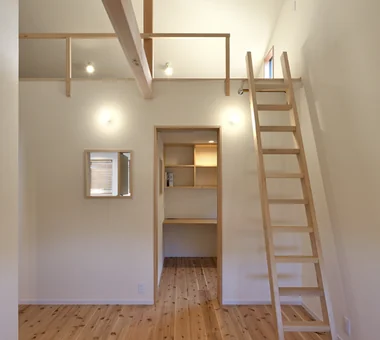
Access to the loft can be achieved through various means such as fixed stairs, ladders, or retractable stairs. Fixed stairs offer safety and ease of use but require more space. Ladders save space but are unsuitable for transporting bulky items. Consider the frequency of use and the type of items to be carried when choosing the most appropriate access method.
Ensuring Daylighting and Ventilation.
Lofts, being located at elevated positions, tend to accumulate heat. Installing windows allows for adequate daylighting and ventilation. To mitigate temperature rise during summer, consider the strategic placement of windows to facilitate cross-ventilation and the installation of exhaust fans. A bright and well-ventilated loft can be comfortably utilized as a living space.
Optimization of Storage Efficiency.
When utilizing a loft as storage, it is efficient to primarily store items with low usage frequency, such as seasonal goods and memorabilia. Custom-built shelves and drawers facilitate organization even within limited height constraints. Employing labeling and storage boxes enhances the ability to easily identify the location of stored items.
Measures for Thermal Environment Control.
Since the loft is located on the top floor, it tends to become hot in summer and cold in winter. Enhancing the roof's insulation performance significantly improves comfort. If the air conditioner's airflow does not reach effectively, installing a circulator can be considered. With a whole-house air conditioning system, the loft can also be maintained at a comfortable temperature.
Handrails and Fall Prevention.
For loft openings, handrails or knee walls are required to ensure safety. According to the Building Standards Act, handrails must be at least 1.1 meters in height. Selecting handrails that balance design aesthetics and safety creates a refined space. In households with small children, considering handrails of greater height is advisable.
Power Outlets and Communication Facilities.
When using the loft as a study or hobby room, it is essential to equip it with adequate power supply and communication infrastructure. Planning for outlets for computers and lighting fixtures, as well as Wi-Fi and LAN wiring, ensures a comfortable and functional space. Wiring plans must be integrated during the design phase, so it is important to clearly define the intended use in advance.
Selection of Flooring Materials.
Choose the loft flooring material according to its intended use. Plywood is sufficient for storage purposes; however, if the space is used as a living area, applying finishing materials such as hardwood flooring or carpet enhances comfort. It is important to select materials with consideration for sound transmission to the lower floors.
Sightlines and Sense of Openness.
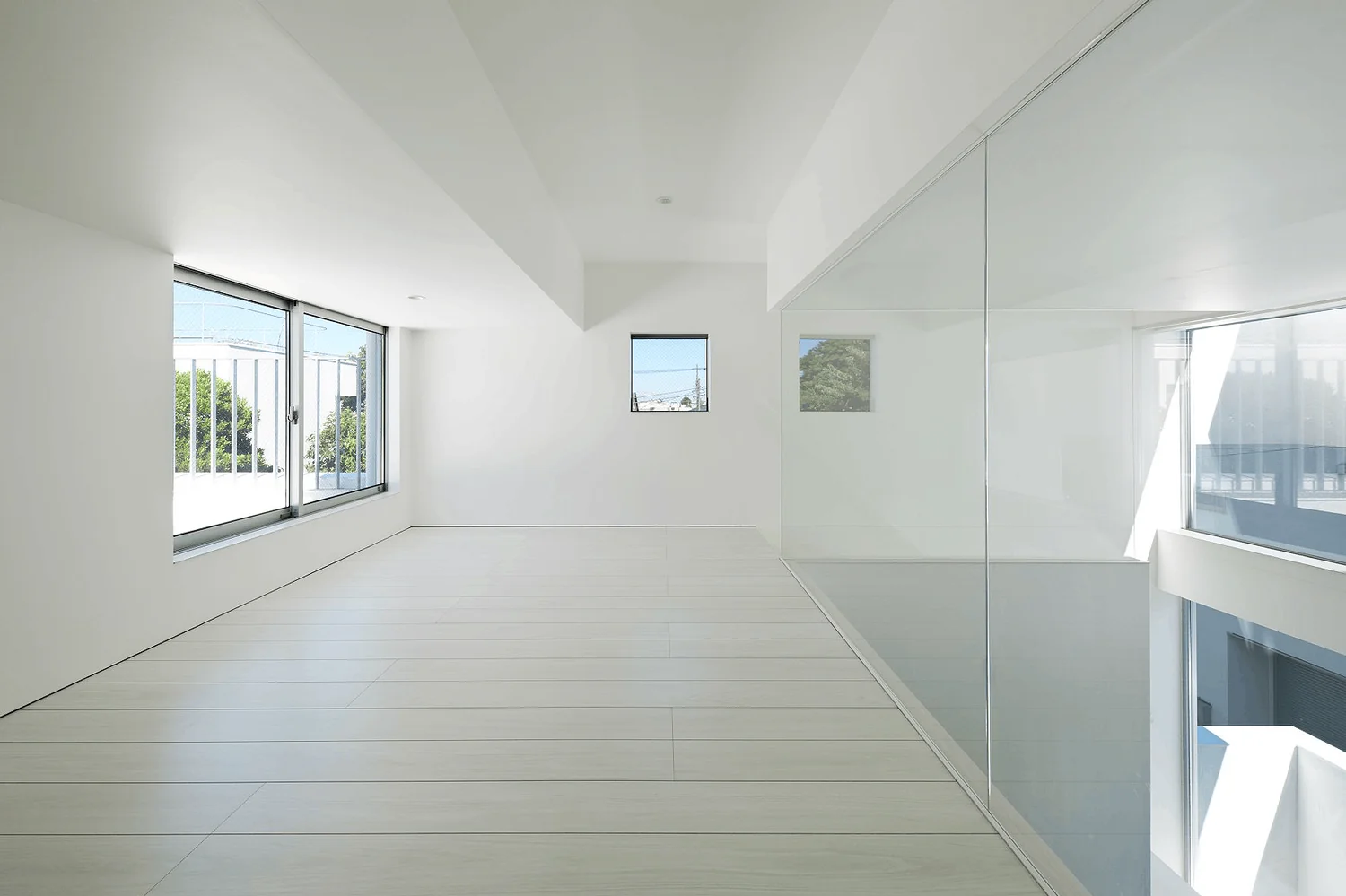
Arranging the loft to overlook the lower floor creates a sense of unity and spatial expansion. When combined with a double-height ceiling, it results in an even more open environment. Conversely, when privacy is desired, it is important to incorporate balanced design strategies such as appropriate screening.
Verification of Regulatory Compliance.
Depending on the size and height of the loft, its classification under the Building Standards Act may change, affecting the floor area ratio and the number of permissible stories. When planning a loft for storage purposes, it must meet the conditions of having a ceiling height of 1.4 meters or less and a floor area not exceeding half of the floor below. It is essential to coordinate with the designer during the planning process.
Future Change of Use.
The use of a loft may change in accordance with shifts in life stages. It can transition from a children's play area to a secluded retreat during adolescence, and later to an adult study or hobby room. Designing with adaptability in mind ensures the loft remains functional and valuable over time.





 House with Outdoor Living Space|Introduction to Architecture Firms|Living Where Interior and Exterior Become One
 Modern Residences|Introduction to Architecture Firms|The Fusion of Rationality and Beauty
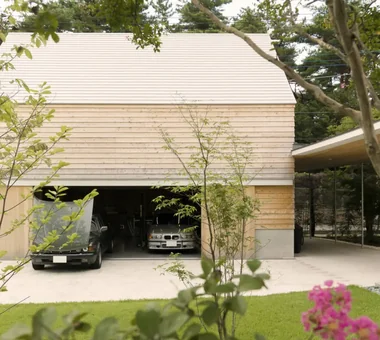 Garage Houses|Introduction to Architecture Firms|A Home for Living with Your Beloved Car
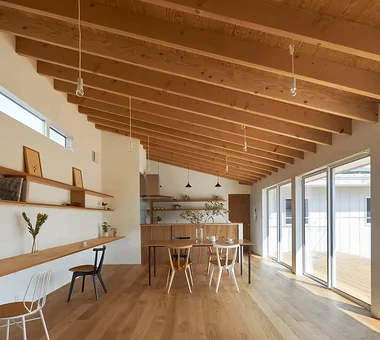 Stylish Living-Dining-Kitchen Space|Key Points for Home Building|Spatial Composition and Planning Tips to Enhance Family Time
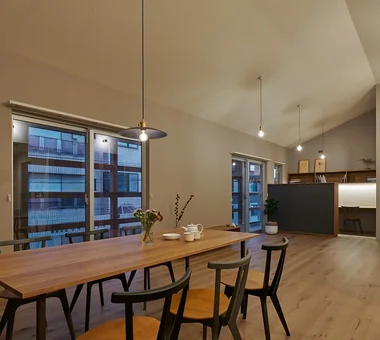 House with Second-Floor Living Room|Introduction to Architecture Firms|Open Views, Transformed Living
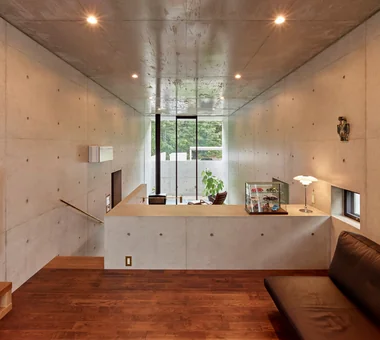 Concrete Houses|Introduction to Architecture Firms|Architecture That Speaks Through Materiality