Abax Architects
Homes Featuring Dedicated Theater Rooms|Key Points for Home Building|Designing an Environment that Balances Acoustic Performance and Visual Expression
Author: Qurasuki Editorial Department
A home theater intended for fully enjoying films and live video must be designed with attention not only to imagery but also to acoustics and lighting. Implementing sound isolation measures to minimize sound transmission to adjacent spaces, together with tuning the room’s acoustic response, delivers a listening environment with a strong sense of presence. To fully realize the performance of projectors and screens, careful blackout design, layouts sized for appropriate viewing distances, and comprehensive cable-routing plans are also essential. By incorporating specialist technical knowledge, it is possible to create a domestic space that offers the immersive quality of a cinema.
Immersive Experience in a Dedicated Darkroom.
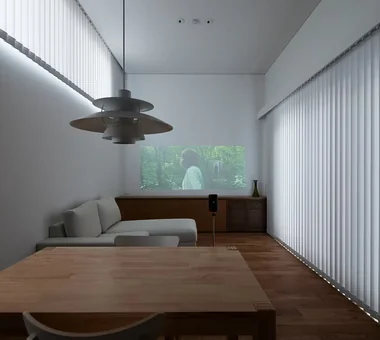
To fully enjoy films, an ideal space is one that completely blocks out external light. Beyond using blackout curtains or blinds, selecting a room without windows or a basement can create a pitch-black environment akin to a cinema. With only the screen illuminated in the darkness, the sense of immersion in the visuals is significantly enhanced.
Room Shape and Finishes Considered for Acoustics.
An acoustically ideal room is a rectangular space with well-proportioned length-to-width ratios. Square rooms are best avoided as they tend to generate standing waves. Incorporating sound-absorbing materials on portions of the walls and ceiling, along with carpeting the floor, can effectively control sound reflections. While acoustic design is a specialized field, adhering to these fundamental principles can significantly enhance sound quality.
The Relationship Between Screen Size and Viewing Distance.
A larger screen is not necessarily better; the balance with viewing distance is crucial. Generally, a distance of approximately three times the screen height is considered comfortable. By selecting an appropriate screen size according to the room's dimensions, one can prevent eye strain while enjoying immersive visuals.
Securing the Installation Location for the Projector.
Projectors are typically installed on the ceiling. Considering wiring, power supply, and projection distance, planning the installation location during the architectural design phase eliminates the hassle of retrofitting later. Concealing wiring within walls or ceilings maintains a clean and uncluttered space. Planning for these unseen elements significantly influences the overall quality of the finished project.
Surround Speaker Placement Planning.
When implementing surround sound systems such as 5.1ch or 7.1ch configurations, the positioning of speakers is critical. Determining the locations of the front, center, rear, and subwoofer speakers during the architectural design phase facilitates smooth wiring and installation. Routing cables within walls or ceilings also contributes to a clean and unobtrusive appearance.
Theater Seating Arrangement with Tiered Levels.
When viewing with multiple people, raising the rear rows slightly prevents the heads of those in front from obstructing the view. By incorporating stepped flooring or elevating the rear seats, all viewers can enjoy a comfortable viewing experience. This tiered design, reminiscent of a cinema, creates an authentic theater experience.
Enjoy Without Time Constraints Thanks to Soundproofing Performance.
The powerful acoustics of movies require consideration for family members and neighbors. By incorporating soundproofing materials into walls, ceilings, and floors, and by adopting soundproof doors, it is possible to enjoy high volume without concern for the time of day. Ensuring the performance of the soundproof room creates a stress-free viewing environment.
Lighting with Dimming Function to Create Ambiance.
The lighting in the theater room is designed to be completely switchable off during movie viewing, which is essential, yet necessary during breaks and entry or exit. By installing indirect lighting with dimming capabilities and floor-level lights, a minimal brightness can be maintained without disrupting the cinematic atmosphere. Control of light enhances the quality of the theater experience.
Comfort with Sofas and Reclining Seats.
For extended movie viewing, comfortable seating is essential. By incorporating theater seats with reclining functions and spacious sofas, viewers can relax and fully immerse themselves in the experience. Drink holders and side tables further enhance the theater environment.
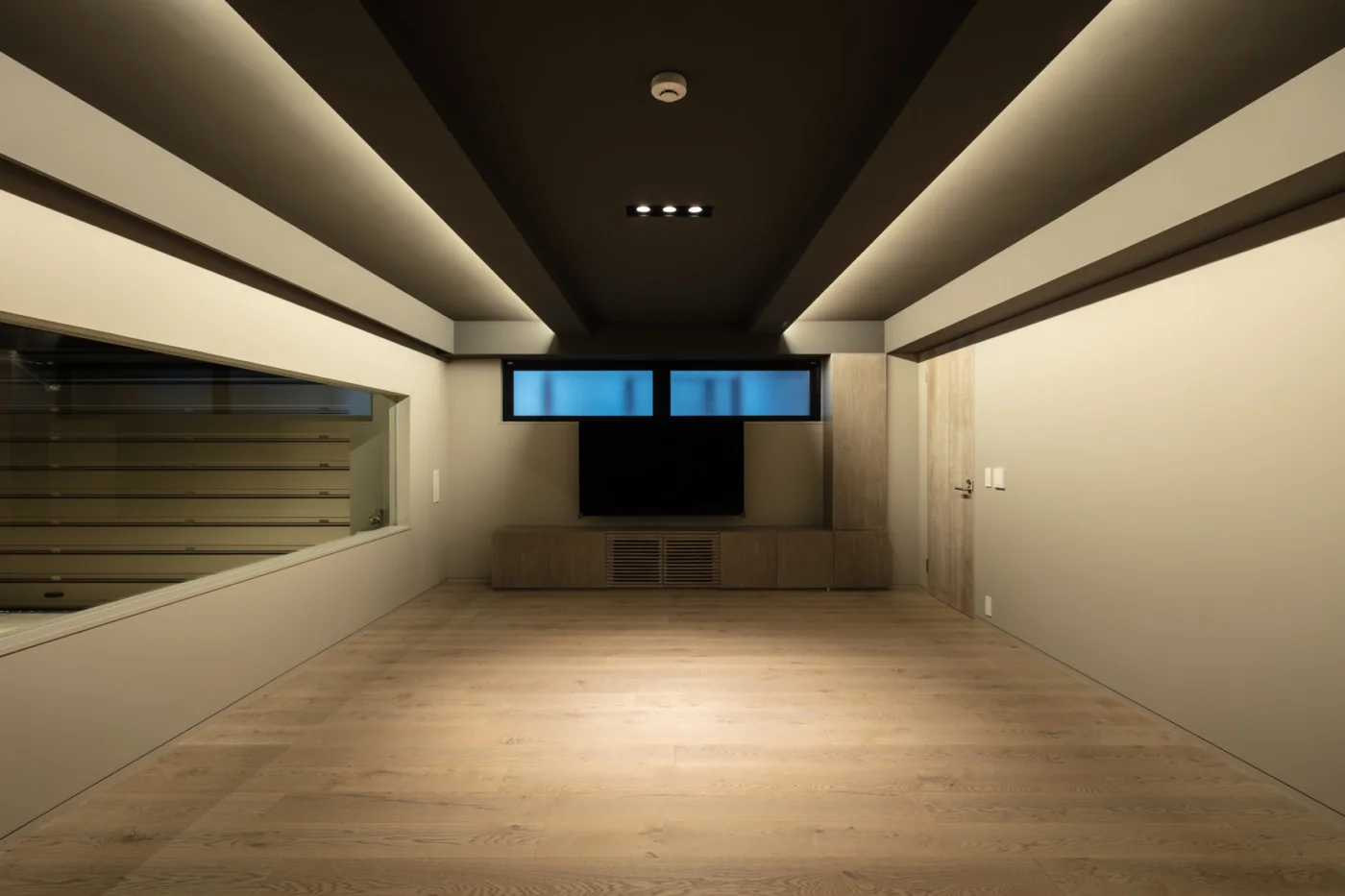
Walls and Ceilings Unified in Dark Colors.
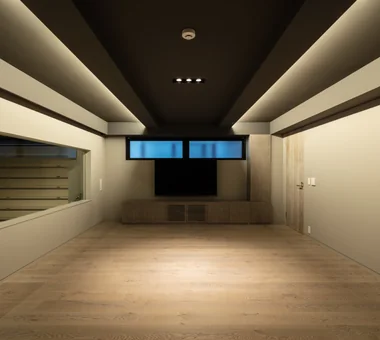
During movie viewing, reflected light from walls and ceilings reduces screen visibility. Finishing surfaces in dark colors such as black, dark gray, or navy enhances the contrast of the projected image. Applying dark tones to the ceiling as well causes the entire space to visually recede, allowing the screen alone to stand out prominently.
Exhibition of Movie Posters and Merchandise.
By displaying posters, figurines, pamphlets, and other memorabilia of your favorite films, the theater room transforms into a personalized cinema. Creating a gallery-like environment that immerses occupants in the world of cinema from the moment they enter is one of the pleasures of this design. The collection itself narrates a deep passion for film.
Creating a Comfortable Environment through Ventilation and Air Conditioning.
In highly sealed theater rooms, ventilation and air conditioning are essential. It is important to equip ventilation fans and HVAC systems to prevent air stagnation during extended viewing periods. Selecting products with high sound insulation to minimize operational noise is also a key consideration.





 A Residence for Relaxation|Introduction to Examples by Floor Plan & Room Type|Incorporating Resort-like Serenity into Everyday Life: A Tranquil Space for Mindful Repose
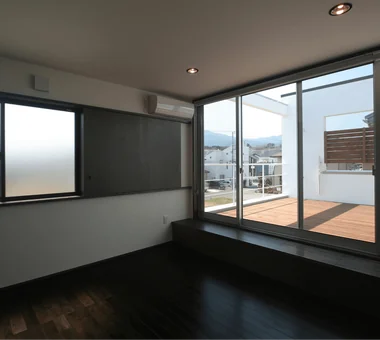 Stylish Bedrooms|Key Points for Home Building|Practical Strategies for Creating Spaces that Enhance Sleep Quality
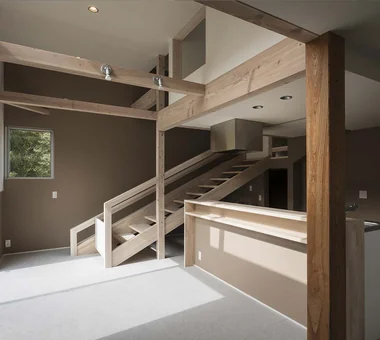 Homes Designed for Living with Dogs|Introduction to Examples by Floor Plan & Room Type|From Material Selection to Workflow Planning, a Form of Home that Achieves Comfortable Coexistence
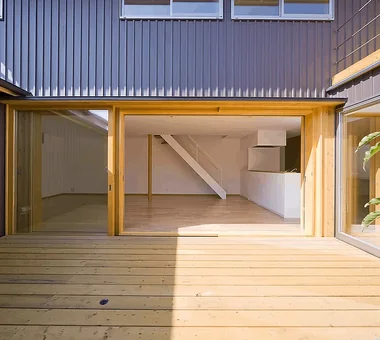 Stylish Courtyards|Key Points for Home Building|Creating a Private Space that Invites Light and Breeze
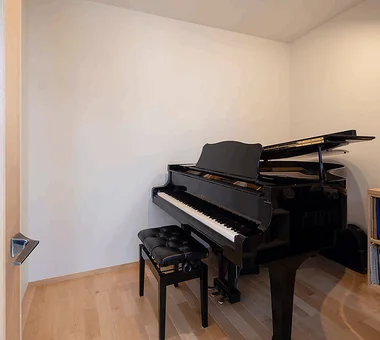 Soundproof Rooms|Key Points for Home Building|Planning Spaces that Balance Hobbies and Family Time
 Homes Featuring Dedicated Theater Rooms|Introduction to Architecture Firms|Living in a Space Immersed in Visual Media