Archiplace
Soundproof Rooms|Key Points for Home Building|Planning Spaces that Balance Hobbies and Family Time
Author: Qurasuki Editorial Department
In contemporary lifestyles that require personal time for music, hobbies, and telework, soundproof rooms can become spaces that enhance the satisfaction of the entire family. Ensuring sound insulation performance is essential; however, by also considering how the space will be used and its functionality, while maintaining harmony with the overall home, the space gains meaningful value.
Setting Target Values for Sound Insulation Performance.
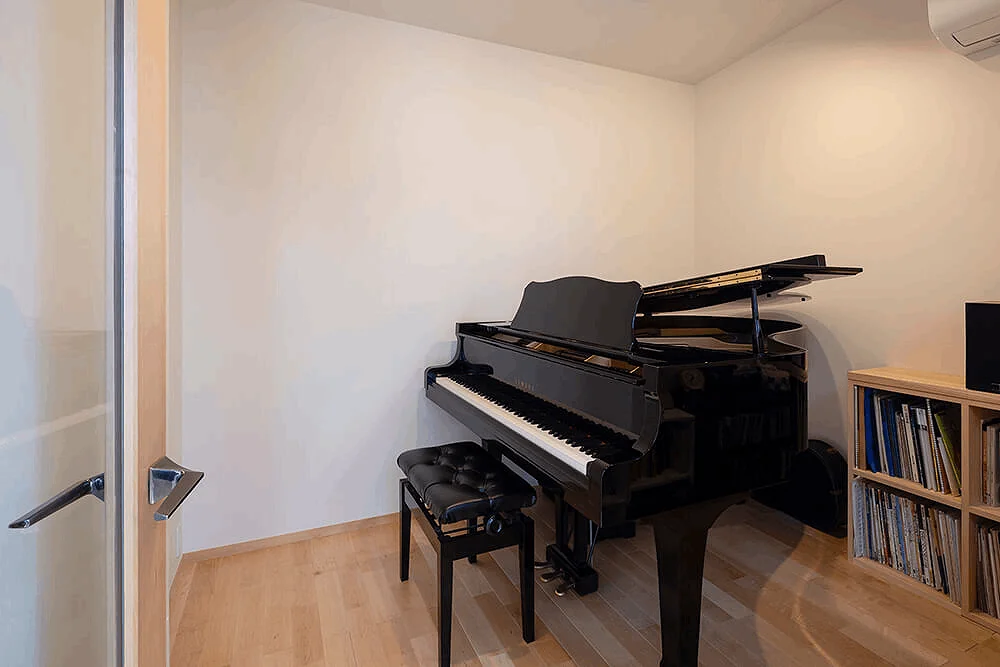
The required sound insulation performance for soundproof rooms varies depending on their intended use. For musical instrument performance, a sound insulation grade represented by the D-value, typically ranging from D-40 to D-60, is considered a general guideline. However, the necessary performance level changes according to the type of instrument and the time of performance. It is recommended to consult an acoustics specialist before the design phase to determine the appropriate level of soundproofing required.
Room Layout and Buffer Spaces.
When planning a soundproof room, it is essential to consider the impact on adjacent rooms in the layout. Positioning the room away from bedrooms and studies, and creating buffer zones by placing storage areas or corridors in between, is effective. Additionally, taking into account the distance from neighboring houses and situating the room as far as possible from property boundaries helps to ensure consideration for the surrounding community.
Soundproof Wall Construction
To enhance the sound insulation performance of walls, it is fundamental to use heavy materials based on the mass law. Performance can be improved by layering multiple gypsum boards and inserting soundproof sheets. Additionally, employing a double-wall structure with an air cavity provides even higher sound insulation performance. Soundproofing treatment is also necessary at penetrations for wiring and piping within the wall.
Soundproof Doors and Airtightness.
Doors in soundproof rooms often represent a weak point in acoustic insulation performance. It is essential to use specialized soundproof doors and seal the gaps between the door frame and the door with rubber gaskets to ensure airtightness. Where possible, implementing double doors can achieve even higher sound insulation performance. Additionally, incorporating door closers to guarantee secure closure is crucial.
Window Treatment Methods.
Windows are the most challenging element to ensure sound insulation performance. Ideally, soundproof rooms should not have windows; however, when necessary for daylighting or ventilation, the use of double-glazed windows or soundproof glass should be considered. By maintaining an appropriate gap between the inner and outer windows and employing airtight frames for each, sound insulation performance can be significantly enhanced.
Ventilation Planning and Soundproof Ducts.
In highly airtight soundproof rooms, appropriate ventilation planning is essential. When installing air supply and exhaust openings, soundproof ducts or sound attenuation chambers are combined to prevent sound leakage. Additionally, it is recommended to select ventilation fans with low operational noise, considering the fan's own sound emission. Achieving a balance that ensures sufficient ventilation volume while maintaining sound insulation performance is crucial.
Acoustic Characteristics of Interior Spaces.
Not only sound insulation but also the way sound reverberates within the interior is crucial. By appropriately placing sound-absorbing materials on walls and ceilings, the reverberation time can be adjusted to create a comfortable acoustic environment. The balance between absorption and diffusion should be tailored according to the instruments being played or the recording purposes. Consulting with an acoustic design specialist will help achieve a higher quality sound environment.
Electrical Equipment and Wiring Planning.
The soundproof room requires various electrical equipment, including lighting, instrument amplifiers, and recording devices. It is essential to ensure sufficient power capacity and an adequate number of outlets, while also carefully planning the wiring to avoid compromising the sound insulation performance. Airtight treatment around outlets and switch boxes is necessary to prevent sound leakage.
Considerations for Lighting and Air Conditioning.
Soundproof rooms often have few windows, making lighting design crucial. It is important to select brightness levels and color temperatures suitable for performance and recording. Additionally, temperature control becomes a challenge in highly sealed spaces. When installing air conditioning, soundproofing measures at the piping penetration between the indoor and outdoor units, as well as selecting models with quiet operation, are essential.
Securing Storage Space.
By strategically planning storage spaces for items used in the soundproof room, such as musical instruments, equipment, sheet music, and cables, a clean and organized environment can be maintained. Incorporating built-in shelves utilizing wall surfaces and designated areas for instrument stands from the design phase enhances functionality and convenience.
Balance Between Cost and Performance.
The higher the sound insulation performance required, the greater the construction costs will be. When budget constraints exist, it is advisable to prioritize and incrementally enhance performance. For example, initially implementing structural soundproofing measures and subsequently adding sound-absorbing materials allows for a flexible planning approach. It is important to closely consult with the designer to balance performance and budget effectively.
Anticipating Future Changes in Use.
Due to the specialized construction of soundproof rooms, they may impose constraints if a change of use is desired in the future. However, there are other applications where soundproofing performance remains valuable, such as home theaters or conference rooms for remote work. Considering potential changes in life stages, it is worthwhile to design with a certain degree of versatility in mind.




 Single-Story Houses|Introduction to Architecture Firms|The richness of a home contained entirely on one level
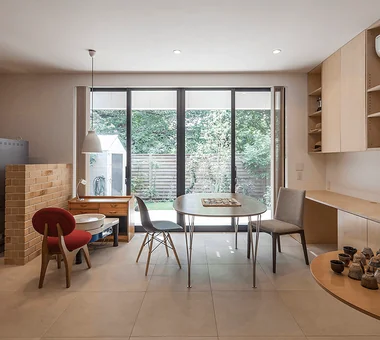 Stylish Studios|Key Points for Home Building|Daylighting and Environmental Design Supporting Creative Activities
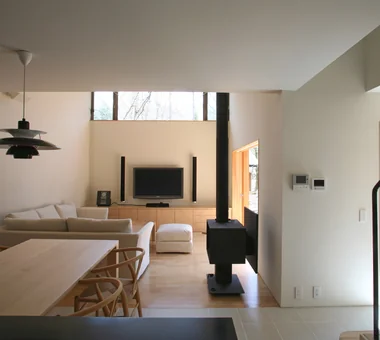 Homes Featuring Wood-Burning Stoves|Key Points for Home Building|Installation and Thermal-Flow Planning with Safety and Efficiency
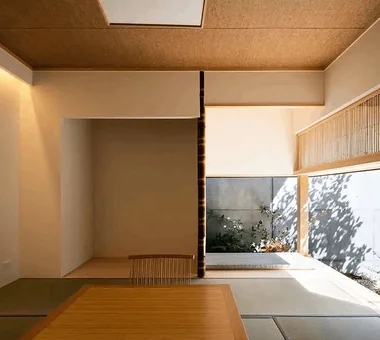 Stylish Japanese-Style Rooms|Key Points for Home Building|Utilizing Spaces That Harmonize Tradition and Contemporary Living
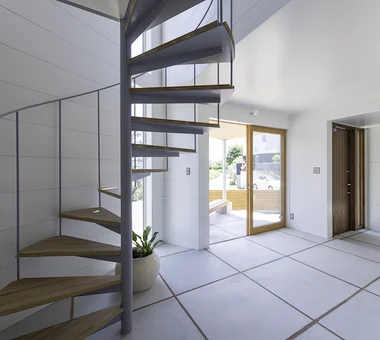 Spiral Staircase|Introduction to Architecture Firms|A Sculptural Centerpiece at the Heart of the Space
 Homes with Scenic Views|Custom-built homes by architecture firms|A Residence Where the View Becomes Part of Everyday Living