Tada Architectural Design Office
Homes Featuring Soundproof Rooms|Key Points for Home Building|Balancing Sound Insulation Performance and Comfort in Design
Author: Qurasuki Editorial Department
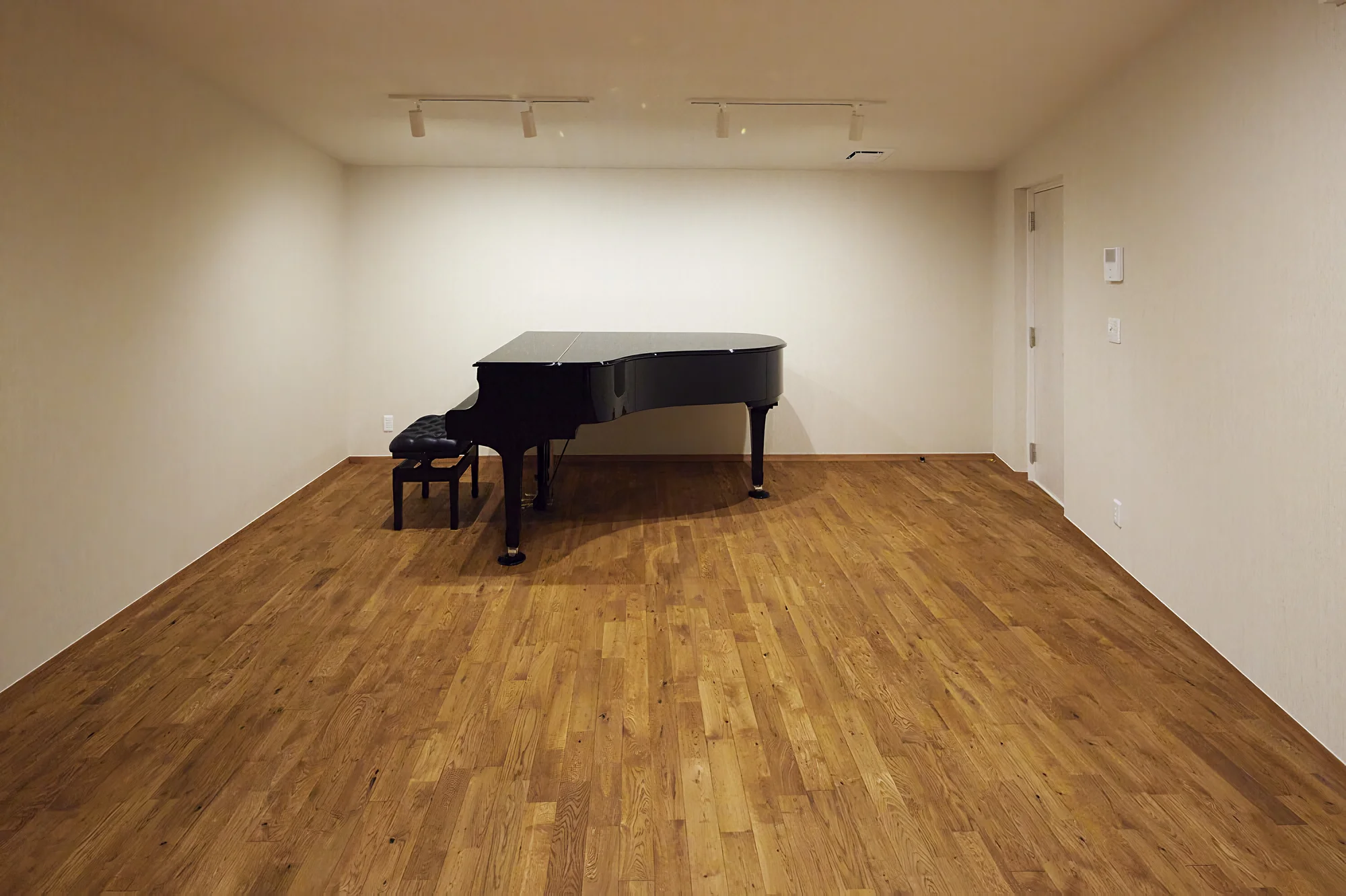
For musicians who play instruments regularly, an environment that allows them to perform without concern for the surrounding environment while fully hearing their instrument has a major impact on musical quality. Securing sound insulation performance is the highest-priority issue in the design of a sound-insulated room. The required wall sound insulation varies according to the frequency characteristics of the instrument, and must be reconciled with cost considerations. At the same time, it is important that the space be comfortable for the performer; design must adjust multiple factors such as daylighting, ventilation, and appropriate acoustic properties. Careful consideration of the balance between available budget and performance is essential, and it is important to implement sound-insulation measures that are practical and constructible.
Planning Sound Insulation Performance from the Structural Level.
Musical instrument performance requires both "sound insulation" to prevent sound leakage to the outside and "sound absorption" to regulate the acoustics within the room. High sound insulation performance can be achieved by incorporating soundproofing materials into walls and floors or by employing double-layered construction. Considering soundproofing from the initial design stage is fundamental to creating a professional-grade performance space.
Adoption of Double Doors and Soundproof Doors.
No matter how high the sound insulation performance of the walls is, it is meaningless if sound leaks through the doors. By adopting dedicated doors with high soundproof performance or using double doors, sound leakage from openings can be prevented. The airtightness of the doors is also important, so attention must be paid to the performance of the door seals.
Soundproofing Measures for Windows.
Windows tend to be weak points in sound insulation; therefore, it is ideal to avoid installing windows in soundproof rooms. If windows are absolutely necessary, employing double-glazed frames or acoustic glass, combined with the installation of soundproof curtains on the interior side, can effectively mitigate sound transmission. To allow natural light while minimizing sound leakage, the use of clerestory windows is recommended, as they reduce the pathways for external noise transmission.
Room Geometry and Acoustic Characteristics.
From an acoustic perspective, rooms shaped as pentagons or hexagons without parallel walls are ideal; however, this is often challenging to achieve in practice. Even in rectangular rooms, acoustic performance can be enhanced by appropriately installing sound-absorbing and diffusing materials on the walls. Given the specialized nature of acoustic design, it is recommended to consult with a professional designer.
Ceiling Height and Volume Suitable for Musical Instruments.
The acoustics of musical instruments vary depending on the room volume. Instruments that emphasize resonance, such as pianos and violins, require a certain ceiling height and room volume to achieve optimal sound quality. Conversely, instruments with high volume levels, like drums, can experience sound dispersion in overly spacious rooms. Designing the spatial environment tailored to the specific instrument being played is ideal.
Balance of Sound Absorption and Reflection.
Covering all surfaces with sound-absorbing materials causes the sound to become deadened, making performance difficult. By allowing certain wall areas to reflect sound, an appropriate reverberation and rich resonance are created. The balance between sound-absorbing and reflective materials establishes a comfortable performance environment. The arrangement of materials significantly influences the musical quality.
Balancing Ventilation and Air Conditioning.
Soundproof rooms have high airtightness, making ventilation a critical challenge. By employing ventilation systems with sound-attenuating ducts or ventilation fans with soundproofing capabilities, it is possible to exchange air while maintaining acoustic insulation. Temperature control is also important; therefore, consider installing air conditioning units with high sound insulation performance.
Lighting and Power Planning.
Musical performance requires a balance between sufficient illumination for reading sheet music and a calm atmosphere conducive to concentration. Installing lighting fixtures with dimming capabilities allows for adjustable brightness tailored to specific needs. Additionally, it is essential to provide power outlets with adequate capacity and quantity to support electronic instruments and amplifiers.
Storage Space for Musical Instruments and Equipment.
Sheet music, instrument cases, amplifiers, effect pedals, stands, and other items related to performance are diverse. By providing dedicated storage spaces within or adjacent to the soundproof room, necessary items can be accessed immediately. An organized environment supports focused musical performance.
Facilities for Recording and Listening.
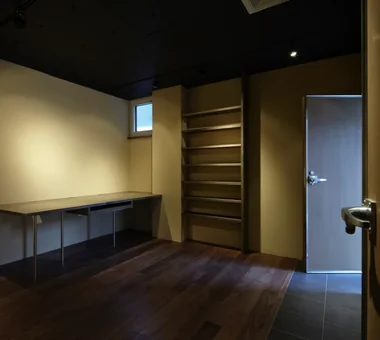
Facilities for recording performances and playback verification are also essential. By planning desk space for installing microphones and audio interfaces, as well as designated areas for speakers and headphones, the space can accommodate both performance and recording needs. This expands the scope of creative activities.
Suitable Not Only for Practice but Also for Lessons.
When opening a music studio at home or enjoying ensemble playing with friends, a space large enough to accommodate multiple people is essential. It is important to provide an area where several chairs and music stands can be arranged, as well as to create an atmosphere that allows students and companions to feel comfortable. Consider designing the space as a venue for interaction through music.
Selection of Soundproofing Levels According to Grade
The cost of soundproofing performance varies significantly depending on the desired level. The required performance differs whether it is for hobbyist enjoyment or professional use. By considering the balance between budget and purpose, it is also possible to incrementally enhance the performance. A realistic plan is the most effective path to realization.



 Homes with Scenic Views|Key Points for Home Building|Design Guidelines for Window Placement Considering Seasonal Variation
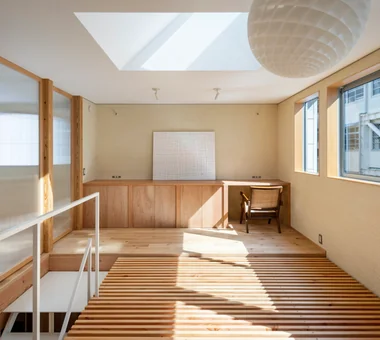 Narrow Lot House|Custom Home Examples by Architectural Offices|Abundant Living Within a Compact Site
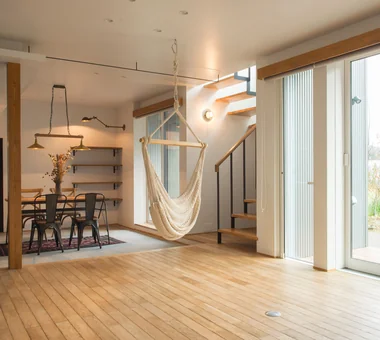 Homes for Antique Enthusiasts|Introduction to Architecture Firms|Living with the Patina of Time
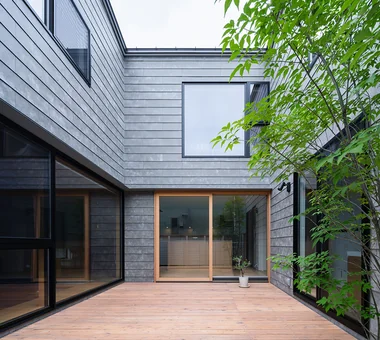 Homes Featuring Courtyards|Introduction to Architecture Firms|The Enclosed Sky Garden
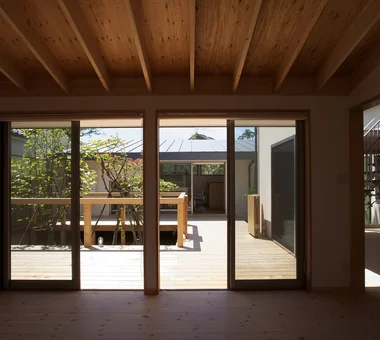 Two-Generation Home|Introduction to Examples by Floor Plan & Room Type|Spatial Design for Mutual Respect of Lifestyles and Values
 Hotel‑inspired Residence|Introduction to Examples by Floor Plan & Room Type|A Home That Elevates Everyday Life: Materials, Lighting, and Breathing Space That Create Comfort