an Archi-Lab. First-Class Architect Office
Narrow House|Custom-built homes by architecture firms8Picks|Abundant Living Within a Compact Site
Author: Qurasuki Editorial Department
Residential buildings on narrow urban plots represent one of the architectural challenges that most rigorously test a design office’s ability to realize a rich way of life within a limited footprint. Strategies such as compensating for floor‑area constraints through vertical development using double‑height spaces and mezzanines, devising apertures that capture daylight while preserving privacy where neighboring houses are close, and compact circulation and storage schemes that accommodate domestic functions without waste—these design solutions are concentrated in narrow‑site houses. Under more severe constraints, design thinking more clearly crystallizes into spatial richness. This feature presents cases that realize a personal, high‑quality lifestyle on small urban lots.

House in Toyoshiki
Yu Architectural Design Studio
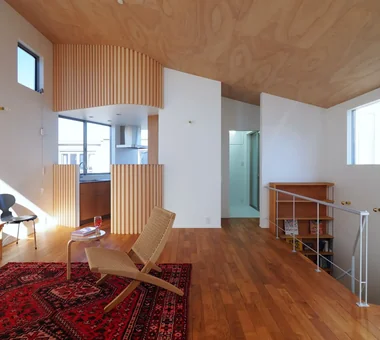
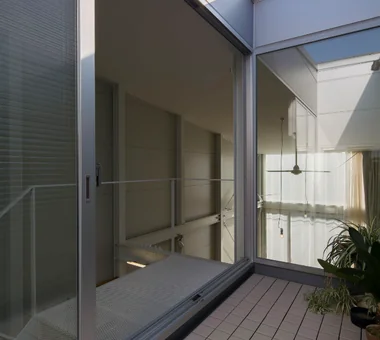
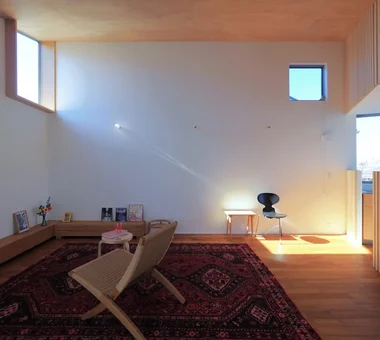
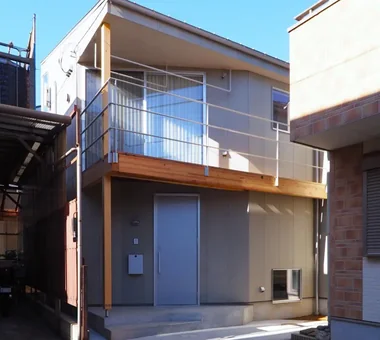
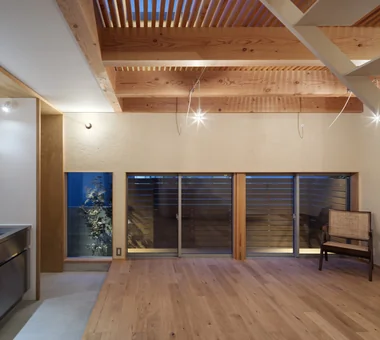
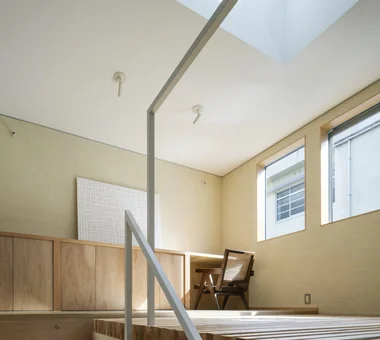
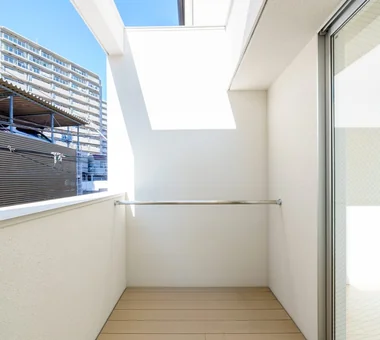
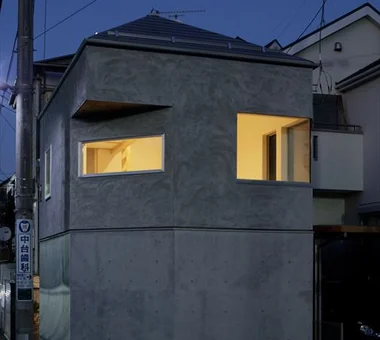
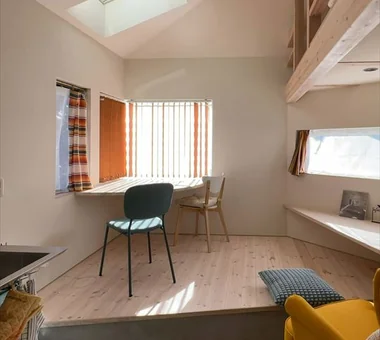
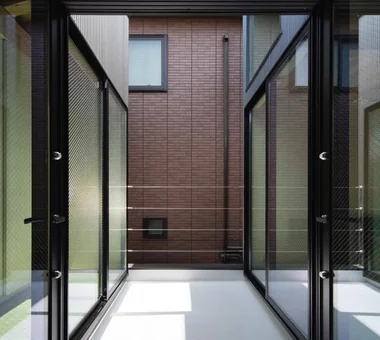
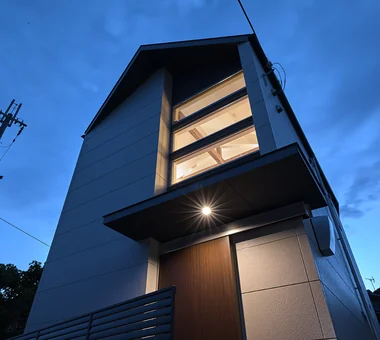
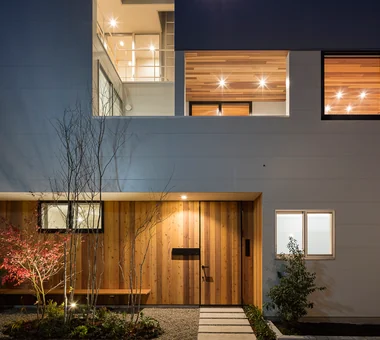
This is a compact residence of approximately 26 tsubo of total floor area, built on a flag-lot in Kashiwa City. In a site surrounded by neighboring houses, a second-floor living room was adopted to maximize daylight. The openings facing the balcony are articulated with angled walls that skillfully control sightlines, achieving both brightness and privacy. A mortar-effect siding exterior is harmonized with a warm interior that leaves beams and columns exposed. By incorporating DIY elements to keep costs down, the house realizes a rich way of life through ingenuity and creativity.
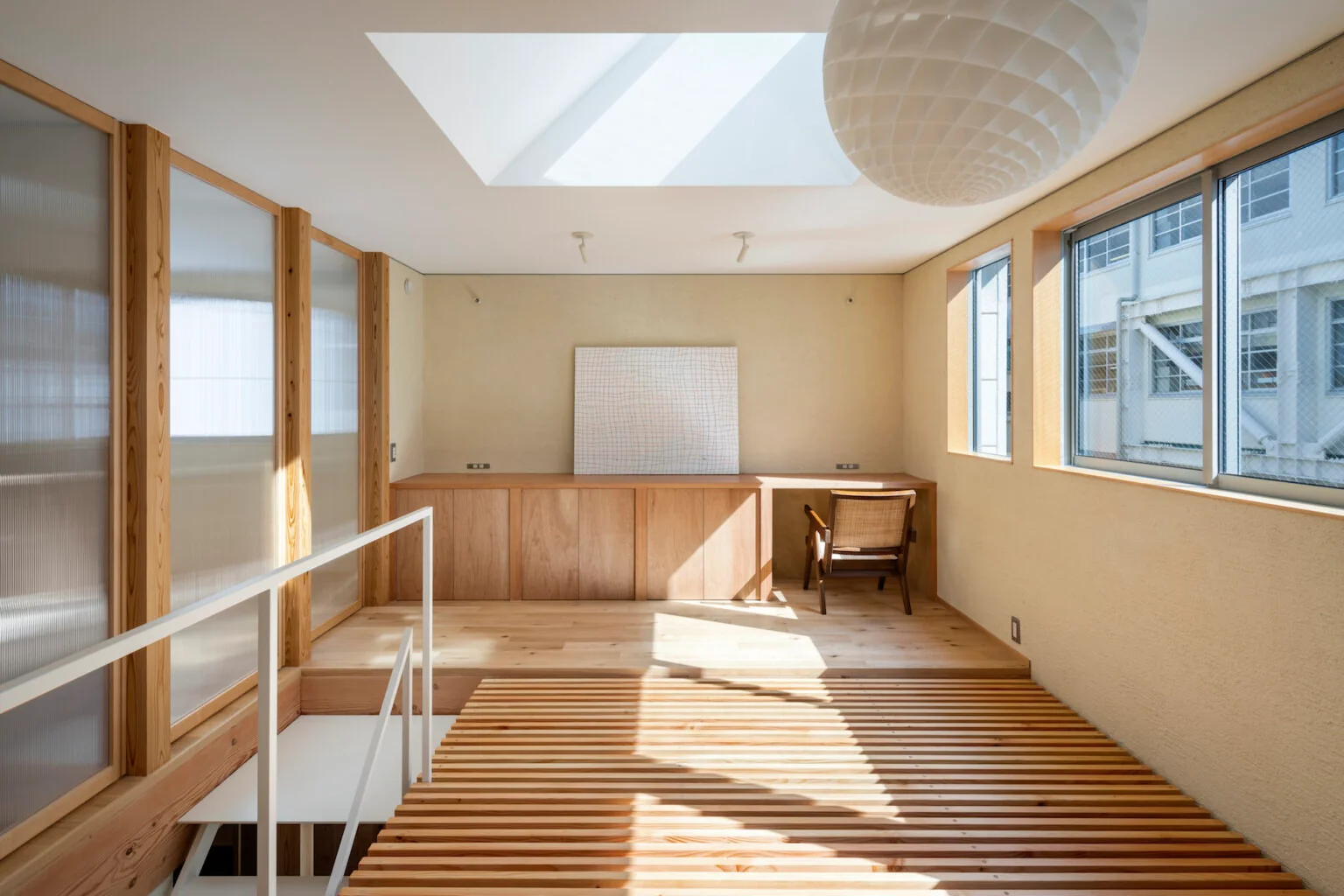
House Behind the School Building
an Archi-Lab. First-Class Architect Office
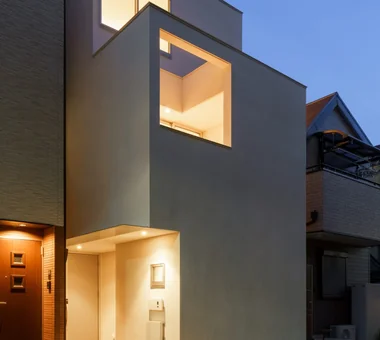
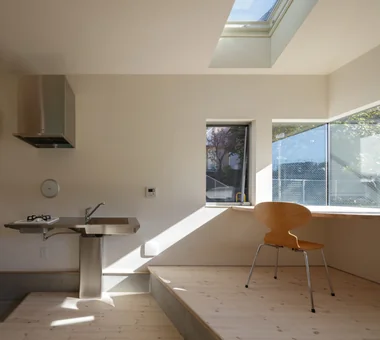
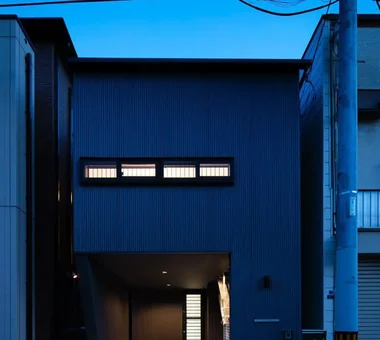
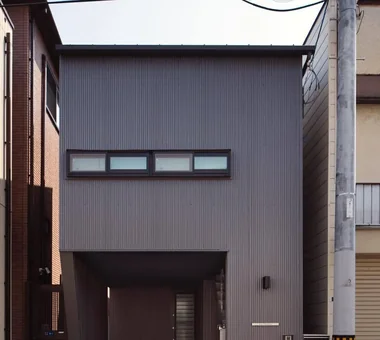
This is a reconstruction plan of the long-occupied family home so that a mother and her daughter can live there. Under the severe condition of a narrow 19-tsubo site with an elementary school building pressing on the south side, a small garden and a nure-en (verandah) were provided on the southern side of the site to bring light, wind, and a sense of depth into the residence. Internally, multiple living areas were arranged according to degrees of privacy and openness, realizing a composition in which light moves throughout the entire house. While engaging carefully with the surrounding environment, the design cultivates a rich residential quality within a limited footprint. The phrase "a house you want to come home to" testifies to that comfort.
komh
「ha」 hosaka hironobu architect associate
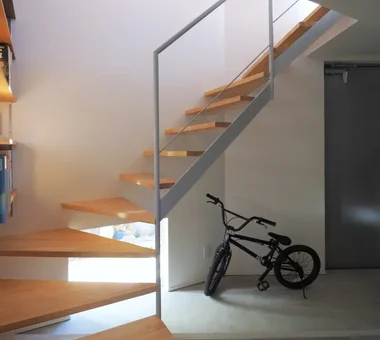
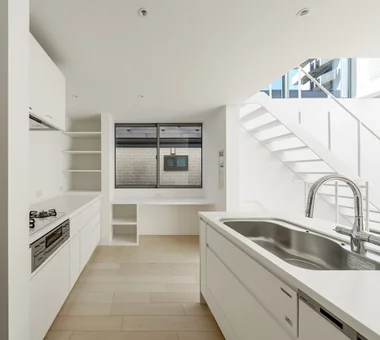
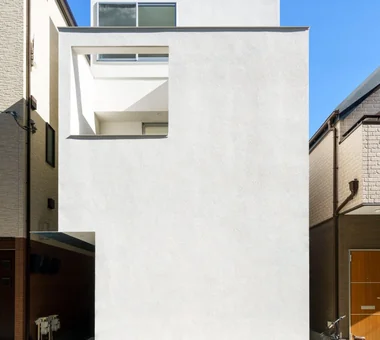
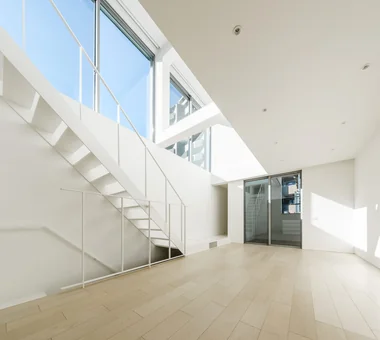
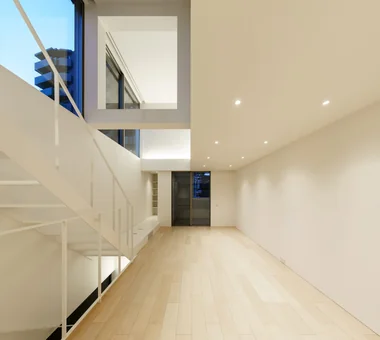
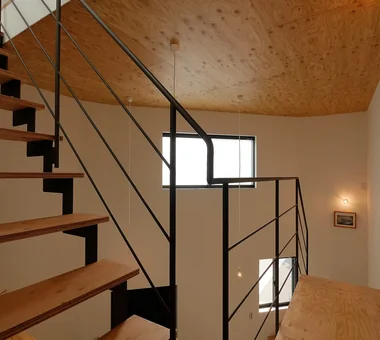
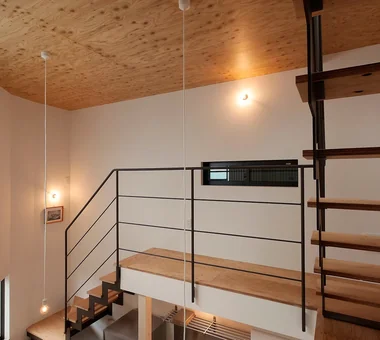
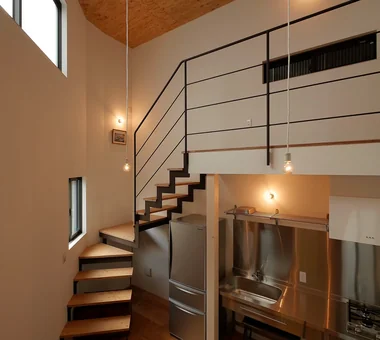
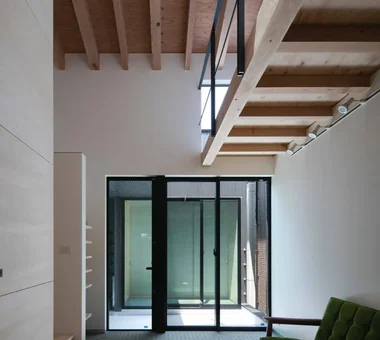
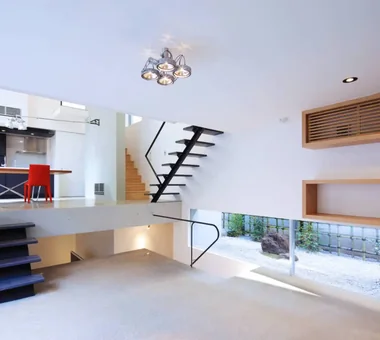
This residence is built on an urban site with a narrow frontage and considerable depth. In an environment where neighborhood commercial and Category 1 residential zones coexist, two large atria and south‑facing openings are provided to introduce abundant light throughout the home and realize a comfortable living environment. The interior and exterior, unified in white, are imbued with a sense of transparency, which emphasizes the subtleties of light and shadow. Furthermore, a skeletal steel staircase that traverses the atria creates a light rhythm in the space, achieving a spacious and open way of living despite being an urban dwelling.
-
-
-
-
-
To secure an improved urban living environment, two double-height voids were strategically designed.
「ha」 hosaka hironobu architect associate3-8-9 Oji, Kita-ku, Tokyo -
Narrow Skip-Floor Steel-Frame Garage House | ' ' House
Yoshihiro Yamamoto Architects Associates
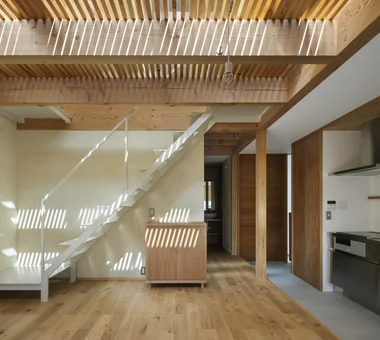
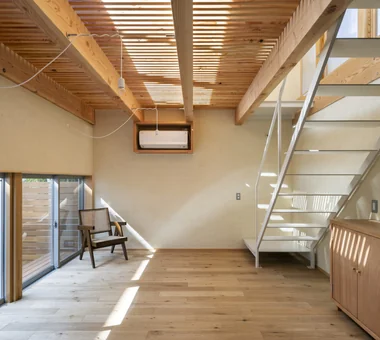
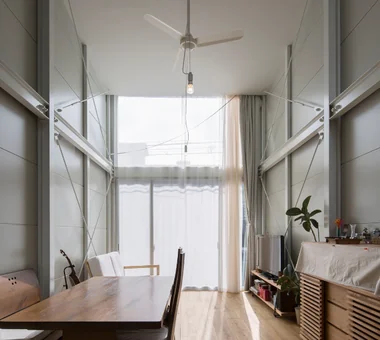
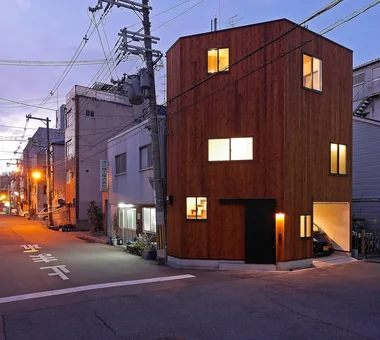
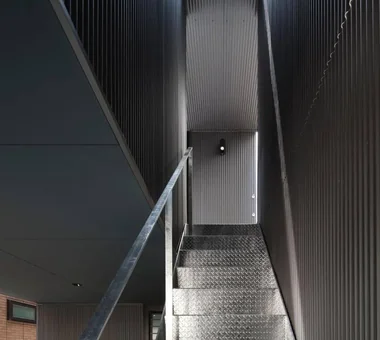
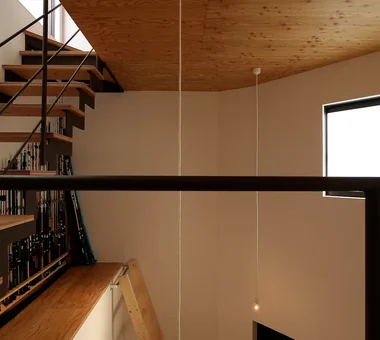
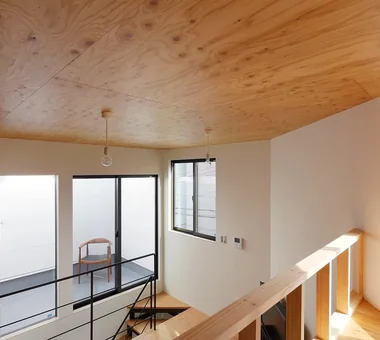
A house sited on a narrow lot in a traditional downtown neighborhood. Vertical circulation is treated not as a constraint but as an experiential element: a skip‑floor arrangement of staggered half‑levels produces a sequence of varied spatial conditions. Ultra‑thin external walls and a steel skeletal frame maximize the usable area of the site, and by optimizing regulatory allowances the design also achieves an open top‑floor terrace. Compact yet filled with light and natural ventilation, the residence establishes a light, airy living environment.
-
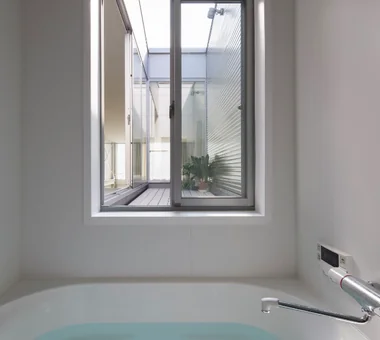
A bathroom that remains open and airy while preserving urban privacy.
Yoshihiro Yamamoto Architects Associates302, Zeniya Honpo Main Building, 14-6 Ishigatsujichō, Tennōji-ku, Osaka -
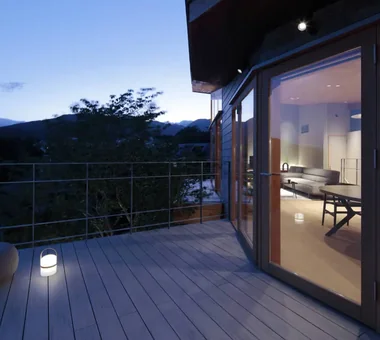
A roof terrace adaptable for drying laundry, gardening, and other multifunctional uses.
Yoshihiro Yamamoto Architects Associates302, Zeniya Honpo Main Building, 14-6 Ishigatsujichō, Tennōji-ku, Osaka -
Occupant comfort is ensured by insulation packed behind the metal siding.
Yoshihiro Yamamoto Architects Associates302, Zeniya Honpo Main Building, 14-6 Ishigatsujichō, Tennōji-ku, Osaka -
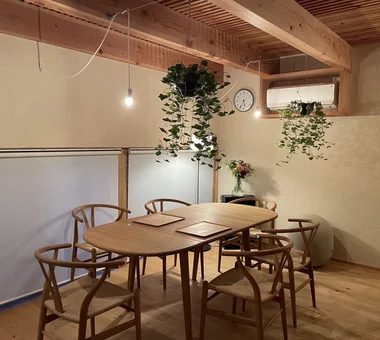
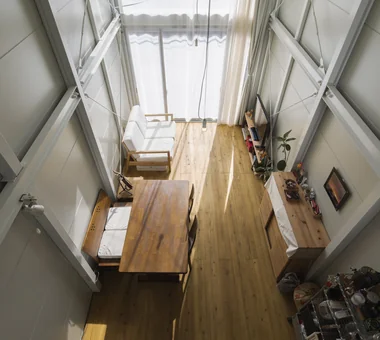
Dining area. Flooring is 35 mm-thick Yoshino cedar scaffold planks.
Yoshihiro Yamamoto Architects Associates302, Zeniya Honpo Main Building, 14-6 Ishigatsujichō, Tennōji-ku, Osaka -
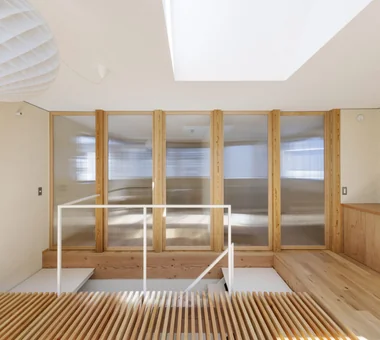
View down to the living and dining from the stair landing.
Yoshihiro Yamamoto Architects Associates302, Zeniya Honpo Main Building, 14-6 Ishigatsujichō, Tennōji-ku, Osaka -
Large south-facing openings. Classified as a two-story building above ground with no alternate emergency access.
Yoshihiro Yamamoto Architects Associates302, Zeniya Honpo Main Building, 14-6 Ishigatsujichō, Tennōji-ku, Osaka
House in Chiyozaki
Coo Planning
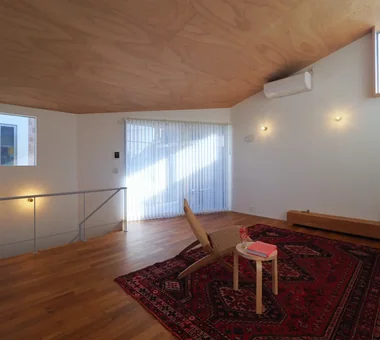
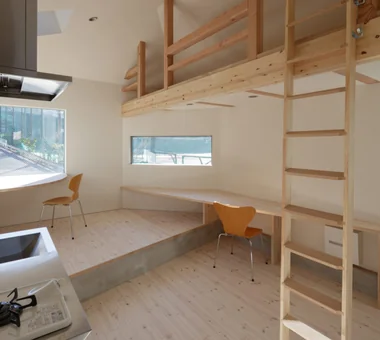
A compact corner residence in Nishi-ku, Osaka City, with a total floor area of approximately 13 tsubo. The narrow, irregular 8-tsubo site is developed as a timber-framed, two-story building with a skip-floor arrangement to realize a three-layered spatial composition. The first floor features a 4 m high ceiling; wet areas are placed on a mezzanine level, with the master bedroom and a roof terrace located on the upper level. The gently connecting staircase creates a sense of spaciousness and diverse living places within a limited footprint.
-
-
-
Spatial composition reminiscent of a gallery
Coo Planning201, M'S Kyomachibori Building, 1-7-17 Kyomachibori, Nishi-ku, Osaka City, Osaka Prefecture -
-
-
Dwelling of Drummer
JYU ARCHITECT
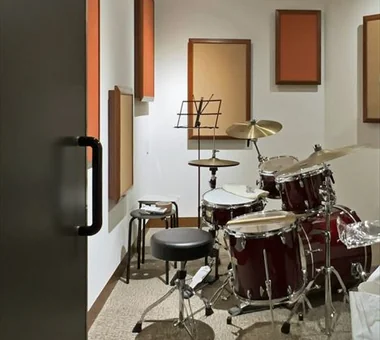
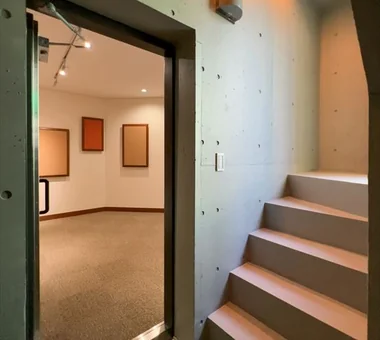
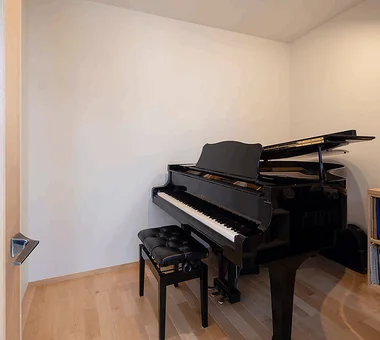
Satellite residence with an attached drum studio, planned on an 8 tsubo site. The semi‑basement reinforced‑concrete studio, though under six tatami in area, is a full‑scale soundproofed volume with a high ceiling; thick walls, floor and ceiling ensure performance that prevents even low‑frequency bass and vibration from transmitting to the exterior. The timber-framed residence on the upper floor incorporates borrowed greenery and open views, achieving a level of comfort that belies its roughly eight‑and‑a‑half tatami size. The stepped floor functions multipurpose as counters and seating, creating a variety of places to inhabit; at the same time those level changes contribute to sound diffusion and support a favorable acoustic environment. It is a dwelling in which music and daily life are concentrated within a limited space.
-
-
Residence with an adjoining drum studio designed on an 8-tsubo site
JYU ARCHITECT2-19-19 Nakane, Meguro-ku, Tokyo -
Acoustically optimized space delivering excellent reverberation and containment of low-frequency sounds
JYU ARCHITECT2-19-19 Nakane, Meguro-ku, Tokyo -
-
-
Komagawa House
Kumi Inoue Architects
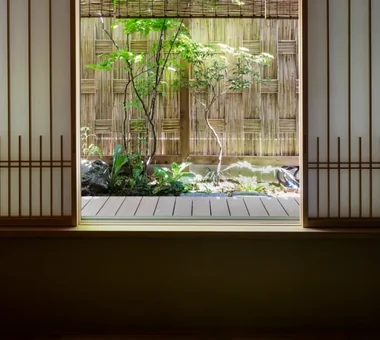
This residence, sited on an 18-tsubo (approximately 59.5 m²) lot in a residential area of Higashisumiyoshi Ward, Osaka, is designed to withdraw from the bustle of the adjacent shopping street. To achieve this, the entrance is located on the second floor, accessed via an exterior staircase and mediated by a terrace that leads into the interior. The terrace functions as an intermediary zone between inside and outside, providing an expanded sense of living. The second floor is divided into two volumes, with a Japanese-style room arranged like a detached annex, creating small moments of richness and tranquility in everyday life.
-
Second-floor detached annex Japanese-style room
Kumi Inoue Architects2-6-15 Kuwazu, Higashisumiyoshi-ku, Osaka City, Osaka Prefecture -
Divided into two rooms—the main house and the detached annex—on the second-floor terrace
Kumi Inoue Architects2-6-15 Kuwazu, Higashisumiyoshi-ku, Osaka City, Osaka Prefecture -
-
The sky is visible beyond the outdoor staircase
Kumi Inoue Architects2-6-15 Kuwazu, Higashisumiyoshi-ku, Osaka City, Osaka Prefecture -
LDK connected to the entrance dirt floor
Kumi Inoue Architects2-6-15 Kuwazu, Higashisumiyoshi-ku, Osaka City, Osaka Prefecture -
Built right up to the site boundary line
Kumi Inoue Architects2-6-15 Kuwazu, Higashisumiyoshi-ku, Osaka City, Osaka Prefecture
Residence in Shimogamo
In-Ex Design Co., Ltd.
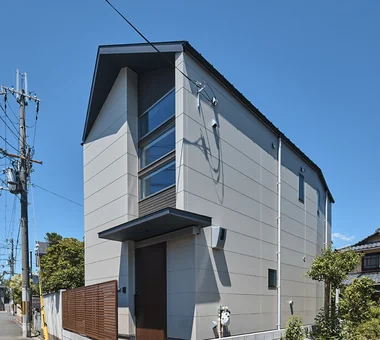
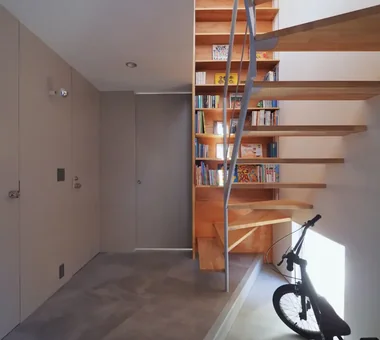
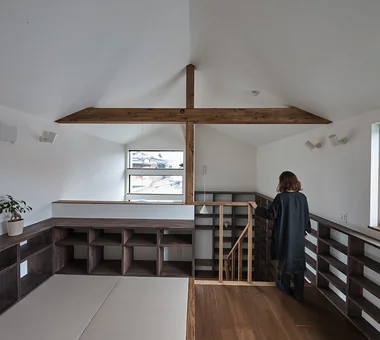
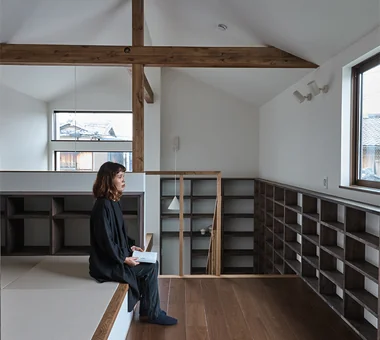
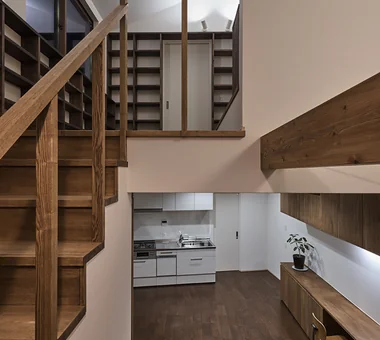
This residence, built on a compact site of approximately 18.7 tsubo, is designed for living with words. Taking advantage of the dogleg site geometry, the stair and book shelving that extend from the entrance form the spatial core. The shelving continues uninterrupted up to the second floor, arranged to envelop the study. From the first-floor living room, the bookcases enter the view alongside the garden scenery, creating a design in which the presence of books and language is felt naturally in everyday life. Within the constrained footprint, the house carefully weaves intellectual richness and a quiet sense of comfort.
-
-
-
A space where bookshelves accompany daily living scenes continuously.
In-Ex Design Co., Ltd.4-59 Takanoizumicho, Sakyo Ward, Kyoto City, Kyoto Prefecture -
-
-
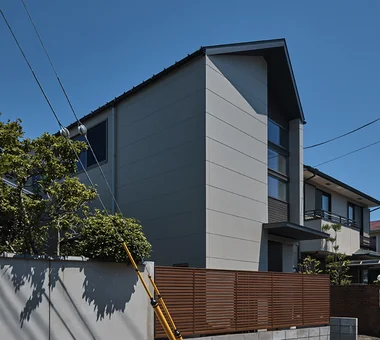
The opening on the right side provides daylight to the entrance, while the closed section on the left conceals the bookshelves.
In-Ex Design Co., Ltd.4-59 Takanoizumicho, Sakyo Ward, Kyoto City, Kyoto Prefecture
-
Concrete Houses|Custom-built homes by architecture firms|The Aesthetics of Concrete and Comfortable Residential Environments2026-06-24|Qurasuki Editorial Department -
Soundproof Rooms|Key Points for Home Building|Planning Spaces that Balance Hobbies and Family Time2025-10-20|Qurasuki Editorial Department -
A Residence for Relaxation|Introduction to Architecture Firms|A Home That Unwinds You Every Time You Return2026-05-11|Qurasuki Editorial Department -
Hotel‑inspired Residence|Introduction to Architecture Firms|A Home Where the Extraordinary Becomes Everyday2026-05-11|Qurasuki Editorial Department -
Compact House|Key Points for Home Building|Design Strategies for Living Well in Compact Homes2026-05-17|Qurasuki Editorial Department -
Two-Family House|Pros and Cons|Designing for Appropriate Interpersonal Distances2026-01-27|Qurasuki Editorial Department