KICHI ARCHITECTURAL DESIGN
Second-Floor Living|Pros and Cons|Layouts Enhancing a Sense of Openness
Author: Qurasuki Editorial Department
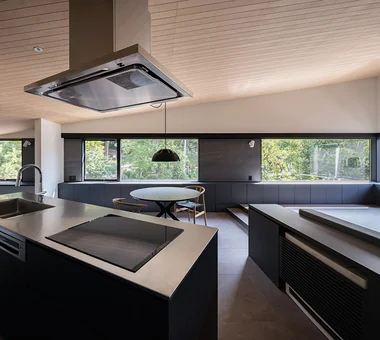
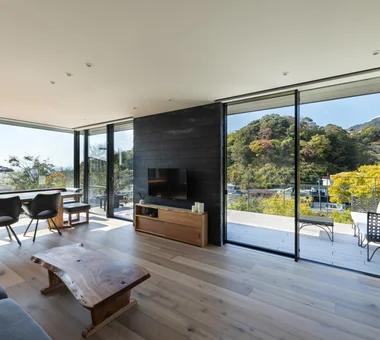
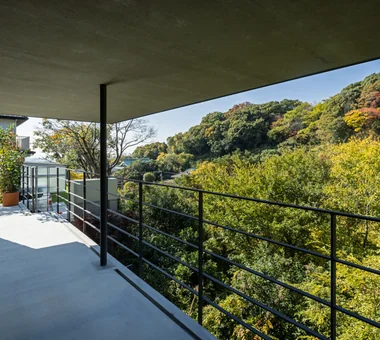
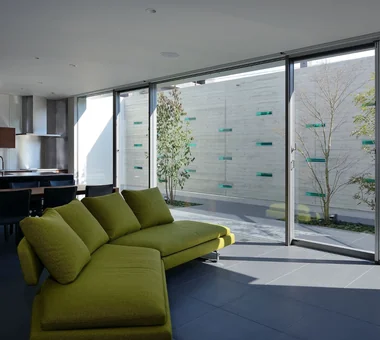
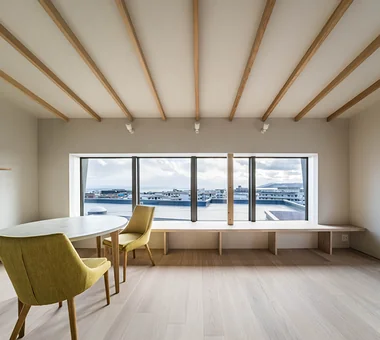
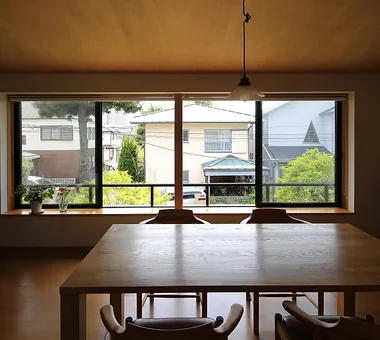
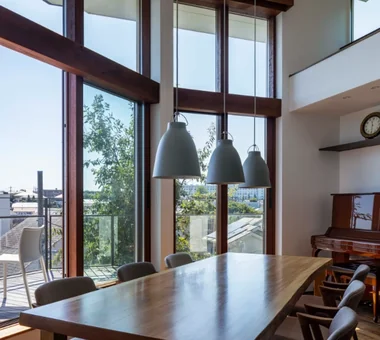
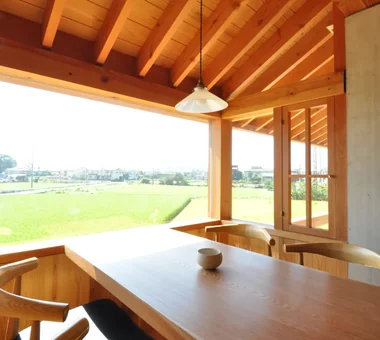
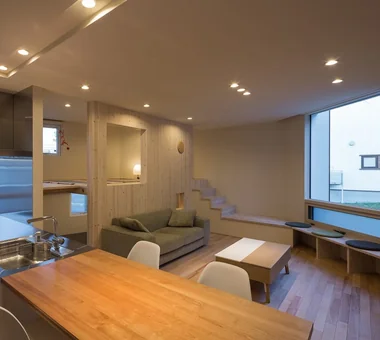
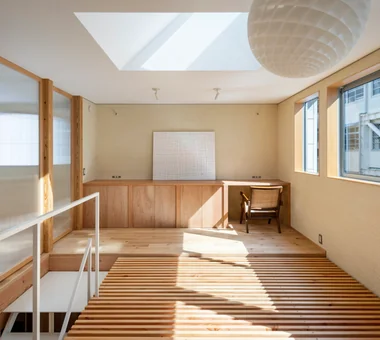
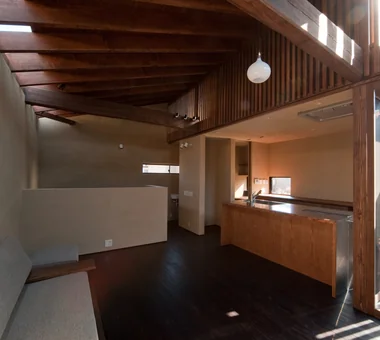
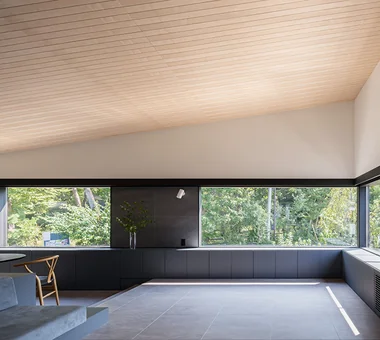
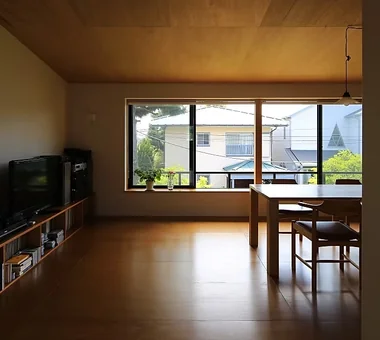
A second-floor living room layout refers to the architectural arrangement in which the primary family gathering spaces—namely the living room, dining area, and kitchen—are situated on the building’s second floor. This configuration is frequently adopted in urban environments and on compact sites, where it offers a significant advantage over ground-floor living spaces that are often obstructed by surrounding structures: enhanced access to natural light. By leveraging the elevation, it becomes feasible to incorporate expansive windows and balconies, thereby optimizing daylight penetration, natural ventilation, and distant views throughout the day.
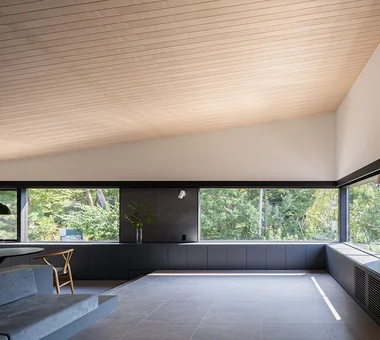
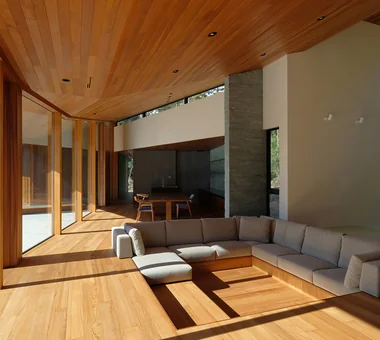
From a structural perspective, the ground floor typically requires a greater number of load-bearing and seismic-resistant walls, which can limit the size and continuity of openings. Conversely, placing living spaces on the second floor allows for larger, continuous fenestrations and balconies, contributing to a heightened sense of openness and spatial fluidity within the interior. However, careful consideration must be given to functional aspects such as circulation paths from the entrance to the living areas, vertical movement via stairs, logistics involving the delivery and maintenance of bulky furniture, and the design of the thermal environment to ensure occupant comfort.
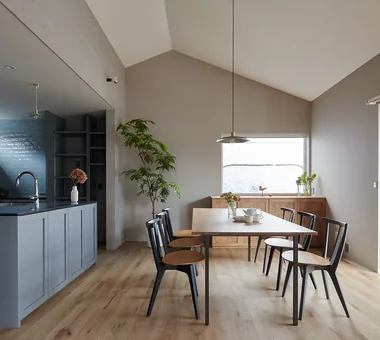
Overall, the second-floor living room typology represents an effective architectural strategy to address site constraints through spatial innovation. By comprehensively integrating daylighting, ventilation, visual privacy, structural integrity, thermal performance, and circulation planning, this approach facilitates the creation of comfortable, well-appointed residences tailored to the demands of dense urban contexts.

From a structural perspective, the ground floor typically requires a greater number of load-bearing and seismic-resistant walls, which can limit the size and continuity of openings. Conversely, placing living spaces on the second floor allows for larger, continuous fenestrations and balconies, contributing to a heightened sense of openness and spatial fluidity within the interior. However, careful consideration must be given to functional aspects such as circulation paths from the entrance to the living areas, vertical movement via stairs, logistics involving the delivery and maintenance of bulky furniture, and the design of the thermal environment to ensure occupant comfort.
Overall, the second-floor living room typology represents an effective architectural strategy to address site constraints through spatial innovation. By comprehensively integrating daylighting, ventilation, visual privacy, structural integrity, thermal performance, and circulation planning, this approach facilitates the creation of comfortable, well-appointed residences tailored to the demands of dense urban contexts.
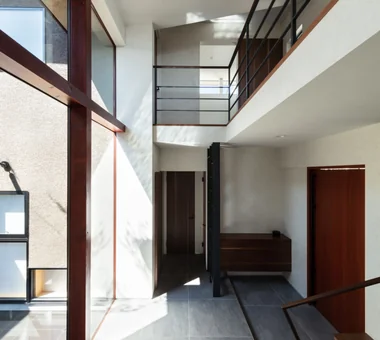
Integrating Light and Air at the Heart of the Home with Large Windows While Avoiding Unwanted Sightlines and Noise.
Second-Floor Living|Advantages
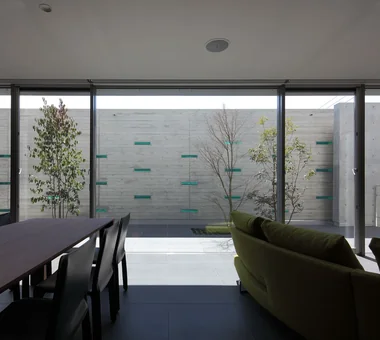
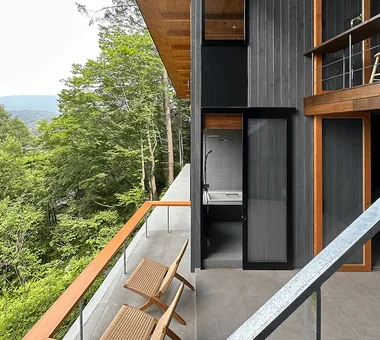
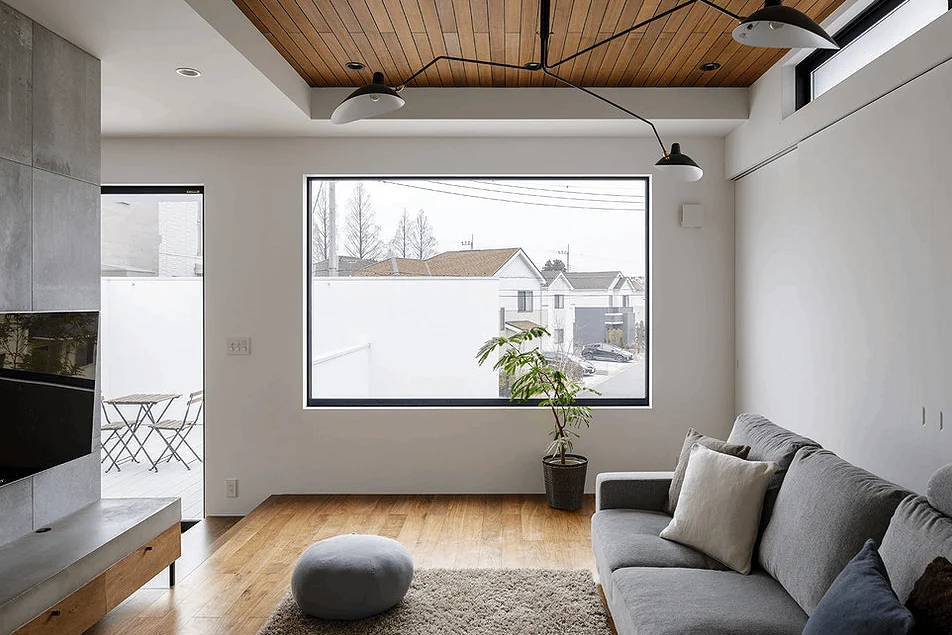
One of the most significant advantages of second-floor living rooms is the ease of securing ample natural light and cross-ventilation. In densely built urban areas, windows on the first floor are often limited due to adjacent buildings, reducing access to daylight and airflow. Positioning the living spaces on the second floor mitigates the impact of neighboring walls and fences, enabling the installation of large south- or east-facing windows that effectively capture natural light throughout the day. Incorporating expansive windows and balconies fosters a seamless connection between indoor and outdoor spaces, psychologically expanding the spatial experience even within limited footprints. Privacy is also enhanced on upper floors. Living rooms located at street level often contend with the gaze of passersby and neighbors, whereas second-floor rooms benefit from shifted sightlines, allowing residents to comfortably open windows and enjoy fresh air with greater peace of mind. Structurally, the first floor bears the brunt of seismic forces, needing to support not only the roof’s load but also the entire upper floor’s lateral forces, concentrating structural demands. In contrast, the second floor primarily supports the roof alone and is not subjected to the same magnitude of direct forces. By designating the first floor for private spaces such as bedrooms and storage—where walls and shear walls can be readily arranged—an earthquake-resistant structure can be effectively realized. This approach permits more spatial freedom on the second floor, allowing for fewer walls without compromising the overall seismic resilience of the building.
Practical Challenges Related to Stair Use, Noise Between Floors, and Future Care Needs.
Second-Floor Living|Disadvantages
Despite its appeal, second-floor living presents several practical challenges encountered in everyday life. The foremost concern is the physical burden of frequent stair use. Routine activities such as grocery shopping and waste disposal require multiple trips up and down stairs, which can be particularly taxing for elderly residents or those with injuries. Insufficient attention to stair slope, tread depth, handrails, and night-time lighting increases the risk of falls. Furniture and appliance delivery pose another logistical challenge both at construction and during future replacements. Large items such as sofas, refrigerators, or modular kitchen components may exceed stairway dimensions, necessitating crane-assisted installation if delivery routes are not pre-planned. This not only affects initial construction costs but also complicates future renovations or replacements. Thermal comfort is a further consideration: proximity to the roof means the second floor is more susceptible to solar heat gain and thermal storage, often resulting in higher summer temperatures. Without adequate insulation, solar shading devices, and ventilation strategies, cooling demands—and consequently energy costs—can escalate. Conversely, effective utilization of southern solar gain in winter can be beneficial, though improper zoning between floors may lead to uneven indoor temperatures. Noise transmission between floors is another non-negligible issue. When occupants sleep on the lower floor, sounds from daily activities or building systems upstairs can cause disturbances. Addressing this requires soundproofing measures for floors and ceilings, as well as vibration isolation for mechanical equipment. Finally, considerations for future caregiving and lifestyle changes must be incorporated. A lifestyle centered on the second floor may become inconvenient in later years; therefore, ensuring ease of renovation—such as the potential to relocate bedrooms to the first floor—is crucial to minimizing future modification burdens.
Holistic Design Integrating Stair Planning, Logistics, Thermal and Solar Control, Acoustic Treatment, and Adaptability.
Second-Floor Living|Countermeasures for Disadvantages
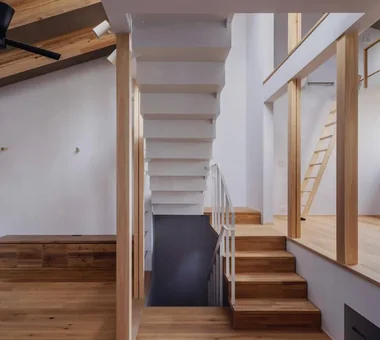
Designing stairs and circulation with an emphasis on ease of use reduces daily physical strain. This includes careful dimensioning of risers and treads, provision of landings, continuous handrails, and adequate night-time illumination to mitigate fall risks. Circulation routes should be optimized for direct access from the entrance to the living areas, and the positioning of delivery entrances should facilitate smooth logistics. Anticipating future mobility needs, allocating space and provisions for a home elevator—including power supply and piping—can significantly reduce renovation complexities. For furniture and appliance delivery, verifying maximum dimensions during design and simulating delivery routes on plans are essential. When stair access is inadequate, alternative entry via windows or balconies should be considered. Thermal environment strategies involve enhancing insulation on roofs and exterior walls, employing high-performance glazing such as Low-E glass, and implementing shading devices like eaves or louvers to control solar ingress. To minimize temperature differentials within the home, mechanical ventilation with heat recovery is recommended, supplemented by zoned heating solutions like underfloor heating or localized heaters as needed. Facilitating nocturnal cross-ventilation during summer is another key design aspect. Acoustic challenges between floors can be addressed through double flooring systems, sound-absorbing mats, ceiling treatments, and vibration-isolated piping supports. To accommodate future lifestyle changes, planning for first-floor bedrooms, reserving space for elevators, and designing flexible partition walls contribute to a resilient and adaptable home layout.
-
Outdoor Living|Introduction to Architecture Firms|Living Where Interior and Exterior Become One2026-05-13|Qurasuki Editorial Department -
Homes Featuring Wall-Mounted Bookshelves|Custom-built homes by architecture firms|A Residence Surrounded by Books2026-05-11|Qurasuki Editorial Department -
House of Wood|Custom-built homes by architecture firms|A Home Embracing the Warmth of Wood2026-05-11|Qurasuki Editorial Department -
Homes in Harmony with Nature|Case Studies|A way of living that enjoys daily life in harmony with nature, feeling the seasons and embracing the wind and light2025-10-13|Qurasuki Editorial Department -
Homes for Design Enthusiasts|Custom-built homes by architecture firms|A Home Infused with Aesthetic Sensibility2026-05-11|Qurasuki Editorial Department -
Compact House|Case Studies|Spatial design that transforms a limited floor area into comfort2026-05-17|Qurasuki Editorial Department